Caelian Hill
In short. The Celio is the hill where the noise of the Colosseum suddenly stops.
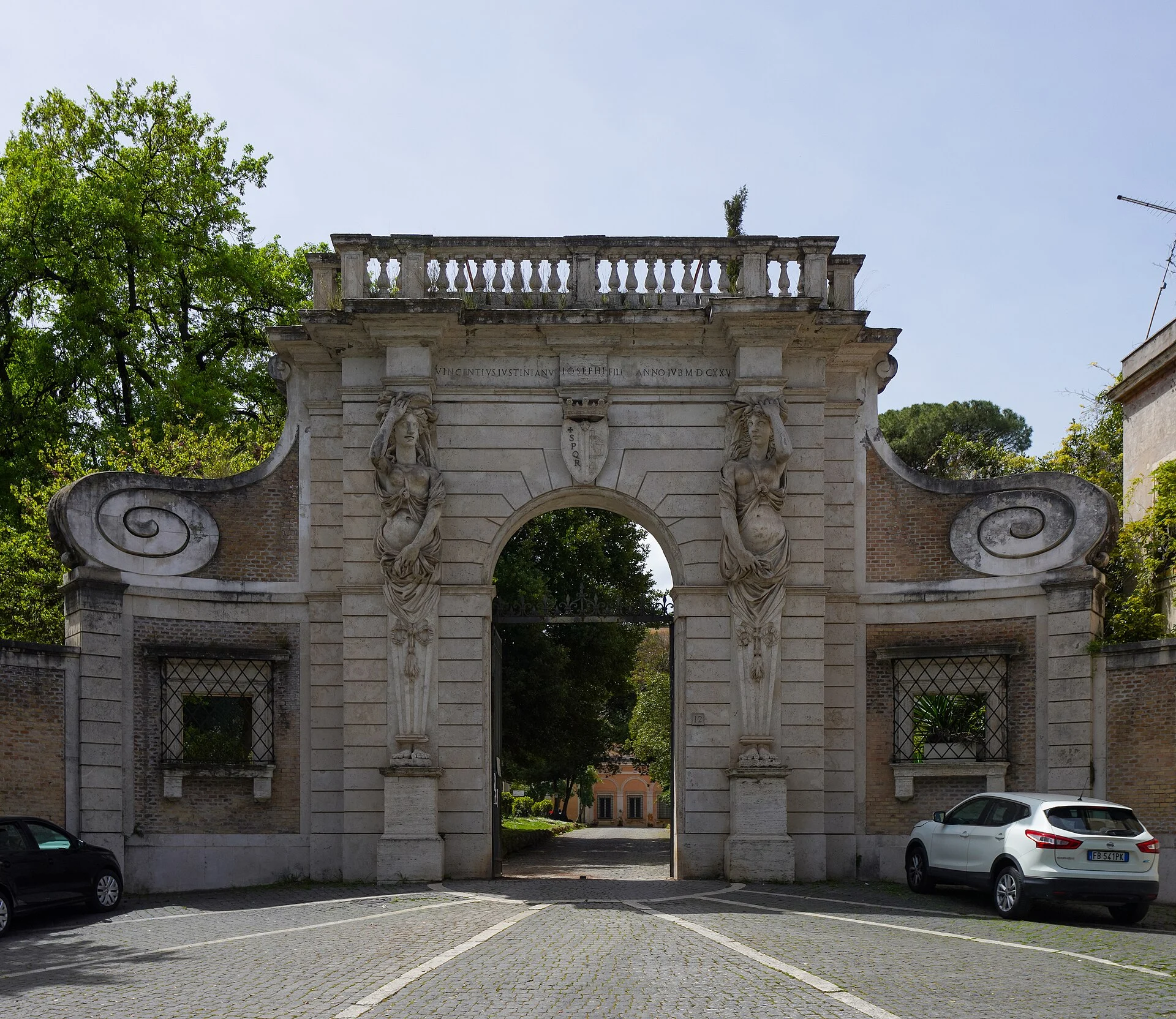
The Celio is the hill where the noise of the Colosseum suddenly stops. Climb 200 meters up from Piazza del Colosseo and you find yourself on a street with no shop windows, no stalls, and nobody offering you a scooter ride. Rione XIX holds churches from the fifth century, a free public park, three layers of city stacked under a basilica, and a recently opened museum, and it's still the part of the historic center where on February mornings I run into more cats than tourists.
Rome has 22 rioni and the Celio is number XIX. Treccani points out something almost no guide mentions: the rione has had this name only since 1921, and its administrative borders don't match those of the historic region of the same name. Whoever looks for the ancient Celio and whoever looks for the Celio of the registry office are looking for two different perimeters. It's good to know that before you pick a fight with a map.
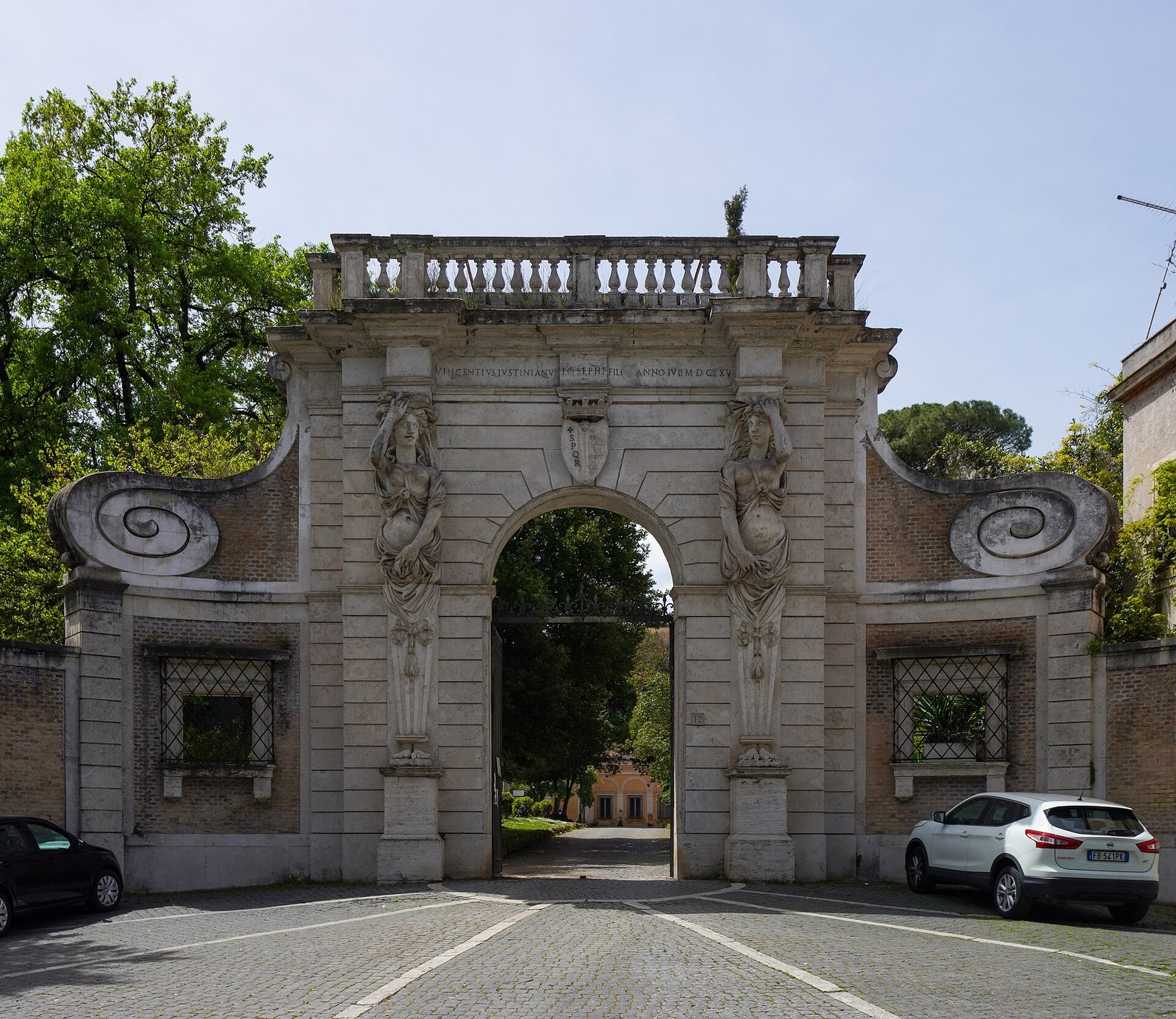
Where the Celio begins and where it ends
The hill rises between the Colosseum, the Circus Maximus and San Giovanni. From Via Labicana climbs Via dei Santi Quattro Coronati, steep and narrow. From Via di San Gregorio climbs the Clivo di Scauro, which is the most intact Roman street you can walk in the center. On the other side the rione slopes down toward Porta Metronia, which opens in the Aurelian Walls, and toward Largo Amba Aradam. In between, a green plateau whose existence almost nobody suspects.
The elevations don't fool anyone who walks them. From the Roman Forum to the plateau of the Celio there's a little over 30 meters of elevation gain, but spread over short, cobbled ramps. Anyone arriving from the Palatine with tired legs feels it. Climb by the Clivo di Scauro, which is in shade almost all day, and come down by Via della Navicella, which is flat.
According to the ancients, the name of the hill comes from Cele Vibenna, an Etruscan warlord who supposedly occupied it at the time of the Tarquins. Treccani reports the etymology as an ancient tradition, not as an established fact, and it's right to repeat it with the same caution. The Celio entered the Septimontium, then the Suburan region of Servius Tullius's division, and was included in the Servian Walls, where the Caelimontana and Querquetulana gates opened here.
A curiosity about the Celio
For centuries the Celio was the wrong neighborhood. Until the imperial age it had only public housing and a few minor temples: nothing monumental, nothing rich. It took a fire, the one from the Tiberian age, for the hill to empty out and fill up with noble palaces and public buildings. The Rome we admire up here was born from a disaster, and the chronology says so without any need for rhetoric.
After the fire came the temple of the Divine Claudius, the macellum magnum commissioned by Nero, the Paedagogium that was the school of the imperial pages, gladiator schools and a bundle of monumental aqueducts, among them the Neronian one that is still largely standing. The remains of the temple of Claudius are not in a fenced area: they are inside the convent of Santi Giovanni e Paolo and they support the basilica's bell tower.
A second curiosity concerns the greenery. Villa Celimontana covers a site from the Flavian and Trajanic age, and in that area stood the castra of the fifth cohort of the vigiles, the firefighters of ancient Rome. Excavations at the end of the 19th century brought to light there the remains of the Basilica Hilariana, identified as a place of worship of Cybele and Attis. Under the pines of the park there's a barracks and there's an Eastern sanctuary.
Something nobody tells you about the Celio
The churches of the Celio close at lunchtime and almost nobody writes it down. Santi Giovanni e Paolo, according to the Roma Capitale portal, opens from 8:30 to 12:45 and reopens from 14:00 to 17:00. Whoever arrives up here at one in the afternoon, coming out of the Colosseum after the 11:00 visit, finds the doors pulled shut and goes back down convinced that the Celio has nothing.
The hours of the hill's other churches don't appear to be published clearly in the official sources. The Roma Capitale page on Santo Stefano Rotondo refers you to phone contacts instead of giving a time slot. For Santi Quattro Coronati there seems to be no entry on the city tourist portal. In practice, for two of the three main monuments of the rione the reliable hours can only be had by calling.
The number published for Santo Stefano Rotondo is 06 42119130. For Santi Giovanni e Paolo the portal gives 3518161314. For Santa Maria in Domnica, 06 84384209, which is the ceremonies office. For San Gregorio al Celio, 06 7008227 for the community. These are numbers of religious communities, not ticket offices: they answer when they can, and the call works better early in the morning than in the early afternoon.
The second thing nobody says is about the silence. The Celio is quiet because it has no commerce: no shopping street, no daily market, very few driveways. The rione is made of convents, hospitals, barracks, religious institutes and embassies to the Holy See. The result is a central area that is already closed by 19:00, except for the summer events like Celio Stellato, and this changes how you plan the evening.
Santo Stefano Rotondo, the circular church
Santo Stefano Rotondo stands at Via di Santo Stefano Rotondo 7 and is the largest central-plan church of Christian antiquity still standing in Rome. It was born in the fifth century with a complex plan: a cross inscribed in a perimeter of three concentric circles, inspired by the Anastasis of Jerusalem. The entry on Santo Stefano Rotondo goes into detail on the structure.
The original layout was a circular space bounded by two concentric ambulatories, formed by two rings of columns. The outer ambulatory was crossed by the four arms of a Greek cross, with four chapels at the ends. The third concentric ambulatory, with a cruciform internal division, was dismantled during the 15th-century restorations. Treccani attributes to Bernardo Rossellino the modification of the layout in the 15th century.
In the 12th century Pope Innocent II ordered the addition of the entrance portico and the three grand transverse arches of the inner area, using two very tall granite columns, in order to support a roof that was in danger of collapse. The current facade is preceded by a portico of five arches on tall ancient granite columns with Corinthian capitals. Inside, a ring of 22 marble columns separates the central area from the circular walkways around the altar.
Between 642 and 649 Pope Theodore I had the relics of the saints Primus and Felician moved from the catacombs of Via Nomentana into the northeast arm of the basilica, inside a chapel dedicated to them. The mosaic that decorates that chapel is from the seventh century and is one of the few Roman mosaics of that period to have reached us in readable condition. It's worth the price of the climb by itself.
The church is famous among Romans for another reason: the band of frescoes with the martyrdoms that runs along the circular wall. They are explicit scenes, painted in the 16th century for devotional and teaching purposes for the seminarians. The attributions to individual painters differ in the literature and I prefer not to fix on one: what matters, for anyone going in with children, is knowing in advance what they will be facing.
Here it's enough to say that Santo Stefano Rotondo is the most photographed thing in the rione and the least reliable to plan around, because the opening time doesn't appear in the official sources and depends on the community that officiates there. If you really care, call 06 42119130 the day before and ask for confirmation.
Santi Quattro Coronati, the fortress with a cloister
Santi Quattro Coronati is a fortified complex, not a church. You climb from Via dei Santi Quattro, pass under a tower, cross two courtyards in a row and only then reach the facade. The basilica of Santi Quattro Coronati is the highest point of the hill and the structure that best tells how people lived in Rome when the Lateran was the center of papal power.
The name comes from a story of Roman tradition: four Christian marble workers who, under Diocletian, were put to death because they refused to carve pagan idols. The version is the one reported by the official portal of the Jubilee of the Holy See, which assigns this church to Latvia in the European itinerary. The ancient hagiographic sources present variants in the number and the trade of the martyrs, and Roman tradition has consolidated only one.
The church was founded in the fifth century, rebuilt in the seventh and again in the ninth, and then altered repeatedly. The current nave is much narrower than the early medieval basilica: the apse, enormous compared to the space it covers, states it to the naked eye, and it's one of those cases where the architecture can be read without anyone needing to explain it. The complex is run by a community of Augustinian nuns.
In the monastery is the Gothic Hall, rediscovered and restored in recent decades. The Sovrintendenza Capitolina dates its frescoes to around the fifth decade of the 13th century and has discussed them in scholarly settings within the debate on the origins of Giotto and on Roman painting before him. It's a secular cycle, with the months, the liberal arts and the virtues, and it changes the idea you form of 13th-century painting in Rome.
Access to the Gothic Hall doesn't appear with continuous public hours in official sources: you enter on an arranged visit and in small groups, and openings are announced case by case. The same goes for the Oratory of San Silvestro, which opens by asking the nuns. Anyone planning a day on the Celio should allow for these two spaces possibly falling through without warning.
The cloister, when accessible, is the thing I recommend most of all up here. It's small, Cosmatesque, with a fountain in the center and a silence that doesn't exist anywhere else within 500 meters of the Ludus Magnus. The best time is late morning, when the light comes in sideways under the portico, and the conversation lowers its volume on its own.
The Roman houses of the Celio and Santi Giovanni e Paolo
The Clivo di Scauro is the street that makes the Celio different from every other Roman hill. It climbs in a curve between the wall of the basilica and the medieval buttress arches, with the bricked-up Roman shops still readable in the masonry on the right. Under that wall, 20 meters down, lie the Roman houses of the Celio, one of the best preserved ancient residential complexes in the city.
The houses were discovered in 1887 by Father Germano di San Stanislao, at the time rector of the basilica above. They consist of about 20 painted rooms, belonging to at least five buildings dated between the first and fourth century. The data is published by the Roma Capitale tourist portal. In those rooms you can recognize the passage from working-class insula to elite domus, and then to a Christian place of worship.
The entrance is on Via del Clivo di Scauro. The hours published by the official ticket office are every day from 10:00 to 16:00, with the ticket office closing an hour earlier. The full ticket is 10 euros, the reduced 8 euros, and the booking fee adds 2 euros. The contact given for information is 06 39967755. Data checked on September 28, 2026.
Above the houses stands the basilica of Santi Giovanni e Paolo, at Piazza dei Santi Giovanni e Paolo 13. The dedication recalls two Roman officers who were victims of the persecution of Emperor Julian, who according to legend had them buried in their own house. The ancient core, called titulus Byzantis in the sources, was established around those burials, and the church proper rose in the fifth century.
The bell tower is the thing I always look at first. It was added with the portico in the 12th century, when the church was rebuilt from the foundations, and it rests on the remains of the temple of Claudius: the base of peperino blocks you see at the bottom is a thousand years older than the bell chamber. Rome is made like that, and here the cut between the two eras is visible to the naked eye from the square.
In 1216 Cardinal Cencio Savelli, the future Pope Honorius III, had the portico raised, creating the upper gallery. The Cosmatesque portal is topped by an eagle with open wings and flanked by two lions. The hours published for the basilica are 8:30 to 12:45 and 14:00 to 17:00. The rector receives visitors Wednesday, Thursday and Saturday from 9:00 to 12:00 and from 15:30 to 17:00.
Mass with the congregation, from the first Sunday of September, is on Sunday at 11:45 and is celebrated in the chapel of San Paolo della Croce. The complex frequently hosts weddings between April and September, with ceremonies at 10:30 in the morning and at 15:30 and 17:30 in the afternoon: if you find the portico fenced off and a red carpet, that's the reason, and it's better to come back later.
The Navicella and Santa Maria in Domnica
Piazza della Navicella takes its name from a fountain shaped like a ship. The boat is carved in travertine and white marble, reproduces a Roman galley and rests on two thole pins. The deck is lined by a handrail held up by nine brackets alternating with as many hatches. On the bow there's a boar's head, on the stern the castle. Leo X had it made on the model of an older one.
The attribution of the fountain to Andrea Sansovino is given as presumable even by the city entry, and I report it with the same reservation. The ancient little ship it derives from was probably an ex voto tied to the castra of the vigiles, but the chain of hypotheses is long and no official source closes it. What can be said without risk is that the current fountain is from the 16th century and that the model is older.
Behind the fountain opens Santa Maria in Domnica, at Via della Navicella 10, which Romans simply call Santa Maria alla Navicella. The interior is basilican, with three aisles divided by 18 ancient granite columns with Corinthian capitals, and it has one of the most important apse mosaics of early medieval Rome.
The mosaic was commissioned by Pope Paschal I, who appears in it at the feet of the Virgin among crowds of angels, and it's considered one of the best Roman examples of the so-called Carolingian renaissance. The ninth century in Rome left very little of this quality. The frescoes that run under the mosaic are instead from the 17th century, and the difference in hand and in intention can be grasped without any historical preparation.
The coffered wooden ceiling was made in 1565 and 1566 at the wish of Cardinal Ferdinando de' Medici, who was continuing a family tie with this church. Under the ceiling runs a frieze with heraldic motifs designed by Giulio Romano. Weekday masses are at 19:00, Sunday at 11:00 and at 19:00. The published contact is 06 84384209, ceremonies office.
Villa Celimontana, the park Romans keep for themselves
Villa Celimontana has its main entrance on Piazza della Navicella, next to Santa Maria in Domnica, and the official address is Via della Navicella 12. It's the most central public park in Rome that tourists know nothing about, and the Romans of the area use it as their backyard: strollers, dogs, readers, people eating a sandwich on the benches along the avenue of pines. The entry on Villa Celimontana collects the history of the property.
The hours published by Turismo Roma follow the light: from May 1 to October 31 from 7:00 to 18:00, from November 1 to April 30 from 7:00 to 17:00, with the warning that these are approximate indications tied to sunrise and sunset. On summer evenings, when the park hosts concerts, the evening closing slides and the gates stay open past the stated time.
The villa was called Mattei and its collections of antiquities were largely transferred to the Museo Nazionale Romano, which includes Palazzo Massimo alle Terme. The villa's casino houses the Società Geografica Italiana, which is why part of the buildings can't be freely visited and some avenues are closed off by gates.
Inside the park there's an Egyptian obelisk that comes from the Capitoline, there are remains of Flavian and Trajanic walls only partly visible, and there's the terrace overlooking the Baths of Caracalla. The viewpoint is on the left as you go down the main avenue, poorly signposted, and at the end of the day the low light on the valley is the best thing in the rione.
In August and the first part of September the park hosts an evening jazz series: the entry on Village Celimontana gives the program and details. Whoever wants silence in those weeks should come early in the morning, because from 19:00 on the central lawn becomes something else and the rest of the park empties out.
The Celio Archaeological Park and the Museo della Forma Urbis
The Celio Archaeological Park is the answer to a frequent question: where did the city's Antiquarium go. The materials that were kept in the former Antiquarium are now displayed outdoors in this garden, organized by thematic groups and coming from the big excavations of the late 19th century, the ones opened to build the capital's new neighborhoods and infrastructure.
Entrance to the park is free. The published hours are 7:00 to 17:30 during standard time and 7:00 to 20:00 during daylight saving time, closed on December 25 and May 1. The reference number is the city contact center 060608. The exhibit groups range from the funerary sphere to building techniques, from the bases of honorary statues to the boundary markers of the Tiber riverbed.
Inside the park, in the building of the former Palestra della Gioventù Italiana del Littorio, is the Museo della Forma Urbis. It holds the surviving fragments of the Forma Urbis Romae, the Severan marble plan of the city, and is open Tuesday to Sunday: in standard time from 10:00 to 16:00 with last entry at 15:00, in daylight saving time from 10:00 to 19:00 with last entry at 18:00. Closed Monday.
The room is built around a floor on which the fragments are laid over the Nolli map, the great 18th-century plan of Rome. You literally walk over the ancient city superimposed on the modern one, and to grasp how little of the Forma Urbis survived you only have to look at how much surface stays empty. The comparison with the Trajan's Markets and with the stratification of Crypta Balbi is instructive.
My verdict on the museum is positive, with one reservation. The room is small and takes 40 minutes to visit, so it can't carry a whole morning by itself: fit it in between the Colosseum and the Clivo di Scauro, don't plan it as the main stop. Anyone who gets here expecting a big archaeological museum is disappointed. Anyone who gets here knowing what they're looking for leaves happy.
San Clemente, three cities one on top of the other
San Clemente faces Via di San Giovanni in Laterano 45, at the foot of the Celio on Via Labicana side. Technically it's on the edge of the rione, in practice it's the stop that closes any tour of the hill. The basilica of San Clemente is the place where in 20 minutes you understand how Rome built itself on top of itself.
There are three levels. At the top the 12th-century basilica, with the apse mosaic of the Triumph of the Cross and the frescoes by Masolino da Panicale, in which Treccani notes a probable intervention by Masaccio. Below, the fourth-century basilica, which rose inside the structures of a Roman house of the third century. Lower still, a third-century Mithraeum and rooms of the imperial age crossed by a watercourse that you can hear running.
The excavations were carried out starting in 1857 by the prior Father Joseph Mulloly. The basilica has been kept and run by the Irish Dominican fathers since 1677, and the fact is confirmed by the official portal of the Holy See. The contact published by Roma Capitale is 06 7740021. The price list for the underground levels doesn't appear in institutional sources and has to be asked for directly at the ticket office.
In the lower basilica is preserved the depiction of the legend of Sisinnius, datable between 1084 and 1100. It's one of the earliest written testimonies of the Italian vernacular: the characters' lines are painted next to the figures like in a comic strip, and the most quoted sentence is a foul-mouthed order a master gives to his servants. Anyone who teaches the history of the Italian language always shows it, and rightly so.
Weekday masses are at 8:00 and 18:30, Sunday at 9:00, 11:00 and 18:30. From July 1 to August 31 the evening masses are not celebrated, neither on weekdays nor on holidays. Anyone who wants to see the apse mosaic in peace should avoid the liturgical hours, because the nave fills up and the presbytery is closed to the passage of visitors.
San Gregorio al Celio and the three oratories
The staircase of San Gregorio al Celio can be seen from Via di San Gregorio, at Piazza di San Gregorio 1, and almost nobody climbs it. The church was founded in 575 by Gregory himself, who turned the family house into a monastery. Gregory came from the family of the Anicii and, shortly before his conversion, had been Prefectus Urbis, the highest civil office of the city.
Of the medieval building only the 13th-century Cosmatesque floor survives. The church was rebuilt several times between the Middle Ages and the Renaissance, in 1573 it was granted to the Camaldolese monks who still officiate there, and in 1600, for the Jubilee, the staircase and the square in front were redone. In 1633 Cardinal Scipione Borghese entrusted Giovanni Battista Soria with the rebuilding of the atrium and the facade.
On the facade appear the emblems of the Borghese house, the eagle and the dragons. The portico that follows the entrance reuses columns and pillars from the 16th-century courtyard and is full of tombs. Among them is that of Sir Edward Carne, English envoy in Rome in the 16th century: the city entry links him to the question of Henry VIII's divorce but gives the year 1561, a date that doesn't fit with the king's reign, since he died in 1547.
I flag the discrepancy instead of stitching it over, because Carne's Roman career spans several reigns and the sources summarize it in different ways. The tomb is there anyway and is worth the detour for anyone interested in English history. The interior of the church has three aisles marked by 16 ancient columns and is Baroque because of the work carried out in 1725 by Francesco Ferrari.
A chapel at the end of the right aisle, perhaps the saint's cell, preserves Gregory's episcopal chair in marble, dated to the first century BC. In the Salviati chapel, built by Francesco da Volterra and completed by Carlo Maderno in 1600, is the ancient fresco of the Madonna and Child that according to tradition spoke to the saint. The piece is older than the chapel that houses it.
In the adjacent garden stand three chapels separate from the church, and they are the reason to come. In the center the chapel of Sant'Andrea, with frescoes by Domenichino and Guido Reni. To Guido Reni is also due the Concert of Angels in the apse of the chapel of Santa Silvia. The chapel of Santa Barbara holds the Triclinium, the marble table on which Gregory served lunch to 12 poor men.
Legend says that one day an angel sat at that table dressed as a poor man. In memory of the event, until 1870, every Holy Thursday the pope served lunch here to 13 poor men. The oratories don't follow the church's hours and may be closed: the published masses are weekdays at 19:00, Wednesday at 19:30 without the Eucharist, Sundays and holidays at 11:30.
My advice for visiting the Celio
Go up early and go up on foot. The Celio is visited between 9:30 and 13:00, before the churches close for lunch, and the sequence that works best starts at the Arch of Constantine, takes the Clivo di Scauro, reaches Santi Giovanni e Paolo, comes out on Piazza della Navicella, goes into Santa Maria in Domnica and ends inside Villa Celimontana. That's two and a half hours walking slowly.
The afternoon has to be built differently. From 14:00 on, aim for the Celio Archaeological Park and the Museo della Forma Urbis, which stay open while the churches are closed, and keep Santo Stefano Rotondo and Santi Quattro Coronati for a second pass, maybe the next day. The hill lends itself to being visited twice more than to being used up in one go.
Shoes matter more than the guidebook. The Clivo di Scauro is uneven cobblestone, Via dei Santi Quattro climbs with a serious slope, and the paths of Villa Celimontana are packed earth, which turns to mud after rain. If you have knee problems, enter the rione by Via della Navicella, which you reach on the flat from the Colosseum by way of Via Claudia, and give up the Clivo.
Bring water. On the plateau of the Celio there aren't many drinking fountains, inside Villa Celimontana there are some but they don't always all work, and within 300 meters around Piazza della Navicella there's no bar at all. It's the same absence of commerce that makes the rione quiet, and in August at two in the afternoon you feel it.
If you have two hours and only one choice, go down under San Clemente. The three stacked levels explain Rome better than any overview from above, they're indoors and don't depend on the weather. If instead you have small children, do the opposite: Villa Celimontana and the Celio Archaeological Park, lawn, outdoor finds, and no narrow dark spaces.
The contrarian view: Santo Stefano Rotondo is not the reason to climb up
Santo Stefano Rotondo is overrated as a reason to come to the Celio. It's an extraordinary church from the architectural point of view, but it's also the least reliable in the rione when it comes to opening, because its hours aren't published on any official source you can consult and depend on the religious community that officiates there.
Building a day around a monument that might be closed is a mistake I see people make all the time. General guidebooks put it at the top of the list because it's photogenic and because the cycle of martyrdoms makes news, and visitors come all the way up here with that single goal. When they find the door barred they go back down to the valley convinced that the Celio is a waste of time.
The rione should be built around what opens for certain: the Clivo di Scauro, which is a public street and never closes. The Celio Archaeological Park, free and with long hours. Villa Celimontana, open from dawn to dusk. The Roman houses, with continuous hours from 10:00 to 16:00 every day. Santo Stefano Rotondo should be treated as a prize, not as an appointment.
I'll add a second uncomfortable opinion. Villa Celimontana is described everywhere as a great romantic park and it isn't: it's a medium-sized garden, with uneven maintenance and part of the buildings closed because they're occupied by the Società Geografica Italiana. It's well worth it for the panoramic terrace and the silence, much less for anyone expecting the avenues of a monumental historic park.
Another well-known fact, yet rarely mentioned
The Celio is full of hospitals and barracks, and that's no accident. The military hospital occupies a considerable part of the slope toward Porta Metronia, the San Giovanni Addolorata hospital extends along Via di Santo Stefano Rotondo, and even a bus stop bears the name Santo Stefano Rotondo Addolorata. The hill was chosen for healthcare and public functions because it was empty and high.
The same logic explains the embassies. Several missions to the Holy See are located on the Celio or on the streets that go down toward the Lateran, and the buildings with the plaque and the closed gate that you meet as you walk are those. The rione has a density of guarded doors that you won't find in any other part of the historic center, and it adds to the feeling of an empty city.
A rarely mentioned detail concerns the aqueducts. The Celio was crossed by several monumental channels, among them the Neronian one that largely still survives: the arches you see along Via di San Paolo della Croce and in the adjacent gardens belong to that system, like the channels built into Porta Maggiore. Anyone coming from the Aqueducts Park immediately recognizes the same building technique.
The last fact concerns water in the opposite sense. Under San Clemente runs an ancient channel, and the sound you hear on the third level of the excavations is that: it isn't a sound effect, it's real water that has been passing for centuries. A visit to the underground levels of other Roman underground complexes offers nothing similar.
The right photo to take on the Celio
The photograph of the Celio is the Clivo di Scauro seen from below, with the buttress arches spanning the street one after the other and the bell tower of Santi Giovanni e Paolo closing the perspective at the top. You shoot it climbing from Via di San Gregorio, stopping at the third arch, with the camera low. The good light is between 9:00 and 11:00 in the morning.
The second framing is the portico of Santo Stefano Rotondo from the outside, with the five arches and the granite columns backlit in the early afternoon. It works even with the church closed, which, given the premises, is a practical advantage. Anyone who wants the circular interior has to deal with the low light and allow long exposure times without a tripod.
Inside Villa Celimontana the spot is the terrace toward the Baths of Caracalla, an hour before sunset. The shot with the pines in the foreground and the brick vaults in the background is the one everybody tries to get at the Orange Garden, only to find a line, and here there's nobody to contest the balustrade with you. Wait for a pine to enter the right corner.
What doesn't work the way you think
The Navicella fountain photographed head-on comes out badly, because the traffic of Via della Navicella always enters the frame. Walk around it and shoot from the church side, with the facade of Santa Maria in Domnica as the background: the contrast between the marble boat and the Renaissance portico tells the story of the square much better than the close-up of the bow.
Inside San Clemente you don't photograph. The ban covers the upper basilica and the underground levels, and it's enforced: you look at the apse mosaic and that's all. The rule applies in a similar form in several churches of the rione run by religious communities, and arguing it with whoever is on watch gets you nowhere. Better to buy the reproduction on the way out.
Some important events that happened here in history
The fire of the Tiberian age is the first event that changes the hill. Before that the Celio was covered with public housing and minor temples. After it, the reconstruction turns it into a neighborhood of noble palaces and public buildings. Between the second and fourth century the patrician properties grow and are embellished, and the Roman houses under Santi Giovanni e Paolo document exactly that passage.
The construction of the temple of the Divine Claudius is interrupted when Nero extends the Domus Aurea to the Celio as well. The episode is documented and explains why the remains of the temple are fragmentary and absorbed into the convent. Nero also had the macellum magnum, the great market, built here, and the route of the aqueduct that bears his name crosses the hill from the east.
In 575 Gregory, before his election to the papacy, turns the family house into a monastery. The act founds the monastic presence on the Celio, which has never been interrupted since: Camaldolese at San Gregorio since 1573, Augustinian nuns at Santi Quattro Coronati, Passionists at Santi Giovanni e Paolo, Irish Dominicans at San Clemente since 1677. The rione has remained a city of convents for 1,500 years.
Between 642 and 649 Pope Theodore I moves to Santo Stefano Rotondo the relics of the saints Primus and Felician from the catacombs of Via Nomentana. The episode marks the systematic start of the transfer of relics from the suburban catacombs inside the walls, a process that over the next two centuries empties the cemeteries outside the city and fills the city churches.
In the 12th century the Celio is remade in its entirety. San Clemente above, Santi Giovanni e Paolo rebuilt from the foundations with portico and bell tower, Santa Maria in Domnica refurbished: the season coincides with the Roman building revival tied to the reforming papacy. In 1216 Cardinal Cencio Savelli raises the portico of Santi Giovanni e Paolo, and shortly after he becomes pope with the name Honorius III.
The excavations of the late 19th century are the last great event. The opening of the capital's new neighborhoods and infrastructure brings to light the Basilica Hilariana inside Villa Celimontana and a mass of finds that later flowed into the city Antiquarium. In 1887 Father Germano di San Stanislao discovers the Roman houses under the basilica. The topography of the Celio that we know today was born in those 20 years.
Who passed through the Celio
Gregory the Great was born and lived here. He came from the Anicii, was Prefectus Urbis before his conversion, and the marble episcopal chair kept in the chapel at the end of the right aisle of San Gregorio is dated to the first century BC, so it was already ancient when he used it. The current church bears his name together with that of Sant'Andrea.
Masolino da Panicale worked at San Clemente, and Treccani notes for the frescoes a probable intervention by Masaccio. The 15th-century work on the chapel of Santa Caterina is one of the moments when Florentine painting enters Rome, and anyone who has in mind the works kept at Palazzo Altemps or in the city's other museums finds here a direct term of comparison.
Giulio Romano designed the frieze with heraldic motifs that runs under the ceiling of Santa Maria in Domnica. Cardinal Ferdinando de' Medici had that coffered wooden ceiling made in 1565 and 1566. Leo X had the Navicella fountain made, presumably on a design by Andrea Sansovino, according to the attribution that the city entries report with a reservation.
Domenichino and Guido Reni frescoed the chapels in the garden of San Gregorio, and to Reni is due the Concert of Angels in the apse of the chapel of Santa Silvia. Francesco da Volterra and Carlo Maderno completed the Salviati chapel in 1600. Giovanni Battista Soria redid the atrium and facade in 1633 for Cardinal Scipione Borghese. Francesco Ferrari put his hand to the interior again in 1725.
Among those buried is Sir Edward Carne, English envoy tied to the affair of Henry VIII's divorce, with the chronological reservation already noted. In the portico of San Gregorio, according to the tradition reported by the city entries, there was once also the tomb of the courtesan Imperia, lover of the Sienese banker Agostino Chigi. Of the burial no visible trace remains today.
How to get to the Celio and how to get around
Metro line B has two useful stops: Colosseo and Circo Massimo. From Colosseo you enter the rione by Via Claudia or by the Clivo di Scauro. From Circo Massimo you climb by Via di San Gregorio and reach the staircase of the church of the same name. In the official Rome transport dataset, as of September 28, 2026, line C appears with the Colosseo Fori Imperiali stop.
The Celio's bus is the 81. In the official dataset it appears at the stops Claudia Celio, Navicella Villa Celimontana, Claudia Colosseo and Navicella Porta Metronia: it's the only line that really crosses the plateau instead of just skirting it. Anyone who needs to reach Villa Celimontana or Santa Maria in Domnica without climbs should take this one, and get off at Navicella Villa Celimontana.
The second line to remember is the 117, electric and small. It appears at the stops Claudia Celio, Santo Stefano Rotondo Addolorata, San Giovanni in Laterano San Clemente and Labicana Colosseo. It's the line that directly connects Santo Stefano Rotondo to San Clemente and the Lateran, and it runs through the narrow streets where big buses don't go. Frequencies are modest, so don't count on it for tight schedules.
On the side of Via Labicana and Piazza San Giovanni in Laterano pass the 51, the 85 and the 87, which serve the stops Labicana and San Giovanni in Laterano San Clemente. Tram 3 and tram 8 appear at the stop Parco Celio and at Labicana, with the bus replacements that in the dataset show up as 3BUS and 8BUS when tram service is interrupted for works.
Toward the Baths of Caracalla and Porta Capena you have the 118 and the 628, with stops Terme Caracalla Porta Capena and Circo Massimo. On the Largo Amba Aradam side there are the 714 and the 792, and at Porta Metronia the 671. The data come from the public information service of Atac and from the Roma Capitale public transport dataset.
On foot, which is the right way
From the Colosseum to Piazza dei Santi Giovanni e Paolo it's a good 12 minutes' walk, almost all uphill. From Piazza della Navicella to San Clemente it takes another 10, downhill by Via dei Santi Quattro. From Villa Celimontana to the basilica of San Giovanni in Laterano it's 15, and if you keep going you reach the Holy Stairs and Holy Cross in Jerusalem in another quarter of an hour. The whole rione can be crossed in 20 minutes, and that's why it's better to forget about buses.
If you're coming from the Aventine, cross the Circus Maximus and climb by Via di San Gregorio: it's the most natural link between the two hills and lines up two quiet rioni in the same morning, with a stop at Santa Sabina if the weather holds. If you're coming from Monti, go by Via Labicana and climb by Via dei Santi Quattro Coronati, which is steeper but shorter.
Hours, closures and what to check before climbing up
The general rule of the Celio is that the city-run sites have published hours and the churches don't. The Celio Archaeological Park, the Museo della Forma Urbis, Villa Celimontana and the Roman houses have time slots declared on institutional sources. The four main churches depend on religious communities and their opening is discretionary. Anyone planning a visit should build the day on the first category and consider the second a supplement.
The summary of the data checked on September 28, 2026 is the following. Roman houses of the Celio: every day from 10:00 to 16:00, ticket office closing an hour earlier, full ticket 10 euros, reduced 8 euros, booking fee 2 euros. Museo della Forma Urbis: Tuesday to Sunday, 10:00 to 16:00 in standard time and 10:00 to 19:00 in daylight saving time, closed Monday.
Celio Archaeological Park: free entrance, from 7:00 to 17:30 in standard time and from 7:00 to 20:00 in daylight saving time, closed December 25 and May 1. Villa Celimontana: from May 1 to October 31 from 7:00 to 18:00, from November 1 to April 30 from 7:00 to 17:00, with the official clarification that these are approximate hours tied to the light.
Basilica of Santi Giovanni e Paolo: from 8:30 to 12:45 and from 14:00 to 17:00. It's the only church in the rione with opening hours published in explicit form on the Roma Capitale portal, and it confirms the midday break that holds, in fact, for all the others. The rector receives visitors Wednesday, Thursday and Saturday in two slots, morning and afternoon.
For Santo Stefano Rotondo, for Santi Quattro Coronati, for Santa Maria in Domnica and for San Gregorio al Celio the visiting hours don't appear to be published: the official entries give only the masses and the phone contacts. The practical advice is to call between 9:00 and 11:00 the day before and ask for explicit confirmation for the time slot when you want to go. Verified September 28, 2026.
Extraordinary closures on the Celio are more frequent than elsewhere. Weddings at Santi Giovanni e Paolo between April and September, community celebrations, restoration work in the monastic complexes, closures for events in Villa Celimontana during the summer series. Anyone with only one day in Rome shouldn't put the Celio on a Sunday morning, when all the churches are taken up by liturgies.
Eating in the area
On the Celio you don't eat, and it's good to know that before climbing up. The plateau between Piazza della Navicella and Santi Quattro Coronati is occupied by convents, hospitals and institutes: there are no food businesses because there's no commercial residential fabric. To sit down you have to go down, and at that point you find yourself in the streets around the Colosseum and the Lateran, which are the most heavily trampled hunting ground in the city.
The signals to recognize are always the same. The menu with photographs of the dishes, which serves someone who doesn't read the language and not someone who knows what they want to order. The lady rolling out pasta dough in the window or directly on the sidewalk: it's a staged lure designed for passersby, not a clue about the kitchen. The person at the entrance who invites you to sit down with the menu in hand.
Add the kitchen that never closes. A place open without interruption from morning to night, with no break between lunch and dinner, doesn't have a crew that prepares food: it has a counter that reheats. The places facing directly onto famous monuments adjust the price to the customer, keep items without a price on the menu and in some cases display different price lists between the outdoor seating and the inside room.
The repeated signs of the center deserve a discussion without snobbery. In the streets around the station and the big monuments you find chains with the same brand in several points of the city: they work as a tourist attraction, with lines, photographs and lines for photographs, and they serve a standardized product that has nothing wrong in itself. Romans, simply, don't go there.
The criterion is just one: look at who is sitting there and in what language they order. If the tables hold people who speak Italian, who look like they work around there and who order without looking at the menu, the place holds up. If the tables are all passing trade and nobody comes back a second time, the place has no need to be good.
On the Celio the concrete solution is to bring your lunch. Villa Celimontana and the Celio Archaeological Park are two of the few central green spaces where you can sit in the shade without buying anything, and at noon the hill is already yours because the churches have closed. Buy before you climb, in the streets below, and go back up with the bag.
For those who prefer to sit down, the reference addresses in Rome and in the rest of Italy are collected in a public list, updated over time: Daniele's list on Google Maps. Anyone who wants to stay in the area should go down toward Testaccio or toward Trastevere, where the ratio between price and cooking changes.
Frequently asked questions
How much time do you need to visit the Celio?
Half a day is enough for the outer tour with two churches and Villa Celimontana. A full day is needed if you want to add the Roman houses, the Museo della Forma Urbis and the underground levels of San Clemente, which alone take an hour. The rione can be crossed on foot in 20 minutes, so the time is used up by entrances and waits, not by getting around.
Do the churches of the Celio close at lunchtime?
Yes, almost all of them. The only one with explicit published hours is the basilica of Santi Giovanni e Paolo, open from 8:30 to 12:45 and from 14:00 to 17:00. For Santo Stefano Rotondo, Santi Quattro Coronati, Santa Maria in Domnica and San Gregorio al Celio the official entries give only the masses and the phone contacts, so the visiting slot has to be asked for by phone.
Is Villa Celimontana free and when is it open?
Entrance is free. The hours published by Turismo Roma are from May 1 to October 31 from 7:00 to 18:00 and from November 1 to April 30 from 7:00 to 17:00, with the official warning that these are approximate indications tied to sunrise and sunset. During the summer jazz series the evening closing slides. The address is Via della Navicella 12.
Are the Museo della Forma Urbis and the city Antiquarium open?
The Museo della Forma Urbis is open Tuesday to Sunday: from 10:00 to 16:00 in standard time and from 10:00 to 19:00 in daylight saving time, closed Monday. The city Antiquarium no longer exists as a separate site: the materials it held are displayed outdoors in the Celio Archaeological Park, with free entrance, which also hosts the museum's building.
How much does it cost to enter the Roman houses of the Celio?
The price list published by the official ticket office gives 10 euros full, 8 euros reduced and 2 euros booking fee. The hours are every day from 10:00 to 16:00, with the ticket office closing an hour earlier, and the entrance is on Via del Clivo di Scauro. The contact given for information and bookings is 06 39967755.
How do you get to the Celio by public transport?
Metro line B stops at Colosseo and at Circo Massimo, both a few minutes' walk away. Bus 81 crosses the plateau and stops at Navicella Villa Celimontana and at Claudia Celio. The 117 connects Santo Stefano Rotondo Addolorata with San Clemente and the Lateran. Tram 3 and tram 8 stop at Parco Celio, on the Colosseum side.
Can you see the Gothic Hall of Santi Quattro Coronati?
Access has no continuous public hours on official sources. Visits take place by appointment and in small groups, with openings announced case by case. The Sovrintendenza Capitolina dates the frescoes to around the fifth decade of the 13th century and has discussed them in the scholarly debate on Roman painting before Giotto. If you care, ask weeks in advance.
Is the Celio suitable for children?
It works well outdoors and badly indoors. Villa Celimontana and the Celio Archaeological Park offer lawn, shade and finds accessible without a ticket, and they're the part children put up with gladly. The underground levels of San Clemente and the Roman houses are narrow, damp and poorly lit, and the cycle of martyrdoms at Santo Stefano Rotondo should be weighed before going in.
Can you eat well on the Celio?
On the plateau there are no food businesses, because the rione is occupied by convents, hospitals and institutes. To eat you have to go down toward the Colosseum or the Lateran, where the concentration of passing-trade places is high and prices rise with proximity to the monument. The most sensible solution is to buy before climbing up and sit on a park bench.
Who wrote this page
The editorial team that maintains this page is that of Tour Leader Pro, a Rome-based office that designs and coordinates visits, itineraries and cultural events in Rome and Lazio. Hours, addresses and prices reported here come from the official sources cited in the text as of September 28, 2026. Check them again before leaving, because on the Celio they change more often than elsewhere. Reports of data that no longer match are welcome.
Anyone who has to build a day on this hill runs into three problems at once: churches run by religious communities and not by tourist bodies, hours that appear on no portal, distances that are short on paper but uphill in reality. Planning tools, contact lists and materials designed for people who lead groups and for people who organize on their own are on Tour Leader Pro.
For the wider picture, that of someone arriving in Rome from outside who has to fit together trains, rentals, airports and destinations in Lazio beyond the center, from the Castelli to the lakes to the coast, a useful resource is Italy Planner, which keeps connections and itineraries together with a level of detail that helps people who really plan.