Antiquarium of the Celian Hill
In short. The Antiquarium of the Celian Hill is closed to the public. The building of the municipal Antiquarium, on the side of the hill that looks onto Via di San Gregorio and the Palatine Hill, with a project address on Viale del Parco del…
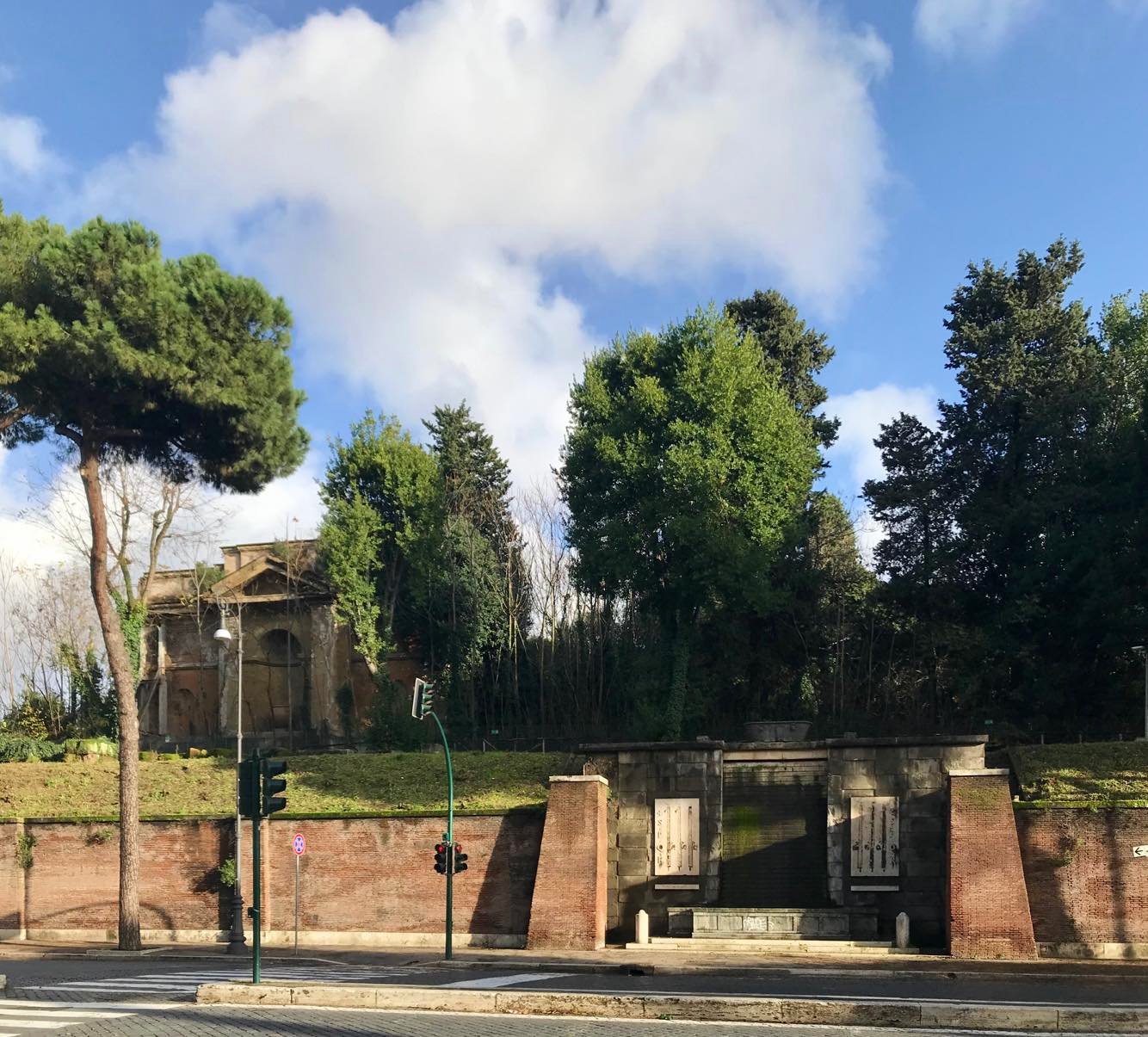
The Antiquarium of the Celian Hill is closed to the public. The building of the municipal Antiquarium, on the side of the hill that looks onto Via di San Gregorio and the Palatine Hill, with a project address on Viale del Parco del Celio with no published street number, is a restoration site financed with 10 million euros from the PNRR, with Roma Capitale as implementing body and the Sovrintendenza Capitolina as operator. There are no hours, tickets or reservations, and the operator doesn't publish a reopening date.
What you can visit today is next door. In the Celian Hill Archaeological Park, at Viale del Parco del Celio 20, open free every day, the old GIL gymnasium has housed the Forma Urbis Museum since January 2024: 11 euros full price for non-residents, 6.50 reduced, free admission for Rome residents with ID. There the Sovrintendenza displays, besides the Severan marble plan, a selection of architectural and decorative materials from the former municipal Antiquarium.
Data verified on September 29, 2026 on the pages of the Sovrintendenza Capitolina dedicated to the Antiquarium, the Celian Hill Archaeological Park and the Forma Urbis Museum, on the Roma Capitale tourism portal, on the project page on the OpenPNRR portal and on Roma si trasforma. For the state of the work, the 2026 press articles cited later also count. For any information the official channel is 060608, the Roma Capitale contact center, active every day from 9:00 to 19:00.
In brief: address, hours, ticket
- Address: Viale del Parco del Celio, Rome, Via di San Gregorio side, street number not published by the operator.
- Operator: Sovrintendenza Capitolina ai Beni Culturali, Roma Capitale, information at 060608.
- Status: closed to the public since December 5, 1939, PNRR Caput Mundi work under way, no reopening date published.
- Price: no ticket, the building can't be visited.
- To see in the meantime: Forma Urbis Museum, Viale del Parco del Celio 20, Tuesday to Sunday, 11 euros full price for non-residents.
- Celian Hill Archaeological Park: free, from 7:00 to 17:30 on standard time and from 7:00 to 20:00 on daylight saving time.
- Accessibility: park area and Forma Urbis Museum accessible according to the Sovrintendenza.
Where it is and what you really see
The building is on the Celian Hill, between the Colosseum and the Circus Maximus, as the Museo di Roma describes it in the presentation of a 2025 conference. The long front faces Via di San Gregorio, the road that separates the hill from the Palatine Hill, and which during the Fascist period was called Via dei Trionfi. Anyone walking that road toward the Circus Maximus has it on the left, up high, beyond the tree-lined embankment.
So what do you see? From outside, today, a construction site. Carteinregola reports that work began in March 2025 and that at the start of 2026 a large steel and glass volume appeared on the side toward the Palatine, with pillars, beams and reflective windows. Artribune, in August 2026, described suspended loads, metal framework and glass mounted on the outline of the part that collapsed in the 1930s. You can't go inside.
The address that appears in the project is Viale del Parco del Celio, the same avenue you enter the Celian Hill Archaeological Park from. The park has three entrances listed by the Sovrintendenza: Viale del Parco del Celio 20, Viale del Parco del Celio 22 and Clivo di Scauro 4. Inside are the Casina del Salvi, the former GIL gymnasium with the Forma Urbis Museum, the garden with the epigraphic materials and the foundations of the Temple of the Divine Claudius.
The relationship between the two places is close. The park's archaeological garden displays reliefs, architectural fragments and inscriptions from the late 19th-century excavations, organized by thematic groups, and the Sovrintendenza writes that many materials come precisely from the collections of the former municipal Antiquarium. In practice a part of what the Antiquarium held is already visible, outdoors and in the museum, a short distance from the building that contained it and that is still waiting to reopen.
A curiosity about the Antiquarium of the Celian Hill
The name hides a storeroom story. According to the Sovrintendenza Capitolina, the architect Costantino Sneider originally designed an Urban Museum and Archaeological Warehouse, meant to hold the finds coming out of the excavations of the city that had just become capital. The term Antiquarium came later, with the rearrangement of the 1920s. For decades the building was both a depot and an exhibition space, and this double nature explains why its collections were so extensive and so varied.
Second curiosity: the size of the original project. Artribune, in a 2023 reconstruction, writes that Sneider designed the building around 1885 with a length of about 200 meters, in an eclectic Beaux-Arts style, close to the museums being built in those years in the United States and Great Britain. The museum was to house both the municipal and the state collections. It didn't go that way, and the building you see is the result of successive stages.
Third curiosity, the most concrete. The closure has a precise date, December 5, 1939, reported by the Sovrintendenza, and a cause that has nothing to do with the war: the subway works, today's Line B, caused serious structural problems for the building. A closure presented as temporary turned out to be permanent. Almost 90 years have passed since, and the PNRR work is the first intervention designed to put the building back in use.
Last curiosity, tied to the museum next door. The Forma Urbis, the marble plan of Rome carved between 203 and 211 AD, originally consisted of about 150 slabs, and today roughly a tenth survives, according to the Sovrintendenza. Turismo Roma gives a scale of about 1 to 240. That the plan and the Antiquarium's materials ended up in the same museum is no accident: they are two pieces of the same operation of recovering the civic collections on the Celian Hill.
One thing nobody tells you about the Antiquarium of the Celian Hill
The Antiquarium of the Celian Hill did not reopen in 2024. It's the most widespread error, and in our judgment the thing to clarify before all others. On January 11, 2024 the Celian Hill Archaeological Park and the Forma Urbis Museum were inaugurated, and some outlets announced them as the new Antiquarium of the Celian Hill. The museum opened that day, however, is in the former GIL gymnasium. The historic building of the municipal Antiquarium was and remains closed.
The second thing rarely said concerns what comes after. The PNRR financing, according to Carteinregola, mainly covers structural consolidation, and the complete fit-out and opening to the public will require other funds. Artribune wrote in August 2026 that the Sovrintendenza was indicating August 31 as the deadline to complete the structure, with the design of the interiors to follow. A finished structure, then, is not the same as a museum open with hours and a ticket office.
Third thing: the financing figures have changed. Artribune reports that the project started with 16 million euros, then dropped to an effective 10 million, the figure that also appears on Roma si trasforma and on OpenPNRR. The OpenPNRR portal classifies the intervention as delayed, with recorded spending of 3,358,217.42 euros, equal to 33.58 percent of the total, and payments distributed between December 2024 and June 2026.
Fourth thing, less technical. The project isn't to everyone's taste. Wanted in Rome reported in late July 2026 the criticisms by Italia Nostra and a city councilwoman of the use of glass and steel next to the historic parts, and of the planned terrace with a café overlooking the Colosseum. Carteinregola wrote to the superintendent Presicce asking for the publication of the project documents and a public assembly before the end of the work.
How was the municipal Antiquarium born and why did it close in 1939?
After 1870 Rome becomes the capital and changes its skin quickly. Streets are opened, ministries and neighborhoods are built, and every construction site yields statues, inscriptions, glass, bronzes, everyday objects. The municipal Archaeological Commission, according to Wikipedia, conceived the museum to display the finds from those excavations, and the archaeologist Rodolfo Lanciani devised its exhibition project, as Artribune also writes. The Sovrintendenza places the start of the construction phases in 1882.
On the dates of the first opening the sources don't agree. The Sovrintendenza Capitolina writes that the first six rooms were inaugurated in 1889 and a seventh in 1906. Wikipedia gives the completion of the building in 1890 and the inauguration on May 7, 1894, as a simple archaeological warehouse. Artribune speaks of 1894 as the year the warehouse became a museum open to the public. The two versions can be read together: rooms built in stages, and regular opening to the public a few years later.
The second act begins in 1925. According to the Sovrintendenza, the architect Antonio Muñoz enlarged the structure with work completed in 1929, the year in which the depot was reorganized as a true municipal Antiquarium, intended for the finds that found no room in the Capitoline Museums. In 1938 and 1939 Muñoz himself added three new rooms. The display, writes Artribune, followed aesthetic criteria more than topographic ones, with objects ordered by material.
Then came the subway construction sites. The Sovrintendenza speaks of significant structural problems and of a closure, on December 5, 1939, that would turn out to be permanent. According to Artribune's 2023 reconstruction, in 1943 part of the building was demolished and the rest fell into ruin. The finds were packed and transferred to depots and other museums. The Celian Hill lost its civic museum just when the area around it was being redrawn.
The advice I give you for visiting the Antiquarium of the Celian Hill
Today the Antiquarium is visited by proxy. The advice is to enter the Celian Hill Archaeological Park from Viale del Parco del Celio 20, pass through the epigraphic garden, where the materials from the 19th-century excavations are displayed outdoors, and then buy the ticket for the Forma Urbis Museum, which holds a substantial selection of the architectural and decorative material of the former municipal Antiquarium according to the Sovrintendenza. It's the most direct way to see what the closed building held.
Choose the time with care. The park opens at 7:00, the museum at 10:00 Tuesday to Sunday. On standard time the museum closes at 16:00, with last entry at 15:00, and in winter the afternoon is short. It's best to arrive in late morning, go around the garden and the museum in an hour and a half and then head down toward the Colosseum or the Circus Maximus, leaving the Antiquarium construction site for a last look from Via di San Gregorio.
Read the history before going. On site the construction site is fenced and there are no panels explaining what the building was. Three dates are enough to get oriented: the first rooms of the late 19th century, Muñoz's enlargement completed in 1929, the closure of December 5, 1939. With these references in mind, the glass and steel volume you see from the street makes sense: it rebuilds the part that collapsed in the 1930s.
Don't force access to the construction site, don't climb fences and don't climb on the low walls of the embankment to look better. The area is an active public construction site, and the legal and comfortable viewpoint is the street. Anyone who wants to follow the progress of the work has two official tools: the project page on Roma si trasforma, with construction photographs, and the project page on the OpenPNRR portal, with amounts and payments.
Can you get in and how much does it cost?
In the building of the municipal Antiquarium, no. It's closed, has no ticket office and there are no ordinary or by-reservation visits published by the operator. There also appears to be no paid third-party product dedicated to the Antiquarium worth pointing out. The Sovrintendenza, on the dedicated page, describes the recovery project and the six exhibition rooms planned on the ground floor, but gives no dates. To find out if and when special openings will be organized, the channel is 060608.
The Forma Urbis Museum, on the other hand, is paid. The official channel is the Sovrintendenza Capitolina page on the Forma Urbis Museum, with prices and hours. Roma Capitale's tourism portal points to the ticket office of the Musei in Comune circuit for online purchase. The ticket isn't needed for MIC Card holders. There is no ticket for the place on third-party platforms worth pointing out in place of the official channel.
| Item | Forma Urbis Museum | Celian Hill Archaeological Park |
|---|---|---|
| Full price, non-residents | 11 euros | free |
| Reduced, non-residents | 6.50 euros | free |
| Rome residents | free with ID | free |
| First Sunday of the month | free until places run out | free |
| Hours on daylight saving time | Tuesday-Sunday 10:00-19:00, last entry 18:00 | every day 7:00-20:00 |
| Hours on standard time | Tuesday-Sunday 10:00-16:00, last entry 15:00 | every day 7:00-17:30 |
| Closures | Monday, May 1, December 25 | May 1, December 25 |
The prices and hours in the table come from the Sovrintendenza's page on the museum and from the one on the park. Roma Capitale's tourism portal adds reduced hours for December 24 and 31, from 10:00 to 14:00. Anyone coming with a class, an association or a group of friends must book at 060608: for visits of this kind the Sovrintendenza indicates a number from 5 to 25 people and a duration of 60 minutes.
Anyone who wants to learn more about the building's history without being able to enter must follow the calendar of the Municipality's events. On April 29, 2025, for example, the Museo di Roma hosted a free conference on the restoration of the Antiquarium, in the series dedicated to cultural heritage professions, with 60 seats and reservation recommended at 060608. The operator doesn't publish a fixed calendar of initiatives of this kind, so it's best to keep an eye on the pages of the Sovrintendenza and the civic museums.
Another well-known fact, yet rarely cited
That Rome's subway has had a troubled history many know. Few connect those construction sites to the loss of a museum. The Sovrintendenza Capitolina writes explicitly that the subway works caused the structural problems that led to the 1939 closure. Line B, which today brings visitors to the Colosseo station, was born also from that construction site: the same work that serves the archaeological area took the Celian Hill's Antiquarium away.
The second well-known and little-cited fact concerns quantity. Artribune, in 2023, speaks of about 80,000 finds, from prehistoric Rome up to the 5th and 6th centuries, with decorative arts ordered by material: glass, bronzes, ivories, bones, terracottas. Among the provenances it cites the excavations of the villas on the Velia and the finds linked to the construction of the ministries on Via XX Settembre. They are the small objects of daily life, less famous than the statues but decisive for understanding the city.
Third fact: the collection was for decades a problem of crates. According to the same reconstruction, the finds are kept in about a thousand wooden crates distributed across several depots, and a 1986 census counted 781 of them at the Palazzo delle Esposizioni. Systematic cataloging began in 2007. In our judgment the real question about the building's future isn't about the facade's glass, but how many of these objects will return on display.
One last datum, often overlooked, concerns timing. The Museo di Roma, presenting the 2025 conference, describes a building begun at the end of the 19th century and completed in the 1920s. That means the Antiquarium reached its final form only 10 years before closing. It worked at full capacity for a short time, and since then has stayed closed for a period much longer than the one in which it was open.
The right photo to take at the Antiquarium of the Celian Hill
The photo that tells the place today is the construction site seen from below, from Via di San Gregorio, with the new glass and steel volume next to the historic masonry. It works horizontally, with the tree-lined embankment in the foreground. The glass reflects the sky and, according to Carteinregola, on the north front the windows are reflective: with the sun high the reflection can burn out the light part of the image, so side light in the morning or late afternoon is best.
The second useful image is a comparison. From the sidewalk of Via di San Gregorio, on the Palatine side, you can frame together the flank of the Celian Hill with the building under construction and, turning around, the arches and trees of the Palatine. It's the photograph of the place's geography: the civic museum was born here, in view of the imperial hill, on the street that the regime called Via dei Trionfi. Watch out for traffic, which is heavy here, and stay on the sidewalks.
Third choice, inside the park. The epigraphic garden, with inscriptions and architectural fragments from the former Antiquarium arranged by thematic groups, offers better subjects than the construction site. A cloudy day renders the relief of the marble well, high sun flattens it. Inside the Forma Urbis Museum the fragments of the plan are overlaid on Giovanni Battista Nolli's 1748 plan of Rome, according to Turismo Roma: a shot from above, where allowed, gives back the comparison between ancient Rome and 18th-century Rome.
On the calendar, autumn and winter give the softest light on Via di San Gregorio, with the low sun entering between the trees of the Palatine and not hitting the windows head-on. In spring the embankment of the Celian Hill is green and partly covers the construction site. In summer the first morning is best, when the park is already open and the street is less trafficked. People should be left out of the frame or shot only with their consent, and the construction workers shouldn't be photographed.
How do you get there from central Rome?
The operator doesn't publish public transport directions on the Antiquarium's page, nor on the park's. Wikipedia lists Colosseo and Circo Massimo, on Metro Line B, as nearby stations, and a bus stop called Parco Celio. Surface lines change with works and new schedules, so for the route of the day it's best to use the planner on the ATAC site or call 060608, giving Viale del Parco del Celio 20 as the destination.
On foot from the Colosseum the route is short. You take Via di San Gregorio toward the Circus Maximus, with the Palatine on the right and the Celian Hill on the left, and climb back up toward Viale del Parco del Celio, which leads to the park entrances at numbers 20 and 22. The third entrance, at Clivo di Scauro 4, is convenient for those coming from the Basilica of Saints John and Paul and from the Roman Houses of the Celian Hill.
By car the area is not recommended. Around the Colosseum traffic is heavy, street parking is scarce and the operator lists no dedicated parking. For those with mobility difficulties the Sovrintendenza declares the park area and the museum accessible, and the Forma Urbis Museum page lists a restroom for people with disabilities. Viale del Parco del Celio does climb, though, and it's best to ask at 060608 which entrance is easiest.
Coming from the Circus Maximus you walk Via di San Gregorio in reverse, on a gentle uphill toward the Colosseum, with the building under construction on the right. Coming down from the Lateran you instead cross the Celian Hill passing by Santo Stefano Rotondo and Villa Celimontana, and reach the park from Clivo di Scauro. The walk from the Lateran is quieter than the one along the busy streets of the Colosseum, and lets you see the hill's churches along the way.
Some important events that happened here in history
In 1882, according to the Sovrintendenza Capitolina, the construction phases begin of the Urban Museum and Archaeological Warehouse designed by Costantino Sneider. In 1889 the first six rooms are inaugurated, again according to the Sovrintendenza, while Wikipedia dates the inauguration to May 7, 1894. In 1906 a seventh room arrives. In those years capital Rome digs everywhere, and the warehouse on the Celian Hill becomes the collection point for the finds that the city's construction sites yield.
In 1925 the enlargement directed by Antonio Muñoz begins, concluded in 1929 with the new display of the municipal Antiquarium. In the same year 1925, according to Artribune, the Museo Mussolini is born at Villa Caffarelli on the Capitoline Hill, renamed Museo Nuovo after the war, another seat for the civic collections. In 1938 and 1939 Muñoz adds three rooms. On December 5, 1939 the Antiquarium closes because of the damage caused by the subway works.
In 1943, according to Artribune's reconstruction, the building undergoes a partial demolition. In 1986 a census records 781 crates of finds at the Palazzo delle Esposizioni. In 2007 cataloging begins. From 2018, Artribune again writes, some exhibitions on the third floor of Palazzo Caffarelli, including La Roma dei Re and La Roma della Repubblica, bring part of the materials back into view. In April 2022 the restoration enters the PNRR Caput Mundi program.
On January 11, 2024 the Celian Hill Archaeological Park and the Forma Urbis Museum are inaugurated, with materials from the former Antiquarium in the garden and in the museum, and opening to the public from January 12. In March 2025, according to Carteinregola, the work starts. On April 29, 2025 the Museo di Roma dedicates a conference to the Antiquarium's restoration. In summer 2026 the steel and glass structure takes shape, and the debate on the project reaches the press.
Who passed through the Antiquarium of the Celian Hill
The first names are those of the founders. The municipal Archaeological Commission, which after 1870 wanted a place for the finds of the new capital's excavations. Rodolfo Lanciani, archaeologist, who according to Wikipedia and Artribune devised its exhibition project. Costantino Sneider, the architect who designed the Urban Museum and Archaeological Warehouse with an ambitious layout, meant to house state collections too. They are the figures of the Umbertine Rome that dug and built at the same time.
The second act bears the name of Antonio Muñoz. An architect and municipal official, according to the Sovrintendenza he enlarged the building between 1925 and 1929 and added three rooms in 1938 and 1939. Artribune attributes to him the new display of 1929, ordered by materials and aesthetic criteria. A few months after the last enlargement, the subway works made unusable the very building he had just enlarged.
The present has names of technicians and citizens. The architect Federico Gigli, a restorer for the Sovrintendenza Capitolina, told the building's history and the recovery project at the April 29, 2025 conference at the Museo di Roma at Palazzo Braschi. The associations Carteinregola and Italia Nostra took a position on the project in 2026, the first with a letter to the superintendent Presicce. Roma Capitale is the implementing body of the work according to OpenPNRR.
Finally the visitors, who for almost half a century climbed the Celian Hill to see glass, bronzes and terracottas of the ancient city, and who from 1939 on could no longer enter. The operator doesn't publish data on the Antiquarium's visitors between the 19th and 20th centuries. What remains is the list of objects, about 80,000 according to Artribune, and the prospect that a part will be back for those who climb the hill.
Where are the municipal Antiquarium's finds today?
What the documents say: after the 1939 closure the finds were transferred to other museums or depots, according to Wikipedia. The Sovrintendenza, on the page of the Celian Hill Archaeological Park, writes that many materials of the epigraphic garden and the Forma Urbis Museum come from the collections of the former municipal Antiquarium, the fruit of the late 19th-century excavations. A part of the collection is therefore already on display, outdoors and in the rooms of the former GIL gymnasium.
The rest, according to Artribune's 2023 reconstruction, was long kept in about a thousand wooden crates distributed across several sites, with cataloging begun in 2007. Some exhibitions at Palazzo Caffarelli, in the Capitoline complex near the Palazzo dei Conservatori, have displayed since 2018 materials of the Rome of the kings and of Republican Rome. The operator doesn't publish an updated inventory of the sites where the crates are today.
What remains uncertain: which materials will return to the restored building. The Sovrintendenza writes that the project aims to restore the original function and provides six exhibition rooms on the ground floor and offices on the first floor. Artribune in August 2026 speaks of a part of the heritage of finds from the transformations of post-Unification Rome. No open official source yet gives a list of objects, a route or a curator for the new display.
Anyone who wants to see similar objects can meanwhile look in the civic museums. The Capitoline Museums hold the great pieces of the 19th-century excavations, and the Centrale Montemartini displays statues and mosaics of the Capitoline collections among the machines of a power plant. For the complete list of the Municipality's and the State's sites, among our pages you'll find Museums of Rome and State Museums of Rome.
What will the building become after the PNRR work?
The official project has a long title: former municipal Antiquarium, structural consolidation, rehabilitation and conservative restoration. According to OpenPNRR it falls under the Caput Mundi measure, dedicated to Rome's cultural heritage, with Roma Capitale as implementing body and the Ministry of Tourism as the lead administration. Roma si trasforma describes a restoration extended to the building and the surrounding park, with energy efficiency, redevelopment of the outdoor area and interior fit-outs, and indicates the end of the work in the third quarter of 2026.
On the architectural side, the Sovrintendenza speaks of a conservative structural rehabilitation that uses materials like glass and steel while respecting the historic elements. Carteinregola explains that the new volume rebuilds a part that collapsed in the 1930s. Artribune describes six exhibition rooms on the ground floor with a full-height central glass wall and service spaces on the upper floor. Wanted in Rome adds the terrace with a café facing the Colosseum.
On function the sources use different words. For the Sovrintendenza it's a matter of restoring the original museum function. For Roma si trasforma a cultural and tourist hub integrated with the Celian Hill Archaeological Park will be born. Carteinregola speaks of a multipurpose cultural center and a welcome point for visitors to the central archaeological area. They are three compatible descriptions, but no official source yet sets hours, prices or an opening date.
The opposing position, in our judgment, must be stated clearly. The terrace over the Colosseum will probably be the most photographed part of the new building, and it's also the least important. The Antiquarium's value lies in its collections, and the risk is a restored container with few display cases and many services. The yardstick of judgment, at reopening, will be how many objects from the old crates return before the public and with what story.
How does the Antiquarium fit among the places of the Celian Hill?
The Celian Hill is one of the least visited hills of the center, despite its closeness to the Colosseum. On the site you'll find the page Celian Hill: what to see, which lines up the churches, parks and underground sites of the district. The Antiquarium and the Archaeological Park occupy its northern edge, toward the Colosseum valley. From here Clivo di Scauro climbs toward Santi Giovanni e Paolo, beneath whose level the Roman Houses of the Celian Hill can be visited.
A short distance away are San Gregorio al Celio, with the staircase on Via di San Gregorio, and the park of Villa Celimontana, a public garden with free entry. Higher up, toward the Lateran, the Arch of Dolabella, the church of Santo Stefano Rotondo on the Celian Hill and the Basilica of the Santi Quattro Coronati. They are places different in era and access, united by the same climb.
On the opposite slope, the Colosseum valley leads to the Basilica of San Clemente, with its underground levels, and to the Domus Aurea on the Oppian Hill. The Forma Urbis Museum works as an introduction to the whole quadrant: the fragments of the Severan plan, carved between 203 and 211 AD and originally mounted in the Temple of Peace, according to the Sovrintendenza, show the city these monuments made up.
Inside the park, two buildings tell other seasons of the hill. The Casina del Salvi, a 19th-century construction recovered with the park project according to the Sovrintendenza, and the former GIL gymnasium, a building from the Fascist period now home to the Forma Urbis Museum. Around them you see the perimeter foundations of the Temple of the Divine Claudius, dedicated to the deified emperor, which the Sovrintendenza lists among the most important archaeological evidence of the hill's northern sector. The Antiquarium fits into this sequence as the chapter of Umbertine Rome.
When is it closed and what not to expect?
The Antiquarium is always closed, until further notice from the operator. The park around it closes on December 25 and May 1, and every day at 17:30 on standard time and at 20:00 on daylight saving time. The Forma Urbis Museum is closed on Monday, December 25 and May 1. For extraordinary closures, due for example to bad weather, events or work in the park, it's best to check the Sovrintendenza's notices or call 060608 before leaving.
What not to expect? An open museum in the historic building: there isn't one. A visit to the construction site: the operator publishes none. Explanatory panels on the Antiquarium's history in front of the fence: none appear. The 80,000 works all on view: most are still in storage. And not even a single ticket with the Colosseum, because the Colosseum Archaeological Park and the Sovrintendenza Capitolina are different operators with separate ticket offices.
Don't expect a certain reopening date either. The 2026 sources speak of a structure being completed and interiors still to be designed, and Carteinregola recalls that other funds will be needed for opening to the public. Anyone who reads online about a new museum ready next to the Colosseum should know it's the building, not the rooms. When the operator announces hours and prices, the Sovrintendenza's page on the Antiquarium will be the first place to look for them.
The park too has its limits. On standard time the gates close at 17:30, and anyone arriving in late afternoon in winter risks finding the museum already closed and the park at dusk. The epigraphic garden is outdoors, with no cover: on days of heavy rain or intense heat the visit to the outdoor materials becomes uncomfortable. The operator doesn't publish a list of drinking fountains or restrooms in the park, apart from the accessible restroom listed for the museum.
Eating nearby
Inside the park the operator lists no open refreshment point, and publishes no specific rules on picnics. The general rules of archaeological areas and municipal green space apply: no glass, no fires, trash carried away. Going down toward the Colosseum, instead, you enter one of the zones with the highest concentration of tourists in the city, and the traps that come with it. Here it's best to choose with more care than elsewhere.
Anyone who wants a break without sitting at a table can bring water and something to eat and use the benches of the Celian Hill Archaeological Park or of Villa Celimontana, a little higher on the hill. They are public spaces, frequented by residents and families, where it's best to leave the spot clean and not block the paths. In the middle hours of summer days the shade of the trees is the real resource, more than any café facing the Colosseum.
The signs are always the same. The barker on the sidewalk who invites you to sit, the menu with photographs of the dishes, items without prices, the menu that's different outside and inside, the kitchen open continuously from morning to evening with no break. In front of the monuments there are places that adapt the bill to the customer. Romans don't go there for a simple reason: they live off passersby, not off regulars.
The practical rule is to go up. On the Celian Hill, toward Santo Stefano Rotondo and the Lateran, or in the streets of the Monti district beyond Via Cavour, tourist pressure drops and you find places frequented by people who work and live in the area, with short menus and clear prices. For carefully selected addresses there is the list of addresses on Google Maps, also useful for organizing the day among the Celian Hill, the Colosseum and Monti.
What to combine in a day
The natural pairing is the Celian Hill Archaeological Park with the Forma Urbis Museum, and then the Colosseum. Anyone who has booked the Flavian Amphitheater, the Roman Forum and the Palatine can use the Celian Hill park as a green break between one entrance and the next, since it's free and opens at 7:00. The museum, paid, adds the key to reading: the plan of ancient Rome, with the fragments overlaid on the 18th-century city.
Toward the south, Via di San Gregorio leads to the Circus Maximus, with the Mithraeum of the Circus Maximus and, farther on, the Baths of Caracalla. On the same line is San Sisto Vecchio. Anyone who prefers to climb can continue toward the Aventine, with the Basilica of Santa Sabina and the Basilica of San Saba.
Toward the east, beyond the Celian Hill, you reach the Lateran, with the Basilica of San Giovanni in Laterano and the Holy Stairs. Toward the north, beyond the Colosseum valley, the Oppian Hill and the Esquiline, with San Pietro in Vincoli and the Auditorium of Maecenas. Anyone who follows the thread of the ancient city can add a stretch of the Servian Walls.
For a day of civic museums, the Antiquarium pairs with the Capitoline Museums, which hold the great pieces of the late 19th-century excavations, and with the Centrale Montemartini. For zero-cost ideas there are the pages Free Museums in Rome, useful to residents for the Forma Urbis Museum, and Free Rome. Anyone who loves the levels beneath the city finds ideas on the page Underground Rome, and general orientation in The 22 Rioni of Rome.
Frequently asked questions
Is the Antiquarium of the Celian Hill open?
No. The building of the municipal Antiquarium on the Celian Hill has been closed to the public since December 5, 1939, according to the Sovrintendenza Capitolina, and is now a restoration site financed with the PNRR. The operator publishes no hours, prices or reopening date. A part of its materials can be seen in the nearby Celian Hill Archaeological Park, free, and in the Forma Urbis Museum, paid, at Viale del Parco del Celio 20.
Are the Forma Urbis Museum and the Antiquarium of the Celian Hill the same thing?
No, even though some outlets confused them in 2024. The Forma Urbis Museum, opened in January 2024, is in the former GIL gymnasium inside the Celian Hill Archaeological Park. The municipal Antiquarium is the historic building designed by Costantino Sneider and enlarged by Antonio Muñoz, closed since 1939. The museum does display, though, a selection of architectural and decorative materials coming precisely from the collections of the former Antiquarium.
When does the municipal Antiquarium reopen?
The operator has not published a date. Roma si trasforma indicates the end of the work in the third quarter of 2026, Artribune reported in August 2026 that the Sovrintendenza aimed to complete the structure by August 31, with the interiors still to be designed. Carteinregola notes that other funding will be needed for opening to the public. For updates it's best to check the Sovrintendenza's page on the Antiquarium or call 060608.
How much does the Forma Urbis Museum cost?
According to the Capitoline Superintendency, the full ticket for non-residents costs €11 and the reduced one €6.50. Rome residents get in free with ID, and on the first Sunday of the month admission is free for everyone until places run out. MIC Card holders don't need a ticket. The Celio Archaeological Park, which surrounds the museum, is always free during the gates' opening hours.
Why was the Antiquarium comunale closed?
Because of structural damage caused by the subway works, today's Line B, according to the Superintendency and Wikipedia. The Superintendency speaks of significant structural problems and of a closure, on December 5, 1939, that would turn out to be permanent. According to Artribune, part of the building was demolished in 1943. The finds were packed up and moved to storage and to other museums in the city.
What did the Antiquarium del Celio hold?
The finds from the excavations that followed the proclamation of Rome as capital. Artribune speaks of about 80,000 objects, from prehistory to the 5th and 6th centuries, with decorative arts arranged by material: glass, bronzes, ivories, bones and terracottas. Among the sources of the finds it cites the villas excavated on the Velia and the building sites of the ministries on Via XX Settembre. Part of the architectural and epigraphic material is now displayed in the Celio Archaeological Park.
Where can you best see the building under restoration?
From Via di San Gregorio, the road between the Celio and the Palatine that links the Colosseum to the Circus Maximus. From the sidewalk you can see the side of the building with the new steel and glass volume. The construction site is fenced off and must not be crossed. Inside the Celio Archaeological Park, with entrances at Viale del Parco del Celio 20 and 22 and at Clivo di Scauro 4, you can see the Antiquarium's materials displayed in the garden.
How do you get to the Celio Archaeological Park by public transport?
The Superintendency doesn't list the lines on the park's page. Wikipedia names Colosseo and Circo Massimo as the nearest stations, on subway Line B, and the Parco Celio bus stop. Surface lines change with roadworks and new timetables, so it's best to check the route on the ATAC website or by calling 060608, giving Viale del Parco del Celio 20 as your destination.
Who wrote this and from what sources
The text comes from the editorial team of Tour Leader Pro, the Rome-based company that designs itineraries, visits and cultural events across Rome and Lazio. The fares, hours and access rules given here come from the official sources cited in the text, as of the date stated at the top: for the Antiquarium the reference is the page of the Capitoline Superintendency on the Antiquarium comunale, for the park the one on the Celio Archaeological Park. Tell us what you find changed.
Organizing a morning between the Celio and the Colosseum, for yourself or for a group, means working on the fit of the pieces: the time slot at the Colosseum, the last entry to the Museo della Forma Urbis, the Monday closure, the park entrance closest to the stop. The Antiquarium's construction site should be counted as a stop from the outside, not as a visit. A useful resource for anyone organizing group trips is Tour Leader Pro, with tools designed to coordinate visits and itineraries.
The Antiquarium del Celio tells the story of the Rome that dug while it was building the capital, and it's easier to understand when you set it next to the Capitoline civic museums, the Centrale Montemartini and the big state archaeological sites. Putting together the Celio, the Forums, the Aventine, the Appian Way and maybe Ostia or Tivoli takes a few days and some planning, and a useful resource for putting together a multi-day itinerary is Italy Planner.