Published on
Some links on this page are affiliate links: if you buy through them, Estate Romana receives a small commission, at no extra cost to you. As an Amazon Associate, Estate Romana earns from qualifying purchases.
Rome and around in 5 days works well like this: three days in the city, divided by area, and two day trips outside the walls, one to Tivoli and one to the Castelli Romani, with the morning at Ostia Antica fitted into the fourth day. On the first day the archaeological area as far as Trastevere, on the second the Vatican and the center of the squares, on the third Villa d’Este and Hadrian’s Villa, on the fourth Ostia and the Rome of the staircases, on the fifth the lakes of the Castelli. 19 stops in all, never more than five a day.
The Tuscia, with Viterbo and Civita di Bagnoregio, remains as an alternative for the fifth day. It’s the most beautiful trip in northern Lazio, but it asks for more road and a car.
Data checked on October 3, 2026 on the official websites of Hadrian’s Villa and Villa d’Este, the Ostia Antica Archaeological Park, the Colosseum Archaeological Park and the Vatican Museums. For the other places, hours and entry rules change often. The operator’s website is what counts, and it’s listed in the individual Estate Romana pages.

Rome and around in 5 days at a glance
- What: an itinerary of Rome and around in 5 days with 19 stops, three days in the city and two day trips, to Tivoli and the Castelli Romani, plus the morning at Ostia Antica.
- Days 1 and 2: Colosseum, Forum, Palatine, Bocca della Verità and Trastevere on the first day. Vatican Museums, St. Peter’s, Piazza Navona and Pantheon on the second.
- Day 3: Tivoli, with Villa d’Este in the morning and Hadrian’s Villa in the afternoon. On Monday Villa d’Este only opens at 14:00, so it’s not the day for this trip.
- Day 4: the Ostia Antica excavations in the morning, reachable by the Roma-Lido railway from Piramide. In the afternoon Piazza di Spagna, Trinità dei Monti and Trevi Fountain.
- Day 5: the Castelli Romani, with Castel Gandolfo on Lake Albano and Nemi on its lake. As an alternative the Tuscia, with Viterbo and Civita di Bagnoregio.
- To book first: the Colosseum, with tickets on sale 30 days before the visit, and the Vatican Museums, closed on Sundays except the last one of the month.
- Good to know: the Ostia Antica Archaeological Park is closed on Mondays. From October 25 to February, Ostia and the Colosseum close at 16:30.
The program for Rome and around in 5 days
| Day | Morning | Afternoon | Evening |
|---|---|---|---|
| 1. Ancient Rome and Trastevere | Colosseum, Roman Forum, Palatine | Circus Maximus, Bocca della Verità | Tiber Island, Trastevere |
| 2. Vatican and squares | Vatican Museums and Sistine Chapel | St. Peter’s Basilica, Piazza Navona | Pantheon, Campo de’ Fiori |
| 3. Tivoli | Villa d’Este | Hadrian’s Villa | Return to Rome |
| 4. Ostia and the staircases | Ostia Antica excavations | Piazza di Spagna, Trinità dei Monti | Trevi Fountain |
| 5. Castelli Romani | Castel Gandolfo and Lake Albano | Nemi and its lake | Return to Rome |
Save this itinerary in My Trip
The button opens “My Trip” with the 19 stops already loaded and divided into the five days. There you add the dates, mark the tickets you’ve bought, choose the hotel and remove what doesn’t interest you.
Day 1: from the Colosseum to Trastevere
You start with the most tiring visit, with fresh legs. One ticket covers the Colosseum, the Roman Forum and the Palatine, with a fixed time slot for the Colosseum entrance. According to the website of the Colosseum Archaeological Park
, sales open 30 days before the visit date, and from October 25, 2026 to February 28, 2027 the area closes at 16:30, with last entry at 15:30. Allow three or four hours. That’s an estimate, and if you read every panel it takes longer.
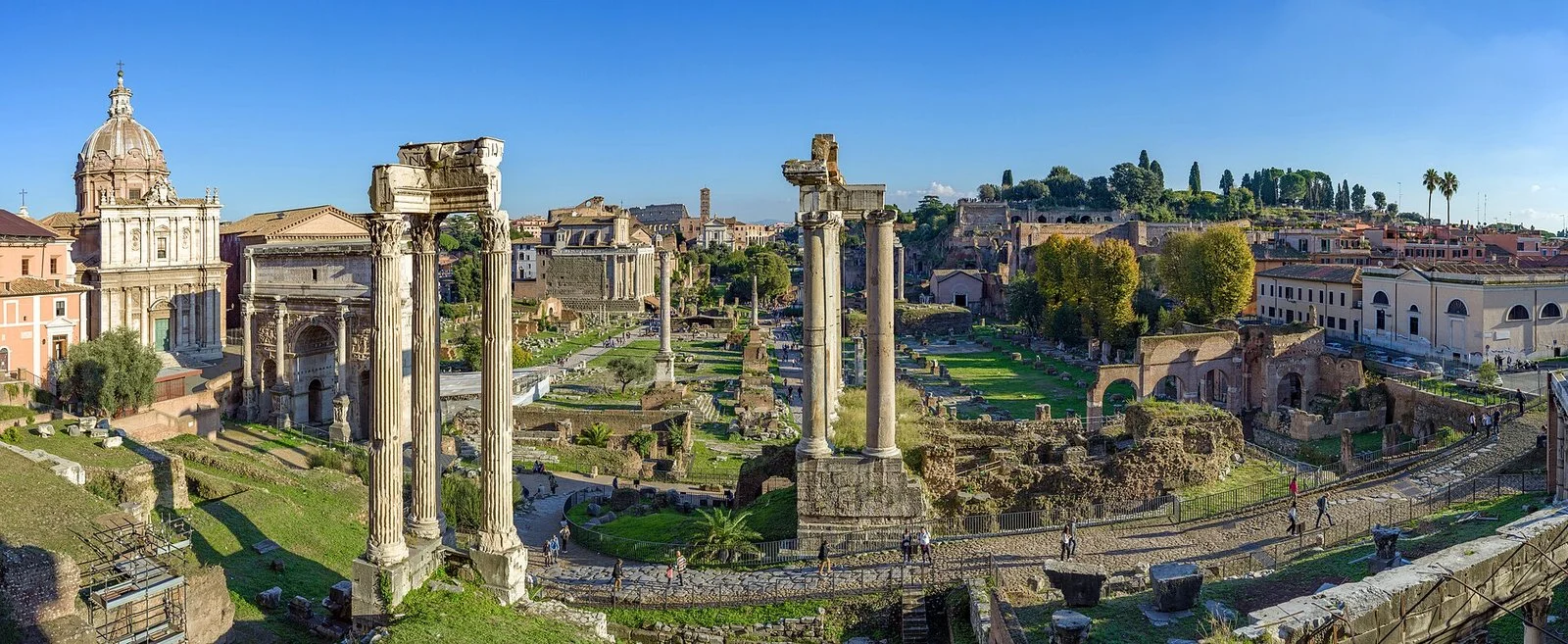
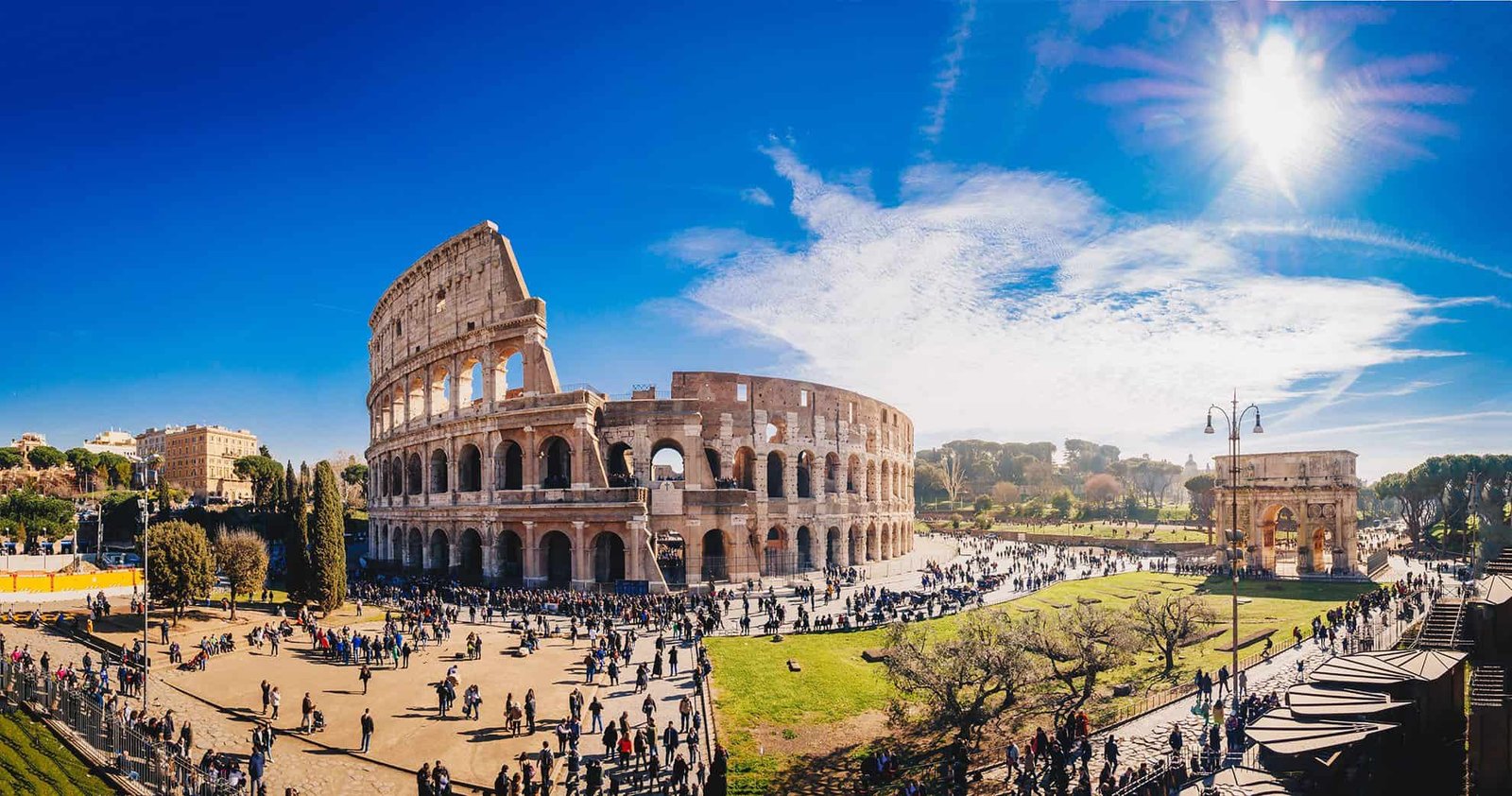
The order that works is Colosseum, Palatine, Forum. If the official dates are sold out, you still have entry to the Colosseum and Forum with an audio guide on GetYourGuide, the guided tour of the Colosseum, Forum and Palatine and the Colosseum offers on Tiqets. If you still have energy after the Forum, you can go up to the Capitoline Hill and the Capitoline Museums, or to the terrace of the Altar of the Fatherland. In the program they stay optional.
In the afternoon you go down along the Circus Maximus to the Mouth of Truth, in the portico of Santa Maria in Cosmedin: about 20 minutes on foot from the Palatine. From there, crossing the Tiber, you pass through the Tiber Island, with a possible detour into the Jewish Ghetto, which sits right on the opposite bank.
The evening is for Trastevere. Take the neighborhood without a list: Santa Maria in Trastevere if it’s still open, then the side streets, away from the main square, for dinner. For addresses there’s the Estate Romana restaurant map, and to book there’s TheFork. If you’d rather have the neighborhood told to you at the table, you can look at the food tour of Trastevere and Campo de’ Fiori. If you like, you watch the sunset from the Janiculum, a 20-minute climb.
If you’re tired, what to skip: the Bocca della Verità. The evening counts more than the photo.
Day 2: the Vatican and the squares of the center
- The second day starts early and with the ticket in your pocket. The Vatican Museums are the most crowded museum in Rome, and the route to the Sistine Chapel is one-way. According to the Vatican Museums website, they’re open Monday to Saturday from 8:00 to 20:00, with last entry at 18:00, and closed on Sundays, except the last one of the month. You need at least three hours. As an alternative to the official website there are the priority entries on GetYourGuide and the ones on Tiqets.
- Once out of the museums, you walk around the walls to St. Peter’s Square
- 15 minutes on foot. Entry to St. Peter’s Basilica is free, but you go through security checks, and in the middle of the day the line under the colonnade can be long. If you want to climb the dome, you’ll also find the dome and underground tours.
In the afternoon you cross the Tiber at Ponte Sant’Angelo and in about 20 minutes you reach Piazza Navona, built on the shape of Domitian’s stadium. Another five minutes and you’re at the Pantheon: entry is paid and it’s best to arrive with a ticket, from the official website or among the Pantheon entries on GetYourGuide. Inside, 20 minutes is enough. The evening ends at Campo de’ Fiori, which fills up with tables after the morning market.
If you’re tired, what to skip: the basilica, if the line is long. You come back early in the morning on another day.
Day 3: Tivoli, Villa d’Este and Hadrian’s Villa
The first trip outside Rome is also the richest: in Tivoli there are two Unesco sites a few kilometers from each other, and one day is barely enough for both. The morning goes to Villa d’Este, in the historic center, with the garden of fountains commissioned by Cardinal Ippolito II d’Este. Count on a couple of hours. Watch the calendar: according to the official website of Hadrian’s Villa and Villa d’Este, Villa d’Este is closed on Monday morning and opens at 14:00, so Monday is no good for this trip.
In the afternoon you go down to Hadrian’s Villa, the residence of Emperor Hadrian in the plain below the town: a huge area, where you need three hours and good shoes. Between the two villas there are local buses and taxis, with schedules on the operator’s website. Tickets are bought on the official website. As an alternative there are Villa d’Este entries on Tiqets and, for those who don’t want to think about transfers, the day trip to Villa d’Este and Hadrian’s Villa from Rome.
How to get there: by regional train from Roma Tiburtina to Tivoli, by intercity bus from the Ponte Mammolo station of metro line B, or by car, which here is really worth it because the two villas are far from each other. Train times can be compared on Trainline.
If you’re tired, what to skip: not Hadrian’s Villa, it’s the more important of the two for those who love ancient history. Skip instead the tour of the center of Tivoli and the Temple of the Sibyl, beautiful but secondary on such a full day.
Day 4: Ostia Antica and the Rome of the staircases
In the morning you go to the seaside of ancient Rome. The Ostia Antica excavations are a whole city, with streets, multi-story houses, baths, the theater and the port shops, and you reach them by the Roma-Lido railway from the Porta San Paolo station, next to the Piramide stop of metro line B. According to the website of the Ostia Antica Archaeological Park, the area opens at 8:30 and is closed on Mondays. From October 25 to the end of February it closes at 16:30, with the ticket office closing one hour earlier.
For Ostia count on three hours, in the morning. That’s an estimate, and if you get lost among the houses and warehouses you’ll spend more. The ticket is bought on site or on the official website. There are also
priority entry with an audio guide on GetYourGuide and the offers on Tiqets. Bring water: there’s little shade.
Back at Piramide, you take metro line B to Termini and line A to Spagna. The afternoon is light: Piazza di Spagna, the staircase and, at the top, Trinità dei Monti, with the view over the rooftops. Then 10 minutes on foot to the Trevi Fountain, which in the evening, lit up, looks better than in the daytime. Close access to the basin is regulated: the rules in force are on the Roma Capitale website.
If you’re tired, what to skip: Trinità dei Monti. From the square to the fountain it’s flat, and you can look at the staircase from below.
Day 5: the Castelli Romani, Castel Gandolfo and Nemi
The last day is the most relaxed. Castel Gandolfo sits on the edge of Lake Albano, a volcanic crater full of water. The village is small and the lookout over the lake is the reason for the visit. The Papal Palace and the gardens depend on the Vatican Museums: openings and tickets need to be checked on their website before you go, because they change. Count on the morning, with a coffee on the square designed by Bernini.
Then Nemi, about 20 minutes by car, overlooking the smaller and more enclosed of the two lakes. Here you have lunch, walk around the village and, if you like, visit the Museum of Roman Ships, on the shore. If you want to close the five days with a glass, you can look at the wine tasting in the Roman countryside.
How to get there: by car, because between the towns of the Castelli public connections exist but they’re slow. If you don’t drive, you can do a simpler trip, by regional train from Termini, to Frascati, the closest and the easiest to reach: villas, fraschette and the white wine that carries its name.
If you’re tired, what to skip: Nemi. Castel Gandolfo alone, with lunch on the lake, is already a day.
What if on the fifth day you go to the Tuscia?
The Tuscia is the alternative to the Castelli for those who have a car and aren’t afraid of an hour and a half of road each way. Viterbo, with the medieval quarter and the Palace of the Popes, pairs well with Civita di Bagnoregio, the village on a tuff spur reachable only by the pedestrian bridge. Access to Civita is by ticket, which you can also buy online: details on the Bagnoregio town website. If you stay near Viterbo you’ll also find the Terme dei Papi.
Other combinations: the Park of the Monsters at Bomarzo with Palazzo Farnese at Caprarola, or the Etruscan necropolises of Cerveteri and Tarquinia, toward the coast. Closer to Rome there are Lake Bracciano, with the Odescalchi Castle, and the village of Calcata. The rule stays the same: two destinations a day, never three.
What not to put in an itinerary of Rome and around in 5 days
The opposing view: Pompeii doesn’t fit in five days in Rome. Day trips from Rome to Pompeii exist and sell a lot, but they mean many hours of bus or train for a few hours of excavations. Ostia Antica, much closer, shows a Roman city preserved with fewer crowds. If you want Pompeii, put it in a trip to Naples, with a full day.
The second mistake is putting two trips in the same day, for example Tivoli in the morning and the Castelli in the afternoon: they’re in opposite directions and the day goes by in the car. The third is the Galleria Borghese
squeezed in between the Vatican and the squares. It’s an extraordinary museum, with time slots, inside Villa Borghese, and it deserves half a day on its own: keep it for a sixth day, together with the Pincio and Piazza del Popolo.
Where to stay for this itinerary?
For a program with three trips the right area is the one near the trains. Termini is the most practical: the regional trains for the Castelli and the two metro lines leave from there, provided you accept a less pleasant neighborhood in the evening. The Monti district is nicer and stays convenient. The historic center is splendid but far from the stations.
If you have a car for the trips, choose a property with parking outside the limited traffic zones, for example in the northern neighborhoods. To compare properties with the free cancellation filter there are Hotels.com and Booking.com.
How do you get around between Rome and the surroundings?
In the city on foot and by metro: line B for the Colosseum and for Piramide, where the railway to Ostia leaves from, and line A for Ottaviano, the Vatican Museums stop, and for Spagna. For Tivoli and Frascati there are regional trains, with schedules and tickets on Trainline and on the Trenitalia website.
You only need a car for the trips: for the Castelli it’s almost essential, for the Tuscia it’s entirely so. It’s best to rent it for a day or two, not for all five, and pick it up at a location outside the center. You can compare offers on Economybookings. For a few hours there’s the car sharing of Free2move. In the city leave it parked: the entrances to the limited traffic zones of the center are monitored by cameras.
What to book before you leave?
Four things, in this order. The Colosseum, as soon as sales open for your date. The Vatican Museums, with the morning slot. The car for the fifth day, especially on weekends and long weekends. The hotel, with a cancellable rate. Villa d’Este, Ostia Antica and the Pantheon can also be booked a few days before, except on the free-admission Sundays, when more people come.
For a five-day trip with excursions and a rental it’s worth considering insurance that covers cancellation and medical expenses, for example with ViaggiSicuri. If you prefer visits with on-site explanation, you’ll find them among the experiences in Rome on GetYourGuide and among the tickets for Rome attractions on Tiqets. Read the language, the duration and who leads the visit before you buy.
What changes if it rains?
The trips are the most exposed days. With rain forecast, swap the Tivoli day with the Vatican one: Hadrian’s Villa in the rain is mud and no shelter, while the Vatican Museums are indoors for three hours. At the Castelli the rain takes away the view, which is the main reason for the trip. It’s better to replace them with Frascati and its cellars, or stay in the city.
Indoor ideas are collected among the museums of Rome. What’s happening in the city on your days is in all the events.
What about one more day or one less?
With four days you drop the fifth: the Castelli are the easiest trip to give up, because the view over the lakes is beautiful but not unique. With six days you add Villa Borghese with the Galleria, or a second trip: the Tuscia, the Garden of Ninfa, open only on some dates, or Subiaco with the Sacro Speco, the Benedictine monastery built into the rock.
In summer the sixth day can go to the sea:
Sperlonga to the south, the Castle of Santa Severa to the north. If you love the Middle Ages there’s Anagni, the city of the popes. The other destinations just outside the city are in the near Rome section.
What to bring for five days between Rome and the trips
Five days like this are a lot of kilometers on foot, on sampietrini in the city and on dirt and stone in the excavations, plus two days by car or train. For each item we list a search and not a model, because individual products sell out. Prices change all the time, so check them at the time of purchase, and for timing the estimated delivery date at the moment of the order is what counts.
For walking in the excavations and in the city
- Comfortable walking shoes: Hadrian’s Villa and Ostia are uneven ground, so it’s better to have broken them in already.
- 20-liter hiking backpack: enough for water, lunch and a jacket on trip days.
- Insulated bottle: in Rome the drinking fountains are everywhere, in the excavations much less.
- Windproof folding umbrella: on the lookouts of the Castelli you feel the wind.
- Foldable sun hat: at Ostia and Hadrian’s Villa there’s little shade even in autumn.
For days in the car
- Car smartphone mount: on the roads of the Castelli the navigation has to stay in view.
- Foldable cooler bag: for a packed lunch by the lake or to bring cheese and wine back to the city.
To find your way and look far
- 10,000 mAh power bank: digital tickets, maps and photos drain the phone before evening.
- Compact binoculars: from the lookouts of Lake Albano and Trinità dei Monti you see much more.
- Road map of Lazio: where the signal drops, between the Castelli and the Tuscia, the map stays.
To read
- A paper guide to Rome: to read the night before, not in front of the monuments.
- A guide to Lazio: to choose at your leisure among the Castelli, the Tuscia and the other trips.
- A book on Hadrian’s Villa: without a plan in your hand, its buildings get confused.
Frequently asked questions
Are five days enough for Rome and the surroundings?
They’re enough for the three main areas of Rome and for two day trips, plus the morning at Ostia Antica. They’re not enough for the big museums beyond the Vatican ones, for the Appia Antica and for more than two destinations per trip.
Which days of the week are best for the trips?
Never on Monday. The Ostia Antica Archaeological Park is closed on Mondays and Villa d’Este only opens at 14:00, according to the official websites. The Vatican, instead, goes on a day other than Sunday, except the last one of the month. On weekends the Castelli fill up with Romans: a weekday is better.
Can you do everything without a car?
Almost everything. Ostia Antica is reached by the Roma-Lido railway, Tivoli by regional trains and intercity buses, Frascati by train from Termini. Nemi remains difficult, as without a car it asks for more changes, and so does the Tuscia, where Civita di Bagnoregio is awkward by public transport. If you don’t drive you can replace the fifth day with Frascati.
What’s the best time of year for this itinerary?
Spring and autumn, from mid-March to May and from September to early November. In summer the heat at Hadrian’s Villa and Ostia is heavy. In winter the days are short: from late October to February Ostia Antica and the Colosseum close at 16:30, so visits need to start early in the morning.
Can you do it with children?
Yes, by lightening it. Children really like Ostia Antica, because you walk inside a real city. Villa d’Este, with the fountains, too. For the youngest, one stop fewer a day and a long break after lunch change everything, and the fifth day on the lake becomes the final prize.
How does “Save this itinerary” work?
The button under the table opens Estate Romana’s “My Trip” with the 19 stops already divided into the five days. From there you enter the dates, remove or add places and mark your bookings. You don’t need an account: the trip stays saved on the device you’re using.
Who wrote this and from which sources
The text comes from the editorial team of Tour Leader Pro, the Rome-based company that designs itineraries, visits and cultural events across Rome and Lazio. Hours, closures and sales rules come from the official websites of the Colosseum Archaeological Park, the Vatican Museums, Hadrian’s Villa and Villa d’Este and the Ostia Antica Archaeological Park, as of the date shown at the top. Visit times and distances are estimates. Let us know what you find has changed.
Lining up five days like this, for yourself or for a group of friends, means fitting together timed bookings, different closing days for each site, a rental and the pace of whoever walks slowest: a useful resource for people organizing group trips is Tour Leader Pro. If Rome and Lazio are the first part of a longer trip, toward Tuscany or Campania, a useful resource for putting together a multi-day itinerary is Italy Planner.