Published on
Some links on this page are affiliate links: if you buy through them, Estate Romana receives a small commission at no extra cost to you. As an Amazon Associate, Estate Romana earns from qualifying purchases.
You can see Rome in 7 days at an easy pace if each day stays within a single area. The program we suggest divides the city into six areas and leaves the seventh day for Tivoli: the archaeological area, the Capitoline Hill with the Ghetto and Trastevere, the Vatican, the squares of the center, Villa Borghese with the Tridente, the Appian Way with the Aventine. That’s 32 stops, three to five a day. With a week you don’t need to rush, and that’s exactly why it’s best to decide beforehand what to leave out.
Below you’ll find the Rome in 7 days program in a table, the button to save it and each day explained in the right order: timing, getting around, reservations and what to skip if your legs give out.
Data checked on October 3, 2026 on the websites of the Colosseum Archaeological Park, the Vatican Museums, Galleria Borghese, the Catacombs of San Callisto, the Ministry of Culture for the Baths of Caracalla and Villa Adriana and Villa d’Este institute. For the other places, hours and entry rules change often: the operator’s website is what counts, indicated in each entry.
Rome in 7 days at a glance
- What: a Rome in 7 days itinerary with 32 stops grouped by area, three to five a day, plus a day trip out of town to Tivoli.
- Days 1-3: Colosseum, Roman Forum and Palatine Hill on the first day. Capitoline Hill, Ghetto, Tiber Island and Trastevere on the second. Vatican Museums, Sistine Chapel and St. Peter’s on the third.
- Days 4-6: Trevi Fountain, Pantheon, Piazza Navona and Campo de’ Fiori on the fourth. Galleria Borghese, Pincio and Piazza di Spagna on the fifth. Catacombs of San Callisto, Appian Way, Caracalla and Aventine on the sixth.
- Day 7: Tivoli, with Hadrian’s Villa in the morning and Villa d’Este in the afternoon, reachable from Rome by regional train or by bus.
- Book ahead: the Colosseum, on sale 30 days before the visit. The Vatican Museums. Galleria Borghese, where a reservation is required for all tickets.
- Closing days: Vatican Museums on Sundays except the last one of the month. Galleria Borghese and Baths of Caracalla on Mondays. Catacombs of San Callisto on Wednesdays. Villa d’Este on Monday mornings.
- Good to know: you can swap the order of the days freely, as long as each day falls on a day when its places are open.
The Rome in 7 days program, day by day
| Day | Morning | Afternoon | Evening |
|---|---|---|---|
| 1. The archaeological area | Colosseum, Palatine Hill, Roman Forum | Altar of the Fatherland | Rione Monti |
| 2. Capitoline Hill, Ghetto and Trastevere | Capitoline Museums | Ghetto, Tiber Island, Bocca della Verità | Trastevere |
| 3. The Vatican | Vatican Museums and Sistine Chapel | St. Peter’s Basilica and Square | Janiculum at sunset |
| 4. Squares and fountains | Trevi Fountain, Pantheon | Piazza Navona | Campo de’ Fiori |
| 5. Villa Borghese and the Tridente | Galleria Borghese | Villa Borghese, Pincio, Piazza del Popolo | Piazza di Spagna |
| 6. Appian Way and Aventine | Catacombs of San Callisto, Appian Way Park | Baths of Caracalla, Orange Garden | Testaccio |
| 7. Tivoli | Hadrian’s Villa | Tivoli, Villa d’Este | Back to Rome |
Save this itinerary in My Trip
The button opens “My Trip” with the 32 stops already loaded and divided into the seven days. There you can add dates, mark the tickets you’ve bought, choose the hotel and remove what doesn’t interest you.
In what order should you put Rome in 7 days?
Before setting your dates, look at the closing calendar, because in a week a Monday and a Sunday are bound to come up. According to the Vatican Museums website, the museums are open Monday to Saturday from 8:00 to 20:00, with last entry at 18:00, and closed on Sundays except the last one of the month: the third day shouldn’t fall on a Sunday. Galleria Borghese and the Baths of Caracalla close on Monday, the Catacombs of San Callisto on Wednesday.
A schedule that works, starting on a Saturday: Vatican on Saturday, squares on Sunday, archaeological area on Monday, Borghese on Tuesday, Capitoline Hill and Trastevere on Wednesday, Appian Way on Thursday, Tivoli on Friday. The two most tiring days, the first and the sixth, shouldn’t come one after the other.
Day 1: Colosseum, Palatine Hill and Roman Forum
You start with the archaeological area because it’s the most tiring visit of the week, almost all outdoors and on uneven ground. A single ticket covers the Colosseum, the Palatine Hill and the Roman Forum, with entry to the Colosseum at a set time. Book the first slot of the morning: fewer people and, from May to September, less sun.

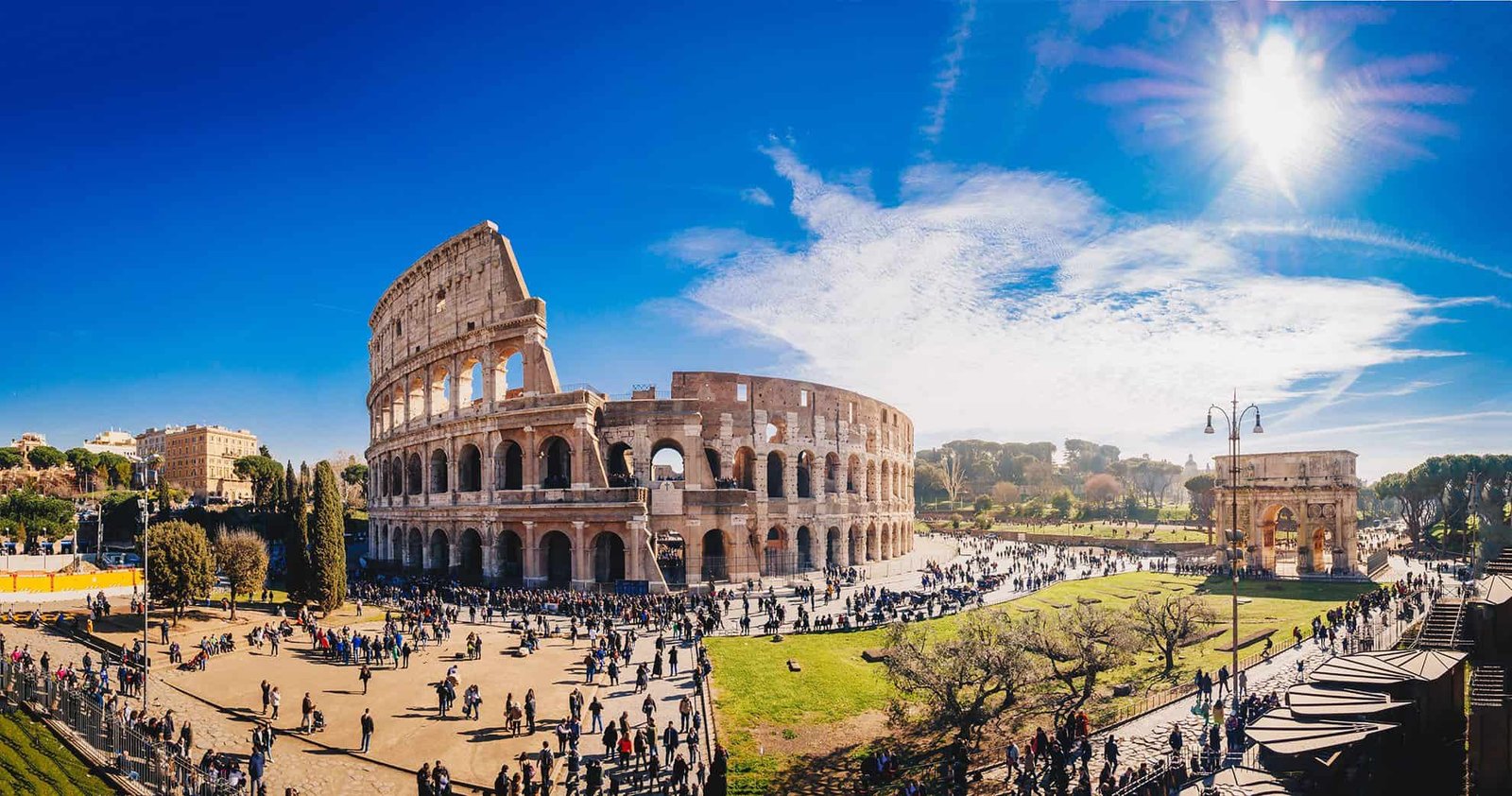
The order that saves effort is Colosseum, Palatine Hill, Forum. From the Arch of Constantine you climb the hill, look down on the Circus Maximus and go down into the Forum, leaving from the Capitoline side. Allow three or four hours: that’s an estimate, and anyone who reads every panel will take longer. With Rome in 7 days there’s no hurry.
What needs to be booked ahead: the ticket. According to the website of the Colosseum Archaeological Park, sales open 30 days before the visit, and from October 25, 2026 to February 28, 2027 the area closes at 16:30, with last entry at 15:30. If the official dates are sold out, there are still entry with audio guide on GetYourGuide, the tour led by a licensed guide and the Colosseum offers on Tiqets.
Once you’re out of the Forum, the Altar of the Fatherland is a few steps away. You climb the staircase, look at Piazza Venezia, and if you still have breath you can go up to the panoramic terrace, which you pay for. It’s the right break after a morning of ruins: an hour is enough.
In the evening you head back toward the Rione Monti, 10 minutes on foot along Via dei Fori Imperiali. It’s the closest neighborhood to the Colosseum where you can sit down for dinner. If you want one more archaeological stop, indoors, on the way you’ll find Trajan’s Markets.
If you’re tired, what to skip: the terrace of the Vittoriano. The view of the Forum from Piazza del Campidoglio, behind Palazzo Senatorio, is free, and you’ll see it again the next day.
Day 2: Capitoline Hill, Ghetto, Tiber Island and Trastevere
The second day begins where the first one ended. The Capitoline Museums hold what is no longer in the Forum: the She-Wolf, the equestrian statue of Marcus Aurelius, the portraits of the emperors. The essential visit takes a couple of hours. From the underground gallery that joins the two palaces you come out on the Tabularium, overlooking the Forum. Tickets are bought on site or on the Musei in Comune website. There’s no sale by strict time slots as at the Colosseum.
Then you head down toward the
Jewish Ghetto, 10 minutes away. The Portico d’Ottavia, the Synagogue and the kitchens of Via del Portico d’Ottavia: it’s the right place for lunch. From there you cross Ponte Fabricio, the oldest bridge in Rome still in use, and you arrive on Tiber Island.
Before crossing the river, a 10-minute detour to the south is worth it, to the Mouth of Truth, under the portico of Santa Maria in Cosmedin. Here comes the contrarian view: the line to stick your hand in and take the photo is the most overrated in Rome. Look at the mask from the gate and spend those 20 minutes on the medieval church or on the two temples of the Forum Boarium, across the way.
From the island you cross to Trastevere, the evening stop. The neighborhood should be taken without a list: Santa Maria in Trastevere, if it’s still open, then the side streets, away from the main square. If you want someone to tell you about Roman cooking while you taste it, you can look at the food tour of Trastevere and Campo de’ Fiori. For addresses there’s the Estate Romana restaurant map.
If you’re tired, what to skip: the Bocca della Verità.
Day 3: Vatican Museums, St. Peter’s and the Janiculum
The third day starts early and with the ticket in your pocket. The Vatican Museums are the most crowded museum in Rome, and the route to the Sistine Chapel is one-way. You need at least three hours. The advice is to choose beforehand two or three things to look at calmly, for example the Raphael Rooms, and walk through the rest.
What needs to be booked ahead: the entrance, on the official website of the Museums, with the morning slot. As alternatives there are the priority entrances on GetYourGuide and the ones on Tiqets. Remember the closures: Sundays, except the last one of the month, and several religious holidays.
Once you’re out of the museums, you follow the walls to Piazza San Pietro, a quarter of an hour on foot. Entrance to St. Peter’s Basilica is free, but you go through security checks and the line under the colonnade in the middle of the day can be long. Inside, an hour is enough for the Pietà, the baldachin and the nave. The dome costs money and takes some breath. You also find it among the dome and underground tours on GetYourGuide.
In the afternoon you climb the Janiculum, on foot in half an hour or by bus. It’s the widest viewpoint over the historic center, and the right time is the one just before sunset. You don’t pay and you don’t book. From there you go down to Trastevere for dinner, or you head back early: in the Rome in 7 days program the third day is the turning point.
If you’re tired, what to skip: the dome. The Janiculum offers a different but equally wide view, without narrow stairs.
Day 4: Trevi, Pantheon, Navona and Campo de’ Fiori
The fourth day is a flat stroll, with no tickets at fixed times. You start from the Trevi Fountain, ideally before 9:00: after midmorning it’s the most crowded place in Rome. Close access to the basin is regulated, and the rules in force are posted on the Roma Capitale website. Look at it, take the photo and move on.
10 minutes and you reach the Pantheon. Entrance costs money and in the middle hours there’s a line: it’s best to already have the ticket, from the official site or among
the Pantheon entrances on GetYourGuide and the ones on Tiqets. 20 minutes inside is enough. In the rain it’s the place to be: the water falling from the oculus is a show few people think to plan for.
Lunch fits well between the Pantheon and Piazza Navona, five minutes away. The square has the shape of the Stadium of Domitian, on which it is built, and three fountains: the one of the Four Rivers, in the middle, is by Bernini. Nearby, San Luigi dei Francesi holds three Caravaggios.
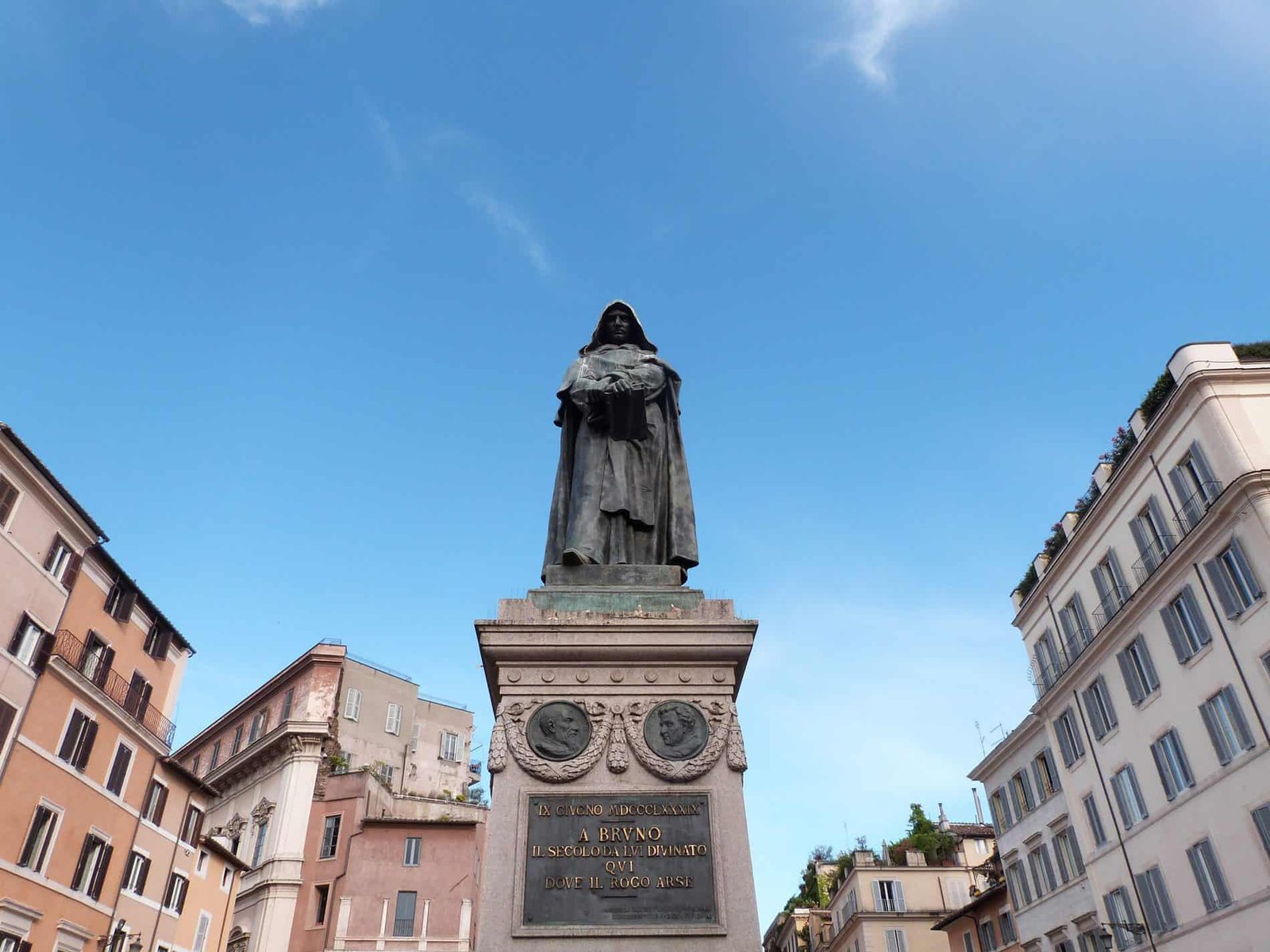
The last stop is Campo de’ Fiori, another five minutes. In the morning there’s the market, in the evening the little tables. In the middle, the statue of Giordano Bruno recalls the burning at the stake in 1600, which took place right in this square. At the end of the afternoon it’s the right place for an aperitivo.
If you’re tired, what to skip: nothing. This day shortens itself, by stopping longer at the little tables. If you feel like seeing Rome sitting down, for once, you can try a golf cart ride around the center or, in the evening, the night one.
Day 5: Galleria Borghese, Pincio and Piazza di Spagna
The fifth day revolves around a single reservation. According to Galleria Borghese website, the reservation is required for all tickets, the gallery is open Tuesday to Sunday from 9:00 to 19:00 and the visit is organized in two-hour shifts. You can’t go in with medium or large backpacks: there’s a cloakroom. If the official site is full, there are entry with audio guide on GetYourGuide and the offers on Tiqets.
The Galleria Borghese is small and dense: Bernini, Canova, Caravaggio, Raphael, Titian in a few rooms. Two hours is enough, and it’s the only museum in Rome where the time is set for you. Once out, you enter Villa Borghese: avenues, the little lake with the temple of Aesculapius, rowboats when the season allows. In a Rome in 7 days itinerary it’s the moment to slow down.
Crossing the park westward you reach the terrace of the Pincio, about 20 minutes at a slow pace. Below is Piazza del Popolo, with the obelisk and the twin churches. In Santa Maria del Popolo, on the side of the gate, there are two Caravaggios in the Cerasi Chapel. You go down by the Valadier ramps.
From the square the Tridente begins. Via del Babuino takes you in a quarter of an hour to Piazza di Spagna, where you close the day by climbing the staircase up to Trinità dei Monti. Remember that you can’t sit on the staircase. The Spagna stop on Line A, a few meters away, is for getting back.
If you’re tired, what to skip: the walk through the Pincio. From the Gallery you go straight down to Piazza di Spagna by taxi, and Piazza del Popolo is left for another evening.
Day 6: Appian Way, Caracalla and Aventine
The sixth day leaves the center and comes back toward the river. You start with the Catacombs of San Callisto: according to the catacombs’ website
you visit only accompanied by staff, in shifts of about 40 minutes, from 9:00 to 12:00 and from 14:00 to 17:00. On Wednesdays they’re closed. You get there by bus from the center: lines and times are on the transit company’s website. As alternatives there are the San Callisto visit on GetYourGuide and the golf cart ride of the catacombs and Via Appia.
Once out, you walk a stretch of the Appia Antica Park: the Roman paving, the tombs, the pines. An hour or two is enough to get an idea of it. If you want to cover more, you can do it by bicycle, with a rental on site or with the bike tour of the Appian Way and the aqueducts. Bring water.
In the early afternoon you head back toward Porta San Sebastiano and the Baths of Caracalla. According to the Ministry of Culture page they close on Mondays and don’t require a reservation. They are immense ruins and almost always not crowded: an hour and a half is enough.
You finish on the Aventine. From the Circus Maximus you climb to the Orange Garden, which looks over the Tiber and St. Peter’s, and a little further on there’s the keyhole of the door of the Knights of Malta. Then you go down to Testaccio, the neighborhood of Roman cooking, for dinner.
If you’re tired, what to skip: the Baths of Caracalla. From the Appian Way you can go straight back toward the Circus Maximus and climb the Aventine right away.
Day 7: Tivoli, Hadrian’s Villa and Villa d’Este
The last day you leave Rome, and the trip takes the whole day. Tivoli is reached by regional train from Tiburtina station or by suburban bus: times are on the operator’s website. You start from Hadrian’s Villa, which sits lower down, a few kilometers from the center of Tivoli: Emperor Hadrian’s villa is an enormous area, and three hours is the minimum. According to the website of Villa Adriana and Villa d’Este institute it is open every day except January 1 and December 25.
In the afternoon you go up into town for Villa d’Este, the Renaissance garden of fountains. Two hours is enough. Watch the calendar: according to the Ministry of Culture on Mondays it opens only at 14:00, and the closing time follows the light, changing from month to month. As an alternative there’s the day trip to the two villas from Rome.
If you’re tired, what to skip: one of the two villas. With Villa d’Este alone the trip becomes a half day, and in the evening you’re back in Rome in time for one last dinner.
What not to put in a Rome in 7 days itinerary
The contrarian view worth taking: in a week, trips out of town are one, not three. Many Rome in 7 days programs squeeze in Tivoli, Ostia Antica and the Castelli, and the result is that you see the city in four rushed days. Choose a single destination and swap it freely: Ostia Antica, with entry with audio guide
, is closer and easier than Tivoli for anyone traveling with children.
The same goes for Pompeii from Rome: it can be done in a day, but it’s many hours of bus for a few hours of excavations, and in Pompeii it’s better to sleep in Campania. As for the Castelli Romani, Frascati, Castel Gandolfo and Nemi fit well in a later trip, maybe with a tasting in the Roman countryside. Lake Bracciano is an idea for the summer, not for a first trip.
The other mistake is adding a second big museum on the same day: one a day is enough. The great basilicas, St. John Lateran, Santa Maria Maggiore and San Clemente, are not in the table by choice: we keep them as a rainy-day plan.
Where should you stay for this itinerary?
For Rome in 7 days the area matters more than the hotel, because you’ll come back to it seven evenings. The Rione Monti, between the Colosseum and Termini, is the most balanced location: on foot for the first and second day, metro for the others. The historic center, between the Pantheon and Navona, puts the fourth day at your doorstep but costs more and is far from the metro. Prati, next to the Vatican, is quiet in the evening and well connected by Line A.
Termini is the most practical choice for anyone arriving by train and for the Tivoli trip, as long as you accept a less pleasant neighborhood in the evening. Trastevere is nice for dinner, less for sleeping: it’s the area worst served by the metro. For seven nights a cancellable rate is worth it, to compare on Hotels.com and Booking.com.
How do you get around?
On foot within each area, by metro or bus between one area and another. Line B serves the Colosseum and the Circus Maximus, Line A serves Ottaviano for the Vatican, and Spagna and Flaminio for Piazza del Popolo. The two cross at Termini. For the Appian Way and Testaccio you need buses. Tickets and weekly passes are on the transit company’s website.
Anyone who prefers a single pass for transport and entrances can consider the Rome City Pass from Turbopass. It’s worth it only if you really enter many paid sites, so do the math on the stops you’ve chosen. To get to Rome, and for regional trains to Tivoli, times and fares can be compared on Trainline. For high-speed trains there’s also Italo. A car in the city is a problem: limited traffic zones and scarce parking.
What should you book before leaving?
Four things, in this order. The Colosseum, as soon as sales open for your date, 30 days before. Galleria Borghese, which you can’t visit without a reservation. The Vatican Museums, with the morning slot. The Pantheon, if you go in high season or on the weekend. The rest of Rome in 7 days can be done without booking.
- Then the hotel and the trip. Restaurants are booked the day before, also with TheFork, except on weekends and around the holidays. If you want a visit with an explanation on site, you find it among the experiences in Rome on GetYourGuide, among the ones on Viator and among the attractions of Rome on Tiqets
- read on the product page the language, the duration and who leads the visit.
What changes if it rains?
Little, if you move the days around. The most exposed are the sixth, almost entirely outdoors, and the seventh, because the gardens of Villa d’Este in the rain lose half their point. With rain forecast, swap them with the third or the fifth, which have their museums indoors. The archaeological area is slippery when wet and has no shelter: better to postpone it.
If it rains for two days in a row, the backup plan is the tour of the basilicas: Santa Maria Maggiore, San Giovanni in Laterano and San Clemente, with its three underground levels, are in the same area and connect on foot. The other indoor ideas are on the page of Rome’s museums. What’s happening on your days is in all events.
And with one day more or less?
With six days you drop Tivoli, or you merge the fourth and the fifth, giving up the Pincio and Piazza del Popolo. With eight days you add a second trip, Ostia Antica, or, better, a free day with no program: after a week of Rome in 7 days it’s the one you remember most. Anyone with 10 days can add the Castelli Romani.
The shorter versions of Rome in 7 days are among the other itineraries of Estate Romana. The destinations just outside the city, for anyone who wants to change the seventh-day trip, are in the section near Rome.
What to bring for Rome in 7 days
A week like this means between 50 and 70 kilometers on foot, it’s an estimate, largely on sampietrini. For each item we point to a search with many alternatives, because individual models sell out. Prices change, so check them when you buy. If you order before leaving, the estimated delivery date at the time of the order is what counts.
For walking
- Comfortable walking shoes: thick sole, already worn at least a week before leaving.
- Cushioned insoles: from the fourth day on you feel the difference.
- Insulated water bottle: in Rome there are hundreds of public drinking fountains, and on the Appian Way you’ll need it full.
- Windproof folding umbrella: to keep in your backpack from October to April.
- Packable rain jacket: the alternative to the umbrella on outdoor days.
To keep what you have safe
- Anti-theft backpack: on the metro and in the most crowded lines you need it.
- Anti-theft travel waist pouch: the light alternative for documents and phone, and it gets through where backpacks don’t.
- Suitcase organizer: seven days fit in a carry-on only if it’s in order.
For finding your way and for the trip
- Power bank, 10,000 mAh: maps, tickets and photos drain your phone before evening.
- Folding map of Rome: it works without a battery and shows you the distances between areas.
- A paper guidebook: to read the evening before each day.
- Travel pillow: for the train or the flight, and for the ride back from Tivoli.
Frequently asked questions
Is Rome in 7 days too much?
No: Rome in 7 days is the right amount of time to see the six main areas calmly and take a trip out of town. In a week you fit the big museums, the Appian Way and unhurried evenings, which in three days get left out. If you’re afraid of getting bored, you can leave one morning free.
What is the best time for Rome in 7 days?
The in-between months: from mid-March to May and from late September to November. Walking is pleasant and the heat doesn’t force you to stop in the middle hours. In summer it’s best to move the archaeological area and the Appian Way to early morning. In winter the days are short and the Colosseum area closes in the afternoon, so the first day starts early.
How much walking is there in Rome in 7 days?
Between 50 and 70 kilometers in all, depending on detours: it’s an estimate, not a measurement. The most tiring days are the first, because of the uneven ground of the Forum and the Palatine, and the sixth, because of the distances on the Appian Way. The fourth is the easiest, flat and full of stops. Shoes you’ve already broken in matter more than any other accessory.
Can you do this itinerary with children?
Yes: Rome in 7 days with children works by lightening the program by one stop a day. The Colosseum, the catacombs and Villa Borghese appeal to all ages. The Vatican Museums should be cut down to a short route. For the seventh day Ostia Antica suits better than Tivoli. A long break after lunch, in the hotel or in a park, changes the day.
Is a tourist pass worth it for Rome in 7 days?
It depends on how many paid entrances you really do. With this program the paid sites are about 10, but some, like Galleria Borghese, require a time reservation anyway. A pass is worth it if it includes the places you’re interested in and you’ll use the transport included. Otherwise single tickets and a weekly transit pass are enough.
Can you change the order of the days?
Yes, in fact it’s recommended to adapt it to the calendar. The Vatican doesn’t work on Sundays, except the last one of the month. Borghese and Caracalla don’t work on Mondays. San Callisto doesn’t work on Wednesdays. Villa d’Este on Mondays opens only in the afternoon. If rain is forecast, swap the outdoor days with the museum ones.
How does “Save this itinerary” work?
The button under the table opens “My Trip” from Estate Romana and loads the 32 stops, already divided into the seven days. From there you can enter the dates, remove or add places, mark the reservations you’ve made and send the program to whoever is traveling with you. You don’t need an account: the trip stays saved on the device you’re using.
Who wrote this and on what sources
The text comes from the editorial team of Tour Leader Pro, the Rome-based outfit that designs itineraries, tours and cultural events across Rome and Lazio. Hours, closures and reservation rules come from the websites of the Colosseum Archaeological Park, the Vatican Museums, Galleria Borghese, the Catacombs of San Callisto, the Ministry of Culture and the villas of Tivoli, as of the date indicated at the start. Visit times and walking distances are estimates. Let us know what you find has changed.
Lining up Rome in 7 days, for yourself or for a group of friends, means fitting together four timed reservations, the closing days of each place and the pace of whoever walks slowest: a useful resource for those who organize group trips is Tour Leader Pro. If the Roman week is part of a longer trip, across Lazio, Tuscany and Campania, a useful resource for putting together a multi-day itinerary is Italy Planner.