Published on
Some links on this page are affiliate links: if you buy through them, Estate Romana receives a small commission, at no extra cost to you. As an Amazon Associate, Estate Romana earns from qualifying purchases.
Rome in 3 days of art and museums can be done without rushing if you accept one rule: one big museum a day, in the morning, and for the rest of the day churches and palaces a few minutes away on foot. The first day is Bernini and Caravaggio, between Galleria Borghese, Piazza del Popolo and Palazzo Barberini. The second is the Vatican of Michelangelo and Raphael, with the evening in Trastevere. The third crosses the historic center, from Raphael’s Farnesina to Galleria Doria Pamphilj, passing through the Caravaggios of San Luigi dei Francesi.
That’s 13 stops in Rome in three areas that don’t overlap. Many are left out, and we say so right away: in Rome there are more masterpieces than you can really look at in three days, and the program works precisely because it gives something up. Below you’ll find the table, then each day explained in the right order, with what needs to be booked and what you can skip.
Data checked on October 3, 2026 on the official websites of Galleria Borghese, Villa Farnesina, Galleria Doria Pamphilj, the Vatican Museums and the Ministry of Culture. For churches, which change hours with services and seasons, the parish website is what counts. We remind you stop by stop.
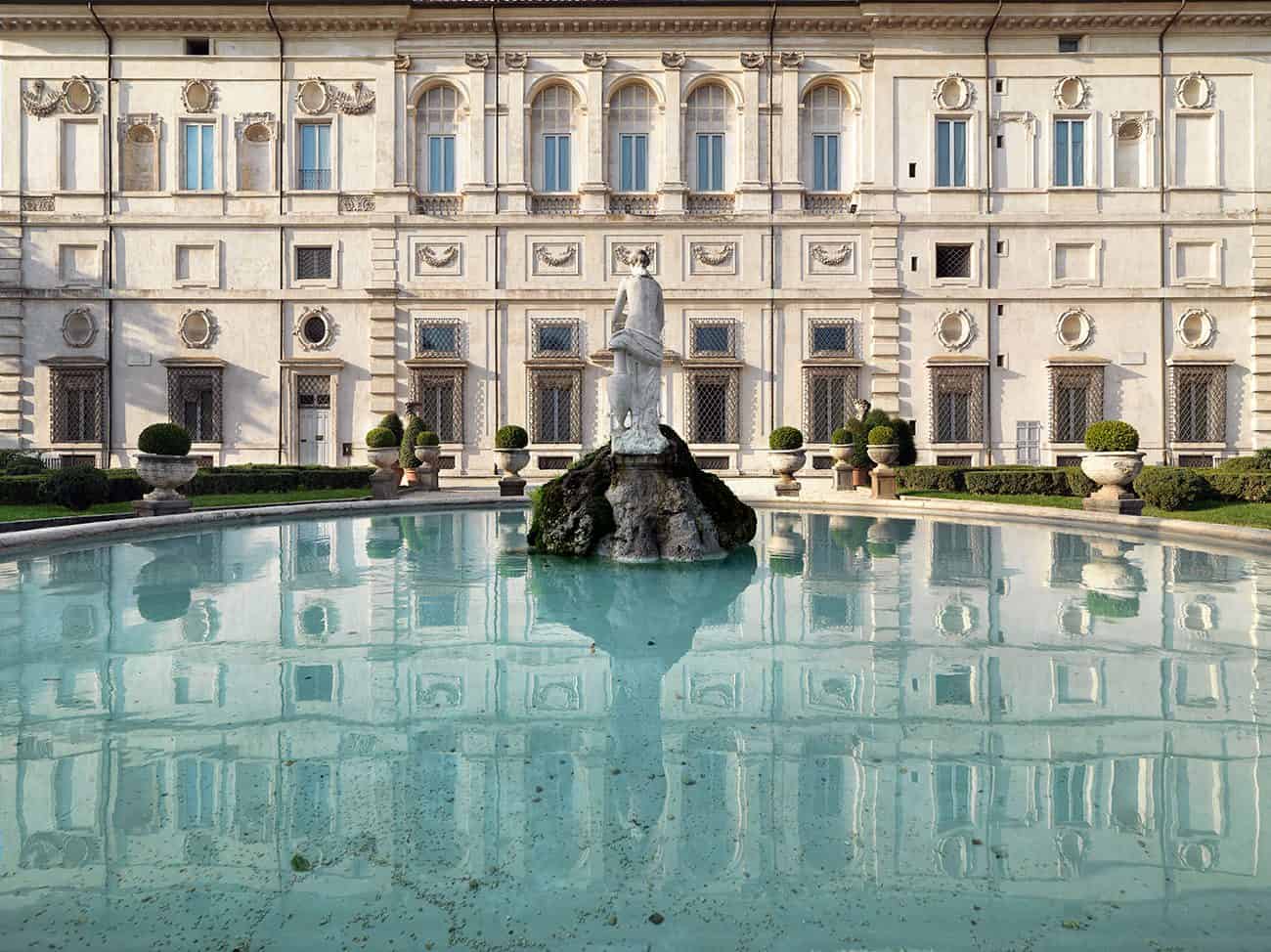
Rome in 3 days of art and museums at a glance
- What: an itinerary of Rome in 3 days of art and museums with 13 stops divided into three areas, dedicated above all to Caravaggio, Bernini and Raphael.
- Day 1: Galleria Borghese in the morning, Santa Maria del Popolo at the end of the morning and Palazzo Barberini in the afternoon, all in the northern part of the center.
- Day 2: Vatican Museums and Sistine Chapel in the morning, St. Peter’s Basilica after lunch, then Santa Cecilia and the evening in Trastevere.
- Day 3: Villa Farnesina at 9:00, then on foot Piazza Navona, San Luigi dei Francesi, Pantheon and Galleria Doria Pamphilj.
- When to do it: Galleria Borghese and Palazzo Barberini close on Monday, the Vatican Museums on Sunday (except the last one of the month), the Farnesina on Sunday and the Doria Pamphilj on Wednesday. Tuesday to Thursday or Thursday to Saturday works.
- To book first: Galleria Borghese, where booking is mandatory for everyone with two-hour slots, and the Vatican Museums.
- Good to know: the legend that the statues of Bernini’s fountain in Piazza Navona refuse to look at Borromini’s church is false, because the fountain was finished before the church was begun.
The program for Rome in 3 days of art and museums
| Day | Morning | Afternoon | Evening |
|---|---|---|---|
| 1. Bernini and Caravaggio in the north | Galleria Borghese, Santa Maria del Popolo | Palazzo Barberini | Walk between Barberini and Trevi |
| 2. The Vatican and Trastevere | Vatican Museums and Sistine Chapel | St. Peter’s Basilica, Santa Cecilia | Trastevere |
| 3. Raphael and Caravaggio in the center | Villa Farnesina, Piazza Navona, San Luigi dei Francesi | Pantheon, Galleria Doria Pamphilj | Historic center on foot |
Save this itinerary in My Trip
The button opens “My Trip” with the 13 stops already loaded and divided into the three days. There you can add the dates, mark the tickets you’ve bought and choose the hotel.
Day 1: Galleria Borghese, Santa Maria del Popolo and Palazzo Barberini
The first day of Rome in 3 days of art and museums starts with the hardest museum to book. At the Galleria Borghese you get in only with a reservation and in slots. According to the Gallery’s official website
, the museum is open Tuesday to Sunday from 9:00 to 19:00, each slot lasts two hours and last entry is at 17:45. Take the 9:00 slot: the rest of the day leans on it.
Two hours are enough if you know what to look for. On the ground floor are Bernini’s sculptures, the Apollo and Daphne, the Rape of Proserpina, the David, and Canova’s Paolina Borghese. In the same rooms are displayed the Caravaggios of the collection, from the Sick Young Bacchus to David with the Head of Goliath. On the upper floor, among the paintings, Raphael’s Deposition. First hour for the sculptures, second for the picture gallery.
What needs to be booked first: the Borghese ticket, on the official system or with a reseller. If the slots you need are sold out, you can still find entries with an audio guide, for example the ticket with audio guide app on GetYourGuide or Galleria Borghese offers on Tiqets.
On the way out you cross Villa Borghese to the terrace of the Pincio and go down to Piazza del Popolo: at an easy pace it’s about 20 minutes, an estimate. At Santa Maria del Popolo there are two Caravaggios in the Cerasi Chapel, the Conversion of St. Paul and the Crucifixion of St. Peter, and the Chigi Chapel, designed by Raphael, with two statues by Bernini. Half an hour is enough. It’s a working church: you see the chapels outside the mass times and often in the middle of the day the church closes, so check the hours on the parish website.

After lunch, in the area between Via di Ripetta and Via del Babuino, you take metro line A from Flaminio to Barberini. At Palazzo Barberini there are Raphael’s Fornarina, Caravaggio’s Judith Beheading Holofernes and the ceiling of the main hall by Pietro da Cortona, which is better seen sitting down. According to the Ministry of Culture page, the Galleries are open Tuesday to Sunday from 10:00 to 19:00, with last entry at 18:00 and closed on Monday. Count on a couple of hours.

If you’re tired, what to skip: Santa Maria del Popolo can be moved to the extra day, but Palazzo Barberini can’t, because it’s the only place where Raphael and Caravaggio are a few rooms apart. If instead you have energy, a couple of steps from Barberini the Scuderie del Quirinale host the big temporary exhibitions. The program changes, so check on their website what’s on for your dates. In the evening you walk down toward the Trevi Fountain.
Day 2: Vatican Museums, St. Peter’s and Trastevere
The second day of Rome in 3 days of art and museums has only one fixed appointment, the one in the morning. The Vatican Museums are a very long route that ends in the Sistine Chapel, and you have to choose. The advice is to focus on three things: the Pinacoteca, with Raphael’s Transfiguration and Caravaggio’s Deposition. The Raphael Rooms, with the School of Athens. The Sistine, with Michelangelo’s ceiling and Judgment. You need at least three hours, and that’s a cautious estimate.
Watch the calendar. According to the Vatican Museums website, the museums are open Monday to Saturday from 8:00 to 20:00, with last entry at 18:00, and closed on Sundays, except the last one of the month. The timed ticket is bought on the official website. If the slots are gone, there are resellers like
priority entry to the Vatican Museums and the Sistine on GetYourGuide or tickets for the Vatican Museums on Tiqets.
After lunch in Prati you enter St. Peter’s Basilica, where the theme of the day becomes Bernini: the colonnade of the square, the baldachin over the altar, the Chair at the back of the apse. Just to the right of the entrance is Michelangelo’s Pietà, behind glass. Count on an hour, security checks included. If you want to climb the dome you’ll find the dome climb with a visit to the underground areas on GetYourGuide, but after the Vatican your legs advise against it.
From St. Peter’s to Trastevere you walk along Via della Lungara, or take a bus: schedules and lines on the Atac website. At the end of the district, the Basilica of Santa Cecilia in Trastevere keeps under the altar the Santa Cecilia by Stefano Maderno, the statue of a girl lying down with her face turned away, sculpted around 1600. The hours of the church and of access to the choir frescoes change: check them first.
In the evening you close the Roman day at Trastevere, with no program. The churches close, the alleys fill up, and the square of Santa Maria in Trastevere is the meeting point. For dinner book with TheFork or look at the Estate Romana restaurant map. If you’d rather have the neighborhood told to you at the table, you’ll find a food tour of Trastevere and Campo de’ Fiori. If you’re tired, skip Santa Cecilia and go straight to dinner.
Day 3: Raphael and Caravaggio in the historic center
The third day involves a lot of walking in the center of Rome and little paying. You start at 9:00 at the Villa Farnesina, on the Trastevere bank. According to the Villa’s website, it’s open Monday to Saturday from 9:00 to 14:00, with last entry at 13:15, and closed on Sunday, except the second one of the month. The full ticket is 12 euros. Inside are Raphael’s Triumph of Galatea and the Loggia of Cupid and Psyche, frescoed from his drawings. One hour is enough.
From the Farnesina you cross Ponte Sisto, pass through Campo de’ Fiori and in 15 minutes, an estimate at a slow pace, you arrive in Piazza Navona. Here Bernini and Borromini face each other: the Fountain of the Four Rivers by the first, the facade of Sant’Agnese in Agone by the second. The square has no hours: lengthen it or shorten it depending on the time that’s left.
A few steps away is the church of San Luigi dei Francesi, with the Contarelli Chapel and the three canvases by Caravaggio on St. Matthew: the Calling, the Martyrdom and St. Matthew and the Angel. Entry is free. The church closes in the middle of the day and reopens in the early afternoon, and the hours change on Sunday: check them on the church’s website. Arrive before the morning closing, because the chapel is small and a small crowd often forms in front of the canvases.
After lunch you pass by the Pantheon, where Raphael is buried: the tomb is on the left as you face the entrance. Entry is paid and the hours are on the operator’s website. To avoid the line at the ticket desk there are
the priority entries to the Pantheon on GetYourGuide. Half an hour is enough, line excluded.
The last stop is the Galleria Doria Pamphilj, on Via del Corso, a private collection still in the family’s palace. There are the Rest on the Flight into Egypt and the Penitent Magdalene by Caravaggio, and in the dedicated cabinet Velázquez’s portrait of Innocent X next to the bust of the same pope sculpted by Bernini. According to the Gallery’s website, it’s closed every Wednesday. Without a reservation access is not assured. An hour and a half is a reasonable estimate. Here are the offers on Tiqets.
If you’re tired, what to skip: the Pantheon, which also looks good from the square and the door. San Luigi dei Francesi and the Doria Pamphilj are the two reasons the third day exists. If you have children or people who walk little, you can break up the day with a golf cart ride among the main sights or, in the evening, with a private night tour by golf cart.
What not to put in Rome in 3 days of art and museums
The most common mistake, in Rome in 3 days of art and museums, is the hunt for all the Caravaggios of Rome. There are many, scattered among museums, churches and private collections, and chasing them all turns three days into a checklist. In this program you see more than you’d find in almost any other city in the world, and it’s best to stop there. For the same reason the Capitoline Museums stay out, though they have two Caravaggios: they’re a half-day museum and deserve a trip dedicated to ancient Rome.
Also left out are San Pietro in Vincoli, with Michelangelo’s Moses, which is in a different area from all three days, and the Palazzo Massimo alle Terme, with the frescoes of the villa of Livia: both fit very well in a fourth day. The MAXXI and the Coppedè district are another trip, the one of the 20th century and the contemporary.
And then there’s the legend of Piazza Navona, which is worth taking apart. They say the statue of the Nile, in Bernini’s fountain, covers its face so as not to see the church of his rival Borromini, and that the one of the Río de la Plata raises its arm for fear it will collapse. The dates say the opposite: the fountain was completed in 1651, Borromini’s work at Sant’Agnese began later. The Nile has its head covered because at the time its sources were unknown. Go ahead and tell it, knowing it’s an invention.
Where to stay for this itinerary?
For Rome in 3 days of art and museums the most convenient area is the one between Piazza del Popolo and Piazza di Spagna: the first day is done on foot, metro line A takes you to the Vatican in a few minutes and the historic center of the third day is 15 minutes away. The second choice is Prati, near the Vatican, quieter and with line A stops.
To compare hotels and apartments in these areas you can start from Hotels.com or from Booking, filtering by neighborhood.
How do you get around?
In Rome, within each day, you go on foot: that’s why the stops are grouped by area. Between one area and another you need metro line A, which has stops at Flaminio for Piazza del Popolo, at Spagna and Barberini for the first day, at Ottaviano for the Vatican. Trastevere has no metro: you get there with tram 8 from Largo Argentina or with buses, schedules and routes on the Atac website.
A pass can simplify transport and some entrances.
Turbopass collects tickets and transport on a single card. Before buying it, check which museums of this program are included and if they still require booking a time slot, as happens at the Borghese.
What to book before you leave?
For an itinerary in Rome of art and museums, in order of urgency: Galleria Borghese, with mandatory booking and slots of at most 180 people according to the official website, so often full on weekends. The Vatican Museums, with a timed ticket. Galleria Doria Pamphilj, which without a reservation doesn’t guarantee entry. Palazzo Barberini, the Farnesina and the Pantheon can also be bought the day before, in most cases. Churches aren’t booked.
One way to keep everything in one place is to search the catalog of Tiqets for Rome, the one of GetYourGuide or Viator, which also have visits with licensed guides if you prefer to have the works explained to you. The article comes out with no advance notice: if you leave in a few days, book the Borghese today.
What changes if it rains?
Little, and it’s one of the advantages of Rome in 3 days of art and museums: almost all the stops are indoors. The first day only loses the walk in the park between the Borghese and the Pincio, which you replace with a bus or a taxi to Piazza del Popolo.
The third day is the most exposed: if rain is forecast in Rome all day, swap it with the second, because the Vatican is the best shelter. Just remember that a long umbrella can be stopped at the security checks of some museums: a folding model is better.
What about one more day or one less?
With a fourth day in Rome there are two choices. The first stays in the city: Capitoline Museums, San Pietro in Vincoli and Palazzo Massimo, or the Centrale Montemartini, where ancient statues are displayed among the machinery of an old power plant, and the Ara Pacis. The second leaves Rome: at Tivoli the Villa d’Este with its gardens takes up a day, alone or with the excursion to Villa d’Este and Hadrian’s Villa.
With one day less, that is two days, the advice is to keep the Vatican and merge the other two: Galleria Borghese in the morning, then Santa Maria del Popolo, and in the afternoon San Luigi dei Francesi, Piazza Navona and the Pantheon. You give up Barberini and the Doria Pamphilj.
What to bring for three days of museums
Three days of museums in Rome tire you out more than three days of walks. Below are the useful things, with several alternatives for each, because individual models sell out. For arrival times the estimated delivery date at the moment of the order is what counts. If you leave in a few days, have things shipped to the hotel only after asking the property if it accepts packages.
To read before and during
- Books on Caravaggio: to arrive at San Luigi dei Francesi knowing what happens in the Calling.
- Books on Bernini and Borromini: the real rivalry, the documented one, is more interesting than the legend.
- Art histories of Baroque Rome: the general picture that holds the three days together.
- Books on Raphael: from the Fornarina to the Rooms, the thread of the second and third days.
- Guides to the museums of Rome: useful for choosing the rooms beforehand, instead of deciding in front of the door.
For walking and standing
- Comfortable walking shoes: already worn in, never new on departure day.
- Insulated bottles: to fill at the drinking fountains between one stop and the next.
- Compact folding umbrellas: they fit in a bag and don’t cause problems at security checks.
Tech and tools
- Compact binoculars: for the Sistine ceiling and Pietro da Cortona’s ceiling, the most underrated purchase of the trip.
- 10000 mAh power bank: tickets, maps and audio guides on the phone use up the battery before evening.
- Bluetooth headphones: to listen to the audio guide apps without bothering the people next to you.
To keep safe and take notes
- Anti-theft backpacks: small ones, because some museums ask you to leave big backpacks at the cloakroom. The rules are on the websites.
- Travel notebooks: to note down the paintings that struck you, before they blur together.
- Travel fanny packs: the alternative to a backpack for documents and phone.
Frequently asked questions
Are three days enough to see Rome for art and museums?
Three days in Rome are enough to see the masterpieces of Caravaggio, Bernini and Raphael well, not to see everything. With one big museum a day and the rest on foot, each work gets the time it deserves. For ancient art or the 20th century in Rome you need more days.
Which days of the week are best for this itinerary?
In Rome Tuesday to Thursday is best, or Thursday to Saturday. Galleria Borghese and Palazzo Barberini close on Monday, the Vatican Museums on Sunday except the last one of the month, the Farnesina on Sunday except the second, the Doria Pamphilj on Wednesday. If the dates don’t match, swap the days among themselves: the three areas stay valid.
How many Caravaggios can you see in three days?
About 15, according to current attributions, among Galleria Borghese, Santa Maria del Popolo, Palazzo Barberini, the Vatican Pinacoteca, San Luigi dei Francesi and Galleria Doria Pamphilj. The exact number depends on loans for exhibitions, which often move his paintings. Before you leave, check on the museums’ websites that the work you’re interested in is on display.
Can you do it with children?
Yes: Rome in 3 days of art and museums can be done with children, with one museum fewer a day. Children handle the Borghese well, because Bernini’s sculptures tell stories, and Piazza Navona with its fountains. The Vatican Museums are the hardest test: it’s best to head straight for a few rooms and the Sistine. A long break after lunch changes the day more than any ticket.
How does “Save this itinerary” work?
The button under the table opens Estate Romana’s “My Trip” and loads the 13 stops into it, already divided into the three days. From there you can enter the dates, add or remove places, mark the bookings made and send the program to those traveling with you. You don’t need an account: the trip stays saved on the device you’re using.
Who wrote this and from which sources
The text comes from the editorial team of Tour Leader Pro, the Rome-based company that designs itineraries, visits and cultural events across Rome and Lazio. Hours, closures and booking rules come from the official websites of Galleria Borghese, Villa Farnesina, Galleria Doria Pamphilj, the Vatican Museums and from the Ministry of Culture page on Palazzo Barberini, as of the date shown at the top. Visit times and walking distances are estimates. Let us know what you find has changed.
Lining up three days of museums, for yourself or for a group of friends, means fitting together timed slots, different closing days for each museum and the breaks of those who tire sooner: a useful resource for people organizing group trips is Tour Leader Pro. If Rome is only the first stop of a trip through Italian art, toward Florence, the Tuscia or Naples, a useful resource for putting together a multi-day itinerary is Italy Planner.