Sant’Anselmo and Santi Bonifacio e Alessio
In short. On the Aventine, between the Orange Garden and Piazza dei Cavalieri di Malta, there are two churches that almost nobody visits and that lie less than 100 meters from each other: the abbey of Sant'Anselmo, in Piazza dei Cavalieri di…
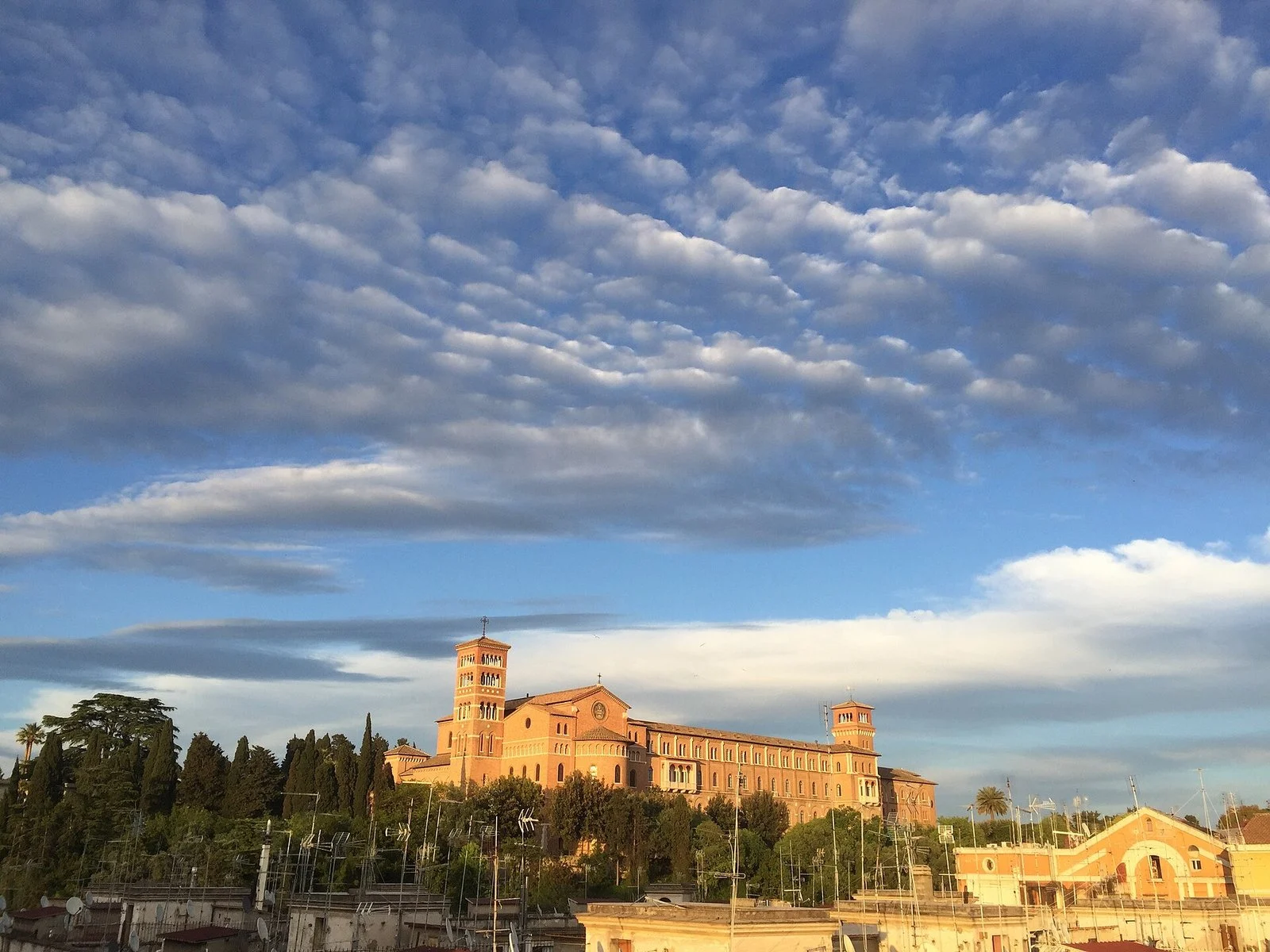
On the Aventine, between the Orange Garden and Piazza dei Cavalieri di Malta, there are two churches that almost nobody visits and that lie less than 100 meters from each other: the abbey of Sant'Anselmo, in Piazza dei Cavalieri di Malta, and the church of Santi Bonifacio e Alessio, in Piazza Sant'Alessio, on the same short stretch of road. We put them together on a single page because they are visited together, in just under an hour, and because they tell two opposite things about the same hill. Sant'Anselmo is a building from the end of the 19th century in neo-Romanesque style. It is not an ancient building, and it is best to know that before climbing up, because whoever arrives believing they will find a medieval basilica is disappointed and leaves without understanding what the place is for. It is for singing: the monastic community sings vespers in Gregorian chant every day, as part of its day and not as a concert. The Santi Bonifacio e Alessio, instead, is a truly ancient church, with a Romanesque bell tower visible from halfway across the hill, a crypt under the floor and, inside, the strangest relic of the Aventine: a fragment of a wooden staircase that hagiographic tradition identifies as the one under which Saint Alexis supposedly lived as a beggar, in his father's house, without being recognized.
Neither church has a ticket, neither has a stable and precisely communicated schedule, and neither should be approached the way you approach a museum. This page explains what you see, what to expect, how to behave if you happen to be inside during a liturgy, and how to tie the two churches to the rest of the Aventine without doing the same loop twice. For the overview of the hill, with the Orange Garden, the Rose Garden and the keyhole, the reference page remains Aventine: what to see, which holds all the stops together in a single itinerary. Here we go into detail on the only two churches that overview mentions in passing. For the early Christian basilica of the hill, with its cypress doors of the 5th century, the dedicated entry is Basilica of Santa Sabina on the Aventine. It is another building, much more important from the historical and artistic point of view, and deserves a visit of its own.
Where the two churches are and how to get there
The two churches are on the Aventine Hill, in the Ripa district, along the same axis that climbs from Via di Santa Sabina and ends in Piazza dei Cavalieri di Malta: first Piazza Sant'Alessio with the Santi Bonifacio e Alessio, then, about 50 steps farther, the entrance of the abbey of Sant'Anselmo. Whoever knows the hill knows that this is all there is: one street, three churches in a row (Santa Sabina, Sant'Alessio, Sant'Anselmo) and a scenic square at the end. The difference in height from the Lungotevere is about 50 meters and is covered in 10 minutes of climbing.
By subway
The most convenient stop is Circo Massimo, on subway line B. Coming out, you take Viale Aventino and then climb along Via di Valle Murcia, the one that runs alongside the Rose Garden of Rome and comes out in front of the Orange Garden. From there it is another three minutes on foot to the two churches. Alternatively you get off at Piramide, also line B, and climb from the opposite side passing the Pyramid of Cestius and Porta San Paolo. It is a longer and steeper climb, but it lets you fit the Non-Catholic Cemetery into a single loop as well. There is no subway stop on the hill: the Aventine is always reached on foot, uphill, and those with walking difficulties must take it into account.
By tram and bus
Tram 3 runs along Viale Aventino and connects the area with Piramide, Trastevere, the Colosseum and San Lorenzo. The stop to use is the one at Viale Aventino, from which the same climb described above applies. Along Viale Aventino and on the Lungotevere several surface lines also pass, coming down from the historic center. Line routes change often because of construction and detours, and it is best to check them on the official Rome public transport app on the same day, instead of trusting a number read in a guidebook. The general picture of vehicles, tickets and time bands is on the page How to get around Rome.
On foot, and which way is best to climb
The nicest way to get there is the Clivo di Rocca Savella, the uphill ramp that starts from Lungotevere Aventino, passes under an arch and climbs between two tufa walls to the side of Santa Sabina. It is closed at night and sometimes during the day too for works, and it is steep. If you are short of breath or pushing a stroller, take the wider loop from Via di Valle Murcia, which has a gentler slope. From the Circus Maximus it is 10 minutes, from the Mouth of Truth and the Forum Boarium about 15, from Testaccio a good 20 going by Via Marmorata.
By car: why it is not worth it
The Aventine is a restricted traffic zone and parking on the hill is almost all reserved for residents or paid during daytime hours. The streets are narrow, the sidewalks too, and at peak hours the climb from Via Marmorata gets blocked. If you come from outside Rome, it is quicker to leave the car in a park-and-ride on line B and do the last stretch by subway. The advice holds double on spring weekends, when the Orange Garden becomes one of the most crowded destinations in the city and the line of cars looking for a space reaches all the way to Lungotevere Aventino.
Sant'Anselmo all'Aventino: an abbey from the late 19th century, and it is best to say so right away
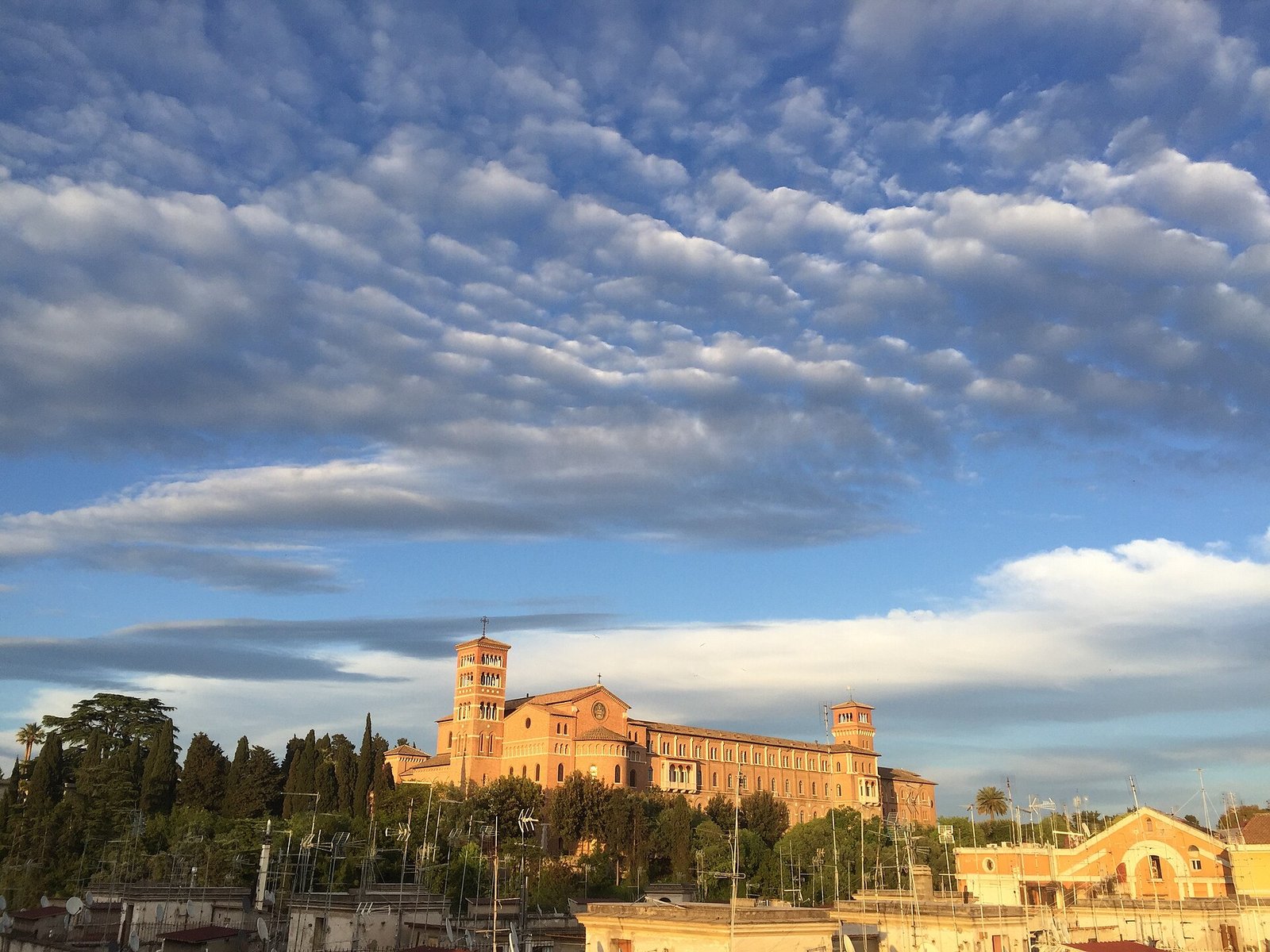
The abbey church of Sant'Anselmo was built in the last years of the 19th century in neo-Romanesque style, that is, imitating the forms of medieval churches with the techniques and materials of its own time. Its columns, its apses and its bell tower are not ancient. They are a learned reconstruction of how, at the end of the century, an early Benedictine basilica was imagined. Whoever enters expecting a church a thousand years old realizes almost immediately that something doesn't add up: the stones are too regular, the plaster too crisp, the capitals all alike. Better to know beforehand. It takes nothing away from the place, but it changes the reason for going.
Why it exists: an international Benedictine college
The complex was born at the wish of Pope Leo XIII, who in 1887 established on the Aventine an international college for Benedictine monks from all over the world. The idea was practical: to give the order, scattered across hundreds of autonomous abbeys that often communicated little with each other, a common house in Rome where young monks could study together. The works took place in the 1890s on a design by the architect Francesco Vespignani, who chose the neo-Romanesque repertoire precisely to tie the new building visually to the ancient monastic tradition. The church was opened for worship toward the end of the century. On the exact dates of consecration the popular sources are not entirely in agreement, and whoever wants the exact figure should ask the abbey.
What it is today: an athenaeum, not just a church
Sant'Anselmo is the seat of the Abbot Primate of the Benedictine Confederation, that is, of the figure who represents the Benedictine congregations of the whole world, and of the Pontifical Athenaeum Sant'Anselmo, the pontifical university that houses among its institutions the Pontifical Liturgical Institute. Within those walls people study liturgy, theology and philosophy at the academic level, with students and teachers arriving from dozens of countries. This explains two things the visitor notices at once: the coming and going of monks and students in the corridors, and the fact that the church is not run as a monument but as the place of prayer of a community that lives and works there.
What the building looks like
You enter through a portico and a courtyard: the church does not face the square directly like a neighborhood parish, and that is enough to keep out people who pass by chance. The interior has three aisles with columns, a decorated apse and a sober hall, with little light and very few ornaments compared with a Roman baroque church. The surfaces are light, the lines simple, the furnishings essential. It is a deliberate sobriety, consistent with the Benedictine idea of a space designed for singing and listening more than for awe. The acoustic result, in a church of this size and with these materials, is the main reason the climb is worth it.
Gregorian chant at vespers: the real reason to climb to Sant'Anselmo
The monastic community of Sant'Anselmo sings vespers in Gregorian chant, and sings them almost every day as part of its liturgy of the hours. It is one of the few occasions in Rome to hear Gregorian chant performed by a community that practices it as a trade and a vocation, outside the circuit of concerts and festivals. That is the difference that counts. A concert of early music is scheduled, paid for, applauded at the end. Vespers is an act of worship: whoever arrives sits at the back, listens and that's all.
The time changes, and you won't find it written here
We don't give a precise time for vespers, and be wary of anyone who does without citing the source. The time varies according to the liturgical calendar, the period of the academic year, solemnities and the needs of the community, and can be changed without notice. The practical rule is just one: before climbing the Aventine, check the times on the abbey's official channels, or phone. Climbing for nothing means half an hour of uphill walking and a closed door, and it happens more often than you would think, especially in summer when many students and monks are away and the rhythm of the house changes.
How long it lasts and how the liturgy is built
Vespers is the evening prayer: psalms sung in alternating choirs, a hymn, a Gospel canticle, some prayers. The typical length of a sung evening office is on the order of half an hour, which can stretch on solemnities. The chant is in Latin and follows Gregorian notation. The voices are male, with no instrumental accompaniment for most of the office. You don't need to know Latin to stay with it: the structure is repetitive by design, and it is the repetition that produces the effect people remember.
How to behave: the part nobody explains
You go in before the start, not halfway through. You sit in the pews reserved for the faithful, not in the monks' choir. You stay silent, turn off your phone, don't photograph during the chant and don't record. Some visitors pull out the phone thinking they are attending a show, and it is the quickest way to get dirty looks from those who are praying. Dress is what you keep in any Roman church, shoulders and knees covered. At the end you don't applaud. If you want to leave early, you do it quietly and from the back, not by crossing the nave. These are banal rules, but on the Aventine we see them broken fairly regularly by groups who arrive convinced they have found a free attraction.
Who will find what they are looking for, and who won't
Let's say it frankly: whoever wants half an hour of silence, of low voices and of stone acoustics finds it here in a form that is hard to replicate in Rome. Whoever instead looks for a show, a program booklet, a philologically polished performance like that of a professional ensemble will be thrown off: the quality of the singing depends on who is there that evening, and in a community that changes continually because of foreign students not all evenings are alike. It is a place of prayer that you can listen to, not an auditorium. Whoever is looking for real concerts, with a program and a ticket, should look at the city's schedule and at the festivals collected on the page Estate Romana.
The Santi Bonifacio e Alessio: the ancient church 50 steps away
The church of the Santi Bonifacio e Alessio faces Piazza Sant'Alessio, behind a courtyard closed by a railing, and has a history at least a thousand years long. Its origins lie in the early Middle Ages around a title dedicated to Saint Boniface, and in the 10th century the complex was entrusted to a monastic community that held together monks of the Greek rite and of the Latin rite, in a Rome that was still a crossroads between East and West. From that phase comes the cult of Saint Alexis on the Aventine, and from then on the double dedication that the church still bears.
The Romanesque bell tower
The bell tower is the part you recognize from far away, even from outside the hill: brick, superimposed tiers of two-light windows, the typical structure of Roman bell towers of the high Middle Ages, a relative of those of Santa Maria in Cosmedin and of other churches of the lower city. It belongs to the medieval phase of the complex, when the building was rebuilt and reorganized. The current dating places it around the 12th century, and not all popular sources agree on the exact year. Whoever looks at the bell tower is looking at the oldest piece of the church visible to the naked eye from the square, because the rest of the facade tells of another era.
The facade and the 18th-century remodeling
The present appearance of the church, inside and on the facade, is the result of a remodeling of the 18th century. The facade with five arches on a portico and the reworked interior belong to that campaign, promoted in the modern age when the church passed under the care of a religious congregation that reorganized it according to the taste of the time. The result is a clean-looking, light church, with an 18th-century layout wrapped around a much older body. The contrast is the most interesting thing to observe: a bell tower from the Middle Ages, columns and fragments of earlier periods reused, and around them a shell of the 18th century.
What you see inside
Inside there are three things that repay the climb, apart from the silence. The first is the set of ancient materials that survived the remodelings: reused elements, fragments of Cosmatesque decoration, remains that tell of the earlier phases of the building. The second is the Marian image of Byzantine tradition kept in the church, tied by tradition to the Eastern world and to the Greek-Latin phase of the monastery. The third is the aedicule with the fragment of staircase, discussed farther on. The interior lighting is modest and on cloudy days becomes scarce: whoever wants to see the details should go in around midday, when natural light is at its maximum.
The crypt: the floor below that almost nobody asks to see
Under the church there is a crypt, that is, an underground space that preserves structures and memories of the oldest phases of the complex. It is the part of the building that best conveys how layered the Aventine is below the present street level. Access is not guaranteed, not continuous and does not follow a published schedule: it depends on the availability of whoever looks after the church, and it may be closed for works, for safety or simply because that day there is nobody to go down with visitors.
How to get down
The method that works is to ask in the church, politely, the person in charge of welcoming visitors, outside Mass times. It is not a paid visit, there is no ticket office, there is no equipped route. If they tell you no, it is no: don't insist and don't try to go down on your own. Whoever wants to be sure should write or phone beforehand, explaining what they want to see and how many you are. Groups must always be announced in advance, and on this the Aventine is stricter than other neighborhoods, because tourist pressure on the hill has grown a lot in recent years.
What to expect, without illusions
A crypt of this kind, in Rome, is never an archaeological spectacle comparable to the lower levels of San Clemente or to the Mithraeum of Santa Prisca, right next door on the same hill. It is an intimate, dimly lit space, with wall structures and traces of decoration. Whoever goes down out of archaeological curiosity finds material to read. Whoever goes down expecting an underground city gets bored in three minutes. We say it because the wrong expectation is the surest way to spoil a visit that, taken for what it is, works very well.
The staircase of Saint Alexis: a relic, a legend and the honest way to tell it
In the church of the Santi Bonifacio e Alessio, inside an aedicule, is kept a fragment of wooden staircase that hagiographic tradition identifies as the one under which Saint Alexis supposedly lived for years, as a beggar, in his father's house and without being recognized. It must be said right away and without beating around the bush: it is a hagiographic tradition, that is, a devotional tale handed down by the lives of the saints, not a historically documented fact. Treating it as chronicle would be dishonest. Mocking it would be foolish, because that tale gave shape to the church, to the cult and to a thousand years of popular devotion, and it is the reason the building has the name it has.
The story, as tradition tells it
In the Roman version of the legend, Alexis is the son of a nobleman named Euphemian. On the very evening of the wedding he leaves his bride and his home, departs for the East and lives for years as a beggar in Edessa, in Syria. Then he returns to Rome. Nobody recognizes him: unrecognizable because of poverty and the years, he asks for hospitality in his father's house and is put in a space under the stairs, where he stays for years among the servants, listening to his own family mourn his disappearance. Only after his death, according to the tale, a document clutched in his hand reveals who he was. The church on the Aventine is said to stand on the site of that paternal house, and the preserved staircase would be that of the space under the stairs.
Where the tale really comes from
Hagiographic studies place the origin of this story in a Syriac setting, around the anonymous figure of the "man of God" of Edessa, and reconstruct a later passage to the Greek world and then to Rome, where the tale is enriched with the name, the Roman genealogy and the Aventine setting. The cult arrives on the Aventine in the period when the monastery hosts Greek monks, and the detail is not accidental: the story travels together with the monks who carry it. It is one of the clearest cases, in Rome, of an imported legend that takes root in a specific place and renames it.
A curiosity about Sant'Anselmo and the Santi Bonifacio e Alessio
The most solid curiosity concerns Ash Wednesday: from Sant'Anselmo departs the penitential procession that reaches Santa Sabina on foot, the first Roman Lenten station, along the same road that visitors walk absentmindedly the rest of the year. It is an ancient rite, tied to the system of the stational churches of Rome, and one of the few occasions when the two ends of the monastic Aventine are physically connected, with the monks in procession between the two buildings.
A procession that uses the street as a nave
Whoever happens to be on the Aventine that day sees something that does not exist the rest of the year: Via di Santa Sabina closed to traffic, the chant moving outdoors, and a hill that for half an hour goes back to working as it did in the Middle Ages, when the Lenten stations moved the clergy and the people of Rome from one basilica to another according to a fixed calendar. Dates and times change every year with Lent and with the presence or absence of high-ranking celebrants. They must be checked each time on the official channels, never taken for granted.
Something nobody tells you about Sant'Anselmo and the Santi Bonifacio e Alessio
What nobody says is that these two churches, taken alone, don't carry a trip. They carry very well an hour within a wider tour of the Aventine, and anything else badly. Whoever arrives in Rome for three days and puts Sant'Anselmo on the list in place of St. John Lateran or Santa Maria Maggiore is making a mistake of priorities, and we tell them so openly.
The second unsaid thing: the hours are the main problem
Neither church works like a museum with continuous hours. They open and close according to services, close at lunch, can stay closed for a funeral, and don't always update their channels. The result, on the ground, is that some visitors find the door closed and leave convinced the place is abandoned. It is not: it has another logic. Whoever wants to reduce the risk goes up mid-morning on a weekday and keeps a plan B at hand.
The third: the silence of the Aventine is fragile
The hill has the reputation of being the quietest place in the center of Rome, and in part it is true, but the silence concentrates where the groups don't reach. The stretch between the two churches, on spring afternoons, is walked by a continuous procession of people headed to the keyhole and the Orange Garden. If you are looking for quiet, go up early in the morning or at dusk on weekdays: the difference between nine in the morning and six in the afternoon on a Saturday in May is enormous, and no guide writes it.
My advice for visiting Sant'Anselmo and the Santi Bonifacio e Alessio
The practical advice is one: build the visit around the vespers at Sant'Anselmo, after checking the time on the abbey's official channels, and use the rest of the afternoon for the other stops on the hill. This way a single climb gives you four things, the abbey with the chant, the church of Sant'Alessio, Santa Sabina and the panorama, and none of them ends up sacrificed.
The order that works
You arrive from the Clivo di Rocca Savella or from Via di Valle Murcia. First Santa Sabina, which is the most important and the most demanding in terms of attention. Then the Santi Bonifacio e Alessio, 50 meters farther on, where you look at the staircase and ask about the crypt. Then Piazza dei Cavalieri di Malta, with the entrance of the abbey on one side and the door of the Villa of the Priory of Malta on the other. Finish at Sant'Anselmo for vespers. Whoever still has time goes down to the Orange Garden for the sunset, which can be seen well from the overlook 10 months a year.
How much time it really takes
For the two churches alone, 40 minutes are enough, 15 minutes each plus the walking between them. With vespers it comes to an hour and a half. With the whole hill, including Santa Sabina, the Orange Garden and the line at the keyhole, you stay between two and three hours. For whoever has a free afternoon in Rome and wants to spend it well without the lines of a big monument, this is a sensible use of time. Whoever has six hours in all should do something else and come back another time.
Another well-known fact, yet rarely mentioned
The well-known fact is that the Aventine has been, for 1,500 years, a hill of monasteries. Anyone who has read two lines of Roman history knows it, and almost nobody connects it to what they see today. Yet the present arrangement of the three churches, all on the same side of the street, with gardens behind and the front toward the Tiber, is the direct legacy of that history: it is the enclosures of the ancient monasteries that explain why the hill is still green, closed and without shops.
Why the monasteries climbed up here
The Aventine, in the late antique and early medieval period, was a hill of large aristocratic residences progressively abandoned, easy to defend, isolated from the traffic of the lower city and very close to the river port. These were the right conditions for settling religious communities: space, walls already existing, silence, and the possibility of reusing private buildings as the cores of churches and monasteries. Santa Sabina was born this way in the 5th century, within that fabric. The monastery of the Santi Bonifacio e Alessio developed along the same logic centuries later.
The urban consequences, still visible
Quando nell’Ottocento e nel Novecento Roma si espanse, l’Aventino rimase in gran parte fuori dalla speculazione edilizia proprio perché gran parte del suolo apparteneva a enti religiosi e a proprietà chiuse. Il risultato è il colle che si vede: villini, muri di cinta, giardini interni, pochissimi esercizi commerciali e una densità abitativa bassissima per essere a un chilometro dal Circus Maximus. Chi si chiede perché sull’Aventino non ci sia niente da comprare ha la risposta qui, e non è un caso né una scelta di stile.
La foto giusta da fare a Sant’Anselmo e i Santi Bonifacio e Alessio
La foto che funziona davvero qui non è l’interno di nessuna delle due chiese: è il campanile romanico dei Santi Bonifacio e Alessio ripreso dal cortile d’ingresso, con la cancellata in primo piano e i laterizi caldi del campanile che si staccano sul cielo. Si fa senza flash, senza treppiede e in pochi secondi. Ed è l’unica immagine di queste due chiese che si riconosce anche a distanza di anni.
La luce e l’ora
Il cortile e la facciata prendono luce nella seconda parte della giornata, e il laterizio del campanile rende al massimo nell’ultima ora prima del tramonto, quando il colore vira sull’arancio. La mattina presto la stessa inquadratura è in ombra e piatta. Se il cielo è coperto, conviene rinunciare al campanile e concentrarsi sui dettagli ravvicinati: il portico, i capitelli, la cancellata, dove la luce diffusa aiuta invece di penalizzare.
Dentro le chiese: regole e buon senso
Dentro, la regola è chiedere. Nelle chiese romane officiate la fotografia senza flash è di norma tollerata fuori dalle celebrazioni, ma non è un diritto e in alcuni ambienti è vietata del tutto: durante i vespri di Sant’Anselmo non si fotografa, punto. Se trovate un cartello, vale il cartello. Se non c’è nessuno a cui chiedere e nessun cartello, si scatta in silenzio, senza flash, senza treppiede e senza mettersi davanti a chi prega.
E fuori, l’errore più comune di tutti
Il buco della serratura del portone dei Cavalieri di Malta non si fotografa bene con il telefono, e chi resta in fila mezz’ora per provarci porta a casa quasi sempre un cerchio nero con una macchia chiara al centro. Chi vuole assolutamente provarci usi la messa a fuoco manuale e appoggi l’obiettivo alla piastra del portone, ma sappia che il risultato, nove volte su dieci, deluderà. La vista si guarda con l’occhio, si tiene a mente, e si passa oltre.
Alcuni avvenimenti importanti avvenuti qui nella storia
Il fatto storicamente più rilevante accaduto in questo punto dell’Aventino è l’insediamento, nel X secolo, di una comunità monastica greco-latina presso la chiesa allora intitolata a san Bonifacio: un episodio che collega Roma al mondo bizantino in un momento in cui i due mondi stavano separandosi, e che porta sul colle il culto di sant’Alessio destinato a ribattezzare la chiesa.
La ricostruzione medievale e il campanile
La fase medievale piena, quella a cui appartengono il campanile e la sistemazione della chiesa su impianto basilicale, corrisponde al periodo in cui Roma ricostruisce e riorganizza decine di edifici di culto: gli stessi decenni che hanno dato alla città i campanili di Santa Maria in Cosmedin, di Santa Cecilia in Trastevere e di Santa Prassede. Le datazioni puntuali variano secondo gli studi, e su questo punto le fonti divulgative non concordano sempre: conviene prendere il XII secolo come ordine di grandezza, senza pretendere l’anno esatto.
La fondazione di Sant’Anselmo, 1887
Sull’altro versante della stessa piazza, la data che conta è il 1887, quando Leone XIII istituì il collegio benedettino internazionale; i lavori di costruzione del complesso si svolsero negli anni immediatamente successivi, su progetto di Francesco Vespignani, e la chiesa entrò in funzione sul finire del secolo. È un episodio della Roma post unitaria, quella che costruisce quartieri nuovi e istituzioni nuove: l’abbazia dell’Aventino appartiene alla stessa stagione edilizia dei quartieri umbertini, anche se il suo linguaggio architettonico guarda indietro di ottocento anni.
Chi è passato da Sant’Anselmo e i Santi Bonifacio e Alessio
Da queste due chiese sono passati papi, abati e studiosi della liturgia di tutto il mondo: Sant’Anselmo riceve regolarmente visite pontificie legate al Mercoledì delle Ceneri e alle celebrazioni benedettine, e i Santi Bonifacio e Alessio sono una chiesa titolare cardinalizia, cioè assegnata come titolo a un cardinale, il che la lega da secoli alla vita della curia romana.
I monaci di tutto il mondo
La popolazione abituale di Sant’Anselmo è fatta di monaci benedettini provenienti da abbazie di ogni continente, che qui studiano per qualche anno e poi tornano nelle proprie comunità. È la ragione per cui in una sola serata di vespri si sentono, nelle conversazioni all’uscita, cinque o sei lingue diverse. Il colle ospita da più di un secolo una delle comunità più internazionali di Roma, e lo fa senza che nessuno se ne accorga.
I pellegrini dell’Europa centro-orientale
Ai Santi Bonifacio e Alessio arrivano con regolarità gruppi di pellegrini legati alle chiese dell’Europa centro-orientale, per la memoria monastica del luogo. Chi capita sull’Aventino durante una di queste visite trova la chiesa piena e una celebrazione in una lingua che non si aspettava. È il momento sbagliato per una visita turistica, e quello giusto per capire a cosa serve ancora oggi quell’edificio.
I romani che ci abitano
Infine ci sono i romani dell’Aventino, poche migliaia di persone che vivono in uno dei quartieri più cari della città e che queste due chiese le usano come chiese, non come monumenti. Sono quelli che vedete sedersi in fondo con la busta della spesa, entrare cinque minuti e uscire. È anche per loro che valgono le regole di comportamento, e sono il motivo per cui su questo colle un gruppo rumoroso si nota molto più che a Trastevere.
Come le due chiese si legano al resto dell’Aventino
Le due chiese occupano il tratto centrale di via di Santa Sabina, la strada che unisce il Giardino degli Aranci a piazza dei Cavalieri di Malta: in duecento metri si attraversa tutto quello per cui la gente sale sul colle, e le pagine dedicate alle singole tappe evitano di ripetere qui le stesse informazioni. Chi vuole l’itinerario completo parta dalla panoramica Aventino: cosa vedere, che tiene insieme giardini, affacci e chiese in un percorso unico; questa pagina resta dedicata alle due chiese e a come si visitano.
Santa Sabina: la chiesa che viene prima di tutto
La Basilica di Santa Sabina all’Aventino è del V secolo e conserva, fra le altre cose, le porte lignee di cipresso con scene bibliche fra le più antiche della cristianità. La differenza con le due chiese di cui parliamo qui è netta: Santa Sabina è un monumento paleocristiano di importanza internazionale, Sant’Anselmo è un edificio di fine Ottocento e i Santi Bonifacio e Alessio sono una chiesa medievale riscritta nel Settecento. Chi ha un’ora sola sul colle entri a Santa Sabina e lasci perdere il resto.
Il Giardino degli Aranci e l’affaccio
Il Orange Garden, intitolato a Nicola Savello, si apre sul fianco di Santa Sabina e ha la terrazza da cui si vede la curva del Tevere e la cupola di San Pietro. È gratuito, ha orari di apertura e chiusura che variano con le stagioni, e al tramonto nei fine settimana è molto affollato. La scheda dedicata ne spiega accessi e orari: qui basta sapere che si trova a due minuti dalle due chiese e che chiude prima del buio.
Il buco della serratura: la verità sulla fila
In fondo alla strada, in piazza dei Cavalieri di Malta, c’è il portone del priorato con il famoso buco della serratura che inquadra la cupola di San Pietro in fondo a un viale di siepi. Diciamolo senza retorica: la fila esiste quasi sempre, nei pomeriggi belli può superare la mezz’ora, si aspetta in piedi e senza ombra, e quello che si vede attraverso il foro è una piccola immagine circolare che dura dieci secondi. A noi pare che valga la pena solo se siete già lì per altro e la fila è corta. La piazza, disegnata nel Settecento, e la storia del complesso sono raccontate nella scheda Villa del Priorato di Malta, che spiega anche come funzionano le visite al giardino, cosa che dal buco della serratura non si capisce.
Le altre tappe del colle e dei dintorni
Scendendo dal versante opposto si incontrano Santa Prisca con il suo mitreo e, poco più in là, la Basilica of San Saba. Ai piedi del colle, verso il fiume, si aprono il Forum Boarium con l’Arch of Janus, l’Arch of the Argentarii, San Giorgio in Velabro e San Nicola in Carcere. Verso sud si arriva alle Baths of Caracalla, alla Pyramid of Cestius e al Cimitero acattolico, e da lì a Centrale Montemartini e al Via Ostiense Museum. Sull’altra sponda, a un quarto d’ora di cammino, ci sono l’Tiber Island con San Bartolomeo all’Isola e i chiostri di San Cosimato.
Dove mangiare dopo la visita: l’Aventino è il posto sbagliato
Sull’Aventino l’offerta di ristorazione è scarsa e cara, e lo diciamo apertamente: il colle è residenziale, i locali sono pochissimi, molti sono legati agli alberghi, e i prezzi riflettono la rendita di posizione più che la cucina. Il consiglio è di non cercare da mangiare sul colle e di scendere a Testaccio, che è a venti minuti a piedi lungo via Marmorata e ha un’offerta di quartiere vera, con prezzi normali.
Non nominiamo locali, e spieghiamo perché
Su questo sito non consigliamo insegne. Un elenco di ristoranti invecchia in pochi mesi, cambia gestione, cambia cuoco e cambia prezzi, e finisce per ingannare chi lo legge un anno dopo. Preferiamo insegnare a scegliere, perché il criterio resta buono anche quando il locale chiude. Vale anche per le catene: nel centro di Roma ci sono insegne ripetute in più punti, con lo stesso menu e la coda col numerino, che vivono esclusivamente di turismo. Non le nominiamo e non le consigliamo. Basta osservare un dato: i romani non ci vanno.
I cinque segnali che riconoscono una trappola
Sono i segnali che si imparano sul campo e che funzionano in tutta la città. La signora che tira la pasta fresca in vetrina o direttamente in strada: è un richiamo per chi passa, non una cucina. Il menu con le fotografie dei piatti: chi ha clienti abituali non ne ha bisogno. L’acchiappino sulla porta che invita a sedersi: un locale con la sala piena non manda nessuno per strada. Il locale aperto dalla mattina alla notte senza pausa di cucina: significa piatti riscaldati e nessun servizio vero. E i posti davanti ai monumenti famosi, che spesso alzano il prezzo in base al turista che si trovano davanti, con voci non prezzate sul menu e listini diversi fra dentro e fuori.
Il criterio più semplice di tutti
Prima di sedervi, guardate chi è seduto e in che lingua ordina. Se ai tavoli ci sono famiglie e colleghi di lavoro che parlano italiano e ordinano senza guardare il menu, siete nel posto giusto. Se ci sono solo stranieri con lo zaino e una guida in mano, cambiate strada. È il criterio che usiamo noi e non ha mai sbagliato.
La lista di Daniele Dezi
Chi vuole indirizzi già selezionati può consultare la lista personale di Daniele Dezi su Google Maps: è una raccolta curata e non sponsorizzata, costruita nel tempo mangiando in quei posti. Per il quadro generale della ristorazione romana, con i criteri per quartiere, la pagina di riferimento è Dove mangiare a Roma; per le opzioni di alloggio in zona, Dove dormire a Roma. A Testaccio, comunque, il punto di partenza sensato resta il Nuovo Mercato Testaccio, dove si mangia in piedi e bene, e attorno al quale si sono raccolti il Museo diffuso del rione Testaccio e l’Ex Mattatoio.
Orari, accesso, accessibilità e regole di comportamento
Né Sant’Anselmo né i Santi Bonifacio e Alessio hanno biglietto d’ingresso: si entra gratuitamente, negli orari in cui la chiesa è aperta, e quegli orari non sono fissi. Lo ripetiamo perché è l’unico dato che conta davvero per organizzare la visita, e perché è anche quello che troverete scritto in modi diversi e contraddittori in giro per la rete.
Come verificare prima di salire
Per Sant’Anselmo, il riferimento sono i canali ufficiali dell’abbazia e dell’ateneo, che pubblicano gli orari della liturgia e le variazioni. Per i Santi Bonifacio e Alessio, il riferimento sono gli avvisi affissi in chiesa e il contatto diretto con chi la officia. Una telefonata la mattina stessa vale più di qualunque pagina aggregatrice. Se andate in gruppo, avvisate sempre prima: una comitiva che arriva senza preavviso durante una funzione è un problema per tutti.
Accessibilità
Il limite vero è la salita: l’Aventino si raggiunge per rampe e scalinate, e il Clivo di Rocca Savella non è praticabile in carrozzina. Chi ha difficoltà motorie deve arrivare dal versante di via di Valle Murcia o farsi lasciare il più vicino possibile, tenendo conto delle limitazioni al traffico. Gli ingressi delle chiese presentano gradini, e la cripta dei Santi Bonifacio e Alessio si raggiunge per scale strette, quindi non è accessibile a tutti. Chi ha bisogno di sapere in anticipo il dettaglio esatto lo chieda direttamente, perché le condizioni cambiano con i lavori.
Regole di buon senso, valide sempre
Spalle e ginocchia coperte. Telefono in silenzioso. Nessuna fotografia durante le celebrazioni. Voce bassa anche fuori, nel cortile, perché le finestre dei monasteri danno lì. Niente cibo e niente bevande dentro. Nessun drone sopra il colle, che è area vincolata e sorvolata da regole precise. E, se trovate chiuso, evitate di suonare ai campanelli delle comunità religiose per farvi aprire: è una chiesa officiata, non un ufficio informazioni.
Domande frequenti su Sant’Anselmo e i Santi Bonifacio e Alessio
Quanto costa entrare a Sant’Anselmo e ai Santi Bonifacio e Alessio?
L’ingresso a Sant’Anselmo e ai Santi Bonifacio e Alessio, sull’Aventino, è gratuito: sono due chiese officiate e non hanno biglietteria. Non esistono tariffe, prenotazioni a pagamento o audioguide ufficiali. L’unica variabile è l’orario di apertura, che dipende dalle celebrazioni e dalla disponibilità di chi custodisce gli edifici, e che conviene verificare sui canali ufficiali prima di salire sul colle.
A che ora sono i vespri in gregoriano a Sant’Anselmo?
I vespri in canto gregoriano a Sant’Anselmo all’Aventino si tengono quasi quotidianamente, ma l’orario cambia secondo il calendario liturgico e il periodo dell’anno accademico, quindi non pubblichiamo un orario fisso. Va verificato di volta in volta sui canali ufficiali dell’abbazia o con una telefonata. Chi sale senza controllare rischia di trovare la chiesa chiusa, soprattutto nei mesi estivi.
Sant’Anselmo all’Aventino è una chiesa antica?
No: Sant’Anselmo all’Aventino fu costruita alla fine dell’Ottocento in stile neoromanico, cioè imitando le forme delle chiese medievali con materiali e tecniche del proprio tempo. Il collegio benedettino internazionale fu istituito da Leone XIII nel 1887 e il complesso venne realizzato negli anni successivi su progetto di Francesco Vespignani. La chiesa antica del colle è Santa Sabina, del V secolo.
Che cos’è la scala di sant’Alessio?
La scala di sant’Alessio è un frammento ligneo conservato nella chiesa dei Santi Bonifacio e Alessio all’Aventino, che la tradizione agiografica indica come la scala sotto cui il santo avrebbe vissuto da mendicante nella casa paterna senza farsi riconoscere. È una leggenda devozionale, non un fatto storicamente documentato: il racconto ha origini siriache e arrivò a Roma con i monaci greci nel X secolo.
Si può visitare la cripta dei Santi Bonifacio e Alessio?
La cripta dei Santi Bonifacio e Alessio esiste e si può visitare, ma l’accesso non è garantito né regolato da un orario pubblicato: dipende dalla disponibilità di chi custodisce la chiesa. Si chiede in chiesa, con garbo e fuori dagli orari delle celebrazioni, or si contatta prima la parrocchia. Per i gruppi l’accordo preventivo è indispensabile, e la discesa avviene per scale strette.
Quanto tempo serve per visitare le due chiese dell’Aventino?
Per visitare Sant’Anselmo e i Santi Bonifacio e Alessio bastano quaranta minuti complessivi, circa un quarto d’ora ciascuna più lo spostamento fra le due. Se si resta per i vespri cantati a Sant’Anselmo si arriva a un’ora e mezza. Mettendo nel giro anche Santa Sabina, il Giardino degli Aranci e la fila al buco della serratura, il colle occupa fra le due e le tre ore.
Come si arriva alle chiese dell’Aventino con i mezzi pubblici?
Le chiese dell’Aventino si raggiungono dalla fermata Circo Massimo della metropolitana linea B, con dieci minuti di salita a piedi per via di Valle Murcia, or dalla fermata Piramide della stessa linea, con un percorso più lungo. Il tram 3 serve viale Aventino. Sul colle non ci sono fermate della metropolitana: l’ultimo tratto è sempre a piedi e in salita.
Si possono fare fotografie dentro le due chiese?
Dentro Sant’Anselmo e i Santi Bonifacio e Alessio la fotografia senza flash è di norma tollerata fuori dalle celebrazioni, ma non è un diritto: se c’è un cartello di divieto vale il cartello, e durante i vespri cantati non si fotografa e non si registra. Niente treppiedi, niente flash verso le opere, e mai riprendere chi prega senza il suo consenso.
Le chiese dell’Aventino sono adatte ai bambini?
Sant’Anselmo e i Santi Bonifacio e Alessio sono visitabili con bambini, a patto di gestire due cose: la salita al colle, faticosa con i passeggini sul Clivo di Rocca Savella, e il silenzio richiesto dentro. La storia della scala di sant’Alessio funziona bene come racconto per i più piccoli. Per una pausa all’aperto il Giardino degli Aranci è a due minuti e ha panchine e spazio per muoversi.
Chi ha scritto questa pagina
Questa pagina è curata dalla redazione di Tour Leader Pro, il project office romano che progetta e coordina visite, itinerari ed eventi culturali a Roma e nel Lazio. Orari, tariffe e condizioni di accesso riportati qui sono verificati alla data di pubblicazione sulle fonti ufficiali indicate nel testo: prima di partire conviene ricontrollarli, perché cambiano spesso. Se trovi un dato non aggiornato, segnalacelo.
Chi costruisce un itinerario romano che tenga insieme l’Aventino, il Palatine Hill e la fascia del Tevere fino al Capitoline Hill, con tempi di percorrenza realistici e soste calcolate, trova strumenti di pianificazione e supporto organizzativo su Tour Leader Pro, che lavora quotidianamente su questi percorsi con gruppi e visitatori individuali.
Chi invece sta pianificando un viaggio più ampio in Italia, e vuole capire come incastrare Roma con il resto del Lazio o con altre regioni, trova itinerari, confronti fra mezzi di trasporto e guide pratiche su Italy Planner, utile soprattutto per chi arriva da fuori e deve decidere quanti giorni dedicare a ogni tappa.