Istituto Centrale per il Restauro
In short. You don't walk into the Istituto Centrale per il Restauro the way you do a museum.
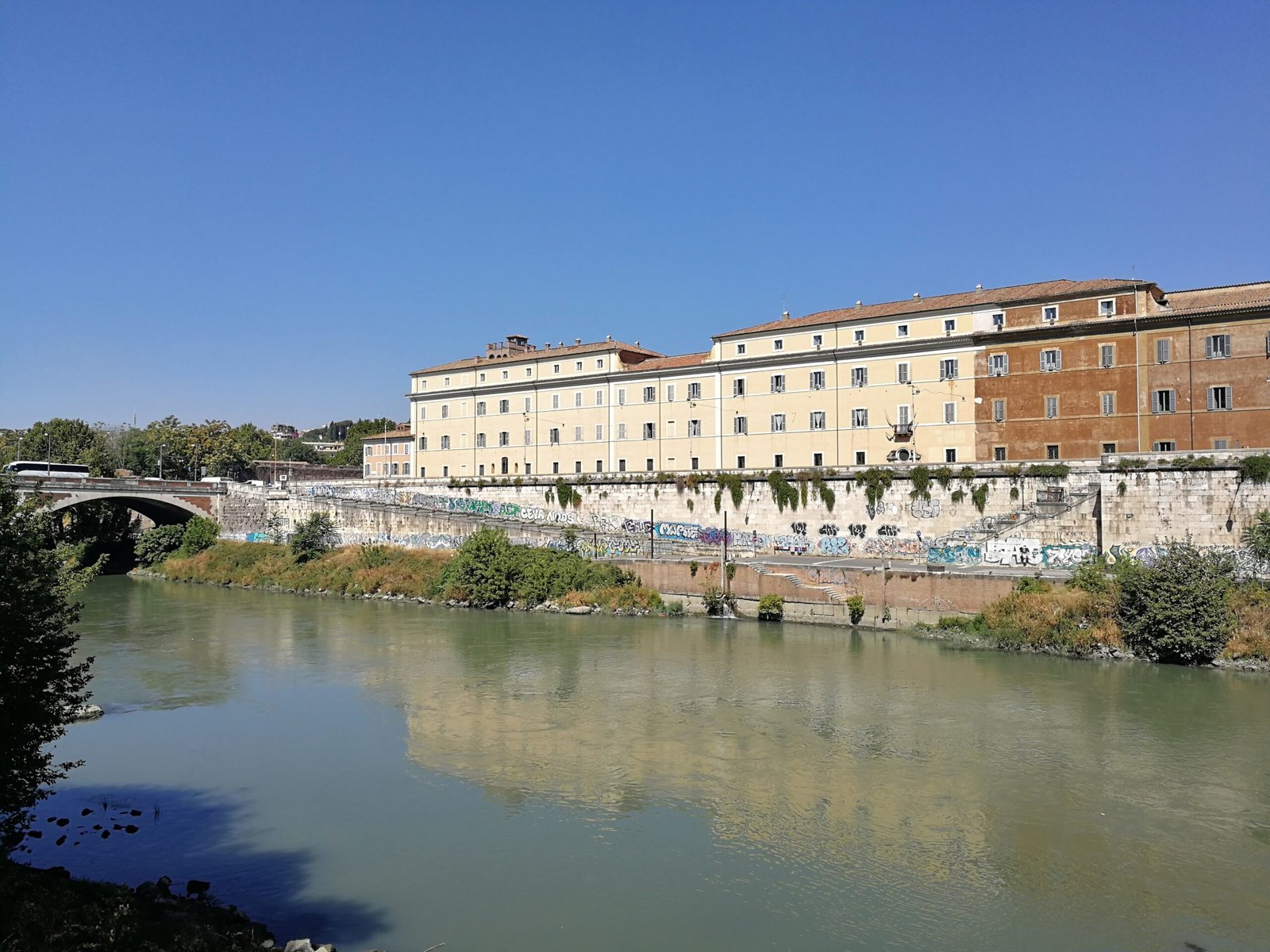
You don't walk into the Istituto Centrale per il Restauro the way you do a museum. The Rome headquarters of this Ministry of Culture institute is at Via di San Michele 23, in Trastevere, inside the monumental complex of San Michele a Ripa Grande, and it opens to the public only on days announced from time to time. The June 2026 evenings were free, with mandatory booking on Eventbrite, and access for the events is listed at Via di San Michele 25.
It is a technical body, not a place to visit. Research, restoration and training happen here together, with the School of Advanced Studies and a team that puts art historians, archaeologists, chemists, physicists, biologists, architects and restorers at the same table. The institute was created by the law of July 22, 1939, number 1240, and the first director was Cesare Brandi, named by Giulio Carlo Argan. Today it is run by the architect Luigi Oliva, in office since 2024.
Data checked on September 29, 2026 on the institute's official website, on the page of the Directorate General for Education, Research and Cultural Institutes, on the complex's entry kept by the Directorate General for Archaeology, Fine Arts and Landscape, on the Roma Capitale tourist portal, and on the Eventbrite page of the European Heritage Days event. The institute does not publish a fixed calendar of openings. For information, the official channels are the switchboard 06 67236300 and the email icr@cultura.gov.it.
At a glance: address, hours, ticket
- Address: Via di San Michele 23, 00153 Rome, the headquarters given by the institute. For events open to the public the entrance is at Via di San Michele 25, San Michele a Ripa Grande complex, Ripa district.
- Operator: Ministry of Culture, Istituto Centrale per il Restauro, director the architect Luigi Oliva.
- How to get in: only on the openings announced by the institute, with booking, so far on Eventbrite. No free access to the laboratories.
- Price: free for the June 2026 evenings. For later openings, read the cost in the announcement.
- Hours: there are no visiting hours. The June 2026 evenings started at 19:00.
- Contacts: 06 67236300, icr@cultura.gov.it, for events icr.ufficiocomunicazione@cultura.gov.it.
- Accessibility: the operator doesn't publish information on accessible routes, so it's best to ask the communications office before booking.
Where it is and what you actually see
San Michele a Ripa Grande is the very long building that closes off Trastevere to the south, facing the Tiber near Porta Portese, according to the Roma Capitale tourist portal. The same portal speaks of more than 300 meters of length and more than 25,000 square meters. The sources don't agree on the length: the English Wikipedia entry gives about 500 meters along the bank. Whatever the exact measure, from the opposite bank you grasp the scale of the building right away.
From outside you see the facade on the lungotevere, which the tourist portal attributes to Nicola Michetti for the phase after 1714, and the sequence of buildings put up over a century and a half. Via di San Michele runs along the back, the street you enter from for events. To the north the complex borders the church of Santa Maria dell'Orto, and the whole area is part of the Ripa district.
The complex is not occupied by a single body. The Directorate General for Archaeology, Fine Arts and Landscape describes it as home to Ministry of Culture offices, and the tourist portal also mentions the Istituto centrale per il catalogo e la documentazione among its occupants. The Istituto Centrale per il Restauro is one of the institutions working there. For this reason the whole has no single ticket office and no visitor route: each office has its own rules and its own events.
What do you see inside when the institute opens? On the June 2026 evenings the program included a tour of the laboratories with the institute's staff, who explained methods and skills, and then a session in the Sala Brandi with opening remarks, audiovisual material by the director Linda Tugnoli and a theatrical monologue. According to an article by the then director in the ENEA magazine, there are four scientific laboratories: chemistry, materials testing, physics and environmental monitoring, and biology.
Alongside the scientific laboratories there are the restoration ones tied to the school. The ministry page on the orientation days lists the training paths: stone materials and decorated surfaces of architecture, painted works on wood and textile supports and works in synthetic materials, and then ceramics, glass, organic materials and metals. During the openings you see works in progress, tools and workbenches. Which works, from time to time, depends on the open worksites, and the institute doesn't announce this beforehand.
A curiosity about the Istituto Centrale per il Restauro
The name has changed several times. Originally it was the Regio Istituto del Restauro, and after the war it lost the royal title. In 1975 the "del" became "per". With Presidential Decree 233 of 2007 the institute took the name Istituto Superiore per la Conservazione ed il Restauro, and with Decree 169 of 2019 it went back to being called Istituto Centrale per il Restauro. That is why different acronyms and addresses still coexist online, ICR and ISCR.
A second curiosity, tied to the place. For almost three centuries a juvenile prison operated in the San Michele complex, from 1704 to 1972 according to the Roma Capitale tourist portal, and next to it a women's prison designed by Ferdinando Fuga. The institute played on exactly this past in its press release for the 2026 European Heritage Days, describing San Michele as a building that went from condemnation to care. Within the same walls where sentences were served, artworks are restored today.
Third curiosity: the library came into being before the operating institute. According to the Italian Wikipedia entry it was established in July 1939, while activity began only in October 1941. Its core includes the bequest of the art historian Adolfo Venturi, and the collection is enriched by a bronze bas-relief by Giacomo Manzù. In the pages we consulted, the institute doesn't publish the library's hours and access procedures: anyone looking for it for study has to write to the institutional email.
The last curiosity concerns the staff. Before the open evenings of 2026 the institute held a closed-door theater workshop reserved for its own employees, coordinated by the author Tommaso Mattei with Marco Zadra and Roberto Manzi, according to the press release picked up by Media Key. The stated aim was to train restorers and technicians to communicate and open up to the public. It is a clear signal: an institute born to work behind closed doors has decided to learn how to tell its own story.
Something nobody tells you about the Istituto Centrale per il Restauro
Anyone passing along Via di San Michele on an ordinary Tuesday finds a closed gate. The Roma Capitale tourist portal writes that the complex is open according to the exhibitions, and this refers to the Ministry's initiatives, not the institute's laboratories. There is no fixed day, no ticket office, no individual visits on request published by the operator. If there is no announced event, you look at the building from outside and continue on through Trastevere.
The opposing view, in our judgment, is this: the idea of going in to see a famous masterpiece on the easel is overrated. Many of the celebrated restorations tied to the institute took place on site, in the basilica of Assisi, in the tombs of Tarquinia, in the Scrovegni Chapel in Padua, in the Last Supper in Milan. In Rome, in the laboratories, you see works in progress, tools and analyses, not necessarily famous masterpieces. The value of the visit is the method explained by those who apply it, not the fame of the object.
A second thing rarely said: the institute has two sites. Besides Rome there is Matera, where a branch was inaugurated on March 4, 2017 in the convent of Santa Lucia Nova, named after Michele D'Elia, according to Wikipedia. The Directorate General for Education, Research and Cultural Institutes gives the address as Via Luigi La Vista 5, with the email icr.saf-matera@cultura.gov.it. Anyone following the school or looking for orientation days should check the Lucanian calendar too, not just the Roman one.
Third thing: you can also see the laboratories from home. Since September 26, 2026 the Ministry of Culture and the institute have run the #ProteggereIlPatrimonio campaign on their social channels, with a manifesto video and short pieces on restoration, two releases a week, presented as a complete virtual visit to the laboratories. For anyone who can't book a place on the open evenings, it is the simplest way to understand what happens behind the doors of San Michele.
How did the institute come about and why does it still matter?
The idea dates to 1938. According to the article published in 2022 in the ENEA magazine by the then director Alessandra Marino, it was Giulio Carlo Argan who presented a project to move restoration from craft practice to a scientific and methodological discipline. The founding law arrived on July 22, 1939, with the institute placed under the Ministry of National Education. Activity began on October 18, 1941, inaugurated by the minister Giuseppe Bottai, in the middle of the war.
The first director, Cesare Brandi, was born in Siena in 1906 and was just over 30 when he took the post. He led the institute until 1961, according to Wikipedia and the ENEA magazine. He organized the work around multidisciplinary teams and developed the pictorial integration technique known as tratteggio. His reflections, matured inside the institute, flowed into the book Teoria del restauro, published in 1963 according to the English Wikipedia entry.
The school started early. The first three-year course began on November 16, 1942, according to Wikipedia. In 1998 the school became the Scuola di alta formazione e di studio, and since 2006 the diploma has been equivalent to a master's degree. The Directorate General for Education, Research and Cultural Institutes now speaks of a five-year course. In 1977, on the initiative of the institute and the National Research Council, the NorMaL commission was born, dedicated to standards on materials.
For about 70 years the headquarters was the convent of the Minim friars in Piazza di San Francesco di Paola, fitted out by the architect Silvio Radiconcini, next to the basilica of San Pietro in Vincoli, in the Monti district. According to Wikipedia that site was left in 2010, and since then the institute has worked in San Michele a Ripa Grande. It is a move that brought the laboratories into a building born for manual work, with weaving workshops and craft shops.
My advice for visiting the Istituto Centrale per il Restauro
Follow the official channels and move as soon as an announcement comes out. News appears in the news section of the institute's website and on the Facebook, Instagram and LinkedIn profiles listed at the bottom of the home page. The 2026 evenings had limited places with mandatory booking, and the Eventbrite page for the September event was already closed for sales. Whoever waits for the last day usually stays out. The period to keep an eye on is that of the European Heritage Days, at the end of September.
Arrive prepared. Anyone who already knows the names of Brandi and Argan, the tratteggio technique and the difference between conservation and restoration understands much more of what the staff show in the laboratories. Two or three precise questions are worth more than a rushed tour. It also helps to know that restoration takes a long time: a work can stay on the bench for months, and what you see is a phase, not a finished result.
Read the booking page all the way through. The announcement states, each time, the entrance, the start time and the conditions, and for the 2026 events access was from Via di San Michele. The operator doesn't publish general rules on documents, minimum age or accessibility, so for specific doubts it's best to write to the communications office, icr.ufficiocomunicazione@cultura.gov.it, before showing up. Arriving a few minutes early saves you from hunting for the right gate along such a long building.
If you can't find a place, don't waste the day. San Michele looks good from outside, from the opposite bank of the Tiber, and around it there are open churches you can visit such as San Francesco a Ripa and the Basilica of Santa Cecilia in Trastevere. To see a restoration live, many Roman worksites are set up with scaffolding visible to the public: just ask the manager of the individual monument if worksite openings are planned.
How much does it cost and how do you book a visit to the laboratories?
There is no ticket. The openings are events promoted by the institute: for the evenings of June 3, 4 and 18, 2026, according to the press release picked up by Il Giornale dell'Arte and SassiLive, admission was free with mandatory booking on Eventbrite. For the event of September 28 and 29, 2026, tied to the European Heritage Days, the Eventbrite page listed the institute as organizer and was closed for sales, with no visible price.
The channel to follow is the website of the Istituto Centrale per il Restauro, where the announcements come out with the booking link. There are no paid products from third-party resellers dedicated to visits to the laboratories, and there is no point in looking for them: access goes only through the institute. Be wary of anyone offering tickets for San Michele outside the Ministry's channels. For general information, the switchboard 06 67236300 remains.
Then there is a separate category, aspiring restorers. In 2023 the school held free orientation days, again with registration on Eventbrite, with remarks from the director, information on the training paths and a visit to the laboratories with work in progress, according to the Directorate General for Education, Research and Cultural Institutes. The school contacts given on that page are the phone 06 6723 6345 or 6346 and the email icr.scuola@cultura.gov.it.
Anyone who wants to bring a class, an association or an organized group will not find a published procedure. The operator lists no visits on request, no group rates and no days reserved for schools. The way is to write well in advance to the communications office, explaining who you are, how many of you there are and for what purpose, knowing that the institute is first of all a workplace. The answer depends on the worksites in progress and on the school's activities.
One last warning about bookings. Eventbrite pages are created for each individual initiative and, once the event is over, stay online with sales closed. Finding a page online with past dates doesn't mean a slot is available. Always check the date of the announcement on the institute's website, and be wary of pages that don't link back to icr.cultura.gov.it or to the Ministry of Culture's domains. If the booking link doesn't appear on the official site, it's best to ask for confirmation by email.
Another well-known fact, yet rarely mentioned
That the institute was born in 1939 is written everywhere. It is mentioned less often that its second director, Pasquale Rotondi, in office from 1961 to 1973 according to Wikipedia, is the same superintendent who during the Second World War coordinated the rescue of thousands of Italian artworks, according to the institute's press release for the 2026 European Heritage Days. On the September evenings the actor Alessandro Preziosi played him in a monologue written by Tommaso Mattei.
Second fact known to insiders and rarely told: the Carta del Rischio. According to Symbola it was created in 1996, according to the article in the ENEA magazine it was developed starting in the 1990s. It is a set of databases that records the vulnerability of monuments and archaeological sites to natural and human-caused risks. The European Commission recognized it as good practice, and today it has passed to the Directorate General for Cultural Heritage Security.
Third fact: anyone can support a restoration by the institute. On the Ministry's Art Bonus platform the institute has five open campaigns for a total of 226,000 euros. Among them are a virtual experience with 3D digitization of the early medieval frescoes of the Basilica of Santa Prassede, the restoration of medieval stone fragments from Abruzzo in Castelli Ambo, and the installation of Nicola da Guardiagrele's Annunciation statues in the Duomo of Teramo.
The Art Bonus list is completed by Niccolò l'Alunno's fifteenth-century triptych and Sartorio's oil sketches for the mosaics of the Duomo of Messina, according to the platform's page. It is a concrete way to tie the institute's name to specific works, outside the circuit of the best-known masterpieces. Anyone who donates finds on the same page the amount requested for each project and the donations already collected in closed campaigns, just under 55,000 euros.
The right photo to take at the Istituto Centrale per il Restauro
The photo that tells the story of the place is taken from outside, from the opposite bank of the Tiber. From the lungotevere on the Aventine side, or from the Ponte Sublicio, you can fit into a single frame the long facade of San Michele, the river and the trees of the lungotevere. You need a wide-angle lens or the phone's panorama function. Try different times of day: a facade this long changes a lot with low-angle light.
The second useful image is Via di San Michele, the side of the complex you enter from for events. It is a Trastevere street, with gates and windows that repeat the same module for dozens of meters. It works vertically, with the perspective of the street stretching away. Stay on the sidewalk, don't stop in front of the office gates and don't photograph the staff coming and going.
For anyone looking for a detail, the facade on the lungotevere offers the regular rhythm of the windows, repeated for hundreds of meters, and the changes in height from one building to the next, a sign of the different construction phases between the 1600s and the 1800s. A photo comparing two sections of the facade tells well the story of a building that grew by additions, under different popes, with different architects and different functions.
Inside, during the openings, the institute sets the rules. Ask before photographing a work in progress: it may be an asset owned by another body, with reproduction restrictions, or an intervention not yet published. No flash on delicate materials. People at work are filmed only with their consent. If they say no, the right photo becomes that of the room or the tools, which tell the method better than a stolen detail.
An alternative for those arriving at sunset: from the Orange Garden, on the Aventine, the view runs toward Trastevere and the Janiculum. From up there San Michele is not the main subject, but you can see its position along the river, low compared to the domes of the center. It is the right image for anyone who wants to tell the relationship between the building, the river and the rest of the city, which reads well from that point.
How do you get to Via di San Michele from central Rome?
The institute doesn't publish directions for public transport. The Roma Capitale tourist portal places the complex along the Tiber, near Porta Portese. For the route on the day, use the journey planner on the ATAC website or call 060608, giving Via di San Michele 25 as the destination. Bus and tram lines in the area change with roadworks and detours, and the open evenings end late: check the return trip too.
For those with mobility difficulties the main reference is the Accessible Rome section of the Roma Capitale tourist portal, cited in the page dedicated to the complex, together with our page on Accessible Rome. The institute doesn't publish information on ramps, elevators or accessible restrooms during the openings. It's best to write first to the communications office, explaining your needs, and ask which entrance to use and which rooms on the route can be reached without stairs.
On foot is the simplest solution. From Tiber Island you go down along the right bank of the river, heading south. From Piazza di Santa Maria in Trastevere you cross the inner streets of the district to San Francesco a Ripa, and from there you reach Via di San Michele. From the Aventine and Testaccio you cross the Tiber on the Ponte Sublicio and find yourself in front of Porta Portese.
By car the area is complicated. Trastevere has access and parking rules that need checking on the Roma Capitale website before you leave, and on Sunday mornings the Porta Portese area is taken over by the market. The operator lists no parking reserved for visitors. Anyone arriving by bicycle finds the route along the Tiber, but has to find out on site where to leave it, because the institute doesn't mark any internal racks.
Some important events that happened here in history
The complex was born at the end of the 1600s. According to the Directorate General for Archaeology, Fine Arts and Landscape, in 1684 Monsignor Carlo Tommaso Odescalchi started a hospice at the Franciscans' garden, completed in 1689 to a design by Carlo Fontana and Mattia de' Rossi. The sources don't agree on the starting year: the Roma Capitale tourist portal gives 1686. In 1693 Pope Innocent XII reorganized Roman public assistance and widened the project to include old men, old women, poor boys and orphan girls.
With Clement XI came the men's prison for boys, between 1701 and 1704, the homes for the elderly, the large church and the weaving workshop, with a school of fine arts. In 1734, or 1735 according to the tourist portal, Ferdinando Fuga built the women's prison for Clement XII. In 1790 Nicolò Forti built the wing for the unmarried women of the conservatory. Between 1831 and 1834 Luigi Poletti added workshops for marble and metals and completed the church.
After Unification the papal benefices ended and the welfare institution fell into crisis. In 1938 it moved to Tormarancia and the old building was left abandoned, the Directorate General writes. In August 1969 the State bought the building to make it the headquarters of the Direzione centrale Antichità e belle arti. The juvenile prison section closed in 1972, restoration work began in 1973, the Sala dello Stenditoio was inaugurated in 1981 and in 1983 the Ufficio centrale per i beni culturali arrived.
On the institute's side, the key dates are the law of July 22, 1939, the inauguration of October 18, 1941, the school's first course in 1942, the NorMaL commission in 1977, the Carta del Rischio in the 1990s, the name change of 2007 and the return to the historic name in 2019. In 2010 the San Francesco di Paola site was left, in 2017 Matera opened. In 2026 the institute opened its doors in June and for the European Heritage Days.
Who has passed through the Istituto Centrale per il Restauro
The founders, first of all. Giulio Carlo Argan, the art historian who proposed the project in 1938 and named the director. Cesare Brandi, director from 1939 to 1961, author of Teoria del restauro. Giuseppe Bottai, minister of National Education, who inaugurated the activity in 1941. And Adolfo Venturi, who didn't work at the institute but left his mark on its library with his bequest, according to Wikipedia, next to the bronze bas-relief by Giacomo Manzù.
Then the directors. After Brandi came Pasquale Rotondi until 1973, Giovanni Urbani until 1983, Umberto Baldini until 1987, Michele d'Elia until 1991, after whom the Matera site is named. Evelina Borea, Michele Cordaro, Almamaria Tantillo Mignosi, Caterina Bon Valsassina and Gisella Capponi followed, the latter in office from 2009 to 2018. Then Luigi Ficacci, Alessandra Marino from 2021 and, since 2024, the architect Luigi Oliva, according to Wikipedia's list.
In San Michele, before the restorers, came architects and popes. Carlo Fontana, Mattia de' Rossi, Nicola Michetti, Ferdinando Fuga, Nicolò Forti and Luigi Poletti worked on the complex between the 1600s and the 1800s, according to the entries of the Ministry and the tourist portal. Innocent XII, Clement XI and Clement XII decided its expansions. And for almost three centuries orphans, the elderly, boys and women prisoners, craftsmen and students of the weaving workshop lived there.
The last names are those of the 2026 evenings. The actor Alessandro Preziosi, who played Rotondi, the author Tommaso Mattei, the director Linda Tugnoli for the audiovisual material, the director Luigi Oliva and the director general for Archaeology, Fine Arts and Landscape Fabrizio Magani for the opening remarks, and the head of the Department for the Protection of Cultural Heritage Luigi La Rocca, cited in the September press release. The real audience, though, is the school's students, who enter every year through a competition.
What was San Michele before it became a place of restoration?
It was a city within the city. The Roma Capitale tourist portal defines it as a multifunctional center: orphanage and hospice, workshop and wool mill, art school and weaving workshop, prison for minors and for women, with two churches, Santa Maria del Buon Viaggio and the large Greek-cross church. The Directorate General also recalls the shops of printers, bookbinders, tailors, carpenters, engravers and plasterers. The idea was to give a trade to those who lived on charity.
The large church, dedicated to the Transfiguration according to the Directorate General, has a Greek-cross plan with four arms, one for each community of residents. It was designed in the early 1700s but completed only by Luigi Poletti in the 1800s. It is a detail that explains the logic of the complex well: different people, separated by age, sex and condition, who prayed in the same space without meeting. The church is not listed as open with published hours.
The weaving workshop wanted by Clement XI enjoyed great prestige in the 1800s. The Sala dello Stenditoio, with its wooden roof, was the room where the tapestries were spread out to set the colors, according to the tourist portal. The sources don't agree on the end of production: the Directorate General and the English Wikipedia entry give 1910, the tourist portal speaks of a weaving workshop active until 1926. The restored hall was inaugurated in 1981.
The juvenile prison is the most cited and most delicate part of the story. The tourist portal dates it from 1704 to 1972, the Directorate General sets the closing of the section in 1972. It was designed by Carlo Fontana for Clement XI. The portal also recalls that the complex has been the set of films and TV series more than once. Many claims circulate online about the prison's architectural model, but the official entries we consulted don't report them and they are not repeated here.
Which famous restorations are tied to the institute?
The institutional sources cite a long list. The 2026 press release picked up by SassiLive recalls Giotto's paintings in Assisi, the Scrovegni Chapel, the Etruscan tombs of Tarquinia, works by Raphael, Caravaggio and Mantegna, the Fountain of the Four Rivers and the Trevi Fountain. For the painted tombs you can start from the Monterozzi Necropolis in Tarquinia.
The ENEA magazine article adds the basilica of Assisi before and after the earthquake, Leonardo's Last Supper, the Capitoline Marcus Aurelius now in the Capitoline Museums, the Riace Bronzes and the Satyr of Mazara del Vallo, the wall paintings of Tarquinia and Pompeii, the Tower of Pisa and the Colosseum. Symbola also recalls the mosaics of the submerged Baia. Years and phases of the individual interventions are not always given.
In Rome the press release picked up by La Testata cites the interventions at the Domus Aurea, at Villa Silvestri Rivaldi and the studies on the Trevi Fountain. Anyone who wants to see the result of the institute's work in Rome therefore has more than one way, even without going into San Michele. In our judgment the most instructive visit is the Domus Aurea, where conservation, excavation and public access coexist before the public's eyes, with the access rules set by the Colosseum Archaeological Park.
Among the Roman places close to the institute's work are also the Fontana dei Quattro Fiumi in Piazza Navona and the Basilica di Santa Prassede, the subject of an Art Bonus campaign for the virtual experience on the frescoes. Looking at them knowing that behind them is a body of diagnosis and conservation work changes the way you see them. Cleaned surfaces, filled gaps and consolidated materials are not a natural given but the result of technical choices that were discussed and documented.
A warning: saying that a restoration bears the institute's signature doesn't mean it was all done in its laboratories. Many interventions were consultancies, scientific direction, analyses, worksites run on site with other bodies. The sources consulted use general formulas, and a list of famous names risks making the institute look like a workshop of masterpieces. Its daily work is broader: monitoring, standards for museum environments, training, technical consultancy for the superintendencies.
Who was Cesare Brandi and what is tratteggio?
Cesare Brandi was born in Siena on April 8, 1906 and died in Vignano on January 19, 1988, according to the English Wikipedia entry. He graduated in literature in Florence in 1928, cataloged the collections of Palazzo Buonsignori in Siena and between 1933 and 1936 worked as inspector and superintendent between Bologna and Udine. In 1938 he was recalled to the Ministry of National Education in Rome, and the following year he took charge of the new institute.
Tratteggio is the technique that carries his name in the manuals. When part of a painting is missing, the restorer doesn't repaint it by imitating the original, but rebuilds it with thin vertical strokes of color, which from a distance recompose the image and up close are recognizable as a modern intervention. It is the way to give the work back its legibility without falsifying it. Wikipedia credits the institute with developing this pictorial integration.
Teoria del restauro, published in 1963, gathers Brandi's thought and influenced the Italian Restoration Charter of 1972, according to the English Wikipedia entry, which also recalls the two Feltrinelli prizes received in 1958 and 1980. For those who enter the laboratories during an opening, knowing what tratteggio is helps to read what you see on the workbenches: the gaps filled with strokes are the signature of a school born right here.
When is it closed and what shouldn't you expect?
For the public the institute is closed almost all the time. You enter only on announced openings, and outside those there are no visiting days or hours. The offices have their own working hours, which the operator doesn't publish for the public, and the laboratories are places of work and teaching. Showing up at the gate asking to take a look doesn't work: the only correct answer is to refer you to the official announcements and the institutional email.
What shouldn't you expect? A museum with rooms, captions and a free route. A cafe or a bookshop: the operator lists none. Famous works always on show: it depends on the worksites. A long visit at your own pace: the tour of the laboratories follows the evening's program, with times and groups decided by the institute. Not even the chance to touch, move or get too close to a work: the distance is set by the restorer who is explaining.
Don't expect the opening to repeat on the same date every year, either. The 2026 evenings were built around a specific project, with an actor, a theatrical text and video material made for the occasion. The operator has not announced a stable program of openings for 2027. The experience may continue, or it may change form. The only certainty, for now, is that announcements go through the institute's website and social profiles.
The San Michele complex as a whole can host exhibitions and Ministry initiatives in spaces like the Sala dello Stenditoio, with hours tied to the individual event according to the Roma Capitale tourist portal. An exhibition at San Michele is not the same as an opening of the institute's laboratories, though. Before going, check who organizes the event, which entrance to use and if booking is needed, by reading the announcement of the body promoting it.
Eating in the area
Inside the complex there is no food outlet open to the public. Outside, San Michele borders the busiest part of Trastevere, and the tourist traps here are many. The signs are always the same: the tout on the sidewalk, the menu with photos of the dishes, items with no price, the window with the lady making fresh pasta as a show, a different menu outside and inside, a kitchen open all day without a break.
Romans avoid these places for a simple reason: they live off passing trade, not regular customers, and quality adapts to an audience that doesn't come back. The fact that a place is full of people with cameras around their necks says little. It matters more to see people from the neighborhood, a short menu that changes often, prices written clearly. On the evenings of the openings, which start at 19:00, it's better to eat afterward, without rushing.
The side streets of the district, away from the main squares, remain the most sensible choice, and the area between San Cosimato and Porta Portese is less trodden than the stretch around Santa Maria in Trastevere. The neighborhood market of San Cosimato is useful for those who prefer to buy something and eat outdoors along the river. For carefully chosen addresses there is the list of addresses on Google Maps.
What to combine in a day
The natural pairing is Trastevere, described in the page Trastevere: things to see. A short distance from San Michele you find San Francesco a Ripa, Santa Maria dell'Orto, San Giovanni Battista dei Genovesi and the Basilica of San Crisogono. The Museo di Roma in Trastevere, in Piazza di Sant'Egidio, completes the round with its collections on Roman life.
Anyone arriving on Sunday morning finds the Porta Portese market right next to the complex. Anyone who prefers greenery goes up to the Janiculum or visits the Rome Botanical Garden, below the hill. For ancient art, on Via della Lungara side, there are Villa Farnesina and the Galleria Corsini, with hours and tickets set by their respective operators.
Crossing the Ponte Sublicio takes you to the other bank. From there you go up to the Aventine with the Basilica of Santa Sabina, or down toward Testaccio, with the Monte dei Cocci, the Ex Mattatoio, the Pyramid of Cestius and the Non-Catholic Cemetery. It is a day that brings together two districts and two ways of living the river.
To the north, along the river, the Tiber Island leads to the Forum Boarium, with the Temple of Hercules Victor, the Temple of Portunus and the Mouth of Truth. For more zero-cost ideas on the site you'll find Free Rome and the list of state museums in Rome, useful for understanding which Ministry sites are open with regular hours.
Frequently asked questions
Can you visit the Istituto Centrale per il Restauro?
Only on openings announced by the institute. It is not a museum and has no visiting hours. In 2026 the doors opened on June 3, 4 and 18, with a tour of the laboratories led by the staff, and on September 28 and 29 for the European Heritage Days. To know when the next chance will be, you have to follow the news section of the official website and the institute's social profiles, and book as soon as the announcement comes out.
Where is the Istituto Centrale per il Restauro in Rome?
The headquarters given by the institute is at Via di San Michele 23, 00153 Rome, inside the monumental complex of San Michele a Ripa Grande, in Trastevere, along the Tiber near Porta Portese. For events open to the public, the booking pages list Via di San Michele 25, with access from the same street. The institute also has a site in Matera, at Via Luigi La Vista 5, dedicated to the school.
How much does it cost to enter the institute's laboratories?
For the June 2026 evenings admission was free with mandatory booking on Eventbrite, according to the institute's press release picked up by the press. For the September 2026 event the booking page showed no price and was already closed for sales. There are no ordinary tickets or authorized third-party resellers. The cost of any future opening should be read in the official announcement, before booking.
Who founded the Istituto Centrale per il Restauro?
The institute was created by the law of July 22, 1939, number 1240, on a project by Giulio Carlo Argan, who in 1938 proposed turning restoration into a scientific discipline. The first director was Cesare Brandi, who stayed in office until 1961 according to Wikipedia and the ENEA magazine. Activity began on October 18, 1941 with the inauguration by the minister Giuseppe Bottai. The original name was Regio Istituto del Restauro.
What is the difference between ICR and ISCR?
They are the same institute at two different moments. From 2007, with Presidential Decree 233, it was called Istituto Superiore per la Conservazione ed il Restauro, that is ISCR. With Decree 169 of 2019 it went back to its historic name of Istituto Centrale per il Restauro, ICR. That is why pages and addresses with both acronyms can still be found online, including old Ministry domains.
How do you become a restorer at the Istituto Centrale per il Restauro?
You enter the School of Advanced Studies through a competitive exam. In 2026 the institute's website published the rankings of the 77th competition, along with information on the expense contribution paid by students and on a scholarship from the Fondazione Paola Droghetti. The course is five years long and the diploma is equivalent to a master's degree. The school's contacts are icr.scuola@cultura.gov.it and the numbers 06 6723 6345 and 6346.
Can you visit the San Michele complex?
The complex houses Ministry of Culture offices and has no free visitor route. The Roma Capitale tourist portal lists it as open according to the exhibitions, that is only when a body organizes an exhibition or an event. On those occasions you can see spaces like the Sala dello Stenditoio, depending on the program. Outside of these cases, San Michele is seen from outside, from the lungotevere or from Ponte Sublicio.
Can you see the laboratories without going to Rome?
In part, yes. Since September 26, 2026 the Ministry of Culture and the institute have run the #ProteggereIlPatrimonio social campaign, with a manifesto video and short pieces on restoration published twice a week, presented as a virtual visit to the laboratories. The institute's official channels are on Facebook, Instagram and LinkedIn, linked from the website's home page. It is also good preparation for anyone who later books a live evening.
Who wrote this and on what sources
The text comes from the editorial team of Tour Leader Pro, the Rome-based company that designs itineraries, visits and cultural events across Rome and Lazio. The access procedures, contacts and opening dates given here come from the official sources cited in the text, as of the date stated at the top: for the Istituto Centrale per il Restauro the institute's website is the authority, with the news section where the announcements of open days come out. Tell us what you find changed.
Organizing a visit to the institute means working on dates more than on tickets: catching the announcement, booking in time, building an afternoon in Trastevere or on the Aventine around the evening, and having a backup plan if the places run out. For anyone planning outings of this kind, with friends, associations or classes, a useful resource for those who organize group trips is Tour Leader Pro, with tools designed to coordinate visits and itineraries.
The institute is also a door to the heritage of Lazio and of all Italy: the painted tombs of Tarquinia, the frescoes of Santa Prassede, the Baroque fountains of Rome, the worksites of Assisi and Padua. Lining up these places takes a few days and some planning, between trains, bookings and the hours of the individual operators, and a useful resource for putting together a multi-day itinerary is Italy Planner.