Mentana
In short. Mentana is the town where the Italian Risorgimento stopped for three years.
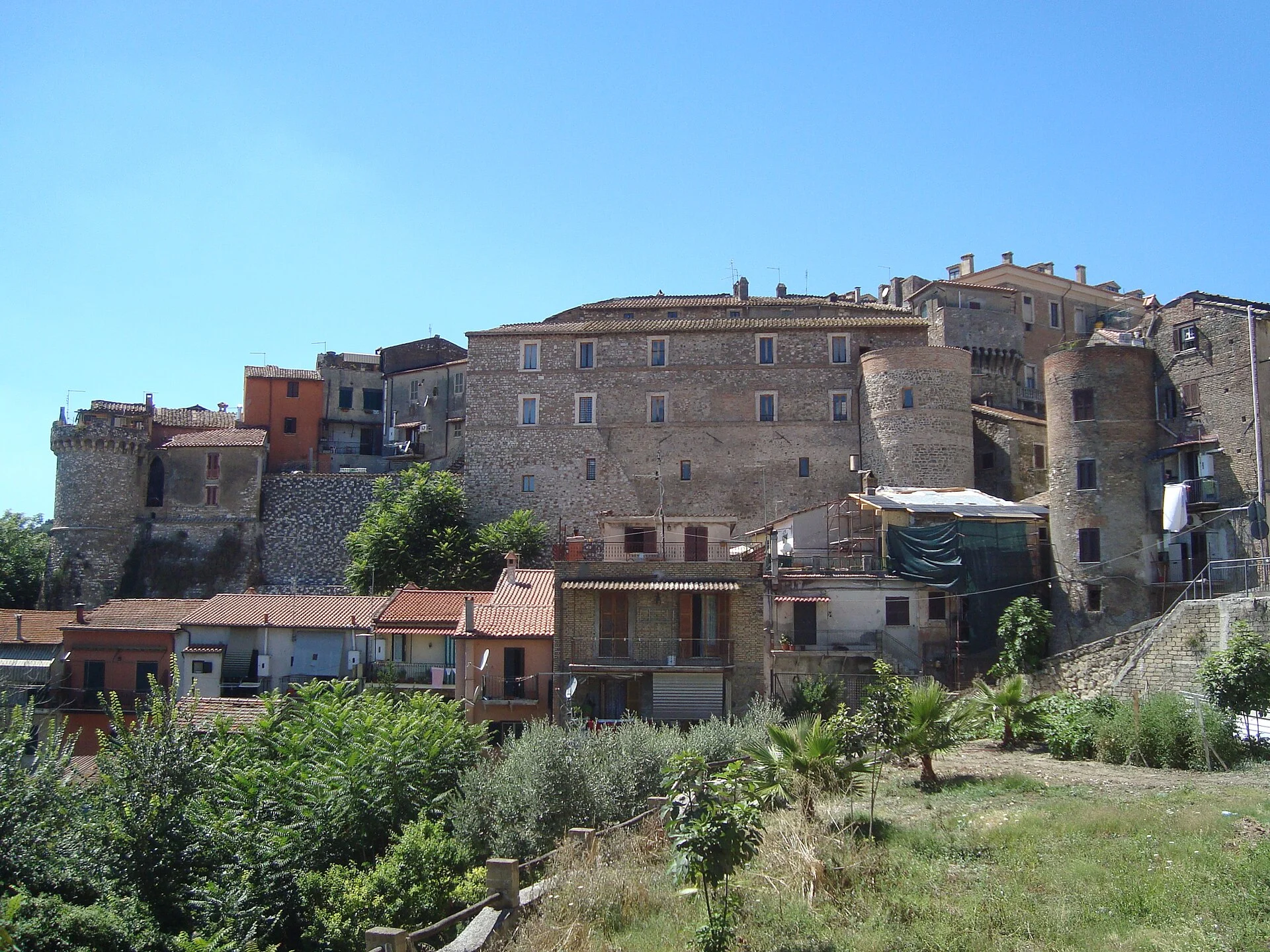
Mentana is the town where the Italian Risorgimento stopped for three years. On November 3, 1867 Garibaldi's volunteers were beaten here, 22 kilometers from the center of Rome, by a mixed force of papal and French troops. Rome would become Italian only on September 20, 1870, at Porta Pia. In between there are Mentana, an ossuary and a museum that almost nobody visits.
The town today has just over 22,000 residents and lives the way the municipalities of the northeast belt live: commuters, small apartment blocks, a Nomentana clogged in the morning. But on the Rocca hill, above the historic center, there are two buildings worth the trip: the ossuary altar of 1877 and the Garibaldi museum of 1905. Closed five days out of seven. That's the sore point and we talk about it right away.
Where Mentana is and how to get there
Mentana lies on the Nomentana route, in the province of Rome, between Fonte Nuova and Monterotondo. By car from the Grande Raccordo Anulare you exit at the Nomentana and head up: without traffic it takes 30, 35 minutes from the center of Rome. With the morning traffic it easily doubles. The Nomentana between Colleverde and Fonte Nuova is one of the most congested roads in the northeast quadrant.
By public transport the situation needs a few more words, because contradictory directions can be read around. Cotral serves Mentana, that is certain. The urban terminus from which the runs along the Nomentana route have historically departed is the one of subway Line B at Ponte Mammolo, but the exact line number doesn't appear in a consultable list on Cotral's official website, which shows only a stop-by-stop search engine. Anyone who wants the exact information looks it up on cotralspa.it/ricerca-orari by entering departure and arrival, or phones the toll-free number 800 174 471.
The rail alternative exists and is more reliable in its timetables. The Monterotondo Mentana station is on the Rome-Florence line and is served by the FL1 regional trains, the ones that link Orte, Rome and Fiumicino Airport, with a share of runs on the FL3 too. The station, however, is not in Mentana: it falls in Monterotondo's territory, and from Piazzale Aldo Moro in front of the underpass depart city buses and Cotral buses that complete the journey. Allow for the change.
The operational advice is clear: you go to Mentana by car. Not out of snobbery toward public transport, but because the museum opens Saturday afternoon and Sunday morning, exactly the time slots in which the out-of-town runs thin out. A 40-minute delay on a four-hour opening window makes you miss the visit. Anyone who doesn't drive should consider the train to Monterotondo and a taxi for the last kilometers.
For the general picture of Roman transport, tickets, validity and apps, there is the page dedicated to how to get around Rome, which covers subway, buses and trams in the city. Outside the Comune di Roma different, zone-based fares apply, and the urban ticket isn't enough.
What happened on November 3, 1867
The Battle of Mentana closes the Agro Romano campaign for the liberation of Rome, the last Garibaldian attempt to take the city with an expedition of volunteers. Garibaldi had left Caprera in violation of his house arrest, had gathered columns of volunteers in northern Lazio and in the Sabina, and had won at Monterotondo on October 25 and 26. Then the political picture collapsed on him.
On October 27 the king's proclamation dissociated the Italian government from the enterprise. It was a heavy blow: many volunteers, hoping for regular support that never came, left the ranks. The sources point to a bleed of men in the days immediately before the clash. Garibaldi arrives at Mentana with an already worn-down force, almost entirely lacking artillery and cavalry, with mismatched individual weapons and counted ammunition.
On the other side was the papal army of General Hermann Kanzler, professional troops, and a French expeditionary corps landed at Civitavecchia. Napoleon III had sent the soldiers back to Italy after the withdrawal that followed the September convention. The French were rested, organized and armed with the new standard-issue rifle. We'll come back to this shortly because it's the technical crux of the day.
The fight takes place among the hills northwest of the town, on Monte Guarnieri and around the village, in the afternoon of November 3. The Garibaldians hold for several hours, then give way before the counterattack. Some barricade themselves in the castle, some fall back toward the border of the Kingdom of Italy. Garibaldi crosses the border and is arrested at Figline Valdarno. The expedition ends there.
The casualty figures, and why they don't add up
The figures for the Battle of Mentana diverge, and not by a little. Here you can't write one number and move on, because the sources clearly contradict each other and anyone who gives you a single figure is simplifying for you.
A reconstruction widespread in Italian circles gives for the Garibaldians about 150 dead, 220 wounded and about 1,700 prisoners, and for the Franco-papal side about 30 dead and about 140 wounded. A reconstruction in Anglo-Saxon circles counts for the Garibaldians about 1,100 dead and wounded added together and between 800 and 1,000 captured, while distinguishing papal losses, 144 dead and wounded, from French ones, two dead and 36 wounded.
How to read this divergence
The two series are not comparable as they stand. The first adds up the Franco-papal side in a single block, the second separates them. The first distinguishes Garibaldian dead and wounded, the second merges them. On prisoners the gap is wide, between 800 and 1,700, and depends on what is counted: those captured on the field, those rounded up in the following days, the volunteers who gave themselves up while crossing the border.
The initial strengths also vary. For the Garibaldians one reads 4,000, 8,100 and 10,000 depending on the moment of the count and the source. For the Franco-papal side one reads 5,000 and 5,500, or a breakdown into about 3,000 papal troops and 2,500 French. Even the name of the French commander changes: some reconstructions give General de Failly, others General de Polhès, and the explanation lies in this: de Failly commanded the expeditionary corps while on the field a brigade operated with its own commander.
In our judgment the low Garibaldian figures are the most cautious and the high ones are affected by later propaganda, in both directions. The solid fact, the one nobody disputes, is the disproportion: the winners lost an order of magnitude fewer men. This says everything about the nature of the clash.
Anyone who wants to go deeper finds structured material at the Institute for the History of the Italian Risorgimento and the Central Museum of the Risorgimento, both in Rome inside the Vittoriano complex. There the 1867 campaign is documented with maps and chronologies that you won't find on display in Mentana.
A curiosity about Mentana
The ancient place name is Nomentum, and from it comes the name of the consular road, the Nomentana. Except that Nomentum was not exactly here: the Roman settlement was a little way off, in the area of present-day Casali di Mentana, and the medieval center formed higher up for defensive reasons. The name moved along with the population, as happened to dozens of towns in Lazio.
The real curiosity, though, is another, and concerns the relationship between the town and its battle. Mentana is one of the very few Italian municipalities whose name was used abroad as a political watchword. In the Republican and anticlerical European press of the late 1800s Mentana was worth what Rome was worth: it meant the French intervention in defense of the temporal power. In France it became an accusation to wave against the Second Empire.
There's also a detail from the ground. The Garibaldi museum keeps one of the most substantial collections of original red shirts, about 40, plus a Mazzini necktie and autographs of Garibaldi and his relatives. It isn't reconstructed material: they are relics that came by donation from the volunteers' families. For a town museum room it's an out-of-scale heritage.
The Chassepots and the sentence that did more damage than a defeat
The Chassepot rifle entered service in the French army in 1866. It is a breech-loading weapon with a sliding rotating bolt and a rubber seal, a center-fire cartridge with a combustible casing, and a useful range far greater than that of the rifles issued to the Garibaldian volunteers. At Mentana it is used in combat for the first time.
The day after the battle General de Failly sends Paris a dispatch with a sentence destined to become famous: the Chassepots did wonders. Seven words that in Italy were read as a provocation and that fed anti-French feeling for a generation. In 1870, when France collapsed at Sedan, in Italy there were those who remembered Mentana with a satisfaction that the documents of the time do not hide.
The technical objection
The sentence doesn't hold up to military scrutiny, and the first to dispute it were the Garibaldian veterans. Testimonies of volunteers present on the field claim they did not hear Chassepot fire in a decisive way and argue that on rugged terrain, among vineyards, low walls and hollows, long range matters less than accuracy at close distance. The technical argument is solid: at Mentana the fighting was hand to hand and at a few dozen meters for a good part of the afternoon.
What decided the day was training, the availability of ammunition and the fact that the Garibaldians were halved by desertions. The Chassepot did its part, but de Failly's sentence is wartime marketing, not analysis. I say this because guides still say that the Garibaldians were mown down by technological superiority: it's a convenient and partial reading.
At the museum the comparison can be seen physically. In the display cases there are Remington rifles and at least one Chassepot together with pistols and bladed weapons. Ask the custodian to point them out: the difference in design between the two weapons can be seen at a glance, even without being a gunsmith.
The ossuary altar on the Rocca
The ossuary altar stands at the top of the Rocca hill, in the same enclosure as the museum, on Via della Rocca. It is a monument in the form of an altar, built by national subscription and inaugurated in November 1877, 10 years after the battle, from a design by the engineer Augusto Fallani. The inaugural speech was given by Benedetto Cairoli, who at Villa Glori in 1867 had lost his brother Giovanni.
Inside are gathered the remains of about 300 volunteers who fell in the clashes of the 1867 Agro Romano campaign, not only those of Mentana. The names of the fallen were carved on the sides of the monument. Not all of them: many volunteers were not identified, and this is one of the reasons why the death figures remain uncertain.
What it feels like to stand there
The effect depends on how much you know before going up. Without context it's a severe 19th-century monument in the middle of a meadow, and in 10 minutes you're done. With context it becomes the place where an idea of Italy paid the bill. It's best to learn the story of the battle down below, at the parking lot, and go up only afterward. It works better.
On the dating of the altar the sources don't entirely agree. The Comune's cultural hub gives the inauguration as November 1877 and the attribution to Fallani. Other listings online give 1867 as the year of construction, which is impossible since it's the year of the battle, and still others confuse the altar with the museum building, which dates from 1905. Stick with the first version, which is that of the body that manages the monument.
An interesting comparison can be made with the Janiculum Ossuary Mausoleum, which gathers the fallen of the Risorgimento wars in a much more monumental structure from the 1930s, and with the Museum of the Roman Republic and Garibaldian Memory at Porta San Pancrazio, which tells the story of 1849. Mentana closes the circle that those two places open.
The Garibaldi museum: hours, ticket, what you really see
The museum is officially called the Museo nazionale della campagna dell'Agro Romano per la liberazione di Roma and locally MuGa. The address is Via della Rocca 2, 00013 Mentana. It was founded in 1905 by the Società Reduci Patrie Battaglie, which collected relics and donations from the Garibaldians' families. The building is from a design by Giulio De Angelis, with decorations by the sculptor Scardovi.
Hours and opening days
There are two openings to the public a week: Saturday from 15:00 to 19:00 and Sunday from 9:00 to 13:00. In summer the Saturday hours shift to late afternoon, from 17:00 to 20:00, while Sunday stays 9:00 to 13:00. A summer closure is planned from August 1 to 30. Data taken from the municipal cultural hub's website and the Comune's listing on September 28, 2026.
Tickets
Admission costs €3. Non-resident school groups pay €2. There is an integrated ticket for the two municipal museums at €5, which becomes €4 for schools. The second museum is the MuCaM, the civic archaeological museum in Piazza Giuseppe Garibaldi, housed in the historic building called Galleria Borghese, with the same Saturday and Sunday hours.
Do you need to book
For an individual visit booking does not appear to be required on the official channels. For groups and school classes it's different and it's best to phone first, because the custody is entrusted to municipal staff and during opening hours there may be only one person on duty. The published contacts are the museum's number 06 90969431, the culture office's number 06 90969407 and the address cultura@comune.mentana.rm.it. The Comune's switchboard is 06 909691.
This is the real channel, and I insist on the point because it's the difference between a successful outing and a wasted trip. Don't trust the hours reported by travel aggregators: for municipal museums in Lazio they are wrong with an embarrassing frequency. Call the culture office on weekdays, when it answers, and have them confirm the weekend opening you're interested in.
On accessibility the municipal listing declares an absence of architectural barriers for the museum. The forecourt and the outdoor path to the ossuary altar are uphill and partly on uneven ground: anyone using a wheelchair should ask when getting in touch how far you can get without help.
Something nobody tells you about Mentana
The museum is open eight hours a week. Eight. A national museum by name, with one of the most important Garibaldian collections in Italy, opens as much as a recreational club. Nobody tells you because it's not pleasant to say, but it's the fact that determines everything else: anyone organizing a visit to Mentana works within a window of four hours on Saturday and four on Sunday, and in August not even those.
The second thing that isn't said concerns the signage. Coming from the Nomentana the signs for the museum and the ossuary exist but are discreet, and the climb to the Rocca from the historic center isn't immediate to spot unless you have the navigation on. The parking lot at the top is limited. Anyone arriving by coach has to assess the maneuver beforehand, not in front of the gate.
Third thing. The battlefield is not turned into a museum. There are no panels on the ground, no marked paths, no equipped observation points. The hills where the fighting took place are today fields, vineyards and, in part, residential development. Anyone expecting a historic park in the Anglo-Saxon manner is left empty-handed. You see the landscape, and that's enough if you've read up beforehand.
The Orsini Borghese castle
The castle dominates the historic center and has a long history. In the late 1300s the complex belonged to the Orsini, a family that held half of northern Lazio. In 1655 it passed to Prince Marcantonio Borghese, who became marquis of Mentana. Hence the double name by which the monument is called in guides and on signs.
The question everyone asks is if it can be visited. The honest answer is that the castle doesn't appear among the places with regular public opening in the municipal list, where under the museum heading only the MuGa and the MuCaM appear. Palazzo Borghese appears instead among the Comune's places. No visiting hours or fares are published for the castle as a stand-alone museum site.
What you can still see
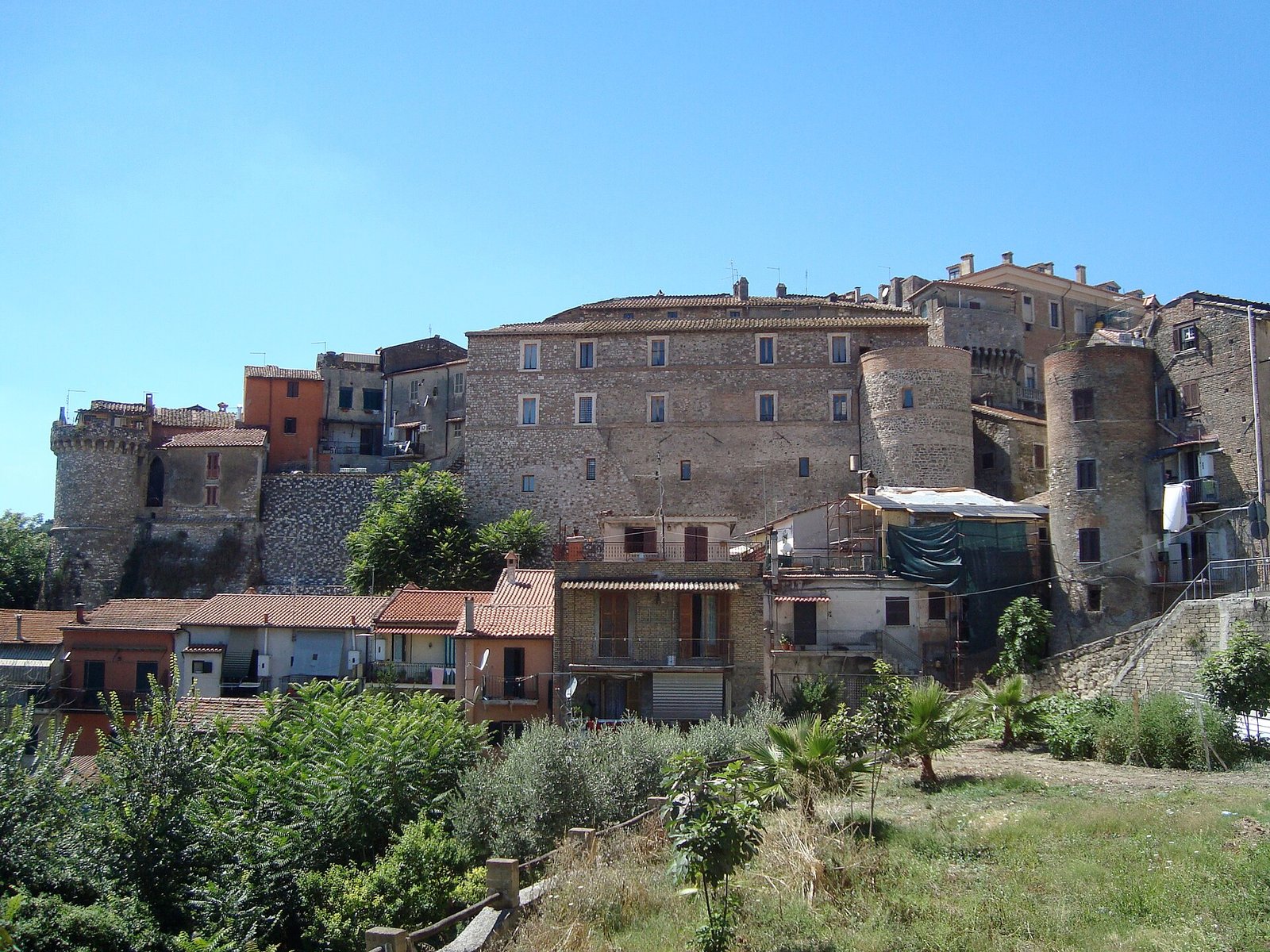
From the outside you see quite a lot, and it's a free visit. The volume of the structure, the masonry, the way it grafts onto the fabric of the village can be read very well from the square and the alleys around. Anyone who wants to understand how a baronial castrum in Lazio worked should look at the relationship between the castle, the church and the gate: it's the pattern that repeats from Nerola to Genazzano.
During the battle the castle played a role. A group of Garibaldians barricaded themselves there and the surrender took place the following day. This detail, which rarely appears on tourist listings, explains why the town has kept a physical memory of the clash in its built fabric as well and not only on the ossuary hill.
If the castle interests you as a type, there are open and equipped alternatives in the area. The Castello Odescalchi at Bracciano can be visited with a ticket and a route, and at Collalto Sabino the stronghold dominates an intact village. Mentana is poorer on this front: its main piece is Risorgimento memory, not castle architecture.
My advice for visiting Mentana
Go on Sunday morning, early, and not on Saturday afternoon. There are three reasons and they are practical. The morning light on the Rocca is better and the landscape toward the Lucretili can be read. The traffic on the Nomentana at nine on Sunday is nonexistent. And the 9:00 to 13:00 slot leaves you time for the museum, the ossuary, the historic center and lunch without rushing, while Saturday from 15:00 to 19:00 squeezes everything into an afternoon that ends in darkness from October to March.
How to build the day
Arrive at 9:00, a good hour at the museum, then the ossuary altar. From there walk down into the historic center, which is small and can be toured in 40 minutes, with the castle and the parish church. At 12:00 you're free. At that point you choose: back to Rome for lunch, or on toward the Monti Lucretili or toward the Sabina, which is half an hour away.
Anyone traveling with high schoolers should do something that always works for me: read de Failly's dispatch aloud in front of the ossuary, after telling the story of the battle. Seven words. The effect on the group is immediate and opens the discussion on how history is written by the winners' side. Better than any panel.
One last piece of advice, banal and ignored by everyone: phone. The culture office's number is 06 90969407 on weekdays. In a municipality of 22,000 residents the person who answers knows if the museum really opens on Saturday, if there's a commemoration, if the forecourt is occupied. Five minutes on the phone are worth more than half an hour of online research.
Another well-known fact, yet rarely cited
Everyone knows that the battle took place at Mentana. Few link Mentana with Monterotondo, which is the next town and which was taken by the Garibaldians a week earlier, on October 25 and 26, 1867, after a night assault. Mentana without Monterotondo can't be understood: the Agro Romano campaign was a sequence, not an isolated episode.
The rarely cited fact is that this campaign had a leg inside Rome. On October 22 in Rome there was the insurrectionary attempt, the action at Villa Glori by the Cairoli brothers and the blast at the Serristori barracks. The urban insurrection failed, and this left Garibaldi without the second front he had counted on. Mentana is the consequence of a plan that had lost its main piece.
Third element, cited even less: France was not supposed to be there. The September convention of 1864 provided for the French withdrawal from Rome in exchange for moving the Italian capital to Florence. The withdrawal had taken place in 1866. The return of the expeditionary corps in the autumn of 1867 was a de facto breach of that agreement, and Italy protested without obtaining anything.
Anyone who wants to reconstruct the chain of events finds the Roman stages told at the Central Museum of the Risorgimento under the Vittoriano, and the monumental picture in the Ala Brasini of the Complesso del Vittoriano and on the Altar of the Fatherland. They are three different places in the same complex and it's worth telling them apart.
When it's closed and what you don't see
The museum is closed Monday to Friday. Closed all of August, from August 1 to 30. Closed, predictably, on the main holidays, though a detailed calendar of extraordinary closures doesn't appear to be published online: one more reason to phone. Anyone arriving during the week finds the gate barred and has no alternatives, because the ossuary is in the same enclosure.
What you don't see at Mentana, in order of disappointment. You don't see an equipped battlefield: no paths, no signs on the ground, no reconstructions. You can't visit the castle, at least not as a museum site with published hours. You don't find a visitor center, a bookshop worthy of the name or a guided-tour service in foreign languages. There is no luggage storage or bar inside the perimeter.
You don't even see, and this is a pity, an up-to-date display. The 19th-century display cases have a documentary charm of their own and are fine for those who already know, but a visitor with no background in the Risorgimento struggles to build the picture alone. Prepare beforehand. Half an hour of reading the evening before completely changes the visit.
The right photo to take at Mentana
The right photo is not the head-on ossuary altar. Everyone takes that one, it always comes out the same, and a symmetrical monument photographed on axis is a postcard with no information. The photo that tells something you make by climbing a few meters onto the meadow behind the monument and including in the frame the altar in the foreground on the left and the countryside to the northwest in the background, that is the ground where the fighting took place.
The good light is Sunday morning between 9:00 and 10:00, with the low sun from the east cutting across the hills and bringing out the relief of the ground. On Saturday afternoon the same view is backlit and flat. From November to February the haze over the Tiber valley can help: the layers of hills separate and the background reads better.
Inside the museum
Ask first if you can take photos, because the rule varies and in a museum with only one person on duty courtesy counts. If they say yes, the thing to photograph is not the whole display case but the detail: the fabric of a mended red shirt, the bolt of a Chassepot, a signature on an autograph. That's where the material stops being generic.
Avoid the flash, always, on fabrics and papers. If the room is dark raise the sensitivity and lean on a doorpost, because tripods in small museums are almost never allowed.
In town
The third photo is the castle seen from below from the alleys of the historic center, in the late afternoon, when the stone takes on color. Don't look for a clean frame because there isn't one: there are cables, antennas and parked cars, as in every living Lazio village. Accept them in the image instead of fighting them, and the photo comes out more honest.
Some important events that happened here in history
Roman Nomentum. The ancient center from which Via Nomentana takes its name was a municipium of Latin and then Sabine origin, with a productive agricultural territory toward the Tiber. The archaeological traces of the area have in part ended up in the local civic museum, and the theme ties into the wider picture of the Lazio municipia that can be seen well at the Palestrina National Archaeological Museum.
The baronial period. From the Middle Ages the castle passes among the great Roman families, the Orsini first of all. It is the season in which Lazio covers itself with fortresses and in which the barons count as much as the pope, sometimes more. The passage to the Borghese in 1655 closes the turbulent phase and opens that of the great agrarian estate, which lasts until the 1900s.
October 25 and 26, 1867. The Garibaldians' capture of Monterotondo is the only significant military success of the campaign. It lasts eight days.
November 3, 1867. The battle. The afternoon that closes the season of volunteer expeditions and hands the Roman question over to diplomacy and then, three years later, to the artillery of the regular army at Porta Pia.
November 1877. Inauguration of the ossuary altar, by national subscription, with the speech by Benedetto Cairoli. The tenth anniversary of the battle becomes a political act of the Risorgimento left, in an Italy that had just changed majority.
1905. Opening of the museum, wanted by the Società Reduci Patrie Battaglie with the contribution of Menotti Garibaldi, son of Giuseppe, who had interests and property in the area. The relics come from the families of volunteers still alive.
The 1900s. Mentana becomes a municipality of Rome's belt and grows with the building expansion of the 1960s and 1970s, like the whole Nomentana route. The Risorgimento memory remains, but stops being the town's main identity.
Who passed through Mentana
Giuseppe Garibaldi, obviously, and not on just any day of his life. At Mentana he loses the last battle commanded in Italy as a leader of volunteers, and is arrested right afterward. He was 60 years old. His figure comes back in half of Rome, from the monument on the Janiculum Hill to Ponte Garibaldi, to the Museo delle Culture di Villa Garibaldi.
Menotti Garibaldi, the eldest son, who commanded units in the 1867 campaign and who stayed tied to the area, later contributing to the birth of the museum. His presence in the area is the reason why the Garibaldian thread at Mentana was never entirely broken.
Benedetto Cairoli, who in 1877 gave the ossuary's inaugural speech. Of the Cairoli brothers, Giovanni died of the wounds received at Villa Glori in October 1867 and Enrico fell on the spot. Benedetto would become prime minister.
Hermann Kanzler, commander in chief of the papal troops, a German from Baden in the pope's service, who at Mentana obtained his only significant military success and who in 1870 signed the surrender of Rome.
General de Failly, commander of the French expeditionary corps, author of the dispatch on the Chassepots. His career ended badly three years later in the Franco-Prussian War, and in Italy nobody minded.
The thousands of nameless volunteers, which is in the end the reason the ossuary exists. Students, craftsmen, workers, veterans of earlier campaigns, many very young. Of about 300 of them the bones remain inside the altar. Of quite a few others not even the carved name remains.
The position you probably won't like
Mentana doesn't deserve a trip on its own. The museum can be visited in an hour, the ossuary in 20 minutes, the historic center in 40. That makes a scant two hours. Building a day around it means padding it out, and anyone who tells you that Mentana is worth a whole outing is selling you an emotion the place doesn't deliver.
The truly unpopular position, though, is another. Mentana's value is educational before it is touristic, and it should be treated as such. Bring a class, a group of enthusiasts, someone who is reading up on the Risorgimento. Don't bring a general-interest tour group expecting a postcard village with a view: Mentana is not that, and pretending otherwise produces disappointed visitors and unfair reviews of a museum that does what it can with the resources of a municipality.
Third thing you won't like. The Risorgimento rhetoric about Mentana was used for a century in an instrumental way, from the right and from the left, to say things that had little to do with November 3, 1867. An honest visit to Mentana should take that rhetoric apart, not feed it: show a predictable military defeat, a mistaken political plan and 2,000 boys sent recklessly into the fray. It's more interesting than hagiography, and much more useful.
Eating in the area
Eating in Mentana and the surrounding area is a different thing from eating in the center of Rome, and the difference works in your favor. Here the clientele is local by necessity: no tour bus unloads 60 people in the square. The signs to know remain, though, because along the Nomentana and on the routes out of Rome a few traps exist outside the city too.
The first sign is the menu with photographs of the dishes. A tagliata photographed on a laminated sign outside the door is a message aimed at people who can't read the language, so at people passing through once. The second is the lady rolling out the pasta sheet in the window or directly on the sidewalk. It's theater, not a clue to the kitchen: good pasta is made in the kitchen at six in the morning, not in front of passersby at 11.
Third sign, the person at the entrance who invites you in and walks you to the table before you've even looked at the menu. A place that works with its customers doesn't need to recruit them on the street. Fourth, the kitchen open from morning to night without a break: it means things are reheated, not cooked. A serious place closes between three and seven and reopens for dinner.
Fifth, and it matters especially when you head back to Rome: places set in front of a famous monument adjust the price to the customer. Items with no price on the menu, fish by undeclared weight, different price lists between the inside room and the tables outside. Ask the price before ordering anything that isn't priced, and if the answer is vague, get up.
The chains in the center
In the center of Rome there are repeated signs, the exact same facade in five or six different spots between the station and the Pantheon. They work as tourist attractions: they are convenient, predictable, have a clean bathroom and staff who speak English. There's nothing scandalous in it. Simply, Romans don't go there, and not out of snobbery: their customers go there, and those are other people.
The single criterion, the one that never fails, is to look at who is sitting at the tables and in what language they order. In a place in Mentana at 13:00 on Sunday you should hear Italian with a Roman accent and see families with grandparents. If you hear only foreign languages in a town of the hinterland, something is off and it's better to walk another 100 meters.
For the rest, in the area the dish that makes sense to look for is that of hill-country Lazio cooking: lamb, artichokes in season, egg pastas. Less Roman than Rome itself, more Sabine. The recommended addresses are in a public list on Google Maps: the places where I eat in Rome and Lazio.
What's around, to build the day
Mentana works within an itinerary, not on its own. The most logical combination is with Monterotondo, which is a few kilometers away and which completes the 1867 campaign on the historical level. Two towns, one morning, one story.
To the east the Sabina opens up, and here the day changes register. The Abbazia di Farfa is half an hour away and is worth double the time usually given to it, with the abbey village around it. Nearby are Fara in Sabina, Poggio Mirteto and the Nazzano Tevere Farfa Nature Reserve, which is the right choice if you have children and want to end the day walking.
To the southeast are the Lucretili and Tivoli, with Hadrian's Villa and Villa d'Este. Honestly, Tivoli is too much for the same day as Mentana: they are two full half-days and you come out cooked. Better to keep Tivoli for another time and at most push on to the Parco dei Monti Lucretili for a short walk.
Anyone with a long day who wants to stay on the monastic theme can get to Subiaco and the Sacro Speco, but that is another 40 minutes and another direction. Toward the Castelli, that is the other side of Rome, are Frascati and the Castelli Romani Park, which don't combine with Mentana on the same day: crossing Rome to go from northeast to southeast is a mistake you pay for in hours.
The Roman sequel
If Mentana has caught you, the route continues in the city. At Porta Pia you see where the Roman question ended three years later. At the Janiculum Ossuary Mausoleum and the Museo della Repubblica Romana you go back to 1849. At the Museo Storico della Fanteria and the Istituto per la Storia del Risorgimento you go deeper.
For anyone who wants to keep the thread of the memory of the fallen, Roman and not Risorgimento, there are the Ardeatine Caves Mausoleum, the Museo Storico della Liberazione on Via Tasso and the Verano Cemetery, where 19th-century funerary sculpture tells the same Italy by other means.
On the Nomentana, on the way back to Rome, you pass in sequence the Basilica of Sant'Agnese fuori le Mura with the Mausoleum of Santa Costanza, the Catacombs of Priscilla and the Villa Torlonia complex with the Casina delle Civette, the Casino Nobile, the Casino dei Principi and the obelisks. It's the same road: if you have a car, a stop fits in without any detour.
A little farther on, still in the northern quadrant, Villa Ada is a good way to end a day with children. And if you're coming from the west and want to stay on the Garibaldi theme, go up to San Pietro in Montorio and then to the Janiculum, which is the real battlefield of 1849, still readable, unlike Mentana. The Capitoline Hill remains the point from which you understand the geography of the whole story.
Frequently asked questions
How far is Mentana from Rome and how long does it take
Mentana is about 22 kilometers from the center of Rome along the Nomentana route. By car, without traffic, you get there in 30 or 35 minutes, including the Grande Raccordo Anulare. At rush hour on weekdays the time easily doubles, because the Nomentana between Colleverde and Fonte Nuova is saturated. Early Sunday morning is by far the best window.
What are the opening hours of the Garibaldi Museum in Mentana
The museum is open Saturday from 15:00 to 19:00 and Sunday from 9:00 to 13:00, with summer hours that move Saturday to 17:00 to 20:00 and a summer closure from August 1 to 30. From Monday to Friday the museum is closed. Data collected from the channels of the municipal cultural hub and from the Comune di Mentana page as of September 28, 2026, to be reconfirmed by phone before you leave.
How much does the ticket cost
The admission ticket costs €3, reduced to €2 for school groups from outside the town. There is a combined ticket for the two municipal museums, the Garibaldi museum and the civic archaeological museum, at €5, which drops to €4 for schools. No general free admission appears to be published. For special discounts it's best to ask the Comune's culture office directly.
Do you need to book the visit
For individual visitors, booking does not appear to be required on the museum's official channels. For groups and school classes, on the other hand, it's advisable to arrange it beforehand, by calling the museum at 06 90969431 or the culture office at 06 90969407, or by writing to cultura@comune.mentana.rm.it. These are the real channels run by the Comune: the hours listed by tourist aggregators don't always match the actual ones.
Can you visit the ossuary
The ossuary altar is in the same enclosure as the museum, in Via della Rocca, and can be seen during the same opening hours as the museum. It has no separate ticket office and no published hours of its own. Outside opening times the enclosure is closed, so anyone arriving on a weekday can't get close to it. Inside are gathered the remains of about 300 volunteers of the 1867 campaign.
Can you visit the Orsini Borghese castle
The castle does not appear among the places regularly open to the public in the municipal list, where under the museum category there are only the MuGa in Via della Rocca and the MuCaM in Piazza Giuseppe Garibaldi. No hours or fees are published for visiting the castle as a standalone museum site. From the outside the structure can be seen well from the square and from the lanes of the historic center.
How many died in the Battle of Mentana
The sources differ substantially and this needs to be said clearly. One reconstruction gives about 150 dead, 220 wounded and 1,700 prisoners for the Garibaldians, with about 30 dead on the Franco-papal side. Another counts about 1,100 Garibaldians dead and wounded combined, 800 or 1,000 prisoners, 144 papal losses and two French dead. The shared fact is the very strong disproportion in favor of the winners.
What were the Chassepots
The Chassepot was the breech-loading rifle adopted by the French army in 1866, with a rotating sliding bolt and an effective range greater than the weapons in the volunteers' hands. It made its combat debut at Mentana, and General de Failly wrote to Paris that the Chassepots had done wonders. Garibaldian veterans disputed that reading, noting that on rough terrain long range matters less than close-range accuracy.
How to get there by public transport
Cotral connects Mentana to Rome along the Nomentana route, with departures from the Metro B hub at Ponte Mammolo. The line number does not appear in a list that can be consulted on the official site, which offers a stop search engine, so you need to look it up there or ask at the toll-free number 800 174 471. Alternatively, the FL1 regional train stops at Monterotondo Mentana, from where you need city buses or a taxi.
Who wrote this page
This page comes from the editorial team of Tour Leader Pro, the Rome-based outfit that designs itineraries, tours and cultural events in Rome and Lazio. Hours, fares and contact details given here come from the official channels named in the text as of the publication date: for the municipal museums of Lazio they often change without notice, so a phone call before you leave remains the most sensible move. Reports of data that no longer match are welcome.
Anyone putting together a day outside Rome has to make very tight opening windows, reduced municipal staff, sparse suburban buses on weekends and distances that look like nothing on paper but become real time in the hills all fit together. Planning materials for people who lead groups and for those who organize on their own can be found at Tour Leader Pro, where logistics comes before description.
For the overall picture of regional trains, rentals, airports and destinations in Lazio outside central Rome, from the Sabina to the Castelli and the coast, a useful resource is Italy Planner.