Museo delle Culture – Villa Garibaldi
In short. The Museo delle Culture "Villa Garibaldi" occupies the family villa of Ricciotti Garibaldi at via Costanza Garibaldi 10, in Riofreddo, the last town in Lazio before the Abruzzo border, at 705 meters of elevation and about 70 kilometers from Rome.
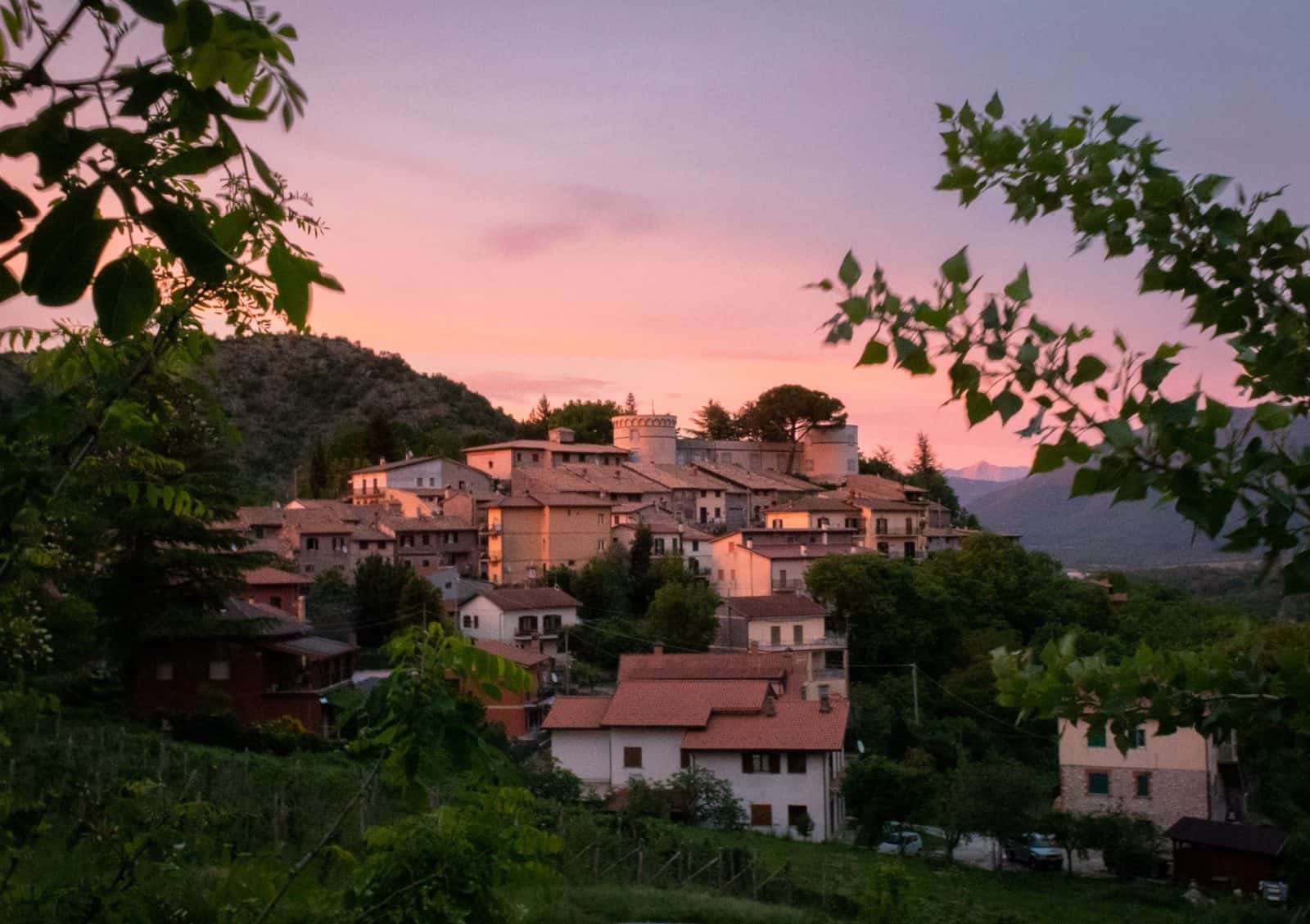
The Museo delle Culture "Villa Garibaldi" occupies the family villa of Ricciotti Garibaldi at via Costanza Garibaldi 10, in Riofreddo, the last town in Lazio before the Abruzzo border, at 705 meters of elevation and about 70 kilometers from Rome. The museum exists, it's municipal and it's open, but with a reduced calendar concentrated on the weekend: before getting in the car it's best to call 0774 929183 or write to rio.mudecu@gmail.com to have the day and time confirmed, and to ask if the custodian can also open outside the regular hours. The Oratorio della Santissima Annunziata, which is the second reason to climb up here and is a two-minute walk away, can be visited by reservation only: the number is that of the Comune, 0774 929116, at via Costanza Garibaldi 6. The museum ticket is set by the municipal executive and is a modest amount, with reductions for school groups, children, seniors and protected categories: have them tell you on the phone along with the hours, because the fares published around don't agree with each other. You arrive by car from the A24, exit Carsoli-Oricola, then SS5 Tiburtina Valeria and provincial roads for about 10 minutes. Alternatively you exit at Vicovaro-Mandela and continue toward Arsoli. By public transport you leave from Rome Ponte Mammolo with Cotral toward the upper Aniene valley, but the runs to Riofreddo are few and change often: check the updated schedule on the Cotral website the day before. The museum has facilities for disabled visitors, a conference room, a temporary exhibition room and educational spaces.
If you want to place Riofreddo in its geographic context before leaving, the page on the Monti Lucretili explains well the system of valleys and ridges in which the village is set.
Where the Museo delle Culture - Villa Garibaldi is and how to get there
Riofreddo is a village of just over 700 inhabitants perched on a ridge that closes the Aniene valley toward Abruzzo. From up there you see the natural gap that the Romans used to carry Via Valeria from the Tyrrhenian to the Adriatic, and which 2,000 years later the A24 motorway simply retraced 200 meters lower down. This is the key to everything: Riofreddo is a place of passage that has made the threshold its trade, and the museum you find inside it tells exactly that.
By car to the Museo delle Culture - Villa Garibaldi
The most convenient route is the A24 Rome-L'Aquila, exit Carsoli-Oricola: from there you go down onto State Road 5 Tiburtina Valeria toward Rome and after a few kilometers take the provincial road that climbs to Riofreddo. Coming from Rome you can also exit at Vicovaro-Mandela, follow the signs for Subiaco and then for Carsoli, pass Arsoli and turn left after the long straight. The first route is faster, the second is prettier, because it runs along the valley floor and passes under the villages hanging on the slope. Count on a good hour from east Rome in normal conditions, much more on a summer Friday afternoon, when the A24 becomes a funnel. In the village you park without trouble: Riofreddo doesn't have a parking problem, it has if anything the opposite problem, that in winter the uphill streets require attention.
By public transport to the Museo delle Culture - Villa Garibaldi
Here we have to be honest about the difficulty. Public transport toward the upper Aniene valley is designed for residents who go down to Rome in the morning and come back up in the evening, not for the tourist who wants to do the reverse trip in a day. You leave from the Cotral terminus at Ponte Mammolo, on metro line B, and depending on the run you reach Riofreddo directly or via Carsoli with a change. The useful runs are few, the last one back to Rome is often in the early afternoon, and the schedules are reshuffled at every change of season. Anyone who wants to try must check the official Cotral schedule the day before and count on a whole day. By train you can reach the Rome-Avezzano line and get off at Arsoli or at Oricola-Pereto, but from the station you still need a road vehicle or a ride. The judgment is blunt: for Riofreddo the car is not a luxury, it's the only civilized way to organize the visit, and if you don't have one it's best to tag along with someone who does.
Hours, tickets and booking at the Museo delle Culture - Villa Garibaldi
The municipal regulation that established the museum sets 20 weekly hours of opening to the public, half of which must be concentrated on the weekend. In practice: Saturday and Sunday are the good days, during the week the opening is shorter and more uncertain, and in the low season it's always best to announce yourself. The ticket is decided by the municipal executive, with reductions for school groups, children, seniors and protected categories. The figures circulating on tourist portals don't match, so ask for the exact amount when you call. For groups and school groups the visit is arranged in advance, and it's the best formula, because with the accompaniment of someone who knows the collections the museum doubles in value. Remember that the booking for the Oratorio della Santissima Annunziata follows a different channel, that of the Comune: make the two calls together and organize the morning so as to see the fresco cycle and then the museum, or vice versa.
What the Museo delle Culture - Villa Garibaldi really is
The full name is Museo delle Culture "Villa Garibaldi", which the people of Riofreddo abbreviate to MuDeCu. It's a civic museum, that is, owned by and the responsibility of the Comune of Riofreddo, and it belongs to three different networks: the MedAniene Territorial Museum System, which holds together the museums of the Aniene valley from Anticoli Corrado upward, the Case-Museo project of the Lazio Region, which it entered in 2014, and the regional thematic systems devoted to archaeology and anthropology. It isn't a collection of local curiosities put in display cases any old way: it's a demo-ethno-anthropological museum built with scientific criteria, where the objects serve to document the modes of production, exchange and belief of a border community.
The plural in the title is the most intelligent thing in the whole project. "Culture" in the plural because in Riofreddo different identities have overlapped and crossed: the Aequi before the Romans, the Romans of Via Valeria, the monks, the Colonna and then Del Drago feudal lords, the farming and pastoral community, the carters who lived off the passage of goods, the merchants, the landowners, the emigrants who left, and finally the Roman summer visitors of the late 19th century, of whom the Garibaldis were the most illustrious example. The museum devotes a space to each of these worlds, and the result is that you come out with a knowledge of Italian social history much more concrete than the one you take home from some national museums.
The four sections of the Museo delle Culture - Villa Garibaldi
The canonical sections are four: archaeology, medieval and modern history, demo-ethno-anthropology, historical testimonies of the Garibaldi family. To these are added services that a village museum normally doesn't have: a bibliographic documentation center, a photographic and audiovisual archive, a conference and multimedia projection room, a room for temporary exhibitions, educational spaces, a storage area and a restoration laboratory. The municipal library and archive are housed in the same building, which means that anyone who wants to do research on Riofreddo finds the documents in the same room where they see the objects. It's a choice that few small municipalities have been able to make and it must be said clearly.
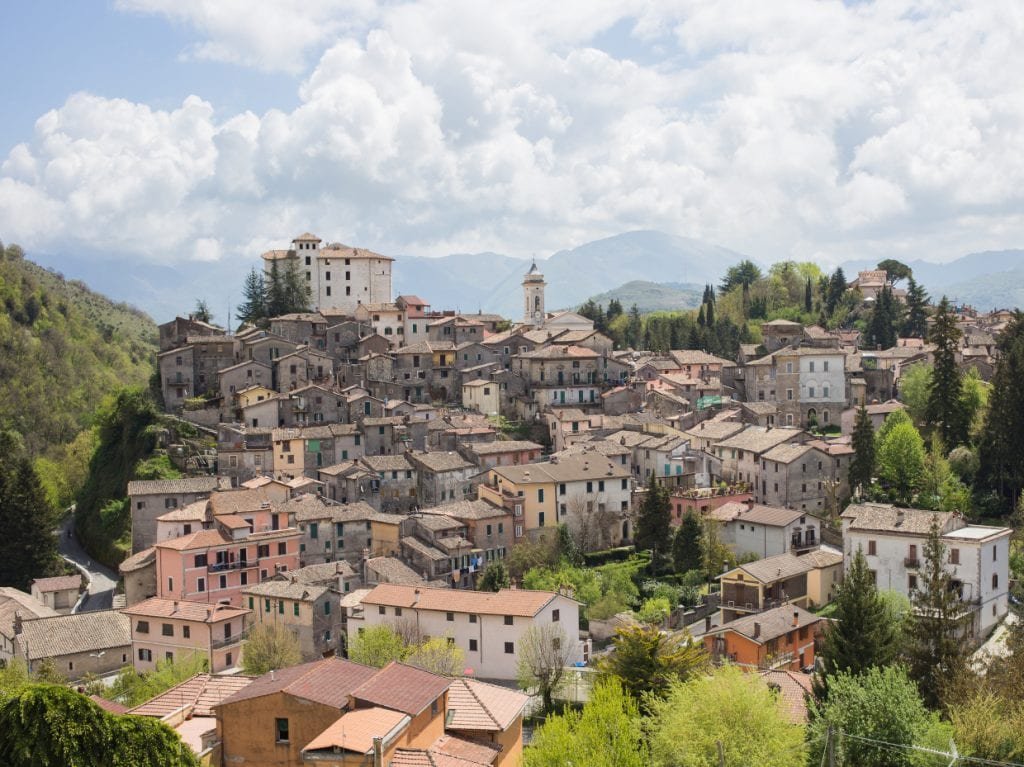
The villa of Ricciotti Garibaldi, home of the Museo delle Culture - Villa Garibaldi
The building is not a medieval castle, however much the silhouette with the two cylindrical towers may mislead anyone seeing it from afar. It's a late 19th-century villa built at the wish of Ricciotti Garibaldi and his English wife, and its original plan included a long rectangular main building, two circular towers, a stable and a garden. The sources waver on the exact year of construction, between 1888 and 1893: the prudent formula is "at the end of the 19th century", with the family's permanent move to Riofreddo happening in 1893.
Who Ricciotti Garibaldi was
Ricciotti was born in Montevideo on February 24, 1847 and was the fourth child of Giuseppe Garibaldi and Anita, not the third: the sequence is Menotti, Rosita, Teresita, Ricciotti. He fought in the Third War of Independence of 1866, in the Vosges campaign during the Franco-Prussian war of 1870, in the Greco-Turkish war of 1897 and in the First Balkan War of 1912. He was elected deputy in 1887. His descent on Riofreddo, according to the most widespread reconstruction, was not a serene vacation choice but the consequence of a restrictive measure tied to the political turbulence of the early 1890s and to the Banca Romana scandal. It's an uncomfortable page of the Garibaldi saga, and the museum has the merit of not hiding it behind rhetoric. Ricciotti died in Riofreddo on July 17, 1924, in that same house that today hosts the collections: anyone visiting the Garibaldi rooms walks inside the home of a man who had fought on four European fronts and who ended his life here.
Costanza Hopcraft, the Englishwoman who chose Riofreddo
Harriet Constance Hopcraft, in Italy Costanza, lived from 1853 to 1941 and was one of the first summer visitors to choose Riofreddo as a vacation destination for her family. She had eight children: Anita Italia, Giuseppe known as Peppino, Ricciotti junior, Menotti junior, Sante, Bruno, Costante and Ezio, the latter born right in Riofreddo in 1894. She was a cultured woman with a trained hand: the museum preserves a portrait of her husband that she painted in tempera on fabric in 1906, and a bust of Anita Garibaldi that she modeled herself. The street the museum faces bears her name, and in the villa's garden the headstones of the graves of her dogs and cats survive. It's her fans, her English magazines and her oil lamp, displayed in the case, that tell better than any caption what it meant to be a British lady transplanted to a village of the Lazio Apennines at the turn of two centuries.
From villa to museum: 1962, 2000, 2001, 2002
After Costanza's death in 1941 her children Ezio, Anita Italia and Rosa remained in the villa. Anita Italia died in 1962 and left the building to an association tied to the ideals of the Italian Resistance, but her wishes were not respected and the house slid into a long abandonment that lasted until the year 2000. The turning point came when the Comune of Riofreddo took part in a European funding call for the redevelopment and renovation of the villa: the works led to the museum's inauguration in 2001. The west part of the building was donated by Anita Garibaldi Jallet, granddaughter of Ricciotti and daughter of Sante, in memory of her father. The east wing was purchased in 2002 from the heirs of Ezio Garibaldi with the help of regional funding. 40 years between abandonment and rebirth: anyone who knows the history of historic properties in Italy knows that it's by no means a record time, but that the positive ending is anything but a given.
The room-by-room visit of the Museo delle Culture - Villa Garibaldi
The route is spread over several levels and follows a chronological logic only in part: you enter from recent history, go down to archaeology and come back up to material culture. Count on an hour if you walk briskly, an hour and a half if you read the panels and use the listening points. With a museum guide you easily reach two hours, and they are two hours well spent.
The entrance and the historical section: the three scale models
At the entrance the museum lines up three scale models reproducing the main architectural monuments of the municipality: the Convento di San Giorgio, the Castello Del Drago and Villa Garibaldi itself. It's an old-fashioned but highly effective didactic choice, because before even reading a line the visitor understands the geography of the village and the relationship among the three poles, the religious, the feudal and the 19th-century bourgeois. The convent of San Giorgio, of which only ruins remain, is the one that gives its name to the Roman bridge in the valley floor. Practical advice: give five real minutes to these models, because everything you will see afterward, in the museum and outside, ties back to them.
The lower floor: the archaeological section of the Museo delle Culture - Villa Garibaldi
You go down and go back a few million years. The section opens with the paleontological finds: bone fragments of prehistoric animals, including parts of Elephas antiquus italicus, the straight-tusked elephant that populated central Italy in the Pleistocene, and a hippopotamus limb. They are finds that throw off anyone who imagines the Apennines as an unchanging environment: here there were wetlands, and there were animals that today we associate with Africa. The next leap leads to the Iron Age and the early historical period, with the materials of the Aequi people.
The Aequi and the necropolis of Casal Civitella
The Aequi are one of the Italic peoples that the Romans took decades to subdue, and Riofreddo is inside their territory. The archaic necropolis of Casal Civitella, excavated by the Soprintendenza archeologica del Lazio starting in 1986, has yielded grave goods that the museum displays distinguishing the male burials from the female ones. In the grave goods appear objects in bronze, iron, gold and Baltic amber: this last detail is the one worth the trip. Baltic amber in a tomb of the Lazio Apennines of the 1st millennium BC means that long-distance exchange routes were already working then, and that this pass was not a periphery but a node. The necropolises identified in the municipal territory are three, and the oldest dates to around 1000 BC.
Rome, Via Valeria and the colony of Carsioli
The Roman section documents the period in which the territory gravitates toward the Latin colony of Carsioli, founded at the beginning of the 3rd century BC to control precisely this corridor. Among the pieces on display are a rectangular altar with a pediment, decorated on all four sides, and a fragment of a milestone of Via Valeria. The milestone is a modest object to look at and very important to understand: it is the material proof that the consular road passed through here and that it was maintained by the State. There are also fragments of a marble inscription referring to the emperor Nerva, and the connection with the bridge in the valley floor becomes immediate.
The upper floor: the demo-ethno-anthropological section
On the floor above you enter the part that gives the museum its name. The display cases gather artifacts tied to the farming, pastoral and artisan tradition of Riofreddo, donated in large part by the population: a small hammer, a flat iron, razors, and then plow, plowshare, yoke, hoe, sickle, wine press. Put like that it sounds like a junk dealer's list. Seen on the spot it's something else, because each object is placed in the work cycle it belonged to. The installation distinguishes the modes of production and exchange of the different components of the community: the farmers, the shepherds, the artisans, the carters who lived off the transit of goods along Via Valeria, the merchants, the landowners, the emigrants who left for abroad and the summer visitors who came from Rome. Among the documented notable families the museum cites the Colonna, the Del Drago and the Pelagallo.
The listening points and the intangible heritage
This is the part that distinguishes the Museo delle Culture "Villa Garibaldi" from ordinary village ethnographic museums. Alongside the objects there are visual and sound documentations devoted to intangible cultural heritage: Riofreddo's oral traditions collected in the field and given back in listening points. You hear the local people speak, you hear the songs. In the tower a space is carved out devoted to the religious rites of the village, with panels on the local feasts: the feast of the patron saint San Giorgio at the end of April, the feast of Sant'Antonio Abate, Carnival. It's worth knowing that in Riofreddo a Christmas sacred representation called the Pastorella survives, to a melody traditionally attributed to Saint Alphonsus Maria de' Liguori, with the characteristic reeds decorated with greenery. If you happen to be in the village near Christmas, ask when they do it.
The Garibaldi section of the Museo delle Culture - Villa Garibaldi
The section devoted to the family is the one visitors remember longest, and not only for the surname. There are the personal relics of Costanza Hopcraft, the documents of Sante Garibaldi, the Stacchetti Collection with materials from the Franco-Prussian war of 1870, the Garibaldian red shirt, caps and military uniforms from 1915-18, Red Cross medals and badges that belonged to Anita Italia. There is the Napoleon III-style study that the French president Édouard Herriot gave to Sante Garibaldi in 1938. And there is a cap from the Buchenwald concentration camp, which is the object in front of which, in the whole villa, silence falls.
Sante Garibaldi, born in Rome in 1885 and died in Bordeaux in 1946, was watched by the Gestapo as a dangerous element, arrested in 1941 and again in 1943 on charges of espionage, and spent two years in German concentration camps. In April 1945 he was transferred with a group of illustrious prisoners to Villabassa, in the Val Pusteria, where he was liberated on May 4. On the walls are kept a photograph of Ricciotti's family in mourning for the death of Bruno and Costante, fallen in the Argonne in 1914 and 1915 with the Garibaldi legion in France, and a photo of Ricciotti with an autograph dedication to his son Sante dated 1913. There is also a mural fresco with the family of Ricciotti and Costanza, executed in the 1910s. Anyone who studied the Risorgimento in textbooks sees it end here inside the 20th century, with its lacerations: the same Garibaldis who go as volunteers to France in 1914, one son who sympathizes with Fascism, another deported by the Nazis.
The tower, the temporary exhibitions and the conference room
In the main tower the temporary exhibition room is carved out, which hosts rotating exhibitions, often on local or Garibaldi subjects. Next to it is the conference room, used for conferences and screenings. Before going up ask what is on display at that moment: sometimes there is a photographic exhibition on the museum's archives, and in that case the visit is worth double. The museum preserves period prints, postcards and photographs from 1870 on, material that the people of Riofreddo recognize at a glance because it portrays their great-grandparents.
The library and the municipal archive inside the Museo delle Culture - Villa Garibaldi
The villa houses the library and the municipal archive, along with a rich photographic and audiovisual documentation. For those doing research it's a rare convenience: in the same building you consult the documents and see the objects that those documents name. Access to consultation must be arranged in advance with the Comune, because the staff is what it is and a study room can't be improvised on a Sunday afternoon.
Riofreddo, border land: why the museum is called "delle Culture"
The reason for the name is all in political geography. For centuries Riofreddo was the last village of the Papal State before the Kingdom of Naples and then of the Two Sicilies, and at the same time the point of contact between Lazio and Abruzzo. The stream from which the village takes its name, also called fosso Bagnatore, rises on Monte Aguzzo and flows into the Aniene. The territory separates the group of the Monti Sabini from that of the Simbruini and constitutes one of the few convenient transit routes between the Tyrrhenian slope and the Adriatic slope. Over the centuries the village has passed under the duchy of Spoleto, the Franks, the Normans, the Angevins, the Aragonese and the Bourbons. A position like this produces specific trades: a hospital for wayfarers, a large category of merchants and carters, a flourishing craft industry. All this the museum presents as social history, not as folklore.
Anyone who wants to understand the valley as a whole can continue toward Arsoli, a few kilometers away, or go down toward Anticoli Corrado, the village of the models for painters, which belongs to the same museum system. Farther south you enter the territory of Subiaco and the Benedictine monasteries, and still farther down you reach Tivoli.
The Oratorio della Santissima Annunziata, a stone's throw from the Museo delle Culture - Villa Garibaldi
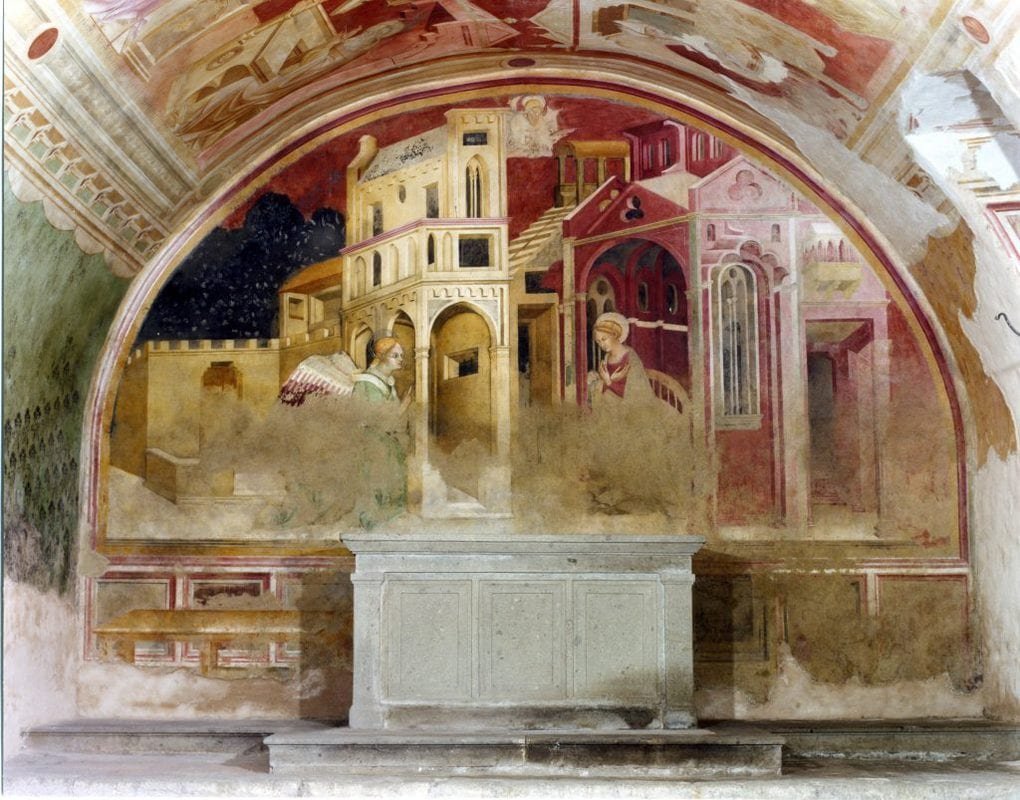
If I had to name a single reason to climb up to Riofreddo for someone with little time, I would name this one: the Oratorio della Santissima Annunziata preserves one of the most important painting cycles of the early 15th century in Lazio, and almost nobody knows it. It's in piazza della Santissima Annunziata, admission is free, the visit is by reservation with the Comune, phone 0774 929116.
1422, Antonio Colonna and Pope Martin V
A marble plaque set into the front bears the date 1422. The oratory was built, or rather adapted from a Romanesque preexisting structure, at the time of Pope Martin V Colonna, commissioned by the lord of Riofreddo Antonio Colonna, whom the sources call Miles Rivifrigidi. The historical context explains everything: the Western Schism had closed in 1420 with the election of a Colonna pope, and the family invested in its fiefs in Lazio with a program of artistic renewal that also had a political value. The patron had himself portrayed inside the fresco: he is the human figure supported by the angel, at the upper right of Christ. On the facade the Colonna coat of arms and Antonio's initials carved at the sides of the shield are now illegible, while of the exterior mural decoration there remain the scratches with crossed grooves and the outline of a halo with the imprint of the pastiglia technique.
The frescoes: Annunciation, Crucifixion, Christ in glory
The hall is a simple rectangular room covered by a barrel vault, with a round-arched portal outlined by a sequence of ashlar blocks and framed in a linear frame of Durazzesque stamp. The architecture is essential. The paintings transform it. On the altar wall the Annunciation is painted: the archangel Gabriel kneeling, the Virgin rising from her seat and bowing to the divine messenger in an act of welcome, and in the background an imaginary city that rises with porticoes, loggias, mullioned windows, baptisteries. In the lunette above the entrance is the Crucifixion, with Christ on the cross between the Virgin and John the Evangelist seated in a bare, rocky landscape and two weeping angels at the sides of the cross. The vault bears the triumph of Christ, the Redeemer surrounded by a multitude of angelic choirs ordered according to the medieval hierarchy, with the Evangelists and the Doctors of the Church paired two by two: Matthew with Jerome, Ambrose with John, Luke with Benedict, Mark with Gregory the Great. On the side walls run fake tapestries with geometric and floral motifs. On the eastern portion of the vault appear Saint Gregory of Nazianzus and Saint Gerasimus, two Eastern saints: an iconographic choice that alludes to the project of reunification between the Western Church and the Eastern Church, a very hot topic in the years of Martin V.
The Master of Riofreddo
The author of the cycle remains anonymous and critics call him the Master of Riofreddo. In his painting are recognized a background of Giottesque culture and a strong component of International Gothic, with contacts documented by scholars with the artists active in Foligno in those same years. The date 1422 on the exterior plaque, for prudence, should be considered a possible reference also for the interior frescoes, not a signature. It's a clarification worth keeping in mind in front of anyone who tells you that cycle is dated to the day.
The Ponte di San Giorgio, Via Valeria and the emperor Nerva
In the valley floor, just outside the town, a one-arched Roman bridge survives, spanning the fosso Bagnatore. It's called Ponte di San Giorgio from the name of the medieval convent that stood beside it and of which only ruins remain, and it belongs to the route of the Valeria Nova. The current dating assigns it to AD 97, when the emperor Nerva promoted a general overhaul of the road, by then a fundamental artery connecting Lazio and Samnium. The imperial-era restoration is documented by milestones, some found near Roviano and Arsoli, and the marble inscription fragments referring to Nerva kept in the museum belong to this same story.
From a building point of view the bridge is an open manual. The round arch is made with limestone ashlar blocks, that is, squared building stones, set on low abutments also in squared blocks according to the opus quadratum technique. From the springers project five corbels, the elements that supported the wooden centering, the temporary framework used to shape the arch during construction: 2,000 years later you can still see where the builders rested the scaffolding. The archivolts show blocks formed alternately of one or two elements, all with a flat, barely hinted rustication, and some preserve the small recesses used for lifting with tongs. The Soprintendenza intervened with a restoration in 2008-2009, which also included the arrangement of the massive 19th-century viaduct inside which the Roman bridge is absorbed. To reach it you follow the signs from the village: it's a few minutes by car plus a short walk.
The Castello Colonna-Del Drago-Pelagallo
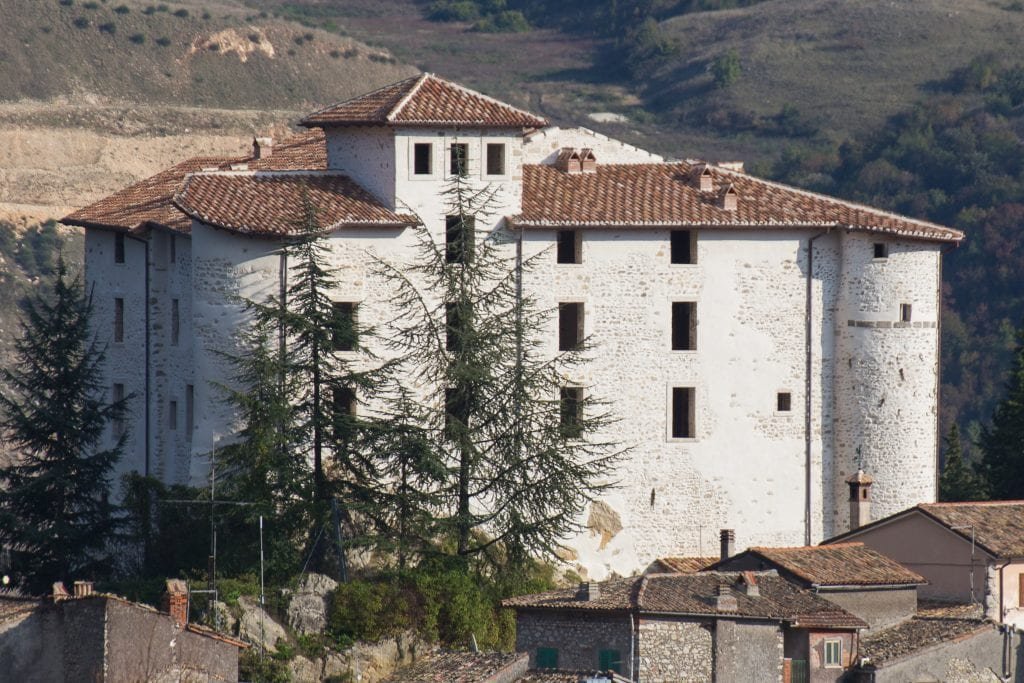
In the upper part of the village, above the museum, the castle rises. The sources date it to the 11th or 12th century and agree that it was set on the foundations of a Roman outpost placed to guard Via Valeria: the continuity of the garrison on this pass thus spans two millennia. The original plan was probably quadrilateral with four cylindrical towers at the corners, later reduced to two, and with the keep on the front side.
The Colonna appear as the first feudal lords of Riofreddo starting from the 12th century and hold the village until the 15th, with the interruption of the years of Boniface VIII. The most notable figure of the local house is Landolfo, who lived in the last decades of the 13th century, whom the documents call Miles Rivi frigidi, soldier of Riofreddo. From the 16th to the 19th century the lords are the Del Drago, and with them the Community of Riofreddo maintains an almost permanent dispute: controversies between the citizens' community and the feudal lord are normal in the Papal State, and here there were many. In the 16th century Riofreddo becomes a marquisate. In 1859 the Pelagallo family becomes related to the Del Drago and inherits the castle. The building is private property and cannot be visited. It has been protected since 1995 by the competent Soprintendenza, and since 2022 it has been the subject of restoration works. From outside, from the road, you can read very well the relationship between the fortress above and the 19th-century villa lower down: two ways of ruling at a distance of 700 years.
What to see around the Museo delle Culture - Villa Garibaldi within 10 minutes on foot
The village is small and is all done on foot. Piazza Donizetti is the village's living room: it was called piazza del Forno because it housed the communal oven, and it is faced by late Baroque palazzi built between the 1600s and 1700s, including Palazzo Blasi-Roberti with its attached chapel, today the Oratorio di Sant'Andrea, built in 1638. The parish church is dedicated to San Nicola di Bari. Then there is the church of Santa Maria delle Grazie, also called Santa Maria dei Fiorentini, which is said to stand on the route of the Roman Valeria and to which a local legend ties the discovery of a wooden statue of the Madonna of Florentine origin. At the historic entrance toward Rome opens the Arco di Santa Caterina, the monumental gate of the village. On the mountains above the village, the Madonnella on Monte Pisciato at 860 meters and Monte Sant'Elia at 991 meters offer short walks with a view over the whole valley.
For those who want to extend the day, the Grotte di Pietrasecca in Carsoli are a few minutes by car, the Valle dell'Aniene Nature Reserve and the Monti Simbruini complete the natural picture, and going down toward Tivoli you meet the Villa Gregoriana Park.
A curiosity about the Museo delle Culture - Villa Garibaldi
In the villa's garden, among the flower beds, there are some small headstones. They don't commemorate Garibaldians fallen in battle: they are the graves of Costanza Garibaldi's dogs and cats. The English lady who had married the fourth son of the hero of two worlds buried her pets with the same care with which Christians were buried, and wanted the burials to have a stone and a name. It's a detail hurried visitors don't notice and that instead says a great deal about a mentality: the Victorian sensibility toward animals, then almost incomprehensible in an Apennine village where the dog was a work tool and the cat a rat-catcher.
There is more along these lines. Costanza painted and modeled: the museum preserves a portrait of her husband made in tempera on fabric in 1906, by her own hand, and a bust of Anita Garibaldi that she sculpted herself. She left fans, English magazines and an oil lamp that are now exhibition material. Put things together: a British woman of good family, wife of a man who had fought in the Vosges and in Thessaly, who settles in a village of 700 souls at 700 meters of elevation and brings there her own idea of home, art and affections, including graves for the cats. The street in front of the museum bears her name, and in Riofreddo they still call it that without thinking. If someone at the museum is accompanying you, ask to see the garden: it's the part almost nobody asks for.
Something nobody tells you about the Museo delle Culture - Villa Garibaldi
What you don't find in the brochures is that this house seriously risked not reaching us. Anita Italia Garibaldi, the last daughter remaining in the villa, died in 1962 and by will left the building to an association tied to the ideals of the Italian Resistance. Those wishes were not respected. The result was an abandonment lasting almost 40 years: the house where Ricciotti Garibaldi had died stayed empty until 2000, with everything that means for a 19th-century building in the mountains, among leaks, roofs giving way and rooms being stripped. The rebirth came not from a patron or a ministry, but from a European redevelopment call in which the Comune of Riofreddo had the lucidity to take part, and from the family's contribution: the west part donated by Anita Garibaldi Jallet in memory of her father Sante, the east wing purchased in 2002 from the heirs of Ezio Garibaldi with regional funds.
The second thing nobody says concerns the hours, and it saves you a disappointment. The museum's regulation provides for 20 weekly hours of opening to the public, with the obligation to concentrate half of them on the weekend. It isn't a whim of the administration: it's the realistic measure of how much staff a municipality of just over 700 inhabitants can afford. From this follows the practical rule for the visitor: Saturday and Sunday are the safe days, on other days you call first. Anyone arriving in Riofreddo on a Wednesday afternoon without having called risks finding the gate closed and blaming the museum, when the responsibility is only their own organization.
My advice for visiting the Museo delle Culture - Villa Garibaldi
Make two phone calls, not one. The first to the museum, at 0774 929183, to have the hours confirmed for the day you want to go and to ask if someone is available to accompany you. The second to the Comune, at 0774 929116, to book the opening of the Oratorio della Santissima Annunziata. The two visits together make a full and sensible morning. One without the other is half a trip. If you are a group, even a small one, say so: in civic museums of this size an announced group gets attention and time that the single visitor who turns up by chance doesn't receive.
On the time of day the indication is precise: go in the morning. The oratory has small windows and the natural light on the vault is better before noon, the museum is quieter and you have the afternoon left for the Roman bridge in the valley floor and for a walk toward the Madonnella. On the season, autumn is the right moment: between October and November there is the Chestnut Festival, which Riofreddo has celebrated for over half a century, and the village is alive. August has the Sagra dei Sagnozzi, which are the local homemade pasta. In March the Polentata, in June the pappardelle with wild boar, in September the event devoted to wine. Last recommendation, banal and always ignored: bring decent shoes. The village is uphill, the paving is real paving, and the path to the bridge is not a sidewalk.
Another well-known fact, yet rarely cited
That Via Valeria passed through here is known by everyone who has opened a textbook of ancient topography. What is rarely cited is that in Riofreddo there still exists, standing and functioning in the structural sense of the term, a bridge from AD 97, and that inside the museum its epigraphic counterproof is kept: fragments of a marble inscription referring to the emperor Nerva and a fragment of a milestone of the Valeria. It doesn't often happen to have the monument and the document in the same village, two kilometers from each other.
The Ponte di San Giorgio is absorbed into a massive 19th-century viaduct, which explains why it has survived and why it is so little photographed: you have to know it's there, otherwise you pass over the modern road without suspecting anything. The Roman arch in opus quadratum, the five projecting corbels that held the wooden centering of the construction site, the recesses for lifting the blocks: these are technical details that tell the working method of a crew of workers 2,000 years ago better than any digital reconstruction. The Soprintendenza's restoration of 2008-2009 secured the whole.
There is a historical corollary that deserves attention. Nerva reigned less than two years, from 96 to 98, and is remembered almost only for having adopted Trajan. Yet in those months he undertook a general overhaul of the public roads around Rome, and one of the concrete outcomes of that policy is found up here, in a ditch of the upper Aniene valley. The great imperial decisions are almost always seen better in the provinces than at the center.
The right photo to take at the Museo delle Culture - Villa Garibaldi
The photograph that works is the one of the facade taken from below on via Costanza Garibaldi, with the two cylindrical towers closing the long rectangular main building. Stand on the opposite side of the street, crouch down a meter and frame vertically: the villa takes on the castle silhouette the Garibaldis wanted and which throws off anyone who doesn't know it's a late 19th-century building. The best light is that of late afternoon, when the sun arrives raking from the west and detaches the towers from the wooded backdrop of the mountain.
Inside, the photograph to take home is not a display case: it is the mural fresco with the family of Ricciotti and Costanza, painted in the 1910s. A domestic group portrait made at home, which the Great War would soon make tragic, because two of those sons, Bruno and Costante, would fall in the Argonne. Ask first if photographs are allowed and with what limitations: in civic museums the rule changes from room to room and flash is almost always forbidden, rightly.
Outside the museum, the most beautiful photograph of Riofreddo has nothing to do with the museum at all. It's that of the Ponte di San Giorgio from the streambed of the fosso Bagnatore, with the Roman arch against the light and the 19th-century viaduct that absorbs it: two eras superimposed in one shot. You need a day with low water and a bit of patience to find the right spot. Alternatively, from the top of the village, the framing that holds together the castle, the roofs and the gap of the valley toward Abruzzo says in one go everything the museum explains in two hours.
Some important events that happened here in history
The first event is of the kind measured in centuries: around 1000 BC a community buries its dead in the necropolises of the territory, and in the grave goods that have come down to us Baltic amber appears. It means this pass was already part of an exchange network thousands of kilometers long. In the 3rd century BC Rome founds the Latin colony of Carsioli a little farther on, and control of the corridor becomes institutional. In AD 97 Nerva has Via Valeria restored and the bridge over the fosso Bagnatore built or rebuilt.
In the Middle Ages the garrison moves up: between the 11th and 12th centuries the castle rises, on the foundations of a Roman outpost. In the last decades of the 13th century Landolfo Colonna is the local lord. In 1422, with a Colonna pope on the throne and the Western Schism just closed, Antonio Colonna has the Oratorio della Santissima Annunziata frescoed. In the 16th century the Del Drago arrive and Riofreddo becomes a marquisate. In 1859 the Pelagallo inherit the castle through marriage.
Then begins the story that directly concerns this house. At the end of the 19th century Ricciotti Garibaldi and Costanza Hopcraft build the villa. In 1893 the family moves permanently to Riofreddo, in circumstances tied to the political events of those years. In 1894 Ezio is born there. In 1914 and 1915 Bruno and Costante fall in the Argonne with the Garibaldi legion. On July 17, 1924 Ricciotti dies here. In 1941 Costanza dies. In 1962 Anita Italia dies and the villa enters its long abandonment. In 2000 the Comune obtains the European funding, in 2001 the museum is inaugurated, in 2002 the Comune acquires the east wing. In 2014 the museum enters the Case-Museo project of the Lazio Region.
Who has passed through the Museo delle Culture - Villa Garibaldi
The list begins with those who lived here. Ricciotti Garibaldi, born in Montevideo in 1847, veteran of the Third War of Independence, of the Vosges, of the Greco-Turkish war and of the First Balkan War, deputy from 1887, died in this house on July 17, 1924. His wife Costanza Hopcraft lived here until 1941. Among the children, Ezio was born in Riofreddo in 1894. Anita Italia, decorated with Red Cross badges, stayed here until 1962. Sante, born in Rome in 1885, spent his youth here between his father's Roman house and the mountain villa, to which he remained very attached, and ended up watched by the Gestapo, arrested in 1941 and in 1943, a prisoner for two years in the German camps and liberated in the Val Pusteria in May 1945. Bruno and Costante, fallen in the Argonne, are present in the villa through a photograph of the family in mourning.
Around this family gravitate names that had real contacts with Riofreddo: Édouard Herriot, several times French premier, gave Sante Garibaldi in 1938 the Napoleon III-style study that can be seen in the museum. On the ancient side, the history of the village crosses the emperor Nerva through the road and the bridge, Pope Martin V and the feudal lord Antonio Colonna through the oratory of 1422, Landolfo Colonna in the 13th century, and the Del Drago and Pelagallo families up to the 19th century.
Then there is the name the people of Riofreddo cite first and which must be handled honestly: Gaetano Donizetti. Local tradition holds that the composer, who had married Virginia Vasselli, stayed for some time in a palazzo in the village, and goes so far as to claim that he worked here on Lucia di Lammermoor, having the village band rehearse it. The main square bears his name. Local sources disagree even on which palazzo hosted him. Recorded as tradition, the story is lovely. Presented as a documented fact, it doesn't hold up.
The Museo delle Culture - Villa Garibaldi with children and with schools
It works, and better than you'd expect. The museum has educational spaces designed for kids and a multimedia projection room, and the route offers children three immediate hooks: the bones of the prehistoric elephant, the farm tools that are recognizable at a glance and the Garibaldian red shirt. The archaeological floor interests everyone over seven, the demo-ethno-anthropological section works even better if the grandparents come along, because they recognize the objects and explain them on their own. For school groups there are ticket reductions and visits are arranged in advance with the museum. One recommendation: the listening points with the oral traditions require silence and attention, so it's best to keep them for the end, when the children have already spent their curiosity on the display cases.
Accessibility of the Museo delle Culture - Villa Garibaldi
The museum declares facilities for disabled visitors and accessibility is indicated among its amenities. That said, the building is a 19th-century villa on several levels, and the village around it is on a slope: anyone using a wheelchair should make a call in advance to have it explained which sections are reachable and from which entrance, and to check the availability of staff. The same goes for the Oratorio della Santissima Annunziata, which is in the historic center. Parking near the museum is not a problem, and that helps.
When to go to the Museo delle Culture - Villa Garibaldi
Riofreddo is at 705 meters and the name is no accident: in summer it's pleasant even when Rome is unlivable, and this alone justifies a July or August outing. Autumn is the best season for the landscape and for the festivals, with the chestnut between October and November. Winter can be harsh and the roads at altitude require caution, but the village under snow has a character it doesn't have in summer, and near Christmas there is the Pastorella. Spring brings the feast of San Giorgio at the end of April, who is the patron and gives his name to the vanished convent and to the Roman bridge. In every season rule number one applies: call first.
Quick questions about the Museo delle Culture - Villa Garibaldi
Where is the Museo delle Culture - Villa Garibaldi
At via Costanza Garibaldi 10, in Riofreddo, in the province of Rome, postal code 00020. The village is about 70 kilometers from Rome, on the last stretch of the Aniene valley in Lazio before the border with Abruzzo.
Is the Museo delle Culture - Villa Garibaldi open
Yes, it's an active civic museum. Opening to the public is 20 weekly hours, half of them concentrated on the weekend, so Saturday and Sunday are the safest days. Before leaving it's best to call 0774 929183 to have the hours confirmed.
Do you need to book to visit the Museo delle Culture - Villa Garibaldi
For an individual visit during opening hours it isn't essential, but a call in advance avoids surprises. For groups and school groups booking is the practice, and it allows you to get an accompaniment through the collections.
How much is the ticket for the Museo delle Culture - Villa Garibaldi
The amount is set by the municipal executive and is modest, with reductions for school groups, children, seniors and protected categories. The figures reported by tourist portals don't agree with each other, so ask for the updated fare when you call.
How long does the visit to the Museo delle Culture - Villa Garibaldi take
An hour if you walk briskly, an hour and a half reading the panels and using the listening points, a good two hours with an accompaniment. Add half an hour for the Oratorio della Santissima Annunziata and an hour for the Roman bridge.
What is the phone number of the Museo delle Culture - Villa Garibaldi
The most frequent contact is 0774 929183, with the email address rio.mudecu@gmail.com. The number 0774 929186, historically tied to the museum, also circulates. The Comune of Riofreddo answers at 0774 929116.
What does MuDeCu mean
It's the acronym with which the museum presents itself: Museo delle Culture. The plural isn't a whim, it indicates the different cultural identities that have overlapped in Riofreddo, from the Aequi to the Roman summer visitors of the late 19th century.
How many sections does the Museo delle Culture - Villa Garibaldi have
Four: archaeology, medieval and modern history, demo-ethno-anthropology and historical testimonies of the Garibaldi family. Alongside these are a library, the municipal archive, an audiovisual archive, an exhibition room, a conference room, educational spaces and a restoration laboratory.
Who built the villa that houses the Museo delle Culture - Villa Garibaldi
Ricciotti Garibaldi, fourth son of Giuseppe Garibaldi and Anita, together with his English wife Harriet Constance Hopcraft, at the end of the 19th century. The family moved permanently to Riofreddo in 1893.
Did Ricciotti Garibaldi die in Riofreddo
Yes, on July 17, 1924, in the villa that now houses the museum. He was born in Montevideo on February 24, 1847.
When was the Museo delle Culture - Villa Garibaldi inaugurated
In 2001, after the restoration made possible by a European funding call in which the Comune of Riofreddo took part. The east wing was acquired from the heirs of Ezio Garibaldi in 2002.
What is in the archaeological section of the Museo delle Culture - Villa Garibaldi
Paleontological finds, including bone fragments of Elephas antiquus italicus and a hippopotamus limb, the materials of the archaic necropolis of Casal Civitella with grave goods in bronze, iron, gold and Baltic amber, and finds from the Roman era tied to the Latin colony of Carsioli, including a fragment of a milestone of Via Valeria.
What is in the Garibaldi section of the Museo delle Culture - Villa Garibaldi
Personal relics of Costanza Hopcraft, documents of Sante Garibaldi, the Stacchetti Collection on the Franco-Prussian war of 1870, a Garibaldian red shirt, uniforms and caps from 1915-18, Red Cross medals of Anita Italia, the Napoleon III-style study given by Édouard Herriot in 1938 and a cap from the Buchenwald camp.
Can you take photographs in the Museo delle Culture - Villa Garibaldi
Ask the staff at the entrance: in civic museums the rule changes from room to room and the use of flash is normally forbidden to preserve the materials.
Is the Museo delle Culture - Villa Garibaldi suitable for children
Yes. There are educational spaces, a multimedia projection room and at least three immediate hooks for the youngest: the bones of the prehistoric elephant, the farm tools and the red shirt.
Is the Museo delle Culture - Villa Garibaldi wheelchair accessible
The museum lists facilities for disabled visitors among its amenities. Since it's a 19th-century villa on several levels, it's best to call first to be told the entrance and the sections that can be reached.
How do you visit the Oratorio della Santissima Annunziata
By reservation, by calling the Comune of Riofreddo at 0774 929116. Admission is free and the oratory is in piazza della Santissima Annunziata, a few steps from the museum.
Why is the Oratorio della Santissima Annunziata important
Because it preserves one of the most significant painting cycles of the early 15th century in Lazio: Annunciation, Crucifixion, Christ in glory among angelic choirs, Evangelists and Doctors of the Church, fake tapestries. The plaque on the facade bears the date 1422, the patron was Antonio Colonna under the pontificate of Martin V, and the anonymous author is called the Master of Riofreddo.
Can you visit the castle of Riofreddo
No. The Castello Colonna-Del Drago-Pelagallo is private property, has been protected by the Soprintendenza since 1995 and since 2022 has been the subject of restoration works. It is seen from the outside, from the upper part of the village.
Where is the Ponte di San Giorgio and how do you reach it
In the valley floor, just outside Riofreddo, where it spans the fosso Bagnatore. You follow the signs from the village: a few minutes by car and a short walk. It takes its name from the nearby medieval convent, now reduced to ruins.
How old is the Ponte di San Giorgio
The current dating assigns it to AD 97, to the intervention of the emperor Nerva on Via Valeria. The imperial restoration is documented by milestones, some found near Roviano and Arsoli. The Soprintendenza intervened with a restoration in 2008-2009.
How do you get to Riofreddo by car
By the A24 Rome-L'Aquila, exit Carsoli-Oricola, then State Road 5 Tiburtina Valeria and provincial roads to the village. Alternatively exit Vicovaro-Mandela, direction Subiaco and then Carsoli, and after passing Arsoli turn for Riofreddo.
Can you get to Riofreddo by public transport
Yes, with Cotral buses from the Ponte Mammolo terminus on metro line B, but the useful runs are few and sometimes require a change at Carsoli. Check the updated schedules on the Cotral website the day before and count on a whole day.
At what altitude is Riofreddo
At 705 meters above sea level, on the hills that close the Aniene valley toward Abruzzo. The municipal territory rises to the 991 meters of Monte Sant'Elia.
What do you eat in Riofreddo
The signature dish is sagnozzi, the homemade pasta to which a festival is devoted in August. At Christmas they prepare the nociata, the walnut and honey nougat. Among the other food festivals are the Polentata in March, the gnocchi in April, the wild boar pappardelle in June and the Chestnut Festival between October and November.
When is Riofreddo's patron saint celebrated
San Giorgio is celebrated at the end of April. In August the Ferragosto celebrations are held, and in the Christmas period the Pastorella is staged, a sacred representation with a melody traditionally attributed to Saint Alphonsus Maria de' Liguori.
Is the Museo delle Culture - Villa Garibaldi part of a network of museums
Yes, of the MedAniene Territorial Museum System, which gathers the museums of the upper Aniene valley, and since 2014 of the Case-Museo project of the Lazio Region, as well as of the regional thematic systems devoted to archaeology and anthropology.
What is the relationship between the Museo delle Culture - Villa Garibaldi and the Garibaldi museums of Rome
They are complementary. In Rome the Museum of the Roman Republic and Garibaldian Memory at Porta San Pancrazio and the Central Museum of the Risorgimento at the Vittoriano tell the political and military events. In Riofreddo, instead, you enter the private home of a Garibaldi and see the objects of that family's daily life.
Is it worth going all the way to Riofreddo just for the museum
The museum alone justifies the trip for anyone interested in social history or Garibaldi history. For everyone else the sum works out if you put together the complete package: museum, oratory of 1422, Roman bridge, village and lunch. In that case it's one of the best-spent days out of Rome of the year.
The final advice for those looking for a day trip away from the crowds: don't treat Riofreddo as a detour. Treat it as the destination. Go up early in the morning, have the oratory opened for you, take the time to look at the carters' display cases instead of rushing to the red shirt, and finish in the valley floor in front of a bridge that the emperor Nerva had repaired when Trajan was not yet emperor. The village does the rest.
If you want to widen the tour in the same cultural direction, the pages on the Institute for the History of the Italian Risorgimento, the Janiculum Ossuary Mausoleum and the Janiculum Hill in Rome and the Museo Preistorico Pigorini are also useful, for comparison with the great national demo-ethno-anthropological collections.
Article written by the editorial team of TourLeaderPro, contact them for Private/Corporate/V.I.P. Tours and Experiences.
Planning a trip to Rome? The English-language guides to visiting the city are on ItalyPlanner.com.