Collalto Sabino (RI)
In short. Collalto Sabino is a municipality in the province of Rieti, perched at 980 meters on the border between Lazio and Abruzzo, inside the boundaries of the Monte Navegna and Monte Cervia Nature Reserve.

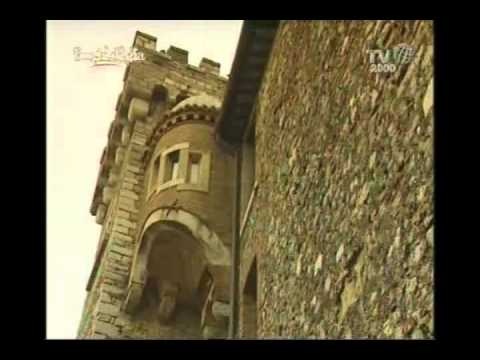
Collalto Sabino is a municipality in the province of Rieti, perched at 980 meters on the border between Lazio and Abruzzo, inside the boundaries of the Monte Navegna and Monte Cervia Nature Reserve. You get there from Rome in a little under an hour by car: A24 Roma-L'Aquila motorway, exit Carsoli-Oricola, then a provincial road climbing toward the Turano valley. Alternatively, State Road 5 Tiburtina Valeria and, for those traveling by train, the Carsoli station on the Roma-Avezzano-Pescara line, from which the connection to the village has to be arranged by Cotral bus or with your own vehicle. The village can be visited freely and for free: there are no tickets, turnstiles or opening hours. The only paid space would be the baronial castle, which however the Most Beautiful Villages in Italy circuit lists as currently closed to tourist visits and rentable only as a whole as a residence and event venue, three nights minimum, at Via Aringo 5. The number of the municipal tourist office is 0765 98025, open in the morning. The nature reserve authority answers at 0765 790002. Before going up it's worth checking on the castle's official site and on the municipality's site if any special openings are underway.
Collalto Sabino has been part of the Most Beautiful Villages in Italy circuit since 2002. It's one of the few towns in Lazio where the silhouette of the castle can be seen from 20 kilometers away before you even start the climb, and this, for a day trip from Rome, counts for more than it seems: you know where you're going long before you get there. If you want an overview of similar destinations, you can start from the site's page on tourist attractions and then go into detail with this guide.
Where Collalto Sabino (RI) is and how you really get there
Geography here is not a decorative detail: it explains the town. Collalto Sabino occupies the top of an isolated hill on the southeastern side of the Lake Turano basin, within the Monti Carseolani, the Apennine subgroup that runs along the watershed between Lazio and Abruzzo and takes its name from ancient Carseoli. The municipal territory runs from a minimum of 554 meters to a maximum of 1,149, with the built-up center at around 980. The hamlets are Ricetto and San Lorenzo. The neighboring municipalities tell the frontier position well: Carsoli in the province of L'Aquila, and then Collegiove, Marcetelli, Nespolo, Turania and Pescorocchiano in the province of Rieti.
The name is transparent and doesn't need fanciful etymologies: Collis Altus, the high hill. Whoever arrives from the valley floor understands why within three curves.
By car from Rome to Collalto Sabino
The fastest route is the A24 toward L'Aquila to the Carsoli-Oricola exit, the same one that serves the industrial zone of the Piana del Cavaliere. From there you take the provincial roads north, skirt the regional border and climb. The final stretch is a mountain road with two narrow lanes, hairpin bends and low walls. Nothing prohibitive, but in winter the surface can be icy in the shade and in August you cross paths with a few struggling campers. Whoever prefers to avoid the toll can use State Road 5 Tiburtina Valeria, which from Rome leads toward Avezzano passing through Tivoli, Vicovaro and Carsoli: slower, more beautiful, and useful if you want to combine a stop along the Aniene.
A piece of advice worth gold that no GPS will give you: don't point your GPS at the castle. It will send you into the bottleneck inside the walls, where turning the car around becomes a serious problem. Point it at the cemetery or at the entrance of the town and continue on foot.
By train and public transportation to Collalto Sabino
The village has no station. The closest useful one is Carsoli, on the Roma-Avezzano-Pescara line. The other stop in the area is Colli di Monte Bove. From Carsoli the road connection with the Turano valley exists, run by the regional Cotral buses, but the frequency is calibrated to the school and work needs of residents, not to those of someone arriving on a Sunday morning. If you don't have a car, work out the schedules published by the carrier before leaving, and budget for a stretch by taxi. It's the classic limit of Apennine villages in Lazio: beautiful, inconvenient.
Parking in Collalto Sabino without fighting with anyone
The historic center is a ring of cobbled alleys inside a wall circuit of the 1400s. It isn't pedestrianized by decree, it's pedestrian by physics: cars can't get through. You leave your vehicle in the open areas at the edge of town and walk up. In high season, on August Sundays and on December weekends when the town turns into Santa Claus Town, the open areas fill up by 11. Arriving early isn't a photographer's whim. It's the only way to avoid half a kilometer more of climbing.

Walking the village of Collalto Sabino, alley by alley
The town can be walked in barely an hour if you just walk, in three hours if you look. It's built in concentric bands around the hill: the lowest houses leaning against the walls, then the ramps, then the baronial palace, then the fortress. There is no main street with shop windows. There is a system of narrow alleys, long staircases and covered passages that go up and down, and that in the middle hours of the day alternates blades of light and sharp shadows. Walking the paving you notice the stone portals of the homes, many of which preserve carved lintels and incised dates. They are the signature of a community that in the 1600s and 1700s had enough means to have the entrance of its house sculpted.
Piazza Vittorio Emanuele II and the octagonal fountain of Collalto Sabino
The square is the point where the village breathes, the only flat space of any size. In the center is the octagonal fountain, the most photographed civic monument in town after the castle. It's a basin with an octagonal plan and a central jet, of the kind that in Apennine towns marked the passage from water carried on the shoulder to tap water. It's worth stopping here for 10 minutes: from here you understand the orientation of the settlement and you take the ramp that climbs toward the fortress. It's also the right place to ask a resident for information, who in the early afternoon is statistically sitting around here.
The 1400s town walls of Collalto Sabino
The walls that enclose the town date to the 15th century and are the second defensive generation of the site. The first circuit had been put up in the 1200s, after the battles of Benevento and Tagliacozzo, when Collalto had become one of the control points of the Turano valley and the Piana del Cavaliere. Today the route is largely legible, incorporated into the houses. You recognize it by the bigger ashlar blocks at the base and by the changes in elevation. Walking along the outer perimeter, counterclockwise, is the best way to understand how little space this town had and how vertically it was forced to grow.
Palazzo Latini
The palace, which local sources place between the 13th and 17th centuries with the current look dating to the 1600s, is the largest civic building in the village after the baronial complex. It has undergone restoration work, but public access isn't guaranteed and the Most Beautiful Villages in Italy circuit lists it as currently closed. You look at it from the outside, and from the outside it's already worth the stop: the street front, the sequence of windows, the portal. If you find an opening during an event, go in without thinking.
The parish church of Santa Lucia
Here we need to be precise, because the religious naming in Collalto Sabino confuses more than one visitor. The parish church of the village is dedicated to Santa Lucia and its foundation is referred to the 11th century. Inside, the Most Beautiful Villages in Italy circuit reports frescoes from the 1500s. The patron saint of the town, though, is not Lucia. It's San Gregorio, celebrated on September 3. Santa Lucia has her feast on December 13, and it's the one that in practice opens the Christmas month in Collalto. On the attribution and dating of the frescoes it's best to rely on what is indicated on site: the art-historical literature on this church is scarce and the attributions circulating online can't be verified.
A practical warning that saves disappointment: in villages of 400 residents churches don't have continuous opening hours. They open for services and feasts. If the door is closed, ask in the square. Almost always someone knows who keeps the key.
The convent of Santa Maria and its 1400s portal
Just outside the town, along the road that descends, is the convent of Santa Maria, whose most notable element is the 1400s portal. It's a building that belongs to the season of minor Apennine religious settlements, those born to serve a rural community and not to amaze pilgrims. It deserves the 10-minute detour above all for the contrast: after the obsessive verticality of the village, a horizontal, quiet layout puts the proportions back in order.
The baronial castle of Collalto Sabino: what you see and what it was
The castle is the reason most visitors climb all the way up here, and it has to be said right away how things stand today: the complex is privately owned, the Most Beautiful Villages in Italy circuit lists it as closed to tourist visits, and the castle's official site offers it as a residence rentable as a whole, with a minimum stay of three nights, for weddings, celebrations and corporate events. Address at Via Aringo 5, contact by email at the address published by the castle. Whoever arrives hoping for a ticket office will be disappointed. Whoever arrives knowing it enjoys the view from the outside, which is still one of the strongest in Lazio.
The structure of the fortress of Collalto Sabino
The current look is that of the 1600s and 1700s, the last phase in which the fortress had a real military function. The layout is built on a central square-plan tower, the keep, flanked by two circular corner towers and by a series of outer bastions. The baronial palace is a body independent from the fortress, connected to it by staircases. Inside the enclosure is a park with a period well. From the keep, according to the Most Beautiful Villages in Italy circuit, the view is 360 degrees and takes in 34 towns. Even from outside the walls, anyway, on clear days you can make out Monte Velino, the Gran Sasso massif and the Terminillo.
The combination of a square tower plus round towers is not random and not aesthetic. It's the 1500s' technical answer to artillery. The medieval square tower offers corners that cannonballs break, while the round tower deflects them. When in an Apennine castle you see the two geometries living together, you're looking at two centuries of military history superimposed in 10 meters of masonry.
From the Collalto to the Mareri: the birth of the castle
The village became a fief in 1350 and a barony from 1440. The first lords were Pandolfo and Rinaldo, followed by Oddone and Ludovico, all of the Collalto house, which gave the town its name. They were succeeded by the Mareri, a prominent family in the history of Rieti, to whom the start of construction of the castle during the 15th century is owed. It's the phase in which the early medieval watchtower, born to signal raids, is transformed into the fortified residence of a baronial family.
The Savelli, the Strozzi and the sale of 1564
In the first half of the 1500s Collalto belonged to the Savelli, a Roman house that had given popes to the Church. In 1564 Cristoforo Savelli, pressed by creditors, sold the castle to his father-in-law Roberto Strozzi, son of that Piero Strozzi who was a Florentine banker and a political adversary of the Medici. Strozzi intended to restore the complex, but died before he could do so, and his family resold the property to another Florentine noble, Alfonso Soderini. Two changes of hands in a few years, both for reasons of money: the story of this castle is, before being military, a story of family budgets gone wrong.
The Soderini and the adaptation to firearms
The Soderini held Collalto for two generations and were the first owners to invest seriously. They renovated the fortress and adapted it as a defensive instrument able to withstand firearms, which in the meantime had made medieval defenses obsolete. Alongside the military work they enlarged and embellished the residential part, on the occasion of the marriage of a scion of the house. To them is owed, in essence, the framework of what you see today from the valley.
Cardinal Francesco Barberini and the 102,000 scudi
The Soderini too ended up in debt. In 1641 Nicola Soderini had to put the castle up for auction, and the complex passed to Cardinal Francesco Barberini, nephew of the reigning Pope Urban VIII, for the sum of 102,000 scudi. The negotiation was conducted by the cardinal's trustee, the nobleman Giovan Battista Onorati of Jesi. Barberini signed the purchase as personal property and made it his summer residence.
Under the Barberini the castle knew its most lavish season: complete restoration, rooms clad in marble, mosaic floors, coffered ceilings. The improvements continued throughout the 1700s, when the property passed to the branch of the Barberini princes of Palestrina. To grasp the scale of the expense a comparison is enough: 102,000 scudi were, in the Rome of the 1600s, the cost of a first-rank city palace. A cardinal who spends them on a fortress at 1,000 meters in the Carseolani isn't buying an agricultural investment, he's buying cool air and prestige.

The Napoleonic invasion and the end of the splendor
Most of the furnishings accumulated over a century and a half were carried off during the Napoleonic invasion of 1798-1799. The French garrison left the fortress on April 11, 1803. After Napoleon's defeat the castle returned to the Barberini, but by now reduced to little more than a ruin. The Roman nobles, who had other properties and no intention of rebuilding a roof at 1,000 meters, decided to sell it in 1858.
Count Corvin-Prendowski, the man who rebuilt everything
The buyer in 1858 was the Polish Count Corvin-Prendowski, whom family tradition held to be a descendant of King Matthias Corvinus of Hungary. It was he who undertook the total restoration of the structure. A Polish aristocrat who buys a ruin in the Lazio Apennines and puts it back on its feet is, in the 1800s, a less strange figure than it seems: the romantic taste for the medieval castle moved capital all over Europe, and central Italy was full of bargain-priced opportunities.
Ottavio Giorgi, Claire Monfort and the illustrious guests
On the death of Prendowski, who had married a marchioness Cavalletti, the castle passed by inheritance to her brother, Giuseppe Cavalletti. Without direct heirs and by now elderly, Cavalletti entered a life annuity agreement in exchange for the property with the captain of the local carabinieri, Ottavio Giorgi, who thus became the new master of the fortress. Giorgi had married a rich American heiress, Claire Monfort, with whom he had two children, Diana and Piero.
The Giorgi-Monfort restored the castle with minimal work and, in the years before the Second World War, hosted there leading figures of Italian political and artistic life: Crown Prince Umberto of Savoy, the explorer and airship designer Umberto Nobile, the actor Ettore Petrolini, the American painter and sculptor of Norwegian origin Hendrik Christian Andersen. For a town of so few souls, having Petrolini to dinner in the castle is the kind of episode that gets passed down in the family for three generations.
Massimo Rinaldi, Global Capital and the situation today
On the death of Piero Giorgi-Monfort, in 1988, the castle was bought by Massimo Rinaldi, a descendant of one of the historic families of the village, who oversaw a radical architectural restoration. Since 2013 the property has passed to the Maltese financial and insurance group Global Capital. Today the complex is presented as an exclusive residence rentable as a whole, with rooms and suites with a view and a swimming pool, intended for weddings, celebrations and corporate events.
Can you visit the castle of Collalto Sabino?
The honest answer is: not with an ordinary tourist visit, as things stand. The Most Beautiful Villages in Italy circuit lists the baronial castle as closed to visits. The castle's site publishes no visiting hours or fees and presents the structure as an exclusive-use location. Whoever has a private event planned or wants to check for special openings should write directly to the owners. Whoever comes for a day trip should plan to walk around the walls, which is a 15-minute route with notable glimpses on three sides.
The history of Collalto Sabino, from the Lombards to the Kingdom of Italy
A few lines of orderly chronology, because the story of this town is dense and the panels on site tell it in bits and pieces.
Carseoli, the Saracens and the defense tower
The origin of the settlement is placed in the Lombard age, when central and southern Italy was organized into the duchies of Spoleto and Benevento. Nearby had been destroyed the Roman colony of Carseoli, founded in 304 BC in the territory of the Aequi and then populated in 298 with 4,000 colonists led by the dictator Marcus Valerius Maximus, on Via Valeria, which connected Tibur to Alba Fucens. The archaeological site has been identified at Civita di Oricola and excavated systematically since 1989. Walls, remains of an aqueduct, mosaics, an archaic sanctuary, a theater and an amphitheater have emerged. To the destruction of the colony were added the Saracen raids, and the few inhabitants left in the area built a primitive defense tower on top of the hill. Around that tower the nucleus of Collalto Sabino formed.
The gastaldate and the monks of Farfa
In the 10th century the area became the seat of a gastaldate, that is, a Lombard administrative district. In the 11th century it passed into the ownership of the Abbey of Farfa, which established a Benedictine monastery there. Farfa, in those decades, was one of the economic powers of central Italy, and its dominion over Collalto means the hill was worth something: it controlled a passage.
The Berardi of the Marsi and the visit of Frederick II
Subsequently the abbey ceded the village to the Berardi family, of the county of the Marsi, with the obligation to pay an annual fee to the religious community. The position of Collalto, on the border between the Papal States and the Norman kingdom of Naples, made it so strategic that the village was visited by Emperor Frederick II of Swabia during a journey toward Rieti. Those were the years of greatest autonomy: the town went so far as to exercise the right to mint coins and to expand the existing fortifications with the construction of a castle.
Benevento, Tagliacozzo and the first town wall
The first town wall dates to this period, and in particular to the years after the battles of Benevento in 1266 and Tagliacozzo in 1268, the two clashes that closed the contest between the Swabians and the Angevins. Collalto found itself one of the main control points of the Turano valley and the Piana del Cavaliere, and equipped itself accordingly.
1297: Collalto passes to the Papal States
In 1297 the village was ceded by Charles of Anjou, new king of Naples, to the Papal States, in gratitude for the grant of the throne obtained in his favor. From that moment and for over five and a half centuries Collalto belongs to the Roman orbit, passing from fief to fief among Italian and foreign baronial families.
February 3, 1861: the brigand assault on Collalto Sabino
It is the most violent episode in the town's history and should be told in full. On February 3, 1861 the castle and the settlement of Collalto Sabino suffered a bloody assault by a large band, made up of defeated Bourbon soldiers led by Luvarà, units of the papal army and common criminals following the brigand Chiavone. The action was an armed response to the plebiscite of 1860 that had annexed the Kingdom of the Two Sicilies to the newborn Kingdom of Italy. The castle came out partially ruined. Once the horde was quelled, the village was annexed to the Kingdom of Italy.
It's worth pausing on a geographic detail: Collalto is an hour's walk from the old papal-Bourbon border. Post-unification brigandage wasn't an abstract southern phenomenon. It reached all the way here, 70 kilometers from Rome, and left marks on the stones.

The Monte Navegna and Monte Cervia Nature Reserve around Collalto Sabino
Collalto Sabino falls within the territory of the Monte Navegna and Monte Cervia Nature Reserve, a regional protected area established in 1988 and then redefined by the regional laws of 1997 and 1999. The protected surface is 3,563 hectares, divided into two non-contiguous sections between Lake Salto and Lake Turano, in the Monti Carseolani. The managing authority is based in the province of Rieti and answers at 0765 790002. The full picture of activities, trails and facilities is published on the regional portal of the protected areas of Lazio. Besides the reserve, the same authority administers the Natural Monument Wetland Le Rosce - Mola tra le Vene and seven Special Conservation Areas.
The peaks and the woods
The larger section includes three peaks: Monte Navegna at 1,507 meters, Monte Cervia at 1,438 and Monte Filone at 1,328. Forests cover over 70 percent of the protected territory. The dominant formation is Turkey oak woodland, alongside mixed woods. There are Apennine beech woods with yew and holly and dry grasslands rich in orchids, both classified as priority habitats at the European level. Around Collalto Sabino the landscape is that of chestnut groves and century-old beech woods, with the edge of the Monti Lucretili and the Monti Simbruini closing the horizon to the west and to the south.
The wildlife of the reserve
Biodiversity is high and documented: wolf, 14 species of bats, golden eagle, peregrine falcon, endemic amphibians including the Apennine frog. In the waters are brown trout and the rare freshwater crayfish. None of these animals is seen walking around town, it has to be said without illusions. The wolf you meet in the form of tracks in the mud in winter, and the raptors are watched with binoculars from the ridges, not from the parking lot.
The trails around Collalto Sabino: Montagliano and the Fonte degli Spiriti
The most characteristic trail starts from the village, leads toward the grazing land and runs alongside a watering trough called the Fonte degli Spiriti. Continuing you reach the place where Montagliano stood, the vanished settlement that local sources call Montagliano sfondato. Today only the ruins remain, immersed in vegetation. It's the kind of destination that doesn't appear in lists of unmissable places and that pays off for whoever has two hours and suitable shoes.
Monte San Giovanni and the remains of the abbey
A second itinerary climbs Monte San Giovanni. On the summit are the remains of an ancient abbey, built according to local tradition over a preexisting Roman temple. The overlap between pagan sanctuary and Christian foundation is a recurring pattern in the central Apennines and should be taken for what it is: an established tradition, not a published excavation fact. The value of the climb, in any case, is in the vantage point you win at the top.
The waterfalls in the woods
Just outside the walls a sign points to a nature trail that you take by leaving the car along a mountain road, taking care not to block the roadway: farm and forestry vehicles must be able to pass. The trail leads to waterfalls hidden in the woods. Pay attention though to the water regime: these are torrential watercourses, and in the dry season, that is from mid-July to mid-September, you risk finding a dry rock wall. The right time is spring, or autumn after a few days of rain.
Lake Turano, 10 minutes from Collalto Sabino
Lake Turano is an artificial basin created in 1939 with the construction of the dam near the settlements of Posticciola and Stipes. It's just under 10 kilometers long and has a perimeter of about 36. The elevation of the water surface is 536 meters. Together with Lake Salto, to which it is connected by an underground tunnel of nine kilometers, it feeds the Cotilia hydroelectric plant. Four municipalities face onto its shores: Colle di Tora, Castel di Tora, Ascrea and Paganico Sabino.
On the lake you can sail, stand up paddle, kayak, sport fish, hike along the banks, cycle and ride enduro. Since 2017 the area has also been frequented by paragliders. The old draw of water skiing belongs to the local tourist tradition and should be checked season by season with the clubs operating on site, because concessions and services change. The advice, for those with only one day, is to pair the village in the morning and the lake in the afternoon, in that order: in Collalto the best light is that of the first hours, on the lake that of the last.
The Cammino di San Pietro Eremita
Collalto Sabino belongs to the territory crossed by the Cammino di San Pietro Eremita, a devotional itinerary built on three loops, each of which can be walked as an independent cammino. It covers two regions, Lazio and Abruzzo, and four provinces: L'Aquila, Rieti, Rome and Frosinone. The signage is white and light blue, with a cross on a stylized path.
The figure of the saint holds the route together. Pietro was born around the year 1000 in Rocca di Botte. He escaped an arranged marriage by taking refuge in Tivoli, where he earned the nickname of wandering knight, and spent his life preaching before settling in the territory of the diocese of Trevi, where he died on August 30, 1052. He was proclaimed a saint in 1215 by the bishop of Anagni. The cammino touches towns such as Carsoli and Trevi nel Lazio, and for those who walk it there is a credential that certifies passage. It must be requested at least three weeks before departure, because it is sent by mail, and it is issued to those who take on the route on foot, by bicycle or on horseback, committing to accept its meaning and spirit.
What to eat in Collalto Sabino
The Collalto pantry is that of the mid-mountain Apennines, with a strong chestnut note. The main products are chestnuts, cheeses and honey. The Most Beautiful Villages in Italy circuit adds vegetables, fruit, cured meats and hams, fresh pasta, game and traditional sweets: nociata, ciammeglitti, pangialle, mostaccioli.
At the table the signature specialty is cordicelle, a fresh hand-pulled pasta to which the Pro Loco dedicates a food festival in July. Alongside appear gnocchetti of wheat and corn flour, fava bean soup, fettuccine with porcini mushrooms, sagne strappate and the pizza called de nfrasco, cooked under the embers. A firm opinion: fava bean soup and sagne strappate, here, are eaten better at a village food festival than in a restaurant set up for tourists. The food festivals aren't folklore, they're the last place where certain recipes are still made the way they should be.
Whoever wants the wider food picture of the area will find it going down toward the Sabina proper, between Fara in Sabina and Poggio Mirteto, where extra virgin olive oil takes the place of the chestnut as the lead product.
The festivals and food festivals of Collalto Sabino: the calendar of the year
The festival calendar of the village is dense for so small a town, and follows in large part the liturgical cycle. This is the order of the year, as published by the Most Beautiful Villages in Italy circuit:
- January 17, feast of Sant'Antonio abate
- March 25, Madonna dell'Annunziata
- June, feast of Sant'Antonio
- June 23, the Notte Romantica, the event shared by all the villages of the circuit
- July, the cordicelle food festival organized by the Pro Loco
- August, AESTAS, a showcase of music, theater, cinema and gastronomy
- September 3, San Gregorio, the patron saint
- First Saturday of October, Madonna Addolorata. First Sunday of October, Madonna del Rosario
- December 13, Santa Lucia
- Sundays in December, Santa Claus Town
The two events that really fill the town are AESTAS in August and Santa Claus Town in December. The second has a quality that city Christmas markets don't have: the backdrop is real. A walled village at 1,000 meters, with snow likely and the castle lit above, needs no added scenery. Check the exact dates with the tourist office at 0765 98025 before hitting the road, because in small villages the programs are closed late.
When to go to Collalto Sabino
The town is at 980 meters and falls in climate zone F, the coldest in the Italian classification, with 3,148 degree days. Translated: winter is a real winter, not a softened version of the Roman climate. From December to March plan for ice on the uphill alleys and proper tires. On the other hand the air is crisp and the view reaches the Gran Sasso.
Spring is the absolute best season for the village-plus-nature combination: the waterfalls have water, the dry grasslands of the reserve bloom with orchids, the temperatures allow walking. Summer is the season of festivals and of refuges from the Roman heat, with 20 degrees of difference from downtown Rome on the worst July days. Autumn is the season of chestnuts and colors, and for those who photograph it's the moment when the woods around the castle are at their best.
The moment to avoid, if you're looking for quiet: an August Sunday afternoon. The best moment, if you're looking for the town as it lives: a Tuesday morning in May.
Collalto Sabino with kids and accessibility issues
With children it works well, on two conditions: a sturdy stroller or a baby carrier, and no rush. The paving and the staircases test small wheels. The castle seen from outside, the walls, the fountain in the square and the woods just beyond the gates make up a sensible day for those aged five and up. In December, with the Christmas setup, the cost-benefit ratio for a family is the best of the year.
On accessibility we have to be frank: a medieval village built on a hill with ramps and staircases cannot be traveled in a wheelchair in its upper part. Piazza Vittorio Emanuele II area and the flat stretches around it can be managed with assistance. The climb to the fortress cannot. Whoever has specific needs should call the municipal tourist office before leaving and ask which stretches are passable in the chosen period.
What to see around Collalto Sabino in a day
The village, alone, is half a day. To fill the other half the Turano valley offers quite a lot within half an hour by car. Castel di Tora faces directly onto the water and also belongs to the circuit of the most beautiful villages. Orvinio is the castle town on the other slope, with an urban layout that's worth the comparison. Percile and its lakes are the right destination for those who want to walk little and see a lot. The Pietrasecca caves, in the municipality of Carsoli, are the underground option in the area and require prior contact with whoever manages the visits.
Widening the radius you enter the historic Sabina: the Abbey of Farfa, which owned Collalto in the 11th century and which ideally closes the circle of this guide, and the olive-growing villages of Fara in Sabina and Poggio Mirteto. To the north the provincial capital, Rieti, and the mountain of the Terminillo.
A curiosity about Collalto Sabino (RI)
The curiosity almost nobody tells is about money. In the period of greatest autonomy, between the 1200s and the early 1300s, when the village belonged to the Berardi of the county of the Marsi and sat on the friction line between the Papal States and the Norman kingdom of Naples, Collalto went so far as to exercise the right to mint coins. It's not a heraldic detail: the right of the mint was the prerogative that distinguished a politically relevant community from a mere agricultural holding. It means that this hill of 400 souls was worth, in the eyes of the powers contending for it, as much as a frontier hub.
The reason is all in the map. Collalto controls both the Turano valley and the Piana del Cavaliere, that is, the natural pass through which you went from the Tyrrhenian side to the Adriatic one along the route of Via Valeria. Whoever held the hill saw who was coming hours in advance, and could close the passage. It's no surprise that at some point Frederick II of Swabia came in person, on his way to Rieti: emperors didn't detour for the view.
There's a second layer of curiosity, and it concerns the name. Collalto Sabino was never, properly, Sabine land. The town belongs to the Monti Carseolani, that is, to the world of the Aequi first and the Marsi later. The specification Sabino is a modern administrative addition, which served to distinguish the municipality from the other Collalto in Italy after unification. Whoever arrives convinced of visiting the Sabina of abbeys and olive groves finds instead a mountain town with the mentality of the Abruzzo border. It's a difference you feel in the dialect, in the cooking and in the way the houses are built: here the walls are thick because it's cold, not because it's hot.
A thing nobody tells you about Collalto Sabino (RI)
No guide writes it in plain letters, and yet it's the information that changes the day: the baronial castle, the monument for which people climb all the way up here, can't be visited. The Most Beautiful Villages in Italy circuit lists it as closed to visits. The castle's official site presents it as a residence rentable as a whole, with a minimum stay of three nights, for weddings and corporate events. There is no ticket office, there are no hours, there is no ordinary guided visit to sign up for. Whoever arrives at 10 on a Sunday morning hoping to get into the keep and look out over the 34 towns stays outside the gate.
The practical consequence is that the trip has to be designed backward from what instinct suggests. The castle is not the destination, it's the backdrop. The destination is the village inside the walls, the outer perimeter loop that gives the three best glimpses of the fortress, the trail of the Fonte degli Spiriti toward the ruins of Montagliano, the climb to Monte San Giovanni and, half an hour lower down, the lake. Whoever sets up the day like this goes home satisfied. Whoever sets it up around the castle goes home disappointed by a gate.
I'll add a second piece of information that circulates little: special openings exist, but they're tied to events and to decisions of the owners, not to a stable calendar. You don't find them by searching on a search engine the week before. You find them by phoning the municipal tourist office, 0765 98025 during morning hours, and asking if anything is planned on that date. It's an old-fashioned way of working and it works, because in a town of 400 residents whoever answers the phone really knows what's happening.
The advice I give you for visiting Collalto Sabino (RI)
Go up early and go up on foot from the last useful open area, without trying to bring the car close to the walls. The advice has three concrete reasons. The first is the light: between eight and 10 in the morning the cobbled alleys have the right contrast and the east-facing facades catch the sun, while at noon the village turns flat and the walls burn. The second is logistics: the road inside the walls was designed for mules, and every year someone gets stuck in a bottleneck with the side mirror against the stone blocks. The third is the town itself: at nine Collalto is an inhabited village, with shutters going up and people in the square, and at 11 on an August Sunday it's a parking lot with a view.
The second piece of advice concerns the order of the day. Village in the morning, lunch in town or at one of the trattorias of the valley, Lake Turano in the afternoon, back toward Rome before dark. The road down isn't lit and has tight hairpin bends. Driving it at sunset is pleasant, driving it at night with a GPS that loses signal is another matter.
Third: bring hiking shoes even if you think you'll stay in town. The change in elevation between the square and the summit is the kind you feel, the paving is irregular and slick where it's worn, and the temptation to take the trail outside the gate comes to everyone after the first coffee. With smooth soles you can't do that trail.
One last firm opinion, as a professional: if you have only one day and have to choose between Collalto Sabino and a lake village that's easier to reach, choose Collalto when the sky is clear and the other when it's overcast. Here you pay the ticket in climbs and curves, and what you buy is the view. With haze, the bill doesn't add up.
Another well-known fact, yet rarely mentioned
That the castle of Collalto Sabino has changed hands dozens of times you read everywhere. What almost nobody lines up is the recurring reason behind those transfers: debts. In 1564 Cristoforo Savelli sells because he's hounded by creditors. In 1641 Nicola Soderini has to put the complex up for auction for the same reason, and Cardinal Francesco Barberini buys it for 102,000 scudi. In 1858 the Barberini themselves, faced with a building reduced to a ruin after the French occupation, prefer to get rid of it rather than restore it. The story of this fortress isn't a succession of military conquests. It's a sequence of family budgets that blow up.
The second rarely mentioned fact concerns the same story seen from the other side. Every time the castle changed owner through insolvency, the community of the village stayed the same and kept paying fees and servitudes to someone else. The annual fee owed to the Abbey of Farfa, imposed when the monks ceded the village to the Berardi, is the oldest and clearest example: ownership moved, the obligation stayed attached to the territory. In Apennine towns this continuity of burdens explains many things, including the depopulation of the 1900s.
Third element, the most concrete for those who look at stones: the castle you see today is not medieval. The fortress preserves the look of the 1600s and 1700s, that is, what the Soderini gave it first and the Barberini later, and which corresponds to the last period of effective military use. Of the 1400s castle of the Mareri what remains is the layout and the position, not the image. Whoever is looking for pure Middle Ages in Collalto finds it in the 15th-century town wall and in the layout of the alleys, not in the silhouette of the fortress.
The right photo to take in Collalto Sabino (RI)
The photograph that does justice to this place isn't shot inside the town. It's shot while arriving. On the provincial road that climbs from the valley floor there are two or three widenings on the curves from which the village appears whole: town wall below, row houses in the middle, square tower and round towers at the top. It's the classic eagle's nest image, and it works because the hill is isolated: there are no other reliefs to confuse the profile. Stop only where there is real room to leave the roadway clear, and turn on your hazard lights.
The best light for this framing is that of late afternoon, when the sun hits the west front of the fortress and the woods below go into shadow: the castle stands out from the background. In the morning the effect reverses and you get a backlight that forgives little, unless there is low haze in the valley, in which case the village seems to float and the photo becomes memorable. Whoever has patience should wait for an autumn morning after a humid night.
Inside the village, the second image to take home is the octagonal fountain in Piazza Vittorio Emanuele II with the fortress in the background. You compose it by crouching to the height of the rim of the basin and using the water as the foreground. The third is vertical: one of the narrow staircases with the arch of a covered passage at the top and the slice of sky at the end. With a phone, keep your finger on the lightest point to lock the exposure, otherwise the shadow of the alleys eats everything.
A serious warning: the castle is private property and is rented for events. If a wedding is underway during your visit, photograph the architecture from outside and leave the people alone. It's good manners, and it's also the only way not to be remembered badly in a town where everybody knows each other.
Some important events that happened here in history
The first event that made Collalto Sabino is a destruction that happened elsewhere. When the Roman colony of Carseoli, founded in 304 BC and populated in 298 with 4,000 colonists led by the dictator Marcus Valerius Maximus, was dismantled, the population of the plain dispersed. To that crisis were added the Saracen raids, and the few left in the area built a defense tower on top of the hill. Around that tower the town was born. Collalto is, literally, a side effect of the end of a Roman city.
The second event is the visit of Frederick II of Swabia, headed for Rieti. An emperor who passes through a border village certifies the strategic weight of the place at that historical moment, the same years in which the community exercised the right to mint coins and expanded the fortifications with the construction of a castle.
The third is the two battles that changed southern Italy and that were felt here like a wave: Benevento in 1266 and Tagliacozzo in 1268. Tagliacozzo, in particular, was fought a few kilometers from here. In the following decade Collalto equips itself with the first town wall and becomes one of the control points of the Turano valley and the Piana del Cavaliere.
The fourth is the transfer of 1297, when Charles of Anjou, having obtained the throne of Naples, cedes the village to the Papal States as a sign of gratitude. From that moment Collalto enters the Roman orbit and stays there until unification.
The fifth is the auction of 1641 and the purchase by Cardinal Francesco Barberini for 102,000 scudi, with the negotiation conducted by his trustee Giovan Battista Onorati of Jesi. It's the moment when a frontier fortress becomes a pleasure villa: marble, mosaics, coffered ceilings.
The sixth is the French occupation of 1798-1799, with the removal of the furnishings, and the departure of the garrison on April 11, 1803. In five years what had cost a century and a half of investment dissolves.
The seventh, and the most dramatic, is the assault of February 3, 1861. A band made up of defeated Bourbon soldiers led by Luvarà, units of the papal army and common criminals following the brigand Chiavone swoops down on the village and the castle in opposition to the plebiscite of 1860. The fortress comes out partially ruined. The town, afterward, is annexed to the Kingdom of Italy.
The eighth is more recent and less bloody, but for Collalto it counts: in 2002 the village enters the Most Beautiful Villages in Italy circuit. For a town that had in the meantime dropped to a small number of residents, that recognition meant getting back on the tourist maps of Lazio.
Who has passed through Collalto Sabino (RI)
The list is longer than a town of this size lets you imagine, and it spans eight centuries.
The first name is imperial: Frederick II of Swabia, who visited the village during a journey toward Rieti, in the years when Collalto enjoyed its greatest autonomy. Then come the owners, who here were no ordinary names. The Savelli, a Roman house that gave popes to the Church, held the fief in the first half of the 1500s. Roberto Strozzi, who bought in 1564, was the son of Piero Strozzi, a Florentine banker and opponent of the Medici: one of the families central to the financial and political history of the Italian Renaissance. The Soderini, another prominent Florentine dynasty, succeeded him.
In 1641 the heaviest name arrives: Francesco Barberini, cardinal nephew of Urban VIII, that is, one of the most powerful men of Baroque Rome, collector and patron. He made this fortress his summer residence. The property remained with the Barberini, then with the branch of the princes of Palestrina, for over two centuries.
In the 1800s a cosmopolitan figure enters the scene: the Polish Count Corvin-Prendowski, whom family tradition held to be a descendant of King Matthias Corvinus of Hungary, and who, having bought the ruin in 1858, undertook its total restoration. After him the Cavalletti, and then the captain of the carabinieri Ottavio Giorgi, who obtained the castle with a life annuity contract and who had married the American heiress Claire Monfort.
It's the Giorgi-Monfort who bring to Collalto Sabino the guests of the 1900s still cited in town today. In the years before the Second World War there passed through here Crown Prince Umberto of Savoy, future Umberto II. Umberto Nobile, the engineer and airship designer who had flown over the North Pole. Ettore Petrolini, the greatest Roman comic actor of his generation. And Hendrik Christian Andersen, an American sculptor and painter of Norwegian origin, today known above all for the Roman museum that bears his name.
Closing the list is Massimo Rinaldi, who in 1988 bought the castle and oversaw its architectural restoration. He descended from one of the historic families of the village: after centuries of outside owners, for a season the fortress returned to the hands of someone from here. Since 2013 the property belongs to the Maltese group Global Capital.

Quick questions about Collalto Sabino (RI)
How far is Collalto Sabino from Rome?
A little under an hour by car along the A24 to the Carsoli-Oricola exit, then a provincial road uphill. Whoever chooses State Road 5 Tiburtina Valeria takes noticeably longer but crosses the Aniene valley.
Do you pay to enter Collalto Sabino?
No. The village is an inhabited center: you walk around freely, with no ticket and no hours. The only space that isn't accessible is the castle, which is privately owned.
Can you visit the castle of Collalto Sabino?
The Most Beautiful Villages in Italy circuit lists the baronial castle as closed to visits. The castle's official site presents it as a residence rentable as a whole, with a minimum stay of three nights, for weddings and events. For special openings it's best to contact the owners or the municipal tourist office directly.
How much time do you need to visit Collalto Sabino?
Two or three hours for the village at an easy pace, half a day if you add a trail, a full day pairing Lake Turano or a second village of the valley.
What is the elevation of Collalto Sabino?
The built-up center is at around 980 meters above sea level. The municipal territory runs from 554 to 1,149 meters.
How many residents does Collalto Sabino have?
Only a small number. The most recent census figure shows 381 residents. The Most Beautiful Villages in Italy circuit rounds to 500. In both cases it is a very small mountain municipality.
Is Collalto Sabino one of the Most Beautiful Villages in Italy?
Yes, it has been part of the circuit since 2002.
What is the main church of Collalto Sabino?
The parish church is dedicated to Santa Lucia, with a foundation referred to the 11th century, and frescoes from the 1500s are reported inside. The patron saint of the town, though, is San Gregorio, celebrated on September 3.
How do you get to Collalto Sabino by public transportation?
The useful train station is Carsoli, on the Roma-Avezzano-Pescara line. From there the connection is by regional Cotral bus, with frequencies designed for residents. Check the carrier's schedules before leaving.
Where do you park in Collalto Sabino?
In the open areas at the edge of town. Inside the walls cars can't get through. On August and December weekends the spots run out by late morning.
Is Collalto Sabino accessible in a wheelchair?
Only in part. Piazza Vittorio Emanuele II area and the flat stretches around it can be managed with assistance. The upper part of the village, made of ramps and staircases, cannot.
Is Collalto Sabino suitable for children?
Yes, from age five and up, with suitable footwear and no rush. A light stroller is not recommended because of the paving.
Can you take photographs in Collalto Sabino?
In town yes, freely. The castle is photographed from the outside. If a private event is underway, avoid the people.
What do you eat in Collalto Sabino?
Cordicelle, gnocchetti of wheat and corn flour, fava bean soup, fettuccine with porcini mushrooms, sagne strappate, pizza de nfrasco cooked under the embers. Among the products: chestnuts, cheeses, honey, cured meats and the traditional sweets such as nociata, ciammeglitti, pangialle and mostaccioli.
When is the cordicelle food festival held?
In July, organized by the local Pro Loco. The dates change from year to year. Check them with the Pro Loco or the municipal tourist office.
What is Santa Claus Town in Collalto Sabino?
The Christmas setup that occupies the village on the Sundays of December. It's the event that brings the most visitors after AESTAS, the summer showcase in August.
What can you see from the castle of Collalto Sabino?
From the keep, according to the Most Beautiful Villages in Italy circuit, the view takes in 34 towns. Even from outside the walls, with a clear sky, you can make out Monte Velino, the Gran Sasso and the Terminillo.
What trails start from Collalto Sabino?
The route toward the pastures that runs along the watering trough of the Fonte degli Spiriti and leads to the ruins of Montagliano. The climb to Monte San Giovanni with the remains of the ancient abbey. The nature trail just outside the gates that leads to the waterfalls in the woods, with water only outside the dry season.
How far is Lake Turano from Collalto Sabino?
A handful of kilometers of mountain road, roughly 20 minutes to the nearest shores. The lake is artificial, created in 1939 with the dam near Posticciola and Stipes, and has a perimeter of about 36 kilometers.
Can you swim or do water sports in the area?
On Lake Turano you can sail, stand up paddle, kayak and sport fish, and since 2017 the area has also been frequented by paragliders. Swimming conditions and the services of the clubs have to be checked season by season.
What is the difference between Collalto Sabino and Castel di Tora?
Both belong to the circuit of the most beautiful villages and to the same valley, but they are two different experiences. Castel di Tora faces directly onto the water, at low elevation. Collalto Sabino is a walled mountain village at 980 meters, with a castle that dominates the view. If you have only one day and the sky is clear, go up to Collalto.
What is the weather like in Collalto Sabino?
A real mountain climate: climate zone F, 3,148 degree days. Cold winters with likely ice on the uphill alleys, summers cool compared with Rome.
Is Collalto Sabino in the Monte Navegna and Monte Cervia Reserve?
Yes. The protected area, established in 1988, protects 3,563 hectares between Lake Salto and Lake Turano, with Monte Navegna at 1,507 meters, Monte Cervia at 1,438 and Monte Filone at 1,328.
Are there wolves and eagles in the reserve?
The reserve hosts the wolf, 14 species of bats, the golden eagle and the peregrine falcon, as well as the Apennine frog, the brown trout and the freshwater crayfish. Seeing them takes the right hours, silence and binoculars, not a Sunday stroll.
Why is it called Collalto Sabino?
The name comes from the position on the hill: Collis Altus. The specification Sabino is a modern administrative distinction from the other Collalto in Italy.
Frequently asked questions about Collalto Sabino (RI)
Can you visit the castle of Collalto Sabino?
The baronial castle of Collalto Sabino is privately owned and can't be visited. The Most Beautiful Villages in Italy circuit lists it as closed to tourism, and the official site offers it as a residence rentable as a whole, with a minimum stay of three nights, for weddings and corporate events.
How far is Collalto Sabino from Rome?
Collalto Sabino is a little under an hour by car from Rome along the A24 to the Carsoli Oricola exit, followed by a provincial road uphill. Whoever chooses State Road 5 Tiburtina Valeria takes noticeably longer but crosses the Aniene valley.
Do you pay to enter the village of Collalto Sabino?
No, entering the village of Collalto Sabino costs nothing. It's an inhabited center and you walk around freely, with no ticket and no hours. The only space that isn't accessible is the castle, which stays closed to the public.
Is Collalto Sabino suitable for children?
Collalto Sabino works well with children on two conditions: a sturdy stroller or a baby carrier, and no rush, because the paving and the staircases test small wheels. The castle seen from outside, the walls, the fountain in the square and the woods beyond the gates make up a day suitable for those aged five and up.
When to go to Collalto Sabino?
The town of Collalto Sabino is at 980 meters, in climate zone F, the coldest in the Italian classification, with a harsh winter to account for in terms of ice on the alleys and proper tires. Spring is the best season for the village and the view together.
What do you eat in Collalto Sabino?
In Collalto Sabino the cooking is that of the mid-mountain Apennines, with chestnuts, cheeses and honey as the main products, as well as vegetables, cured meats, fresh pasta and game. The signature specialty at the table is cordicelle, a fresh hand-pulled pasta.
What to see near Collalto Sabino?
Near Collalto Sabino, within half an hour by car, there are Castel di Tora facing Lake Turano, Orvinio with its castle-town urban layout, and Percile with its lakes for those who want to walk little. The village alone fills half a day.
Wrapping up
Collalto Sabino is one of the right places for those who think they've already seen everything in Lazio. It has no museums, no famous basilica, no Michelin-starred restaurant, and its main monument can't be visited. It has one thing only, but a big one: a perfect shape, an isolated hill with a walled town built onto it and a fortress on top, which you read from far away the way you read a drawing. Whoever arrives with the idea of collecting admissions leaves empty-handed. Whoever arrives to walk, look and eat well at a food festival goes home convinced.
Go on a clear May morning or on a Sunday in December, with the right shoes, and plan for the curves. The place does the rest.
To build a day trip outside Rome tailor-made, with a tour leader who knows the Turano valley, the professional tour leader service is the right one. For organized groups and associations there is the page dedicated to group trip organization in Italy. To English-speaking readers who are planning a trip I recommend the regional guide to Lazio, the overview of day trips in Italy and the list of the best things to do in Rome.
Article written by the editorial team of TourLeaderPro, contact them for Private/Corporate/V.I.P. Tours and Experiences.
Planning a trip to Rome? The English-language guides to visiting the city are on ItalyPlanner.com.