Domus Transitoria and Neronian Cryptoporticus
In short. The Domus Transitoria can't be visited today. On the official website of the Colosseum Archaeological Park, the monument's page carries the words TEMPORARILY CLOSED at the top, and on the City of Rome's pages the site is also listed as closed.
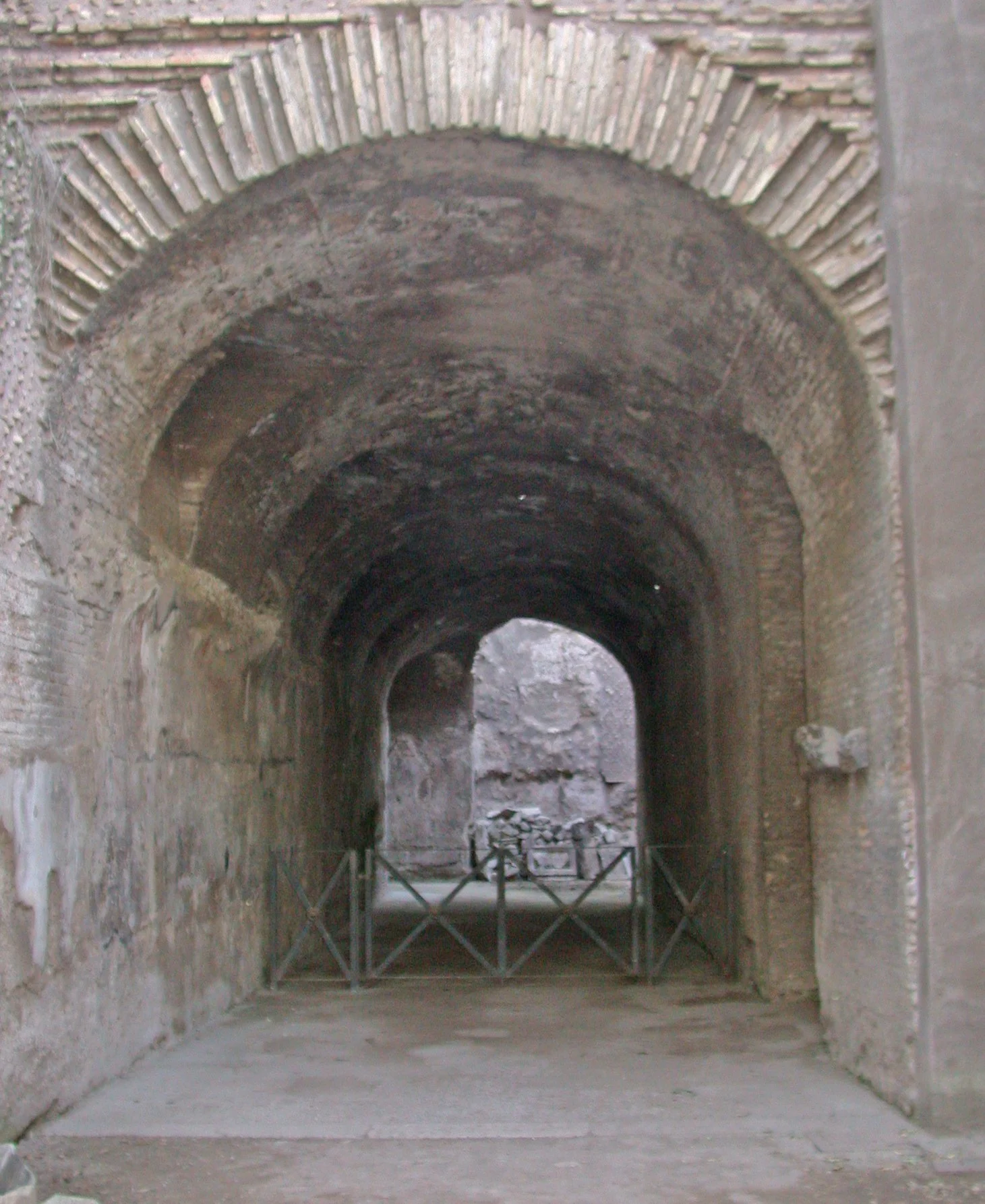
The Domus Transitoria can't be visited today. On the official website of the Colosseum Archaeological Park, the monument's page carries the words TEMPORARILY CLOSED at the top, and on the City of Rome's pages the site is also listed as closed. Data checked on September 28, 2026. The Neronian cryptoporticus, which is the other major underground space from the Neronian period on the Palatine, has a different and more uncertain story, and I explain it below because the official sources don't say the same thing.
Anyone arriving in Rome having read that you can go down under the Domus Flavia into Nero's first palace is starting from information that is years old. The opening of April 12, 2019 was real and documented, with a lighting and projection setup. It lasted on and off. Then it stopped. None of the ticket pages on sale today names the Domus Transitoria among the included sites, and when a space disappears from the lists of access tickets the reason is almost always the same: it isn't accessible.
What you can see today, and what you can't
The Neronian rooms under the so-called Coenatio Iovis of the Domus Flavia remain where they are, sealed. You go down by one of the two original ancient staircases, narrow and steep, and that staircase is precisely the technical reason why the number of people admitted has always been tiny. There's no way to get a large group out of a room like that in case of a problem, and the Park's Superintendency knows it very well.
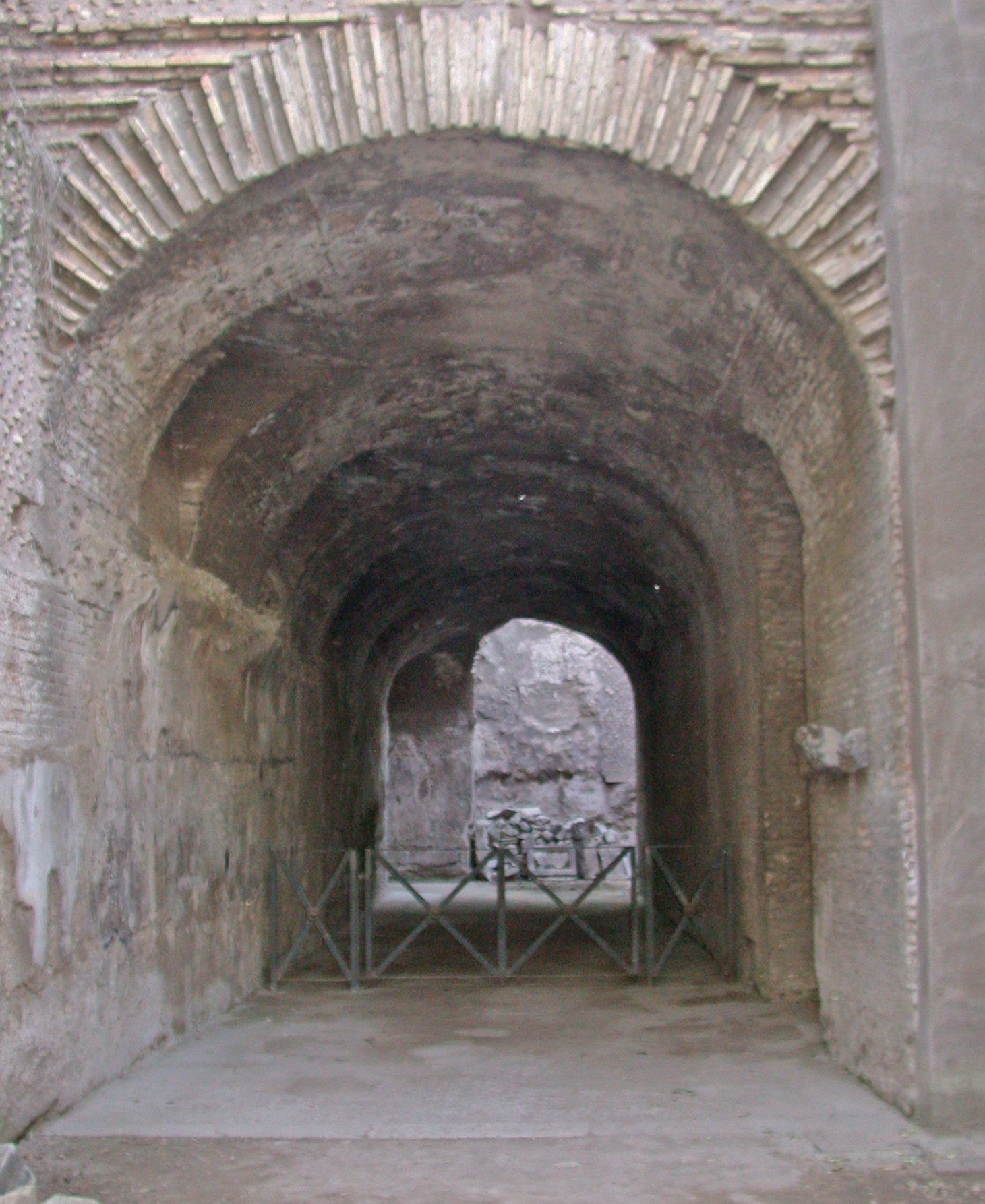
The cryptoporticus is another matter. The Park's Mirabilia page presents it as a space included in the Forum Pass SUPER and Full Experience tickets, and that page was last modified in December 2019. The Ministry of Culture's page on the same corridor, by contrast, reports that the site is currently closed every day. Two public sources, two opposite answers. When something like this happens, the operating rule is just one: ask at the gate the same morning.
The ticket pages on sale today list the SUPER sites of the Roman Forum and Palatine route item by item: Temple of Romulus, Domus Tiberiana with the exhibition rooms, Santa Maria Antiqua, Curia Iulia, Palatine Museum lower floor only, Aula Isiaca with Loggia Mattei, House of Augustus closed on Mondays, House of Livia currently closed for restoration, Horrea Piperataria. The Neronian cryptoporticus doesn't appear in that list. Neither does the Domus Transitoria.
The practical point is just one, and it saves you a disappointment. The hill is big, the ticket is the same, and nobody stops you from going up and checking in person. But if the reason you're coming to Rome is to go down into Nero's underground rooms on the Palatine, today that reason doesn't hold, and it's best to know before buying the flight.
The ticket, the prices and the booking
No specific ticket for the Domus Transitoria is on sale today. When the site was open, Friday to Monday and with entry limited for conservation reasons, the visit was included in the Forum Pass SUPER and Full Experience tickets, at no extra charge. It's the model the Park uses for all its delicate spaces: not a separate ticket, but an ordinary ticket that opens extra doors, with the calendar and capacity decided day by day.
Forum Pass SUPER
The Forum Pass SUPER costs €18 full price and €2 reduced for European citizens from age 18 up to the age of 25. Prices checked on September 28, 2026 on the Park's official page. It's valid for a single entry to the areas of the Roman Forum, Palatine and Imperial Forums, exhibitions included, and does not include the Colosseum. Once validated, it's valid only for that day.
A line almost nobody reads, and which matters: access to the SUPER sites starts at 9:30 and closes one hour before the Park closes. Whoever enters at 9:00 at the gate has half an hour in which the reserved sites are still barred, and whoever shows up late finds the doors closed while the hill is still open. The useful window is narrower than the opening hours you read on the ticket.
Full Experience
The Full Experience Arena ticket costs €24 full price and €2 reduced, and is valid for two consecutive days: one entry to the Colosseum with the arena and one entry to the area of the Roman Forum, the Palatine and the SUPER sites. There are variants with the underground levels, with the attic and panoramic elevator, with the Commodus Passage, all at different prices. The two-day logic makes sense: you can't do the hill in one morning.
The ordinary ticket and the reductions
The ordinary 24-hour Colosseum, Roman Forum, Palatine ticket costs €18 full price and €2 reduced, with a Roma Pass reduction at €11.50 and a reduction for the Friends of the PArCo at €14. Holders of the MIC Card, the civic museums card, don't get in free here: the Park depends on the Ministry, not on the Capitoline Superintendency that runs the Capitoline Museums. It's a confusion I see every week.
All tickets are named, in every type, and at the gate they must be shown together with an ID. For tickets with a visit date from May 9, 2026, the name can be changed only once, by 24:00 on the seventh day before the visit, and only in the cases provided for by the regulations. Anyone who buys six tickets for a group and then has a last-minute dropout finds out about the problem at the gate.
The official online ticket office is ticketing.colosseo.it, sales open 30 days before the visit date, and for the Colosseum the time slot has to be booked. Entry is free on the first Sunday of the month, on April 25, June 2 and November 4, but on those very dates the Forum Pass SUPER can't be used. If your only day in Rome falls on a first Sunday, count the reserved sites as lost.
Palatine hours, season by season
The Roman Forum and Palatine area opens at 9:00, the Colosseum at 8:30, the Domus Aurea at 9:00. From March 29 to September 30, 2026 the last entry is at 18:15 and the Park closes at 19:15. From October 1 to October 24, 2026 the last entry drops to 17:30 and closing to 18:30. From October 25, 2026 to February 28, 2027 last entry at 15:30, closing at 16:30.
The days of total closure are December 25, 2026 and January 1, 2027. It sounds like little, but it changes the planning for anyone coming to Rome for the holidays, because on December 25 and 26 almost everything in the center closes and on January 1 the city wakes up at noon. Hours checked on September 28, 2026 on the Park's Hours and Tickets page.
On winter hours the verdict is clear-cut, and it goes against what almost all the guidebooks say. From October 25 on, with last entry at 15:30, the Palatine becomes the best place in Rome: the hill is almost empty, the raking light comes in low among the pines, and the underground rooms, when open, have a decent temperature. The problem is that you have three hours, not six.
Where you enter and how to get there
The Palatine entrance is at Via di San Gregorio 30. It's the gate that opens directly onto the hill, without passing through the Roman Forum, and for anyone heading to the upper rooms and the reserved sites it's the right one. The other gates of the archaeological area are Largo della Salara Vecchia 5/6, the gate on Via del Tulliano, the access from Via Sacra starting from Piazza del Colosseo, and Foro Romano 1, in the area of Vicus Jugarius.
The metro is line B, Colosseo stop. The Park's How to Get There page also indicates line C, Colosseo Fori Imperiali stop, while the Palatine area page on the same site still cites line B alone. An internal divergence within the same official source, recorded on September 28, 2026. The buses are lines 51, 75, 81, 85, 87 and 118. The tram is the 3.
From the metro stop to Via di San Gregorio it's a good five minutes' walk, slightly uphill, with the Arch of Constantine on the right and the traffic of Via di San Gregorio on the left. The sidewalk is narrow and the tour buses pass close by. With a group it's best to stop earlier, on the side of the Ludus Magnus, where there's room to count heads.
The 118 deserves a separate note because it's the bus that goes from the Colosseum down toward the Baths of Caracalla and the Appian Way, and it lets you build a coherent half day without going back. It runs with variable frequency and at peak hours it's full. The routes of surface lines in Rome change often because of roadworks: check the same day, not the week before.
What the Domus Transitoria is
Domus Transitoria means house of passage, and the name is descriptive, not poetic. Nero had imperial properties on the Palatine and others on the Esquiline, with the Velia and the valley where the Colosseum stands today in between. The Domus Transitoria is the attempt to stitch the two ends together into one continuous residence, which you could cross on foot without leaving home. An emperor building himself a private corridor a kilometer long.
The chronology is tight and worth repeating because almost everyone gets it wrong. Construction dates to around 60 AD. The great fire of July 64 severely damages it. On the ruins, and on a much larger area, the Domus Aurea arises. From laying to destruction a few years pass. It's the most ephemeral palace in Roman history, and for that very reason its decoration captures a precise taste, that of the early 60s of the first century.
Suetonius names it in the Life of Nero, in chapter 31, where he tells how the emperor considered the Domus Transitoria inadequate and replaced it with the Domus Aurea after the fire. The ancient source is brief and not descriptive. Everything we know about the look of the rooms comes from archaeology, not from texts, and it's good to keep the two things separate when telling the story.
The rooms identified
Under the Domus Flavia, that is under the palace that Rabirius built for Domitian between 81 and 92, intact Neronian rooms survive because they were filled in and used as foundations. The Flavian structure crushed them and saved them at the same time. You can recognize a large peristyle with porticoes on three sides, an articulated nymphaeum, a pavilion or triclinium with porphyry columns and polychrome marble pillars, and a latrine of notable size.
On the number of seats in that latrine the sources diverge in an instructive way. The accounts of the 2019 opening speak in some cases of 80 seats, in others of 50. Neither figure comes from a scientific publication, and the number circulates through journalistic repetition. Take it as an order of magnitude: a large collective court latrine, not a private facility.
A rotunda attributed to the same complex has been identified under the Temple of Venus and Roma, on the Velia side. It isn't part of the Palatine visit route and has never been open to the public on a stable basis. I mention it because it helps to understand the real extent: the Domus Transitoria covered a system of spaces that crossed the saddle between two hills, far more than a room under a palace.
The nymphaeum, the marbles and the question of the paintings
The nymphaeum exists, and its form is documented. It's organized like a theater scene with niches and water features, a cascade that ran down steps and a central basin. The learned tradition calls it the Baths of Livia, an 18th-century label with no archaeological basis that stuck to the monument and won't come off. Livia has nothing to do with these rooms: she died in 29 AD, 30 years earlier.
The marbles are there, and they're the real reason specialists care about this place. The floors are in opus sectile, that is inlays of slabs cut and composed into a pattern, with colored marbles imported from all over the Mediterranean. The walls had marble facing in the lower band and paint in the upper band. The Park speaks of porphyry in the columns of the triclinium and of pillars in polychrome marbles.
On the gold leaf and lapis lazuli in the vaults, caution is a must. The detail appears in the account of the 2019 opening on a serious archaeology blog and is picked up elsewhere, but it isn't confirmed on the Park's official pages, which speak generically of frescoes, stuccoes and marble floors. I report the divergence instead of choosing, because choosing in place of the sources is the fastest way to write nonsense.
The paintings returned from Naples
For the 2019 reopening, some paintings detached from the rooms in the 18th century and ending up in the National Archaeological Museum of Naples returned to Rome under an agreement between the two institutions, after about three centuries. The fact is documented and not in question. The attribution of those paintings to Fabullus, the painter whom Pliny the Elder associates with the Domus Aurea, is instead a hypothesis of scholars, not an established fact, and should be stated as such.
The 18th-century detachments are the ugly side of the story. The excavations carried out in the Farnese period on the hill were in large part a campaign of removal: marbles, columns, slabs, everything that could be taken off was taken off and resold or shipped elsewhere. A lot of materials left in 1728 for Badminton House, in England. A granite urn found in a room of the nymphaeum is now at the Yale University Art Gallery.
The real scientific excavation comes much later, with Giacomo Boni at the beginning of the 20th century, and continues in fits and starts throughout the century. The restoration that preceded the 2019 opening lasted about 10 years. Before that date the rooms had stayed closed to the public for almost 70 years. Seven decades of darkness, 10 years of construction site, a handful of opening seasons, and closed again.
The multimedia projection
The 2019 setup included three multimedia installations, a projection with double Italian and English audio in the main room, a video wall with reconstructions of the painted decoration, and virtual reality stations with headsets for the triclinium and the nymphaeum. All documented by the accounts of the time. That this apparatus is still in operation today, working and maintained, doesn't appear in any updated official source.
Multimedia installations in archaeological sites have a short useful life. Projectors, sensors, headsets and software age fast, maintenance contracts expire, and when a site closes for years the technical apparatus is the first thing to be dismantled. If an agency promises you virtual reality inside the Domus Transitoria today, ask which Park document it's based on.
The Neronian cryptoporticus, 130 meters under the Farnese Gardens
The cryptoporticus is a covered corridor 130 meters long, of the Neronian period, that runs under the area occupied in the 16th century by the Farnese Gardens and extends along one of the sides of the Domus Tiberiana. The Park describes it as part of the Domus Tiberiana complex. It isn't a dark gallery: the light comes in from small splayed windows open high up, at regular intervals, and cuts the floor in bands.
The floor preserves mosaics. On the vault the stucco decoration of the coffered ceiling is visible, with plant elements and cupids, but what you see is a copy: the original is kept at the Palatine Museum. It's a correct conservation choice and little publicized, and those who don't know it leave convinced they've seen a stucco of the first century.
The function of an imperial cryptoporticus is practical before it is monumental. It served to link different sectors of the palace without crossing open spaces, to support terracing, and to offer a path that was cool in summer and sheltered in winter. The Romans built them in country villas too for the same reason. Walking in there in July, when you can, is the only way to truly understand what it was for.
The legend of Caligula
Many guides tell that Caligula was killed in this corridor, on January 24 of 41 AD. It's a lovely story and the chronology demolishes it by itself: the cryptoporticus is dated to the Neronian period, that is at least 13 years after Caligula's death. The ancient sources speak of a covered passage that linked the palace to the theater, not of this one. The confusion arises from the typological similarity between similar spaces on the hill.
You can tell it anyway, but for what it is: a learned tradition, not a fact. Roman topographical legends deserve to be passed on, as long as you say where the document ends and the story begins. The difference between a guide and a repeater of anecdotes lies entirely there.
The opening status, properly explained
The official sources today don't agree on the cryptoporticus. The Mirabilia page of colosseo.it indicates it as accessible with the Forum Pass SUPER and Full Experience. The Ministry of Culture page gives it as closed every day, in both winter and summer hours. The ticket pages on sale don't name it in the list of included sites. Three public documents, three different levels of information, checked on September 28, 2026.
The most likely explanation is banal and typical of the Park: the cryptoporticus belongs to the category of spaces with reserved entry, which open on a rotating basis according to the availability of security staff. A rotation can't be published in advance, so the pages stay generic and the ministry pages are updated late. The real calendar is known at the gate, the same morning, and it changes even during the day.
Why it shouldn't be confused with the Domus Aurea
The Domus Aurea is a different monument, in a different part of the city, with a different ticket. It's on the Oppian Hill, in the park of the same name, and the address is Viale della Domus Aurea 1. The site is reached by entering the Colle Oppio park from Via Labicana side. From the Colosseum it's a 10-minute walk uphill, crossing Via Labicana at the traffic lights, and you never pass through the Palatine.
The two residences are related by succession, not by physical continuity. The Domus Transitoria is the first Neronian palace and is on the Palatine, under what would later become the palace of the Flavians. The Domus Aurea is the second, built after the fire of 64, and the pavilion you visit today on the Oppian is only a part of a complex that occupied an enormous portion of the city between the Palatine, the Caelian, the Esquiline and the valley of the future amphitheater.
On the ticket the difference is clear-cut. The Domus Aurea has its own ticket: €26 for the ticket with educational route and virtual reality, €18 full price and €2 reduced for the unguided visit slots at 12:00 and 17:00. Prices checked on September 28, 2026. It's open Friday, Saturday and Sunday, with visits every 15 minutes from 9:00 to 16:30, and with a list of closing days published on the site.
Whoever confuses the two almost always does so because of a search engine. Search for Nero's underground rooms in Rome and you get the Oppian pavilion, the rooms under the Domus Flavia and the cryptoporticus all mixed together, all three labeled as Nero. They are three distinct sites, with three distinct access regimes, and two out of three can't be visited today. Keep the address in mind: if you read Colle Oppio, it's the Domus Aurea.
Where you actually see the marbles and the paintings
The Palatine Museum is the practical answer to the closure. The paintings and mosaics detached from the Domus Transitoria are displayed there, together with the terracotta Campana slabs from the temple of Apollo Palatinus and the portraits of the first imperial family. Anyone who wants to see the Neronian decoration of the hill has to go into those rooms, because on the ground nothing is visible.
Watch out for a line in small print on all tickets: the Palatine Museum included in the SUPER tickets is the lower floor only. The upper floor, where some of the most interesting material is, has had closures for maintenance and isn't always part of the route. Ask the museum staff, not the hill's entrance gate: the two pieces of information travel separately.
Anyone who wants to understand Roman opus sectile before looking at it here has two supports in the city. The first is Palazzo Massimo alle Terme, where the detached frescoes and floors are displayed with a setup that explains the techniques. The second is the Crypta Balbi, which tells the story of urban stratification better than any panel on the hill. Both are part of the National Roman Museum, with a separate ticket.
A contrarian position on these underground rooms
I'll say something my colleagues don't like: the closure of the Domus Transitoria is not a scandal, and it's probably the right choice. Every time a site like this is reopened with great fanfare, the press celebrates it, the tour operators slip it into packages, and after two seasons the monument presents the bill in condensation, dust and microfractures. The rooms under the Domus Flavia have an ancient staircase as their only access and no air exchange.
The line I hear repeated around is that heritage should always be open no matter what, that closing is bureaucratic laziness and that the superintendencies defend themselves. In part that's true, and there are Roman sites closed for decades without a decent reason. But for these rooms the reason exists, and it's physical. An opus sectile with the inlays still in place can't withstand the continuous passage of breathing people.
An uncomfortable consequence follows for those who sell trips. The regret for the Domus Transitoria is in large part constructed: the public talks about it because it has read about it, not because it has seen it. In the opening seasons of 2019 and after, the overall entry numbers were very low, a few dozen people a day. The monument was made into a myth by a communication operation more than by real attendance.
My alternative proposal is the opposite of the current one. Instead of asking for one-off reopenings, I would ask the Park for a campaign to publish surveys and ultra-high-resolution footage, accessible to everyone, and for the stable reopening of the cryptoporticus alone, which is a sturdy space, ventilated and able to handle the flow. The fragile gets documented, the solid gets opened. Not the other way around.
A curiosity about the Domus Transitoria and Neronian cryptoporticus
The name Baths of Livia was born from a misunderstanding and has lasted three centuries. The 18th-century scholars who dug on the hill on behalf of the Farnese found a space with basins, channels and precious marbles, and christened it with the name of the most famous empress they had in mind. No ancient document links Livia to that nymphaeum. The label entered the bibliography, then the signs, and now nobody can shake it off.
Rome is full of identical cases and it's worth recognizing them. The House of Livia on the Palatine, which is a different building and which today is listed as closed for restoration, also carries a name of modern attribution. The Mamertine Prison owes its name to a late tradition. The Temple of Portunus was for centuries called the temple of Fortuna Virilis.
The real curiosity, though, is another. The same Farnese who looted these rooms to carry off the marbles built on top, starting in the mid-16th century, the Farnese Gardens, that is one of the first private botanical gardens in Europe. The Neronian cryptoporticus runs exactly under that garden. Destruction and conservation are the work of the same family, in the same century, two meters apart vertically.
One thing nobody tells you about the Domus Transitoria and Neronian cryptoporticus
Nobody tells you that the Domus Transitoria was never a finished palace. Work begins around 60 and the fire comes in 64: four years is very little for an imperial construction site that crossed two hills. It's likely that part of the complex was still under construction when it burned. What archaeologists read in the Neronian levels, in several places, looks more like an interrupted construction site than an inhabited palace.
A consequence follows that changes the way you look at the floors. If an opus sectile was laid a few years before the fire and then immediately buried, what we see is new marble, not worn by foot traffic. It's the condition of preservation that makes these floors so important to scholars: they tell the laying technique in its original state, without centuries of wear on top.
The second thing that isn't said concerns the fill. The rooms have come down to us because Domitian, 20 years later, used them as substructure: filled with earth and rubble, covered, and turned into the base of the new palace. It isn't piety for ruins, it's engineering. The Romans didn't preserve, they recycled. The result is the same, though: a piece of the Neronian period sealed under the Flavian floor.
The third concerns the cryptoporticus and the temperature. In summer, between 11:00 and 14:00, that corridor is the coolest point of the whole hill, and the difference compared with the exposed plateau is measured in quite a few degrees. No sign points it out and no guide writes it. When it's open, it's a good technical stop to catch your breath before the Palatine Stadium.
The advice I give you for visiting the Domus Transitoria and Neronian cryptoporticus
The practical advice is just one and it's worth more than all the rest: call or write to the Park before buying the ticket, and ask explicitly which reserved-entry spaces will be open on your day. The institutional address is pa-colosseo@cultura.gov.it, the call center for same-day problems answers at 06 21115843, and the booking assistance answers by email within 48 or 72 hours.
Don't buy a SUPER ticket just for the Neronian underground rooms. If the cryptoporticus is listed as closed and the Domus Transitoria certainly is, the Forum Pass SUPER still holds value for Santa Maria Antiqua, for the Curia Iulia, for the Aula Isiaca and for the exhibition rooms of the Domus Tiberiana. But the expense should be decided on what's there, not on what you hope for.
How to organize the morning
I enter from Via di San Gregorio 30 at 9:00, walk up to the top without hurry and wait for 9:30, which is when the reserved sites open. It's best to start with the smallest spaces, which get clogged first, and leave the Palatine Stadium for last, which is big and handles the flow. If the cryptoporticus is open I do it by 10:30, when the light still comes in at an angle through the small windows.
I then go down toward the Roman Forum passing by the side of the Arch of Titus, with the Basilica of Maxentius on the left and the Temple of Antoninus and Faustina farther ahead. The descent from the hill to the Forum is the only stretch where you truly understand the difference in elevation between the emperor's residence and the square where politics was done.
If the day holds up, I exit from Largo della Salara Vecchia and continue toward the Trajan's Markets and the Trajan's Forum, or I climb to the Capitoline Hill by the cordonata. Alternatively I go down toward the Circus Maximus and take the 118. Four full hours, without rushing, with a sit-down break halfway.
Another well-known fact, yet rarely cited
That the fire of 64 destroyed the Domus Transitoria, everybody knows. Almost nobody remembers that Tacitus, in the Annals, devotes precise pages to that fire and to the accusation that circulated about Nero, and that the very speed with which the Domus Aurea construction site started fed the suspicion. The fire destroyed the emperor's house along with the rest of the city: a fact poorly compatible with the idea that he had set it himself.
The second well-known and little-handled fact concerns the word cryptoporticus. As an ancient term in common use it counts for little: it's a rare word that reaches us from Pliny the Younger, who uses it describing his own villas. Archaeologists have adopted it as a category for covered, semi-underground corridors. Calling the Palatine corridor that is therefore correct, but it's our convention, not a Roman label.
The third is the simplest. The Palatine should be looked at as a whole hill, with 40 meters of stratification, from the Iron Age huts to the Renaissance gardens. People treat it as an appendix of the Colosseum to do in 40 minutes with the leftover ticket. It's the most common planning mistake I see made in Rome.
The right photo to take at the Domus Transitoria and Neronian cryptoporticus
Inside the Domus Transitoria you photograph nothing, because you can't enter. End of discussion. The photo that is really useful, and that almost nobody takes, is the one of the Domus Flavia floor seen from the top of the route, with the sign that indicates the levels below: it's the only honest image of an invisible monument. Photograph the walking surface and remember that a few meters below there is the nymphaeum.
In the cryptoporticus, when it's open, there is just one photo and it has to be built. You stand in the middle of the corridor, kneeling or crouching, point the lens toward the far end and wait for a person to step into the band of light that comes down from a small window. The 130-meter perspective does the rest. You need stability, because the light is low and the exposure time gets longer.
Without a tripod, and you can't bring a tripod into the Park without authorization, rest the camera or the phone on the floor and use the timer. The ancient floor is your resting base, so do it gently and without dragging. The night mode of recent phones works well in that corridor, better than you'd expect, because the light is raking and creates contrast.
Outside, the best photograph of the Neronian system isn't on the hill. It's from the belvedere of the Farnese Gardens, looking toward the Roman Forum and beyond: from there you see the saddle between the Palatine and the Esquiline that the Domus Transitoria crossed. At nine in the morning in winter the light comes from the right and the pines cast long shadows on the square. It's the right moment, and it doesn't last.
Some important events that happened here in history
Around 60 AD Nero starts the Domus Transitoria construction site, linking the imperial properties of the Palatine with the family gardens on the Esquiline. In July of 64 the great fire devastates Rome and destroys the residence. Right after, the Domus Aurea site starts, which occupies an incomparably larger surface and involves the valley where Vespasian will have the foundations of the amphitheater dug.
Between 81 and 92 Domitian has Rabirius build the imperial palace with Domus Flavia, Domus Augustana and Palatine Stadium. The Neronian rooms are filled in and used as foundation. From that moment and for three centuries the Palatine is the official residence of the emperors, and the name of the hill becomes across Europe the word for palace.
From the mid-16th century the Farnese acquire much of the hill and set up the Farnese Gardens there. In the 18th century the excavation campaigns carried out on their behalf lead to the detachment of paintings and the removal of marbles: a lot leaves in 1728 for Badminton House in England, other materials end up in Naples. A granite urn found in a room of the nymphaeum is today at the Yale University Art Gallery.
At the beginning of the 20th century Giacomo Boni opens the season of scientific excavation on the hill and in the Roman Forum. During the 20th century the rooms of the Domus Transitoria stay closed to the public for almost 70 years. On April 12, 2019, after a restoration lasting about 10 years, the Park reopens them with lighting setup, projections and virtual reality stations, and with visits for small groups from Friday to Monday.
In the following years the opening becomes intermittent. As of September 28, 2026 the official page of the monument carries the words TEMPORARILY CLOSED and the tourist portal of the City of Rome confirms the closure. In the meantime, on September 21, 2023, the nearby Domus Tiberiana reopened after decades, with a museum display in 13 rooms. The hill opens and closes in fits and starts, and the calendar is never definitive.
Who has passed through the Domus Transitoria and Neronian cryptoporticus
Nero, obviously, and for a very short time. Then Domitian, who never passed through because when he arrived those rooms were already buried under his palace. The difference between the two is all here: the first built a house of passage between two hills, the second built a palace that declared the distance between the emperor and everyone else. Rabirius, his architect, remains one of the few Roman designers whose name we know.
In the 16th century Cardinal Alessandro Farnese passed through here, who bought the hill and had the garden planted there. In the 18th century came the scholars and antiquarians of the Grand Tour, who dug, drew, detached and sold. Many of the drawings we use today to reconstruct the rooms come from them: they are the documentation of a looting, and without that looting we wouldn't have those drawings.
At the beginning of the 20th century came Giacomo Boni, who changed the excavation method in Italy on the hill and in the Forum and who is buried right in the Farnese Gardens, a few meters above the cryptoporticus. In 2019 came the restorers, the lighting technicians and the first visitors in 70 years. For a few seasons now, again, nobody passes through except the security staff.
How much time it takes and how to fit it into the day
For the cryptoporticus, when it's open, 20 real minutes are enough, 10 of which standing still looking at the vault. It isn't a long route and has no panels to read. The real time goes in the line at the entrance, because capacity is limited and people enter in batches. On high-season mornings you can wait even half an hour for a corridor you cross in five minutes.
For the Palatine as a whole, with the reserved sites open and the Palatine Museum, allow three hours. With the Roman Forum afterward they become five. The Colosseum on the same day can be done only if you've booked an afternoon time slot and if you accept arriving tired. The two-day Full Experience ticket exists exactly for this.
The combination I suggest most often is different and sacrifices the Colosseum. Morning on the hill and in the Forum, lunch in Monti, afternoon at the Domus Aurea with the 17:00 slot, if it falls on a Friday, Saturday or Sunday. That way Nero is told in a single day, in two different places, and the difference between the two residences becomes something you walk instead of something you read.
Accessibility, children, shoes
The rooms of the Domus Transitoria aren't accessible to people with mobility difficulties and wouldn't be even when open: you go down by ancient staircases, narrow and steep, with no alternative. The cryptoporticus is level once inside, but you get there with a change in elevation and over an uneven surface. The Park declares the Palatine an accessible area in general, with restrooms, a refreshment point, bookshop and elevator or freight lift.
With children the hill works better than you'd think, as long as you don't treat it as a museum. The Palatine Stadium wins them over because the shape is recognizable at a glance. The cryptoporticus is liked because it's a tunnel, and tunnels always work. The stroller, on the other hand, is a serious problem: ancient steps, gravel, roots, ramps. Child carrier backpack or baby sling, and bring water from home.
On shoes I don't compromise. The ground of the hill is gravel, ancient paving stones, packed earth and uneven slabs, and going down toward the Forum it's slippery. Smooth soles and city sandals here are paid for with an ankle. In summer you also need a hat and water, because on the plateau the shade is concentrated in a few spots and from 11:00 on there's no way to take cover except in the museum.
What's around
A few dozen meters from the gate on Via di San Gregorio there are the Arch of Constantine and the Colosseum, with all the foot traffic that follows. On the opposite side, climbing toward the Caelian, in a few minutes you reach San Gregorio al Celio, which has a staircase and an atrium that cut out the noise in 10 seconds.
On the Caelian, a little farther, there are the Roman Houses of the Caelian under the Basilica of Saints John and Paul, which are the best possible alternative to a closed Neronian underground site: domestic paintings in situ, underground rooms, and far fewer people. Farther on is Santo Stefano Rotondo, with its own hours and midday closures.
On the other side of the hill, toward the Circus Maximus, you go down to San Teodoro al Palatino and Sant'Anastasia al Palatino, two churches wedged into the slopes that almost nobody opens. Continuing you reach the Forum Boarium with the Temple of Hercules Victor, the Temple of Portunus and the line for the Mouth of Truth.
Toward the Esquiline, ideally following the route of the Domus Transitoria, you meet the Domus Aurea on the Oppian Hill and farther up the Auditorium of Maecenas, which is the other painted semi-underground space in the area. Going down toward the Forum instead you pass the Basilica of San Clemente, where the overlapping levels are really visible, one under the other.
For anyone who wants to continue with underground archaeology in other quadrants of the city there are the Stadium of Domitian under Piazza Navona, the Roman Domus of Palazzo Valentini and the Barberini Mithraeum, which can be visited only by booking with the Capitoline Superintendency. Three different access regimes, three different tickets, three different bodies.
Eating in the area
The strip between the gate on Via di San Gregorio, Piazza del Colosseo and Via dei Fori Imperiali is the hardest in Rome for eating well. Not because there's no cooking, but because the flow of people is so constant that a restaurant can afford to have no returning customers. Those who work on passing trade don't need you to come back, and that changes everything about how they treat you.
The signs I recognize at a glance
The menu with photographs of the dishes is the first sign and almost never wrong. A kitchen that has something to say writes the names. One that has to sell to people who don't understand the language shows pictures. And if the same photographs show up identical in three different windows on the same street, the supplier of the advertising material is the same and the kitchen, most likely, is too.
The lady rolling out pasta in the window or even on the sidewalk is theater, not a guarantee. It's a staged lure designed for passersby, and nothing you see guarantees that pasta ends up on your plate. In real Roman trattorias the pasta is made in the kitchen, in the morning, out of anyone's sight. In the window go the desserts, if anything, and not always.
The person at the entrance inviting you to sit is the most expensive sign of all. A place that has to pay someone to stop passersby has a filling problem, and recovers that cost on the bill. In the area the relationship is almost mathematical: the more insistent the invitation at the door, the worse what comes out of the kitchen.
The kitchen open without interruption from 10:00 in the morning to midnight is the other strong sign. A real kitchen has shifts, has a break between lunch and dinner, has a moment when it cleans and prepares. Whoever serves at any hour is reheating preparations made elsewhere, and you can taste it in the first bite. Continuous hours in the center almost always means a steam table.
In front of famous monuments the most widespread trick is the variable price. Items with no price on the menu, fish or meat by weight with no clear indication, different price lists between the indoor room and the outside tables, and the cover charge that appears only at the end. Here, between the Colosseum and the Forums, it happens more than elsewhere. Ask the price before ordering anything that doesn't have a number written next to it.
The chains with a repeated sign
In the center of Rome there are restaurant chains with the same sign repeated 100 meters apart, often right on the tourist routes. I name no one and there's no need. They work as attractions, exactly like the monument you've just visited: you go in because you've seen the sign 10 times in a day, and the repetition does the work of advertising.
There's nothing scandalous in this and I don't say it with a snooty air. The product is standardized, the service is fast, the price is predictable, and for a tired family with two children at four in the afternoon it can make sense. The point is another: Romans don't go in there, and if you're looking for what a Roman family eats on Sunday, you won't find it in those dining rooms.
The criterion
Look at who is sitting and in what language they order. It's the only criterion that never fails, and it doesn't require reading reviews or consulting rankings. If at the tables there are people speaking Italian among themselves, who know the waiter, who order without looking at the menu, you're in the right place. If everyone has a backpack and a map, you're in front of a canteen for passing trade.
The second criterion is geographic and holds across the whole center: move 400 meters away from the monument and prices drop by a third. From the Forums it's just a 10-minute walk toward Monti, past Via Cavour, or toward the Caelian. From the Circus Maximus you climb toward Santa Sabina and the Aventine. Walking is the cheapest shortcut that exists in Rome.
A selection of places to eat is collected in a public list updated bit by bit: the Google Maps list with addresses of where to eat in Rome. There are no sponsorships and no deals with anyone. If a place gets worse I remove it, and it happens.
One last thing about markets, which in this area are the best solution for those short on time. The stalls of the Roman neighborhood markets close at lunchtime or shortly after, but until noon you buy well and spend little. With half an hour more and a bench on the hill you eat better than at three quarters of the places around the monument.
Frequently asked questions
Can the Domus Transitoria be visited today?
No. As of September 28, 2026 the official page of the Colosseum Archaeological Park carries the words TEMPORARILY CLOSED at the top, and the tourist portal of the City of Rome lists the site as temporarily closed. When the opening was active, the visit took place from Friday to Monday with limited entry, included in the Forum Pass SUPER and Full Experience tickets.
Is the Neronian cryptoporticus open?
The official sources don't agree. The Park's Mirabilia page lists it as included in the Forum Pass SUPER and Full Experience tickets. The Ministry of Culture page gives it as closed every day. The ticket pages on sale don't list it among the included sites. Checked on September 28, 2026. Ask at the gate the same morning.
How much does the ticket for the Palatine cost?
The Forum Pass SUPER costs €18 full price and €2 reduced for European citizens aged 18 to 24 completed. The ordinary 24-hour Colosseum, Roman Forum, Palatine ticket costs €18, with Roma Pass at €11.50. The Full Experience Arena, valid for two days, costs €24. Prices checked on September 28, 2026.
Is the Domus Transitoria the same thing as the Domus Aurea?
No, they are two different residences in two different places. The Domus Transitoria is Nero's first palace, on the Palatine, destroyed by the fire of 64. The Domus Aurea is the one built afterward, and the pavilion that can be visited is on the Oppian Hill, at Viale della Domus Aurea 1, with its own ticket and hours.
Where do you enter and how do you get there?
The Palatine entrance is at Via di San Gregorio 30. The metro is line B, Colosseo stop. The Park's How to Get There page also indicates line C, Colosseo Fori Imperiali stop. The surface lines are 51, 75, 81, 85, 87 and 118, and the tram is the 3.
Where can you see the paintings and marbles of the Domus Transitoria?
At the Palatine Museum, on the hill, where the mosaics and paintings detached from the Neronian rooms are displayed. Watch out for the ticket clause: the museum included in the SUPER tickets is the lower floor only, and the upper floor has had closures for maintenance. Ask the museum staff which rooms can be visited that day.
What are the Palatine's hours?
The Roman Forum and Palatine area opens at 9:00. From March 29 to September 30, 2026 last entry at 18:15 and closing at 19:15. From October 1 to 24, 2026 last entry at 17:30 and closing at 18:30. From October 25, 2026 to February 28, 2027 last entry at 15:30 and closing at 16:30. The reserved sites open at 9:30.
Is it worth buying the SUPER if the underground rooms are closed?
It depends on what stays open that day. Without the cryptoporticus and without the Domus Transitoria, the Forum Pass SUPER still keeps Santa Maria Antiqua, the Curia Iulia, the Aula Isiaca with the Loggia Mattei, the exhibition rooms of the Domus Tiberiana and the Horrea Piperataria. If you were looking only for the Neronian spaces, the ordinary ticket is more than enough.
Who wrote this page
The editorial team that runs these pages is that of Tour Leader Pro, a Roman project office that designs and coordinates visits, itineraries and cultural events in Rome and Lazio. Prices, hours and access conditions reported here were checked on the date indicated in the text against the official sources cited. Check them again before leaving, because on this hill they change constantly. If you find an outdated detail, write to us.
Building a Roman itinerary means making things fit that don't fit together on their own: reserved-entry sites with rotating calendars, capacities of 20 people, named tickets to be issued in advance, elevation changes that you don't see on paper and feel on the spot. Those who do it for a living or who organize for themselves find materials and planning tools on Tour Leader Pro.
For the broader picture, trains and connections, rentals, airports and destinations in Lazio outside the center of Rome, from the Castelli to the lakes to the coast, a useful resource is Italy Planner.