Bassano Romano (VT)
In short. Bassano Romano is a village in the Tuscia that you can walk around freely, and its main monument, Villa Giustiniani-Odescalchi in Piazza Umberto I, is now open and free.
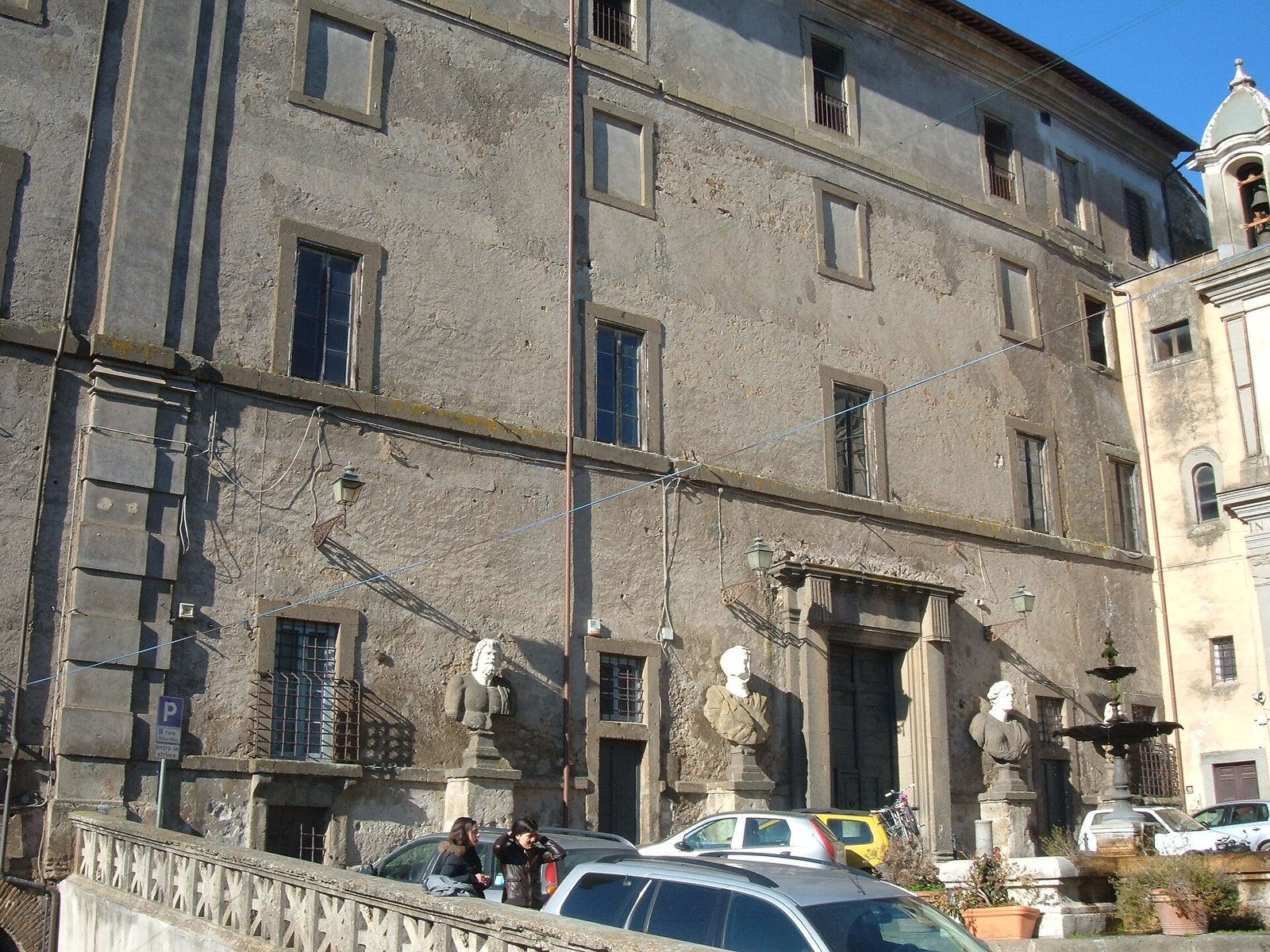
Bassano Romano is a village in the Tuscia that you can walk around freely, and its main monument, Villa Giustiniani-Odescalchi in Piazza Umberto I, is now open and free. The palace belongs to the State and is run by the Istituto Ville monumentali della Tuscia of the Ministry of Culture: free entry, no reservation required according to the ministry's portal, open Tuesday to Sunday in the morning and on Saturday until 19:30. It is closed on Monday.
Besides the palace, the town offers two things that people driving through on the road to Viterbo often miss. The first is the church of San Vincenzo Martire, on a hill outside the town, which holds the statue of the Christ Carrying the Cross recognized as the first version of Michelangelo's Christ of the Minerva. The second is the 17th-century village of the Giustiniani, with the main street, the medieval gate and the San Filippo Neri quarter.
Data checked on September 29, 2026 on the website of the Istituto Ville monumentali della Tuscia, on the villa's page on the Ministry of Culture portal, on the website of the Town of Bassano Romano and on the pages of the Sylvestrine Benedictine monastery of San Vincenzo. The two ministry sources do not give the same Saturday hours, so a phone call before leaving remains the prudent move.
At a glance: address, hours, ticket
- Address: Villa Giustiniani-Odescalchi, Piazza Umberto I, 01030 Bassano Romano (VT), no street number given by the operator.
- Operator: Istituto Ville monumentali della Tuscia, Ministry of Culture, phone +39 0761 636025, email vm-tuscia.villagiustiniani@cultura.gov.it.
- Price: free entry to the palace, village and churches with open access.
- Palace hours: Tuesday to Friday 8:30-12:30, Saturday 8:30-19:30 with last entry at 18:30, Sunday 8:30-12:30, closed Monday.
- Church and shrine of San Vincenzo: Via San Vincenzo Martire 88, hours not published, monastery phone +39 0761 634007.
- Getting there: FL3 regional train to Capranica station, then the S.I.T. bus to Bassano Romano according to the town hall.
- Palace accessibility: the operator does not publish information, ask by email before the visit.
Where it is and what you actually see
Bassano Romano sits at about 360 meters of elevation, in Viterbo Province, on the hills between Lake Bracciano and Lake Vico. The monastery of San Vincenzo places it about 40 kilometers from Rome. The town has a little over 4,600 inhabitants and until 1964 was called Bassano di Sutri, a name that says a lot about the link with nearby Sutri.
The surrounding landscape is wooded hills, with beeches, chestnuts and oaks, and part of the territory falls within the Bracciano-Martignano Regional Natural Park. A little to the northwest stretches the beech forest of Monte Raschio, between Bassano and Oriolo Romano, which according to the encyclopedia entry on the town has been part since 2017 of the UNESCO natural site for the ancient beech forests of Europe. It is a green setting that changes a lot with the seasons.
The historic center is compact. Via Maria Giustiniani, which the town hall gives as the oldest street in the town, crosses the village and reaches a medieval gate. Beyond the gate you enter the Borgo San Filippo Neri, a group of buildings commissioned by Andrea Giustiniani in the 17th century, with Palazzo Savelli, the oratory and the church of San Filippo Neri. It is a small quarter, built as a whole, that you can walk in a few minutes.
On the main square stand the Giustiniani palace and the parish church of Santa Maria Assunta, completed in 1703 with a facade in local stone, a clock and the family coat of arms. Inside, according to the town hall, there are an 18th-century organ, a 19th-century choir in painted wood and the relic of the head of San Gratiliano, the patron saint. Palace and church form a single front, and that is where you understand who was in charge.
Outside the town, on a panoramic hill, stands the church of San Vincenzo Martire with the monastery of the Sylvestrine Benedictines. Behind the palace, instead, stretches the Giustiniani park, 23 hectares according to the Istituto, connected to the building by a bridge. At the bottom of the park is the hunting lodge called the Rocca. In the territory the encyclopedic sources also point to the ponte delle Vaschie, from the 17th century, commissioned by Vincenzo Giustiniani.
In practice the visit has three poles: the palace, the village, the church of San Vincenzo. The first takes a good hour and a half, the second an hour, the third requires a short drive or an uphill walk. If you arrive by public transport, keep this in mind, because between the center and the monastery there are no dedicated connections and the local buses mainly serve the lines toward Sutri and Capranica.
A curiosity about Bassano Romano (VT)
The palace has a little theater. On the ground floor, according to the encyclopedia entry on the villa, there is a small theater built at the end of the 17th century, and the Ministry's portal presents it as one of the building's particular features. The description on the regional site of Canino speaks of a wooden theater from the late 17th century. A country residence with a room for private performances says a lot about the standard of living of the Giustiniani princes.
A second curiosity concerns the facade. The town hall recalls four marble heads from the 2nd century AD at the sides of the local-stone portal. According to the encyclopedic reconstruction, in 2012 one of these heads, depicting a bearded deity, was stolen. The detail explains why ancient finds set into the facades of provincial palaces are so vulnerable: they are outdoors, often in poorly watched squares, and their market value is high.
Third curiosity, the name. Until 1964 the town was called Bassano di Sutri, and before that simply Bassano, as confirmed by the chronology of the railway station opened in 1894. The name change served to distinguish it from the other Bassanos of Italy and to underline the link with Rome. Anyone looking for old documents or old postcards must therefore use all three forms, otherwise they lose half the material.
The last curiosity is outside the town. The ponte delle Vaschie, built in the 17th century at the wish of Vincenzo Giustiniani, is described by the encyclopedia entry with a defensive tower and a ceramic decoration by Bartolomeo Terchi, the majolica maker who arrived in Bassano in 1735. A country bridge signed by a ceramist is a rare detail, and it says how much the Giustiniani cared even about the entrances to their fief.
One thing nobody tells you about Bassano Romano (VT)
The shrine of the Holy Face, which many imagine as the keeper of an ancient relic, is a 20th-century devotion. The monastery's website explains that the church of San Vincenzo became the shrine of the Holy Face of Our Lord Jesus Christ at the wish of the Servant of God Father Ildebrando Gregori, spiritual father of Sister Maria Pierina De Micheli, whose mystical revelations he collected. It is not a medieval veil or a Byzantine icon.
What you see, according to the same source, is a sculptural and painted work by Aronne Del Vecchio that depicts the shroud of the Shroud of Turin held up by angels and torn open by the light that comes from the face of Christ. The shrine also displays a life-size copy of the Shroud kept in Turin. Anyone who arrives knowing this experiences the visit for what it is: a contemporary place of prayer inside a 17th-century church.
The second thing almost nobody says concerns the palace. The Giustiniani park, 23 hectares according to the Istituto, is not a manicured garden like the one at Villa Lante. The encyclopedia entry described it as being restored, with the Italian garden in serious decay. The operator does not publish separate hours for the park, so before leaving it's best to ask by phone which paths are accessible on the day of your visit.
What do you see inside Palazzo Giustiniani-Odescalchi?
The Ministry's portal describes the palace as the result of the transformations applied to the old Anguillara castle at the beginning of the 17th century. The encyclopedia entry recalls a first transformation in the 16th century and the largest works at the initiative of Marquis Vincenzo Giustiniani. From the outside the building looks massive and gray, with a rectangular plan, according to the town hall's description. Only when you go in do you understand the difference between the fortress shell and the residence.
The courtyard was frescoed with scenes of triumphs and allegories by Antonio Tempesta, in 1604 according to the description on the Canino site, which notes that it is now largely deteriorated. On the piano nobile the loggia carries grotesques dated by the same source to the years between 1570 and 1580, then supplemented by the Giustiniani. The passage from late 16th-century painting to that of the early 17th century can be read by climbing a single flight of stairs.
The rooms of the piano nobile are the real reason for the visit. The encyclopedia entry lists the themes: the coat of arms of the Giustiniani house, the fable of Cupid and Psyche, the four seasons, Mount Parnassus with Apollo and the Muses, the ports of Genoa and Chios, episodes from the life of Moses, an allegory of the victory of the soul over sin. The painted ports tell where the family's wealth came from: the trade of the eastern Mediterranean.
The room of the ports is the one that best explains who the patrons were. The Giustiniani, according to the encyclopedia entry, came from the island of Chios, a Genoese trading base in the Aegean, and moved to the Papal States after the Turks arrived on the island. Painting Genoa and Chios on the walls of a palace in the Tuscia meant reminding every guest of the mercantile and Mediterranean origin of a family that in Rome had become princely within a few decades.
Two rooms are worth the trip on their own. In the first Domenichino painted the Stories of Diana, in the second Francesco Albani frescoed the Fall of Phaethon. The Ministry's portal cites precisely these two names among the authors of the Baroque frescoes of the piano nobile, alongside other painters. The encyclopedia entry adds Bernardo Castello and Paolo Guidotti. For a free provincial palace, finding yourself in front of two painters of this caliber with no line is a rare privilege.
Anyone who knows Roman painting of the early 1600s will recognize the climate. Domenichino and Albani worked in the same years also for the great families of Rome, and in Bassano you can see how that language reached the country residences. For comparison, in Rome the Galleria Borghese holds Domenichino's famous Diana's Hunt on canvas, and Villa Farnesina shows how a cycle of mythological frescoes could transform a villa.
The ground floor completes the picture. Besides the little theater, the Canino description notes three rooms with frescoed vaults and a gallery with a painted vault. The four rooms of the Seasons and the small room called the Paradiso date instead, according to the same source, to the Anguillara era, between the 15th and 16th centuries. The palace is therefore not a single 17th-century block: it is a stratification, and the visit is more rewarding if you read it in this chronological order.
The advice I give you for visiting Bassano Romano (VT)
The advice is to choose Saturday. It is the only day the palace stays open into the afternoon, according to the Istituto's hours, and it lets you arrive calmly from Rome, have lunch in the area and visit the rooms in the light of early afternoon. On other days the window closes at 12:30, and if you arrive by train and bus you risk finding the door closed after a two-hour trip.
It is then best to split the day into two halves. In the morning the palace and the village, which are a few steps from each other, in the afternoon the church of San Vincenzo and, if the weather allows, a stop at Sutri or Caprarola. The monastery does not publish opening hours for the church, so a call to 0761 634007 avoids finding yourself in front of a closed door right where Michelangelo's statue is.
In our view the most common mistake is to treat Bassano as a half-hour stop on the road to Viterbo. The palace takes time, because the frescoes are many and spread over several rooms, and the Christ of San Vincenzo deserves a separate visit, not a peek. If you have only an hour you would do better to postpone. If you have a day, you find here one of the best ratios of quality to crowds in the whole Tuscia.
The figure that confirms it is the number of visitors. In 2016, the year of reopening after the restoration of the roofs, the palace recorded 1,049 entries according to the encyclopedia entry, a minimal figure for a building with frescoes of this level. No more recent data published by the operator turn up. For the visitor it means rooms almost always empty, time to look at the vaults without being jostled and the chance to ask the room staff questions.
How much does it cost and when can you get into Villa Giustiniani?
Entry to the palace is free, as the Istituto Ville monumentali della Tuscia indicates, and the Ministry's portal specifies that reservation is not required. There is therefore no ticket to buy and no online sales channel. On the hours the two ministry sources do not agree: the Istituto reports a long opening on Saturday, until 19:30, while the Ministry's portal gives for every day from Tuesday to Sunday only the 8:30-12:30 slot.
| Day | Palace hours |
|---|---|
| Monday | closed |
| Tuesday, Wednesday, Thursday, Friday | 8:30-12:30 |
| Saturday | 8:30-19:30, last entry 18:30 according to the Istituto |
| Sunday | 8:30-12:30 |
The official channel for any information is the website of the Istituto Ville monumentali della Tuscia, with the phone +39 0761 636025 and the email vm-tuscia.villagiustiniani@cultura.gov.it. The place is free and there is no dedicated ticketing product on third-party platforms, so be wary of anyone selling a paid entry. For organized groups and schools it is still best to write in advance, to agree on the day and the number of people.
The church of San Vincenzo and the shrine of the Holy Face are places of worship with free access, no ticket. The monastery does not publish the times of services on the pages available, so the reference remains the number +39 0761 634007 given by the Sylvestrine Benedictine Congregation. During Mass, put off the visit to the statue: the chapel is near the choir, and walking among the pews disturbs those who are praying.
Special days can change the picture. The town hall publishes a calendar of events, with reenactments, religious festivals and initiatives in the cloister, and the dates of the patron saint's festival are set for August 11 to 13. On the European Heritage Days and the Ministry's Sundays entry stays free anyway, because it always is. The advantage of a free place is just this: no rush for tickets, only the hours to respect.
Another well-known fact, yet rarely cited
It is well known that in the basilica of Santa Maria sopra Minerva, in Rome, there is Michelangelo's Risen Christ. Less often cited is that a first version exists, abandoned by the sculptor because a black vein appeared in the marble right on the face. That first version is in Bassano Romano, in the church of San Vincenzo Martire, and the town hall places it in the right-hand chapel near the choir.
The English encyclopedia entry on the work reconstructs the story. Michelangelo left the statue around 1515, and the black vein remains clearly visible on the left cheek of Christ. Some parts, namely the right hand, portions of the face and the back, were completed later by other hands. The patron, Metello Vari, received the roughed-out version in January 1522 for his Roman house. The second, finished version had left for Rome in March 1520.
The recognition is recent. According to the same source, in 2000 the art historian Irene Baldriga identified in the San Vincenzo statue the lost first version, since then also called the Giustiniani Christ. In 2017 the work was exhibited at the National Gallery in London next to a cast of the Minerva version. For those following the sculptor's traces, the stop adds to the itinerary of Michelangelo in Rome.
The right photo to take in Bassano Romano (VT)
The right photo is the facade of San Vincenzo Martire from the forecourt in front of the church. The town hall describes it with pilasters, niches, cornices, two bell towers at the sides and a balustrade crowned in the center by a large bust of the Redeemer. Seen head-on, with the hill sky behind, it conveys the idea of the family mausoleum that Vincenzo Giustiniani wanted. The best light comes in the afternoon, when the stone warms up.
The second shot is the front of the main square, with the palace and the church of Santa Maria Assunta side by side. Look for the angle that holds together the gray mass of the building and the facade with the clock and the coat of arms: in a single shot you read the history of the fief. Inside the palace, ask the staff at the entrance about the photography rules, and avoid flash under the frescoed vaults anyway.
For those who love details, the four ancient heads at the sides of the palace portal are an underused subject, especially in the raking light of morning. In the Borgo di San Filippo Neri the compact houses and the medieval gate offer tight, alley-style shots. In the park, if it is accessible, the long avenue toward the Rocca creates a central perspective. Always stay on public roads and spaces, away from courtyards and private property.
How do you get there from Rome without a car?
Bassano Romano has a railway station, but trains do not stop. According to the encyclopedic reconstruction, the station on the Rome-Capranica-Viterbo line, opened in 1894, was permanently closed in 2000 and since 2006 no longer appears in the official timetables: trains pass through without stopping. If you look at a map and see the tracks near the town, you need to know this before leaving, so you don't end up planning an impossible trip.
The public transport solution goes through Capranica station, on the same line, served by the FL3 regional trains that leave from Rome. The encyclopedia entry on the railway lists among the Roman terminals Roma Ostiense and Roma Tiburtina, with trains to Viterbo about every hour. Updated times and prices can be checked on Trenitalia. From Capranica you continue by bus, because the town is a few kilometers from the station.
Watch out for the ticket. Capranica is outside the urban area of Rome, so the ordinary Rome public transport ticket is not enough: you need a regional ticket for the route, to buy at the station, on the app or on the Trenitalia site. The S.I.T. bus ticket is separate and how to buy it must be checked with the company or the town hall. If you travel on Sunday, check with particular care, because local services are reduced.
The town hall publishes the timetable of the S.I.T. line, Società Italiana Trasporti, in force from June 9, 2026 for the connections from Bassano Romano to Sutri, from Bassano Romano to Capranica station and to Capranica. The timetable is available as an attachment on the town hall website, and should be downloaded before leaving. The runs of a local service are few and tied to school and work rhythms.
By car the trip is simpler. The town sits on the hills between Lake Bracciano and the Cimini mountains, and is about 40 kilometers from Rome according to the monastery. The travel time depends a lot on traffic leaving the city, and it's best to work out the exact route with a navigator based on your starting point. The town hall notes parking reserved for people with disabilities near the entrances of the main places, but does not indicate parking dedicated to visitors.
To reach the church of San Vincenzo from the center you need a short transfer: the complex is at Via San Vincenzo Martire 88, on a hill outside the town. If you arrive by bus, count on an uphill walk, to be assessed on a map before leaving, especially in summer. If you travel by car you can do the two stops in sequence, starting from the palace in the morning and going up to the monastery in the afternoon.
Some important events that happened here in history
The first documentary mention of Bassano dates to 1077, according to the encyclopedic reconstruction, and a first fortified residence is dated to 1160. In 1312, according to the same source, the town received a visit from Emperor Henry VII. The fief remained for centuries tied to the Anguillara, the lords of Lake Bracciano, and in 1482 Pope Sixtus IV arranged a new assignment of it, in a period of continual changes of hands among the families of the area.
The turning point came in 1595, when the fief passed to the Giustiniani, a Genoese family with a trading base on the island of Chios, in the Aegean. In 1605 Bassano became a marquisate and in 1644 a bull of Pope Innocent X raised the marquis to the rank of prince. In a few decades the Anguillara castle became a princely residence, with a park, a new village and a mausoleum church, and the town changed its face.
In the 18th century the town gained a craft activity: in 1735, according to the encyclopedia entry, the master majolica maker Bartolomeo Terchi arrived, and his ceramics also decorate the ponte delle Vaschie. In 1854, because of the Giustiniani's financial difficulties, the palace passed to Livio Odescalchi. In 1894 the station opened on the new railway to Viterbo, which for almost a century would link the town to Rome.
The 20th century brings three decisive moments. In 1941 Prince Innocenzo Odescalchi donated the abandoned church of San Vincenzo to the Sylvestrine Benedictines, who opened an institute there for boys left alone after the war. In 1964 the town took the name Bassano Romano. Between 2001 and 2003 the State bought the palace with the park and the lodge: the ministry sources do not agree on the exact year.
Then the restorations. According to the encyclopedia entry, since 2014 the palace has been managed by the Ministry through the Polo museale del Lazio, and after the rebuilding of the roofs the main building was reopened to the public on May 24, 2016. Since 2024, with the reorganization of the Ministry of Culture, it has been entrusted to the Istituto Ville monumentali della Tuscia together with Villa Lante, Palazzo Farnese in Caprarola and Palazzo Altieri in Oriolo Romano.
Who has passed through Bassano Romano (VT)
The protagonist is Marquis Vincenzo Giustiniani, who transformed the palace and park at the beginning of the 17th century and wanted the church of San Vincenzo as the family mausoleum. The monastery's website dates the church to around 1631 and almost certainly attributes it to Carlo Maderno, the architect who had already worked on St. Peter's. The Giustiniani name returns in Rome too, at the Villa Giustiniani Massimo at the Lateran.
With him came the painters. Antonio Tempesta frescoed the courtyard, Domenichino painted the Stories of Diana, Francesco Albani the Fall of Phaethon, and Bernardo Castello and Paolo Guidotti also worked in the rooms, according to the encyclopedia entry. All names tied to the Rome of the first decades of the 17th century, the same one you find on the page about Baroque Rome and in the rooms of Palazzo Barberini.
Then the Odescalchi, owners from 1854, the same family as the Odescalchi Castle in Bracciano and the castle of Palo. It was Prince Innocenzo Odescalchi who donated San Vincenzo to the Sylvestrines in 1941. From 1945 Abbot Ildebrando Gregori took in boys deprived of their families by the war, and in the mid-1970s the institute housed more than 650 boys, according to the history published by the monastery.
The palace has also appeared in front of the movie cameras. According to the encyclopedia entry on the villa, the rooms have hosted filming for movies such as La dolce vita by Federico Fellini, Blaise Pascal by Roberto Rossellini and L'avaro by Tonino Cervi with Alberto Sordi, as well as documentaries and commercials. If you love cinema you will find other sets on the page about Rome in the movies. In the town cemetery, again according to the encyclopedia, rest the TV host Fabrizio Frizzi and the director Mattia Torre.
What is really at San Vincenzo Martire?
What the documents say: the church was built around 1631 for Vincenzo Giustiniani and dedicated to the Spanish martyr Saint Vincent, as the center of a village and family mausoleum. The interior, according to the town hall, is a Latin cross with barrel vaults and a dome, and holds paintings with the Nativity and the crowning of Saint Vincent the martyr. Abandoned, in 1941 it was donated to the Sylvestrines, who made it usable again.
What recent history says: the first monks arrived in 1942 and began their activity in 1945, according to the Congregation. On November 25, 1945 the first four boys taken in by Abbot Gregori entered. The institute grew until the 1970s, then declined until closing toward the end of the decade. From 1983 a donation made it possible to renovate the complex and open a guesthouse, today a holiday home and place for spiritual retreats.
What belongs to devotion: the shrine of the Holy Face grows out of the link between Father Gregori and the mystical revelations of Sister Maria Pierina De Micheli, according to the monastery's website. It is a religious devotion and should be respected as such, without turning it into a legend to retell. The monastery indicates an international community of monks from Italy, Poland and Congo. The visit, for those who do not come to pray, calls for silence and suitable clothing.
The contrary position, in our view, concerns the statue. The Christ of San Vincenzo is often presented as a rediscovered Michelangelo to put on the same level as the Minerva. It is not. It is a work abandoned because of a flaw in the marble and partly completed by others, and its value lies exactly there: it shows a masterpiece at the moment it fails. If you arrive expecting Roman perfection you will be disappointed, if you are looking for the sculptor's workshop you won't be.
The park and the Rocca: what can you see?
The park was created at the beginning of the 17th century at the wish of Vincenzo Giustiniani, who according to the encyclopedia entry had been struck by the parks of French and English residences. The design included avenues, some covered, hedges and shrubs, small squares with sculpture groups and stone furnishings, an Italian garden and a nymphaeum surrounded by statues reached by two flights of stairs. It was also conceived as a productive garden, with fruit trees next to holm oaks, firs and cypresses.
The most scenic piece is the long straight avenue that leads from the palace to the hunting lodge called the Rocca. The encyclopedia entry describes it on three levels, with a crenellated belvedere and a central tower, decorated with stucco. The link between palace and park runs through a bridge, which the town hall mentions as a characteristic element. The whole was designed as a single path, from court life to the hunt.
The state of preservation is the delicate point. The encyclopedia entry spoke of a park being restored, with slow and above all emergency restorations, and of a degraded Italian garden. The operator does not say on its website which areas are open, nor give separate hours for the park. Before planning the visit around the gardens it's best to ask the Istituto, by phone or email, if the park and the Rocca are accessible.
Bassano within the system of the villas of the Tuscia: what other visits go with it?
The Istituto Ville monumentali della Tuscia, created in 2024 in the reorganization of the Ministry of Culture, brings together four residences: Palazzo Farnese in Caprarola, Villa Lante in Bagnaia, Palazzo Altieri in Oriolo Romano and Villa Giustiniani in Bassano. Visited in sequence, they tell a century of aristocratic architecture in northern Lazio, from the late 16th to the early 17th century, among papal families and merchant families who came from elsewhere.
Palazzo Altieri, in Oriolo Romano, is the closest neighbor: according to the Istituto it was built between 1578 and 1585 as the urban matrix of a village inspired by the ideal city. Unlike Bassano it is paid, with a full ticket of €5, €2 for European citizens between 18 and 25, free under 18, open 8:30-19:30 and closed Monday. The two palaces together make a well-spent half day.
Caprarola and Bagnaia are the other two stops of the system. At Caprarola the Farnese palace dominates the town with its pentagonal plan, while Villa Lante is, in our view, the best-kept Renaissance garden in the area. Placed next to those of Bassano, these gardens show clearly the difference between a park cared for continuously and one left for a long time without maintenance.
The order of the visits matters. If you leave Rome in the morning you can start from Bassano, using the palace's morning opening, and move to Oriolo Romano or Caprarola in the afternoon, where the hours are longer. Saturday lets you reverse the sequence. Villa Lante, farther north toward Viterbo, pairs better with a second day. The advice is not to close out all four residences in a single day: it would be a race between doorways.
If you love nature you can add a walk in the beech forest of Monte Raschio, between Bassano and Oriolo Romano. The encyclopedia entry gives it as a special conservation zone of about 700 hectares, included since 2017 in the UNESCO site of the ancient beech forests. No official trails published by the Town of Bassano turn up, so paths and access should be checked with the park authority or with the Town of Oriolo before leaving, especially in autumn.
When is it closed and what not to expect?
The palace is closed on Monday, according to the Ministry's portal, and from Tuesday to Sunday opens only in the morning, with the Saturday exception given by the Istituto. The sources consulted do not report holiday closures. On Christmas, New Year's and religious holidays it's best to call first, because the state sites in the area follow their own calendars, as Palazzo Altieri shows, closed on January 1 and December 25.
Beware of old information circulating online. For years the palace could be visited only on Saturday morning, with a free guided tour by the staff, as the encyclopedia entry still reports. The hours currently published by the Istituto are much broader, with morning openings from Tuesday to Sunday. If you find different indications on blogs or tourist portals, give priority to the operator's site and, when in doubt, to the phone.
What not to expect: a museum with a marked route, panels in every room and full services. The palace is a historic residence with restorations that have been going on for years, and some areas may be closed or bare. The courtyard frescoed by Tempesta is largely deteriorated. The Italian garden, according to the encyclopedic reconstruction, was in poor condition. If you arrive knowing this you will appreciate the rooms of the piano nobile, which remain the main reason for the trip.
Don't expect a village transformed for tourists either. Bassano Romano is a lived-in town, with traffic, schools, offices and squares used by residents. There are no souvenir shops in every lane and no marked routes. The town hall published in September 2026 a notice on traffic for the resumption of school activities: at school entry and exit times the center is busier, and it's worth keeping in mind when you park.
On accessibility the palace operator does not publish detailed information. The building rises over several floors, with the piano nobile reached by stairs, and no elevator is indicated. The town hall notes reserved parking near the entrances of the main places. To find out if the frescoed rooms are reachable without barriers the safest route is an email to vm-tuscia.villagiustiniani@cultura.gov.it, which leaves a written answer.
Eating in the area
Bassano Romano is a town of the Tuscia, and the cooking is that of the Viterbo hinterland: homemade pasta, meats, legumes, chestnuts and mushrooms in season. On ordinary days the choice is that of a provincial town, with few places frequented mostly by residents. The rule for choosing remains simple: look for where local people eat at lunch, on weekdays, and be wary of those who rely only on the sign.
The traps are not only Roman. Photo menus with dishes from every region, places open nonstop with no kitchen break, items with no price or given as a price by word of mouth, a different menu between the outside board and the sheet at the table: these are signs that apply everywhere. Romans avoid them not out of snobbery, but because behind them there is almost always a kitchen designed for people passing through once.
On festival days, like the patron saint's festival in August or the costume reenactments, the town sets up stands and food points with their own prices, to read before ordering. For those who want to start with some references between Rome, the Tuscia and the lakes there is the list of addresses on Google Maps, to always compare with the updated hours of the places, which in the provinces often change from season to season.
What to combine in a day
The most natural pairing is Sutri, linked to Bassano also by the S.I.T. bus line and tied to the town by the old name of Bassano di Sutri. Toward the north you go up to Caprarola with Palazzo Farnese, and a little farther is Lake Vico, with the nature reserve and the woods of the Cimini mountains.
Toward the south the reference is Lake Bracciano. At Trevignano Romano you walk on the lakefront, and in the same area are the Pantane di Trevignano reserve and the Odescalchi Castle, which ideally closes the story of the family that owned the palace of Bassano for a century and a half.
If you continue toward Viterbo you find the city of the popes, with the Macchina di Santa Rosa and the monastery of Santa Rosa. A few kilometers from the provincial capital, Villa Lante in Bagnaia completes the circuit of the Istituto's villas. Farther east, the Park of the Monsters of Bomarzo offers a completely different 16th-century garden.
For a longer day toward the east there is Civita Castellana, in the Treja valley. Toward the west and north the Etruscan Tuscia offers Tuscania and the park of Vulci, while around Lake Bolsena you find Bolsena and Montefiascone. These are stops an hour away by road, to split over several days.
At the far north of the province are Civita di Bagnoregio, Castiglione in Teverina, Grotte di Castro and Acquapendente. They are far from Bassano, but if you sleep in the lakes area you can use them to build a complete itinerary of the Tuscia, alternating villas, villages and Etruscan sites on different days.
For those returning to Rome with their head still on the frescoes, the thread of the 17th century continues in the city. Domenichino and Albani turn up again in the great Roman museums, such as the Galleria Borghese, and the sculpture route leads to the Christ of the Minerva, to see after the first version at San Vincenzo. The list of state museums of Rome helps you choose.
Frequently asked questions
How much does it cost to visit Palazzo Giustiniani-Odescalchi?
Nothing. The Istituto Ville monumentali della Tuscia indicates free entry, and the Ministry of Culture portal specifies that reservation is not required. The village and the churches also have free access. There are no official tickets sold by third parties, so a paid entry offered online should be treated with suspicion. For organized groups and schools it is still best to write in advance to vm-tuscia.villagiustiniani@cultura.gov.it.
What are the hours of Villa Giustiniani in 2026?
According to the Istituto the palace opens Tuesday to Friday from 8:30 to 12:30, on Saturday from 8:30 to 19:30 with last entry at 18:30 and on Sunday from 8:30 to 12:30. It is closed on Monday. The Ministry's portal instead gives only the morning slot for Saturday too, so before organizing an afternoon visit it's best to call +39 0761 636025.
Can you get to Bassano Romano by train?
Not directly. The Bassano Romano station on the Rome-Capranica-Viterbo line was closed in 2000 and trains pass without stopping. You take the FL3 regional train to Capranica and from there the S.I.T. line bus, with hours in force from June 9, 2026 published by the town hall. Runs are few, so check the return time before departure.
Where is Michelangelo's Christ in Bassano Romano?
In the church of San Vincenzo Martire, at Via San Vincenzo Martire 88, on the hill outside the town, in the right-hand chapel near the choir according to the town hall. It is the first version of the Christ of the Minerva, abandoned by Michelangelo because of a black vein in the marble and partly completed by others. The church's hours are not published: better to call the monastery at +39 0761 634007.
What is the Holy Face of Bassano Romano?
It is the shrine of the Holy Face of Our Lord Jesus Christ, established in the church of San Vincenzo at the wish of Father Ildebrando Gregori, tied to the revelations of Sister Maria Pierina De Micheli. The main work, according to the monastery, is a sculptural and painted composition by Aronne Del Vecchio with the shroud of the Shroud of Turin held up by angels. The shrine also has a life-size copy of the Shroud of Turin.
Can you visit the park of Villa Giustiniani?
The operator does not publish separate hours for the park nor say which areas are open. The park measures 23 hectares according to the Istituto and includes avenues, a nymphaeum, an Italian garden and the hunting lodge called the Rocca, but the encyclopedia entry described it as under restoration and partly degraded. Before leaving it's best to ask the Istituto, by phone or email, if the avenues are accessible.
How much time do you need to visit Bassano Romano?
For the palace you need about an hour and a half, for the village another hour at an easy pace, and the church of San Vincenzo takes at least an hour between travel and visit. In all a good half day, which becomes a full day if you add Sutri or Palazzo Altieri in Oriolo Romano. With public transport the times stretch because of the train and bus connections.
What is there to see besides the palace?
The parish church of Santa Maria Assunta, completed in 1703 next to the palace, with the relic of the head of the patron saint Gratiliano. The Borgo San Filippo Neri, commissioned by Andrea Giustiniani in the 17th century, reached from Via Maria Giustiniani through a medieval gate. The church of San Vincenzo with Michelangelo's Christ. And the landscape of the woods between Lake Bracciano and Lake Vico.
Who wrote this and on what sources
The text comes from the editorial team of Tour Leader Pro, the Rome-based outfit that designs itineraries, visits and cultural events between Rome and Lazio. Rates, hours and reservation methods reported here come from the official sources cited in the text as of the date given at the start: the website of the Istituto Ville monumentali della Tuscia, the Ministry of Culture portal, the town hall website and the pages of the Sylvestrine Benedictines. Tell us what you find changed.
Organizing a visit to Bassano Romano, for yourself or for a group, mostly means making hours line up: the palace's short mornings, the long Saturday, the connections between the FL3 train and local buses, the unpublished hours of the church of San Vincenzo. In the villages of the Tuscia every detail counts, and a useful resource for people organizing group trips is Tour Leader Pro.
Bassano Romano works well as a stop on a wider trip through the Tuscia, among the monumental villas, the lakes of Bracciano, Vico and Bolsena and the Etruscan sites. If you have several days available you can alternate palaces, villages and woods, sleeping in the lakes area instead of going back to Rome every evening. To put the stops together with realistic times, a useful resource for building a multi-day itinerary is Italy Planner.