Acquapendente (VT)
In short. You can walk around Acquapendente freely, but the three places that justify the trip have different rules.
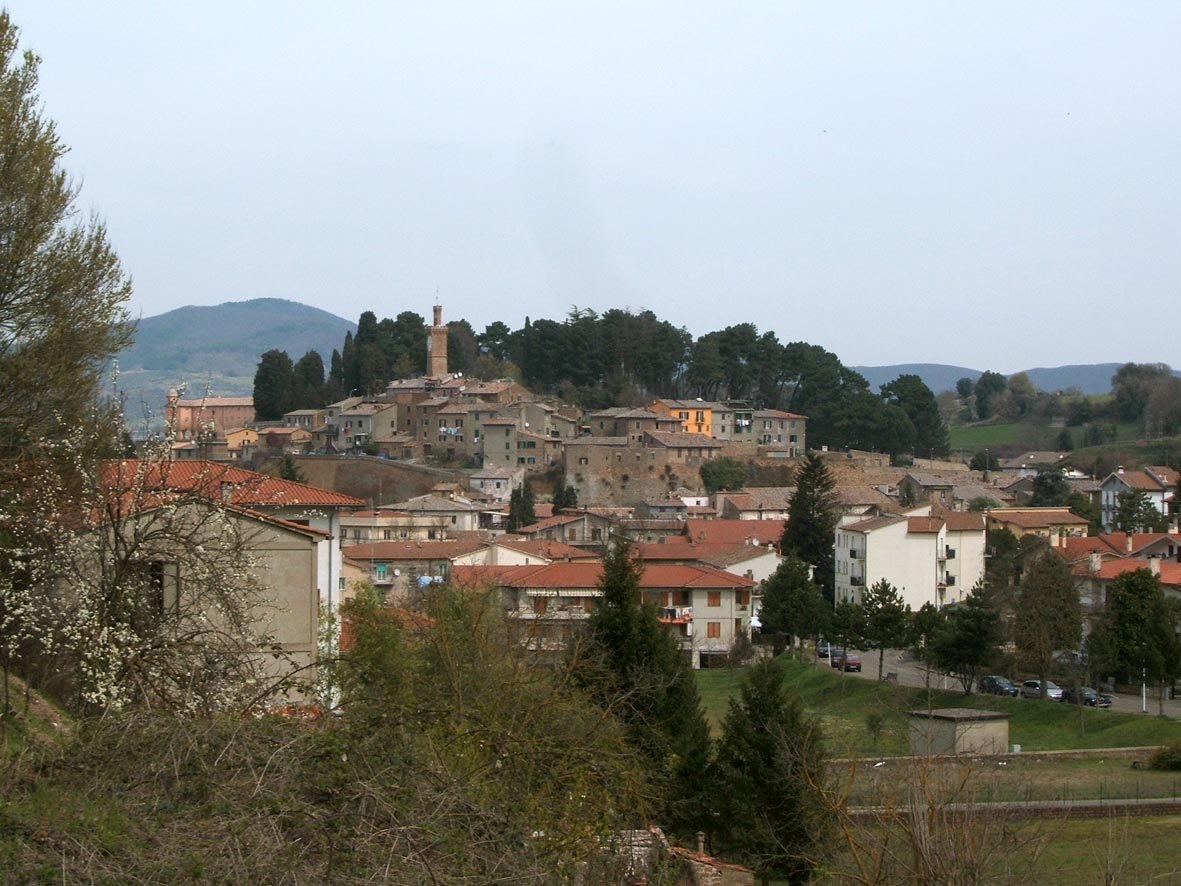
You can walk around Acquapendente freely, but the three places that justify the trip have different rules. The Basilica of the Holy Sepulchre, in Piazza del Duomo, is the co-cathedral of the Diocese of Viterbo, and the parish does not publish opening hours for the church or the crypt. The City Museum, in the Bishop's Palace at Via Roma 85, costs 4 euro and from October is open Tuesday to Sunday. The Flower Museum, in Torre Alfina, costs 4 euro and in winter is open only on weekends.
The town is in the far north of Lazio, in the province of Viterbo, on the border with Tuscany and Umbria, about 10 kilometers from Lake Bolsena. It is crossed by Via Cassia and by the route of Via Francigena, has a little over 5,000 inhabitants and two hamlets, Torre Alfina and Trevinano. The municipal territory includes the Monte Rufeno Nature Reserve, almost 3,000 hectares of woodland that the municipality manages directly.
Data checked on September 29, 2026 on the City Museum website, the Flower Museum website, the pages of the Diocese of Viterbo dedicated to the co-cathedral and the parish, the Lazio Region parks portal and the website of the Municipality of Acquapendente. For the crypt the most practical channel is the guided tour sold by the City Museum, which includes the basilica. For the Pugnaloni festival the reference remains the Pro Loco, which organizes it together with the municipality.
In brief: address, hours, ticket
- Where: Acquapendente (VT), 420 meters above sea level, on Via Cassia at the border with Tuscany and Umbria. Town hall at Piazza Girolamo Fabrizio 17, phone 0763 73091.
- Basilica of the Holy Sepulchre: Piazza del Duomo, parish of the Diocese of Viterbo. Hours of the church and the crypt not published by the diocese.
- City Museum: Bishop's Palace, Via Roma 85. Full price 4 euro, reduced 3, guided tour with prisons and basilica 10 euro. Phone 388 8568841.
- City Museum hours from October to December: Tuesday-Friday 10-13, Saturday, Sunday and holidays 10-13 and 15-18. Closed December 25.
- Flower Museum: località Casale Giardino, Torre Alfina. Full price 4 euro, reduced 3. From October to December Saturday, Sunday, days before holidays and holidays 11-16.
- Monte Rufeno Nature Reserve: managed by the municipality, office at Piazza Santa Maria 1, phone 0763 733442, info@monterufeno.it.
- How to get there: by car along Via Cassia. For buses, look up the runs in the Cotral timetable search.
Where it is and what you really see
Acquapendente occupies a rise above the valley of the Paglia river, at the point where the Viterbo Tuscia ends and the Sienese hills and the Alfina plateau begin. Those coming up from Rome along Via Cassia leave Bolsena and the lake behind and arrive here when the landscape has already changed: more woods, more open fields, softer hills. The border with Tuscany is a few kilometers away.
The historic center is compact and is covered on foot in a short time. The main street, Via Roma, crosses it from one end to the other. At the south entrance you meet the Torre Julia de Jacopo, today one of the seats of the City Museum. Along Via Roma, at number 85, is the Bishop's Palace with the main seat of the same museum. Piazza del Duomo, with the Basilica of the Holy Sepulchre, is the point where the religious life of the town converges.
The visitor finds a real town, with its shops, its schools, the traffic of Via Cassia skirting it. It is not a village emptied and restored for tourists. This has a merit and a limit. The merit is that the streets have everyday life. The limit is that, outside the basilica and the museums, the architecture of the center lacks the unity of an intact medieval village.
There are two hamlets. Torre Alfina is part of the Most Beautiful Villages in Italy, has a little under 300 inhabitants and a castle with a central tower of Lombard age according to the English Wikipedia entry. Trevinano has a castle documented from the 12th century. Near Torre Alfina are the Flower Museum, inside the Monte Rufeno Reserve, and the Bosco del Sasseto, two destinations that alone are worth half a day.
What counts, for organizing the visit, is the distance between the destinations. The historic center, the Duomo and the City Museum can be seen on foot in a morning. The Flower Museum and the Sasseto require a car, because they are outside the main town, in the Torre Alfina area. Those who arrive without their own vehicle must concentrate on the center and give up the nature part, or devote a second day to it.
Via Cassia is the axis that explains the town. The consular road that climbs from Rome toward Tuscany crosses the built-up area, and the Italian Wikipedia entry places the birth of Acquapendente along Via Francigena, the road of the medieval pilgrims. Even today the traffic crossing the town recalls this function as a passage. Those arriving by car thus have the same perspective as travelers of the past: the town presents itself as a stop on the road, even before being a destination.
Torre Alfina deserves a separate detour. The village is small and is walked in a short time, with the castle occupying the upper part. The castle's openings to the public do not appear to be published by an official source, and whoever wants to visit it must inquire beforehand at the municipality. The advice is to combine the village with the Flower Museum, which is nearby, and not to organize the trip counting on entry to the castle.
A curiosity about Acquapendente (VT)
The name is descriptive. Acquapendente means hanging water, and refers to the small waterfalls that run down toward the Paglia river around the rise on which the town stands. According to the English Wikipedia entry, the first document using the name Acquapendentem is an act of Emperor Otto I of 964. Before that date the place appears under other names, Farisa or Arisa, along the pilgrims' route.
The real curiosity is that the name speaks of a landscape of water that those crossing the center by car tend not to notice. The reference must be sought in the watercourses that run down toward the Paglia valley, outside the streets of the town. Whoever wants to understand the place name must look toward the river, not toward the squares, and read the town as a rise surrounded by water.
Then there is the title of city. Acquapendente received it from Pope Innocent X in 1649, the same year in which the episcopal see was transferred there after the destruction of Castro. A town of a few thousand inhabitants thus became the seat of a bishop and obtained a cathedral. The title remains, the diocese does not: since 1986 the territory has been part of the Diocese of Viterbo, and the Duomo is a co-cathedral.
Something nobody tells you about Acquapendente (VT)
The facade of the Duomo disappoints, and it's right to say so. Those who arrive in the piazza expecting a Romanesque front find a neoclassical frontage, restored in 1746 at the wish of Pope Benedict XIV according to the Diocese of Viterbo. Many visitors stop in front, take a photo and leave. It is the most frequent mistake in Acquapendente. The reason for the visit lies under the floor of the church, in the crypt.
The second thing kept quiet concerns the hours. No official source publishes the opening hours of the basilica, and the crypt is not a museum with a fixed ticket office. Whoever arrives on a weekday afternoon risks finding the church closed or the crypt not accessible. The sure way in is the guided tour that the City Museum sells together with the museum and the prisons, at 10 euro, booking beforehand.
The third concerns the Flower Museum. The name suggests a small village botanical exhibit, and many skip it. In our judgment it is the most underrated destination in upper Tuscia, because it combines the museum, a garden with more than 1,000 plant species and access to the Bosco del Sasseto. The limit is the winter schedule reduced to the weekend, from 11 to 16, which forces you to plan.
What is in the crypt of the Holy Sepulchre?
The basilica is a Romanesque church with three aisles, with transept and raised apse, originally tied to a Benedictine monastery. Under the raised part of the church opens the crypt, which the Diocese of Viterbo describes with 34 bays covered by cross vaults, set on 24 columns. The English Wikipedia entry speaks of nine small aisles divided by the supports. The capitals are carved with animal figures and plant motifs.
On the date the sources do not agree. The diocese places the crypt in the 11th century. The English Wikipedia entry moves it earlier to the second half of the 10th century, before the upper building, which it attributes to the 12th century. For the visitor the difference matters little: it is in any case a very ancient Romanesque space, with a low, dense forest of columns that is not often met in village churches.
At the center of the crypt is the sacellum, a small construction that reproduces in miniature the church of the Holy Sepulchre in Jerusalem. The basilica keeps the relic that gives it its name: a blood-stained stone that, according to what the diocese reports, would come from the tomb of Christ. The provenance is a matter of tradition, not of documents, and should be presented that way. The sacellum remains in any case the heart of the building.
In the upper church there are two bas-reliefs attributed to Agostino di Duccio, with Tobias and the angel and with Saint Michael's victory over the dragon. They are works of the 1400s that deserve a stop, and that many visitors don't notice because they look only for the crypt. The basilica also keeps the relics of Saint Bernard, bishop of Castro, which arrived when the episcopal see was transferred to Acquapendente.
The crypt has a history of pilgrimage. According to the English Wikipedia entry, in the Middle Ages the church was a frequented destination for the miraculous healings attributed to the relic. Those coming down Via Francigena toward Rome found here, halfway, a place that recalled Jerusalem. This explains the choice of the sacellum, and explains why a border town has a crypt of this size.
Those who have already seen the great crypts of Rome find a useful comparison here. The Roman churches with underground spaces, gathered on the page on Underground Rome, often show overlapping levels of different eras. In Acquapendente the crypt is instead a single Romanesque space, conceived from the start as a space of worship around a relic. It is a difference of conception that you grasp at once, as soon as you go down.
What do you see in the City Museum?
The City Museum is divided into three seats, according to the Lake Bolsena Museum System. The main seat is in the Bishop's Palace, at Via Roma 85, with the sacred art collection, paintings on canvas and panel, liturgical vestments and ceramics from the Middle Ages to the modern age. The ordinary ticket includes the collections of the Bishop's Palace. Management is entrusted to the cooperative L'Ape Regina.
The second seat is the Torre Julia de Jacopo, at the south entrance of the town, which houses a collection of archaic majolica from the convent of Sant'Agostino. The Italian Wikipedia entry also recalls the recent restoration of the tower and its use as an information point. The third seat is the picture gallery with the paintings from the Franciscan convent, including works by Sano di Pietro and Francesco Nasini.
The part many people don't expect is that of the prisons. The museum sells a guided tour at 7 euro that includes the museum and the prisons, and one at 10 euro that adds the Basilica of the Holy Sepulchre. The detail of the route through the prisons is not described on the fares page, and it is best to ask by phone before booking. For those short on time, the 10 euro tour is the most sensible choice.
The museum is also the right place to understand the ceramics tradition. The English Wikipedia entry recalls that Acquapendente has a craft tradition in ceramic work, and the collections of the Bishop's Palace and of the Torre Julia de Jacopo display pieces from the Middle Ages to the modern age. Those interested in this theme should ask, when booking, if the tower seat is included in the route of the chosen day.
The advice I give you for visiting Acquapendente (VT)
The advice is to arrive on a Saturday, book the City Museum guided tour with the basilica and keep the afternoon for the Flower Museum. From October Saturday is the only day on which both museums are open for certain, besides Sunday. In the cold months, on a weekday, the City Museum opens only in the morning and the Flower Museum stays closed.
The second rule is not to stop at the facade of the Duomo. Those with time for only one thing should choose the crypt, and to go down into the crypt with the certainty of finding it open you need the museum tour. Calling 388 8568841 a few days before costs little and saves a wasted trip. The same number also answers for the Flower Museum, and this simplifies the organization.
The third rule concerns the season. May is the month of the Pugnaloni, with the town full and the streets decorated. Those seeking calm should avoid the third Sunday of May and choose autumn, when the Monte Rufeno Reserve changes color and the trails are more pleasant. In summer the Flower Museum opens with continuous hours from Friday to Sunday, and the woods offer shade in the hot hours.
How much do the museums cost and how do you book?
The City Museum costs 4 euro full price and 3 euro reduced, for those over 65 and for children from 7 to 14 years. Children up to 6 years and residents enter free. The guided tour with the prisons costs 7 euro, the one with the prisons and the Basilica of the Holy Sepulchre 10 euro. Groups of at least 20 people pay 6 euro each. Tickets are valid only on the chosen day and are not refundable.
The official channel for the City Museum is the City Museum tickets page, with online sale of the guided tours, or the phone 388 8568841 and the address museodellacittacquapendente@gmail.com. For the Flower Museum the reference is the Flower Museum ticket office, with tickets that can be bought on site or online. No specific ticket for these places appears to be sold by other resellers.
| Place | Openings from October to December | Price |
|---|---|---|
| City Museum, Bishop's Palace | Tuesday-Friday 10-13, Saturday, Sunday and holidays 10-13 and 15-18 | 4 euro full, 3 reduced |
| City Museum, tour with prisons and basilica | By reservation | 10 euro |
| Flower Museum, Torre Alfina | Saturday, Sunday, days before holidays and holidays 11-16 | 4 euro full, 3 reduced |
| Bosco del Sasseto, Flower Museum and Planta Sonorum | During museum hours | 14 euro combined |
The Flower Museum applies the same base figures: 4 euro full price, 3 euro reduced for those over 65, for children from 7 to 14 years, for holders of the Lake Bolsena Museum System card and for members of the Touring Club Italiano. Residents and children up to 6 years enter free. The combined ticket with the Bosco del Sasseto and the Planta Sonorum route costs 14 euro instead of 17.
There is also a combined ticket between the Bosco del Sasseto and the City Museum, at 11 euro instead of 14, indicated by the Flower Museum website. For groups of at least 20 people the Flower Museum asks for a reservation at least seven days ahead. For the basilica, outside the guided tour, there is no ticket: it is a parish church, and the conditions of access to the crypt are not published by the diocese.
Another well-known fact, yet rarely cited
Acquapendente gave its name to one of the great anatomists of the 1500s. Girolamo Fabrici, born here in 1537 and died in 1619, is known in the history of medicine as Fabrici d'Acquapendente, or by the Latin name Hieronymus Fabricius. He taught at Padua, where he became one of the most prestigious professors of the university. The town hall square, Piazza Girolamo Fabrizio, recalls his name.
The fact is known to those who study medicine, less to those who visit the town. Few tourists connect the name of the town to that of the scientist, and few notice that the town hall stands precisely in the square named after him. It is a good example of how a border village produced a figure of European weight, who left from here to make a career in one of the great universities of the North.
A second rarely cited fact concerns the diocese. For over three centuries, from 1649 to 1986, Acquapendente was an episcopal see, with its own bishop and its own cathedral. On March 27, 1986 the diocese was united with others to form what has been called the Diocese of Viterbo since 1991. The Bishop's Palace that houses the museum is therefore the residence of bishops who are no longer there.
The third fact concerns the legacy of Castro. The city destroyed in 1649 was never rebuilt, and part of its religious memory is found in Acquapendente. According to the English Wikipedia entry, the basilica received the relics of Saint Bernard, bishop of Castro, when the suppressed diocese merged into the new one. Whoever visits the Duomo thus sees two stories together: that of the Francigena pilgrims and that of a vanished city.
The right photo to take in Acquapendente (VT)
The right photo is taken in the crypt, from the back, with the columns in a row fading toward the sacellum. You need low light and a bit of patience, because the space is tight and the columns are many. The advice is to ask during the guided tour if photographs are allowed and if flash is permitted, because the rules in a parish church can change.
The second photo is that of the Torre Julia de Jacopo from outside, at the south entrance of the town. The tower is clearly visible from the road and gives the measure of the town's ancient defense system. With the raking light of the early hours or late afternoon the masonry gains relief. Backlit, instead, the tower becomes a dark silhouette against the sky, useful for a more graphic photo.
The third photo, if you come in May, is that of the displayed Pugnaloni. The panels are large, more than two and a half by three and a half meters according to the Wikipedia entry dedicated to the festival, and they photograph well head-on, with a wide angle, without getting too close. Up close you see the petals and leaves one by one, and that is where you understand the work behind them.
The fourth photo is taken at the Flower Museum, between April and June, when the botanical garden is in full bloom and the museum is open on Friday too. The Museum System website speaks of over 1,050 plant species gathered along the route. For those photographing flowers up close a macro lens and an overcast day are best, avoiding harsh shadows on the petals and rendering the colors more faithfully.
How do you get there from the center of Rome?
By car the road is Via Cassia, which crosses Acquapendente. From Rome you go up through Viterbo, Montefiascone, Bolsena and San Lorenzo Nuovo, skirting the lake. The route is not fast, because it crosses built-up areas and winding stretches, but it has the advantage of showing the Tuscia landscape and allowing stops along the lake. It is best to calculate the times for the chosen day with a navigator, because traffic in the towns changes a lot between weekdays and holidays.
Without a car the trip is more complicated. The regional buses of Lazio are run by Cotral, and the runs should be looked up in the Cotral timetable search, entering Acquapendente as the destination. The municipality does not publish a guide to connections. The Flower Museum and the Bosco del Sasseto, outside the town, are not served by public transport indicated by the operator, and require a car.
Finally there is the slowest way, that of the pilgrims. Acquapendente is a stage of Via Francigena, and those walking the route arrive from Tuscany, from the north, then continue toward Bolsena and Viterbo. For those with time and legs, entering the town on foot from the route gives back the original sense of the place, born as a stop along the road to Rome.
Some important events that happened here in history
According to the Italian Wikipedia entry, the settlement developed between the 9th and 10th centuries around the church of Santa Vittoria, along Via Francigena. In 964 Emperor Otto I stayed there for a short period, and an act of his is the first document to record the name of the town. From that moment Acquapendente enters history as a place of passage between the Empire and Rome.
1166 is the date of the revolt against the rule of Frederick Barbarossa, tied to the tradition of the flowering cherry tree and the Pugnaloni festival. In 1253 the church of Santa Maria was entrusted to the Franciscans and became the church of San Francesco. According to the English Wikipedia entry, in 1449 the town became an autonomous center within the Papal State.
1649 is the date that changes the face of the town. After the destruction of Castro, the episcopal see was transferred to Acquapendente, which absorbed the territory of the suppressed diocese and received the title of city from Innocent X. The church of the Holy Sepulchre became a cathedral, and the facade was restored in 1746 under Benedict XIV. In 1798 and 1799 the town lived through the experience of the Roman Republic.
In the 1900s administrative changes arrive. In 1927 Acquapendente passed from the province of Rome to the new province of Viterbo. In 1983, with regional law 66 of September 19, the Monte Rufeno Nature Reserve was born. On March 27, 1986 the diocese was united with that of Viterbo. In December 2022, according to the diocese website, the new bishop of Viterbo made his entrance also into the co-cathedral of the Holy Sepulchre.
The thread linking these passages is the relationship between a small center and the powers that crossed it. Emperors traveling to Rome, popes redrawing dioceses, pilgrims bound for Rome. Acquapendente took something from each: the name from an imperial act, the title of city from a pope, the crypt from the cult of the pilgrims. To understand the town it is best to read it this way, as a border place shaped by those who passed through.
Who has passed through Acquapendente (VT)
The first illustrious guest is Otto I, who stayed in the town in 964. Tradition also links the birth of the church to his family. According to the account reported by the Diocese of Viterbo, Matilda, mother of the emperor, traveling from Germany toward Rome, stopped at Acquapendente because the mules carrying the gold to build a church refused to go on. A dream would have told her to build it here.
In the 1300s, according to the English Wikipedia entry, Saint Roch passed through Acquapendente, stopping to care for plague patients in the town hospital. The information should be read with the caution due to the biographies of medieval saints, but it explains the presence of the saint's cult in many places along the Francigena. Hospitals and hospices were an integral part of the stage towns.
Then there are the anonymous pilgrims, thousands of people who over the centuries have walked Via Francigena, stopping to pray before the stone of the Holy Sepulchre. They are the true protagonists of the town's history. In recent times, according to the diocese website, in June 2022 the Vatican Secretary of State visited Acquapendente, confirming the weight the co-cathedral retains in the religious life of Tuscia.
Acquapendente was born as a stage town. The Italian Wikipedia entry places its origins along Via Francigena, the road that brought pilgrims from Northern Europe to Rome. The crypt with the copy of the Holy Sepulchre, the hospital where tradition places Saint Roch, the church entrusted to the Franciscans in the 1200s are all pieces of the same story: a town built to welcome those passing through.
For today's walker, Acquapendente is one of the first stages in Lazio after Tuscany. From here the route goes down toward Bolsena, Montefiascone and Viterbo, then continues toward Sutri and reaches Rome. The traditional end point is St. Peter's Basilica, after entering the city from the north, around Milvian Bridge.
The link with Jerusalem is the original feature. Many Francigena towns have churches for pilgrims, few have a reproduction of the Holy Sepulchre. In Rome the theme of the relics of Jerusalem returns at Holy Cross in Jerusalem, and those who love the Romanesque of crypts can compare Acquapendente with Roman underground basilicas like San Clemente. The comparison helps to understand how rare a crypt of this size is in a provincial town.
Those arriving in Rome following ideally the same route find the signs of the pilgrims' entry to the north of the city. The Porta del Popolo and the church of Santa Maria del Popolo mark the historic entrance to the city from the north, before the last stretch toward St. Peter's Square. Joining the two ends of the route, Acquapendente and Rome, gives meaning to both visits.
What are the Pugnaloni and when can you see them?
The Pugnaloni festival, also called the festa di Mezzomaggio, is celebrated on the third Sunday of May according to the dedicated Wikipedia entry, and is organized by the Pro Loco and the municipality. The pugnaloni are large panels, of 2.60 by 3.60 meters, decorated with the mosaic technique, but using only flowers and leaves. Each panel represents a scene, prepared on a sketch drawn on paper.
The work lasts weeks. First the background is composed with leaves cut and glued, then garlic, onion and the so-called trame, the walnut flower, are added. The actual flowers, hydrangeas and gerberas, are applied the evening before the festival, because they must arrive fresh on Sunday. The panels are made by historic groups of the town, 15 since 2007 according to the same entry.
On Sunday the pugnaloni are displayed in the streets and, in the early afternoon, carried to the cathedral of the Holy Sepulchre. Then they lead in procession the statue of the Madonna del Fiore. A jury awards the best from a window of the town hall, and the winning group receives a bronze trophy made in 1983 by the sculptor Mario Vinci, with the flowering cherry tree, the Madonna and Barbarossa falling from the tower.
Here three levels must be distinguished. The historical document is the presence of imperial authority in the area in the 12th century. Tradition fixes the revolt against Barbarossa's governor at May 15, 1166. The legend tells of two peasants complaining of oppression: one said freedom was as impossible as the blooming of a dry cherry tree, and the cherry tree bloomed. The sign was attributed to the Madonna, and the peasants stormed the castle.
Whoever comes outside May doesn't see the festival, but can get an idea of it. The Wikipedia entry reports that the panels stay on display in the Duomo during the year, even though the petals wither, and the Flower Museum devotes part of its route to the traditions tied to flowers, Pugnaloni included. The date of the 2027 edition does not yet appear to be published by an official source: the reference for the calendar is the municipality.
To see the festival it is best to arrive early in the morning. In the morning the completed panels are displayed in the streets, before the crowd gets thick, and it is the best moment to observe them up close. In the early afternoon attention shifts toward the Duomo and the procession, and the center becomes hard to cross. Those coming by car must consider that the parking in the center fills up early.
The contrary position here concerns the festival itself. Many describe it as a folkloric event to see once. In our judgment the work that precedes it is more interesting, made of weeks of preparation in the town's groups, with the gathering of leaves and flowers and the composition of the panels. Whoever has the chance to see a pugnalone in progress understands the festival much better than someone who only watches the awards.
Monte Rufeno, Flower Museum and Sasseto: how do you visit them?
The Monte Rufeno Nature Reserve was established by regional law 66 of September 19, 1983 and covers 2,893 hectares, all in the municipality of Acquapendente, according to the Lazio Region parks portal. It is managed by the municipality, with its office at Piazza Santa Maria 1 and contacts at the phone 0763 733442 and the address info@monterufeno.it. It is a territory of woods, rural farmhouses and trails, on the border with Tuscany and Umbria.
The regional portal lists 17 routes, among them the CAI trail 146A toward Monte Rufeno, the Sentiero dei Briganti, the Sentiero Acquachiara and the Scialimata loop in long and short versions, plus cycling routes named after Girardengo, Bartali and Coppi. Lengths and difficulty should be checked on the operator's maps before leaving. In the woods live wild boars, eagle owls and martens, according to the English Wikipedia entry.
The Flower Museum is in località Casale Giardino, in Torre Alfina, about two kilometers from the village according to the Lake Bolsena Museum System. It is an interactive museum devoted to flowers, biodiversity and local traditions, with a botanical garden and a nature trail of 21 stations. The museum website describes it as a municipal facility, the Museum System assigns its management to the cooperative L'Ape Regina.
The hours follow the seasons. From January to March and from October to December the museum is open on Saturday, Sunday, the days before holidays and holidays from 11 to 16. From April to June it is open on Friday too, from 10 to 13 and from 14 to 18. From July to September, always Friday to Sunday, the hours are continuous from 10:30 to 18. It closes on January 1 and December 25.
The Bosco del Sasseto is a Natural Monument of 61 hectares, according to the reserve website, and is the second nature destination in the area after the Monte Rufeno trails. It is visited with the formulas offered by the Flower Museum, which combines it with the museum and the Planta Sonorum route in the combined ticket. The conditions for free access to the woods, outside the organized visits, are not clearly indicated by the operator and it is best to ask at 388 8568841.
The reserve also has a calendar of events. The regional parks portal lists for 2026 appointments such as the 42nd Scarpinata a Monte Rufeno, the evenings Per un pugno di stelle, the series I sensi della natura and the forest immersion experiences. The Flower Museum, for its part, has scheduled in September the talk I segreti del vulcano, tours in Italian Sign Language and the workshops of the Planta Sonorum route. Dates and registrations should be checked on the operators' websites.
Those who know the parks around Rome find a different environment at Monte Rufeno. The Castelli Romani Park and the Parco dei Monti Lucretili are areas frequented on weekends by Romans, the Monti Simbruini are real mountains. Monte Rufeno is a hilly border forest, far from the cities, with few visitors outside the events. In our judgment that is its best quality, and also the reason it pays to set out prepared.
Prepared means suitable shoes, water, a map of the route downloaded before leaving and a clear idea of the timing. The regional portal lists the routes, but trail conditions change with the seasons and the weather. For updated information the reference is the reserve office, at the phone 0763 733442. In case of heavy rain, the half day should be moved to the Flower Museum, which still offers contact with the woods.
When is it closed and what not to expect?
The City Museum lists no Monday openings at any time of the year, and from October to March it opens only in the morning from Tuesday to Friday. The Flower Museum, from October to March, opens only on weekends and holidays. Both close on January 1 and December 25, dates to keep in mind for those planning an outing during the holidays. On Monday, in short, Acquapendente can only be seen from outside.
Don't expect a crypt that is always open. The basilica is a parish church, with its services, and the diocese does not publish visiting hours. Nor should you expect an entirely medieval historic center: the town has undergone transformations and looks like a lived-in town, with buildings from different eras. Those looking for the intact village will find more satisfaction at Civita di Bagnoregio.
Finally, the Pugnaloni festival lasts one day. Whoever arrives in the wrong week finds the panels, if displayed, with the petals already withered. The advice is to verify the date with the municipality or the Pro Loco before organizing the trip, and to book in time, because on the third Sunday of May the town fills up and parking in the center becomes difficult.
Watch for the changes of season. The City Museum and the Flower Museum change hours on the first day of October, January, April and July, and the City Museum has a separate schedule for June too. Whoever organizes a visit straddling these changes must check the right time band on the websites of the two museums. The guided tours with the basilica are booked separately and do not necessarily follow the museum hours.
Eating nearby
Acquapendente is not a mass tourism destination, and the typical traps of the art cities are rare here. Some rules valid everywhere remain, though. Be wary of laminated photo menus, of places that don't display prices, of a menu that differs between the one displayed outside and the one handed to you at the table. On festival days, with the arrival of visitors, the rule is to ask the price before ordering, especially for fixed menus.
The criterion is the usual one: where residents eat, with a short menu tied to the season, you eat well and spend the right amount. According to the English Wikipedia entry, the town's economy rests on vegetables and wine, and places that treat the local products well are recognized by the simplicity of what they offer. For those looking for addresses in Rome and Lazio there is the list of addresses on Google Maps.
What to combine in a day
The most natural combination is with Lake Bolsena, about 10 kilometers away. You can devote the morning to Acquapendente and the afternoon to Bolsena, with the lakefront and the historic center. An alternative is Grotte di Castro, above the northern shore of the lake, to combine with a drive around the basin with stops in the lakeside towns.
Those with a whole day can go down toward Civita di Bagnoregio and then return to Rome via Montefiascone and Viterbo. Viterbo alone deserves another day, with the Monastero di Santa Rosa and, in September, the Macchina di Santa Rosa. To the west you reach Tuscania, another stop for those following the Romanesque of Tuscia.
Those who come for nature can combine Monte Rufeno with other parks of Lazio, like Lake Vico, south of Viterbo. Those who prefer historic gardens find in Tuscia Villa Lante at Bagnaia, the Park of the Monsters at Bomarzo and the Palazzo Farnese at Caprarola. They are destinations far from each other, and it is best not to put more than two in the same day.
For Etruscan archaeology the nearby destination is Vulci, toward the coast, while on the village front you can add Castiglione in Teverina, Caprarola, Civita Castellana and Bassano Romano. All require a car. Those returning to Rome along Via Cassia can stop at Sutri before reaching the city.
Frequently asked questions
How much does it cost to enter the crypt of the Holy Sepulchre?
The basilica is a parish church and has no ticket. The diocese, however, does not publish opening hours for the church or the crypt. The sure way to go down into the crypt is the City Museum guided tour that includes the museum, the prisons and the basilica, at the price of 10 euro. You book on the museum website or by phone at 388 8568841, a few days ahead.
What are the City Museum hours in autumn?
From October to December the City Museum, in the Bishop's Palace at Via Roma 85, is open Tuesday to Friday from 10 to 13, and on Saturday, Sunday and holidays from 10 to 13 and from 15 to 18. It closes on December 25. It is not listed as open on Monday. The ticket costs 4 euro full price and 3 reduced, free for residents and for children up to 6 years.
Is the Flower Museum open all year?
Yes, but with seasonal hours and only on certain days. From October to March it is open on Saturday, Sunday, the days before holidays and holidays from 11 to 16. From April to September Friday is added, with longer hours. It closes on January 1 and December 25. It is in Torre Alfina, in località Casale Giardino, and you need a car to get there. The museum's phone is 388 8568841.
When is the Pugnaloni festival held?
The festival, also called Mezzomaggio, is celebrated on the third Sunday of May, according to the dedicated Wikipedia entry. The exact date of each edition should be checked with the municipality or the Pro Loco, which organize it together. On the day of the festival the flower panels are displayed in the streets, carried to the cathedral and then in procession in front of the statue of the Madonna del Fiore.
Can you get to Acquapendente without a car?
The municipality does not publish a guide to connections: lines, runs and changes must be looked up in the Cotral timetable search, the company of the regional buses of Lazio. The historic center, the Duomo and the City Museum are visited on foot. The Flower Museum, the Bosco del Sasseto and the Monte Rufeno trails are instead outside the town, and without a car they are hard to reach.
How much time does it take to visit Acquapendente?
For the historic center, the Duomo with the crypt and the City Museum a morning is enough, especially with the guided tour that puts everything together. The Flower Museum with the garden takes a couple of hours, the Bosco del Sasseto another hour or two. Those who want to walk in the Monte Rufeno Reserve must devote a separate day to it, choosing the trail according to their fitness.
Who manages the Monte Rufeno Nature Reserve?
The reserve is managed by the Municipality of Acquapendente, according to the Lazio Region parks portal. It was established in 1983 and extends over 2,893 hectares. The office is at Piazza Santa Maria 1, and the official contacts are the phone 0763 733442 and the address info@monterufeno.it. The portal lists 17 routes, on foot and by bicycle, with different difficulty levels.
What does the name Acquapendente mean?
The name means hanging water and refers to the small waterfalls that run down toward the Paglia river around the town. According to the English Wikipedia entry, the first document that records it, in the form Acquapendentem, is an act of Emperor Otto I of 964. Before that the place appeared under the names Farisa or Arisa, along the road of the pilgrims bound for Rome.
Are the crypt and the museums accessible to people with mobility difficulties?
The information is published neither by the diocese for the crypt nor by the websites of the two museums. The crypt is below the level of the church, so the access arrangements must be clarified before the visit, together with those of the museum seats. The reference is the number 388 8568841, which answers for the City Museum and the Flower Museum, or the address info@museodelfiore.it.
Who wrote it and from what sources
The text comes from the team at Tour Leader Pro, the Roman organization that designs itineraries, visits and cultural events across Rome and Lazio. Fares, hours and booking arrangements reported here come from the official sources referred to in the text at the date indicated at the opening: the websites of the City Museum and the Flower Museum, the pages of the Diocese of Viterbo and the regional parks portal. Tell us what you find changed.
Organizing a day in Acquapendente, for yourself or for a group, means fitting together hours that change with the seasons, a crypt that is certainly accessible only by reservation and distances that require a vehicle. For those who have to put together transport, bookings and visiting times, a useful resource for those who organize group trips is Tour Leader Pro.
Acquapendente is the north gate of Lazio, and it makes sense to include it in a wider trip through Tuscia, among Lake Bolsena, Viterbo, Civita and the Etruscan villages. Those coming from far away can devote two or three days to the area, alternating art, nature and towns. To build a trip like that, with stops, times and transfers, a useful resource for putting together a multi-day itinerary is Italy Planner.