Castel Madama
In short. Castel Madama is a municipality of the Metropolitan City of Rome, at 428 meters above sea level on the slope that overlooks the Aniene valley, about five kilometers east of Tivoli according to the Enciclopedia Treccani.
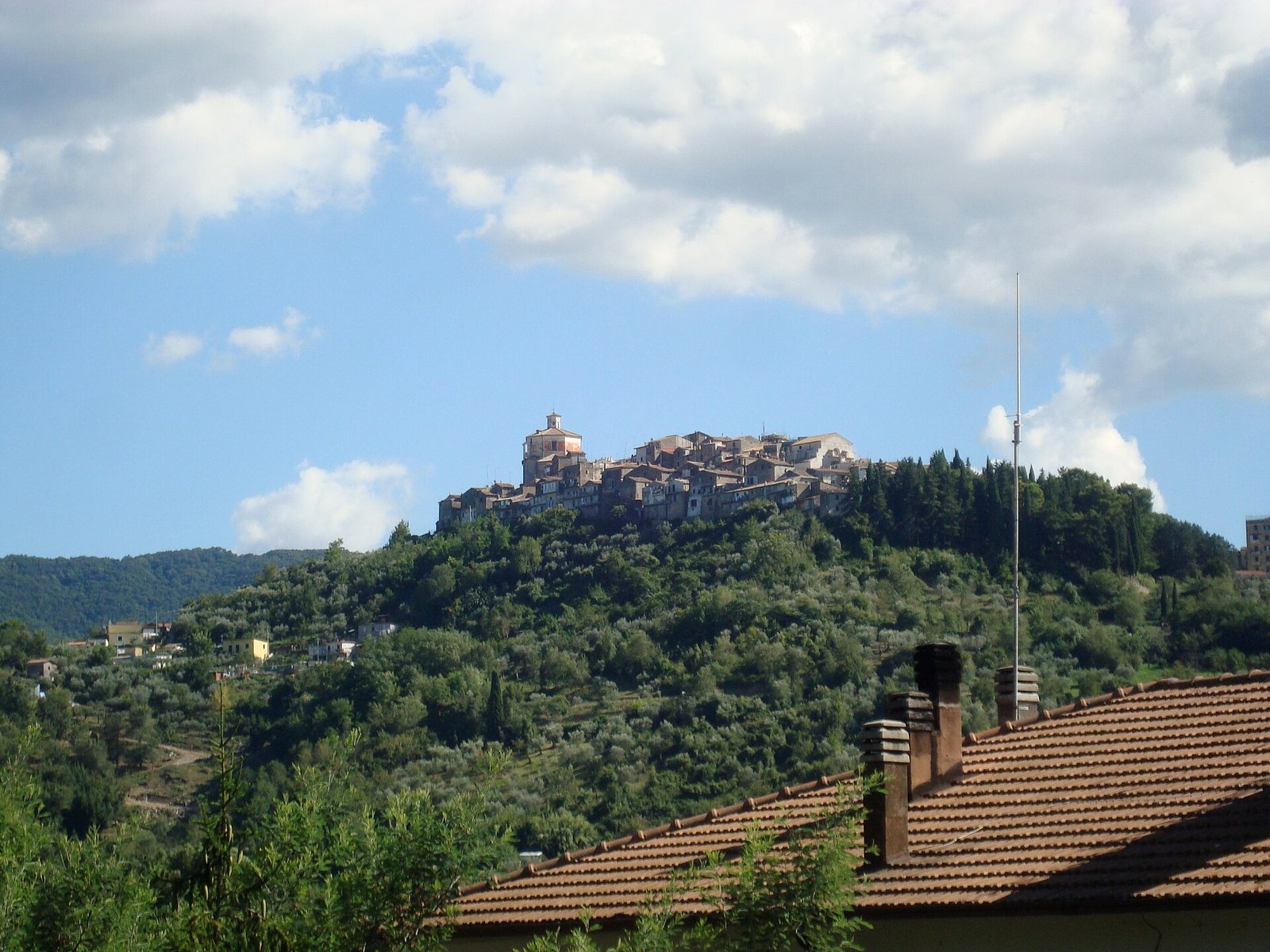
Castel Madama is a municipality of the Metropolitan City of Rome, at 428 meters above sea level on the slope that overlooks the Aniene valley, about five kilometers east of Tivoli according to the Enciclopedia Treccani. The village can be walked freely and without a ticket. The Castello Orsini, at Piazza Madama 5, is owned by the Municipality, which lists entry as free but publishes no fixed hours: before leaving you should call the town hall at 0774 286452 or write to info@comunedicastelmadama.it.
The name tells the story better than any sign. For centuries the town was called Castrum Sancti Angeli, from the cult of Saint Michael the Archangel. In the 16th century the castle passed to Margaret of Austria, daughter of Emperor Charles V, called Madama, and the town took from her the name it still bears. It covers 28.5 square kilometers of territory, between the last offshoots of the Monti Prenestini and the Monti Tiburtini, with about 7,000 inhabitants.
Data checked on September 29, 2026 on the page of the Municipality of Castel Madama devoted to the Castello Orsini, on the town hall's portal, on the tourism site of the Lazio Region, on the Region's news item about the Rete delle dimore storiche, on the RFI departures monitor and on the Cotral website. The Municipality publishes no calendar of castle openings and no dates of this year's festivals. For both the channel is the town hall's switchboard, at Corso Cavour 34.
At a Glance: Address, Hours, Ticket
- Castle address: Castello Orsini, Piazza Madama 5, 00024 Castel Madama (RM). Town hall at Corso Cavour 34.
- Operator: Municipality of Castel Madama, owner of the castle and of the Complesso del Borgo.
- How to get in: entry listed as free by the Municipality, hours to be asked directly at 0774 286452.
- Price: the Municipality indicates no ticket. The village can be visited on foot for free.
- Hours: not published by the Municipality. Information at info@comunedicastelmadama.it or at the town hall's telephone.
- How to get there: Cotral buses (Ricerca orari search tool on the website or toll-free number 800 174 471), RFI regional trains to the Castel Madama station, outside the built-up area.
- Accessibility: the Municipality describes the castle as a place without architectural barriers.
Where It Is and What You Really See
The town stretches along a hill that looks down on the Aniene valley, between Via Tiburtina Valeria and the first rises of the Monti Prenestini. From Rome it is about 41 kilometers according to the tourism portal of the Lazio Region. Tivoli is the neighboring city, a few kilometers to the west. Anyone arriving by car on the A24 motorway finds a toll booth with the town's name, while the old Tiburtina state road runs lower down, along the river.
What do you actually see? The castle, which closes off the upper part of the town with its squared bulk. The historic village around it, made of stone houses, narrow lanes and flights of steps. The large parish church of San Michele Arcangelo, with a dome recognizable from far away. Stretches of the city wall with quadrangular towers, which the local history site Tibur Superbum dates between the 14th and 15th centuries. And, from the edges of the hill, the panorama over the valley.
The center of Castel Madama is not an open-air museum. It's a lived-in town, with the town hall, the shops, the schools and the daily life of a municipality of the Roman province. The medieval part occupies the summit, the more recent part descends along the roads toward the valley and the countryside. Anyone looking for a village emptied and restored for tourists will find something else: here the historic houses still have open windows, laundry hanging and pots on the sills.
Since March 2026 the Complesso del Borgo, owned by the Municipality, has been part of the Rete delle dimore storiche del Lazio, according to the news published by the Region on March 24. The Rete gathers villas, castles, palazzi and architectural complexes of historical and landscape value, 213 properties in all at the date of the update. For the visitor the recognition does not yet change the hours: it's still best to ask the Municipality if openings linked to the Rete are planned.
According to Wikipedia the town lies on the northern offshoots of the Monti Prenestini, at the point where they meet the Monti Tiburtini, and overlooks the stretch of Via Tiburtina Valeria between Tivoli and Vicovaro. The Lazio Region portal adds that the settlement formed around an older village, Castelluccio. It's a position of control, halfway between the Roman plain and the mountains that lead toward Abruzzo, and you understand it as soon as you look at the valley from the top of the village.
A Curiosity About Castel Madama
The parish church of San Michele Arcangelo was inaugurated on September 29, 1775, according to the Wikipedia entry devoted to the building. September 29 is the day the liturgical calendar devotes to the archangels, and the choice of date doesn't seem a coincidence. The town carried for centuries the name of the archangel, Castrum Sancti Angeli, and the new 18th-century church was opened exactly on the day of his feast, after four years of work.
Second curiosity, about the name. Madama was the title by which Margaret of Austria, natural daughter of Emperor Charles V, was called. According to the Enciclopedia Treccani the town took its present name in the 16th century, when Margaret received the castle as a dowry and stayed there. The tourism portal of the Lazio Region writes that it was she who gave the village the name it bears. A court title, in short, became the name of a municipality in the Aniene valley.
Third curiosity: the castle has belonged to the Municipality for about a century. The local history site Tibur Superbum writes that in 1925 the engineer Oreste Vulpiani handed it over to the Municipality of Castel Madama together with furniture and works of art. It's an uncommon case in Lazio, where many castles have remained private property or have been turned into residences and event venues. Here the Orsini stronghold is a public asset, managed by the town's administration.
Last curiosity, tied to the princess's name. According to Tibur Superbum, when Margaret arrived in Rome in 1533 she was welcomed in the papal villa on Monte Mario, which would take the name Madama from her title. In the capital the same nickname has also remained at Palazzo Madama. Castel Madama completes the series: three different places, a villa, a palazzo and a town, all tied to a young Flemish woman who came to Italy for a marriage decided by the emperor.
One Thing Nobody Tells You About Castel Madama
The railway station that bears the town's name is not in the town. It's down below, along the line that goes up the Aniene valley, and the public transport blog Visitare il Lazio places it about five kilometers from the built-up area, with no dedicated shuttles. It's worth keeping the opposite in mind: in our judgment the train, which on paper seems the most convenient solution, is the wrong choice for anyone arriving without a car and without a lift.
Second thing little said: the castle is not a museum with a ticket office open every morning. The Municipality's official page lists entry as free, but under hours it refers to direct contact with the facility. Anyone who arrives on a Sunday afternoon without having phoned risks finding the door closed and seeing the castle only from outside. The call to the town hall, on weekdays and during office hours, is the real entrance ticket.
Third thing: Castel Madama is often treated as an appendix of Tivoli, a half-hour detour after Villa d'Este. That's an error of perspective. The town has a history of its own, tied to the Orsini, the Medici, the Farnese and a daughter of the emperor, and a publicly owned castle that Tivoli has no direct equivalent of. It deserves a dedicated morning, with time to climb on foot, enter the castle if it's open and look at the valley from above.
Fourth thing: the castle is publicly owned, and this changes the way to visit it. There is no private custodian, event company or commercial ticket office to turn to. The reference is the municipal administration, with its offices, its hours and its response times. Anyone used to castles run as tourist attractions has to change approach: fewer services, more direct contact with the town hall, and the chance to see an asset that belongs to the community of the town.
Why Is the Town Called Castel Madama?
To answer you have to start from the earlier name. The Municipality's page explains that the castle was built around the 10th century by Benedictine monks with the name Castrum Sancti Angeli. The Tibur Superbum site adds that a bull of Pope John XII of 958 cites a church consecrated to Saint Michael the Archangel, from which the castle would have taken its name. It's the same dedication to the archangel that in Rome gave its name to Castel Sant'Angelo.
Then come the Medici. The Visit Val d'Aniene portal gives 1520 as the acquisition of the fief by the Florentine family, and 1537 as the taking possession of the castle by Margaret of Austria. Margaret was the widow of Alessandro de' Medici, Duke of Florence, assassinated on January 6, 1537 by Lorenzino de' Medici, according to Tibur Superbum's reconstruction. Very young, she found herself the holder of a fief in the Roman countryside and of a title that the town would make its own.
The marriage to Alessandro had been arranged by Charles V when Margaret was a child. Tibur Superbum reports her birth in 1522 at Oudenaarde, in Flanders, the engagement in 1529, the arrival in Rome on May 5, 1533, the marriage contract on February 29, 1536 and the religious ceremony in Florence, in Santa Maria del Fiore, on May 31 of the same year. A few months later her husband was dead, and the young widow remained a valuable pawn in the politics between papacy and empire.
Hence the name. Margaret's castle became Madama's castle, and the town around it followed. The same title is found in Rome in the name of Palazzo Madama, today the seat of the Senate, according to a very widespread historical tradition. Castel Madama, though, is the place where the link is most visible: an entire municipality still bears the nickname of a 16th-century princess, and its Palio stages her every summer.
My Advice for Visiting Castel Madama
Call ahead. It's obvious, but it decides the day. The number is the town hall's, 0774 286452, and it's best to call on a weekday, a few days before, asking if the castle is open on the chosen date and if you need to book. Alternatively, write to info@comunedicastelmadama.it. With a confirmation in hand, the rest of the visit is organized around the castle's hours, and not the other way around.
Go up on foot. Anyone arriving by car would do well to leave it in the lower part of the town, respecting the signs, and to reach Piazza Madama walking among the houses of the village. The historic center is compact, the streets are narrow and sloping, and the climb makes you understand how the castle dominates the settlement. Comfortable shoes, water in summer, and a bit of patience with the steps, which in the oldest lanes are not lacking.
Save the panorama for last. After the castle and the church of San Michele Arcangelo, look for the points of the town that face the Aniene valley. The view explains why a fortress was built here: the valley was the road to Abruzzo, and whoever controlled this hill controlled the passage. On clear days the eye reaches far over the surrounding mountains, and reading the landscape completes reading the documents.
Choose the season according to what you're looking for. In July, with the Palio, the village is full of people, costumes and horses, but the castle and the lanes are hard to see because of the crowd. In spring and autumn the town is quiet, the light is better for photos and the heat doesn't weigh on the climb. In our judgment, for a first visit, autumn is the most balanced period.
Carry the history in your pocket. The Municipality publishes no panels or maps of the historic center, and on site the information is scarce. It's best to know beforehand that the castle began as Castrum Sancti Angeli, that the Orsini completed it in 1308, that Margaret of Austria turned it into a Renaissance residence and that the church of San Michele Arcangelo is from the 18th century. With these four reference points, the walk around the village becomes a reading of the centuries instead of a simple stroll.
How Do You Enter the Castello Orsini and How Much Does It Cost?
The page of the Municipality of Castel Madama devoted to the castle lists entry as free, the place as free of architectural barriers and accessible to all citizens, and management in the hands of the municipal administration. It publishes no fixed hours. For information it refers to direct contact with the facility, at 0774 286452 and at the address info@comunedicastelmadama.it. Data on any visits with Municipality staff, with hours and duration, is not published.
Where do you really book? The official channel is only one, the page of the Castello Orsini on the Municipality's website, with the town hall's contacts. The local history site Tibur Superbum writes that the stronghold can be visited by reservation, with a visit of about an hour, but the municipal page does not report this arrangement. No paid product dedicated to the castle appears on the major online booking platforms.
The castle also hosts cultural initiatives and events organized by the Municipality and the town's associations, which can change access on event days. The Municipality publishes no annual calendar on the site. Anyone who wants the visit to coincide with an exhibition or a reenactment has to look for news on the town hall's portal and on the Municipality's official Facebook page, and confirm anyway with a phone call before setting out.
For those organizing an outing with a school, an association or a large group, the rule is to ask well in advance. The Municipality publishes no procedure for visits by several people, nor a limit on admissions per shift. The request goes to the town hall's registry, also by certified email at protocollocmadama.rm@actaliscertymail.it, giving the date, the number of people and accessibility needs. The more precise the request, the easier it is to receive a useful reply.
Another Well-Known Fact, Yet Rarely Mentioned
Many people know that the town owes its name to Margaret of Austria. Less mentioned is the fact that the sources don't agree on the age of the castle. The Municipality's page speaks of a construction by Benedictine monks around the 10th century. The Enciclopedia Treccani instead writes that the settlement appears in documents at the beginning of the 14th century as Castrum Sancti Angeli, with the fortress built by the Orsini in that period. The two dates tell two different stories of the same place.
How do they fit together? Probably with an older fortification, of monastic origin, transformed and enlarged by the Orsini. The Municipality writes that the Roman family acquired the castle in the 13th century, enlarged it, added a city wall and completed the works in 1308. The tourism portal of the Lazio Region gives the same year as the date of construction by the Orsini. The date of 1308, in any case, is the fixed point shared by the official sources.
Second little-mentioned fact: the 16th-century transformation. The Visit Val d'Aniene portal writes that Margaret turned the castle into an elegant Renaissance fortress, with the inner courtyard surrounded by a portico with a gallery and a double ring of walls. The Lazio Region speaks of a fortress palace in Renaissance style. This is the passage that makes the castle something more than a medieval fortress: a court residence, adapted to the needs of an imperial princess.
What the documents say: according to Tibur Superbum, a bull of 958 cites a church of San Michele Arcangelo in the area. The Treccani gives the beginning of the 14th century for the first attestation of Castrum Sancti Angeli. The Municipality sets the completion of the Orsini works at 1308. The Lazio Region and the Treccani tie the name of the town to Margaret of Austria. The Region's news item of March 24, 2026 documents the municipal ownership of the Complesso del Borgo.
What tradition says: according to the legend reported by the Municipality, the hill took its name from the archangel Michael, who supposedly stopped there. Similar stories are found in many places dedicated to Saint Michael in Italy, and should be read as devotional tradition, not as chronicle. Local tradition has also made Margaret the founding mother of the modern town, a reading that the Palio renews every year with the procession and the contests among the districts.
What remains uncertain: the Treccani writes that on the same height, on the opposite slope, there stood perhaps the ancient Empulum, a center of the Roman age. The perhaps is obligatory, and the sources consulted indicate no visitable remains. The relationship between the Castrum Apolloni of the abbey of Subiaco and the present castle is also reconstructed by local historians more than documented by excavations. These are interesting leads, but they should not be presented as established facts.
The Right Photo to Take at Castel Madama
The photo that tells the town is the one of the castle seen from below, with the houses of the village rising toward its bulk. It works from the streets of the new part, in the hours of low light of the morning or late afternoon, when the stone takes on color and the shadows give relief to the volumes. A light telephoto lens helps compress the houses and the castle into a single image, as the town looked arriving from the valley.
The second image is the castle's inner courtyard, if you find it open. The portico with the gallery described by Visit Val d'Aniene is the sign of the Renaissance transformation, and it works better horizontally, with the light coming in from above. Before photographing the interiors it's best to ask the staff present if it's allowed, above all during exhibitions or events. The Municipality publishes no rules on filming inside the castle.
Third choice: the dome of San Michele Arcangelo from one of the high points of the town, with the Aniene valley in the background. It's the image that brings together the 18th-century town, the one of the great parish church, and the landscape that explains its position. People should be left out of the frame or shot with their consent. In a lived-in town, windows, balconies and house doors are not a photo set.
How Do You Get There From Rome by Train, Cotral or Car?
By bus the official reference is Cotral's Ricerca orari search tool, with the toll-free number 800 174 471. The public transport blog Visitare il Lazio gives as departure the Cotral terminus at Ponte Mammolo, on metro line B, with a change at Tivoli onto the line for Castel Madama and Sambuci. Times, termini and stops in town should be checked the same day on the Cotral website, which also publishes route changes.
By train, the departures monitor of RFI for the Castel Madama station shows regional trains toward Roma Tiburtina and Roma Termini and, in the other direction, toward Avezzano. The station, though, is outside the built-up area, down below, and without a car or a bus connection the town stays far away. Anyone choosing the train has to plan the last stretch before leaving, checking the Cotral runs that pass by the station.
By car the fastest road is the A24 motorway, with the Castel Madama exit also indicated by Wikipedia. Alternatively you take Via Tiburtina as far as Tivoli and then continue along the valley. The Municipality indicates on its site no parking dedicated to visitors of the castle. The historic center is made of narrow, uphill lanes, and it's best to leave the car in the lower part of the town, in the permitted spaces, and walk up.
Anyone arriving from Termini Station can also reach Tivoli by train and from there look for a bus to Castel Madama, according to the indications of the Cotral search tool. It's a solution that makes sense if the day also includes Tivoli. In any case, long times and connections to verify must be allowed for: for a relaxed visit, with the castle by reservation, the car remains in our judgment the simplest choice.
Before leaving it's best to check the state of the railway line too. The Aniene valley stretch has interruptions and delays that RFI reports on the departures monitor. Among the causes of suspension there are also minor episodes, such as animals near the tracks between Marcellina and Tivoli, which can block the line and build up delays of up to an hour on the trains for Avezzano. For buses Cotral also provides on its site a real-time bus service and a route search with changes.
Some Important Events That Happened Here in History
The first news concerns a monastic territory. According to the Tibur Superbum site, which draws on local historians, the abbey of Subiaco owned in the area the Massa Apollonia, with a Castrum Apolloni cited in a document of Pope Nicholas I of 864. The bull of Pope John XII of 958 cites the church of San Michele Arcangelo. The Lazio Region portal writes that the town developed between the 10th and 11th centuries around the ancient village of Castelluccio.
From 996, again according to Tibur Superbum, the castle belonged to Crescentius, prefect of Rome, and to his sons, who in 1036 returned only a part of it to the abbey of Subiaco. In 1125 Tivoli destroyed the nearby Castello Apollonio, and the first dwellings arose around the Castello di Sant'Angelo. This is the beginning of the town as we know it, gathered under the protection of the fortress on the hill, along the road that went up the valley.
In the 13th century came the Orsini, who according to the Municipality enlarged the castle and ringed it with walls, completing the works in 1308. In 1520 the fief passed to the Medici, according to Visit Val d'Aniene, and in 1537 Margaret of Austria took possession. The Lazio Region portal gives 1538 as her entry into the town, the event that the Palio reenacts every summer. The Farnese followed and, according to Tibur Superbum, the Pallavicini, with new changes to the castle.
In 1771 the first stone of the new parish church of San Michele Arcangelo was laid, designed by the architect Pompeo Schiantarelli and inaugurated on September 29, 1775, according to Wikipedia. In 1925 the castle passed to the Municipality by the cession of the engineer Oreste Vulpiani, reports Tibur Superbum. In 1958 the pera spadona festival was born, according to the Region's portal. The last chapter is March 24, 2026, with the entry of the Complesso del Borgo into the regional Rete of historic residences.
Who Has Passed Through Castel Madama
The first names are those of churches and popes. The abbey of Subiaco, founded in the tradition of Saint Benedict, and the Benedictine monks who according to the Municipality built the first fortification. Pope Nicholas I and Pope John XII, whose documents of the 9th and 10th centuries cite the holdings of the area, according to Tibur Superbum. Then Crescentius, prefect of Rome, who according to the same source held the castle from 996 and left it to his sons, who in 1036 returned only a part of it to the monks.
The heart of the story is the 16th century. Margaret of Austria, daughter of Charles V, who according to the Treccani received the castle as a dowry and stayed there. Alessandro de' Medici, her first husband, Duke of Florence, assassinated in 1537. The Medici as a family, who according to Visit Val d'Aniene acquired the fief in 1520. And the Farnese, who according to the Lazio Region portal appear with the Orsini and the Medici among the families under which the town prospered.
The modern age adds names less known but decisive. The Pallavicini, the last feudal lords remembered by Tibur Superbum. Pompeo Schiantarelli, the architect of the church of San Michele Arcangelo. The painter Pietro Labruzzi, author of the canvas of the Virgin of the Rosary between Saint Dominic and Saint Teresa of Avila, according to Wikipedia. A painter indicated as M. Hardtmunth, author of the painting of 1866 above the high altar according to the Region. And the engineer Oreste Vulpiani, who in 1925 handed the castle over to the Municipality.
Then there is a name that belongs to tradition more than to documents. Tibur Superbum, drawing on local historians, writes that the abbey of Subiaco had received the Massa Apollonia as a gift from Saint Silvia, mother of Pope Gregory the Great. It's a passage that links the territory of Castel Madama to one of the best-known figures of late antique Rome. It should be read as learned tradition: the sources consulted indicate no original documents of that donation, and the account stays at the level of local historical memory.
What Is There to See Besides the Castle?
The church of San Michele Arcangelo is the largest building in the town, according to the tourism portal of the Lazio Region. It was built starting in 1771 to a design by Pompeo Schiantarelli and inaugurated in 1775, according to Wikipedia, in place of an older church that had been restored in 1602 and 1673. It belongs to the diocese of Tivoli. The dome had restoration work in 1974, and in 1970 the interior was adapted to the liturgical norms of the Council.
On the form of the interior the sources don't agree. The Lazio Region portal speaks of a central Greek-cross plan with radial chapels and a coffered dome. The Wikipedia entry describes a single nave with side chapels and the dome set on pendentives. Whoever enters can judge for themselves. Among the works, the Region mentions a painting of 1866 above the high altar, and Wikipedia the canvas by Pietro Labruzzi with the Virgin of the Rosary.
Wikipedia also lists in the town the churches of Sant'Anna, San Sebastiano and San Lorenzo. For none of these do the diocese or the Municipality publish opening hours on the pages consulted, and it's best to consider them visitable mostly on the occasion of services. For the parish church the Mass times should be asked in the parish or through the diocese of Tivoli. During services the tourist visit should be suspended, staying at the back of the church or going out.
The rest is the village itself. The walls with the quadrangular towers, the gates, the stone houses, the glimpses toward the valley. The Complesso del Borgo, owned by the Municipality, was recognized by the Region in 2026 as an asset of the Rete delle dimore storiche. The Municipality publishes no map of the historic center's routes and no descriptive panels. The visit, therefore, is prepared beforehand, reading the history and marking on your phone the points to reach.
In the castle, if you find it open, the element to look for is the inner courtyard. According to Visit Val d'Aniene, the 16th-century transformation gave it a portico with a gallery and surrounded the building with a double ring of walls. Tibur Superbum mentions that after the Medici the Farnese and Pallavicini also modified the complex, and that the castle has been restored in recent years. The Municipality publishes no description of the rooms and no list of the works ceded in 1925 together with the building.
When Are the Palio and the Pera Spadona Festival?
The Municipality's page on the castle cites the Palio Madama Margarita as an event inspired by the figure of Margaret. The tourism portal of the Lazio Region places it in the first and second weeks of July and explains that it reenacts Margaret's arrival in 1538, with period costumes and traditional trades. Wikipedia describes historical processions and equestrian contests among the four districts of the town. The dates of the 2027 edition are not yet published by the Municipality.
The contests, according to the Region, include the Saracen joust, the flag game and horse races, run among the four districts. The Palio lives on the challenge among the four districts, but for the official dates and any ordinances on traffic and parking the reference remains the Municipality. On the days of the Palio the historic center changes face, with traffic closures, spaces reserved for the public and different hours for the castle.
The other recurring festival is the pera spadona festival, the town's symbol fruit. The Lazio Region portal indicates that it is held on the third Sunday of July, since 1958. For this event too the Municipality publishes no updated program on its site. Anyone who wants to go has to look for notices in the preceding weeks, on the town hall's portal or on the official channels, and check if the year's edition is confirmed.
The editorial team's position is clear: the Palio is a good chance to see the town in festival mood, but it's the worst moment to discover the castle and the village. Crowds, barriers and full parking make everything else difficult. Anyone who wants to understand Castel Madama comes on an ordinary day, books the castle and returns in July only if they want to see the reenactment and the horses.
How Does Castel Madama Fit Into the Aniene Valley?
Castel Madama is the first stop of the Aniene valley for those leaving Tivoli toward the east. Farther on, along Via Tiburtina Valeria, you meet Vicovaro, Anticoli Corrado and finally Subiaco, with the Sacro Speco and the Benedictine monasteries on which this territory anciently depended. It's a valley that tells the same story in several stops: monasteries, baronial families, castles on the hills.
To the north, beyond the Aniene, rise the Monti Lucretili, with San Polo dei Cavalieri and Palombara Sabina. Toward Licenza you reach the Villa of Horace, and farther up Percile with the small lakes of Percile. To the east, beyond Subiaco, the Monti Simbruini begin, with the Villa of Trajan at Arcinazzo Romano.
To the south, behind the town, are the Monti Prenestini. From that side you reach Castel San Pietro Romano, Castagneto Prenestino and Palestrina, with the National Archaeological Museum in the palazzo built over the ancient sanctuary. Closer to Rome are Zagarolo and Colonna, other towns tied to the Roman baronial families.
The river itself is the thread that ties everything together. The Aniene comes down from Subiaco, passes below Castel Madama, leaps at Tivoli in the waterfalls of the Villa Gregoriana Park and continues toward Rome, where it crosses the Aniene Valley Nature Reserve and passes under the Ponte Nomentano. Following its course, from Castel Madama downstream, is a good way to understand how the Roman countryside is tied to the city.
When Is It Closed and What Not to Expect?
The Municipality publishes no castle hours and no list of closing days. This means the castle may be closed even on days when a visitor would expect to find it open, such as Sunday or holidays. The town hall has office hours, and outside them it's hard to get information. To avoid being left outside the door, the call should be made on weekdays, a few days before the visit.
What not to expect? A ticket office, a bookshop, audio guides or multilingual panels: the Municipality lists none. A calendar of fixed openings like in the great visitable castles of Lazio. A pedestrian historic center with parking signposted for tourists. A station a few steps from the village. And not even a long offering of tourist services: Castel Madama remains a town of residents, with the rhythms and hours of a municipality of the Roman province.
Don't expect to find the castle always the same either. Exhibitions, events, initiatives of the Municipality and the associations can occupy the rooms and change the routes. On the days of the Palio the rules change again, with closures and reserved spaces. The valley's railway line also has interruptions and delays, which RFI reports on the departures monitor. A check the day before, on all fronts, avoids the worst surprises.
Watch out for the central weeks of August too. In 2026 the Municipality announced on its portal the closure of the municipal library from August 10 to 14, a sign that around Ferragosto even the town's services follow the vacation calendar. Anyone thinking of visiting the castle in that period should call the town hall a few days ahead, before the break, and get confirmation that there will be someone to turn to on the chosen day.
Eating in the Area
Castel Madama is not a place under strong tourist pressure, and the typical traps of central Rome are rare here. The town's product is the pera spadona pear, celebrated by the July festival according to the Lazio Region portal. In the harvest months you find it in the markets and shops of the area. The Municipality publishes no list of producers or businesses, and the editorial team names none.
The things to watch mostly concern festival days. During the Palio and the festival, temporary stands and improvised refreshment points appear, and the signs to check are the same as always: the barker on the street, items without prices, a price list different from the one displayed, menus with photographs of the dishes. Residents avoid these places because they bet on those who pass once, not on those who return every week.
On ordinary days the rule is to look for places frequented at lunchtime by people who live in the town, with a short menu, clear prices and dishes tied to the season. On spring and autumn Sundays it's best to book, because seating in the small towns of the valley is limited. For addresses selected with care between Rome and Lazio there is the list of addresses on Google Maps, useful for organizing the day.
What to Combine in a Day
The natural pairing is Tivoli, a few kilometers away. A morning in Castel Madama, with the castle by reservation, goes well with an afternoon at Villa d'Este or Hadrian's Villa, two paid sites with their own hours to check on the operators' websites. Anyone who prefers water and greenery can stop at the Acque Albule, on the plain below Tivoli, on the way back to Rome.
Anyone with time for a full day along Via Tiburtina can leave from Rome, stop at the Castello di Lunghezza, continue toward Guidonia Montecelio, climb to Tivoli and finish at Castel Madama. It's an itinerary along the old consular road toward Abruzzo, which lines up castles, villages and villas. It requires a car and good organization of the hours, because each stop has different access rules.
For those following the thread of Margaret's story and the baronial families, the useful comparison is with other castles of Lazio open to the public, such as the Castello Odescalchi at Bracciano, also tied to the Orsini. The Farnese, who followed the Medici at Castel Madama, left in Rome Palazzo Farnese and in the Viterbo area the Palazzo Farnese at Caprarola, two stops for those who want to widen the story.
Anyone who loves monastic places can instead take the route in reverse of history, from the castle to the monasteries from which it all started. From Castel Madama you go up the valley to Subiaco, with its monasteries and the Sacro Speco. Or, in Sabina, you reach the Abbey of Farfa, another great Benedictine center of Lazio. For other ideas at no cost, on the site you will also find the page Free Rome.
Frequently Asked Questions
Is the Castello Orsini of Castel Madama open and how much does it cost?
The page of the Municipality of Castel Madama lists entry to the castle as free, but publishes no fixed hours. To find out if it is open on the chosen day you have to contact the town hall at 0774 286452 or write to info@comunedicastelmadama.it. The castle is at Piazza Madama 5 and is run by the Municipality. Data on any visits with municipal staff, and on their length, is not published.
Why is the town called Castel Madama?
The name comes from Margaret of Austria, daughter of Emperor Charles V, called Madama. According to the Treccani the town took its present name in the 16th century, when Margaret received the castle as a dowry and stayed there. Before, it was called Castrum Sancti Angeli, from the cult of Saint Michael the Archangel, as the Municipality's page mentions. The town's summer Palio is devoted precisely to her and her arrival.
How do you get to Castel Madama from Rome by public transport?
The official reference for buses is Cotral's Ricerca orari search tool, with the toll-free number 800 174 471. According to the blog Visitare il Lazio you leave from the Ponte Mammolo terminus, on metro line B, with a change at Tivoli. By train you arrive at the Castel Madama station, served by regional trains to and from Roma Tiburtina and Termini according to RFI, but the station is far from the built-up area and you need a connection to go up to the town.
When is the Palio Madama Margarita held?
The tourism portal of the Lazio Region places the Palio in the first and second weeks of July. It reenacts the arrival of Margaret of Austria in 1538, with costumed processions and contests among the four districts, including the Saracen joust, the flag game and horse races. The dates of the next edition are not published by the Municipality at the moment. It's best to follow the notices on the town hall's website.
What is the pera spadona of Castel Madama?
It's the town's symbol fruit, celebrated by a festival that according to the Lazio Region portal is held on the third Sunday of July since 1958. The Municipality publishes on its site neither the festival program nor a list of producers. Anyone who wants to taste or buy it can look for it in the markets and shops of the area during the season, and ask at the town hall about the dates of the year's festival.
Is the castle accessible to people with mobility difficulties?
The Municipality's page describes the Castello Orsini as a place free of architectural barriers and accessible to all citizens. The village around it, though, is made of narrow, uphill lanes, with steps and uneven surfaces. Anyone with mobility difficulties should ask the town hall, before the visit, which is the most comfortable route to reach Piazza Madama and if it's possible to get close by car.
How much time do you need to visit Castel Madama?
For the village and the castle it's best to count on a morning. The historic center is compact, but the climb and the stops take time, and the castle should be visited calmly if you find it open. Adding the church of San Michele Arcangelo and a tour of the panoramic points, you easily get to three hours. The afternoon can be devoted to Tivoli, a few kilometers away, or to the towns of the Aniene valley.
Can you visit the church of San Michele Arcangelo?
The church of San Michele Arcangelo is the town's parish church, in the diocese of Tivoli. It was built starting in 1771 to a design by Pompeo Schiantarelli and inaugurated on September 29, 1775, according to Wikipedia. Mass and opening times are not published by the Municipality. They should be asked of the parish or the diocese. During services the tourist visit should be suspended, staying at the back of the nave or going out.
Where are the castle and the town hall of Castel Madama?
The Castello Orsini is at Piazza Madama 5, in the upper part of the town, according to the Municipality's page. The town hall is at Corso Cavour 34, with the switchboard at 0774 286452 and the certified email protocollocmadama.rm@actaliscertymail.it. The town's postal code is 00024. To reach the castle on foot from the center you climb among the houses of the historic village, along narrow, sloping lanes.
Who Wrote This and From Which Sources
The text comes from the editorial team of Tour Leader Pro, the Rome-based organization that designs itineraries, visits and cultural events between Rome and Lazio. The fares, hours and access arrangements reported here come from the official sources cited in the text as of the date given at the opening: for the castle the authority is the page of the Municipality of Castel Madama, for transport the websites of Cotral and RFI. Tell us what you find changed.
Organizing a visit to Castel Madama for a group means working on the fit: getting from the Municipality the confirmation that the castle is open, choosing between bus and private coach, allowing for the climb on foot in the village and pairing Tivoli in the afternoon. For those who plan outings of this kind in the Aniene valley, a useful resource for people organizing group trips is Tour Leader Pro, with tools designed to coordinate visits and itineraries.
Castel Madama is also a gateway to inland Lazio, made of river valleys, Benedictine monasteries, baronial castles and hill towns that you understand only by lining them up. Keeping together Tivoli, the Aniene valley, the Simbruini, the Prenestini and perhaps Sabina takes a few days and a bit of planning, and a useful resource for putting together a multi-day itinerary is Italy Planner.