Rhinoceros Fondazione Alda Fendi
In short. Rhinoceros is open and entry is free: the gallery of the Fondazione Alda Fendi Esperimenti receives the public at Via del Velabro 9A, between the Arch of Janus and Piazza della Bocca della Verità, every day from 11 to 19 for the whole…
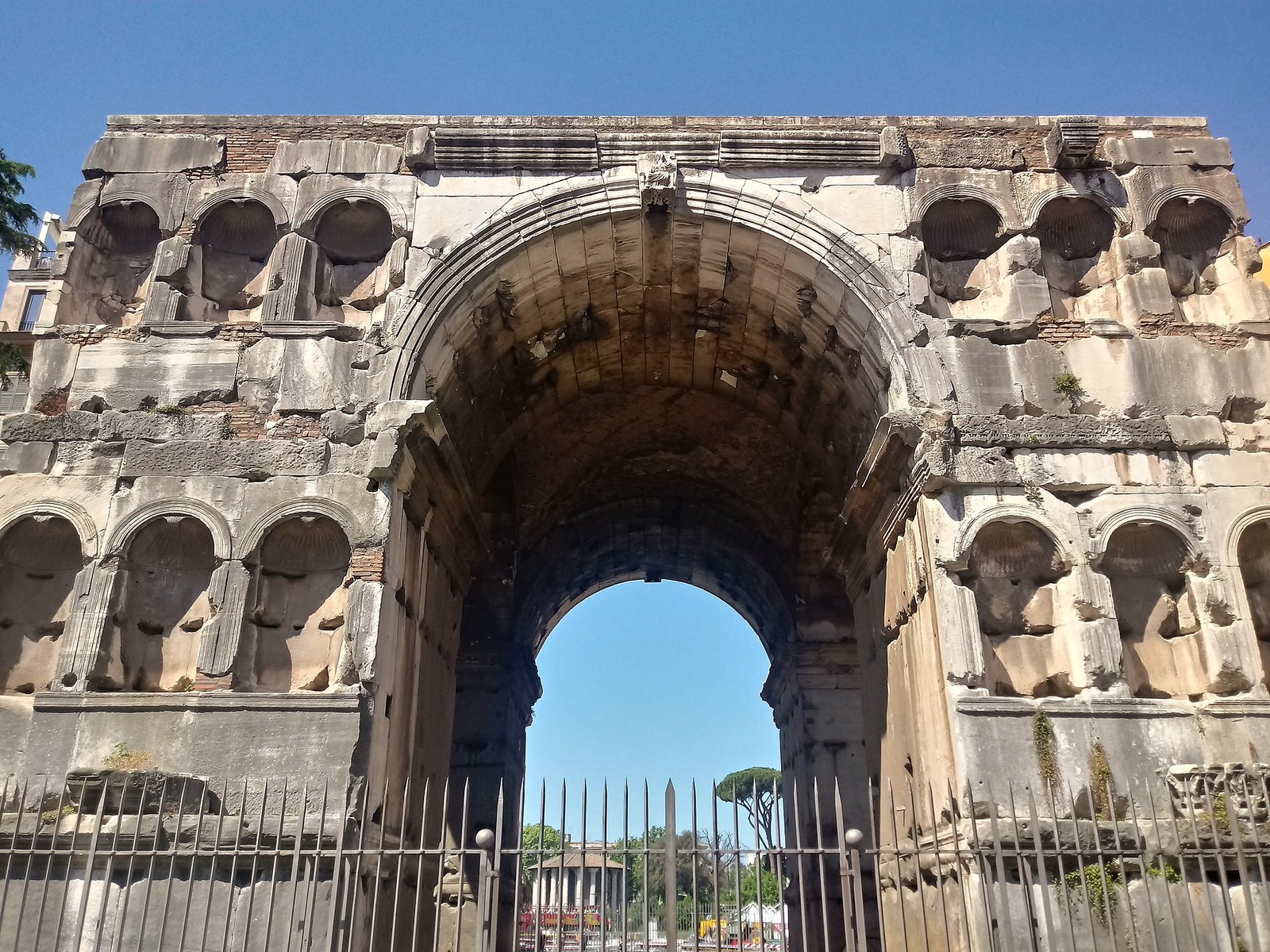
Rhinoceros is open and entry is free: the gallery of the Fondazione Alda Fendi Esperimenti receives the public at Via del Velabro 9A, between the Arch of Janus and Piazza della Bocca della Verità, every day from 11 to 19 for the whole run of the current show, which closes on October 31, 2026. No reservation is needed for the exhibition rooms. The building is the seat of the foundation created by Alda Fendi and was transformed by the Ateliers Jean Nouvel.
The show opened at the end of September 2026 is titled "Only fragile things endure forever" and is an installation by Raffaele Curi, artistic director of the foundation, spread over four floors of the gallery. Inside the same building coexist spaces for art, apartments for stays and a panoramic terrace with a private dining operation. They are three worlds with different doors, hours and rules, and it's best to keep them separate even before arriving, to avoid wrong expectations.
Data checked on September 29, 2026 on the Roma Capitale tourist portal, on the event pages of Arte.it and OggiRoma, on the project page of the Ateliers Jean Nouvel and on the press cited later in the text. The foundation doesn't publish a page of fixed hours: the hours apply to the current show and change from one installation to the next. For practical questions the channels given by the event pages are the phone +39 340 6430435 and the address gallery@rhinocerosroma.com.
At a glance: address, hours, ticket
- Address: Via del Velabro 9A, Rome, between the Arch of Janus and the Bocca della Verità (the Roma Capitale portal gives Via dei Cerchi 21 for the foundation).
- Operator: Fondazione Alda Fendi Esperimenti, a private nonprofit foundation, email info@fondazionealdafendi-esperimenti.it.
- How to enter: free entry to the rhinoceros gallery shows, with no reservation indicated.
- Price: free for the show "Only fragile things endure forever".
- Hours: every day from 11 to 19 until October 31, 2026, then the foundation's calendar applies.
- How to get there: metro B stop Circo Massimo, then on foot along the Circus toward the Bocca della Verità.
- Accessibility: the operator publishes no information, it's best to ask by phone at +39 340 6430435.
Where it is and what you actually see
The building occupies the corner of the Velabro, the valley between the Capitoline and the Palatine that in ancient times ran down toward the Tiber. In front are the Arch of Janus and the church of San Giorgio in Velabro. A few steps farther opens the square with the Mouth of Truth, the portico of Santa Maria in Cosmedin and the temples of the Forum Boarium.
From the outside the building declares almost nothing. The Ateliers Jean Nouvel kept the facades, with the worn plaster and the windows of a Roman public housing building. The contemporary mark is noticed only by looking closely at the shutters: according to the inauguration press they are printed with photographs of the apartments as they were before the construction work. Those who pass by distracted see an old house. Those who look up see an old house that shows its own memory on its shutters.
Inside, the rhinoceros gallery occupies about 800 square meters according to the Roma Capitale tourist portal. The current show unfolds over four floors, while the 2024 installation dedicated to Fortunato Depero used six. The interiors are essential, with stainless steel technical elements for the services, and the route climbs from floor to floor. The interior light shaft, the building's well of light, is used as a vertical exhibition space: in the current show it hosts the projected fog sculptures of Fujiko Nakaya.
What you don't see, on the normal visit, are the apartments and the terrace. The project page of the Ateliers Jean Nouvel lists 25 residential units, cafés and a restaurant on the top floor with a 360-degree view over the historic center. They are commercial spaces with their own entrances and rules. The foundation doesn't present them as part of the free route, and those who enter for the show stay in the gallery rooms.
The rest is done by the location. On leaving, the Arch of Janus is right in front of the door, the Circus Maximus starts just beyond the square and the Theater of Marcellus is reached in a few minutes along Via Petroselli. Few contemporary art galleries in the world have a setting like this. The risk, for the visitor, is to treat the gallery as a cool break between one monument and the next, and to cross it in 10 minutes.
A curiosity about Rhinoceros Fondazione Alda Fendi
The name has nothing to do with the Velabro. According to Artribune, which wrote about the opening in October 2018, the foundation chose it to evoke the power of Rome, and the first year of programming revolved precisely around the animal. The rhinoceros, massive and armored, thus became the symbol of a building that looks modest from outside and full of surprises inside. The foundation almost always writes the name in lowercase, rhinoceros, even in its own materials.
A second curious detail concerns the shutters. The photographs printed on the shutters show the rooms as they were before the renovation, when the building was still a public housing block. When the windows are closed, the building shows its recent past to the street, like an album open on the Velabro. It's a simple idea, easy not to notice, which says a lot about Nouvel's method: no flashy gesture on the facade, the transformation stays inside.
The third curiosity is the lighting of the Arch of Janus. The Roma Capitale tourist portal links to the foundation the permanent lighting of the monument, designed by Vittorio Storaro and Francesca Storaro. The director of photography of so many Italian and international films thus designed the night light of the four-faced arch that stands in front of the building. In the evening the arch and the facades of Rhinoceros are read together, and the scene is built on purpose for that to happen.
One thing nobody tells you about Rhinoceros Fondazione Alda Fendi
Many arrive convinced they will find a fashion museum. The surname Fendi leads there, and the building is a short distance from streets frequented by tourists looking for luxury brands. The Fondazione Alda Fendi Esperimenti, instead, is a nonprofit body born in 2001 for contemporary art, theater and performance. In the rooms there are no bags or clothes in display cases. There are installations, often immersive, with music and light.
The second thing left unsaid is that the art here has a precise direction. Raffaele Curi has signed the installations for years as artistic director, and the programming has a recognizable tone: poetic texts, literary quotations, opera soundtracks, suspended objects. Those who love easel painting or didactic shows with long panels can be thrown off. Those who accept a route that is more theatrical than museum-like find instead an experience that few Roman galleries offer for free.
The third thing concerns time. Rhinoceros shows stay open a long time, often several months, but between one installation and the next the gallery can stay closed. The operator doesn't publish an annual calendar with the dates of the pauses. Anyone arriving in November, after Curi's show closes, might find the rooms empty or being set up. The advice is to look up the dates of the next show on the updated event pages before going to the Velabro on purpose.
What was here before, and what did Nouvel change?
According to the inauguration press, the building was run-down and in the past had housed public housing, with families living there when the property belonged to the Municipality. Artribune describes a complex made of three building blocks, with the corner prow as the oldest part. The Wanted in Rome site speaks of parts dating back to the 17th century. It is therefore an ensemble that grew over the centuries, not a noble palace designed at a single moment.
The measurements change depending on the source. Artribune reported at the opening six floors and 3,500 square meters, while the project page of the Ateliers Jean Nouvel gives 2,800 square meters of living space and 3,800 in total. The number of apartments also varies: 25 for Nouvel's studio, 24 for other journalistic reconstructions. The sources don't agree on the details, but they agree on the essential point: a layered building, adapted to a mixed use of art, residence and hospitality.
The construction work was long. The Ateliers Jean Nouvel page dates the project from 2012 to 2018 and mentions the archaeological consultancy and the restoration as part of the work. In the Velabro you don't dig without surprises: the ground preserves Roman and medieval levels, and any intervention on the foundations goes through protection authorities. The opening came in October 2018, six years after the start of the design, with an invitation-only evening on the 11th and the opening to the public on the 13th.
Inside, two courtyards tell the key to the project. According to Artribune, one is black and recalls Piranesi's imaginary prisons, the other is white and recalls the Milanese case di ringhiera. On the metal doors of the rooms poems conceived by Raffaele Curi were engraved. The contemporary intervention uses steel for the services, while outside the facades remain as before. The contrast is deliberate: outside the past is all visible, inside the new technique declares itself as such.
It remains to understand why Nouvel's architecture is almost invisible, a surprise for anyone arriving expecting a building signed by a great contemporary architect, with glass walls or new volumes. At Rhinoceros there is nothing of the kind. The Ateliers Jean Nouvel page speaks of rigorous simplicity as a response to Rome's constraints and of facades that blend into the urban fabric. The choice is precise: in the Velabro no new sign would have held up against the Arch of Janus and San Giorgio.
Nouvel's signature is therefore found inside, and above all in the way the new coexists with the old. The interior spaces are reduced to the essential, the systems and services are concentrated in stainless steel elements that declare themselves as contemporary objects. The two courtyards, the black one and the white one, are the space where the project shows itself most. The operator doesn't say if they are part of the exhibition route, and it's best to ask at the entrance.
In our judgment this discretion is the project's greatest merit and also the reason many underrate it. Those who look at the building from the square don't realize there is an important intervention inside. Those who enter for the show concentrate on the installation and forget the building. It's worth, at least once, spending a few minutes on the surfaces, the light shafts and the windows, to see how a public housing building was transformed without erasing its history.
My advice for visiting Rhinoceros Fondazione Alda Fendi
The advice is to go in mid-afternoon, between 16 and 18, when the Bocca della Verità square still has its line but the sun on the Velabro turns raking. The gallery closes at 19. Go up to the top exhibition floor and come down slowly, because Curi's installations are conceived as a story that proceeds room by room, and the music changes from one room to the next. Allow at least 40 minutes, better an hour.
A second practical suggestion: read the title of the show first and look up the sources that present it. The foundation's installations cite poets, composers, 20th-century artists, and without some references the route risks looking like a succession of dark rooms. For the current show, knowing that the work is the second part of a piece dedicated to the poet Francis Jammes and to donkeys changes the reading of the rooms a lot.
Third point: don't treat free entry as an excuse for a hurried visit. It's easy to walk in out of curiosity, glance at the ground floor and leave convinced you've seen everything. The best rooms are often upstairs, and the light shaft is understood only by walking around it. In our judgment the gallery deserves the same time you would give to a paid museum in the center, also because the installations don't stay forever.
Finally, combine the visit with the Arch of Janus. Since November 2021 the monument's area has been reopened to the public after a closure that lasted from 1993, according to Arte.it, with openings on days set by the Soprintendenza. The 2021 hours included Saturday morning. The current information must be asked of the Soprintendenza Speciale di Roma. If you find it open, it's worth going into the enclosure before or after the gallery.
The gallery is also useful as a refuge. In summer and in the first weeks of fall the area between the Circus Maximus and the Bocca della Verità offers little shade, and the lines in front of the mask form under the sun. On rainy days, instead, the open-air monuments of the Forum Boarium lose much of their interest. In both cases an hour inside Rhinoceros, free, lets you break up the day without leaving the itinerary and without having to sit at a table.
How much does it cost and how do you book?
Entry to the show "Only fragile things endure forever" is free and the event pages of Arte.it and OggiRoma list no mandatory reservation. The gallery is open every day from 11 to 19. The sources don't agree on the opening date: OggiRoma gives July 30, 2026, Arte.it August 1, 2026. Both set the closing at October 31, 2026. For large groups or schools it's best to write to the gallery first.
The official channel for information is the foundation itself: the site fondazionealdafendi-esperimenti.it and the building's site rhinocerosroma.com, plus the phone +39 340 6430435 and the address gallery@rhinocerosroma.com given in the event pages. There is no ticket to buy, so be wary of anyone selling entry to Rhinoceros. The apartments and the restaurant on the terrace have their own channels and are not part of the foundation's free offer.
| Item | Data for the current show |
|---|---|
| Period | from July 30 or August 1 to October 31, 2026 |
| Days | every day |
| Hours | 11-19 |
| Entry | free |
For past shows the hours changed several times. At the 2018 opening Artribune gave 10 to 19, while the Roma Capitale portal page on the 2024 show "futurBella" gave every day from 12 to 20. The rule is therefore simple: the hours apply to the individual show. Before a visit after October 31, 2026, check the updated event pages or write to the gallery to find out what is scheduled.
Another well-known fact, yet rarely cited
That Alda Fendi belongs to the family of the famous Roman fashion house is known by almost everyone. Less cited is that her foundation had been working on theater and performance for many years before Rhinoceros opened. Wanted in Rome describes it as a nonprofit art foundation born in 2001 under the creative direction of Raffaele Curi, with free shows and performances touching on music, dance, cinema, theater, opera and visual arts.
The link with the monuments of the Velabro is the other fact that is little remembered. The foundation didn't limit itself to restoring its own building. According to Arte.it, in November 2021 it collaborated with the Soprintendenza on the reopening of the Arch of Janus area, closed since 1993, when a mafia-style attack damaged the nearby San Giorgio al Velabro. The inaugural evening was a performance by Curi, "Nu-Shu. The Lost Words of Women".
That performance used 70 white silk kimonos and music drawn from Gounod's "Roméo et Juliette," according to Arte.it. It's an example of the foundation's way of working: a few strong images, an ancient monument as backdrop, an operatic soundtrack. Those who know this precedent also read the gallery's installations better, where the structure is the same, only moved inside the building's rooms instead of outdoors under the arch.
The right photo to take at Rhinoceros Fondazione Alda Fendi
The photo that tells the story of the place is taken from outside, with the Arch of Janus in the foreground and the facades of Rhinoceros behind it. Stand on the side of the arch toward San Giorgio in Velabro and look for the framing that holds together the marble of the four-faced arch and the worn plaster of the building. By day it works with late afternoon light. After sunset the Storaro lighting completely changes the scene.
The second useful shot concerns the shutters. With the shutters closed, the printed photographs of the interiors of the past can be read from the street, and a telephoto lens or your phone's zoom is enough to isolate one. It's the image that explains the project better than any caption. Photograph from the public sidewalk, without getting close to the doors of the apartments and without framing the people at the windows, who are guests or residents.
Inside the gallery the operator doesn't publish rules on photographs. The advice is to ask at the entrance before shooting, especially in the dark rooms with projections. The light shaft, where the current show projects Fujiko Nakaya's fog sculptures, offers the most unusual perspective, with a vertical view through the floors. Without flash, the installation's light is enough. Avoid long videos with audio, because the soundtrack is part of the work.
How do you get there from central Rome?
The most convenient metro stop is Circo Massimo, on line B. On leaving, follow the Circus toward the valley, along Via dei Cerchi or on the Palatine side, to the Bocca della Verità square, and from there enter Via del Velabro toward the Arch of Janus. For bus lines it's best to use the route planner of ATAC, because detours in this area change often.
On foot, from Piazza Venezia you go down Via del Teatro di Marcello, pass the theater and continue toward the Bocca della Verità: it's a walk of about 20 minutes, all flat. From Trastevere you cross the Tiber at the Tiber Island or the Ponte Palatino. Those coming from the Capitoline can go down Via di San Teodoro, on the flank of the Palatine, and come out practically in front of the building.
By car the area is awkward. Street parking around the Velabro is scarce and contested, especially on weekends, and the gates of the center's limited traffic zone must be checked on the Roma Mobilità website before leaving. The most sensible choice is to leave the car outside the center and use the metro. From Termini station there is a direct line B to Circo Massimo, with no changes.
Some important events that happened here in history
In ancient times the Velabro valley was the passage between the port on the Tiber, the market of the Forum Boarium and the Roman Forum. In the fourth century the four-faced Arch of Janus was raised here, at a crossing of roads used by merchants. In the Middle Ages the church of San Giorgio took its name from the valley. These are centuries of history that the Rhinoceros building has inherited as neighbors, and that explain the caution with which the construction work was carried out.
The 20th century left a wound here. In 1993 a car bomb damaged the nearby church of San Giorgio al Velabro, and the area of the arch stayed closed from then on. For almost 30 years the monument was seen only from outside, beyond a fence. The reopening, on November 5, 2021, came with Raffaele Curi's performance and the collaboration of the foundation, which since 2018 has also tied its name to the arch's night lighting.
For the building, the key dates are recent. The foundation was born in 2001. In 2012 the design with the Ateliers Jean Nouvel began. On October 11, 2018 Rhinoceros opens by invitation and on October 13 to the public, with free entry. In 2024 the show "futurBella," curated by Curi, occupies all six floors with works by Fortunato Depero. In summer 2026 comes "Only fragile things endure forever," scheduled through October 31.
The transformation also had an urban planning weight. A public housing building, in one of the most delicate archaeological areas of the city, became a mixed container of art, residences for stays and dining. Those who lived there before are gone, and the building has changed its public. The fact remains that the Velabro, until then a zone of passage between monuments, now has a building open free of charge to those seeking contemporary art, every day during the shows.
Who has passed through Rhinoceros Fondazione Alda Fendi
The best-known name tied to the building is Jean Nouvel, the French architect who signed the transformation with his Ateliers and with Jean Nouvel Design for the interiors. Beside him Alda Fendi, who created the foundation and bears its name, and Raffaele Curi, artistic director, author of almost all the installations presented in the gallery. Vittorio Storaro and Francesca Storaro designed the permanent lighting of the Arch of Janus, linked to the project by the Roma Capitale portal.
Among the artists presented in the shows is Fortunato Depero, protagonist of "futurBella" in 2024, with works and materials covering all six floors of the building. In the same season the costumes from Yorgos Lanthimos's film "Poor Things" came to Rome, designed by Holly Waddington, who won the Oscar for that work. Futurism and contemporary cinema under the same roof: a pairing typical of Curi's direction, who likes to make distant eras talk to each other.
In the 2026 show other important names appear, through projections, silhouettes and music. The fog sculptures of the Japanese artist Fujiko Nakaya are projected in the light shaft. The silhouettes of Osvaldo Licini's Amalassunte, suspended and lit with the seven colors of the rainbow, take up a subject of the painter from the Marche. The soundtrack uses pieces by Nicola Porpora performed by Cecilia Bartoli, according to OggiRoma. None of these artists is physically present: they are quotations within Curi's work.
What do you see in the current show and in past ones?
"Only fragile things endure forever" is defined by the foundation as an action set, a formula Curi uses for installations halfway between exhibition and performance. According to Arte.it and OggiRoma, the route unfolds over four floors of the gallery and is the second part of an earlier piece dedicated to the French poet Francis Jammes and to donkeys, animals that in Jammes's poetry embody simple goodness. The general theme is fragility as strength.
The route begins with a quotation from Shakespeare and continues with a large photograph of the Pyrenees, a landscape tied to Jammes. Then come the suspended silhouettes of Licini's Amalassunte, lit by the colors of the rainbow, and in the light shaft the projections of Fujiko Nakaya's fog sculptures. The ending is entrusted to three eggs stamped with the words "Pirenei." Porpora's music in the voice of Cecilia Bartoli runs through all the floors.
Anyone who arrives knowing nothing finds a route closer to a staging than to a show with works hanging on walls. There are no chronological sections, nor a catalog of works to recognize. What counts is the sequence, the light, the sound. The contrary position, in our judgment, is this: the gallery is often presented as a contemporary art space like any other, but its language is theatrical and author-driven, and those looking for traditional painting or sculpture are disappointed.
Each installation redraws the spaces. In 2024 "futurBella," according to the Roma Capitale portal page, occupied all six floors of the building with materials by Fortunato Depero: the Campari Soda bottle designed in 1932, advertising campaigns, automatons rebuilt from his experiments for avant-garde theater. Alongside were the costumes from the film "Poor Things" and an installation by Curi with 60 pairs of period bloomers suspended from the ceiling.
In 2026 the show instead uses four floors and focuses on more rarefied images, with colored light, projected fog and baroque music. The building stays the same, but the perception changes a lot: in the first case a dense sequence of objects, in the second a few presences in almost empty rooms. Those who have already been to Rhinoceros for an earlier show shouldn't think they know the place. Every visit is a different experience, tied to the installation of the moment.
The common thread is direction. In the two shows mentioned, as in the 2021 performance under the Arch of Janus, Raffaele Curi mixes 20th-century art, literature, cinema and opera, with a taste for the unsettling juxtaposition. It's the reason the foundation's programming is often described as experimental, consistent with the word Esperimenti in its name. In our judgment the formula works best when the theme is simple and the images are few, as in this year's show.
What do the documents say and what is told?
Three levels of stories circulate about the Velabro, and it's best to keep them distinct. Documents and archaeology speak of a low, damp valley between the Capitoline and the Palatine, reclaimed already in the archaic age, crossed by commercial roads and by the Cloaca Maxima, which drained it toward the river. This is the solid level, confirmed by excavations and ancient texts. The Rhinoceros building sits above these layers, and for this reason the construction work required archaeological consultancy.
The second level is that of ancient Roman tradition: the valley as the place where the founding twins arrived, carried by the current of the Tiber to the foot of the Palatine. Latin authors spoke of it as a story of origins, and tradition has continued to tie this corner of the city to the birth of Rome. The third level is the modern legend on the name of the Velabro, explained with the sails of boats or with ferries: a folk etymology, without proof.
Small unconfirmed stories also exist about the building. You sometimes read that the building is very ancient or that it hides Roman rooms open to visitors. The published sources speak of 17th-century parts and of an archaeological consultancy during the construction work, not of ancient remains open to the public. No official source lists underground routes inside Rhinoceros. Those looking for the Rome under the surface should turn to the dedicated sites, collected in the page on Underground Rome.
What is around the building and how does it fit in Rome?
The Velabro is a concentration of monuments within a few hundred meters. In front of Rhinoceros is the Arch of Janus, the great four-faced arch of the fourth century. Next to it, the church of San Giorgio in Velabro preserves on its flank the small arch dedicated by the silversmiths and cattle dealers to Septimius Severus and his family. A little higher up, toward the Capitoline, is the church of San Giovanni Decollato, tied to the confraternity that assisted the condemned.
Going down toward the river you reach the Bocca della Verità square. The mask under the portico of Santa Maria in Cosmedin draws lines almost all day, also thanks to the fame the movies gave it, told in the page on Rome in the Movies. On the other side of the square, on the lawn, the two Republican temples of the Forum Boarium recall that here was the cattle market and the city's first port, next to the bend of the Tiber.
Beyond the river begins Trastevere, told in the page on Trastevere. To the north, past the Theater of Marcellus, you enter the Ghetto with the Jewish Museum of Rome and the Turtle Fountain. Farther on you reach the Crypta Balbi and Largo Argentina. Everything is reached on foot, in a morning without public transport.
This density explains why Rhinoceros works better as a stop than as a destination. Few visitors cross Rome just for the gallery, while many meet it by chance passing by the Arch of Janus. The advice is to reverse the logic: decide before entering, put it in the day's itinerary with a precise time and not leave it to improvisation. With the lines at the Bocca della Verità, in fact, you risk reaching the Velabro when the rooms are about to close.
Rome has few places for contemporary art with free entry and open every day. The big public museums like the MAXXI and the National Gallery of Modern and Contemporary Art have their own tickets and hours, while private galleries often open only on weekdays. Rhinoceros sits somewhere in between: a private foundation, author-driven programming, free entry, long hours during shows.
The most useful comparison is with the exhibition spaces in the center that host temporary shows, like the Palazzo delle Esposizioni or the Chiostro del Bramante. Here, though, there isn't a succession of different curators and themes: the gallery is largely the workshop of a single artistic director. Those who appreciate that language come back for every show. Those who don't are unlikely to change their mind from one installation to the next.
Rhinoceros remains, in any case, one stop among the city's many free offerings. For a broader picture of free things to do in the city, the pages on Free Rome and on free museums in Rome help you build a day without tickets. The list of museums in Rome is instead for those who want to add a permanent collection.
When is it closed, and what should you not expect?
The gallery is closed between one show and the next, and the operator doesn't publish the dates of these pauses in advance. After October 31, 2026, the closing date of Curi's installation, no official source confirms what will be set up or when. Anyone planning a trip to Rome in November or December should look for news about the next show, or write to gallery@rhinocerosroma.com to find out if the rooms will be open.
Don't expect a museum with a permanent collection. There are no fixed works to see at any time of year, and the building itself can't be visited as a monument outside the shows. Don't expect free access to the terrace either: the Ateliers Jean Nouvel page describes it as the seat of a restaurant with a view, run as a commercial business. The apartments, finally, are private spaces for those who stay there, and no source lists public visits.
The operator doesn't publish accessibility information for people with reduced mobility. The show unfolds over several floors of an old building, and the presence of elevators or step-free routes must be asked about beforehand, at the phone number given in the event pages. The same goes for strollers and luggage: there is no declared storage. Anyone arriving with suitcases, maybe before a train, would do well to arrange things elsewhere, because the rooms are meant for visitors who travel light.
One last warning concerns online sources. Some aggregator pages still report the hours of past shows, like the 10-19 of the opening or the 12-20 of 2024, and some portals give different addresses for the same foundation. The dated event pages of the current show are the most reliable reference. When the data don't match, the rule is to trust direct contact with the gallery, by phone or email, rather than the first page found online.
Where to eat nearby
The area between the Bocca della Verità, the Circus Maximus and the Theater of Marcellus is one of the most heavily trodden by tourists, and the places along the main streets know it. The signs to recognize are always the same: the barker on the sidewalk, menus with photos of the dishes in four languages, items with no price, kitchens open nonstop from morning to night. Romans avoid these places because the ratio between price and quality is lopsided.
Another sign to watch for: the window with a lady rolling out fresh pasta by hand, put there to catch the eye of passersby. It's not always a bad sign, but often it's scenery. In the same way, be wary of places in front of monuments with different menus inside and outside, or with prices that change according to the customer's look. Ask for the full menu before sitting down, check the cover charge and the price of water, and don't stop at the first free table.
The best choices are found by moving a few streets away, toward the Ghetto, Testaccio or Trastevere, where places live on neighborhood clientele as well as tourists. The pages on Testaccio and on the Jewish Ghetto of Rome help you find your bearings among the areas. For precise names and addresses, selected on criteria of quality and honest prices, there is the list of addresses on Google Maps, to consult before heading out.
What to pair with it in a day
The most natural tour starts from the Bocca della Verità square. After the photo with the mask, go into Santa Maria in Cosmedin, take a close look at the Temple of Hercules Victor and the temple of Portunus on the river side, then go back up Via del Velabro toward the Arch of Janus and San Giorgio. Rhinoceros fits in here, halfway through, as an indoor break in the hottest hours or on rainy days.
From the Velabro the walk can continue in two directions. To the north, along Via di San Teodoro, you reach the Roman Forum and the Capitoline Museums, passing next to the Mamertine Prison. To the west you reach the Theater of Marcellus, San Nicola in Carcere with its built-in temples and the Portico of Octavia, the entrance gate to the Ghetto.
Anyone with energy left can climb the Aventine. From the Circus Maximus the slope leads to Santa Sabina, the Orange Garden and the Villa del Priorato di Malta, with its keyhole. The page on the Aventine collects the rest. For those who love underground places there is the Mithraeum of the Circus Maximus, with visiting arrangements given on its page. Farther south, the Baths of Caracalla close the day well.
For a day entirely devoted to contemporary art, instead, you can pair Rhinoceros with the Centrale Montemartini on Via Ostiense, where ancient statues and industrial machinery coexist in a contrast similar to that of Nouvel's building. The trip takes a few stops on metro B heading south or a long walk along the Tiber. The shared theme, the ancient inside a container that wasn't born to hold it, makes the pair more interesting than it seems.
A variant for families: the gallery can intrigue kids thanks to the lights, music and projections, but the route is short and not very didactic. It's best to fit it between the Bocca della Verità, which children always like, and a run on the lawn of the Circus Maximus. On the same road, Rome's neighborhood fountains and the nasoni let you fill water bottles at no cost. In summer, with the heat of the Velabro, the stop for water comes in handy.
Frequently asked questions
How much does it cost to enter Rhinoceros?
For the show "Only fragile things endure forever" entry is free, according to the event pages of Arte.it and OggiRoma. There is no ticket to buy and no mandatory reservation is listed. The free entry applies to the gallery rooms. The apartments and the restaurant on the terrace are separate commercial businesses, with their own prices and rules that the foundation doesn't publish among the information on the shows, and they must be contacted through their own channels.
What are the gallery's hours?
Until October 31, 2026 the gallery is open every day from 11 to 19, according to the event pages of the current show. The hours change from one installation to the next: in 2018 you could enter from 10 to 19, in 2024 for "futurBella" from 12 to 20. Between one show and the next the rooms can stay closed, so after the end of October it's best to write to gallery@rhinocerosroma.com before going.
Where exactly is the entrance?
The event pages of the current show give Via del Velabro 9A, on the stretch between the Arch of Janus and the Bocca della Verità square. The Roma Capitale tourist portal gives for the foundation the address of Via dei Cerchi 21. At the 2018 opening the press spoke of an access from the square side. Coming from the Bocca della Verità, take Via del Velabro and look for number 9A, near the arch.
Can you go up to the panoramic terrace?
The terrace on the top floor hosts a restaurant with a 360-degree view, according to the Ateliers Jean Nouvel project page. It is not part of the gallery's free route and the foundation doesn't present it as an exhibition space. Those who want to go up must contact the restaurant business directly, on its terms. For an open view over the city, the Orange Garden on the Aventine remains the simplest and free choice.
Can you sleep at Rhinoceros?
Yes, the building contains apartments for stays. The Roma Capitale portal speaks of a living space integrated with art, and the Ateliers Jean Nouvel page lists 25 residential units, while some journalistic reconstructions count 24. They are run as a hospitality business separate from the foundation. Rates, availability and conditions are not published by the foundation and must be asked of the operation that runs the apartments.
How much time does the visit take?
For the current show, on four floors, 40 minutes is generally enough, but an hour lets you follow the soundtrack and stop in the light shaft with the projections. Those who add a look at the exteriors, the photographed shutters and the Arch of Janus easily reach an hour and a half. The visit fits well into a broader itinerary among the Bocca della Verità, the Forum Boarium and the Circus Maximus, without requiring a dedicated half day.
Is the gallery suitable for children?
It depends on the children. Curi's installations use lights, colors, music and projections, elements that can intrigue even the little ones, but there are no educational panels or activities designed for families. The operator publishes no information on strollers or routes for children. The most sensible choice is a short visit, fit between the Bocca della Verità and the lawn of the Circus Maximus, so as not to ask too much patience of those with fewer years.
Can you take photographs inside the gallery?
The operator doesn't publish rules on photographs in the rooms. The advice is to ask the staff at the entrance, especially in the rooms with projections and music, where light is part of the work. Without flash and without a tripod, generally, a discreet shot disturbs no one. Outside, from the public sidewalk, you can freely photograph the Arch of Janus and the facades, avoiding close framing of the windows of apartments occupied by guests.
Is Rhinoceros a Fendi fashion museum?
No. The Fondazione Alda Fendi Esperimenti is a nonprofit body dedicated to contemporary art, theater and performance, born in 2001 on the initiative of Alda Fendi. In the rooms there are no clothes, accessories or archives of the fashion house. The surname often creates this misunderstanding. Those looking for the history of Roman fashion must look elsewhere, while here they find author-driven installations almost always signed by the artistic director Raffaele Curi.
Who wrote this and from which sources
The text comes from the editorial team of Tour Leader Pro, the Roman organization that designs itineraries, visits and cultural events between Rome and Lazio. Fees, hours and booking arrangements reported here come from the official sources cited in the text as of the date indicated at the opening: Roma Capitale tourist portal, Ateliers Jean Nouvel project page, event pages of Arte.it and OggiRoma, press on the 2018 opening and on the reopening of the Arch of Janus. Let us know what you find changed.
Organizing a stop at Rhinoceros, for yourself or for a group, mostly requires matching up dates: the gallery lives on temporary shows, and the hours change with every installation. For large groups it's best to write to the gallery first and ask if there are capacity limits on the floors. For those who build group trips to Rome, with timing and transfers to make work, a useful resource is Tour Leader Pro, which collects tools and references for the trade.
Rhinoceros is a short stop within one of the densest areas of Rome, between the Palatine, the Circus Maximus, the Forum Boarium and the Tiber. The wide picture of the trip, between the city and Lazio, calls for choosing the days well, alternating paid museums and free places, and leaving room for the temporary shows that change from season to season. To put together a program of several days between Rome and the surroundings, a useful resource for building a multi-day itinerary is Italy Planner.