Ceri
In short. Ceri is an inhabited hamlet of the Municipality of Cerveteri, built on a tuff cliff, and can be visited freely: you enter the village on foot, without a ticket, through the gate cut into the rock.
Ceri is an inhabited hamlet of the Municipality of Cerveteri, built on a tuff cliff, and can be visited freely: you enter the village on foot, without a ticket, through the gate cut into the rock. The church of the Madonna di Ceri, a diocesan sanctuary of the diocese of Porto-Santa Rufina in Piazza Immacolata, is open for Masses, with the times published by the parish. Palazzo Torlonia, known as the Castello di Ceri, can be visited only by reservation according to the Rete delle dimore storiche del Lazio.
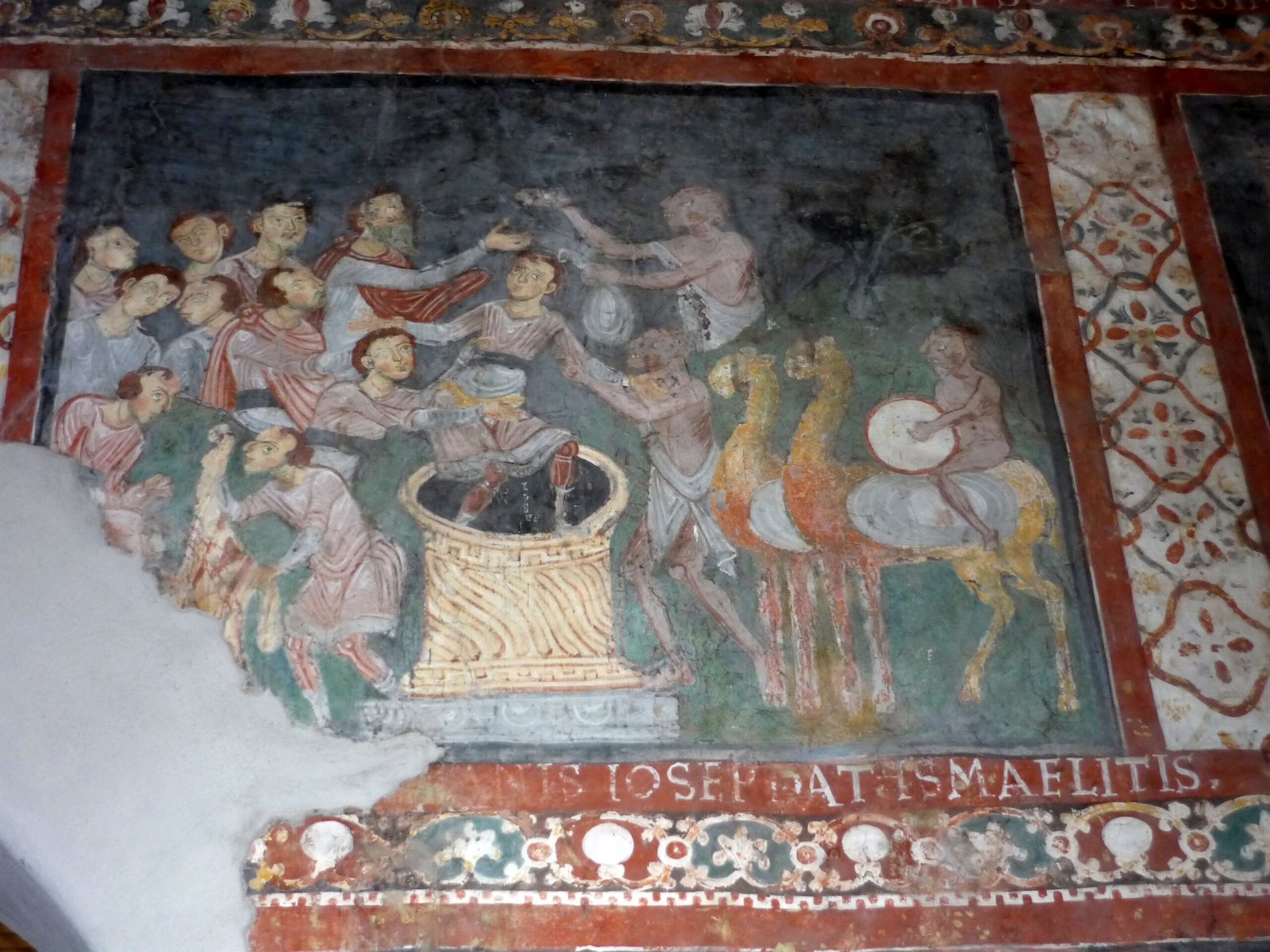
The village is small and takes less than an hour to walk around. The reason to come is the church, with a cycle of Romanesque frescoes that the encyclopedia entry on the sanctuary dates to the 12th century, largely recovered after 1989. Around it are the piazza opened by the Torlonia in the 19th century, the palazzo with its garden overlooking the valley and the lanes cut into the tuff described by the tourism portal of the Lazio Region.
Data checked on September 29, 2026 on the official website of the sanctuary, on the Jubilee page of the Città metropolitana di Roma Capitale, on the Visit Lazio portal and on the Rete delle dimore storiche del Lazio page cited further on. The parish publishes Mass times and contacts, not visiting hours outside the services. For information the reference is the sanctuary's telephone, 06 9920 7028, or the mobile number given on the site, 389 0170858.
At a Glance: Address, Hours, Ticket
- Address: sanctuary in Piazza Immacolata, parish church in Piazza Alessandrina 9, 00052 Ceri, Cerveteri (RM), according to the sanctuary's website.
- Operator: parish and sanctuary of the diocese of Porto-Santa Rufina, telephone 06 9920 7028.
- How to get in: village with free access, church open during Masses, Palazzo Torlonia by reservation only.
- Price: no ticket for the village and the church.
- Masses from October to April: weekdays and evenings before holidays at 17:00, Sundays and holidays at 08:30, 11:00 and 17:00. From May to September the evening Mass is at 19:00.
- How to get there: none of the official sources publishes a public transport route to the village. For buses the reference is Cotral, toll-free number 800 174 471.
- Accessibility: the operator publishes no information. The village is on top of a cliff with access through a gate in the rock.
Where It Is and What You Really See
Ceri is in the hinterland of Cerveteri, in the countryside between the sea and the Monti Ceriti, on top of a tuff spur. The Jubilee page of the Città metropolitana di Roma Capitale describes it as a hamlet rising on a tuff cliff typical of these areas. Arriving, before the village you see the rock wall. The houses are above, tight on the plateau, and the only natural way in is to climb toward the gate.
The tourism portal of the Lazio Region gives as the main access a gate cut into the rock, with lanes carved into the tuff and a small piazza. It's the sequence you walk in a few minutes: the climb, the opening in the rock, the low houses, and then the open space onto which the church and the palazzo face. The village is lived in and has a town life, with residents and cars parked along the streets.
The piazza is 19th century, even if it doesn't look it. According to the history published by the sanctuary, in 1833 Alessandro Torlonia bought Ceri from the Odescalchi and demolished many houses to make a central piazza, remodeled the castle turning it into a palazzo with an Italian garden and had an entrance arch built. What today looks like the old center of the village is therefore the intervention of a 19th-century Roman prince on a medieval fabric.
The church is the reason for the visit. Outside it's simple. Inside it keeps Romanesque frescoes that covered the nave, recovered starting in 1989 and restored again in 2010 according to the encyclopedia entry on the church. Visit Lazio speaks of scenes from the Old Testament and stories from the life of San Silvestro. On the holy water font is the image of the Madonna di Ceri, a painting of the Sienese school placed around 1400, according to the same entry.
Palazzo Torlonia, known as the Castello di Ceri, occupies the side of the piazza and the edge of the cliff. The Rete delle dimore storiche del Lazio describes it with an L-shaped plan, facades on the piazza and on the access road, a large tree-lined garden with a view of the valley and a piano nobile with decorative frescoes of the 16th and 19th centuries. From outside you see the bulk of the building and the crenellated wall of the hanging garden. For the interiors you need a reservation.
A Curiosity About Ceri
The old name of the village was a stopgap name. Those who left ancient Caere to climb the cliff brought with them the name of the city, and the new settlement was called Caere Novum, that is new Caere, while the old center became Caere Vetus, the future Cerveteri. The encyclopedia entry on the village reports this distinction, and the papal bull of 1236 cited by the sanctuary already speaks of parishes and churches in Caere nova.
The paradox is evident on the map too. Cerveteri, which carries in its name the word vetus, that is old, is today the seat of the Municipality and the larger town. Ceri, the new Caere, is a hamlet of a few streets. The name of Cerveteri can be explained only by the existence of Ceri: without the new city on the cliff there would have been no need to call old the one that stayed near the Etruscan necropolises.
The second curiosity concerns the venerated image. The diocesan Marian sanctuary, established on December 7, 1986, takes the title of Sanctuary of the Madonna di Ceri from the icon of the Madonna and Child, the parish writes. On April 7, 1999 the title of Mother of Mercy was added, and with it the feast of the patroness of the diocese, set for the Saturday following September 8. It's a recent title for a much older cult.
Third curiosity: the most unusual scenes of the frescoes are not found up high. According to the encyclopedia entry on the church, on the lower band of the right wall, at the height of the legs of whoever enters, there are kitchen scenes, devils fighting and a chimera. They are images of daily life and of monsters, placed in the lowest band of the decoration, beneath the sacred stories. Whoever looks only upward misses them.
One Thing Nobody Tells You About Ceri
In our judgment the castle is overrated as a reason for the trip. Many arrive at Ceri thinking they will visit a medieval fortress and find a private 19th-century palazzo, which opens only by reservation. The Orsini fortress, built in 1470 according to the Rete delle dimore storiche, was transformed by the Torlonia into a residence with a garden. The medieval part you can really visit without an appointment is the church, and that's where it's worth spending your time.
Second thing little said: the church has no museum hours. The parish publishes Mass times and gives no openings for visits outside the services. The Jubilee page of the Città metropolitana instead lists it as always open. The sources don't agree, and anyone arriving in the middle of a weekday afternoon may find the door closed. The practical solution is to arrive a little before Mass or to phone the sanctuary before leaving.
Third thing: Ceri is not Cerveteri. Anyone who enters the name of the Municipality in the navigator arrives in the main town, near the sea and the necropolises, and not on the cliff. The village is a separate hamlet, reached by country roads, and between the two centers there is a stretch to drive. For those traveling by public transport the distinction matters even more, because getting to Cerveteri doesn't mean having gotten to Ceri.
Fourth thing: during Masses the church is not visited. The frescoes cover the walls of the nave, and walking around to look at them while a service is under way disturbs those who are praying. On Sundays, with three Masses between morning and evening, the margin for observing calmly is narrow. A weekday, a little before the evening Mass, is in our judgment the most suitable moment, letting the sanctuary know if you arrive in a larger group.
What Do the Church's Frescoes Tell?
The encyclopedia entry on the church of Santa Maria Immacolata di Ceri dates the oldest frescoes to the Romanesque period, in the 12th century, and writes that they covered the whole church until the partial collapse of the 16th century. The Visit Lazio portal speaks of scenes from the Old Testament and stories from the life of San Silvestro. The stories are read in superimposed bands, wall by wall, and it's best to follow them calmly instead of looking for the single masterpiece.
In the chapel of the left aisle the same entry points out frescoes datable to around 1365, with the crucifixion of Christ, the crucifixion of Saint Peter, the beheading of Saint Paul, the baptism of Jesus and a Christ Pantocrator among saints. In the apse is painted the Madonna enthroned with the Child among Saints Anthony Abbot, Joseph, Felix II and Thomas Aquinas. The first side chapels instead have 17th-century paintings with the miracles of Saint Anthony.
The frescoes of the nave have become visible again recently. According to the encyclopedia entry, in 1989 those on the right side of the nave were recovered, and in 2010 a new restoration covered the nave. In the 1980s the barrel vault that covered the central nave, adorned with a Cosmatesque floor, was demolished. Put another way, much of what you see today was hidden until a generation ago.
The entry's bibliography cites three studies that help in understanding the importance of the cycle. Antonio Cadei wrote about it in 1982 in the journal Storia dell'arte. Nino Zchomelidse published in 1996 a volume that links these paintings to the time of the Gregorian reform. John Osborne, in 2004, compared the images of the lower band at Ceri with those of the lower church of the Basilica of San Clemente in Rome.
The comparison with San Clemente is the most useful key for anyone arriving from Rome. The two churches belong to the same figurative world, that of Roman painting between the 11th and 12th centuries, with the sacred stories above and the decorative bands below. Anyone who has seen the lower basilica of San Clemente recognizes a similar language at Ceri. Anyone who sees Ceri first, in our judgment, understands San Clemente better on returning to the city.
To get your bearings inside the building it helps to know its shape. The sanctuary's website writes that the original structure was in all probability a three-aisled one, with a truss roof. The encyclopedia entry indicates the apse as the oldest part, earlier than 1300, and mentions the three side chapels built around the 16th century after the destruction of the left part, connected to each other by three small doors and decorated with paintings of the 18th century. Each wall belongs to a different century.
My Advice for Visiting Ceri
Organize the day around the time of the evening Mass. From October to April the weekday Mass is at 17:00, from May to September at 19:00, according to the sanctuary's website. Arriving an hour earlier gives you time to climb through the gate in the rock, walk around the village, look out from the edge of the cliff and then enter the church when it is open, before the service begins, with the light still good for looking at the walls.
Call ahead. The sanctuary's landline, 06 9920 7028, and the mobile 389 0170858 are the ones published on the official website. A call tells you if the church will be open at the hour you plan to arrive, if there are special services, weddings or pilgrimages, and if it's possible to see the frescoes calmly. On the days of the September feast the village is much busier than usual.
Inside the church, look down as well as up. The lower band of the right wall, with the kitchen scenes, the devils and the chimera described in the encyclopedia entry, is the part that surprises most. Then the apse, with the Madonna enthroned among the saints, and the chapel of the left aisle, with the crucifixions and the baptism. Finally the image of the Madonna di Ceri above the holy water font, the one that gives the sanctuary its name.
If you also want to see the palazzo, book in advance. The Rete delle dimore storiche del Lazio lists the visit by reservation and publishes the contacts of the Castello di Ceri. Without an appointment the palazzo remains a building to look at from the piazza. In any case respect the inhabited village: no cars in the lanes, a low voice near the houses, and no photographs of private windows.
Anyone arriving with a class, an association or a parish has to organize differently from those traveling alone. The church is small, and for many people to enter it's best to agree on the time with the sanctuary, away from Masses. The palazzo must be booked using the contacts of the Rete delle dimore storiche. For lunch, on weekends, booking is indispensable. And the bus or cars should be left before the climb, because the lanes of the village are not made for large vehicles.
Do You Pay Anything and When Can You Enter the Church?
The village is an inhabited hamlet with free access, without a ticket. For the church the parish gives no ticket and no reservation for individual visits, and the practical reference is the Mass times published on the website of the Sanctuary of Nostra Signora di Ceri. On September 29, 2026 the summer schedule is in force, valid until the end of the month. From October the winter schedule shown in the table applies.
| Masses | October to April | May to September |
|---|---|---|
| Weekdays, Monday to Friday | 17:00 | 19:00 |
| Eve of holidays | 17:00 | 19:00 |
| Sundays and holidays | 08:30, 11:00, 17:00 | 08:30, 11:00, 19:00 |
Where do you really book? For the church you don't need to book, but for visits by several people, pilgrimages or special requests the channel is the parish, at the numbers published on the sanctuary's website. For Palazzo Torlonia the Rete delle dimore storiche del Lazio lists the visit by reservation, with the numbers 06 5783698 and 340 1181261 and the email address castellodiceri@libero.it. A visit product for Ceri to buy online is not confirmed.
The palazzo's fares are not published by the Rete delle dimore storiche. They have to be asked for at the time of booking, together with the length of the visit, the spaces open to the public and the possibility of seeing the garden. The same goes for any special openings on national days devoted to historic residences: the calendar changes from year to year and should be checked on the channels of the regional Rete.
Anyone who wants to combine Ceri with the Etruscan necropolises of Cerveteri should keep in mind that the Banditaccia has its own hours and tickets, published by the operator of the archaeological site. They are two different visits, with different logics: the village and the church are free and tied to the parish's hours, the necropolis is a paid site with its own hours. It's best to fix the necropolis time first and then fit Ceri into the afternoon.
Another Well-Known Fact, Yet Rarely Mentioned
That Cesare Borgia besieged Ceri is a known fact. Less mentioned is how long it lasted. The sanctuary's website writes that the Duke Valentino besieged the village for 36 days and that Giulio Orsini surrendered on April 6, 1503, with serious damage to the castle and the walls. The Rete delle dimore storiche instead speaks of 38 days and of a village razed to the ground. The sources don't agree on the number, but both describe a heavy destruction.
That siege can still be read in the church. According to the parish, the bombardments and destruction of 1503 very probably made the complete reconstruction of the building's southern nave necessary. The encyclopedia entry mentions the partial collapse of the 16th century, which interrupted the cycle of frescoes in the nave, and the three side chapels built after the destruction of the left part. The gaps in the painted walls are also the sign of that war.
The second little-mentioned fact concerns Cola di Rienzo. In 1347, the sanctuary writes, Ceri was assigned to Cola di Rienzo, the tribune who governed Rome that year. In 1356 it passed to the Bonaventura of Trastevere and in 1428 to the Orsini of Anguillara. The village on the cliff thus entered, for a brief moment, the political history of the city, as one of the strongholds of the Roman countryside contested between barons and city governments.
Third fact: Ceri served as a refuge during the Second World War. The sanctuary's website writes that the village hosted refugees from Cerveteri and Ladispoli. The position that in the Middle Ages made it defensible, on top of the cliff and far from the coast, became useful again when the war reached the shoreline. It's a story that the village's panels tell little, and that explains the link between Ceri and the towns of the coast.
The Right Photo to Take at Ceri
The photo that tells Ceri is taken from below, before entering: the tuff wall with the houses above it, shot from the road that climbs to the village. It's the image that explains at a glance why the town is there, on the rock, far from the plain. It works best with the low light of late afternoon, when the tuff takes on color, or early in the morning with the countryside still in shadow.
The second image is the gate cut into the rock, indicated by Visit Lazio as the main access to the village. It should be shot vertically, from bottom to top, with the road in the foreground and the opening in the background. Avoid blocking the passage while you photograph: it's the entrance used every day by the residents, even by car. A photograph taken from the side, leaving the roadway free, gives the same result and causes no problems.
Inside the church the rule is to ask. The frescoes are in a church open for worship, and before photographing it's best to ask the priest or whoever looks after the building, without flash and never during Masses. If permission is given, the most interesting photo is not the panorama but the detail of the lower band, with the kitchen scenes and the devils, which nobody expects beneath the sacred stories.
The last image is that of the piazza with Palazzo Torlonia, better in the morning, when there is less movement. Framing the facade of the palazzo and the side of the church shows the relationship between civil and religious power that shaped the village. From the edge of the cliff, near the garden, the view opens onto the valley. The view is good on clear days of autumn and spring, less so in the summer haze.
How Do You Get There From Rome?
The sanctuary's website, the Jubilee page of the Città metropolitana and the Visit Lazio portal do not publish a public transport route to the village. For the intercity buses between Rome and Cerveteri the reference is Cotral, which provides a timetable search on its website and answers at the toll-free number 800 174 471. It's best to ask expressly if there is a run or a stop for the hamlet of Ceri, and at what times.
By car the destination to enter is Piazza Immacolata, Ceri, Cerveteri, and not just the name of the Municipality, which leads to the main town. The village is on top of the cliff and the inner lanes are narrow and lived in. The operator indicates no parking dedicated to visitors. My advice is to leave the car before the climb, where it's allowed, and walk the last stretch to the gate in the rock.
For the train, none of the official sources indicates a reference station for Ceri or a connection from the station to the village, which is in the hinterland, on top of the cliff. From the station you would still need another vehicle for the last stretch. Before choosing the train it's best to check the full route on the Trenitalia website and any connections with Cotral buses, calculating the return time carefully, especially on Sunday.
Anyone arriving on foot or by bicycle from the countryside has to account for the final climb toward the cliff. The operator publishes no accessibility information, and entry through the gate in the rock, with the sloping streets, can be difficult for those with mobility problems. Anyone traveling with a person in a wheelchair would do well to ask the parish if there is access to the church without steps and where it's possible to stop with the car.
Some Important Events That Happened Here in History
The origins of the place are much older than the village. The sanctuary's website mentions that on the cliff and around it there are burials of protohistoric and Etruscan age, including the Necropoli delle Fornaci, of the Iron Age, dated to the 11th and 10th centuries BC, and the Tomba delle Statue, of the 7th and 6th centuries BC. According to the parish, the oldest known Etruscan sculptures come from the latter.
The present village was born, according to the parish, in the middle of the 11th century, when inhabitants of Caere moved onto the cliff, probably to escape malaria or Saracen raids. On August 2, 1236 a bull of Pope Gregory IX cites parishes and churches in Caere nova. Visit Lazio instead places the foundation exactly in 1236, on a previous settlement. The sources don't agree on the date, but all link the village to the inhabitants of ancient Caere.
In the 12th century Ceri became a castle of the Alberteschi family, according to the sanctuary. In 1347 it was assigned to Cola di Rienzo, in 1356 to the Bonaventura of Trastevere, in 1428 to the Orsini of Anguillara. In 1484, to keep the relics of San Felice, an aedicule with a rectangular plan and four Ionic columns was built in the church. In 1503 the siege of Cesare Borgia ended with the surrender of Giulio Orsini, on April 6.
After the Orsini came the Cesi of Acquasparta, then in 1657 the Borromeo, with the dowry of Giovanna Cesi. On May 6, 1678 Ceri was bought by Prince Livio Odescalchi, in 1712 it returned to the Borromeo, four years later it passed to Duke Giuseppe Serra and in 1721 again to the Odescalchi. In 1833 Alessandro Torlonia bought it. On December 7, 1986 the church became a diocesan Marian sanctuary, and in 1999 it received the title of Mother of Mercy.
Who Has Passed Through Ceri
The first names are those of the baronial families. The Alberteschi, who in the 12th century made Ceri a castle, according to the sanctuary. The Normans of Trastevere, cited by the encyclopedia entry on the village between the 13th and 14th centuries. Then Cola di Rienzo, to whom Ceri was assigned in 1347, the Bonaventura of Trastevere in 1356 and the Orsini of Anguillara from 1428, who according to the Rete delle dimore storiche built the fortress in 1470.
In 1503 came Cesare Borgia, the Duke Valentino, with the siege that destroyed castle and walls. On the other side of the walls was Giulio Orsini, who surrendered on April 6, the sanctuary writes. In the following centuries the village passed hands among great houses: the Cesi of Acquasparta, the Borromeo through Giovanna Cesi, Prince Livio Odescalchi in 1678, Duke Giuseppe Serra, again the Odescalchi from 1721.
The 19th century brings the name of Alessandro Torlonia, who in 1833 bought Ceri and changed its face with the piazza, the palazzo and the entrance arch. It's the same surname as the villa on Via Nomentana, in Rome, told in the page on Villa Torlonia, and of Villa Albani Torlonia on Via Salaria. The family was then building a patrimony of residences and estates between the city and the countryside.
Then there are the saints and the pilgrims. San Felice II, who according to the tradition reported by the parish was martyred at Ceri, and whose relics had an aedicule in 1484. The pilgrims of the diocese of Porto-Santa Rufina, who climb to the sanctuary for the feast of the patroness. And, in the 20th century, the refugees who came from Cerveteri and Ladispoli during the Second World War, taken in at the village on the cliff according to the sanctuary's website.
Was San Felice II Really Killed at Ceri?
What the documents say: the sanctuary's website writes that in 1484, to hold the relics of San Felice II, an aedicule with a rectangular plan and four Ionic columns was built in the church. The encyclopedia entry on the church mentions a ciborium of 1365 with an altarpiece depicting the saint enthroned, with the archiepiscopal cross and the papal tiara, and reports that in 1980 the canopy with the remains was moved to a chapel of the transept.
The two sources speak of two different moments and don't fully explain the relationship between the 14th-century ciborium and the aedicule of 1484. The certain fact is that at Ceri the cult of San Felice has left precise structures and images, still visible in the church. San Felice also appears in the apse, among the saints surrounding the Madonna enthroned, according to the same encyclopedia entry. The local cult of the saint is therefore documented for centuries.
What tradition says: according to the parish, Felice II was pope from 355 to 357 and was martyred at Ceri on November 22, 365. Again according to the local tradition reported by the encyclopedia entry, the church would have been dedicated to him around 370. These are dates that the parish presents as tradition, not as archival data, and so they should be read. The martyrdom at Ceri is not confirmed by an official documentary source.
What is legend: the Visit Lazio portal writes that the church occupies the place where the goddess Vesta was anciently venerated. It's a piece of tradition, not confirmed by an official archaeological source among those open, and should be taken with caution. The overlap between a pagan cult and a Christian church is a frequent story in the villages of Lazio. In the case of Ceri, until a dig documents it, it remains a story.
What Is Palazzo Torlonia and Can You Visit It?
Palazzo Torlonia, known as the Castello di Ceri, is at Piazza Immacolata 36, according to the Rete delle dimore storiche del Lazio. The Rete's entry describes it with an L-shaped plan, facades on the small piazza and on the access road to the village, interiors facing a large tree-lined garden with a view of the valley, and a piano nobile with decorative frescoes of the 16th and 19th centuries. It's the residence that dominates the village.
Its history is that of the fortress. The Rete delle dimore storiche writes that the fortress was built by the Orsini in 1470, a date that coincides with the birth of the present palazzo. After the siege of 1503 and the changes of ownership among Borromeo, Odescalchi and Serra, in 1833 Alessandro Torlonia began the most important renovations, with the central piazza and the hanging garden enclosed by a crenellated wall. What you see is the fortress reread by the 19th century.
The two sources describe the garden differently. The sanctuary's website speaks of an Italian garden created by Alessandro Torlonia together with the palazzo, the Rete delle dimore storiche of a hanging garden enclosed by a crenellated wall and of a large tree-lined garden with a view of the valley. These are not contrasting descriptions: the garden is on the edge of the cliff, supported by the walls, and from the access road you mostly see its wall.
The visit is by reservation, according to the Rete. The published contacts are the numbers 06 5783698 and 340 1181261, the email address castellodiceri@libero.it and the website castellodiceri.it. The Rete does not publish fares, length of the visit or opening days. These have to be asked directly at the time of booking. Without an appointment the palazzo is looked at from outside, from the piazza and the road, without entering the garden.
The palazzo belongs to a family of similar places in Lazio: medieval fortresses turned into residences by the great Roman houses. On the site you will also find the Castello Odescalchi at Bracciano and the Castello Palo Odescalchi at Ladispoli, linked to the same family that owned Ceri in the 1600s and 1700s, and the Palazzo Chigi in Ariccia, another baronial palazzo facing the town piazza.
How Is Ceri Linked to Cerveteri and the Etruscan Necropolises?
Ceri is the daughter of Caere. The sanctuary's website writes that it was the inhabitants of Caere who moved onto the cliff in the middle of the 11th century, and the encyclopedia entry on the village mentions the distinction between Caere Novum and Caere Vetus. The history of the two centers should therefore be read together: the Etruscan and Roman city with its necropolises on one side, the medieval city perched on the other, a few kilometers of countryside apart.
The Necropoli della Banditaccia, in Cerveteri, has been a UNESCO heritage site since 2004 and, according to the Visit Lazio portal, is the largest of those existing in the ancient world. Visit Lazio also points out, in the Vignali area, the Porta Coperta that leads to the necropolis of Cava della Pozzolana. Ceri itself has its own ancient burials, with the Necropoli delle Fornaci and the Tomba delle Statue mentioned by the sanctuary. The territory is a single landscape of tombs.
Anyone who wants to see in Rome the finds of the Etruscan cities of Lazio will find the reference in the National Etruscan Museum of Villa Giulia, the state museum devoted to the Etruscans. Farther north, in Tuscia, the site of Vulci and the villages of Canino, Ischia di Castro and Tuscania complete the picture of the Etruscan and medieval cities built on tuff.
Ceri is also an example of underground Rome extended to the countryside: tombs, cavities and roads dug into the rock. Anyone who has already seen the necropolises of Rome, from the Vatican Necropolis to the catacombs of Rome, and the page devoted to underground Rome, finds here the same logic of a territory built in soft stone. In our judgment the comparison makes the visit clearer.
The link between Ceri and the Church of Rome is recognized today as well. The Città metropolitana di Roma Capitale has included the Madonna di Ceri among the sites of its portal devoted to the Jubilee, alongside other sanctuaries of the province, with the history of the church from 1054 to the bull of 1236 and the recognition as a diocesan sanctuary. Anyone following the Jubilee itineraries of the territory finds here a stop outside the most crowded circuits, a short distance from the coast.
When Is It Closed and What Not to Expect?
The village doesn't close: it's an inhabited hamlet, and its streets are public. The church, however, according to the hours published by the parish, is open with certainty for Masses. Outside those times the sources don't agree, because the Jubilee page of the Città metropolitana lists it as always open. On days of weddings, funerals and pilgrimages a visit to the frescoes may not be possible, and the sanctuary publishes no calendar of closures.
What not to expect? A museum with a ticket office: the church is a place of worship, with no route panels or audio guides indicated by the operator. An open medieval castle: Palazzo Torlonia is a residence visited only by reservation. A view of the necropolis: the Banditaccia is in Cerveteri, not in Ceri. A big town: Ceri is crossed in a few minutes, and the visit time should go mostly to the church.
Don't expect silence all the time either. On good-weather weekends and on the days of the patroness's feast, the Saturday after September 8, the village fills with visitors and worshippers, and parking around the cliff becomes difficult. Off-season weekdays are the quietest. In winter the evening Mass moves up to 17:00, and darkness comes early: it's best to plan the visit to the village with the light of the early afternoon.
For the patroness's feast the calculation is simple. In 2026 the Saturday following September 8 has already passed, it was September 12. In 2027 it will fall on September 11. Anyone who wants to see the village on the day of the feast has to allow for more people, more cars and celebrations under way. Anyone who instead wants to look at the frescoes calmly would do better to avoid that weekend and choose a weekday in October or in spring.
Eating in the Area
Ceri and the countryside around it also live on weekend tourism, with places designed for those arriving from Rome and the coast. The Visit Lazio portal mentions the products of the territory, among them white wines, artichokes, peaches, honey, truffles of the Monti Ceriti and oil. In a village this small the pressure of visitors is concentrated in a few hours, above all Sunday lunch, and quality depends a great deal on how much the place works with regular customers.
The traps are the same as in every much-photographed place near Rome. The menu with photographs of the dishes, items without prices, the barker in front of the entrance, a different menu outside and inside, the kitchen open continuously without a break. Romans avoid them because they signal a place that lives on passing trade and not on returning customers. In the countryside there's one more sign: the identical menu in every season, with no trace of seasonal products.
The practical rule is to choose a short menu, tied to the season, with clear prices written for every item, and to book on weekends, because the seats run out early. On weekdays the choice is easier and the pace more relaxed. To find addresses selected with care between Rome and Lazio there is the list of addresses on Google Maps, also useful for organizing the rest of the day.
What to Combine in a Day
The natural pairing is Cerveteri with the Necropoli della Banditaccia, a UNESCO heritage site since 2004. The morning goes to the Etruscan tombs, with the hours and tickets of the archaeological site's operator, and in the afternoon you climb to Ceri for the church and the evening Mass. The route tells in one day the history of Caere, from the Etruscan city of the dead to the medieval village on the cliff that inherited its name.
Anyone who prefers the coast finds along the shoreline the Castello di Palo at Ladispoli and, farther north, the Santa Severa Castle, facing the sea. Inland is Lake Bracciano, with the Castello Odescalchi, the village of Trevignano Romano and the natural area of the Pantane di Trevignano. These are stops to choose according to the season.
For those who love villages on tuff rock, on the site you will also find Civita di Bagnoregio, Sutri and Civita Castellana, in Tuscia, and Caprarola with the Palazzo Farnese. On the other side of Rome, among the villages with a castle, Castel Madama has its Orsini fortress, the same house that defended Ceri against Cesare Borgia.
Anyone who returns to the city with the frescoes of Ceri in mind can look in Rome for the same medieval painting. The lower church of the Basilica of San Clemente is the comparison indicated by the studies. At the Santi Quattro Coronati there are other stories of Pope Sylvester painted in the Middle Ages. Cosmatesque floors are found again at Santa Maria in Cosmedin and at Santa Maria in Trastevere.
Outside Rome, the best-known cycles of medieval frescoes in Lazio are those of the Sacro Speco of Subiaco, and another church of great tradition is the Abbey of Farfa, in Sabina. For other perched villages reachable in a day, among our entries there are Palombara Sabina, Anticoli Corrado, Castel San Pietro Romano and Nemi. For visits at no cost there is the page Free Rome.
Frequently Asked Questions
Do you pay to enter Ceri?
No. Ceri is an inhabited hamlet of the Municipality of Cerveteri, and its streets are public. For the church of the Madonna di Ceri too the parish indicates no ticket. The only thing you may pay for is the visit to Palazzo Torlonia, which according to the Rete delle dimore storiche del Lazio is by reservation. The palazzo's fares are not published and should be asked for at the time of booking, at the contacts indicated by the Rete.
What time is the church of the Madonna di Ceri open?
The parish publishes the Mass times. From October to April the weekday Masses and those on the eve of holidays are at 17:00, the Sunday and holiday ones at 08:30, 11:00 and 17:00. From May to September the evening Mass moves to 19:00. Outside Masses the sources don't agree on opening, so it's best to arrive a little before the service or to phone the sanctuary, at 06 9920 7028, before leaving.
How old are the frescoes of the church?
According to the encyclopedia entry on the church, the oldest frescoes are Romanesque, from the 12th century, and covered the whole nave before the partial collapse of the 16th century. In the chapel of the left aisle there are frescoes datable to around 1365. Those on the right side of the nave were recovered in 1989, and in 2010 the nave had a new restoration. Visit Lazio cites scenes from the Old Testament and stories of San Silvestro.
Can you visit the castle of Ceri?
The castle of Ceri is today Palazzo Torlonia, at Piazza Immacolata 36. The Rete delle dimore storiche del Lazio lists the visit by reservation, with the numbers 06 5783698 and 340 1181261 and the address castellodiceri@libero.it. No fixed opening days or fares are published. Without a reservation the palazzo is looked at from outside, from the piazza. The medieval part that can be visited without an appointment is the church.
What is the difference between Ceri and Cerveteri?
Cerveteri is the seat of the Municipality, near the sea and the Etruscan necropolises. Ceri is its hamlet in the hinterland, on a tuff cliff. In the Middle Ages the inhabitants of ancient Caere moved onto the cliff, and the new village was called Caere Novum. The old center became Caere Vetus, hence the name Cerveteri. On the navigator it's best to enter Piazza Immacolata, Ceri, so as not to end up in the main town.
How do you get to Ceri by public transport?
The official sources of the sanctuary and the Città metropolitana do not indicate a public transport route to the village. For the intercity buses between Rome and Cerveteri the reference is Cotral, with the timetable search on its website and the toll-free number 800 174 471. It's best to ask if there is a stop for the hamlet of Ceri and which runs serve it, and to calculate the return time carefully, especially on holidays.
When is the feast of the Madonna di Ceri?
On April 7, 1999 the sanctuary received the title of Mother of Mercy, and the feast of the patroness of the diocese of Porto-Santa Rufina was set for the Saturday following September 8, according to the sanctuary's website. In those days the village is very busy with worshippers and pilgrims. The program of the celebrations changes from year to year and should be checked on the sanctuary's website, in the notices and events sections.
How much time do you need to visit Ceri?
The village is crossed in a few minutes, and an hour is enough for the climb through the gate in the rock, the walk around the lanes, the piazza and a stop in the church. Anyone who wants to look calmly at the frescoes, the lower band with the kitchen scenes and the chapel of the left aisle needs to add time. With the visit to the palazzo by reservation and a meal, half a day is the right measure.
Can you photograph the frescoes of the church?
The parish publishes no rules on photographs. The church is a place of worship open for services, so the rule is to ask first the priest or whoever looks after the building, not to use flash and never to photograph during Masses. If permission is given, it's best to look for the details of the lower band of the right wall and the apse with the Madonna enthroned among the saints, more than the panorama of the nave.
Who Wrote This and From Which Sources
The text comes from the editorial team of Tour Leader Pro, the Rome-based organization that designs itineraries, visits and cultural events between Rome and Lazio. The hours and access arrangements reported here come from the official sources cited in the text as of the date given at the opening: for the church the authority is the website of the sanctuary of Nostra Signora di Ceri, for the palazzo the Rete delle dimore storiche del Lazio. Tell us what you find changed.
Organizing a day between Ceri and Cerveteri for a group means working on the fit: the necropolis hours, the evening Mass that governs the opening of the church, the booking of the palazzo, the parking below the cliff and lunch on crowded weekends. For those who plan outings of this kind, a useful resource for people organizing group trips is Tour Leader Pro, with tools designed to coordinate visits and itineraries.
Ceri is also a gateway to Etruscan and medieval Lazio, made of tuff cliffs, necropolises, baronial fortresses and painted churches. Putting together Cerveteri, Lake Bracciano, the coast of Santa Severa and the villages of Tuscia takes a few days and a bit of planning, and a useful resource for putting together a multi-day itinerary is Italy Planner.