Published on · updated on
Some links on this page are affiliate links: if you buy through them, Estate Romana receives a small commission at no extra cost to you. As an Amazon Associate, Estate Romana earns from qualifying purchases.
Rome in 4 days is the length at which the city stops being a race. The plan divides the center into four areas, one per day: the archaeological area from the Colosseum to the Capitoline Hill, the Vatican, the north of the center with the Borghese Gallery and the squares of the Tridente, and finally the Pantheon, Piazza Navona, the Ghetto and Trastevere. 19 stops, never more than five a day, all within walking distance of one another inside the same day.
The fourth day is there to give the Borghese Gallery the morning it deserves and to leave the last day to the streets. Below you’ll find the table, the button to save the plan, then each day with the reservations you need and what you can cut when your legs ask for mercy.
Data checked on October 3, 2026 on the websites of the Colosseum Archaeological Park, the Vatican Museums, the Borghese Gallery, the Ministry of Culture for the Pantheon and Turismo Roma for the Trevi Fountain. For the other places, hours and admission rules change often: the operator’s website, listed in the individual pages, is what counts.
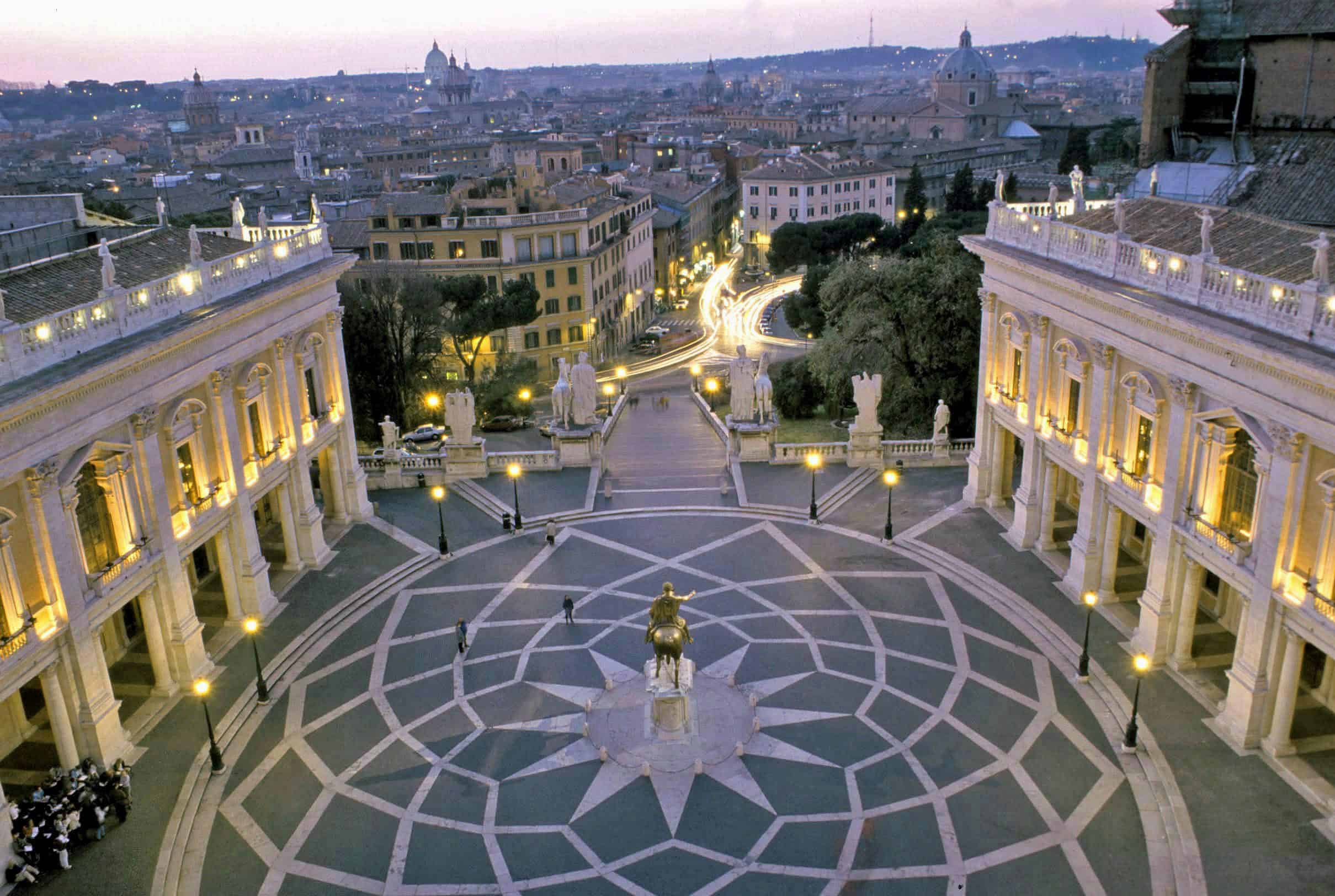
Rome in 4 days at a glance
- What: a Rome in 4 days itinerary with 19 stops grouped by area, three to five a day, designed for people visiting the city for the first time.
- Day 1: Colosseum, Palatine and Roman Forum in the morning, Capitoline Museums in the afternoon and the Vittoriano at sunset, with dinner in the Monti district.
- Day 2: Vatican Museums and Sistine Chapel in the morning, then St. Peter’s Square and St. Peter’s Basilica in the afternoon.
- Day 3: Borghese Gallery with timed entry, descent from the Pincio to Piazza del Popolo, Piazza di Spagna and the Trevi Fountain in the evening.
- Day 4: Pantheon, Piazza Navona, Campo de’ Fiori, the Jewish Ghetto and Tiber Island, with dinner in Trastevere.
- Book ahead: the Colosseum, on sale 30 days ahead. The Vatican Museums, closed on Sundays except the last one of the month. The Borghese Gallery, by reservation only and closed on Mondays.
- Good to know: since February 2, 2026 you pay a 2 euro ticket to go down to the basin of the Trevi Fountain, while the square remains free.
The Rome in 4 days plan, day by day
| Day | Morning | Afternoon | Evening |
|---|---|---|---|
| 1. Ancient Rome | Colosseum, Palatine, Roman Forum | Capitoline Museums | Vittoriano, dinner in Monti |
| 2. The Vatican | Vatican Museums and Sistine Chapel | St. Peter’s Square and Basilica | Lungotevere and Castel Sant’Angelo from the outside |
| 3. Borghese and Tridente | Borghese Gallery | Pincio, Piazza del Popolo, Piazza di Spagna | Trevi Fountain |
| 4. Center and Trastevere | Pantheon, Piazza Navona | Campo de’ Fiori, Jewish Ghetto | Trastevere |
Save this itinerary in My Trip
The button opens “My Trip” with the 19 stops already loaded and divided into the four days. There you add the dates, the tickets and the hotel.
Day 1: Colosseum, Palatine, Forum and Capitoline Hill
The first day is the most tiring, and that’s why it goes at the beginning. A single ticket includes the Colosseum, the Palatine and the Roman Forum, with entry to the Colosseum at a set time. Choose the first available slot: fewer crowds and, in summer, less sun on your head.
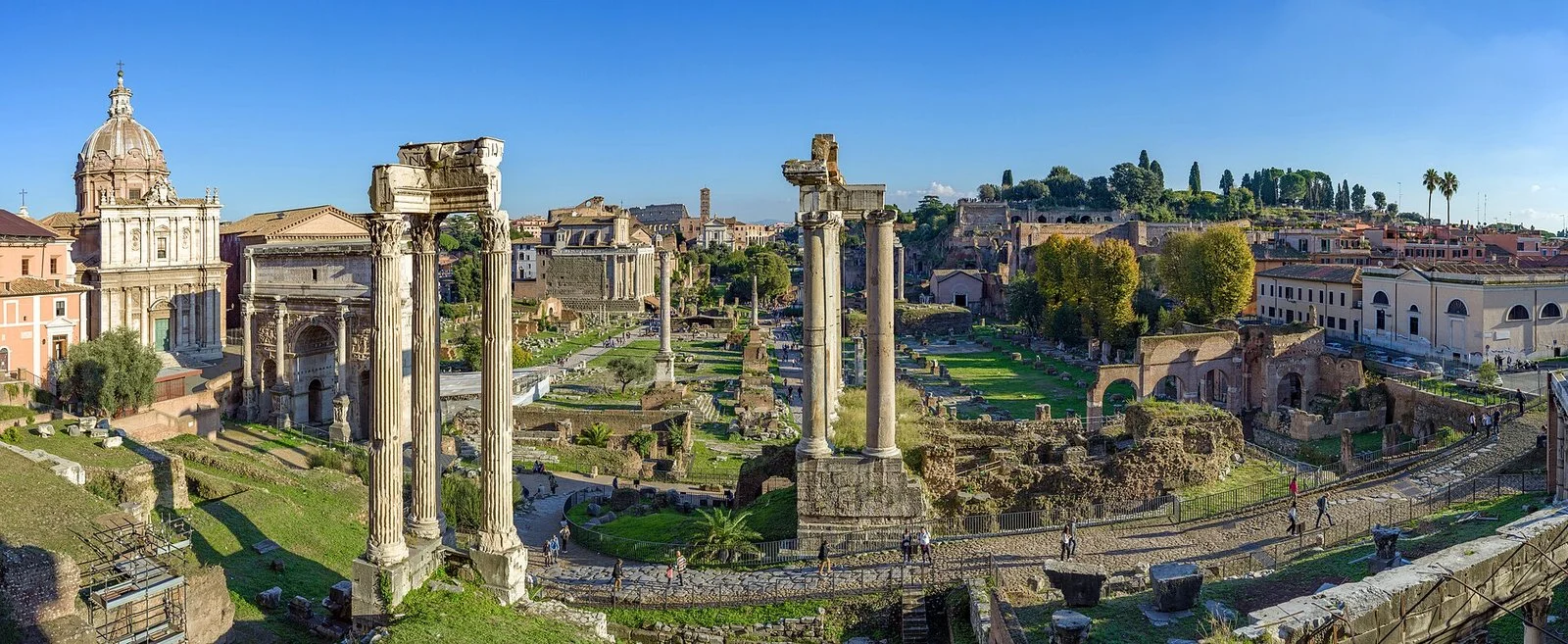
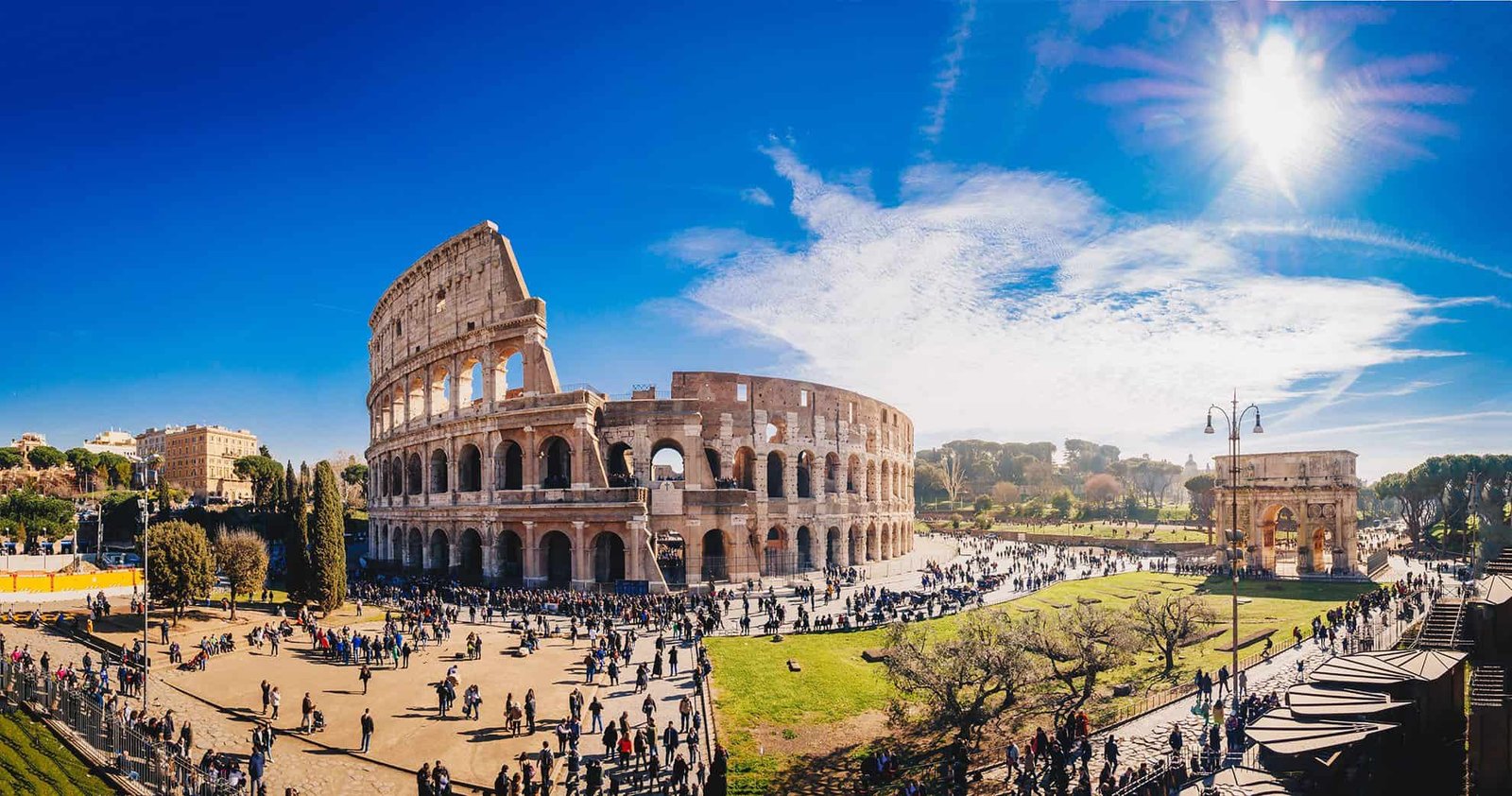
The order we recommend is Colosseum, then Palatine, then Forum. From the Arch of Constantine you climb the hill where the imperial residences stood, look down at the Circus Maximus from above and go down into the Forum valley, leaving toward the Capitoline Hill. Count on three or four hours, as an estimate.
What you need to book ahead: the ticket for the archaeological area. According to the website of the Colosseum Archaeological Park, sales open 30 days before the date of the visit. From October 25, 2026 to February 28, 2027 the area closes at 16:30, with last entry at 15:30. If the official dates are sold out, there are the Colosseum and Forum entry with audio guide on GetYourGuide, the guided visit of the Colosseum, Forum and Palatine and the Colosseum offers on Tiqets.
For lunch you cross Via dei Fori Imperiali, with the Trajan’s Markets on your right, and climb into the Monti district, 10 minutes on foot. It’s the closest neighborhood where you can really sit down. In the afternoon you head back toward the Capitoline Hill. The Capitoline Museums keep what is no longer in the Forum: the She-Wolf, the equestrian statue of Marcus Aurelius, the portraits of the emperors. Allow a couple of hours. Hours are on the operator’s website.
At the end of the day, next to the Capitoline Hill, there is the Altar of the Fatherland. The staircases and the lower terraces are the most convenient spot to see Rome from above without effort. The climb to the upper panoramic terrace has a separate entrance, with hours on the operator’s website. Then you go back to Monti for dinner.
If you’re tired, what to skip: the inside of the Capitoline Museums. The square designed by Michelangelo and the view over the Forum behind Palazzo Senatorio are free and close the day well even that way.
Day 2: Vatican Museums, Sistine Chapel and St. Peter’s
The second day is dedicated to a single area, and that’s not small. The Vatican Museums are a route kilometers long that ends in the Sistine Chapel. Once inside, you follow the flow. You need at least three hours, and our advice is to choose beforehand two or three things to look at slowly, for example the Pinacoteca, the Raphael Rooms and the Gallery of Maps, going through the rest without regrets.
Watch the calendar. According to the website of the Vatican Museums, they are open Monday to Saturday from 8:00 to 20:00, with last entry at 18:00, and closed on Sundays except the last one of the month. If one of your four days is a Sunday, the Vatican has to be moved. Tickets are bought on the official website. As alternatives there are the Vatican Museums entries on GetYourGuide and those on Tiqets.
Once out of the museums, you follow the walls to St. Peter’s Square, about a quarter of an hour on foot. Then you enter St. Peter’s Basilica. Admission is free, but the security checks under the colonnade can take time. Inside, an hour is enough for the Pietà, Bernini’s baldachin and the nave. The climb to the dome is separate, paid and with many steps. Anyone who wants to do it can look at
the dome and underground visits.
In the evening you go down Via della Conciliazione toward the Tiber and Castel Sant’Angelo. Anyone who wants to go in can use the Castel Sant’Angelo ticket with audio guide, optional in this plan.
If you’re tired, what to skip: the dome and Castel Sant’Angelo.
Day 3: Borghese Gallery, Pincio and the Tridente
This is the day that sets a Rome in 4 days itinerary apart from a three-day one. You start with the Borghese Gallery, inside the park of Villa Borghese: Bernini’s sculptures, Apollo and Daphne and the Rape of Proserpina, Canova’s Paolina, six paintings by Caravaggio. It’s a small, dense museum, and two hours are enough to see it well.
What you need to book ahead: everything. According to the official website of the Borghese Gallery, the museum is open Tuesday to Sunday from 9:00 to 19:00, entries are in hourly time slots with a maximum of 180 people, the visit lasts two hours and reservation is mandatory for every type of ticket, at a cost of 2 euros. The full ticket is 16 euros. On Monday it is closed: if your third day falls on a Monday, swap it with the fourth. As alternatives to the official website there are the entry with audio guide on GetYourGuide and the offers on Tiqets.
Once out of the museum you cross the park westward to the terrace of the Pincio, about 20 minutes in the shade of the pine trees. A ramp goes straight down to Piazza del Popolo, the northern gate of Rome, with the obelisk in the middle and the twin churches.
From Piazza del Popolo, Via del Babuino takes you in a quarter of an hour to Piazza di Spagna. You climb the staircase to Trinità dei Monti for the view over Via Condotti, then you come back down.
In the evening you reach the Trevi Fountain, 10 minutes on foot. According to Turismo Roma, since February 2, 2026 the admission ticket to the basin area costs 2 euros, from 9:00 to 22:00, with exemptions for residents and some categories. You buy it online or at the entrance by card. The square remains free.
If you’re tired, what to skip: the Pincio. From the Borghese Gallery you can take a taxi or a bus straight to Piazza del Popolo, saving the walk through the park.
Day 4: Pantheon, Piazza Navona, Ghetto and Trastevere
The last day has no time slots and no mandatory reservations. It’s a walk of four or five kilometers, all on the flat, from the center to beyond the Tiber. You start from the Pantheon as soon as it opens. According to the Ministry of Culture page, it is open every day from 9:00 to 19:00, with last entry at 18:30. The full ticket costs 7 euros, the reduced one for ages 18 to 25 is 2 euros, and it is free for minors.
The same site specifies that the visit is first come, first served and that there are no skip-the-line options. The ticket is bought on the Musei italiani portal, on the app or at the kiosks on site. Third-party products, like the Pantheon entry with interactive app, make sense for the audio commentary, not for avoiding the line. Inside, 20 minutes is enough.
Five minutes away is Piazza Navona
, built on the plan of Domitian’s stadium, with Bernini’s Fountain of the Four Rivers in the middle. From there, crossing Corso Vittorio Emanuele, you get to Campo de’ Fiori. In the morning there’s the market, and it’s the right time for lunch in the streets around it.
In the afternoon you continue toward the Jewish Ghetto, a quarter of an hour on foot: the Portico d’Ottavia, the Synagogue, the streets of Jewish-Roman cooking. From the Ghetto you go to Tiber Island by Ponte Fabricio, one of the ancient bridges still in use, and you arrive on the other bank.
The evening is for Trastevere. Go into Santa Maria in Trastevere if it’s still open, then choose where to have dinner in the side streets, away from the main square. Anyone who prefers an already organized idea for the last evening can look at the food tour of Trastevere and Campo de’ Fiori. With your legs still good, the climb to the Janiculum gives you the widest panorama over the city.
If you’re tired, what to skip: the Ghetto. From Campo de’ Fiori you get to Trastevere in 10 minutes by crossing Ponte Sisto.
What not to put in a Rome in 4 days itinerary?
The contrarian position worth taking is about the Mouth of Truth. Many plans squeeze it in between the Capitoline Hill and Trastevere. In practice it’s a line, often a long one, for a photo with your hand inside an ancient marble drain cover. With four days, that time is worth more at the Pantheon or on the Janiculum. If you pass by, look at it from the gate and keep going.
The second mistake is wanting to fit into four days the Appian Way and the Catacombs of San Callisto as well. They are among the most beautiful things in Rome, but they are outside the center and ask for half a day with public transport. Inserted into this plan, they take the breath out of everything else.
The third is putting the Colosseum and the Vatican on the same day: they are the two longest visits, at the two ends of the center. Finally, the major basilicas like St. John Lateran and Santa Maria Maggiore: they deserve it, but it’s best to keep them for a fifth day, together with San Clemente.
Where to stay for this itinerary?
For four days divided among four areas, the ideal position is in the middle of the map. The historic center, between the Pantheon and Piazza Navona, puts the third and fourth days within walking distance, but it’s the most expensive area and far from the metro. Monti is convenient for the first day and has Line B a short walk away. Prati is quiet in the evening, close to the Vatican and well served by Line A, which also takes you to Spagna and Flaminio for the third day.
Termini is practical for those arriving by train, less pleasant in the evening. Trastevere is the worst-connected area. To compare properties with the free cancellation filter there are Hotels.com and Booking.com.
How do you get around?
On foot within each day, by metro or bus to get to the first stop. Line B takes you to the Colosseum, Line A to Ottaviano for the Vatican Museums, to Flaminio for Piazza del Popolo and to Spagna. The two lines cross at Termini. For the Borghese Gallery you walk from Spagna or from Flaminio through the park, or take a bus.
Anyone who prefers a single pass for transport and admissions can consider the Rome City Pass from Turbopass. It’s worth it only if you actually enter several paid sites a day, so do the math on the stops you’ve chosen. You don’t need a car in the center: limited traffic zones and rare parking. To get to Rome by train, hours and fares are compared on Trainline and on the website of
Italo.
After three days on foot, there is a way to see the city sitting down: the hop-on hop-off sightseeing bus, or a golf cart ride, useful for people who don’t walk much: the golf cart among the main sights or the evening one.
What to book before leaving?
Three tickets, in this order. The Colosseum as soon as sales open for your date, which is 30 days ahead. The Borghese Gallery, which has few spots per time slot and sells out early in the peak months. The Vatican Museums with a morning slot. The Pantheon and the Trevi Fountain can also be bought on the spot. The rest requires no reservation.
Then the hotel, with a cancellable rate, and the trip. Restaurants are booked the day before, except on weekends and around the holidays. To look for a table there’s TheFork, and for addresses area by area the Estate Romana restaurant map. Guided visits can be found among the experiences in Rome on GetYourGuide, those on Viator and the Rome attractions on Tiqets. Before buying, read the language, the length and who leads the visit.
What changes if it rains?
Little, if you swap the days. The most exposed day is the fourth, all outdoors except the Pantheon. With rain in the forecast it’s best to make it the Vatican day, which is indoors for much of the time. The archaeological area in the rain is slippery and without shelter: in that case you start from the Capitoline Museums while waiting for a break in the clouds.
You need shoes that hold on wet sampietrini, more than a big umbrella. The indoor alternatives are on the page about the museums of Rome. What’s happening in the city on your days is in all the events.
And with one more or one fewer day?
With three days you merge the third with the fourth: you give up the Borghese Gallery and do a single walk from Piazza di Spagna to Campo de’ Fiori. With five days the fifth goes to the south of the city: the Baths of Caracalla, the Appian Way and the catacombs, maybe with the golf cart between the Appian Way and the catacombs or the bike along the Appian Way. Or the Aventine with the Orange Garden and Testaccio.
From six days up, the day trips come in:
Tivoli with Villa d’Este and Villa Adriana, Ostia Antica, the Castelli Romani. The destinations just outside the city are in the near Rome section.
What to bring for four days on foot
Four days like this come to between 25 and 40 kilometers on foot, depending on detours: an estimate, not a measurement. What you need fits in a small backpack. For each item we list more than one search, because individual models sell out. Prices change constantly, and for delivery what counts is the estimated date at the time of the order.
For walking
- Comfortable walking shoes: thick sole and already worn in before you leave.
- Technical socks: they reduce rubbing after many hours on the sampietrini.
- Blister bandages: to keep in your backpack from the first day.
- Insulated water bottle: in Rome the public fountains are everywhere and the water is good.
For rain and travel
- Windproof folding umbrella: useful from October to April.
- Packable rain jacket: leaves your hands free for tickets and phone.
- Travel pillow: for the train or the flight, especially on the way back.
- Suitcase organizer: for four days a carry-on is enough, if it’s in order.
To keep safe what you have
- Anti-theft backpack: on the metro and in the lines at the most crowded places you need it.
- Anti-theft travel waist pack: the light alternative for documents and phone.
- Shielded document holder: to keep cards and documents separate from your wallet.
To find your way and to read
- 10,000 mAh power bank: maps, tickets and photos drain the phone before evening.
- Folding map of Rome: it works without a battery and gives you a better sense of distances than a screen.
- A travel book on Rome: to read the night before, not in front of the monuments.
- A history of ancient Rome: to reach the Forum knowing what you’re looking at.
Frequently asked questions
Are four days enough to see Rome?
They’re enough to see the center well: the archaeological area, the Vatican, the Borghese Gallery and the squares, with time to sit down at the table without watching the clock. Left out are the Appian Way, the major basilicas besides St. Peter’s and the day trips out of town.
In what order should you do the four days?
In the order that fits the calendar. The Vatican Museums are closed on Sundays, except the last one of the month, and the Borghese Gallery on Mondays: those days go to the archaeological area or the center. If rain is forecast, the Vatican day becomes the bad-weather day.
How much do the admissions on this itinerary cost?
It depends on the current rates, which should be checked on the official websites. As of October 3, 2026 the full ticket for the Borghese Gallery was 16 euros plus 2 for the reservation, the Pantheon ticket 7 euros, the ticket for the Trevi basin 2 euros. For the Colosseum, Vatican Museums and Capitoline Museums, the ticket pages of their respective websites are what counts, because rates change by category and period.
Can you do this itinerary with kids?
Yes, by removing one stop a day and adding a long break after lunch. The first day works well, because everyone likes the Colosseum. On the second it’s best to reduce the Vatican Museums to a short route. The third can be spent in the park of Villa Borghese instead of in the Gallery. The Pantheon is free for minors.
Do you need a tourist pass for four days?
Only if you make many paid entries. In this plan the paid sites are five: archaeological area, Capitoline Museums, Vatican Museums, Borghese Gallery and Pantheon. A pass is worth it if it includes them with the time-slot reservation and if you’ll use the included transport. Otherwise single tickets on the official websites are the simplest choice.
What is the best time for Rome in 4 days?
Spring and autumn, from mid-March to May and from late September to November. Walking is pleasant and the heat doesn’t force you to stop in the middle of the day. In summer the outdoor visits should be moved to early morning and evening. From October 25 the Colosseum area closes at 16:30, so the first day should be started early.
How does “Save this itinerary” work?
The button under the table opens Estate Romana’s “My Trip” with the 19 stops already divided into the four days. From there you can enter the dates, add or remove places, mark the reservations made and share the plan with the people traveling with you. You don’t need an account: the trip stays saved on the device you use.
Who wrote this and what sources it uses
The text comes from the editorial team of Tour Leader Pro, the Rome-based team that designs itineraries, visits and cultural events across Rome and Lazio. Hours, closures, rates and booking rules come from the websites of the Colosseum Archaeological Park, the Vatican Museums, the Borghese Gallery, the Ministry of Culture and Turismo Roma, as of the date given at the top. Visit times and distances are estimates. Let us know what you find has changed.
Lining up four days like this, for yourself or for a group of friends, means fitting three timed reservations around the closing days and the pace of the slowest walkers. A useful resource for anyone organizing group trips is Tour Leader Pro. If Rome is only the first stop of a longer trip, across Lazio, Tuscany and Campania, a useful resource for putting together a multi-day itinerary is Italy Planner.