Basilica of the Sacred Heart of Jesus
In short. The Basilica of the Sacred Heart of Jesus is at Via Marsala 42, on the north side of Termini station.
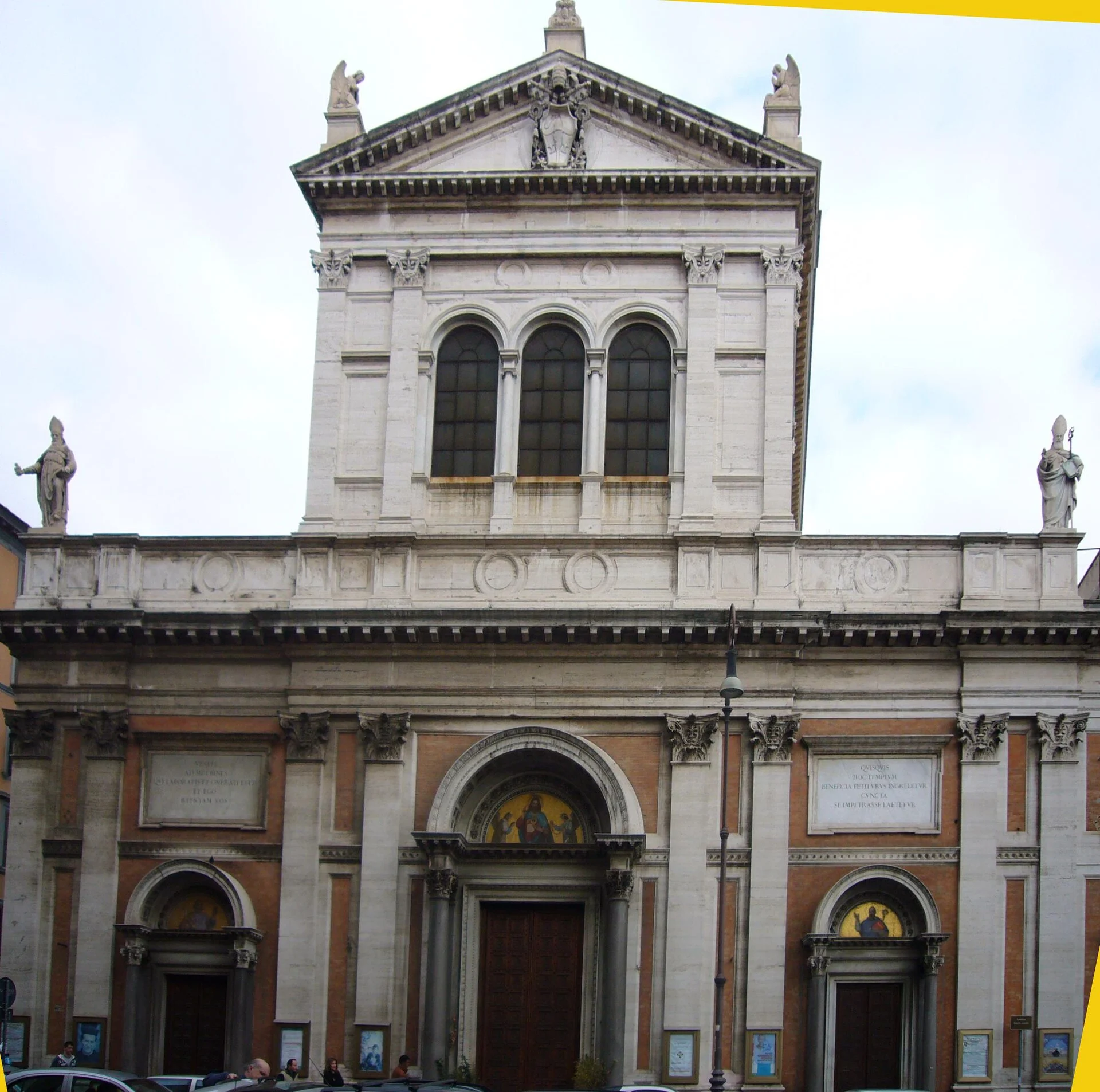
The Basilica of the Sacred Heart of Jesus is at Via Marsala 42, on the north side of Termini station. It is the parish church entrusted to the Salesians of Don Bosco and is open every day from 6 to 19 with free entry, no ticket and no reservation. For the little rooms where Don Bosco lived in May 1887, now with a museum space, you request the guided visit online on the Salesian portal or from the parish, telephone 06 4453257.
It's the church almost everyone has seen and almost no one has visited. People coming out of Termini toward Via Marsala look up, see the bell tower with the gilded statue of the Sacred Heart on top and keep walking toward the hotel or the metro. Inside there is a story that ties together Pius IX, the fall of papal Rome, a sick old Piedmontese priest and the birth of the Umbertine neighborhood around the railway.
The opening hours, Mass and confession times and contacts given here come from the basilica's official website, checked on September 29, 2026. Parishes change their hours with summer, with Advent and with patron saint feasts, and the Sacred Heart is no exception: if your schedule is tight, for example a train to catch right afterward, phone the parish or write to the published email address before counting on a specific celebration.
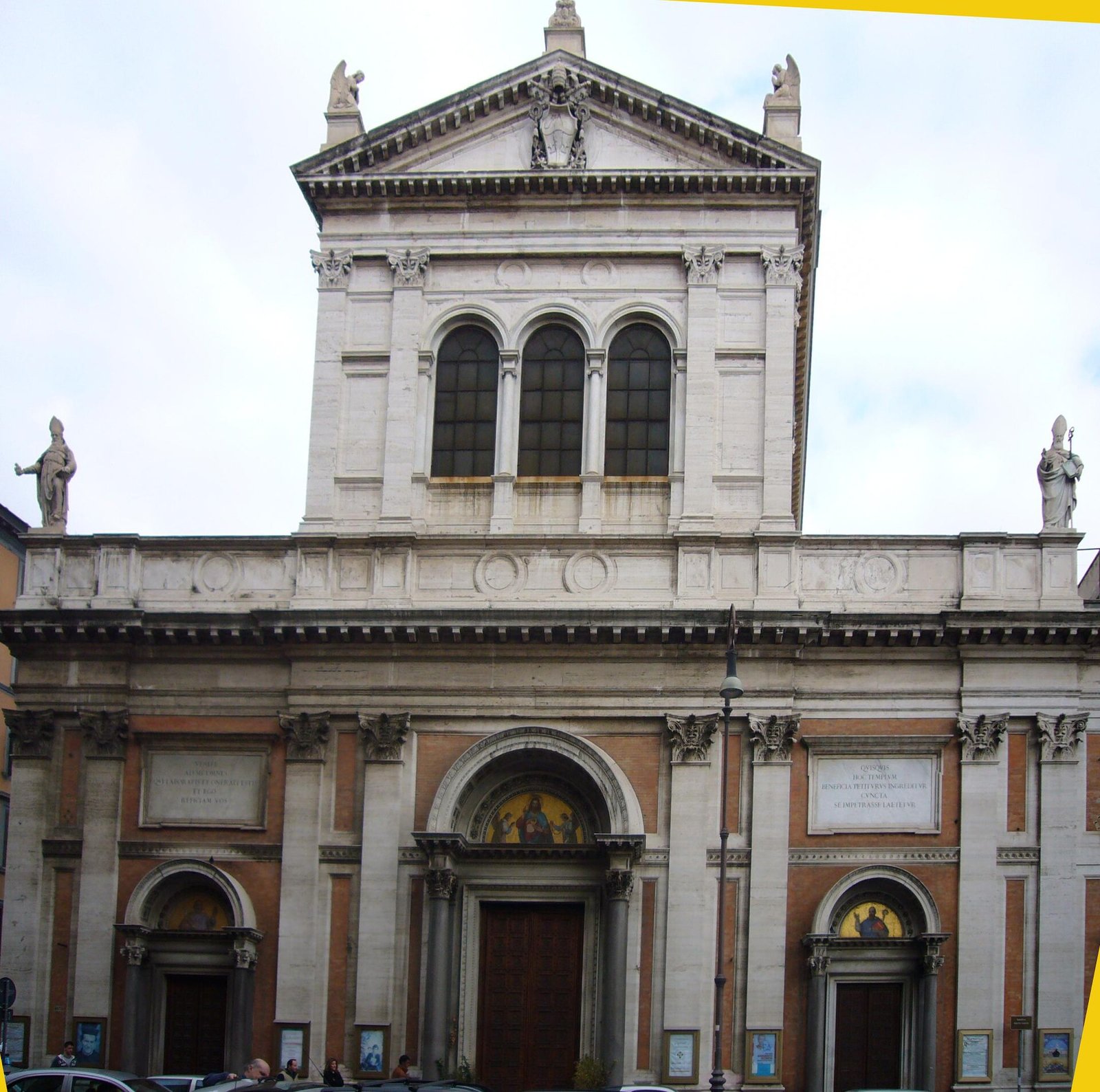
Where it is and what you actually see
The address is Via Marsala 42, postal code 00185, in the Castro Pretorio rione. The basilica takes up an entire front of the block facing the station, and the Salesian complex behind it extends to the corner of Via Magenta and Via Vicenza, where Don Bosco's little rooms are. From a terminal platform at Termini to the church entrance it's just a few minutes on foot, suitcase included, if you exit toward Via Marsala.
From outside you read the bell tower first, then the facade. The bell tower is the element you recognize from far away, even from the streets of the neighborhood and from some points in the station, because of the large gilded statue of the Sacred Heart that crowns it. The 19th-century facade, designed like the rest of the church by the architect Francesco Vespignani, is orderly and composed, classical in layout, without the flights of the Baroque that visitors expect in Rome.
Inside you find a large parish church from the late 1800s, designed to hold many people and to work every day. Weekday Masses start at dawn and follow one another until 9, then resume in the evening. This means that in many morning hours you walk into a church where Mass is being said, people are praying or hearing confessions. Tourists looking for the absolute silence of a museum must choose the right hour, and I'll talk about that later.
The point that matters most for the history of the church is the altar of Mary Help of Christians, where Don Bosco said on May 16, 1887 the only Mass of his life in this basilica, two days after the consecration. The second point is not in the church but behind the choir and the sacristy: the two rooms where the saint lived during the weeks of his last trip to Rome, preserved and open to the public since 1934.
What not to expect. There are no Renaissance masterpieces, no ceiling that makes tour groups stop, no ancient finds under the floor to visit. It's a church built with money painfully raised by a young congregation, in a new neighborhood, for a city that was changing masters. Its interest lies entirely there, and it should be looked at with that key, not the key of the Rome of the 17th-century popes.
Hours, Masses and how to get in
The basilica is open to the faithful every day from 6 to 19. Entry is free of charge, there are no tickets or reservations for the church, and it is run by the Salesian parish of the Sacred Heart of Jesus at Castro Pretorio. The basilica's website gives no fees for visiting Don Bosco's little rooms and publishes no dedicated hours: that's why it's best to call first.
Weekday Masses are at 6:30, 7, 7:30, 8, 9 and 18, except on Saturday, when the 6:30 Mass is not celebrated. On Sundays and holidays Masses are at 7, 8, 9, 10, 11 and 18, plus a celebration at 15:30 in Filipino, which says a lot about the community that attends this parish next to the station today. These are the hours published by the official website as of the date indicated at the top.
For confessions the website lists one confessor available from 6:30 to 12 and from 16 to 19. Eucharistic adoration is held on Friday after the 18 Mass until 19:30, with Vespers at 19:15, while on Thursday from 19:45 to 21 there is an adoration designed for young people. Visitors should know that at those times the church is in liturgical use and that the tour of the chapels should be put off.
The official contacts are telephone 06 4453257 and email sacrocuore-parrocosdb@donbosco.it, plus the website of the Basilica of the Sacred Heart, where you will also find the page of celebration hours and the one devoted to Don Bosco's little rooms. No third-party portal sells admission, and whoever offers it to you for a fee is selling something free.
For groups, pilgrim parishes and schools the website has a section on pilgrimages, but the practical conditions, such as the maximum number of people in the little rooms, reserved hours or a possible celebration at the altar of Mary Help of Christians, are not published as a fee schedule. They must be agreed on directly with the parish, in advance, and it's best to do it by phone during office hours, specifying if the group is asking for a Mass or only a visit.
A curiosity about the Basilica of the Sacred Heart of Jesus
This church was supposed to be called something else. Pius IX bought the land with the idea of building a temple dedicated to Saint Joseph, and on December 8, 1870 he proclaimed Saint Joseph patron of the universal Church. Then the project changed dedication and became a church of the Sacred Heart. The basilica's website tells of the change without emphasis, but it's a detail that changes how you read the building.
The date is no accident. In December 1870 Rome had been Italian for less than three months, after the breach at Porta Pia on September 20. A pope who considered himself a prisoner in the Vatican chose to entrust the Church to a protector and to consecrate to the Sacred Heart a temple to be built right in the new part of the city, the one where the new State was laying out streets, ministries and barracks.
Devotion to the Sacred Heart, in the Europe of those years, had a precise coloring of reparation and resistance. In France, after the defeat of 1870, the same devotion led to the basilica of Montmartre. In Rome, Pius IX's choice has to be read in the same climate, and the gilded statue that now towers over the bell tower, facing the city, is the last word of that discourse, even if it comes long after the death of the pope who began it.
Saint Joseph, incidentally, has not disappeared entirely. His figure remains tied to the history of the basilica and to Salesian devotion, and the diocese of Rome remembers Don Bosco and Saint Joseph together when it speaks of this church. If you walk in with the idea that it is only Don Bosco's church in Rome, you miss half the story: before the Salesians there is a pope who wanted to say something to the new capital.
One thing nobody tells you about the Basilica of the Sacred Heart of Jesus
Look at the street names. The land Pius IX bought faced what was then called Via di Porta San Lorenzo. Today it is Via Marsala, named for the Sicilian port where Garibaldi's 1,000 landed in 1860. So the church a pope wanted in answer to the loss of Rome has as its address the memory of the Garibaldian enterprise that had begun to dismantle the Papal State.
It's not the only case on the block. Don Bosco's little rooms are at the corner of Via Magenta and Via Vicenza, two names tied to the wars of independence. The whole neighborhood born after 1870 between the station and the walls bears names of battles and places of the Risorgimento: Via Palestro, Via Goito, Via Solferino, Via Montebello, Via Castelfidardo. The street naming of the new capital was a political manifesto, and the basilica found itself inside it.
For a Roman this is a detail taken for granted and no longer noticed. For visitors, instead, it is the simplest key to understanding the neighborhood. Castro Pretorio is not a place of passage with no history around Termini. It is the urban planning laboratory of capital Rome, with the ministry buildings, the barracks, the Sapienza University City a little farther on and a papal church surrounded by names the pope did not like.
Anyone who wants to go deeper into the Risorgimento side of this story will find the context at the Central Museum of the Risorgimento inside the Vittoriano or at the Institute for the History of the Italian Risorgimento. Reading up on those years first and then coming back to this facade has a certain effect: the conflict between Church and State, on Via Marsala, can be seen on the marble plaques at the street corners.
Don Bosco's little rooms: what they are and what you see
The little rooms are two modest rooms, a bedroom and one for receiving visitors, where Don Bosco lived from April 30 to May 18, 1887, during his 20th and last trip to Rome. They are behind the choir and the sacristy rooms, at the corner of Via Magenta and Via Vicenza. The saint was 71 and very ill: the basilica's website recalls a serious infirmity of the legs that almost kept him from going down to the church.
Inside you see the wardrobe that opens and becomes an altar, where Don Bosco said Mass when he could not move, a sofa, the kneeler, the headboard of the bed and a display case with objects from the period of the stay. There is also a table-shaped altar used for celebrations. Next to the rooms a museum space has been set up with material tied to Don Bosco, to Don Michele Rua and to Cardinal Giovanni Cagliero.
The rooms have been open to the public since 1934, the year of Don Bosco's canonization, and were restored afterward. The basilica's website gives no fixed hours and no cost. There is, however, an online booking channel, Don Bosco a Roma, which offers on request the Basilica plus Museum guided visit, with no price given on the page. Otherwise you phone 06 4453257 or write to sacrocuore-parrocosdb@donbosco.it, with day, time and number of people.
Here it is necessary to distinguish between the levels of the story. The documents say that Don Bosco lived in these rooms on those dates and that on May 14 the church was consecrated. Salesian tradition, taken up by the basilica's website, attributes two healings to those days: on May 10 that of a deaf cleric, on May 12 that of a woman with a paralyzed arm. These are matters of faith handed down by the congregation, and they should be presented as such.
Then there is the level of the best-known devotional story, the one about the tears. According to Salesian tradition, during the Mass of May 16 at the altar of Mary Help of Christians Don Bosco broke off several times in tears, and the explanation handed down links that weeping to the dream he had as a boy, which only then would have appeared fulfilled. The Salesians know the altar precisely as the altar of tears. The value of the scene is spiritual, not documentary.
The advice I give you for visiting the Basilica of the Sacred Heart of Jesus
Come between 9:30 and noon on a weekday, or in the early afternoon. The morning Masses are concentrated between 6:30 and 9, the evening one is at 18, and outside these windows the church is open, attended but not occupied by a celebration. Avoid Sunday morning, when Masses follow one another every hour and visitors end up disturbing or waiting at the back without seeing anything.
Phone first if you're interested in the little rooms. They are the part that justifies the visit for anyone who knows the figure of Don Bosco, and they are also the only one for which the official website publishes no hours. A call to 06 4453257 during office hours avoids finding the door closed. Also ask if the museum space is accessible at the same time, because the two don't necessarily coincide.
Use the basilica as a stop before or after a train. Termini is a few minutes away on foot, and anyone with an hour to wait between an arrival and a departure often doesn't know where to put it. A visit to the Sacred Heart, with the little rooms if open, fills exactly that time. With a suitcase, though, be discreet: walking in with a noisy trolley during prayer is not a good calling card, and the parish has no luggage storage.
Dress as you would for a living church, not a monument. Covered shoulders and pants that aren't too short are a rule of common sense in all Roman churches, and here in addition there are worshippers praying before the Blessed Sacrament and people lined up to go to confession. No flash photos during Mass, no loud conversation among the chapels. The church works all day.
Take a look at the neighborhood as you arrive too. Instead of coming out of Termini and cutting straight across, walk a stretch of Via Marsala and then turn onto Via Magenta: you see the side of the Salesian complex, you grasp how big the work was that Don Bosco wanted next to the church, and you reach the corner with Via Vicenza where the little rooms are. In 10 minutes you have the layout of everything you'll read inside.
Another well-known fact, yet rarely cited
Leo XIII, who succeeded Pius IX in February 1878, entrusted the construction to Don Bosco on April 5, 1880, and the basilica's website stresses that the pope specified he had no funds to give him. The building site was stalled, the Holy See had lost the revenues of the Papal State, and the church Pius IX wanted risked remaining an idea. Don Bosco accepted the same day, at 64, with no money in hand.
He did not stop at accepting. He asked to widen the project by adding to the church a large hospice for poor boys, and for that another 5,500 square meters of land were bought. This is the origin of the large Salesian complex that still surrounds the basilica today. The church alone did not interest him enough: he wanted a home for the young people who arrived in Rome with nothing, and he wanted it right next to the station.
The fact is known to anyone who knows Salesian history, but it is rarely cited when the church is discussed as a monument. And yet it explains almost everything: the sober forms, the lack of expensive decoration, the centrality of the educational work over the building. The Sacred Heart was not born as a showcase of patronage. It was born as the building site of a priest who went around asking for money and who invested in classrooms before stucco.
Here is the contrarian position, stated plainly. The Sacred Heart is often presented as the church of the gilded statue above Termini, as if its value were the postcard of the bell tower. That's an error of perspective. The statue is the least interesting part of the complex. The reason to go in is two undecorated rooms behind the sacristy and a side altar where a tired old man said Mass just once.
The right photo to take at the Basilica of the Sacred Heart of Jesus
The photo to take is the bell tower with the gilded statue against the sky, shot from the opposite sidewalk of Via Marsala or from the side streets of the neighborhood, backing away far enough to get the cables and signs out of the frame. You need a little zoom: the statue is high above the street and with the phone's wide-angle it becomes a glittering dot. Frame it vertically and let the sky breathe above the figure.
Light changes the look of the gilding a lot. In full sun the statue burns out and loses detail, with a slightly hazy sky or in the late afternoon the folds of the robe and the gesture of the arms read better. A day of tramontana wind, with clean air and deep blue sky, gives the sharpest contrast. Shoot several times and underexpose slightly, then recover the shadows.
Inside, the image that really tells the story of this place is the altar of Mary Help of Christians. You don't need a wide shot: a frontal, composed frame is enough, without people praying in the foreground. If there are worshippers, wait or give up. In the little rooms, if they let you take photos, the right shot is the open wardrobe-altar, because in a single object it shows the saint's illness, poverty and stubbornness.
Avoid the wide shot of the whole facade from the station side with traffic in front: the result is a row of cars, buses and signs with a church in the background. Avoid selfies in front of the altar during services too. Anyone who wants an overall image of the Umbertine neighborhood with the bell tower emerging from the rooftops must look for a raised spot, and Rome offers quite a few, as the panoramic viewpoints of Rome show.
One last photo tip concerns the little rooms. They are small rooms, with poor light and objects inside display cases that reflect. If you are allowed to take photos, turn off the flash, rest the phone against the doorpost or a piece of furniture to keep the shot steady and tilt the lens slightly to avoid the glass reflection. A single image done well says more than 20 blurry photographs.
How to get to the basilica
The simplest way is to get to Termini station, which is both a rail hub and the interchange station between metro lines A and B. From the station you exit toward Via Marsala and the basilica is in front of you, a few minutes' walk away. Anyone arriving on line B can also get off at the Castro Pretorio stop, which serves the upper part of the neighborhood, and walk down toward the church.
Anyone arriving by train from Fiumicino or on the regional lines gets off directly at Termini, and that's why the Sacred Heart is the first Roman church many travelers come across right after stepping off the train. For city buses, the lines that run around the station are many and change with the works on the square: check the updated route on the Rome transit company's website before you set out.
By car it's a terrible idea. The Termini area falls within a limited traffic zone and has very scarce parking, the works around the station often change the traffic layout and stopping in front of the church is not possible. People coming from outside Rome would do better to leave the car in a park-and-ride along a metro line and continue by public transport to Termini or Castro Pretorio.
On foot from the central areas the basilica is reachable without effort. From Piazza della Repubblica you cross the station area, from Santa Maria Maggiore you go down toward Termini and turn onto the north side, from Porta Pia you follow the layout of the Umbertine neighborhood. The streets are wide and flat, with sidewalks, suitable even for people who have difficulty getting around.
Some important events that happened here in history
The church's first stone dates to 1870, under Pius IX, on land bought along the old Via di Porta San Lorenzo. It is the year Rome changes masters, and the building site was therefore born straddling two worlds. On December 8 of that same year the pope proclaims Saint Joseph patron of the universal Church and, later on, changes the dedication of the temple under construction to the Sacred Heart of Jesus.
In February 1878 Pius IX dies and Leo XIII succeeds him. On April 5, 1880 the new pope entrusts the undertaking to Don Giovanni Bosco, making clear he has no funds to put at his disposal. Don Bosco accepts at once and obtains permission to add to the church a large hospice for poor youth, with the purchase of another 5,500 square meters of land. The architectural project bears the signature of Francesco Vespignani.
On April 20, 1887 Don Bosco leaves Turin for what will be his last trip to Rome, and from April 30 to May 18 he lives in the two little rooms behind the choir. On May 14, 1887 the church is solemnly consecrated by Cardinal Lucido Parocchi. On May 16 Don Bosco says at the altar of Mary Help of Christians the only Mass of his life in this church. He will die in Turin a few months later, at the beginning of 1888.
In 1921 Pope Benedict XV raises the church to the rank of minor basilica, an honorary title that recognizes the value of the place for the Church of Rome. In 1934, with the canonization of Don Bosco, the little rooms are opened to the public and become a destination for pilgrims of the Salesian family, which since then has visited them as one of the saint's places, alongside the Piedmontese ones.
In the 20th century the complex grows around the basilica with educational activities, the oratory, catechesis, works of charity. Over time the parish takes in the migrant communities arriving in the station area, and the Sunday Mass in Filipino is the most visible sign of this change. Today the house of the Sacred Heart is also a reference center for the whole Salesian congregation, which has its headquarters here in Rome.
Anyone who wants to place these dates in the history of capital Rome can look, a few stops away, at the places that tell the same transition: the Aurelian Walls opened at Porta Pia, the Verano Cemetery that the new city enlarges, Termini station that becomes the gateway of the capital.
Who passed through the Basilica of the Sacred Heart of Jesus
Pius IX, Giovanni Maria Mastai Ferretti, the last pope-king. He bought the land, conceived the church for Saint Joseph and turned it into a temple of the Sacred Heart, but never saw it finished. He is the pope of the breach at Porta Pia and of the last season of the Papal State, and the Sacred Heart is one of his responses, more symbolic than military, to the loss of the city.
Leo XIII, Gioacchino Pecci, the pope who got the building site moving again by entrusting it to someone who had no money but knew how to find it. His name is tied to Rome through another 19th-century church too, San Gioacchino in Prati, and putting the two visits in sequence tells well how the Church built in the new neighborhoods of the Italian capital, a few years apart.
Don Giovanni Bosco, a Piedmontese, founder of the Salesians, educator of Turin's street boys. He came to Rome 20 times, the last in 1887, old and almost unable to walk. Here he lived 18 days in two rooms, saw the church he had financed consecrated and said his only Mass at the altar of Mary Help of Christians. The rest of his life is read in Turin, but the closing of the circle is on Via Marsala.
Cardinal Lucido Maria Parocchi, the pope's vicar for the diocese of Rome in those years, was the prelate who consecrated the church on May 14, 1887. His name appears in the chronicle of the consecration and it is the one that connects the Salesian building site to the diocese. Alongside him we should remember the architect Francesco Vespignani, who signed the design of the building you see today from Via Marsala.
Don Michele Rua, Don Bosco's first successor at the head of the Salesians, and Cardinal Giovanni Cagliero, the Salesian who brought the congregation to Latin America, are remembered in the museum space next to the little rooms, which preserves material tied to all three. For anyone who knows Salesian history they are family names, for the occasional visitor they are the two figures who explain how a Turin work became worldwide.
Benedict XV, Giacomo Della Chiesa, the pope of the First World War, raised the church to minor basilica in 1921. And then there are the nameless people who made and make this place: the boys of the hospice, the families of the Umbertine neighborhood, the Filipino worshippers of the Sunday afternoon Mass, the travelers who walk in with a suitcase between one train and another. The basilica has remained a church of passage and of the people.
Castro Pretorio, the neighborhood around the basilica
The rione takes its name from the Castra Praetoria, the camp of the Praetorian guard built in imperial times on the northeastern edge of the city. The perimeter of that camp was later absorbed into the Aurelian Walls, and even today the area has a strong military and administrative presence. The ancient name survives in a metro stop and in the rione, and recalls that here the city has always been a border.
The neighborhood you see is the one built after 1870, on a grid, with buildings of four or five floors, inner courtyards, tall doorways. It is Umbertine Rome, the same one found in the Esquiline Hill around Piazza Vittorio, where the Alchemical Gate and the Nuovo Mercato Esquilino are. Two twin neighborhoods separated by the tracks, with different histories and populations.
On the other side, toward the east, beyond the railway and the walls, begins San Lorenzo, the working-class neighborhood born in the same years, bombed in July 1943, today full of students because of the proximity of the University City. Anyone with half a day can start from the Sacred Heart, follow the railway and reach the Basilica of San Lorenzo fuori le mura and the Verano.
Around the station the area has a reputation as a place of transit, and in part it is: hotels, hostels, travel agencies, shops open late. But it is also a residential neighborhood where families have lived for generations, with schools, the parish, the Salesian oratory full of kids in the afternoon. Looking at it only as the side exit of Termini means missing the liveliest part of this church's story.
When it's closed and what not to expect
The basilica is closed from 19 to 6 in the morning. The website lists an adoration for young people on Thursday until 21, but it is a moment of communal prayer, not an opening for visitors. Outside the published hours there is no way in. On days of major celebrations, such as the feast of the Sacred Heart, the feast of Don Bosco or first communions, the church is full and free visiting becomes difficult.
Don't expect marked routes, audio guides or panels in multiple languages. The Sacred Heart is a parish that works as one, and information for visitors is left to the website and to the staff available. There is no bookshop organized like in the big papal basilicas and there are no ticket offices. Anyone who wants an in-depth account must arrive prepared or ask if guided visits for groups exist.
Don't expect to find the little rooms always open. The basilica's website publishes no hours and the guided visit must be requested beforehand, and in practice access depends on the availability of whoever accompanies you. Turning up at 18:30 on a Saturday hoping to get in is a sure way to go home without having seen them. It's the most repeated advice here, because it's the easiest mistake to avoid with a phone call.
On accessibility the website gives no detailed information for people with motor disabilities, neither for the church nor for the little rooms, which are in another part of the complex. Anyone who uses a wheelchair would do well to phone first to find out which entrance to use and if the saint's rooms can be reached without stairs. The information is not published and it's best not to take it for granted.
Finally, don't expect a church isolated from noise. The door opens onto one of the busiest streets of the neighborhood, and during the day the sounds of the station, the construction sites and the buses accompany the visit. Anyone looking for quiet finds the best moment right after the morning Mass, when the church empties and only those who stay to pray before the altar of Mary Help of Christians remain.
Eating in the area
The Termini area is the place in Rome where you eat worst for what you spend, and I say it without snobbery. The reason is simple: people coming out of the station are hungry, short on time and won't be back. A restaurant that lives off customers who won't return has no interest in keeping them, and the result shows on the plate and on the bill.
The first sign is menus with photographs of the dishes, translated into five languages, displayed on easels in front of the entrance. The second is the person at the door who stops you and invites you to sit down. The third is a kitchen open without a break from morning until late at night: a real kitchen has a crew that has to rest and prep, and a place serving carbonara at four in the afternoon is not cooking it at that moment.
The fourth sign is the sheet of pasta rolled out in the window by a woman in an apron, in front of passersby. It's stage scenery, not a guarantee: serious fresh pasta is made in the kitchen, in the morning, away from the dust of the sidewalk. Then there are the items with no price, the fish of the day at an undeclared weight, the different price lists for indoor and outdoor tables. Always ask the price before ordering.
Romans around Termini don't eat in those places, and not out of snobbery. They work in the ministries, schools and offices of the neighborhood and choose where to have lunch by a criterion that works everywhere: look at who's sitting there. If at 13:30 on a weekday you see office workers, laborers and local families, you're in the right place. If you see only trolleys and backpacks, you know what kind of cooking awaits you.
To avoid trial and error, there is a public list of addresses we really go to in Rome and surroundings, with no sponsorships, which changes when the places change: our list of the places where we eat. Around the station it's still best to move a few blocks away from the streets where traveler flows pass, before sitting down.
The parish today: who runs it and what happens during the week
The basilica is not a museum with a church inside, and it's good to know that before going in. The official website presents an articulated community: the Salesians, who run the parish, the Missionaries of the Risen Christ and the different groups of the Salesian family. Alongside the liturgy there are catechesis, the oratory, activities for young people and a sector devoted to charity, which in a station area has a very concrete sense.
The oratory is the part that the passing visitor doesn't see, but it is what Don Bosco had in mind when he asked to add a hospice to the church. His educational method came from the courtyard, from play, from school and work, more than from the sermon. If you pass by Via Marsala on the afternoon of a school day, the noises coming from the complex are the direct continuation of that choice of 1880.
The presence of a Sunday Mass in Filipino says the rest. The parishes around big European stations have become places of arrival for migrant communities, and the Sacred Heart has played this role for decades. For those coming from outside it's an aspect to respect: on Sunday afternoon the church belongs to a community that gathers, not to tourists looking for a shot.
Liturgical life follows the Salesian calendar as well as the Roman one. The feast of Don Bosco at the end of January, that of Mary Help of Christians in May and the solemnity of the Sacred Heart are the moments when the basilica fills and the celebrations run longer. The parish website publishes notices as they come: if you want to attend one of these feasts, check the week's program there.
The basilica and the station: 140 years of coexistence
When the church was consecrated in 1887, Termini station was already the capital's great rail terminal, and Don Bosco knew well what it meant to build next to the tracks. The boys who came to Rome looking for work stepped off those trains. A hospice a few steps from the forecourt was a precise pastoral choice, meant to intercept those arriving in the city without a network and without a roof.
Today's station is no longer the 19th-century one. It was rebuilt in the 20th century and took on the modern look you know, with the big canopy over the forecourt, but the relationship with the basilica has not changed. The bell tower with the gilded statue remains the visual landmark of the north side, and for many travelers it is the first sacred image of Rome, seen from the window before even getting off.
The proximity also produces some discomfort. The sidewalk in front of the church is crossed by continuous flows of people with suitcases, the construction sites around the station often change the pedestrian routes, and the noise of traffic comes in through the door. Anyone looking for the quiet of the churches of the Aventine won't find it here. What they find instead is a church doing its job in the middle of the real city, and that's a difference worth the visit.
For those who use Termini as a base, the basilica is also a practical orientation point. It gives a name to the side facing Via Marsala, separated from the one facing Via Giolitti by the mass of the station, and helps you not get lost when you exit on the wrong side. If you were told to meet on the north side of the station, the bell tower with the statue is the sign that you've arrived.
What to combine in a day
The most logical approach starts from the station itself. On the other side of Termini are the Baths of Diocletian, with the cloister and the collections of the National Roman Museum, the Octagonal Hall and Palazzo Massimo alle Terme, which holds the frescoes from the villa of Livia and some of the finest ancient sculptures in Rome. It's the most underrated archaeological half day in the city.
Those who stay on the theme of churches will find nearby the Basilica of Santa Maria degli Angeli e dei Martiri, carved by Michelangelo inside the baths, San Bernardo alle Terme, Santa Maria della Vittoria with Bernini's Ecstasy of Saint Teresa, and the Fountain of Moses. All a quarter of an hour on foot from the Sacred Heart.
Toward the south, beyond the station, you reach in a few minutes the Basilica of Santa Prassede with the mosaics of the Chapel of San Zenone, the Basilica of Santa Pudenziana and Santa Maria Maggiore. Those who prefer less-visited churches can look for Santa Bibiana, Bernini's first architectural work, squeezed between the tracks, and Sant'Eusebio all'Esquilino on Piazza Vittorio.
For an itinerary on the churches born with capital Rome, the Sacred Heart pairs well with San Gioacchino in Prati and the Gran Madre di Dio at Ponte Milvio. Those who instead want ancient Rome off the usual routes can reach Porta Maggiore, Holy Cross in Jerusalem and the Amphitheatrum Castrense, another fragment of military Rome, along the walls.
Toward the north, beyond Porta Pia, the Nomentano district leads to Villa Torlonia and the Basilica of Sant'Agnese fuori le Mura, with the mausoleum of Santa Costanza. For those with few days in the city who want to fit the basilica into a wider route, the itineraries three days in Rome and a week in Rome help spread out the stops.
Frequently asked questions
Do you have to pay to enter the Basilica of the Sacred Heart of Jesus?
No, entry to the basilica is free of charge, with no ticket and no reservation. The church is run by the Salesian parish of the Sacred Heart of Jesus at Castro Pretorio and is open every day from 6 to 19. For the visit to Don Bosco's little rooms the official website gives no fees, and the arrangements must be asked of the parish.
What are the Mass times?
On weekdays Masses are at 6:30, 7, 7:30, 8, 9 and 18, but on Saturday the 6:30 one is not celebrated. On Sundays and holidays they are at 7, 8, 9, 10, 11 and 18, with a Mass in Filipino at 15:30. These are the hours published by the basilica's website, which may change in summer or in liturgical seasons.
How do you visit Don Bosco's little rooms?
The little rooms are behind the choir and the sacristy, at the corner of Via Magenta and Via Vicenza, and have been open to the public since 1934. The basilica's website publishes no visiting hours, but the Salesian portal Don Bosco a Roma accepts online booking requests for the Basilica plus Museum guided visit. It's best to phone the parish at 06 4453257 or write to sacrocuore-parrocosdb@donbosco.it before going, giving the day and number of people.
How far is the basilica from Termini station?
A few minutes on foot. The basilica is at Via Marsala 42, on the north side of the station, and you reach it by leaving Termini toward Via Marsala. The Castro Pretorio stop of metro line B serves the upper part of the neighborhood. For this reason many travelers visit it while waiting for a train, even with their luggage in tow.
Did Don Bosco really say Mass in this church?
Yes, only once. According to the basilica's official website, on May 16, 1887, two days after the consecration, Don Bosco said at the altar of Mary Help of Christians the only Mass of his life in this church. Salesian tradition remembers that celebration for the saint's tears, and for this reason the altar is known as the altar of tears.
Who designed the basilica and when was it consecrated?
The design is by the architect Francesco Vespignani. The first stone dates to 1870, under Pius IX, but work really resumed after 1880, when Leo XIII entrusted the construction to Don Bosco. The solemn consecration took place on May 14, 1887 at the hands of Cardinal Lucido Parocchi, and in 1921 Benedict XV raised it to minor basilica.
Can you do a guided visit or a group pilgrimage?
The basilica's website has a section on pilgrimages, but it publishes neither a fee schedule nor hours reserved for groups. The number of participants, a possible celebration of Mass at the altar of Mary Help of Christians and access to the little rooms must be agreed directly with the parish, by phone or email, a few weeks ahead of the date.
How should you dress and can you take photographs?
The rules of all Roman churches apply: covered shoulders, sober clothing, low voice. The basilica is a fully active parish, with Masses, confessions and adoration, and during services you don't take photographs and you don't wander among the chapels. In the little rooms, ask whoever accompanies you first if photographs are allowed, because the website doesn't say.
Who wrote this page
The page comes from the editorial team of Tour Leader Pro, the Rome-based company that designs itineraries, visits and cultural events across Rome and Lazio. Hours, Masses and contacts given here come from the basilica's official website as of the date indicated at the top: since it's a parish that changes its hours with the seasons and with the liturgical calendar, recheck them before going. Tell us what you find changed.
Lining up a day among Termini, the Esquilino and Castro Pretorio means fitting together Mass times that close the churches to visitors, little rooms open on request, state museums with different closing days and trains that leave at the printed time, for yourself or for a group of 40 people with luggage. Anyone facing this kind of puzzle will find on Tour Leader Pro working materials designed for those who guide and for those who organize on their own.
For the wider picture, meaning regional trains and seasonal schedules, connections with the airports, transfers from one province to another and destinations in Lazio outside the center of Rome, from the Castelli to the volcanic lakes of the north to the Tyrrhenian coast and the villages of the interior, a useful resource when you have to put together a multi-day itinerary is Italy Planner.