Angels at the Capitoline Museums: from the Ancient to the Contemporary
In short. Angels. Messengers, Guardians and Wayfarers, the Sublime Creatures from the Ancient to the Contemporary is the major exhibition that the Capitoline Museums dedicate to one of the longest-lived figures of Western art.
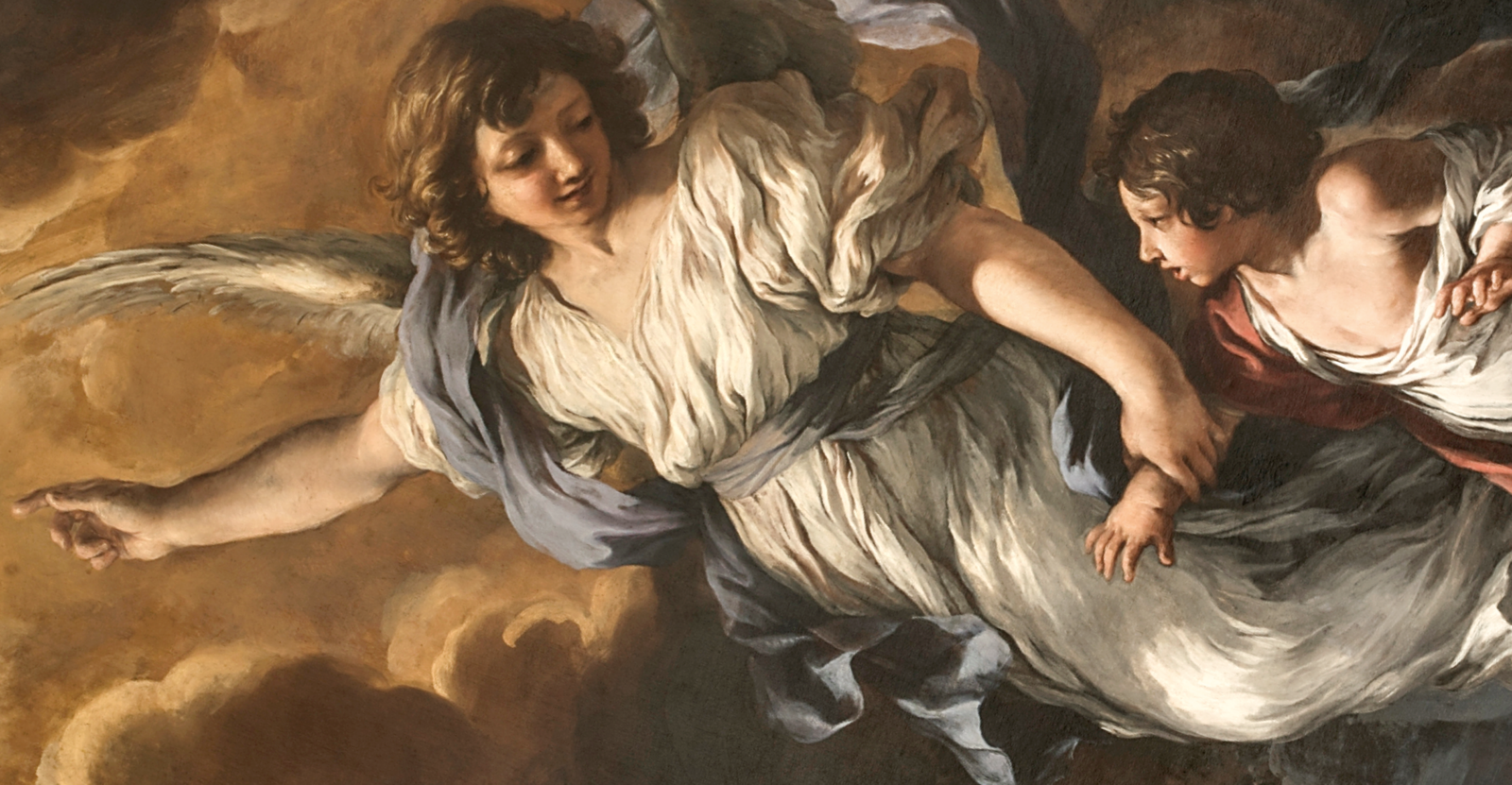
Angels. Messengers, Guardians and Wayfarers, the Sublime Creatures from the Ancient to the Contemporary is the major exhibition that the Capitoline Museums dedicate to one of the longest-lived figures of Western art. It is held in the ground-floor rooms of Palazzo dei Conservatori, at Piazza del Capitoline Hill 1, and is open from May 13 to November 1, 2026. Anyone reading these lines in mid-September 2026 therefore arrives when the exhibition is open, with about seven weeks of margin before it closes. It is curated by Massimo Rossi Ruben and Viviana Vannucci, admission is included in the Capitoline Museums ticket, and the route is divided into three sections: the Messengers, the Guardians, the Wayfarers.

The angel is one of the few figurative inventions that has crossed the whole history of European art without ever leaving the stage. It appears in 5th-century mosaics, fills the altarpieces of the 15th century, holds up Baroque canopies, descends into Romantic prints, re-emerges in 20th-century abstract painting and arrives today, where it no longer necessarily has a religious meaning but keeps working as an image. Few figures can sustain a route of this breadth. A saint is recognized by attributes and is exhausted by his story. An emperor belongs to his century. The angel instead adapts, changes sign, stays recognizable with just two wings and a suspended posture.
The exhibition at the Capitoline Museums takes this length seriously. It does not limit itself to lining up works of devotion, but tries to tell how the same figure has been reused by different cultures to say different things: announcement, protection, companionship. The three sections of the route correspond exactly to these three functions, and the choice to order by function instead of chronology produces a precise effect, that of bringing together in the same rooms works centuries apart. A 17th-century angel and a 20th-century angel hung side by side do not resemble each other at all, but they answer the same question. It is the comparison that holds the whole operation up.
What the Exhibition Is and Where It Is Held
The full title is Angels. Messengers, Guardians and Wayfarers, the Sublime Creatures from the Ancient to the Contemporary. The venue is the ground-floor rooms of Palazzo dei Conservatori, the palace that closes the right side of the square of the Capitoline Hill for those arriving from the Cordonata. The official address of the complex is Piazza del Campidoglio 1, 00186 Rome.
The dates are May 13, 2026 for the opening and November 1, 2026 for the closing. That is a little under six full months, a calendar that covers the whole high tourist season and ends at the first autumn long weekend. In mid-September 2026 the exhibition is therefore under way, and anyone who wants to see it has a margin that is not huge: the end of October coincides with the Romans' return from vacation and with the period when the museum fills up again with school groups, so the most comfortable weeks for a quiet visit are precisely those of September.
The curation is entrusted to Massimo Rossi Ruben and Viviana Vannucci. The exhibition is promoted by Roma Capitale, Culture Department, and by the Capitoline Superintendency for Cultural Heritage. The organization is by the European Center for Tourism and Culture, chaired by Giuseppe Lepore. The museum services are entrusted to Zètema Progetto Cultura, the company that runs the entire network of Rome's civic museums. The catalog is published by Gangemi Editore, signed by the two curators.
Why It Matters That It's on the Ground Floor
The detail of the level seems bureaucratic, yet it changes the visit. The ground floor of Palazzo dei Conservatori is the level where you enter, where the box office, the cloakroom and the courtyard with the colossal fragments are. The rooms that host the angels are therefore met in the first part of the route, when your legs are fresh and your attention is at its peak. Anyone who knows the museum knows that the problem of the Capitoline Museums is not beauty, it is length: between the two palaces, the underground gallery, the Tabularium, the Horti Lamiani and the Pinacoteca you easily reach three hours, and the last rooms are crossed by visitors who are by now saturated. An exhibition placed on the ground floor escapes this fate, as long as you decide to start there instead of putting it off until the end.
There is, however, a flip side. The ground-floor rooms are on everyone's obligatory path, so in the middle hours the flow is constant. There is no separate line for the exhibition, no dedicated time slot, no autonomous cap on numbers. The rhythm of the rooms follows the general rhythm of the museum, and that means the variable that decides the quality of the visit is only one: the hour at which you enter the Capitoline Museums.
The Ticket
Admission to the exhibition is included in the Capitoline Museums ticket. No separate ticket is needed, no additional booking. Anyone who enters the museum with any valid ticket, including free entry for residents, finds the angels route included. It is a substantial difference from the major exhibition on Diego Rivera set up in the same period at Villa Caffarelli, which has its own ticket.
The Loans
The route brings together works owned by the city and loans from a considerable number of institutions. Among the lenders are the Real Bosco di Capodimonte, the Museo di Roma, the Galleria dell'Accademia in Florence, the Musei del Bargello, the Galleria degli Uffizi, the Intesa Sanpaolo Collection, the BNL BNP Paribas Collection, the Gallerie Nazionali di Arte Antica of Rome, the Musei Nazionali di Perugia, the Pinacoteca Capitolina, the Museo Barracco and the Fondo Edifici di Culto.
A list like this deserves a reading. The presence of the Fondo Edifici di Culto, which is the body of the Ministry of the Interior responsible for an enormous heritage of churches and works of sacred art that remained with the State after the 19th-century suppressions, indicates that paintings also come to the exhibition that normally live in churches open for worship and not in museums. These are the works hardest to see in the right conditions: in church they are often high up, backlit, without dedicated lighting, sometimes behind an altar that prevents you from getting close. In an exhibition room, at the right height and with calibrated light, the same canvas becomes another object. It is worth keeping in mind, because it is one of the concrete reasons to go.
The Figure of the Angel in Art from Antiquity to Today
To understand what holds together a route that goes from the ancient to the contemporary it is worth reconstructing, even in broad outline, where this figure comes from and how it has transformed. It is a less linear story than common sense suggests, and knowing it changes quite a lot the way you look at the rooms.
Wings before Angels
The first fact to fix is that wings, in Mediterranean art, arrive long before Christianity. The idea of depicting a being intermediate between the divine and the human world by giving it a pair of wings belongs to the repertoire of the ancient Near East and passes from there to Greece. In Assyrian and Persian art there are winged genii with a protective function, placed to guard thresholds and palaces. In Egypt protection is expressed through wings that wrap around, like those of Isis stretched out on the sarcophagus or those drawn at the sides of the solar disk.
Nike, the Winged Victory
In the Greek world the winged figure par excellence is Nike, Victory. She descends from the sky to crown the winner, lands on the prow of ships, flies over battlefields. She is female, has drapery moved by the wind and a downward movement. In Roman art she becomes the Victoria, and her success is enormous: she appears on coins, on the reliefs of triumphal arches, on the cuirasses of imperial statues, on sarcophagi. Anyone who has climbed the Altare della Patria or looked closely at the reliefs of the Markets of Trajan has seen dozens of them.
When the empire becomes Christian, the Victoria is the winged figure that everyone knows how to recognize and that every sculptor knows how to make. The iconographic passage from Victory to the Christian angel happens for this practical reason even before a theological one: there already existed a tried and tested formal model, with codified proportions, drapery and rendering of feathers, and the new religion inherited it by adapting it. The first figured angels in Christian art derive visually from the pagan Victories, and the kinship remains legible to the naked eye for centuries.
Eros, the Genii and the Putti
A second line of descent leads to child angels. In the Greek and Hellenistic repertoire Eros is a winged boy. In the Roman version he multiplies into little cupids that fill scenes of procession, grape harvest and play. On Roman sarcophagi these winged children hold up garlands and scrolls. In Christian art the same figure re-emerges as the putto, and in the Renaissance it becomes the chorus of little winged heads that crowds the altarpieces.
The Early Christian Turn
In the very first centuries Christian art is cautious with winged figures, probably because the resemblance to pagan deities was too obvious. The angels of the catacombs often appear without wings, as young men dressed in white. Wings establish themselves permanently when Christianity becomes a public religion and Christian art takes possession of monumental buildings, that is, during the 4th and 5th centuries.
From that moment the figure is fixed. The angel of late antique and Byzantine mosaics is tall, frontal, wrapped in light robes, often with a messenger's staff in hand and wings folded along the body. Its function is to stand beside the divine figure and signal its presence. It almost never acts: it is an honor guard.
The Middle Ages and the Hierarchies
In the Middle Ages angelology becomes a system. The text that weighs most is the one attributed to Dionysius the Areopagite, which organizes the angels in nine choirs distributed over three hierarchies: Seraphim, Cherubim and Thrones. Dominations, Virtues and Powers. Principalities, Archangels and Angels. This classification has enormous figurative consequences, because different attributes and colors correspond to each choir. The Seraphim have six wings and are red, the Cherubim are blue, the Thrones appear as wheels of fire. Anyone who looks at a medieval mosaic or fresco and notices that the winged beings do not resemble each other at all is not observing a whim of the painter: they are reading a taxonomy.
Alongside the choirs, the archangels with proper names consolidate. Michael is the warrior who weighs souls and defeats the dragon. Gabriel is the messenger of the Annunciation. Raphael accompanies the young Tobias on his journey and is, for this reason, the wayfaring angel par excellence. This last detail is relevant to the exhibition: the third section of the route, that of the Wayfarers, rests on a tradition that has in Raphael its oldest and most widespread model.
The Renaissance and the Body
Between the 14th and 16th centuries angels change in consistency. They stop being flat apparitions on a gold ground and become bodies placed in a measurable space. It is the great building site of perspective and anatomy, and the winged figure is a formidable testing ground, because it forces the solution of a difficult technical problem: how to attach a wing to a human back without the result looking fake, and how to represent a body that does not rest on the ground.
The 17th Century, Light and Theater
The Baroque century is the one in which the angel reaches its greatest dramatic intensity. The Counter-Reformation asks sacred art to move and persuade, and celestial figures become the main instruments of that persuasion. They enter the scene from above, cut the composition diagonally, bring light with them. In sculpture the angels that hold up, that point, that weep multiply.
Rome is the capital of this language, and the visitor who leaves the Capitoline Museums finds examples everywhere, from the statues on the bridge in front of Castel Sant'Angelo to the chapels of the churches in the center. The exhibition brings into the Capitoline rooms some of the names who built that language, and the close comparison between artists who worked in Rome in the same years is one of the reasons a thematic route like this works better than a monographic show.
The 19th and 20th Centuries, the Angel That Loses Religion
With the 19th century the figure splits in two. On one side devotional production continues, which in Neoclassical and Purist sculpture produces polished, very sweet angels, often destined for funerary monuments. The 19th-century cemetery is probably the place where the greatest quantity of angels ever sculpted in Europe is concentrated. On the other side literature and Romantic painting begin to use the angel as a poetic image freed from dogma: the fallen angel, the rebel angel, the melancholy angel.
In the 20th century this second line prevails. The angel becomes a figure of conscience, memory, loss. It no longer announces anything specific and for that very reason becomes usable again by artists who have no religious interest at all. Some painters reduce it to an almost abstract sign, a few lines on a colored ground. Others treat it as a recurring character of their private repertoire. The exhibition's route arrives this far, and the presence of works from the second half of the 20th century and recent years next to 17th-century paintings is the gamble of the whole operation.
An honest clarification: contemporary works are protected by copyright and cannot be described in detail. What can be said is how they function within the route, that is, as counterpoint. After rooms in which the angel has a body, a face, a gesture and a message, arriving in front of a figure reduced to a few traces produces a gap that the visitor feels physically. It is exactly the effect that an exhibition built by themes instead of centuries can obtain, and that a chronological survey would never obtain.
A Curiosity About Angels at the Capitoline Museums: From the Ancient to the Contemporary
The curiosity is about the place more than the exhibition. The Campidoglio hosts a route on angels and is a few steps from the church of Santa Maria in Aracoeli, whose name literally means altar of heaven. Medieval tradition tells that on the very top of the hill the emperor Augustus supposedly had a celestial vision, and that in memory of that episode an altar was supposedly erected. The legend has no verifiable historical foundation, but it had concrete consequences: it gave the church its name, justified the construction of the monumental staircase and for centuries guided the way Romans thought about this hill.
The result is a coincidence that nobody planned. An exhibition on celestial creatures opens about 50 meters from the church of the altar of heaven, on the hill where, according to tradition, heaven opened for the first time over Rome. Nobody writes it on the panels, and I understand why, since the link is purely legendary. The fact remains, though, that anyone who leaves the exhibition and climbs the 124 steps of the Aracoeli staircase makes, without meaning to, the most coherent route possible with what they have just seen.
What You See in the Exhibition
The route is organized in three thematic sections that correspond to the three historical functions of the angelic figure. Each section brings together works from different eras, and the internal comparison is the main mechanism of the exhibition.
The Messengers
The first section concerns the angel who brings the announcement. It is the oldest and most literal function, the one that gives the category its very name, since the Greek word from which the term derives means precisely messenger. The route of this section goes from the biblical sources to the Renaissance and Baroque versions, with the theme of the Annunciation at the center.
Among the works on show in this area the museum's website points to The Annunciating Angel by Carlo Dolci, datable to around 1650, lent by the Galleria degli Uffizi. Dolci is a Florentine painter of extreme devotion and proverbial slowness, able to work for months on a single head. His angels have a smoothness and a sweetness that in the Italian 17th century has few parallels, and that in the following decades will be imitated a great deal.
Also in this thematic area is Saint Matthew with the Angel by Guercino, dated 1622 and belonging to the Pinacoteca Capitolina, that is, to the home collection. The subject is that of the evangelist writing under dictation: the angel here does not announce to a sacred figure, it inspires an author. It is a variant of the messenger function that had enormous success in 17th-century Roman painting, because it allowed the representation of the exact moment in which a word passes from heaven to the page.
The Guardians
The second section concerns the angel who protects. It is the most popular and most domestic strand of the whole tradition, the one that produced the most widespread images in Italian homes for at least three centuries. Devotion to the guardian angel took shape between the 16th and 17th centuries, received a decisive boost from the institution of a dedicated feast and generated an enormous figurative production.
The museum names among the main pieces of this group The Guardian Angel by Pietro da Cortona, dated 1656 and coming from the Gallerie Nazionali di Arte Antica. Pietro da Cortona is one of the two or three names that define the Roman Baroque, the man of the vault of Palazzo Barberini, and seeing him on an intimate devotional subject instead of a celebratory court machine is a rare opportunity.
Next to it appears the Guardian Angel by Giovanni Antonio Galli, known as lo Spadarino, datable to around 1620 and kept in the church of San Rufo in Rieti. Lo Spadarino belongs to the generation that absorbed Caravaggio's lesson and carried it forward in more subdued tones. The interesting fact is the provenance: a church in a mid-sized city of Lazio, where the painting normally lives in conditions of difficult visibility. It is one of those loans that justify the visit all by themselves, because they offer the chance to look up close and in the right light at a work that elsewhere is barely glimpsed.
The section also includes 19th-century material, beginning with a plaster Guardian Angel by Pietro Tenerani, a sculptor who in Rome was one of the protagonists of the passage from Neoclassicism to Purism. Plaster, in sculptural practice, is the intermediate model between the sketch and the marble, and has a matte surface that renders volumes differently from polished stone. Seeing it in an exhibition is a privilege, because plasters are fragile and travel little.
The Wayfarers
The third section concerns the angel who accompanies. It is the least codified function and for that reason the most interesting to follow over time, because it lends itself to being filled with different meanings. The archetype is the archangel Raphael walking beside Tobias, a figure of company more than authority, who in many depictions appears almost the same age as the boy he accompanies.
From this ancient core the section widens to the contemporary. Among the 19th-century works the museum cites Christian Martyrs Carried by Angels by Domenico Morelli, a Neapolitan painter who marked history painting in post-unification Italy and who treated sacred subjects with a dramatic realism distant from traditional devotion.
For the 20th century and recent years the exhibition presents works by Osvaldo Licini, with an angel on a blue ground that belongs to the series of celestial figures that occupies the last years of his research, and by Omar Galliani, present with two large-format works. On these, as said, a detailed description is not possible for copyright reasons: what can be pointed out is their place in the exhibition's discourse, that is, the point where the figure of the angel stops telling a story and becomes a way of treating the visible.
How to Read the Layout
An exhibition built by themes asks of the visitor a different discipline than a chronological one. It is best not to look for development, because there isn't any. It is better to compare. In front of two works of the same section three centuries apart, the useful question is not which is more beautiful, but which problem each is solving. A 17th-century painter's angel has to convince the viewer that the scene is really happening. A 20th-century artist's has to make a form work inside a picture. They are different tasks and produce incomparable solutions, and that is why certain dismissive put-downs of the contemporary on show, which one often hears said out loud in the rooms, miss the point.
One Thing Nobody Tells You About Angels at the Capitoline Museums: From the Ancient to the Contemporary
The thing almost nobody says is that an exhibition included in the museum ticket gets visited badly, and not because of the layout. The problem is psychological. When you pay a separate ticket for an exhibition, you go in with the idea of having to get something out of it. When the exhibition is included, it is treated as a supplement, something to cross before getting to the Wolf and the Marcus Aurelius. Not a few visitors walk through rooms of this kind in five minutes, with the air of someone passing through a corridor.
The flip side is that an exhibition included in the ticket also collects an audience that would never have chosen it, and this is an enormous advantage from the cultural point of view. The point is that the individual visitor, in order not to waste it, has to make a conscious choice: decide in advance how much time to give it and protect that time from the rest of the museum. A full hour on the angels, before facing the main route, is an investment that pays much more than an extra hour spent photographing the courtyard.
There is then a second aspect nobody explains. Exhibitions included in the ordinary ticket affect the price of the ticket itself. The fare of the Capitoline Museums in the periods with the angels exhibition included is higher than the ordinary fare for the museum alone, and this means that in effect the visitor is paying for it, simply without seeing the separate line. Knowing it helps you take it seriously.
The Advice I Give You for Visiting Angels at the Capitoline Museums: From the Ancient to the Contemporary
The main advice concerns the time. Showing up at opening, at 9:30, completely changes the nature of the visit. The ground-floor rooms in the first half hour are practically empty, organized groups arrive later because their program almost always starts with the Colosseum, and whoever enters first has ahead of them a window of 40 or 50 minutes in which they can stand in front of a painting as long as they want. From 11:00 on the situation changes, and in the middle hours of weekends the ground floor becomes a funnel.
The second recommendation is to reverse the usual order. Instinct leads you to do the museum first and then the exhibition, because the exhibition is perceived as an extra. The opposite works better: exhibition at the entrance, with a clear head, and permanent collection afterward. The reason is that the angels ask for a close reading, made of faces and gestures, while the monumental rooms of the Capitoline Museums hold up very well even to a more tired visit, because the scale of the works is such that they work anyway.
Third point: devote a specific moment to the comparison between the two chronological extremes. Look for a 17th-century angel and a contemporary one in the same section, look at them one after the other, then go back to the first. It is a trivial exercise that produces a real effect, because the second look at the old painting comes after the eye has crossed a completely different language, and this makes visible things that on the first glance had slipped away.
Fourth: if you are a resident of Rome or the Metropolitan City, admission to the Capitoline Museums is free on showing an ID. This radically changes the calculation. An exhibition to be seen in an hour, free, 10 minutes from Piazza Venezia, can be visited twice in different weeks, which is the best way to look at a thematic show. The share of Romans who don't use this free entry remains very high, and it is worth repeating every time.
Fifth, a note on the closing day. November 1, 2026 is the last day, and it falls on a Sunday. Anyone planning to arrive at the last minute must allow for the fact that the last days of Roman exhibitions always attract a disproportionate crowd, and that a crowded ground-floor room is the worst possible context for looking at small and medium-format works. September and the first half of October remain the best window.
The Capitoline Museums as a Venue
The Capitoline Museums are commonly described as the oldest public museum in the world. The conventional founding date is 1471, when Pope Sixtus IV donated to the Roman people a group of ancient bronzes kept until then at the Lateran, among them the Wolf, the Spinario, the Camillus and the colossal fragments of an imperial statue. From that donation, and from later acquisitions, comes the complex that today occupies three buildings facing the Michelangelo square.
The Three Palaces
Palazzo dei Conservatori, on the right side for those going up, is the building where you enter and where the angels exhibition is held. It houses the historic apartments with the great frescoed cycles, the Capitoline Wolf, the Spinario, the Brutus, the room of the Horti Lamiani and, on the upper floor, the Pinacoteca Capitolina. Palazzo Nuovo, on the left side, is the home of the great collection of ancient sculpture, with the Galleria, the Hall of the Emperors, the Hall of the Philosophers, the Dying Gaul, the Capitoline Venus. Palazzo Senatorio, at the back of the square, is the seat of the City of Rome and houses in its basement the Tabularium, the ancient Roman state archive, from which one of the most famous views of the Forum opens.
The three buildings are connected by an internal route that passes under the square through the Galleria Congiunzione, where a stretch of ancient road and part of the epigraphic collections are displayed. It is a passage that many visitors cross at a run and that instead deserves attention, because it shows the real stratigraphy of the hill.
Villa Caffarelli and the Exedra
On the side of the Campidoglio that looks toward the Tiber, the wing of Villa Caffarelli hosts the major temporary exhibitions with their own ticket, in addition to the room of the Exedra where the original equestrian statue of Marcus Aurelius is. During the angels exhibition, Villa Caffarelli hosts the show on Diego Rivera, open from June 9 to December 13, 2026.
The Other Exhibitions Now On
Anyone visiting the Capitoline Museums in this period finds in the complex several exhibition routes active at the same time. Besides the angels and Rivera there are Il non finito: fra poetica e tecnica esecutiva, in the rooms of the Pinacoteca, open until January 4, 2027. The reconstruction of the Colossus of Constantine in the garden of Villa Caffarelli. And I Colori dell'Antico. Marmi Santarelli ai Musei Capitolini, a very long-running route dedicated to colored marbles.
Tickets and Access
The data that follow are those published by the museum. Capitoline fares vary depending on the exhibitions included in the route, so they change more often than you might imagine: rereading the official website before leaving remains the most prudent choice, especially close to the closing of an exhibition.
Address, Hours and Contacts
The address is Piazza del Campidoglio 1, 00186 Rome. The opening hours are every day from 9:30 to 19:30, with last entry an hour before closing. The reference number for information and bookings is 060608, active every day from 9:00 to 19:00. For the exhibition there is also a contact for the organization, the Centro Europeo per il Turismo, at numbers 06 6876600 and 06 6876448 between 9:00 and 13:00, and the mailbox info@centroeuropeoturismo.it. The museum answers at the address info.museicapitolini@comune.roma.it.
The Fares
In the period with the angels exhibition included in the route, the Capitoline Museums ticket for non-residents is set at €16.50 full price and €11.00 reduced. Residents of Rome and the Metropolitan City enter free on showing an ID.
The Capitolini Card, valid for seven days and including admission to the Capitoline Museums and to the Centrale Montemartini, costs €15.50 full price and €11.50 reduced. It is one of the most convenient formulas in the whole Roman museum offer, because it adds a second museum and seven days of validity at a price lower than the single ticket plus a surcharge.
The exhibition on Diego Rivera has its own ticket, at €15.00 full price and €13.00 reduced, with family rates of €22.00 for two adults with minor children and €11.00 for one adult with minor children, and a school rate of €4.00 per pupil. There is a combined ticket that includes museum and exhibitions at €23.50 full price and €19.50 reduced.
Among audio guides and aids, the museum lists the video guide at €6.00, the audio guide for adults and the one for children at €4.00, and the radio guide service for groups with 30 receivers at €18.00.
Free Entry
Entry is free for children under six, for people with disabilities and their companion, for tour guides and interpreters of the European Union in the exercise of their profession, for ICOM and ICOMOS members, for holders of a valid MIC card and for residents of Rome and the Metropolitan City. Specific conditions are also provided for Roma Pass holders.
Presale and Rules
The presale fee is €1.00. Purchase can be made online, through the 060608 call center or directly at the box office. A rule published by the museum with no room for interpretation: tickets pre-purchased online, through the call center or at the box office are neither refundable nor changeable. This means that a date and time chosen in advance must be respected, and that an unforeseen event gives no right to move the visit. Anyone without firm plans does well to buy on the spot, all the more because the Capitoline Museums rarely sell out as happens at the Colosseum.
How to Get There
The Campidoglio is reached on foot from Piazza Venezia in three minutes, climbing the Capitoline Cordonata, the ramp with low steps designed by Michelangelo. The most useful metro stop is Colosseo on line B: from there you climb Via dei Fori Imperiali in 12 or 15 minutes of flat and very scenic walking, passing the Imperial Forums Museum and the Markets of Trajan. Alternatively you use the dense network of buses that converge on Piazza Venezia, the best-served surface hub of the historic center. By car the answer is simple: it's not worth it. The area falls within the limited traffic zone and surface parking is nonexistent. Anyone coming from outside the city parks at a metro terminus and completes the trip by train.
Another Well-Known Fact, Yet Rarely Mentioned
The well-known fact is that the Capitoline Museums were born in 1471 from the donation of ancient bronzes made by Pope Sixtus IV to the Roman people, and that for this reason they are defined as the oldest public museum in the world. The formula appears in every guide and on every panel. What is added much more rarely is the political meaning of that gesture: giving back to the people of Rome the symbols of their own antiquity meant recognizing the Campidoglio as the civic seat, in contrast to the Vatican as the seat of papal power. The donated bronzes were not neutral objects. Among them were the Wolf, which is the very symbol of the city, and the colossal fragments of the statue of Constantine, that is, of the emperor who had tied Rome to Christianity.
There is, however, a second fact, equally well known and equally little explored, which concerns the very theme of this exhibition. The quantity of angels kept in Rome's civic museums is enormous, and the reason is historical: after the suppressions of ecclesiastical bodies that took place between the unification of Italy and the following decades, an immense heritage of sacred furnishings, altar paintings and devotional sculptures passed to the State and to local bodies. Many of those pieces ended up in storage, where they remain to this day. A thematic exhibition on angels is, among other things, an opportunity to bring out material that normally lives in the warehouse.
Accessibility
The museum publishes information dedicated to accessibility and the directions that follow repeat the official ones. Entry is free for people with disabilities and for a family member or other companion, free entry recognized across the whole network of Rome's civic museums.
In terms of mobility the complex has elevators, stairlifts and ramps that allow the main differences in level to be overcome. A museum carved out of three connected historic palaces necessarily presents many changes of level, and the museum itself points out that the structure of the buildings in some places limits the complete removal of barriers: some rooms may be harder to access. The notices page of the website reports temporary limitations, for example elevators out of service for maintenance or closed rooms, and it is the first thing to consult for anyone organizing a visit with specific needs.
For the angels exhibition there is a favorable circumstance: the rooms are on the ground floor, that is, at the same level as the entrance. Anyone who moves in a wheelchair or has mobility difficulties can therefore see the exhibition route without facing any of the museum's more demanding internal level changes. It is information worth having in advance, because it allows you to plan a short, targeted visit even for those who don't feel up to facing the whole complex.
For blind and partially sighted visitors the museum provides permanent tactile aids that allow direct exploration of some main works, accompanied by dedicated educational programs. For deaf visitors there are video guides in Italian Sign Language, including a route on the museum as a whole and a presentation of the history of the Campidoglio that can be consulted on an interactive touchscreen station.
A practical observation that comes from experience and not from the panels: the critical point is not the museum, it is the arrival. The Capitoline Cordonata is a ramp with long, low steps, passable but tiring with a hand-pushed wheelchair, and the staircase of the Aracoeli next to it is completely impassable. Anyone with mobility problems should find out in advance about alternative accesses by calling 060608 before showing up: the logistics of the hill are complex and a solution agreed beforehand avoids a problematic arrival. The same goes for anyone accompanying elderly people, because the climb to the Campidoglio is not trivial.
The Right Photo to Take at Angels at the Capitoline Museums: From the Ancient to the Contemporary
Inside the exhibition rooms photography is subject to the specific rules of the exhibition, which may be stricter than those of the museum, especially with works on loan and contemporary works protected by copyright. The sign at the entrance to the section is the only source that counts, and it should be read before raising your phone. If in doubt, the prudent rule is not to photograph works on loan and in no case those of living artists.
This still leaves a wide field. The best photo connected to a visit to the Campidoglio is not taken inside the exhibition, it is taken on the way out. You cross the doorway of Palazzo dei Conservatori, return to the square and stand on the high edge of the Cordonata looking down: the elliptical paving designed by Michelangelo opens behind you, the city stretches out in front, and in the low hours of the light the contrast between the pale travertine and the dark roofs produces an image that stands on its own.
The second useful shot is in the courtyard of Palazzo dei Conservatori, where the colossal fragments of the statue of Constantine are displayed. The head, the hand with the finger pointing upward, the foot. Photographing them from below, including a human figure to give scale, gives back the effect that statue must have produced in antiquity. It is an image that goes well with the exhibition's theme, because it tells the same thing the angels tell: the effort of representing something larger than human by using a human body.
Some Important Events That Happened Here in History
The hill on which the exhibition stands has a density of events that is hard to match anywhere else in the city.
The Temple of Jupiter Optimus Maximus
On the summit of the Campidoglio, in the area corresponding to today's Villa Caffarelli, stood the Temple of Jupiter Optimus Maximus, the main sacred building of the Roman state. Its foundation is traditionally placed in the first years of the republic, at the end of the 6th century BC. Here triumphs concluded, here consuls took office, here the Sibylline books were kept. Parts of the foundations in tuff blocks are still visible inside the museum, and it is one of the points where the stratigraphic depth of the hill becomes tangible.
Michelangelo's Project
In 1538, on the occasion of Emperor Charles V's visit to Rome, the equestrian statue of Marcus Aurelius was moved from the Lateran to the Campidoglio. It was the occasion that led to the commission to Michelangelo to redesign the entire square. The project included the Cordonata, the reconfiguration of Palazzo Senatorio, the redoing of the facade of Palazzo dei Conservatori and the construction of Palazzo Nuovo to close the space symmetrically, in addition to the paving with the star design. The works continued for over a century after the artist's death, and the paving was completed only in the 20th century.
1734 and the Opening to the Public
Pope Clement XII opened the Capitoline collections to the public in 1734, making effective the vocation that the 15th-century donation had only stated. It is the date that allows us to speak of the Capitoline Museums as the first public museum in the full sense, that is, open to anyone and not only to scholars and authorized visitors.
1957 and the Treaties of Rome
On March 25, 1957, in the Hall of the Horatii and Curiatii of Palazzo dei Conservatori, the Treaties of Rome were signed that established the European Economic Community and the European Atomic Energy Community. The room is part of the ordinary museum route and is crossed during the visit. Anyone who enters to see an exhibition on angels thus passes, in the same morning, through the room in which community Europe was born: it is one of the overlaps that make this museum different from all the others.
Who Has Passed Through Angels at the Capitoline Museums: From the Ancient to the Contemporary
The rooms that today host the exhibition belong to a building crossed, over the centuries, by anyone who has had a role in the history of Rome. It is worth listing a few presences, because it helps to understand where you are.
Michelangelo Buonarroti is the name that weighs most, because the square and the facades of the two side palaces bear his design. He received the commission from Pope Paul III and worked on the project in the last decades of his life, without seeing it completed.
Charles V, emperor, was the occasional reason for the reorganization: his triumphal entry into Rome in 1536 made evident how unseemly the condition of the civic hill was, and it was that embarrassment that triggered the project.
Gian Lorenzo Bernini and Pietro da Cortona, the two protagonists of the Roman Baroque, both worked for the Campidoglio and for Capitoline commissions. By Pietro da Cortona the exhibition shows a Guardian Angel, lent by the Gallerie Nazionali di Arte Antica.
As for the artists present in the exhibition, the list of loans makes up a list that crosses four centuries: Guercino, Carlo Dolci, Pietro da Cortona, lo Spadarino for the 17th century. Pietro Tenerani and Domenico Morelli for the 19th. Osvaldo Licini and Omar Galliani for the 20th and the contemporary. Not all of these artists worked in Rome, but almost all of them passed through, and for many of them the Roman stay was the decisive moment of their training.
What's around the Campidoglio
The Capitoline hill is at the exact center of ancient Rome and monumental Rome, and this means that on foot, within a quarter of an hour, you reach a quantity of places that elsewhere would be enough for a whole city.
On the Hill Itself
The Capitoline Cordonata is the right way to arrive and also the right way to leave, because the design of the ramp is conceived to be walked uphill, with the square revealing itself progressively. Next to it, the staircase of the Aracoeli leads to the church of Santa Maria in Aracoeli, built on the top of the hill and very rich in works, from the chapel frescoed by Pinturicchio to the Cosmatesque floors. It is one of the least visited churches in the center relative to its value, probably because those 124 steps discourage.
On the opposite slope, going down toward the Forum, you meet the Mamertine Prison, the ancient Tullianum, with the church of San Pietro in Carcere above it.
A Few Minutes' Walk Away
From the Campidoglio you go down to Piazza Venezia in three minutes. There you find the Altar of the Fatherland with its panoramic terraces, the Ala Brasini that hosts large-format temporary exhibitions and the National Museum of Palazzo Venezia.
Going up Via dei Fori Imperiali you arrive at the Imperial Forums Museum and the Markets of Trajan, the semicircular complex that offers one of the best-arranged archaeological routes in the city. Continuing you reach the Colosseum and the Palatine, and a little beyond the Circus Maximus.
Toward the Tiber
Going down the opposite side you enter the area of the Forum Boarium, with the two best-preserved republican temples in Rome, and the church of Santa Maria in Cosmedin, in front of which is the Mouth of Truth. A little farther on, along the river, is the Tiber Island.
On the Ghetto side you meet the Synagogue and the Jewish Museum of Rome, which tell the story of a community present in the city continuously for over 2,000 years.
Other Museums within Useful Range
10 or 15 minutes' walk away are the sacred area of Largo Argentina, with its cat sanctuary, the Museo Barracco of ancient sculpture, the Museo di Roma at Palazzo Braschi, the Basilica of Santa Maria sopra Minerva and the Pantheon.
For anyone who wants to build a day coherent with the exhibition's theme, one possible itinerary is this: exhibition at the Capitoline Museums in the morning, climb to the Aracoeli for the frescoes, descent toward the Forum Boarium and conclusion at Castel Sant'Angelo, whose name derives precisely from the apparition of the archangel Michael that according to tradition marked the end of a plague, and on whose summit is the bronze statue of the archangel sheathing his sword. It is the most direct way to close the circle.
Quick Questions
Can the angels exhibition at the Capitoline Museums still be visited?
Yes. The dates published by the museum are May 13, 2026 as the opening and November 1, 2026 as the closing, so in mid-September 2026 the exhibition is under way.
What is the full title?
Angels. Messengers, Guardians and Wayfarers, the Sublime Creatures from the Ancient to the Contemporary.
Where exactly is it held?
In the ground-floor rooms of Palazzo dei Conservatori, inside the Capitoline Museums, Piazza del Campidoglio 1.
Is a separate ticket needed?
No. Admission to the exhibition is included in the Capitoline Museums ticket. The case of the Diego Rivera exhibition at Villa Caffarelli is different, which has its own ticket.
How much does it cost to get in?
In the period with the exhibition included in the route, the ticket for non-residents is €16.50 full price and €11.00 reduced, plus €1.00 presale fee for those who buy in advance.
Do Romans pay?
No. Residents of Rome and the Metropolitan City enter free on showing an ID, and the free entry includes the exhibition too.
Who curated the exhibition?
Massimo Rossi Ruben and Viviana Vannucci. The organization is by the European Center for Tourism and Culture, with museum services by Zètema Progetto Cultura.
How is the route organized?
In three thematic sections: the Messengers, the Guardians, the Wayfarers. Each section brings together works from different eras around the same function of the angelic figure.
Which works can be seen?
Among the pieces highlighted by the museum are The Guardian Angel by Pietro da Cortona from 1656, The Annunciating Angel by Carlo Dolci from around 1650, Saint Matthew and the Angel by Guercino from 1622, the Guardian Angel by Spadarino from around 1620, a plaster Guardian Angel by Pietro Tenerani, The Christian Martyrs Carried by Angels by Domenico Morelli, and works by Osvaldo Licini and Omar Galliani.
Where do the loans come from?
Among the lenders, the museum lists Real Bosco di Capodimonte, Museo di Roma, Galleria dell'Accademia di Firenze, Musei del Bargello, Galleria degli Uffizi, Collezione Intesa Sanpaolo, Collezione BNL BNP Paribas, Gallerie Nazionali di Arte Antica di Roma, Musei Nazionali di Perugia, Pinacoteca Capitolina, Museo Barracco and Fondo Edifici di Culto.
Is there a catalog?
Yes, published by Gangemi Editore in 2026 and signed by the two curators.
What are the opening hours?
Every day from 9:30 to 19:30, with last entry one hour before closing.
How much time do you need?
One hour for the exhibition alone is a realistic estimate. For the exhibition and the permanent collection together, plan on three hours.
What is the best time to go?
The 9:30 opening, on a weekday. The ground-floor rooms are almost empty in the first half hour.
Is the exhibition accessible for people with mobility difficulties?
The exhibition rooms are on the ground floor, at the same level as the entrance, so they don't require tackling the museum's internal changes in level. The complex does have elevators, stair lifts and ramps, with some limitations that the museum itself points out because of the structure of the historic buildings.
Can you take photographs?
The exhibition's rules override the museum's general ones and should be read on the sign at the entrance. Flash is banned in any case, and works by living artists are protected by copyright.
What other exhibitions are on at the Capitolini in the same period?
Diego Rivera at Villa Caffarelli until December 13, 2026, Il non finito in the Pinacoteca until January 4, 2027, the reconstruction of the Colossus of Constantine and the route through the Santarelli Marbles.
How do you get there?
On foot from Piazza Venezia in three minutes, climbing the Cordonata. By metro, the Colosseo stop on line B and 12 or 15 minutes on foot along Via dei Fori Imperiali. By car, the area is a restricted traffic zone.
Who can you call for information?
060608, open every day from 9:00 to 19:00, or the contacts of the exhibition organizers, 06 6876600 and 06 6876448 between 9:00 and 13:00.
Frequently asked questions about Angels at the Capitoline Museums, from the Ancient to the Contemporary
Where is the Angeli ai Musei Capitolini exhibition held?
The exhibition "Angeli. Messaggeri, custodi e viandanti, le sublimi creature dall'Antico al Contemporaneo" is held in the ground-floor rooms of Palazzo dei Conservatori, at Piazza del Campidoglio 1, Rome, from May 13, 2026 to November 1, 2026.
Can you still see the angels exhibition in September 2026?
Yes, the dates published by the museum for Angeli ai Musei Capitolini are May 13, 2026 as the opening and November 1, 2026 as the closing, so in mid-September 2026 the exhibition is under way.
Is the Angeli exhibition ticket separate from the Capitoline Museums ticket?
No, the Angeli ai Musei Capitolini exhibition is included in the museum ticket and doesn't require a separate admission ticket. Capitoline rates vary depending on the exhibitions included in the route, so it's worth rereading the official website before you go.
What can you see at the Angeli exhibition?
The Angeli ai Musei Capitolini route is organized in three thematic sections corresponding to the historical functions of the angelic figure: the messengers, the guardians and the wayfarers, with works from antiquity to the contemporary era set side by side.
What are the opening hours of the Capitoline Museums?
The Capitoline Museums, home of the Angeli exhibition, are open every day. The precise hours and any changes for holidays should be checked on the museum's official website, which updates the information periodically.
Is it a good idea to arrive early to visit the Angeli exhibition?
Yes, for the Angeli ai Musei Capitolini exhibition it's best to show up at the 9:30 opening: the ground-floor rooms are practically empty in the first half hour, while organized groups arrive later because their program almost always starts with the Colosseum.
Are the Capitoline Museums accessible to people with motor disabilities?
Yes, at the Capitoline Museums admission is free for people with disabilities and for one family member or other companion, a free entry recognized across the whole network of Rome's civic museums. The complex has elevators, stair lifts and ramps to overcome the main changes in level.
Planning the visit
If you prefer to rely on a licensed guide for the visit to the Campidoglio and the exhibition, you can contact Tour Leader Pro, which works with professional guides in Rome and Lazio. To build a broader itinerary instead, one that puts together the civic museums, the season's big exhibitions and the rest of your trip in Italy, the starting point is ItalyPlanner.
One last recommendation, which applies to any Roman exhibition: always recheck dates and rates against the museum's official website before you go, because the calendar of Capitoline exhibitions changes, and extensions, like early closures, come with little notice.