Diego Rivera at the Capitoline Museums: the Big Exhibition on 20th-Century Mexican Art
In short. At the Capitoline Museums, in the spaces of Villa Caffarelli, the exhibition Diego Rivera and the Construction of Modern Art in Mexico in the 20th Century runs from June 9 to December 13, 2026: more than 140 works, around 30 of them by…
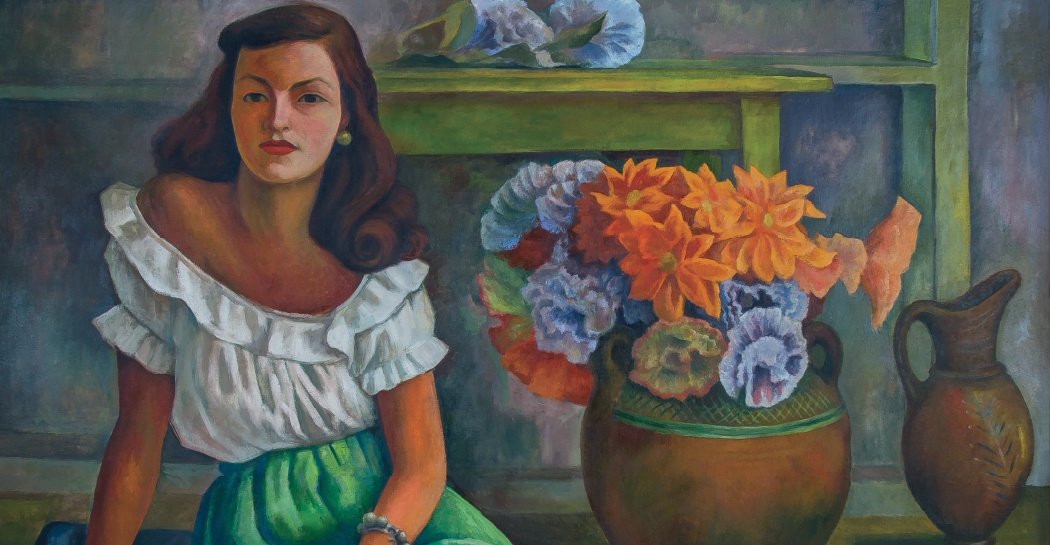
At the Capitoline Museums, in the spaces of Villa Caffarelli, the exhibition Diego Rivera and the Construction of Modern Art in Mexico in the 20th Century runs from June 9 to December 13, 2026: more than 140 works, around 30 of them by the Mexican master, for the broadest exhibition ever devoted in Italy to the muralist from Guanajuato and to the artistic season that Mexico went through after its revolution.

What the Exhibition Is and Where It's Held
The full title of the exhibition, the one that appears on the materials of the Sovrintendenza Capitolina, is Diego Rivera and the Construction of Modern Art in Mexico in the 20th Century. The venue is the complex of the Capitoline Museums, and more precisely the exhibition spaces of Villa Caffarelli, the wing that faces the southern side of the hill and that in recent years has become the place where Rome's civic museum stages its most ambitious exhibitions. The dates are those of a long exhibition, meant to span almost two seasons: it opens on June 9, 2026 and closes on December 13, 2026.
It's not often that you get to see Rivera in Rome. It's not often, to tell the truth, that you get to see him in Europe in a form other than an isolated loan inside a group show on international 20th-century art. Here the approach is different: the layout of the exhibition doesn't aim only to line up a certain number of paintings signed by a famous artist, but to tell how Mexico built a modern art of its own, recognizable and exportable, and how Rivera was at once the engine and the public face of that construction. The subtitle, if you think about it, is a program: not "Diego Rivera," but "Diego Rivera and the Construction of Modern Art in Mexico." The difference matters.
The numbers declared by the museum speak of more than 140 works on the route, around 30 of which can be directly attributed to Rivera. The rest makes up the context: the generation around him, the one that came before and the one that took up the legacy. The loans come in large part from Mexican collections, including the Colección de Arte BBVA México and the Colección Pérez Simón, two names that in Mexico count as a guarantee of quality on the nation's 20th century. The curators are Miguel Fernández Félix, director of the Museo Kaluz, and Alberto González Torres, director of the Museo Robert Brady.
On the institutional side, the exhibition is promoted by Roma Capitale through the Assessorato alla Cultura and the Sovrintendenza Capitolina ai Beni Culturali, in collaboration with MetaMorfosi Eventi and with the Museo Kaluz of Mexico City. Museum services are run by Zètema Progetto Cultura. It's the classic chain of Rome's big civic exhibitions, the one that brings to the Campidoglio projects built with a foreign partner and keeps them open for six or seven months.
One clarification worth making right away, because it avoids disappointment: Rivera was first of all a muralist, and murals don't travel. No exhibition in the world, however rich, can move to Rome the panels of the Secretaría de Educación Pública or the grand staircase of the Palacio Nacional. Anyone who walks in expecting to find a 30-meter wall in front of them will be thrown. Anyone who walks in knowing they will see easel paintings, studies, preparatory drawings, portraits, landscapes and works on paper, and that these materials serve to understand how a mural was born and from what world it came, will leave with something in hand. It's a distinction that the museum itself lets you glimpse and that is worth keeping in mind before buying the ticket.
Villa Caffarelli, as a venue, has a precise logic for a project like this. It lies within the perimeter of the Capitoline Museums, and the Capitoline Museums are the oldest public museum in the world: a collection born in 1471, when Pope Sixtus IV donated to the Roman people a group of ancient bronzes kept at the Lateran. Putting 20th-century Mexican art inside the institution that invented the very idea of a civic museum produces a short circuit that is not accidental. Rivera spent his life arguing that art should belong to the people and be on the walls of public buildings, not in the homes of collectors. The Campidoglio has been doing exactly this with Roman statues for 550 years.
A Curiosity About Diego Rivera at the Capitoline Museums: the Big Exhibition on 20th-Century Mexican Art
There's a biographical detail that makes the choice of Rome as a venue much less arbitrary than it seems. Between 1920 and 1921 Diego Rivera made a long trip to Italy. Not a tourist trip: a study trip, lasting more than a year, made of notebooks filled with hundreds of pages, copied frescoes, mosaics observed up close. Rivera was about to return to Mexico after a decade in Europe and knew he would be asked to paint walls. He had never painted one. So he went to learn the trade where the trade had been invented.
He looked at Giotto, he looked at Piero della Francesca, he looked at the Byzantine mosaics of Ravenna, he crossed a number of Italian cities, Rome included. From that trip he brought back two convictions that would mark all his later work: that mural painting is first of all a problem of architecture, that is, of the relationship between the image and the wall that hosts it, and that a painting meant for a wide public must be legible from a distance, with large figures, sharp outlines and full colors. Anyone who knows Mexican murals recognizes immediately where that grammar comes from.
The paradox is delicious: the painter who would become the symbol of revolutionary anti-European art, the one who claimed his pre-Columbian roots against the Western academy, learned to paint walls by copying Christian frescoes in Italy. Rivera never hid it, quite the contrary. He maintained that the Italian Renaissance and Aztec art had in common precisely what bourgeois European art had lost: an audience, a function, a shared story. Seeing his works inside a Roman museum, a few meters from the bronzes that Sixtus IV gave to the city, closes a circle that Rivera himself had opened 106 years ago.
Let's add a second curious element, of a completely different kind. In recent years the Capitoline complex has hosted a series of very different exhibitions, from ancient sculpture to contemporary photography, but a monographic show devoted to a 20th-century Latin American painter had not yet arrived. The Roman public knows Frida Kahlo from having seen her pass through the city several times in different forms, from serious exhibitions to commercial operations. It knows Rivera much less, though he was Kahlo's husband for 25 years in total and occupies a larger space than hers in the history of 20th-century art. It's an asymmetry of fame that the exhibition tries, with a certain patience, to correct.
Who Diego Rivera Was
Diego Rivera was born in Guanajuato on December 8, 1886 and died in Mexico City on November 24, 1957. Barely 70 years of life that cover the whole transformation of Mexico from a country governed for over 30 years by Porfirio Díaz to a republic emerged from a long and bloody revolution, and then to a nation busy giving itself a modern cultural identity. Rivera lived through all three of these phases and had a role in each.
The family moved early to the capital and the boy entered the Academy of San Carlos at a very young age, the city's official art school, where he received a solid and traditional academic training. In 1907 he obtained a scholarship that allowed him to leave for Europe. First Spain, with Madrid and the studio of Eduardo Chicharro, then from 1909 Paris, which was then the place to be. He stayed there, with interruptions and trips, for about 12 years.
The Parisian Rivera is an artist that many today would not recognize. Between 1913 and 1917 he painted in a fully Cubist way, with a rigor and a quality that placed him within the group that gravitated around Picasso and Juan Gris. Modigliani made a portrait of him. His works from those years show a mastery of Cubist decomposition that is not at all second-rate, and that some scholars consider among the highest results achieved by a non-European artist within that language. Then, around 1918, Rivera abandoned Cubism. The break was sharp and polemical, and it came from a conviction that would never leave him again: that language was too closed, too turned toward a circle of specialists, and it served no one outside a few Montparnasse galleries.
The turning point came with Paul Cézanne, studied at length, and above all with the Italian trip of 1920 and 1921 mentioned above. When Rivera returned to Mexico in 1921, he found a country that had just finished fighting and an education minister, José Vasconcelos, determined to use mural painting as an instrument of mass public education. In a country where much of the population couldn't read, painting the national history on the walls of public buildings was a political choice even before an aesthetic one. Vasconcelos called the artists, made the walls available, and paid for the work the way you pay for a trade. Mexican muralism was born this way.
Rivera's first mural was La Creación, made in 1922 in encaustic in the Anfiteatro Bolívar of the Escuela Nacional Preparatoria. It's a work of transition, still full of Symbolist and Italian references, and Rivera himself was not very satisfied with it. Right afterward he began the work that made him famous: the cycle of the Secretaría de Educación Pública, carried out between 1923 and 1928, more than 100 panels spread over two courtyards and several floors, a visual encyclopedia of the work, festivals, regions and struggles of Mexico. Anyone who has walked inside those courtyards knows that the word "mural" falls short: it's an entire building turned into a story.
Next came the chapel of the University of Chapingo, painted between 1924 and 1927, with the famous cycle on the earth and fertility. The Palacio de Cortés in Cuernavaca between 1929 and 1930. And above all the grand staircase of the Palacio Nacional in Mexico City, begun in 1929 and taken up again on several occasions in the following decades, where Rivera painted the history of Mexico from pre-Hispanic civilization to the present in a composition crowded with hundreds of figures.
In 1922 Rivera joined the Mexican Communist Party. He was among the promoters of the union of technical workers, painters and sculptors and of the newspaper El Machete, which was the voice of that union. In 1927 and 1928 he went to the Soviet Union for the celebrations of the tenth anniversary of the October Revolution. In 1929 he was expelled from the party, and the break lasted a long time: he was readmitted only in 1954. In between came the most debated episode of his political biography: in 1937 Rivera worked to have the Mexican government grant asylum to Leon Trotsky, who lived for a period with his wife in the Casa Azul in Coyoacán, Frida Kahlo's house. The relationship between the two broke down in 1939.
1929 is also the year of the marriage to Frida Kahlo, 21 years younger than he was and already marked by the accident that would condition her whole existence. The bond between the two, made of mutual admiration, betrayals on both sides, a divorce in 1939 and a second marriage in 1940, has become material for films, novels and popular mythology. It's worth sticking to the facts: Kahlo died in 1954, Rivera outlived her by three years and in 1955 married Emma Hurtado, his gallery owner.
The American decade deserves a paragraph of its own, because it's the moment when Rivera becomes an international figure. Between 1930 and 1931 he worked in San Francisco. In 1931 the Museum of Modern Art in New York devoted a retrospective to him that was the second solo show in the museum's history, an enormous recognition for a 45-year-old Mexican artist. Between 1932 and 1933 he painted at the Detroit Institute of Arts the cycle of the Detroit Industry Murals, commissioned by the Ford family: 27 panels devoted to the factory, the assembly line, the bodies of the workers. Many consider them his absolute masterpiece, and it's significant that the client was American industrial capitalism and the author a declared communist.
Then came the Rockefeller Center disaster. In 1933 Rivera was commissioned to paint a large mural for the lobby of the building, titled Man at the Crossroads. In the composition he included a recognizable portrait of Lenin. Asked to remove it, he said no. The work was stopped, the painter paid and sent away, and in February 1934 the work was destroyed. Rivera went back to Mexico and repainted it at the Palacio de Bellas Artes under the title El hombre controlador del universo. It's one of the most recounted episodes in 20th-century art history, and it sums up in a few weeks the whole tension between private commissions and militant art.
The following years still saw him productive. In 1940 he made for the San Francisco international exposition the portable mural devoted to Pan-American unity, now kept at the city's City College. Between 1947 and 1948 he painted Sueño de una tarde dominical en la Alameda Central, a stroll crowded with figures from Mexican history conceived for the Hotel del Prado and now kept in a museum built specifically after the 1985 earthquake. That work too caused a scandal, because of a phrase written on a scroll denying the existence of God, covered for years and then restored.
Rivera was also an obsessive collector of pre-Columbian art. He gathered thousands of pieces and designed to house them a building in black volcanic stone, the Anahuacalli, in Mexico City, which he left to the country. It's an aspect of his biography that explains a lot: the idea that modern Mexican art should be founded on its own indigenous past, and not on the Spanish colonial tradition, was not an ideological pose for him but a daily labor of study and purchase.
He died on November 24, 1957 in his studio in San Ángel, after a trip to the Soviet Union made in 1955 to treat a tumor. He rests in the Rotonda de las Personas Ilustres in Mexico City. He had asked that his ashes be joined with those of Frida Kahlo, but the request was not granted.
Something Nobody Tells You About Diego Rivera at the Capitoline Museums: the Big Exhibition on 20th-Century Mexican Art
The thing that usually goes unsaid is that an exhibition on Rivera is, by definition, an exhibition about what is missing. 90 percent of his work can't be moved: it is painted on the walls of Mexican and American public buildings and will stay there. What can be taken around the world is the lesser part of his output, and moreover the part that he himself considered secondary to the mission of mural painting.
This doesn't make the exhibition less interesting, but it changes the way it's best looked at. The preparatory studies, the cartoons, the charcoal drawings, the small-format tempera paintings are not leftovers: they are the building site. In a finished mural everything seems inevitable, every figure in its place, every gesture resolved. In the drawings you see the effort, you see hands redone 10 times, you see the artist trying to fit 27 characters inside a lunette and not managing. For anyone who wants to understand how a muralist worked, that material is worth more than a photographic reproduction of the final result.
There's also a second, little-told aspect, and it concerns the craft itself. Mexican muralism was not only a movement of ideas, it was a technical question tackled almost from scratch. Rivera and his companions had to relearn fresco, which hadn't been practiced in Mexico for centuries, and adapt it to a local climate, plasters and pigments. The first attempt, the one in the Anfiteatro Bolívar, was done in encaustic, with wax, because nobody yet trusted fresh plaster. The results were disappointing and Rivera switched to traditional fresco, studied from treatises and Italian examples. Anyone looking at a preparatory drawing from those years is also looking at a man relearning a 15th-century technique in the Mexico of the 1920s.
Third element, the one that interests Romans most: the venue. Villa Caffarelli is not just any room. Under and around that part of the hill lie the foundations of the Temple of Jupiter Capitolinus, the greatest sanctuary of Republican and imperial Rome, the point toward which the triumphs climbed. A substantial portion of the podium in tufa blocks is visible inside the museum route, under Palazzo Caffarelli. It means that whoever visits the exhibition moves a few meters from the structures of the most important temple of the Roman world, inside a museum founded in the 15th century, to look at works made in 20th-century Mexico by an artist who claimed his Aztec roots. Few stratifications are as dense.
Mexican Muralism and the Historical Context
To understand Rivera you have to understand where muralism came from, and muralism comes from the Mexican Revolution. Mexico entered the 20th century under the government of Porfirio Díaz, in power since 1876 with a very brief interruption, a regime that had modernized railways and industry while concentrating land in very few hands and leaving the peasant majority in conditions of misery. In 1910 that system collapsed. The revolution that followed lasted about a decade, involved figures who later became legendary such as Emiliano Zapata and Pancho Villa, produced an enormous number of deaths and a Constitution, that of 1917, among the most advanced of its time on labor and land ownership.
When the armed phase wore out, the country faced a problem that was not military but cultural: a shared national identity had to be built in a society divided by language, ethnicity and class, with very high illiteracy rates. Education minister José Vasconcelos, in office from 1921 to 1924, had the intuition that would change the art history of the continent. Instead of funding academies and museums, he funded walls. He called the painters, assigned them the public buildings, paid them by the square meter as you pay a craftsman and left them free to tell Mexico.
The group that came out of it is remembered as the three greats: Diego Rivera, José Clemente Orozco and David Alfaro Siqueiros. Three very different men. Rivera was the narrator, the builder of visual encyclopedias, the one with a taste for full figures and warm color, and also the one with the greatest talent for getting paid. Orozco was the gloomiest and the most tragic, less interested in celebration and more in pain and bitter irony. Siqueiros was the complete militant, the most experimental on the technical side, with the use of pyroxylin and spray guns, and the most violent in his political positions. They quarreled with each other for decades. Together in 1923 they founded a union of painters and sculptors that published a newspaper with an eloquent title, El Machete, and that considered easel painting a bourgeois remnant.
The theoretical program was clear: art had to be public, monumental, understandable, and had to speak to the Mexican people about their own history, starting with the pre-Columbian world that three centuries of Spanish rule had erased from school books. Hence the iconographic choice that runs through all of Rivera's work: workers and peasants at the center of the scene, Aztec gods and calendars next to machines, conquerors painted as predators, big landowners as grotesque figures.
Muralism did not remain a Mexican phenomenon. Between the late 1920s and the 1930s its protagonists worked at length in the United States, and their influence on the New Deal public art programs was direct and acknowledged. Thousands of murals made in American post offices and federal buildings during the Great Depression derive, in layout and visual rhetoric, from what Rivera and his companions had done in Mexico 10 years earlier. Among the young people who passed through Siqueiros's workshop in New York was a boy from Wyoming named Jackson Pollock, who would draw something from the pouring techniques seen in that shop.
Alongside the three greats, 20th-century Mexico produced much else, and it's this "much else" that an exhibition devoted to the construction of modern art in Mexico has the task of showing. There's the previous generation, that of Gerardo Murillo known as Dr. Atl, volcanologist and landscape painter, who had begun to claim a national art even before the revolution. There's the great popular engraving of José Guadalupe Posada, with his festive skeletons that became a trademark of the Mexican imagination, whom the muralists considered a direct ancestor. There's Frida Kahlo, who shared politics with muralism but not the format, and who worked almost only on small surfaces, building an autobiographical language that today has worldwide fame. There's Rufino Tamayo, who set against militant muralism a more autonomous research on color and form. There's María Izquierdo, the first Mexican woman painter to exhibit in the United States. There's the Taller de Gráfica Popular, the engraving workshop founded in 1937 that produced political posters and prints in industrial quantities.
The international context of those years helps explain why all this carried such great weight. In the 1930s Mexico became a refuge: it took in Trotsky, it took in thousands of Spanish Republicans after the defeat of 1939, it took in European artists and intellectuals on the run. For 20 years Mexico City was one of the densest political and cultural laboratories on the planet. Surrealism arrived there through André Breton, who visited the country in 1938 and came away with a definition destined to last and to irritate quite a few Mexicans, that of Mexico as a naturally surrealist place. Rivera signed with Breton and Trotsky the manifesto for an independent revolutionary art drawn up on that occasion.
It's worth remembering that muralism was also contested, and not only from the right. In the 1950s a new generation of Mexican artists, the one that would be called the Ruptura, accused the muralists of having become state art, official rhetoric, a stuck language that the government used to legitimize itself. The debate has never ended. An exhibition titled after the construction of modern art in Mexico moves inside this contradiction: muralism was both a liberation and, over time, a cage.
What You See in the Exhibition
Let's start from the declared data, which are few but solid: more than 140 works, around 30 of them by Rivera, loans coming largely from Mexican collections including the Colección de Arte BBVA México and the Colección Pérez Simón. From this proportion you can understand the approach: Rivera is the pivot, but the route surrounds him with contemporaries, precursors and successors, so that the visitor leaves with an idea of 20th-century Mexico and not only of one painter.
The two collections mentioned deserve a note, because they are not generic names. The Colección de Arte BBVA México is one of the largest corporate collections in the country and holds an important core of modern Mexican painting. The Colección Pérez Simón, put together by the entrepreneur Juan Antonio Pérez Simón, is among the most significant private collections in Latin America and has lent works to European museums on several occasions. Seeing materials of this provenance in Rome, in a single route, is a circumstance that doesn't repeat often.
As for what exactly hangs on each wall, it's best not to make promises. The lists of works on display change until the last minute for conservation and insurance reasons, and a route lasting six months may include rotations, especially for works on paper, which don't tolerate prolonged exposure to light. The sensible thing is to consult the official page of the exhibition on the Capitoline Museums website before going, where the museum publishes the updated sheet.
What can be said with certainty concerns the genres that a project of this kind necessarily brings into play. There are Rivera's easel paintings, covering a very long and stylistically heterogeneous span: the Mexican academic training, the Spanish period, the Parisian Cubist season, the return to the figure after Cézanne and Italy, the portraits and scenes of Mexican life from his mature years. There are the works on paper, which in the case of a muralist are the heart of the creative process. There are the works of the other protagonists of the season, which serve to measure the differences of temperament and language within a movement often told as a single block.
A tip on method, for those unfamiliar with the subject: don't try to reconstruct the murals from the works on display. It doesn't work and it creates frustration. What does work is the opposite operation, that is, using the works on display to understand what observation of reality those enormous images came from. Rivera drew from life continuously, almost compulsively: markets, hands, sacks of grain, faces, footwear, work tools. The monumentality of his murals rests on an impressive amount of close observation, and that is what you see in a museum exhibition.
A note on copyright should be added, which concerns those who visit with a phone in hand. Rivera's works, since he died in 1957, are still protected, and museums apply precise rules on shooting in the rooms of temporary exhibitions, which often differ from those valid for the permanent collections. Before taking a picture it's worth looking at the signs at the entrance to the section or asking the room staff. It's a boring recommendation, but it avoids arguments on the spot.
The Advice I Give You for Visiting Diego Rivera at the Capitoline Museums: the Big Exhibition on 20th-Century Mexican Art
The main advice is one and it's worth taking seriously: give the day more time than you think. Not because the exhibition is very long, but because it's housed inside the Capitoline Museums, and the Capitoline Museums alone require at least two full hours if you want to look at them rather than walk through them. The temptation to do everything in 90 minutes always produces the same result: you come out tired, with the feeling of having seen neither the one nor the other.
The solution that works best is to split the visit. First the exhibition, when your head is fresh and your concentration holds up for reading the panels and the comparisons between artists. Then a real break, even just 20 minutes at the panoramic cafeteria of Palazzo dei Conservatori, which overlooks the rooftops of the city and is one of the most underrated spots in the center. Finally the permanent collections, which hold up even to a more relaxed and distracted visit, because the Capitoline Wolf, the Dying Gaul and the Capitoline Venus work anyway.
On timing: it's open daily from 9:30 to 19:30, with last entry one hour before closing. The first hour of the morning is the quietest by far, and in the warm months it's also the only one in which the climb up the hill isn't a physical trial. As an alternative, late afternoon on a weekday works well, roughly from 17:00 on, when the organized groups have finished their tour. The weekend, especially Sunday, is the worst time for a heavily advertised exhibition.
On the ticket: buying it in advance online is always worth it, even when the line at the ticket office looks short, because the price is the same apart from a small presale fee and you avoid the only really annoying variable, that is, the line under the sun in the square. Presale is handled through Vivaticket and booked tickets are not refundable or changeable, so it's best to choose the date with some conviction.
On the approach: the most beautiful climb is the Capitoline Cordonata, the ramp designed by Michelangelo that leads to Piazza del Campidoglio. It has low steps and is tackled without gasping. Next to it, on the left, starts the Aracoeli staircase, more than 100 steep steps leading to the Basilica of Santa Maria in Aracoeli: that's something else, much more tiring, and it's not the way to the museum.
A suggestion for those traveling with family: the exhibition has a dedicated formula for family groups, and the Capitoline Museums have a long-established tradition of activities for children. For the youngest, the courtyard of Palazzo dei Conservatori with the gigantic fragments of the Colossus of Constantine always works better than any painted room: the marble hand and foot as tall as an adult are one of the most effective attractions in Rome for anyone under 10. The museum has devoted a specific project to the reconstruction of that colossal statue, which has a dedicated page.
Last piece of advice, the most personal: read something beforehand. You don't need a manual, 20 minutes on the Mexican Revolution and on the figure of Vasconcelos are enough. An exhibition on muralism approached without knowing what Mexico was in 1920 comes down to a sequence of colorful paintings. With that little bit of context in your head it becomes a story that holds together politics, technique and imagination. The difference between the two experiences is enormous.
Tickets, Hours and Access to the Capitoline Museums
The address is Piazza del Campidoglio 1, 00186 Rome. It's open every day from 9:30 to 19:30, with last entry at 18:30. December 24 and 31 have reduced hours, from 9:30 to 14:00. The museum is closed on May 1 and December 25. The useful number for any information is the Roma Capitale call center, 060608, active every day from 9:00 to 19:00, and there is also an email address dedicated to the museum.
The ticket situation needs some explaining, because the Capitoline system has several overlapping options and it's easy to buy the wrong one. In short, there are three possibilities.
The first is the ticket for the Rivera exhibition alone, valid for the period the exhibition is open: the price given by the museum is €15 full and €13 reduced, with a family option at €22 meant for two adults accompanied by minors. The second is the Capitoline Museums ticket, which includes the permanent collections and, in the periods when they are running, the exhibitions included in the route: here the price varies depending on which exhibitions are active, and in the months when the complex hosts several shows the museum sells a combined ticket that covers everything. The third is the Capitolini Card, valid for seven days and including admission to the satellite site of Centrale Montemartini, the old power plant in Ostiense where ancient sculptures sit alongside diesel engines: if you have time, it's the option that gives the most.
Reductions and free admission follow the rules of the civic museum system. Admission is free for people with disabilities and one companion, for European Union citizens under a certain age, for ICOM and ICOMOS members and for some other categories. Holders of the MIC Card, the annual card at a symbolic cost reserved for those who live or study in Rome, have free access to the civic museums, with specific rules for temporary exhibitions. From 2026 the Capitoline system has extended free admission to the permanent collections to residents, no small change for those who live in the city. School groups accompanied by their school's documentation get special treatment.
Online presale goes through Vivaticket with a booking fee of one euro. You can also book by phone at 060608 and buy at the ticket office on the same day. Tickets bought in presale are not refundable or changeable.
Two practical warnings. The first: the prices and options of Rome's civic museums change fairly often, especially when exhibitions open or close that alter the scope of the combined ticket. The figures reported here match what the museum states on its own pages, but checking the official website before buying remains the most sensible thing to do. The second: on the first Sunday of the month many Italian museums offer free admission, which for the Roman civic system has its own rules and doesn't automatically extend to paid temporary exhibitions. There is a dedicated page on how the free day works.
How to get there: the Campidoglio can be reached on foot from Piazza Venezia in a few minutes. The bus lines that run along Via del Teatro di Marcello and Piazza Venezia are many and all pass within walking distance. The nearest metro is the Colosseo stop on line B, from which you walk up Via dei Fori Imperiali for about a quarter of an hour, on a route that is worth the walk by itself. Anyone arriving by car should keep in mind that the whole area is a limited traffic zone and that there is no street parking: the solution is a park-and-ride far from the center and public transport.
Another Well-Known Fact, Yet Rarely Cited
Everyone knows the Capitoline Museums are old. Almost no one, though, remembers the date and the reason. On December 15, 1471, Pope Sixtus IV donated to the Roman people a group of bronzes kept until then at the Lateran: the Capitoline Wolf, the Spinario, the so-called Camillus and the fragments of the colossal statue of Constantine. That donation, with the explicit clause that the works should return to the city and its people, is considered the birth certificate of the modern public museum. Before then the collections existed, but they belonged to princes and cardinals and were visited as a personal favor. From that moment on, the idea exists that an art collection can have a community as its owner.
The sequel to that story is just as little cited. In 1734 Clement XII opened Palazzo Nuovo to the public, which makes the Capitoline Museums the first museum in the world accessible to anyone in the sense we give the word today. In 1748 Benedict XIV founded the Capitoline Picture Gallery by buying two private collections, the Sacchetti and Pio di Savoia collections, to prevent them from being broken up and sold abroad. In 1997, when space was no longer enough, the city moved part of the sculptures to Centrale Montemartini, and what was meant to be a provisional arrangement has become one of the most loved museums in the city.
Why does this matter for an exhibition on Rivera? Because Rivera maintained that art belonged to the people and that the artist's task was to give it back to them, painting on the walls of public buildings instead of on canvases destined for living rooms. It is exactly the logic that in 1471 pushed a pope to sign that donation, with obviously different motivations but a similar outcome. A Mexican communist artist and a 15th-century pontiff arrive, by opposite roads, at the same conclusion about the collective ownership of images. The exhibition doesn't say it, the place does.
One last well-known detail that is always forgotten: the equestrian statue of Marcus Aurelius that you see in the middle of the square is a copy, placed there in 1997. The original in gilded bronze is inside the museum, in the Exedra designed expressly to house it, and it survived the medieval meltings only because for centuries it was believed to depict Constantine, the first Christian emperor. A mistake of identification saved the only great bronze equestrian statue of antiquity to have come down to us. Anyone visiting the exhibition passes a few meters from that bronze and can see it with the same museum ticket.
Accessibility
The Campidoglio is a hill, and this is the first fact to keep in mind. The good news is that the main climb, Michelangelo's Cordonata, is not a staircase but a ramp with very low, wide steps, designed in the 16th century so that horses could climb it: the slope is gentle and the surface regular. For those who have trouble walking it is still a climb, and on hot days it's best to tackle it slowly and with water.
The museum complex is spread over several buildings connected to each other, with internal differences in level, and includes the underground passage of the Galleria Congiunzione that joins Palazzo dei Conservatori to Palazzo Nuovo passing under the square. The museum has elevators and alternative routes to the stairs, but the layout of the historic buildings means that not all points of the route are equally easy to access, and that some passages require detours.
The right way to proceed, for those visiting in a wheelchair or with a companion, is only one: call 060608 before leaving, explain your needs and have them tell you the most convenient entrance and the recommended route to reach the spaces of Villa Caffarelli, which are in the part of the complex farthest from the main entrance of Palazzo dei Conservatori. The call center staff also handle reservations and can point out any temporary limitations due to works. It's worth remembering that admission is free for people with disabilities and one companion.
For those with hearing or visual difficulties it's best to ask at the same number which supports are available at the time of the visit: the civic museum system has activated over the years mediation services and tactile routes in some sites, but availability varies over time and by individual exhibition, and a phone call avoids discovering on the spot that the desired service isn't active that day.
Two more practical notes. The restrooms, the cafeteria and the bookshop are inside the museum route. The cafeteria of Palazzo dei Conservatori has a panoramic terrace and can be reached without leaving the museum. Large backpacks and long umbrellas must be left at the cloakroom, as in all civic museums.
The Right Photo to Take at Diego Rivera at the Capitoline Museums: the Big Exhibition on 20th-Century Mexican Art
Let's start with what not to do. Inside the exhibition rooms, the works of Rivera and his contemporaries are protected by copyright, and museums apply to temporary exhibitions their own shooting rules, often stricter than those valid for the permanent collections. Before raising your phone it's worth reading the signs at the entrance or asking in the room. A photograph of a painting is worth little anyway: reflections, skewed perspective, colors distorted by artificial light.
The photograph that is really worth it, on a day at the Campidoglio, is a different one and is found outside the rooms. The best spot is the terrace that opens at the back of Palazzo Senatorio, reached from the street that runs along the palace on the right as you climb up from the Cordonata. From there the Roman Forum can be seen in full from above, with the Arch of Septimius Severus in the foreground, Via Sacra running down among the columns and the Colosseum closing the perspective at the back. It's one of the most famous views of the city and it stays free: you don't need a ticket to get there.
The right light for that view is that of late afternoon, when the sun comes from behind the viewer's shoulders and lights up the bricks of the Palatine. In the early morning the same framing is backlit and works much less well, unless you want to work with silhouettes. In winter, when the sun goes down early, the useful window narrows to a little over an hour before sunset, and it's exactly the moment when it's best to leave the exhibition.
The second photograph to take home is the square designed by Michelangelo seen from the top of the staircase of Palazzo Senatorio. From that point you can read the design of the paving, the 12-pointed star inscribed in an oval that swells slightly in the middle, one of the most imitated urban planning projects in history. In the center is the copy of Marcus Aurelius. On the sides, the twin facades of Palazzo dei Conservatori and Palazzo Nuovo. You need a wide-angle lens or a few steps back, and it's best to wait for the square to empty, which happens in the evening after eight and in the first hours of the morning.
The third, the least obvious, is inside the museum and is entirely permitted because it concerns ancient material: the courtyard of Palazzo dei Conservatori with the fragments of the Colossus of Constantine leaning against the wall. The head, the hand with the pointing index finger, the foot, the knee. Photographed with a person next to them to give the scale, they convey the one thing the captions can't, namely the real size of the statue they belonged to.
Last suggestion: the Cordonata seen from below, from Piazza d'Aracoeli, with the two Dioscuri at the top and the facade of Palazzo Senatorio in the background. It's the classic framing of every Roman postcard, and it's classic for a reason. At sunset, with the stone turning orange, it always works.
What's Around the Campidoglio
The Capitoline Hill is the place where more stratifications are concentrated per square meter than in any other spot in the city, and a visit to the exhibition lends itself to being widened without much effort. Here is what's within walking distance, in order of proximity.
On the Forum side, going down the hill, you find the Mamertine Prison, the small underground space carved into the rock of the hill that tradition ties to the imprisonment of Peter and Paul and in which Roman history certainly locked up defeated enemies before execution. A little farther on begins the archaeological area of the Roman Forum and the Palatine Hill, which together with the Colosseum forms the single ticket of the central archaeological park and requires, by itself, at least half a day.
Toward Via dei Fori Imperiali open the Trajan's Markets, which house the Museum of the Imperial Forums: it's a civic museum like the Capitoline ones, much less crowded, and it offers the clearest explanation in Rome of how the imperial monumental squares worked. Anyone with a full day can pair it with the exhibition without effort.
On the opposite side, going down toward the Tiber, you reach the area of the Forum Boarium, with the two best-preserved Republican temples in the city, and right next to it the Basilica of Santa Maria in Cosmedin with its Romanesque bell tower and, in the portico, the Mouth of Truth. Continuing along the river you reach Tiber Island, and a little farther on Trastevere begins.
To the south, beyond the buildings that surround the hill, stretches the valley of the Circus Maximus, today a large elongated lawn that preserves the shape of the ancient track and that hosts concerts in summer. Climbing up from the opposite side you reach the Aventine and the Orange Garden, one of the most beautiful and quietest terraces in the center.
Staying on the subject of museums and art, the neighborhood offers interesting alternatives for the following days. The Crypta Balbi, just past Largo Argentina, tells the story of medieval Rome better than any other place in the city. For those arriving at the exhibition with a keen curiosity about 20th-century art, the Galleria d'Arte Moderna on Via Crispi and the National Gallery of Modern and Contemporary Art in Valle Giulia hold the Italian counterpart of that season, while MACRO and MAXXI cover the contemporary. On the front of the big temporary exhibitions, Palazzo delle Esposizioni, the Scuderie del Quirinale and the Chiostro del Bramante work on the same audience.
In the same Capitoline complex, finally, the 2026 program has placed alongside the Mexican show other exhibition routes: the one devoted to angels from the ancient to the contemporary, open from May 13 to November 1, 2026. The one on the unfinished paintings of the Pinacoteca, from January 15, 2026 to January 4, 2027. And the long-running exhibition on the colored marbles of the Santarelli collection. Anyone who plans to see more than one should go for the combined ticket or the Capitolini Card.
Some Important Events That Happened Here in History
For centuries the Capitoline Hill was the religious and then political center of Rome, and the list of what happened there is long. A few dates are enough to give the measure of the place where the exhibition is held.
In 509 BC, according to tradition, the Temple of Jupiter Optimus Maximus, the greatest sanctuary of the Roman state, was dedicated on the southern summit of the hill. The triumphal processions of victorious generals climbed toward that temple. The tufa-block foundations of that building are preserved under Palazzo Caffarelli and are part of the museum route: the exhibition takes place a few meters from them.
In 1471 Sixtus IV donated the bronzes of the Lateran to the Roman people, the birth of the Capitoline collection. In 1538 the equestrian statue of Marcus Aurelius was moved to the Campidoglio and Michelangelo received the commission to redesign the square, work that continued for decades after his death and gave the hill its present form. In 1734 Clement XII opened Palazzo Nuovo to the public. In 1748 Benedict XIV founded the Pinacoteca.
On March 25, 1957, in the Hall of the Horatii and Curiatii of Palazzo dei Conservatori, the Treaties of Rome were signed, establishing the European Economic Community and the European Atomic Energy Community. The hall is inside the route of the Capitoline Museums and is crossed with the ordinary ticket. A curious coincidence: 1957 is also the year of Diego Rivera's death, which occurred in Mexico City eight months after that signing.
More recently, the recovery of the spaces of Villa Caffarelli has given the museum back a sequence of rooms suited to large temporary exhibitions, and since then the Capitoline complex has hosted exhibition projects of international importance. The show devoted to Rivera fits into that line.
Who Has Passed Through Diego Rivera at the Capitoline Museums: the Big Exhibition on 20th-Century Mexican Art
As of the date we are writing, more than 17,000 visitors have passed through the exhibition according to the museum's communications, which in mid-September announced a program of weekend guided tours extended through November 1, 2026. For a show on an artist who has never had a major monographic exhibition in Italy, it's a significant number, and it suggests an autumn with rising attendance.
Who passed through the hill before them is a list worth running through. Michelangelo Buonarroti, who designed the square and the cladding of the palaces here. Pope Sixtus IV, Clement XII and Benedict XIV, the three pontiffs who at different moments turned a donation into a museum. The heads of government and foreign ministers of the six founding countries, who in 1957 signed in the Hall of the Horatii and Curiatii the treaties from which the European Union was born. Generations of Grand Tour travelers, for whom the climb up to the Campidoglio and the view over the Forum were an obligatory stop on a Roman stay.
And, in a sense, Diego Rivera himself. His Italian trip of 1920 and 1921, made to learn the fresco technique before returning to Mexico to paint his first walls, touched many cities of the peninsula, Rome included. That his works arrive today in the oldest public museum in the world, above the foundations of the Temple of Jupiter, is a closing of the circle that nobody had planned.
Quick Questions
Is the exhibition still open? Yes. The official dates run from June 9 to December 13, 2026, so the useful period for seeing it covers the whole autumn.
Where exactly is it? At the Capitoline Museums, in the exhibition spaces of Villa Caffarelli, Piazza del Campidoglio 1.
How much does it cost? The ticket for the exhibition alone is given as €15 full and €13 reduced, with a family option at €22. There are combined tickets with the museum and with the other exhibitions running. The rates should be confirmed on the official website before buying.
How long does it take? For the exhibition alone, between one hour and an hour and a half. For the exhibition and permanent collections together, at least three and a half hours.
Do you see the murals? No, and it isn't possible in any exhibition in the world: the murals are part of the buildings that house them in Mexico and the United States. On display you'll find easel paintings, works on paper and study materials.
Are there works by Frida Kahlo? The list of works on display is the one published by the museum on the official page of the exhibition, and it's the source to consult to know which artists are represented.
Can you take photos? In the rooms of the temporary exhibitions, specific rules related to copyright apply. It's best to read the signs at the entrance or ask the staff.
Is it suitable for children? Yes, and the family option confirms it. For the youngest, the biggest draw remains the courtyard with the fragments of the Colossus of Constantine.
Do you need to book? It's not mandatory, but online presale through Vivaticket avoids the line at the ticket office. Booked tickets are not refundable.
When does the museum close? Every day at 19:30, with last entry at 18:30. Annual closings on May 1 and December 25, reduced hours on December 24 and 31.
Frequently Asked Questions about Diego Rivera at the Capitoline Museums, the Big Exhibition on 20th-Century Mexican Art
What is the Diego Rivera exhibition at the Capitoline Museums?
The exhibition, whose full title is Diego Rivera and the Construction of Modern Art in Mexico in the 20th Century, is held at the Capitoline Museums in Rome, in the exhibition spaces of Villa Caffarelli, and includes more than 140 works, around 30 of them by Diego Rivera, with loans from Mexican collections such as the Colección de Arte BBVA México and the Colección Pérez Simón.
Where exactly is the exhibition held?
The Diego Rivera exhibition is held at the Capitoline Museums, in the exhibition spaces of Villa Caffarelli, Piazza del Campidoglio 1, in Rome, the wing of the complex that faces the southern side of the Capitoline Hill.
Is the exhibition still open?
Yes, the Diego Rivera exhibition is still open. The official dates run from June 9 to December 13, 2026, so the useful period for seeing it covers the whole autumn.
How much does the Diego Rivera exhibition ticket cost?
The ticket for the Diego Rivera exhibition alone at the Capitoline Museums is given as €15 full and €13 reduced, with a family option at €22. There are also combined tickets with the permanent collection of the Capitoline Museums, to be checked on the official website before buying.
Who was Diego Rivera?
Diego Rivera was born in Guanajuato on December 8, 1886 and died in Mexico City on November 24, 1957. He is one of the protagonists of Mexican muralism, born from the Mexican Revolution after the fall of Porfirio Díaz's regime. Between 1920 and 1921 he made a long study trip to Italy, a detail that makes the choice of Rome as the venue of the exhibition less arbitrary.
What are the hours and address of the Capitoline Museums?
The address is Piazza del Campidoglio 1, 00186 Rome. It's open every day from 9:30 to 19:30, with last entry at 18:30. On December 24 and 31 the hours are reduced, from 9:30 to 14:00, while the museum is closed on May 1 and December 25.
What is near the Capitoline Museums?
Near the Capitoline Museums, going down the hill on the Forum side, is the Mamertine Prison, the small underground space carved into the rock of the Capitoline Hill that tradition ties to historical and legendary episodes of ancient Rome.
To organize a guided visit, an accompaniment service or a tailor-made itinerary in Rome, it's best to turn to licensed professionals: Tour Leader Pro works with guides and tour leaders throughout Italy. To build the rest of the trip, from transfers to days out of town, the starting point is ItalyPlanner.