Latina
In short. Latina can be visited freely, on foot, without a ticket: the squares and the buildings of the 1930s are seen from the street, and many are public offices still in use, from the Comune at Piazza del Popolo 1 to the Prefecture in Piazza della Libertà.
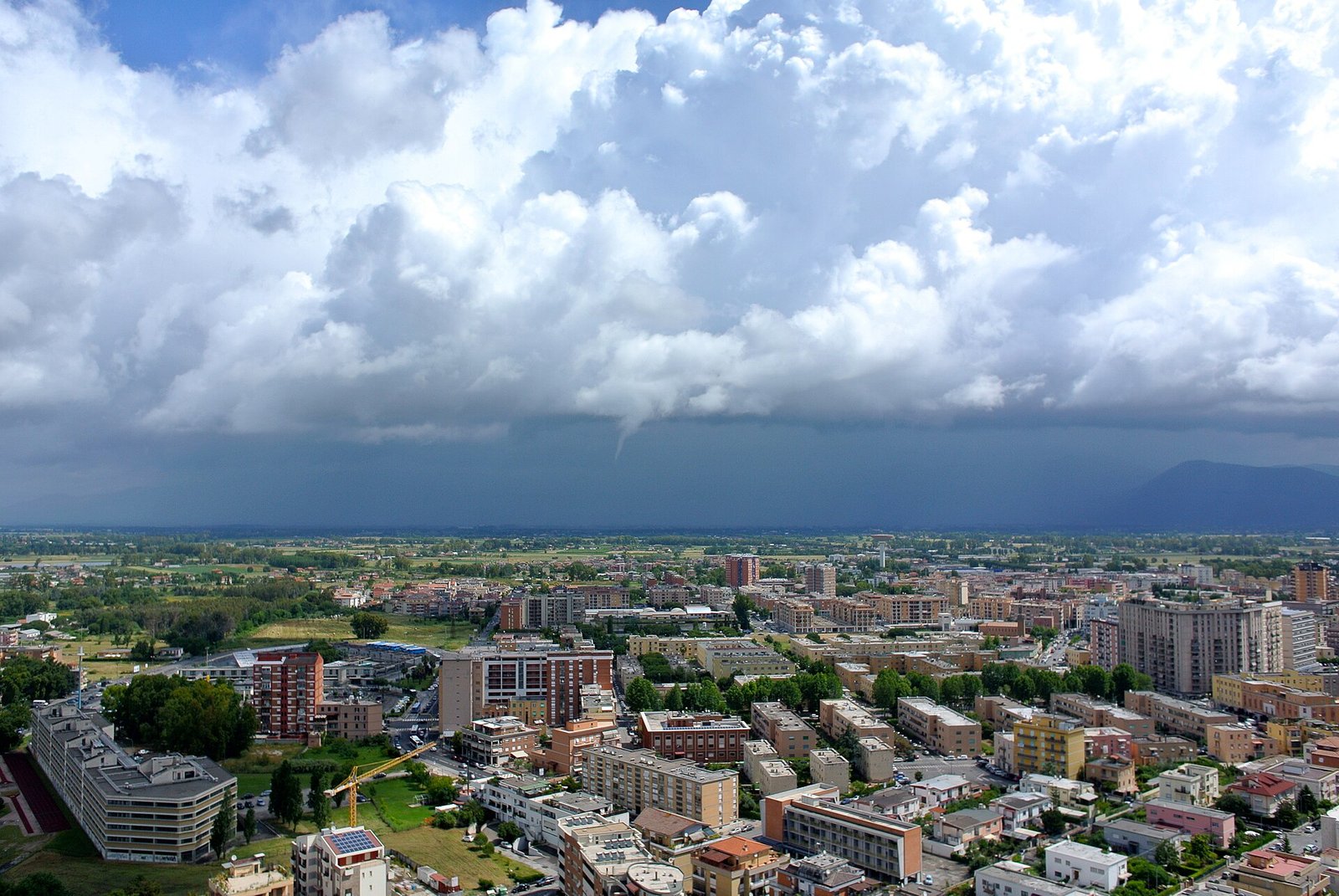
Latina can be visited freely, on foot, without a ticket: the squares and the buildings of the 1930s are seen from the street, and many are public offices still in use, from the Comune at Piazza del Popolo 1 to the Prefecture in Piazza della Libertà. The one interior with fixed hours is the Museo Civico Duilio Cambellotti, at Piazza San Marco 1, run by the civic museums of the Comune di Latina: free entry, open Tuesday through Sunday, closed Monday and Saturday.
What you find, concretely: the capital of the Agro Pontino, founded in 1932 under the name Littoria as part of the full land reclamation program for the marshes, designed by the architect Oriolo Frezzotti around two central squares. Around it, a ring of public buildings put up in a few years, a railway station far from the center, a dozen rural villages scattered across the plain and, about seven kilometers away, the coast with the lido.
Data checked on September 29, 2026 on the official website of the Museo Cambellotti, on the tourist itineraries published by the museum itself, on the portal of the Comune di Latina and on the other sources cited further on in the text. The museum’s hours can vary for exhibitions and events: before leaving it is worth phoning 0773 652626 or 0773 652379.
At a glance: address, hours, ticket
- Address: historic center around Piazza del Popolo, Comune offices at Piazza del Popolo 1, 04100 Latina. Museo Cambellotti at Piazza San Marco 1.
- Operator: Comune di Latina, switchboard 0773 6521, urp@comune.latina.it. Civic museums: museicivici@comune.latina.it.
- How to get in: squares and streets with free access, public buildings seen from the outside, Museo Cambellotti with fixed hours and optional reservation through the website.
- Price: free entry to the Museo Cambellotti according to the official website.
- Museum hours: Tuesday and Thursday 9-13.30 and 15-17.30, Wednesday and Friday 9-13.30, Sunday 10-13.30 and 14:30-18, closed Monday and Saturday.
- How to get there: regional train on the Rome-Formia-Naples line to Latina station, at Latina Scalo, then the FS city bus line toward Corso della Repubblica.
- Accessibility: the museum route is on the ground floor, for specific needs it is worth writing to the civic museums before the visit.
Where it is and what you actually see
Latina sits in the Pontine plain, about seven kilometers from the Tyrrhenian Sea and 15 or 20 kilometers from the Lepini Mountains, which close the horizon to the east. With just under 130,000 inhabitants it is the second-largest municipality in Lazio after Rome. The center designed in the 1930s occupies a small area compared with today’s city, which grew a great deal after the war, and it can be walked in half a day.
The plan by Oriolo Frezzotti, approved by Marcello Piacentini, the same architect as the University City in Rome, called for an octagonal shape with streets circling two main squares: Piazza del Popolo, with the town hall and the civic tower, and Piazza della Libertà, with the Palazzo del Governo. From there the axes lead to the other, smaller squares, each built around a public building and a specific function.
In Piazza del Popolo you see the two-story town hall with its portico and the 32-meter civic tower, entirely clad in travertine and fitted with a clock. In the inner garden stands a bronze statue of Daphne, by Elisabetta Mayo from 1923, donated to the city in 1933. In the middle of the square, since 1939, there is a travertine fountain. The whole is compact, readable, designed to be seen head-on.
Not far away, Piazza San Marco gathers the cathedral of San Marco, with a 37-meter bell tower, and the curved building of the former Opera Balilla, today home of the Museo Cambellotti. A little further on opens Piazza del Quadrato, with the seat of the former Opera Nazionale Combattenti and the statue groups dedicated to the rural family. Toward Piazzale dei Bonificatori is the Palazzo delle Poste by Angiolo Mazzoni, in our view the most original building in the city.
What you do not see: the interiors of the public offices. The town hall, the Prefecture, Palazzo M, which houses the provincial command of the Guardia di Finanza, and the Palazzo delle Poste are buildings in use, not museum spaces. They are observed from the street, with respect for the people who work in them. The Comune does not publish a calendar of interior visits, so anyone looking for the decorated rooms must ask at the public relations office.
Piazza Dante and Piazza Bruno Buozzi, on the route that starts from Piazza del Popolo, complete the picture. Piazza Dante has at its center a marker stone from 1933 decorated with ears of wheat and spades, a gift of the disabled veterans of Treviso, and is closed off by two INCIS buildings from 1934 with a courtyard and garden. In Piazza Buozzi stands the Palazzo di Giustizia, inaugurated on December 18, 1936, with a full-height colonnade clad in travertine. In the middle of the square is the statue of the Sower, which came from the demolished Casa del Contadino.
A curiosity about Latina
On September 29, 1944, according to the account in the encyclopedia entry on the city, Littoria changed its name and for a short time became Latinia, before taking its final form of Latina. The official change came only with the lieutenancy decree of April 9, 1945, number 270. For a few months, in practice, the city lived with a provisional name, waiting for the government to make the choice final.
The choice of Latina also had practical reasons. The same source recalls that the new name took into account the ending in “-inia” of almost all the place names of the cities founded in those years, and that it allowed the province’s license plate code, LT, to stay unchanged. An administrative detail, almost bureaucratic, which nonetheless explains why the new name keeps the same initial as the old one.
Then there is a building older than the city itself. In the district designed by the engineer Giuseppe Nicolosi, according to the museum’s itinerary, stands the Casa dei Cursori, built in 1929, three years before the founding of Littoria. It is protected as a cultural asset and houses the Casa dell’Architettura di Latina. The same itinerary also mentions a project that was never built: a municipal library designed by the British architect James Stirling between the late 1970s and the early 1980s.
The names of the squares have changed too. Piazza della Libertà, where the Prefecture stands, was called Piazza XXIII Marzo, the date of the founding of the Fasci di combattimento. Parco Falcone e Borsellino was named after Arnaldo Mussolini, brother of the head of government. Piazza San Marco, home of the museum, was Piazza Savoia. Reading the old names in the museum’s itineraries helps in understanding period photographs and documents, where the original names always appear.
Something nobody tells you about Latina
The two residential and commercial buildings flanking the seat of the former Opera Nazionale Combattenti in Piazza del Quadrato have, according to the itinerary published by the Museo Cambellotti, rings for tying up livestock. It is the detail that says better than any plaque what Littoria was meant to be at the start: a service center for the settlers of the farms, where people arriving from the countryside could do so with their animals too.
The second detail concerns the museum’s building. During the Second World War, according to the building’s history published by the museum, the former Opera Balilla was used as a place of worship during the period of the Allied bombings and as a shelter for the displaced. A gym built for the physical and military education of boys became a church and a dormitory. Then, between the 1950s and the 1970s, it went back to being a gym for the city’s schools.
The third concerns the cathedral’s bell tower. On the bell tower of San Marco, 37 meters high, there is a copy of the Madonnina of the Duomo of Milan, donated to the city in 1933. A Lombard statue above a church dedicated to the patron saint of Venice, in a city populated by Veneto, Friuli and Emilia families: the map of the first inhabitants’ origins can be read in the religious symbols too.
How was Littoria born and why is it called Latina today?
Latina was born from the full land reclamation of the Agro Pontino carried out during the two decades of Fascist rule. Before the works the territory, according to the encyclopedia entry on the city, included marshy areas and scrub, a breeding ground for the anopheles mosquito and therefore for malaria. The last wetlands that survived the reclamation are preserved today inside the Circeo National Park, and give an idea of what the plain was like before the canals.
The first stone was laid on June 30, 1932. The inauguration took place on December 18 of the same year, after not even six months of work, with a ceremony attended by Mussolini. The name Littoria came from the fasces, the emblem of the regime. The farms created by the Opera Nazionale Combattenti were assigned to settlers who came largely from Veneto, Friuli, Emilia and Romagna.
Two years later, on December 18, 1934, the province was established and Littoria became its capital. On the same day the Palazzo del Governo in Piazza della Libertà, then Piazza XXIII Marzo, was inaugurated, according to the museum’s itinerary. The city thus grew from an agricultural service center to an administrative seat, with offices, schools, barracks and the new municipal stadium, inaugurated in 1935 to a design by Frezzotti himself.
Latina belongs to the group of founding cities of the Agro Pontino, together with Sabaudia, Pontinia and Aprilia. The right tone for visiting it is that of someone reading a document: buildings, squares and decorations tell of a precise political and urban planning project, with its declared aims and its exclusions. The story of the reclamation, of the settlers and of the war is not exhausted by the aesthetics of the facades.
The reclamation, moreover, began before the city. According to the museum’s itineraries, the first residential settlement of the full land reclamation was the workers’ village of Sessano, born in 1927 where Borgo Podgora stands today, with a pantry, oratory, infirmary, school, carabinieri barracks and dopolavoro. In 1929 the Piscinara Land Reclamation Consortium built the workers’ village of Passo Genovese, today’s Borgo Sabotino, for the works at the mouth of the Acque Alte canal. Littoria came later, as the service center of a plain already in transformation.
My advice for visiting Latina
The advice is to start from Piazza del Quadrato, not from Piazza del Popolo. The square of the former Opera Nazionale Combattenti explains the city’s original function, with the statues of the rural family and the rings for livestock, and gives the context for understanding everything else. From there you go to the Palazzo delle Poste, then reach Piazza del Popolo, Piazza San Marco with the museum and finally Piazza della Libertà.
In our view the idea that a photo of the civic tower is enough to say you have seen Latina is overrated. The main square is the most orderly and the most photographed, but also the least eloquent: the town hall tells of administration, not of reclamation. Anyone who stops there and heads off toward the sea misses exactly the places that explain why the city exists, and the museum that keeps its strongest images.
Choose the day well. The Museo Cambellotti is closed on Monday and Saturday, and Saturday is exactly the day when many people leave Rome for a day trip. Sunday is the only holiday day with opening both morning and afternoon. On Tuesday and Thursday the museum opens in two slots, morning and afternoon, on Wednesday and Friday the museum closes at 13:30.
Before leaving, download or open on your phone the tourist itineraries published by the Museo Cambellotti. There are five walking routes in the center, from Piazza del Popolo to Piazza San Marco, from the Palazzo delle Poste to Piazza del Quadrato, from Piazza Roma to the Nicolosi district, up to Piazza Dante and Piazza della Libertà, plus four driving itineraries in the territory. On site the panels are few, and without these texts many buildings remain nameless facades.
A practical order, for those arriving by train on a Sunday morning: bus from the station to Corso della Repubblica, museum right away, while it is open, then Piazza San Marco and Piazza del Popolo, a break, and in the afternoon Piazza del Quadrato, the Palazzo delle Poste and Piazza della Libertà with the park. Anyone arriving by car on a weekday can reverse the tour and keep the museum for Tuesday or Thursday afternoon.
How much does the Museo Cambellotti cost and when is it open?
Entry to the Museo Civico Duilio Cambellotti is free, according to the visit page of the official website. The website provides a reservation form, worth using especially for school classes and groups, in addition to the ordinary opening hours. Visits and activities of the educational services must be arranged with the museum, which can be reached at 0773 652626 and 0773 652379.
| Day | Museo Cambellotti hours |
|---|---|
| Monday | Closed |
| Tuesday | 9-13.30 and 15-17.30 |
| Wednesday | 9-13.30 |
| Thursday | 9-13.30 and 15-17.30 |
| Friday | 9-13.30 |
| Saturday | Closed |
| Sunday | 10-13.30 and 14:30-18 |
Where you really book: on the Museo Cambellotti reservation form, or by writing to museicivici@comune.latina.it. There are no tickets to buy in advance. Be wary of anyone selling an entry: access is free during the published hours. For temporary exhibitions and events the conditions can change, and must be checked case by case on the website.
The rest of the city requires no tickets. Squares, porticoes, public gardens such as Parco Falcone e Borsellino and Parco San Marco have free access. The Galleria civica d’arte moderna, in the Palazzo della Cultura, and the Museo della Terra Pontina, in the former seat of the Opera Nazionale Combattenti, have their own hours: for both it is worth asking the Comune’s switchboard, 0773 6521, before setting out.
Another well-known fact, yet rarely mentioned
Latina’s railway station is not in Latina, or at least not in the planned city. It is in the hamlet of Latina Scalo, on the Campoleone-Formia stretch of the Rome-Naples line, opened in 1922. The new center was built elsewhere, and the station, designed by Angiolo Mazzoni under the name Littoria Scalo, stayed separate. Anyone arriving by train must always allow for a bus leg.
The station’s date has two versions as well. The encyclopedia entry on the station gives the inauguration as November 26, 1932, under the name Stazione di Littoria, and recalls an earlier stop, activated on July 17, 1922 at the locality of Villaggio Cupido. The museum’s itinerary instead places the construction between 1932 and 1935 and traces back to January 19, 1929 the act that made it official. The sources do not agree on the details, but the substance is the same.
The second fact concerns the theme that returns everywhere in the city: the Redemption of the Agro. Besides Cambellotti’s great work kept in the museum, the same subject decorates the aula magna of the Istituto tecnico commerciale Vittorio Veneto, completed in 1936 to a design by the engineer Ernesto Caldarelli, with frescoes by Rapanà and Ravaglia. And Cambellotti also signs the high relief of the Cycle of Justice in the Corte d’Assise courtroom of the Palazzo di Giustizia. The city told its own story on the walls of its offices and schools.
The right photo to take in Latina
The photo that best tells the story of the city is the one of the civic tower seen from the central axis of Piazza del Popolo, with the travertine fountain in the foreground. The best light comes in the late afternoon, when the travertine warms in color and the shadows of the portico draw the rhythm of the arches. Avoid midday in summer: the pale stone reflects too much and the square turns flat.
The second photo to take is in Piazza del Quadrato, tightening the frame on the statue groups from 1932, by the Vicenza sculptor Egisto Caldana, with the fountain of the Genius of Reclamation by Pasquale Rizzoli in the middle. For the Palazzo delle Poste you need a wide lens and a side viewpoint: Mazzoni’s terracotta volume and the concrete extension of the 1960s coexist, and it is worth showing both.
A third, less obvious photo is found in Piazza Roma, where the curved buildings of the Questura, built in 1936 to a design by Olindo Ricci, draw a continuous backdrop. Here it is worth shooting from the side, along the curve, to make the shadows work on the repeated windows. In any case, no photos inside courtyards, doorways or offices: many buildings in the center are private homes or seats of police, prefecture and court.
How do you get to Latina from Rome and from the station to the center?
The train is the simplest way. Latina station, at Latina Scalo, is on the Rome-Formia-Naples line and is served by Trenitalia regional trains and some Intercity trains. From Rome you leave from Roma Termini. Travel times and schedules vary by type of train and time of day: it is worth checking them on the Trenitalia website the day before, especially on Sunday.
From the station to the center you need the city bus. According to the Museo Cambellotti’s directions, from Latina Scalo station you take the FS line and get off at Corso della Repubblica 116, from where you continue on foot toward Piazza San Marco. City transport is run by CSC Mobilità: frequencies, fares and holiday schedules must be checked on the operator’s website before leaving.
Cotral intercity buses also stop at the station, connecting Latina with the rest of the region. The lines to and from Rome and their schedules can be consulted on the Cotral website. The direct bus avoids the change between train and city bus, but is affected by traffic, especially at peak hours and on summer weekends.
By car, the directions published by the museum give, from the north, State Road 148 toward Latina, exit Borgo Piave, and from the south the A1 motorway to the Frosinone exit, then State Road 156. The Museo Cambellotti can be reached by car, because the square is not within the limited traffic zone. For the rest of the center the usual rule applies: leave the car at the edges and continue on foot.
Some important events that happened here in history
On June 30, 1932 the first stone of Littoria was laid, on December 18, 1932 the city was inaugurated. On December 18, 1934 the province was born, with the inauguration of the Palazzo del Governo. In the following years came the works that turned the agricultural center into a provincial capital: the Consorzio di Bonifica in 1936, the sugar refinery of Latina Scalo in the same year, the airport in 1938, today home of the 70° Wing of the Air Force.
Between January and May of 1944 the city was gravely damaged by bombing, involved first in the Anzio landing and then in the battle of Cisterna. Palazzo M lost its marble-clad central tower, destroyed by a bombing in 1944 according to the museum’s itinerary. In the autumn of the same year the name change began, completed with the decree of April 9, 1945. The landing took place on the coast of Anzio, where today you can visit the Tor Caldara reserve.
After the war the city grew well beyond the planned perimeter. In 1959 the Monument to the Fallen was placed in the park now named after Falcone and Borsellino, once named after Arnaldo Mussolini, a monolith 15 meters high on an altar fountain designed by Frezzotti. On October 15, 2005, according to the museum’s website, the Museo Civico Duilio Cambellotti was inaugurated in the former Opera Balilla, with the installation by the architect Franco Ziliotto.
The history of the territory, however, is much older than the city. Borgo Faiti corresponds to ancient Forum Appii, on Via Appia, and along the same road, at Tor Tre Ponti, the three-arched Roman bridge over the Ninfa-Sisto river survives, the Tripontium, with a marker stone recalling the completion of the works under Trajan, after the start under Nerva. At the Epitaffio, at kilometer 65 of the Appia, a monument celebrates the reclamation attempted by Pius VI in the 18th century, according to the museum’s itineraries.
Who passed through Latina
The first name is Oriolo Frezzotti, author of the plan and of many public buildings, from the Opera Balilla to the Consorzio di Bonifica, from the stadium to the Monument to the Fallen. Renato Ricci, then director of the Opera Nazionale Balilla, also collaborated on the design of the Opera Balilla. Angiolo Mazzoni signed the Palazzo delle Poste and the station. Marcello Piacentini approved the plan. On December 18, 1932 Mussolini attended the city’s inauguration ceremony.
Then Duilio Cambellotti, born in Rome in 1876 and died in Rome in 1960, who between 1934 and 1937 produced the great decorative cycles of the Palazzo del Governo of Littoria. The museum’s website recalls his bond with the Roman countryside, born from excursions with the artist Alessandro Marcucci. Palazzo M houses two of his bronzes. Filippo Tommaso Marinetti, founder of Futurism, pointed to the Palazzo delle Poste as an example of Futurist architecture.
And then the thousands of nameless people who settled the plain: the Veneto, Friuli, Emilia and Romagna settlers of the farms of the Opera Nazionale Combattenti. In the city’s speech, according to the encyclopedia entry, Romanesco has become the common language, but keeps traits of pronunciation more archaic than those of the Romanesco of Rome. This too is a sign of a community born from different origins and fused in a few decades.
For centuries, before the reclamation, this plain was above all the land of the Caetani, the family of Sermoneta. According to the museum’s itineraries, Villa Fogliano passed to the Caetani in 1302 and stayed theirs until 1925, the coastal tower of Foceverde was built at their expense and, at Tor Tre Ponti, an altar from 1752 was donated by Prince Gaetano Caetani. In the 20th century came the architects of the reclamation, from Guido Tirelli, author of the churches of Borgo Grappa and Borgo San Michele, to Giuseppe Nicolosi, Giulio Pediconi and Mario Paniconi.
What is inside the Museo Cambellotti?
The building was designed by Frezzotti in 1932 as the Opera Balilla of the new city, on what was then called Piazza Savoia. It has two floors in the front part, laid out in a semicircle, and a gym 40 meters long and 12 high. From 1937 it was the barracks of the Gioventù Italiana del Littorio, and in the 1980s a branch of the Santa Cecilia Conservatory of Rome. The building keeps the sculpted fasces reliefs.
The exhibition route runs on the ground floor, in five areas. The first room is devoted to graphic work and book illustration, with the work for the Alinari competition on the Divine Comedy, which the museum’s website places between 1900 and 1901. The second gathers drawings and preparatory sketches for decorative works, sculptures and stage sets, with constant attention to the peasant world and the countryside.
The following rooms display sculptures, medals, paintings and woodcuts. The final room, carved out of the former gym, houses the great preparatory work for the Redemption of the Agro, the story in images of the transformation of the marsh, tied to the cycles of the Palazzo del Governo. Among the best-known works in the collection is also the Fonte della Palude, in bronze. For an attentive visit an hour or an hour and a half is enough.
The museum has a long history behind its opening. In 1984 an exhibition devoted to Cambellotti as sculptor and to the Agro Pontino brought together more than 30 sculptures. About 10 years later the works found a place in the Galleria civica d’arte moderna e contemporanea, thanks to donations from the heirs and purchases by the Comune. The museum proper was born in 2005. The main page of the official website also reports that the museum has been open since August 1, 2021.
Who was Cambellotti? Born in Rome on May 10, 1876, he trained in the workshop of his father Antonio, an engraver and decorator, and in 1897 earned the diploma to teach in schools of applied arts. The museum’s website recalls the illustrations for the Sillabario of 1912 and for the Fioretti di San Francesco of 1926, the sets for the classical performances at Syracuse between 1914 and 1939 and the contribution to the film Il cielo sulla palude, from 1948. He died in Rome on January 31, 1960.
Where is the 1930s architecture, square by square?
Piazza del Popolo is ground zero: town hall with portico, 32-meter civic tower in travertine, garden with Elisabetta Mayo’s Daphne, fountain from 1939. Here sits the Comune, at Piazza del Popolo 1. Not far away is the Palazzo del Consorzio di Bonifica, built in 1936 to a design by Frezzotti, which under the cover of its atrium displays a vertical relief with the state of the full land reclamation as of 1937.
Piazza della Libertà hosts the Palazzo del Governo, today the Prefecture, with an order of arches and pillars and travertine in the central body. Parco Falcone e Borsellino, a little further on, keeps Frezzotti’s Monument to the Fallen. Piazza San Marco joins the cathedral, built on the model of a Romanesque basilica with portico and stained glass, and the former Opera Balilla. Frezzotti also designed interior details of the church, such as the floor and the altar.
Palazzo M, wanted by the regime with an M-shaped plan, was meant to be part of a complex called Foro Mussolini, never completed. Mazzoni’s Palazzo delle Poste, in Piazzale dei Bonificatori, was clad in terracotta with travertine finishes, an external staircase and semicylindrical metal grilles. It was enlarged in 1934 with an apsed body and, in the 1960s, part of the original wing was demolished to make room for a reinforced concrete expansion.
Anyone who knows Roman rationalism will find in Latina the same languages on a reduced scale. In Rome the most immediate comparisons are the Foro Italico, with the Olympic Stadium, and the EUR, with the Palazzo dei Congressi and the basilica of Saints Peter and Paul. The difference is that Latina is not a ceremonial district: it is an entire city, designed to be lived in by farmers and clerks.
The center, however, is not made only of ceremonial buildings. In Piazza Roma, next to the Questura of 1936, are the building of the former Società Romana di Elettricità, from 1939, and the INA houses of the late 1930s, designed by Giulio Pediconi and Mario Paniconi, with loggias and a canopy. In Piazza Celli is the former OMNI seat, from 1932, a small two-story building with a tall tuff portal and symmetrical roundels dedicated to motherhood.
A little further on opens the district of the old public housing, built between 1934 and 1936 to a design by the engineer Giuseppe Nicolosi, from whom it takes its name. The museum’s itinerary describes it as a small city within the city, with courtyard houses, row houses and walkway-access houses, shops and large inner courtyards. It is the piece of Latina closest to everyday life in the 1930s, and also the most inhabited: you look from the street, without entering the courtyards.
Anyone with time left can look for the elementary school of 1932, laid out around an inner courtyard and recognizable by its clock tower, with travertine sculptures, young heads, open books and allegorical bas-reliefs on Viale Mazzini. Along the same avenue two INCIS buildings from 1936 face each other. They are minor buildings, without the rhetoric of the main squares, but they help in understanding how the city was designed also for schools, families of clerks and services.
What is outside the center, between Latina Scalo and the villages?
At Latina Scalo, besides Mazzoni’s station, the museum’s itinerary points out the Villaggio Cupido, built between August 1933 and 1934 as a service center for the settlers: the antimalarial warehouse, a small building used as a health post and a school for the farmers’ children, today home of the municipal library. Not far away is the sugar refinery of 1936, the first industry of the Agro Pontino, turned in the 1990s into a logistics platform.
The municipal territory includes a dozen rural villages born with the reclamation: Borgo Sabotino, Borgo Isonzo, Borgo San Michele, Borgo Faiti, Borgo Grappa, Borgo Carso, Borgo Podgora, Borgo Bainsizza, Borgo Santa Maria, Borgo Le Ferriere, Borgo Piave and Borgo Montello. Many bear the names of places on the front of the First World War, from the Piave to the Carso, a nod to the veterans for whom the Opera Nazionale Combattenti was intended. In the municipal territory there is also the Museo di Piana delle Orme.
For those traveling by car, the museum’s itineraries also propose a route along the Appia toward the city and one on the coast, from Borgo Grappa to Acciarella. Via Appia, which starts from the Appia Antica Park in Rome and descends through the Castelli, also crosses the municipal territory of Latina. It is the right road for anyone who wants to combine the visit with the hill villages of the Lepini.
North of the capital, the villages itinerary leads to Le Ferriere, a locality that according to the museum holds a history half a million years long, from the lower Paleolithic to the reclamation. Here from 1116 the monks of the abbey of San Nilo, the one at Grottaferrata, started an ironworks that became the most important in Lazio, turned into a paper mill in 1910. Borgo Montello was born next to a medieval castrum and keeps the church of the Santissima Annunziata, from the 17th century.
Along the Appia, at kilometer 63, the Casale delle Palme, an old Caetani pig farm, housed the first health station and in 1910 the first school for the farmers of the marshes. In 1921 an elementary and agricultural school was built there to a design by the engineer Mario Egidi De Angelis, with the collaboration of Duilio Cambellotti. It is proof that the artist was working on the theme of the marsh already 10 years before the founding of Littoria, when malaria was still the rule.
Latina and the sea: what is there between the lido and the coast?
The municipality’s coast, about seven kilometers from the center, takes the name Marina di Latina and includes the beaches of Capoportiere, Foce Verde and Rio Martino. The Lido di Latina is the summer reference point for people who live in the city, and among our proposals it has a page devoted to the beach and the bathing season. For those who come from Rome only for the sea, it is still worth passing through the center.
Toward the south the coast continues to Sabaudia and the Circeo promontory, inside the Circeo National Park, where the last wetlands of the old marsh are preserved. Anyone who goes still further finds the Fontana beach at Sperlonga and the Villa of Tiberius with the archaeological museum. For a single day, though, it is better to choose between the city and the sea, without trying to do everything.
Along the coast, the museum’s coastal itinerary points out other places of the reclamation and of older history. Rio Martino, whose banks mark the boundary with the municipality of Sabaudia, is the final stretch of the Acque Medie canal, set up in the 1920s and 1930s with piers and quays for boats. At Capoportiere there is a pumping station built in 1933. The Fogliano coastal tower, erected between the 16th and 17th centuries to defend the Papal State, was destroyed by the bombings of 1943.
Villa Fogliano, inside the Circeo National Park, occupies 120 hectares of park and 400 of lake. According to the museum the complex dates to Roman times, belonged to the Caetani from 1302 to 1925 and has been state property since 1984, with the hunting lodge of 1742 and a small building of 1877. The rules for access to the villa and to the lake paths are set by the Park: before going it is worth checking the body’s website, without improvising routes along the shores.
Borgo Grappa too, on the coast road, has a history longer than its name. The museum’s itinerary recalls that it was called Porcareccia, then Archi di San Donato and Casal dei Pini, and that it corresponds to a Roman settlement with an aqueduct brought to light in the 18th century. The workers’ village was built between 1929 and 1931, at the crossing of the Litoranea and the Migliara 45 road, with housing, aqueduct tower, rural school, warehouse and a church designed by Guido Tirelli.
When is it closed and what not to expect?
The Museo Cambellotti is closed on Monday and Saturday, and on Wednesday and Friday it opens only in the morning. The museum’s visit page does not give holiday closures, which must therefore be checked by phone before Christmas, New Year’s Day, Easter and Ferragosto. The public offices of the center, town hall included, follow office hours: on holidays the squares stay accessible, the buildings do not.
Don’t expect a historic center in the traditional sense, with alleys and medieval churches. Latina is a 20th-century city, with wide streets, porticoes and traffic. The interest lies in the coherence of the design and the quality of some buildings, not in the density of monuments. Don’t expect explanatory panels on every facade either: it is worth arriving with the museum’s itineraries already downloaded on your phone.
One last warning: many of the most important decorations, such as Cambellotti’s cycles in the Palazzo del Governo, are inside buildings not open to the public at regular hours. The Comune does not publish a calendar of visits. Anyone who wants to see them must follow the special openings announced by the Comune or the Prefecture, and meanwhile make do with the great preparatory work for the Redemption of the Agro displayed in the museum.
The climate matters more than it seems. Latina is a plain city with wide streets and little shade outside the porticoes and parks, and in summer the middle hours of the day are the least suitable for a walk. Spring and autumn are the best seasons for the center. In summer it is worth visiting the squares early in the morning or in the late afternoon, and using the hot hours for the museum, compatibly with its hours.
What to combine with it in a day
The most coherent pairing is with the other founding cities. Sabaudia, built right after Littoria, completes the picture of 1930s architecture and adds the lake and the dunes. In one day you can see the center of Latina in the morning, the museum before the 13:30 break, and Sabaudia in the afternoon, perhaps with a walk on the seafront of the Lido di Latina on the way back.
Toward the Lepini Mountains, a few kilometers away, the landscape changes completely. Sermoneta is a perched medieval village that looks down on the reclamation plain. The Fossanova Abbey, to the south, and Priverno lead into the Cistercian world and an ancient historic center. Looking at the plain from Sermoneta after seeing Latina is the clearest way to understand the reclamation.
Anyone arriving from Rome by car can come down along the Appia, passing through Albano Laziale, Ariccia and Genzano di Roma, inside the Castelli Romani Park, with a stop at Lake Nemi. Toward Ciociaria, instead, Latina pairs with Frosinone and its archaeological museum, or with the Hernici cities such as Anagni and Alatri.
For those staying on the 20th-century theme, the most useful comparison in Rome is with the districts built in the same years, such as Garbatella, where public housing takes a different road, more varied and less monumental. Anyone with time for two days in southern Lazio can add Ferentino and the Casamari Abbey, toward the Autostrada del Sole.
On the north side, Latina also pairs well with the coast of Anzio and Nettuno. The museum’s coastal itinerary goes as far as Torre Astura, in the municipality of Nettuno, a medieval structure built on remains from the 1st century, where in 1268 Conradin of Swabia took refuge before being handed over to Charles of Anjou. A little further north, the Tor Caldara reserve keeps a stretch of scrub and protected coast, suited to a walk.
Frequently asked questions
How much does it cost to visit Latina?
Nothing. Squares, streets, parks and the exteriors of the 1930s buildings have free access. The Museo Civico Duilio Cambellotti, at Piazza San Marco 1, has free entry according to the official website. You spend only on the trip: the regional train from Rome, the city bus ticket from Latina Scalo station to the center, or fuel and parking for those arriving by car.
When is the Museo Cambellotti open?
According to the official website the museum opens Tuesday and Thursday from 9 to 13:30 and from 15 to 17:30, Wednesday and Friday from 9 to 13:30, Sunday from 10 to 13:30 and from 14:30 to 18. It is closed on Monday and Saturday. For holidays and for any changes tied to exhibitions it is worth calling 0773 652626 or 0773 652379 before leaving.
Why was Latina called Littoria?
The name Littoria derived from the fasces, the bundle of rods tied around an ax that was the emblem of the Fascist regime. The city was inaugurated under that name on December 18, 1932. After the war it was renamed, first briefly Latinia in the autumn of 1944, then Latina, with the lieutenancy decree of April 9, 1945. The new name also made it possible to keep the license plate code LT.
How long does it take to see Latina?
For the center designed in the 1930s two or three hours on foot are enough, including stops in the main squares. The Museo Cambellotti takes an hour or an hour and a half. With half a day you see the essentials, with a full day you add the lido or one of the hill villages of the Lepini Mountains, such as Sermoneta. Latina Scalo and the rural villages of the plain, however, require a car.
Is Latina station in the center?
No. Latina station is in the hamlet of Latina Scalo, on the Rome-Formia-Naples line, outside the city designed in the 1930s. To reach the center you need the city bus: the museum indicates the FS line, getting off at Corso della Repubblica 116. City transport is run by CSC Mobilità, on whose website you check schedules and fares, in particular holiday ones.
Can you climb the civic tower in Piazza del Popolo?
The Comune does not publish visits to the civic tower, which is part of the municipal seat at Piazza del Popolo 1. The tower, 32 meters high and clad in travertine, is observed from the square. For any special openings, for example during city events, it is worth contacting the Comune’s public relations office, at urp@comune.latina.it, or calling the switchboard at 0773 6521.
Can Latina be combined with the sea in a day?
Yes. The Lido di Latina is about seven kilometers from the center, along the coast of Marina di Latina, between Capoportiere, Foce Verde and Rio Martino. The advice is to see the center and the museum in the morning and go down to the sea in the afternoon. In summer traffic toward the coast grows on weekends, and anyone traveling by public transport must check the buses in advance.
Where can you see Cambellotti’s works in Latina?
The main body is in the Museo Civico Duilio Cambellotti, at Piazza San Marco 1, with graphic work, sketches, sculptures, medals, woodcuts and the great preparatory work for the Redemption of the Agro. Palazzo M, seat of the Guardia di Finanza, houses two bronzes by the artist according to the museum’s itinerary. The decorative cycles made between 1934 and 1937 for the Palazzo del Governo, today the Prefecture, have no published visiting hours.
Is there anything in Latina older than the 1930s?
Yes, in the municipal territory. Borgo Faiti corresponds to ancient Forum Appii, on Via Appia, and at Tor Tre Ponti the three-arched Roman bridge called Tripontium remains. Le Ferriere keeps traces going back to the Paleolithic and a medieval ironworks started in 1116 by the monks of San Nilo. Borgo Montello was born next to a medieval castrum. For all these places you need a car, and the museum’s itineraries help in finding your way.
Who wrote this and on which sources
The text comes from the editorial team of Tour Leader Pro, the Rome-based outfit that designs itineraries, tours and cultural events across Rome and Lazio. Fares, hours and booking arrangements reported here come from the official sources cited in the text as of the date given at the start: the Museo Cambellotti website with its tourist itineraries, the portal of the Comune di Latina and the encyclopedia entries on the city and on the station. Let us know what you find changed.
Organizing a visit to Latina, for yourself or for a group, means above all making the schedules fit: the museum’s, closed on Saturday, those of the regional trains and those of the city bus between Latina Scalo and the center. For a group it is worth booking the museum in advance through the official form. A useful resource for those who organize group trips is Tour Leader Pro.
Latina works well as a stop on a wider trip through southern Lazio, among the founding cities, the villages of the Lepini Mountains, the Cistercian abbeys and the coast as far as Circeo and Sperlonga. Anyone with several days can use Rome as a base or sleep in the Pontine province, alternating city, sea and hills. To put the stops together with realistic times, a useful resource for putting together a multi-day itinerary is Italy Planner.