Priverno (LT)
In short. Priverno is in the province of Latina, on the Colle Rosso, a rise of the Monti Lepini that overlooks the Amaseno Valley, a little over 90 kilometers from Rome and about 20 from the provincial capital.
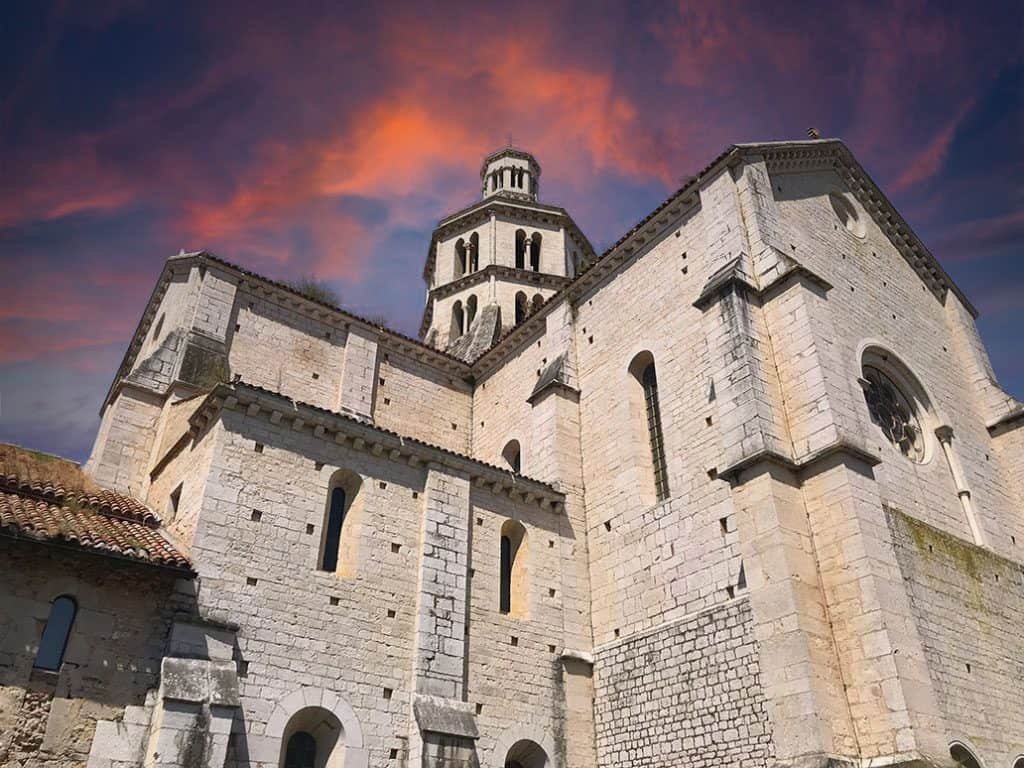

Priverno is in the province of Latina, on the Colle Rosso, a rise of the Monti Lepini that overlooks the Amaseno Valley, a little over 90 kilometers from Rome and about 20 from the provincial capital. The town is visited in two distinct parts, and it's good to know that before you leave: up on the hill, the medieval core with the monumental square, the Co-Cathedral and the Archaeological Museum, and down in the valley, about four kilometers away, the village and the Abbey of Fossanova, where Saint Thomas Aquinas died. It's easy to reach by train: the Priverno-Fossanova station is on the Rome-Naples line via Formia, served by regional trains that take between 40 minutes and an hour and a half from Roma Termini. From the station, however, the historic center and the abbey are not a short walk away, and without a car you should plan on a bus or a taxi. By car you exit the A1 at Frosinone or take the Pontina (SS148) and then regional road 156 of the Monti Lepini. The Abbey of Fossanova is open every day from 8:30 to 18:30 with free entry. The Archaeological Museum, in Piazza Giovanni XXIII, has different hours in summer and winter and the phone number is 0773 912306. The archaeological area of Privernum, in the locality of Mezzagosto along the SR156, is open Friday and Saturday with a ticket of €4 and mandatory booking. If you want the overall picture of the territory, you'll find a good index on the page for the Lepini Mountains, the chain of villages Priverno belongs to.

Where Priverno Is and How to Get There
The geography of Priverno explains almost everything you then see. The town stands on the Colle Rosso, a hillock of the Monti Lepini that looks out over the Amaseno, the river that gave the valley its name. From up there, on clear days, the eye reaches the Pontine plain and, beyond, the sea at Circeo. It's a defensive position, and not just for show: whoever controlled the hill controlled the passage between the coast and the Apennine interior. For this reason the old core is compact and vertical, with alleys that climb in a spiral around the summit.
Those who arrive by train get off at Priverno-Fossanova, on the Rome-Naples line via Formia. It's the convenient stop for the abbey, which is a couple of kilometers from the station. The historic center, on the other hand, is higher up and farther away, and without your own vehicle you should plan on a local bus. By car the most direct route from Rome is the Pontina as far as Latina, then the state road toward the Lepini. From the north you exit at Frosinone on the A1 and come down along the valley. Regional road 156 of the Monti Lepini is the axis that holds the two parts of the town together and it passes near the archaeological area at kilometer 28.800. A practical tip: you don't drive into the historic center all the way to the square. You leave the car in the parking areas halfway up the slope and walk up. At Fossanova, on the other hand, there is free parking just before the abbey.
The Historic Center of Priverno: the Hill, the Walls, the Gates
The medieval core of Priverno is arranged like a crown around the top of the hill and was originally enclosed by a circuit of walls. The sources don't agree on the exact number of entrances: some speak of seven gates, others of six, with a dense system of towers. Today what is mostly preserved are the arches of Porta San Marco and Porta Posterula, which remain the points from which it's worth entering to understand the structure of the town. The place names have a good memory: four of the old Priverno contrade still carry the names of the gates, and they are Porta Campanina, Porta Posterula, Porta Romana and Porta Paolina. In the Palio del Tributo it is these four that compete, and anyone walking through the village finds them written on the gonfalons and the coats of arms.
The urban fabric is the typical one of the Lepini villages: narrow streets following the contour lines, stairs, underpasses, closed courtyards. You visit on foot, without hurry, and it's best to keep your eyes up as much as down, because the stone portals, the cross-vaulted windows and the carved signs tell of centuries of layering. It's a lived-in center, not an open-air museum: in the alleys there are shops, cellars, inhabited houses. Walking it early in the morning, when the shutters are still down and the light comes in sideways, is the best way to photograph it.

Piazza Giovanni XXIII, the Heart of Priverno
The main square, which the people of Priverno have always also called Piazza Grande, is a scenic space built over the centuries like a civic theater. Here face each other the two symbols of the village, the Palazzo Comunale and the Co-Cathedral, and here splashes the 19th-century fountain that gives color to the whole. It's the point where civil and religious power look at each other up close, as was normal in a center of the Papal States.
The Palazzo Comunale of Priverno
The Palazzo Comunale is one of the most notable civic Gothic buildings in southern Lazio. It dates back to the late 13th century and preserves the Guelph crenellation, the straight swallowtail kind, a sign of political allegiance in an age when even the shape of the merlons was a declaration of sides. The facade, with its pointed-arch openings and its staircase, has the elegant severity of the town halls of 14th-century central Italy. It's worth stopping to read the proportions: the building was born as the seat of the free commune and shows, in stone, the pride of a community that governed itself.
The Co-Cathedral of Santa Maria Annunziata in Priverno
Opposite the civic palace stands the Co-Cathedral of Santa Maria Annunziata, the cathedral of Priverno, whose consecration tradition fixes in 1183. It has a three-arched portico that protects the entrance and a layout reworked several times over the centuries. The reason pilgrims look for it, however, is a relic: here is kept what devotion holds to be the skull of Saint Thomas Aquinas, the great Dominican theologian who died in nearby Fossanova in 1274. It's good to say so with historical honesty: the saint's body does not rest in Priverno. After his death at the abbey, his remains were long contested and in the 14th century were moved to Toulouse, in France, where they still are in the church of the Jacobins. What remains in Priverno is the veneration of the head, which is an object of worship and is shown on the major feasts. The distinction between a venerated relic and an actual burial is exactly the kind of detail a serious guide doesn't hide.
The Fontana dei Delfini of Priverno
In the center of the square the Fontana dei Delfini, made in 1877, puts a note of 19th-century theatricality into an otherwise medieval setting. It's the natural meeting point, the place where people arrange to meet and where, on summer evenings, the people of the town sit. It's not an absolute masterpiece of Italian sculpture, and there's no need to describe it as such: it's a fine civic piece that closes the scene of the square well and gives the right foreground to anyone photographing the Palazzo Comunale behind it.
The Historic Palazzi of Priverno
Besides the buildings on the square, the center of Priverno preserves some noble residences that tell of the passage from the medieval commune to the society of the old regime. The Palazzo Valeriani-Guarini-Antonelli, also known as Palazzo Antonelli, is a Renaissance building with painted ceilings that today houses the Archaeological Museum. Not far away the Palazzo Zaccaleoni, a grand residence of the late 17th century, shows the Baroque ambition of an important family of the village. They are buildings to be read mostly from the outside, in the window frames and the portals, and they help us understand how a small center of the Lepini could express, over the centuries, a cultured and ambitious patronage, able to call on good craftsmen and to renew the face of the village era after era.
The Archaeological Museum of Priverno
For those who love antiquity, the Archaeological Museum is the main reason to climb up to the town. It is located in Piazza Giovanni XXIII, inside the Palazzo Valeriani-Guarini-Antonelli, where it moved in 2013 from its historic seat in the old Bishop's Palace, where it had been since 1996. It holds over 1,000 finds from ancient Privernum, spread over 12 rooms, set with respect into the Renaissance architecture of the palace and under the ceilings frescoed in late Liberty style. It's an intelligent installation, which doesn't smother the building but uses it.
The piece that alone justifies the visit is the so-called Nilotic Threshold: a long mosaic threshold, close to five meters, depicting a Nile landscape with scenes of river life and animals of the Egyptian delta. It comes from one of the elite domus of Privernum and bears witness to the Roman taste for the Egyptian exotic, very fashionable after the conquest of Egypt. Next to the mosaic, the collection lines up portraits and statues of the imperial family, with heads attributed to Claudius, Livia and Tiberius, inscriptions, terracottas, ceramics for domestic use, a repertoire that runs from the second century BC to the full Roman age. For those who then go down to the archaeological area, the museum is the key to reading it: here you see up close the objects that down there, in the park, you only guess at in the empty spaces of the houses. The hours change with the season and there is a closure on August 15, so it's best to phone ahead on 0773 912306. For the complete picture of the town's museum offerings, see the page dedicated to the museums of Priverno.

Ancient Privernum and the Archaeological Area of Mezzagosto
Before the village on the hill there was the city on the plain. Privernum was born Volscian, then became Roman: the colony was established at the end of the second century BC, and the Roman city developed in the Amaseno Valley, in the locality of Mezzagosto, along the current regional road 156 at kilometer 28.800. The archaeological area you visit today gives back the urban layout of a medium-sized Roman center, with a rigor that says a lot to those who know how to read the traces.
You can recognize the domus of the Republican age, with atriums, peristyles and rich mosaic floors, some of which have handed over their treasures to the museum, the Soglia Nilotica first of all. There is a theater with an attached large porticoed square, the sign of a city that had its places of entertainment and public life. There is a bath building built starting from the second century AD, with the heated rooms that were the social living room of the Roman world. And then, above the ancient city, you can read a mighty early medieval circuit of walls with an ecclesiastical building, proof that the place went on living after antiquity, before the population moved definitively up onto the hill. The area is open Friday and Saturday, with an entrance ticket of €4 and paid guided tours. Booking is mandatory. Going with a guide completely changes the experience, because without the story the park risks looking like a meadow with a few walls, while with the right explanation it becomes a city standing back up.
The churches of Priverno
The historic center is rich in religious buildings that span from the 1200s to the 1500s. The church of Sant'Antonio Abate, in Cistercian Gothic style, is dated to 1336 and shows how the lesson of Fossanova spread through the territory. San Benedetto is remembered as one of the oldest in the town. San Giovanni preserves frescoes dated between the 13th and 15th centuries. Then there is Santa Lucia and the former monastic complex of Santa Chiara, evidence of the women's religious life of the village. They are not all always open, and some are visited only during services or on feast days: anyone who wants to get in should check the liturgical calendar and, if need be, ask at the Co-Cathedral. The thing to understand is that in Priverno Gothic is not an isolated episode of the abbey, but a language that took root throughout the town. Sant'Antonio Abate, in particular, deserves a stop: its Cistercian Gothic layout, with sober forms and pointed arches, is direct proof that the architects and craftsmen trained on the Fossanova building site kept working in town, bringing to the top of the hill the grammar tested on the plain. Priverno's churches, taken together, make up a small catalog of seven centuries of sacred art, from the 13th-century frescoes of San Giovanni to the furnishings of the modern age, and they tell of the devotion of a community that, though small, never stopped building and decorating its places of worship. For those with time, it is worth entering at least one of them besides the Co-Cathedral, to feel the silence of a village church far from the mass tourism circuits.
One last note on the Co-Cathedral: the very fact that Priverno has a cathedral, and today a co-cathedral, tells of its historical weight. The town was for a long time a bishop's seat, a sign of a religious and administrative importance that went well beyond the size of the settlement. The relic of the head of Saint Thomas, kept here, is the crowning of this dignity: few centers of the same size can claim such an illustrious presence.
The Amaseno Valley and the Lepini Mountains
Priverno cannot be understood without its landscape. The town sits on the edge of the Lepini Mountains, the limestone range that separates the Pontine plain from the Sacco Valley, and looks down on the Amaseno Valley, furrowed by the river that gives it its name. It is a land of waters and pastures: the springs and watercourses of the valley made agriculture and livestock raising possible since antiquity, and still today they feed the water buffalo herds that give the area its mozzarella. The Lepini are mid-altitude mountains, rough and karstic, with sinkholes, caves and hidden plateaus, dotted with perched villages that look at each other from hill to hill. Anyone arriving in Priverno with an attentive eye immediately notices this logic of the territory: the Roman city below, near the water and the fields. The medieval village up high, on the defensible hill. The abbey on the plain, where the monks could reclaim land and cultivate. Three settlements, three eras, three ways of inhabiting the same landscape. Walking between the two poles of the town, with the valley always before your eyes, is already a lesson in historical geography, and rewards you with views that repay the effort of the climb.
The Abbey of Fossanova, Italy's first Gothic
Four kilometers from the center, on the plain, the Abbey of Fossanova is the monument that puts Priverno on the maps of the great history of art. It is considered the archetype of the Cistercian Gothic style in Italy, the point where the French architecture of Cîteaux enters the peninsula and dictates a new grammar. The complex was born in the 12th century, when the Cistercians were granted an ancient Benedictine monastery. The church was consecrated in 1208 by Pope Innocent III. Anyone who knows the Lepini itinerary knows that Fossanova and nearby Casamari, in Ciociaria, are the two poles of Cistercian architecture in this part of Lazio.
The Church of the Abbey of Fossanova
The facade is simple and grand at once, as the Cistercian rule wants, which distrusts superfluous ornament. In the center opens a splayed portal with a pointed arch, decorated at the bottom with a Cosmatesque mosaic where an inscription tied to Frederick Barbarossa once appeared, a detail that tradition links to the great patrons of the building site. Above, the great rose window is the signature of the building: 24 paired colonnettes on whose capitals rest small pointed arches, a wheel of stone and light that in the morning, when the sun strikes the front, becomes a kaleidoscope. Inside, the church has a Latin cross plan, divided into three naves covered by cross vaults, with seven rectangular bays in the central nave, the presbytery and the apse. What strikes those who enter most is the absence: no frescoes, no gilding, no statues in the naves. The bare nakedness of the exposed stone is not neglect, it is built theology. The Cistercians, following the teaching of Bernard of Clairvaux, had banned all pomp from their churches so that nothing would distract from prayer. The result is a space that lives on proportions and light alone, and that leaves many visitors with a stronger impression than many churches loaded with gold.
The Cloister of the Abbey of Fossanova
The cloister is the most beautiful place in the complex and the most revealing, because it shows the change of style all at once. Three sides are Romanesque, with arcades on double columns in a full, round rhythm. The fourth side, the southern one, is already Gothic, with pointed arches and more slender paired colonnettes. Walking around the cloister means seeing the architecture change as you turn the corner, a rare document of the moment when the Romanesque gives way to the Gothic. In the center is the enclosed garden, the hortus conclusus, which was the silent lung of monastic life.
The Chapter House, the Refectory and the Monks' Rooms
Around the cloister gravitate the rooms of the community. The chapter house, where every day the monks gathered to read a chapter of the rule and make decisions, is divided into two naves covered by ribbed cross vaults and supported by two clustered piers, a small masterpiece of structural elegance. The refectory still preserves intact the pulpit from which, during meals eaten in silence, a monk read the Scriptures aloud. Then there is the winter chapter room, the heatable space where the community withdrew in the cold months. Together, these spaces give back the whole daily machine of a Cistercian abbey, made of prayer, work, reading and silence.
The Cell of Saint Thomas Aquinas and the Medieval Museum
The room that brings the most visitors to Fossanova is also the smallest and the plainest. In the Abbot's House, inside the guesthouse, is kept the cell where Saint Thomas Aquinas died on March 7, 1274. The great Dominican theologian, author of the Summa Theologiae, was on his way to the Council of Lyon, convened by Pope Gregory X, when he fell ill and was taken in by the monks. Here, it is told, he dictated his last words commenting on the Song of Songs. The cell is today a place of recollection, as essential as the rest of the abbey. A short distance away, in the old guesthouse of the village, the Medieval Museum collects documents and finds that bear witness to the medieval past of the complex and help reconstruct the daily life of the community.

How to Visit the Abbey of Fossanova
The abbey is at Via San Tommaso d'Aquino 1, in Fossanova, and is open every day from 8:30 to 18:30 without a break. Entry to the church is free. Guided tours of the complex are booked and are normally organized for groups of at least 10 people. There is free parking just before the entrance. It's best to arrive early, when the light comes in through the rose window and the village is still quiet: the bare church gives much more with few people inside, and the cloister at nine in the morning is a completely different thing from the afternoon of the tour buses.
The Village of Fossanova
Around the abbey a small medieval village has been preserved, one of the most intact in southern Lazio, born from the services that gravitated around the monastery: the guesthouse for pilgrims, the storerooms, the houses of the lay brothers. You can walk around it in a few minutes, and it is an almost theatrical ring of pale stone. The old structures now house shops, places to eat and exhibition spaces. At Fossanova history and legend mix: a local tradition, with no documentary basis, claims that Dante himself stayed there, and points to a so-called poet's house. It is a nice story to tell children, as long as it is presented for what it is, a legend, and not as a fact.

The Castello di San Martino in Priverno
Down in the valley, in the park that bears its name, stands the Castello di San Martino, also called Villa Tolomeo Gallio after the cardinal who had it built in the 1500s. It is not a castle in the warlike sense of the term, but a stately residence set in greenery, which today works as a cultural hub and hosts events. The park around it is a good place for a stop in the shade after the climb to the historic center, and for those traveling with children it offers the open space that the vertical village does not allow.

Priverno at the table: mozzarella and buffalo meat
The Amaseno Valley is a land of water buffalo, and Priverno is known for the production of mozzarella and buffalo meat. It is not a folkloric detail: the Amaseno buffalo has its own precise identity, different from the Campanian one, and anyone stopping for lunch in the area should look for it in the restaurants and dairies of the zone. The mozzarella is eaten fresh, of the day. The meat, less known to the general public, is the discovery I recommend to anyone who wants to really understand the local cuisine. Alongside the dairy products, the cooking of the Lepini is the hearty cooking of the interior: homemade pasta, legumes, field greens, meats and cheeses. Sezze, not far away, is famous for the artichoke, and in the valley there is no shortage of oil and garden produce. Anyone who wants to take home an edible souvenir should look for the day's buffalo mozzarella at a dairy: it is the most honest souvenir of the whole trip. A village is also known this way, and in Priverno the table is not a side dish of the trip, but a part of its identity, rooted in the land and water of the valley.
The Palio del Tributo of Priverno
The Palio del Tributo is Priverno's great historical reenactment, and it has reached its thirtieth edition. It does not come from a romantic 19th-century fantasy, but from a rite actually attested in the town's Statutes: in the last decades of the 16th century the towns of Maenza, Sonnino and Prossedi paid a tribute to Priverno, which then exercised supremacy over the territory. The event stages the solemn handing over of that tribute in the piazza of the Comune, preceded by a historical procession in costume that crosses the streets of the town. The competitive heart is the ring race, in which the riders of the four contrade, Porta Campanina, Porta Posterula, Porta Romana and Porta Paolina, launched at a gallop with lance in rest, try to thread a suspended ring. The contrade prepare for weeks, and the rivalry is real. The calendar stretches between May and July, with the final phase on the first Sunday of July: it is the moment when the town fills up and it is best to arrive early to find a spot.

Priverno's festivals throughout the year
Besides the Palio, Priverno has a calendar of events worth knowing in order to plan the visit. The Medieval Festival of Fossanova, in the abbey village, is usually held on a weekend in August and transforms the village with reconstructions of settings, scenes of life and tastings of foods of the period: it's perhaps the most intense moment to see Fossanova, with the torches lit among the pale stones. On March 7 the patronal feast of Saint Thomas Aquinas is celebrated, on the day of his death at the abbey. On Good Friday the Procession of the Mysteries crosses the historic center with an ancient and deeply felt rite. Between the end of April and the beginning of May an international polyphonic festival takes place that brings choirs from several countries. Each festival is a different way of reading the town, and those who can make their visit coincide with one of these occasions take home a stronger memory.
The Orange Flag of the Touring Club
Priverno has obtained the Orange Flag of the Touring Club Italiano, the tourism and environmental quality mark awarded to small inland centers that combine a valuable historical, cultural and environmental heritage with careful hospitality. It's not an automatic badge: it is obtained after precise checks on services, signage, promotion of heritage and accommodation, and it has to be renewed. For travelers it's a useful indication, because it speaks of a village that has decided to take itself seriously as a destination and not just as a postcard.
The Cistercian Order and the Name of Fossanova
To understand Fossanova you have to understand who the Cistercians were. The order, born in Burgundy at the end of the 11th century and brought to its greatest flowering by Bernard of Clairvaux, had reacted to the luxury of the great abbey of Cluny by choosing the opposite road: poverty, manual labor, silence, churches without ornament. The monks preferably settled in difficult places, uncultivated or marshy lands which they then reclaimed with their work. The very name of Fossanova tells of this vocation: tradition links it to a fossa nuova, that is a new drainage channel dug to dry out the waterlogged lands of the valley and make them cultivable. Where the Benedictines had left an old monastery, the Cistercians brought their organized machine of prayer and agriculture, founded on the granges, the farms run by the lay brothers. The abbey was not only a church, it was an economic enterprise that shaped the territory. This double nature, spiritual and practical, explains why the complex is so rational in plan and so measured in decoration: everything obeys a rule, and the rule wants the essential. When you walk in the cloister and in the monks' rooms, you read in stone a whole model of life, the one that in the 12th and 13th centuries changed the face of half of rural Europe.
The Travertine, the Cosmati and the Light of Fossanova
The material of the abbey is travertine, the pale, porous stone that the territory offered in abundance. Built entirely of travertine, the church plays everything on the relationship between bare stone and light, without the diaphragm of color. Cistercian sobriety did not mean roughness, however: the capitals of the chapter house carry the refined motifs of the tapered ogive and of crochet capitals, that is hook-shaped, typical of the early Gothic of the Burgundian school, and the workmanship is of the highest quality. On the facade, at the bottom of the portal, survives a touch of color that comes from another artistic world, the Cosmatesque mosaic: the Cosmati were the families of Roman marble workers who in the 12th and 13th centuries inlaid floors and liturgical furnishings with marble tesserae and gilded glass paste. Their presence at Fossanova shows how the building site, though Cistercian and sober, dialogued with the most prestigious Roman craftsmen of the time. The true decoration of the church, in any case, is immaterial: it is the light that enters from the rose window and the high windows and draws on the travertine an embroidery that changes hour by hour. The monks had designed a space that dresses itself, with the sun. For this reason the hour of the visit matters more than any guide: the same nave, bare at noon, lights up amber in the morning and pink in the late afternoon.
Planning the Visit to Priverno Well
A few concrete pointers so as not to waste the day. The two parts, the historic center on the hill and Fossanova on the plain, are a few kilometers apart and aren't comfortably linked on foot: without a car, find out about the local buses or plan on a taxi. The archaeological area of Mezzagosto is open only on Friday and Saturday and requires booking, so it's the constraint around which to build the program: if you come on another day, that stop is off and it's best to know it beforehand. The Archaeological Museum changes its hours between summer and winter and closes on August 15, so a phone call to 0773 912306 avoids unpleasant surprises. The abbey, free and open with long hours every day, is the most flexible stop and the one you can count on in any season. For lunch, the right choice is a dairy or a trattoria of the Amaseno valley, for the mozzarella and the buffalo meat. If you want to spend little, keep in mind that the real cost of the day is almost only gas and lunch: the abbey church costs nothing, the archaeological area costs €4 and the museum has modest rates. It's one of the cheapest art outings Lazio can offer, for a European masterpiece.
A Curiosity About Priverno (LT)
The best curiosity about Priverno is not medieval, it is Roman, and Livy tells it. When in the fourth century BC the Privernates, rebellious and proud, were finally defeated by Rome, one of their ambassadors was brought before the Senate. A senator, in a provocative tone, asked him what punishment the Privernates deserved. The answer went down in the annals: the one deserved by men who consider themselves worthy of freedom. Another senator, to test him, pressed on asking what they would do if Rome granted forgiveness. And the ambassador, without lowering his eyes, replied that if the peace were honest they would keep it forever, if it were harsh it would not last long. To the Roman Senate that frankness did not seem arrogance but a virtue worthy of a free man, and the Privernates were granted citizenship. It's an episode worth more than 10 monuments, because it fixes once and for all the character of the place: here freedom was not a word for parades, it was a way of being in the world. When today you look at the pride of the Palio, with the contrade defending their name, you see the distant echo of that same stubbornness.
Something Nobody Tells You About Priverno (LT)
Almost everyone arrives at Fossanova convinced they are going to visit the tomb of Saint Thomas Aquinas. It isn't so, and it's good to know beforehand so as not to be disappointed in front of the cell. The saint died here in 1274, but his body does not rest at Fossanova: after a long dispute between Dominicans and Cistercians, in the 14th century his remains were moved to Toulouse, in France, where they still are. In Priverno, in the Co-Cathedral at the top of the hill, you venerate what devotion holds to be the saint's head, while at Fossanova the room of his death is preserved. They are two different places, in two different parts of the town, and anyone who really wants to follow the memory of Thomas has to go up to the center as well as stop at the abbey. The second thing little said is more practical and more cheerful: entry to the abbey church is free and the hours are long, from 8:30 to 18:30 every day. In an age when you need a ticket and a reservation to get in anywhere, here you cross the threshold of one of the masterpieces of Italian Gothic without paying anything and without a line.
The Advice I Give You for Visiting Priverno (LT)
You can do Priverno in a day, but only if you respect the right order, because the two parts have different hours and characters. Better to begin with the abbey, early in the morning: the bare church gives its best when the light enters fresh from the rose window and the tour buses haven't arrived yet, and the cloister at nine is a different experience from three in the afternoon. Around mid-morning, if it's Friday or Saturday and you've booked, you go down to the archaeological area of Mezzagosto, which opens only on those two days: without a reservation you don't get in, and without a guide the park says little. At lunchtime you stop at a dairy or a trattoria of the valley for the mozzarella and the buffalo meat. In the afternoon I go up to the town, on the hill, for the square, the Co-Cathedral with the relic and the Archaeological Museum, keeping an eye on the hours, which change between summer and winter and include the closure on August 15. One last piece of advice: don't try to bring the car all the way up to the upper square. You leave it halfway up the slope and walk up, and it's part of the pleasure. If you have a full day you can finish with a quick trip to a nearby village, because the Lepini are a necklace and Priverno is one of the central pearls.
Another Well-Known Fact, Yet Rarely Cited
That Fossanova is beautiful many people know. That it is the first in Italy, in the strict sense, is said less. The abbey is considered the archetype of the Cistercian Gothic style in the peninsula, the building site in which the French lesson of the order of Cîteaux enters for the first time with unified stylistic characters of clear Burgundian origin. It isn't a parochial claim: the forms tried out here, the pointed arch, the ribbed cross vault, the deliberate nakedness of the surfaces, then set the standard. The nearby abbey of Casamari, in Ciociaria, belongs to the same architectural family, and together the two form the core of the Cistercian Gothic of southern Lazio. There is a second fact that tends to be forgotten: the consecration of 1208 was the work of Pope Innocent III, the most powerful pontiff of the Middle Ages, the one of the Fourth Lateran Council. That a pope of that caliber consecrated the church says how much Fossanova counted in the monastic and political network of the time. It was not a country chapel: it was a node of Christendom.
The Right Photo to Take in Priverno (LT)
The memorable photos of Priverno are two, and they are found at the two parts of the town. The first is at Fossanova, on the facade of the abbey, first thing in the morning: stand head-on to the rose window when the sun lights it and let the wheel of 24 paired colonnettes fill the frame, with the splayed portal serving as its base. It's a perfect geometry, and the pale stone of the travertine, without the annoyance of long shadow, gives back every detail. The second photo is inside the church: position yourself on the central axis, at the end of the nave, and shoot the perspective recession of the bays toward the apse. Cistercian nakedness works in your favor here, because without decoration the eye runs straight to the light at the end, and the photograph tells exactly what the monks wanted, space as prayer. If instead you're looking for the classic postcard of the village, go up outside the town on the valley side and shoot the Colle Rosso with the historic center gathered on the summit in the warm light of sunset. Three shots, three ways of saying Priverno.
Some Important Events That Happened Here in History
The history of Priverno is long and has a few knots worth fixing in order. In 329 BC Rome definitively conquered Privernum, closing the long season of wars against the Volscians. That defeat was followed by the episode of the ambassador before the Senate told by Livy and the grant of Roman citizenship. At the end of the second century BC the city on the plain became a Roman colony and knew the phase of splendor that the domus and mosaics speak of today. After the fall of the empire and the insecurities of the early Middle Ages, the population gradually moved to the hill, more defensible, giving rise to the present village, while the ancient city was covered by fields. In the 12th century, on the plain, the Cistercian adventure of Fossanova was meanwhile being born, crowned by the consecration of 1208 in the presence of Pope Innocent III. On March 7, 1274, the abbey entered universal history with the death of Saint Thomas Aquinas, a guest on his way to the Council of Lyon. In the centuries of the modern age the complex went through difficult periods, with the suppressions of religious orders that marked so many Italian monasteries, before arriving at today's public protection, which makes it a monument of the State. Each of these dates can still be read on the ground, and it is this visible continuity that makes Priverno a precious place for those who love history.
Who Has Passed Through Priverno (LT)
The figure who made Priverno famous in the world is Saint Thomas Aquinas, the greatest theologian of the Latin Middle Ages, who ended his life at Fossanova in 1274 while on his way, at the wish of Pope Gregory X, to the Council of Lyon. But he is not the only important name. The consecration of the church, in 1208, was celebrated by Pope Innocent III in person, the pontiff who dominated the European scene of his time. Tradition also links to the building site the emperor Frederick Barbarossa, remembered in an inscription once present on the facade, although his actual role should be taken with the caution owed to handed-down memories. In the 16th century it was Cardinal Tolomeo Gallio, powerful secretary of several popes, who had the Castello di San Martino built in the valley. And then there are the figures of legend: a local tradition, which no document confirms, holds that Dante Alighieri stayed at Fossanova, and still today points out a so-called house of the poet. Before all of them, however, the Volscians and the Romans had passed through here, and the anonymous ambassador who spoke the line about freedom before the Senate remains, in his way, the most memorable Privernate of all.
When to Go to Priverno
Spring and early autumn are the best seasons: the climate of the Lepini is pleasant, the light on the villages is clean and the two parts are good to walk. Late spring also has the draw of the Palio del Tributo, which animates the town between May and July with the conclusion on the first Sunday of July. If you're looking for the nighttime atmosphere of the village of Fossanova, aim for the weekend of the Medieval Festival, usually in August, remembering however that on August 15 the Archaeological Museum is closed. Full summer, in the middle hours, is hot and the climb to the historic center is felt. It's best to use the morning and the late afternoon. Winter gives a nearly deserted and silent Fossanova, which for many is the truest version of the abbey, but you have to check the reduced hours of the museum, which in the cold season opens mostly on weekends.
Priverno with Children
Priverno works well with the little ones too, as long as you pace the day. The abbey of Fossanova, with its cloister and its compact village, is a fascinating labyrinth to explore, and the story of the saint's cell can be told in simple words. The park of the Castello di San Martino offers open space to run after so much stone. The archaeological area of Mezzagosto, with the right guided visit, becomes a treasure hunt among mosaics and baths. The Archaeological Museum, with its imperial portraits and the great Egyptian threshold, lends itself to a game of recognizing the figures and the animals of the Nile. The climbs of the historic center require ready legs and, for the very little ones, a baby carrier is better than a stroller. If you happen to be there during the Palio, the horses and the costumes do the rest.
Priverno and the Surroundings of the Monti Lepini
Priverno is not an island: it belongs to the chain of villages of the Lepini Mountains, and those who have more than a day should think in terms of an itinerary. To the north you meet Sermoneta, with the Caetani castle and one of the best-preserved medieval centers in Lazio, and just below the famous Ninfa Garden, the dead city turned into a Romantic garden. On the opposite side of the valley rises Sezze, another Lepini balcony overlooking the Pontine plain. Higher up you reach Bassiano, home of Aldus Manutius, and Carpineto Romano, which gave birth to Pope Leo XIII. To the south, toward the borders with Ciociaria, there is Sonnino, one of the towns that in the 16th century paid the tribute reenacted in Priverno. Those who widen their range can then go down to the sea of the Riviera of Ulysses, to Gaeta and Sperlonga, or go back up toward Anagni, the city of the popes. In a well-built weekend, Priverno is the ideal base camp.
Quick Questions About Priverno (LT)
Where is Priverno?
Priverno is in the province of Latina, in Lazio, on the Colle Rosso of the Monti Lepini, overlooking the Amaseno Valley. It is a little over 90 kilometers from Rome and about 20 from Latina.
How do you get to Priverno from Rome?
By train with the regional trains of the Rome-Naples line via Formia, getting off at the Priverno-Fossanova station, with times between 40 minutes and an hour and a half. By car with the Pontina as far as Latina and then regional road 156 of the Monti Lepini, or from the A1 exiting at Frosinone.
How much does it cost to enter the Abbey of Fossanova?
Entry to the abbey church is free. Guided tours of the complex are booked and are normally organized for groups of at least 10 people.
What are the hours of the Abbey of Fossanova?
The abbey is open every day from 8:30 to 18:30 without a break. It's still best to check for feast days and for any religious services.
Is Saint Thomas Aquinas buried in Priverno?
No. Saint Thomas died at the Abbey of Fossanova in 1274, but his remains were moved in the 14th century to Toulouse, in France. In Priverno, in the Co-Cathedral, you venerate what tradition holds to be the relic of his head, and at Fossanova the cell of his death is preserved.
What is there to see at the archaeological area of Privernum?
In the park of Mezzagosto you see the domus with mosaic floors, a theater with a porticoed square, a bath building and an early medieval circuit of walls. The most precious movable finds, such as the Nilotic Threshold, are kept in the Archaeological Museum in the town.
When is the archaeological area of Privernum open?
The archaeological area of Privernum is open on Friday and Saturday, with an entrance ticket of €4 and mandatory booking. Guided tours for a fee are available, recommended because without a narrative the site gives little.
How much does the Archaeological Museum of Priverno cost?
The hours and rates of the Archaeological Museum vary with the season and include a closure on August 15. For up-to-date information it's best to phone 0773 912306 before the visit.
What is the Nilotic Threshold?
It's a threshold mosaic almost five meters long, from a domus of ancient Privernum, showing a Nile landscape with scenes and animals of the Egyptian delta. It's the most famous piece in the Archaeological Museum of Priverno.
Why is the abbey church so bare?
Because it's Cistercian. Following the teaching of Bernard of Clairvaux, the order had banned every superfluous decoration from its churches, so that nothing would distract from prayer. The bare exposed stone is a theological choice, not a later impoverishment.
Can you see Priverno in one day?
Yes. With the right order you can see Fossanova Abbey, the archaeological area (if it's a Friday or Saturday and you've booked), the historic center, the Co-Cathedral and the Archaeological Museum in a single day. If you have more time, you can add a nearby village in the Lepini Mountains.
What is the Palio del Tributo of Priverno?
It's the historical reenactment that stages the tribute paid to Priverno in the 1500s by the towns of Maenza, Sonnino and Prossedi. It includes a historical procession, the handing over of the tribute in the square and a ring race among the town's four contrade. It takes place between May and July.
When is the Palio del Tributo held?
The Palio calendar stretches from May to July, with the final stage on the first Sunday of July. On event days the town fills up, so it's best to arrive early.
What are the contrade of Priverno?
The four contrade that compete in the Palio are Porta Campanina, Porta Posterula, Porta Romana and Porta Paolina, named after the old gates in the village's walls.
Is the abbey entrance accessible for people with mobility difficulties?
The church, at ground level, is easier. The cloister, the monastic rooms and the lanes of the village of Fossanova have steps, thresholds and old paving. If you have special needs, it's a good idea to mention them when you book the guided visit.
Is Priverno good for kids?
Yes, if you pace the day. The abbey cloister, the park of the Castello di San Martino and the guided visit to the archaeological area work well with little ones. The climbs in the historic center need ready legs and, for the very smallest, a baby carrier is better than a stroller.
Where do you park in Priverno?
In the historic center you don't drive up to the upper square. You leave the car in the parking areas halfway up the hill and continue on foot. In Fossanova there's a free parking lot just before the abbey entrance.
What do you eat in Priverno?
The signature product is the water buffalo of the Amaseno Valley, which gives very fresh mozzarella and a lesser-known but very interesting meat. It's worth looking for them in the dairies and trattorias of the area.
Why does Priverno have the Bandiera Arancione?
Because the Touring Club Italiano has recognized its tourism and environmental quality, evaluating historical and cultural heritage, services and hospitality. It's a label you get after inspections and it has to be renewed, and it signals a village that pays attention to what it offers.
What's the difference between Fossanova and Casamari?
They are the two great Gothic Cistercian abbeys of southern Lazio, sisters in style. Fossanova, near Priverno, is considered the Italian archetype of Cistercian Gothic. Casamari, in Ciociaria, belongs to the same architectural family. If you like this language, visit both.
What is there to see near Priverno?
Within a short radius, the villages of the Lepini Mountains such as Sermoneta with the Caetani castle, the Garden of Ninfa, Sezze, Bassiano and Carpineto Romano. Farther away, the sea at Gaeta and Sperlonga and the papal city of Anagni.
Why is the abbey called Fossanova?
Tradition links the name to a fossa nuova, that is, a new drainage channel dug to reclaim the marshy land of the valley. Reclaiming difficult land was typical of the Cistercians, and the place name preserves the memory of that work.
Who were the Cistercians?
A monastic order born in Burgundy and brought to its peak by Bernard of Clairvaux, marked by poverty, silence and manual labor. They built bare churches and reclaimed uncultivated land, and Fossanova is one of their Italian masterpieces.
How long does a visit to Priverno take?
To see Fossanova Abbey without rushing you need about an hour and a half for the church, cloister and monastic rooms. The archaeological area with a guided visit takes another full hour or more, and the historic center with the Co-Cathedral and Archaeological Museum a couple of hours. A full day covers it all well.
Can you take photos inside the abbey?
The bare church lends itself very well to photography, especially along the axis of the nave and toward the rose window in the morning. For professional equipment or a tripod during guided visits, it's best to ask on site.
Is Priverno one of the Bandiera Arancione villages?
Yes. Priverno has earned the Touring Club Italiano's Bandiera Arancione, the recognition reserved for small inland towns that combine valuable heritage with quality hospitality.
What is the best time of year to visit Priverno?
Spring and early fall, for the weather and the light. Late spring adds the Palio del Tributo, and summer the Medieval Festival of Fossanova. In winter the abbey is almost empty and silent, but the museum cuts its hours.
Let's close with our opinion of these hills. Priverno pays the price of being in the middle: too far from the coast for beach tourism, too far off the main art routes to end up in the classic itineraries. And yet it has something few places hold together, an absolute masterpiece of European Gothic on the plain and an intact medieval village at the top of the hill, with a Roman city resurfacing from the fields in between. If you have a day and a bit of curiosity, come up here. Start with the silence of Fossanova's bare church, stand for 30 seconds under the rose window in the morning, then go up to the town to look in the face the relic of a man the whole world still studies. You'll take home the rare feeling of having seen something great without standing in line.
Article written by the editorial team of TourLeaderPro, contact them for Private/Corporate/V.I.P. Tours and Experiences.
Planning a trip to Rome? The English guides for visiting the city are on ItalyPlanner.com.