Terme Taurine and Ficoncella
In short. The Terme Taurine and the Ficoncella are on provincial road 7b, which climbs from Civitavecchia toward Tolfa, four or five kilometers from the center, and they are two different places.
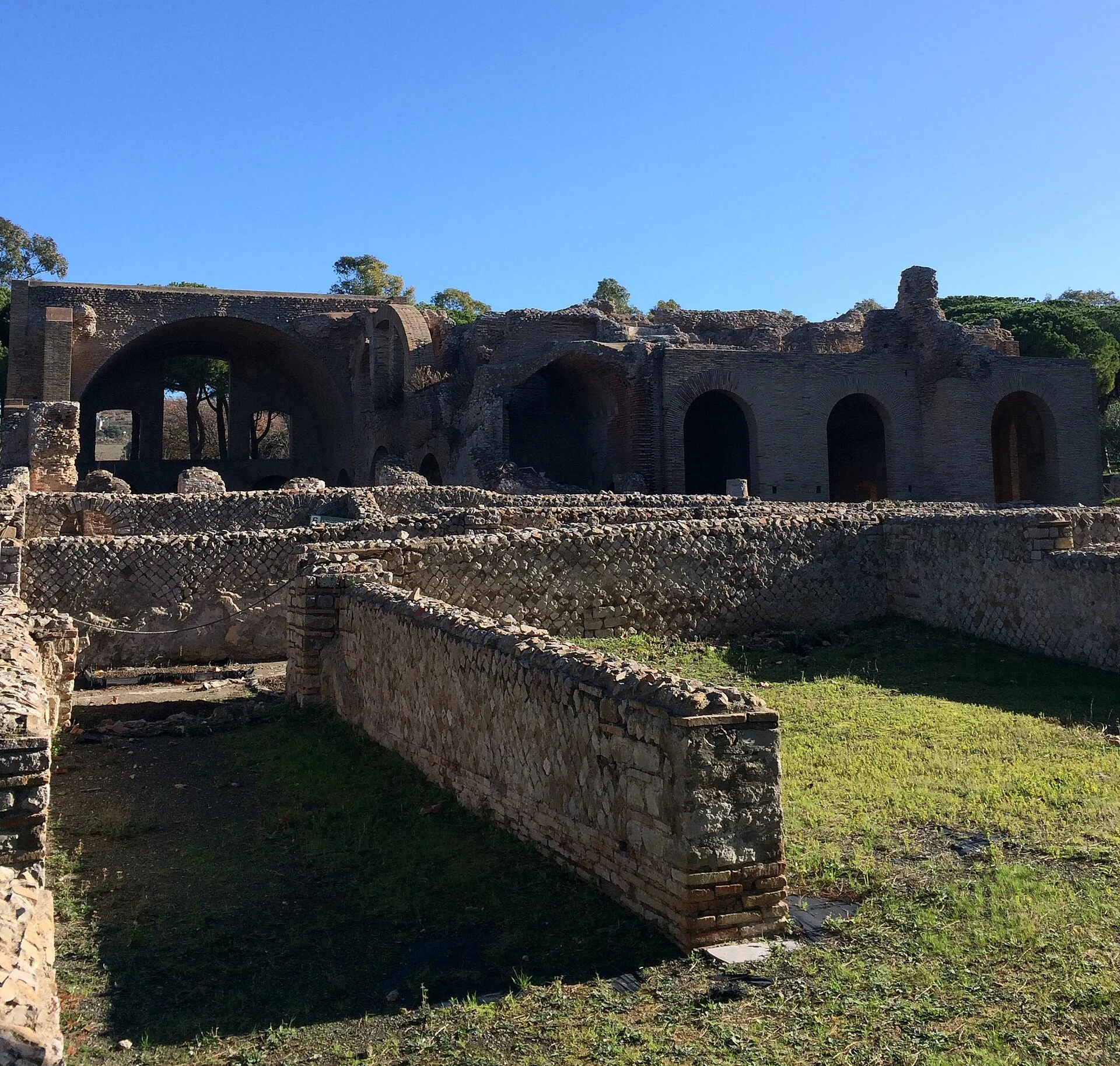
The Terme Taurine and the Ficoncella are on provincial road 7b, which climbs from Civitavecchia toward Tolfa, four or five kilometers from the center, and they are two different places. The Terme Taurine, on Via Terme di Traiano, are the Roman archaeological area entrusted by the municipality to the Lazio Regional Directorate of National Museums: on Sundays, October 4 and 11, 2026, they open free from 14:00 to 18:00. The Ficoncella, on Strada della Ficoncella, is the municipal spa: six euros for a half day for non-residents, 10 for the full day.
Anyone coming from Rome almost always mixes the two up, and the reason is the name. The Terme Taurine are also called the Baths of Trajan, and in Rome there are other Baths of Trajan on the Colle Oppio that have nothing to do with these. The Ficoncella, instead, is real hot water, in open-air pools where you soak. In the first place you walk among ancient walls, in the second you go in wearing a swimsuit.
Data checked on September 28, 2026 on the pages of the municipality of Civitavecchia devoted to the two places, on the notices of the Lazio Regional Directorate of National Museums reported by the local press and on the other sources cited in the text. The situation of the archaeological site is in flux after the restorations and the change of management, and the Ficoncella has just reopened with a new ordinance: call before leaving, because hours and rules can change from one week to the next.
Where they are and why they are two different places
Leave the A12 highway at Civitavecchia Nord and turn toward Tolfa on provincial road 7b: after about a kilometer you're already in the area of the waters. It's a low hill, green in winter and scorched in August, that looks over the Tyrrhenian Sea and the port. From here the center of Civitavecchia is seen below, with the cranes of the docks and the cruise ships moored like palaces.
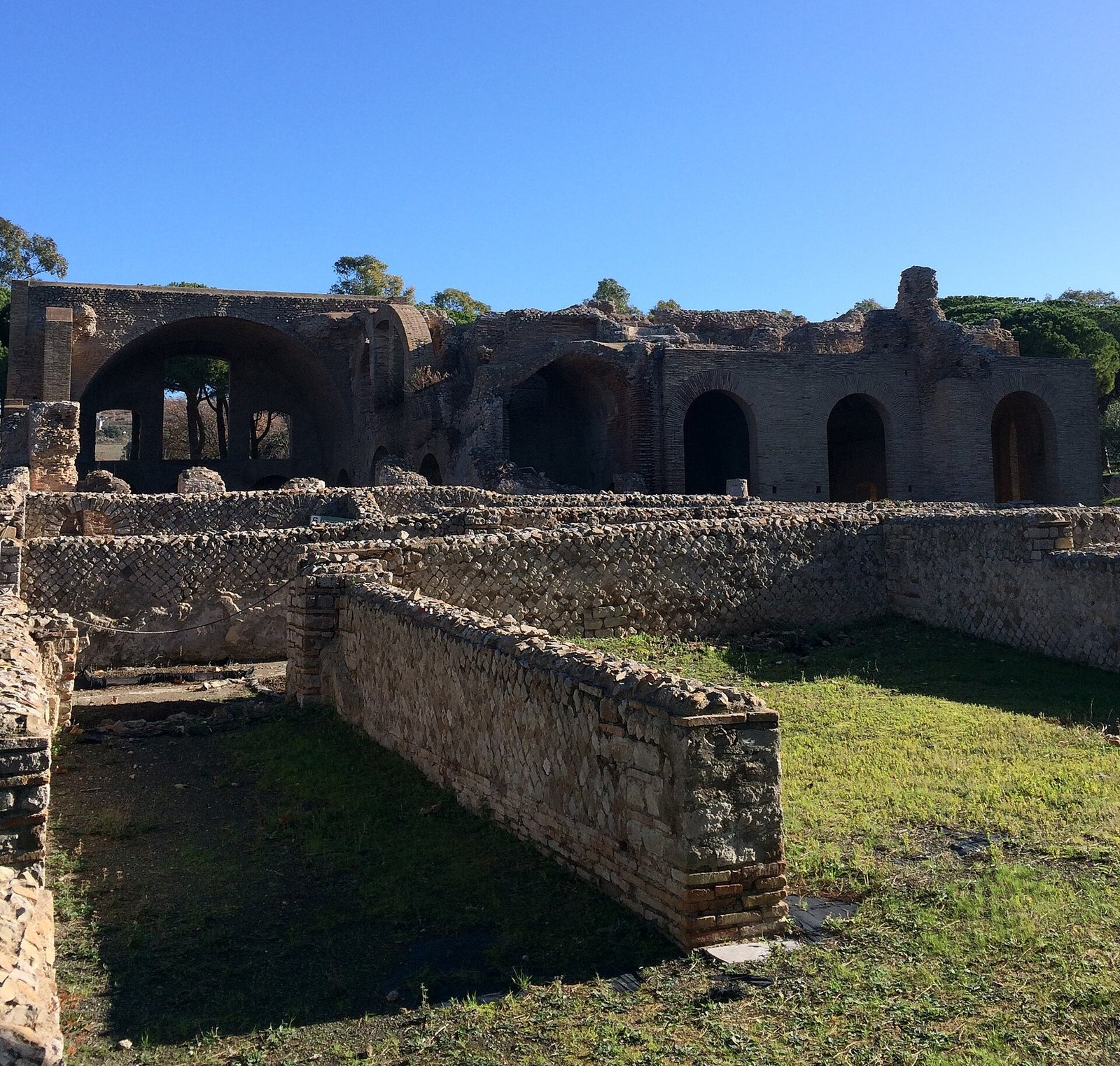
The Terme Taurine occupy an area of about two hectares. They are a Roman masonry spa complex, with pools, corridors, heated rooms and a botanical garden called Horti Traianei. The water is no longer used: it's a site to visit, not to live. The municipality's page describes them as one of the best-readable Roman bath complexes of southern Etruria, and the judgment holds up even after many visits.
The Ficoncella is the opposite. Here you don't look, you bathe. The municipality lists five natural pools fed by a hot spring, with temperatures ranging from 30 to 56 degrees Celsius, and some spots that touch 60. Around them there are a solarium and reserved parking. It's a place frequented by the people of Civitavecchia all year round, with their routine, their hours and their habits.
The link between the two places is the spring. The ancient and modern sources agree that that area of hills was rich in hot, sulfurous waters, and that the Ficoncella, in Roman times, worked as an alternative to or complement of the monumental complex. Today the hierarchy has been reversed: the big complex is silent, the small spring is the one that draws more people.
A clarification that saves GPS users from mistakes. For the Terme Taurine the municipality's page lists the botanical garden on provincial road 7b, the local press writes Via Terme di Traiano, and the operator doesn't give a street number. For the Ficoncella the address is Strada della Ficoncella. Set the name of the place, not the street, and trust the brown signs in the last 100 meters.
A curiosity about the Terme Taurine and Ficoncella
The Ficoncella owes its name to a tree. The municipality's page tells that the area took its name from a large fig tree that shaded the pools, and the diminutive stayed even when the tree was gone. It's a peasant place name, born from use and not from a decree, and it says a lot about the relationship the city has always had with these waters: a place of home, not of show.
The name of the Terme Taurine, instead, has a literary and more complicated story. The reference is to the bull, taurus in Latin, and to the legend that the poet Rutilius Namatianus put in writing at the start of the fifth century. There is then a second, more prosaic hypothesis, which ties the name to a place called Aquae Tauri, and a third that thinks of a Roman family. I come back to it further on, chapter by chapter.
The third name, Baths of Trajan, is the one that causes the most trouble. It comes from the fact that the emperor enlarged the port of Centumcellae, ancient Civitavecchia, and that the great expansion of the bath complex falls in the second century. In Rome, however, the Baths of Trajan on the Colle Oppio are something else, a public city complex above the Domus Aurea. If you search on a search engine, always check the city in the result.
One last curiosity, and it concerns the Ficoncella's fees. The municipality runs two price lists, one for residents and one for everyone else, with a difference that reaches triple: two euros for a half day for those who live in Civitavecchia, six for those who come from outside. It's a declared political choice, because the pools are considered a service to the citizens before an attraction. Anyone coming from Rome pays the tourist price.
The Terme Taurine: what you see in the archaeological area
The complex is the sum of two installations built more than two centuries apart. The first, from the Republican era, dates to the first century BC and the municipality's page places it in the Sullan period. The second, much bigger, is from the imperial era: it began under Trajan and reached its greatest form under Hadrian, with the work dated by modern sources between AD 123 and 136.
Of the Republican sector you can recognize an entrance peristyle, a tepidarium, a laconicum for dry sweat baths and a caldarium, with the service rooms. The walls are in opus reticulatum, that weave of small tuff blocks laid in a net that you recognize at first glance. It's the smallest and oldest part, and anyone with a trained eye tells it apart at once from the imperial brickwork.
The imperial sector doubles the rooms and adds functions. There are the caldarium with its vaults, the frigidarium, the pools, a heliocaminus that used the sun to heat a room, a cryptoporticus, massage rooms, changing rooms, small rooms called cubicula, a gym and a library. The latrines are attributed to the Hadrianic phase. The floors preserve stretches of mosaic with white and black tesserae.
Next to the ruins is the botanical garden, the Horti Traianei, where plant species known in the ancient world are grown. Don't expect a university botanical garden: it's a teaching garden, tended in waves according to the resources available, which serves to give an idea of the plant landscape of a Roman spa complex. In summer the area hosts concerts, shows and events that local associations organize on warm evenings.
What strikes you most, on entering, is how readable it is. In many Roman bath sites, starting with the Baths of Caracalla, the scale is so large that you lose the thread of the route. Here the circuit is understood by walking: you pass from cool to lukewarm to hot and you can still see the suspensurae of the heated floors. It's a lesson in bath architecture in miniature.
What you won't see. The marble decorations, the statues and a large part of the mosaics were removed or moved over the centuries, and the visitor finds walls, floors and vaults, not furnished rooms. Anyone who arrives expecting Pompeii is disappointed. Anyone who can read a plan leaves happy. Preparation makes the difference, and half an hour of reading before going up changes the experience.
One thing nobody tells you about the Terme Taurine and Ficoncella
The practical information circulating online about the Terme Taurine is mostly old. Morning hours, fees of five or eight euros, cell phone numbers of the Pro Loco: all this describes a management that has since changed. On October 16, 2025 the municipality of Civitavecchia and the Lazio Regional Directorate of National Museums signed an agreement that entrusts the management and enhancement of the complex to the State.
The agreement provides for the free grant of the municipal area to the Regional Directorate, which handles maintenance, administration and public use. A few weeks later the site was closed for works: the port's information service lists a closure from November 7, 2025 to June 30, 2026. The local press then reported the reopening after the restorations, presented as a model of cultural relaunch for the city.
In December 2025 the Regional Directorate published a notice for a special public-private partnership covering the Terme Taurine and the National Archaeological Museum of Civitavecchia. The planned term is three years, renewable for another three, and the eligible parties are associations, foundations, third-sector bodies and operators with experience in heritage. The deadline, first set for March 17, 2026, was extended to May 15.
What it means for you. That the ordinary openings of the site depend on who won that partnership and on how they will be organized, and the operator still doesn't publish a stable schedule for autumn 2026. The municipality's page, frozen at March, still gives the Pro Loco hours of 9:30 to 13:00. Before going up, call and ask if there will really be someone at the gate that day.
The second thing nobody says concerns the Ficoncella. In summer 2026 it stayed closed for about 50 days, between July and August, after inspections by the Asl Roma 4 and the Carabinieri. The local press reported the shortcomings found: there was no lifeguard, the signage was insufficient, there was no staff trained in resuscitation or an equipped first-aid station. The reopening came in early September.
The Ficoncella: pools, temperatures and rules
The spa is owned by the municipality of Civitavecchia, and the local press names Civitavecchia Servizi Pubblici, the municipality's investee company, as the body that handles maintenance and enhancement. There are five pools, open-air, dug out and lined, with the water flowing down from one pool to the next and losing heat along the way. The hottest are those near the spring, the lukewarmest those lower down.
The municipality lists a temperature between 30 and 56 degrees Celsius, with spots that can reach 60. The mayor's new ordinance bans immersion in the pools above 45 degrees and requires the temperature of each to be posted. The figure matters: 50 degrees is not a hot bath, it's water that scalds. In the hottest pools you put in at most your feet, and only briefly.
On the water, the municipality's page describes it as clear and colorless, with a slightly bitter taste, rich in sulfates and minerals, and without the strong smell of other sulfurous springs. The municipality also lists benefits for the skin, the respiratory tract, the joints and more. These are the operator's claims, not diagnoses. Anyone with a health condition should ask their doctor before getting into water this hot.
The municipality doesn't publish a list of contraindications. The ordinance, however, sets some rules that work as warnings: young people under 16 can enter the pool only under the continuous supervision of an adult, diving and running are banned, drinking alcohol before and during the bath is banned, and at each entry you sign a declaration of assumption of responsibility. There is a first-aid point outside the pools.
The other published rules are few and precise. Keep your receipt and show it at the exit, because the fee depends on the time slot. Dogs are allowed only in the parking area, on a leash and muzzled, never near the pools. The port's information service adds that showering before the bath is mandatory and that there are a bar, changing rooms, chairs and loungers: bring flip-flops and a towel anyway.
A note on the bottom. The Ficoncella's pools are lined and are not free pools in the mud, but the wet edges are slippery and the limescale deposited by the hot water creates uneven surfaces. Glass in the pool is a terrible idea even where there is no written ban. Anyone coming with elderly people or small children should choose the low, lukewarmer pools, and stay close.
Hours, fees and how to get in
Terme Taurine. The confirmed dates are the special openings on Sunday, October 4 and Sunday, October 11, 2026, from 14:00 to 18:00, with free entry and free visit. On Sunday, September 27, for the European Heritage Days, the opening was from 14:30 to 18:30. For the other days the operator doesn't yet list ordinary hours, and the stable fee after the reopening isn't published.
The official channel for the archaeological site is the municipality's page on the Terme Taurine, together with the places section of the Lazio Regional Directorate of National Museums. For the Ficoncella there is the municipality's page on the Ficoncella. There are no online tickets on resale portals for either place: the products you find are bus rides around the city that pass in front of the site, not admissions.
For completeness, the municipality's page still lists the fees of the previous management: five euros for those over 25, three euros between 18 and 25 and for teachers, free under 18 with the family group, eight euros with the Sunday guided visit. If you find a different price list at the gate, that is the one that counts. The contact given by the same page is 351 3440202.
Ficoncella. Since September 14, 2026 the winter schedule has been in force, with continuous opening every day from 8:00 to 20:00. In summer, from June 12 to the end of August, the schedule is split into two shifts, from 8:00 to 14:00 and from 18:00 to midnight, with the afternoon break devoted to maintenance, cleaning and sanitizing of the pools. In 2026 the summer schedule was extended to September 14.
The fees for those who don't reside in Civitavecchia are six euros for the morning, from 8:00 to 14:00, six euros for the afternoon, from 14:00 to 20:00, and 10 euros for the whole day. The summer evening slot, from 20:00 to midnight, costs 10 euros. For residents the prices are two, two, three and five euros. Children under six and people with disabilities enter free, in daytime hours only.
Parking is paid separately. The municipality lists 50 cents an hour for everyone, or a daily rate of four euros for non-residents. The contacts published for the Ficoncella are 366 6323146 and the municipality's numbers 0766 590241, 590242 and 590212, with the email of the public relations office, urp@comune.civitavecchia.rm.it. On the weekly closing day the sources don't agree: ask by phone.
The advice I give you for visiting the Terme Taurine and Ficoncella
Do both things on the same day, in the right order: first the ruins, then the water. The visit to the Terme Taurine asks for head and legs, and the bath at the Ficoncella takes both away. Anyone who does the opposite arrives at the archaeological site relaxed, overheated and with tight skin, and the Roman walls slide right off them. The bath works better as a reward, at the end.
With the October openings this means an early lunch in Civitavecchia, the archaeological site from 14:00, then an afternoon half day at the Ficoncella until 20:00. With time-slot tickets the math is simple: six euros for the afternoon, and parking by the hour. Remember that the afternoon slot starts at 14:00: going in at 17:00 costs the same as going in at 14:00.
Bring two changes. One for the site, with closed shoes, because among the ruins there are gravel, tall grass and uneven steps, and one for the pools, with rubber flip-flops that don't slip. A big towel and a small one, drinking water in a plastic or metal bottle, no glass. Hot water dehydrates more than you think, especially after an hour in the pool.
Listen to the people already there. At the Ficoncella the regulars know every pool and will gladly tell you where to get in and where not, what time there are fewer people, when it has just been cleaned. It's the only case where the advice of the person next to you in the pool counts for more than any guide. Ask politely, in Italian if you can: the answer always comes.
Don't stay long in the hottest pools. 10 minutes, then out to sit in the air, then back in. It's the rule the people of Civitavecchia have applied for generations, and the new ordinance puts it in writing with the limit of 45 degrees for immersion. If your head spins, get out right away and tell the staff: the first-aid point exists for exactly this.
The legend of the bull: document, tradition, legend
The document. In AD 416 the poet Rutilius Claudius Namatianus, a former prefect of Rome, leaves the city to return to his Gaul and recounts the journey in a short poem in couplets, the De reditu suo. In the first book, after the description of the port of Centumcellae, he writes that it's worth getting to know the baths called those of the Bull, three miles away, and explains where the name comes from.
Rutilius's text presents two versions and doesn't choose between them. In the first a bull, rubbing its horns against a trunk and pawing the ground before a fight, would have discovered the hot spring. In the second a god would have taken the form and the weapons of a young bull to reveal the gift of water. The poet compares the scene to the spring of Hippocrene, opened by a horse's hoof for the Muses.
Rutilius adds a concrete detail: on the spot were posted verses by a poet named Messalla, which ennobled the field and which, he writes, held back those who came in and those who went out. This is the most interesting element of the passage, because it describes a poetic inscription displayed in the spa complex at the start of the fifth century. The text of those verses hasn't survived. Only the news that they existed remains.
The tradition. In Civitavecchia the story is told in a simpler form: a bull paws the earth before a fight and makes a hot, sulfurous spring gush out. It's the version you find on the municipality's page and in the tourist materials. It removes the god, removes Messalla, removes the spring of the Muses, and keeps the strong image of the animal digging. It works very well with children.
The legend, that is, the part that no document supports, concerns the miraculous properties of the water and the tales of prodigious healings tied to the bull. On this the ancient text says nothing: Rutilius praises the pure smell and the delicate taste of the water, to the point that the bather hesitates between drinking it and bathing in it, but he promises no miracles. Everything else is a later addition.
Alongside the legend are the scholars' hypotheses. One ties the name to a place or a body of water called Aquae Tauri, about a kilometer away, from which the thermal water would have come. Another thinks of Titus Statilius Taurus, a general of Augustus and builder of Rome's first stone amphitheater. Neither is proven. Rutilius's bull remains the oldest written explanation.
Another well-known fact, yet rarely cited
The baths can't be understood without the port. Trajan, at the start of the second century, had a great artificial harbor built at Centumcellae that was meant to ease the traffic of the ports of Rome, and the city grew up around the port. The spa complex on the hill is part of the same imperial project: a place of cure and leisure a short distance from the building site and from the emperor's villa.
Pliny the Younger, in one of his letters, tells of having been summoned by Trajan to the villa at Centumcellae for a council and describes the port under construction. Some scholars have proposed linking the baths to that imperial villa, but it's a hypothesis. To see the scale of the port projects of those years go to the Imperial Ports of Claudius and Trajan at Fiumicino.
The second rarely cited fact is that Trajan's name, in Civitavecchia, is everywhere and often misapplied. The city considers itself founded by the emperor, and in part that's true, but the baths already existed for almost two centuries when Trajan arrived. The Republican sector is older than he is. Calling them Baths of Trajan is convenient, not correct, and mixes them up with the monuments in Rome.
Anyone who wants the real Trajan finds him in Rome, in Trajan's Forum and in Trajan's Markets, or in the villa at Arcinazzo Romano. And anyone who wants Hadrian the builder, the one to whom the richest phase of the Civitavecchia complex is owed, has a single obligatory destination: Hadrian's Villa at Tivoli, with its large and small baths.
Safety, the 2026 ordinance and closures
The Ficoncella's summer closure came from a concrete episode: an elderly bather's illness in the pools brought the safety shortcomings to light, and the inspections that followed led to the stop. The September reopening comes with a new mayor's ordinance and two documents, one on managing risks for users and a regulation on the safety of users of the Bagni della Ficoncella.
The most important rules are already listed: no immersion above 45 degrees, temperature posted pool by pool, minors under 16 only with an adult supervising, no diving, no alcohol, signing the declaration at every entry. The full text of the ordinance can be consulted on the municipality's website. Read it before going, because at the gate nobody has time to explain it to every visitor.
The Ficoncella stays closed when the municipality decides so for maintenance or for safety reasons, and closures are announced on the municipality's page and on the spa's social channels. The port's information service lists a closure on Monday, the municipality's page speaks of opening every day. The sources don't agree, so on Monday call before getting in the car.
For the Terme Taurine the opposite applies: the site is closed except when it's open. The openings depend on the Regional Directorate and on the party that runs the visits, and after the works the calendar is still being built. Don't count on finding the gate open on any given Tuesday morning. Count on the announced dates and, for the others, on the phone.
At the archaeological site the warnings are those of any open-air excavation area. The ground is uneven, some rooms have drops without a railing, in summer there is no shade among the walls and the sun beats down on the light surfaces. Bring water and a hat. Anyone using a wheelchair should ask in advance which routes are practicable, because no accessibility statement for the site appears to be published.
The right photo to take at the Terme Taurine and Ficoncella
The photo of the Terme Taurine is taken from the high side of the area, looking toward the sea. Put a brick wall with its arches in the foreground, leave the ruins in the middle ground and let the line of the Tyrrhenian Sea come in at the back. It's the image that explains the place: a spa complex built to look at the sea, not to shut itself in among walls. It works with the low sun of October.
The second framing is a detail: the pilae of the suspensurae, the little brick columns that held up the heated floor. Crouch down, get to the side and let the row of small pillars pull the perspective. It's the photo that makes Roman heating understood by someone who has never seen it, and with a cell phone in portrait mode it comes out well even without equipment.
At the Ficoncella the rule is another, and it comes before the photograph: people in swimsuits are people, not scenery. Always ask before filming someone in the pool, and if you want the photo of the steaming pools take it at the 8:00 opening or shortly before closing, when there are fewer people. In winter the steam on the hot water with the cold morning air gives the best image.
Avoid the shot from above with the phone over the pools. The steam fogs the lens, the humidity gets in where it shouldn't, and a cell phone that falls into 50-degree water can't be recovered. Keep the phone in a waterproof bag if you really want to photograph from the water. Even better, leave it in your backpack and take the photos when you're dry.
How to get there from Rome
By train you take a regional on the FL5 line to Civitavecchia. You leave from Roma Termini, and along the line you can also board at Ostiense, Trastevere and San Pietro, convenient for those who sleep outside the center. The regional trains take around an hour and 20 minutes to Civitavecchia and run all day, from early morning until late evening. Check hours and fares on the Trenitalia website.
From Civitavecchia station to the baths it's four or five kilometers uphill. The port's information service lists urban line B, with three runs in the morning from the station, at 9:10, 11:10 and 12:10, and a trip of between 35 and 40 minutes. Urban transport is run by Civitavecchia Servizi Pubblici: ask for confirmation of the times first, because on holidays and in summer the runs change.
For the return the problem is obvious: if the urban runs are only in the morning, in the afternoon there is no bus. The realistic solution is the taxi, which you find at Civitavecchia station and which can also be called through the app indicated by the port's service. Arrange the return with the same driver on the way there, and get a direct number from him.
By car from Rome you take the A12 highway toward Civitavecchia and exit at Civitavecchia Nord, then turn toward Tolfa on provincial road 7b. After about a kilometer you reach the area of the baths. From Rome the trip takes about an hour without traffic. On summer weekends the return toward Rome on the highway jams up in the late afternoon: leave early or after dinner.
Anyone arriving on a cruise has one point in favor and one risk. The point in favor is the distance: from the port it's a few kilometers. The risk is the schedule: the openings of the Terme Taurine are rare and in the afternoon, and a bath at the Ficoncella after lunch leaves little margin before boarding. Count the minutes and keep an hour of safety for the return to the terminal.
Some important events that happened here in history
Before Rome come the Etruscans. The municipality's page attributes to them the first spa settlement on the hill, and the area is part of the same territory as the great Etruscan cities of the coast, from Tarquinia to Cerveteri. Few traces of the Etruscan use of the springs remain readable to the visitor, but the fact explains why the Romans found the place already known.
In the first century BC, in the period that the municipality links to Sulla, the first Roman installation is built, in opus reticulatum. Between the end of the first and the start of the second century AD, with Trajan, the city of Centumcellae takes shape around the new port. Between 123 and 136, under Hadrian, the spa complex reaches its greatest extent.
In 416 Rutilius Namatianus visits the baths and writes about them. In the second half of the sixth century, during and after the war between Goths and Byzantines, the complex stops working and is abandoned. Modern sources report a mention of the baths in a letter of Pope Gregory the Great from 593. Then silence, for more than a thousand years, with the ruins used as a quarry.
From the mid-1700s the Papal States began the first excavations and laid out an Italian garden around the remains. Excavations continued in waves in the 1800s. In 1922 Raniero Mengarelli worked here, the same archaeologist who excavated the Necropolis of the Banditaccia. From the 1950s the restorations focused on the vaults of the caldarium, on the heliocaminus, on the cryptoporticus and on the laconicum.
In 2020 the site reopens to the public after a restoration. On October 16, 2025 comes the agreement between the municipality and the Lazio Regional Directorate of National Museums, in November the closure for new works, in December the notice for the partnership. In September 2026 the first free special openings. On the Ficoncella side, summer 2026 is the one of the closure after the inspections and of the new ordinance.
Who has passed through the Terme Taurine and Ficoncella
Rutilius Claudius Namatianus, Gallo-Roman, imperial official, prefect of Rome in the years after Alaric's sack. He leaves the city in 416 and goes north along the Tyrrhenian coast, stopping in the ports. His short poem is one of the last pagan glances at Roman Italy, and the passage on the baths of the Bull is the only ancient description of the place to have reached us.
Trajan, the emperor of the port. According to the municipality's page he would have bathed at the Ficoncella too, and the city's tradition takes it as certain. What is certain is that he had a villa and a port building site at Centumcellae, and that he spent time here. The rest, the imperial bath in the spring of the fig tree, is a pleasant local tale without documents.
Hadrian, the builder of the biggest phase. There is no account of his visits, but the hand of his time can be recognized in the quality of the masonry and in technical solutions such as the heliocaminus. Anyone who knows the great Hadrianic baths of Tivoli finds here the same idea of organized wellness, in reduced and provincial format.
Giuseppe Garibaldi appears in the list of illustrious visitors to the Ficoncella that the municipality reports. There are no details on the date or length of the stay, and the item should be taken as city tradition. Garibaldi, in his last years, suffered from joint pain and frequented several Italian spa towns: a stop in Civitavecchia is plausible, but the municipality cites no documents.
And then the people of Civitavecchia, en masse, for generations. The Ficoncella is the place where grandparents took their grandchildren, where retirees meet early in the morning, where dockworkers went after their shift. This continuous popular use is the real story of the place, more than any illustrious visit, and explains why the city has defended low prices for residents.
Eating in the area
Civitavecchia is a port city with millions of cruise passengers a year, and you can see it in the dining near the docks and the station. Alongside the serious places, which exist and which the people of Civitavecchia frequent, there is a band of venues built for those who step off the ship and have two hours. Telling them apart is easy if you know what to look at.
First sign: the menu with photographs of the dishes, laminated, translated into five languages. A place that has to show you the picture of spaghetti with clams is talking to people who don't know what they are. Second sign: the person at the door who stops you in the street and invites you in. A place that has to get its customers on the sidewalk has no regular customers, and regular customers are the real guarantee.
Third sign: the lady who rolls out fresh pasta in the window or in front of the entrance. It's staging, meant to stop the passerby. Well-made pasta is prepared in the kitchen in the morning. Fourth sign: the kitchen open without a break from morning to night. A real kitchen crew stops in the afternoon, because it has to rest and prepare the evening service.
Fifth sign, typical of port areas: items without a price, the fish of the day by weight with no indication of the cost per kilo, different price lists between the outside tables and the inside room, the bill that changes according to the customer. Always ask the price before ordering fish. Romans and people of Civitavecchia don't go to those places, and not out of snobbery: they know how it ends.
At the Ficoncella the spa's bar covers what you need for a break. For a real meal go down into the city or up toward Tolfa, where the trattorias work with meat from the Tolfa Mountains. The criterion remains one: look at who is sitting and in what language they order. To find your way without trial and error there is our list of the places where we eat.
What to combine in a day
The first pairing is the city itself. Civitavecchia has a historic center rebuilt after the wartime bombings, the fort that closes the port and the National Archaeological Museum, which the same Regional Directorate runs and which is part of the partnership with the baths. A morning in the city and an afternoon on the hill is the most sensible day.
The second is the coast. To the north, beyond the Frasca, are the Bagni di Sant'Agostino and the Tarquinia Salt Pans. To the south, Santa Marinella, Santa Severa with its castle, the sanctuary of Pyrgi and the Macchiatonda reserve.
The third is the interior. Provincial road 7b, which passes in front of the baths, climbs toward Tolfa and Allumiere, the alum towns, with the beech forest of Allumiere that changes color in autumn. 20 minutes of curves and the landscape goes from the industrial port to horse pastures. It's the best contrast the area can offer.
The fourth is archaeological. Half an hour away is Tarquinia with the Monterozzi necropolis and its painted tombs. Further south, Cerveteri and the Banditaccia. Anyone who wants to stay on the theme of Roman baths can make the comparison with Ostia Antica, where the bath complexes are many and in the city.
The fifth is a tour of Lazio's hot waters. The other pages in this series cover the Terme dei Papi and the Bullicame in Viterbo, with the Piscine Carletti, and then the Terme del Bagnaccio, the Terme di Stigliano, the Terme di Cretone and the Terme di Fiuggi. Near Rome there are also the Acque Albule.
Anyone who prefers cold water and woods has the Caldara di Manziana, with its gassy springs, and the Mola di Oriolo Romano, both inland toward Lake Bracciano. They are different outings, less organized and freer, that combine badly with the Ficoncella in the same day but well in a weekend.
The contrarian opinion is this: almost everyone comes here for the Ficoncella and treats the Terme Taurine as an add-on. It's an error of perspective. Lazio has quite a few hot pools, and some are more comfortable and better equipped. A Roman spa complex this readable, however, nobody else on the coast has. If you have to choose, choose the ruins.
Frequently asked questions
Are the Terme Taurine and the Ficoncella the same thing?
No. The Terme Taurine are a Roman archaeological area, on Via Terme di Traiano, where you visit the remains of a large bath complex without bathing. The Ficoncella is a municipal spa, on Strada della Ficoncella, with five hot-water pools where you soak. They are on the same provincial road to Tolfa, a short distance apart, and have separate operators, hours and fees.
When are the Terme Taurine open in autumn 2026?
The confirmed dates are Sunday, October 4 and Sunday, October 11, 2026, from 14:00 to 18:00, with free entry. The site is run by the Lazio Regional Directorate of National Museums under the agreement with the municipality signed in 2025, and after the restorations the operator still doesn't publish ordinary hours. For other dates it's best to contact the municipality or the Regional Directorate before leaving.
How much does it cost to enter the Ficoncella?
For those who don't reside in Civitavecchia, entry costs six euros in the morning, from 8:00 to 14:00, six euros in the afternoon, from 14:00 to 20:00, and 10 euros for the whole day. In summer the evening slot until midnight costs 10 euros. Residents pay two, two, three and five euros. Children under six and people with disabilities enter free in daytime hours. Parking is paid separately.
What are the Ficoncella's hours in winter?
Since September 14, 2026 the winter schedule applies, with continuous opening from 8:00 to 20:00 every day. In summer the schedule splits into two shifts, from 8:00 to 14:00 and from 18:00 to midnight, with the afternoon break devoted to cleaning and sanitizing the pools. On a possible Monday closure the sources don't agree, so it's best to call the municipality's numbers before leaving.
Is the Ficoncella's water good for your health?
The municipality describes the water as clear, rich in sulfates and minerals, and credits it with benefits for skin, breathing and joints. These are the operator's statements, not medical prescriptions, and the municipality doesn't publish a list of contraindications. The ordinance bans immersion in the pools above 45 degrees and alcohol before the bath. Anyone with health problems should ask their doctor before getting in.
Can you go to the Ficoncella with kids and with a dog?
Children under six enter free and young people under 16 can be in the pool only under the continuous supervision of an adult, as the 2026 ordinance provides. With the youngest it's best to use the lower, lukewarmer pools. Dogs are allowed only in the parking area, on a leash and muzzled, and can't go near the pools.
How do you get there without a car from Civitavecchia station?
From Rome you take the FL5 regional to Civitavecchia, about an hour and 20 minutes from Termini. From the station the port's information service lists urban line B with three runs in the morning, at 9:10, 11:10 and 12:10, toward the area of the baths. In the afternoon the realistic alternative is the taxi, which you find at the station. It's best to check bus times with the urban transport operator.
Are the Terme Taurine the same as the Baths of Trajan in Rome?
No. In Civitavecchia the Terme Taurine are also called the Baths of Trajan because the emperor enlarged the city and the port, but they are a different complex and much older in its first phase. The Baths of Trajan in Rome are on the Colle Oppio, above the Domus Aurea, and belong to another system of monuments. When you look up hours online, always check the city.
Who wrote this page
This page comes from the editorial team of Tour Leader Pro, the Roman company that designs itineraries, visits and cultural events across Rome and Lazio. The fares, hours and rules given here come from the official sources cited in the text, as of the date indicated at the start: with an archaeological site that has just changed management and a spa that has just changed its rules, check them again before leaving. Tell us what you find has changed.
Lining up a day on the coast north of Rome means fitting together archaeological openings announced with a few days' notice, pool cleaning shifts, urban buses that run only in the morning and taxis to book for the return, for yourself or for a group of 40 people. Anyone facing this kind of puzzle finds on Tour Leader Pro working materials designed for those who guide and for those who organize on their own.
For the wider picture, that is, regional trains and seasonal schedules, rentals, airports, trips between one province and another and destinations in Lazio outside the center of Rome, from the Castelli to the volcanic lakes of the north all the way to the Tyrrhenian coast and the villages of the interior, a useful resource for building a multi-day itinerary is Italy Planner.