Cascia (PG)
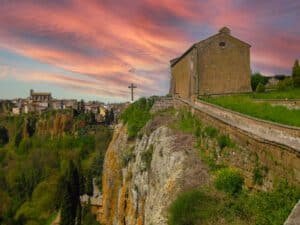
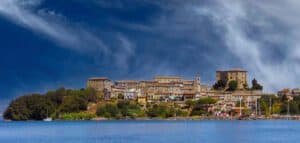
In short. Cascia (PG) is in Umbria, in the southeastern corner of the province of Perugia, on the Sant'Agostino hill, above the valley of the Corno river.

Cascia (PG) is in Umbria, in the southeastern corner of the province of Perugia, on the Sant'Agostino hill, above the valley of the Corno river. The municipal offices are in Palazzo Frenfanelli. From Rome it's roughly 150 kilometers: two and a half hours by car counting the ramps and hairpin turns of the last stretch, not highway averages. The religious heart of the town is the Sanctuary of Saint Rita, at Viale Santa Rita 13, phone 0743 76221 for the monastery and 0743 75091 for the basilica's information office. The upper basilica opens every day at 06:30 and closes at 20:00, the lower basilica closes a quarter of an hour earlier. Entry to the basilica, the monastery and the Rita sites of Roccaporena is open and free, and individual visitors don't need to book. For organized groups you write or phone the monastery, which coordinates welcome, celebrations and guided visits to the cloistered areas. For Museo di Palazzo Santi and the former church of Sant'Antonio Abate, which make up the municipal museum circuit, hours and prices change with the season, so check with the Comune di Cascia before leaving. Cascia (PG) has no train station: you arrive by car or with the scheduled buses that go up the Valnerina.
If you're looking for other destinations within a day's reach of the capital, our selection of tourist attractions collects the villages and sanctuaries of the central Apennines for which Cascia (PG) naturally acts as the leader.
How to get to Cascia (PG) from Rome
There are two roads and they are not equivalent. The first leaves Rome on the Salaria, touches Rieti, continues toward Antrodoco and then climbs toward Leonessa and the plateau. It's the road of landscapes, and it's the one I recommend to anyone not in a hurry who wants to understand the geography of the central Apennines instead of just crossing it. The second is faster and less beautiful: the Autostrada del Sole to Orte, the connector to Terni, and from Terni state road 685 delle Tre Valli Umbre, which runs along the Valnerina to the turnoff for Cascia. In ordinary traffic you arrive in a good two and a half hours. Neither is a fast-flowing road in the last half hour: the last 20 kilometers are curves, and anyone prone to carsickness will find out.
Cascia (PG) by public transport
There is no railway. Cascia (PG) is served by the extraurban buses of Umbria, which link the Valnerina to Spoleto, Terni and Perugia, with runs that on weekdays follow mostly the school calendar and that of the Rita holidays. A direct connection with Rome exists and is historically tied to pilgrimage, but frequencies and terminals should be checked on the carrier's site before planning the day: on the weekend of May 22 the service multiplies, in November it thins out. Anyone traveling without a car should reckon with this: getting to Cascia by public transport is possible, getting around between Cascia and Roccaporena without a car is much more complicated, because those six kilometers of valley-floor road have no continuous urban service.
Parking in Cascia (PG)
The historic center is closed to traffic for the most part and the logic of the town is that of terraces: you leave the car in the lots down below, along the avenue that leads to the sanctuary, and walk up. On holidays the squares fill with tour buses and it's best to arrive early, before 09:00. People with mobility difficulties find reserved spaces near the forecourt of the basilica. The difference in elevation between the sanctuary and the main square of the village is only overcome by a climb, though, and it's a real climb.
Where Cascia (PG) is and what the village is like
Cascia (PG) has the classic shape of the castle leaning against a slope, a structure that recurs throughout the Umbrian-Sabine area: the upper part is the walled core with the churches and palaces, the lower part is the modern expansion, where hotels, pilgrim houses and services are concentrated. The two Cascias don't resemble each other. The upper one is compact, of light stone, threaded by alleys that climb toward the collegiate church and toward Sant'Agostino. The lower one is 20th-century, born around the construction site of the basilica and grown with the tour buses. The Corno river runs below the hill, and the municipal territory is vast relative to the population: a little under 3,000 inhabitants spread over dozens of hamlets, from Roccaporena to Chiavano, from Onelli to Villa San Silvestro, from Fogliano to Tazzo.
Elevation matters more than it seems. With the Chiavano plateau rising well above 1,000 meters, the climate of Cascia (PG) is mountain: in summer the evenings are cool even in August, in winter snow is not an exceptional event and the roads of the high hamlets may require chains. Anyone arriving in July from the Roman plain in city clothes notices the change after sunset.

The Sanctuary of Saint Rita of Cascia
Anyone arriving in Cascia (PG) for the first time expects an old church and finds a 20th-century one, white, big, planted on the side of the hill like a ship run aground. It's right to know in advance that the sanctuary is not medieval: its history begins in the 1920s, when the flow of devotees exceeded the capacity of the old church that held the saint's body. The decisive push came from Mother Maria Teresa Fasce, abbess of the Augustinian monastery, who devoted to fundraising a periodical titled Dalle Api alle Rose, one of the most effective instruments of religious communication of the last century in Italy: small offerings, a great many, from all over the world, with a contribution from Pope Benedict XV himself.
The first design was by Armando Brasini, a Roman architect of monumental taste, and it cost too much. In 1931 the design was scaled down. Pius XI stepped in with funding and entrusted engineer Maria Spirito Chiapetta with a revised plan, later reworked by the architects Giuseppe Calori and Giuseppe Martinenghi. The first stone was laid on June 20, 1937 by Cardinal Enrico Gasparri. The work finished in 1947, going through the war. On August 1, 1955 Pius XII raised the building to the rank of minor basilica.
The upper basilica of the Sanctuary of Saint Rita of Cascia
The plan is a Greek cross, with four apses and a colonnade that holds up the gallery. The facade is in white Tivoli travertine, set between two spires, and bears Eros Pellini's reliefs with scenes from Rita's life: it's worth stopping in the square for five minutes to read them before going in, because they are the visual summary of everything you'll find inside. The interior is a collective work of Italian 20th-century art, and this is the fact almost no visitor picks up: Luigi Montanarini painted 300 square meters of neo-Byzantine fresco between dome and vaults. Silvio Consadori designed the colored stained-glass windows and signed frescoes. Giacomo Manzù, one of the greatest sculptors of the century, made the tabernacle. Luigi Filocamo painted the liturgical scenes. Anyone who goes in expecting mass-produced devotional art finds in front of them a sampler of high-level modern religious commissioning.
A clear opinion: the basilica of Cascia divides opinion, and anyone who judges it only by the yardstick of the Umbrian Middle Ages leaves disappointed unfairly. It's a building that has to be looked at for what it is, a work of the 1930s and 1940s designed to hold enormous crowds and to speak a monumental language. The right comparison is not with the basilica of Assisi. It's with the great pilgrimage churches built in Europe in the same half century.
The lower basilica and the urn chapel
Below the upper church is the lower basilica, carved out of the crypt and today an independent space for celebrations: it closes at 19:45, a quarter of an hour before the upper one, and anyone arriving at the end of the day risks finding it already shut. Rita's body rests in a glass case inside a marble sarcophagus, in a neo-Byzantine chapel closed off by wrought-iron gates, inaugurated in 1947. It's the point where the line forms and slows, and it's also the point where the silence of the sanctuary becomes real: in the chapel nobody speaks.
The Augustinian monastery of Saint Rita in Cascia
The monastery is the oldest and least visited part of the complex. It was founded in the late 13th century with the title of Santa Maria Maddalena, and it was the place where Rita lived for 40 years. In the early 18th century it was enlarged thanks to the donations of John V of Portugal, who according to Portuguese tradition was cured of a tumor on his face through the saint's intercession: it's one of the few cases in which a European sovereign directly funds a provincial Umbrian monastery, and it explains the disproportion between the size of the building and that of the town. In the 20th century the last expansion added the modern sanctuary.
The cell, the rose garden and the cloister vine
Inside the monastery you visit a few spaces that are worth the trip by themselves. In the cloister grows a vine that tradition says sprouted from a dry cutting that Rita, as a novice, supposedly watered out of obedience. The plant is still there, and no serious guide will tell you it is the same one from the 1400s, but the sign is what matters. The old choir is where Rita professed her vows after the abbess had long resisted accepting her, because of tensions between the families of the town. In the Oratory of the Crucifix, the monastery's tradition places the episode of the thorn, received on her forehead on a Good Friday and carried for 15 years. The cell holds the wedding ring, the rosary beads and the solemn coffin that kept her remains until the middle of the 1700s. The rose garden, finally, recalls the miracle of the roses and the figs that bloomed in winter at Roccaporena.
The monastery is also a place of contemporary work, and few people know this: the Augustinian community has equipped the complex with 151 solar panels and biomass systems, with an energy saving on the order of half compared with diesel. A cloistered monastery that produces its own energy in the Valnerina is news that no brochure tells.
The Penitentiary and the Hall of Peace
Next to the basilica works a penitentiary with priests who hear confessions in several languages, designed for foreign pilgrims who arrive in groups. There is also a Hall of Peace, an additional worship space open to absorb the overflow of the faithful in the periods of greatest turnout: if on May 22 you find the basilica packed, that's where the second liturgy is celebrated. Anyone organizing a bus should phone the monastery weeks before, not the same day.

Who Saint Rita of Cascia was
Her name was Margherita Lotti and she was born at Roccaporena, a hamlet of Cascia, in 1381. Rita is the diminutive by which her contemporaries knew her and by which the world knows her. She died in Cascia on May 22, 1457, after 40 years of monastic life in the hermit monastery of Santa Maria Maddalena. Between these two dates there is a biography that devotion has sweetened and that, read honestly, is as hard as the stone of the Valnerina.
The marriage and the widowhood
Rita married Paolo di Ferdinando Mancini, a violent, choleric man, aligned with the Ghibelline faction in a town where family feuds were closed with blood. They had two sons, perhaps twins, Giangiacomo Antonio and Paolo Maria. Paolo was killed one night as he was heading home, in all likelihood by former comrades-in-arms. Here comes the fact that makes Rita an unconventional figure: she forgave the murderers and prayed that her sons not seek revenge. In a society of mandatory vendetta, that prayer was equivalent to taking away from the family its own right. The two boys died of illness shortly after, almost together.
Entering the monastery
Left alone and abandoned even by her husband's family, Rita asked three times to be accepted into the monastery and three times was refused: a widow tied to an open feud was a political problem, not a spiritual one. Only after reconciling the Mancini with Paolo's killers did she manage to enter, around 1407. From then on her life unfolded between prayer, penance and service to the sick, in an era when assisting a plague victim very often meant falling ill.
The thorn, the death and the cult
Devotional tradition places the episode of the thorn on a Good Friday in the 1430s or 1440s: while meditating on the Passion, Rita is said to have received on her forehead a thorn from Christ's crown, with a wound that did not heal for 15 years. The monastery's sources and the historical summaries do not agree on the exact year, and anyone who tells this story with a flat date is simplifying it. Rita died on May 22, 1457. The body was never buried, because the devotion was immediate and overwhelming.
Beatification came in the 1600s, under Urban VIII, almost two centuries after her death. Canonization came in 1900, with Leo XIII. The two miracles recognized for the cause of canonization were the healing of Elisabetta Bergamini, a little girl at risk of blindness from smallpox, and that of Cosmo Pellegrini, an elderly tailor suffering from chronic gastroenteritis. Rita is invoked as the saint of the impossible, and her devotion is today rooted in Italy, Spain, Portugal and Latin America more than that of any other Umbrian saint. During the pandemic she turned out to be the saint most invoked on social networks to ask for healing.
The symbols of Saint Rita of Cascia
Four attributes accompany every image of the saint and each has a story. The rose comes from the episode of the winter of 1457, when the dying Rita is said to have asked for a rose from the garden of her father's house at Roccaporena and the rose was found in bloom out of season. The bees point to two distinct episodes, white bees around the cradle and dark bees around the deathbed. The thorn is that of the Passion. The blessed rose garden is the sacramental of May 22, when in Cascia the roses brought by the faithful are blessed: it's the reason that on that day the town smells of cut flowers for kilometers.
Saint Rita's body and the bees of the Cascia (PG) monastery
This is the chapter most often told badly, and it deserves precision. At her death, in 1457, the body was laid in a humble coffin. Soon after it was moved to a solemn coffin, decorated by the painter Antonio da Norcia, which is the same one now kept in the monastery's cell. In the mid-1700s the remains were transferred to a baroque urn, and in 1947 to the glass case you see today. The medical examinations of 1972 and 1997 found traces of a bone lesion on the forehead, compatible with the wound of tradition, and a pathology of the right foot. The recorded height is 1.57 meters. Face, hands and feet are mummified: anyone expecting an intact body as in the devotional prints will be thrown, and this needs to be said beforehand, not in front of the case.
The bees are the other curiosity of the Cascia (PG) monastery, and they are the element that ties the devotional story and the natural one together. In local tradition, a colony of bees is said to live in the walls of the old monastery, appearing in spring and disappearing in summer, associated with the saint since the story of the white bees on the cradle. The periodical with which Mother Fasce financed the basilica was titled Dalle Api alle Rose for exactly this reason. If someone promises to show you the bees on demand, be wary: it's not a show you can book.
Roccaporena, the hamlet of Cascia (PG) where Rita was born
Roccaporena is about six kilometers from Cascia, at an elevation of 707 meters, at the end of a small gorge dominated by a spur of rock. In the 2001 census it had 73 residents. It remained isolated until 1950, when the connecting road was opened: before then you arrived on foot or by mule, and it's a fact that explains better than any hagiography why the girl Rita lived in a closed world. Today the village is a small system of Rita sites that can be walked in a couple of hours, and it's the part of the trip I recommend not sacrificing: anyone who visits only the basilica of Cascia has seen the monument, not the story.
The Rock of Prayer
The Rock is the spur of rock that overlooks the village by a good 100 meters or more. Tradition has it that Rita spent so much time there in prayer that she left the imprints of her knees and elbows in the stone. Since 1919 a chapel has protected the site. The climb is short but steep, with steps and railings, and it's not suited to those with balance or breathing problems. The view from the top, over the gorge and the village, is the best in the whole territory of Cascia. At the foot of the rock pilgrims leave red roses and notes with their requests: some ask for healing, a great many ask to hold families together.
The birth house and the garden of the miracle
The birth house is a modest 14th-century building on two floors, where Rita lived until her marriage: two rooms remain on the upper floor, and from there you can see the Rock. Not far off is the house where she went as a bride. In the center of the village the garden of the miracle holds a bronze group with the scene of the figs and the rose found in bloom in the middle of winter. There are then the cave of the cross and the rose gardens, which in popular devotion have the name of rose gardens of miracles.
The church of San Montano and the sanctuary of Roccaporena
The church of San Montano is the oldest building in the village, from the 12th century, with two aisles covered by cross vaults, with Umbrian frescoes between the 1300s and 1400s. It's small, often overlooked by passing groups, and it's the most authentically medieval thing you see at Roccaporena. The modern sanctuary, consecrated in 1948 to a design by the architect Oreste della Piana, has a four-sided portico in white stone, a bronze statue from 1968 and a three-aisle interior with mosaics. The statue of Saint Rita standing out on the ridge, visible from afar, has become the graphic sign of the place.

The churches of the historic center of Cascia (PG)
The upper town preserves a heritage that religious tourism passes through almost without seeing, because the tour bus unloads in front of the basilica and leaves. There are four buildings, all reachable on foot in a 40-minute walk, and together they tell the Umbrian 1400s better than many more famous churches.
The church of San Francesco in Cascia (PG)
Founded in 1247, just 21 years after the death of Francis of Assisi, it is proof that the order arrived here very early. The current building is due to Antonio Elemosina, a Franciscan friar and bishop, and was built between 1339 and 1424: almost a century of construction. The facade is the work of Comacine masters and has a rose window of great quality, with 18 trilobed small arches and 18 small columns radiating from a central quatrefoil. The portal is pointed, held up by four columns per side. Stop and count the small arches: it's the quickest way to understand how much chisel work there is in a facade that from the square looks simple.
The interior is a Latin cross with wooden trusses, rebuilt after the damage of the 1703 earthquake. The altars are dedicated to the Immaculate Conception, to Saint Rita and to other saints. The late 16th-century altarpiece with the Ascension is attributed to Pomarancio, with side panels attributed to Guido Reni and Perino Cesarei: attributions of critical tradition, not notarial documents, and they should be taken for what they are. In the right transept a large canvas shows Christ with the Virgin and the angels appearing to Francis at the Porziuncola. It's the civic church of Cascia, the one where the town recognizes itself.
The collegiate church of Santa Maria della Visitazione
In the walled village, near Porta Leonina, the collegiate church of Santa Maria is the building with the longest stratigraphy in Cascia (PG). Built in the 12th century, it preserves in the north wall the remains of the original Romanesque structure. It was rebuilt in Gothic forms and then again in 1532. The facade has a pediment and two portals dated 1535 and 1621, a 16th-century fresco with Saint Sebastian and the Madonna della Quercia, and a stone lion surviving from the original porch. The interior has three aisles with barrel vaults and wooden and polychrome stucco altars between the 16th and 18th centuries. Among the works are a Deposition by Nicola da Siena, a 15th-century Nativity and the Mysteries of the Rosary by Niccolò Frangipani dated 1538.
Here is the detail that ties the church to the saint: the collegiate church preserves the baptismal font where, according to tradition, Rita was baptized in 1381. It's tradition, not documentation, and it should be told that way. The fact remains that it's the point in town where local history and devotional history physically touch.
The church of Sant'Agostino
Founded in 1059 next to the medieval fortress, with an annexed convent, and enlarged in 1380, the church of Sant'Agostino gave Cascia a theological school of real standing: Blessed Ugolino, Blessed Giovanni da Chiavano and masters such as Blessed Simone Fidati trained here. The Gothic facade is still the work of Comacine craftsmen, with a rose window and a pointed-arch portal decorated with acanthus-leaf capitals. The lunette above the entrance bears a 15th-century fresco with the Madonna enthroned, the Child and Saints Augustine and Nicholas of Tolentino, attributed to Paolo da Visso. The interior, with a single nave, preserves frescoes from the 15th to the 17th century, a dressed Madonna with Child under an 18th-century gilded wooden baroque canopy and a polychrome wooden Crucifix of the 15th century above the high altar.
The former church of Sant'Antonio Abate, now a museum
This is the place visitors skip and that would deserve first place in any cultured itinerary in Cascia (PG). The complex began as a Benedictine monastery in the late 1300s, on a monastic settlement documented already from 1025. After the damage of the 1703 earthquake it was rebuilt between 1707 and 1709 in baroque forms. Since 1997 it has worked as a museum and is part of the urban museum circuit together with Palazzo Santi.
Inside there are two cycles of 15th-century frescoes that alone justify the ticket. In the apse the Master of the Dormitio of Terni painted Scenes from the Life of Saint Anthony, the Evangelists and an Annunciation. In the choir Nicola di Ulisse da Siena frescoed episodes from the life of Christ and the cardinal virtues. Also in the choir is a polychrome sculptural group with Tobias and the angel, by Domenico Indivini, second half of the 15th century. The hall is a single nave with three side chapels and painted wooden altars of the 18th century. On the high altar is a baroque ciborium. There is also a 17th-century pipe organ by Luca Neri of Leonessa, with mechanical action and five stops, which has kept its original characteristics and its painted wooden case. An intact 17th-century organ in a town of 3,000 inhabitants is not a detail. It's a case study.
Museo di Palazzo Santi in Cascia (PG)
Palazzo Santi houses the civic museum and the municipal picture gallery, that is the collection that holds together what has survived of the churches of the territory. The core of greatest interest is Umbrian wooden sculpture, a genre in which the Valnerina and the Apennine belt have produced works that are hard to see in the great national galleries. Together with the Sant'Antonio Abate museum it makes up the town's museum route, with a circuit ticket. Hours and prices follow the season and vary between summer and winter: before planning the visit check with the Comune di Cascia, because in the cold months opening may be reduced or on request.
The practical advice is to treat the two museums as a single block of an hour and a half, to fit between the visit to the sanctuary and the climb to the upper village. Anyone who arrives in Cascia (PG) in the morning for the service and leaves after lunch always misses them, and misses the part of the town that has nothing to do with the pilgrimage.
Palazzo Carli, the historical archive and the library of Cascia
Palazzo Carli holds the municipal historical archive and the library named for Tranquillo Graziani, with parchments from the 1200s, council records from the 1400s and other manuscripts. It's not a museum and is not visited as one: it's a research tool, and its existence explains why the administrative history of Cascia can be reconstructed in a detail few Apennine municipalities can afford. Anyone working on local history, paleography or genealogy should write in advance. Palazzo Frenfanelli, not far away, houses instead the municipal offices.
Villa San Silvestro and the archaeology of the territory of Cascia (PG)
In the hamlet of Villa San Silvestro, in the Pian di Chiavano area, the remains of a Roman temple of the Republican age are preserved, along with the settlement that gravitated around it. It's the monument that overturns the image of Cascia as an exclusively medieval and devotional place: before the Middle Ages there was a structured center here, with full-fledged temple architecture, in a territory of passage between Umbria, Sabina and Piceno. Archaeological investigations have returned a very long picture of occupation, from the pre-Roman age to the Lombard phase, over a millennium of continuity.
Visiting the area requires driving and doesn't have the apparatus of services of an equipped archaeological park: whoever goes should know they will see an excavation, not a reconstruction. It's for those who have already seen the rest and want to understand the historical depth of the territory. It's not the first thing to do on a single day.

The history of Cascia (PG), from the Umbrians to the Kingdom of Italy
The history of this territory is long and discontinuous, made of destruction and fresh starts. It's worth going through it by phases, because each phase left something that you can still see today walking through the town.
Italic origins and the Roman age
The original settlement dates to the Italic age, with presences referred to the 6th and 5th centuries BC, and saw Umbrians, Etruscans, Sabines and finally Romans take turns. The archaeological finds of recent decades, first of all the temple of Villa San Silvestro, have shown that what seemed a peripheral margin was in fact a center of some importance. Local tradition also holds that Vespasia Polla, mother of the emperor Vespasian, came from these parts: it's a learned tradition recurring throughout the area between Norcia and the Sabina, and as such it should be presented.
The early medieval destructions
With the fall of the Western Roman Empire, Cascia followed the fate of many Umbrian settlements: it was plundered and devastated by the Goths of Totila, then passed under the Lombards, who left a lasting imprint here also in the ecclesiastical organization, and was destroyed again in the 9th century during the Saracen raids in central Italy. Each time the town rebuilt itself on the same hill, and this topographic stubbornness is the reason the upper settlement has the shape it has today.
The commune, the feuds and the Middle Ages
In the 12th century Cascia became an autonomous commune. It was the period that brought wealth and wars together: conflicts with neighboring cities and internal struggles between Guelphs and Ghibellines, that is exactly the context in which Rita was born and lived. The town fell under the Trinci family of Foligno and then under Frederick II of Swabia. It was contended to no result by Norcia, by Leonessa and by Spoleto. As for most Umbrian centers, the peak of urban and artistic splendor coincides with these centuries: the Gothic churches of the historic center are children of that moment.
The Rocca, the Colonna and the Papal States
In the second half of the 1400s Pope Paul II had the Rocca built as a military outpost. At the threshold of the 1500s the followers of the Colonna tried in vain to seize it. Soon after, Cascia was annexed to the Papal States. In 1517 the Rocca was dismantled by order of Pope Leo X, who considered local fortresses a risk more than a resource: it's the reason that today no recognizable profile of that military structure remains, and anyone looking for the castle at Cascia doesn't find it. In 1527 the troops of Sciarra Colonna devastated the territory, a prologue to a new war with Spoleto. From then on Cascia nevertheless kept its autonomy. In 1596 Pope Clement VIII raised it to the rank of city.
From the Napoleonic period to Unification
Cascia remained tied to the Papal States except for the Napoleonic interlude. In 1809, during the French occupation, the municipal territory was broken up to form the municipality of Poggiodomo. In 1850 it ceded the village of Trimezzo to Cittareale, then in the Kingdom of the Two Sicilies, effectively moving a state border. In 1860 it was annexed with all of Umbria to the Kingdom of Sardinia, which on March 17, 1861 became the Kingdom of Italy. In the 20th century the history of Cascia largely coincides with that of the sanctuary and religious tourism, which transformed the town's economy more than any political event.
Earthquakes and reconstruction: Cascia (PG) and the Valnerina
The territory of Cascia has, together with that of Norcia, the highest level of seismicity in Umbria. It's not an abstract feature: it's the key to understanding why almost every building in the town bears traces of rebuilding. Over the course of history the town has suffered destructive earthquakes in series. Remembered are the catastrophic event that struck the area already in ancient times, those of the fall and winter of 1300, the quake of November 1599 and that of January 1703, which in the Valnerina and the Rieti area caused the death of more than 700 people. The most recent is the 2016 sequence.
2016 and what you see today
The shocks of August 24 and October 30, 2016 deeply marked the central Apennines between Umbria, Marche and Lazio. Anyone arriving in Cascia (PG) 10 years later finds a town standing and functioning, but will still encounter construction sites, scaffolding and the occasional unsafe building: it's the normal state of an area under reconstruction, and anyone planning the visit of a single church should make a phone call before leaving, because the openings of some minor buildings have changed over time.
Roccaporena, in the local narrative, is the singular case: at the geographic center of that seismic sequence, the hamlet suffered no significant damage, apart from slight lesions to a small 13th-century church, while within 60 kilometers there were irreversible losses of artistic heritage and very serious damage to homes. For residents and the faithful it's one more intervention of the saint of the impossible. For a technical reading, it's a matter of geological conditions of the ground that attenuated the effects of the shaking. The two explanations coexist in the town without clashing, and it's one of the most interesting things to observe when talking with local people.
Saffron of Cascia (PG) and the cuisine of the Valnerina
Cascia is a land of saffron and black truffle. The crocus blooms in the fall and the harvest is done at dawn, flower by flower, picking by hand the three red stigmas of each corolla: to obtain a gram of dried spice you need hundreds of flowers, and it's the reason saffron costs what it costs. The local production is on a very small scale and is celebrated with a dedicated market show, held between the last weekend of October and the first of November. It's the best time of year to buy real saffron from the person who picked it, instead of anonymous sachets at the supermarket.
Products of the territory
Besides saffron, the agriculture of Cascia produces spelt, legumes, truffle and above all roveja, also known as rubiglio or corbello: a legume similar to the pea, almost vanished and recovered in recent decades, which is ground to obtain a dark flour. Craft activities also survive: the working of flax, with cloths decorated with figures and themes of the tradition, and a refined processing of meats and cured meats that is a direct cousin of Norcia's.
Dishes to try in Cascia (PG)
Crostini alla ghiotta, made with prosciutto and livers, are the reference appetizer. The torta al testo is the flatbread named after the stone or cast-iron disc it is cooked on. Then the soups, the spelt one and the lentil one, which here are not a "poor dish" just as a manner of speaking but the historic base of mountain eating. The strascicati of Cascia are scraps of egg pasta, often dressed with truffle. The farrecchiata di roveja is the polenta obtained from the flour of the legume, a Slow Food Presidium, and it has a slightly bitter taste that throws anyone expecting corn polenta. The dessert is the rocciata, an Umbrian specialty unmissable on feast days.
A professional opinion: in Cascia (PG) you eat well in the trattorie of the upper town and you eat in a standardized way in some restaurants down below built on the flow of tour buses. You can tell the difference from the menu. If it lists 60 dishes, change address.
Festivals, traditions and folklore in Cascia (PG)
The calendar of Cascia is dense and follows two parallel tracks, the Rita one and the peasant and pastoral one. Knowing it helps in choosing the date of the trip, because the same square on two different Sundays is a different town.
- Feast of Sant'Antonio Abate and auction of the ewe lambs, on January 17, with the blessing of the animals and the procession accompanied by farmers and shepherds in traditional costume.
- Pasquarelle showcase, the Sunday after January 17: groups from the hamlets and the Valnerina take turns in the songs of the tradition.
- Night procession of the Dead Christ, on Good Friday, organized by the Confraternita della Buona Morte, with a long line of penitents.
- Fiera del Capo Lanuto, in April, a celebration of pastoral culture born in collaboration with the Sardinian Coldiretti and other associations: with the initiative of the paradura, an ancient Sardinian practice of mutual aid, 1,000 sheep were donated to the shepherds of Cascia to help them start over after the 2016 earthquake.
- Rita festivities, on May 21, the eve of the solemnity.
- Historical procession and blessing of the roses, on May 22: a costumed reenactment and the rite that gives the day its name.
- Fair of Cascia, the first Wednesday of every month, plus the dates of May 23 and August 13.
- Festa della Rosa e delle Rite, the fourth Sunday of June, at Roccaporena, closing the Rita festivities.
- Aestivum, in August, a market show of the summer truffle and the rose.
- Summer in Cascia, between August and September, a series of concerts, theater performances and cultural events.
- Palio delle Frazioni, a culinary challenge among all the hamlets of the municipality in traditional dress.
- Saffron market show of Cascia, between the last weekend of October and the first of November.
- Nativity scene exhibition, between December and January.
May 22 in Cascia (PG): what to really expect
The solemnity of Saint Rita is the day the town doubles and triples. Around the date a week of solemn celebrations unfolds: continuous liturgies, tour buses from all over Italy and abroad, the historical procession, the blessing of the roses. Anyone who goes for devotion finds exactly what they're looking for. Anyone who goes to visit the churches and museums in peace picks the wrong date in a spectacular way: that day the village streets are impassable and the parking lots fill up by 08:00. If you want to attend the festival without suffering it, it's best to sleep in the area the evening before and get around on foot.
The Cammino di San Benedetto and the paths of Saint Rita
Cascia is a node of two networks of walks. The first is the paths of Saint Rita, walking routes that link the town to the Rita sites and to the Valnerina, maintained by the sanctuary and designed for slow pilgrimage. The second is the Cammino di San Benedetto, the route that from Norcia descends to Montecassino crossing Umbria and Lazio and touching some of the most beautiful villages of the central Apennines.
Cammino di San Benedetto from Norcia: Cascia, Monteleone di Spoleto, Leonessa, Poggio Bustone, Rieti, Rocca Sinibalda, Castel di Tora, Orvinio, Mandela, Vicovaro, Subiaco, Trevi nel Lazio, Collepardo, Casamari, Arpino, Roccasecca, Montecassino
Frequently asked questions about Cascia (PG)
How far is Cascia (PG) from Rome and how do you get there?
Cascia (PG) is about 150 kilometers from Rome, covered in two and a half hours by car because the last part of the route is mountain. The two possible roads are the Salaria toward Rieti and then the climb to the plateau, or the highway to Orte, the connector to Terni and state road 685 delle Tre Valli Umbre along the Valnerina.
Is the Sanctuary of Saint Rita in Cascia an old building?
The Sanctuary of Saint Rita in Cascia is not medieval: its construction begins in the 1920s, when the flow of devotees exceeded the capacity of the old church that held the saint's body. It's a white and imposing building, planted on the side of the hill.
Who was Saint Rita of Cascia?
Saint Rita of Cascia was named Margherita Lotti and was born in 1381 at Roccaporena, a hamlet of Cascia. She died in Cascia on May 22, 1457, after 40 years of monastic life in the hermit monastery of Santa Maria Maddalena. Before becoming a nun she had been a wife and mother.
What is there to see in Cascia besides the sanctuary?
The historic center of Cascia has four churches, among them San Francesco, founded in 1247, reachable on foot in a walk of about 40 minutes from the sanctuary. There is also Museo di Palazzo Santi with the municipal picture gallery and, six kilometers away, Roccaporena, Rita's native village.
How much time do you need to visit Cascia?
To visit Cascia without rushing you need a full day, devoted to the sanctuary and the upper village. A typical route has you arrive by 09:30 to see the upper basilica before the tour buses, then the lower basilica, the monastery and finally the climb to the upper village for the collegiate church and the other churches.
Is Cascia suitable for children?
Cascia works with children if you choose what to show them: the basilica interests them little under age 10, while the climb to the Rock of Roccaporena almost always appeals because it's a short adventure with a view as the final prize. The museums hold their attention for about 40 minutes if accompanied by an explanation.
When is the best time to visit Cascia?
June and September are the recommended months to visit Cascia, with good weather, long light, open churches and no lines. May is Rita's month and the one in which the town gives its all, but also the one with the biggest crowds.
Is it worth staying overnight in Cascia?
Sleeping one night in Cascia lets you see the sanctuary at 07:00, with the nuns in the choir and few people in church, an experience very different from the day visit most visitors make. Anyone who arrives at dawn and leaves after lunch sees only part of what the place offers.
Anyone walking here has to factor in real elevation gains and isolated stretches: this is not a route for sneakers. The Umbrian stages are the harshest and the most beautiful. For the organization of groups on foot, with professional accompaniment and logistics, you turn to those who do it for a living: the information on tour leading from TourLeaderPro explains well how the relationship between guide, tour leader and group works, which on walks is not a bureaucratic detail but a matter of safety.

What to see around Cascia (PG) within an hour
Cascia works very well as a base for two or three days, and that is the best way to experience it. A few kilometers away is Norcia, the city of Saint Benedict, which shares with Cascia its seismic history, cuisine and spiritual vocation. Toward the south you descend to Leonessa and the plateau, then to Cittareale and Amatrice. Toward Rieti you come across Poggio Bustone and the sanctuary of Greccio, two of the four sanctuaries of the holy valley of Rieti, and farther on Rieti with its medieval center. On the Terni side the Marmore Falls are the most spectacular nature excursion in the area. Anyone who loves the mountains finds Terminillo a little over an hour away, and Antrodoco on the way back toward the Salaria.
If the trip continues toward Rome, the abbey of Farfa in the Sabina is a half-hour detour that few put on the program and that almost everyone is grateful to have made.

How to really visit Cascia (PG): timing and route
One day is enough for the sanctuary and the upper village, but it's a full day. The recommended route is this: arrive by 09:30, upper basilica and urn chapel before the tour buses come in. Then the lower basilica. Then the monastery, which is the part that requires the most attention and the most silence. Around noon you climb to the upper village for the collegiate church, San Francesco and Sant'Agostino. Lunch in town. In the afternoon the two museums of the urban circuit, and around 16:00 the transfer to Roccaporena, which in low light is much more beautiful. With two days, add Villa San Silvestro, the Chiavano plateau and a side trip to Norcia.
Cascia (PG) works better with two half days than with one full day: on the morning of the second day, before the groups arrive, the basilica is empty and you understand what it is. Anyone organizing school trips or corporate trips should count at least one tour leader for every 15 participants, which is the quality standard declared by TourLeaderPro for groups in Italy: in a town with climbs, steps and a crowded sanctuary, that ratio makes the difference between an orderly visit and an afternoon spent rounding up stragglers.
Cascia (PG) with children and accessibility
With children Cascia works as long as you choose. The basilica interests them little under age 10, whereas the climb to the Rock of Roccaporena almost always appeals because it's a short adventure with a panoramic prize at the end. The museums, if accompanied by an explanation, hold their attention for 40 minutes, no more. The nativity scene exhibition between December and January is the best opportunity of the year for a visit with the little ones, and the fair of January 17 with the blessing of the animals is an event children remember.
On accessibility the situation runs at two speeds. The sanctuary complex, being 20th-century and designed for large flows, is largely passable by wheelchair, with reserved parking spaces near the forecourt. The upper village is medieval, and that means uneven paving, steep slopes and steps: a wheelchair here requires an assistant and patience. The Rock of Roccaporena is not accessible to those who can't walk. The birth house, the garden of the miracle and the valley-floor sanctuary instead are, with some help. For an adapted visit it's best to phone the monastery and explain the situation: the answers they give are concrete.
When to go to Cascia (PG) and when to avoid it
May is Rita's month and the month in which the town gives its all, with the biggest crowds. June and September are the months I recommend: good weather, long light, open churches and no lines. July and August bring mountain tourism and summer events, with very pleasant cool evenings. October and November are the saffron and truffle season, and it's the right moment for those who travel to eat. Winter is harsh, with short days and possible difficulties on the roads of the high hamlets, but the basilica in January, half empty, with four pilgrims, is one of the most intense experiences Umbria can offer.
The day to avoid, if the festival doesn't interest you, is May 22. The second day to avoid is the Monday of some winter weeks, when the museums may be closed. For those accompanying foreign visitors, the English guide to ItalyPlanner's Umbria gathers in one place the pages on the region's cities, villages and trips, useful for building the itinerary around Cascia.
A curiosity about Cascia (PG)
The basilica you see was not paid for by the State, or by a great family, or by the municipality. It was paid for by letters. In the 1920s the abbess of the Augustinian monastery, Mother Maria Teresa Fasce, grasped something Italian religious publishing would learn only much later: that a widespread popular devotion could sustain an enormous construction project if someone organized it. She founded a periodical, titled it Dalle Api alle Rose, putting together the saint's two symbols, and mailed it wherever the name of Rita reached. The offerings arrived in thousands of small envelopes, from parishes, from emigrants, from families who had received a grace. Among the supporters was Pope Benedict XV. Later Pius XI stepped in with funding and with the appointment of the designer who made the work sustainable.
The real curiosity lies in the distance between the plan and the result. The first commission had gone to Armando Brasini, the architect of the monumental Rome of the time, and it called for a building the budget couldn't bear. In 1931 the design was scaled down, entrusted to engineer Maria Spirito Chiapetta and then reworked by Giuseppe Calori and Giuseppe Martinenghi. The result you see today is therefore a compromise between Roman ambition and the cash box of a mountain monastery, and its strength lies exactly there: a basilica built at the pace the envelopes arrived, with the first stone laid on June 20, 1937 and completion in 1947, world war included. When you go in and look at the dome frescoed by Luigi Montanarini, 300 square meters of neo-Byzantine painting, keep in mind that every square meter corresponds to a fundraising collection. It's the only great Italian church of the 20th century whose accounting coincides with a story of popular devotion documented month by month in a newspaper.
Something nobody tells you about Cascia (PG)
That the historic center exists, and that almost nobody visits it. Of those who arrive in Cascia, 90 percent park below the sanctuary, go in, pray, buy something, climb back on the bus and leave: they have seen a building from 1947 and ignored seven centuries of Umbrian art that lie 400 meters away uphill. In that village there are a 15th-century rose window with 18 trilobed small arches on the facade of San Francesco, a baptismal font that tradition links to Rita's baptism in the collegiate church of Santa Maria, a 15th-century polychrome wooden Crucifix above the altar of Sant'Agostino, two cycles of 15th-century frescoes in the former Sant'Antonio Abate signed by the Master of the Dormitio of Terni and by Nicola di Ulisse da Siena, a sculptural group by Domenico Indivini with Tobias and the angel and a 17th-century pipe organ by Luca Neri still with mechanical action.
The second thing nobody will tell you is about hours. The sanctuary is open every day from 06:30 to 20:00 and the lower basilica closes at 19:45, but the civic museums and some churches in the village follow seasonal calendars that shrink in the cold months. Anyone leaving Rome at 07:00 thinking of doing everything in one November day risks finding only the basilica and the shops open. A phone call to the Comune di Cascia the day before completely changes the payoff of the trip. And third thing: between Cascia and Roccaporena there's no continuous urban service, so anyone arriving by bus has to organize those six kilometers, which on foot along the road are not a stroll.
The advice I give you for visiting Cascia (PG)
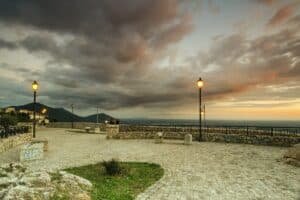
Sleep one night. It's the simplest advice and the one nobody follows, because Cascia has entered the imagination as a day-trip destination: departure at dawn, arrival mid-morning, departure after lunch. Done that way, the trip gives back a tenth of what the place has to give. The sanctuary at 07:00, with the nuns in the choir and four people in church, is a completely different place from the sanctuary at 11:00 with three tour buses in the square. The Rock of Roccaporena at sunset, with raking light on the gorge, is something else compared to the Rock at noon. The upper village in the evening, when the shops have closed and only the streetlamps on the paving remain, reads as the medieval town that it is.
The second piece of advice concerns the order of the visit. Don't start from the basilica: start from Roccaporena. Go first to see the two-room house where Margherita Lotti was born, the narrow gorge, the spur of rock, the village isolated until 1950. Then come back to Cascia and go into the basilica. In that order the 1947 basilica becomes understandable, because you've seen the starting point and you understand what five centuries of devotion built around a woman born in a house without a road. In the reverse order, the basilica just seems big.
Third, bring real walking shoes. In Cascia you're always going up: from the parking lot to the sanctuary, from the sanctuary to the village, from the village to the collegiate church, and at Roccaporena you go down from the Rock on wet steps if it has rained. Many people give up the Rock because of the wrong shoes, and it's the regret that stays.
Another well-known fact, yet rarely cited
That Rita, before being a nun, was a wife and mother, and that the Church canonized her not despite that life but through it. It's a very well-known fact and continually pushed aside: in the devotional imagination Rita is the nun with the wound on her forehead, and the woman married to a violent man in a village feud disappears. Yet that is the part of the biography that explains her worldwide spread. She married Paolo di Ferdinando Mancini, a choleric man, aligned with a faction. She lost him murdered one night, in all likelihood at the hands of former comrades-in-arms. She forgave and asked her sons not to avenge their father in a society where vendetta was a family obligation. She lost her sons too, dead of illness shortly after, almost together.
What follows is just as rarely cited: to enter the monastery she was told no three times. Not for spiritual reasons, but because a widow involved in an open feud brought a political problem inside the walls. She was admitted around 1407 only after obtaining the reconciliation between the Mancini and the killers of her husband. Rita, that is, entered the convent as a mediator of a civil peace, not as a devout maiden. The second little-cited fact is that she left not a single line: no writing, no rule, no letter. Her message passed only through the account of those who saw her live. And that is the reason her figure has crossed five centuries while staying adaptable: whoever doesn't write can't be contradicted by their own texts, and every era has read into her what it needed. The Rita of the Counter-Reformation, the one of the working-class 1800s, the one of the 1930s of Mother Fasce and the one of the social networks during the pandemic are four different figures built on the same biography.
The right photo to take at Cascia (PG)
The photograph worth the trip is not the facade of the basilica taken from the forecourt: it's the whole town seen from above, with the white bulk of the sanctuary emerging from the fabric of houses and the mountains behind. You get it by climbing toward the upper village and looking for open spots along the walls, or by stopping at one of the wide spots in the road that climbs from the valley floor before entering town. The good light is that of late afternoon, when the sun strikes the travertine facade at an angle and detaches it from the green of the hills. At noon the white burns out and the result is flat.
The second photograph, the one almost nobody takes home, is at Roccaporena: from the Rock you look down on the gorge and the tiny village, with the bronze statue of Saint Rita on the ridge and the stone roofs below. You need a clear morning or a late fall afternoon, when the haze lowers and the profiles of the mountains overlap in layers. If you have a telephoto lens, the compression of the planes over that gorge is the strongest image in the whole territory of Cascia.
Inside the basilica you can take photographs, but with your head: no flash, no tripods in the middle of the nave, and above all no shots of the case with the faithful praying in front of it. The urn chapel is not a tourist subject, it's the point of recollection for those who arrive here after 1,000 kilometers. If you want an image of Montanarini's dome, stand at the center of the Greek cross, rest the camera on your chest and look up: 300 square meters of neo-Byzantine fresco with four apses around it are a geometry that reads only from below and from the center. One last idea: on May 22 the hands holding the roses during the blessing are a better subject than any panorama.
Some important events that happened here in history
The first great event is a destruction. Cascia was devastated by the Goths of Totila during the Gothic War, then passed to the Lombards and was razed again in the 9th century by the Saracen raids in central Italy. Three erasures in five centuries, and each time the rebuilding on the same hill: it's this stubbornness that explains the shape of the town.
The second is the birth of the commune in the 12th century, with the corollary of the wars against Norcia, Leonessa and Spoleto and of the internal feuds between Guelphs and Ghibellines. In that climate Rita was born and lived: her family story is not a private matter, it's the precipitate of a village civil war.
The third is military and papal. In the second half of the 1400s Paul II had the Rocca built. At the threshold of the 1500s the followers of the Colonna tried without success to seize it. In 1517 Leo X ordered it dismantled. 10 years later, in 1527, the troops of Sciarra Colonna devastated the territory in the year of the Sack of Rome, opening a new phase of conflict with Spoleto. In 1596 Clement VIII raised Cascia to the rank of city.
The fourth is seismic and recurring. The earthquakes of the fall and winter of 1300, that of November 1599, that of January 1703, which in the area caused more than 700 deaths and forced the baroque reconstruction of Sant'Antonio Abate between 1707 and 1709, and finally the sequence of August and October 2016. Every church in Cascia bears on its facade or in its trusses the mark of one of these dates.
The fifth is administrative and changes the borders. In 1809, under the French occupation, part of the municipal territory was detached to form the municipality of Poggiodomo. In 1850 Cascia ceded the village of Trimezzo to Cittareale, which at the time belonged to the Kingdom of the Two Sicilies, moving a state border. In 1860 came the annexation to the Kingdom of Sardinia, which on March 17, 1861 became the Kingdom of Italy.
The sixth and the seventh are 20th-century and concern the saint. In 1900 Leo XIII canonized Rita on the basis of two recognized healings, that of Elisabetta Bergamini and that of Cosmo Pellegrini. In 1937 the first stone of the basilica was laid, completed in 1947, raised to minor basilica by Pius XII on August 1, 1955. From that moment Cascia (PG) stops being an Apennine village and becomes one of the most frequented pilgrimage destinations in Italy. The last event worth recalling is from our own time and has a different flavor: after the 2016 earthquake, with the Sardinian initiative of the paradura, 1,000 sheep were donated to the shepherds of Cascia so they could start over. In the history of this town, the rebuildings have always been paid for by people.
Who has passed through Cascia (PG)
The first name, of necessity, is Rita's, Margherita Lotti, born at Roccaporena in 1381 and died in the monastery on May 22, 1457. The second is her husband's, Paolo di Ferdinando Mancini, and her sons Giangiacomo Antonio and Paolo Maria, who were citizens of this town in a century of feuds.
Significant religious figures passed through Cascia. Antonio Elemosina, a Franciscan friar and bishop, built the church of San Francesco between 1339 and 1424. At the convent of Sant'Agostino, Blessed Ugolino, Blessed Giovanni da Chiavano and Blessed Simone Fidati trained, an Augustinian master of theology among the best known of the Italian 1300s. In the 20th century the decisive figure is Mother Maria Teresa Fasce, the abbess who conceived and financed the basilica.
Then there are the pontiffs, who had concrete and not only symbolic relations with Cascia: Paul II had the Rocca built in the 1400s, Leo X had it dismantled in 1517, Clement VIII granted the title of city in 1596, Leo XIII canonized Rita in 1900, Benedict XV supported the fundraising for the basilica, Pius XI financed the scaled-down project and named its designer, Pius XII raised the building to minor basilica in 1955. Cardinal Enrico Gasparri laid the first stone on June 20, 1937.
On the artistic side the roll is first-rate. Nicola di Ulisse da Siena and the Master of the Dormitio of Terni frescoed Sant'Antonio Abate in the 1400s. Domenico Indivini left there the group of Tobias and the angel. Nicola da Siena signed the Deposition in the collegiate church, where the Mysteries of the Rosary by Niccolò Frangipani dated 1538 are also preserved. The lunette of Sant'Agostino is attributed to Paolo da Visso. In the altarpiece of San Francesco critics have recognized the hand of Pomarancio, with panels attributed to Guido Reni and Perino Cesarei. The organ builder Luca Neri, of Leonessa, built the organ of Sant'Antonio Abate in the 1600s. For the 20th-century basilica worked Armando Brasini on the first design, then Maria Spirito Chiapetta, Giuseppe Calori and Giuseppe Martinenghi, with Eros Pellini for the reliefs of the facade, Luigi Montanarini for the dome frescoes, Silvio Consadori for stained glass and frescoes, Luigi Filocamo for the liturgical scenes and Giacomo Manzù for the tabernacle. The sanctuary of Roccaporena is the work of Oreste della Piana, consecrated in 1948.
A king also came from outside. John V of Portugal financed the 18th-century enlargement of the monastery, according to Portuguese tradition after being cured of a tumor on his face through the saint's intercession. And in the sporting 20th century Cascia (PG) has had unexpected guests: the Giro d'Italia made a stop there in 1981, and the plateau has hosted summer training camps of top-flight soccer teams, Italian and foreign. Those who pass through today, in numbers, are the pilgrims: a few million over the years, from Italy, Spain, Portugal and Latin America.
Quick questions about Cascia (PG)
How far is Cascia (PG) from Rome?
About 150 kilometers, which means two and a half hours by car, not two: the last part of the route is mountain and highway averages don't apply. The two possible roads are the Salaria toward Rieti and then the climb to the plateau, or the highway to Orte, the connector to Terni and state road 685 delle Tre Valli Umbre along the Valnerina.
Can you get to Cascia (PG) by train?
No. Cascia has no train station. You arrive by car or by the extraurban buses that go up the Valnerina and link the town to Spoleto, Terni and Perugia, with dedicated runs on the days of greatest religious turnout. Hours and terminals should be checked on the carrier's site before leaving.
How much does it cost to enter the basilica of Santa Rita in Cascia?
Nothing. Entry to the basilica, the lower basilica and the Rita sites of Roccaporena is free. You only pay for the municipal museum circuit of Palazzo Santi and the former church of Sant'Antonio Abate.
What are the hours of the sanctuary of Cascia (PG)?
The basilica opens every day at 06:30 and closes at 20:00. The lower basilica closes at 19:45. The hours of the celebrations change between ordinary periods and the Rita week and should be checked on the sanctuary's official site or by phoning 0743 75091.
Do you need to book to visit the sanctuary of Saint Rita?
Not for individual visitors. For groups, yes: contact the monastery at 0743 76221, which coordinates welcome, celebrations and visits to the cloistered areas. In the week around May 22, booking must be made well in advance.
Is Saint Rita's body visible?
Yes. It rests in a glass case inside a marble sarcophagus, in the neo-Byzantine chapel inaugurated in 1947, closed off by wrought-iron gates. Face, hands and feet are mummified: the medical examinations of 1972 and 1997 found traces of a frontal bone lesion and a pathology of the right foot, with a height of 1.57 meters.
Why is Saint Rita the saint of the impossible?
Because her biography is a sequence of situations with no way out, from the marriage to a violent man to the loss of her husband and her two sons, to the three refusals by the monastery. Popular devotion made her the patron of lost causes, and that's the reason people arrive in Cascia almost always with a specific request in their pocket.
What do bees have to do with Saint Rita of Cascia?
Bees are one of the four Rita symbols, along with the rose, the thorn and the blessed rose garden, and they derive from the stories of the white bees around the cradle and the dark ones around the deathbed. Local tradition associates them with a colony said to live in the walls of the old monastery. The periodical with which the basilica was financed in the 1920s was called Dalle Api alle Rose for this very reason.
When are the roses blessed in Cascia (PG)?
On May 22, the solemnity of Saint Rita, within a week of celebrations. It's the day of the historical procession and of the blessing of the roses brought by the faithful. On May 21 the eve festivities are held, and the closing of the Rita cycle is the Festa della Rosa e delle Rite, the fourth Sunday of June at Roccaporena.
How much time do you need to visit Cascia (PG)?
A full day for the sanctuary, monastery, upper village and the two museums. Two days to add Roccaporena at leisure, Villa San Silvestro and the Chiavano plateau. With half a day you see only the basilica.
How far is Roccaporena from Cascia?
About six kilometers of valley-floor road. The village is at an elevation of 707 meters and until 1950 had no road passable by vehicles. Between Cascia and Roccaporena there is no continuous urban service, so without a car that stretch has to be organized in advance.
Can you climb the Rock of Roccaporena?
Yes, with a short but steep climb, served by steps and railings, up to the chapel that has protected the site since 1919. It's not suited to those with balance, heart or breathing problems, and in the rain the steps become slippery.
Is Cascia (PG) wheelchair accessible?
The sanctuary complex largely yes, being a 20th-century building designed for large flows, with reserved parking spaces near the forecourt. The medieval upper village is problematic because of paving and slopes. The Rock of Roccaporena is not accessible. The birth house, the garden of the miracle and the valley-floor sanctuary are, with some help.
Can you take photographs in the basilica of Cascia?
Yes, without flash and without a tripod, and with the respect the place demands: the urn chapel is a point of prayer and not a backdrop. The best subject inside is the dome frescoed by Luigi Montanarini, which is read from the center of the Greek cross.
What is there to see in Cascia (PG) besides the sanctuary?
The church of San Francesco, built between 1339 and 1424, with the rose window of 18 small arches, the collegiate church of Santa Maria della Visitazione with the baptismal font tied to the Rita tradition, the Gothic church of Sant'Agostino, the former church of Sant'Antonio Abate with the 15th-century frescoes and the 17th-century organ, Museo di Palazzo Santi, Palazzo Carli with the historical archive, the Roman temple of Villa San Silvestro and the Chiavano plateau.
Is the museum of Cascia open every day?
No. Palazzo Santi and the former church of Sant'Antonio Abate follow seasonal calendars, with reduced openings in the cold months and sometimes on request. Before planning the visit it's best to check with the Comune di Cascia.
Is Cascia (PG) suitable for children?
Yes, if you choose well. The climb to the Rock of Roccaporena and the nativity scene exhibition between December and January work very well. The blessing of the animals on January 17 is an event the little ones remember. A visit to the basilica without an explanation bores them.
What is the difference between Cascia and Norcia?
They are a few kilometers apart and resemble each other in seismic history and cuisine, but have different souls: Norcia is the city of Saint Benedict, with a monumental square and a pork-butchering tradition that set the standard across Italy. Cascia is a center of Rita pilgrimage grown around a 20th-century sanctuary. Anyone with two days sees both, and understands each better through the other.
Where do you eat well in Cascia (PG)?
In the trattorie of the upper town more than in the high-capacity restaurants down below, geared to the tour buses. The reference dishes are crostini alla ghiotta, torta al testo, the spelt and lentil soups, strascicati dressed with truffle, farrecchiata di roveja and rocciata for dessert.
When do you buy saffron in Cascia?
In the fall, and best during the dedicated market show, held between the last weekend of October and the first of November. The harvest is done at dawn, flower by flower, picking by hand the three stigmas of each corolla: it's a very small-scale product, and the price reflects it.
Did Cascia (PG) suffer damage in the 2016 earthquake?
The central Apennines were hit hard by the shocks of August 24 and October 30, 2016 and reconstruction is still under way: anyone arriving today finds the town standing and functioning, with a few construction sites and a few minor buildings still closed. Roccaporena, according to the local narrative, suffered no significant damage apart from slight lesions to a small 13th-century church.
What is the best time to visit Cascia (PG)?
June and September for the weather and the absence of lines. October and November for saffron and truffle. May if you want the festival, knowing that on the 22nd the town is overloaded. Winter is the time of few pilgrims and the silent basilica, with the risk of complicated roads toward the high hamlets.
Can Cascia (PG) be visited together with other villages in a weekend?
Yes, and it's the best way to organize it. Within an hour there are Norcia, Leonessa, Cittareale, Amatrice, Poggio Bustone and the sanctuary of Greccio, the Marmore Falls and Terminillo. Anyone heading back toward Rome can close the loop with the abbey of Farfa in the Sabina.
Do you need a guide to visit Cascia (PG)?
For the basilica no. For the monastery and the two civic museums everything changes: without someone to explain who the Master of the Dormitio of Terni was or why a 17th-century organ with mechanical action is a rarity, you look without seeing. For groups, the presence of a professional tour leader is the difference between a visit and a disorderly procession.
The final verdict on Cascia (PG)
Cascia remains the Umbrian place most often told by half. The half everyone knows is the white basilica, the urn, the roses of May 22. The other half is a stone village with four churches, two museums, a 17th-century organ and a theological school that in the 1300s trained Augustinian masters. Anyone who arrives for the first is already repaid. Anyone who takes the time for the second takes home a piece of Umbria that the generalist guides dispose of in five lines.
If I had to give just one piece of advice: go off-season, sleep one night, start from Roccaporena and finish in the basilica. You will see a town and not a sanctuary, and you will understand why a woman born in a two-room house with no road ended up moving pilgrims from half the world. To build the itinerary around Cascia with the other Umbrian destinations, the pages on day trips in Italy give a reasoned map of distances and connections. For organized trips and private experiences, the professional reference is the tour operator consulting.
Article written by the editorial team of TourLeaderPro. Contact them for Private/Corporate/V.I.P. Tours and Experiences.
Planning a trip to Rome? The English guides to visiting the city are on ItalyPlanner.com.