Belle and Sebastian in concert in Rome, Orion (Ciampino), November 29, 2026
In short. On Sunday, November 29, 2026, Belle and Sebastian are expected at Orion in Ciampino, the large concert hall at Viale John Fitzgerald Kennedy 52, just outside the Grande Raccordo Anulare ring road, in the Gregna Sant'Andrea industrial area.

On Sunday, November 29, 2026, Belle and Sebastian are expected at Orion in Ciampino, the large concert hall at Viale John Fitzgerald Kennedy 52, just outside the Grande Raccordo Anulare ring road, in the Gregna Sant'Andrea industrial area. It's a combination worth reading carefully, because it says something both about the band and about the way Rome welcomes certain music. On one side there's a Glasgow band that in 30 years has become one of the absolute reference points of European indie pop, with an audience that follows it across three different generations. On the other there's a big shed on the southern outskirts of the capital, with an asphalt parking lot and pines around it, which for years has hosted the international bands that play three or four dates in Italy, one of them in Rome. If you expect a theater in the historic center, with velvet and boxes, you'll find something else: a real hall, with a low stage, a powerful sound system and a standing audience. If you already know Orion you know exactly what to expect, and you also know that this very setup is the reason why certain names come here instead of skipping central Italy altogether.
The date falls within a window the band has publicly announced on its official website as a November and December tour of the UK and continental Europe. That page doesn't show, at least in the version available, the city-by-city details, so here you won't find the setlist, the names of any opening acts or price information: those are details that depend on the production and the presale, change until a few days before and should be sought on the official pages of the venue and the band. What can be told calmly, and what's really useful if you're thinking of going, is everything else: who Belle and Sebastian are and why this kind of hall shows them at their best, what Orion is like, how to get there from Rome without fighting the Raccordo, how an evening there works, what's worth knowing about entry and accessibility, and what you can do on the same day between Ciampino and the Castelli Romani before the doors open.
What the November 29, 2026, concert in Ciampino is
November 29, 2026, is a Sunday. It's no small detail, because a Sunday evening at the end of November on Rome's southern outskirts has very specific features. Traffic toward the Ciampino exit is lighter than on a Friday, parking around the venue is freer, the industrial area is completely still and that makes finding a parking space a quick job. At the same time, on Sunday evening public transit thins out earlier, the return to Rome should be planned in advance and anyone coming from outside the region has to bear in mind that the next day is Monday. These considerations are trivial only to those who have never made them: the difference between a good evening and a bad one, at a venue outside the city, almost always comes down to the return, not the outward trip.
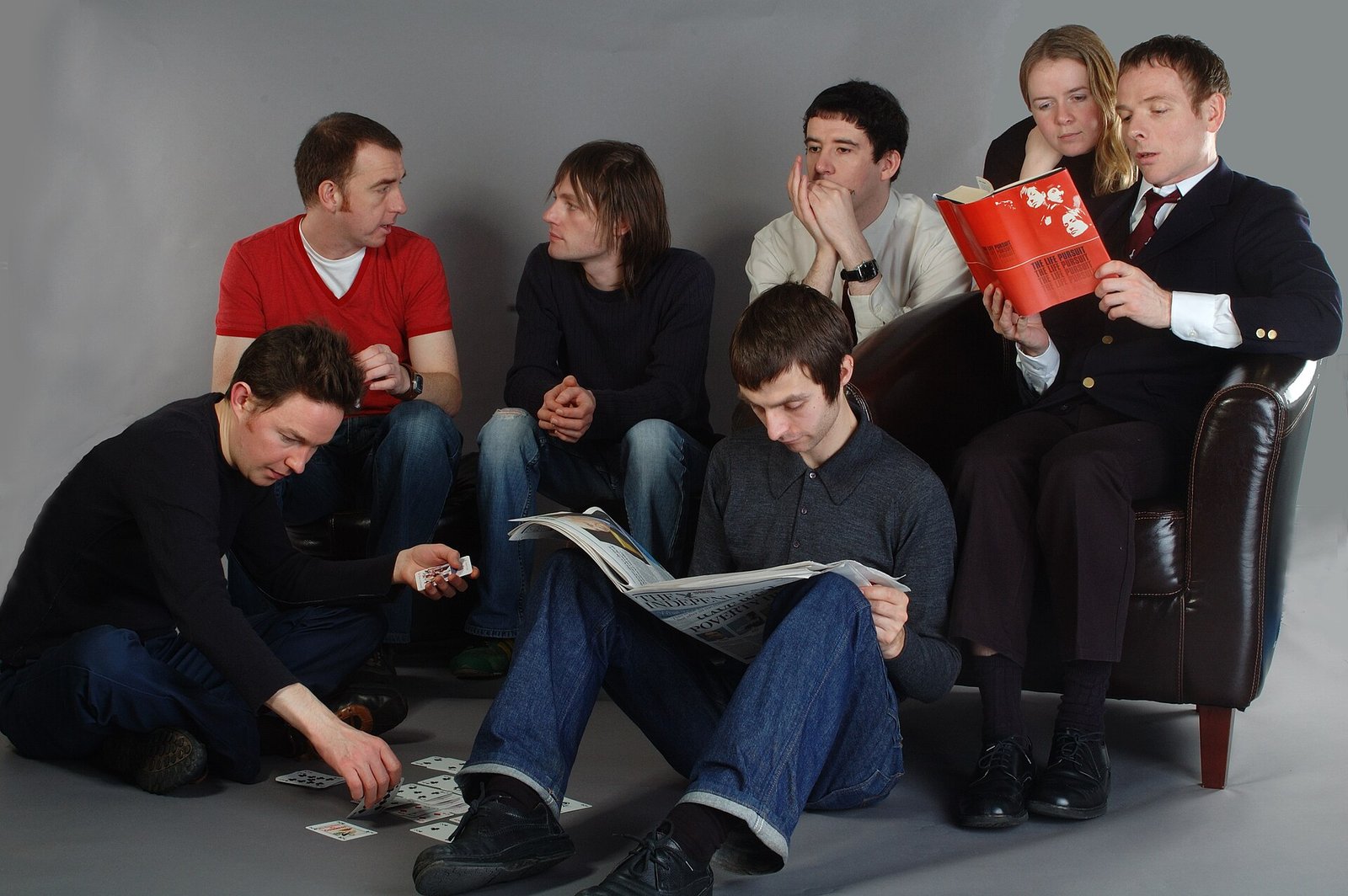
In practical terms the evening fits the Ciampino hall's way of working, which has its own recognizable logic. The doors open some time before the music starts, the main stage takes up the large hall, and on evenings when the production allows it the last part of the night can continue with a music selection in the venue's other rooms. Not all dates work the same way, because each tour brings its own contract and its own times. But the physical structure of the place makes that double life possible, and it's one of the reasons why Orion has survived seasons when many Roman venues closed.
Anyone planning the evening would do well to keep the weather in mind. The end of November on the edge of Rome means humidity, evening temperatures dropping below 10 degrees and a far from remote chance of rain. The line in front of the entrance is outdoors, on an unsheltered lot, and the hall has a cloakroom but the line to collect your coat at the end is a classic. A light but warm jacket, one you can keep on without suffering during the concert, remains the smartest solution. Comfortable shoes are an obvious point that becomes important after two hours on your feet.
Who Belle and Sebastian are
Belle and Sebastian formed in Glasgow in 1996 around the songs of Stuart Murdoch. The origin story is well known and verifiable: the first album, titled Tigermilk, came out that year in a very limited run on the Electric Honey label, linked to a music course in Glasgow, and almost immediately became a collector's item. In the same year, 1996, came If You're Feeling Sinister, the album with which the band truly entered the international conversation and that is still regularly cited among the essential albums of indie pop. Two years later came The Boy with the Arab Strap, which brought the band's name to a much wider audience.
In 1999 the band won the Brit Award for best British newcomer, in a vote that caused quite a stir at the time because the result came as a surprise against names with far more media exposure. It's one of those episodes that tell the nature of the phenomenon well: a band that didn't do television, that for years didn't put its own faces on its covers, that released albums with black-and-white images of strangers, and that despite all this had built a community of listeners able to mobilize.
The later discography follows a recognizable path. Fold Your Hands Child, You Walk Like a Peasant came out in 2000 and closed the early phase linked to the Jeepster label. With Dear Catastrophe Waitress, in 2003, the band moved to Rough Trade and changed its production approach, with a fuller sound and more ambitious arrangements. The Life Pursuit arrived in 2006, Write About Love in 2010, Girls in Peace Time Want to Dance in 2015, with an opening toward more direct rhythmic solutions that to many early listeners seemed a small revolution. In 2017 and 2018 the band released the EP trilogy How to Solve Our Human Problems, divided into three parts. In 2019 came Days of the Bagnold Summer, a film soundtrack. Then, in quick succession, came A Bit of Previous in 2022 and Late Developers in 2023, both released by Matador. These last two titles are also confirmed by the band's official website, which lists them among recent releases.
What makes this repertoire suited to a hall like Orion? The answer has to do with the writing. Belle and Sebastian's songs work on very defined melodies, on arrangements in which strings, horns and keyboards come in and out with precision, and on narrative lyrics that tell stories of ordinary people in a bittersweet tone. Live, this material asks for two things at once: a sound system able to keep the instruments separate without muddying them, and a close distance between stage and audience, because much of the effect depends on details. A medium-sized hall, with a standing audience and a low stage, meets these needs better than an arena.
Then there's an aspect of the band that people who don't know it often underestimate: the relationship with its audience is communal rather than star-driven. Over the years the band has organized events, festivals and situations in which the separation between those who play and those who listen gets very thin. At concerts, this translates into a particular atmosphere, in which the audience sings, takes part and is sometimes directly involved. It's good to know, because anyone expecting a contemplative, silent evening may find a livelier atmosphere than expected, and vice versa.
A necessary clarification. The band's lineup has changed several times over 30 years, and the official website consulted doesn't give an updated list of members. For this reason you won't find here names of musicians presented as guaranteed on stage on November 29: who goes on that stage depends on the touring lineup, which is announced by the production. Likewise you won't find any preview of the setlist. Titles can be named, and have been. But the songs that will be played that evening are decided by the band, and anyone announcing them in advance is imagining.
Orion in Ciampino as a space
Orion looks like a low, wide building in the middle of a light-industrial area. Arriving for the first time at night you find an asphalt lot, a few closed sheds, some untidy greenery and little else. The impact is disorienting if you're used to the venues of the center wedged between buildings. And yet that location, which seems a disadvantage, is exactly the technical reason why the hall works so well: there are no homes around, so the sound system's volume doesn't have to be squeezed to respect nighttime limits, you can leave the car without driving around in circles, and the end of the evening isn't dictated by complaints from residents.
Inside, the space is organized as a reconfigurable container. The total floor area is around 1,200 square meters, spread between two main halls, a VIP area with tables and an additional room that on long nights is used for the final part of the night. This layout lets the management change the configuration depending on what's needed: a single hall open for a small date, all the halls connected for a big night, or a split between the concert part and what follows. The venue's stated formula, which in its presentation materials it calls European-style live clubbing, describes precisely this habit of combining the ticketed concert and the music selection under one entry.
The main stage is in the large hall and sits at a modest height above the floor. For the audience this means that the front rows really see up close, and that those in the middle of the hall still have a clear view if there are no obstacles in front. There are no stands or numbered seats in the concert configuration: you go in and stay on your feet, and position goes to whoever arrives first. The columns and load-bearing structures are those of a converted industrial shed, so there are spots in the hall with a partial view. If seeing well matters to you, it's best to go in early and get your bearings right away, instead of choosing your spot in the dark when the hall is already full.
The acoustics of a space like this have strengths and limits worth knowing. The strength is power and clarity at the front of the stage, where the system is tuned and the sound arrives directly. The typical limit of sheds is reverberation off the side and back walls, which you hear more with a half-empty hall and which is absorbed by bodies with a full hall. This produces a counterintuitive effect: in a hall like this the sound improves as the audience comes in. For a repertoire like Belle and Sebastian's, made of intricate arrangements, the central area of the hall, neither pressed against the barriers nor leaning on the back wall, remains the best compromise between view and sound.
For a broader picture of the place, independent of the single evening, there's a page devoted to Orion Club, which covers the hall's history, its usual program and its services. It's worth reading beforehand, especially if it's your first time.
A curious fact about Belle and Sebastian in concert in Rome, Orion (Ciampino), November 29, 2026
The most interesting curious fact concerns how a band like this ends up in Ciampino instead of a hall in central Rome. The answer has to do with the geography of Roman venues and with acoustics, not with prestige. Rome has very few spaces in the intermediate capacity range, the one an international band with a solid but not huge audience needs. Above that range are the arenas and auditoriums, which for an evening like this would be oversized and cold. Below are the clubs for a few hundred people, which would be too small and would force a second date. In between, the number of available halls is low, and several of those that existed have closed in the last 15 years. The ones that remain are almost all outside the center, for the simple reason that there are no sheds in the historic center and noise restrictions make it impossible to stay open late.
Then there's a second, less obvious element, which concerns the calendar. European tours in November and December follow precise routes. A British band crossing the continent in that period builds a route that goes through the northern countries, down toward Germany and Switzerland, and then into Italy through the most convenient pass. From there, typically, two or three dates are played: one in the north, possibly one in Tuscany or Emilia, and one in Rome. The fact that the Rome date is in a venue just outside the Raccordo, with direct load-in and load-out, parking for the production's vehicles and no limited traffic zone issues, is a huge logistical advantage for those traveling with two trucks and a bus. A hall in the historic center, with a narrow alley and permits to request, is a problem for a touring production.
The result is a kind of Roman urban paradox: the most interesting international evenings of autumn and winter often happen in the places that look the most inconvenient on the map. People who know the city have absorbed this by now, and the curious thing is that it has created an audience used to traveling, with a network of car rides and organized groups moving together. Over the years a music geography parallel to the tourist one has formed on the southern outskirts, and Orion is one of its high points.
How to get from Rome to Ciampino
There are basically three ways: car, regional train, bus from the metro. They should be weighed according to the return time more than the outward time, because it's the return that causes trouble for those who haven't planned.
By car the route is straightforward. You take the Grande Raccordo Anulare and get off at exits 21 or 22, following the signs for Ciampino and then for the Gregna Sant'Andrea industrial area. The directions for reaching the venue by car are given on the venue's official website in these terms. From central Rome, with normal Sunday evening traffic, the trip takes around half an hour, with considerable variations depending on your starting point: from southern Rome you arrive much sooner, from northern Rome you have to allow for the loop around the Raccordo. You park in the venue's lot and on the surrounding streets, which are empty on Sunday evening because the area's businesses are closed. A sensible warning: the area is poorly lit and completely deserted, so it's best not to leave items in view inside the car and to park where people pass by.
By train you leave from Termini station and get off at Ciampino station, on the regional line that continues toward the Castelli and southern Lazio. The trip is short, just under 15 minutes, and it's the fastest way of all to cover the distance. The critical point is that Ciampino station isn't next to the venue: there's still a stretch to cover between them, long on foot and on roads not designed for pedestrians, so you cover it by taxi, with a ride or on the local bus. The venue's website notes that the first train between Roma Termini and Ciampino leaves at six in the morning, useful information above all for those who stay until the end of a long night and prefer to wait for the first train rather than look for transportation in the middle of the night.
With urban public transit the main reference is bus line 551, which connects the Anagnina metro station with Ciampino. Anagnina is the terminus of Rome's metro line A, so the full route from anywhere in the center is to take metro A toward Anagnina, get to the end of the line and continue above ground. The venue's official website also mentions a night service, line N1, with specific times. If you plan to use it, check the updated times before leaving, because night services change with the public transit seasons and a timetable read on some random page is no substitute for checking directly with the transit company.
A note on transit tickets. Ciampino is a separate municipality, so the train trip from Roma Termini requires the right ticket for that route and isn't covered by the simple Rome city ticket. If you have a pass, check that it covers the zone in question. You can check on the website of Lazio's regional transport consortium or at the station ticket window, and it takes a few minutes.
Frequently asked questions about Belle and Sebastian in concert in Rome, Orion (Ciampino), November 29, 2026
When is the Belle and Sebastian concert in Ciampino?
The Belle and Sebastian concert at Orion in Ciampino is on Sunday, November 29, 2026. Since it's a Sunday evening, outbound traffic and parking around the venue are lighter than on a Friday.
Where is Orion in Ciampino?
Orion, venue of the Belle and Sebastian concert, is at Viale John Fitzgerald Kennedy 52 in Ciampino, in the Gregna Sant'Andrea industrial area, just outside the Grande Raccordo Anulare.
How do you get from Rome to Orion in Ciampino?
There are basically three ways to reach Orion: by car via the Grande Raccordo Anulare at exits 21 or 22, by regional train, or by bus from the metro. It's best to plan the return time above all, because the industrial area is poorly served late at night.
Can you drive and park at Orion?
Yes, parking is one of the hall's strengths: the lot in front and the streets of the industrial area offer plenty of space, especially on Sunday evening when the surrounding businesses are closed.
How much is the ticket for Belle and Sebastian at Orion?
Prices, availability and presale status for the evening of November 29, 2026, aren't given here because they're the most volatile information of all and should be checked on the event's official channels.
Who are Belle and Sebastian?
Belle and Sebastian, in concert at Orion in Ciampino, formed in Glasgow in 1996 around the songs of Stuart Murdoch, with their first album Tigermilk released that same year in a limited run on the Electric Honey label.
Why is the concert in Ciampino and not in central Rome?
The Belle and Sebastian concert is in Ciampino because Rome has very few spaces in the intermediate capacity range suited to an international band with a solid but not huge audience: Orion covers precisely this range, unlike the big arenas or the small clubs in the center.
What can you do before the concert around Ciampino?
If you arrive a few hours early for Belle and Sebastian you can head to the Castelli Romani, with Frascati, Marino, Grottaferrata and Castel Gandolfo a few minutes away by car or with local connections from Ciampino.
For general orientation on metro, buses and regional trains in the Rome area, the guide to Rome public transportation is still useful, explaining the fare system and the main lines in a way that's clear even to visitors from out of town.
Something nobody tells you about Belle and Sebastian in concert in Rome, Orion (Ciampino), November 29, 2026
The thing almost nobody explains concerns the return, and it's worth saying explicitly because it's the real crux of the evening. A venue outside the city completely changes the calculation of when to leave. At a venue in central Rome you come out, walk 10 minutes and find transportation or walk home. In Ciampino you don't. This produces a phenomenon Orion regulars know well: toward the end of the concert part of the audience starts trickling out, not because they're bored but because they have a schedule to keep. The result is that the last part of the evening, encores included, is experienced by a hall emptier than the one that saw the first hour.
If you want to enjoy everything to the end, then, you have to solve the return problem before going in, not after. The solutions are few and all simple: come in your own car, arrange to go with someone who's driving, book a taxi for an agreed time, or accept the idea of staying until the first morning train, taking advantage of the fact that the hall continues with the music part afterward when the production allows it. Each of these is reasonable. What doesn't work is arriving without having thought about the return and then finding yourself on the lot at two in the morning staring at your phone.
The second thing rarely told concerns the actual start time of the music. In Italian venues the time printed on the ticket almost always indicates doors, not the start of the main concert, which comes later and on evenings with an opening act can slip quite a bit. This leads to two opposite mistakes. The first is arriving at the stated time and ending up waiting a long time in a half-empty hall. The second, much more painful, is arriving late assuming the delay and discovering that this time the production decided to start on time. There's no universal rule. There is, though, the habit of checking the venue's official channels that same afternoon, where the final times are usually announced.
Third thing. In a standing hall position counts more than people think, and the best position isn't the front row. In front of the barriers you see faces very well and hear almost nothing, because the front of the stage is in front of the main speakers and mostly gets the direct sound of the amplifiers on stage. The best sound, in almost all halls of this shape, is a few meters farther back, in the center, where the two channels of the system meet. For a repertoire built on strings, horns and choirs, the difference between those two spots is huge.
Fourth thing, which concerns this band's specific audience. Belle and Sebastian concerts tend to have a very wide age range, with people who have followed the band since the 1990s next to very young listeners who came through streaming platforms. This mix produces an unusually civil atmosphere for a standing hall: little pushing, little elbowing, lots of attention. If you dread the crush at rock concerts you can relax. If instead you're after the adrenaline of a packed pit right below the stage, you'll probably find a different atmosphere from what you imagine.
How concerts at Orion work
The typical sequence of an evening in this hall is fairly standardized and worth knowing. The doors open, the audience goes in after the ticket check and the security check, leaves a jacket at the cloakroom if needed and takes up a position in the hall. If there's an opening act, it plays for a relatively short time. A stage change follows, which in halls of this size usually takes half an hour. Then the main band comes on.
The check at the entrance generally includes looking through bags and backpacks. The precise rules on what you can bring in depend on the evening and the production, but the usual practice in Italian venues excludes glass bottles, cans, rigid containers, pointed umbrellas, sharp objects and professional camera equipment with interchangeable lenses. Phones always get in. If you bring a large backpack, allow for the fact that the cloakroom may be the only option, and that this lengthens the time on the way out.
The bar runs throughout the evening. In Italian venues the serving of alcohol follows the legal rules on minimum age and hours, and glass doesn't circulate in the hall: drinks are served in plastic cups or in cans opened at the counter. The worst moment to approach the bar is the 10 minutes just before the main band comes on. The best moment, if you don't want to miss anything, is during the stage change right after any opening act.
A typical feature of this hall is the possibility of carrying on after the concert ends. The building, with its multiple halls, is designed to host a music selection after the live part, and on evenings when this happens the same entry covers it. It's not an automatic guarantee, though: it depends on the evening and the agreements with the touring production. If you're counting on that second part to pass the time until the first train, it's best to check beforehand, because on evenings when it isn't planned the hall closes right after.
My advice for seeing Belle and Sebastian in concert in Rome, Orion (Ciampino), November 29, 2026
The main advice is just one and concerns the day, not the evening: treat November 29 as a trip to the Castelli Romani that ends with a concert, rather than a concert preceded by an inconvenient journey. It's a mental reversal that changes everything. Ciampino is on the threshold of the Castelli, and from there Frascati, Marino, Grottaferrata and Castel Gandolfo can be reached in a few minutes by car or with regional connections. A Sunday at the end of November in those towns has a particular quality: few people, cold, clear air, wine cellars and trattorias working at lunchtime, and darkness arriving early, making the shift from afternoon to evening natural.
A reasonable plan could be this. Leave Rome mid-morning, have lunch in one of the Castelli towns, spend the afternoon on a walk or a visit, head back toward Ciampino in the late afternoon, have a light dinner and then the venue. This way the journey isn't a cost to bear but the opening part of a whole day, and the night return to Rome becomes the only stretch to plan carefully. If you're coming from outside the region you could even consider staying overnight in the Castelli area and heading back calmly on Monday morning.
Second piece of advice, a practical one: get to the entrance early. Not out of front-row obsession, but because going in during the first 15 minutes lets you look around with the hall empty, see where the columns are, find the central position, know where the restroom and the bar are, and choose your spot knowingly. All things that become impossible with a full hall and the lights off. The quarter of an hour spent at the start pays off for the whole evening.
Third piece of advice: prepare your listening. You don't need to know the whole repertoire, but arriving having listened again to at least the main albums radically changes the experience, because this band's writing rewards recognition. The songs work like stories, and a story you already know hits differently from one heard for the first time amid the noise of a hall. A couple of listens in the days before are enough.
Fifth piece of advice, which applies to any concert but weighs more here: decide in advance if you want to watch or to experience. If you want to watch, concentrating on the stage, stand in the center, a bit back, and resist the temptation to film. If you want to experience, stand where the audience sings and forget the perfect view. The two together almost never work, and the typical disappointment of people who leave a concert unsatisfied almost always comes from trying to do both.
Tickets and entry: how it works in general
An honest premise is needed on this topic. Prices, availability and presale status for the evening of November 29, 2026, aren't given here, and not because the information is irrelevant: on the contrary, it's the most volatile of all. It changes with the sales phases, with any new sections opening, with last-minute returns. Any figure written today would be wrong tomorrow, and a wrong figure on a subject like this does real damage. The correct references are the official page of the Ciampino hall and the band's official channels, which indicate the authorized sales points from time to time.
What can be explained, though, is the general mechanism, which in Italian venues almost always works the same way. The ticket is issued in digital format, with a barcode or QR code that's scanned at the entrance. The code is personal in the sense that it's valid for a single scan: once scanned it no longer works. This has two practical consequences. The first is that sending a friend a screenshot of your ticket and both showing up doesn't work, because whoever arrives first gets in. The second is that it's best to save the document on your phone so it's accessible without a connection, because in crowded lots the mobile network regularly jams and the app that has to download the code at that very moment chooses not to cooperate.
On name changes. Many Italian ticketing platforms have an official procedure for changing the holder of a named ticket, with set times and methods. If you're buying for several people, check right away if the tickets are named and, if so, put the right names on them from the start instead of solving the problem on the evening itself in front of the door. On evenings when the ticket is named, an ID check at the entrance is the rule, not the exception.
On the secondary market it's worth being blunt: unauthorized resale of tickets at a markup is prohibited by Italian law, and tickets bought on unauthorized channels run a real risk of not being valid at the door. It's not a theoretical warning: it regularly happens that someone is left outside after paying. The only safe behavior is to buy through the channels indicated by the hall and the band, and if you can't go, to use any official fan-to-fan resale systems some platforms provide.
On membership cards. Some Italian venues operate as clubs and require membership, with a small annual fee on top of the cost of the evening. The arrangement applied on a given date depends on how the event is organized and on the production: it may apply, it may not, and when it does it's usually flagged in the evening's description on the sales channel. It's the kind of detail worth reading before you arrive, because at the entrance the line gets longer precisely because of people finding out at that moment.
If you're organizing a group trip, for example with friends coming from other cities, you may find it useful to use a professional outfit that handles logistics and escorting: the page on the tour operator services of Tour Leader Pro explains what kind of assistance you can request for organized travel in the Rome area.
Another well-known fact, yet rarely mentioned
The well-known fact is that Rome's southern outskirts, not the center, have been the real engine of international live music in the city for at least 20 years. Everyone knows it, and almost nobody says it openly, perhaps because it clashes with the image of the capital sold to visitors. Yet you only have to look at where concerts take place: the belt between Via Tuscolana, Via Appia, the Romanina area and the towns just outside the Raccordo concentrates a quantity of stages no other area of the city comes close to. The reasons are structural, not ideological. That's where the large spaces are, where the convertible sheds are, where the parking areas are, where there aren't heritage restrictions on every wall and apartment buildings five meters from the stage.
The rarely mentioned corollary is that this geography has created a particular audience. Going to a concert in Rome, for those who do it regularly, almost always means leaving the city: it means arranging car rides, knowing the Raccordo exits by heart, treating the return as part of the evening. This produces a more organized and more supportive community than in cities where the venue is around the corner. In Orion's parking lots, before and after concerts, you regularly see people arranging rides, and it works.
The third element, the one almost nobody really puts in writing: the fragility of this system. Halls of this size live on thin margins, depend on the international calendar and on permits, and in 20 years Rome has lost several. Every international concert that fills one of these venues is also the reason the venue will still exist the following year. It's a consideration that rarely enters the conversation about expensive tickets or inconvenient times, and that should.
Accessibility, parking and services
On parking the situation is favorable and should be said clearly: it's one of the few places in the Rome area where driving to a concert isn't a problem. The lot in front and the streets of the industrial area offer space, and on Sunday evening businesses are closed so availability is wide. The usual precautions for a poorly lit area with few people around after working hours still apply: nothing in view inside the car, and a preference for spots where people pass.
On accessibility for people with disabilities, the correct premise is that no technical specifications are given here that aren't published in verifiable form. What can reasonably be said is that the building is mainly on one level, without monumental stairs between the entrance and the hall, and that this kind of layout is generally more favorable than historic theaters with tiers. What should be done, and not delegated, is to contact the venue in advance: it publishes two phone numbers, +39 06 89013645 and +39 06 54220870, and a general email address. A phone call a few days before lets you check for a dedicated entrance route, a reserved position in the hall, equipped restrooms and the possibility of parking close by. It's the quickest and most reliable way to get exact answers, and it's also how the hall can arrange to welcome you.
A specific consideration for standing evenings: the hall in concert configuration has no seats, and this is something to weigh even for those without a recognized disability who don't cope well with two hours on their feet. The VIP area with tables exists and the venue takes bookings, with a dedicated address published on the official website. Its availability on concert evenings depends, though, on the setup chosen for that date, so here too the way to go is to ask first.
On hearing, finally, a recommendation that's given too rarely. In a hall of this size the sound level is high and the duration is several hours between doors, concert and any after-party. A pair of filtering earplugs, the kind that lower the volume without spoiling the sound quality, cost little, take up the space of a coin in your pocket and make particular sense for a repertoire that lives on the details of the arrangements. Anyone bringing young people should consider them standard equipment.
The right photo to take at Belle and Sebastian in concert in Rome, Orion (Ciampino), November 29, 2026
The best photo of this evening isn't taken inside the hall. It's taken on the lot, before going in, when the line is forming and the group of people waiting stands out against the building's low facade with the darkness of the industrial area all around. It's an image that tells exactly what this evening is: a core of light and warmth in the middle of an empty area, a piece of city that lights up for a few hours in a place where nobody is around at eight in the evening. Technically you can do it with a phone without difficulty, keeping the light source of the entrance at a third of the frame and letting the rest stay dark.
The second image to look for, also outdoors, is of the sky. Ciampino has its airport a few kilometers away and the approach routes pass over this area. With a little patience you can catch the light trail of a low plane over the venue's roof, which is perhaps the only visual way to tell the strange geography of this place. You need a steady support for the phone, because the long exposure doesn't work handheld. A low wall or the roof of the car is enough.
Inside the hall the advice is the opposite: take few photos and take them early. The first songs, when the lighting is still the opening one and people haven't raised their arms yet, give the best images. After that, between strobes and other people's phones, every shot looks like every other shot taken in every hall in the world. If you want an image that means something, aim not at the stage but at the audience: a detail of hands, a row of faces lit by the stage, the shape of the hall seen from behind. Those are the photos that will still say something in 10 years, while the 23rd shot of the microphone won't.
Two necessary warnings. The first concerns the rules: shooting with professional equipment requires accreditation, and some productions limit photos to the first songs. Instructions given by staff or announced from the stage count more than any personal habit. The second concerns common sense in the hall: holding your phone up for three songs in a row blocks the view of the people behind you, and in a standing hall that's the quickest way to ruin someone else's evening. Shoot, put it away, watch.
Some important events that happened here in history
To understand the context of this evening it's worth widening the view to Ciampino, which has a much denser history than its current appearance suggests. The area lies on the line of Via Appia and the roads that climb from the capital toward the volcanic hills, and for centuries it was a land of passage, vineyards and farm estates. The turning point came in the early 20th century with aviation: one of the first Italian airfields was born here, a facility linked to the very origins of flight in the country, which over the decades turned into the airport that today bears the city's name. That choice determined everything else: urban growth, the industrial structure, the road network and even the reason why there are, in this area, sheds big enough to house a concert hall.
The Second World War left a deep mark on the whole area. The airport made Ciampino a military target, and the bombings of the 1940s hit both the town and the Castelli Romani centers a little higher up hard, with very serious destruction in the towns along the approach to Rome. It's a memory that stays alive in the area and explains why Ciampino's buildings are mostly 20th-century: much of what was there before was lost, and the reconstruction gave the town its current shape, with residential expansion next to industrial areas.
Administrative independence is recent. Ciampino became a separate municipality, breaking away from Marino, in a 20th-century step that confirmed the weight reached by the settlement that had grown up around the airport. This explains the feeling, which many visitors have, of being in a place that belongs fully neither to Rome nor to the Castelli: Ciampino was born as a threshold town, and in a sense it has remained one.
As for live music, the relevant history is that of the last few decades and it's the story of a shift. Until the 1990s international music in Rome found a home in sports facilities, big tents and spaces improvised as best they could be. With the gradual closure of several historic halls, the circuit reorganized around new venues, almost all outside the center. Rome's big summer arenas took on the warm season, while autumn and winter concentrated in indoor clubs. Orion belongs to this second category and is one of its longest-lived examples: a hall that has been through changes of management, changes in musical trends and extremely difficult periods for the whole sector, and kept on programming.
The period of health-related closures in the early 2020s deserves a mention, because for Italian concert halls it was the most serious crisis in their recent history. Many venues didn't reopen. Those that made it owe it to a combination of stubbornness, flexible capacities and the ability to repurpose spaces. The fact that in 2026 a hall on Rome's southern outskirts can host a European tour by a historic British band isn't a given: it's the result of that survival.
As for the band, the verifiable historical milestones are those marked by the discography and by the 1999 award, when Belle and Sebastian won the British prize for best newcomer. No dates or episodes of the band's previous Italian visits are given here, because they aren't confirmed by available official sources, and on a matter like this approximation helps nobody.
Who has passed through Belle and Sebastian in concert in Rome, Orion (Ciampino), November 29, 2026
The Ciampino hall has a broad program, which in the same season holds together very distant genres. The calendar published on the venue's official website for autumn 2026 gives a good idea of this range: in the preceding weeks there's an industrial metal night with Fear Factory, an event with Fulci, a themed night called Teen Age Dream, a Babyshambles concert and a date with Astro. Metal, British rock, themed nights and projects from the South American scene in the same month and on the same stage: it's exactly the kind of calendar a multipurpose hall can sustain and a specialized theater couldn't.
Within this picture the arrival of a Scottish indie pop band isn't an anomaly but one of the faces of the place. Halls of this size in Italy work as hubs for mid-level international tours, and this means that within a few weeks the same stage hosts audiences that would never meet elsewhere. Orion regulars know it, and have learned to read the calendar as a kind of map of what's touring Europe at that moment.
For the Roman audience this evening fits into a network of spaces that share live music over the year. In the capital's area the alternatives for different genres and sizes include historic halls and venues of different scales: Atlantico Live Club and Qube for mid-sized indoor concerts, Largo Venue, Monk and Lanificio 159 for more intimate evenings, Auditorium Parco della Musica and Auditorium Conciliazione for seated concerts, Teatro Brancaccio and Teatro Olimpico for the theater dimension, the Palazzo dello Sport and the Stadio Olimpico for big numbers. In summer the center of gravity moves outdoors, between Rock in Roma, Villa Ada and the evenings at the Circus Maximus. Looking at this network as a whole helps explain why a late November date ends up in Ciampino: at that time of year, for that capacity, the really usable options are very few.
A note of method, for fairness. The names listed for the hall's calendar are those visible on the venue's official website for autumn 2026. No lists of artists who played that stage in previous years are added here, because a list like that would require archival checking that can't be improvised, and experience says lists of this kind already circulate full enough of errors.
What's around, between Ciampino and the Castelli Romani
Ciampino works as a gateway to the Castelli Romani, and this is its most useful quality for anyone coming for a concert with a few free hours beforehand. The Castelli occupy the slopes of the Alban Hills volcanic complex, with the two crater lakes and a ring of historic towns facing each other from opposite sides. At the end of November the area is in its quietest period, with wine cellars open, restaurants working mainly at lunchtime and very few visitors.
Frascati (RM) is the most immediate starting point, both because it's easy to reach and because it concentrates a lot in a small space: the urban stage set of 16th- and 17th-century villas, the terrace with a view that on clear days reaches the sea, and the tradition of the wine cellars where the area's white wine goes with simple dishes. Grottaferrata (RM), a few minutes away, holds one of the most unusual monastic presences in Lazio, a Greek-rite complex founded in the Middle Ages and active without interruption.
Castel Gandolfo overlooks the rim of the crater holding Lake Albano, and the walk along the lookout remains one of the most beautiful in the whole province, especially at the hours when the low late-autumn light cuts across the basin. Albano Laziale (RM) preserves notable Roman remains linked to the camp of the legion stationed there, while Marino (RM), the town Ciampino broke away from, has a compact historic center and a deep-rooted wine tradition.
Farther south the ring continues with Ariccia (RM), known for its food tradition and for the monumental bridge spanning the valley, with Genzano di Roma (RM) overlooking the second crater and with Nemi (RM), the tiny village perched above the lake of the same name. Rocca di Papa (RM) holds the highest position and offers the widest panorama, while Monte Porzio Catone (RM) and Velletri (RM) close the circle to the east and south. The whole system is protected by the Castelli Romani Park, which protects woods, craters and trails that can be walked in winter too.
Toward Rome, on the other hand, the interesting route is the Appia. The Appia Antica Park begins a few kilometers away and offers, on a Sunday at the end of November, one of the most evocative itineraries in the whole Rome area, with the ancient paving stones, the tombs and the countryside. Not far away the Aqueducts Park lines up the arches striding over the meadows, and the Villa of the Quintilii preserves the remains of the most imposing imperial residence on the road. On the opposite side, toward the Tuscolana, are Cinecittà Studios and the Caffarella, two more ways to fill the afternoon well before the evening.
On the practical side, if you're looking for somewhere to eat before the concert there are two strategies. The first is to stop in one of the Castelli towns and have an early dinner, accepting 20 minutes by car to come down to Ciampino afterward. The second is to stay in town, where the area around the center of Ciampino has neighborhood pizzerias and trattorias that regularly work on Sunday evening. The first option gives a better evening, the second less travel. Either way it's best to eat early, because arriving at the venue mid-digestion with two hours on your feet ahead isn't a happy combination.
Quick questions about the November 29, 2026, concert
What day of the week is November 29, 2026. It's a Sunday. This makes the trip there and parking easier, and the night return trickier, especially for those who work on Monday.
Where exactly is the venue. At Viale John Fitzgerald Kennedy 52 in Ciampino, in the Gregna Sant'Andrea industrial area, just outside the Grande Raccordo Anulare. The address is the one published by the venue on its official website.
How do you get there without a car. The two main ways are the regional train from Roma Termini to Ciampino station, with the final stretch to cover by taxi or local transit, and bus 551 from the Anagnina metro terminus. The venue also mentions a night service on line N1 and gives six in the morning as the first train toward Roma Termini.
Can you park. Yes, and it's one of the place's strengths: the lot and the streets of the industrial area offer plenty of space, all the more on Sunday evening when businesses are closed.
What time does the concert start. Door and start times are announced by the venue and the production and can change until the last few days. No time is given here, because a wrong time is worse than none: check on the official channels that same afternoon.
How much is the ticket. Prices and availability aren't given: they change over time and depend on the sales phase. The references are the hall's official page and the band's official channels.
Seated or standing. In concert configuration the hall works with a standing audience and no numbered seats. The VIP area with tables exists, but its availability during live evenings depends on the setup chosen for that date.
What's the best spot in the hall. For a repertoire rich in arrangements, the central area is best, a few meters behind the barriers, where the two channels of the system meet. The front of the stage gives the close-up view but not the best sound.
Do we know which songs they'll play. No, and anyone publishing a setlist in advance is guessing. The band decides, night by night.
Will there be an opening act. None has been announced. When there is one, the information comes from the official channels, often in the weeks just before.
Can you take photos. With a phone generally yes, unless the production decides otherwise. Professional equipment requires accreditation. Instructions given at the entrance or from the stage prevail.
Is the venue accessible to people with mobility difficulties. The building is laid out on one level, which is generally favorable, but the exact conditions should be checked by phoning in advance the numbers published by the hall, so as to agree on the entrance route and position.
Does the evening continue after the concert. It can happen, because the venue is designed to combine the live part and the music selection afterward, but it depends on the single date and the agreements with the touring production.
What can you do beforehand on the same day. The Castelli Romani are a few minutes away, and a Sunday at the end of November between Frascati, Castel Gandolfo, Marino and the edge of the lake is the best way to turn an inconvenient trip into a whole day.
If you're organizing the trip from abroad or from another region, and want to build a few days in the capital around this evening, the general guides on things to do in Rome and the overview on ItalyPlanner are still useful. If instead you need organized assistance on the ground, with transfers and escorts for groups, you can turn to Tour Leader Pro, which works regularly in the Rome area and Lazio.