Largo Venue
In short. Largo Venue is the venue at Via Biordo Michelotti 2, in Rome, near Largo Preneste: a space dedicated to live music and a few more nighttime beats in 4/4, with markets and outdoor activities in the large outdoor area during the warm season.
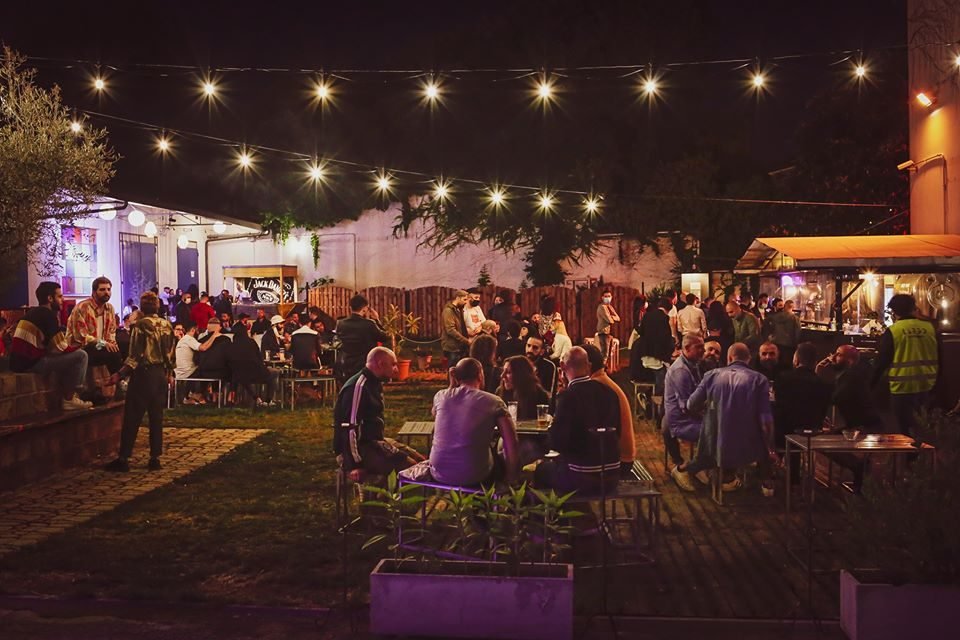
Largo Venue is the venue at Via Biordo Michelotti 2, in Rome, near Largo Preneste: a space dedicated to live music and a few more nighttime beats in 4/4, with markets and outdoor activities in the large outdoor area during the warm season. Put like that it sounds like the description of half the city, and yet it's a precise definition, because that sentence holds exactly the three things this address has been doing for years: real concerts with a stage and a sound system, parties that keep going after the concert, and a garden that in the warm months becomes a piece of the neighborhood under the open sky.
The people who run it call it Total Club, which is a slightly brochure-style formula but gets the idea across: not just a hall, not just a bar, not just a garden, but a series of connected spaces that can host different things in the same evening. The live hall with the stage, the outdoor garden, a space called Rumah that is also used for exhibitions, a bistro, a small square. The claim the venue has chosen is even more direct: music, culture, community. The third term is not decorative, and it's the part that explains why this place, in the geography of East Rome, matters more than its square footage would suggest.
We're on Via Prenestina, in one of those spots where Rome changes skin within 200 meters. On one side Pigneto with its bars, its signs and its murals, on the other the working-class Prenestino of the 1930s apartment buildings and public housing blocks, and in between the tram tracks running down toward Porta Maggiore. Largo Preneste is one of those junctions Romans use as a mental coordinate: if you say Largo Preneste, anyone who lives in East Rome knows exactly where you are, even if they couldn't point out Via Biordo Michelotti on a map.
In the pages that follow I try to tell what this place really is, how to get there, what kind of nights you find here, what the expression mid-size live club means in Italy, what's around within a quarter of an hour on foot, and what stories settled on this stretch of Via Prenestina long before anyone put a stage on it.
Where Largo Venue Is and How to Get There
The Address and the Exact Spot
The address is Via Biordo Michelotti 2, Rome. It's a short side street, the kind you only notice if you look for it, and the reference that really works is the one the venue itself puts in its contacts: near Largo Preneste. If you arrive from Via Prenestina and keep an eye on the largo, the right side street opens right next to it. People coming for the first time tend to circle around for five minutes, because the instinct is to look for the lit sign on the main road, and instead you have to slip into the side street.
The name of the street deserves a pause, because it's one of those place names that tell the logic by which this part of the city was built. Biordo Michelotti was a Perugian condottiero of the late 1300s, lord of Perugia for a brief period and killed in a conspiracy in 1398. The street names of this sector are full of captains of fortune and men at arms of the Middle Ages and the Renaissance: Fanfulla da Lodi a few hundred meters further on in Pigneto, Renzo da Ceri, Alberto da Giussano, Ettore Giovenale, Guglielmo Albimonte. When the city plans of the early 1900s laid the mesh of streets over these fields, they took a repertoire of names as a block and distributed it across neighborhoods. The result is that here you walk through a small catalog of condottieri, without any of them ever having set foot in these parts.
The Tram, Which Is the Right Way
Via Prenestina is a tram street. The lines that run along it connect the center, the Porta Maggiore area and Termini with the eastern neighborhoods, and have stops right by Largo Preneste. For anyone coming from outside the area it's almost always the best solution, for two very practical reasons: the tram lane is largely reserved and so doesn't get stuck in the traffic of Via Prenestina, and the stop drops you a few dozen meters from the entrance.
The tram ride along Via Prenestina is also the most honest way to arrive, in the sense that it takes you through the context instead of parachuting you into it. You start from the walls of Porta Maggiore, pass beside the railway cutting, run along the low apartment buildings, see the shutters of the mechanics and the parts dealers, catch a glimpse of the signs of the historic bars, and then you arrive. It's a piece of city you understand better from the window than from the map.
Metro C and the Buses
Metro line C serves this sector with its stations on the route that climbs from the Porta Maggiore area toward Centocelle and beyond. The stops of the line in the Pigneto and Prenestino area leave the venue about a quarter of an hour's walk away, which means that if you arrive by metro you have to count on a stretch on foot, but also that the walk is entirely inside a living neighborhood and not along a highway.
Line C is the newest in the Roman network, and also the most talked about, because every dig of it produced archaeological discoveries that made the news and delays that made controversy. The eastern stretch, the one that passes through here, entered service before the others, and for the neighborhood it meant a change of scale: places that used to be reachable only by bus or by car became evening destinations for people living on the other side of the city. Part of the success of East Rome's venues in recent years is explained this way too.
For buses there's a general rule that in Rome almost never fails: in the evening the frequency drops a lot, and the line that on paper passes every 10 minutes can in the reality of the night make you wait much longer. If the evening ends late, it's better to have an alternative plan already in your head before leaving, instead of discovering it at the bus shelter.
By Car, Scooter or Bike
Arriving by car is possible but it's not the most comfortable choice. Parking in the area is the typical kind of dense residential neighborhoods: blue lines where they exist, double parking where they don't, and on concert nights a fierce competition for every meter of sidewalk. People who know the area park farther away and walk, which is almost always the winning strategy compared to circling the block seven times.
A scooter solves most of the problem, and it's the reason why in front of many East Rome venues a line of two-wheelers forms as long as the facade. By bike you get there fine, because Via Prenestina and its parallels are flat, but the traffic on that axis isn't kind to cyclists, so the side streets are better. And if you leave your bike outside, a good lock is the bare minimum.
What Mid-Size Live Club Means
It's worth spending a few lines on an expression that is used constantly and that almost nobody explains. In Italy the concert circuit is organized, in practice, on three steps. At the top are the arenas, the stadiums and the big open-air venues, where the names that fill 10,000 people and more play. At the bottom are the small spaces, the clubs, the bars with a stage in a corner, the rooms of 100 people where beginners and local bands play. In the middle, and here is the point, is the level of mid-size live clubs: spaces that host from a few hundred to several thousand people, with a stage sized for a full band, a permanent sound system, a service company, a backstage and a box office.
That middle step is the most important of all and the most fragile. It's where a music project stops being a matter between friends and becomes a trade. It's where international bands pass through when they do their first serious European tour, before they can fill an arena. It's where established artists come back when they want to play an intimate date, or present a new record, or simply play somewhere the audience is three meters away and not 30. And it's where an audience is built: someone who has seen a band in a hall of a few hundred people will then follow them anywhere, with a loyalty that the stadium concert almost never generates.
The problem is that this middle step has the costs of a real structure and the revenues of a small business. It has to pay rent, staff, technicians, security, SIAE, acoustic upgrades, permits, insurance, and it does so with takings that depend on how many people walk in that night. A mid-size live club that fills the hall makes money. The same club with a half-empty hall loses it. This explains why in Italy these spaces open and close with a frequency that in other European countries would be considered a cultural emergency, and why the ones that hold on for years end up becoming institutions of affection before they are commercial ones.
It also explains why almost all of them, in this bracket, have learned to do more things. The concert alone isn't enough to keep the structure going for 12 months, so they add after-concert DJ sets, book presentations, screenings, markets, exhibitions, comedy shows, karaoke, private events, the bistro that works even when there's no program. It's not dispersion. It's the way a live music hall in Italy manages not to close. Largo Venue falls exactly into this category, and the way it has organized its spaces says so openly.
A useful clarification for those coming from outside: in Italy many of these spaces were born as, and sometimes remain, membership clubs, with a card to be made at the entrance, or they have ordinary commercial management with a regular ticket. They are two different regimes, and it happens that two venues on the same street work differently. Before going, the simplest way not to get it wrong is to look at the event page, because that's where it says if you need presale, if you get in with a ticket at the door, or if the night is free entry.
The Spaces: How Largo Venue Is Laid Out
The Live Hall
The heart of the structure is the hall with the stage, designed and fitted out for live music. It's the space that lets the venue host international tours and not only neighborhood nights, and you can feel the difference: a converted hall where the band plays in a corner is one thing, a space born with the stage in the right place, the sound system sized properly, the house mixer in a useful position and a real backstage behind the wings is another.
For concertgoers, the thing that really matters in a hall like this is distance. In an arena your relationship with the performers is mediated by giant screens. Here, if you stand at the front, you see the fingers on the strings and you hear the amp before the sound goes through the system. It's a different way of listening, and it's why certain concerts in mid-size halls stay in your head for years while certain stadium concerts are forgotten in a week.
The Garden and the Small Square
There are two outdoor spaces, a garden and a small square, and they are the reason why this address, in the warm season, completely changes function. From May to September the outdoor area becomes the center of gravity: you sit, have a drink, chat, wait for the hall to open, and on certain days you find a market or an outdoor activity there instead of the concert.
A garden, in Rome, in a music venue, is not an aesthetic detail. It's the difference between a place where you go in, listen and leave, and a place where you stay. It's also the practical solution to a problem every live club knows: where to put the people who want to talk while someone is playing in the hall. The garden solves the issue without sending anyone onto the sidewalk, which, in a residential neighborhood, is a serious matter of coexistence with those who live on the floors above.
Rumah and the Bistro
Among the spaces is one called Rumah, which has also been used as an exhibition venue: during one of the editions of the neighborhood film festival it hosted a group show curated by a local collective. It's the kind of use that explains better than any statement of intent what is meant when a venue says it takes care of culture and not only music: a room that in the same week can be a waiting room, a gallery and a space for a presentation.
The bistro completes the picture. It's the part that keeps the address open even in the hours when there's no program, and that lets you arrive early without having to wander around looking for somewhere to eat before the concert. This too, in the sustainability logic of a mid-size live club, is not an accessory: it's one leg of the table.
A Curiosity About Largo Venue
The curiosity I like best concerns the way this venue defines itself. It doesn't present itself as a concert hall, it doesn't present itself as a nightclub, it doesn't present itself as a membership club: it presents itself as Total Club. It's a formula that sounds invented in a marketing meeting, and maybe it was, but it describes exactly a typically Italian survival strategy. Total Club means that within the same perimeter live the concert hall, the outdoor spaces, the exhibition space and the bistro, and that the same evening can change nature three times: at 20:00 it's a place where you eat something outdoors, at 22:00 it's a concert hall, at 01:00 it's a dance floor.
The second part of the curiosity is the way the venue describes itself in its own header: total club between Prenestina and Paradiso. It's a topographical joke that only works if you know the area. Paradiso is not a mystical metaphor. It's a playful way of pointing out the contrast between the street, which is a busy consular road full of workshops and construction sites, and what you find just inside the gate, a garden where Via Prenestina suddenly stops existing. Anyone who has been once knows that the perceptual jump between the sidewalk and the outdoor area is real, and it's one of the things that make this address different from any other venue.
Third curiosity, for those who like the bureaucratic details that tell a story: the company that runs the space is based on Via Prenestina and carries a name that joins the place name of the neighborhood with the word pop. It's a name that says exactly where the project comes from, which is from here, and not from a national chain of venues that picked East Rome as a market. In a sector where many signs are copies of a format, a business born on the spot and named after its own piece of the city is already information in itself.
The Neighborhood: Prenestina, Prenestino, Pigneto
A Road That Is Also a Story
Via Prenestina is one of the ancient consular roads of Rome: it left the city and headed toward Praeneste, today's Palestrina, which in the Roman world was a very important place because of the sanctuary of Fortuna Primigenia, one of the most imposing sacred complexes of ancient Italy. The modern road follows in large part the route of that road, and this explains why, leaving the center, you constantly run into ancient fragments set into the contemporary fabric.
The monumental starting point is Porta Maggiore, the great junction where the arches of the Claudian aqueduct were turned into a gate of the Aurelian Walls. Right next to it is the Tomb of Marcus Virgilius Eurysaces, the funerary monument of a baker of the first century BC, decorated with a frieze that tells in images the cycle of bread making and with a structure that alludes, according to the most widespread reading, to the mouths of kneading troughs or ovens. It's one of the most unusual monuments in Rome, because it's the self-celebrating tomb of an entrepreneur, not an aristocrat, and it has come down to us precisely because it was absorbed into the late antique fortifications.
From that junction Via Prenestina heads east and becomes something else: a road of borgate, factories, public housing, depots. The Roman 1900s left everything they could leave along this axis, and the neighborhoods flanking it still carry the double nature of working-class suburb and urban frontier.
Prenestino and Pigneto
Prenestino, as a neighborhood, was born in the first half of the 1900s between planned construction and self-building, with public housing lots, apartment buildings of three or four floors, inner courtyards and a density that you can still read today in the layout. Pigneto, which is the most famous portion of this world, was born around the railway cutting and the Circonvallazione Casilina, and in the postwar period had the look of the borgata that appears in films and novels: low, working-class, dense with street life.
Pigneto's leap in fame comes with cinema. Pier Paolo Pasolini set part of Accattone there, using one of the historic bars of the area as a base, and since then that piece of the city has entered the Roman imagination for good. In the following decades the neighborhood went through the trajectory we know: working-class neighborhood, then a zone of artistic and cultural workshops, then a place of nightlife with all the conflicts nightlife brings, between those who live there and those who go there in the evening. Today Pigneto is all three things at once, which is exactly what makes it interesting and complicated to describe.
Largo Venue stands just outside the heart of Pigneto's bars, on Via Prenestina side. This position, which on paper looks like a detail, in practice changes everything. It means that people who go there choose to go there, they don't end up there while strolling between one place and another, and that the audience forms around the program and not around the circuit of streets. It also means that the impact on the lives of those who live in the nearby buildings is different from that of the street of bars, with all the advantages and problems that come with it.
Largo Preneste as a Coordinate
Largo Preneste is one of those urban junctions that don't appear in the guidebooks and yet organize the life of a whole sector. It's an exchange point between the consular road and the inner arteries, a place of stops, a reference for daily movements. For those who live around here, Largo Preneste is a word that immediately means a precise position. For those arriving from outside it's a mute place name, and that is exactly why the venue uses it as a reference in its contacts: because it knows its natural audience thinks in junctions and not in street numbers.
Something Nobody Tells You About Largo Venue
The thing nobody says is that this address, besides booking concerts, produces and hosts cultural projects that leave the venue and spread across the neighborhood. They aren't token initiatives. They are festivals with a name, an organizational structure and in some cases municipal public funding behind them.
The first is a music festival designed explicitly for East Rome, born as a neighborhood event and landed here after a change of location decided for reasons beyond the organizers' control. It was a whole day with free entry, starting in the afternoon, with live performances by local artists and better-known guests, the participation of a local music school and the support of the relevant municipio. The declared aim was to put emerging and established artists in dialogue and to involve the cultural groups of the sector. It's the kind of operation that doesn't make the national papers and yet builds, year after year, the network of relationships that keeps a local scene standing.
The second is a neighborhood film festival, produced together with another organizing group, which for a week in June spread screenings, previews and meetings with actors and authors across five different locations in Pigneto, all with free admission. Largo Venue hosted its opening and the final party, and in the indoor exhibition space it welcomed a group show tied to the festival. A venue that hosts the kick-off and the closing party of a widespread event isn't simply serving as a hall. It's serving as the pivot.
The third is a project dedicated to art, recurring over time, which has gone through several editions. Taken together, these three strands tell something you can't tell from the concert poster: that this place works even when there is no band on stage, and that a substantial part of its activity is neighborhood cultural production, not just hospitality.
Then there's a detail almost nobody considers and that holds for all venues in this bracket: the weekend dance nights, the ones the venue runs after the concert with recurring formats and fixed names, aren't filler but a structural part of the budget. The concert brings the audience, the after-concert keeps them, and the two together make sustainable an evening that the hall ticket alone would hardly support. When you read that a live club also does disco, the news is often read as a commercial surrender. It's almost always, instead, the condition that allows the concert to exist.
My Advice for Visiting Largo Venue
Check the Calendar First, Always
Advice number one is trivial and systematically ignored: check the program before you set out. A space that in one week hosts an international concert, a book presentation, a karaoke with a live band, a morning market and a late-night party doesn't have a typical evening. Showing up without knowing what's on means a good chance of finding something completely different from what you imagined. The updated calendar is on the venue's website and its social pages, with the date, the time and any presale.
Check Whether You Need a Presale Ticket
Second rule, valid for all mid-size halls: dates with in-demand artists sell out before the night, and showing up at the box office hoping for a free spot is a gamble. On the other hand, many nights are free entry or with a reduced contribution. They are two opposite worlds and only the event page tells the difference. Five minutes of checking saves a wasted trip across half the city.
Arrive Early, If You Can
Third thing: opening times and concert start times almost never coincide. In this kind of space doors open much earlier, and the time between opening and the first note is the best part of the evening if there's a garden. Arriving early means finding a spot outdoors, eating something calmly, and then going into the hall without waiting in line. Arriving at the exact start time means, almost always, walking in halfway through the opening band.
In the Warm Season, Bet on the Outdoors
Fourth: if you go between spring and early autumn, treat the outdoor area as the main destination and the hall as an extra. It's in those months that the open space is really used, with markets, daytime activities and open-air nights. A Sunday market in the garden and a November concert in the hall are two experiences that share only the address.
Dress for the Hall, Not for the Street
Fifth, practical: in a full mid-size hall, the temperature rises. In winter you arrive in a coat and after 20 minutes you don't know where to put it. If there's a coat check, use it. If there isn't, adjust your layers. The opposite holds too on mid-season evenings, when you spend part of the night in the garden and the air on Via Prenestina after midnight is cooler than it seems at 21:00.
Earplugs
Sixth, and I repeat it every time: in a live club the volume in the hall is high by design. A pair of attenuating earplugs costs little, takes nothing away from the sound and spares you the ringing the next day. People who go to concerts often always have them in their pocket, and it's not fussiness. It's the difference between hearing well at 50 and not.
The Way Home, to Think About Beforehand
Seventh and last, and it's the one that counts most. Nights here end late, and Roman night public transport isn't generous. Decide how you're getting back before leaving the house: who drives that night, which night line runs, what time the last useful run is, if it makes sense to organize as a group. If someone in the group drives, they stay alcohol-free, which is the simplest thing in the world to arrange and the easiest to forget. And if the plan falls through, a taxi or a shared ride is better than a decision made badly at 03:00.
Another Well-Known Fact, Yet Rarely Cited
The well-known fact is that Via Prenestina, along this stretch, is one of the most layered streets in Rome in terms of industrial memory. Everyone who lives here knows it, and almost nobody tells it to people coming for the concert. A few hundred meters from here is the former Snia Viscosa, what remains of a plant for producing artificial fiber active since the 1920s, one of the largest industrial complexes of 1900s Rome, with thousands of people at work in its peak periods.
That factory left two legacies. The first is material: sheds, perimeter walls, smokestacks, an enormous area wedged into the residential fabric. The second is the story that made that place famous well beyond the neighborhood. In the early 1990s, during construction work in the abandoned area, a dig hit the water table. The water rose and didn't stop rising. What was supposed to become a building project turned into a permanent body of water, which over the years became naturalized until it was a real ecosystem, with reed beds, birdlife, riverside vegetation. The ex Snia lake, also known by the name that recalls the spring-fed nature of its water, is today one of the symbolic places of Roman urban environmentalism, defended for decades by neighborhood committees and the subject of a long dispute over the fate of the area.
Around and inside that area one of the most unusual urban parks in the city took shape, born from below and kept going largely thanks to the mobilization of residents. It's a story worth knowing before you come here for a concert, because it explains something fundamental about the character of this piece of Rome: it's a sector where spaces weren't assigned from above but won, defended, reoccupied, and where grassroots culture isn't a pose but a story with 40 years of documentation behind it.
The second well-known and rarely cited fact concerns nighttime geography. Within a kilometer of Largo Venue there's a density of live music spaces that few neighborhoods in Italy have: other halls, membership clubs, self-managed spaces, small clubs, venues with a stage. Anyone who looks at the map of the Roman night thinking everything happens in the historic center or in Testaccio is missing the liveliest part of the story. For years the center of gravity of independent live music in Rome has moved east, and this address is one of the nodes of that network.
Third fact, perhaps the least cited of all: the neighborhoods of East Rome have a relationship with the Resistance and with the memory of the war that few tourists imagine. Quadraro, a short distance from here to the south, was the scene in April 1944 of a large-scale German roundup, with the deportation of hundreds of men taken house by house. The occupiers considered the neighborhood a refuge for draft evaders and partisans, and it was hit as a collective reprisal. Pigneto and Prenestino also paid a high price in the bombings and in the years of the occupation. Walking here in the evening knowing nothing of all this is possible, but knowing something changes the way you look at the walls.
The Right Photo to Take at Largo Venue
The Main Photo: The Garden at Blue Hour
The right photo, for me, is not the one of the stage. Everybody takes that one, it always comes out the same, and nine times out of 10 it's a purple blotch of light with a silhouette in front. The right photo is the one of the outdoor area at the moment the Roman sky goes from orange to deep blue and the garden lights come on. It lasts barely 20 minutes, it happens right after sunset, and in that window the exterior of a venue with trees and bulbs becomes a scene that holds up without any filters.
The technical reason is simple: at that moment the artificial light and the natural light have more or less the same intensity, so the sky doesn't blow out and the lamps don't look like white dots. If you wait half an hour longer, the sky turns black and the photo is reduced to a sequence of bright points in the dark. If you shoot half an hour earlier, the lights don't show. You have to catch the moment, not wait for it at leisure.
The Alternative Photo: The Detail, Not the Whole
If you want a photo that stands out, forget the wide shot. Photograph a little table with glasses and long shadows, the sequence of bulbs against the leaves, the line of scooters outside with the blurred signs in the background, the market stall on Sunday morning with the hands of someone choosing. Details tell an evening better than any panorama, and above all they don't look like a thousand other identical shots.
The Photo of the Neighborhood, Which Is Worth the Trip
Outside the venue, the most photogenic subject in this sector isn't a monument. It's Via Prenestina itself in the hours when the light is low, with the tram tracks reflecting, the colorful shutters, the painted walls, the 1930s apartment buildings with their iron balconies. If you arrive early and have half an hour, walk two blocks with your phone in hand and you'll come back with more material than you'd produce in an evening inside.
And if you have an hour, the detour toward the ex Snia area offers one of the strongest visual contrasts in the city: a body of water with reed beds and, behind it, industrial silhouettes and apartment buildings. It's not a postcard, and that is exactly why it's a photograph.
The Rules of Courtesy Inside the Hall
During concerts, common sense counts for more than any rule. A phone held up for three minutes is tolerated, a phone held up for three songs is a wall in front of the eyes of the people behind you. Flash in a dark hall doesn't light up the stage 15 meters away, it only lights up the necks of the row in front. And if there's an artist on stage who has asked people not to film, the request is respected, period. On some nights filming is limited by contractual agreements, and the hall staff will point it out.
Some Important Events That Happened Here in History
The Consular Road and the Ancient World
The first important event of this piece of land comes long before any building: the route of Via Prenestina, the artery that linked Rome to Praeneste, and that for two millennia has determined the shape of everything built around here. Consular roads aren't just relics. They are the rails on which the city expanded. The fact that a music venue stands along this axis today is a remote consequence of a road choice from the Republican era.
Along Via Prenestina axis you can still find the evidence of that world, from the great aqueducts converging toward Porta Maggiore to the funerary monuments that lined the road outside the walls, following the Roman custom of burying along the roads leaving the city. The most famous of these, the one of the baker Eurysaces, survives precisely because it was absorbed into the fortifications of the third century.
Industry and the Working-Class 1900s
The second great event is the industrialization of this sector in the first half of the 1900s, with the settlement of plants that changed the social makeup of the area and drew labor. The artificial fiber factory not far from here was the pivot of that transformation: it brought work, built a neighborhood working class, left behind union disputes and, much later, the problem of what to do with an enormous abandoned area inside the city.
The closing and dismantling of the plants, in the second half of the century, produced the urban void that still determines the geography of the neighborhood today. Many of East Rome's cultural spaces exist because those voids exist: converted sheds, reclaimed areas, spaces that found a new function after losing an old one.
War, Occupation, Memory
The third event is the war. The neighborhoods along the railway and industrial lines of East Rome were hit by bombings, and during the months of the German occupation this part of the city was considered hostile ground. The Quadraro roundup of April 1944, with the mass deportation of adult men taken from their homes, is the best-known episode, but it isn't the only one: the whole area between Casilina, Prenestina and Tuscolana has a dense network of plaques and memorials you run into as you walk.
Cinema and the Building of an Imagery
The fourth event isn't a single fact but a process: the transformation of this piece of suburb into a place of the Italian imagination through cinema. The shooting of Accattone in Pigneto, with Pier Paolo Pasolini using a bar in the area as a logistical base, fixed an image that has lasted for decades and became an identity reference for the neighborhood itself. From then on Pigneto was used as a set dozens of times, and its fame as a neighborhood of artists and directors preceded the arrival of the evening venues by many years.
Cultural Reconversion and the Present
The fifth event is the one under way, and it's the reason an address like this exists. In the last 20 years East Rome has become the center of gravity of independent Roman live music, with a concentration of spaces that has few equivalents in Italy. Clubs, membership clubs, halls and self-managed spaces have been born and sometimes died. Some closed over license problems or economic sustainability, others moved, others still held on. Largo Venue belongs to the group of those that built an articulated structure instead of staying single-function, and in this sector that choice is often the difference between lasting and not lasting.
The present also includes the festivals this space has hosted and produced in recent years: the music event dedicated to the eastern sector, which arrived here after a change of venue and was backed by the municipio, and the widespread film festival of Pigneto, with free screenings at several sites in the neighborhood and the opening and closing hosted right here. They are recent events, not ancient history, but they are exactly the kind of thing that in 20 years will be told as the moment this piece of the city stopped being only suburb and began producing culture of its own.
Who Has Played at Largo Venue
On this point I prefer to be honest about method, because you read lists of names copied from one site to another around here without anyone ever having verified them. What can be said with certainty is how the programming works, and it can be said because the venue itself states it: international, national and Roman artists play here, in a space built specifically for live music. It's not a generic formula. It's the description of a three-tier listing, which is the classic model of a mid-size live club that works.
The first tier is the international one. These are the foreign bands and projects on a European tour who, when they arrive in Italy, need a hall of the right size: too big for a club, too small for an arena. It's the step where you see the bands who in five years will play places three times larger, and that's why regulars of this kind of hall often have a memory full of concerts seen a few meters from artists who then became huge.
The second tier is the national one. This includes Italian projects with an established audience but not a stadium one, singer-songwriters, rock bands, names from the independent scene, whoever presents a new record with a Rome date, whoever tours 20 nights in clubs. It's the bracket that fills most of the calendar in autumn and winter, when the indoor concert season gets into full swing.
The third tier is the Roman and neighborhood one, and it's perhaps the most important for understanding this place. Nights with local bands, emerging projects, the music schools of the municipio, the groups of the sector: during the music festival dedicated to East Rome the listing was built exactly on this principle, putting established and emerging artists together in a free-entry day, with the participation of a local music school and the support of the municipio. A well-known guest that day was Tonino Carotone, a singer of the Latin and Mediterranean scene known across Europe, who played in a neighborhood, free setting.
Alongside the concerts, a crowd with only a passing connection to music also comes through here: comedians and stand-up shows on summer evenings outdoors, authors presenting books, curators and visual artists in the exhibition spaces, organizers of markets and vintage fairs, resident DJs of the weekend nights. The autumn calendar of a typical season alternates international concerts, Italian dates, presentations, karaoke with a live band, themed parties and Sunday markets, and this alternation isn't chance. It's the Total Club model applied to the calendar.
If you're looking for the precise list of names who have played here, the right place to look is the events archive on the venue's website and its social pages, where the posters stay up. It's the only source that won't make you read invented names, and it's also the most fun way to reconstruct the recent history of a hall: scrolling back through the posters and recognizing, every so often, a band nobody knew back then.
What's Around, Within a Quarter of an Hour
The Ex Snia and the Lake
The most illustrious neighbor is the area of the former artificial fiber factory on Via Prenestina, a very few minutes' walk away. Today that area is two things at once: on one side a social and cultural space with a long history of self-management, on the other the urban park with the body of water born by chance from a dig and turned into an ecosystem. If you have half a free day before a concert evening, it's worth a visit: it's one of the most anomalous and most tellable places in Rome. You can read more about both the ex Snia space and the ex Snia lake, which is the nature side of the same story.
The Other Spaces of the East Rome Night
Within a little over a kilometer there's a concentration of music spaces worth knowing, because it lets you build a tailor-made evening instead of settling for whatever comes up. A short distance away is Fanfulla 5/a, a historic Arci club in Pigneto with a daily program of concerts, DJ sets and screenings. A little further on is Traffic, another reference point for live music in the sector. And there's Kif Kif, which adds another piece to the nighttime geography of the area.
Widening the radius, still in the same cultural constellation are Lanificio 159, a converted former factory on Via Nomentana, Monk toward Portonaccio, Wishlist Club and, in a completely different key, the Alexanderplatz Jazz Club for those looking for well-played jazz. They are places with different identities, and that is exactly why they complement each other instead of competing.
Green Spaces, Archaeology, the Neighborhood by Day
By day the sector offers more than its nighttime fame lets you imagine. Toward Via Casilina and Via Tuscolana opens the Park of the Aqueducts, which is probably the most photographed archaeological landscape in the city outside the center. Toward Porta Maggiore is the Underground Basilica of Porta Maggiore, an underground monument from the imperial era that few Romans have seen and that remains one of the most mysterious places in the city. Not far away is Snodo Mandrione, in one of the areas that best tell the story of border Rome between aqueducts and low houses.
The sector also has local cultural spaces such as the Casa della Cultura di Villa De Sanctis, and neighborhood green areas such as Castagneto Prenestino, which is one of those places only the people living around it know. In summer the sector hosts events like the Casilino Urban Fest, which together with the venues make up a continuous calendar from June to September.
Eating Before or After
Around Largo Preneste and along Via Prenestina you find the neighborhood food you'd expect in a working-class area that has also become an evening-out area: pizza by the slice, burger places, Asian food, Latin American food, bakeries, historic bars. The venue itself has an inside bistro, which solves the question without having to move. The practical rule, if there's a concert with an in-demand name, is to eat early and in advance, because in the hour before doors open all the seats within two blocks fill up at once.
How a Typical Evening Works
I'll try to describe the course of a concert night in a space like this, because for those who don't regularly go to live clubs the sequence isn't obvious.
In the late afternoon the hall is taken up by the soundcheck: the band rehearses, the sound engineer sets the levels, the stage is set up according to the technical drawing supplied by the production. Anyone who arrives very early, if the venue has the bistro open, may find themselves hearing pieces of the soundcheck filter out of the hall, which is one of the small free pleasures of this world.
When doors open the audience comes in, and the waiting phase begins. In a place with a garden this phase is pleasant and can last a good hour. Then the opening band goes on, which on international tours is almost always there and almost always underrated: a good half of the musical discoveries of club regulars come from exactly there.
After the changeover comes the main concert, which in a mid-size hall generally lasts between an hour and an hour and a half, encores included. When the concert ends, on many weekends the evening doesn't close: the hall or the outdoor spaces turn into a dance floor and the dancing part continues, with recurring formats and resident DJs. That's when the evening splits into two audiences, those who go home and those who stay, and neither is wrong.
The practical advice: if you have a time to be home, decide it beforehand and stick to it, because the tail end of the after-concert is the moment when it's easiest to miss the last useful run without noticing.
Frequently Asked Questions
Do you need a membership card to get in?
It depends on the venue and sometimes on the single night. In Italy many live music spaces operate as membership clubs and ask for the card, others have ordinary management with a ticket. The event page is the only place where you find the correct information for the date you're interested in, and it's best to look at it before setting out rather than finding out at the door.
Can you get in without a presale ticket?
For many nights yes, for the most in-demand dates often no. When a concert sells out in presale, the box office doesn't open at all that night. Here too, the event page is the answer.
Are there free nights?
Yes, and they aren't rare: markets, presentations, free-entry festivals, days promoted together with the municipio. Some of the events hosted here in recent years were entirely free. Even in those cases, though, access can be limited by capacity.
Is it suitable for people who don't drink alcohol?
Absolutely. Every bar in a live club has soft drinks, water and coffee, and asking for a drink without alcohol on a concert night has never been a problem for anyone. If you're the person driving that night, it's simply the right choice, and nobody will raise an eyebrow.
Can you eat?
The venue has a bistro space, in addition to the outdoor area that in the warm season also works as a place to stop before the evening. For a proper dinner it's still best to check hours and availability directly on the venue's channels, because the food services inside clubs follow their own calendars and aren't always open every day.
Is it accessible?
Accessibility conditions of Italian live clubs vary enormously from one venue to another, and it's not information you can deduce from a distance. If you have specific access needs, the quickest and most reliable way is to contact the venue directly before the night. It's a question they get often and answer without any problem.
Can I bring kids?
In daytime activities, like the markets and the outdoor initiatives of the warm season, the atmosphere is perfectly family-friendly. On concert nights and dance nights the rules of the individual event apply, which may include age limits. This too is information that belongs on the event page.
How long does a concert last?
In a mid-size hall, between doors opening and the end of the main concert, three or four hours usually pass, of which about an hour and a half is music from the main band. If the dancing part then continues, the end slips much later.
The Way Home, Without Drama
It's worth repeating, because it's the most important thing of all. Nights in a live club end at hours when Rome doesn't offer abundant public transport. Night lines exist, but they have long frequencies and routes that don't match the daytime ones. The way to avoid getting into trouble is simple and takes two minutes of attention before leaving the house: look up the last useful run of the line you need, find the nearest night-line stop, and if you're going back as a group decide in advance who drives.
The driver doesn't drink. It's not a textbook formula, it's arithmetic: the person taking four friends home at 02:00 along Via Prenestina needs full reflexes. Organizing in shifts among friends is the solution that works best, because it spreads the burden and doesn't always dump it on the same person. And if the plan falls through, a taxi or a shared ride costs far less than any wrong alternative.
One last obvious thing: in residential neighborhoods, the people living above and next to venues are asleep. Leaving at a reasonable volume, not leaving bottles on the sidewalk and not lingering under windows aren't abstract good manners, they're the concrete conditions that let a space like this keep existing among the houses. Coexistence between venues and residents in East Rome has been an open issue for years, and it plays out exactly in these details.
Before You Go
A brief summary of what you really need. The address is Via Biordo Michelotti 2, Rome, near Largo Preneste, in the sector between Via Prenestina and Pigneto. It's easy to reach by the surface transport that runs along the consular road and with a walk from the metro stations of the sector. The space includes a hall for live music, two outdoor areas, a room also used for exhibitions and a bistro. In the warm season the outdoors hosts markets and outdoor activities. The rest of the year the center of gravity moves to the hall. The program alternates international concerts, Italian dates, neighborhood nights, presentations, comedy shows and weekend parties. Before going, check the event page for times, presale and entry terms, because they change from one night to the next.
If this part of Rome interests you, my advice is not to treat it as an isolated stop. A day built well around here can start with the park and the lake of the former factory, continue with a stroll along the streets of Pigneto and its murals, make a detour toward the aqueducts if you have the time and the legs, and end here in the evening with a concert. It's an itinerary that appears in no classic guide and that tells the story of the city better than many famous routes.
Frequently Asked Questions About Largo Venue
Where is Largo Venue and what is the reference point for getting there?
Largo Venue is at Via Biordo Michelotti 2, in Rome, near Largo Preneste, in the sector between Via Prenestina and Pigneto. If you arrive from Via Prenestina and keep an eye on the largo, you find the right side street right next to it.
What does it mean that Largo Venue is a Total Club?
Largo Venue defines itself as a Total Club, a formula that describes a space where several functions live within the same perimeter, not only the concert hall but other activities too, following a survival strategy typical of mid-size Italian venues.
What kind of venue is Largo Venue?
Largo Venue is a mid-size live club, that is, a space designed and fitted out for live music, with a stage, a properly sized sound system and a house mixer in a useful position, able to host international tours as well as neighborhood nights.
Do you need a card to get into Largo Venue?
It depends on the venue and sometimes on the single night. In Italy many live music spaces, Largo Venue included, operate as membership clubs and may ask for the membership card, while other nights have ordinary management with a ticket. The page of the specific event is the only place to find the correct information.
What is near Largo Venue?
A few hundred meters from Largo Venue is the area of the former Snia Viscosa, a former plant for producing artificial fiber active since the 1920s, now a social and cultural space with an urban park and a body of water born from a dig.
How do you get home after a night at Largo Venue?
Nights at Largo Venue often end at hours when Rome offers little public transport. Night lines exist but have long frequencies, so it's best to check the last useful run before leaving the house.
What does Largo Venue organize besides concerts?
Besides concerts, Largo Venue produces and hosts cultural projects that spread across the neighborhood, including festivals with their own organizational structure and, in some cases, municipal public funding behind them.
To Keep Planning
When an evening like this becomes one piece of a longer trip, the math gets complicated: working out how to fit together times, transfers and distances in a city that works differently at night than by day takes a bit of method. To build an Italian itinerary that holds together the famous things and the ones nobody tells you about, I find it useful to lean on the planning tools of ItalyPlanner, which work on exactly this kind of fitting together.
If instead you organize trips for a living, lead groups or work in tourism and need the operational side, from managing participants to building programs, a useful reference is TourLeaderPro. They are two different tools for two different needs, and together they cover almost everything you need to turn a list of places into a trip that really works.
Largo Venue
Via Biordo Michelotti, 2
Rome
Contact Information
Via Biordo Michelotti, 2
Roma Roma Città, Roma Città