Wishlist Club
In short. Wishlist Club is at Via dei Volsci 126 b, in the heart of San Lorenzo, the working-class neighborhood right next to Sapienza that over the last 20 years has become one of the hubs of independent live music in Rome.
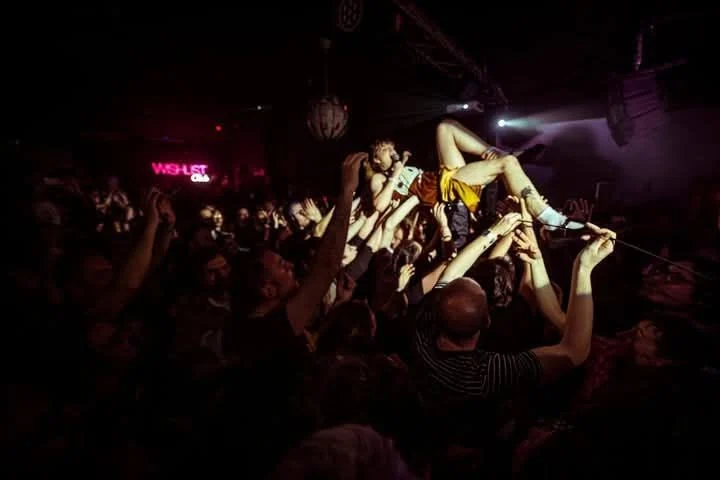
Wishlist Club is at Via dei Volsci 126 b, in the heart of San Lorenzo, the working-class neighborhood right next to Sapienza that over the last 20 years has become one of the hubs of independent live music in Rome. The venue books indie rock, alternative and punk concerts and more experimental acts, along with clubbing nights with DJ sets, and shares the same block with other spaces of the neighborhood's music scene, first of all Container San Lorenzo, a few hundred meters away. Hours, ticket price and calendar change season by season and should be checked on the venue's Facebook page or on ticketing sites before you head out: here you get the context to find your bearings, not a schedule that stays valid all year. For the rest of the area, the pages on Piper Club, Container San Lorenzo and Atlantico Live Club remain useful, along with the overview page on clubs and discos in Rome. Anyone coming to San Lorenzo for the first time looking for live music, and not just an aperitivo or a dinner, finds on this street and the side streets nearby the highest concentration of small independent venues in the entire city, a distinctive trait that no other Roman neighborhood reproduces in the same way, not even Trastevere or Testaccio, where nightlife follows more touristy logics and is less tied to the emerging music scene.
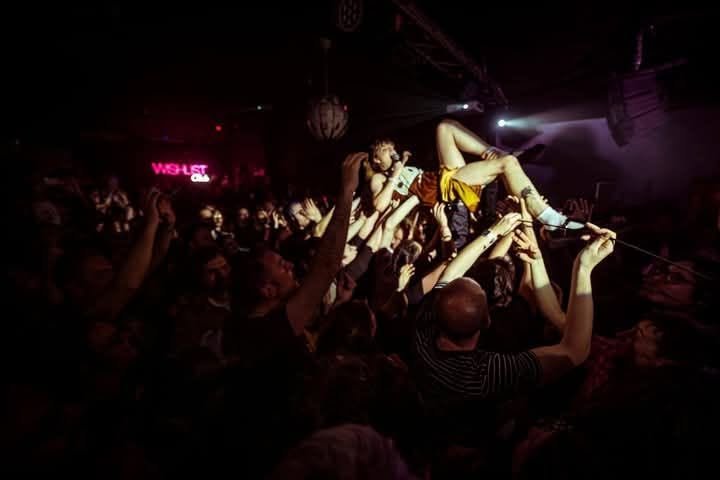
Where Wishlist Club Is and How to Get There
Via dei Volsci cuts across San Lorenzo diagonally, between Via dei Sabelli and Via degli Equi, in a grid of streets named after ancient Italic peoples that gives the neighborhood its historic name: Volsci, Equi, Sabelli, Marsi, Ausoni, all peoples that the Romans of the early republic subdued or absorbed during the expansion into Lazio. Number 126 b is in the central stretch of the street, a few steps from Piazza dell'Immacolata and the commercial heart of the neighborhood, with shops, bars and other evening venues concentrated within a radius of a few hundred meters. Anyone who knows San Lorenzo knows that the exact address matters less than the area: in the evening, with the lights of the venues on and the tables outside, finding your way is a matter of following the people more than the street numbers, and on concert nights you often spot the right venue from the knot of people in front of the entrance.
By Metro and on Foot
The most convenient stop on Line B is Policlinico, about a 15-minute walk through the university district, past the historic buildings of Sapienza and Verano, the large monumental cemetery that occupies the northeastern corner of San Lorenzo. The alternative is Termini, from which the neighborhood is a good 20-minute walk or a ride on one of the bus lines that run along Via Tiburtina, the artery that separates San Lorenzo from the Nomentano district. Anyone arriving from outside Rome and getting off at Termini station finds here one of the evening neighborhoods most within walking distance in the whole city, which partly explains why San Lorenzo became a live music hub over the years: students and young Romans get there without having to arrange a ride by car, and this has fueled for decades a constant demand for venues, concerts and evening life at affordable prices.
Tram 3 and tram 19 run along the edge of the neighborhood, on Viale Regina Elena and Viale delle Province, and are a convenient alternative for those coming from San Giovanni, from Trastevere or from Verano, with stops that let you walk into San Lorenzo's inner grid without crossing the busiest arteries. Several night bus lines cover the neighborhood after midnight, a detail worth knowing before you go out, because the metro closes early, around 23:30 on weekdays and at 00:30 on Friday and Saturday, and the neighborhood easily runs out of taxis on the busiest weekends, when demand far outstrips supply.
By Car
Getting to San Lorenzo by car on a concert night is the least advisable option, and I say it as someone who has tried more than once, in vain. The neighborhood has narrow streets, frequent one-way streets and a density of venues that on weekends fills every free parking spot within minutes of the evening's opening. Anyone who insists finds a few possibilities on the more peripheral streets toward Viale dello Scalo San Lorenzo or toward Verano, but the honest advice is to leave the car outside the neighborhood, on one of the wider streets toward Piazzale Tiburtino or Porta Tiburtina, or in one of the paid garages of the nearby Termini area, and walk the last stretch. Anyone traveling with their own car would do well in any case to arrange a taxi or a driver service in advance for the return trip, especially if the evening ends after public transport stops.
Where to Come From If You're Staying Outside San Lorenzo
Anyone staying in the historic center, in the Termini area or in Trastevere finds San Lorenzo relatively close: in all cases it's 20 or 30 minutes between walking and public transport. Anyone staying farther away, toward EUR or the Castelli Romani, has to allow for a longer evening return trip, planned with care, because the neighborhood has no direct metro line of its own and the last stretch is done on foot or by taxi anyway. For anyone organizing a Roman stay spread across several areas, planning your trips with the digital tools available online helps you avoid being caught off guard by the reduced public transport hours on weekend evenings.
What's Around Via dei Volsci
Anyone who arrives early or wants to stretch the evening finds within a few blocks a small ecosystem of kindred venues, from Container San Lorenzo, a multipurpose space with music and cultural programming, to other clubs and rehearsal rooms that over the years have settled in the side streets of the neighborhood, often in former warehouses, former workshops or ground floors of working-class buildings adapted into music spaces. This concentration is not accidental: rents that are relatively low compared with the historic center, combined with the constant presence of a young audience and the neighborhood's historic tolerance of nightlife, have made San Lorenzo over the years a favorable ground for anyone opening a small live music venue, a bottom-up model of urban development that is found, with different characteristics, in other working-class neighborhoods of large Italian and European cities.
For anyone who wants to stretch the evening after the concert, the area also offers bars with more informal live music and venues open late where you can meet up with friends before heading home, a habit typical of San Lorenzo evenings in which the night rarely ends with the end of a single event.
What Wishlist Club Is and What Music You Hear
Wishlist Club belongs to the generation of small independent venues that have kept alive in Rome the small-scale live music scene, the kind that doesn't fill the arenas but brings to the city emerging Italian and foreign bands before they become names known to the wider public. The programming mixes indie rock and alternative rock concerts, punk nights, garage and shoegaze acts, with a declared focus on the independent scene rather than on the mainstream club lineup geared to commercial pop. Alongside the concerts, the venue also hosts clubbing nights with DJ sets, in a format typical of small Roman live clubs that in the same space alternate the concert night and the dance floor night, adapting the interior setup to the type of event on the program.
The small size is part of the place's identity: it isn't an arena and doesn't pretend to be. It is one of those venues where the audience is a couple of meters from the stage, where the sound doesn't go through a stadium system and where the night is built on the choice of the band more than on the staging. Anyone looking for big productions should look elsewhere, toward the Auditorium Parco della Musica or the capital's historic arenas. Anyone looking for the independent scene, the one where you discover groups before they fill stadiums, finds here one of San Lorenzo's reference addresses. This physical closeness between audience and stage is, according to those who regularly go to this kind of venue, the real difference from a big concert experience: there is no distance to bridge with giant screens, and the energy of the night depends a great deal on the direct participation of those in the room.
Concerts and Clubbing, Two Souls in the Same Space
Having concert nights and clubbing nights inside the same venue is a trait common to many small independent Italian spaces, where economic sustainability depends precisely on the ability to alternate different formats within the same week. A concert night requires a setup designed for listening, with the audience facing the stage and a sound system tuned for rendering live instruments. A clubbing night instead shifts the center of attention toward the DJ booth and the dance floor, with lighting and an atmosphere designed for dancing rather than for concentrated listening. Anyone planning an evening at Wishlist Club would do well to find out in advance which of the two souls they will find that night, because the experience changes substantially depending on the format on the calendar.
San Lorenzo, the Neighborhood That Was the Venue's Cradle
San Lorenzo began as a working-class neighborhood in the late 19th century, designed for the workers of the nearby railway and industrial workshops, and it still bears the marks of that history in its low, compact buildings and in street names dedicated to the Italic peoples. The bombing of July 19, 1943, the first on Rome in the Second World War, hit the neighborhood hard, which lost thousands of residents and a large part of its oldest urban fabric around the Basilica of San Lorenzo fuori le mura, one of Rome's seven jubilee churches and the one that gives the neighborhood its name. Postwar reconstruction and the proximity of Sapienza, the largest university in Europe by number of enrolled students, gradually turned San Lorenzo into a neighborhood with a university and nightlife vocation, a process accelerated in recent decades by short-term rentals and the constant presence of students from out of town.
From the 1990s onward, venues, bars and small clubs multiplied in the streets around Via dei Volsci and Via degli Equi, making this area one of the reference points of independent nightlife in the capital, an alternative both to the touristy historic center and to the big venues of EUR or Ostiense. The transformation has not been free of tension: the coexistence of longtime residents, students and nightlife has generated over the years discussions about noise and the management of public spaces that periodically return to the center of the city's debate, without ever stopping the neighborhood's musical vocation.
From Social Centers to Small Clubs: A History of Continuity
To understand the place that a venue like Wishlist Club holds today on San Lorenzo's musical map, you have to look back a few decades. In the 1980s and 1990s the neighborhood saw the birth of some of the best-known occupied social centers in Rome's recent history, self-managed spaces that built an alternative music program in years when the big commercial circuits were looking elsewhere. That season left a precise legacy: an audience used to looking for independent music outside traditional channels, and a network of people, sound engineers, organizers and promoters, who in the following years often brought their experience into venues with more structured management, like the small clubs that dot the neighborhood today.
The shift from one model to the other did not mean a clean break. Many nights organized today in San Lorenzo's clubs, including those based on punk rock and more niche offerings, still carry the organizational stamp of that culture of the independent promoter and of the collective that chooses artists by musical value more than by commercial potential. It is a continuity worth knowing for anyone approaching a concert in one of these spaces for the first time: you are not watching an isolated event, but a piece of a musical tradition of the neighborhood that has lasted more than 30 years.
Sapienza and the University Effect on the Neighborhood
You can't tell the story of San Lorenzo without taking into account the Città Universitaria of Sapienza, which borders the neighborhood directly along Piazzale Aldo Moro and Viale Regina Elena. With more than 100,000 enrolled students across all faculties, Sapienza is one of the largest universities in Europe, and its presence has a direct effect on the life of the neighborhood: every academic year brings thousands of new students to San Lorenzo, many of whom move here for the proximity to the classrooms, generating a constant demand for rental housing, bars, cheap venues and, precisely, live music at affordable prices.
This university effect partly explains why the programming of small clubs like Wishlist Club follows an almost seasonal rhythm, with a stronger pickup at the end of September and in October, when classes start again and the neighborhood fills up after the summer break, and a natural slowdown in June, July and August, when most of the out-of-town students go back to their home cities and the regular concert audience thins out.
A Curiosity About Wishlist Club
The venue's very name, in English, plays on an ambiguity that regulars catch right away: a wishlist is a list of wishes, and the club presents itself as the space where that list comes true night after night, bringing to Rome bands that would otherwise stay off the radar of the wider public. It is a name that tells well the logic of small independent Italian clubs: booking not on the basis of who will surely fill the room, but on the basis of who deserves to be heard, betting that the audience will come anyway. In the calendar of a venue like this you can find, in the same week, an international alternative rock date and a local punk night, a sign of programming that doesn't lock itself into a single genre and is built week by week according to touring bands passing through, album releases and proposals from the collectives that organize the nights.
Another detail that tells you about the place: the street where it stands, Via dei Volsci, gave its name to a whole strand of the independent Roman music and cultural scene of the 2000s, the one that music critics have repeatedly labeled the "Via dei Volsci scene" precisely because of the concentration of collectives, social centers and small venues facing this street and the neighboring side streets. Wishlist Club, with its independent programming, fits into this more recent legacy compared with the neighborhood's historic social centers, but in the same cultural groove made of self-production, independent promoters and attention to music that has not yet reached the big commercial circuits.
A third curiosity concerns the street naming of the neighborhood as a whole, which indirectly also explains the name of the street where the venue stands. When San Lorenzo was planned in the late 19th century as a working-class neighborhood, the urban planners of the time chose to name the main streets after the pre-Roman Italic peoples, a choice that pointed to the idea of a popular and ancient identity, symbolically set against the splendors of the imperial center. Via dei Volsci, Via degli Equi, Via dei Sabelli, Via dei Marsi, Via degli Ausoni, Via dei Bruzi: a whole neighborhood bearing the names of the peoples that archaic Rome had to fight and absorb before becoming the capital of an empire, a detail few visitors notice while strolling from one venue to the next but which says a lot about the original identity of this part of the city.
Something Nobody Tells You About Wishlist Club
People coming to a concert in a venue of this size for the first time often expect the experience of a big club, with several rooms, more bars and a structured entrance. San Lorenzo works differently: the neighborhood's small live clubs are intimate spaces, designed to focus attention on the stage rather than on ancillary services, and the real capacity of a night depends a great deal on the type of event, the band on the bill and the season. Don't expect to compare it with an arena: expect closeness to the concert, which is exactly the reason these venues exist and keep attracting a loyal audience despite the reduced comforts compared with a big venue.
A practical point that few mention before you head out: the programming of small independent Roman clubs, this one included, changes weekly and is communicated almost exclusively on the venue's social channels, not on a fixed poster put up in the street. Anyone who shows up without checking the Facebook or Instagram page first risks finding closed doors or a different night from the one they imagined. Ticketing, when there is any, is often handled through online presale dedicated to independent music events, with limited capacity that for the most anticipated dates sells out days in advance, in particular for concerts by international groups passing through on a European tour, where the Rome date is sometimes the only stop in central Italy.
One further detail that escapes anyone who doesn't know the sector: the dates of international tours are often confirmed only a few weeks before the concert itself, a pace very different from that of the big arena events, which are planned months ahead. This means that the calendar of a small club like Wishlist Club should be checked with some regularity, because an interesting date can suddenly appear within a few days, remaining visible only for a limited time before the event itself.
Another little-discussed aspect concerns the acoustics of these spaces: since they are small venues, often carved out of buildings not originally designed to host concerts, the perceived volume can be higher than in a large hall, and it's good practice for anyone with particular sensitivity to noise to bring earplugs, a common precaution among those who regularly attend small live music clubs all over Italy.
Then there is an aspect that concerns payments: in many small independent Roman venues, the inside bar still works mostly in cash or with minimum amounts for electronic payment, a choice tied to the cost of fees on digital transactions, which weigh proportionally more on a venue with thin margins than on a big club. It's therefore a good idea to leave home with a bit of cash in your pocket, avoiding the surprise of having to look for an ATM in the middle of the evening, when the lines at the neighborhood's cash machines grow longer exactly during the peak hours of the nightlife.
My Advice for Visiting Wishlist Club
If you plan an evening here, always check the specific event before heading out, because the difference between a concert that starts promptly at 9 p.m. and a clubbing night that starts after midnight completely changes how you organize the evening. Concerts in small independent Roman clubs keep stricter hours than discos: anyone who arrives late risks missing the opening act or, in the worst cases, the entire live set, because support bands often play at fixed times and don't slide to wait for latecomers.
The practical advice: arrive with a half-hour margin compared with the stated time, both for the line at the entrance on the busiest nights and to find a good spot in the room before it fills up. San Lorenzo in the evening is a lively neighborhood but with narrow streets that are poorly lit in some stretches: those who arrive in a group and those who already know the area have no problems, while those who arrive alone or don't know Rome do well to move along the main streets, which are busier, rather than cut through the more isolated side streets. Finally, always check if entry requires a membership card, a common practice in Italian independent music venues tied to the rules on private clubs: the card is almost always made on site, costs little and is valid for an extended period, often a season or a whole calendar year.
A second piece of advice, just as useful: book tickets in advance when presale is available, because the most anticipated concerts sell out even in a venue of this size, where the small capacity works precisely against anyone who shows up without a ticket counting on a free spot at the door. A third piece of advice concerns those traveling in a group: communicate in advance with whoever organizes the evening, be it a Roman friend or a collective that regularly follows this kind of event, because knowing beforehand the typical atmosphere of a specific date, the kind of audience it draws and the expected level of crowding helps avoid surprises, especially for those not used to small independent clubs who expect the comfort standards of a larger, more structured venue. And if the planned night is a DJ set rather than a concert, find out about the specific musical genre before going: the clubbing programming of these venues changes register from one night to the next, and not all offerings suit someone looking for the same atmosphere as an indie rock live show.
What to Bring and What to Avoid
Backpacks and bulky bags are often subject to inspection or mandatory check-in at the entrance, a normal practice in small venues where interior space is already limited by the presence of the audience and the musical instruments. Dress comfortably and expect the room to heat up quickly during a crowded concert, especially in the warmer months, when ventilation in a small closed space struggles to cope with the heat generated by dozens or hundreds of people close together. Anyone with hearing problems or who simply wants to protect themselves from prolonged exposure to high volumes would do well, as already said, to bring hearing protection, easily found at a pharmacy at low cost.
Another Well-Known Fact, Yet Rarely Cited
San Lorenzo is almost always described as the neighborhood of university nightlife, a label that is correct but partial. It is also, for at least 30 years, one of the main laboratories of independent live music in the capital, a role that Rome's touristy historic center cannot play for reasons of cost, noise regulations and audience target. Small clubs like Wishlist Club fill a space that big theaters and big arenas leave empty: that of bands that don't yet fill an arena but deserve a stage and an attentive audience, often the same audience that, years later, sees those same artists again on much bigger stages.
This role has a cost that is rarely talked about: small live music venues operate on thin margins, with operating costs, copyright fees and safety regulations that have risen sharply in recent years all over Italy, putting pressure on the entire network of independent clubs in medium and large cities. Rome is no exception, and the survival of spaces like this depends largely on a community of audience members who choose to keep going, buying presale tickets and supporting the programming even when the name on the flyer is not yet familiar. Several historic venues of the Roman independent scene have closed in the last 10 years precisely because of this combination of rising costs and thin margins, a reminder that these spaces, however rooted, are by no means a given over time. Trade associations in the sector have repeatedly pointed out how rising energy costs, tightening safety rules for public entertainment venues and competition from music streaming have made running a small independent club an increasingly difficult economic exercise all over Italy, not only in Rome, pushing some operators to diversify the offering among concerts, clubbing and other activities to withstand the burden of fixed costs.
It's worth adding that the network of small independent clubs doesn't work in isolation: promoters, independent record labels and collectives that organize tours exchange information and dates among different venues in different cities, building national circuits that let an emerging band do an Italian tour hitting exactly this kind of space. Rome, with its concentration of venues in San Lorenzo, Testaccio and other parts of the city, remains an almost obligatory stop on these circuits.
One last element, often ignored by those who look at the sector from outside, concerns the hidden work that makes every single night possible: sound engineers, security staff, floor staff, whoever handles social media promotion and whoever deals with the bands' booking agents, often the same people covering several roles in a small independent venue. It is a sector that in Italy employs, according to live music trade associations, tens of thousands of people between direct staff and related activity, and that in small clubs like this one rests on a much more fragile economic balance than big events, where fixed costs are spread over an incomparably larger number of tickets sold.
The Right Photo to Take at Wishlist Club
The photo that best tells the story of this kind of venue is not the one of the stage during the concert, often prohibited or in any case not very successful in the low light and the movement of the room. It is the one taken before the night begins, when the lights are still on and the empty room shows the real size of the space, the layout of the bar and the stage, the posters and stickers accumulated over the years on the walls, which in small independent clubs become a sort of visual diary of all the bands that have passed through.
Alternatively, the right photo is the one outside, on the sidewalk of Via dei Volsci, with the venue's sign and the flow of people going in shortly before the start: it is the image that best conveys the atmosphere of a concert night in San Lorenzo, among parked bicycles, kids sitting on the steps and the background noise of a neighborhood that at night comes entirely alive around its venues. Anyone who wants a wider image of the neighborhood can step away a few paces to one of the main squares, where San Lorenzo's evening life can be seen in all its density, with bar tables occupying the sidewalks and the constant comings and goings of students and residents.
Anyone who loves street photography finds in San Lorenzo a recurring subject in the murals and street art that over the years has covered many of the neighborhood's facades, often the work of artists tied to the same independent cultural scene that animates the area's small music venues. A daytime walk among the side streets of Via dei Volsci, even before coming back in the evening for the concert, lets you discover this further layer of the neighborhood's visual identity, made of murals, faded historic signs and the coexistence of early 20th-century working-class housing with more recent interventions.
Some Important Events That Happened Here in History
Wishlist Club is part of the network of small venues that, over the course of the 2010s and 2020s, have hosted mini-festivals and series dedicated to specific genres of independent music and alternative rock. In the spring of 2026 the venue hosted the first date of a mini-festival tribute to Hüsker Dü, titled Zen Arcade after the album the American band released in 1984, with a night that lined up minimal folk, garage rock and psychedelic shoegaze acts in front of an audience that filled the room. It is the kind of themed night that tells well the vocation of the venue: not just isolated concerts, but also series built around a precise musical idea, able to draw an audience of enthusiasts willing to follow an entire mini-festival rather than a single concert.
Over the seasons the calendar has alternated concerts by emerging Italian acts and dates by international groups passing through on a European tour, along with punk nights organized by promoters and collectives tied to the Roman independent scene. Among the series that have marked the venue's calendar are nights expressly dedicated to punk rock, often organized as regular recurring events, and clubbing nights with DJ sets that have sat alongside the live programming on weekends. The programming remains by its nature fluid, tied to album releases and the tours of the moment: anyone who wants to know what is happening on a specific date must check the updated calendar on the official channels, because what matters here is reconstructing the type of nights the venue offers over time, not a fixed calendar valid forever.
The Mini-Festival Format in Small Roman Clubs
The model of the mini-festival packed into a single night, with several bands taking turns on the same stage over a span of a few hours, has become in recent years one of the most frequent formulas in small independent Italian clubs, Wishlist Club included. The reason is both economic and artistic: grouping several kindred acts into a single date makes it possible to spread the fixed costs of a night, from renting the sound system to floor staff, and at the same time builds a more attractive bill for an audience that may not yet know any of the bands on the program but trusts the night's thematic curation, as in the already mentioned case of the Hüsker Dü tribute. It is a format that requires more sophisticated programming work than the simple single concert, and its recurrence in a venue's calendar is often a sign of the quality of the artistic curation of the staff who run it.
Who Has Played at Wishlist Club
Among the acts that concert-tracking sites and Roman music chronicles have documented on the stage of Wishlist Club are the Emilian duo Bono/Burattini, the Modena group Palea and the New Yorkers GIFT, headliners of the already mentioned Zen Arcade night in spring 2026, a concert that the online music press described as one of the most successful dates of the season for the alternative rock genre in Rome. The venue has also hosted the Roman band Italia 90, who returned to the club's stage several times on different occasions, and the Cucamaras, along with nights of the Bivio Live project and concerts tied to the local punk scene, such as the dates organized under the banner of series dedicated to the genre and announced periodically on channels specialized in Roman independent music.
The recent calendar, which can be checked on ticketing sites and on the venue's social pages, has included names like Weirdside, Pearl Moth and Lowertown among the concerts, along with clubbing nights like Gacha Night and dates announced for the fall such as one from the Piano Quinquennale series. It should be specified that every name mentioned in this section reflects the programming as it appeared on ticketing sites and on the venue's information pages at the time of writing, a calendar that by its nature is updated continuously: before considering a specific date confirmed, checking on the official channels remains essential. In all cases these are names from the Italian and international independent scene, consistent with the venue's vocation: bringing alternative and indie music to Rome before it ends up on the big bills, rather than hosting established superstars. Anyone who closely follows the Italian indie rock scene recognizes in these names the same circuit of small clubs that runs through Milan, Bologna and Turin, of which Wishlist Club is the Roman stop for many of these touring acts.
Why Today's Big Names Came Through Venues Like This
Anyone who follows the history of Italian and European independent music knows the mechanism well: almost no artist goes straight to the arenas or the big summer stages. The apprenticeship almost always goes through small venues, where the audience is small but passionate and where direct contact with listeners builds the first core of loyalty around a musical project. Several artists now established on the Italian indie and alternative landscape built their initial following precisely in clubs of this size scattered between Rome, Milan and Bologna, before moving on to theaters and finally arenas. Wishlist Club, with its steady programming of emerging bands, fits exactly into this mechanism: anyone who goes today to see a still little-known name has a real chance of seeing them again, a few years later, on a much bigger stage.
It must be said honestly that not all the names that pass through a small club go on to reach a wider scene: most of the groups that play in venues like this stay in the independent circuit for their entire career, and this is not a failure but the normal physiology of independent live music, where large-scale commercial success is the exception, not the rule. The value of a night in a place like this is measured precisely in discovery, not in the guarantee of witnessing a future mass phenomenon: those who go out of curiosity, with no preconceived expectations, almost always go home with a more authentic memory than those who look only for confirmation of an already known name.
When to Go to Wishlist Club
There is no right or wrong season for an independent live music venue: the programming follows the bands' tours more than the seasonal calendar, and interesting concerts show up in winter as much as in summer. It must be said that in the hottest months, between June and September, many Roman venues of this type slightly reduce the frequency of indoor nights in favor of the open-air series that animate the parks and villas of the capital during Estate Romana, the widespread season of events involving dozens of city spaces, then return to full swing in the fall, when the indoor concert season restarts and European tours touch Italy more often.
September and October, in particular, are months when the calendar of small Roman clubs thickens, helped by the start of the academic year at Sapienza that brings thousands of out-of-town students back to San Lorenzo, and by the season of fall tours with which many record labels release new albums accompanied by live dates all over Europe. Anyone who wants to be sure of finding an interesting date does well to check the calendar a couple of weeks ahead, especially for Friday and Saturday nights, when the programming is most concentrated and the room tends to fill up faster.
Weeknight Evenings, an Underrated Opportunity
Anyone with flexible schedules would do well to consider weeknight evenings too, often overlooked by those who plan a Roman vacation thinking only of the weekend. In small independent clubs, Tuesday or Wednesday sometimes host concerts of great artistic quality precisely because they are the only dates available in the tour calendar of an international band passing through Italy, and the lower weeknight turnout often translates into a more intimate experience and a shorter line at the entrance. It's advice worth keeping in mind for anyone planning a multi-day stay in Rome who wants to include a concert without giving up the rest of the weekend itinerary.
The Roman Winter and Indoor Concerts
In the winter months, from November to February, small clubs become the almost exclusive center of Rome's evening music life, because the big open-air series that animate the city from May to September are of course suspended and the programming is concentrated entirely in indoor spaces. It is the period when the calendar of Wishlist Club, like that of the other venues in San Lorenzo, tends to thicken the most, with concerts almost every week and programming that ranges from the single concert to the themed mini-festival. Anyone visiting Rome in winter and looking for an alternative to the usual dinner and evening stroll finds in these very months the richest season for independent live music in the city.
How Much Does Entry to Wishlist Club Cost
In small independent Roman clubs the ticket price varies enormously by event: a local punk night with emerging bands generally costs a few euros, while a concert by an international group passing through on tour can reach about 10 euros or a little more, figures that are in any case far from the prices of big arena concerts. Some nights require, in addition to the ticket, a membership card valid for access to private clubs, a practice widespread across Italy for venues of this kind and tied to the rules on cultural associations, not to a commercial choice of the individual club: the card generally covers entry for an extended period, effectively reducing the cost of later visits for those who come back several times in the same season.
Any figure you read online, this page included, should be considered indicative and not a current price: ticket costs in small live music venues change event by event and are always checked on the official presale channel or directly at the venue's door on the night of the concert. For anyone organizing a music weekend in San Lorenzo with several nights on the program, it's also worth budgeting a total spend that includes dinner and transport, items that often weigh as much as the ticket itself on an evening out in this part of the city.
The Membership Card: How It Really Works
The membership card system, required by many small independent music venues in Italy, depends on Italian law on private cultural clubs, which allows an association to offer entertainment activities to its members under conditions different from those of a public establishment open indiscriminately to anyone. In practice, for someone going to a venue like this for the first time, it means that at the entrance you may be asked to fill out a membership form, with an ID and a one-time or seasonal membership fee, which normally comes in addition to, and does not replace, the cost of the ticket for the individual event. It is not a commercial gimmick of the specific venue, but a practice widespread across the whole network of small Italian music clubs, from the north to the south of the country, and those who regularly attend this type of night know it well and consider it part of the normal entry routine.
With Kids at Wishlist Club
Wishlist Club is not a venue designed for families with children: the evening programming, the late hours, the volume of the sound systems and the absence of spaces dedicated to the little ones make it an address for an adult and young audience, consistent, after all, with its nature as an independent live music club. Those visiting San Lorenzo with children will find by day a neighborhood that is pleasant to walk through, with a few squares and a few parks nearby, and the chance of a quiet stroll among the streets of the university district or a visit to Verano, but in the evening, when the neighborhood's venues open and the streets fill with a young crowd, it is certainly not the most suitable environment for a family with small children. Anyone looking for a Roman music experience better suited to a family audience will do well to turn instead to the daytime series or the early evening shows of the city's big summer arenas, very different in format and hours from a small independent live club like this.
That said, San Lorenzo by day remains a neighborhood that lends itself well to a family visit, especially for those interested in the recent history of Rome: the Basilica of San Lorenzo fuori le mura, with its Romanesque facade and its 13th-century portico, offers a visiting idea accessible even to older children, while Verano, with its tree-lined avenues and 19th-century funerary monuments, is a place for strolling that many Roman families regularly visit on weekends, far from the nightlife atmosphere that characterizes the same area after sunset.
Where to Eat Near Wishlist Club
San Lorenzo is, along with Trastevere and Testaccio, one of the Roman neighborhoods with the highest concentration of trattorias, pizzerias and casual eateries in the city, and the area around Via dei Volsci is no exception. Within a few minutes' walk you find pizza-by-the-slice places open late, Roman trattorias with a traditional menu and younger venues oriented toward street food, a mix that reflects the neighborhood's double soul, working-class and university at once. The area around Piazza dell'Immacolata and Via dei Marsi concentrates several historic addresses of Roman neighborhood dining, with prices generally lower than in the historic center precisely because of the area's university vocation. There is no lack of international cuisine either, from Japanese to Middle Eastern, an offering that has grown in recent years together with the neighborhood's student population, increasingly used to a wide range of cuisines at affordable prices.
Before a concert it's best to have dinner early, around 8 p.m., so as not to find yourself in line just when the venue is about to open its doors: the tables at San Lorenzo's best-known restaurants fill up quickly on Friday and Saturday nights, helped by the flow of people leaving the university in the late afternoon. For those who prefer something faster, San Lorenzo also offers a good choice of kebab places, sandwich shops and street food spots open until late at night, a practical option for those who arrive after the concert has already started or for those looking for something to eat after leaving the venue, when most traditional restaurant kitchens have already closed.
Bread and Pizza by the Slice, an Identity of the Neighborhood
San Lorenzo shares with Testaccio and other working-class Roman neighborhoods a solid tradition of bakeries and pizza-by-the-slice shops, a direct legacy of its history as a workers' neighborhood where bread and pizza bianca were for decades an affordable, filling everyday food. Several historic bakeries in the area are still today a reference point not only for residents but also for those visiting the neighborhood, with Roman pizza bianca, crisp outside and soft inside, as the most requested specialty at any hour of the day. Before or after a concert, a stop at one of these bakeries is a cheap, quick way to eat something without going too far from Via dei Volsci, keeping the rhythm of the evening without having to sit down at a table. Those who prefer a more convivial moment, perhaps before reaching the venue, find in the neighborhood's small squares several bars offering an informal aperitivo, with low prices and an atmosphere that anticipates well the mood of an evening of independent music, very different from the more refined and expensive aperitivo found in other parts of the city.
Quick Questions About Wishlist Club
Where exactly is Wishlist Club? At Via dei Volsci 126 b, in Rome's San Lorenzo neighborhood, a few minutes' walk from the Policlinico stop on metro Line B.
What kind of music do you hear? Indie rock, alternative rock, punk and more experimental concerts, with clubbing nights and DJ sets rounding out the live calendar.
How do you buy tickets? Through presale sites dedicated to independent music events or, when available, directly on site on the night of the event. The calendar is followed on the venue's official social channels.
Do you need a card to get in? It depends on the night: some events require a membership card tied to the rules on Italian private clubs, which is generally made on the spot at a low cost.
Is it suitable for first-time visitors to Rome? Yes, for those looking for a live music experience away from the tourist circuits, as long as you arrive with a clear idea of the event on the program, because it is not a venue designed for the casual public without a band to see.
How do you get home after the concert? With the night bus lines that cover San Lorenzo after the metro closes, or with a taxi booked in advance, bearing in mind that on the busiest weekends taxi availability in the area can drop sharply.
Does the venue also hold events during the day? The vocation of Wishlist Club, like that of most of San Lorenzo's small independent clubs, is mainly evening and night. Any daytime initiatives, when planned, are announced well in advance on the official social channels.
What is there to do in San Lorenzo before the concert? A stroll among the streets of the university district, a visit to the Basilica of San Lorenzo fuori le mura or to Verano, and dinner at one of the area's trattorias or pizzerias are the most common options for those who want to reach the venue without rushing, without having to run from one end of the city to the other in the afternoon.
Frequently Asked Questions About Wishlist Club
Where is Wishlist Club?
Wishlist Club is at Via dei Volsci 126b, in Rome's San Lorenzo neighborhood, a few minutes' walk from the Policlinico stop on metro Line B. Via dei Volsci cuts across San Lorenzo diagonally, in a grid of streets named after ancient Italic peoples that gives the neighborhood its historic name.
What music do you hear at Wishlist Club?
At Wishlist Club the programming mixes indie rock and alternative rock concerts, punk nights and garage and shoegaze acts, with particular attention to emerging Italian and foreign bands before they become names known to the wider public. The calendar also includes clubbing nights and DJ sets.
Where does the name Wishlist Club come from?
The name Wishlist Club, in English, plays on an ambiguity that regulars catch right away: a wishlist is a list of wishes, and the club presents itself as the space where that list comes true night after night, bringing to Rome bands that would otherwise stay off the radar of the wider public.
How do you buy tickets for Wishlist Club?
Tickets for Wishlist Club events are bought through presale sites dedicated to independent concerts. Before heading out it's always worth checking the specific event, because concerts in small independent Roman clubs keep stricter hours than discos.
How much does it cost to get into Wishlist Club?
At Wishlist Club the ticket price varies enormously by event: a local punk night with emerging bands generally costs a few euros, while a concert by an international group passing through on tour can reach about 10 euros or a little more. Some nights also require a membership card.
Is Wishlist Club suitable for children?
No, Wishlist Club is not a venue designed for families with children: the evening programming, the late hours and the volume of the sound systems make it an address for an adult and young audience, consistent with its nature as an independent live music club.
Who has played recently at Wishlist Club?
In the spring of 2026 Wishlist Club hosted the first date of a mini-festival tribute to Hüsker Dü, titled Zen Arcade after the 1984 album, with the Emilian duo Bono/Burattini, the Modena group Palea and the New Yorkers GIFT, described by the music press as one of the most successful dates of the season.
To round out your evening planning, a broader plan for your Roman stay with the tools of ItalyPlanner is also useful, and for those organizing groups or guided experiences in the capital it's worth consulting the professional resources of TourLeaderPro.
Contact Information
Via dei Volsci , 126 b
Roma Roma Città, Roma Città