Alexanderplatz Jazz Club
In short. Alexanderplatz Jazz Club is at Via Ostia 9, in the heart of the Prati district, a few steps from St.
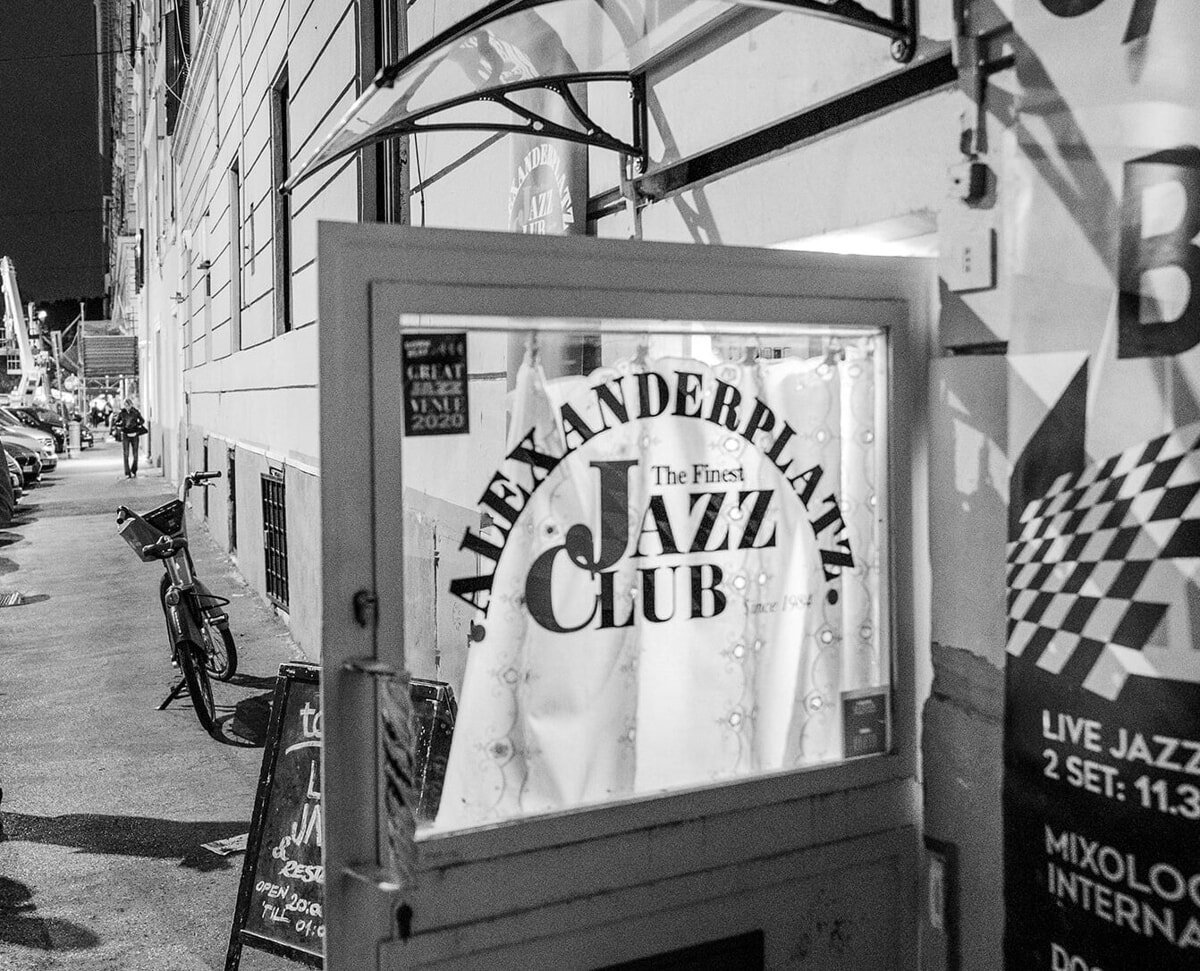
Alexanderplatz Jazz Club is at Via Ostia 9, in the heart of the Prati district, a few steps from St. Peter's Basilica and the Vatican Museums. It is the oldest jazz club in Italy still in operation: it opened in 1984 on the initiative of Giampiero Rubei and since then has never stopped offering live music almost every night of the year, in a basement whose walls are covered with signatures and dedications left by Italian and international musicians. The club remains a reference point of Roman jazz along with the Casa del Jazz and Gregory's Jazz Club, and appears among the venues listed on the general page of the capital's clubs and discos.
Where the Alexanderplatz Jazz Club Is and How to Get There
Via Ostia 9 is a short, quiet street in the Prati district, squeezed between Via Andrea Doria and Viale Giulio Cesare, a stone's throw from the Vatican and the bulk of St. Peter's. The neighborhood is residential and orderly, with a 19th-century grid layout that gives no hint, behind a door with no flashy sign, of 40 years of live music history. First-timers looking for the entrance often walk right past it: the club announces itself discreetly, as befits a place that lives on music and not on shop windows.
By Metro: Ottaviano Station
The most convenient way to reach the club is Metro Line A, Ottaviano stop, about a 10-minute walk away. From the station you head down toward Via Candia and aim for Via Ostia, crossing a grid of streets named after cities and islands, typical of the 19th-century street names of Prati. The route is lit and busy even late in the evening, being a residential area with shops and venues open until night.
By Bus and on Foot from St. Peter's
Several Roman public transport lines run along Viale Giulio Cesare and Via Candia, a short distance from the club. Anyone staying near St. Peter's or the Vatican Museums can get there easily on foot in a little under a quarter of an hour, crossing the heart of Prati. The practical advice is to allow a few minutes of margin for the trip back, because concerts end after midnight and public transport becomes less frequent.
By Car and Parking
Those arriving by car find in the area the regulated parking with blue lines typical of Municipio I, with an hourly rate to check on the signs for that stretch, and some attended garages nearby, among them one marked on Via Tunisi. Prati is a neighborhood thick with traffic in the evening hours when restaurants open, so arriving 10 or 15 minutes before the concert time saves you from rushing at the last minute for a parking spot.
The Prati Neighborhood: An Unexpected Setting for Jazz
Prati is one of the most orderly districts of Rome, laid out in the late 1800s with wide streets, stately buildings and a grid urban plan that has nothing of the colorful disorder of the medieval historic center. It is the neighborhood of the Roman and Vatican bourgeoisie, home to courts, embassies and upscale shops along Via Cola di Rienzo, and precisely for this reason the presence of a historic jazz club inside this orderly residential fabric strikes those who discover it for the first time: none of the surrounding streets suggests, at first glance, a venue with 40 years of almost daily concerts behind it. The contrast between the bourgeois sobriety of the facade and the energy of the underground room is part of the place's appeal.
The district arose in the area that once separated the city from the territory of the Vatican, the so-called Prati di Castello meadows that give it its name, and it was built quickly after 1870 to house the new public offices of the Kingdom of Italy and the white-collar middle class who worked there. The result is a very livable neighborhood, with shops, local markets and a street life that continues until late in the evening, an urban setting very different from that of a nightclub born in an entertainment district like Trastevere or Testaccio. The Alexanderplatz fits into this fabric as a happy anomaly, a place of musical culture inside a neighborhood designed for daily life more than for the movida.
What the Alexanderplatz Jazz Club Really Is: The Oldest Club in Italy
The definition that circulates most insistently in the specialist press is this: the oldest Italian jazz club still in operation. It was born on February 27, 1984 from the initiative of Giampiero Rubei, who turned a personal passion for jazz into a permanent venue at a time when Rome had no real live music circuit devoted to this genre. The starting idea was simple: a small space, a stage close to the audience, an almost daily program instead of the few occasional concerts that then characterized the Roman scene.
Over time the club has become a regular stop for musicians passing through Rome, Italian and foreign, and has built a reputation that goes beyond national borders: the international press specializing in jazz has listed it several times among the reference clubs in Europe, and over the years the club has received recognition from French institutions tied to the Django d'Or prize. These are facts to be read as recognition of a reputation consolidated over time, not as a ranking updated from season to season.
Recognition That Comes From Outside Italy
What is particular about this recognition is that it does not come from the Italian circuit, already sparing in prizes devoted specifically to live jazz, but from foreign publications and institutions that follow the international scene of the genre continuously. The fact that a basement on Via Ostia, with a few dozen seats, appears in lists comparing clubs in Paris, New York or Tokyo says more than any program about how much the reputation built over four decades far exceeds the physical size of the club. It is not a fact to show off in a shop window, because the club has never gone in for self-promotion, but it is worth knowing before you walk in: that door with no flashy sign hides an address that international jazz critics consider a reference point, not just any venue on the Roman circuit.
Among the recognitions most cited in the club's communication is the Django d'Or, a prize born in France and tied to the memory of the guitarist Django Reinhardt, awarded over the years to musicians, producers and organizations that have contributed significantly to spreading jazz in Europe. That a Roman club appears among the recipients of a prize of French origin, dedicated to one of the founding fathers of European Romani jazz, shows how far the network of relationships built by the Alexanderplatz over the decades has crossed national borders, in a musical genre that by its nature lives on international exchanges and collaborations more than on rigid geographic borders.
The Sound&Image Association and Continuity of Management
Since March 2003 the club's cultural activity has come under the Sound&Image association, set up to give an organizational structure to a program that in the meantime had extended beyond the indoor evenings: open-air summer festivals, collaborations with other city festivals, tours under the club's name outside Rome. Artistic direction, after the founder's death, is now in the hands of his son Eugenio Rubei, who has continued his father's approach, opening the program to new sounds without distorting the club's jazz identity.
Between 2011 and 2015 the Alexanderplatz artistic team handled the programming direction of the Casa del Jazz, the municipal center born from the confiscation of a villa that belonged to a boss of the Banda della Magliana and converted into the permanent home of Roman jazz. It's a detail that tells well the weight of Via Ostia club in the capital's jazz ecosystem: a private club with a few dozen seats that for years also steered the program of the leading public institution.
Membership and the Club's Format
Entry to the concerts has historically been tied to an association membership card, as is the tradition of Italian jazz clubs born in the 1980s: an enrollment fee, valid for a set period, to which the cost of the evening is added when applicable. The exact amounts, opening hours and booking procedures change from season to season and should always be checked on the club's official website or by phone before planning the evening, because a figure read on a page a few years old risks being misleading.
Dinner, Aperitivo or Just the Concert
Like many historic jazz clubs, the Alexanderplatz offers table service dining alongside the music, with a menu that over time has alternated basic Roman cooking with more elaborate dishes depending on the management of the different seasons. Those who want to live the evening fully can choose to eat at the table with the concert as background and then as the real event when the lights go down on the stage. Those who prefer to focus only on the music can opt for a drink at the bar or a simple drink at the table. The two formulas have always coexisted in the club's history, and it is one of the reasons the Alexanderplatz works both as the destination of a whole evening and as a short stop on a broader evening itinerary in the neighborhood.
The Entrance, the Basement and the Walls That Tell 40 Years of Jazz
You go down a short flight of stairs and find yourself in an underground room with a low ceiling, exposed brick, tables set close together and a small stage a few steps from the front row. It is the typical architecture of historic jazz clubs, designed for intimate acoustics rather than capacity: there are no balconies, there is no distance between those who play and those who listen, and this changes the way you experience the concert compared with a theater or an auditorium.
The most recognizable feature of the club, though, is the walls. Decades of evenings have left on the walls signatures, dedications and drawings by the musicians who passed through, in a spontaneous accumulation that no stage set could replicate. Walking among the tables means constantly coming across a name, a date, a phrase left in pen or marker by someone who played that night: it is the most authentic form of archive a small club can build, and it is probably the reason regulars of Roman jazz describe the Alexanderplatz as a place you visit even without a concert on the schedule, just to read the walls.
The lighting is deliberately low, warm, focused on the stage more than the room, in a choice that favors listening over visibility of the spaces. The tables are small, designed for two or four people, and the close arrangement means that even someone who books at the last minute and gets a table at the back of the room is still a few meters from the stage, a condition unthinkable in a large venue. It is a sound and visual architecture conceived in the 1980s and left essentially unchanged, a detail that anyone who frequents jazz clubs around the world immediately recognizes as a hallmark of historic venues, those born before the genre became a product for big halls.
A Curiosity About the Alexanderplatz Jazz Club
The name of the club has nothing to do with Rome: it recalls the famous Berlin square made famous by Alfred Döblin's novel and then by Rainer Werner Fassbinder's film, a declared homage to Central European culture and to the cabaret of the 1920s that has always coexisted, in the imagination of Italian jazz, with the genre's African American roots. Choosing that name for a club in the heart of Prati, a stone's throw from the Vatican, was a precise statement of intent: a place that looked to Europe and the world, not a simple bar with live music.
A second curiosity concerns the minimal geography of the neighborhood: the streets around the club almost all bear the names of cities and islands of the Mediterranean and the Adriatic, a legacy of the 19th-century subdivision of Prati. Via Ostia, Via Vespucci, Via Candia: a grid that seems made on purpose to give anyone arriving on foot the feeling of a small port in the middle of the city, consistent with the idea of a club that over the years has taken its music well beyond the borders of Rome.
A third curiosity concerns the relationship between the club's name and its visual identity. Over the decades the club's logo and promotional materials have often recalled, with irony, the urban and somewhat gloomy imagery of the Berlin described by Döblin: angular lettering, graphic references that wink at Central European cabaret more than at the sunny iconography typical of Rome. For a club born a stone's throw from the Vatican, in one of the most institutional neighborhoods of the city, it is a graphic identity choice that continues to surprise anyone who would expect, from a Roman jazz club, more obvious nods to the Eternal City.
The Music Program, Genres and Collaborations
The Alexanderplatz program is built almost every night of the year, with a lineup that favors jazz in all its forms, from mainstream to Latin jazz, from blues to fusion, from swing to crossovers with the singer-songwriter tradition. It is not a club devoted to a single subgenre: the editorial line has always aimed at variety, alternating young groups from the Roman scene with established names on the national and international circuit.
Beyond the Four Walls: The Summer Festivals
From 1995 to 2015 the club organized its own summer festival, created to bring the same musical offering out of Via Ostia basement in the months when Rome lives outdoors. Over the years the Alexanderplatz artistic team has collaborated with other city and regional festivals tied to jazz, among them events held in the Celio park near Villa Celimontana, historically one of the symbolic places of Roman summer jazz along with the festival that today bears the name Village Celimontana. The club's brand has also accompanied festivals outside Rome, in Tuscany and Campania, a sign of a network of relationships built over decades of programming.
The Relationship With the Casa del Jazz and the Auditorium
Roman jazz lives on several distinct and complementary hubs: the historic basement on Via Ostia, the Casa del Jazz with its summer Summertime program in the park, and the larger seasons hosted by the Auditorium Parco della Musica. The Alexanderplatz occupies, in this system, the position of the small historic club: the place you go for a concert up close, without the filter of a big hall, often on the recommendation of people who really follow jazz.
Young Groups and the Emerging Roman Scene
Alongside the established names, a not minor part of the program has always been devoted to young groups from the Roman and Italian jazz scene, often at their first experience of continuous concerts in front of a paying audience. It's a function that the big summer festivals, by structure and cost, can hardly perform with the same continuity: a small club with an almost daily program needs to fill many evenings during the year, and this has historically opened space for those who were just arriving on the scene and are now established names. Several Italian musicians now known nationally have said, in interviews over the years, that they played at the Alexanderplatz in the early phases of their careers, before making their name on bigger stages.
Jam Sessions and Theme Nights
Over the decades the program has alternated proper concerts, with a group announced in advance, with more informal evenings built around the jam session, the jazz tradition in which different musicians take turns on the same stage in an improvised dialogue. This second format, typical of historic clubs more than of big concert halls, remains one of the features that bring the Alexanderplatz close to the tradition of North American jazz clubs of the 1950s and 1960s, where the unpredictability of the evening was as much a part of the draw as the name on the poster.
Something Nobody Tells You About the Alexanderplatz Jazz Club
The tourist guides don't write it this clearly: the Alexanderplatz is a small club, and the word small should be taken literally. There are not many seats, the tables are close together, and on nights with a big name on the bill the room fills up fast. Anyone who shows up without a reservation, thinking they'll find a spot as in a big international club, risks being left outside or having to settle for a corner with a partial view of the stage. The reservation, when available, is not a superfluous detail: it is the difference between experiencing the evening up close or giving it up.
Second thing rarely told: being a basement with brick walls and a setup designed for jazz acoustics, the club is not designed for big groups or social dinners. The focus is on the music, and the timing of the dishes at the table follows the rhythm of the concert and not the other way around. Anyone looking for a long, convivial dinner before careful listening is better off choosing elsewhere and treating the club as a stop in its own right in the evening, before or after dinner at one of the restaurants in Prati.
Third practical detail: the access conditions, membership card costs and exact hours change over the seasons, and search engines often return outdated pages. The most reliable source remains the club's official website or a direct phone contact, especially for evenings with international artists on the bill, which tend to sell out earlier than the others.
My Advice for Visiting the Alexanderplatz Jazz Club
The most useful advice is to arrive early, not only for the seat but for the rhythm of the evening. Concerts typically start late in the evening, and arriving half an hour early lets you pick a table near the stage, order without rushing and read the walls before the lights go down: it is an integral part of the experience, not a negligible appetizer.
I also recommend checking the program a few days ahead, because the schedule changes often and the most interesting evenings, those with internationally prominent groups, sell out fast precisely because of the club's small capacity. Anyone organizing a jazz evening in Rome can build a broader route by pairing the Alexanderplatz with another stop on the city scene, for example the Elegance Cafè Jazz Club or Gregory's Jazz Club, both reference points of the same scene, to get a comparative idea of how Rome experiences live music outside the big programs.
Last suggestion, practical and often underestimated: find out precisely about the entry format, any association card and the booking procedure before leaving home. These are details that change over time and that, if checked at the last minute at the door, can turn an evening of music into a pointless argument with the club's staff.
One last suggestion concerns behavior in the room during the concert. The room is small and the stage very close to the tables: loud conversations disturb both the musicians and the rest of the audience, much more than in a big auditorium where distance muffles background noise. Anyone looking for an evening to spend talking loudly with friends will probably find a different venue more suitable. Anyone looking for real listening, in an intimate setting respectful of the stage, finds in the Alexanderplatz one of the few Roman addresses where this attention is part of the club's culture.
Prati and Jazz: A More Musical Neighborhood Than It Seems
At first glance Prati doesn't look like a neighborhood tied to live music: it is known rather for its offices, courts, embassies and institutional closeness to the Vatican. Yet the Alexanderplatz is not as isolated a case as it might seem. Over the decades the district has hosted, alongside the most famous jazz club, other live music venues that were smaller and shorter-lived, often tied to bars and restaurants that over time added a weekly concert night to their program. None of these, however, reached the continuity and reputation of the Alexanderplatz, which remains the one real fixed point of the district's live music scene.
A plausible explanation for this continuity lies precisely in the neighborhood's clientele: an adult audience, with disposable income and a habit of targeted evening outings, less tied to the drop-in logic of venues typical of other Roman nightlife areas. Jazz, a genre that asks for attention and listening more than background sound, finds in this kind of audience a particularly favorable ground, and it is probably one of the reasons a venue this small has managed to stay active almost every night for more than 40 years in a neighborhood that has never been, by vocation, a nightlife district.
The Link With Villa Celimontana and Rome's Summer Jazz
For decades the Roman jazz season has had a double track: indoor evenings, like the historic ones at the Alexanderplatz, and the open-air festivals that animate the capital's parks every summer. Villa Celimontana, on the Celio hill, was for years the home of the most famous of these festivals, able to bring top names of international jazz among the park's centuries-old trees in an informal and accessible setting. The formula has survived over time under different names, up to the current Village Celimontana, which ideally picks up its legacy with free evening events devoted to jazz and swing.
The Alexanderplatz and the Villa Celimontana festivals have followed parallel rather than overlapping paths, but they belong to the same story: that of a city that in the 1980s and 1990s built, almost without top-down planning, a widespread fabric of places for live jazz, from small winter clubs to big summer parks. Anyone staying in Rome in summer can build a whole week devoted to the genre, alternating Via Ostia basement with an evening under the trees of the Celio, two opposite and complementary ways of experiencing the same music.
The Open-Air Format and the Link With the Roman Summer
The summer festival run directly by the Alexanderplatz team between 1995 and 2015 answered a precise need: in the hottest months, when the Roman public leaves indoor venues for outdoor spaces, a club with an almost daily program risks being caught off guard. Bringing the same musical offering under a tent or in a city park, in collaboration with local bodies and other associations, let the club's brand stay present in the summer season without distorting the identity of the winter club. This experience, built up over two decades, explains why in the following years the Alexanderplatz artistic team was also involved in jazz festivals held outside Rome, from Tuscany to Campania, a path that starts precisely from the method tested every summer near the Celio.
Another Well-Known Fact, Yet Rarely Mentioned
Many people know that the Alexanderplatz is the oldest jazz club in Italy. What is said less often is the context in which it was born: in 1984 Rome had no structured jazz circuit comparable to that of other European capitals, and the few concerts of the genre were held in halls rented for a single night, with no continuity. The idea of opening a venue with an almost daily program, devoted exclusively to the genre, was at that moment a commercial gamble more than an obvious choice.
The second element rarely cited concerns the link between small clubs and big institutions. When in the 2000s the City of Rome decided to convert a villa confiscated from organized crime into a home for jazz, the birth of the Casa del Jazz, it was the artistic team that grew up at the Alexanderplatz that handled the programming direction for a few years. The passage from a private venue with a few dozen seats to a reference point for city cultural policy shows how much the Roman jazz scene was built on personal relationships and continuity of work more than on big public investments from the start.
A third element rarely told concerns the family continuity of the management. Not many cases can be found, among Rome's historic venues, where a club opened in the 1980s is still in the hands of the same family today, with a generational handover that has kept the original approach intact instead of turning the venue into a franchise brand or a chain. This continuity explains, better than any press release, why the walls covered in signatures have never been repainted or removed in a restyling: the management considers them part of the club's heritage as much as the stage itself.
The Right Photo to Take at the Alexanderplatz Jazz Club
The photograph that really tells this place is not the sign on the street, and even less the empty stage before the concert. It is the detail of the walls: a close-up of a signature, a date, a drawing left in pen by a passing musician, perhaps next to dozens of other dedications layered over the years. No set built on purpose would have this stratification, because every mark on the wall is authentic and cannot be reproduced anywhere else.
Technically it's best to work during the concert, with the low, warm lights typical of jazz clubs, avoiding the flash that would flatten the atmosphere and disturb the musicians and audience. A short focal length, a candid shot with the stage slightly blurred in the background and the wall in focus in the foreground conveys better than any caption the sense of a place that lives on historical layering more than on design. Anyone who prefers a more classic framing can pick the moment of entering, with the short flight of stairs leading from street level to the basement: it's the image that best communicates the idea of going down, literally, into 40 years of Roman jazz.
A third possibility, for those visiting the club by day or otherwise outside concert hours, is the exterior shot of the sober facade on Via Ostia: no flashy sign, no neon, just a street number and a discreet door on a residential street in Prati. It's an image that communicates well the contrast between the anonymity of the outside and the intensity of what happens every night in the basement, and it is often the most effective framing for describing the club to people who don't know it, before even showing the interior.
Some Important Events That Happened Here in History
The first founding event is the opening, on February 27, 1984, on the initiative of Giampiero Rubei: the birth of what would become the oldest Italian jazz club still in operation, at a time when the city had no comparable venue.
The second event directly concerns one of the great names in the history of jazz. In 1987 the American trumpeter Chet Baker performed on the Alexanderplatz stage in one of the last concerts of his career, a few months before his death, which took place in Amsterdam in May 1988. The Rome concert remains one of the most cited episodes in the club's history, and it's worth recalling with the caution due to sources: the 1987 date is the one reported most consistently by the press and by accounts devoted to the club, while the exact detail of the evening should be considered part of the club's oral memory more than an archive document verifiable line by line.
The third event is the founding, in March 2003, of the cultural association Sound&Image, which gave a legal and organizational structure to an activity born almost 20 years earlier in a more homemade way, opening the way to the collaborations with festivals and institutions that would follow.
The fourth is the five-year period 2011-2015, when the club's artistic direction handled the programming of the municipal Casa del Jazz, bringing the imprint of Via Ostia into the main public institution devoted to the genre in Rome.
The fifth, more recent, is the generational handover in running the club after the death of the founder Giampiero Rubei, with his son Eugenio Rubei continuing the activity while keeping the original approach and gradually updating the program toward more contemporary sounds, in continuity with more than 40 years of almost uninterrupted programming.
Who Has Passed Through the Alexanderplatz Jazz Club
The most cited name is that of Chet Baker, who performed on the club's stage in 1987, in one of the last concerts of his career before his death the following year in Amsterdam. Alongside him, over the years, musicians who marked the history of international jazz have passed through Via Ostia: the pianist and composer Chick Corea, the trumpeter and bandleader Wynton Marsalis, and among the Italians who are absolute protagonists of the national scene the pianist Enrico Pieranunzi and the pianist Stefano Bollani, as well as names like Brad Mehldau, Steve Coleman, Sarah Jane Morris and Fabrizio Bosso, remembered by the specialist press among the most significant presences on the program over the decades.
It must be said with the caution due to the nature of a club active almost every night for more than 40 years: the complete list of musicians who have performed within these walls has never been published exhaustively, and the names that circulate most consistently in the press and in accounts devoted to the club are those documented by several independent sources, not the entire program of four decades of daily programming. For this reason the walls covered in signatures remain, more than any printed list, the most complete and most honest archive of the club's history.
Chet Baker and the Symbolic Weight of That Concert
Among all the documented appearances, Chet Baker's holds a place apart in the club's memory. The American trumpeter and singer, a central figure of West Coast cool jazz and at the same time one of the musicians with the most troubled biography in the history of the genre, performed at the Alexanderplatz in 1987, during a period when he was living and working steadily in Europe. He died in Amsterdam in May 1988, in circumstances never fully clarified, and every European concert of that last period ended up taking on, in hindsight, an almost testamentary value. That one of these concerts took place in a Via Ostia basement in Rome, in front of an audience of a few dozen people, explains why that evening has become over the years a founding piece of the story the club tells about itself.
The Italian Reference Names: Pieranunzi and Bollani
On the Italian side, the two names that recur most consistently in accounts devoted to the club are Enrico Pieranunzi and Stefano Bollani, both pianists and among the most representative musicians of contemporary Italian jazz internationally. Pieranunzi, a Roman, has built a career spanning almost five decades made of international collaborations and a recognizable piano language, while Bollani, younger, has brought Italian jazz in front of a wider audience also thanks to television, without ever leaving the circuit of historic clubs like this one. Their recurring presence on the Alexanderplatz program over the years tells of a club that has always known how to hold together the prestige of big international names and loyalty to the protagonists of the national scene.
When to Go to the Alexanderplatz Jazz Club and What to Expect
The club offers live music almost every night of the year, so strictly speaking there is no better season to visit it, unlike a beach or an open-air archaeological park. The variables to consider are others: the week's program, the availability of seats on nights with international artists, and the city's tourist flow, which in the middle months of summer and on spring long weekends raises demand even for a club of modest size like this one.
Anyone who wants to pick a specific evening can usefully cross-check the club's calendar with other jazz events in the city: in the summer months, when open-air festivals like the one at Villa Celimontana offer a free daily program in the parks, the Alexanderplatz remains the indoor alternative for those who prefer more intimate listening, while in the winter months Via Ostia basement goes back to being one of the very few fixed points of the city's jazz scene, along with the program of the Auditorium Parco della Musica.
On Holidays and Closing Periods
Like many venues that live on almost daily concerts, the Alexanderplatz observes closing periods or reduced programming in some weeks of the year, typically tied to the end-of-year holidays or to a summer break that is shorter than at other city venues. The exact dates change from year to year and should not be taken for granted: anyone organizing an evening specifically for this club, perhaps as part of a short stay in Rome, does well to check the updated calendar before putting a precise date in the diary, to avoid finding the door closed in a week off.
What's Around the Alexanderplatz Jazz Club
The location in the heart of Prati puts a good part of the city's Vatican side within reach. A few minutes' walk away is St. Peter's Basilica in the Vatican, with the square designed by Bernini and the entrance to the Vatican Museums. A little farther, along the Tiber, you come to Castel Sant'Angelo, with the bridge of the same name and the museum housed in the cylindrical mass originally built as an imperial mausoleum. Crossing the river you reach the historic center in a few minutes, toward Piazza Navona and the Pantheon.
The Prati district also has one of the busiest shopping streets in the city, Via Cola di Rienzo, which connects Piazza del Risorgimento to Piazza della Libertà with a mix of historic shops, delis and eateries at every price level. Anyone organizing a whole evening in the neighborhood can easily build a route that includes a light dinner, a walk toward St. Peter's with the dome lit up at night, and finally the concert on Via Ostia, all within a radius of a few blocks that can be walked without public transport or taxis.
For those who want to stay in the world of live music, the other hubs of Roman jazz are reachable in a few minutes by car or metro: the Auditorium Parco della Musica toward the Parioli district, with its halls designed by Renzo Piano, and the Casa del Jazz, which in the warm months hosts the summer Summertime festival in its park. Toward the historic center, two other addresses of the same scene are the Elegance Cafè Jazz Club and Gregory's Jazz Club, both useful for building, in a single Roman week, an itinerary devoted entirely to live jazz.
Before listing the most frequent questions, it's worth restating a point already touched on several times in these pages: hours, prices and access arrangements for a venue with more than 40 years of activity change over time, and the most reliable source is always the club's official channel, not a third-party page written in an earlier season.
Quick Questions About the Alexanderplatz Jazz Club
Where exactly is the Alexanderplatz Jazz Club?
At Via Ostia 9, in the Prati district, a few minutes' walk from St. Peter's Basilica and the Vatican Museums, near the Ottaviano metro stop.
How long has the club existed?
It opened on February 27, 1984 on the initiative of Giampiero Rubei and is considered the oldest Italian jazz club still in operation.
Who has played at the Alexanderplatz?
Among the names documented by the press and by accounts devoted to the club are Chet Baker, who gave a concert there in 1987, Chick Corea, Wynton Marsalis, Enrico Pieranunzi and Stefano Bollani, together with many other protagonists of the Italian and international jazz scene over more than 40 years of programming.
Do I need a membership card to get in?
Historically, access to the concerts has been tied to an association format typical of Italian jazz clubs. The precise conditions, costs and hours change from season to season and should be checked on the club's official website or by phone before the evening.
Should I book?
Yes. The club has a small capacity and on nights with internationally prominent artists the seats sell out early. Booking is the surest way not to be left outside or without a view of the stage.
What time do the concerts start?
The shows take place late in the evening, with the club opening ahead of the start of the music. The exact times should be checked on the updated program on the official website, because they can vary from one evening to the next.
How do I get there without a car?
Metro Line A, Ottaviano stop, is about a 10-minute walk away. Several bus lines run along Viale Giulio Cesare and Via Candia, a short distance from the club.
What kind of music does the club offer?
Mostly jazz in all its forms, from mainstream to swing, from Latin jazz to blues, with crossovers toward fusion and the singer-songwriter tradition depending on the evening and the artists hosted.
Who runs the club today?
Artistic direction is in the hands of Eugenio Rubei, son of the founder Giampiero Rubei, who has continued the activity after his death while keeping the club's original approach.
What are the signatures on the club's walls?
Dedications, signatures and drawings left over time by the musicians who performed on the stage: an informal archive covering decades of concerts that makes the basement walls one of the club's most recognizable features.
Is there a link between the Alexanderplatz and Villa Celimontana?
They don't share the same management, but they belong to the same story of Roman jazz: Via Ostia club represents the tradition of indoor concerts, while the festivals historically hosted at Villa Celimontana, continued today in a renewed format, represent the summer, open-air side of the same musical genre in Rome.
Does the club have a restaurant or just a bar?
The service includes food and drinks at the table, but the format is designed around the concert: anyone looking for a long, convivial dinner before the jazz is better off arranging it at one of the restaurants in the Prati district and treating the club as a musical stop in its own right.
Is the Alexanderplatz suitable for first-time visitors to Rome?
Yes, as long as you treat it as a targeted evening experience rather than a generic tourist stop: anyone looking for authentic live music, in an intimate setting with 40 years of history behind it, finds here one of the most solid addresses in the city, but anyone looking for a big venue with large capacity and international-club programs will do better to look elsewhere.
How far is it from the historic center and the Colosseum?
The historic center, toward Piazza Navona and the Pantheon, is reached in a few minutes by crossing the Tiber. The Colosseum and the central archaeological area are farther away and call for public transport or a short car ride.
Does the club ever close for vacation?
Yes. Like many jazz clubs with an almost daily program, it observes closing periods or a reduced calendar in some weeks of the year, generally between the end-of-year holidays and a short summer break. The dates change from season to season and should be checked on the official website before planning the evening.
What is the difference with the Casa del Jazz?
The Casa del Jazz is a larger municipal center, born from a villa confiscated from organized crime and equipped with its own auditorium and a park for the summer festival. The Alexanderplatz is a smaller, more intimate private club, born earlier and tied to a more homemade tradition of live jazz. The two were linked, in the period between 2011 and 2015, by the same artistic direction.
Can I go in just for a drink without staying for the whole concert?
The terms of access and stay depend on the individual evening and on the format the management has chosen at that moment: it's something to ask the club directly when booking, because the rules can vary between a normal evening and a special event with international artists.
The verdict that recurs most often among people who have followed Roman jazz for years is that the Alexanderplatz remains a fixed point precisely because it has never tried to become anything other than itself: a small basement, a stage close to the audience, an almost daily program and walls that accumulate history instead of being renewed every season. In a city that changes very fast, it's a club that measures time in decades, not in seasons.
Frequently Asked Questions About the Alexanderplatz Jazz Club
Where exactly is the Alexanderplatz Jazz Club?
Alexanderplatz Jazz Club is at Via Ostia 9, in the Prati district, a few minutes' walk from St. Peter's Basilica and the Vatican Museums, near the Ottaviano metro stop. It is a short, quiet street in the district, squeezed between Via Andrea Doria and Viale Giulio Cesare.
How long has the Alexanderplatz Jazz Club existed?
Alexanderplatz Jazz Club opened on February 27, 1984 on the initiative of Giampiero Rubei, who turned a personal passion for jazz into a permanent venue, at a time when Rome had no real live music circuit devoted to this genre. It is considered the oldest Italian jazz club still in operation.
What kind of music do you hear at the Alexanderplatz Jazz Club?
The Alexanderplatz Jazz Club program is built almost every night of the year, with a lineup that favors jazz in all its forms, from mainstream to Latin jazz, from blues to fusion, from swing to crossovers with the singer-songwriter tradition. It is not a club tied to a single subgenre.
Who has played at the Alexanderplatz Jazz Club?
The most cited name is that of Chet Baker, who performed on the Alexanderplatz Jazz Club stage in 1987, in one of the last concerts of his career before his death the following year in Amsterdam. Alongside him, musicians like the pianist Chick Corea and the trumpeter Wynton Marsalis have passed through Via Ostia.
What is the space of the Alexanderplatz Jazz Club like?
You go down a short flight of stairs and find yourself in an underground room with a low ceiling, exposed brick, tables set close together and a small stage a few steps from the front row. It is the typical architecture of historic jazz clubs, designed for intimate acoustics more than capacity, with no balconies and no distance between those who play and those who listen.
Do I need to book for the Alexanderplatz Jazz Club?
Alexanderplatz Jazz Club is a small venue, with few seats and tables close together, and on nights with a big name on the bill the room fills up fast. Anyone who shows up without a reservation, thinking they'll find a spot as in a big international club, risks being left outside: it's best to arrive half an hour before the start of the concert.
Why is the club called Alexanderplatz?
The name Alexanderplatz Jazz Club has nothing to do with Rome: it recalls the famous Berlin square made famous by Alfred Döblin's novel and then by Rainer Werner Fassbinder's film, a declared homage to Central European culture and to the cabaret of the 1920s, which in the imagination of Italian jazz has always coexisted with the genre's African American roots.
Article written by the editorial team of TourLeaderPro, contact them for Private/Corporate/V.I.P. Tours and Experiences. For an evening organized in the Prati district and on the Vatican side of the city, with a licensed tour guide, start from the TourLeaderPro contact page. Tour operators building music-themed evening itineraries will instead find the consulting service in the section dedicated to tour operators.
Planning a trip to Rome? The English guides for visiting the city are on ItalyPlanner.com. For those organizing a stay that also includes a day out of town there is the guide to the best day trips from Rome, useful for rounding out the jazz evenings in the Prati district with some excursions around the rest of Lazio.