The most interesting unusual places in Rome are often streets and small details: a column shaft in an alley, a small basin next to a fountain, a hidden stairway. This guide gathers 24 of them. Almost all are free and need no reservation. For each one you’ll find what to look at and a link to the full write-up. Where an opening time or price isn’t certain, check the full write-up or the official website before you go.
This guide is part of our Rome attractions section. If you’re looking for something else, see also Government Palaces Open to Visitors in Rome and Best Views of Rome: Free Viewpoints and Terraces.
Unusual Places in Rome You Can Visit for Free: Lanes, Stairs and Streets
Let’s start with the spots that are public streets. They have no ticket office and no custodian, and you can visit them at any hour.
Orlando Furioso and the scar on the column
Vicolo della Spada d’Orlando, in the Colonna district, links Piazza Capranica to Via delle Colonnelle in about fifty steps. On the right-hand side as you come from Piazza Capranica, a column shaft a little over a meter tall rises from the cobblestones with a crack in it. Admission is free, day and night.
Via Piccolomini
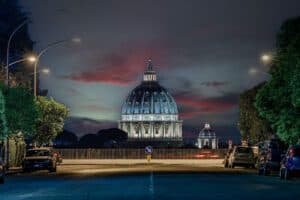
A short street climbing uphill in the Aurelio neighborhood, between garden walls, pines and plane trees. People come for the perspective: at the far end you see the dome of St. Peter’s, which seems to shrink as you walk toward it. There’s no ticket and no opening time.
Scalea del Tamburino
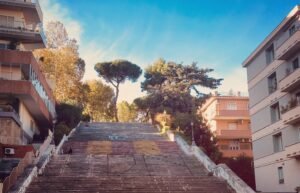
In Trastevere, this ramp of brick and travertine links Viale Glorioso to Via Dandolo. No guidebook puts it on the cover, but for many Romans it’s a well-known address.
Salita dei Borgia
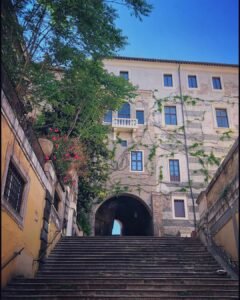
A covered stairway that joins Via Cavour to Piazza San Pietro in Vincoli, in the Monti district. It passes under the arch of an old small palazzo and is open at any hour. Romans also call it the “vicolo scellerato” (wicked alley), and the full write-up tells the story behind that nickname.
Via del Babuino
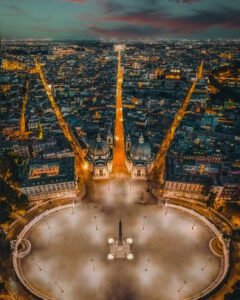
It links Piazza del Popolo to Piazza di Spagna and is the eastern arm of Tridente. It’s just under six hundred meters long and takes ten minutes to walk, fifteen if you stop to look around. Enter from the Flaminio or Spagna stop on Metro Line A and exit at the other end.
Fontanella degli innamorati
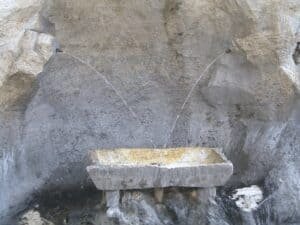
On the right side of the big fountain that closes the square toward Via della Stamperia, there’s a rectangular travertine basin with two spouts. It has no statues and no signs. It was part of the same architectural structure fed by the aqueduct, and Romans gave it this name.
Unusual Places in Rome: Satirical Statues, Legends and Ghosts
These spots only make sense with the story that goes with them. The full write-ups tell each one in full.
The Talking Statues of Rome
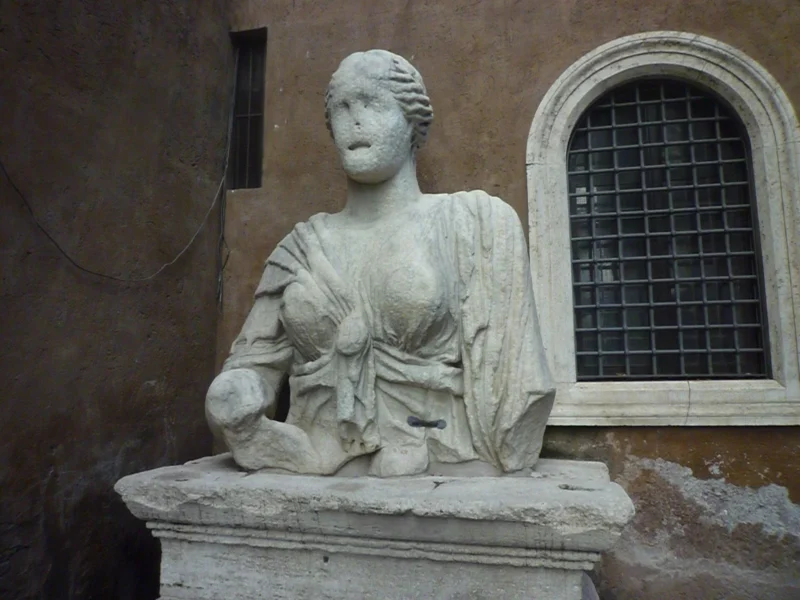
These are six sculptures on which, since the 1500s, Romans secretly posted satirical notes against popes and the powerful: Pasquino, Marforio, Madama Lucrezia, Abate Luigi, Babuino and Facchino. Five are reused ancient fragments. Only Facchino was made as a sixteenth-century fountain.
Pasquino
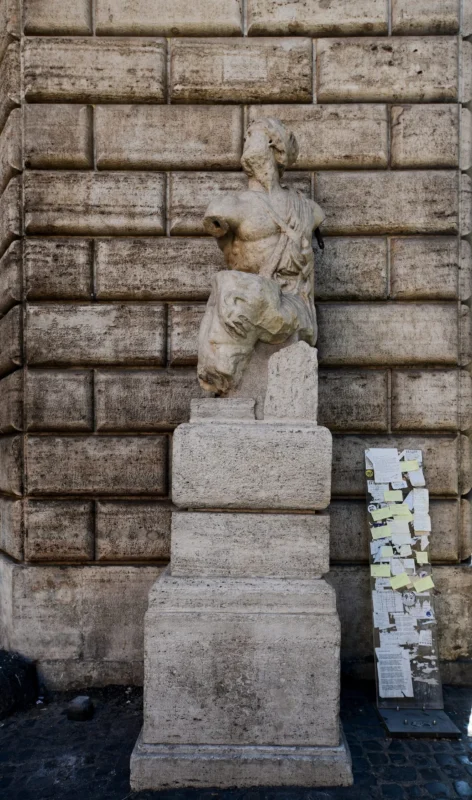
This marble torso sits at the northwest corner of Palazzo Braschi, about fifty meters from Piazza Navona. The word “pasquinade” comes from him. The marble is a fragment of a Greek group of which at least fifteen Roman copies are known, and archaeologists still debate the subject.
Obelisco della Minerva
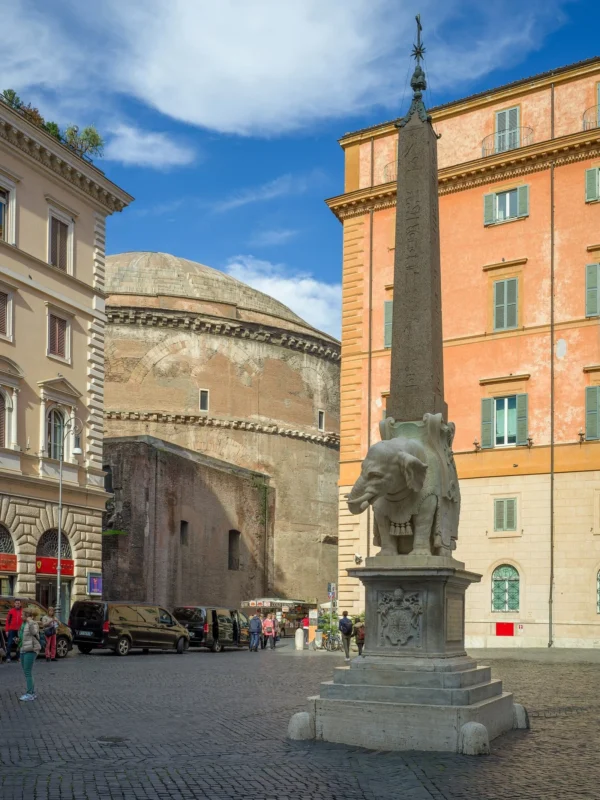
It’s the smallest of Rome’s thirteen ancient obelisks: red granite, a little over five and a half meters tall, standing on the back of a small marble elephant. The design is by Bernini, the execution by Ercole Ferrata, and it was unveiled in 1667. Romans call it the “pulcino della Minerva” (Minerva’s chick).
Rome’s ghosts: legends and places
The write-up makes clear right away that these are tales, not verified apparitions. One of them is that of Beatrice Cenci, executed on September 11, 1599: the execution is documented, the ghost is not. The text explains what these stories were for in taverns and on church squares.
Leaning Tower of Rome
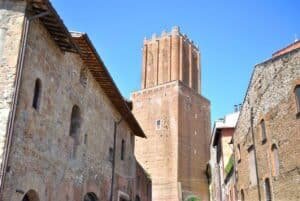
This is Torre delle Milizie, a little over fifty meters tall, above the Markets of Trajan. It leans because the ground gave way and a fourteenth-century earthquake took off the top floor. The story of Nero watching Rome burn from here is false.
Porta Alchemica of Piazza Vittorio
It stands in the northern corner of Nicola Calipari garden in the Esquilino district, near the Vittorio Emanuele stop on Metro Line A. You can see it through the fence in any daylight. To enter the enclosure you need a guided visit. For the Trophies of Marius, the Capitoline Superintendency lists €4.00 full price and €3.00 reduced.
Churches, Mithraea and Sanctuaries Off the Beaten Path
Mouth of Truth
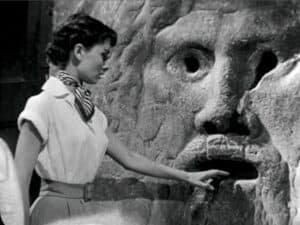
It’s set into the wall of the portico of the basilica of Santa Maria in Cosmedin, at Piazza della Bocca della Verità 18. Admission is free and no reservation is needed. For the photo with your hand in the mouth you wait in line under the portico, and in peak months the wait can top half an hour.
Skull of Saint Valentine
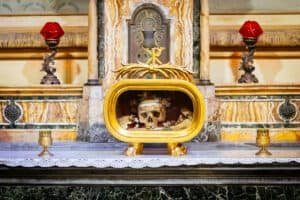
The skull of Saint Valentine is kept in the same basilica. Admission is free, and the church is in active use, not a museum. The official website lists opening from 9:30 a.m. to 5:50 p.m. and closing on January 1. Hours vary with services, so check again before you go.
Basilica of Sant’Eustachio
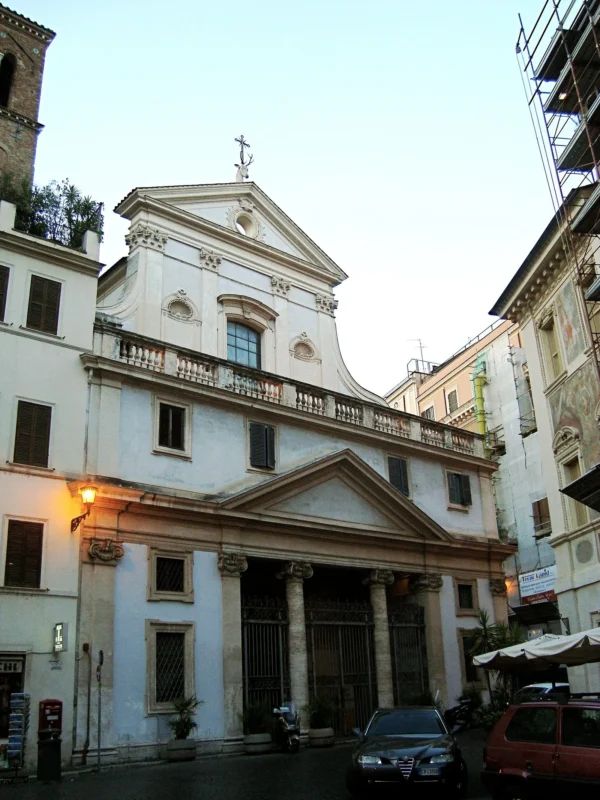
You recognize it by the stag’s head with a cross between its antlers at the top of the pediment. It sums up the legend that gives the church its name and is also the coat of arms of the family that paid for much of the eighteenth-century rebuilding. The full write-up also explains the link with the eighth district.
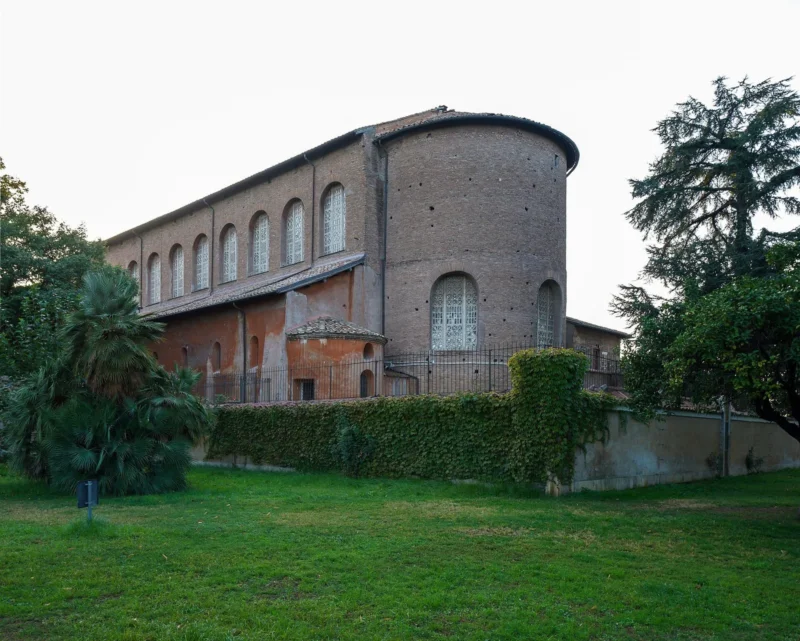
Sant’Agnese in Agone
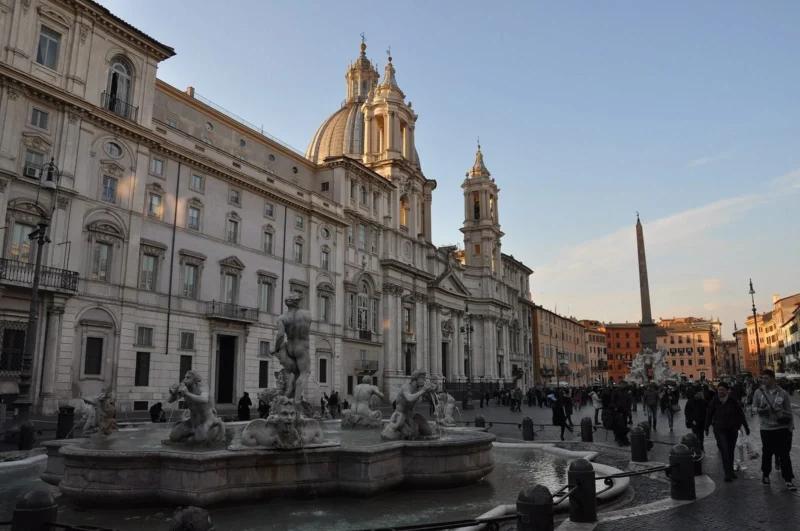
It closes the west side of Piazza Navona, with its recessed facade and twin bell towers. It stands where it does because, five meters below, there are Roman-era rooms where tradition places the martyrdom of a girl of twelve or thirteen. The legend of the statue that raises its arm is impossible given the dates.
Basilica of Santa Prisca and Mithraeum
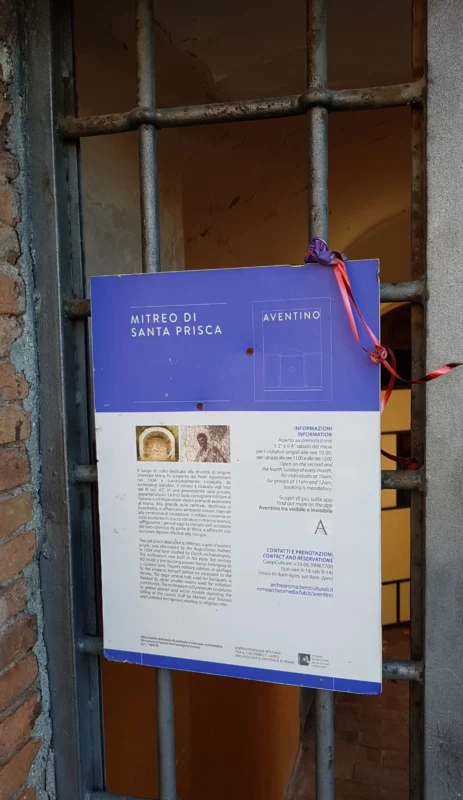
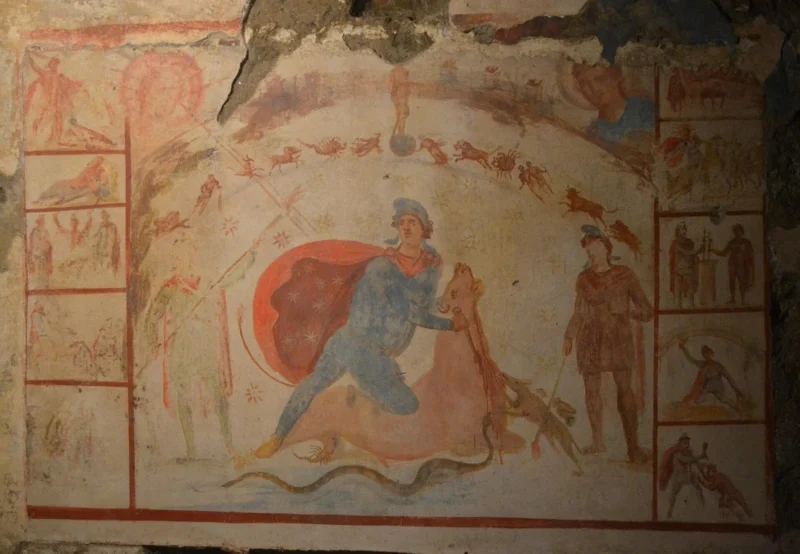
On the Aventine, above ground there’s a titular church of late antique origin. Below, down a side stairway, you reach a Mithraic sanctuary with frescoes of the seven grades of initiation. The complex came to light by chance in 1934. For visits to the Mithraeum, the Aventine guide notes suspensions: check first.
Barberini Mithraeum
It lies under a twentieth-century building between Via delle Quattro Fontane and Via San Nicola da Tolentino, near the Barberini stop on Metro Line A. Discovered in 1936, it preserves a large fresco of the bull-slaying scene (tauroctony) and ten side panels. The full write-up links it to guided visits.
Aventine: Things to See, from the Orange Garden to the Keyhole
You can tour the hill on foot in half a day, and the main stops cost nothing. The trouble is the hours: the Rose Garden opens only during the bloom, the Orange Garden changes its hours four times a year, and the garden of the Villa del Priorato di Malta can only be seen on an organized visit.
Towers, Bridges and Day Trips
Ponte Fabricio
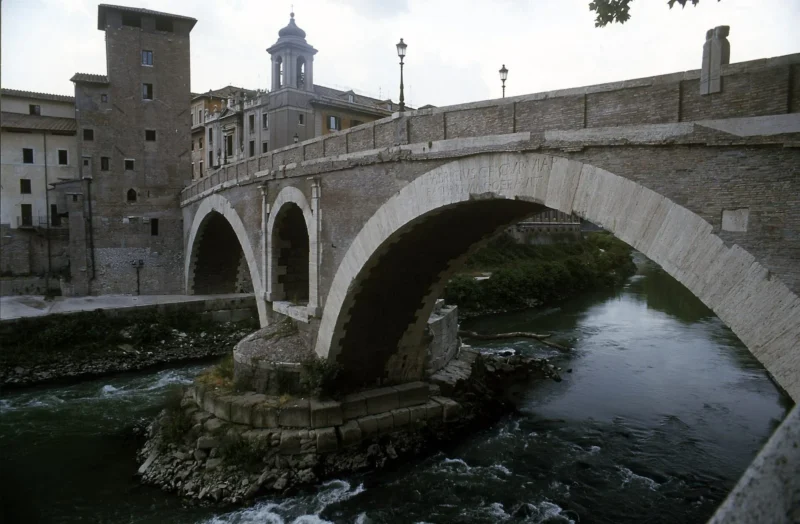
It links the Jewish Ghetto to Tiber Island and was built in 62 BC by Lucius Fabricius, whose name appears four times in the inscription. It has two arches with a span of about 24.5 meters. You can cross it in under a minute, for free, at any hour.
Torre dei Caetani
It stands at the northeastern end of Tiber Island, where the bridge reaches the island. It’s a tall, narrow medieval brick tower, also called the tower of the Pulzella (the maiden) for a relief showing a woman’s face. Who the woman is isn’t known: what’s told about her is folklore.
Spazio Fontanella
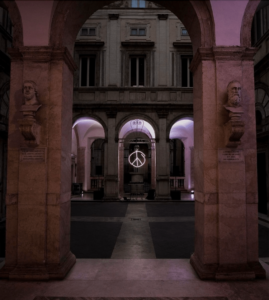
This is a co-working space in the Ponte district, a few dozen meters from the Tiber. By day it works as a shared office. In the evening it hosts concerts, DJ sets, exhibitions, workshops and pop-ups. The program changes, so check each time.
Sanctuary of Juno Sospita in Lanuvio
It’s in the Castelli Romani area and takes about fifty minutes to reach by car. It asks for a little preparation: the write-up reconstructs the porticoes, the ninth-century BC hut village and the rite of the girl who entered the gallery with a cake for the serpent.
Santuario della Mentorella
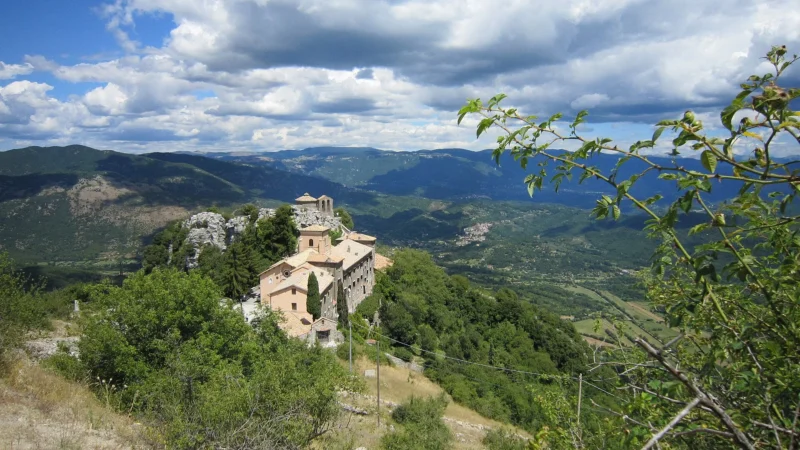
It’s at Via della Mentorella 1, in Capranica Prenestina, on Monte Guadagnolo. Admission is free. On October 29, 1978, Karol Wojtyła went there, two weeks after his election as pope. For information, call 06 95471899.
Practical Tips for Choosing
- Short on time: in the center, stick to Orlando Furioso, Salita dei Borgia, Fontanella degli innamorati and the talking statues.
- Half a day: the Aventine, with Santa Prisca, and the area around Ponte Fabricio and Torre dei Caetani.
- A full day: Lanuvio or Mentorella, both outside Rome.
- Churches: hours change with services, so check the official website.
Many of the unusual places in Rome described here are streets that are always open. For sites with guided visits or seasonal hours, the full write-up says where to check. You’ll find more ideas in our Rome attractions section.
FAQ: Unusual Places in Rome
Which unusual places in Rome can I visit for free?
Free to visit are the Orlando Furioso lane, Salita dei Borgia, Via del Babuino, Ponte Fabricio and the Mouth of Truth. Mentorella is also free to enter.
What are the opening hours of the basilica with the Mouth of Truth?
The official website of the basilica of Santa Maria in Cosmedin lists opening from 9:30 a.m. to 5:50 p.m. and closing on January 1. Hours can change with services, so check again before you go.
Can you go inside the Porta Alchemica?
You can see the Porta Alchemica through the fence. To enter the enclosure you need a guided visit. For the Trophies of Marius, the Capitoline Superintendency lists €4.00 full price and €3.00 reduced.
Which unusual places in Rome require a trip out of town?
The Sanctuary of Juno Sospita in Lanuvio, about fifty minutes away by car, and the Santuario della Mentorella, in Capranica Prenestina.
Are the legends about these places true?
It depends. The story of Nero on Torre delle Milizie is false, while the execution of Beatrice Cenci in 1599 is documented. The full write-ups separate fact from tradition.
All the places in this guide (24)
 Orlando Furioso and the scar on the columnHistoric CenterOrlando Furioso and the scar on the column - Vicolo della Spada d'Orlando 00186 Roma RM
- Via PiccolominiAurelioVia Piccolomini - Via Nicolò Piccolomini
- Scalea del TamburinoRomeScalea del Tamburino
Viale Glorioso,
Roma
Staircase linking upper Trastevere to lower Trastevere, dedicated to a young dr…
- Salita dei BorgiaHistoric CenterSalita dei Borgia - Salita dei Borgia, 00184 Roma RM
- Via del BabuinoHistoric CenterVia del Babuino - Via del Babuino Rome
- Fontanella degli innamoratiHistoric CenterCouples who drink at the Fontanella degli innamorati will stay in love and faithful forever.
- The Talking Statues of RomeRomeThe talking statues of Rome are six sculptures scattered around the historic center on which, from the 16th century onward, Romans secretly posted…
- PasquinoRomePasquino is the marble torso propped against the northwest corner of Palazzo Braschi, in the square that since the 16th century has ended up taking…
- Obelisco della MinervaRomeThe Minerva Obelisk is the smallest of Rome's 13 ancient obelisks and, in all likelihood, the most photographed in relation to its height: a red gr…
- Rome’s ghosts: legends and placesThe ghosts of Rome are not apparitions. They are tales. None of the stories that follow has ever been verified, and none ever will be, because none…
- Leaning Tower of RomeRione MontiLeaning Tower of Rome - Salita del Grillo, 37, 00187 Rome RM
- Porta Alchemica of Piazza VittorioEsquiline HillPorta Alchemica of Piazza Vittorio - Piazza Vittorio Emanuele II, 00185 Rome RM
- Mouth of TruthAventine HillThe Mouth of Truth is an enormous marble mask, famous all over the world, whose legend says it could bite the hand of anyone who puts it in its mouth.
- Skull of Saint ValentineHistoric CenterSkull of Saint Valentine - Piazza della Bocca della Verità, 18, 00186 Roma RM
- Basilica of Sant’EustachioRomeThe Basilica of Sant'Eustachio is less than 100 meters from the Pantheon, in the block between Via della Palombella, Via di Sant'Eustachio and the…
- Sant’Agnese in AgoneRomeSant’Agnese in Agone is the church that closes the west side of Piazza Navona, wedged between the Pamphilj palace and the houses that follow the cu…
- Basilica of Santa Prisca and MithraeumRomeThe Basilica of Santa Prisca and Mithraeum occupies a quiet corner of the Aventine, on a small tree-lined square a few hundred meters from the Circ…
- Barberini MithraeumRomeThe Barberini Mithraeum is one of the best-preserved Mithraic sanctuaries in Rome and, together with the Mithraeum of Santa Prisca on the Aventine,…
- Aventine: Things to See, from the Orange Garden to the KeyholeAventine HillThe Aventine is the hill of Rome where the noise stops. You climb about 100 meters from the Circus Maximus or from the lungotevere, and within five…
- Ponte FabricioRomePonte Fabricio connects the left bank of the Tiber, at the level of the Jewish Ghetto, to the northern tip of Tiber Island, and it is the best-pres…
- Torre dei CaetaniRomeThe Torre dei Caetani stands at the northeastern end of Tiber Island, exactly where Ponte Fabricio unloads onto the island those arriving from the…
- Spazio FontanellaRomeSpazio Fontanella
Via dell’Arco della Fontanella , 3
Roma
A young co-working space in the center of Rome that also lends it…
- Sanctuary of Juno Sospita in LanuvioLanuvio (RM)The Sanctuary of Juno Sospita in Lanuvio was the main center of worship of the Goddess Juno
- Santuario della MentorellaCapranica Prenestina (RM)Santuario della Mentorella is at Via della Mentorella 1, in Capranica Prenestina, on the flank of Monte Guadagnolo, and it is run by the fathers of…