Don Quixote at Teatro dell’Opera di Roma, June 4 to June 11, 2027
In short. Don Quixote at Teatro dell'Opera di Roma, the three-act ballet to music by Ludwig Minkus in Laurent Hilaire's choreography, is staged at Teatro Costanzi, the company's main hall in Piazza Beniamino Gigli 7, from June 4 to 11, 2027, with eight performances.

Don Quixote at Teatro dell'Opera di Roma, the three-act ballet to music by Ludwig Minkus in Laurent Hilaire's choreography, is staged at Teatro Costanzi, the company's main hall in Piazza Beniamino Gigli 7, from June 4 to 11, 2027, with eight performances. Opening night is Friday, June 4 at 20:00. Then come Saturday 5 at 15:00 and 20:30, Sunday 6 at 16:30, Tuesday 8, Wednesday 9, Thursday 10 and Friday 11 at 20:00. The guest artists are Marianela Nuñez and Patricio Revé on June 4 and 6, Madeleine Woo and Daniil Simkin on June 8 and 10. Martin Yates conducts. You get there by metro A, Repubblica Teatro dell'Opera stop, or by the buses on Via Nazionale (H, 40, 60, 64, 70, 71, 170, 116T) and Via Depretis (70, 71). Prices are published on the theater's official website. Tickets are sold at the box office window in Piazza Beniamino Gigli 1 and on the authorized presale network listed on the official show page.
Language: a ballet, a performance based on dance and music. No English version is announced, and any spoken parts are in Italian.
It's the return of a production Teatro dell'Opera wanted and built for its own Ballet Company, and which since 2017 has become one of the house titles. This time it comes with two pairs of top-level guests and with sets and costumes by a new team.
Don Quixote at Costanzi: the eight performances and the cast
Teatro dell'Opera di Roma's Don Quixote has eight performances between June 4 and 11, 2027, with two performances on Saturday, June 5. The theater assigns four dates to the subscription series and leaves the others to open sale.
The full calendar
- Friday, June 4, 20:00: opening night, series A. Guests Marianela Nuñez and Patricio Revé.
- Saturday, June 5, 15:00: series D.
- Saturday, June 5, 20:30.
- Sunday, June 6, 16:30: series E. Guests Marianela Nuñez and Patricio Revé.
- Tuesday, June 8, 20:00: series B. Guests Madeleine Woo and Daniil Simkin.
- Wednesday, June 9, 20:00: series C.
- Thursday, June 10, 20:00. Guests Madeleine Woo and Daniil Simkin.
- Friday, June 11, 20:00.
The guest couples
On June 4 and 6 Kitri and Basilio are Marianela Nuñez and Patricio Revé. On June 8 and 10 Madeleine Woo and Daniil Simkin. At the other performances the roles go to the artists of Teatro dell'Opera: the official page lists the foundation's Orchestra, Étoiles, Principal Dancers, Soloists and Ballet Company. If you want to see a specific couple, choose the date accordingly.
The artistic team
Martin Yates conducts the orchestra. The choreography is by Laurent Hilaire, with Gillian Whittingham as choreography assistant. Sets are by Vladimir Radunsky and A.J. Weissbard, costumes by Vladimir Radunsky, lighting by A.J. Weissbard. The production is by Teatro dell'Opera di Roma, in a version inspired by Mikhail Baryshnikov's original production for American Ballet Theatre, after Marius Petipa and Alexander Gorsky.
Don Quixote, the ballet by Minkus and Petipa
Don Quixote is a ballet to music by Ludwig Minkus based on Miguel de Cervantes's novel, in the most famous version created by Marius Petipa for the Bolshoi Theatre in Moscow, where it premiered on December 26, 1869. Since then it has been one of the best-loved titles of the classical repertoire, for its virtuosity and Spanish color.
The story
Don Quixote, his head full of chivalric romances, sets off on an adventure with Sancho Panza. The two frame the real plot, which is that of the beautiful Kitri, in love with Basilio, a young man from the village. Her father wants to marry her to the rich Gamache. The two young people run away and take refuge in a Romani camp, while Don Quixote fights the windmills and dreams of his Dulcinea among the dryads. In the end Basilio pretends to die to wrest consent to the marriage, and everything ends in celebration.
Before Petipa
Cervantes's novel reached ballet much earlier: Franz Hilverding staged it in Vienna in 1740, the Paris Opéra gave a version in 1743, Jean Georges Noverre another in Vienna in 1768. La Scala in Milan also had its Don Quixote in 1783, by ballet master Paolo Franchi to music by Angelo Tarchi.
Gorsky, Drigo and the 20th-century additions
In 1900 Alexander Gorsky restaged the ballet at the Bolshoi with an extraordinary cast: Kitri was Mathilde Kschessinska, Sancho Panza Enrico Cecchetti, and in the minor roles were Anna Pavlova and Tamara Karsavina. Riccardo Drigo composed for Kschessinska the famous Kitri fan variation in the final pas de deux, and Gorsky added the Grand pas des toreadors taken from another Petipa ballet, Zoraïa. These additions are still in almost every production today.
Why people love it
Don Quixote is the ballet of physical joy: jumps, virtuosity, fans and Spanish color. There's no tragedy, and the audience knows it. It's the ideal title for first-time ballet-goers and for those who have always gone.
Laurent Hilaire's version, from Baryshnikov to Rome
Laurent Hilaire's Don Quixote is inspired by the version Mikhail Baryshnikov created for American Ballet Theatre, first presented on March 28, 1978 at the Kennedy Center in Washington. It was the director of the Ballet Company Eleonora Abbagnato who wanted it in Rome, with a staging created specifically for the Rome company.
Who Laurent Hilaire is
Hilaire is a former étoile of the Paris Opéra, later head of the Bayerisches Staatsballett in Munich. He has a long relationship with Teatro dell'Opera di Roma: the theater's historical archive records him as choreographer of Le Parc in the 2015-2016 season, of the Swan Lake excerpts for the Nureyev Evening at the Baths of Caracalla in 2016 and of every edition of his Don Quixote.
The Rome editions
The production premiered on November 15, 2017, opening the foundation's 2017-2018 season. It returned in the 2018-2019 season, with eight performances from October 15 to 20, 2019, and then in the 2022-2023 season. Rai 5 has broadcast it several times. The 2027 return is therefore the fourth edition of a title the Rome audience knows well.
A Don Quixote in color
The theater's presentations and the specialist press have called this version colorful and cartoonish, theatrical and cinematic. It's a Don Quixote that focuses on rhythm and irony, closer to comedy than to grand imperial ballet: exactly the spirit of the title.
A curious fact about Don Quixote at Teatro dell'Opera di Roma, June 4 to June 11, 2027
In Gorsky's first version at the Bolshoi, in 1900, the comic role of Sancho Panza was danced by Enrico Cecchetti, the great Italian master of classical technique. It's a detail that links Don Quixote to the Italian school of ballet more than people think.
In Gorsky's Don Quixote Cecchetti was Sancho, the comic character who accompanies the knight: a role that calls for comic timing more than virtuosity, and that great performers know how to turn into a memorable part.
The second curious fact concerns the fan. Kitri's fan variation, which the audience waits for in the final pas de deux, isn't by Minkus: it was composed by Riccardo Drigo, also Italian, for Mathilde Kschessinska. When Marianela Nuñez or Madeleine Woo open the fan on the Costanzi stage, the music accompanying them will be by an Italian composer, not by the author of the score.
The third: the Grand pas des toreadors, one of the most spectacular moments of the first act, comes from another Petipa ballet, Zoraïa, from 1881. The Don Quixote we see today is a collage layered over more than a century, and that's exactly why every choreographer, from Baryshnikov to Hilaire, feels free to rework it.
Marianela Nuñez, Daniil Simkin and the Don Quixote guests
The two guest couples of the Rome Don Quixote are Marianela Nuñez and Patricio Revé, on June 4 and 6, and Madeleine Woo and Daniil Simkin, on June 8 and 10. Nuñez and Simkin, in particular, have tied an important part of their careers to this very title.
Marianela Nuñez
Born in Buenos Aires on March 23, 1982, Nuñez entered Teatro Colón ballet school at six and at 14 was already dancing with the company alongside Maximiliano Guerra. At 15 she auditioned for the Royal Ballet on tour in Los Angeles, without speaking English, and got a contract. Because of British labor laws she first had to attend the Royal Ballet School. She was promoted to first soloist in 2000. In 2001 she replaced the injured Leanne Benjamin as Kitri in Don Quixote, with Carlos Acosta as Basilio, and the following year she became a principal. In 2013 she won the Laurence Olivier Award. The Critics' Circle named her best female dancer in 2005, 2012, 2018 and 2022. In 2018 she celebrated 20 years at the Royal Ballet, and director Kevin O'Hare called her one of the greats of her generation. The Guardian wrote of her Don Quixote as a lesson in rubato, with phrases stretched to the limit and then devoured with abandon.
Daniil Simkin
Born in Novosibirsk on October 12, 1987 and raised in Wiesbaden, Germany, Simkin is the son of two former Bolshoi dancers and was his mother's first student. In 2006 he won the senior gold medal at the USA International Ballet Competition in Jackson and joined the Wiener Staatsballett, where he became first soloist the following year. In 2008 he moved to American Ballet Theatre, the company for which Baryshnikov created his Don Quixote. He was promoted to principal in December 2012 and among his roles is Basilio himself. Since 2018 he has also been a principal at the Staatsballett Berlin. The New York Times described him as a dancer happiest in the air. In 2021 he founded Studio Simkin, a production company dedicated to digital and interdisciplinary ballet projects.
Patricio Revé and Madeleine Woo
Completing the guest couples are Patricio Revé, Nuñez's partner, and Madeleine Woo, Simkin's partner. At the other four performances Kitri and Basilio are danced by the artists of Teatro dell'Opera di Roma.
Teatro Costanzi: the hall of Don Quixote
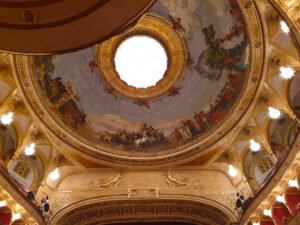
Teatro Costanzi today has 1,560 seats across the orchestra level, three tiers of boxes, balcony and gallery, under a dome frescoed by Annibale Brugnoli from Perugia. At its inauguration, in 1880, it could hold up to 2,212 spectators.
A hall like a sound box
The entrepreneur Domenico Costanzi entrusted the project in 1879 to the Milanese architect Achille Sfondrini, a theater specialist, who conceived the horseshoe-shaped hall as a sound box. Construction lasted 18 months.
Where to sit for ballet
For dance the view matters more than for opera: the lines of the corps de ballet, the diagonals, the jumps read better from above and from the center. The central balcony and the first gallery offer the overall picture. The central orchestra level gives you closeness to the soloists. In the side boxes, especially in the back seats, part of the stage stays hidden: for Don Quixote, where the action moves constantly, it's a sacrifice you notice.
The foundation's other venues
Teatro dell'Opera also runs Teatro Nazionale at Via del Viminale 51 and, in summer, the Baths of Caracalla. For the theater's full profile there's our page on Rome Opera House.
Something nobody tells you about Don Quixote at Teatro dell'Opera di Roma, June 4 to June 11, 2027
Hilaire's 2027 Don Quixote has new sets and costumes: in previous editions the sets were by Francesco Zito and Antonella Conte, the costumes by Zito and the lighting by Vinicio Cheli, while now sets, costumes and lighting are by Vladimir Radunsky and A.J. Weissbard. If you've already seen the production in 2017, 2019 or 2022, you'll find the same choreography in a different visual world.
It's a detail the playbill states without underlining it, and yet it's the most interesting news of the revival. The choreography is still Hilaire's, restaged with the assistance of Gillian Whittingham. What changes is the setting, the colors, the way the light tells Cervantes's Spain. For a ballet the press has always described as colorful and cartoonish, the change of set and costume designer is anything but neutral.
Second thing: at Costanzi you can't enter the orchestra level or the numbered seats in the balcony and gallery once the show has started. Latecomers wait in the foyer. With a ballet that gets going right away, missing the start means missing the entrance of the leads.
Third: on Saturday, June 5 there are two performances, at 15:00 and 20:30. They're the only two dates in the whole run when those coming from outside Rome can choose between an afternoon with a same-day return and a full evening.
My tip for Don Quixote at Teatro dell'Opera di Roma, June 4 to June 11, 2027
Choose the date based on the couple: June 4 or 6 for Marianela Nuñez, June 8 or 10 for Daniil Simkin. They're two performers who have made Don Quixote one of their signature pieces, and it's rare to see them in Rome in the same title, a few days apart.
Nuñez built her rise at the Royal Ballet precisely with Kitri, in 2001, and British critics have praised her musical phrasing in this role. Simkin has danced Basilio at American Ballet Theatre, the company for which Baryshnikov created the version Hilaire's descends from: seeing him at Costanzi in this production has something of a homecoming.
If instead your goal is the ballet itself, the June 5, 9 and 11 performances give the lead roles to the artists of the Rome company: a good chance to see the Ballet Company of Teatro dell'Opera in the title built for it.
For families, finally, Sunday 6 at 16:30 combines a convenient afternoon and the Nuñez-Revé couple: it's the date I'd recommend if you're bringing a young person to their first ballet.
Tickets for Don Quixote at Teatro dell'Opera
Tickets for Don Quixote are sold at Teatro dell'Opera box office window, in Piazza Beniamino Gigli 1, and on the authorized presale network listed on the official show page. Prices by section are published in the Prices section of the official website.
The box office
The box office is open Monday to Saturday from 10:00 to 18:00 and Sunday from 9:00 to 13:30, closed on public holidays. Tickets for that day's show are sold at the theater from an hour before the start. At the window you can pay in cash, by debit card, with the main credit cards and with the Carta del Docente and the Carta della Cultura.
Authorized channels
The theater asks you to use only the channels authorized by the foundation and takes no responsibility for purchases made elsewhere. With two guests this popular, some dates will sell out early.
Last minute and young people
For some evenings, at the theater's discretion, there's a 25 percent last-minute discount on tickets sold from an hour before the start, balcony and gallery excluded. For under-30s there's the Carta Giovani Opera: the conditions for the 2026/2027 season are on the theater's website.
Another well-known fact, yet one that's rarely mentioned
Teatro Costanzi hosted Diaghilev's Ballets Russes, brought to Rome by the soprano Emma Carelli, who from 1912 ran the Impresa Costanzi for 14 years. Costanzi is always remembered as the cradle of verismo opera, less often as a theater of great 20th-century dance.
Carelli was an exceptional figure: a woman at the head of a major opera house in the early decades of the last century, who brought to Rome La fanciulla del West, Turandot, Il trittico, Parsifal and indeed Diaghilev's company, the one that had revolutionized ballet all over Europe. The bond between Costanzi and international dance was born there.
It's a thread that runs all the way to today's Don Quixote. Hilaire's production descends from Baryshnikov's version, which in turn descends from Gorsky and Petipa, that is, from the same Russian tradition Diaghilev's dancers came from.
When the curtain rises, then, Costanzi isn't hosting a foreign title: it's rediscovering a repertoire it has known for more than a century.
How to get to Teatro dell'Opera for Don Quixote
Teatro Costanzi is reached by metro A, Repubblica Teatro dell'Opera stop, a few minutes' walk from Piazza Beniamino Gigli. It's the simplest way, at any time.
By metro
Line A stops at Repubblica Teatro dell'Opera, in Piazza della Repubblica. If you're coming from Termini station you can take the same line or walk.
By bus
- Via Nazionale: H, 40, 60, 64, 70, 71, 170, 116T.
- Via Depretis: 70, 71.
- Via Cavour: 16, 75, 84, 150 (holidays), 360, 590, 649, 714.
- Termini station: 16, 38, 75, 86, 90, 217, 310, 360, 649, 714.
By taxi
At the theater entrance there's a taxi service for the audience. During the intermissions the house staff take bookings for the ride home. For evening performances it's the solution I recommend.
By car
I advise against driving: the area between Via Nazionale, Via del Viminale and Termini is central and busy, and the theater doesn't list its own parking. If you're coming from out of town, leave your car at a park-and-ride along line A.
The right photo to take at Don Quixote at Teatro dell'Opera di Roma, June 4 to June 11, 2027
At Costanzi you can't take photos in the hall, with or without flash: the right photo of your Don Quixote is taken outside, in Piazza Beniamino Gigli. It's the theater's rule and it applies to the final applause too, however strong the temptation after the pas de deux.
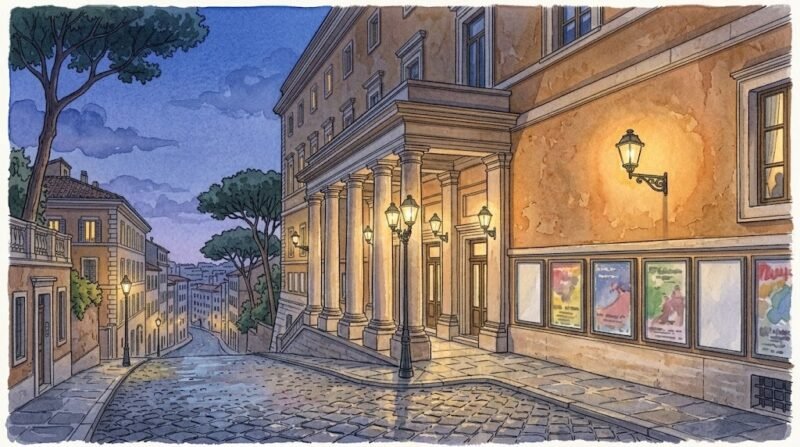
The square is the one onto which Marcello Piacentini moved the entrance, in the renovation that followed the City's purchase of the theater in 1926. In early June, for the 20:00 performances, you arrive in full daylight, and the facade photographs well against the bright Roman evening sky. For the Saturday 20:30 performance you come out in the dark, and the lit facade with the audience streaming out is the liveliest image.
The tip is simple: photograph the people. A little girl in her party dress at her first ballet, a couple of enthusiasts with the program in hand: those are the photos you'll look at again.
The hall, with Brugnoli's dome and the great crystal chandelier, is an image to take home with your eyes. If you want to see it with the lights on, you can book one of the guided tours the theater organizes.
Some important events that happened here in history
Teatro Costanzi was inaugurated on November 27, 1880 with Rossini's Semiramide, in the presence of Umberto I and Queen Margherita, and became Teatro dell'Opera di Roma in 1946. In between are two world premieres that made opera history.
On May 17, 1890 Pietro Mascagni's Cavalleria rusticana premiered here. On January 14, 1900 Giacomo Puccini's Tosca. In 1905 the City Council set up the Municipal Orchestra, which in effect became Costanzi's orchestra. From 1907 management passed to the impresario Walter Mocchi, and from 1912 to his wife Emma Carelli, who brought Diaghilev's Ballets Russes to Rome.
In 1926 the City bought the theater, which became Teatro Reale dell'Opera and was renovated by Marcello Piacentini. On February 27, 1928 came the second inauguration with Arrigo Boito's Nerone, under the new chandelier of 27,000 crystal drops. In 1935 the permanent Chorus was founded at Tullio Serafin's wish. In 1958 Piacentini carried out the final restyling ahead of the 1960 Olympics.
For dance, the recent dates are those of Don Quixote itself: on November 15, 2017 Hilaire's production opened the foundation's season, a sign of how much the theater was betting on its own Ballet Company. In June 2027 the title returns for the fourth time.
Who has passed through Don Quixote at Teatro dell'Opera di Roma, June 4 to June 11, 2027
Through Teatro Costanzi have passed Pietro Mascagni, Giacomo Puccini and Ottorino Respighi, whom the theater names as the musicians who shaped its destiny, and Diaghilev's Ballets Russes, brought to Rome by Emma Carelli. The list of leading figures in its history is long and varied.
On the podium have stood Victor de Sabata, Gianandrea Gavazzeni, Herbert von Karajan, Carlo Maria Giulini, Karl Böhm, Zubin Mehta, Georges Prêtre, Georg Solti, Giuseppe Sinopoli, Mstislav Rostropovich, Riccardo Muti and Daniele Gatti. Marcello Piacentini reworked the building twice. Tullio Serafin founded the permanent chorus.
And there's a name nobody expects: among the band players added to the orchestra in 1935, the theater's history recalls Pietro Sordi, bass tuba, the father of Alberto Sordi.
For dance, Hilaire's Don Quixote has brought to Costanzi, in past editions, guest étoiles such as Evgenia Obraztsova, Isaac Hernández and Davide Dato, alongside Rebecca Bianchi, Susanna Salvi and Alessio Rezza of the Rome company. In June 2027 the list grows with Marianela Nuñez, Patricio Revé, Madeleine Woo and Daniil Simkin.
Around Costanzi: the Viminale, Repubblica and the Esquiline
Teatro Costanzi sits between Via Nazionale, Via del Viminale and Via Depretis, a few minutes' walk from Piazza della Repubblica and Termini station. If you arrive an hour early, you have some of the most interesting places of ancient and late 19th-century Rome close at hand.
Piazza della Repubblica and the Baths of Diocletian
From the metro you come out in Piazza della Repubblica, with the Basilica of Santa Maria degli Angeli e dei Martiri and the remains of the Baths of Diocletian. Toward Termini there's Palazzo Massimo alle Terme, home of Museo Nazionale Romano: an afternoon at the museum and the ballet in the evening without taking any transportation.
A church a few steps away
On the opposite side of the square you reach Santa Maria della Vittoria in a few minutes, a short stop to fill the half hour before the theater opens.
Toward Monti
Walking down Via Nazionale you pass Palazzo delle Esposizioni. Further down begins the Monti district, with its narrow streets and evening life.
Where to eat before and after Don Quixote
Around Teatro dell'Opera the options are concentrated on Via Nazionale, Via del Viminale, the streets toward Termini and the Monti district. In the theater food and drinks are allowed only at the inside bars, so plan dinner before or after.
Before the show
For the 20:00 performances you can have an early dinner, at 18:30, around Via Nazionale or the Viminale. For the Saturday 15:00 performance, a light lunch and then the theater.
After the show
After the Sunday afternoon and Saturday 15:00 performances, the Monti district is the most natural choice: you walk down and find osterias, wine bars and pizzerias. After the evening performances it's best to book, because many kitchens close.
The criterion
Avoid places with menus in five languages posted on the door around Termini, and venture a few streets toward Monti. For the same price, you'll notice the difference.
House rules and accessibility at Teatro Costanzi
At Teatro dell'Opera di Roma umbrellas, hats, bags, helmets and cameras must be left in the cloakroom, and phones, photos and recordings are forbidden in the hall. On opening night a dark suit is appreciated. At the other performances the theater doesn't set a dress code.
Accessibility
For reduced mobility needs, contact the box office before buying, by phone at 06 48160255 or 06 4817003 or at ufficio.biglietteria@operaroma.it. The theater excludes the gallery from the accessible route of its guided tours: if you have mobility difficulties, avoid it.
With children
Don Quixote is one of the ballets best suited to children: no tragedy, lots of color, a love story with a happy ending and comic moments with Don Quixote and Sancho. The theater doesn't publish age guidelines. In our opinion it works well from age seven or eight up, with the plot told beforehand. The afternoon performances are the most suitable.
June in Rome and the Opera's dance season
Don Quixote closes Costanzi's 2026/2027 ballet season in June, before the summer at the Baths of Caracalla. In the same season the Ballet Company's program includes The Nutcracker at Teatro Nazionale at the end of November, Swan Lake in December, John Neumeier's Mahler Third Symphony in February, Motus in April and Echoes at the Nazionale, and Raymonda in fall 2027.
Early June is also a good time to be in Rome: long days, warm evenings, the city not yet crushed by the heat. A weekend with the ballet on Saturday afternoon and an evening walk between Monti and the Forums is one of the most beautiful ways to experience the center.
Frequently asked questions about Don Quixote at Costanzi
When is Don Quixote staged at Teatro dell'Opera di Roma?
Don Quixote is staged at Teatro Costanzi from June 4 to 11, 2027, with eight performances: Friday 4 at 20:00, Saturday 5 at 15:00 and 20:30, Sunday 6 at 16:30, Tuesday 8, Wednesday 9, Thursday 10 and Friday 11 at 20:00.
Who dances in the Rome Don Quixote?
In Teatro dell'Opera di Roma's Don Quixote the guest artists are Marianela Nuñez and Patricio Revé on June 4 and 6, Madeleine Woo and Daniil Simkin on June 8 and 10. At the other performances the étoiles, principal dancers and soloists of the Rome company dance.
Who choreographed Don Quixote at Costanzi?
The choreography of Don Quixote at Costanzi is by Laurent Hilaire, a former étoile of the Paris Opéra, inspired by Mikhail Baryshnikov's version for American Ballet Theatre, after Petipa and Gorsky. Martin Yates conducts. Sets by Vladimir Radunsky and A.J. Weissbard.
Where can I buy tickets for Don Quixote?
Tickets for Don Quixote are sold at Teatro dell'Opera window in Piazza Beniamino Gigli 1, open Monday to Saturday from 10:00 to 18:00 and Sunday from 9:00 to 13:30, and on the authorized presale network listed on the official show page.
How do I get to Teatro dell'Opera di Roma by public transportation?
Teatro dell'Opera di Roma is reached by metro A, Repubblica Teatro dell'Opera stop, or by the buses running on Via Nazionale (H, 40, 60, 64, 70, 71, 170) and Via Depretis (70, 71). At the exit there's a taxi service for the audience.
Is Don Quixote suitable for children?
Don Quixote is one of the ballets best suited to children: it's a comedy with a happy ending, full of color and virtuosity. At Teatro dell'Opera di Roma the afternoon performances on Saturday 5 at 15:00 and Sunday 6 at 16:30 are the most convenient for families.
Can I enter late at Teatro Costanzi?
At Teatro Costanzi you can't enter the orchestra level or the numbered seats in the balcony and gallery once the show has started: latecomers wait in the orchestra-level foyer. For Don Quixote, arrive at least 20 minutes early, also because of the mandatory cloakroom.
My final tip on Don Quixote
Choose the couple, then the date: Nuñez on the 4th or 6th, Simkin on the 8th or 10th. And if you're bringing someone to their first ballet, don't overthink it: Don Quixote, at Costanzi, in early June, is the safest choice I know.
Article written by the editorial team of Tour Leader Pro, contact them for Private/Corporate/V.I.P. Tours and Experiences.
Planning a trip to Rome? The English-language guides for visiting the city are on ItalyPlanner.com.
Contact Information
Nearby
 Rome Opera House100 m
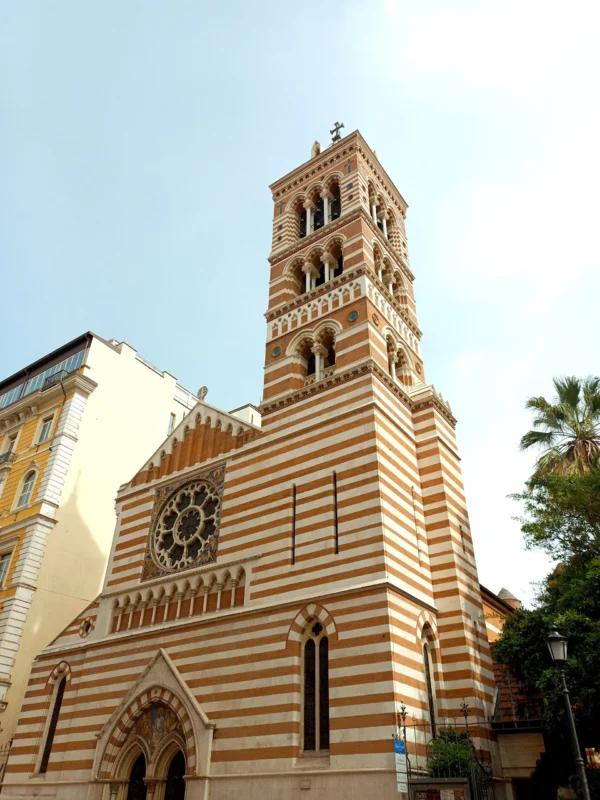
- St. Paul’s Within the Walls100 m
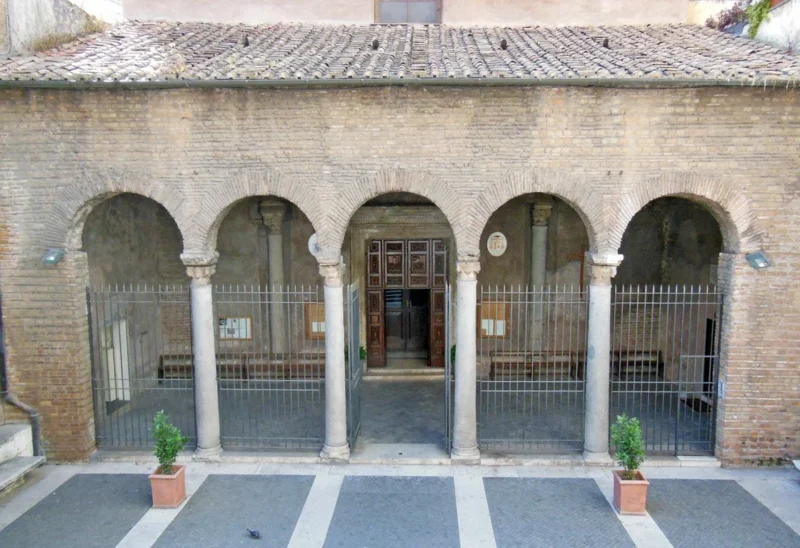
- Basilica of San Vitale100 m
- Teatro Nazionale100 m
- Enrico Fermi Center – Historical Museum of Physics and Study and Research Center at the Viminale200 m
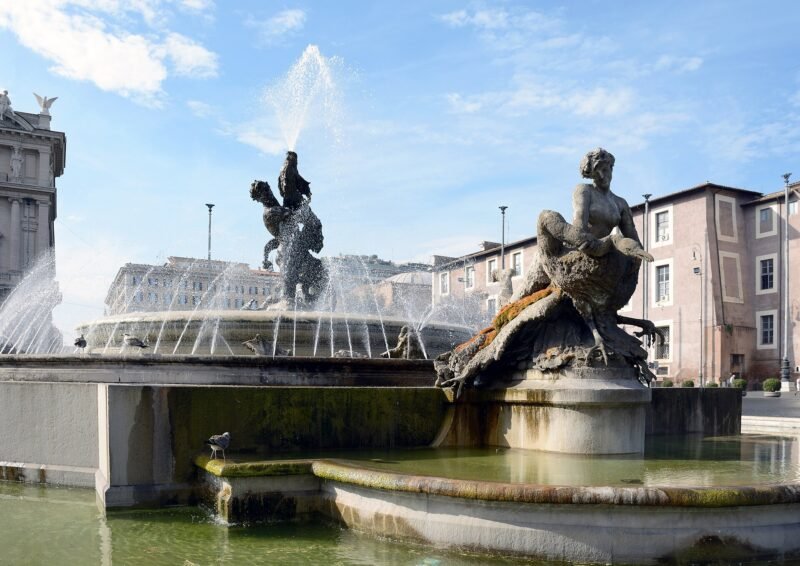
- Fontana delle Naiadi200 m

Upcoming events nearby
- Swan Lake at Teatro dell’Opera di Roma, December 17 to 31, 2026100 m
- Andrea Chénier at the Teatro dell’Opera di Roma, January 17-26, 2027100 m
- Il barbiere di Siviglia with Cecilia Bartoli at Teatro dell’Opera di Roma, May 27, 2027100 m
- Goecke / Robbins / Bausch at Teatro dell’Opera di Roma, from October 27 to November 8, 2026100 m


You might also like
- Mahler’s Third Symphony by John Neumeier at Teatro dell’Opera di Roma, February 4 to 10, 2027
- Motus by Blanc, McGregor and Ekman at Teatro dell’Opera di Roma, March 31 to April 4, 2027
- Raffaella il Musical at Teatro Brancaccio, February 10 to March 6, 2027
- Iphigénie en Tauride at Teatro dell’Opera di Roma, April 18 to 27, 2027
- Il trovatore at Teatro dell’Opera di Roma, June 22 to July 1, 2027
- Seoul Mafia in Tutta colpa del K-pop at Teatro Brancaccio, January 18, 2027