Mahler’s Third Symphony by John Neumeier at Teatro dell’Opera di Roma, February 4 to 10, 2027
In short. Mahler's Third Symphony, a ballet by John Neumeier, plays at Teatro Costanzi, home of the Teatro dell'Opera di Roma, from February 4 to 10, 2027, at Piazza Beniamino Gigli 7, in a new production with the Orchestra, the Corpo di Ballo…

Mahler's Third Symphony, a ballet by John Neumeier, plays at Teatro Costanzi, home of the Teatro dell'Opera di Roma, from February 4 to 10, 2027, at Piazza Beniamino Gigli 7, in a new production with the Orchestra, the Corpo di Ballo and the étoiles of the theater conducted by Simon Hewett. There are six performances: Thursday, February 4 at 20:00 (opening night, series A), Friday the 5th at 20:00 (series B), Saturday the 6th at 18:00 (series D), Sunday the 7th at 16:30 (series E), Tuesday the 9th at 20:00 (series C) and Wednesday the 10th at 20:00. On Wednesday, February 3 at 19:00 there is the preview reserved for young people. Alina Cojocaru is guest artist on February 4, 6 and 9. The theater is reached by Metro Line A, Repubblica Teatro dell'Opera stop, a few minutes on foot. Prices are published on the official Teatro dell'Opera di Roma website. Tickets are bought at the theater's box office or online on the authorized presale network indicated by the foundation.
Language: a performance based on dance, music or visual acts; no English version is announced, any spoken parts are in Italian.
Mahler's Third Symphony at the Costanzi: dates, times and cast
Mahler's Third Symphony is the ballet title with which the Teatro dell'Opera di Roma opens February 2027 at the Costanzi: six performances from February 4 to 10, plus the youth preview on the 3rd. It is a new production of the theater, with choreography, sets, costumes and lighting by John Neumeier.
The performances and series
- Wednesday, February 3, 19:00: youth preview.
- Thursday, February 4, 20:00: opening night, series A, with Alina Cojocaru.
- Friday, February 5, 20:00: series B.
- Saturday, February 6, 18:00: series D, with Alina Cojocaru.
- Sunday, February 7, 16:30: series E.
- Tuesday, February 9, 20:00: series C, with Alina Cojocaru.
- Wednesday, February 10, 20:00.
Who is on stage and in the pit
Simon Hewett conducts. The chorus master is Ciro Visco. The solo vocal part is entrusted to mezzo-soprano Eleonora Filipponi. The choreography assistants are Kevin Haigen, Laura Cazzaniga and Sasha Riabko. On stage are the Orchestra, the Étoiles, the Primi Ballerini, the Solisti and the Corpo di Ballo of the Teatro dell'Opera di Roma, with the participation of the theater's Coro di Voci Bianche.
Why it is an event
Neumeier signs everything: choreography, sets, costumes, lighting. The Costanzi fields in a single evening orchestra, chorus, children's voices, a vocal soloist and the entire dance company. Few productions of the season ask the theater for an effort of this breadth, and few justify it as well.
Gustav Mahler's Third Symphony
Gustav Mahler's Symphony No. 3 in D minor was composed between 1895 and 1896 and performed in full for the first time only in 1902. With an average running time of about 95 minutes, it is the longest among the symphonies of the most performed repertoire. For the ballet it means an evening built on a single, immense score.
Two parts, six movements
In its definitive form the symphony is divided into two parts. The first consists of the first movement alone, Kräftig entschieden, strong and resolute, which lasts 30 or 35 minutes by itself. The second part gathers the other five movements, between 60 and 70 minutes of music: a Tempo di minuetto, a Comodo scherzando, a Molto lento misterioso, a cheeky and lively movement, and a final Adagio, slow, calm, deeply felt.
The deleted titles
As with the first four symphonies, Mahler had planned a sort of program. He had given each movement a title: Pan awakens and summer marches in. What the flowers of the meadow tell me. What the animals of the forest tell me. What man tells me. What the angels tell me. What love tells me. The titles were removed before publication, in 1898. They remain, however, a precious key for those watching the ballet: the symphony rises from nature to man, from man to the angels, from the angels to love.
Eight horns, one voice, two choruses
The first movement opens with a theme entrusted to eight horns in unison. In the fourth and fifth movements Mahler turns to the human voice: the fourth is a lied for voice and orchestra on verses from Friedrich Nietzsche's Zarathustra, the fifth is a short lied drawn from the Wunderhorn, sung by a women's chorus with a children's chorus imitating the sound of bells, to represent the angels. That is why at the Costanzi, for a ballet, a soloist, the chorus and the children's voices are needed.
The final Adagio
The symphony ends with a vast Adagio in D major, lasting about 25 minutes, introduced by a long string phrase that flows into a kind of chorale, finally stated at full voice by the whole orchestra. It is the movement every choreographer fears and desires: 25 minutes of slow music to fill with dance without betraying it. The verdict on a choreographed Third is decided there.
A curiosity about the premiere
The second movement, the minuet of the flowers of the meadow, was the first to be composed and also the first to be performed, alone, on November 9, 1896 in Berlin under Arthur Nikisch. The complete symphony had to wait six years.
Neumeier's ballet: Mahler as a story without a plot
John Neumeier choreographed Mahler's Third Symphony in 1975, two years after taking over the direction of the Hamburg Ballet. The title now comes to the Costanzi in a new production by the Teatro dell'Opera di Roma, more than 50 years after its creation.
A Mahlerian choreographer
The Third is not an isolated foray. Neumeier has built ballets on much of Mahler's symphonic work: the First for the Ballet du XXe siècle in 1980, the Fourth for the Royal Ballet in 1977, the Fifth in 1989, the Sixth in 1984, the Ninth with In the Between in 1994, the Rückert Lieder in 1976, the Wunderhorn Lieder with Soldier Songs in 1989, Das Lied von der Erde for the Paris Opéra Ballet in 2015. In 2011 he signed Purgatorio, a biographical ballet on Deryck Cooke's reconstruction of the Tenth Symphony. Few choreographers have as long a relationship with a single composer.
What to expect
The official page publishes no description of the dramaturgy. What can be said with certainty is the shape of the evening: a symphonic ballet that follows the structure of the score, in which the dance moves inside the six movements and their atmospheres. The advice is simple: arrive knowing the titles Mahler gave the movements, and let the dance show you how Neumeier has translated them into bodies.
A large ensemble on stage
The presence of the Étoiles, the Primi Ballerini, the Solisti and the full Corpo di Ballo says something about the choreographic writing: Neumeier's Third is a ballet for the whole company, not for a pair of stars with a backdrop. For the Corpo di Ballo of the Teatro dell'Opera di Roma it is a demanding test and, for the audience, the chance to see it all together.
Who John Neumeier is
John Neumeier, born in Milwaukee, Wisconsin, is a dancer, choreographer and director. He led the Hamburg Ballet from 1973 to 2024, and his output counts more than 170 works. He is one of the most awarded and most performed choreographers of the second half of the 20th century.
His training
Neumeier received his first dance lessons in his hometown and continued in Chicago. After a degree in English literature and theater at Marquette University in Milwaukee, earned in 1961, he studied in Copenhagen with Vera Volkova and at the Royal Ballet School in London. In London Marcia Haydée and Ray Barra saw him dance and recommended him to John Cranko, director of the Stuttgart Ballet, who hired him in 1963. He stayed in Stuttgart until 1969, as a dancer and then soloist, and there he created his first choreographies.
Frankfurt and Hamburg
In 1969 he became director of the Frankfurt Ballet, where he made his name with his reinterpretation of the classics: The Nutcracker, Romeo and Juliet, Daphnis and Chloé. In 1973 he moved to the direction of the Hamburg Ballet, which under his leadership became one of the most important companies in the world. He directed it for over 50 years, until 2024, also as artistic director of the ballet of the Hamburg State Opera from 1996. In 1978 he founded the Hamburg Ballet school. Since 2011 he has been general director of the Bundesjugendballett, the German national youth ballet.
The repertoire
Many of his ballets spring from literature: La Dame aux camélias (Stuttgart, 1978), A Streetcar Named Desire (1983), Peer Gynt (1989), The Seagull (2002), Death in Venice (2003), The Little Mermaid (Royal Danish Ballet, 2005, for Andersen's bicentennial), Liliom (2011), Tatiana (2014), Anna Karenina (2017). Shakespeare has a special place, with Romeo and Juliet, A Midsummer Night's Dream, Othello, As You Like It, Hamlet. There are sacred subjects, from the St. Matthew Passion (1981) to Messiah (1999) to the Christmas Oratorio, and reinterpretations of the classics, from Swan Lake inspired by Ludwig II of Bavaria to Sleeping Beauty and Giselle.
Nijinsky, a lifelong obsession
Neumeier began to take an interest in dance by reading a biography of Vaslav Nijinsky, a figure who runs through all his work: he devoted to him Vaslav (1979), the great Nijinsky (2000) and Le Pavillon d'Armide (2009). It was with a gala evening devoted to Nijinsky that in July 2024 he closed his era in Hamburg.
Honors
He was the first choreographer awarded the Prix Benois de la Danse, in 1992, for Windows on Mozart. He received the Deutscher Tanzpreis in 1988 and 2008, the Legion of Honor in 2003, honorary citizenship of Hamburg in 2006, the Herbert von Karajan prize in 2007, the Kyoto Prize in 2015, the first lifetime achievement award of the Prix de Lausanne in 2017, the Pour le Mérite order in 2023 and, in 2024, the Order of the Rising Sun. In 2023 in Venice he was given the Una Vita nella Musica prize. In 2006 he established the John Neumeier Foundation, to secure for the city of Hamburg the legacy of his ballets.
Alina Cojocaru, guest artist
Alina Cojocaru, a Romanian dancer born in Bucharest in 1981, former principal of the Royal Ballet and lead principal of the English National Ballet, is the guest artist of Mahler's Third Symphony on February 4, 6 and 9, 2027. Her link with Neumeier is one of the closest in contemporary dance.
From Bucharest to London
Cojocaru started with gymnastics, then moved to dance. At nine she was chosen for an exchange with the Kyiv ballet school, where she trained without speaking the language. In January 1997, at 15, she took part in the Prix de Lausanne, winning a scholarship to the Royal Ballet School. The same year she won silver at the Moscow competition. After a season as principal at the Kyiv Ballet she joined the Royal Ballet in November 1999, and became principal in 2001.
The two Benois
In 2004 she received the Prix Benois de la Danse for Cinderella. In 2012 she became the first dancer to win the Benois twice, this time for John Neumeier's Liliom with the Hamburg Ballet. The role of Julie in Liliom also marked the first time a full-evening ballet was created around her.
Hamburg and beyond
In 2013 she left the Royal Ballet for the English National Ballet, where she stayed until 2021, splitting her time between London and Hamburg, where she developed a close creative relationship with Neumeier. In 2017 she won the National Dance Award for Akram Khan's Giselle. Her longtime partner on stage, and then in life, is Danish dancer Johan Kobborg: their pairing is considered one of the great ones in ballet history. In 2023 she was named Honorary Officer of the Order of the British Empire. Seeing her in a Neumeier ballet means seeing a dancer in the repertoire she knows best.
Simon Hewett on the podium
Simon Hewett conducts the Orchestra of the Teatro dell'Opera di Roma in the six performances and the preview of Mahler's Third Symphony. In a symphonic ballet the conductor has a double task: to do justice to one of the vastest scores in the repertoire and, at the same time, to accompany the dancers, with tempos that must work for bodies.
The Third is a very hard test for an opera orchestra: eight horns, two harps, percussion with two timpanists, an offstage posthorn, bells and voices in the gallery in the fifth movement. The Costanzi, with its horseshoe hall designed as a sounding box, is the right place to hear it. The women's chorus and the children's voices are prepared by Ciro Visco, who has led the theater's Chorus since November 2022. The solo voice of the fourth and fifth movements is that of mezzo-soprano Eleonora Filipponi.
A curiosity about Mahler's Third Symphony by John Neumeier at Teatro dell'Opera di Roma, February 4 to 10, 2027
Mahler's Third Symphony is a symphony about summer, and at the Costanzi it arrives in the coldest week of the Roman winter. The first title Mahler gave the symphony, later deleted, was Pan awakens, summer marches in: the march of the first movement is the entrance of the warm season. In the same march Richard Strauss saw the procession of workers marching on May Day.
The second curiosity concerns the cast. Alina Cojocaru, a guest in three performances, is the dancer for whom Neumeier created the role of Julie in Liliom, the first full-evening ballet built around her, with which in 2012 she won her second Prix Benois. The dancer and the choreographer, here, know each other closely: Cojocaru split her career for years between London and Hamburg precisely to work with him.
And a third, for those who love numbers. Neumeier created his Third in 1975, when he had led the Hamburg Ballet for two years. He remained director until 2024. The choreography the Costanzi presents has therefore crossed half a century in the hands of the same author, who restages it with his assistants, Kevin Haigen, Laura Cazzaniga and Sasha Riabko. It is rare to be able to see a 20th-century ballet classic looked after directly by its creator: with Neumeier's Third, in Rome, it happens.
Teatro Costanzi: the hall
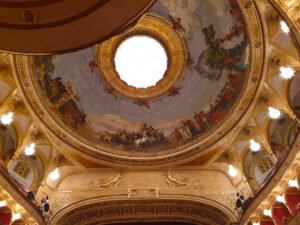
Teatro Costanzi today has a capacity of 1,560 seats, distributed among the orchestra, three tiers of boxes, balcony and gallery, under a dome frescoed by Annibale Brugnoli. At its birth, in 1880, it could hold up to 2,212 spectators.
A sounding box
The builder Domenico Costanzi commissioned the design in 1879 from Milanese architect Achille Sfondrini, a theater specialist, who prioritized acoustics: the horseshoe hall was conceived as a sounding box. The construction took only 18 months. For a score like Mahler's Third, with its immense forces, the shape of the hall matters enormously.
The sections
The theater distinguishes orchestra Poltronissime, orchestra Poltrone, orchestra boxes, boxes of the first, second and third tiers, central and side, divided between front seats and rear seats, the balcony and the gallery, divided into first and second gallery. The hall plan is published in the maps section of the theater's website.
For ballet, look from above
For opera the orchestra Poltronissime are the classic choice. For a symphonic ballet with the full corps de ballet the reasoning changes: the geometries of the choreography read better from a raised point. The balcony and the central boxes of the first tiers offer the overall view that a ballet like this requires. From the rear seats of the side boxes, instead, part of the stage is lost, so they suit only those who mainly want to listen to Mahler.
The foundation's other halls
The Teatro dell'Opera di Roma also runs the Teatro Nazionale on Via del Viminale and, in summer, the Baths of Caracalla. The complete profile is on our page about the Rome Opera House.
One thing nobody tells you about Mahler's Third Symphony by John Neumeier at Teatro dell'Opera di Roma, February 4 to 10, 2027
Mahler's Third Symphony lasts on average about 95 minutes, and the first movement alone runs past half an hour. At the Costanzi, once the show has started, you are not admitted to the orchestra or to the numbered seats of the balcony and gallery. Arriving late means risking missing a third of the evening.
It is the theater's house rule, and for this title it weighs more than for an opera. In an opera latecomers go in at the first scene change. In a symphony whose first movement lasts 30 or 35 minutes, the first opportunity may come very late. Those who arrive after the start wait in the orchestra foyer. It is best to arrive at least half an hour early, also because the coat check is mandatory for umbrellas, hats, bags and helmets, and in February, on rainy evenings, the coat check line is the real bottleneck.
The second thing nobody says: Alina Cojocaru's presence is listed for only three performances out of six, on February 4, 6 and 9. Those who buy a ticket for the 5th, the 7th or the 10th will see the same ballet with the theater's étoiles and primi ballerini, and it is a complete show. Those who want to see Cojocaru must choose the right date. The official page notes it in small print, under the cast: read it before buying.
Third: the Saturday performance is at 18:00 and the Sunday one at 16:30. With a running time of a full hour and a half, plus the intermission if there is one, they are the two performances that leave the evening free for an unhurried dinner.
Tickets for Mahler's Third Symphony
The prices of Mahler's Third Symphony are published by the Teatro dell'Opera di Roma on the Prices page of the official website, divided by section and type of performance. The theater sets prices by tiers of titles, with a difference between the opening night and the repeats.
Where to buy
The theater box office is at Piazza Beniamino Gigli 1, open Monday to Saturday from 10:00 to 18:00 and Sunday from 9:00 to 13:30, closed on holidays. Tickets for the day's show are sold at the theater from an hour before until 15 minutes after the start. Online you buy on the authorized presale network that the theater lists on the show page. The theater asks you to use only channels authorized by the foundation.
How to pay at the counter
At the counter you pay in cash, by check made out to the Fondazione Teatro dell'Opera di Roma, by debit card and with the main credit cards. The Carta del Docente and the Carta della Cultura are also accepted.
Discounts
For some evenings, at the theater's discretion, a last-minute discount is provided on tickets sold in the hour before the start, excluding balcony and gallery. For under-30s the theater offers the Carta Giovani Opera, with discounts on tickets. The conditions for the current season are on the official website.
The youth preview
On Wednesday, February 3 at 19:00 the preview is reserved for young people. For a dance or music student it is the cheapest chance to see one of the great symphonic ballets of the 20th century with a live orchestra.
The advice I give you for visiting Mahler's Third Symphony by John Neumeier at Teatro dell'Opera di Roma, February 4 to 10, 2027
The advice is clear: before going to the Costanzi, listen to Mahler's Third Symphony at least once in full, at home, calmly. 95 minutes of music without a plot can throw off those who discover it in the theater. Those who already know it watch the ballet with a different attention, and recognize the moment the voice enters, the one when the children's bells come in, the one when the Adagio begins.
Recordings are plentiful: Leonard Bernstein with the New York Philharmonic and with the Wiener Philharmoniker, Claudio Abbado with the Wiener and with the Lucerne Festival Orchestra, Bernard Haitink and Riccardo Chailly with the Concertgebouw, Pierre Boulez with the Wiener. Choose the one you like, but listen to all of it, without skipping.
Second piece of advice, on choosing the date. If your goal is to see Alina Cojocaru, there are three performances: Thursday the 4th at 20:00, Saturday the 6th at 18:00, Tuesday the 9th at 20:00. If you want the most convenient evening, Saturday at 18:00 combines Cojocaru's presence with a time that leaves dinner free. If you bring a teenager, Sunday at 16:30.
Third, on the spot. For a symphonic ballet with the full corps de ballet choose a frontal, raised seat, in the balcony or the central boxes. The collective design of the choreography reads from above. From the orchestra you see faces better but lose the geometry. At the Costanzi, for dance, the balcony is the best choice.
How to get to the Teatro dell'Opera di Roma
Teatro Costanzi is reached by Metro Line A, Repubblica Teatro dell'Opera stop, a few minutes on foot from Piazza Beniamino Gigli. It is the simplest way and, on rainy February evenings, the driest.
By Metro
Line A stops at Repubblica Teatro dell'Opera, on Piazza della Repubblica. Those arriving from Termini station can take the same Line A or walk.
By bus
The theater lists these lines: on Via Nazionale H, 40, 60, 64, 70, 71, 170, 116T. On Via Depretis 70 and 71. On Via Cavour 16, 75, 84, 150 (holidays), 360, 590, 649, 714. At Termini station 16, 38, 75, 86, 90, 217, 310, 360, 649, 714.
By taxi
At the theater entrance there is a taxi service for the public, and during intermissions the house staff collect reservations for the return ride. It is the right solution after the 20:00 performances.
By car
I recommend against the car. The area between Via Nazionale, Via del Viminale and Termini is central and busy, and the theater lists no parking of its own. Those coming from outside the city should leave the car at a park-and-ride along Line A and continue by Metro.
Another well-known fact, yet rarely mentioned
The theater where Cavalleria rusticana premiered, on May 17, 1890, and Tosca, on January 14, 1900, also hosted Diaghilev's Ballets Russes between 1912 and 1926. Everyone remembers the Costanzi as the cradle of verismo opera. Few remember that it was also a stop in the 20th-century dance revolution.
From 1912, for 14 years, the theater was run by soprano Emma Carelli, wife of impresario Walter Mocchi, who brought to Rome La fanciulla del West, Turandot and Il trittico by Puccini, Wagner's Parsifal, Saint-Saëns' Samson et Dalila and, indeed, Diaghilev's company.
Neumeier's repertoire is woven with the memory of early 20th-century dance: Nijinsky, the figure who pushed him toward ballet and to whom he devoted three works, from Vaslav in 1979 to Le Pavillon d'Armide in 2009. The Costanzi is one of the Italian theaters through which that season of dance passed live, thanks to a singer turned impresario. Today on the same stage arrives the Third Symphony of a choreographer who has made that memory the center of his own work. The Costanzi, in short, is also a home of dance, and has been for more than a century.
House rules and dress code
At the Teatro dell'Opera di Roma, at the inaugural evening and opening nights, dark dress is welcome. For other performances the theater lists no dress code. For the February 4 opening, dress accordingly.
Umbrellas, hats, bags, helmets, cameras and recording devices must be left at the coat check. In the hall the use of mobile phones is forbidden, photographs are forbidden, with or without flash, and any recording. Refreshments are allowed only in the theater bars, and smoking is forbidden in all areas. The theater reserves the right to move purchased seats for technical reasons. For a ballet the rule on phones counts double: a lit screen in the orchestra distracts the dancers.
The right photo to take at Mahler's Third Symphony by John Neumeier at Teatro dell'Opera di Roma, February 4 to 10, 2027
At the Costanzi you cannot take photos in the hall, with or without flash. The right photo of your ballet evening is taken outside, on Piazza Beniamino Gigli, before going in. It is the theater's rule and must be respected, even during the final applause.
The square is the one onto which Marcello Piacentini, with the renovation that followed the Comune's purchase in 1926, moved the theater entrance. In February, for the 20:00 performances, you arrive in the dark: the lit facade and the crowd going in are the right image. For the Sunday 16:30 performance there is still light, and the square shows better.
The advice: photograph people, not the building. A couple in front of the entrance, a girl with the program in hand, a group of dance students at the February 3 preview. The building you can find in any archive. Your evening you cannot.
The hall, with Brugnoli's dome and the great crystal chandelier, remains an image to take home with your eyes. Those who want to see it with the lights on and without hurry can book one of the guided visits the theater organizes. And those who want a keepsake of the ballet can look on the theater website for the production's official image.
Some important events that took place here in history
Teatro Costanzi was inaugurated on November 27, 1880 with Gioachino Rossini's Semiramide, in the presence of King Umberto I and Queen Margherita, and became the Teatro dell'Opera di Roma in 1946. In between, two world premieres that made opera history and a change of ownership that changed its face.
- 1879: Domenico Costanzi commissions the design from Achille Sfondrini.
- November 27, 1880: inauguration with Semiramide, after 18 months of work.
- May 17, 1890: world premiere of Pietro Mascagni's Cavalleria rusticana.
- January 14, 1900: world premiere of Giacomo Puccini's Tosca.
- 1905: the Orchestra Municipale is born, which in effect becomes the Costanzi orchestra.
- 1912: direction passes to soprano Emma Carelli. Diaghilev's Ballets Russes also come to Rome.
- 1926: the City buys the theater, which becomes Teatro Reale dell'Opera. Renovation by Marcello Piacentini.
- February 27, 1928: second inauguration with Arrigo Boito's Nerone.
- 1935: the permanent Chorus is born, at the wish of Tullio Serafin.
- 1946: the theater takes the name Teatro dell'Opera di Roma.
- 1958: new work by Piacentini ahead of the 1960 Olympics.
For the dance audience the date to remember is 1912: with Emma Carelli the Costanzi opens to the Ballets Russes, and ballet enters the history of the theater beside opera. Today titles like Neumeier's Third measure the level of the Corpo di Ballo of the Teatro dell'Opera di Roma.
Who has played Mahler's Third Symphony by John Neumeier at Teatro dell'Opera di Roma, February 4 to 10, 2027
Through Teatro Costanzi have passed King Umberto I and Queen Margherita, at the 1880 inauguration, and then Pietro Mascagni, Giacomo Puccini and Ottorino Respighi, whom the theater lists as the musicians who marked its destiny. With Emma Carelli, from 1912, Diaghilev's company also arrived.
In the history of its orchestra and chorus the theater recalls the conductors Victor de Sabata, Gianandrea Gavazzeni, Herbert von Karajan, Carlo Maria Giulini, Karl Böhm, Zubin Mehta, Georges Prêtre, Georg Solti, Giuseppe Sinopoli, Mstislav Rostropovich, Riccardo Muti and Daniele Gatti. There is Tullio Serafin, who in 1935 wanted the permanent chorus, and there is Marcello Piacentini, who worked on the building twice.
Among these names there is one that links the Costanzi to Neumeier. Herbert von Karajan conducted the theater's orchestra. The music prize that bears his name was awarded to Neumeier in 2007, after Anne-Sophie Mutter, the Berliner Philharmoniker, Evgeny Kissin and Valery Gergiev and before Alfred Brendel and Daniel Barenboim. A choreographer in a roll of honor of musicians is a sign of how much his dance is considered music.
Mahler too has his interpreters in this list. Georg Solti and Giuseppe Sinopoli, two conductors who passed through the Costanzi, recorded the Third itself. In February the score returns to the pit of the theater that hosted them, and on stage comes Alina Cojocaru, the first dancer to have won the Prix Benois twice.
Around the Costanzi: Viminale, Repubblica and the Esquilino
Teatro Costanzi sits between Via Nazionale, Via del Viminale and Via Depretis, a few minutes' walk from Piazza della Repubblica and Termini station. If you arrive an hour early, you have some of the most interesting places of ancient and late 19th-century Rome close at hand.
Piazza della Repubblica and the Baths of Diocletian
From the Metro stop you come out onto Piazza della Repubblica, with the Basilica of Santa Maria degli Angeli e dei Martiri and the remains of the Baths of Diocletian. Toward Termini is Palazzo Massimo alle Terme, home of the Museo Nazionale Romano. For the Saturday and Sunday afternoon performances, museum and ballet combine without taking any transport.
Santa Maria della Vittoria
From the opposite side of the square, in a few minutes, you reach Santa Maria della Vittoria.
Toward Monti and Santa Maria Maggiore
Going down Via Nazionale you meet the Palazzo delle Esposizioni, and farther down the Monti district begins. Beyond Via Cavour the Basilica of Santa Maria Maggiore is a good quarter of an hour on foot.
Where to eat before and after
Around the Teatro dell'Opera the offering concentrates on Via Nazionale, Via del Viminale, the streets toward Termini and, a bit farther, the Monti district. The theater allows refreshments only in the inside bars, so dinner has to be organized before or after.
For the 20:00 performances you can dine early, at 18:30, around Via Nazionale or Via del Viminale: the theater is a few minutes on foot. For the Saturday 18:00 and Sunday 16:30 performances a late lunch and dinner afterward is best, walking down toward Monti, where osterias, wine bars and pizzerias offer a wide choice. I'm not naming places, because they change hands more often than stage directors do. The criterion is simple, though: avoid menus translated into five languages posted on the door in the streets around Termini and go a few streets toward Monti.
Neumeier's Third with teenagers and dance students
For Mahler's Third Symphony the Teatro dell'Opera has scheduled a preview dedicated to young people, Wednesday, February 3 at 19:00. It is the right date for students of dance schools and music students.
The theater publishes no age guidance. A symphonic ballet of an hour and a half without a plot suits teenagers who have already seen dance in the theater. For a child making a debut, a narrative title is better. Those who study dance, however, should not miss the chance to see a Neumeier choreography restaged by his assistants, with an orchestra, a chorus and a full corps de ballet. For the youngest the Sunday performance at 16:30 is the most convenient.
Accessibility at Teatro Costanzi
For Teatro Costanzi the theater lists a guided visit route accessible to people with walking difficulties, with the exception of a few points such as the Royal Box and the gallery. For shows the practical advice is to contact the box office before buying, by phone at 06 48160255 or 06 4817003 or at ufficio.biglietteria@operaroma.it, explaining your needs. Those with mobility difficulties should avoid the gallery. The taxi service at the entrance, bookable during intermissions, is a concrete help at the end of the evening.
Dance at the Costanzi in the 2026/2027 season
Mahler's Third Symphony is one of the ballet titles of the 2026/2027 season of the Teatro dell'Opera di Roma, which at the Costanzi also includes Swan Lake from December 17 to 31, 2026, MOTUS with Blanc, McGregor and Ekman from March 31 to April 4, 2027 and Don Quixote from June 4 to 11, 2027. At the Teatro Nazionale The Nutcracker is scheduled from November 24 to December 3, 2026 and ECHOES in April 2027. Those who love contemporary dance also find the evening Goecke, Robbins, Bausch. Those who prefer opera can start with Falstaff di ottobre.
Frequently asked questions about Neumeier's Mahler Third Symphony
When does Mahler's Third Symphony play at the Teatro dell'Opera di Roma?
John Neumeier's Mahler's Third Symphony plays at Teatro Costanzi from February 4 to 10, 2027: Thursday the 4th at 20:00, Friday the 5th at 20:00, Saturday the 6th at 18:00, Sunday the 7th at 16:30, Tuesday the 9th and Wednesday the 10th at 20:00. On Wednesday, February 3 at 19:00 there is the youth preview.
On which dates does Alina Cojocaru dance?
Alina Cojocaru is guest artist of Mahler's Third Symphony at the Teatro dell'Opera di Roma on February 4, 6 and 9, 2027, that is, at the Thursday 20:00 opening night, the Saturday 18:00 performance and the Tuesday 20:00 one, according to the show's official page.
Who conducts the orchestra in Mahler's Third Symphony?
Mahler's Third Symphony at the Costanzi is conducted by Simon Hewett, leading the Orchestra of the Teatro dell'Opera di Roma. The chorus master is Ciro Visco, the soloist is mezzo-soprano Eleonora Filipponi and the theater's Coro di Voci Bianche takes part.
How long is Mahler's Third Symphony?
Mahler's Third Symphony lasts on average about 95 minutes, and is the longest among the symphonies of the most performed repertoire. The theater has not published the total running time of the show with any intermissions. It is best to check the website before the performance.
Who is John Neumeier?
John Neumeier is a choreographer born in Milwaukee who directed the Hamburg Ballet from 1973 to 2024. He has created more than 170 ballets, many of them to Mahler's music, and has received, among other honors, the Kyoto Prize in 2015 and the first Prix Benois de la Danse in 1992.
How do you get to Teatro Costanzi?
Teatro Costanzi, at Piazza Beniamino Gigli 7, is reached by Metro Line A, Repubblica Teatro dell'Opera stop, a few minutes on foot. Lines H, 40, 60, 64, 70, 71 and 170 pass along Via Nazionale. At the theater entrance there is a taxi service for the public.
Can you enter the hall after the start?
At Teatro Costanzi, once the show has started, you are not admitted to the orchestra or to the numbered seats of the balcony and gallery. Latecomers wait in the orchestra foyer. With a first movement of over half an hour, for Mahler's Third it is best to arrive at least 30 minutes early.
Where do you buy tickets for the ballet at the Costanzi?
Tickets for Mahler's Third Symphony are sold at the Teatro dell'Opera box office, at Piazza Beniamino Gigli 1, open Monday to Saturday from 10:00 to 18:00 and Sunday from 9:00 to 13:30, or online on the authorized presale network the theater lists.
One last piece of advice: this is an evening to prepare for. Listen to the symphony, pick the date based on Cojocaru, take a raised seat and arrive early. Mahler wanted his Third to contain the whole world, from nature to love, and Neumeier has been working on it for half a century. At the Costanzi, with orchestra, chorus and corps de ballet together, it is the most complete chance of the season to understand why.
Article written by the editorial team of Tour Leader Pro, contact them for Private/Corporate/V.I.P. Tours and Experiences.
Planning a trip to Rome? The English guides to visiting the city are on ItalyPlanner.com.
Contact Information
Nearby
 Rome Opera House100 m
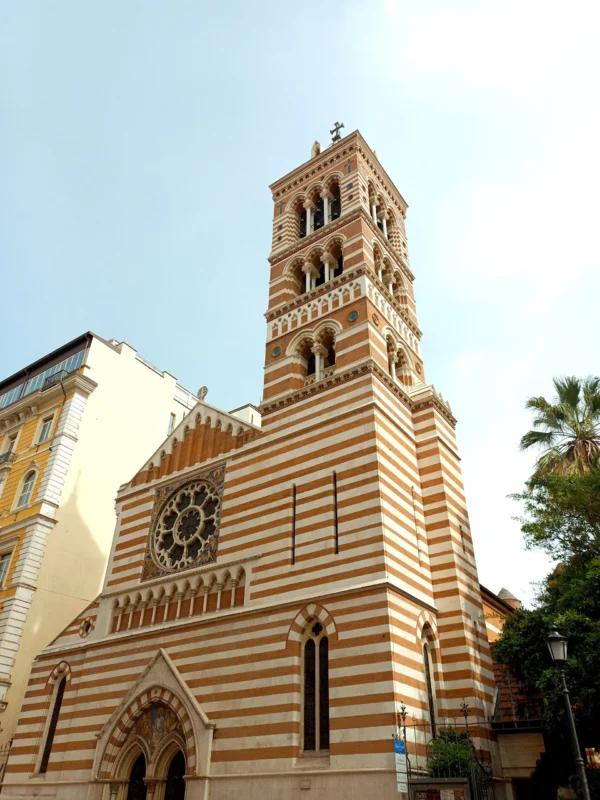
- St. Paul’s Within the Walls100 m
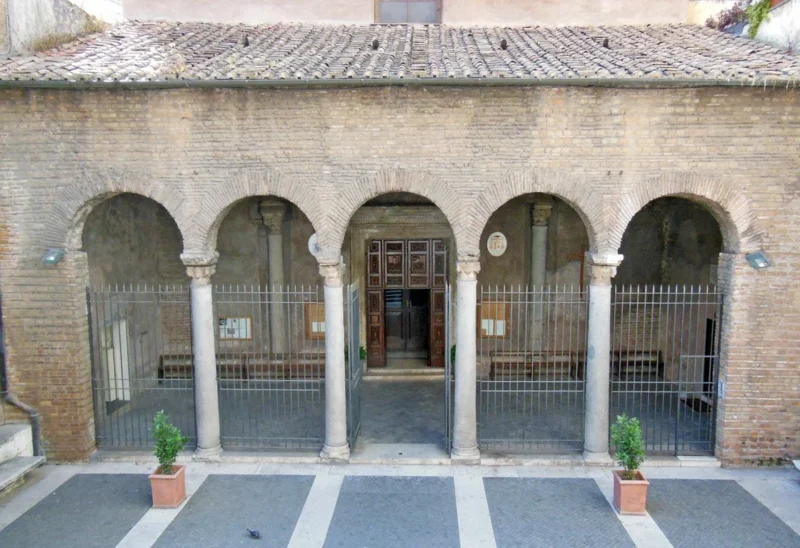
- Basilica of San Vitale100 m
- Teatro Nazionale100 m
- Enrico Fermi Center – Historical Museum of Physics and Study and Research Center at the Viminale200 m
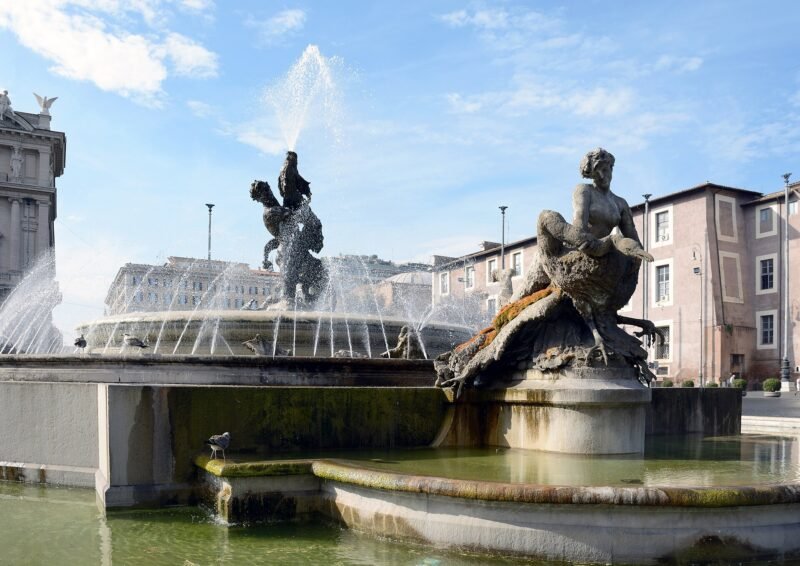
- Fontana delle Naiadi200 m

Upcoming events nearby
- Swan Lake at Teatro dell’Opera di Roma, December 17 to 31, 2026100 m
- Andrea Chénier at the Teatro dell’Opera di Roma, January 17-26, 2027100 m
- Il barbiere di Siviglia with Cecilia Bartoli at Teatro dell’Opera di Roma, May 27, 2027100 m
- Goecke / Robbins / Bausch at Teatro dell’Opera di Roma, from October 27 to November 8, 2026100 m



You might also like
- The Nutcracker at Teatro Nazionale, November 24 to December 3, 2026
- The Rake’s Progress at Teatro dell’Opera di Roma, November 27 to December 5, 2026
- Motus by Blanc, McGregor and Ekman at Teatro dell’Opera di Roma, March 31 to April 4, 2027
- Raffaella il Musical at Teatro Brancaccio, February 10 to March 6, 2027
- Iphigénie en Tauride at Teatro dell’Opera di Roma, April 18 to 27, 2027
- Seoul Mafia in Tutta colpa del K-pop at Teatro Brancaccio, January 18, 2027