Iphigénie en Tauride at Teatro dell’Opera di Roma, April 18 to 27, 2027
In short. Iphigénie en Tauride at Teatro dell'Opera di Roma: Christoph Willibald Gluck's opera is staged at Teatro Costanzi, home of the Teatro dell'Opera di Roma at Piazza Beniamino Gigli 7, with five performances from April 18 to 27, 2027.

Iphigénie en Tauride at Teatro dell'Opera di Roma: Christoph Willibald Gluck's opera is staged at Teatro Costanzi, home of the Rome Opera House at Piazza Beniamino Gigli 7, with five performances from April 18 to 27, 2027. The premiere is on Sunday, April 18 at 19:00 (series A), then Tuesday, April 20 at 20:00 (series B), Thursday, April 22 at 18:00 (series D), Saturday, April 24 at 16:30 (series E) and Tuesday, April 27 at 20:00 (series C). Take Metro A to the Repubblica Teatro dell'Opera stop, or the buses on Via Nazionale (H, 40, 60, 64, 70, 71, 170) and Via Depretis (70, 71). Prices are published on the official Teatro dell'Opera website, and single tickets for the 2026/27 season have been on sale since October 8, 2026 on the theater's official website and at the box office. It's sung in French, with Italian and English surtitles.
Language: in Italian with English surtitles.
Alessandro De Marchi conducts, making his Costanzi podium debut with this opera, and the staging is by Robert Carsen, who also designs the lighting with Peter Van Praet. Sets and costumes are by Tobias Hoheisel, choreography by Philippe Giraudeau, and the chorus is prepared by Ciro Visco. Iphigénie is Axelle Fanyo, Oreste is Alessio Arduini, Pylade is Julien Behr and Thoas is Jean-Fernand Setti, with the Orchestra and Chorus of Teatro dell'Opera di Roma. It's a new Rome Opera production of the staging first seen at the Théâtre des Champs-Élysées in Paris in 2019. And the opera returns to Rome after a 40-year absence: that alone would be reason enough to book.
Iphigénie en Tauride at Teatro Costanzi at a glance: dates, times, series and cast
Iphigénie en Tauride at Teatro Costanzi has five performances in 10 days, from April 18 to 27, 2027, with different times for each subscription series. Settle right away which evening suits you, because the times vary a lot from one performance to the next.
The five performances
- Sunday, April 18, 2027, 19:00: premiere, series A.
- Tuesday, April 20, 2027, 20:00: series B.
- Thursday, April 22, 2027, 18:00: series D.
- Saturday, April 24, 2027, 16:30: series E.
- Tuesday, April 27, 2027, 20:00: series C, last performance.
The credits
Tragédie lyrique in four acts, music by Christoph Willibald Gluck, libretto by Nicolas-François Guillard. Conductor Alessandro De Marchi, director Robert Carsen, chorus master Ciro Visco, sets and costumes Tobias Hoheisel, choreography Philippe Giraudeau, lighting Robert Carsen and Peter Van Praet. Cast: Axelle Fanyo (Iphigénie), Alessio Arduini (Oreste), Julien Behr (Pylade), Jean-Fernand Setti (Thoas).
Language and surtitles
The opera is performed in its original language, French, with Italian and English surtitles. For a work where the words weigh as much as the music, that's a real help.
Iphigénie en Tauride, Gluck's last great tragedy
Iphigénie en Tauride is a tragédie lyrique in four acts first performed at the Paris Opéra on May 18, 1779, to great success. It's the sixth and second-to-last of the operas Gluck wrote or thoroughly reworked for the French stage, and in effect his last major work for the theater.
From Euripides's myth to Guillard's libretto
The distant source is Euripides's tragedy Iphigenia in Tauris, and the near one is Claude Guimond de La Touche's prose drama, staged in Paris in 1757. The libretto is by Nicolas-François Guillard, a young poet who made his debut as a tragic librettist with this opera and built his reputation on it over the next 20 years. Compared with the source, Gluck and his collaborators made two bold choices: opening the opera with a storm and moving the recognition between brother and sister to the finale.
The plot in a few lines
Iphigenia, saved by Diana at the moment of her sacrifice in Aulis, has become high priestess of the goddess in Tauris, a land where every stranger is sacrificed. Two Greeks are shipwrecked on the coast: Orestes, her brother, tormented by the Furies for killing his mother Clytemnestra, and his friend Pylades. Nobody recognizes anybody. Iphigenia can save only one of them, and the two friends compete for the right to die for each other. The recognition comes at the last moment, with the knife already raised, and then Diana's intervention resolves everything.
An opera born in a quarrel
Iphigénie en Tauride was born in the thick of the Parisian dispute between the supporters of Gluck and those of Niccolò Piccinni. The director of the Opéra had commissioned another Iphigénie en Tauride from Piccinni himself, and Gluck was furious and got his rival's premiere postponed. Piccinni's opera reached the stage only in 1781, with a polite success not remotely comparable to Gluck's.
What to listen for in Iphigénie en Tauride: the moments to wait for
Iphigénie en Tauride has no overture: it opens with an orchestral page that evokes calm and immediately turns into a storm. It's the first of the moments to wait for, and it's short: latecomers miss it.
Orestes's sleep
In the second act Orestes, exhausted, sings that calm is returning to his heart, Le calme rentre dans mon cœur. But the orchestra says the opposite: the violas grumble an obstinate, syncopated accompaniment, the basses beat muffled strokes. It's the passage Hector Berlioz admired above all others, and it's considered one of the first cases where the orchestra contradicts a character's words. You can grasp it without reading music: listen to the violas, not the singer.
The Furies and the Scythians
Right after, the Furies torment Orestes's sleep with a chorus and a pantomime of terror. In the first act, by contrast, the Scythians celebrate the capture of the castaways with a barbaric chorus accompanied by triangle, cymbals and drum. These are the two pages where Philippe Giraudeau's choreography will have the most room.
The priestesses' chorus
The chorus carries a weight in this opera with hardly any equal in the 18th century. In the second act the priestesses mourn with Iphigenia the brother she believes dead, Contemplez ces tristes apprêts, and in the fourth they raise the hymn to Diana, Chaste fille de Latone. With the Teatro dell'Opera Chorus led by Ciro Visco, these are the moments when the Costanzi hall shows what it can do.
The friendship of Orestes and Pylades
The third act is built on the contest of generosity between the two friends: the duet, Pylades's pleading aria Ah! mon ami, j'implore ta pitié, and his heroic outburst Divinité des grandes âmes. For Julien Behr, a tenor, it's the decisive page of the evening.
Robert Carsen and the Théâtre des Champs-Élysées staging
Canadian director Robert Carsen returns to Teatro dell'Opera di Roma with Iphigénie en Tauride in the new Rome production of the staging presented at the Théâtre des Champs-Élysées in Paris in 2019. He also designs the lighting, with Peter Van Praet.
A partnership with the Costanzi
The theater presents it as a return: in recent years Carsen has staged landmark productions at the Costanzi such as Orfeo ed Euridice, Idomeneo, Julius Caesar and Il trionfo del Tempo e del Disinganno. If you saw them, the arrival of Iphigénie closes a circle: Orfeo ed Euridice and Iphigénie en Tauride are the two poles of Gluck's reform, its start and its destination.
The team
Sets and costumes are by Tobias Hoheisel, choreography by Philippe Giraudeau. It's a team suited to an opera where dance, chorus and action are fused, and where Gluck had cut stand-alone ballet to a minimum: so much so that, after the first five Paris performances, the Opéra demanded a final divertissement be added, soon dropped.
What to expect
The official page doesn't describe the staging. I can say one thing: a director who has brought the 18th century to the Costanzi stage several times knows the hall and how to use it. For an opera of four lean acts like this one, that's a guarantee.
Axelle Fanyo, Alessio Arduini and the cast
Axelle Fanyo is the lead in Iphigénie en Tauride at the Costanzi: Rome audiences have already heard her as Refka in Kaija Saariaho's Adriana Mater and as Ariadne in Ariadne auf Naxos. The role of Iphigenia, high priestess of Diana, is written for soprano and is on stage almost the whole time.
Oreste and Pylade
Alessio Arduini is Oreste, the role Gluck wrote for the low basse-taille voice, now given to baritones: it's the part of the troubled sleep and the Furies. Julien Behr is Pylade, a part written for haute-contre, the high French tenor of the time. Jean-Fernand Setti is Thoas, the king of Tauris obsessed with oracles.
The first cast of 1779
At the Paris premiere on May 18, 1779, Iphigenia was Rosalie Levasseur, formerly Amour in Orphée, whom Gluck had chosen to promote to prima donna. Pylade was Joseph Legros, and Oreste was Henri Larrivée, a singer who revered Gluck and later specialized in the role.
Alessandro De Marchi on the podium
Conductor Alessandro De Marchi makes his Costanzi debut with Gluck's masterpiece. The theater presents him as one of the most authoritative specialists in the Baroque and Classical repertoire: the right choice for an orchestra that has to play light and nervous, without 19th century bombast.
A curious fact about Iphigénie en Tauride at Teatro dell'Opera di Roma, April 18 to 27, 2027
The best curious fact about Iphigénie en Tauride concerns a young medical student who had just arrived in Paris. Hector Berlioz writes in his Memoirs that it was a performance of Iphigénie en Tauride at the Opéra, the first he attended as a spectator, that convinced him once and for all to become a musician, against the wishes of his whole family.
Berlioz knew the score so well that, at a later performance, he noticed that cymbals Gluck hadn't written had been added to the Scythians' dance, and that the trombones weren't playing in Orestes's monologue. At the end of the piece he stood up in the orchestra seats and shouted, asking who dared to correct Gluck. At the following performances, he says, the cymbals were silent and the trombones played.
Years later Berlioz wrote to his sister that if Gluck came back to life, he would say of him that he was without doubt his son. When, in the Costanzi hall in the second act, you hear the violas under Orestes's singing, remember that this page decided the vocation of one of the greatest composers of the 19th century. It's worth knowing in the square, before going in: from that moment you listen differently.
Teatro Costanzi: the hall that welcomes Gluck
Teatro Costanzi seats 1,560 people across the orchestra, three tiers of boxes, the balcony and the gallery, beneath a dome frescoed by Annibale Brugnoli. When it opened, in 1880, it could hold up to 2,212 spectators.
The horseshoe hall
In 1879 the builder Domenico Costanzi entrusted the design to the Milanese architect Achille Sfondrini, a theater specialist, who conceived the horseshoe hall as a sound box. Construction took 18 months. For an opera like Iphigénie, with an 18th century orchestra and an ever-present chorus, a hall that renders detail well makes the difference.
The chandelier and Piacentini
In 1926 the theater passed to the City and Marcello Piacentini renovated it, moving the entrance onto the square now named after Beniamino Gigli. The great crystal chandelier was lit for the first time on February 27, 1928, for Arrigo Boito's Nerone. In 1958 another Piacentini intervention gave the theater its current look.
Choosing your seat
The price list distinguishes premium and standard orchestra seats, three tiers of boxes, center and side, the balcony and the gallery, and the seating plan is in the maps section of the official website. With an opera in French and surtitles, avoid the back seats in the side boxes, from which the screen is hard to see. The front balcony remains the best compromise between sound, view and price.
Something nobody tells you about Iphigénie en Tauride at Teatro dell'Opera di Roma, April 18 to 27, 2027
What almost nobody says about Iphigénie en Tauride is that much of it is built from music already written. Gluck reused pages from his earlier works: the storm introduction from the overture to L'isle de Merlin, the Furies' music from the ballet Sémiramis, the aria O malheureuse Iphigénie from La clemenza di Tito, the final chorus from Paride ed Elena. The aria Je t'implore et je tremble comes from his 1756 Antigono, but it's inspired by a gigue by Johann Sebastian Bach.
It isn't laziness. Gluck knew his Italian operas and Viennese ballets were unlikely to be revived, while in Paris successful operas stayed in the repertoire. Reusing them in Iphigénie was a way to save the best ideas of a lifetime. The result, according to scholars, is a kind of summa of his whole career.
The second thing concerns the Costanzi's house rules, which are strict. Once the performance has begun you can't enter the orchestra or the numbered seats in the balcony and gallery, the coat check is mandatory for umbrellas, bags and helmets, and phones, photos and recordings are banned in the hall. With an opera that starts without an overture, straight into the storm, lateness costs you right away.
Tickets for Iphigénie en Tauride at Teatro dell'Opera
Single tickets for Iphigénie en Tauride have been on sale since October 8, 2026, at the Teatro dell'Opera di Roma box office and on the theater's official website. Prices by section for the 2026/27 season are published on the Prices page of the official website.
The box office on Piazza Beniamino Gigli
The ticket window is at Piazza Beniamino Gigli 1, a few meters from the theater entrance. At the window you can pay cash, by debit card and with the main credit cards. The theater urges buyers to use only channels authorized by the foundation.
Series and subscriptions
The letters next to the dates indicate subscription series: A for the April 18 premiere, B, D, E and C for the repeat performances. Other subscription formats have been open since October 1, 2026. Single-ticket buyers generally have more room at the repeat performances than at the premiere.
Young people and discounts
The theater has a Discounts page and the Carta Giovani Opera youth card: for students and young people it's the first thing to check before buying.
My tip for Iphigénie en Tauride at Teatro dell'Opera di Roma, April 18 to 27, 2027
For Iphigénie en Tauride, go for the Saturday, April 24 performance at 16:30, in the balcony or a front seat in a center box. It's the performance that combines the premiere cast, repeat-performance prices and a time that leaves a spring Saturday evening free.
The reasoning is simple. The Sunday the 18th premiere at 19:00 has the appeal of a debut, but the hall and prices are those of big occasions. The Tuesday performances at 20:00 end late. Thursday at 18:00 only works if you're free from work. On Saturday afternoon, instead, you leave the theater in late April light with the city still full.
There's also a combination I recommend if you truly love opera. On Wednesday, April 21, between the second and third performances, the Costanzi hosts Piccinni e Gluck, una corona per due, a theatrical narrative by Valerio Cappelli performed by Sergio Rubini, devoted precisely to the two composers' rivalry over the Iphigenia myth. Seeing the narrative first and then the opera, on Thursday the 22nd or Saturday the 24th, is the best way to understand what you're hearing. Either way, arrive 40 minutes early: the coat check is mandatory and the lit chandelier deserves a look.
How to get to Teatro dell'Opera for Iphigénie en Tauride
Teatro Costanzi is reached by Metro A, Repubblica Teatro dell'Opera stop, a few minutes' walk from Piazza Beniamino Gigli. It's the simplest option for every performance, including the Tuesday evening ones.
By metro
From the Repubblica Teatro dell'Opera stop, walk down Via Nazionale or take Via del Viminale, and in a few minutes you're in front of the theater. From Termini you can use the same line A or walk: the station is close.
By bus
- Via Nazionale: H, 40, 60, 64, 70, 71, 170.
- Via Depretis: 70, 71.
- Via Cavour: 16, 75, 84, 360, 590, 649, 714.
- Termini station: 16, 38, 75, 86, 90, 217, 310, 360, 649, 714.
These are the lines the theater lists on its How to reach us page. Evening frequencies and routes can change: check them on the day on the ATAC journey planner.
By taxi
There's a taxi service for the audience at the theater entrance, and during intermissions the house staff take bookings for the ride home. After the 20:00 performances on April 20 and 27 it's the most convenient option.
By car
I don't recommend it: the area between Via Nazionale, the Viminale and Termini is central and congested, and the theater doesn't list a parking garage of its own. If you're coming from outside Rome, leave the car along line A and continue by metro.
Another well-known fact, yet one rarely mentioned
It's well known that in Italy Iphigénie en Tauride is tied to the name of Maria Callas. At La Scala in 1957 the opera was staged under Nino Sanzogno's baton and directed by Luchino Visconti, with Callas in the lead, and the June 1 performance was recorded live. Less often remembered is that this wasn't Gluck's opera as we know it today, but Lorenzo Da Ponte's 1783 Italian translation, with some cuts on top of that.
There are in fact several versions of Iphigénie. In 1781 Gluck himself prepared a German one for Vienna, moving Orestes from baritone to tenor, in 1783 came Da Ponte's translation, and in 1889 and 1890 Richard Strauss made a three-act revision, staged in Weimar in 1900. For much of the 20th century the German and Italian versions kept circulating in their respective countries.
The Costanzi production instead uses the original French, with the roles as Gluck wrote them for Paris. It's a detail that matters: Guillard's French is declaimed almost syllable by syllable, and the music follows its accents. If you know only Callas in Italian, you'll hear a different opera, sharper and faster.
The right photo to take at Iphigénie en Tauride at Teatro dell'Opera di Roma, April 18 to 27, 2027
At the Costanzi you can't take photos in the hall, with or without flash: the right photo of Iphigénie en Tauride is taken outside, on Piazza Beniamino Gigli, with the facade and the show poster behind you. In April, for the Saturday 16:30 performance, you arrive in full light and leave as the sky begins to darken: that's the best moment.
The square is the one onto which Marcello Piacentini moved the entrance in the renovation that followed 1926, to make room for the evening crowds. For the Sunday, April 18 premiere it fills with dark suits and elegant arrivals: it's one of the evenings when a photo at the entrance really tells the story of the event.
The advice of someone who has seen plenty stays the same: photograph the people, not the building. The group of friends with the program, the couple at the door, the student who came with the youth card. The facade is in any archive, that evening isn't.
And then there's the photo you can't take: the hall with Brugnoli's dome and the lit chandelier, in the minutes before the lights go down on the opening storm. Sit down early and take it in calmly. As a keepsake of the show, the official production image is on the Iphigénie en Tauride page of the theater's website.
Some important events that happened here in history
Teatro Costanzi opened on November 27, 1880 with Gioachino Rossini's Semiramide and became Teatro dell'Opera di Roma in 1946. Between those two dates came the world premieres that made the history of Italian opera.
- 1879: Domenico Costanzi entrusts the design to architect Achille Sfondrini.
- November 27, 1880: opening with Semiramide, in the presence of King Umberto I and Queen Margherita.
- May 17, 1890: world premiere of Pietro Mascagni's Cavalleria rusticana.
- January 14, 1900: world premiere of Giacomo Puccini's Tosca.
- From 1912: under soprano Emma Carelli's management, Rome gets Parsifal, Samson et Dalila and Diaghilev's Ballets Russes.
- 1926: the City buys the theater, which becomes Teatro Reale dell'Opera, renovated by Marcello Piacentini.
- February 27, 1928: second opening with Arrigo Boito's Nerone and the first lighting of the great chandelier.
- 1935: the permanent chorus is founded at Tullio Serafin's wish.
- 1946: the theater takes the name Teatro dell'Opera di Roma.
- 1958: another Piacentini renovation ahead of the 1960 Olympics.
In April 2027 a new line is added: the return of Iphigénie en Tauride after 40 years away from the Rome program. It's an 18th century French opera in a theater built on 19th century Italian opera, and that's exactly why it's a date to mark.
Who has passed through Iphigénie en Tauride at Teatro dell'Opera di Roma, April 18 to 27, 2027
Teatro Costanzi has welcomed King Umberto I and Queen Margherita, present at the 1880 opening, and then Pietro Mascagni and Giacomo Puccini, who saw Cavalleria rusticana and Tosca born here. There's Emma Carelli, the soprano who ran the theater from 1912 and opened Rome to foreign repertoire. There's Marcello Piacentini, who reworked the building twice, and Tullio Serafin, who founded the permanent chorus.
Conductors on the Costanzi podium have included Victor de Sabata, Gianandrea Gavazzeni, Herbert von Karajan, Carlo Maria Giulini, Karl Böhm, Zubin Mehta, Georges Prêtre, Georg Solti, Giuseppe Sinopoli, Mstislav Rostropovich, Riccardo Muti and Daniele Gatti.
If you're going to see Iphigénie, though, the name to remember is Robert Carsen. The Canadian director has brought Orfeo ed Euridice, Idomeneo, Julius Caesar and Il trionfo del Tempo e del Disinganno here, building over the years an 18th century path few Italian theaters can match. With him returns Axelle Fanyo, already Refka and Ariadne for Rome audiences. Alessandro De Marchi, instead, makes his Costanzi podium debut with this opera.
And in the same week, on April 21, Sergio Rubini takes the Costanzi stage with Piccinni e Gluck, una corona per due: a film and stage actor telling, in the home of Roman opera, the most famous rivalry of 18th century music.
Around the Costanzi: Repubblica, Viminale and Monti
Teatro Costanzi stands between Via Nazionale, Via del Viminale and Via Depretis, a few minutes from Piazza della Repubblica and Termini station. If you arrive an hour early, some of the most interesting places of ancient and late 19th century Rome are all around you.
Piazza della Repubblica and the Baths of Diocletian
Coming out of the metro you're in Piazza della Repubblica, with the basilica of Santa Maria degli Angeli and the remains of the Baths of Diocletian. Toward Termini is Palazzo Massimo alle Terme, home of the National Roman Museum: a morning visit and the opera in the afternoon fit together without taking any transit.
Toward Monti and Santa Maria Maggiore
Walking down Via Nazionale you reach the Monti district, with its narrow streets and evening life. In the opposite direction, beyond Via Cavour, Santa Maria Maggiore is a good quarter of an hour on foot.
Where to eat before and after Iphigénie en Tauride
Around Teatro dell'Opera, places to eat are concentrated on Via Nazionale, Via del Viminale, the streets toward Termini and the Monti district. Inside the theater you can only use the bars: plan dinner before or after.
Depending on the performance time
For the 19:00 premiere, a long Sunday lunch and dinner afterward work best. For the Tuesday 20:00 performances you can eat early, around 18:30, in the streets around the Viminale. For Thursday at 18:00 and Saturday at 16:30, dinner comes naturally after the show.
After the show
Monti is the most natural choice, on foot from Via Nazionale, with osterias, wine bars and pizzerias. I don't name places, because they change hands more often than stagings do. The rule is simple: avoid the menus translated into five languages hanging on doors near Termini and push a few streets toward Monti. After evening performances, book: many kitchens close early.
Accessibility at Teatro Costanzi
For Teatro Costanzi, the theater lists an accessible route for people with walking difficulties, except for a few areas such as the Royal Box and the gallery. The Iphigénie en Tauride page gives no specific information on accessible seats.
How to book
My advice is to contact the box office before buying, at 06 48160255 and 06 4817003 or at ufficio.biglietteria@operaroma.it, explaining your needs. If you have mobility issues, avoid the gallery.
Surtitles and hearing
For people with hearing difficulties, the Italian and English surtitles are a concrete help: choose a seat with a good view of the screen. The taxi service at the entrance, with bookings during intermissions, makes leaving at the end of the evening easier.
April in Rome and the season around Iphigénie
Iphigénie en Tauride falls in one of the busiest weeks of Teatro dell'Opera's 2026/27 season. From April 20 to 24, 2027, at Teatro Nazionale on Via del Viminale, the dance triple bill Echoes is on, with choreography by Rafael Bonachela, Sharon Eyal and Diego Tortelli, and on April 21 at the Costanzi there's Sergio Rubini's narrative on Gluck and Piccinni.
The rest of the program
Before Iphigénie, the Costanzi season offers Andrea Chénier in January, Lucia di Lammermoor in February and I due Foscari in March, and afterward Lady Macbeth of the Mtsensk District in May and The Barber of Seville with Cecilia Bartoli on May 27, 2027.
How to plan the weekend
The weekend of April 24 and 25 works well: opera on Saturday afternoon, Monti in the evening, a museum in the neighborhood the next day. For groups and companies who want an opera evening organized from arrival to exit, with a guide and logistics, there's Tour Leader Pro.
Frequently asked questions about Iphigénie en Tauride in Rome
When is Iphigénie en Tauride on at Teatro dell'Opera di Roma?
Iphigénie en Tauride is on at Teatro Costanzi from April 18 to 27, 2027, with five performances: Sunday, April 18 at 19:00, Tuesday the 20th at 20:00, Thursday the 22nd at 18:00, Saturday the 24th at 16:30 and Tuesday the 27th at 20:00. The letters A, B, D, E and C indicate the subscription series.
Who sings in Iphigénie en Tauride in Rome?
In the Costanzi Iphigénie en Tauride the lead is Axelle Fanyo, Alessio Arduini is Oreste, Julien Behr is Pylade and Jean-Fernand Setti is Thoas. Alessandro De Marchi conducts the Orchestra and Chorus of Teatro dell'Opera di Roma, with the chorus prepared by Ciro Visco.
Who directs Iphigénie en Tauride at the Costanzi?
The staging of Iphigénie en Tauride at the Costanzi is by Robert Carsen, who also designs the lighting with Peter Van Praet. It's a new Rome Opera production of the staging first seen at the Théâtre des Champs-Élysées in Paris in 2019, with sets and costumes by Tobias Hoheisel and choreography by Philippe Giraudeau.
What language is Iphigénie en Tauride sung in?
Iphigénie en Tauride at Teatro dell'Opera di Roma is sung in its original language, French, with Italian and English surtitles. It's the version Gluck wrote for the Paris Opéra in 1779, different from Lorenzo Da Ponte's Italian translation used at La Scala in 1957.
When can I buy tickets for Iphigénie en Tauride?
Single tickets for Iphigénie en Tauride, as for the whole 2026/27 season of Teatro dell'Opera di Roma, have been on sale since October 8, 2026 on the theater's official website and at the box office on Piazza Beniamino Gigli. Prices by section are published on the website's Prices page.
How do you get to Teatro Costanzi?
Teatro Costanzi, home of Iphigénie en Tauride, is at Piazza Beniamino Gigli 7 and is reached by Metro A, Repubblica Teatro dell'Opera stop. Buses H, 40, 60, 64, 70, 71 and 170 run nearby on Via Nazionale, and the 70 and 71 on Via Depretis.
Which performance of Iphigénie en Tauride should I choose?
For Iphigénie en Tauride I recommend the Saturday, April 24 performance at 16:30: same cast as the premiere, a convenient time and a free evening. If you can, add Sergio Rubini's theatrical narrative on Gluck and Piccinni on Wednesday, April 21 at the Costanzi, to arrive at the opera with the story in mind.
How long has it been since Iphigénie en Tauride was seen in Rome?
Iphigénie en Tauride returns to the Teatro dell'Opera di Roma program after a 40-year absence, as the theater notes in its 2026/27 season presentation. The return comes in Robert Carsen's staging, who has already brought Orfeo ed Euridice and other 18th century productions to the Costanzi.
Final tip on Iphigénie en Tauride
A Gluck opera in French sounds intimidating. It shouldn't. Iphigénie en Tauride goes straight to the point and has a dramatic tension that never drops. My advice is clear: take the Saturday afternoon, read the plot beforehand, and in the second act listen to the violas while Orestes says he's calm. You'll understand why Berlioz decided to become a musician.
Article written by the editorial team of Tour Leader Pro, contact them for Private/Corporate/V.I.P. Tours and Experiences.
Planning a trip to Rome? The English-language guides for visiting the city are on ItalyPlanner.com.
Contact Information
Nearby
 Rome Opera House100 m
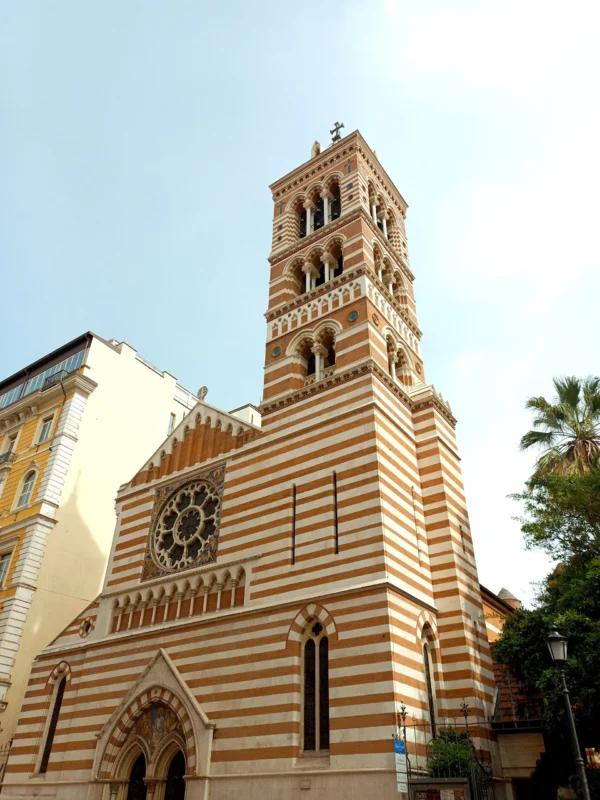
- St. Paul’s Within the Walls100 m
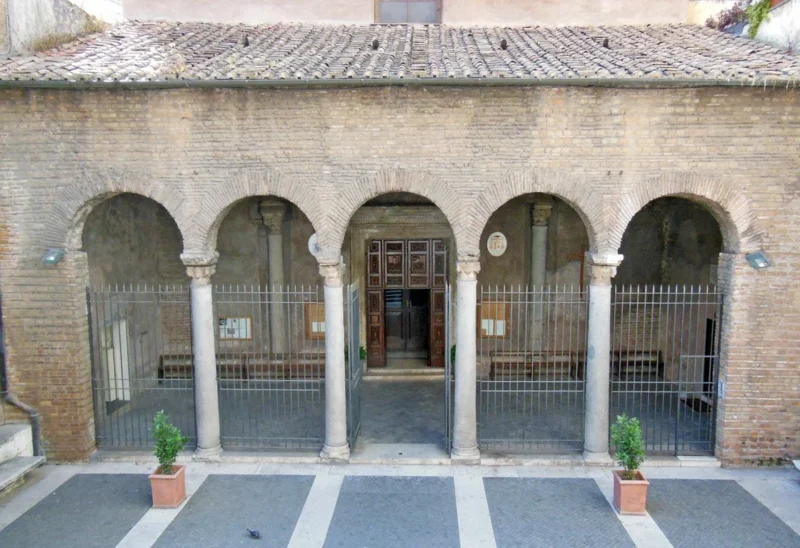
- Basilica of San Vitale100 m
- Teatro Nazionale100 m
- Enrico Fermi Center – Historical Museum of Physics and Study and Research Center at the Viminale200 m
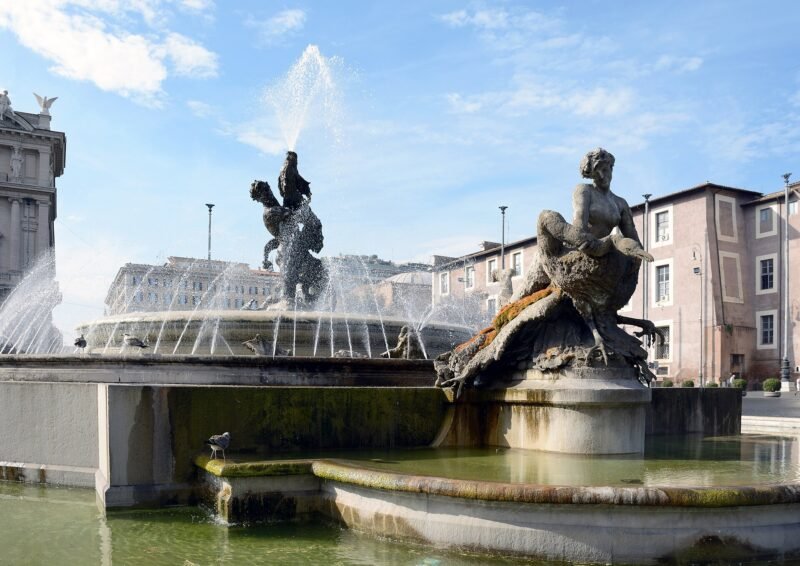
- Fontana delle Naiadi200 m

Upcoming events nearby
- Swan Lake at Teatro dell’Opera di Roma, December 17 to 31, 2026100 m
- Andrea Chénier at the Teatro dell’Opera di Roma, January 17-26, 2027100 m
- Il barbiere di Siviglia with Cecilia Bartoli at Teatro dell’Opera di Roma, May 27, 2027100 m
- The Rake’s Progress at Teatro dell’Opera di Roma, November 27 to December 5, 2026100 m

You might also like
- Motus by Blanc, McGregor and Ekman at Teatro dell’Opera di Roma, March 31 to April 4, 2027
- Mahler’s Third Symphony by John Neumeier at Teatro dell’Opera di Roma, February 4 to 10, 2027
- The Nutcracker at Teatro Nazionale, November 24 to December 3, 2026
- Pierluca Mariti in Abbi pazienza at Teatro Ambra Jovinelli, March 9, May 17 and October 5 to 10, 2027
- Michela Giraud in Fisicamente mi piacciono tutti! at Teatro Brancaccio, March 7, 8 and 9, 2027
- Molière, l’arte della beffa with Alessio Boni at Teatro Ambra Jovinelli, March 31 to April 11, 2027