Goecke / Robbins / Bausch at Teatro dell’Opera di Roma, from October 27 to November 8, 2026
In short. The Goecke / Robbins / Bausch ballet triple bill is on stage at Teatro Costanzi, home of Teatro dell'Opera di Roma, at Piazza Beniamino Gigli 7 (00184 Rome), from October 27 to November 8, 2026, in six performances: Tuesday 27 and…
The Goecke / Robbins / Bausch ballet triple bill is on stage at Teatro Costanzi, home of Teatro dell'Opera di Roma, at Piazza Beniamino Gigli 7 (00184 Rome), from October 27 to November 8, 2026, in six performances: Tuesday 27 and Wednesday October 28 at 20:00, Thursday 5 and Friday November 6 at 20:00, Saturday, November 7, at 18:00 and Sunday, November 8, at 16:30. The program features «Petruschka» by Marco Goecke, «Afternoon of a Faun» by Jerome Robbins and «Le Sacre du printemps» by Pina Bausch, with the Orchestra and Corps de Ballet of Teatro dell'Opera conducted by Andrew Litton. The theater is a few minutes' walk from the Repubblica Teatro dell'Opera stop on Metro A, or you can take the buses on Via Nazionale (H, 40, 60, 64, 70, 71, 170). Tickets cost from 22 to 110 euros on opening night and from 17 to 85 euros for the other performances, depending on the section, and are sold at the theater box office or through the authorized presale network listed on the official show page.
Language: a performance based on dance, music or visual acts; no English version is announced, any spoken parts are in Italian.
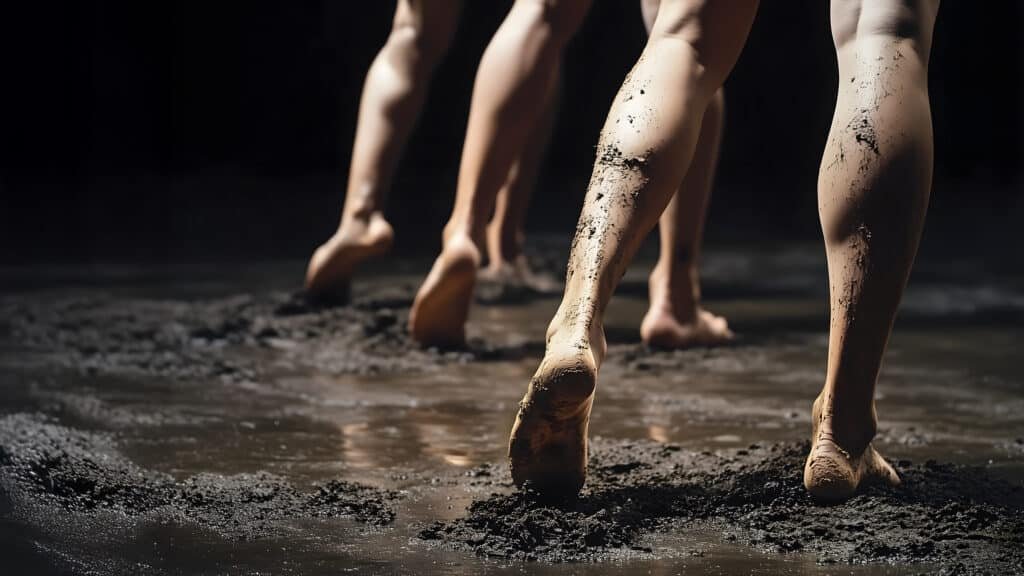
Three choreographers, three eras, two scores by Stravinsky and one by Debussy. It's one of those evenings that explain in two hours what happened to dance in the 20th century, and what is happening to it now. The highlight is Pina Bausch's «Sacre», with earth spread over the stage: the Roman Corps de Ballet, the first Italian company to perform it, presented it at the Baths of Caracalla in summer 2025, for the work's 50th anniversary, and now brings it indoors, into the hall of the Costanzi.
Goecke / Robbins / Bausch at the Costanzi: dates, times and subscription series
Goecke / Robbins / Bausch is a ballet program of the Teatro dell'Opera di Roma season, on stage at Teatro Costanzi with six performances between October 27 and November 8, 2026.
The six performances
- Tuesday, October 27, 2026, 20:00, opening night, series A.
- Wednesday, October 28, 20:00, series B.
- Thursday, November 5, 20:00, series C.
- Friday, November 6, 20:00.
- Saturday, November 7, 18:00, series D.
- Sunday, November 8, 16:30, series E.
The subscription series
The letters indicate the subscribers' series. The performance on Friday, November 6, is the only one without a series: it's the evening when, as a rule, more seats are left for those buying a single ticket. The two weekend performances, Saturday at 18:00 and Sunday at 16:30, are the best suited to people coming from out of town or bringing teenagers.
A one-week break
Between the second performance, on October 28, and the third, on November 5, there is a one-week break that includes the All Saints' long weekend. Those who couldn't get a seat for opening night had plenty of time to plan for November.
A house production
The show is a Teatro dell'Opera di Roma production. On stage are the theater's Orchestra, Étoiles, Principal Dancers, Soloists and Corps de Ballet. Andrew Litton conducts.
The program: three ballets, a century of dance
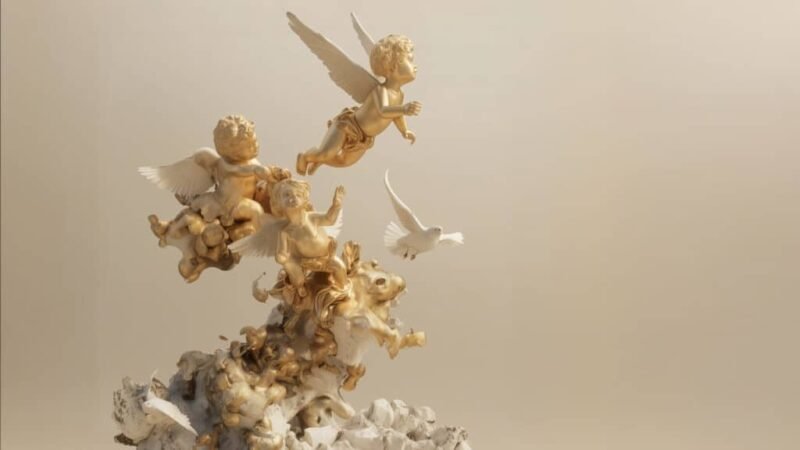
The triple bill lines up three choreographies to music by Igor Stravinsky and Claude Debussy: «Petruschka» by Marco Goecke, «Afternoon of a Faun» by Jerome Robbins and «Le Sacre du printemps» by Pina Bausch.
Stravinsky twice
Two of the three titles are Stravinsky scores: «Petruschka» and «Le Sacre du printemps». In between, like a pause for breath, Debussy's «Faune». It's an intelligently built program: Stravinsky opens and closes, Debussy acts as the hinge. The orchestra plays a leading role, and with Andrew Litton on the podium the evening should be listened to at least as much as it is watched.
Three ways of understanding dance
The three choreographers represent three different worlds. Jerome Robbins came from Broadway and from Balanchine's New York City Ballet. Pina Bausch invented Tanztheater, German dance theater. Marco Goecke is one of the most sought-after European choreographers today. Putting the three together means telling the story of 20th-century dance from renewed classical ballet to dance theater to contemporary work.
The order of the evening
The official page lists the titles in the order Goecke, Robbins, Bausch. The evening is likely to follow the same order, with the «Sacre» at the end: after the earth spread on the stage, it would be hard to dance anything else.
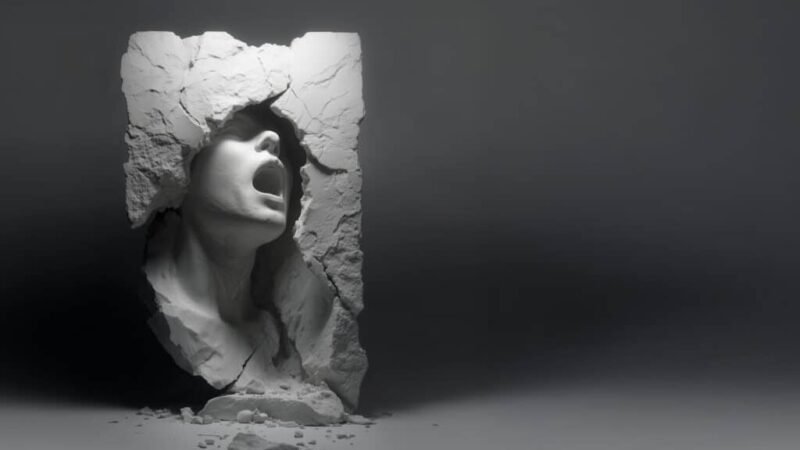
«Petruschka» by Marco Goecke
«Petruschka», to music by Igor Stravinsky, is choreographed by Marco Goecke, with Giovanni Di Palma as choreographic assistant, sets and costumes by Michaela Springer and lighting by Udo Haberland.
Who Marco Goecke is
Marco Goecke was born in Wuppertal on April 12, 1972. He studied dance at the Ballet Academy in Cologne, at the Heinz-Bosl-Stiftung in Munich and, from 1989 to 1995, at the Royal Conservatory in The Hague. He danced at the Berlin Staatsoper and at the theater in Hagen, where in 2000 he created his first choreography. He was resident choreographer of the Stuttgart Ballet and of Scapino Ballet Rotterdam, associate choreographer of Nederlands Dans Theater and resident choreographer of Gauthier Dance. Since August 2025 he has directed Ballett Basel.
A recognizable style
Goecke's choreographies are known for their focus on the upper body: arms, hands and torso move with a speed and precision that critics describe as quivers, jolts, tremors. The stage is often in half-light, and feathers, petals, dry leaves and flour fall or are thrown onto it. Most of his works last less than half an hour. He has created more than 80 choreographies, some in the repertoires of the Paris Opera Ballet, Les Ballets de Monte-Carlo, the Berlin State Ballet and the Vienna State Ballet.
Awards
Goecke has received the Prix Dom Perignon in Hamburg for «Blushing», the Nijinsky Award in Monte-Carlo in 2006 as most promising choreographer, the title of choreographer of the year from the German magazine Tanz in 2015 and 2021, and the Deutscher Tanzpreis in 2022. His catalog includes a «Petrushka» created in 2016 for Ballet Zurich, and the Teatro dell'Opera page doesn't say if the Rome production derives from it.
«Afternoon of a Faun» by Jerome Robbins
«Afternoon of a Faun», to Claude Debussy's «Prélude à l'après-midi d'un faune», is choreographed by Jerome Robbins, staged by the assistants J.P. Frohlich and Hervé Moreau, with sets and lighting by Jean Rosenthal and costumes by Irene Sharaff.
Who Jerome Robbins was
Jerome Robbins, born in New York in 1918 and died in 1998, was a director, choreographer, dancer, artistic director and producer. He made his debut as a choreographer in 1944 with «Fancy Free», his first collaboration with Leonard Bernstein, which gave rise to the musical «On the Town». In 1949 he joined George Balanchine's New York City Ballet as associate artistic director. On Broadway he created «The King and I», «Peter Pan», «West Side Story», «Romani» and «Fiddler on the Roof». For the film of «West Side Story», co-directed with Robert Wise, he won the Oscar for best director in 1962 and an honorary Oscar for his achievements in the art of choreography. He won five Tony Awards.
Robbins's «Faun»
«Afternoon of a Faun» is one of the choreographies Robbins created in the 1950s for New York City Ballet, alongside «The Cage» and «The Concert». In those years his career was tied to the dancer Tanaquil Le Clercq, his stage partner and his muse as a choreographer. The sets and lighting bear the signature of Jean Rosenthal, the costumes that of Irene Sharaff: two leading names of American theater in those years.
Robbins and Italy
There's a link between Robbins and Italy that is seldom remembered. In 1958 he founded his own company, Ballet USA, which in June of that year opened the Festival dei Due Mondi in Spoleto, before leaving on a European tour. Seeing one of his ballets at the Costanzi is, partly for this reason, a small homecoming.
«Le Sacre du printemps» by Pina Bausch
«Le Sacre du printemps», to music by Igor Stravinsky, is directed and choreographed by Pina Bausch, with sets and costumes by Rolf Borzik, in collaboration with Hans Pop, and the choreography is staged by Clémentine Deluy and Jorge Puerta Armenta. With Eleonora Abbagnato and Damiano Ottavio Bigi.
Who Pina Bausch was
Philippine Bausch, known as Pina, born in Solingen in 1940 and died in Wuppertal in 2009, was a choreographer, dancer and teacher. Trained at the Folkwang Hochschule in Essen, founded by Kurt Jooss, and then at the Juilliard School in New York, she danced with the New American Ballet and at the Metropolitan Opera House. In 1973 she founded Tanztheater Wuppertal Pina Bausch, and her name is tied to Tanztheater, dance theater, which brings theatrical gesture and speech into dance. Among her best-known works is «Café Müller», from 1978, to music by Henry Purcell.
The 1975 «Sacre»
«Le Sacre du printemps», in German «Frühlingsopfer», dates from 1975. It belongs to Bausch's early works in Wuppertal, inspired by masterpieces of literature, theater and music. It's one of the best-known pieces in the history of modern dance. Sets and costumes are by Rolf Borzik, Bausch's working partner in those years. Anyone who has seen it knows that the image of the earth covering the stage and the dancers' bodies is unforgettable. The Pina Bausch Foundation lists the Rome production of the triple bill among the productions of the «Sacre» on its website.
From the earth of Caracalla to the Costanzi
On July 30 and 31, 2025, the Corps de Ballet of Teatro dell'Opera di Roma danced Bausch's «Sacre» at the Baths of Caracalla, in a triple bill with Béjart's «Bolero» and Wheeldon's «Within the Golden Hour». The theater presented it as the first time an Italian company had performed this milestone of contemporary dance, on the 50th anniversary of its creation. The press release of the time describes the piece precisely: just over 30 minutes, the women passing a red dress among themselves, a symbol of sacrifice, a stage entirely covered in earth, designed by Rolf Borzik, which in the end covers the dancers' bodies and faces. At the Costanzi the «Sacre» moves from the open air of Caracalla to an Italian-style hall: the earth, the breathing, the bodies come much closer.
A revival with the company's heirs
The choreography is staged by Clémentine Deluy and Jorge Puerta Armenta. For Bausch's works, the transmission to another company always goes through people who know them from the inside: it's the guarantee that what you see at the Costanzi is Bausch's «Sacre», not an imitation.
The performers and the Orchestra of Teatro dell'Opera
Dancing in the triple bill are Eleonora Abbagnato and Damiano Ottavio Bigi, leads in the «Sacre», with Alessandra Amato, Rebecca Bianchi, Alessio Rezza, Federica Maine, Marianna Suriano, Claudio Cocino and Michele Satriano.
Eleonora Abbagnato's company
The Corps de Ballet of Teatro dell'Opera di Roma is directed by Eleonora Abbagnato, who also dances in the «Sacre» in the triple bill. In the Caracalla 2025 press release the theater listed Rebecca Bianchi and Alessio Rezza among the étoiles and Federica Maine and Michele Satriano among the principal dancers: the same names return in this autumn's cast.
The full Corps de Ballet
The official page lists Étoiles, Principal Dancers, Soloists and Corps de Ballet of Teatro dell'Opera di Roma. It's an evening that involves the whole company: Bausch's «Sacre» requires a large group, while «Petruschka» and the «Faun» are smaller in scale. Seeing the Roman company switch from one language to another in a single evening is the technical reason to go.
Andrew Litton on the podium
Andrew Litton conducts the Orchestra of Teatro dell'Opera. Two Stravinsky scores and Debussy's «Faune» in the same evening are a serious test for an opera house orchestra, used to being in the pit for the voices. Here the orchestra doesn't accompany: it tells the story.
The day before, Icone della Danza
The triple bill opened the day after the gala Icone della Danza at Teatro dell'Opera, on October 26. Dance lovers could spend two evenings in a row at the Costanzi.
A curious fact about Goecke / Robbins / Bausch at Teatro dell'Opera di Roma, from October 27 to November 8, 2026
The best curious fact about this triple bill concerns a German city: Wuppertal. Marco Goecke was born in Wuppertal in 1972. A year later, in 1973, Pina Bausch founded her Tanztheater in Wuppertal, renaming the ballet company already existing in the city. Goecke, in short, grew up in the city that Bausch was turning into the world capital of dance theater.
The link doesn't stop at geography. In 2004 it was Pina Bausch herself who invited Goecke to present two of his works, «Blushing» from 2003 and «Mopey» from 2004, at the Tanztheater festival. A weighty recognition for a choreographer who was then just over 30 and had created his first choreography only four years earlier.
At the Costanzi, then, Goecke and Bausch meet in the same evening, a little more than an hour apart. And there's another coincidence: both work on Stravinsky. Goecke opens with «Petruschka», Bausch closes with the «Sacre». Those who watch the two pieces one after the other will notice how two choreographers from the same city, 40 years apart, respond in opposite ways to the same composer.
In between, Robbins, an American, with Debussy: the lyrical pause between two storms. It's a program built like a symphony in three movements, and whoever devised it knew what they were doing.
Teatro Costanzi: the hall of the triple bill
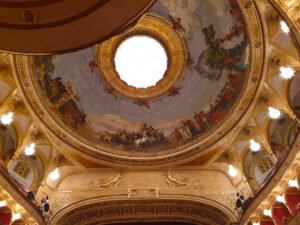
Teatro Costanzi today has a capacity of 1,560 seats, spread across the orchestra, three tiers of boxes, the balcony and the gallery, under a dome frescoed by Annibale Brugnoli from Perugia. The full page is the one on Rome Opera House.
A hall designed for sound
The builder Domenico Costanzi commissioned the design in 1879 from the Milanese architect Achille Sfondrini, a theater specialist, who gave priority to acoustics: the horseshoe-shaped hall was conceived as a sound box. Construction took 18 months. For a program in which the orchestra plays Stravinsky at full strength, the shape of the hall is a concrete advantage.
Where to sit for dance
For a ballet, choosing a seat follows different rules from opera. Dance is also watched from above: from the balcony and the first rows of the gallery you see the group patterns, which are essential in Bausch's «Sacre». From the orchestra you see faces and details, which matter enormously in Goecke's «Petruschka», all arms and hands. From the rear seats of the side boxes, on the other hand, you lose part of the stage: for a ballet it's the worst compromise.
The foundation's other venues
Teatro dell'Opera di Roma also runs Teatro Nazionale at Via del Viminale 51, opened in 1925 as the Supercinema, Sala Respighi and, in summer, the Baths of Caracalla. The triple bill is staged in the main hall, the Costanzi.
Something nobody tells you about Goecke / Robbins / Bausch at Teatro dell'Opera di Roma, from October 27 to November 8, 2026
What almost nobody says about a ballet triple bill is that the ticket costs much less than an opera, and that the best seats for dance are not the most expensive ones. The Teatro dell'Opera price list puts Goecke / Robbins / Bausch in the same band as «A Midsummer Night's Dream»: on opening night the front orchestra seat costs 110 euros, against 170 for an opera like «Falstaff». For the other performances it drops to 85.
But the most interesting figure is up high. The second and third rows of the balcony cost 30 euros on opening night and 25 for the other performances, the first gallery 25 and 22, the second gallery 22 and 20. For a ballet like Bausch's «Sacre», in which the pattern of the group on the earth-covered stage is half the show, the view from above is the best possible. Those sitting in the orchestra see the dancers, those sitting in the balcony see the choreography.
The second thing nobody says concerns the earth. Bausch's «Sacre» is danced on a stage covered in earth, and this means a technical interval is needed between one ballet and the next to prepare the stage. The «Sacre» is likely to close the evening for exactly this reason. If you arrive late and plan to go in after the first piece, remember that once the show has started there is no access to the orchestra or to the numbered seats in the balcony and gallery.
Third thing: the triple bill is shorter than an opera. Three ballets of half an hour or a little more, with the intervals. A 20:00 performance ends early, leaving time for a real dinner after the theater.
Goecke / Robbins / Bausch tickets and prices
For Goecke / Robbins / Bausch, Teatro dell'Opera applies the price band of the ballets «A Midsummer Night's Dream» and Goecke / Robbins / Bausch: on opening night from 22 to 110 euros, for the other performances from 17 to 85 euros, depending on the section.
Prices by section
- Front orchestra seats, rows 1-13: 110 euros on opening night, 85 for the other performances.
- Orchestra seats, rows 14-19 and side seats: 100 and 80 euros.
- Central boxes at orchestra level, first and second tier, front seats: 110 and 85 euros, rear seats: 90 and 70 euros.
- First-tier side boxes, front seats: 95 and 70 euros, rear seats: 65 and 40 euros.
- Second-tier side boxes, front seats: 65 and 45 euros, rear seats: 30 and 20 euros.
- Third-tier side boxes, front seats: 40 and 30 euros, rear seats: 23 and 17 euros.
- Balcony first row: 45 and 35 euros, second and third rows: 30 and 25 euros.
- First gallery, rows 1-3: 25 and 22 euros, second gallery, rows 4-8: 22 and 20 euros.
Where to buy
The theater box office is at Piazza Beniamino Gigli 1, open Monday to Saturday from 10:00 to 18:00 and Sunday from 9:00 to 13:30, and it's closed on public holidays. Tickets for the same day's show are sold at the theater from one hour before until 15 minutes after the start. Online, you buy through the authorized presale network listed by the theater on the show's page. The theater asks the public to use only authorized channels.
Discounts
For some evenings, at the theater's discretion, there is a 25 percent last-minute discount on tickets sold from one hour before the start, excluding balcony and gallery. For under-30s there is the Carta Giovani Opera, which I cover further on. At the box office you can also use the Carta del Docente and the Carta della Cultura.
My advice for seeing Goecke / Robbins / Bausch at Teatro dell'Opera di Roma, from October 27 to November 8, 2026
The advice is clear: take a seat in the balcony or the first gallery, not in the orchestra. It costs less than a third, and for this program you see better. Bausch's «Sacre» is a choreography of masses, of circles, of diagonals, of bodies that crowd together and scatter on the earth: from above you grasp its structure, which from the orchestra you can only guess at. It's the advice to follow every time the program includes contemporary dance.
Second tip: listen to the music beforehand. Stravinsky's «Sacre» and «Petruschka», Debussy's «Prélude à l'après-midi d'un faune». They are three famous pieces, easy to find, which together last a little over an hour. Arriving with the music in your head lets you watch the dance without having to chase the score.
Third tip: if you can, watch «Pina» beforehand, the film Wim Wenders dedicated to Pina Bausch in 2011, presented at the Berlin Film Festival. Those who have seen it arrive at the Costanzi with their eyes prepared for Bausch's world and her dancers.
Finally, choose the performance carefully. For a first encounter with contemporary dance I recommend the Sunday afternoon at 16:30: the audience is more mixed, the atmosphere more relaxed, and you get out in time for dinner in Monti.
How to get to Teatro dell'Opera
Teatro Costanzi is a few minutes' walk from Piazza Beniamino Gigli to the Repubblica Teatro dell'Opera stop on Metro A. It's the simplest way, and on rainy evenings the driest.
By metro
Line A stops at Repubblica Teatro dell'Opera, in Piazza della Repubblica. From the square you reach the theater in a few minutes. If you're coming from Termini station you can take the same line or walk.
By bus
The theater lists these lines: on Via Nazionale H, 40, 60, 64, 70, 71, 170, 116T, on Via Depretis 70 and 71, on Via Cavour 16, 75, 84, 150 (holidays), 360, 590, 649, 714, at Termini station 16, 38, 75, 86, 90, 217, 310, 360, 649, 714. Via Depretis and Via Nazionale run along the sides of the theater.
By taxi
At the theater entrance there is a taxi service for the public, with Radio Taxi 6645, and during the intervals the house staff take bookings for the ride home. The theater also gives the number 06 6696 for bookings.
By car
I don't recommend the car. The area between Via Nazionale, Via del Viminale and Termini is central and busy, and the theater doesn't list its own parking. If you're coming from out of town, leave the car at a park-and-ride lot along Line A and continue by metro.
Another well-known fact, yet seldom mentioned
It's well known that Pina Bausch was one of the greatest choreographers of the 20th century. It's mentioned much less often how closely she was tied to Italy, and to Rome in particular. In 2006 Pina Bausch was named honorary director of the Accademia Nazionale di Danza in Rome, the school that produced a significant part of Italian dance. The «Sacre» at the Costanzi, performed by a Roman company, in a way closes a circle.
And then there's Italian cinema. In 1983 Pina Bausch acted in Federico Fellini's «And the Ship Sails On», as a blind princess. The citation for the Europe Theatre Prize, presented to her in Taormina on May 9, 1999, recalls precisely that role, as if to say that the choreographer hadn't forgotten that she had once been a Fellini character. In the same year the University of Bologna awarded her an honorary degree in performing arts.
Italy had honored her before too: the Premio Ubu for best foreign show in 1983, then again in 1990 and 1997. In 1985 the Venice Biennale Teatro, directed by Franco Quadri, devoted a retrospective to her at La Fenice. In 2004 she was named Commander of the Order of Merit of the Italian Republic.
The advice that follows is simple: Bausch's «Sacre» in Rome is not an exotic import, all the more so since 2025 it has been part of the Roman company's work. It's the return of an artist whom Italy loved and honored for 30 years, and whom Rome had wanted as honorary head of its dance academy.
House rules, dress and times
At Teatro dell'Opera di Roma, dark dress is welcome on opening evenings and at first performances, while for the other performances the theater doesn't give a dress code. The first performance took place on October 27.
What goes in the cloakroom
Umbrellas, hats, bags, helmets, cameras and recording devices must be left in the cloakroom. In the hall the use of cell phones is forbidden, as are photographs and any kind of recording. Food and drink are allowed only in the theater bars, and smoking is forbidden throughout the building.
Latecomers
Once the show has started there is no access to the orchestra or to the numbered seats in the balcony and gallery, and latecomers can wait in the foyer. In a triple bill, with intervals between one ballet and the next, those who arrive late miss at least the first piece. For the Sunday performance at 16:30, watch out for holiday afternoon traffic.
Lost property
For lost property the theater gives the number 06 48160284. The full rules are on the General Information page of the official website.
The right photo to take at Goecke / Robbins / Bausch at Teatro dell'Opera di Roma, from October 27 to November 8, 2026
Photos are forbidden in the hall, and for good reason: in a ballet, the flash of a phone can endanger a dancer. The right photo at the Costanzi is taken before the show or during the intervals, in the public areas.
The first is the empty hall seen from the balcony or the gallery, before the lights go down: the horseshoe of boxes, the dome frescoed by Annibale Brugnoli, the great crystal chandelier first lit in 1928. It's one of the most beautiful images of Rome at the theater, and those who chose a seat up high have it right in front of them.
The second is the facade on Piazza Beniamino Gigli, with the show posters. The triple bill has an official image, released by the theater, which stands out on the posters: photographing it with your ticket in hand is the simplest keepsake of the evening.
The third, for those who have seen the «Sacre», is an image that can't be taken: the earth-covered stage at the end of the performance, with the dancers dirty and exhausted at the curtain call. That one you'll keep without a phone. For those who still want to photograph the curtain call, the theater forbids any filming in the hall: respect the rule.
Outside the theater, a few minutes away, Piazza della Repubblica in the evening, with the fountain lit and the exedra, is the Roman photo that ends the day.
Some important events that happened here
Teatro Costanzi opened on November 27, 1880, with Gioachino Rossini's «Semiramide», in the presence of Umberto I and Queen Margherita, and became Teatro dell'Opera di Roma in 1946.
In between, some dates that made opera history: on May 17, 1890, the world premiere of Pietro Mascagni's «Cavalleria rusticana», on January 14, 1900, the world premiere of Giacomo Puccini's «Tosca». In 1905 the City Council set up the Orchestra Municipale, which in practice became the Costanzi orchestra until 1926. In 1907 the management passed to the impresario Walter Mocchi, and from 1912 it was run by his wife, the soprano Emma Carelli.
For those going to a ballet triple bill, Emma Carelli is the name to remember. In her 14 years at the head of the Impresa Costanzi she brought to Rome, among other things, Diaghilev's Ballets Russes. 20th-century dance, in short, entered this hall more than a century ago, and the Goecke / Robbins / Bausch triple bill is a direct descendant.
In 1926 the City of Rome bought the theater, which became the Teatro Reale dell'Opera, with a renovation by Marcello Piacentini. On February 27, 1928, came the second inauguration, with Arrigo Boito's «Nerone», and the chandelier with 27,000 crystal drops was lit. In 1935 the permanent chorus was founded at the wish of Tullio Serafin. In 1946 the theater took its current name, and in 1958 Piacentini carried out the final makeover ahead of the 1960 Olympics.
Who has passed through Goecke / Robbins / Bausch at Teatro dell'Opera di Roma, from October 27 to November 8, 2026
Teatro Costanzi has seen King Umberto I and Queen Margherita, present at the 1880 inauguration, and then Pietro Mascagni, Giacomo Puccini and Ottorino Respighi, whom the theater names as the musicians who shaped its destiny.
For dance, the most important visit was that of Diaghilev's Ballets Russes, brought to Rome by Emma Carelli, soprano and impresario, who from 1912 ran the theater for 14 years and also brought «La fanciulla del West», «Turandot», «Il trittico», «Parsifal» and «Samson et Dalila» to the Costanzi. A woman at the head of a major opera house in the first decades of the 20th century: a rare fact for the time, and a name that deserves to be better known.
Then the conductors the theater remembers in the history of its orchestra: Victor de Sabata, Gianandrea Gavazzeni, Herbert von Karajan, Carlo Maria Giulini, Karl Böhm, Zubin Mehta, Georges Prêtre, Georg Solti, Giuseppe Sinopoli, Mstislav Rostropovich, Riccardo Muti, Daniele Gatti. And a name nobody expects: among the band players included in the 1935 roster was Pietro Sordi, bass tuba, father of Alberto Sordi.
From this autumn the list grows with three choreographers who, in different ways, changed dance: Jerome Robbins, who brought ballet to Broadway and Broadway to ballet, Pina Bausch, who invented dance theater, and Marco Goecke, who now directs the Basel ballet. Two of them are no longer alive, but their choreographies pass through the Costanzi, entrusted to the dancers of the Roman company and to the baton of Andrew Litton.
Around the Costanzi: Viminale, Repubblica and the Esquiline
Teatro Costanzi stands between Via Nazionale, Via del Viminale and Via Depretis, a few minutes' walk from Piazza della Repubblica and Termini station.
Piazza della Repubblica and the Baths of Diocletian
Coming out of the metro you reach Piazza della Repubblica, home to the Basilica of Santa Maria degli Angeli e dei Martiri and the remains of the Baths of Diocletian. Toward Termini, Palazzo Massimo alle Terme houses the Museo Nazionale Romano. If you have a free afternoon before the Saturday performance at 18:00, you can combine museum and ballet without taking any transport.
Two churches a few steps away
From the opposite side of the square you reach Santa Maria della Vittoria in a few minutes: a short stop, ideal for the half hour before the theater opens.
Toward Monti and Santa Maria Maggiore
Going down Via Nazionale you come to Palazzo delle Esposizioni, and farther down the Monti district begins. Beyond Via Cavour, the Basilica of Santa Maria Maggiore is a good quarter of an hour's walk away.
Where to eat before and after the ballet
Around Teatro dell'Opera the places to eat are concentrated on Via Nazionale, Via del Viminale, the streets toward Termini and, a little farther on, the Monti district.
Before the show
For the 20:00 performances you can have an early dinner, around 18:30, in a trattoria near Via Nazionale or the Viminale. For Saturday at 18:00 and Sunday at 16:30, a late lunch and a light aperitivo in the area work best, leaving dinner for afterward.
After the show
A triple bill is shorter than an opera, and after the afternoon performances the whole evening is free. The Monti district is the most natural choice: you walk down from Via Nazionale and find a wide choice of osterias, wine bars and pizzerias. After the 20:00 performances it's best to book ahead.
The rule of thumb
I don't name places, because they change hands more often than theater seasons. The rule of thumb is simple: avoid places with a menu in five languages on the door in the streets around Termini, and push a few streets toward Monti.
Young people, families and accessibility at the Costanzi
For under-30s, Teatro dell'Opera offers the Carta Giovani Opera, at 10 euros, valid until November 10, 2026: so it covers all the performances of the triple bill.
The Carta Giovani Opera
The card is sold at the box office and gives a 50 percent discount on tickets if you buy at least three shows of the season, otherwise 30 percent, plus a free guided tour of the theater by reservation. For a student, the balcony or the gallery with the discount costs less than a movie ticket.
With teenagers
The theater doesn't publish age guidance for the triple bill. It's a show suitable for kids aged 12 and up, especially those who study dance. Bausch's «Sacre» is intense, at times violent in its physicality: explain it beforehand, so it doesn't catch them unprepared. The Sunday afternoon is the most suitable performance.
Accessibility
For Teatro Costanzi, the theater lists a guided tour route accessible to people with walking difficulties, except for a few points such as the Royal Box and the gallery. For shows, the advice is to contact the box office before buying, by phone at 06 48160255 or 06 4817003 or at ufficio.biglietteria@operaroma.it, explaining your needs. People with mobility difficulties should avoid the gallery.
FAQ about Goecke / Robbins / Bausch
When is Goecke / Robbins / Bausch on stage at Teatro dell'Opera?
The Goecke / Robbins / Bausch triple bill is on stage at Teatro Costanzi from October 27 to November 8, 2026: Tuesday 27 and Wednesday October 28 at 20:00, Thursday 5 and Friday November 6 at 20:00, Saturday, November 7, at 18:00 and Sunday, November 8, at 16:30.
Which ballets are in the triple bill?
The Goecke / Robbins / Bausch triple bill includes «Petruschka» by Marco Goecke to music by Stravinsky, «Afternoon of a Faun» by Jerome Robbins to music by Debussy and «Le Sacre du printemps» by Pina Bausch to music by Stravinsky. Andrew Litton conducts the Orchestra of Teatro dell'Opera.
How much are tickets for Goecke / Robbins / Bausch?
Tickets for Goecke / Robbins / Bausch at the Costanzi cost, on opening night, from 22 euros in the second gallery to 110 euros in the front orchestra and central boxes, and for the other performances from 17 to 85 euros. Under-30s can use the Carta Giovani Opera, with 30 or 50 percent discounts.
Who dances in Pina Bausch's «Sacre» in Rome?
In Pina Bausch's «Sacre du printemps» at Teatro dell'Opera di Roma, Eleonora Abbagnato and Damiano Ottavio Bigi dance with the theater's Corps de Ballet. The choreography is staged by Clémentine Deluy and Jorge Puerta Armenta, and sets and costumes are by Rolf Borzik.
How do you get to Teatro dell'Opera di Roma?
Teatro dell'Opera di Roma, in Piazza Beniamino Gigli, is a few minutes' walk from the Repubblica Teatro dell'Opera stop on Metro A. The area is also served by the buses on Via Nazionale, including H, 40, 60, 64, 70, 71 and 170, and by those on Via Cavour and at Termini.
Is there a dress code?
At Teatro dell'Opera di Roma, dark dress is welcome at the first performance, which for Goecke / Robbins / Bausch was on Tuesday, October 27. For the other performances the theater doesn't give a dress code. Bags, umbrellas and hats must be left in the cloakroom.
What is the best seat to watch a ballet at the Costanzi?
For a ballet like Goecke / Robbins / Bausch, the balcony and the first gallery offer the best view of the group patterns, at a price between 22 and 45 euros, while the orchestra shows faces and details better. The rear seats of the side boxes are the least suited to dance.
One last tip: take two seats in the balcony, listen to Stravinsky's «Sacre» in the car on the way, and stay seated until the last round of applause. Pina Bausch's «Sacre», live, changes the way you watch dance forever.
Article written by the editorial team of Tour Leader Pro, contact them for Private/Corporate/V.I.P. Tours and Experiences.
Planning a trip to Rome? The English-language guides for visiting the city are on ItalyPlanner.com.
Contact Information
Nearby
 Rome Opera House100 m
- St. Paul’s Within the Walls100 m
- Basilica of San Vitale100 m
- Teatro Nazionale100 m
- Enrico Fermi Center – Historical Museum of Physics and Study and Research Center at the Viminale200 m
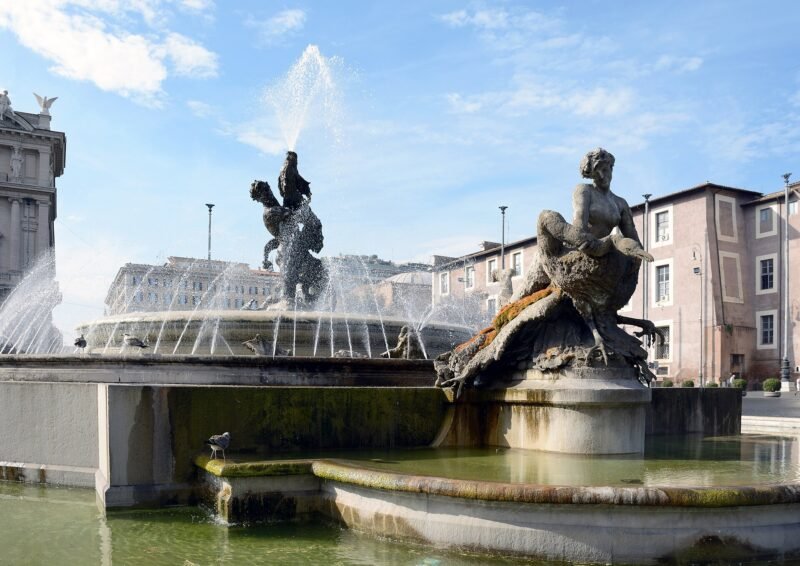
- Fontana delle Naiadi200 m

Upcoming events nearby
- Swan Lake at Teatro dell’Opera di Roma, December 17 to 31, 2026100 m
- Andrea Chénier at the Teatro dell’Opera di Roma, January 17-26, 2027100 m
- Il barbiere di Siviglia with Cecilia Bartoli at Teatro dell’Opera di Roma, May 27, 2027100 m
- The Rake’s Progress at Teatro dell’Opera di Roma, November 27 to December 5, 2026100 m

You might also like
- Mahler’s Third Symphony by John Neumeier at Teatro dell’Opera di Roma, February 4 to 10, 2027
- Motus by Blanc, McGregor and Ekman at Teatro dell’Opera di Roma, March 31 to April 4, 2027
- Iphigénie en Tauride at Teatro dell’Opera di Roma, April 18 to 27, 2027
- The Nutcracker at Teatro Nazionale, November 24 to December 3, 2026
- Raffaella il Musical at Teatro Brancaccio, February 10 to March 6, 2027
- Marco Goldin, Monet. Una vita a colori at Teatro Brancaccio, November 23, 2026