Il barbiere di Siviglia with Cecilia Bartoli at Teatro dell’Opera di Roma, May 27, 2027
In short. Gioachino Rossini's Il barbiere di Siviglia with Cecilia Bartoli as Rosina is on Thursday, May 27, 2027 at Teatro Costanzi, the main hall of Teatro dell'Opera di Roma at Piazza Beniamino Gigli 7, for one night only and in concert form.
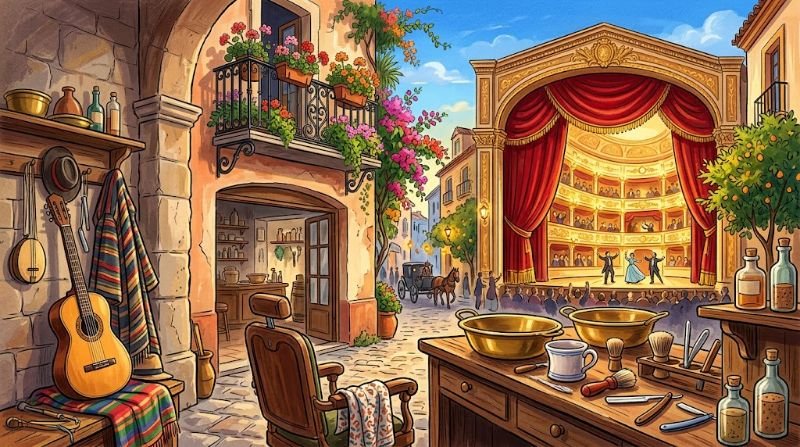
Gioachino Rossini's Il barbiere di Siviglia with Cecilia Bartoli as Rosina is on Thursday, May 27, 2027 at Teatro Costanzi, the main hall of Teatro dell'Opera di Roma at Piazza Beniamino Gigli 7, for one night only and in concert form. Get there by Metro A, Repubblica Teatro dell'Opera stop, or by the buses on Via Nazionale (H, 40, 60, 64, 70, 71, 170, 116T) and Via Depretis (70, 71). Prices and start time are published on the official Teatro dell'Opera di Roma website. Tickets for individual shows of the 2026/27 season are on sale from October 8, 2026, at the box office at Piazza Beniamino Gigli 1 and on the authorized presale network the theater lists on the show's page.
Language: opera sung in its original language, Italian. No English surtitles are announced, so check with the theater.
On stage, alongside the Roman singer, are Les Musiciens du Prince, the Monaco orchestra she founded herself, conducted by Gianluca Capuano, and the Chorus of Teatro dell'Opera di Roma. The date isn't picked at random: on May 27, 1987 Cecilia Bartoli sang Rosina for the first time right here at Costanzi, and 40 years later, to the day, she returns to the same theater and the same role to celebrate her career. To put it plainly: it's the evening of Rome's 2026/27 season worth planning a trip around, and the only one for which I'd recommend buying your ticket on the very day sales open.
Il barbiere di Siviglia with Cecilia Bartoli in brief: date, venue, cast
Il barbiere di Siviglia with Cecilia Bartoli is a one-night event, Thursday, May 27, 2027, at Teatro Costanzi in Rome, in concert form, with Les Musiciens du Prince conducted by Gianluca Capuano and the Chorus of Teatro dell'Opera di Roma. It's one of the two titles the 2026/27 season offers for one night only in concert form. The other is Bluebeard's Castle with Anna Netrebko, on December 4, 2026.
Date and venue
Thursday, May 27, 2027, Teatro Costanzi, Piazza Beniamino Gigli 7, a few minutes' walk from Piazza della Repubblica and Termini station. A single performance: no repeats, no youth previews, no subscription series to fit around. If you're there, you're there.
The announced performers
The theater has announced Cecilia Bartoli as Rosina, Les Musiciens du Prince, a Monaco-based orchestra, conducted by Gianluca Capuano, and the Chorus of Teatro dell'Opera di Roma, which the foundation has entrusted to Ciro Visco since November 2022. The other soloists, that is Count Almaviva, Figaro, Don Bartolo, Don Basilio, Berta and Fiorello, haven't been named yet in the season presentation: check the show's page on the theater's website before you buy.
Concert form
The official presentation speaks of a one-night event in concert form. That means no sets and no staging in the traditional sense: the orchestra on stage, the singers in front of it, all attention on the music. For an opera like Il barbiere di Siviglia, which lives on pace and theater, it might seem like a loss. Further on we explain why, with this performer, in our opinion it's the opposite.
When to buy tickets
According to the calendar published by Teatro dell'Opera, the subscription campaign closed on September 26, 2026, other subscription types can be bought from October 1, and tickets for individual shows are on sale from October 8, 2026. For a one-night event with a name this big, October 8 is the date to mark in your calendar.
40 years later: Cecilia Bartoli's May 27, 1987 at Costanzi
On May 27, 1987 Cecilia Bartoli debuted as Rosina at Teatro dell'Opera di Roma, in an Il barbiere di Siviglia conducted by Maximiano Valdes and directed by Antonello Madau Diaz: the theater celebrates her 40th career anniversary exactly 40 years later, on May 27, 2027.
The cast list back then
The historical archive of Teatro dell'Opera keeps the record of that 1986/87 production. Maximiano Valdes on the podium, direction by Antonello Madau Diaz and Silvia Cassini, sets and costumes by Roberto Laganà. The cast: Maurizio Comencini as Count Almaviva, Mario Bertolino as Bartolo, Cecilia Bartoli as Rosina, Angelo Romero as Figaro, Silvano Pagliuca as Basilio, Andrea Snarski as Fiorello, Laura Zanini as Berta and Fernando Jacopucci as the officer.
Three nights in Rome, two in Berlin
There were three Rome performances, on May 27, 29 and 31, 1987. The production then went on tour to Berlin, to the Städtische Oper, on June 9 and 10, 1987: five performances in all. For the Berlin nights the archive record notes a single cast change, in the role of Fiorello, given to Giovanni De Angelis. It's a detail that makes you smile: the young Roman who debuted at Costanzi in May was already singing abroad in June with her theater's company.
The theater of her debut
In its season presentation Teatro dell'Opera writes that Bartoli is celebrating 40 years of career at Costanzi, the theater where she debuted, and that she first sang the Barbiere at Opera di Roma on May 27, 1987. Biographical timelines also record, in that same 1987, King Alboino in Vincenzo Legrenzio Ciampi's Bertoldo, Bertoldino e Cacasenno at Teatro Filarmonico in Verona, and an appearance as a child, at age nine, as the shepherd boy in Tosca. The point, if you're going to the theater on May 27, 2027, doesn't change: Bartoli's Rosina was born here, on this stage, and the celebration returns to where it started.
A single entry in the archive
One fact stands out. In the historical archive of Teatro dell'Opera, Cecilia Bartoli's personal record lists a single title: that 1986/87 Barbiere. A 40-year career that has gone through Salzburg, Zurich, the Metropolitan, La Scala and Monte-Carlo, and in her own city's theater a single recorded opera production, the one of her debut. The 2027 return closes a circle left open for four decades, and it's one of the reasons this evening will have an atmosphere in the hall that few others can match.
Who Cecilia Bartoli is: the career of the Roman mezzo-soprano
Cecilia Bartoli is a mezzo-soprano born in Rome on June 4, 1966, winner of five Grammy Awards out of 17 nominations, with more than 10 million records sold. Since 2012 she has directed the Salzburg Whitsun Festival and since 2023 the Opéra de Monte-Carlo.
A family of singers
Bartoli was born into a family of musicians: her mother Silvana Bazzoni and her father Pietro Angelo Bartoli were both opera singers. Her first contact with the stage came at age nine, in the small part of the shepherd boy in Tosca. Her real vocal training began at 13, under her mother's guidance, and continued at the Rome Conservatory, where she also studied piano and trumpet as secondary instruments. Her mother would remain her voice teacher throughout her career: an old-fashioned, workshop-style bond that explains a lot about her daughter's technical solidity.
The Mozart and Rossini years
In her early years Bartoli's repertoire was mostly Mozart and Rossini. After the 1987 Rome Rosina came, among others, Lucilla in La scala di seta at the Rossini Opera Festival in Pesaro in 1988, Despina in Così fan tutte at Teatro Mercadante in Naples, Cherubino in Le nozze di Figaro at the Paris Opéra and Idamante in Idomeneo in Hamburg in 1990, and Isolier in Le Comte Ory at La Scala in 1991. In that same 1991 she sang Mozart's Requiem in Vienna under Georg Solti for the bicentenary of the composer's death. In 1993 she was Zerlina in the Don Giovanni conducted by Riccardo Muti at La Scala and Despina in Salzburg with the Vienna Philharmonic.
The Metropolitan and the great opera houses
In 1996 she debuted at the Metropolitan Opera in New York as Despina, conducted by James Levine. The following year she was Angelina in La Cenerentola and in 1998 Susanna in Le nozze di Figaro, again at the Met. Over her career she has worked with conductors like Herbert von Karajan, Daniel Barenboim, Nikolaus Harnoncourt and Riccardo Muti, and sung at Covent Garden, La Scala, the Bavarian State Opera in Munich and Zurich Opera, which for many years was her artistic home: there she performed, among others, Paisiello's Nina, Il turco in Italia, Halévy's Clari, Le Comte Ory, Rossini's Otello as Desdemona in 2012 and Alcina in 2014.
The baroque turn and the rediscoveries
From the 1990s Bartoli devoted herself with growing passion to rediscovering forgotten operas, with a preference for baroque and for composers between the baroque and classical eras. That's how her great single-composer albums came about: The Vivaldi Album with Il Giardino Armonico in 1999, the records devoted to Gluck and Salieri, Opera proibita with Marc Minkowski in 2005, Maria, devoted to Maria Malibran, in 2007, Sacrificium on the castrati in 2009, Mission on Agostino Steffani in 2012, St. Petersburg in 2014 and Farinelli in 2019. It's the part of her work that changed audience taste: repertoire that used to be for specialists made it onto the charts.
Awards and honors
In 2011 she won the Grammy for best classical vocal performance with Sacrificium. She has received the Bellini d'oro from the city of Catania in 2008, the Handel Music Prize in Halle and the Léonie Sonning Music Prize in 2010, the Herbert von Karajan Music Prize in Baden-Baden in 2012 and the Polar Music Prize in 2016. She has been a Knight of the Order of Merit of the Italian Republic since 2003, a Knight of the Ordre des Arts et des Lettres in France and a Commander of the Order of Cultural Merit of the Principality of Monaco.
Salzburg and Monte-Carlo
Since 2012 Bartoli has been artistic director of the Salzburg Whitsun Festival, a role extended to 2031. In her first year she sang Cleopatra in Handel's Giulio Cesare there. In 2016 she championed the creation of Les Musiciens du Prince at the Opéra de Monte-Carlo, and since 2023 she has run the Monaco opera house. It's a rare path: a singer at the height of her career who leads a festival and an opera house, and who chooses her own projects instead of waiting for offers from others. She lives between Lake Zurich and Rome. In 2011 she married Swiss baritone Oliver Widmer.
A curious fact about Il barbiere di Siviglia with Cecilia Bartoli at Teatro dell'Opera di Roma, May 27, 2027
Rosina, the role in which Cecilia Bartoli returns to Costanzi, was written by Rossini for a low voice: at the world premiere on February 20, 1816 at Teatro Argentina it was sung by contralto Geltrude Righetti Giorgi. The 19th- and 20th-century tradition then often gave it to light sopranos, raising its keys and loading it with high notes. The return to mezzo-sopranos is a relatively recent story.
That's why Rosina is the right role for Bartoli, and why her first Rosina, in 1987, came at a meaningful moment. The voice Rossini wrote for was that of a contralto with a full middle register and soft agility, not that of a soprano climbing to the top of the staff. Righetti Giorgi, after all, carried particular weight in the company: it was she who suggested to Rossini, for the revival at Teatro Contavalli in Bologna in summer 1816, that he adapt the tenor's final rondo, Cessa di più resistere, for Rosina. Rossini agreed, and that showpiece, born for Almaviva, went to the prima donna for a summer.
Then there's a second detail the audience almost always overlooks. The Barbiere staged in Rome in 1816 wasn't called Il barbiere di Siviglia: the title at the premiere was Almaviva, o sia L'inutile precauzione, chosen out of respect for Giovanni Paisiello's Il barbiere di Siviglia, which had been a big hit since 1782. When you read the program on May 27, 2027, remember that the name everyone knows the opera by today is the one Rossini, in Rome, didn't dare use.
One last curious fact, about recordings: in 1988, just a year after her Rome debut, Bartoli recorded Rosina for Decca with Leo Nucci as Figaro, William Matteuzzi as Almaviva and Giuseppe Patanè on the podium, and the same year she sang it at the Schwetzingen festival in a production conducted by Gabriele Ferro, later released on video. Costanzi Rosina was, in short, the first step in a role that has been with her from the start.
Les Musiciens du Prince and Gianluca Capuano, Cecilia Bartoli's orchestra
Les Musiciens du Prince is the orchestra founded in spring 2016 at the Opéra de Monte-Carlo at Cecilia Bartoli's initiative, with the theater's then director Jean-Louis Grinda and the support of Prince Albert II and the Princess of Hanover. Since 2019 its principal conductor has been Milan-born Gianluca Capuano.
An orchestra built around a singer
It's rare for a singer to found an orchestra. Bartoli did it in Monaco, and she has been its artistic director from the start. The ensemble's first concert was held at the Prince's Palace of Monaco. In 2026 the orchestra celebrated 10 years of activity, between Monte-Carlo and tours on international stages. Among its most recent recordings is an album for Naïve's Vivaldi Edition, the Concertos for multiple instruments, conducted by Capuano himself. For the Rome audience it means hearing an ensemble that knows Bartoli's way of singing like no other: not just any guest orchestra, but hers.
Who Gianluca Capuano is
Gianluca Capuano was born in Milan and graduated in organ, composition and conducting from the conservatory there. He then specialized in early music at the Scuola Civica in Milan, working on questions of notation, sources and performance of early music, and earned a doctorate in philosophy from the University of Milan. He has performed as an organist and continuo player and conducted in Europe, the United States, Russia and Japan. In 2006 he founded the vocal and instrumental ensemble Il Canto di Orfeo.
The partnership with Bartoli
His artistic relationship with Bartoli is a long one. Capuano conducted her Norma at the Edinburgh and Baden-Baden festivals and at the Théâtre des Champs-Élysées in 2016. In January 2017, at the singer's request, he conducted Les Musiciens du Prince in La Cenerentola in Monte-Carlo, later taken to Dortmund, Hamburg, Amsterdam, Martigny, Versailles and Luxembourg. In that same 2017 he conducted the orchestra at the Salzburg Festival in Ariodante and La donna del lago, and later in the new Salzburg production of Alcina with Bartoli, Philippe Jaroussky and Sandrine Piau. On March 2, 2019 the Opéra de Monte-Carlo announced his appointment as principal conductor.
Why it matters for the Barbiere
Capuano comes to Rossini from early music, with the training of an organist and continuo player. For the Barbiere that's a concrete advantage: the secco recitatives, which the score gives to the harpsichord, and Rosina's runs need a conductor who breathes with the singer, not one who drags them along. In the 2026/27 season of Teatro dell'Opera his name appears among the guest conductors alongside Juraj Valčuha, Henrik Nánási, Nicola Luisotti and Daniel Oren.
Something nobody tells you about Il barbiere di Siviglia with Cecilia Bartoli at Teatro dell'Opera di Roma, May 27, 2027
The Barbiere in which Cecilia Bartoli debuted in 1987 was the revival, with the same creative team, of a production Teatro dell'Opera had taken to Teatro Argentina the year before, that is, to the hall where the opera was born in 1816. Direction by Antonello Madau Diaz, sets and costumes by Roberto Laganà in both editions.
The theater's historical archive documents it precisely. In the 1985/86 season Opera di Roma staged Il barbiere di Siviglia at Teatro Argentina for 15 performances, from February 16 to March 21, 1986, with Marcello Panni on the podium. It was a symbolic return: the Barbiere came back to the theater of its world premiere, 170 years later. On the bill, in rotation, were leading names: Agnes Baltsa as Rosina on two nights, Leo Nucci as Figaro on three, Sesto Bruscantini as Bartolo on four, alongside Raquel Pierotti and Adriana Anelli as Rosina, Paolo Barbacini as Almaviva and Justino Diaz as Basilio.
A year later, at Costanzi, the same director and the same designer created the Barbiere of Bartoli's debut, and two performers moved from one production to the other: Angelo Romero, Figaro in both, and Mario Bertolino, Bartolo in both. The young Bartoli, in short, joined a production that was already well run in, created to bring Rossini back to his original hall, alongside colleagues who knew that Barbiere by heart. That's how repertory theaters used to grow young singers, and anyone who works with singers knows how much it counts to debut in a machine that runs smoothly.
There's a curious corollary. Teatro Argentina is less than half an hour's walk from Costanzi. If you have time, on the afternoon of May 27, 2027 you can walk from the hall where the Barbiere was born amid the booing to the one where its most celebrated Rosina of today began. I talk about it further on, in the section on the neighborhood.
Rossini's Il barbiere di Siviglia: a masterpiece born in Rome
Il barbiere di Siviglia is an opera buffa in two acts by Gioachino Rossini to a libretto by Cesare Sterbini, based on Beaumarchais's 1775 comedy, first staged on February 20, 1816 at Teatro di Torre Argentina in Rome. It's the quintessential opera buffa, and one of the most performed operas in the world.
The commission from Sforza Cesarini
The opera was commissioned by Francesco Sforza Cesarini, impresario of Teatro Argentina, the theater his grandfather Giuseppe Sforza had built in 1732. In December 1815 the impresario agreed with the then 23-year-old Rossini on a cheerful opera to be staged during the 1816 Carnival. A few days before the premiere, on February 16, 1816, Sforza Cesarini died of a heart attack. The premiere went ahead anyway, on February 20, as planned.
The fiasco of the premiere and the triumph of the second night
The premiere was swept away by a storm of protests. The hall was full of supporters of the old master Giovanni Paisiello, author of a 1782 Il barbiere di Siviglia, determined to make the young rival's opera fail. The following night, though, the second performance was a triumph, and before long Rossini's opera eclipsed Paisiello's, going on to become the Pesaro composer's most famous work. I like this story because it disproves a cliché: masterpieces aren't always recognized right away, and the Roman audience of 1816 took exactly one night to change its mind.
The original cast
On the night of February 20, 1816, with Rossini conducting, Count Almaviva was Manuel García, Bartolo Bartolomeo Botticelli, Rosina the contralto Geltrude Righetti Giorgi, Figaro Luigi Zamboni, Basilio Zenobio Vitarelli, Berta Elisabetta Loyselet and Fiorello Paolo Biagelli. It was a company of singers Rossini knew and for whom he wrote made-to-measure music, starting with his Rosina.
The plot in a few lines
Count Almaviva is in love with Rosina, the ward of old Don Bartolo, who wants to marry her himself. With the help of Figaro, barber and the town's jack-of-all-trades, the Count shows up first as Lindoro, then as a drunken soldier, then as Don Alonso, a fake music teacher sent by a Don Basilio supposedly down with a fever. Between hidden notes, slander, a disappearing ladder and a notary who arrives at just the right moment, the two lovers marry under the guardian's nose, leaving him the meager consolation of keeping the dowry.
The pages everyone knows
The overture, one of Rossini's most famous, actually comes from Aureliano in Palmira, and Rossini had already reused it in Elisabetta, regina d'Inghilterra. Then Figaro's cavatina Largo al factotum, Rosina's cavatina Una voce poco fa, Basilio's slander aria, La calunnia è un venticello, Bartolo's aria A un dottor della mia sorte, the stretta of the first-act finale, the storm and the trio Ah! qual colpo inaspettato in the second act. Even if you've never set foot in an opera house, you'll recognize at least three of them.
Guitars, not harps
A detail for attentive listeners: in the original score Rossini calls for guitars, not the harp that later entered traditional performance practice, and he never wrote the trombones heard in many performances. The orchestra also includes a wind machine, and the secco recitatives are accompanied by the harpsichord. The most widely used critical edition is the one edited by Alberto Zedda for Ricordi in 1969, the reference if you want to hear the Barbiere as Rossini wrote it.
Rosina, Cecilia Bartoli's role in the Barbiere
Rosina is Don Bartolo's ward, written by Rossini for a contralto voice, and she has two key solo moments: the cavatina Una voce poco fa in the first act and the music lesson aria in the second. It's the role in which Cecilia Bartoli debuted at Costanzi in 1987 and with which she returns in 2027.
Una voce poco fa
The first-act cavatina is the character's calling card: a seemingly docile girl who in a few minutes reveals she can be a viper if crossed. Rossini built its cabaletta, Io sono docile, from material taken from Elisabetta, regina d'Inghilterra. It's the page the audience waits for, and the one where a mezzo-soprano with Bartoli's agility can afford variations and colors that a light soprano, singing in a higher key, rarely reaches.
The music lesson
In the second act Rosina sings in front of the fake music teacher. Rossini wrote the aria Contro un cor che accende amore for this moment, but in performance tradition prima donnas often used the scene as a free slot, filled with arias by other composers. There are also authorized alternative arias, like La mia pace, la mia calma, and Ah, s'è ver, in tal momento, written for Joséphine Fodor, Rosina in Venice in 1819.
Rosina in concert
In concert form the acting moves almost entirely into the voice and the gaze. Bartoli has always been known for her stage presence as well as her virtuosity, and hers is a presence that fills the stage even without sets. A prediction: you'll hear the first-act cavatina as you've never heard it in the theater, because the sound of the orchestra on stage, instead of in the pit, changes the relationship between voice and instruments.
Opera in concert form: what you see and what you hear
An opera in concert form is a complete performance of the score without sets or traditional staging: the orchestra plays on stage, the singers stand in front of the orchestra, the chorus behind. That's how Teatro dell'Opera di Roma presents, in the 2026/27 season, both the Barbiere with Bartoli and Bluebeard's Castle with Anna Netrebko.
The advantage for listening
With the orchestra on stage, the sound reaches the hall differently than from the pit: more direct, more present, with the instruments in view. For an orchestra like Les Musiciens du Prince, which is worth watching as it plays, that's an advantage. For the voices, having the orchestra close by calls for balance and an attentive conductor, which Capuano, used to working with Bartoli, knows well.
The theater remains
The Barbiere is an opera built on theatrical play, and no experienced singer performs it standing still as at a recital. In a well-prepared concert performance the singers move, look at each other, answer each other, and the ensemble scenes keep their comic pace. If you know the plot you'll follow it easily. If you don't, read it the night before.
A celebration
Then there's something no set could give: this is an evening of celebration. The May 27, 2027 audience goes to Costanzi for the Barbiere, of course, but also and above all for Cecilia Bartoli and her 40 years of career. Concert form puts the star at the center, with no filters, and it's the choice that fits the meaning of the evening.
My tip for Il barbiere di Siviglia with Cecilia Bartoli at Teatro dell'Opera di Roma, May 27, 2027
My tip for the Barbiere with Cecilia Bartoli is clear: buy on October 8, 2026, the day individual ticket sales open, and choose the balcony or a front seat in a central box, where the voice reaches you head-on and you can see the whole orchestra on stage.
Here's the reasoning. It's a one-night event, with no repeats: if the best seats sell out, there's no second chance. It's a celebration, and Bartoli's audience comes from all over Europe, because the singer has worked for decades between Zurich, Salzburg and Monte-Carlo and has followers everywhere. And it's a Thursday night, which for anyone coming from out of town means planning a day off or a long weekend that starts early.
On where to sit. In concert form the orchestra is on stage and the singers in front: from the side boxes, especially in the back seats, you lose part of the stage, and above all you see the musicians at an angle. Costanzi balcony faces the stage and gives the most balanced sound in the hall. The front rows of the orchestra seats give physical closeness to the singer, but with the orchestra on stage the rows too far forward look up from below. Better the balcony or the central orchestra rows, and on a tight budget the first gallery, where you see from far away but hear everything.
One last recommendation, the most practical: arrive at least 40 minutes early. The cloakroom is mandatory for bags and umbrellas, once the show has started you can't get into the orchestra seats or the numbered seats in the balcony and gallery, and on a night like this the hall fills up early. You'll want to be there when Bartoli walks on stage: the first applause, the one before a single note, will be part of the show.
Tickets for Il barbiere di Siviglia with Cecilia Bartoli at Costanzi
Tickets for Il barbiere di Siviglia with Cecilia Bartoli are on sale from October 8, 2026, the date from which Teatro dell'Opera opens sales for individual shows of the 2026/27 season. Prices for the title are published on the theater's official website, in the Prices section and on the show's page.
Where to buy
The theater box office is at Piazza Beniamino Gigli 1, open Monday to Saturday from 10:00 to 18:00 and Sunday from 09:00 to 13:30. It's closed on public holidays. Tickets for the same day's show are sold at the theater from an hour before until 15 minutes after the start. Online, you buy through the authorized presale network the theater lists on the show's page. Teatro dell'Opera explicitly asks you to use only channels authorized by the foundation and accepts no responsibility for purchases made elsewhere: for a one-night, high-demand event, the risk of finding tickets at inflated prices on unofficial channels is real.
How to pay at the box office
At the box office you can pay in cash, by cashier's or bank check made out to Fondazione Teatro dell'Opera di Roma, by debit card and with the main credit cards. The Carta del Docente and Carta della Cultura are also accepted, during box office hours.
Subscriptions
The theater ran its Gran Teatro All Inclusive and Gran Teatro subscription campaign from July 1 to 31 and from September 1 to 26, 2026. Other subscription types can be bought from October 1, 2026. To find out if and how the evening with Bartoli is included in the pick-your-own packages, ask the box office directly: one-night events often have their own rules.
The seating sections
The Costanzi price list distinguishes premium orchestra seats (rows 1 to 13), orchestra seats (rows 14 to 19 and side seats), boxes on the orchestra level and on the first, second and third tiers, central and side, split into front and back seats, the balcony (first row, second and third rows) and the gallery, split into the first gallery (rows 1 to 3) and the second gallery (rows 4 to 8). The updated seating plan is published in the maps section of the theater's website, and it's the first thing to look at before you choose.
Boxes: watch out for the back seats
In the boxes the price is per seat, and the price list shows for each type of box how many seats are in front and how many behind. A six-seat central box has three seats in front and three behind. For an evening when you want to see the star, a back seat in a side box is a compromise I'd advise against.
How to get to Teatro dell'Opera for the evening with Cecilia Bartoli
Teatro Costanzi is reached by Metro A, Repubblica Teatro dell'Opera stop, in Piazza della Repubblica, a few minutes' walk from Piazza Beniamino Gigli. It's the simplest way, and in late May the most pleasant too: you come up to street level in front of the Baths of Diocletian.
By metro
Line A stops at Repubblica Teatro dell'Opera. From the square you reach the theater in a few minutes on foot. If you're coming from Termini station you can take the same line A or walk, because the distance is short.
By bus
The theater lists these lines: Via Nazionale, H, 40, 60, 64, 70, 71, 170, 116T. Via Depretis, 70 and 71. Via Cavour, 16, 75, 84, 150 (holidays), 360, 590, 649, 714. Termini station, 16, 38, 75, 86, 90, 217, 310, 360, 649, 714. Via Depretis and Via Nazionale run along the sides of the theater: pick the line based on where you're starting from and get off there.
By taxi
There's a taxi service for the audience at the theater entrance, with Radio Taxi 6645, and during intermissions the house staff can book your ride home. The theater also lists a dedicated booking number, 06 6696. It's the service I recommend if you're leaving late, especially if you're staying far from line A.
By car
I'd advise against driving. The area between Via Nazionale, Via del Viminale and Termini is central and congested, the theater doesn't list its own parking, and the travel information published by the foundation covers only metro, bus and taxi. If you're coming from out of town, leave your car at a park-and-ride along line A and continue by metro.
Arriving by train
If you're coming to Rome specifically for the evening, Termini station is the most convenient option: from the forecourt you reach the theater on foot or with one metro stop. My advice is not to book a train home the same night unless you have a very wide margin: the end time of a celebration night, with applause and possible encores, is impossible to predict.
Another well-known fact, yet one rarely mentioned
Teatro Costanzi opened on November 27, 1880 with a Rossini opera, Semiramide, in the presence of King Umberto I and Queen Margherita, and just six months later, in May 1881, Il barbiere di Siviglia was already on its stage. Rossini, put simply, is the composer with which Rome's opera house opened its doors.
Everyone knows that Cavalleria rusticana and Tosca premiered at Costanzi. Far fewer remember that the theater's first season spoke Rossini. The historical archive of Teatro dell'Opera records an Il barbiere di Siviglia with four performances, on May 7, 9, 24 and 31, 1881, conducted by Alessandro Pomè, with Bianca Donadio as Rosina, Alessandro Polonini as Figaro, Vittore Deliliers as Almaviva, Firmino Migliara as Bartolo and Giovanni Mirabella as Don Basilio. Since then the opera has returned to Costanzi in dozens of seasons: the archive lists productions in 1882, 1883 and 1885, throughout the 20th century and up to the present day.
The bond between Rossini and Rome is also closer than people think. The Barbiere was born at Teatro Argentina in 1816, and La Cenerentola premiered at Teatro Valle in 1817. Teatro dell'Opera underlines this in the same season as the Bartoli evening: from October 1 to 10, 2027 it will bring to Teatro Valle, in the year of its reopening, a new Cenerentola directed by Mario Martone with Michele Mariotti on the podium, 210 years after the world premiere. If you love Rossini, Rome's 2027 offers two dates that speak to each other.
And there's one last connection, involving the star herself: Bartoli was one of the great Angelinas of her time, at the Metropolitan in 1997 and in the 2017 Monte-Carlo Cenerentola with Capuano, and on October 28, 2018 she sang at the reopening of Teatro Galli in Rimini, closed since 1943 after wartime bombing, in an evening that staged La Cenerentola itself. For her, Rossini has always been a homecoming.
Teatro Costanzi, the evening's hall
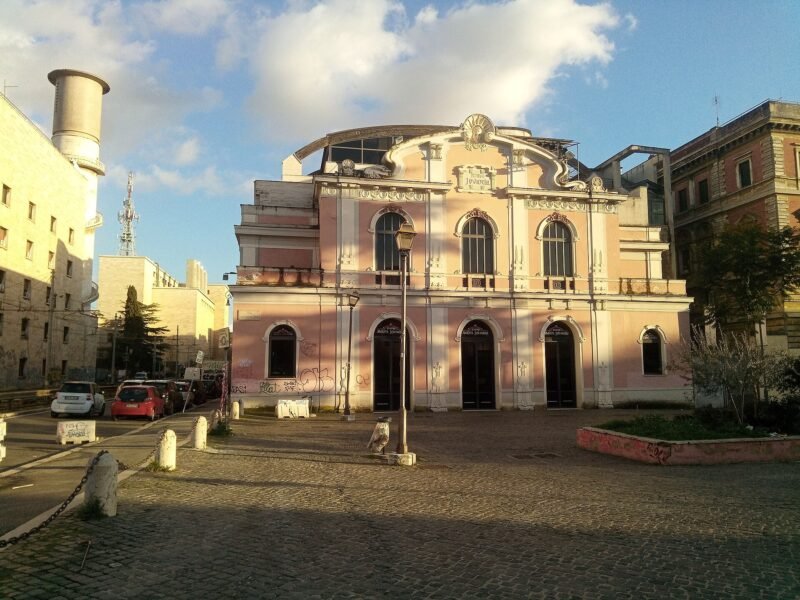
Teatro Costanzi today seats 1,560, spread across the orchestra level, three tiers of boxes, the balcony and the gallery, under a dome frescoed by Perugia-born Annibale Brugnoli. When it opened in 1880 it could hold up to 2,212 spectators.
A hall designed for sound
The builder Domenico Costanzi, a construction entrepreneur, commissioned the design in 1879 from Milanese architect Achille Sfondrini, a specialist in theater building. Sfondrini put acoustics first: the horseshoe-shaped hall was conceived as a sounding board able to enhance the sound of the operas. Construction took only 18 months. For a performance in concert form, with the orchestra on stage, the shape of the hall matters even more.
The chandelier
The great chandelier, with its 27,000 crystal drops, was lit for the first time on February 27, 1928, for the theater's second inauguration, with Arrigo Boito's Nerone. It was part of the renovation entrusted to Marcello Piacentini after the City bought the theater in 1926, which also moved the entrance onto the square now named after Beniamino Gigli. Get into the hall a few minutes early and look at it while it's still fully lit: taking photos of it during the show isn't allowed.
The foundation's other venues
Teatro dell'Opera di Roma isn't just Costanzi. The foundation runs Teatro Nazionale at Via del Viminale 51, born in 1925 as the Supercinema, and in summer the Baths of Caracalla. In the 2026/27 season it also returns to Teatro Valle. For the full profile of the theater there's our page on Rome Opera House.
House rules, dress code and times at Costanzi
At Teatro dell'Opera di Roma dark attire is appreciated on opening night and at premieres. For a one-night celebration like the one with Bartoli, my advice is to dress as for a premiere.
What goes in the cloakroom
Umbrellas, hats, bags, helmets, cameras and audio and video recording devices must be left in the cloakroom. In the hall cell phones may not be used, and photos, with or without flash, and any kind of recording are forbidden. Food and drinks are allowed only in the theater's bars, and smoking is banned throughout the building.
Latecomers and seats
Once the show has started you can't get into the orchestra seats or the numbered seats in the balcony and gallery: latecomers can wait in the orchestra-level foyer. The management reserves the right to move purchased seats for technical reasons. For lost property the theater lists the number 06 48160284.
Start time
Check the start time for the May 27, 2027 evening on the show's page and on your ticket: at Costanzi start times change from title to title, and there's no fixed time for special events.
The right photo to take at Il barbiere di Siviglia with Cecilia Bartoli at Teatro dell'Opera di Roma, May 27, 2027
At Costanzi you can't take photos in the hall, with or without flash, and the rule also applies during the final applause: the right photo of the evening with Cecilia Bartoli is taken outside, in Piazza Beniamino Gigli, before you go in, with the facade and the crowd behind you.
In late May, in Rome, the evening light lasts a long time. It's the best time of year to photograph a theater entrance: the sky is still bright when the foyer lights come on, and the square, the one Piacentini opened in front of the entrance to make room for the audience on show nights, fills with people dressed for the occasion. On a night like this there will be an international crowd, and the big-event feel will show on people's faces even before it shows on the posters.
A tip from someone who has seen plenty of these nights: photograph the people, not the building. The couple celebrating an anniversary with a ticket bought in October, the friends who came from Zurich or Monaco, the Roman lady who may well have been there on May 27, 1987 too. These are the pictures you'll look at again in 10 years. You can find the building in any archive. Your evening, you can't.
And if you want a photo of the hall, with Brugnoli's dome and the chandelier lit, book one of the guided tours the theater runs on other days. If instead you're after a memento of the Rosina of back then, the historical archive of Teatro dell'Opera has the production photos of the 1986/87 Barbiere: a very young Bartoli next to Angelo Romero and Mario Bertolino. Looking at them before the evening gives it a different flavor.
Some important events that happened here in history
Teatro Costanzi opened on November 27, 1880 with Gioachino Rossini's Semiramide and became Teatro dell'Opera di Roma in 1946. Cavalleria rusticana premiered here in 1890 and Tosca in 1900, and here, on May 27, 1987, Cecilia Bartoli sang Rosina for the first time.
Dates to remember
1879: Domenico Costanzi commissions the design from architect Achille Sfondrini. November 27, 1880: opening with Rossini's Semiramide, in the presence of Umberto I and Queen Margherita. May 1881: the first Il barbiere di Siviglia recorded in the theater's archive. May 17, 1890: world premiere of Pietro Mascagni's Cavalleria rusticana. January 14, 1900: world premiere of Giacomo Puccini's Tosca.
From private venture to public theater
1907: management passes to impresario Walter Mocchi, and from 1912 his wife, soprano Emma Carelli, runs it. 1926: the City of Rome buys the theater, which becomes Teatro Reale dell'Opera, with Marcello Piacentini's renovation. February 27, 1928: second inauguration with Arrigo Boito's Nerone. 1935: the permanent chorus is founded at Tullio Serafin's wish. 1946: the theater takes the name Teatro dell'Opera di Roma. 1958: a new Piacentini makeover ahead of the 1960 Olympics.
The Barbiere in recent history
1986: Teatro dell'Opera takes the Barbiere to Teatro Argentina, the hall of the world premiere. May 27, 1987: Cecilia Bartoli debuts as Rosina at Costanzi. 2020: in the middle of the pandemic, on November 28 and 29, the theater records at Costanzi a Barbiere directed by Mario Martone and conducted by Daniele Gatti, broadcast on Rai3 on December 5 and on Rai5 on December 31. In that same 2020 the Barbiere is performed in concert form at the Circus Maximus. May 27, 2027: Bartoli returns to Costanzi for her 40 years of career.
If you walk into Costanzi on May 27, 2027 you're entering a 19th-century building reshaped by two 20th-century renovations, in a hall that has always called itself the cradle of verismo opera, but that opened with Rossini and with Rossini returns to celebrate. The coincidence of dates is the kind that tells itself.
Who has passed through Il barbiere di Siviglia with Cecilia Bartoli at Teatro dell'Opera di Roma, May 27, 2027
Teatro Costanzi has welcomed King Umberto I and Queen Margherita, at the Rossini opening in 1880, then Pietro Mascagni and Giacomo Puccini with their world premieres. And on the Barbiere stage, over almost a century and a half, some of the greatest Rossini performers have taken turns.
Sticking to the Barbiere alone, the theater's archive lines up names that tell the history of singing. In 1986, in the production taken to Teatro Argentina, Agnes Baltsa as Rosina, Leo Nucci as Figaro and Sesto Bruscantini as Bartolo. In 2020, in Mario Martone's Barbiere recorded at Costanzi and conducted by Daniele Gatti, Vasilisa Berzhanskaya as Rosina, Alessandro Corbelli as Bartolo, Alex Esposito as Basilio, Andrzej Filonczyk as Figaro and Ruzil Gatin as Almaviva. Berzhanskaya and Esposito, by the way, return to Costanzi in the same 2026/27 season as Bartoli, she as Leonora in Il trovatore, he as Nick Shadow in The Rake's Progress.
The theater's history has also seen Emma Carelli, the soprano who from 1912 ran the Impresa Costanzi for 14 years, Marcello Piacentini, who reworked the building in 1926 and in 1958, and Tullio Serafin, who in 1935 wanted a permanent chorus, the same chorus that will sing alongside Bartoli on May 27, 2027. And then the conductors the theater mentions in the history of its orchestra and chorus: Victor de Sabata, Herbert von Karajan, Carlo Maria Giulini, Karl Böhm, Zubin Mehta, Georg Solti, Riccardo Muti, Daniele Gatti. Bartoli has worked with some of them, Karajan, Solti and Muti, over her career.
And there's the Bartoli of 1987, aged 20, alongside a cast of professionals from the Rome company, Maurizio Comencini, Angelo Romero, Mario Bertolino, Silvano Pagliuca, under the baton of Maximiano Valdes. 40 years later, the same singer returns as the head of an opera house and a festival, with her own orchestra. Few stage stories close the circle this precisely.
Around Costanzi and the walk to Teatro Argentina
Teatro Costanzi stands between Via Nazionale, Via del Viminale and Via Depretis, a few minutes' walk from Piazza della Repubblica and Termini station. If you arrive a few hours early, both late 19th-century Rome and ancient Rome are close at hand.
Piazza della Repubblica and the Baths of Diocletian
Coming out of the metro you find yourself in front of the Baths of Diocletian, with the Basilica of Santa Maria degli Angeli built into the bath halls and, a short distance away, the Aula Ottagona. Toward Termini is Palazzo Massimo alle Terme, home of Museo Nazionale Romano: an afternoon at the museum and the evening at the opera, without ever taking transit.
Two churches a few steps away
On the other side of Piazza della Repubblica you reach Santa Maria della Vittoria and San Bernardo alle Terme in a few minutes: two short stops, ideal for the half hour before the theater opens.
In the footsteps of the 1816 premiere
Walking down Via Nazionale, past Palazzo delle Esposizioni and Piazza Venezia, you reach Largo di Torre Argentina, with the sacred area of the Campus Martius and the theater where the Barbiere premiered on February 20, 1816. It's a walk I recommend if you have the afternoon free: you start from the hall of the world premiere and arrive, at sunset, at the one of Bartoli's debut. If you're passing through Rome in the fall, Teatro Argentina has a stage play of Otello from November 4 to 29, 2026.
Where to eat before and after the evening
Around Teatro dell'Opera the places to eat are concentrated on Via Nazionale, Via del Viminale, the streets toward Termini and, a little further on, the Monti neighborhood. In the theater food and drinks are allowed only in the bars inside, so plan dinner before or after.
Before or after
With an evening start, the most sensible option is an early dinner, around 18:30, at a trattoria near Via Nazionale or Via del Viminale, or a light aperitivo and dinner after the show, booked ahead, because late at night many kitchens close. Monti is the most natural choice: you walk down from Via Nazionale and find a wide choice of osterias, wine bars and pizzerias.
The rule of thumb
I don't name places, because they change hands more often than productions change directors. The rule of thumb is simple, though: avoid places with a menu translated into five languages posted on the door in the streets around Termini, and venture a few streets toward Monti.
Late May in Rome and the season around the evening
Late May is one of the best times for a trip to Rome built around the opera: long days, mild evenings, the city busy but not yet in high summer. And in those weeks Teatro dell'Opera has a packed program.
The week's other evenings
At Costanzi, from May 14 to 22, 2027, Shostakovich's Lady Macbeth of the Mtsensk District is staged for the first time in the theater's history, in the Komische Oper Berlin production by Barrie Kosky conducted by Juraj Valčuha. At Teatro Nazionale, from May 19 to 26, there's the world premiere of Nicola Sani's Code: Unknown, and on May 23 È ancora troppo presto with Isabella Ragonese. From June 4 to 11 Minkus's Don Quixote returns to Costanzi with Marianela Nuñez and Daniil Simkin.
A long weekend
May 27, 2027 is a Thursday. If you're coming from out of town you can build a long weekend: the Barbiere on Thursday night, museums and walks on Friday and Saturday, and perhaps a second evening at Teatro Nazionale. If you want an experience organized from arrival to departure, with a guide and logistics, you can contact Tour Leader Pro.
Accessibility, teens and families
For Teatro Costanzi the theater lists a guided tour route accessible to people with walking difficulties, except for a few spots such as the Royal Box and the gallery. For the show, contact the box office before you buy, at 06 48160255 or 06 4817003 or at ufficio.biglietteria@operaroma.it, explaining your needs.
With teens
The Barbiere is the ideal opera for a first listen: music many teens have already heard without knowing it, a comedy plot, nonstop pace. In concert form a little preparation helps: tell them the plot the day before and play them the overture and Largo al factotum. From age 12 up the evening works very well.
Frequently asked questions about Il barbiere di Siviglia with Cecilia Bartoli
When is Cecilia Bartoli singing at Teatro dell'Opera di Roma?
Cecilia Bartoli sings Il barbiere di Siviglia at Teatro Costanzi on Thursday, May 27, 2027, for one night only and in concert form. The date falls exactly 40 years after her debut as Rosina in the same theater, on May 27, 1987. The start time is published on the show's page on the official website.
When do tickets for the Barbiere with Cecilia Bartoli go on sale?
Tickets for the Barbiere with Cecilia Bartoli are on sale from October 8, 2026, the day Teatro dell'Opera opens sales for individual shows of the 2026/27 season. You can buy them at the box office at Piazza Beniamino Gigli 1 and on the authorized network listed by the theater.
Who conducts Il barbiere di Siviglia with Cecilia Bartoli in Rome?
Il barbiere di Siviglia with Cecilia Bartoli is conducted by Gianluca Capuano, principal conductor of Les Musiciens du Prince, the orchestra founded in 2016 at the Opéra de Monte-Carlo at Bartoli's own initiative. The Chorus of Teatro dell'Opera di Roma sings with them.
Is the Barbiere with Cecilia Bartoli fully staged?
No, the Barbiere with Cecilia Bartoli at Costanzi is in concert form: no sets or traditional staging, the orchestra on stage and the singers in front. It's the same format the theater chose for Bluebeard's Castle with Anna Netrebko on December 4, 2026.
How much do tickets for Cecilia Bartoli at Costanzi cost?
Ticket prices for Cecilia Bartoli at Costanzi are published by Teatro dell'Opera di Roma in the Prices section of the official website and on the show's page. The price list distinguishes orchestra seats, front and back box seats, balcony and gallery: compare it with the seating plan before you choose.
How do you get to Teatro dell'Opera di Roma?
Teatro dell'Opera di Roma, at Piazza Beniamino Gigli 7, is reached by Metro A, Repubblica Teatro dell'Opera stop, or by the buses on Via Nazionale (H, 40, 60, 64, 70, 71, 170, 116T) and Via Depretis (70, 71). From Termini station you can also walk.
Where was Rossini's Il barbiere di Siviglia born?
Rossini's Il barbiere di Siviglia was born in Rome: the world premiere was on February 20, 1816 at Teatro di Torre Argentina, under the title Almaviva, o sia L'inutile precauzione. The first night was a fiasco, the second a triumph.
Final tip
Almost every celebration night at an opera house rests on a name. This one rests on a date: a singer returning, 40 years later, on the exact day and in the exact role of her debut, in her own city's theater, with the orchestra she founded. It doesn't happen twice. Mark October 8, choose a seat facing the stage, arrive early and leave your phone in the cloakroom without regrets: on May 27, 2027, at Costanzi, the thing to do is listen.
Article written by the editorial team of Tour Leader Pro, contact them for Private/Corporate/V.I.P. Tours and Experiences.
Planning a trip to Rome? The English-language guides for visiting the city are on ItalyPlanner.com.
Contact Information
Nearby
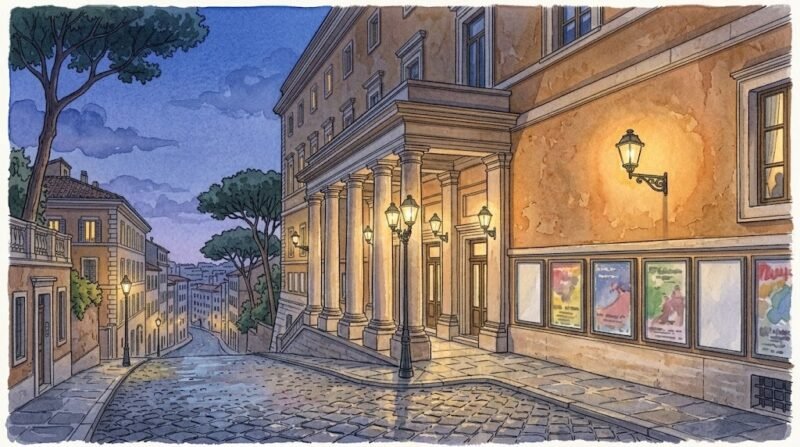
 Rome Opera House100 m
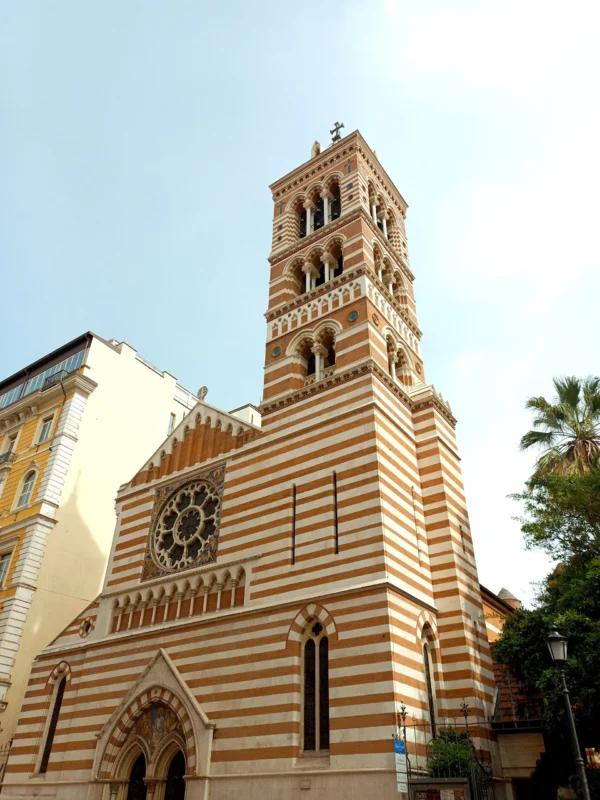
- St. Paul’s Within the Walls100 m
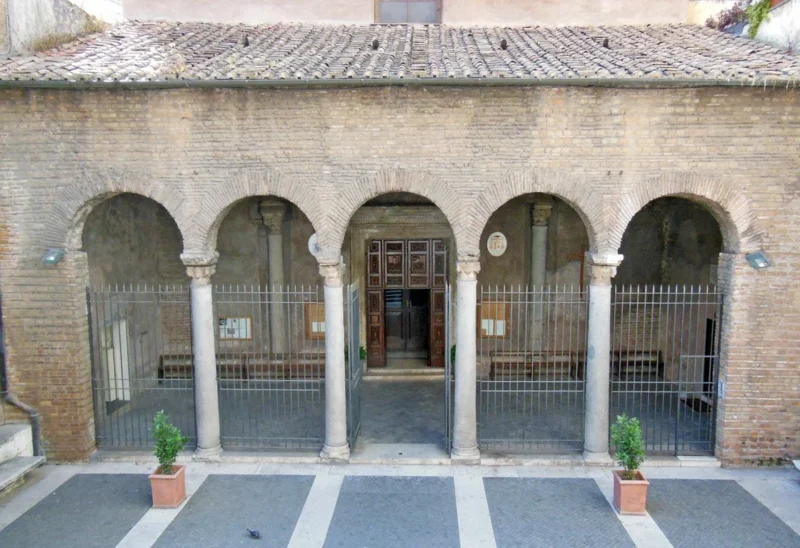
- Basilica of San Vitale100 m
- Teatro Nazionale100 m
- Enrico Fermi Center – Historical Museum of Physics and Study and Research Center at the Viminale200 m
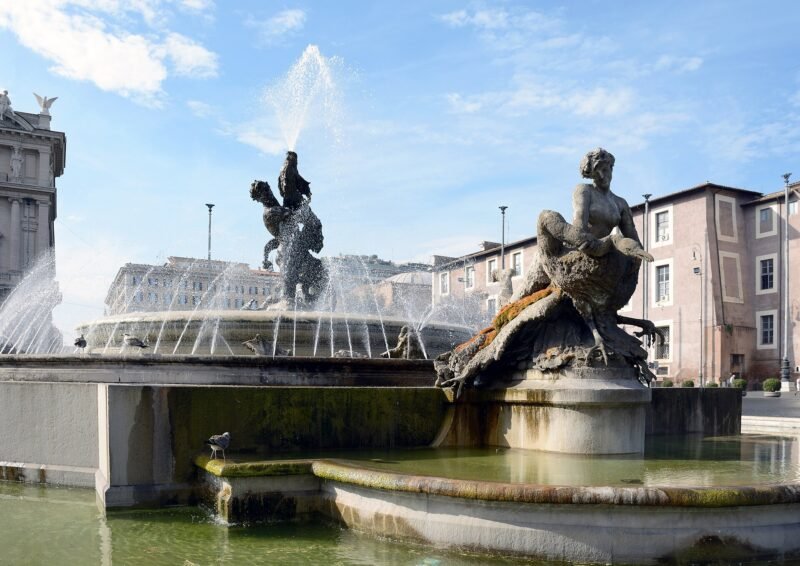
- Fontana delle Naiadi200 m

Upcoming events nearby
- Swan Lake at Teatro dell’Opera di Roma, December 17 to 31, 2026100 m
- Andrea Chénier at the Teatro dell’Opera di Roma, January 17-26, 2027100 m
- Goecke / Robbins / Bausch at Teatro dell’Opera di Roma, from October 27 to November 8, 2026100 m
- The Rake’s Progress at Teatro dell’Opera di Roma, November 27 to December 5, 2026100 m


You might also like
- Motus by Blanc, McGregor and Ekman at Teatro dell’Opera di Roma, March 31 to April 4, 2027
- Iphigénie en Tauride at Teatro dell’Opera di Roma, April 18 to 27, 2027
- Code: Unknown by Nicola Sani at Teatro Nazionale, May 19 to 26, 2027
- Mahler’s Third Symphony by John Neumeier at Teatro dell’Opera di Roma, February 4 to 10, 2027
- Molière, l’arte della beffa with Alessio Boni at Teatro Ambra Jovinelli, March 31 to April 11, 2027
- Perfetti sconosciuti by Paolo Genovese at Teatro Ambra Jovinelli, May 19 to 23, 2027