Motus by Blanc, McGregor and Ekman at Teatro dell’Opera di Roma, March 31 to April 4, 2027
In short. Motus, the contemporary dance triptych with choreography by Nicolas Blanc, Wayne McGregor and Alexander Ekman, is on at Teatro Costanzi, home of Teatro dell'Opera di Roma, at Piazza Beniamino Gigli 7 (00184 Rome), from March 31 to April…
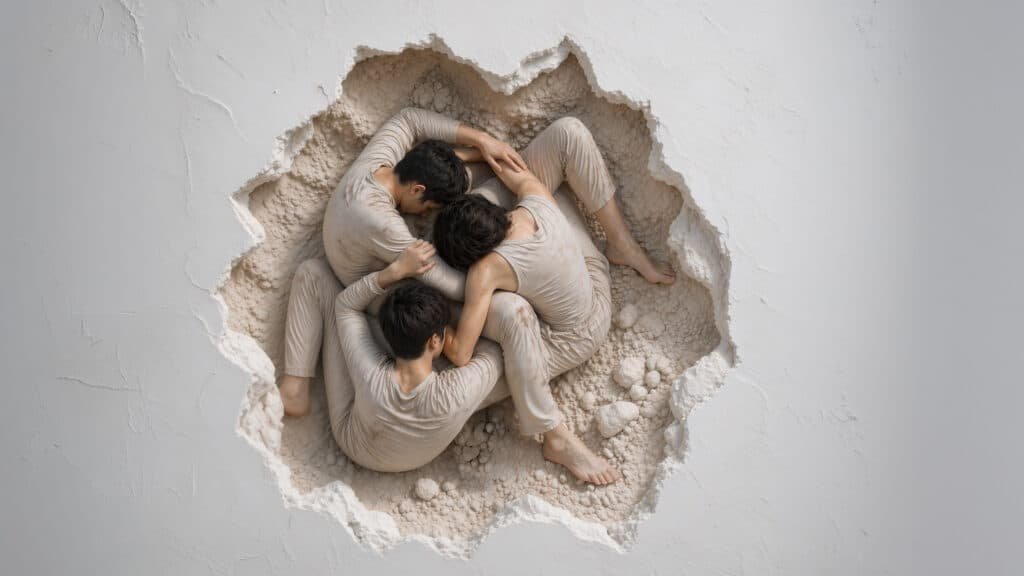
Motus, the contemporary dance triptych with choreography by Nicolas Blanc, Wayne McGregor and Alexander Ekman, is on at Teatro Costanzi, home of Rome Opera House, at Piazza Beniamino Gigli 7 (00184 Rome), from March 31 to April 4, 2027, in six performances: Wednesday, March 31 at 20:00, Thursday, April 1 and Friday, April 2 at 20:00, Saturday, April 3 at 15:00 and 20:30, Sunday, April 4 at 16:30. The program features Blanc's "From Afar" to Ezio Bosso's Symphony No. 1 "Oceans," performed by the Teatro dell'Opera Orchestra conducted by Daniel Capps, McGregor's "Borderlands" and Ekman's "Fit," with the theater's Étoiles, Principal Dancers, Soloists and Corps de Ballet. Costanzi is reached by metro A, Repubblica Teatro dell'Opera station, a few minutes on foot, or by the buses of Via Nazionale (H, 40, 60, 64, 70, 71, 170). Tickets for the individual shows of the 2026/2027 season have been on sale since October 8, 2026 at the theater's box office and on the authorized presale network listed on the official page of the show. Prices are published in the season's official price list.
Language: a performance based on dance, music or visual acts; no English version is announced, any spoken parts are in Italian.
Three living choreographers, three different languages, a single evening. Motus is the triptych with which Teatro dell'Opera di Roma brings to Costanzi, between the end of March and the first weekend of April 2027, a snapshot of dance today: a Frenchman raised between Monte-Carlo, the Paris Opéra and San Francisco, an Englishman whom the Royal Ballet wanted as resident choreographer, a Swede who filled the stage with water and directed the opening ceremony of the Paris Paralympics. Anyone who thinks ballet at Costanzi is only tutus and Tchaikovsky gets the season's sharpest rebuttal here.
Motus at Costanzi: the six performances, dates, times and series
Motus is on at Teatro Costanzi with six performances in five days, from March 31 to April 4, 2027, according to the official calendar of the 2026/2027 season of Teatro dell'Opera di Roma.
All the performances
- Wednesday, March 31, 2027, at 20:00, opening night, series A.
- Thursday, April 1, 2027, at 20:00, series B.
- Friday, April 2, 2027, at 20:00, series C.
- Saturday, April 3, 2027, at 15:00, series D.
- Saturday, April 3, 2027, at 20:30, performance outside the subscription.
- Sunday, April 4, 2027, at 16:30, series E.
What the letters mean
The letters A, B, C, D and E are the subscribers' series. The Saturday, April 3 performance at 20:30 is the only one without a series: it is the evening when, as a rule, more room is left for those buying a single ticket. Saturday is also the only day with two performances, one in the afternoon at 15:00 and one in the evening.
A new production
The official page presents Motus as a new production of Teatro dell'Opera di Roma, with the theater's Orchestra, Étoiles, Principal Dancers, Soloists and Corps de Ballet, directed by Eleonora Abbagnato.
The Motus program: three ballets, three viewpoints
The Motus program opens with Nicolas Blanc's "From Afar," continues with Wayne McGregor's "Borderlands" and closes with Alexander Ekman's "Fit," in the order given by the theater's press release.
From Afar: Blanc and Bosso's Symphony "Oceans"
"From Afar" has choreography by Nicolas Blanc and music from Ezio Bosso's Symphony No. 1 "Oceans," of which the official page lists three movements: "Allegro To Plough The Waves," "Trio Nostalgija" and "An immigrant Song." It is the only one of the three ballets with a live orchestra: Daniel Capps conducts it. On the choreographer's website "From Afar" appears as a creation for the Rome Opera Corps de Ballet dated 2022: the return of a title born precisely for this company.
Borderlands: McGregor at Costanzi for the first time
"Borderlands" carries Wayne McGregor's signature for choreography and costumes. The sets are by McGregor himself with Lucy Carter. The music is by Joel Cadbury and Paul Stoney, played on a recorded track. The theater's press release stresses that it is McGregor's first time at Costanzi.
Fit: Ekman, from electronic pulses to Take Five
"Fit" has choreography and sets by Alexander Ekman, costumes by Ekman with Yolanda Klompstra, making her debut at the Rome Opera. The soundtrack, on a recorded track, lines up "Serious drug" by Wildcookie with Freddie Cruger and Anthony Mills, from the 2011 album "Cookie Dough," "No" by Nicolas Jaar, from the 2016 album "Songs," and "Take Five" by the Dave Brubeck Quartet, from "Time Out" of 1959. Half a century of music in a single choreography: a hint of the tone, which in Ekman's works is rarely solemn.
The logic of the evening
The construction is clear. It starts with the orchestra in the pit and a contemporary Italian symphony, moves to a work on an electronic score, and ends with a ballet that mixes club music and jazz. From live sound to recorded sound, from lyricism to lightness: it is a program that builds toward fun, and anyone who brings a dance-skeptical friend to the theater has a good chance of converting them.
Who Nicolas Blanc is, choreographer of From Afar
Nicolas Blanc is a French choreographer, a former principal dancer of the San Francisco Ballet and for 15 years ballet master and rehearsal director of the Joffrey Ballet in Chicago. Since August 2026 he has worked as an independent choreographer.
Training: Montauban, Monte-Carlo, Paris
Blanc began studying dance in Montauban, in southern France, and continued at the Académie de Danse Classique Princesse Grace in Monte-Carlo. In 1994 he won a scholarship at the Prix de Lausanne, which allowed him to complete his training at the Paris Opéra Ballet School.
A dancing career between Europe and the United States
He danced with the Nice Opera Ballet, the Deutsche Oper am Rhein in Düsseldorf, the Zurich Ballet and the San Francisco Ballet, where in 2004 he was named Principal Dancer. His repertoire included leading roles in Balanchine's "Jewels," "Symphony in C," "Square Dance," "Divertimento No. 15" and "The Four Temperaments," Robbins's "Dybbuk," Mats Ek's "Carmen," Benvolio and Mercutio in "Romeo and Juliet." He created roles for Christopher Wheeldon, in "Rush" and "Quaternary," for Stanton Welch, Yuri Possokhov and Helgi Tomasson.
Awards
In 1998 the city of Düsseldorf gave him a special prize for the performing arts. His hometown honored him in 2004 and in 2013. Dance Magazine included him among its "25 to Watch." In 2010 he was nominated, with Tina LeBlanc, for the Isadora Duncan Dance Award for best ensemble in Wheeldon's "Within the Golden Hour."
From the rehearsal room to choreography
In 2009 Blanc joined the Scottish Ballet as rehearsal director, and in 2011 the Joffrey Ballet. In July 2014 he won the choreography prize at the International Ballet Competition in Jackson, Mississippi, with the duet "Rendez-Vous." He took part in the New York Choreographic Institute of the New York City Ballet, creating "Mothership" for the 2016 gala. For the Joffrey he signed "Beyond the Shore" in 2018 and "Under the Trees' Voices" in 2021. In 2023 "Gateway to the Sun" for the San Francisco Ballet's Next@90 festival. In 2025 "At night's delicious close" for the Oregon Ballet Theatre.
The Bosso thread
There is a title in Blanc's list that an Italian reader recognizes immediately: "Under the Trees' Voices," which is the subtitle of Ezio Bosso's Symphony No. 2. With "From Afar" on Symphony No. 1, Blanc thus returns for the second time to the Turin composer. It is a partnership at a distance that the Roman public now sees in its fullest form, with the live orchestra.
Who Wayne McGregor is, choreographer of Borderlands
Sir Wayne McGregor, born in Stockport on March 12, 1970, is a British choreographer, since 2006 resident choreographer of the Royal Ballet in London and founder of the company that now bears his name.
The beginnings: Leeds and The Place
McGregor studied at the University of Leeds. In 1992 he became resident choreographer of The Place in London, and in the same year founded his company, Random Dance, later renamed Company Wayne McGregor. In the 1990s he worked as choreographer and movement director at the National Theatre and the Old Vic. In 1996 he was nominated for the Laurence Olivier Award for the choreography of "A Little Night Music" with Judi Dench.
The Royal Ballet and the major companies
From 2002 he was resident choreographer of Sadler's Wells, and since 2006 of the Royal Ballet. He has signed over 30 works for his company and 15 for the Royal Ballet, and has created for Teatro alla Scala, the Paris Opéra, the Stuttgart Ballet, the New York City Ballet, American Ballet Theatre, the English National Ballet and the Bolshoi.
Woolf Works, The Dante Project, MaddAddam
In 2009 he won the Prix Benois de la Danse. In 2015 "Woolf Works," to music by Max Richter and inspired by Virginia Woolf, danced at the premiere by Alessandra Ferri, Federico Bonelli, Matthew Ball and Natalia Osipova, earned him the Laurence Olivier Award and went on to the Royal Opera House, La Scala and the Metropolitan. In 2021 he premiered "The Dante Project," his second ballet in three acts. In 2024 "MaddAddam," from Margaret Atwood's novel, again to music by Richter. In 2026 he received an Olivier Award for his contribution to dance.
The link with the Rome Opera
The season's press release recalls that McGregor is a partner of Teatro dell'Opera di Roma in the Lazio Teatro Danza project, which gives selected young dancers a training period in the choreographer's London studio. The Lazio Region project also has a public showing moment, like the one described in the entry on Lazio Danza e Teatro at Mattatoio. "Borderlands" at Costanzi completes the relationship: after the students in London, the choreographer in Rome.
Who Alexander Ekman is, choreographer of Fit
Alexander Ekman, born in Stockholm in 1984, is a Swedish choreographer and dancer. He has created about 50 works for companies around the world, and in 2024 he was artistic director and choreographer of the opening ceremony of the Paris Paralympic Games.
Training and the dancing years
Ekman trained at the school of the Royal Swedish Ballet from 1994 to 2001. He danced with the Royal Swedish Ballet, then with Nederlands Dans Theater II from 2002 to 2005 and with the Cullberg Ballet from 2005 to 2006, where he debuted as a choreographer. At 21 he left his career as a performer to devote himself full time to choreography.
Cacti and the companies
In 2006 he signed "Flockwork" for Nederlands Dans Theater. "Cacti," from 2010, has been restaged by about 20 companies. In 2013 it earned him a nomination for the Laurence Olivier Award. His works have been danced by Les Ballets de Monte-Carlo, the Boston Ballet, the Pacific Northwest Ballet, the Semperoper Ballett, the Norwegian National Ballet, the Royal Swedish Ballet, the Sydney Dance Company and the Wiener Staatsballett. For some he designed sets and costumes, as he also does for "Fit."
A real lake and a Play at the Opéra
In 2014 he created "A Swan Lake" for the Norwegian National Ballet, filling the stage with thousands of liters of water to get a real lake. With the composer Mikael Karlsson he also signed "Midsummer Night's Dream" for the Royal Swedish Ballet in 2015 and "COW." In 2017 he created "PLAY" for the Paris Opéra Ballet, repeated for 25 sold-out performances at the Palais Garnier in December of that year.
Awards
Among the honors listed in his biography are the British National Dance Award in 2010, the Swedish Medea Award in 2015 for "Midsummer Night's Dream," the Birgit Cullberg grant and the Såstaholm prize in 2015, and the German Faust prize in 2016 for "COW." In 2015 he hosted the Swedish radio program "Sommar."
Why he closes the evening
Ekman is the choreographer of irony: "Cacti" was born as a comment on the need to judge and on an art world that takes itself too seriously. Putting him at the end of the program means sending the audience home with a smile. It is a directorial choice of the evening, before it is a repertoire one.
Ezio Bosso, the Symphony "Oceans" and the Opera Orchestra
Ezio Bosso, born in Turin in 1971 and died in Bologna on May 14, 2020, was a composer, pianist, double bass player and conductor. His Symphony No. 1 "Oceans" is the music of "From Afar."
A composer for dance
Bosso's music has been commissioned or used by the Wiener Staatsoper, the Royal Opera House, the New York City Ballet, the San Francisco Ballet and the Bolshoi, and by choreographers such as Christopher Wheeldon and Rafael Bonachela. For Wheeldon he signed "Within the Golden Hour," created in 2008 for the San Francisco Ballet. For Bonachela "6 Breaths," from 2010.
The Australian award for "Oceans"
In 2010 Bosso received the Green Room Award, the first non-Australian to win it, precisely with his first symphony, "Oceans." In film he signed the soundtracks of "Io non ho paura," "Quo vadis, baby?" and "Il ragazzo invisibile" by Gabriele Salvatores.
Bosso and Rome
On June 20, 2019 Bosso received honorary citizenship of Rome. He conducted, among others, the Orchestra of the Accademia Nazionale di Santa Cecilia and performed at the Auditorium Parco della Musica. Hearing "Oceans" at Costanzi, performed by a Roman orchestra, has the flavor of a tribute from the city to a citizen by choice.
A curiosity about Motus by Blanc, McGregor and Ekman at Teatro dell'Opera di Roma, March 31 to April 4, 2027
The nicest curiosity about Motus is a thread that ties Nicolas Blanc, Ezio Bosso and the Roman Corps de Ballet through a ballet that is not on the program at Costanzi: Christopher Wheeldon's "Within the Golden Hour."
Wheeldon created "Within the Golden Hour" in 2008 for the San Francisco Ballet, to music by Ezio Bosso. In 2010 Nicolas Blanc, who was a principal dancer of the San Francisco Ballet, was nominated for the Isadora Duncan Dance Award together with Tina LeBlanc precisely for that ballet, in the best ensemble category. Blanc's first encounter with Bosso's music, in short, took place as a performer, on stage, long before he made it the material of his choreography.
The circle closes in Rome. In summer 2025 the Teatro dell'Opera Corps de Ballet danced "Within the Golden Hour" at the Baths of Caracalla, in a triptych with Béjart's "Bolero" and Pina Bausch's "Sacre du printemps." Two years later the same dancers dance Bosso with the choreography of someone who, 15 years earlier, had danced the same composer for Wheeldon. And a few days after Motus, from April 20, Teatro Nazionale hosts the triptych Echoes, which opens with Bonachela's "6 Breaths," again to Bosso's music.
In spring 2027, then, the Turin composer will be at home in the foundation's two theaters. For those who loved him, it is a small season within the season.
Teatro Costanzi, the hall of Motus
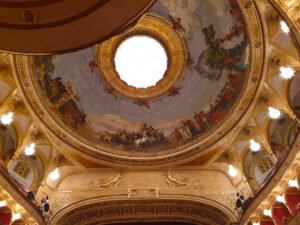
Teatro Costanzi today has 1,560 seats among the orchestra, three tiers of boxes, balcony and gallery, under a dome frescoed by the Perugian Annibale Brugnoli. The hall's full entry is the one for Rome Opera House.
A 19th-century sounding board
The builder Domenico Costanzi entrusted the design in 1879 to the Milanese architect Achille Sfondrini, a theater specialist, who conceived the horseshoe-shaped hall as a sounding board. For "From Afar," with the orchestra in the pit, the shape of the hall works in favor of the music. For "Borderlands" and "Fit," on a recorded track, what matters most is the view of the stage.
Where to sit to watch dance
For a contemporary ballet the choice of seat follows different rules from opera. From the balcony and the first rows of the gallery you read the group's designs, the diagonals, the symmetries that break. From the orchestra you see faces and arm work better, which in McGregor is essential. The seats behind the side boxes, which cut off part of the stage, are the least suited to a dance evening.
Something nobody tells you about Motus by Blanc, McGregor and Ekman at Teatro dell'Opera di Roma, March 31 to April 4, 2027
What almost nobody says about Motus is that two ballets out of three are danced to recorded music. The official page states it clearly for "Borderlands" and for "Fit": music on a recorded track. The orchestra plays only in the first piece, Bosso's Symphony "Oceans" for "From Afar."
For an audience used to opera this is a small surprise, and it deserves an explanation. The electronic music by Joel Cadbury and Paul Stoney for McGregor, and the sequence of Wildcookie, Nicolas Jaar and Dave Brubeck for Ekman, were conceived as recordings: playing them live with a symphony orchestra would betray them. In those two pieces the sound comes from the speakers, and the Costanzi hall, built for voice and orchestra, becomes for half an hour something closer to a contemporary dance theater.
The practical consequence concerns the choice of seat. On opera nights many look for boxes close to the pit to hear the orchestra well. For Motus that criterion holds for only one ballet out of three. Here the view matters, and the best view of the choreographic design is from above, in the balcony or first gallery, where tickets cost less.
The second thing nobody says is that triptychs have technical intervals between one piece and the next, to change sets and lights. Those who arrive late wait in the foyer until the first break, and miss an entire ballet: once the show has started you can't enter the orchestra or the numbered seats of the balcony and gallery.
Tickets, prices and discounts for Motus
Tickets for the individual shows of the 2026/2027 season of Teatro dell'Opera di Roma, Motus included, have been on sale since October 8, 2026. The season's official price list places Motus in the same price band as Raymonda.
Where to buy
The theater's box office is at Piazza Beniamino Gigli 1, open Monday through Saturday from 10:00 to 18:00 and Sunday from 9:00 to 13:30, closed on holidays. Online you buy on the theater's official website, on the authorized presale network. Phone booking goes through the numbers 06 4817003 and 06 48160255. The theater urges you to use only the channels authorized by the Foundation and declines all responsibility for irregular transactions made elsewhere.
Discounts
The 2026/2027 price list provides a 25 percent reduction on the full price for under 30s with the Carta Giovani Opera, for over 65s and for under 12s, excluding opening nights and the balcony and gallery seats. For people with disabilities and their companions, where indicated, a 25 percent reduction on boxes and orchestra is provided, again excluding opening nights. For wheelchair users the ticket costs €5. Groups of cultural associations of at least 10 people have dedicated discounts.
Subscriptions
Motus is included in the Gran Teatro and Gran Teatro All Inclusive subscriptions, in all series, and the theater also offers the Tutto Danza formula for those who follow only the ballets. Those who plan to see more of the season's dance titles, from December's Swan Lake to Mahler's Third Symphony by Neumeier in February, would do well to compare the cost with that of single tickets.
My advice for visiting Motus by Blanc, McGregor and Ekman at Teatro dell'Opera di Roma, March 31 to April 4, 2027
The advice is clear: choose the performance on Saturday, April 3 at 20:30, take a seat in the balcony and listen to Bosso's Symphony "Oceans" before leaving home.
The Saturday evening performance is the only one without a subscription series: it is the one that gives the most choice to those buying a single ticket, and it falls on the first weekend of April, when the city starts to live the spring evenings. The balcony, for a program in which two ballets out of three play on the design and movement of the group, is the most instructive place in the hall, and costs a fraction of the orchestra.
As for the music: “Oceans” is a symphony that's easy to find and listen to, and arriving at Costanzi with its themes in your head lets you watch Blanc's choreography without chasing the score. For McGregor and Ekman the opposite is true: go in unprepared and enjoy the sequence of electronica, club and jazz. You'll recognize “Take Five” in the finale of “Fit” anyway.
One last tip: if you come with someone who has never seen contemporary dance, don't explain anything beforehand. Motus is built to win over even those who walk in wary.
How to get to Teatro dell'Opera for Motus
You reach Teatro Costanzi by Metro Line A, Repubblica Teatro dell'Opera stop, a few minutes on foot from Piazza Beniamino Gigli. For the Motus performances it's the most convenient way, at any hour.
Metro
Line A stops at Repubblica Teatro dell'Opera, in Piazza della Repubblica. From there it's a few minutes' walk to the theater. If you arrive at Termini station, you can take the same line for one stop or continue on foot.
Bus
The theater lists these lines. On Via Nazionale: H, 40, 60, 64, 70, 71, 170 and 116T. On Via Depretis: 70 and 71. On Via Cavour: 16, 75, 84, 150 (holidays), 360, 590, 649 and 714. And those that stop at Termini: 16, 38, 75, 86, 90, 217, 310, 360, 649 and 714. For the Sunday, April 4 performance, it's a good idea to check the holiday schedules on the transport company's route planner.
Another well-known fact, yet rarely mentioned
It is well known that Teatro dell'Opera di Roma is above all an opera house: Cavalleria rusticana and Tosca were born here. It is mentioned much less often that Costanzi opened its doors to twentieth-century dance more than a century ago, and that a woman was behind it.
Soprano Emma Carelli took over the Impresa Costanzi in 1912 and ran it for 14 years. In that time she brought to Rome, among other things, Diaghilev's Ballets Russes: the company that first made ballet a laboratory of the avant-garde, bringing choreographers, composers and painters to work together. It is from that season that Costanzi has known dance as a contemporary art, and not only as an interlude in opera.
Motus is a direct descendant of that idea. Three living choreographers, today's music, sets and costumes signed by the same authors, just as the Ballets Russes did when they called on painters to design the sets. Ekman signs the choreography, sets and costumes of “Fit,” and McGregor signs the choreography and costumes of “Borderlands” and designs its sets with Lucy Carter. It's the same logic of total spectacle, a hundred years later.
The lesson I take from this for theatergoers is simple: at Costanzi, contemporary dance is not a foreign body, it's a house tradition. Anyone who looks at it with suspicion ignores part of the history of the hall they're sitting in.
House rules and times at Costanzi
The house regulations of Teatro dell'Opera di Roma provide for the doors to open about an hour before the start and guarantee access to the hall until the performance begins. Once the performance has started, no one is admitted, unless the staff say otherwise.
Late arrivals
If you arrive late with an orchestra ticket, you are asked to wait in the foyer until the first interval, where there are monitors to follow the performance. In a triptych this means missing the first ballet, which, for Motus, is the only one with the live orchestra.
The right photo to take at Motus by Blanc, McGregor and Ekman at Teatro dell'Opera di Roma, March 31 to April 4, 2027
Photos and filming are forbidden in the hall, and in a ballet the rule also protects the dancers: the flash of a phone can distract someone who is jumping or lifting a partner. The right photo of Motus is taken before the show or during the intervals.
The first is the hall seen from above, from the balcony or the gallery, before the lights go down: the horseshoe of boxes, the dome frescoed by Annibale Brugnoli, the great crystal chandelier lit in 1928. It's the most recognizable image of the theater, and if you've chosen a seat up high you have it in front of you without having to move.
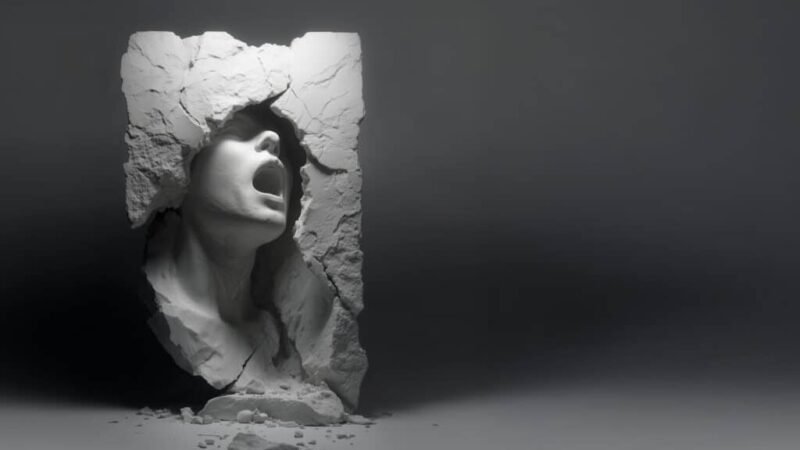
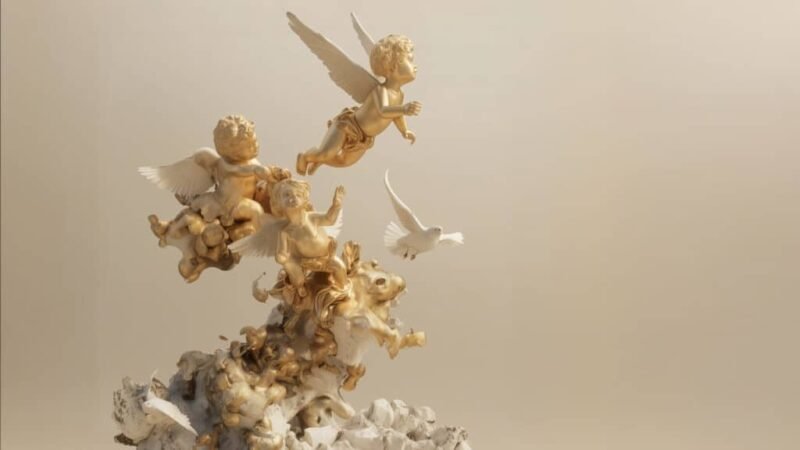
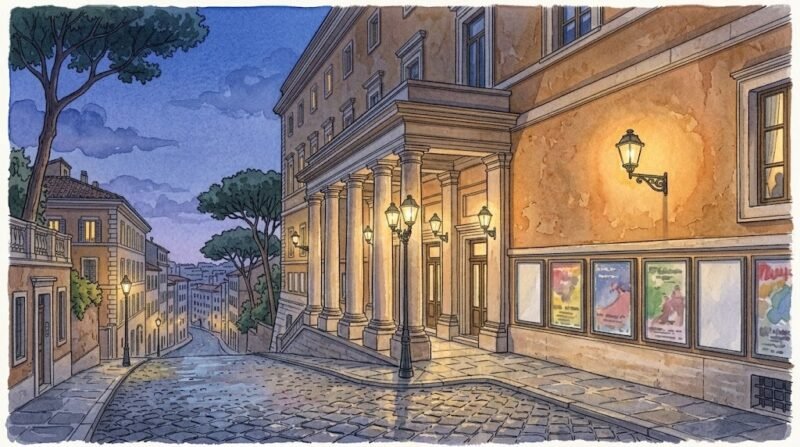
The second is the facade on Piazza Beniamino Gigli, with the poster of the show. The image of the 2026/2027 season was entrusted to digital artist Elena Manferdini, who works with artificial intelligence: the posters have an aesthetic suspended between photographic realism and fantastical distortion, and the Motus one, photographed with your ticket in hand, is a keepsake that says a lot about the season.
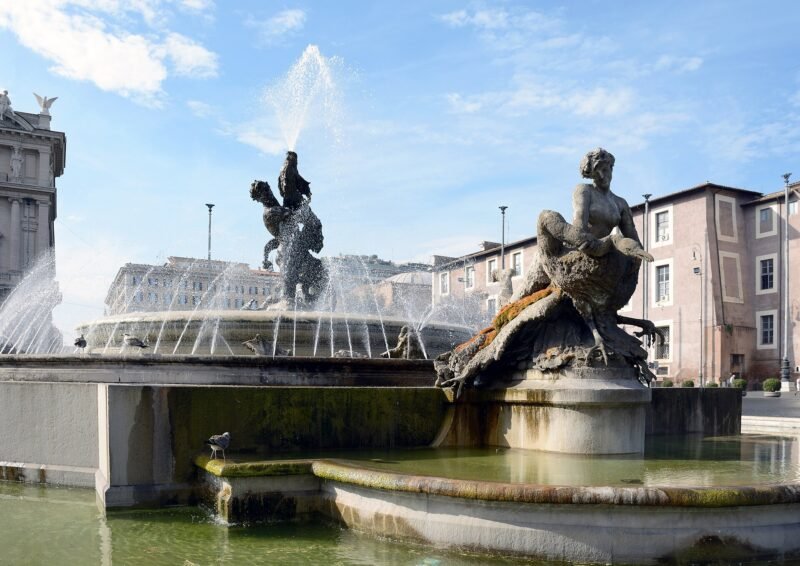
The third is taken on the way out, a few minutes' walk away: Piazza della Repubblica in the evening, with the illuminated fountain and the exedra. In early April, after the afternoon performance, the sunset light on the travertine is worth the detour.
Some important events that happened here in history
Teatro Costanzi was inaugurated on November 27, 1880 with Gioachino Rossini's “Semiramide,” in the presence of Umberto I and Queen Margherita, and became Teatro dell'Opera di Roma in 1946.
In between come the dates that made the history of Italian opera: on May 17, 1890 the world premiere of Pietro Mascagni's “Cavalleria rusticana,” on January 14, 1900 the world premiere of Giacomo Puccini's “Tosca.” In 1905 the City Council established the Municipal Orchestra, which was in effect the Costanzi orchestra until 1926. In 1907 management passed to the impresario Walter Mocchi, and from 1912 it was run by his wife, the soprano Emma Carelli, who brought the Ballets Russes to Rome.
In 1926 the Municipality of Rome bought the theater, which became Teatro Reale dell'Opera with the renovation by Marcello Piacentini. On February 27, 1928 came the second inauguration, with Arrigo Boito's “Nerone,” and the lighting of the chandelier of 27,000 crystal drops. In 1935 the permanent chorus was founded at the wish of Tullio Serafin. In 1958 Piacentini signed the definitive restyling ahead of the 1960 Olympics.
For dance, the most recent history is that of a Corpo di Ballo that, under the direction of Eleonora Abbagnato, takes its shows on international tours and welcomes leading choreographers. Wayne McGregor's first time at Costanzi, with “Borderlands,” is a date that adds a chapter to this story.
Who has come through Motus by Blanc, McGregor and Ekman at Teatro dell'Opera di Roma, March 31 to April 4, 2027
Teatro Costanzi has seen King Umberto I and Queen Margherita, present at the inauguration in 1880, and then Pietro Mascagni, Giacomo Puccini and Ottorino Respighi, whom the theater names as the musicians who shaped its destiny.
For dance, the name to remember is that of Diaghilev's Ballets Russes, called to Rome by Emma Carelli, soprano and impresaria, who ran the theater from 1912 for 14 years. A woman at the head of a major opera house at the start of the twentieth century, and a company that changed the history of ballet: it is from here that Costanzi learned to look at dance as an art of its own time.
On the theater's podium, conductors including Victor de Sabata, Gianandrea Gavazzeni, Herbert von Karajan, Carlo Maria Giulini, Karl Böhm, Zubin Mehta, Georges Prêtre, Georg Solti, Giuseppe Sinopoli, Mstislav Rostropovich, Riccardo Muti and Daniele Gatti have taken turns. On its stage, in 1987, Cecilia Bartoli made her debut, and in May 2027 she returns to Costanzi to celebrate 40 years of career.
In spring 2027 the list grows with three choreographers: Nicolas Blanc, who is back with the company for which he created “From Afar.” Wayne McGregor, on his first time in this hall. Alexander Ekman, who after the Palais Garnier and the Paris Paralympics brings his irony to Rome. With them come conductor Daniel Capps and costume designer Yolanda Klompstra, also making her debut at the Roman opera house.
Around Costanzi: Repubblica, Viminale and Monti
Teatro Costanzi stands between Via Nazionale, Via del Viminale and Via Depretis, a few minutes on foot from Piazza della Repubblica and Termini station: an area where you can easily fill the afternoon before the performance.
Piazza della Repubblica and the Baths
Coming out of the metro you arrive in Piazza della Repubblica, with the Basilica of Santa Maria degli Angeli e dei Martiri carved out of the Baths of Diocletian. Toward Termini, Palazzo Massimo alle Terme houses the National Roman Museum: if you have a ticket for the Saturday 15:00 performance, you can visit it in the morning.
Toward Monti
Walking down Via Nazionale you come to Palazzo delle Esposizioni and, further down, the Monti district begins, with its narrow streets and its restaurants and bars. Beyond Via Cavour, the Basilica of Santa Maria Maggiore is a quarter of an hour on foot.
Where to eat before and after Motus
Around Teatro dell'Opera the offer is concentrated on Via Nazionale, Via del Viminale, the streets toward Termini and, a little further on, the Monti district.
Before the show
For the 20:00 performances you can have an early dinner, around 18:30, near Via Nazionale or Via del Viminale. For Saturday at 15:00 a leisurely lunch in the area is best. For Sunday at 16:30, a late, light lunch.
After the show
A triptych lasts less than an opera, and after the afternoon performances the whole evening is left. Monti is the most natural choice: you walk down from Via Nazionale and find a wide choice of osterie, wine bars and pizzerias. After the Saturday evening performance, book ahead: the first weekend of April is full.
Accessibility at Teatro Costanzi
According to the house regulations, access to Teatro Costanzi has no architectural barriers: from the main entrance, along a straight path, you arrive directly in the orchestra, where there is space for four wheelchairs and four companions, and an elevator reaches the boxes on the first, second and third tiers.
For wheelchair users the ticket costs €5, and the companion has a reduced rate at the repeat performances. The practical advice is to call the box office before buying, at 06 48160255 or 06 4817003, or to write to ufficio.biglietteria@operaroma.it, explaining your needs: the equipped seats are few, and for a weekend performance they must be booked in time. Anyone with mobility difficulties should avoid the gallery.
Frequently asked questions about Motus at Opera di Roma
When is Motus at Teatro dell'Opera di Roma?
Motus is at Teatro Costanzi from March 31 to April 4, 2027 in six performances: Wednesday, March 31, Thursday, April 1 and Friday, April 2 at 20:00, Saturday, April 3 at 15:00 and at 20:30, Sunday, April 4 at 16:30. The first night is March 31.
Which ballets are in Motus?
The Motus triptych includes Nicolas Blanc's “From Afar” to Ezio Bosso's Symphony No. 1 “Oceans,” with the orchestra conducted by Daniel Capps, Wayne McGregor's “Borderlands” to music by Joel Cadbury and Paul Stoney, and Alexander Ekman's “Fit,” which closes with Dave Brubeck's “Take Five.”
Is there a live orchestra in Motus?
In Motus the Orchestra of Teatro dell'Opera di Roma plays live only in “From Afar,” Bosso's “Oceans” Symphony conducted by Daniel Capps. “Borderlands” and “Fit” are danced to recorded music, as the official page of the show states.
When do tickets for Motus go on sale?
Tickets for Motus, like those for all single shows of the 2026/2027 season of Teatro dell'Opera di Roma, have been on sale since October 8, 2026 at the box office in Piazza Beniamino Gigli 1 and on the theater's official website. Motus is also included in the Gran Teatro subscriptions.
Are there discounts for young people and seniors?
For Motus the Teatro dell'Opera di Roma price list provides a 25 percent discount on the full price for under 30 with the Carta Giovani Opera, over 65 and under 12, excluding the first night of March 31 and the balcony and gallery seats. For wheelchair users the ticket costs €5.
Is Motus suitable for children?
Teatro dell'Opera di Roma recommends a minimum age of four for its shows. Motus, with three short ballets and Ekman's ironic finale, works well with kids from eight or 10 years old. The Saturday 15:00 and Sunday 16:30 performances are the most convenient for families.
How do you get to Teatro Costanzi?
Teatro Costanzi, home of Teatro dell'Opera di Roma at Piazza Beniamino Gigli 7, is reached by Metro Line A, Repubblica Teatro dell'Opera stop, a few minutes on foot. The area is also served by the buses on Via Nazionale, including H, 40, 60, 64, 70, 71 and 170.
Who is Wayne McGregor?
Wayne McGregor, choreographer of “Borderlands” in Motus, is a British choreographer born in 1970, resident choreographer of the Royal Ballet in London since 2006, author of “Woolf Works” and winner of the Prix Benois de la Danse. At Costanzi it is his first time.
To close, a practical tip: take two balcony seats for Saturday night, listen to Bosso's “Oceans” on the way to the theater and stay seated until the last applause of “Fit.” It's the dance evening of the season that I would recommend to anyone who thinks they don't like dance.
Article written by the editorial team of Tour Leader Pro. Contact them for Private/Corporate/V.I.P. Tours and Experiences.
Planning a trip to Rome? The English guides to visiting the city are on ItalyPlanner.com.
Contact Information
Nearby
 Rome Opera House100 m
- St. Paul’s Within the Walls100 m
- Basilica of San Vitale100 m
- Teatro Nazionale100 m
- Enrico Fermi Center – Historical Museum of Physics and Study and Research Center at the Viminale200 m
- Fontana delle Naiadi200 m

Upcoming events nearby
- Swan Lake at Teatro dell’Opera di Roma, December 17 to 31, 2026100 m
- Andrea Chénier at the Teatro dell’Opera di Roma, January 17-26, 2027100 m
- Il barbiere di Siviglia with Cecilia Bartoli at Teatro dell’Opera di Roma, May 27, 2027100 m
- The Rake’s Progress at Teatro dell’Opera di Roma, November 27 to December 5, 2026100 m

You might also like
- Iphigénie en Tauride at Teatro dell’Opera di Roma, April 18 to 27, 2027
- Mahler’s Third Symphony by John Neumeier at Teatro dell’Opera di Roma, February 4 to 10, 2027
- The Nutcracker at Teatro Nazionale, November 24 to December 3, 2026
- Pierluca Mariti in Abbi pazienza at Teatro Ambra Jovinelli, March 9, May 17 and October 5 to 10, 2027
- Michela Giraud in Fisicamente mi piacciono tutti! at Teatro Brancaccio, March 7, 8 and 9, 2027
- Molière, l’arte della beffa with Alessio Boni at Teatro Ambra Jovinelli, March 31 to April 11, 2027