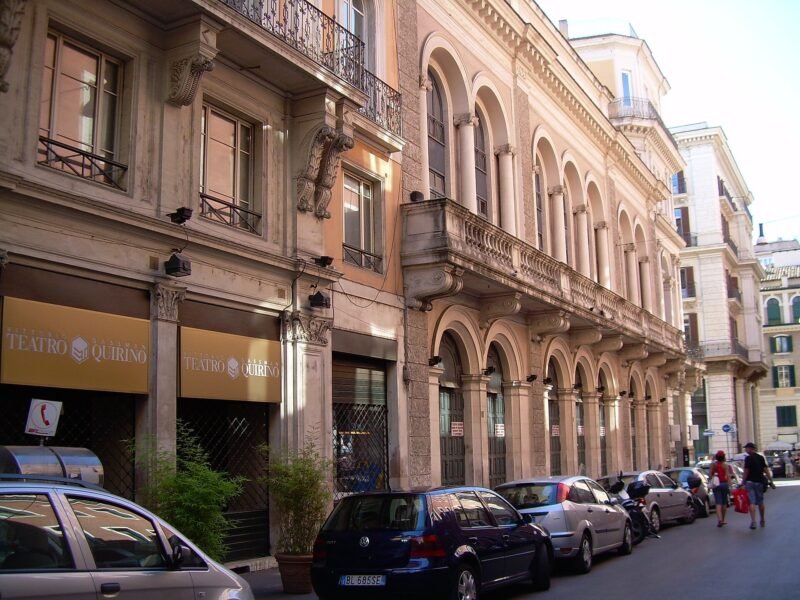
Andrea Chénier at the Teatro dell’Opera di Roma, January 17-26, 2027
In short. Umberto Giordano's Andrea Chénier is staged at the Teatro Costanzi, the main hall of the Teatro dell'Opera di Roma at Piazza Beniamino Gigli 7, from January 17 to 26, 2027.
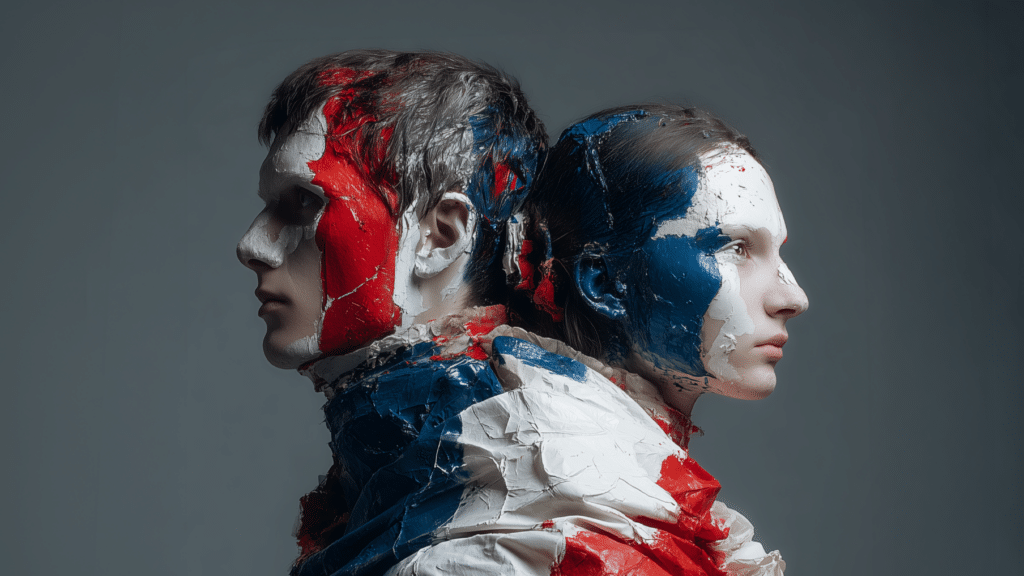
Umberto Giordano's Andrea Chénier is staged at the Teatro Costanzi, the main hall of the Teatro dell'Opera di Roma at Piazza Beniamino Gigli 7, from January 17 to 26, 2027. The opening night is Sunday, January 17 at 7 p.m., the repeat performances follow on Tuesday the 19th at 8, Wednesday the 20th at 8, Thursday the 21st at 8, Saturday the 23rd at 6, Sunday the 24th at 4:30 and Tuesday the 26th at 8 p.m. On Saturday, January 16 at 6 p.m. there is a youth preview. You get there by metro line A, Repubblica Teatro dell'Opera stop, or by the buses of Via Nazionale (H, 40, 60, 64, 70, 71, 170, 116T) and of Via Depretis (70, 71). The 2026/27 season price list published by the theater places Chénier in the highest price band of the program: from 26 to 200 euros on opening night, from 22 to 160 euros at the repeat performances, depending on the section. Single tickets have been on sale since October 8, 2026 at the box office at Piazza Beniamino Gigli 1 and on the authorized presale network indicated by the official website of the Teatro dell'Opera di Roma.
Language: in Italian with English surtitles.
Daniel Oren conducts, Marco Bellocchio directs, in a production born right at the Costanzi in 2017 in coproduction with the Teatro La Fenice in Venice. The three leads are Brian Jagde, Sonya Yoncheva and Ludovic Tézier, with Gregory Kunde, Angela Meade and Ariunbaatar Ganbaatar in the alternating casts. Plainly put: this is the January title to invest in, because Giordano's verismo demands big voices and this cast lines up all three, with a conductor on the podium who has worked the Italian repertoire for half a century.
Andrea Chénier at the Costanzi at a glance: dates, times and cast
The performances of Andrea Chénier at the Teatro Costanzi are seven, plus the youth preview of January 16, concentrated in 10 days and with different start times. The calendar published by the theater, with the subscription series next to the dates, is this.
The performance calendar
- Saturday, January 16, 2027, 6 p.m.: youth preview.
- Sunday, January 17, 7 p.m.: opening night, series A.
- Tuesday, January 19, 8 p.m.
- Wednesday, January 20, 8 p.m.: series B.
- Thursday, January 21, 8 p.m.
- Saturday, January 23, 6 p.m.: series D.
- Sunday, January 24, 4:30 p.m.: series E.
- Tuesday, January 26, 8 p.m.: series C, final performance.
The pace is tight: a performance almost every night, with pauses only on the 18th, the 22nd and the 25th. Those who have to fit the opera into a trip to Rome therefore have plenty of choice within a few days, but also little room for second thoughts.
The vocal cast
The cast published on the show's page is as follows. Andrea Chénier is Brian Jagde in the performances of January 17, 23 and 26 and Gregory Kunde in that of the 20th. Carlo Gérard is Ludovic Tézier, with Ariunbaatar Ganbaatar on the 19th, 21st and 24th. Maddalena di Coigny is Sonya Yoncheva, with Angela Meade on the 19th, 21st and 24th. The mulatta Bersi is Cassandre Berthon, the Countess of Coigny Annunziata Vestri, Madelon Elena Zaremba, with Annunziata Vestri on the 24th and 26th. The cast is completed by Hae Kang (Roucher), Matteo Peirone (the novelist Pietro Fléville and Fouquier Tinville), Alessio Verna (the sans-culotte Mathieu), Matteo Mezzaro (an Incroyable) and Matteo Macchioni (the abbé).
The artistic team
Conductor Daniel Oren, direction by Marco Bellocchio, chorus master Ciro Visco, sets and lighting by Gianni Carluccio, costumes by Daria Calvelli, choreographic movements by Massimiliano Volpini. Orchestra and Chorus of the Teatro dell'Opera di Roma. The production is by the Teatro dell'Opera di Roma in coproduction with the Teatro La Fenice in Venice, with surtitles in Italian and English.
How long the evening lasts
For the 2017 edition of the same production the theater gave a running time of about two hours and 35 minutes: 65 minutes for the first and second scenes, a 30-minute intermission, 60 minutes for the third and fourth. It is a good reference for planning dinner and the trip home: an 8 p.m. performance ends around 10:35, a 6 p.m. one shortly after 8:30.
Andrea Chénier, the drama by Giordano and Illica
Andrea Chénier is an opera in four scenes by Umberto Giordano to a libretto by Luigi Illica, first staged at the Teatro alla Scala in Milan on March 28, 1896. The Roman theater presents it as a drama in a historical setting, and it is the most famous of the composer's operas.
A La Scala premiere with a substitute tenor
On the debut night Rodolfo Ferrari conducted. The title role, planned for the tenor Alfonso Garulli, was entrusted to Giuseppe Borgatti, who replaced him, beside him were the soprano Evelina Carrera and the baritone Mario Sammarco. The success was triumphant. It is worth remembering: one of the operas most loved by tenors throughout the 20th century was born with a last-minute cast change.
A real poet and a real revolutionary
The protagonist is inspired by the life of the French poet André Chénier, caught in the whirlwind of the Revolution. His antagonist also has a historical model: the character of Carlo Gérard is modeled on the revolutionary Jean-Lambert Tallien. It is one of the reasons the opera still holds up: beneath the melodrama there is a story of real people, and a precise idea of what an age of terror means for those caught in the middle.
The plot in four scenes
The first scene is a party in the conservatory of the Coigny castle, on the eve of the Revolution. The servant Gérard, son of one of the family's servants, nurses hatred for the masters and a secret love for the young countess Maddalena, the poet Chénier, invited to the party, defends his ideals before a nobility that does not want to listen. Gérard throws off his livery and leaves. The second scene is in Paris, during the Terror: Gérard has become a leader of the Revolution, Maddalena lives in hiding and in poverty, and the meeting between her and Chénier ignites love and a duel. In the third scene, at the revolutionary tribunal, Gérard denounces the poet, then before Maddalena repents and retracts, but the public prosecutor Fouquier Tinville renews the accusation and Chénier is condemned. The fourth scene is the courtyard of the San Lazzaro prison: Maddalena takes the place of a condemned woman to climb onto the cart beside the man she loves.
The pages to recognize
Those going to hear Chénier for the first time will find famous pages: Gérard's monologue “Son sessant'anni, o vecchio” (I am 60 years old, old man) and Chénier's improvisation “Un dì all'azzurro spazio” (One day, in the blue space) in the first scene, the duet “Ecco l'altare” (Here is the altar) in the second, the monologue “Nemico della patria?!” (Enemy of the fatherland?!), Maddalena's tale “La mamma morta” (The dead mother) and Chénier's defense “Sì, fui soldato” (Yes, I was a soldier) in the third, “Come un bel dì di maggio” (Like a beautiful day in May) and the final duet “Vicino a te s'acqueta” (Near you it grows calm) in the fourth. The third scene is the heart of the evening, because it lines up three of the four most awaited moments and gives each of the three leads their own proving ground.
La mamma morta at the movies
“La mamma morta,” in the voice of Maria Callas, is part of the soundtrack of the film Philadelphia, with Tom Hanks and Denzel Washington. Many viewers recognize it before even knowing which opera it comes from: it is a good reason to bring to Chénier someone who says they do not know opera.
Umberto Giordano, the composer of Andrea Chénier
Umberto Giordano was born in Foggia on August 28, 1867 and died in Milan on November 12, 1948. His name is tied above all to two works that entered the international repertoire for good: Andrea Chénier and Fedora.
From Naples to the Sonzogno competition
The son of a pharmacist, he studied with Paolo Serrao at the San Pietro a Majella Conservatory in Naples. His first opera, Marina, was written for the competition announced in 1888 by the publishing house Sonzogno for the best one-act opera, won by Pietro Mascagni with Cavalleria rusticana. Giordano was the youngest of the 73 entrants and placed sixth, but the publisher was struck by him and commissioned a new opera. Thus came Mala vita, one of the first expressions of operatic verismo.
The leap with Chénier
After the failure of Regina Diaz in 1894, Giordano moved to Milan and returned to verismo with Andrea Chénier, the work that would make him famous. Two years later came Fedora, to a libretto by Arturo Colautti, and then Siberia, again with Illica, at La Scala in 1903. Madame Sans-Gêne debuted at the Metropolitan in New York in 1915 under Arturo Toscanini. Giordano is buried in the Monumental Cemetery of Milan and his name is inscribed in the Famedio.
A theatrical writing style
What is remembered of Giordano is the very strong sense of theater and the melodic generosity. That is exactly what you hear in Chénier: no page is built to impress insiders, everything is designed to reach the hall. For those accompanying a non-specialist audience it is an enormous advantage.
A curiosity about Andrea Chénier at the Teatro dell'Opera di Roma, January 17-26, 2027
Umberto Giordano married in Milan in 1896, the same year as the premiere of Andrea Chénier, Olga Spatz, daughter of Giuseppe Spatz, owner of the Grand Hotel et de Milan. The person who introduced her to him was Giuseppe Verdi, who lived in that hotel for long periods.
The story continues in the same building. Giordano's first daughter was born in the hotel on September 1, 1897 and received a name that makes anyone who knows her father's catalog smile: Fedora, like the opera the composer would stage the following year at the Teatro Lirico in Milan. The Grand Hotel et de Milan thus directly links two generations of Italian opera: the old Verdi who lived there and the young author of Chénier who found a wife there thanks to him.
For those following the Teatro dell'Opera season there is a further play of mirrors. In autumn 2026 Verdi's Falstaff at the Costanzi was set by its director in an imaginary version of the very Grand Hotel et de Milan, the hotel where Verdi's last opera was born. Three months later, on the same stage, comes the opera of the composer who married in that hotel. It is not a programming link declared by the theater, and that is worth saying: it is a coincidence. But it is the kind a guide holds on to.
Second curiosity, this time musical. Giordano's score has no key signatures, a practice that would become typical of composers of atonal music. It is, however, an affectation, because the writing of Chénier is fully tonal. And in the third scene, during the tribunal scene, the so-called Tristan chord of Wagner rings out quite recognizably, with the function of evoking the link between love and death that will close the opera. Anyone with even a slight Wagnerian ear will hear it coming: it is one of the rare moments when Italian verismo looks openly beyond the Alps.
Marco Bellocchio's Andrea Chénier, born at the Costanzi in 2017
The Andrea Chénier production signed by Marco Bellocchio was born at the Teatro Costanzi in the 2016/2017 season, as a new production of the Teatro dell'Opera di Roma in coproduction with the Teatro La Fenice in Venice. In January 2027 it returns to the same hall, 10 years after the last performance of the opera in Rome.
The first edition
In 2017 the production debuted on Friday, April 21, with the youth preview on April 19 and five repeat performances through May 2. Roberto Abbado conducted, with Pietro Rizzo on the podium at the May 2 performance, the chorus master was Roberto Gabbiani. Chénier was Gregory Kunde, Carlo Gérard Roberto Frontali, Maddalena di Coigny Maria José Siri. The premiere was recorded by Rai for Radio3 and broadcast on a delay.
The same team, 10 years later
The creative team is the same as in 2017: sets and lighting by Gianni Carluccio, costumes by Daria Calvelli, choreographic movements by Massimiliano Volpini. What changes are the conductor, the chorus master, who is now Ciro Visco, and almost the whole vocal cast. It is how revivals work in the big theaters: the visual framework stays, the musical part is renewed.
Why a revival matters
The theater presents this title among the revivals of productions by great directors, together with Pier Luigi Pizzi's Due Foscari. Revivals are often treated as second-tier evenings, and that is a mistake. A production that returns after 10 years is one that has stood the test of time, and the fact that the theater revives it with three voices of this level says how much it believes in it. Those who missed it in 2017 now have the chance to catch up with a richer cast.
Daniel Oren on the podium of Andrea Chénier
Daniel Oren, born in Tel Aviv on May 25, 1955, is one of the conductors most tied to the Italian and French repertoire of the romantic and verismo 19th century. His relationship with the Teatro dell'Opera di Roma began in December 1979, with a Tosca.
His training
Oren studied voice, harmony, counterpoint and piano in Israel as a very young man, then perfected his craft in West Berlin at the Musikhochschule thanks to a scholarship from the Israeli government. A great admirer of Leonard Bernstein, he performed in public for the first time at 13 as a solo voice in the Chichester Psalms, thanks to Bernstein himself. In 1975 he won the Herbert von Karajan competition for young conductors.
Rome, the first Italian stop
Once in Italy, he was entrusted at the Teatro dell'Opera di Roma, in December 1979, with a Tosca with Raina Kabaivanska and Éva Marton. In 1980, again in Rome, he conducted Manon with Alfredo Kraus, I due Foscari with Renato Bruson and Carlo Bergonzi and La fanciulla del West, in 1981 the first performance of Gaetano Donizetti's Fausta. Chénier therefore marks a return to a house where his Italian career began.
Arena, Covent Garden, the Met, Paris
Since his debut with Tosca in 1984, Oren has returned every year to the Arena di Verona, becoming one of the conductors most present in its seasons, up to the Aida of the festival's centenary in 2013. At London's Royal Opera House he debuted in 1993 with La bohème, at the Vienna Staatsoper in 1994 with Tosca, at the Metropolitan in New York in 1995 with Tosca, with Luciano Pavarotti. At the Paris Opéra he conducted, among many titles, Andrea Chénier itself in 2009. In 2018 he debuted at La Scala with Franco Zeffirelli's Aida. In Salerno, since 2007, he has led the reopening of the Teatro Verdi and a long series of productions.
What to expect from the pit
Oren has always preferred opera to the symphonic repertoire, and it shows. In a title like Chénier, where the orchestra must support big voices without covering them and give breath to the lyrical moments, a theater conductor with this experience is a guarantee. From him you can expect broad tempos in the great monologues and a third scene as tense as it should be.
Something nobody tells you about Andrea Chénier at the Teatro dell'Opera di Roma, January 17-26, 2027
Gregory Kunde, who sings Chénier in the single performance of Wednesday, January 20, was the protagonist of the first edition of this same Bellocchio production, in April 2017. He is the only principal performer from 2017 who returns, and he does so for one night only.
No presentation underlines it, and yet for an enthusiast it is the news of the season. Kunde knows the production from the inside, built it with the director 10 years ago, and returns to the Costanzi in the same role beside Sonya Yoncheva and Ludovic Tézier, who are onstage on January 20. It is the night of comparison: those who want to understand how a production changes with time, and how a great tenor of long career rereads a role he has already inhabited in that hall, should choose that date. January 20 is also a repeat performance of series B, so at repeat-performance prices.
A second thing you only find out by reading the price list: Andrea Chénier is in the highest price band of the opera titles of the 2026/27 season at the Costanzi, together with Lucia di Lammermoor and Il trovatore. A poltronissima in the orchestra costs 190 euros on opening night and 155 at the repeat performances, against 170 and 135 for the band of The Rake's Progress, Due Foscari and La rondine. The gap narrows as you go up: the second gallery costs 26 and 22 euros in all three bands. Put simply: on Chénier it pays to be selective in the orchestra and bolder up high, where the difference with the other titles disappears.
Third note, for those thinking as a group. In Chénier's band the front seat in a second-tier side box costs 80 euros at a repeat performance, the rear one 35. In the same box, then, two people spend very different amounts, and see very different things. With a group of four it is best to decide beforehand who sits in front, or to buy only front seats in two adjacent boxes.
Sonya Yoncheva, Brian Jagde and Ludovic Tézier: the leads of Andrea Chénier
The three leads announced by the Teatro dell'Opera for Andrea Chénier are Sonya Yoncheva (Maddalena), Brian Jagde (Chénier) and Ludovic Tézier (Gérard). All three have already sung these roles, or similar ones, in the major international theaters in recent years.
Sonya Yoncheva, Maddalena di Coigny
A soprano born in Plovdiv, Bulgaria, on December 25, 1981, Sonya Yoncheva studied piano and voice in her city and perfected her craft with Danielle Borst at the Geneva Conservatory, where she earned her master's in 2009. In 2007 she took part in William Christie's Jardin des Voix academy for young singers, and with Christie and Emmanuelle Haïm she continued to work in the baroque repertoire. In 2010 she won the women's first prize at the Operalia competition. Her Metropolitan debut was in November 2013, as Gilda in Rigoletto, as a replacement, from there Mimì, Violetta, Desdemona in the Otello that opened the 2015 season, Tosca in 2017/18, the year she became the first singer to headline three Met cinema broadcasts in a single season. At La Scala she debuted in 2017 as Mimì and in 2018 was Imogene in Bellini's Il pirata, the first production of the title since the 1958 one with Maria Callas.
With Giordano she has a precise relationship. In 2021 she was Stephana in Siberia at the Maggio Musicale Fiorentino, in 2022 she sang her first Fedora at La Scala, in 2023 she debuted the role of Maddalena in Andrea Chénier, also at La Scala. In 2025 she brought Chénier to the Vienna Staatsoper and the Metropolitan. She arrives in Rome, in short, with Maddalena already broken in at three of the most important theaters in the world. Among her honors, the Opus Klassik as singer of the year in 2021 for the album Rebirth and the title of Officier de l'ordre des Arts et des Lettres in France in 2024. In 2020 she founded the production company SY11. She is no stranger to the Roman audience: in 2024 she was Tosca at the opera festival of the Baths of Caracalla.
Brian Jagde, Andrea Chénier
An American tenor, born on Long Island on August 21, 1979 and raised in Rockland County, Brian Jagde studied voice at the Purchase College Conservatory, where he trained initially as a baritone before returning to the tenor voice under Michael Paul. He was part of the Merola Young Artist Program and the Adler Fellowship of San Francisco Opera. In 2012 he won second prize at Operalia and the Birgit Nilsson prize for Wagner and Strauss repertoire, in 2014 first prize at the Loren L. Zachary competition. He debuted at Covent Garden as Pinkerton in Madama Butterfly, at the Lyric Opera of Chicago as Cavaradossi, at the San Carlo in Naples as Don José, at the Teatro Massimo in Palermo as Pinkerton, and has sung at the Metropolitan, the Deutsche Oper in Berlin, the Vienna Staatsoper and La Scala. In 2024 he was onstage at La Scala for La forza del destino, which opened the season, beside Anna Netrebko and Ludovic Tézier himself. He sings Chénier on January 17, 23 and 26.
Ludovic Tézier, Carlo Gérard
A baritone born in Marseille on September 10, 1968, Ludovic Tézier studied at the Centre national d'insertion professionnelle des artistes lyriques and then in Paris with Michel Sénéchal. After two seasons at the Lucerne Opera he established himself in France, from the Hamlet in Toulouse in 2000 to the Lucia di Lammermoor in Lyon in 2002 with Roberto Alagna and Natalie Dessay. At the Metropolitan he debuted in 2002 as Escamillo, at the Royal Opera House in 2004 as Albert in Werther, at the Paris Opéra he sang Werther in the baritone version. He is known above all as a Verdi baritone: Germont, Simon Boccanegra, Macbeth, Rigoletto, Don Carlo di Vargas in La forza del destino at the Royal Opera House in 2019 and at La Scala in 2024. In 2016 he won the Oscar della Lirica in Verona, in 2026 the Bastianini Prize. The Roman audience has already heard him, in 2022, as Don Carlo in Ernani at the Teatro dell'Opera.
The alternates: Kunde, Meade, Ganbaatar
The performances of January 19, 21 and 24 have a different pair of leads: Angela Meade as Maddalena and Ariunbaatar Ganbaatar as Gérard, the latter in his debut at the Rome Opera according to the season presentation release. Gregory Kunde sings Chénier on January 20, 10 years after performing it in the first edition of this production. Performances with the alternates are not fallback evenings, and January 24, a Sunday afternoon, is the right date for those who want to hear another reading of the roles at a convenient hour.
The character roles
In Chénier the supporting roles weigh. Bersi, the Countess of Coigny, the old Madelon of the third scene, who offers her last grandson to the fatherland, the Incroyable who shadows the poet, Roucher who assists him to the end: they give color to the revolutionary fresco. Elena Zaremba as Madelon and Cassandre Berthon as Bersi are the names to watch.
Tickets and prices for Andrea Chénier at the Costanzi
For Andrea Chénier the Teatro dell'Opera applies the prices of the Andrea Chénier, Lucia di Lammermoor and Il trovatore band: from 26 to 200 euros on opening night, from 22 to 160 euros at the repeat performances, depending on the section. Tickets for the single shows of the 2026/27 season have been on sale since October 8, 2026. The full price list is on the Prices page of the official website.
The price list by section
- Orchestra poltronissime, rows 1-13: 190 euros on opening night, 155 at repeat performances.
- Orchestra poltrone, rows 14-19 and side seats: 175 and 140 euros.
- Central orchestra boxes, first and second tier, front seats: 200 and 160 euros, rear seats: 170 and 125 euros.
- First-tier side boxes, front seats: 150 and 110 euros, rear seats: 80 and 60 euros.
- Second-tier side boxes, front seats: 100 and 80 euros, rear seats: 55 and 35 euros.
- Third-tier side boxes, front seats: 75 and 49 euros, rear seats: 35 and 25 euros.
- Balcony first row: 90 and 65 euros, second and third rows: 70 and 45 euros.
- First gallery: 30 and 25 euros, second gallery: 26 and 22 euros.
Where to buy
The theater box office is at Piazza Beniamino Gigli 1, open Monday to Saturday from 10 a.m. to 6 p.m. and Sunday from 9 a.m. to 1:30 p.m., it is closed on holidays. Tickets for the show of the day are sold at the theater from one hour before until 15 minutes after the start. Online you buy through the authorized presale network that the theater indicates on the show's page. The theater urges buyers to use only channels authorized by the foundation.
How to pay at the window
At the window you pay in cash, by check made out to the Fondazione Teatro dell'Opera di Roma, by debit card and with the main credit cards. The Carta del Docente and the Carta della Cultura are also accepted, during box office hours.
Discounts and last minute
For some evenings, at the theater's discretion, a 25 percent last-minute discount is offered on tickets sold from one hour before the start, excluding balcony and gallery. With a cast this anticipated I would not count on it for the performances of the 17th, 23rd and 26th: on Chénier it is better to buy early and choose the section calmly.
Subscriptions
Chénier is part of the 2026/27 season subscriptions, whose series appear next to the dates: A for opening night, then B, C, D and E. Those who already have a subscription find their performance by series, those buying a single ticket also have available the two out-of-series performances of January 19 and 21.
The advice I give you for visiting Andrea Chénier at the Teatro dell'Opera di Roma, January 17-26, 2027
The advice for Andrea Chénier at the Costanzi is the performance of Saturday, January 23 at 6 p.m., in a front seat of a first- or second-tier side box or in the first row of the balcony. It is one of the three nights when Jagde, Yoncheva and Tézier sing together, it costs like a repeat performance and you get out in time to have dinner without rushing.
Here is the reasoning. The January 17 opening has the charm of the inaugural evening, dark dress welcome and the prices of the highest band: 200 euros for a front seat in a central box. The final performance on the 26th is a Tuesday night starting at 8, and those who come from outside Rome or work the next day pay for it. Saturday at 6, instead, brings together the main trio, repeat-performance prices and an exit around 8:35, with the city still lively and the metro running.
On the seat: in Chénier the voices count above everything else, and the great monologues reach the balcony straight. The balcony first row costs 65 euros at a repeat performance and is, in our judgment, the seat with the most balanced sound in the hall. A front seat in a second-tier side box, at 80 euros, gives a lateral but close view. Those on a tight budget should choose the first gallery at 25 euros: you see from afar, you hear everything, and in this opera that is what counts.
If instead you are interested in the history of the production, book Wednesday, January 20, the night of Gregory Kunde. If you prefer the afternoon, Sunday the 24th at 4:30 with Meade and Ganbaatar. One last recommendation: arrive at least 40 minutes early. The coat check is mandatory for bags and umbrellas, and in January you will almost certainly be carrying an umbrella.
How to get to the Teatro dell'Opera for Andrea Chénier
The Teatro Costanzi is reached by metro line A, Repubblica Teatro dell'Opera stop, a few minutes' walk from Piazza Beniamino Gigli. On a January evening, with cold or rain, it is by far the simplest solution.
By metro
Line A stops at Repubblica Teatro dell'Opera, on Piazza della Repubblica. From the square the theater is a few minutes' walk. Those arriving from Termini station can take the same line A for one stop or walk.
By bus
The theater lists these routes:
- Via Nazionale: H, 40, 60, 64, 70, 71, 170, 116T.
- Via Depretis: 70, 71.
- Via Cavour: 16, 75, 84, 150 (holidays), 360, 590, 649, 714.
- Termini station: 16, 38, 75, 86, 90, 217, 310, 360, 649, 714.
Via Depretis and Via Nazionale are the two streets closest to the theater: choose the route based on your starting point and get off there.
By taxi
At the theater entrance there is a taxi service for the public, with Radio Taxi 6645, during intermissions the house staff collects bookings for the ride back. The theater also lists a dedicated number, 06 6696. After the 8 p.m. performances, which end around 10:35, it is the service I recommend.
By car
I advise against the car. The area between Via Nazionale, Via del Viminale and Termini is central and busy, and the travel information published by the theater covers metro, bus and taxi. Those coming from out of town should leave the car in a park-and-ride along line A and continue by metro.
Another well-known fact, yet rarely mentioned
Everyone knows Umberto Giordano is the author of Andrea Chénier, born at La Scala, few remember that his first staged opera debuted in Rome. Mala vita (Bad Life) was staged at the Teatro Argentina on February 21, 1892 and caused a certain scandal.
The story, taken from the Neapolitan popular scenes of Salvatore Di Giacomo and Goffredo Cognetti, revolved around a worker who vows to redeem a prostitute in exchange for being cured of tuberculosis. For the Roman audience of 1892 it was strong stuff, and that is precisely what made Mala vita one of the first and most interesting expressions of operatic verismo. In the same year the opera was performed in Vienna, at the Staatsoper, in Berlin, at the Krolloper, and in Prague, to great acclaim.
There is also a curious Foggia sequel. When Giordano, after that debut, was invited to play some of its pieces on the piano at the Circolo Dauno in his hometown, he realized halfway through that the audience had sat down at the tables to play cards. A long rift with Foggia followed, mended only in 1928. Rome, instead, had been attentive to him at once, even if with a bit of scandal.
And Rome returned in his career later too: Giove a Pompei (Jupiter at Pompeii), written four-handed with Alberto Franchetti to a libretto by Luigi Illica and Ettore Romagnoli, had its first performance at the Teatro Parioli on July 5, 1921. When you walk into the Costanzi in January for Chénier, remember that its author had begun to make himself known a short walk from there, in Largo di Torre Argentina.
The Teatro Costanzi: the hall that hosts Andrea Chénier
The Teatro Costanzi today has a capacity of 1,560 seats, distributed among the orchestra, three tiers of boxes, balcony and gallery, under a dome frescoed by Annibale Brugnoli. At its birth, in 1880, it could hold up to 2,212 spectators.
A hall designed for sound
The builder Domenico Costanzi commissioned the design in 1879 from the Milanese architect Achille Sfondrini, a specialist in theater construction, who prioritized acoustics: the horseshoe-shaped hall was conceived as a sounding box. The construction site lasted only 18 months. For an opera of voices like Chénier, where the great monologues must reach every corner without strain, the shape of the hall is an ally.
The sections, from the orchestra to the gallery
The price list distinguishes orchestra poltronissime (rows 1-13), poltrone (rows 14-19 and side seats), orchestra boxes and boxes of the first, second and third tiers, central and side, divided between front seats and rear seats, the balcony (first row, second and third rows) and the gallery, divided into first and second. The updated seating plan is in the maps section of the theater's website: look at it before choosing.
Front boxes and rear boxes
The price difference between a front seat and a rear seat in the same box reflects the view: from the back of a side box you see little of the stage. In Chénier the staging counts less than in a comedy, but the first scene, with the party and the gavotte, and the tribunal of the third have to be seen. A rear seat is a good deal only for those who mainly want to listen.
The foundation's other venues
The foundation also runs the Teatro Nazionale at Via del Viminale 51, born in 1925 as the Supercinema, and in summer the Baths of Caracalla. For the full profile of the theater there is our page on the Rome Opera House.
House rules, dress and times for the evening of Andrea Chénier
At the Teatro dell'Opera di Roma dark dress is welcome on inaugural evenings and opening nights. For the opening of Andrea Chénier, Sunday, January 17 at 7 p.m., dress accordingly, for the repeat performances the theater does not indicate a precise code.
What to leave at the coat check
It is mandatory to deposit umbrellas, hats, bags, helmets, cameras and audio and video recording devices at the coat check. In the hall the use of cell phones, photographs, with or without flash, and any recording are prohibited. Refreshments are allowed only in the theater's bars and smoking is prohibited throughout. In January, with coats and umbrellas, the coat check line is the real bottleneck of the evening.
Late arrivals and seats
Once the show has started there is no entry to the orchestra or to the numbered seats of the balcony and gallery: latecomers wait in the orchestra foyer. In Chénier the opera opens with Gérard's monologue, “Son sessant'anni, o vecchio,” one of the most beautiful pages of the whole score: missing it because of lateness is a real pity.
The intermission
In the 2017 edition there was one intermission, 30 minutes, between the second and third scenes. It is the moment to book the return taxi with the house staff, and for a coffee at the theater bar before the tribunal and the prison.
Lost property and information
For lost property the theater lists the number 06 48160284. The full rules are on the General Information page of the official website.
The right photo to take at Andrea Chénier at the Teatro dell'Opera di Roma, January 17-26, 2027
At the Costanzi you do not photograph in the hall, with or without flash: the right photo of your Chénier evening is taken outside, on Piazza Beniamino Gigli, before going in. It is the theater's rule and it holds during the final applause too.
The square is the one onto which Marcello Piacentini, in the renovation following the city's purchase of the theater in 1926, moved the entrance. In January you always arrive in the dark, and even for the 4:30 performance you leave in the evening: it is the moment when the lit facade and the foyer lights look their best. The photo with the theater behind you, in your coat with the program in hand, finally makes sense.
A tip from someone who has seen plenty: photograph the people, not the building. The couple celebrating an anniversary, the friends who came from afar to hear Yoncheva, the kids of the youth preview on the 16th: those are the images you will look at again in 10 years. The building you can find in any archive, your evening you cannot.
The hall, with Brugnoli's dome and the great crystal chandelier first lit in 1928, remains an image to take home with your eyes. Those who want to see it at leisure and in full light can book one of the guided tours the theater organizes. And those looking for a keepsake of Chénier will find the production's official image on the theater's website.
Some important events that happened here in history
The Teatro Costanzi was inaugurated on November 27, 1880 with Rossini's Semiramide and became the Teatro dell'Opera di Roma in 1946. In between came the world premieres of Cavalleria rusticana and Tosca, and a change of ownership that redrew its face.
The dates to remember
- 1879: Domenico Costanzi commissions the design from the architect Achille Sfondrini.
- November 27, 1880: inauguration with Rossini's Semiramide, in the presence of Umberto I and Queen Margherita, after only 18 months of work.
- May 17, 1890: world premiere of Pietro Mascagni's Cavalleria rusticana, the opera that two years earlier had won the Sonzogno competition in which Giordano placed sixth.
- January 14, 1900: world premiere of Giacomo Puccini's Tosca.
- 1907: management passes to the impresario Walter Mocchi, from 1912 it is led by his wife, the soprano Emma Carelli.
- 1926: the City of Rome buys the theater, which becomes the Teatro Reale dell'Opera, renovation by Marcello Piacentini.
- February 27, 1928: second inauguration with Arrigo Boito's Nerone, the great crystal chandelier is lit.
- 1935: the permanent Chorus is born at the wish of Tullio Serafin.
- 1946: the theater takes the name Teatro dell'Opera di Roma.
- 1958: new restyling by Piacentini ahead of the 1960 Olympics.
- December 1979: Daniel Oren conducts Tosca, his first engagement at the Teatro dell'Opera.
- April 21, 2017: Marco Bellocchio's Andrea Chénier debuts at the Costanzi, in coproduction with La Fenice.
The theater describes itself as the cradle of verismo opera, and the sequence justifies it: Cavalleria rusticana was born here, and Andrea Chénier, though debuting at La Scala, belongs to the same season of Italian taste. Those who sit at the Costanzi for Chénier hear verismo in the hall that baptized it. And it is a coincidence worth noting that the Chénier performance closest to January 14, the anniversary of the Tosca premiere, falls just three days later.
Who has passed through Andrea Chénier at the Teatro dell'Opera di Roma, January 17-26, 2027
Through the Teatro Costanzi have passed King Umberto I and Queen Margherita, present at the 1880 inauguration, and then Pietro Mascagni, Giacomo Puccini and Ottorino Respighi, whom the theater names as the musicians who marked its destiny. For Chénier, though, the list of interest is another.
There is Daniel Oren, who arrived here in December 1979 with a Tosca with Raina Kabaivanska and Éva Marton, and returned the following year for Manon with Alfredo Kraus, I due Foscari with Renato Bruson and Carlo Bergonzi and La fanciulla del West, then in 1981 for Donizetti's Fausta. Nearly half a century later he climbs onto the same podium. There is Gregory Kunde, the Chénier of the first edition of this production in 2017, with Roberto Frontali as Gérard, Maria José Siri as Maddalena and Roberto Abbado conducting. There is Ludovic Tézier, who in 2022 at the Teatro dell'Opera was Don Carlo in Ernani. And there is Sonya Yoncheva, whom the Roman audience heard in 2024 as Tosca at the summer festival of the Baths of Caracalla.
Then the names from the theater's history: Emma Carelli, a soprano, who from 1912 led the Impresa Costanzi and brought to Rome La fanciulla del West, Turandot, Il trittico and Diaghilev's Ballets Russes, Walter Mocchi, the impresario, her husband, Marcello Piacentini, who reworked the building in 1926 and 1958, Tullio Serafin, who in 1935 wanted the permanent chorus. And the conductors cited by the theater in the histories of its orchestra and chorus: Victor de Sabata, Gianandrea Gavazzeni, Herbert von Karajan, Carlo Maria Giulini, Karl Böhm, Zubin Mehta, Georges Prêtre, Georg Solti, Giuseppe Sinopoli, Mstislav Rostropovich, Riccardo Muti, Daniele Gatti.
To close, a thread tying the hall to Giordano's opera. Among the historic Chéniers on disc is Beniamino Gigli, protagonist in 1941 of a recording with Maria Caniglia and Gino Bechi conducted by Oliviero De Fabritiis. He is the same Gigli after whom the square onto which the theater entrance opens is named. Those arriving for Chénier, in short, enter from the address of one of the great Chéniers of the past.
Around the Costanzi: Viminale, Repubblica and the Esquiline
The Teatro Costanzi stands between Via Nazionale, Via del Viminale and Via Depretis, a few minutes' walk from Piazza della Repubblica and Termini station. Those arriving an hour early, or with a free afternoon before an evening performance, have within reach some of the most interesting places of ancient and Umbertine Rome.
Piazza della Repubblica and the Baths of Diocletian
Coming up from the metro you emerge onto Piazza della Repubblica, where you find the Basilica of Santa Maria degli Angeli e dei Martiri and the remains of the Baths of Diocletian. Not far away is the Octagonal Hall, and toward Termini Palazzo Massimo alle Terme, home of the National Roman Museum. In January the museums are quieter than in any other month: an afternoon at the museum and the evening at the Costanzi, all on foot, is the program I suggest most often.
Two churches a few steps away
On the opposite side of Piazza della Repubblica you reach in a few minutes Santa Maria della Vittoria and San Bernardo alle Terme. They are brief stops, ideal for filling the half hour before the doors open.
Toward Monti and Santa Maria Maggiore
Going down Via Nazionale you meet the Palazzo delle Esposizioni, further down begins the Monti district, with its narrow streets and evening life. In the opposite direction, past Via Cavour, the Basilica of Santa Maria Maggiore can be reached on foot in a good quarter of an hour.
The Teatro Nazionale, a stone's throw away
At Via del Viminale 51 is the Teatro Nazionale, the foundation's second hall. On the same days as Chénier, from January 23 to 27, it hosts Le Cenerentole (The Cinderellas), the show with the artists of the Fabbrica project and the Children's Chorus of the Teatro dell'Opera, designed for schools as well.
Where to eat before and after Andrea Chénier
Around the Teatro dell'Opera the dining offer is concentrated on Via Nazionale, Via del Viminale, the streets toward Termini and, a little farther, the Monti district. In the theater refreshments are allowed only in the inner bars, so dinner has to be organized before or after.
Before the show
For the 7 p.m. opening and the 6 p.m. performance of January 23 the most sensible solution is a late lunch and a light aperitif in the area, leaving dinner for afterward. For the 8 p.m. performances you can dine early, around 6:30, in a trattoria around Via Nazionale or Via del Viminale: the theater is a few minutes' walk. For the 4:30 Sunday a proper lunch and a coffee at the theater bar are enough.
After the show
The Monti district is the most natural choice for those dining after a 4:30 or 6 p.m. performance: you walk down from Via Nazionale and find a wide choice of osterias, wine bars and pizzerias. After the 8 p.m. performances, which end around 10:35, it is wise to book ahead, because at that hour many kitchens close.
The criterion
I name no venues, because they change management more often than productions change directors. The criterion is simple: avoid the places with the menu translated into five languages posted on the door in the streets around Termini and push a few streets toward Monti. The difference, at the same price, shows.
Andrea Chénier for young people, families and people with disabilities
For Andrea Chénier the Teatro dell'Opera has scheduled a youth preview on Saturday, January 16 at 6 p.m., the evening before the debut. It is the cheapest and most informal way to see the production with the opening-night company.
The Carta Giovani Opera
For young people under 30 the theater offers the Carta Giovani Opera (Opera Youth Card), which entitles holders to ticket discounts and a guided tour of the theater. Conditions and validity for the 2026/27 season are published in the box office section of the official website, together with the Under 30 Youth subscription.
With kids
The theater publishes no age guidance for Chénier. It is an opera suitable for kids aged 12 or 13 and up, more so than many others, because it tells a clear story, with sharply drawn characters and a French Revolution they study at school. Tell them the plot beforehand, choose the 4:30 Sunday or the 6 p.m. Saturday and have them listen at home to “La mamma morta” and “Nemico della patria?!”: in the hall they will recognize them and the evening will change face.
Accessibility
For the Teatro Costanzi the theater lists a guided-tour route accessible to people with difficulty walking, with the exception of some points such as the Royal Box and the gallery. For performances the advice is to contact the box office before buying, at 06 48160255 or 06 4817003 or at ufficio.biglietteria@operaroma.it, explaining your needs. Those with mobility difficulties should avoid the gallery in any case. The taxi service at the theater entrance, with booking during the intermission, is a concrete help at the end of the night.
Andrea Chénier on Radio3
Radio3 follows live all the opening nights of the opera titles at the Costanzi in the 2026/27 season: the opening of Andrea Chénier on Sunday, January 17 can therefore also be heard from home. Chénier is not among the three productions Rai Cultura films for television this season.
For those who cannot come to Rome it is a real opportunity, and for those holding a ticket for a repeat performance it is a way to arrive prepared: listening to the opening on the radio and then hearing the same production live a few days later is an exercise I recommend to anyone who wants to understand how much the hall matters. In 2017, for the first edition of the production, the April 21 performance was instead recorded for a delayed broadcast.
January in Rome and the program around Andrea Chénier
Andrea Chénier is the first opera title of 2027 at the Costanzi, after The Rake's Progress, which opens the season on November 27, 2026, and the holiday Swan Lake, from December 17 to 31. Right after come John Neumeier's Mahler Third Symphony, from February 4 to 10, and Lucia di Lammermoor, from February 21 to 28.
A theatrical month
January is the month when Rome empties of the big holiday flows and returns to a more everyday scale. The days are short and cool, the museums less crowded, the evenings long: for a trip planned around opera it is an underrated period. Hotel rooms are easier to find and the city is better explored on foot.
How to organize the weekend
The weekend of January 23 and 24 lends itself well: Saturday at 6 Chénier with the main trio, Sunday morning the Baths of Diocletian or Palazzo Massimo, and those who want can return to the hall on Sunday at 4:30 to hear the alternates. For groups and companies who want an opera evening organized from arrival to exit, with guide and logistics, there is Tour Leader Pro.
For those following the season
Those who saw the Falstaff at the Teatro dell'Opera di Roma in October 2026 will find in Chénier the ideal sequel: from Verdi's last comedy to the verismo drama, three months apart, in the same hall.
Frequently asked questions about Andrea Chénier at the Costanzi
When is Andrea Chénier at the Teatro dell'Opera di Roma?
Andrea Chénier is staged at the Teatro Costanzi from January 17 to 26, 2027. The opening is Sunday the 17th at 7 p.m., the repeat performances are Tuesday the 19th, Wednesday the 20th and Thursday the 21st at 8 p.m., Saturday the 23rd at 6 p.m., Sunday the 24th at 4:30 p.m. and Tuesday the 26th at 8 p.m. On Saturday, January 16 at 6 p.m. there is the youth preview.
How much do tickets for Andrea Chénier at the Costanzi cost?
Tickets for Andrea Chénier at the Costanzi cost from 26 to 200 euros on opening night and from 22 to 160 euros at the repeat performances, depending on the section. An orchestra poltronissima costs 190 euros on opening night and 155 at the repeat performances, the balcony first row 90 and 65, the first gallery 30 and 25. The price list is on the Teatro dell'Opera website.
When can you buy tickets for Andrea Chénier?
Single tickets for Andrea Chénier, like those for all the shows of the Teatro dell'Opera's 2026/27 season, have been on sale since October 8, 2026. They are bought at the box office at Piazza Beniamino Gigli 1, Monday to Saturday from 10 a.m. to 6 p.m. and Sunday from 9 a.m. to 1:30 p.m., or on the authorized network indicated by the theater.
Who sings and who conducts Andrea Chénier in Rome?
The Teatro dell'Opera di Roma's Andrea Chénier is conducted by Daniel Oren and directed by Marco Bellocchio. Brian Jagde is Chénier on January 17, 23 and 26, Gregory Kunde on the 20th, Ludovic Tézier is Gérard and Sonya Yoncheva Maddalena, with Ariunbaatar Ganbaatar and Angela Meade on January 19, 21 and 24.
On which nights do Yoncheva, Jagde and Tézier sing together?
Sonya Yoncheva, Brian Jagde and Ludovic Tézier sing Andrea Chénier together at the Costanzi on Sunday, January 17 at 7 p.m., Saturday the 23rd at 6 p.m. and Tuesday the 26th at 8 p.m. On January 20 Yoncheva and Tézier are onstage with Gregory Kunde in the title role.
How long does Andrea Chénier last at the Teatro dell'Opera?
For the first edition of this production of Andrea Chénier, in 2017, the Teatro dell'Opera gave a running time of about two hours and 35 minutes, with a single 30-minute intermission between the second and third scenes. An 8 p.m. performance therefore ends around 10:35.
How do you get to the Teatro dell'Opera di Roma by public transport?
The Teatro dell'Opera di Roma, at Piazza Beniamino Gigli 7, is reached by metro line A, Repubblica Teatro dell'Opera stop. By bus you want the routes of Via Nazionale (H, 40, 60, 64, 70, 71, 170, 116T), of Via Depretis (70, 71) and of Via Cavour, plus those leaving from Termini.
Is there a dress code for Andrea Chénier at the Costanzi?
At the Teatro Costanzi dark dress is welcome on inaugural evenings and opening nights, so for Andrea Chénier at the Sunday, January 17 opening. For the repeat performances the theater does not indicate a precise code, bags, coats and umbrellas must be left at the coat check, which is mandatory.
Does Andrea Chénier have surtitles?
Yes, Andrea Chénier at the Teatro dell'Opera di Roma is presented with surtitles in Italian and English. It is a concrete help for foreign audiences and for Italians too, because Illica's libretto is rich in historical references to the French Revolution.
To close, the advice on which night to choose: buy as soon as sales open, take Saturday the 23rd at 6 p.m. or, if you want the history of the production, Wednesday the 20th with Kunde, and choose the balcony first row or a front box seat. Andrea Chénier is an opera of voices, and this time the voices are there: the rest is to reach Piazza Beniamino Gigli with plenty of time and leave your coat at the coat check before the orchestra begins.
Article written by the editorial team of Tour Leader Pro, contact them for Private/Corporate/V.I.P. Tours and Experiences.
Planning a trip to Rome? The English-language guides to visiting the city are on ItalyPlanner.com.
Contact Information
Nearby
 Rome Opera House100 m
- St. Paul’s Within the Walls100 m
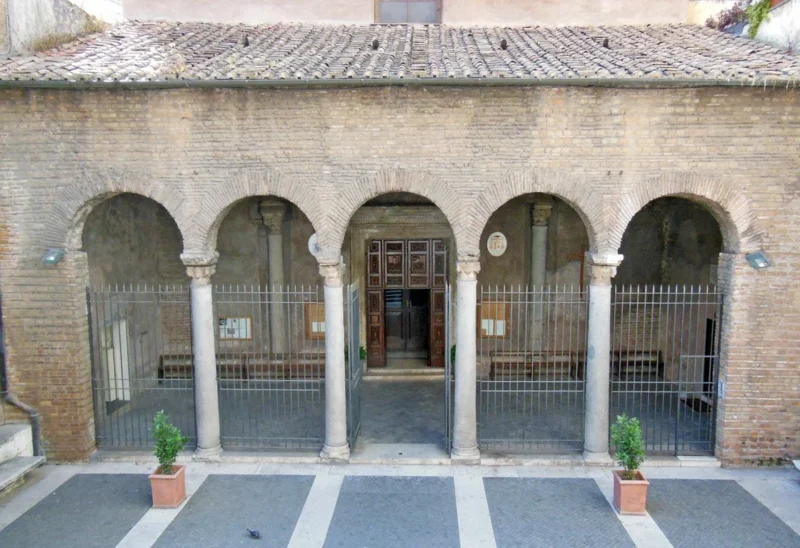
- Basilica of San Vitale100 m
- Teatro Nazionale100 m
- Enrico Fermi Center – Historical Museum of Physics and Study and Research Center at the Viminale200 m
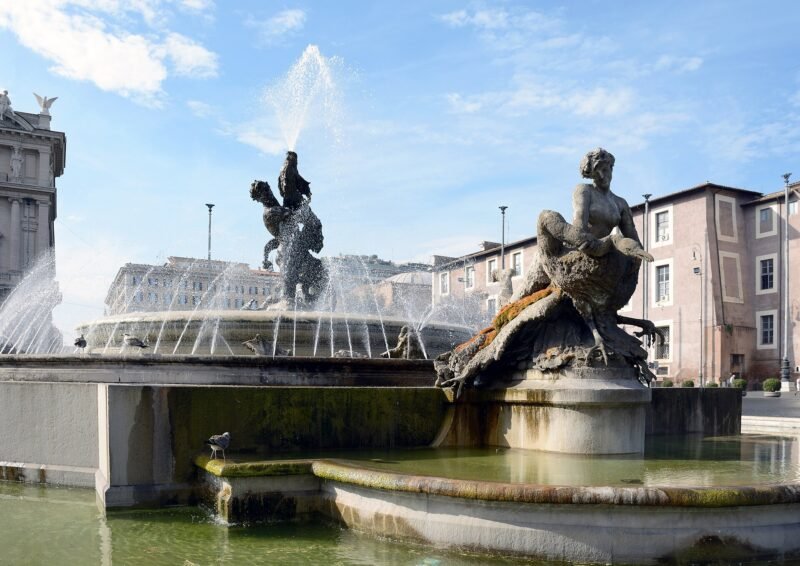
- Fontana delle Naiadi200 m

Upcoming events nearby
- Swan Lake at Teatro dell’Opera di Roma, December 17 to 31, 2026100 m
- Il barbiere di Siviglia with Cecilia Bartoli at Teatro dell’Opera di Roma, May 27, 2027100 m
- Goecke / Robbins / Bausch at Teatro dell’Opera di Roma, from October 27 to November 8, 2026100 m
- The Rake’s Progress at Teatro dell’Opera di Roma, November 27 to December 5, 2026100 m

You might also like
- Il commissario Montalbano with Vincenzo Pirrotta at Teatro Quirino, February 16 to 28, 2027
- Il giuoco delle parti with Pippo Pattavina at Teatro Quirino, February 9 to 14, 2027
- Priscilla, La regina del deserto, the musical at Teatro Sistina, from February 10, 2027
- Rosso Malpelo with Enrico Guarneri at Teatro Quirino, February 2 to 7, 2027
- L’inconveniente with Milena Vukotic at Teatro Quirino, January 19 to 31, 2027
- Figli maschi by Centouno at Teatro Sala Umberto, February 16 to 28, 2027