Seoul Mafia in Tutta colpa del K-pop at Teatro Brancaccio, January 18, 2027
In short. Tutta colpa del K-pop (literally "It's All the K-pop's Fault"), the show by Marco Ferrara, known as Seoul Mafia, plays at Teatro Brancaccio, Via Merulana 244 (00185 Rome), on Monday, January 18, 2027 at 21:00, for one night only.
Tutta colpa del K-pop (literally "It's All the K-pop's Fault"), the show by Marco Ferrara, known as Seoul Mafia, plays at Teatro Brancaccio, Via Merulana 244 (00185 Rome), on Monday, January 18, 2027 at 21:00, for one night only. The production is by Opera Live Hub. The theater is reached by metro line A, Vittorio Emanuele stop, a few minutes on foot, or by the buses that run along Via Merulana. The prices published by the theater are 49 euros for poltronissima and 46 euros for poltrona and first balcony A. Tickets are bought on the official website of Teatro Brancaccio, from the purchase button on the show's page, on the presale network authorized by the organizers, or at the box office on Via Merulana, open Tuesday to Saturday from 16:00 to 19:00.
Language: performed in Italian. No English version or English surtitles are announced.
Tutta colpa del K-pop at the Brancaccio: date, time and prices
Tutta colpa del K-pop is scheduled at Teatro Brancaccio in Rome on Monday, January 18, 2027 at 21:00, a single date, with tickets from 46 to 49 euros.
One night only
The theater's official calendar lists a single performance, on Monday evening. No afternoon performances are planned: anyone who wants to be there must organize around that date. For a young audience, a Monday evening has a practical advantage, because the hall does not compete with weekend outings. It also has a drawback, because the next day it is back to school or work.
The prices
The price list published by the Brancaccio shows 49 euros for poltronissima, 46 euros for poltrona and 46 euros for first balcony A. In the theater's booking system other sections also appear, from poltronissima Gold to the second balcony, with no price listed in the price list. For those sections it is best to check directly at the time of purchase.
Where to buy
The show's page on the Teatro Brancaccio website has a purchase button linked to the presale network authorized by the organizers. Alternatively you buy at the box office at Via Merulana 244, open to the public Tuesday to Saturday from 16:00 to 19:00. It is closed on Monday and on Sunday it opens only at show time. For assistance the theater lists the box office email address and an online help page.
The production
The show is produced by Opera Live Hub. The theater places it in the 2026/2027 season and in the concert category, even though the format, as we will see, mixes music, dance and storytelling.
What you will see in Tutta colpa del K-pop
Tutta colpa del K-pop is presented by Teatro Brancaccio as the first Italian theater show devoted to the K-pop phenomenon: a journey through music, dance and personal story led onstage by Seoul Mafia with seven Korean dancers.
Seoul Mafia's story
At the center is Marco Ferrara, who tells his own story onstage. The official presentation speaks of monologues: pieces of narration in which the protagonist retraces his relationship with Korean culture, from his first encounter with K-pop to life in Seoul. It is the thread that holds the evening together and sets it apart from a concert or a simple dance performance.
Seven dancers from Korea
With Seoul Mafia, seven Korean dancers take the stage, whom the theater describes as coming directly from Korea. It is a detail that counts: dance is the most recognizable element of K-pop, and entrusting it to performers trained in that school means bringing the original style to Rome, not an imitation.
Choreography on the trends of the moment
The choreographies are original and built, the show's page explains, on the musical trends of the moment. They alternate with the monologues in choreographic blocks, in a structure reminiscent of a variety show: story, dance number, back to the story.
A pop set design
The set design is inspired by Korean pop aesthetics: bright colors, sharp images, a care for visual detail that is part of the genre's language. The declared aim is to bring to the theater the culture that, according to the presentation, is conquering a generation.
K-pop explained in a few lines
The same Brancaccio page gives a definition of K-pop: a musical genre and cultural phenomenon born in South Korea, which blends pop, R&B, hip hop and dance and is enriched by complex choreography, a polished aesthetic and spectacular music videos. It is not just music, the theater adds, but a lifestyle.
Who Seoul Mafia is: the biography of Marco Ferrara
Seoul Mafia is the stage name of Marco Ferrara, a young man who grew up in a town in Brianza, moved to South Korea, entered the Korean entertainment world and became a television personality and a content creator known to the Italian public.
From Brianza to YouTube
In the interview published by Il Giornale in March 2022, Ferrara says he comes from a family of musicians and has always been at ease with singing, with a preference for dance. He thought his path was musical theater and had chosen his studies in that direction. He discovered K-pop by chance, on YouTube, starting from a video about an alleged plagiarism: the Korean version of the song had seemed better to him than the original. He had been struck by the attention to detail, the color, the sequins, and above all by the fact that no other genre combined singing, dancing and image in that way.
X Factor Korea
To get to Korea, Ferrara chose an indirect route. He found out that X Factor Korea also held auditions in London, showed up and was taken. It was the program's production that brought him to Korea. On television he did not reach the final, but he was noticed by an agency that offered him an audition. That concrete offer convinced his family to send him to Seoul to study dance.
Life as a trainee
After passing the audition, Ferrara entered the path that prepares future idols in Korea: the trainee phase, in which you live and train together with the other aspiring members of a band. In the interview he describes a very harsh discipline, with hours of dance every day, singing lessons and physical training, and no phone. The band was ready to debut, with songs and videos already made, when he decided to leave the contract.
The language and the first jobs
Staying in Korea, Ferrara studied Korean for a year at university, with four hours of class a day. His first job was teaching Italian culture to the children of a preschool. Then came work as an extra in commercials, modeling jobs and translations. In the same period he had also taken part in a television program devoted to dance.
The book with the same title
Tutta colpa del K-pop is also the title of the book in which Ferrara told his story, published by DeAgostini: a kind of diary of the adventure that began in a town in Brianza and arrived under the Korean spotlight. The show at the Brancaccio brings that same path to the stage.
The explainer
Today Seoul Mafia is known as a content creator who lives in South Korea and tells the Italian public about Korean culture and K-pop, its characteristics and its new trends. It is this double identity, as a former aspiring idol and as an explainer, that makes a theater story about the phenomenon credible.
What K-pop is: a brief history of a phenomenon
K-pop, short for Korean popular music, is the popular music of South Korea. In the form known today it was born in the early 1990s, and in 2018 the international federation of the recording industry named the Korean market the sixth largest in the world.
The origins
The roots of Korean popular music go back to the late 19th century, when Western songs were rewritten in Korean. After the Korean War the music scene developed with the economic recovery and contact with Americans, between trot and ballads.
The 1992 turning point
The decisive moment is the debut of Seo Taiji and Boys in 1992: rap in the verses, pop in the choruses and dynamic dance moves. The trio appeared on a television talent show and received the jury's lowest score, but the song and the first album were so successful that they fixed the formula all of K-pop would follow.
The idols
In 1996, with the debut of H.O.T., the figure of the idol appeared, and K-pop became a subculture able to gather huge fan communities among teenagers and young adults. From 2003, with TVXQ and BoA, a new generation of artists took the genre to Japan and then to the rest of Asia, within what in Korea is called hallyu, the wave of Korean culture abroad.
YouTube and the world
In 2012 Psy's Gangnam Style was the first video to pass a billion views on YouTube. From 2017 BTS opened the American market, reaching first place on Billboard's album chart and singles chart. Dance, fashion and videos have become as much a part of the product as the music: that is why a theater show about K-pop puts choreography and images at the center.
A curiosity about Seoul Mafia in Tutta colpa del K-pop at Teatro Brancaccio, January 18, 2027
The most interesting curiosity concerns the title. Tutta colpa del K-pop did not begin as the title of a show: it is the title of the book that Marco Ferrara published with DeAgostini to tell how a boy from Brianza, raised on a passion for singing and dancing, ended up living in Seoul. The expression says a lot about the tone of the evening: the fault is that of a music discovered by chance on YouTube, which changed the direction of a life. The book was a kind of diary, and the theater adds a body to it, with the seven Korean dancers and the choreographies.
The second curiosity is in the 2022 interview with Il Giornale. Ferrara says that when his trainee band was just starting out, one of his bandmates had to choose between their agency and another newly founded label, then called Big Hit, today Hybe: the BTS record company. He chose theirs, attracted by a much larger apartment. Ferrara talks about it with irony, given what BTS have become: an anecdote that shows how much global K-pop has grown in just a few years, starting from agencies with few resources.
Third curiosity: the stage name. Seoul Mafia is a joking pseudonym, far from the rules of K-pop, where stage names are short and reassuring. It is a signal of the evening's register, between explanation and comedy.
Teatro Brancaccio, the hall on Via Merulana
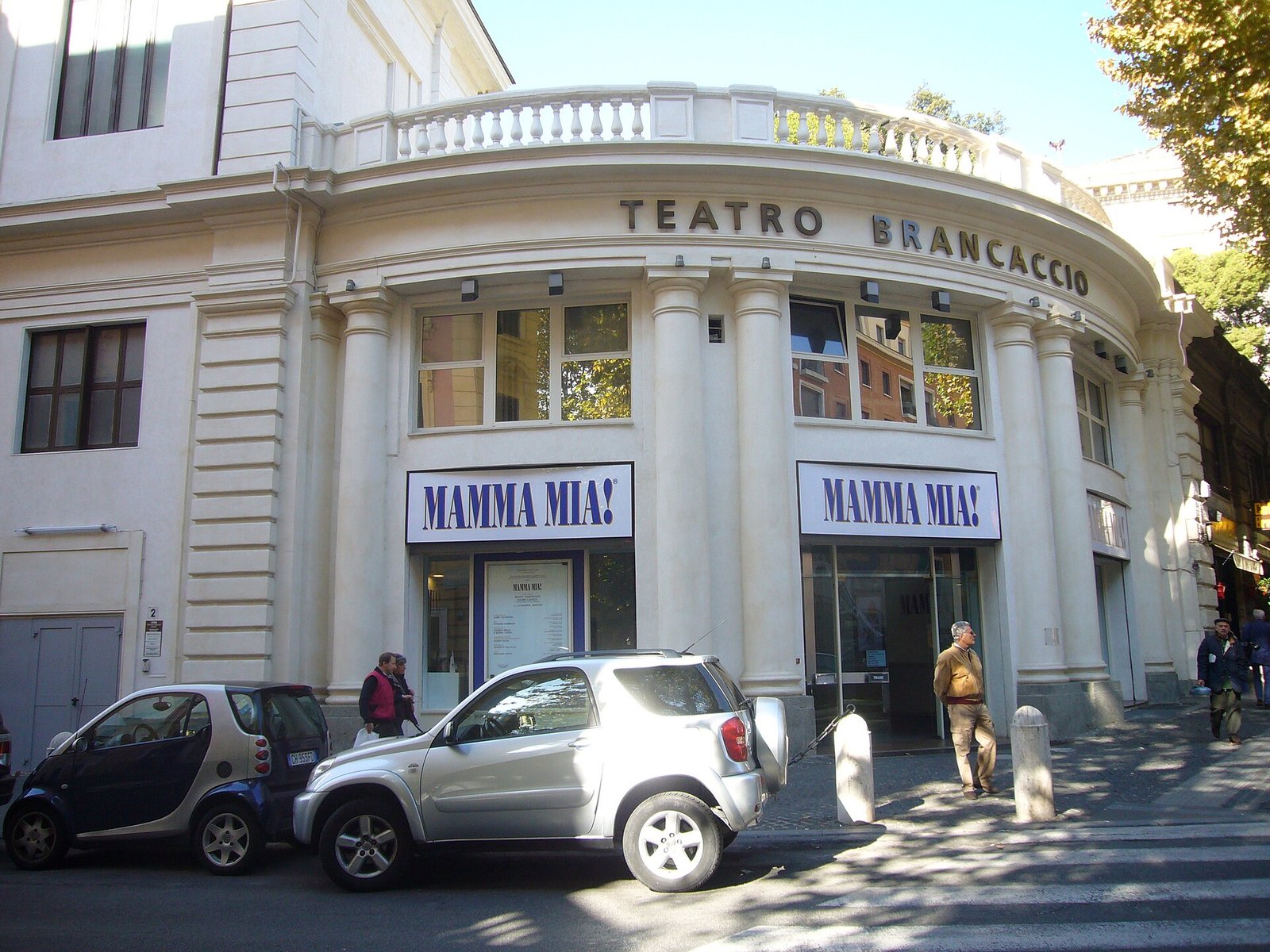
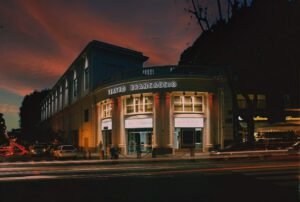
Teatro Brancaccio, at Via Merulana 244, is one of the largest halls in Rome. Since 1937 it has had two foyers, a wide orchestra level and two levels of balcony, for about 2,000 seats at the time. Today it is the home of Viola Produzioni and alternates musicals, drama, dance and concerts.
How the hall is laid out
The orchestra level is divided into Poltronissima and Poltrona sections, with A and B bands and with the Gold band that appears in the booking system. Above are the first balcony, also divided into A and B, and the second balcony. The balconies are reached on foot, without an elevator.
Why it suits a dance show
The Brancaccio was born as a variety theater and for 15 years hosted the Fondazione dell'Opera di Roma. The stage is designed for shows with many performers and ensemble movement. For a dance number with eight people onstage, in our view the first balcony is the point from which the choreography reads best, with the pattern of the figures visible in full.
Via Merulana hub
The main hall is part of a larger complex that includes the Brancaccino, a theater of about 100 seats devoted to contemporary drama and children's theater, a training area and a terrace on Via Merulana. The complete listing of the venue is on the page devoted to Teatro Brancaccio.
Something nobody tells you about Seoul Mafia in Tutta colpa del K-pop at Teatro Brancaccio, January 18, 2027
What goes unsaid is that Tutta colpa del K-pop is not a K-pop concert in the sense a fan understands it. There are no Korean idols on tour, no famous band onstage: there is an Italian telling his own experience and seven Korean dancers who give body to the story. Those expecting the setlist of a famous band will be disappointed. Those who want to understand from the inside how the system that produces those idols works will find a rare perspective, that of someone who lived through the training phase and then chose to leave it.
The second thing concerns the audience. K-pop in Italy is followed mostly by teenagers, but the show is scheduled on a Monday at 21:00: for the youngest kids that means getting home late the day before school. The Brancaccio rules provide that children under 14 enter only with an adult, so the evening has to be planned as a family.
Third thing: the hall is big. A show with monologues and dance in a theater of over 1,000 seats works if the voice reaches the back clearly and if the choreography can be seen from a distance. That is why the choice of section matters more than usual. Those who want to catch the narrator's expressions should choose the orchestra level, and those who want to see the pattern of the dance the first balcony.
How to get to Teatro Brancaccio
Teatro Brancaccio is at Via Merulana 244, in the Esquilino district, less than a kilometer from Termini station and a few steps from the Vittorio Emanuele stop of metro line A.
Metro
The nearest stop is Vittorio Emanuele, on line A: you come out onto Piazza Vittorio Emanuele II and reach Via Merulana in a few minutes. Alternatively there is the Cavour stop on line B, with a longer walk. From Termini, where the two lines cross, you can also walk, passing by Santa Maria Maggiore.
Bus
The theater lists three surface stops. On Via Merulana, at the Merulana/Brancaccio and Merulana/Mecenate stops, lines 16, 75, 714, 717 and C3 run. At the Labicana/Merulana stop run lines 3, 53, 75, 85, 87, 186, 571, 810, C3 and the night line N10, useful for the return at the end of the evening.
Taxi
The taxi stands listed by the theater are at Largo Brancaccio, at Piazza Vittorio Emanuele II number 113, at Via Principe Amedeo 138, at Via Giolitti 6 and at Via Venosta. After a show the stand at Largo Brancaccio empties quickly: it is best to move toward Piazza Vittorio or to book by phone.
Car
The theater lists no partner car parks, and evening parking in the Esquilino is difficult. Those coming from outside Rome do better to leave the car near a metro station and continue by metro, checking the schedules first on the Atac route planner.
The advice I give you for visiting Seoul Mafia in Tutta colpa del K-pop at Teatro Brancaccio, January 18, 2027
My advice is to choose your seat according to what interests you most. Tutta colpa del K-pop has two souls, the story and the dance, and in the Brancaccio hall they cannot be enjoyed equally from every point. Poltronissima, at 49 euros, puts you close to the narrator and lets you catch the comic timing of the monologues. First balcony A, at 46 euros, offers in our view the best view of the choreographic blocks, with the seven dancers framed in full and the formations readable as in a music video.
The second piece of advice concerns the kids. If the evening is a gift for a teenager who loves K-pop, it is best to explain beforehand what they will see: not a concert of idols, but the story of an Italian who entered the K-pop world, with live dance. Those who arrive with the right expectations enjoy it much more. Reading a few pages of Ferrara's book, which has the same title, is good preparation.
Third piece of advice: arrive early. The Brancaccio rules ask you to show up well ahead and do not allow entry once the show has started. On a Monday night the Esquilino is quiet, but entry checks at such a large hall take time. Finally, once seated, the phone must be turned off: at the Brancaccio photos and filming are forbidden, even during the most photogenic choreographies.
Another well-known fact, yet rarely mentioned
It is well known that K-pop was born in South Korea and exploded worldwide with YouTube, first with Psy's Gangnam Style, then with BTS. Much less often cited is that the word itself, K-pop, is relatively recent. The first known use dates to October 9, 1999, in a Billboard article by the correspondent Cho Hyun-jin, who used it to translate the Korean term gayo, by which popular music was known in Korea. According to other sources, the word was coined in Japan on the model of J-pop, to sell Korean music on that market.
Another little-cited fact is that in Korea the word K-pop has a narrower meaning than abroad. There it mainly means the music produced by the big agencies for export, that of the idols. Many independent Korean artists prefer not to be called K-pop. It is the distinction Seoul Mafia knows from the inside: the system of agencies, trainees and debuts that he tells about onstage is exactly what made K-pop a global product.
Finally, a fact about dance: before 1992 attempts to bring dance into the performances of Korean singers had not worked. It was Seo Taiji and Boys who made choreography an integral part of the genre. Without that turning point, a show like Tutta colpa del K-pop, built on dance blocks, would make no sense.
Brancaccio house rules: what to know
The rules of Teatro Brancaccio apply to every evening: arrive well ahead, no entry once the show has started, no photos or filming, no food in the hall.
Bags, umbrellas and coat check
The theater has a coat check, a bar and merchandise sales. Umbrellas do not enter the hall and must be left at the coat check, useful to know on a January evening. Plastic bottles over half a liter, glass containers, motorcycle helmets, professional cameras, tripods and selfie sticks are not allowed.
Seats and dress
You occupy only your assigned seat, without moving to free seats. The theater asks for dress befitting the decorum of the hall, without a real code: for a Monday night pop show, neat clothes are enough, and the bright colors of K-pop culture are on theme.
Lightsticks
At K-pop concerts fans often bring lightsticks, the bands' glowing wands. The theater's rules do not mention them explicitly. To avoid discussions at the entrance it is best to ask the box office before the evening.
The right photo to take at Seoul Mafia in Tutta colpa del K-pop at Teatro Brancaccio, January 18, 2027
No photos during the show: the Brancaccio rules forbid photographing and filming, even with a cell phone. For an evening devoted to a culture that lives on images and videos this may seem a contradiction, but it is the hall's rule and it applies even to the most spectacular choreographies. The right photo, then, is taken before and after.
The first is the facade of the theater on Via Merulana, in the evening, with the show's title lit. The advice is to cross the street and shoot from the opposite sidewalk with a wide lens, so that the front of the theater and a stretch of the street, one of the longest and straightest in the center, fit in. In mid-January it gets dark early: the hour before the show, with the audience arriving, is the best moment.
The second photo is the one a K-pop fan will appreciate most: the foyer and the hall before the lights go down, with the stage ready and the set design inspired by Korean pop aesthetics. If staff allow it, a shot from the first balcony, without flash, tells the evening better than a close-up. Then the phone goes back in your pocket.
The third photo is taken outside, in the district: the Porta Alchemica on Piazza Vittorio, a few minutes from the theater, is one of the most photographed corners of the Esquilino, and in the evening it has a mysterious air that contrasts well with the colors of the show.
Around the Brancaccio: Esquilino, Monti and Via Merulana
Teatro Brancaccio is on Via Merulana, between the Basilica of Santa Maria Maggiore and the Basilica of San Giovanni in Laterano, in the Esquilino district.
Two basilicas and an ancient auditorium
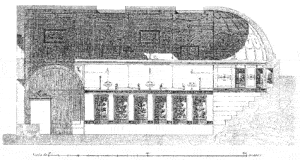
Via Merulana runs between Santa Maria Maggiore and San Giovanni in Laterano. On the same street are Palazzo Merulana and, a little farther on, the Auditorium of Maecenas, the Roman-era hall that bears the name of the patron of Horace and Virgil.
Piazza Vittorio and the multiethnic district
To the north, beyond the metro stop, is Piazza Vittorio Emanuele II. The Esquilino is the most multiethnic district of Rome, and the Nuovo Mercato Esquilino is its mirror, with stalls of Asian products that will interest those who arrive curious about Korean cuisine. It is, however, a daytime market.
The Monti district
To the west you descend into the Monti district, with its streets sloping down toward the Forums. To discover it before the show there is the listing on the Monti district. In January it is best to take the walk in the afternoon, while there is light.
More Korea in Rome
Those who want to extend the Korean experience will also find in Rome the initiatives of the Korean Cultural Center, such as the exhibition Il fascino di Seoul, and other events devoted to the genre, such as K-POP MANIA at Teatro Olimpico.
Some important events that took place here in history
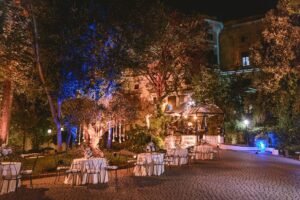
The history of Teatro Brancaccio begins in January 1916, when the hall was inaugurated under the name Teatro Morgana. It stands against the embankment of the gardens of the palace of the Field-Brancaccio family, the noble family that takes its name from Isabella Field, married to Prince Brancaccio: the link with the neighboring Palazzo Brancaccio is physical even before it is nominal.
The decisive step is 1937, when the hall was inaugurated in its present configuration, with two foyers, a wide orchestra level and two balconies for about 2,000 seats, and took the name Teatro Brancaccio. In 1985 it became the seat of the Fondazione dell'Opera di Roma, where it stayed until 2000: for 15 years Via Merulana hosted the capital's opera and ballet.
After the Opera the City of Rome took over, entrusting the direction to Gigi Proietti until 2007. The management of Maurizio Costanzo followed until 2010 and that of Stage Entertainment Italia until 2012. Since September 2012 the artistic direction has been Alessandro Longobardi's, who has transformed the theater into a cultural hub with the Brancaccino, the training area, the terrace on Via Merulana and the acting and musical academies.
In this history dance has a special place: the Opera ballet lived on this stage for 15 years. In January 2027 the same stage welcomes seven dancers arrived from Korea with a style that the 20th century could not have imagined: a change of register consistent with the vocation of a theater born for variety.
Who has passed through Seoul Mafia in Tutta colpa del K-pop at Teatro Brancaccio, January 18, 2027
Some of the biggest names in entertainment have passed through the Brancaccio stage. The theater recalls several: Totò, Anna Magnani, Aldo Fabrizi and Gigi Proietti among the actors, and Fabrizio De André, Louis Armstrong and Jimi Hendrix among the musicians. They are names that tell of a theater used to the popular phenomena of its time: Totò's variety, Armstrong's jazz, Hendrix's rock.
In this line, K-pop is today's popular phenomenon. In the 1960s a musician like Hendrix represented the music that kids listened to and parents did not understand. Today that part is played by the Korean bands that kids discover on YouTube. Marco Ferrara tells it from the point of view of someone who ended up inside it: an Italian teenager who finds his own path in that music.
Seoul Mafia's story also passes through the names that made the history of the genre and that the evening evokes: Seo Taiji and Boys, who invented the formula in 1992, H.O.T., the first idols in 1996, BoA and TVXQ, who took K-pop out of Korea, and Psy and BTS, who took it to the world. And passing through the Brancaccio are the seven Korean dancers of the company, who for one evening turn Via Merulana into a piece of Seoul.
Accessibility at Teatro Brancaccio
Teatro Brancaccio declares that it has no architectural barriers for access to the orchestra level: there is a ramp, an area reserved for wheelchairs and an accessible restroom on the ground floor, reachable from the foyer.
Wheelchairs and reduced mobility
The theater provides, while available, orchestra seats for people in wheelchairs and with walking difficulties. The balconies cannot be reached in a wheelchair, because there are no elevators. Seats are booked by writing to the box office with the appropriate form and the required documentation.
Visual and hearing disabilities
For spectators with visual and hearing disabilities the theater reserves, on request, orchestra seats while available. Those with a service dog can ask the box office to enter the hall with the animal. For a show in which dance carries so much weight, those who hear little can still follow a good part of the evening.
Tutta colpa del K-pop with kids
Tutta colpa del K-pop is, among the shows of the Brancaccio season, one of the best suited to teenagers, who are the main audience of the genre in Italy.
The right age
The theater indicates no age limits for the show. The rules provide that children under 14 enter only with an adult. In our view the evening suits ages 11 or 12 and up, especially those who already know a few Korean bands.
A story that speaks to kids
In his story Ferrara talks about an insecure kid who finds in K-pop a way to express himself. It is a theme many teenagers recognize, and it can open a conversation in the family after the show.
The way home
With the Monday start at 21:00, the return home is late. It is best to plan the way back before going out: metro line A from Vittorio Emanuele and the night line N10 from Labicana/Merulana are the public options, and a taxi from Piazza Vittorio the most comfortable.
Where to eat before the show
Around the Brancaccio there are three options: the neighborhood bars and venues on Via Merulana, suited to a quick meal. The multiethnic Esquilino around Piazza Vittorio, with cuisines of many countries and modest prices. And the Monti district, a quarter of an hour on foot away, with trattorias, osterias and wine bars.
Asian cuisine in the Esquilino
To stay on theme, the Esquilino has a wide offering of Asian cuisines. Those who want a Korean-style dinner before the show will find several possibilities in the district. It is best to search and book in advance.
Before or after
With a 21:00 start and arrival required well ahead, dinner has to be moved up to 19:00. On Mondays some places may be closed for their day off: better to check first.
Mid-January in Rome, the theater season
In mid-January, once the holidays are over, Roman theaters resume their ordinary programs and the city is generally less crowded than in peak months.
The weather
January evenings are cold and often damp: a coat and an umbrella in your bag are indispensable, and the umbrella must be left at the theater's coat check.
A Monday evening
A show scheduled on a Monday night is an opportunity for those who want to avoid the weekend crowd and for those whose week is free of other commitments.
The other shows
In the same season the Brancaccio hosts musicals and concerts with wide appeal, including the musical Mrs Doubtfire. The complete program is on the official website of Teatro Brancaccio.
Frequently asked questions about Tutta colpa del K-pop at the Brancaccio
When does Tutta colpa del K-pop play in Rome?
Tutta colpa del K-pop by Seoul Mafia plays at Teatro Brancaccio in Rome on Monday, January 18, 2027 at 21:00, a single date. The theater's official calendar lists no afternoon performances and no other Rome dates in the 2026/2027 season.
How much do tickets for Tutta colpa del K-pop cost?
Tickets for Tutta colpa del K-pop at Teatro Brancaccio cost 49 euros in poltronissima and 46 euros in poltrona and first balcony A, according to the theater's price list. Other sections appear in the booking system with no price listed in the price list.
Who is Seoul Mafia?
Seoul Mafia is the stage name of Marco Ferrara, a young man from Brianza who moved to South Korea, went through X Factor Korea and trainee training at an idol agency, and today tells the Italian public about Korean culture. He wrote the book Tutta colpa del K-pop, published by DeAgostini.
Is it a K-pop concert?
Tutta colpa del K-pop is not the concert of a Korean band. It is a theater show with monologues by Seoul Mafia and choreographic blocks performed by seven Korean dancers, on original choreography built on the musical trends of the moment, with a set design inspired by Korean pop aesthetics.
How do you get to Teatro Brancaccio?
Teatro Brancaccio, at Via Merulana 244, is reached by metro line A, Vittorio Emanuele stop, a few minutes on foot. Lines 16, 75, 714, 717 and C3 run along Via Merulana. At the Labicana/Merulana stop the night line N10 also runs, useful for the return.
Can you bring kids under 14?
At Teatro Brancaccio children under 14 enter only with an adult, as the theater's rules provide. Tutta colpa del K-pop has no age limits indicated. In our view it suits ages 11 or 12 and up, taking into account the Monday evening hour.
Can you take photos during the show?
At Teatro Brancaccio you cannot take photos or film during the show, not even with a cell phone, and the phone must be turned off before the start. Photos are taken outside, in front of the facade on Via Merulana, or in the hall before the lights go down, if staff allow it.
The final advice on Tutta colpa del K-pop
One night, a January Monday, to see in a large Roman theater the story of an Italian who chased K-pop all the way to Seoul, told by him with seven Korean dancers. The advice is to arrive knowing what to expect, a story with dance more than a concert, to choose the first balcony for the choreography or the orchestra level for the narrator, and to bring along the teenager at home who listens to K-pop. By the end they will have plenty of questions, and perhaps a few more answers about a music that has conquered their generation.
Article written by the editorial team of Tour Leader Pro, contact them for Private/Corporate/V.I.P. Tours and Experiences.
Planning a trip to Rome? The English-language guides to visiting the city are on ItalyPlanner.com.
Contact Information
Nearby
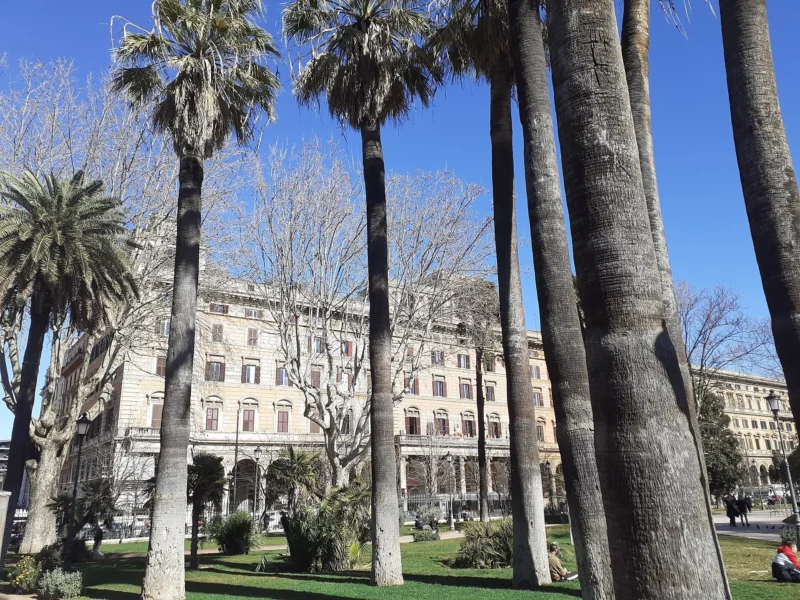
 Teatro Brancaccio100 m
- Auditorium of Maecenas100 m
- Palazzo Brancaccio200 m
- Arch of Gallienus300 m
- Museum of Illusions in Rome300 m
- Esquiline Hill300 m
Upcoming events nearby
- The Prince of Egypt the Musical at Teatro Brancaccio, October 29 to November 15, 2026100 m
- Mrs Doubtfire the Musical at Teatro Brancaccio, March 31 to April 18, 2027100 m
- Raffaella il Musical at Teatro Brancaccio, February 10 to March 6, 2027100 m
- Francesco Renga at Teatro Brancaccio, Live Teatri 2026, May 11, 2027100 m


You might also like
- Mahler’s Third Symphony by John Neumeier at Teatro dell’Opera di Roma, February 4 to 10, 2027
- The Nutcracker at Teatro Nazionale, November 24 to December 3, 2026
- The Nutcracker at Teatro Brancaccio by Brancaccio LAB, December 4 to 6, 2026
- The Rake’s Progress at Teatro dell’Opera di Roma, November 27 to December 5, 2026
- Motus by Blanc, McGregor and Ekman at Teatro dell’Opera di Roma, March 31 to April 4, 2027
- Aggiungi un posto a tavola at the Teatro Brancaccio in Rome, December 10 to December 20, 2026