The Nutcracker at Teatro Brancaccio by Brancaccio LAB, December 4 to 6, 2026
In short. The Nutcracker at Teatro Brancaccio, the Brancaccio LAB production with choreography by Alessia Gatta in collaboration with Manuel Paruccini, is on stage at Via Merulana 244 on Friday, December 4, and Saturday, December 5, 2026, at…
The Nutcracker at Teatro Brancaccio, the Brancaccio LAB production with choreography by Alessia Gatta in collaboration with Manuel Paruccini, is on stage at Via Merulana 244 on Friday, December 4, and Saturday, December 5, 2026, at 20:30, and on Sunday, December 6, at 16:00. You get there with Metro A, Vittorio Emanuele stop, or Metro B, Cavour stop. Lines 16, 75, 714, 717 and C3 stop on Via Merulana. The prices published by the theater are 44 euros in Poltronissima A, 38 euros in Poltrona A and 32 euros in Poltrona B. Tickets are sold at the box office at Via Merulana 244 and on the venue's official website, which links to the authorized presale circuit.
Language: performed in Italian. No English version or English surtitles are announced.
It's a Brancaccio production, born inside the theater and entrusted to two figures Roman dance knows well: the director of the Brancaccio Danza center and a former principal dancer of the Teatro dell'Opera di Roma. Among the many December Nutcrackers in Rome, this is the one to choose if you've already seen the classical ballet and are looking for a different way to listen to Tchaikovsky.
The Nutcracker at Teatro Brancaccio in brief: dates, times, prices
There are three performances of Brancaccio LAB's Nutcracker, concentrated in the first weekend of December: two evening shows and one matinee. The price list has three tiers, from 32 to 44 euros.
The calendar
Friday, December 4, 2026, at 20:30. Saturday, December 5, at 20:30. Sunday, December 6, at 16:00. The Sunday matinee is the performance designed for families, and it will be the first to fill up.
Prices by section
Poltronissima A: 44 euros. Poltrona A: 38 euros. Poltrona B: 32 euros. These are the full prices published on the show page. Any booking fees are shown at the time of purchase.
The artistic team
Music by Pyotr Ilyich Tchaikovsky. Choreography by Alessia Gatta in collaboration with Manuel Paruccini. An ensemble of 23 dancers joined by international guests. Sets by Martina Fanfarillo, Samuele Sabbatini, Eleonora Colasanti and Gianna Pietrobono. Costumes by Giuseppe Iaconis with the collaboration of the Accademia di Belle Arti di Frosinone. Technical direction and lighting design by Antonio Colaruotolo. Illustrations by Marta Latini. Produced by Brancaccio LAB.
The Nutcracker in a forgotten amusement park
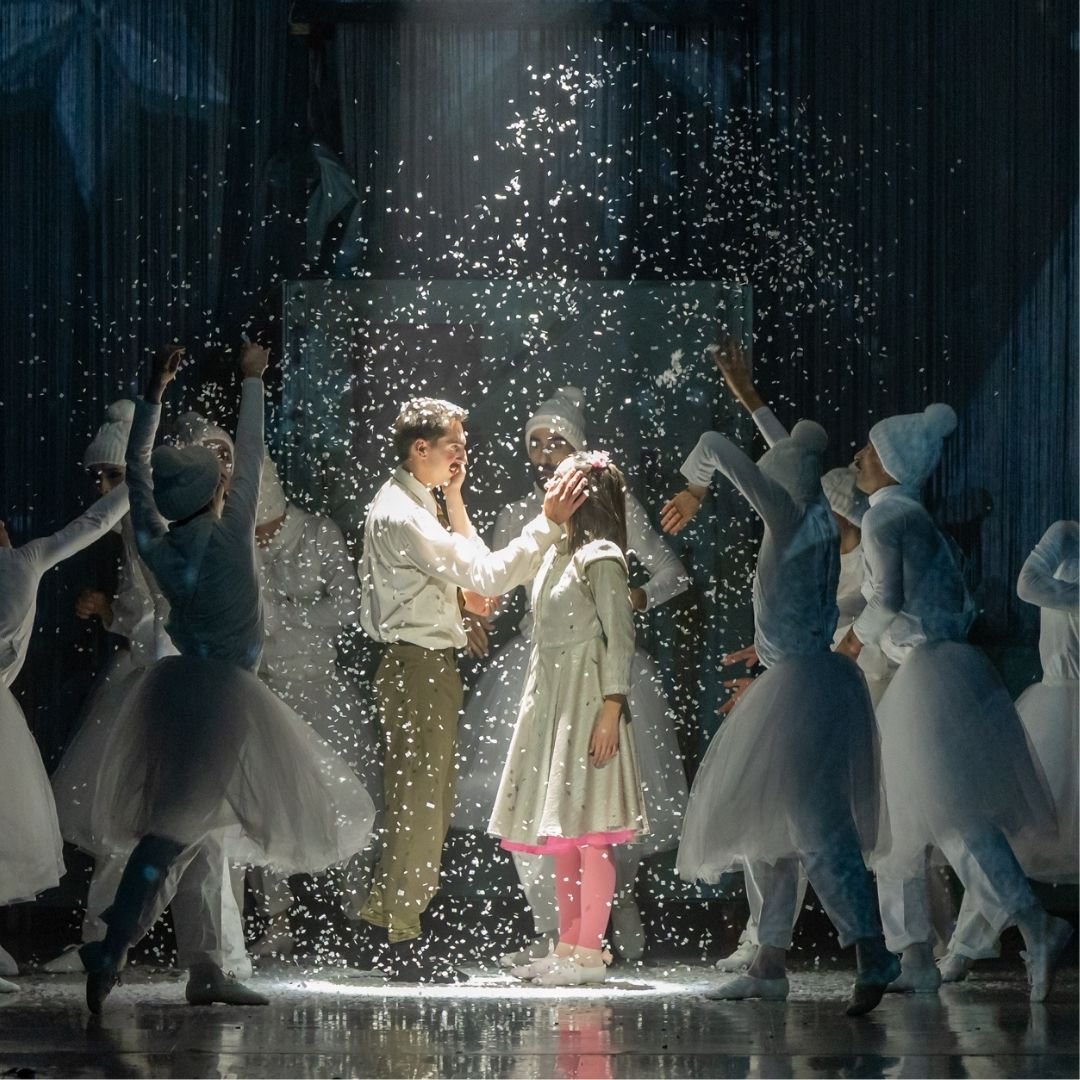
In Alessia Gatta and Manuel Paruccini's Nutcracker, Christmas Eve doesn't take place in a bourgeois living room: Clara and her family enter a forgotten amusement park, suspended between memory and abandonment, whose gates reopen through a mysterious wonder. It's the change of setting that defines the whole production.
From the living room to the rides
In the traditional version, derived from Hoffmann's tale, the Christmas party at home and the growing tree open the way to the fantastic journey. Here the starting point is already a faded dream: dark attractions, lights coming back on, rides starting to turn again. The theater presents the show as a dreamlike, poetic journey between enchantment and disenchantment, leading the protagonist, and the audience, to rediscover wonder.
A fairy tale as a mirror of the present
In the Brancaccio's presentation the classic fairy tale becomes a reflection on beauty that endures, on nostalgia and on art's ability to reinvent itself. The abandoned amusement park is a strong image: a place built for fun, left to time, that comes back to life for one night. The meaning is simple: it's theater talking about itself, about its ability to turn the lights back on every night over an empty stage.
Classical and contemporary
The production describes itself as a fusion of the grace of classical ballet and the power of contemporary languages. That's the key to understanding the pair of choreographers: on one side Gatta's contemporary research, on the other Paruccini's long classical experience. If you expect tutus and pointe shoes for two hours you'll be surprised. If you want a Nutcracker in dialogue with the present, you'll find what you're looking for.
Tchaikovsky's music and Marta Latini's illustrations
The score of The Nutcracker is by Pyotr Ilyich Tchaikovsky, and it's the reason this ballet returns every December to theaters across half the world. The Brancaccio offers a new choreographic reading of the same music.
A score everyone knows
Even those who have never set foot in a dance theater know the Dance of the Sugar Plum Fairy, the Waltz of the Flowers, the March. It's a huge advantage for a contemporary production: the audience's ear already feels at home, and the choreographer can afford to look elsewhere. The amusement park works precisely because the music reassures.
Sets, costumes and lighting
The sets carry four signatures, the costumes are by Giuseppe Iaconis with the Accademia di Belle Arti di Frosinone, the lighting by Antonio Colaruotolo, who is also technical director. In a show set in an amusement park coming back to life, the lighting design isn't a technical detail: it's the story itself.
The illustrations
The credits include illustrations by Marta Latini. The theater doesn't explain how they're used on stage. It's an element that says something about the multidisciplinary vocation of the choreographer, who has always worked across dance, theater, visual arts and architecture.
Alessia Gatta: the choreographer of The Nutcracker
Alessia Gatta, born in 1974, is choreographer and director of the contemporary dance company Ritmi Sotterranei, which she has led since the 2000s, and artistic director of the Brancaccio Danza center and the Futuro Roma festival. She's one of the figures in Italian contemporary dance most closely tied to Teatro Brancaccio.
Beginnings and Ritmi Sotterranei
She started as a dancer in the Da Cru dance company, then moved to directing and choreography with Ritmi Sotterranei, for which she created Sospeso tra le correnti (2008), Cemento (2011), A Mazon (2013), Weltflucht (2014), Convivio (2015), L'uomo dal cervello d'oro (2017), 8x8=64 (2018), Keeping Warm and Crolli (2021), Tu (2022) and Gong (2024). Her training, according to the biography published by the Brancaccio academy, spans dance, theater, visual arts and architecture.
On tour around the world
Her productions have been staged in France, Belgium, Denmark, South Korea, China, Lithuania, Germany, Spain and the Netherlands. She has worked with the Italian Cultural Institutes in Copenhagen and Shanghai, the Shanghai Grand Theatre, Teatret Om in Ringkøbing and the Aura Dance Theater in Lithuania. In 2018 and 2019 she collaborated with Shanghai Normal University.
Choreography for other companies
She has created works for Compagnia Opus Ballet in Florence, the Dance Arts Faculty in Rome, Arte Danza in Padua, Compagnia Vis Ballet in Ancona, the Brancaccio Danza Junior Company and The Gate Junior Company in Florence. In 2020 she created Isola for the Resid'And project of the Accademia Nazionale di Danza. In December 2023 she directed and choreographed Outback for the Accademia STAP Brancaccio.
Awards
In 2005 she received the choreography award at the Settimana Internazionale della Danza Città di Spoleto, in 2006 the Premio Rieti Danza, and in 2007 a recognition from Vittoria Ottolenghi and one from the Les Italiennes festival in Nantes. In 2008 Alberto Testa gave her a choreography award at the 37th Premio Positano Léonide Massine. In 2017 she won the Premio In divenire of Sala Umberto.
Artistic direction and teaching
From 2014 to 2016 she taught at the Accademia di Belle Arti di Frosinone, the same academy collaborating on the costumes for this Nutcracker. She directed the Frusna Festival in Frosinone and the Raccordi series in Umbertide. She leads Matrice N, the contemporary dance research center in Alatri, and the Brancaccio Danza center in Rome, and since 2021 she has been artistic director of Futuro Roma. She heads the dance department of the Brancaccio Musical Academy.
Manuel Paruccini, from the Teatro dell'Opera to the Brancaccio Nutcracker
Manuel Paruccini, a Roman, was a principal dancer of the Teatro dell'Opera di Roma, a company he joined at 18. For him The Nutcracker is a family title: he danced it as a young soloist and then, for years, in the role of Drosselmeyer alongside Carla Fracci.
Training and joining the Opera
He studied at the dance school of the Balletto di Roma. At 18 he joined the company of the Teatro dell'Opera di Roma directed by Elisabetta Terabust, and immediately took on solo roles in The Nutcracker, La Gioconda and Mario Pistoni's La Strada. He continued to work with the Balletto di Roma in Luciano Cannito's choreographies.
Principal dancer
From 1996, under the direction of Giuseppe Carbone, he danced as principal in The Firebird and as Hortensio in The Taming of the Shrew. In 1997 he starred in Robert North's Orlando and Oscar Araiz's Astor, l'Angelo e il Diavolo. With Amedeo Amodio he was Drosselmeyer in his Nutcracker, Tybalt in Romeo and Juliet, the Faun in L'Après-midi d'un faune, Coppelius in Coppélia. He also danced in Antonio Gades's Blood Wedding.
Alongside Carla Fracci
In 2000 he was Tybalt in Romeo and Juliet at the Costanzi under Carla Fracci's direction. With Fracci he danced Isadora, also on tour in Naples and Bari, and from 2004 the role of Hilarion in her Giselle and that of Drosselmeyer in The Nutcracker. In the 2009/2010 season the role of Drosselmeyer was created for him in the new version of The Nutcracker by Beppe Menegatti and Luc Bouy.
Other roles and awards
He was Orion in Frederick Ashton's Sylvia alongside Polina Semionova, the Toreador in Roland Petit's Carmen, Petrushka in the ballet of the same name, Coppelius in Petit's Coppélia, Madge in La Sylphide. In 2009 he received the Premio Léonide Massine for the art of dance and the Premio La Ginestra d'Oro. He created choreography for the Teatro dell'Opera in 2006/2007 and, among other things, was Andrea Bocelli's personal coach in preparing Carmen. The résumé published by the Arena di Verona lists him as principal dancer of the Rome Opera until 2018.
A curious fact about The Nutcracker at Teatro Brancaccio by Brancaccio LAB, December 4 to 6, 2026
One of the two choreographers of this Nutcracker was for years Drosselmeyer, the character who in the fairy tale gives Clara the nutcracker and opens the door to the dream. Manuel Paruccini played him in Amedeo Amodio's Nutcracker, then alongside Carla Fracci, and in the 2009/2010 season the role was created specifically for him in the Menegatti and Bouy version.
It's a detail that changes the way you watch the show. Drosselmeyer is the magician figure, the inventor of wonders, the one who turns a family party into a journey. In this production's forgotten amusement park, who turns the rides back on? The poster doesn't say. The theater talks about a mysterious wonder. But it's hard not to think that a dancer who for years embodied the fairy tale's magician, crossing to the other side, wanted to rethink the very mechanism of wonder.
A second curiosity concerns the hall: from 1985 to 2000 Teatro Brancaccio was one of the venues of the Fondazione dell'Opera di Roma, the same company Paruccini joined at 18. The third is about the calendar: in the same days, at Teatro Nazionale, the students of the Teatro dell'Opera Dance School close the run of their Nutcracker on December 3, with choreography by Paul Chalmer. Rome, in early December, has more than one Nutcracker: this is the one born on Via Merulana.
Brancaccio LAB and dance on Via Merulana
The Nutcracker is a Brancaccio LAB production: it was born inside the theater, which is home to the production center Viola Produzioni and hosts academies of acting, musical theater and dance. Alessia Gatta directs the Brancaccio Danza center, which is part of the same hub.
A theater that produces
The Brancaccio isn't just a hall hosting big touring musicals. The hub includes the Brancaccino, a theater of about a hundred seats, the Accademia STAP Brancaccio for acting, directing and playwriting, the BMA Brancaccio Musical Academy and the Brancaccio Danza center. A homegrown Nutcracker is the natural consequence of this structure.
Futuro Roma
Since 2021 Gatta has also directed Futuro Roma, the festival the theater devotes to contemporary languages. The Brancaccio website menu has a whole FuturoRoma 2026 section. The choreographer's official biography stresses the promotion of emerging artists: the choice of an ensemble of 23 dancers, alongside the international guests, should be read in this light.
23 dancers and the guests
The theater talks about a mosaic of bodies, visions and languages, with exceptional international guests whose names it hasn't yet published. The tip is to check the show page in the preceding weeks: guests are usually announced close to the opening.
Something nobody tells you about The Nutcracker at Teatro Brancaccio by Brancaccio LAB, December 4 to 6, 2026
Teatro Brancaccio's rules ask audience members to arrive at least an hour before the start: at 19:30 for the evening shows on December 4 and 5, at 15:00 for the matinee on the 6th. And once the show has started, entry to the hall is not allowed: latecomers wait in the foyer until the first suitable break.
For a ballet this means missing the entire first scene, which in this case is Clara and her family's arrival at the amusement park and the moment the gates reopen: the premise without which the rest of the journey makes no sense. If the show has no intermission, the theater may at its discretion let latecomers in, but without guaranteeing their assigned seat.
A second thing nobody mentions: umbrellas, large or small, aren't allowed in the hall and must be left at the coat check, and bulky containers over 17 liters are banned from the hall. In December, with coats, scarves and strollers, a family arriving with a big bag risks a line at the coat check both coming in and going out. Third: tickets are personal, tied to a registration with the holder's details, and can't be transferred without the theater's agreement. If you're giving them as a Christmas gift, you need to know this when you buy.
Tickets for The Nutcracker at Teatro Brancaccio
Tickets for Brancaccio LAB's Nutcracker cost 44, 38 or 32 euros depending on the section and are sold through Teatro Brancaccio's official channels: box office, official website and call center.
The box office
The box office is at Via Merulana 244, open to the public from Tuesday to Saturday from 16:00 to 19:00. On Sunday it opens at show time, if there's a performance, and on Monday it's closed. The theater also lets you book by email and pay by credit card through a payment link.
Online and by phone
From the show page on the theater's website you reach the authorized presale circuit. The rules also list among the official channels the call center at 06 80687231. Tickets bought from unauthorized channels may not grant access to the hall.
Groups and dance schools
For groups, companies and partnerships the Brancaccio has a Promotions Office, reachable at 06 80687232. Dance schools that want to take their students to see a contemporary Nutcracker, and there are many in Rome in December, should start there.
Exchanges and refunds
The rules are clear: tickets can't be exchanged or refunded, except if the event is canceled or as required by law. The theater reserves the right to change date, time and cast, which doesn't entitle you to a refund.
My tip for The Nutcracker at Teatro Brancaccio by Brancaccio LAB, December 4 to 6, 2026
My tip for this Nutcracker is Saturday, December 5, at 20:30, in Poltrona A, if you're going as adults. If you're bringing children, Sunday the 6th at 16:00, in Poltronissima A. The price list is compact, and the difference between tiers is just six euros per step.
The reason for adults: a ballet with sets and lighting meant to evoke an amusement park is best watched from a little distance, which gives you the patterns of the groups and the overall lighting. Poltrona A, at 38 euros, is the right compromise between closeness and an overall view. Saturday evening, besides, is the performance with the most attentive audience, without the urge to get home for work the next day.
For families the reasoning flips. A child wants to see the dancers' faces, costumes and gestures up close, and Poltronissima A lets them follow the story effortlessly. And the 16:00 matinee lets you come out as the streetlights come on, in time for a snack and the Christmas lights on Via Merulana.
In any case, buy early. Three performances in a single weekend, for a title like The Nutcracker in December, aren't many.
Teatro Brancaccio: the hall of The Nutcracker
Teatro Brancaccio, at Via Merulana 244, has had its current layout since 1937: two foyers, a large orchestra level and two balconies, for about 2,000 seats at the time. It's one of the largest halls in Rome for drama, musicals and dance.
Stalls and balconies
The orchestra level is divided into the Poltronissima and Poltrona sections, each in A and B tiers, with Gold and Gold Vip tiers appearing in the booking system. Above are the first and second balconies. For The Nutcracker the published price list covers three orchestra sections: Poltronissima A, Poltrona A and Poltrona B.
Where to sit for a ballet
For dance there's a rule: too close to the stage and you lose the dancers' feet and the overall design. The front rows are spectacular for faces, less so for geometry. If you've chosen Poltronissima, ask for a central row if possible, not the first.
The Brancaccio hub
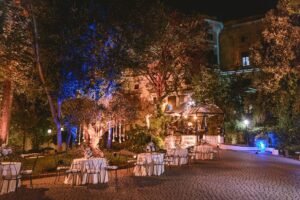
The main hall is part of a complex that includes the Brancaccino, a park area for training and a terrace over Via Merulana. For the full history of the building there's our page on Teatro Brancaccio.
How to get to Teatro Brancaccio for The Nutcracker
Teatro Brancaccio can be reached with Metro A, Vittorio Emanuele stop, a few steps from Via Merulana, or with Metro B, Cavour stop. From Termini the theater is less than a kilometer away.
By metro
From the Vittorio Emanuele stop you come out on Piazza Vittorio Emanuele II and reach Via Merulana in a few minutes. The Cavour stop on line B is the alternative if you're coming from Monti or the Colosseum side, with a slightly longer walk.
By bus
On Via Merulana, at the Merulana/Brancaccio and Merulana/Mecenate stops, lines 16, 75, 714, 717 and C3 run. At the Labicana/Merulana stop there are also 3, 53, 85, 87, 186, 571, 810 and the night bus N10, useful for getting back after evening shows.
By taxi
The nearest taxi stands listed by the theater are on Largo Brancaccio, Piazza Vittorio Emanuele II, Via Principe Amedeo, Via Giolitti and Via Venosta. When a sold-out evening show lets out, it's best to walk toward Piazza Vittorio or book ahead.
By car
I don't recommend it. The Esquilino is a dense neighborhood, the theater doesn't list partner parking, and on the first weekend of December, with Christmas shopping, parking is hard. Better to leave the car near a metro station and continue by public transit.
Another well-known fact, yet rarely mentioned
Everyone knows the Brancaccio is Rome's musical theater. Less often remembered is that for 15 years, from 1985 to 2000, this hall hosted the Fondazione dell'Opera di Roma: on Via Merulana, the Opera's productions and ballet came before the musicals.
The fact matters for this Nutcracker. The stage where Brancaccio LAB's 23 dancers perform was for 15 years one of the Fondazione dell'Opera's venues in the capital, and one of the two choreographers comes from that very company, which he joined at 18 and where he danced until becoming a principal dancer. Today the Brancaccio is producing its own dance again, with a title the Teatro dell'Opera's repertoire knows by heart.
After the Opera years management passed to the City of Rome, which entrusted the direction to Gigi Proietti until 2007. Then came Maurizio Costanzo until 2010 and Stage Entertainment Italia until 2012. Since September 2012 the artistic director has been Alessandro Longobardi, and the theater is home to Viola Produzioni. And one last little-known fact: the Brancaccio opened in January 1916 under the name Teatro Morgana, and only took its current name in 1937.
House rules at Teatro Brancaccio
Teatro Brancaccio's rules apply to all performances of The Nutcracker: arrive at least an hour early, no entry once the show has started, no photos or filming, no food in the hall.
Seats and documents
You may only occupy your assigned seat, with no swapping even for empty seats. Staff may ask to see your ticket at any time.
What isn't allowed in the hall
Umbrellas go to the coat check, in a bag provided by staff. Plastic bottles over half a liter, glass containers, helmets, professional cameras, tripods and selfie sticks are banned. Food and drinks may only be consumed at the bar.
Stage effects
The rules give a general warning that there may be flame, pyrotechnic and strobe effects on stage. For a show set in an amusement park coming back to life, if you're photosensitive you'd do well to ask the box office when booking.
The right photo to take at The Nutcracker at Teatro Brancaccio by Brancaccio LAB, December 4 to 6, 2026
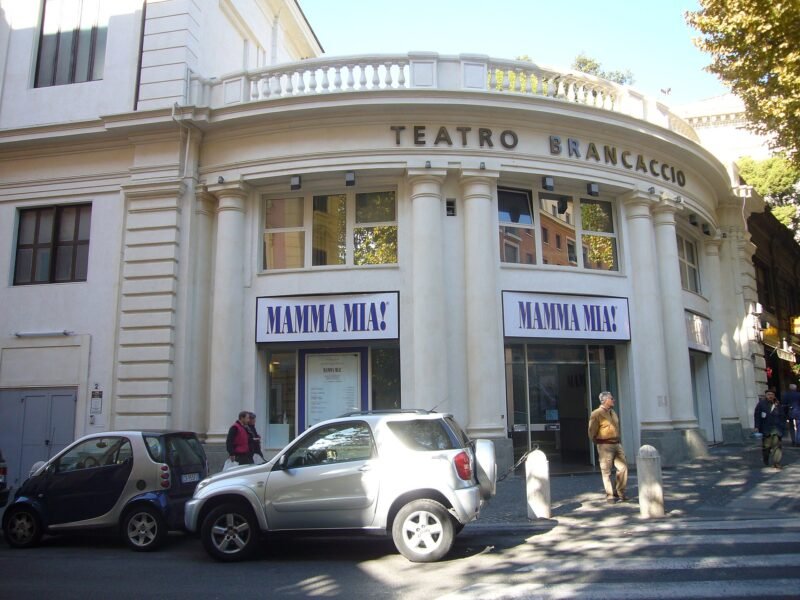
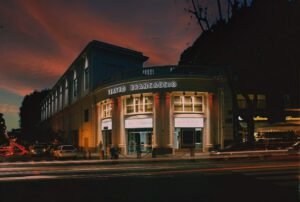
You don't take photos during The Nutcracker: the Brancaccio rules ban photos and filming, even with a phone. The right photo is taken outside, of the facade on Via Merulana, and inside only before the lights go down.
The first photo is the theater facade with the lit poster, taken from the opposite sidewalk with a wide lens, to get the whole front and a stretch of Via Merulana. In December, at seven in the evening, it's fully dark, and the theater lights look their best. For the Sunday matinee the right moment is when you come out, toward evening, as the street starts to light up.
The second is the one children will remember: the child in front of the poster, or in the foyer with the program in hand, before going in. The hall with the curtain closed, seen from your seat, is the last image allowed. Then the phone goes back in your pocket. The photo of the family in line in front of the theater, in coats and scarves, will tell the story of that December Sunday better than any shot of the stage, 10 years from now.
The Nutcracker with children
The Sunday, December 6, matinee at 16:00 is the performance of The Nutcracker best suited to families. The Brancaccio rules state that children under 14 may only enter accompanied by an adult.
Age and tickets
Children under 3 enter free if they don't occupy a seat, with a document proving their age. Access remains at the production's discretion depending on the type of show. The price list published for The Nutcracker shows no discounts for kids.
What to expect
This isn't the living-room Nutcracker with the Christmas tree: it's a forgotten amusement park waking up. Children, used to rides, connect with the setting right away. The mix of classical and contemporary language might throw those who have the traditional version in mind: tell the story of Clara and the nutcracker beforehand, and then say that this time the dream begins among the rides.
A practical tip
With the youngest, choose an aisle seat, so you can step out to the foyer without disturbing anyone. Have a snack at the bar before the start: no eating in the hall.
Some important events that happened here in history
Teatro Brancaccio opened in January 1916 under the name Teatro Morgana, built against the embankment of the gardens of Palazzo Field-Brancaccio. The palazzo's name comes from Isabella Field, married to Prince Brancaccio.
The milestones
1916: opening as Teatro Morgana. 1937: the hall takes on its current layout, with two foyers, stalls and two balconies, and the name Teatro Brancaccio. 1985: it becomes a venue of the Fondazione dell'Opera di Roma, which stays until 2000. From 2000 to 2007: direction by Gigi Proietti for the City of Rome. Until 2010: management by Maurizio Costanzo. Until 2012: Stage Entertainment Italia. From September 2012: artistic direction by Alessandro Longobardi and home of Viola Produzioni. 2014: Spazio Impero opens, with nine rehearsal rooms.
From musicals to dance production
In recent years the theater has become a cultural hub, with the Brancaccino, the academies, the terrace over Via Merulana and the Brancaccio Danza center. A Nutcracker produced by Brancaccio LAB, with an in-house choreographer and a former Opera principal dancer, is the sign of a theater that no longer just hosts: dance is once again being born on Via Merulana, as in the years when the Fondazione dell'Opera was based here.
Who has passed through The Nutcracker at Teatro Brancaccio by Brancaccio LAB, December 4 to 6, 2026
According to the theater's own memory, the Brancaccio stage has seen Totò, Anna Magnani, Aldo Fabrizi and Gigi Proietti among the actors, Fabrizio De André, Louis Armstrong and Jimi Hendrix among the musicians. Variety, Roman cinema, songwriting, jazz and rock have all had a home here.
In dance, the 2025/2026 season brought Akram Khan and Manal AlDowayan to Via Merulana with Thikra: Night of Remembering, one of the most anticipated titles in international contemporary dance. And between 1985 and 2000 this stage hosted the Fondazione dell'Opera di Roma, the same institution in whose ballet company Manuel Paruccini grew up.
Proietti, in particular, wasn't just an actor passing through: from 2000 to 2007 he ran the theater for the City. After him came Maurizio Costanzo. Today, alongside the big musicals, homegrown productions pass through here: Alessia Gatta, who directs the dance center and the Futuro Roma festival at the Brancaccio, signs with this Nutcracker one of the most recognizable titles in the world repertoire. In the same season, from March 31, 2027, comes Mrs Doubtfire the musical.
Around the Brancaccio: Esquilino and Via Merulana
Teatro Brancaccio is on Via Merulana, in the Esquilino neighborhood, between the basilica of Santa Maria Maggiore and that of San Giovanni in Laterano. If you arrive an hour early, you're surrounded by one of the most history-dense areas of the city.
The two basilicas
Via Merulana runs between Santa Maria Maggiore and the Basilica of San Giovanni in Laterano. In December, with the holiday lights, a walk from one to the other before the Sunday matinee is a perfect plan for a family.
Palazzo Merulana and Maecenas
On the same street are Palazzo Merulana, with its collection of 20th-century art, and a little beyond, the Auditorium of Maecenas. To the north, Piazza Vittorio and the Porta Alchemica, a curiosity kids always like.
Toward Monti
To the west you go down into the Monti district, described in our guide to Monti: narrow streets, workshops, trattorias. In December it's the ideal walk before an evening show.
Where to eat before or after The Nutcracker
Around the Brancaccio there are three options: the bars and neighborhood spots on Via Merulana, the cuisines from half the world around Piazza Vittorio, the trattorias and wine bars of Monti, a quarter of an hour's walk away.
Before evening shows
With a 20:30 start and arrival requested an hour early, dinner has to be moved earlier or later. An aperitivo on Via Merulana at 18:30 and dinner after the theater is the most sensible formula.
After the matinee
On Sunday you come out toward evening: a local pizzeria or a trattoria in Monti rounds off the day nicely. I won't name places, because they change more often than the theater programs. The tip is to book, because a whole hall lets out at the same time and looks for a table on the same blocks.
Accessibility at Teatro Brancaccio
Teatro Brancaccio states that it has no architectural barriers for access to the stalls: there's a ramp, a wheelchair area and an accessible restroom on the ground floor, reachable from the stalls foyer.
For performances organized by the management, the theater provides, while available, four seats in the stalls for wheelchair users with a companion and two for people with walking difficulties. The balconies aren't served by elevators. Seats are booked by sending the box office the specific form with the required certification. The theater warns that an ordinary ticket bought through other channels doesn't guarantee access. For visually and hearing impaired audience members there are seats reserved on request, and those with a service dog can ask to bring the animal into the hall.
Rome on the first weekend of December
The Brancaccio Nutcracker takes up the weekend of December 4 to 6, 2026, just before the Immaculate Conception long weekend: Tuesday, December 8, is a holiday. If you're coming from outside Rome, it's the ideal start to a Christmas stay.
The other Nutcrackers in town
December in Rome is Nutcracker month. At Teatro Nazionale the students of the Opera Dance School dance it from November 24 to December 3. At Teatro Olimpico the Balletto di Roma brings its own from December 17 to 20. The Brancaccio version, with its amusement park, is the furthest from tradition: a good reason to choose it if you already know the other one.
Clothing and weather
Evenings are cool and often damp. A folding umbrella and a coat you can keep on your lap: the coat check line at the end of the show is one you can avoid.
Frequently asked questions about The Nutcracker at Teatro Brancaccio
When is The Nutcracker on stage at Teatro Brancaccio?
Brancaccio LAB's Nutcracker is on stage at Teatro Brancaccio in Rome on Friday, December 4, and Saturday, December 5, 2026, at 20:30, and on Sunday, December 6, at 16:00. There are three performances in all, with choreography by Alessia Gatta in collaboration with Manuel Paruccini, to Tchaikovsky's music.
How much are tickets for The Nutcracker at the Brancaccio?
Tickets for The Nutcracker at Teatro Brancaccio cost 44 euros in Poltronissima A, 38 euros in Poltrona A and 32 euros in Poltrona B, according to the full prices published by the theater. Any booking fees are shown at the time of purchase. The price list shows no discounts for kids.
Where do you buy tickets for The Nutcracker in Rome?
Tickets for The Nutcracker are sold at the Teatro Brancaccio box office, at Via Merulana 244, open from Tuesday to Saturday from 16:00 to 19:00, or from the theater's official website, which links to the authorized presale circuit. There's also the official call center, at 06 80687231.
Who are the choreographers of the Brancaccio Nutcracker?
The Brancaccio Nutcracker is by Alessia Gatta, choreographer of the company Ritmi Sotterranei and director of the Brancaccio Danza center, in collaboration with Manuel Paruccini, a former principal dancer of the Teatro dell'Opera di Roma. On stage is an ensemble of 23 dancers with international guests.
What is the plot of this Nutcracker?
In Brancaccio LAB's Nutcracker, on Christmas Eve Clara and her family enter a forgotten amusement park whose gates reopen through a mysterious wonder, waking up attractions, lights and dreams. A dreamlike journey begins between enchantment and disenchantment, to Tchaikovsky's music, between classical and contemporary dance.
Is the Brancaccio Nutcracker suitable for children?
The Nutcracker at Teatro Brancaccio is suitable for families, and the best performance is the Sunday, December 6, matinee at 16:00. Children under 14 enter only when accompanied. Under 3s enter free without a seat, at the production's discretion. The language mixes classical and contemporary.
How do you get to Teatro Brancaccio?
Teatro Brancaccio, at Via Merulana 244, can be reached with Metro A, Vittorio Emanuele stop, or Metro B, Cavour stop. Lines 16, 75, 714, 717 and C3 stop on Via Merulana. The Labicana/Merulana stop is also served by 3, 85, 87, 186, 810 and the night bus N10.
The final tip is this. If you've already seen the classical Nutcracker, go see this one: it's a show born in Rome, by two people who have really made Roman dance, one from the Opera stage and the other from contemporary research. Saturday evening as adults, Sunday afternoon with the kids, arrival an hour early and a folding umbrella. If you want to build a day around the show between Santa Maria Maggiore, the Esquilino and Monti, with a guide who knows these neighborhoods, you can contact Tour Leader Pro.
Article written by the editorial team of Tour Leader Pro, contact them for Private/Corporate/V.I.P. Tours and Experiences.
Planning a trip to Rome? English-language guides for visiting the city are on ItalyPlanner.com.
Contact Information
Nearby
 Teatro Brancaccio100 m
- Auditorium of Maecenas100 m
- Palazzo Brancaccio200 m
- Arch of Gallienus300 m
- Museum of Illusions in Rome300 m
- Esquiline Hill300 m

Upcoming events nearby
- The Prince of Egypt the Musical at Teatro Brancaccio, October 29 to November 15, 2026100 m
- Mrs Doubtfire the Musical at Teatro Brancaccio, March 31 to April 18, 2027100 m
- Raffaella il Musical at Teatro Brancaccio, February 10 to March 6, 2027100 m
- Francesco Renga at Teatro Brancaccio, Live Teatri 2026, May 11, 2027100 m


You might also like
- Mahler’s Third Symphony by John Neumeier at Teatro dell’Opera di Roma, February 4 to 10, 2027
- Seoul Mafia in Tutta colpa del K-pop at Teatro Brancaccio, January 18, 2027
- The Nutcracker at Teatro Nazionale, November 24 to December 3, 2026
- The Rake’s Progress at Teatro dell’Opera di Roma, November 27 to December 5, 2026
- Motus by Blanc, McGregor and Ekman at Teatro dell’Opera di Roma, March 31 to April 4, 2027
- Aggiungi un posto a tavola at the Teatro Brancaccio in Rome, December 10 to December 20, 2026