Il trovatore at Teatro dell’Opera di Roma, June 22 to July 1, 2027
In short. Giuseppe Verdi's Il trovatore at Teatro dell'Opera di Roma is staged at Teatro Costanzi, the company's main hall, in Piazza Beniamino Gigli 7, from June 22 to July 1, 2027, in a new house production conducted by Nicola Luisotti and directed by Daniele Menghini.

Giuseppe Verdi's Il trovatore at Teatro dell'Opera di Roma is staged at Teatro Costanzi, the company's main hall, in Piazza Beniamino Gigli 7, from June 22 to July 1, 2027, in a new house production conducted by Nicola Luisotti and directed by Daniele Menghini. There are seven performances: Tuesday, June 22 at 20:00 (opening night), Wednesday 23 and Friday 25 at 20:00, Saturday 26 at 18:00, Sunday 27 at 16:30, Wednesday, June 30 and Thursday, July 1 at 20:00. The theater is reached by metro A, Repubblica Teatro dell'Opera stop, or by the buses on Via Nazionale (H, 40, 60, 64, 70, 71, 170). Il trovatore is in the highest price band of the season's opera titles: according to the official price list, from €26 to €200 on opening night and from €22 to €160 for the other performances. Tickets for individual shows of the 2026/27 season have been on sale since October 8, 2026 at the theater box office and on the authorized presale network listed on the venue's official website.
Language: sung in Italian with Italian and English surtitles.
Il trovatore at Costanzi at a glance: dates, times and cast
Il trovatore is the late June opera title of the 2026/27 season at Teatro Costanzi. It's a new production of Teatro dell'Opera di Roma, sung in Italian with surtitles in Italian and English, with the theater's Orchestra and Chorus.
The performance calendar
- Tuesday, June 22, 20:00: opening night, series A.
- Wednesday, June 23, 20:00: performance.
- Friday, June 25, 20:00: series B.
- Saturday, June 26, 18:00: series D.
- Sunday, June 27, 16:30: series E.
- Wednesday, June 30, 20:00: series C.
- Thursday, July 1, 20:00: last performance.
The singers
The theater announces two casts for the main roles. On the evenings of June 22, 25, 27 and 30, Marina Rebeka sings Leonora, Ekaterina Semenchuk Azucena, Angelo Villari Manrico and George Petean the Count di Luna. On June 23 and 26 and July 1 Leonora is Vasilisa Berzhanskaya, Azucena is Valentina Pernozzoli, Manrico is Vittorio Grigolo. Ferrando is Riccardo Fassi at every performance. For the Count di Luna on the evenings of June 23, 26 and July 1 the show page doesn't yet list the performer.
The artistic team
Nicola Luisotti conducts. The stage direction is by Daniele Menghini, with dramaturgy by Mattia Palma. Sets are by Davide Signorini, costumes by Nika Campisi, lighting by Gianni Bertoli, choreographic movement by Marco Caudera. The Chorus of Teatro dell'Opera di Roma is prepared by Ciro Visco.
Il trovatore, the opera Verdi premiered in Rome
Il trovatore is an opera in four parts by Giuseppe Verdi to a libretto by Salvadore Cammarano, based on the Spanish play El Trovador by Antonio García Gutiérrez, first performed on January 19, 1853 at Teatro Apollo in Rome. With Rigoletto and La traviata it forms the so-called popular trilogy.
A libretto finished by someone else
The idea of making an opera from Gutiérrez's play was Verdi's, and he entrusted the adaptation to Cammarano. The Neapolitan poet died suddenly in 1852, just after finishing the libretto, and Verdi, who wanted some additions and changes, turned to Leone Emanuele Bardare. Following the composer's precise instructions, Bardare changed the meter of Azucena's song and added the Count's cantabile "Il balen del suo sorriso" and Leonora's "D'amor sull'ali rosee". Verdi himself worked on the final lines, shortening them.
An immediate success
The Rome premiere was a triumph. The Verdi historian Julian Budden wrote that with no other of his operas, not even Nabucco, did Verdi win over the public so quickly. Since then Il trovatore has never left the repertoire.
The plot in a few lines
Aragon and Biscay, early 15th century. Years earlier a Romani woman, to avenge her mother, burned at the stake by the old Count di Luna, kidnapped one of the Count's sons. In a delirium she threw her own son into the fire and raised the kidnapped child, Manrico, as her own. Manrico, now a troubadour, loves Leonora, lady-in-waiting to the princess of Aragon, who is also loved by the new Count di Luna. The conflict between the two men leads to Azucena's capture, Manrico's imprisonment and Leonora's poison, as she kills herself rather than give herself to the Count. Only after having Manrico executed does the Count learn the truth from Azucena: he was his brother.
The famous pages of Il trovatore to recognize in the hall
Il trovatore is one of the operas with the most famous pages in the entire repertoire: almost every number has entered collective memory, and if you go to Costanzi for the first time you'll recognize many without knowing it.
Parts one and two
- "Di due figli vivea padre beato", Ferrando's narrative that opens the opera.
- "Tacea la notte placida", Leonora's cavatina.
- "Deserto sulla terra", the troubadour's offstage romance.
- "Vedi! le fosche notturne spoglie", the Romani chorus, accompanied by hammers on anvils.
- "Stride la vampa" and "Condotta ell'era in ceppi", Azucena's pages.
- "Il balen del suo sorriso", the Count's aria.
Parts three and four
- "Ah sì, ben mio, coll'essere", Manrico's cantabile.
- "Di quella pira", the cabaletta that closes part three, awaited by audiences like few others.
- "D'amor sull'ali rosee" and the Miserere, with the offstage voices and Manrico from the tower.
- "Mira, di acerbe lagrime", the duet between Leonora and the Count.
- "Ai nostri monti ritorneremo", the short duet of Azucena and Manrico in prison.
An orchestra with anvils
Verdi's orchestra calls for, besides woodwinds, brass, timpani and strings, hammers with anvils at the start of part two and organ in part three. On stage there are bells, drum, harp and horn. It's the sound effect that makes the Romani chorus instantly recognizable.
The two casts of Il trovatore compared
Il trovatore at Costanzi has two casts for Leonora, Azucena and Manrico: the first sings on June 22, 25, 27 and 30, the second on June 23 and 26 and July 1.
The evenings of the first cast
Marina Rebeka, Ekaterina Semenchuk, Angelo Villari and George Petean are the leads at the opening on Tuesday, June 22, and at the subscription performances on Friday, Sunday afternoon and Wednesday 30. If you want the opening night cast, you have four dates to choose from.
The evenings of the second cast
Vasilisa Berzhanskaya, Valentina Pernozzoli and Vittorio Grigolo sing on Wednesday 23, Saturday 26 at 18:00 and Thursday, July 1. Grigolo's name, among the Italian tenors best known to the general public, makes these three evenings a draw in themselves: the 23rd and July 1 are also outside the subscription, and usually the easiest to find tickets for.
The conductor
Nicola Luisotti is on the podium at every performance. In an opera like Il trovatore, built on driving tempos and great vocal surges, the conductor sets the tension of the evening more than any set design.
A curious fact about Il trovatore at Teatro dell'Opera di Roma, June 22 to July 1, 2027
The curious fact that makes this Trovatore special is that the opera was born in Rome. The world premiere was staged on January 19, 1853 at Teatro Apollo, and Verdi was there: according to historical accounts, for the first three performances he sat at the keyboard himself, before handing over to Eugenio Terziani. Every time Il trovatore returns to a Rome theater, it returns to the city that applauded it first.
The records also preserve the names from that night: Giovanni Guicciardi was the Count di Luna, Rosina Penco Leonora, Emilia Goggi Azucena, Carlo Baucardé Manrico, Arcangelo Balderi Ferrando. The sets were by Luigi Bazzani, Alessandro Prampolini and Antonio Fornari. The first violin and conductor was Emilio Angelini, the chorus master Pietro Dolfi. A mid-19th-century Roman company that launched one of the most performed titles in the world.
Then there's a calendar coincidence. The 2026/27 season of Teatro dell'Opera, titled "Il dolce suono mi colpì", brings Il trovatore to Costanzi at the end of June, in the days when Rome starts moving music outdoors: the city where it was born hears it once again indoors, in a historic hall.
Something nobody tells you about Il trovatore at Teatro dell'Opera di Roma, June 22 to July 1, 2027
What nobody tells you is that the plot of Il trovatore, famous for being incomprehensible, becomes clear as soon as you realize that almost everything has already happened before the curtain rises. The burning of Azucena's mother, the kidnapping, the child thrown into the fire: these are past events, told on stage by Ferrando in part one and by Azucena in part two. The opera is built on two narratives, and if you follow them carefully you won't get lost. With surtitles in Italian and English, at Costanzi it's easier than ever.
The second thing: the most awaited page, "Di quella pira", is a short cabaletta, and it comes at the end of part three, right after the cantabile "Ah sì, ben mio". The audience waits for it impatiently, and the applause that follows often decides the verdict on the evening's tenor. If you already know it, you know when to hold your breath.
The third concerns the new production. Alongside Daniele Menghini's direction, the theater has dramaturgy by Mattia Palma and choreographic movement by Marco Caudera. They're signs of a show that works on the storytelling, more than on simple costume staging: the rest will be revealed on the evening of June 22.
Tickets and prices for Il trovatore at Costanzi
Il trovatore is in the highest price band of the season's opera titles, the same as Andrea Chénier and Lucia di Lammermoor: according to the official 2026/27 price list, from €26 to €200 on opening night and from €22 to €160 for the other performances, depending on the section. Single tickets have been on sale since October 8, 2026. The full price list is on the Prices page of the official website.
Some sections of the price list
- Front orchestra seats, rows 1-13: €190 on opening night, €155 for the other performances.
- Central orchestra-level boxes, first and second tier, front seats: €200 and €160.
- Balcony first row: €90 and €65. Second and third rows: €70 and €45.
- First gallery: €30 and €25. Second gallery: €26 and €22.
Where to buy
The theater box office is at Piazza Beniamino Gigli 1, open Monday to Saturday from 10:00 to 18:00 and Sunday from 9:00 to 13:30, closed on public holidays. Tickets for that day's performance are sold from an hour before until 15 minutes after the start. Online, you buy on the authorized presale network listed on the show page. Use only the foundation's channels.
Payments and subscriptions
At the counter you can pay in cash, by debit card, credit card and check made out to the foundation. The Carta del Docente and Carta della Cultura are accepted. Il trovatore is included in the 2026/27 subscriptions with series A, B, C, D and E. The June 23 and July 1 performances are outside the subscription.
My tip for Il trovatore at Teatro dell'Opera di Roma, June 22 to July 1, 2027
For Il trovatore at Costanzi, choose the cast first and then the date. If you want the opening night cast, with Marina Rebeka and Angelo Villari, take Friday, June 25 at 20:00: regular performance prices and the opening night cast. If you want to hear Vittorio Grigolo as Manrico, choose Wednesday 23 or Thursday, July 1, outside the subscription and so with more seats available.
Here's the reasoning. The opening on the 22nd has the appeal of a first night and the highest prices, up to €200. Sunday 27 at 16:30 is convenient if you're coming from out of town, but at the end of June it means going in during the full afternoon. The 20:00 performances are the most enjoyable: you come out into a Rome that's still warm and lively, with the longest evenings of the year.
On seating: Il trovatore is an opera of voices, and the balcony first row, at €65 for the regular performances, is one of the seats I recommend most for listening. On a tight budget, the first gallery at €25: you see from far away, but "Di quella pira" reaches you whole. And listen to a historic recording at home first, from the opera's vast discography: in the hall you'll recognize every number.
How to get to Teatro dell'Opera for Il trovatore
For Il trovatore the simplest option is metro A to Repubblica Teatro dell'Opera: from the square Costanzi is a few minutes' walk, and on a June evening the walk is pleasant.
By metro
Line A stops in Piazza della Repubblica. From Termini you take the same line for one stop, or walk for about 10 minutes along Via del Viminale.
By bus
The lines listed by the theater are these:
- Via Nazionale: H, 40, 60, 64, 70, 71, 170, 116T.
- Via Depretis: 70, 71.
- Via Cavour: 16, 75, 84, 150 (holidays), 360, 590, 649, 714.
- Termini station: 16, 38, 75, 86, 90, 217, 310, 360, 649, 714.
By taxi
At the theater entrance there's a taxi service for the audience with Radio Taxi 6645, and during the intermission the house staff take bookings for the ride home. The theater also lists 06 6696.
By car
The area between Via Nazionale, the Viminale and Termini is central and congested: it's better to leave your car at a park-and-ride along line A and continue by metro.
Another well-known fact, yet one that's rarely mentioned
Everyone knows Il trovatore is one of Verdi's most popular titles. Few remember how much it has mattered in Italian cinema. In Luchino Visconti's Senso, during a performance of Il trovatore at La Fenice in Venice, the spectators throw leaflets in praise of Italy into the hall: the film begins right inside this opera, during Austrian rule. And in 1949 Carmine Gallone directed a version for the big screen.
The second well-known but rarely mentioned fact concerns records. The discography of Il trovatore is a gallery of the greatest singers of the 20th century: Maria Callas and Giuseppe Di Stefano with Herbert von Karajan in 1956, Renata Tebaldi and Mario del Monaco the same year, Leontyne Price and Franco Corelli in 1962, Joan Sutherland and Luciano Pavarotti in 1977, Plácido Domingo with Carlo Maria Giulini in 1984. Every generation has had its Manrico and its Leonora.
The third concerns Teatro dell'Opera di Roma. In June 2021, according to news published by the theater, it was Il trovatore that opened the summer season at the Circus Maximus, and that show remained available on the OperaVision platform until January 2022. In 2027 the opera returns indoors, to the Costanzi hall.
Teatro Costanzi, the hall of Il trovatore
Teatro Costanzi has 1,560 seats across the orchestra level, three tiers of boxes, balcony and gallery, under the dome frescoed by Annibale Brugnoli. At its inauguration, in 1880, it had up to 2,212.
A hall designed for sound
Domenico Costanzi entrusted the project in 1879 to the Milanese Achille Sfondrini, a theater specialist, who designed the horseshoe-shaped hall as a sound box. Construction lasted just 18 months. For an opera of big voices and big choruses like Il trovatore, the hall's acoustics are part of the show.
Front boxes and back boxes
The price list distinguishes front and back seats in the boxes, with very different prices: from the back of a side box you see little of the stage. If you want to follow the staging, choose a front seat or the balcony. If you mainly want to listen, you can save.
The foundation's other venues
Fondazione Teatro dell'Opera also runs Teatro Nazionale at Via del Viminale 51 and, in summer, the Baths of Caracalla. For the full history of the theater there's our page on Rome Opera House.
House rules and dress for Il trovatore
At Teatro dell'Opera di Roma a dark suit is appreciated for opening nights: that applies to the opening of Il trovatore, Tuesday, June 22 at 20:00. For the other performances the theater doesn't set a specific code, and at the end of June neat, light clothing is perfectly fine.
Mandatory cloakroom
Umbrellas, hats, bags, helmets, cameras and recording devices must be left in the cloakroom. In the hall phones, photos and recordings are forbidden. You can eat and drink only at the theater bars and smoking isn't allowed anywhere.
Latecomers
Once the show has started you can't enter the orchestra level or the numbered seats in the balcony and gallery: latecomers wait in the foyer. Il trovatore opens straight away with the guards' chorus and Ferrando's narrative, which contains the backstory of the whole opera: missing it means not understanding the rest.
Information
For lost property the theater lists 06 48160284. The full rules are on the General information page of the official website.
The right photo to take at Il trovatore at Teatro dell'Opera di Roma, June 22 to July 1, 2027
You can't take photos in the hall at Costanzi, not even during the applause: the right photo of your Trovatore is taken outside, in Piazza Beniamino Gigli, before going in. At the end of June there's a special feature: for the 18:00 and 20:00 performances you arrive in daylight, and you can photograph the facade without the darkness that hides it in winter.
The square is the one onto which Marcello Piacentini moved the theater entrance in the renovation that followed its purchase by the City, in 1926, and it bears the name of the tenor Beniamino Gigli. Taking a photo there before an opera that rests on the tenor, and on "Di quella pira", makes perfect sense.
My tip: photograph the people, not the building. The friends who came to hear Grigolo, the couple with the program in hand, the people stepping out at the intermission for some air on a June evening. The building is in every archive. Your evening isn't. The hall, with Brugnoli's dome and the crystal chandelier first lit in 1928, you take home with your eyes.
Some important events that happened here in history
Teatro Costanzi was inaugurated on November 27, 1880 with Rossini's Semiramide, in the presence of Umberto I and Queen Margherita, and took the name Teatro dell'Opera di Roma in 1946. In between are two world premieres that changed the history of Italian opera.
Dates to remember
- January 19, 1853: the world premiere of Il trovatore is staged at Teatro Apollo in Rome.
- 1879: Domenico Costanzi commissions Achille Sfondrini to design his theater.
- November 27, 1880: inauguration with Semiramide, after 18 months of work.
- May 17, 1890: world premiere of Pietro Mascagni's Cavalleria rusticana.
- January 14, 1900: world premiere of Giacomo Puccini's Tosca.
- 1926: the City of Rome buys the theater, which becomes Teatro Reale dell'Opera. Renovation by Marcello Piacentini.
- February 27, 1928: second inauguration with Arrigo Boito's Nerone. The crystal chandelier is lit.
- 1935: the permanent chorus is founded, at Tullio Serafin's wish.
- 1946: the name becomes Teatro dell'Opera di Roma.
- June 2021: Il trovatore opens the theater's summer season at the Circus Maximus.
- June 22, 2027: opening of Daniele Menghini's new production at Costanzi.
Il trovatore predates Costanzi by almost 30 years: when Verdi brought it to Teatro Apollo, the theater in Piazza Beniamino Gigli didn't exist yet. Seeing it again at Costanzi means finding, in another Roman hall, a title the city has known for over 170 years.
Who has passed through Il trovatore at Teatro dell'Opera di Roma, June 22 to July 1, 2027
Through Teatro Costanzi have passed Umberto I and Queen Margherita, present at the 1880 inauguration, and the musicians the theater names as those who shaped its destiny: Pietro Mascagni, Giacomo Puccini, Ottorino Respighi. For Il trovatore, though, the list that matters starts with Verdi and his 1853 Roman company, from Rosina Penco to Carlo Baucardé.
Then the names from the house's history: Emma Carelli, a soprano, who from 1912 ran the Impresa Costanzi and brought La fanciulla del West, Turandot, Il trittico and Diaghilev's Ballets Russes to Rome, Walter Mocchi, the impresario who was her husband, Marcello Piacentini, who reworked the building in 1926 and 1958, and Tullio Serafin, who in 1935 founded the permanent chorus. And the conductors the theater recalls in the histories of its orchestra and chorus: Victor de Sabata, Gianandrea Gavazzeni, Herbert von Karajan, Carlo Maria Giulini, Karl Böhm, Zubin Mehta, Georg Solti, Riccardo Muti.
Among them are two names that also linked their careers to Il trovatore on record: Herbert von Karajan, who recorded it with Maria Callas in 1956 and with Leontyne Price and Franco Corelli in 1962, and Carlo Maria Giulini, who recorded it in 1984 with Plácido Domingo. In 2027 it's the turn of Nicola Luisotti and a cast that includes Marina Rebeka and Vittorio Grigolo.
Around Costanzi: what to see before Il trovatore
Costanzi sits between Via Nazionale, Via del Viminale and Via Depretis, a few minutes from Piazza della Repubblica and Termini: a June afternoon of museums and churches, and the evening at the theater, can all be done on foot.
Piazza della Repubblica and the baths
Coming out of the metro you're in Piazza della Repubblica, with the Basilica of Santa Maria degli Angeli e dei Martiri built into the Baths of Diocletian. Toward Termini there's Palazzo Massimo alle Terme, home of Museo Nazionale Romano: in the hot hours of June, two hours in a museum before a 20:00 performance is the plan I suggest most gladly.
A church for the Baroque
From the other side of the square you reach Santa Maria della Vittoria in a few minutes. A short stop, useful for filling the half hour before the doors open.
Toward Monti and Santa Maria Maggiore
Walking down Via Nazionale you reach the Monti district, with its narrow streets and evening life. Beyond Via Cavour, the Basilica of Santa Maria Maggiore is a good quarter of an hour's walk.
Where to eat before and after Il trovatore
Around Teatro dell'Opera you can eat on Via Nazionale, in the streets of the Viminale, toward Termini and above all in the nearby Monti district. In the theater you can eat and drink only at the inside bars, so plan dinner before or after.
Before the show
For the 20:00 performances eat early, around 18:30, a few minutes from the theater. For the Saturday 18:00 performance a late lunch and a light aperitivo work best, leaving dinner for afterward. For the Sunday 16:30 performance a proper Sunday lunch and a coffee at the theater bar are enough.
After the show
Monti is the natural choice: you walk down from Via Nazionale and find osterias, wine bars and pizzerias, often with outdoor tables on summer evenings. After the 20:00 performances book ahead, because late in the evening many kitchens close.
The criterion
I don't name places: they change management more often than productions change directors. Avoid the menus translated into five languages hanging on the door in the streets around Termini and venture a few streets toward Monti.
Il trovatore for young people, kids and people with disabilities
Teatro dell'Opera offers under-30s the Carta Giovani Opera and a dedicated subscription. Conditions and validity for 2026/27 are in the box office section of the official website.
With kids
The theater doesn't publish age guidelines. In our opinion Il trovatore works from age 12 or 13: the music is immediate, the choruses stick after one listen, and the story of revenge and lost brothers has the pace of an adventure novel. Tell them the backstory beforehand, so Ferrando's and Azucena's narratives don't catch them off guard. The Sunday 16:30 performance is the best time.
Accessibility
For specific needs, contact the box office before buying, at 06 48160255 or 06 4817003 or at ufficio.biglietteria@operaroma.it. If you have mobility difficulties, avoid the gallery. The taxi service at the entrance, bookable during the intermission, is a real help at the end of the evening.
Late June in Rome and the season around Il trovatore
Late June in Rome is when music moves outdoors, and Il trovatore is one of the last chances of the season to hear an opera indoors, in the historic Costanzi hall.
The weather
The days are long and hot. The 20:00 performances are the most enjoyable, because you come out into the evening air. For the Sunday afternoon, it's best to arrive dressed light.
For those following the season
If you saw Andrea Chénier in January or Lucia di Lammermoor in February, you'll find Il trovatore in the same price band. In the same days, outside the center, the city is living its open-air concert season, from Rock in Roma to Cavea at Auditorium Parco della Musica.
Frequently asked questions about Il trovatore at Costanzi
When is Il trovatore staged at Teatro dell'Opera di Roma?
Il trovatore is staged at Teatro Costanzi from June 22 to July 1, 2027: Tuesday 22 at 20:00 (opening night), Wednesday 23 and Friday 25 at 20:00, Saturday 26 at 18:00, Sunday 27 at 16:30, Wednesday, June 30 and Thursday, July 1 at 20:00.
How much do tickets for Il trovatore at Costanzi cost?
For Il trovatore the official Teatro dell'Opera price list goes from €26 to €200 on opening night and from €22 to €160 for the other performances, depending on the section. The first gallery costs €25 for the other performances, the balcony first row €65. Single tickets have been on sale since October 8, 2026.
Who sings in Il trovatore in Rome in 2027?
In Costanzi Trovatore, Leonora is Marina Rebeka, alternating with Vasilisa Berzhanskaya. Azucena is Ekaterina Semenchuk, alternating with Valentina Pernozzoli. Manrico is Angelo Villari, alternating with Vittorio Grigolo on June 23, 26 and July 1. The Count di Luna is George Petean, Ferrando Riccardo Fassi.
On which dates does Vittorio Grigolo sing in Il trovatore?
Vittorio Grigolo sings Manrico in Il trovatore at Teatro dell'Opera di Roma on Wednesday, June 23 at 20:00, Saturday, June 26 at 18:00 and Thursday, July 1 at 20:00, according to the official show page. At the other performances the role goes to Angelo Villari.
Who conducts and who directs the new Il trovatore?
The new Il trovatore at Teatro dell'Opera di Roma is conducted by Nicola Luisotti, directed by Daniele Menghini, with dramaturgy by Mattia Palma, sets by Davide Signorini, costumes by Nika Campisi and lighting by Gianni Bertoli. The chorus is prepared by Ciro Visco.
Does Il trovatore have surtitles?
Yes, Il trovatore at Costanzi is sung in Italian with surtitles in Italian and English. They're a valuable help especially in the two big narratives, Ferrando's and Azucena's, which explain the backstory of the whole story.
How do I get to Teatro Costanzi?
Teatro Costanzi is reached by metro A, Repubblica Teatro dell'Opera stop, a few minutes' walk away, or by the buses on Via Nazionale (H, 40, 60, 64, 70, 71, 170) and Via Depretis (70, 71). At the exit there's a taxi service you can book during the intermission.
Where did Verdi's Il trovatore premiere?
Verdi's Il trovatore premiered in Rome, at Teatro Apollo, on January 19, 1853, with great success. Verdi was there and, for the first three performances, sat at the keyboard. Costanzi, inaugurated in 1880, didn't exist yet.
In closing
For anyone getting into opera, Il trovatore is the first title I recommend: no other Verdi opera lines up so many melodies you take home with you. Seeing it in Rome, where it was born, makes it even more fitting. Choose the cast before the date, arrive in time for Ferrando's narrative and, after "Di quella pira", applaud shamelessly: it's what Roman audiences have done since 1853.
Article written by the editorial team of Tour Leader Pro, contact them for Private/Corporate/V.I.P. Tours and Experiences.
Planning a trip to Rome? The English-language guides for visiting the city are on ItalyPlanner.com.
Contact Information
Nearby
 Rome Opera House100 m
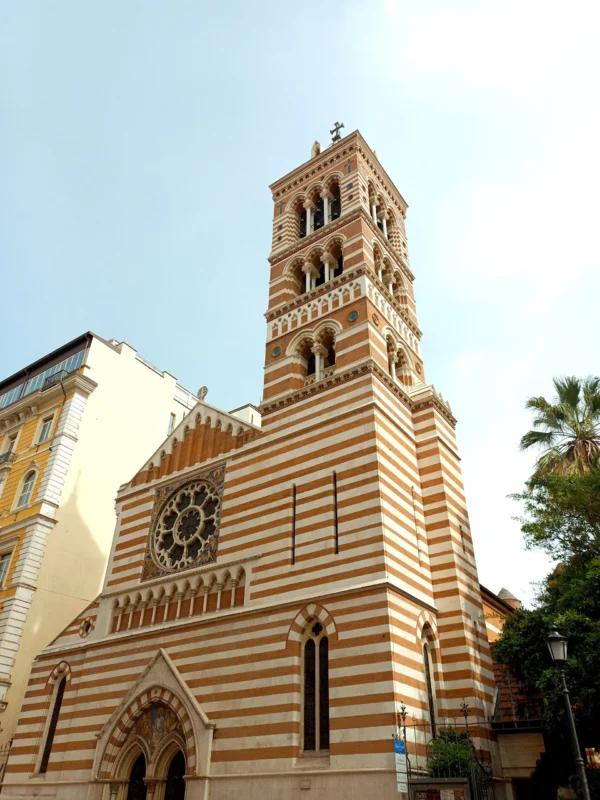
- St. Paul’s Within the Walls100 m
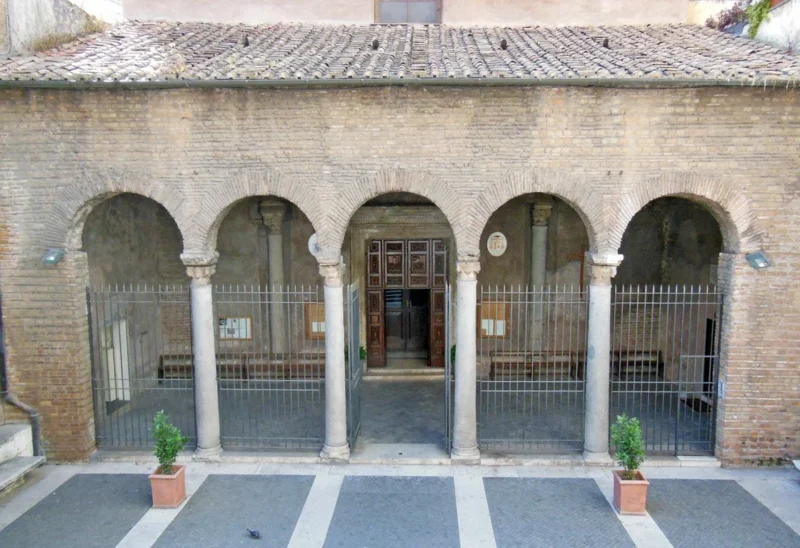
- Basilica of San Vitale100 m
- Teatro Nazionale100 m
- Enrico Fermi Center – Historical Museum of Physics and Study and Research Center at the Viminale200 m
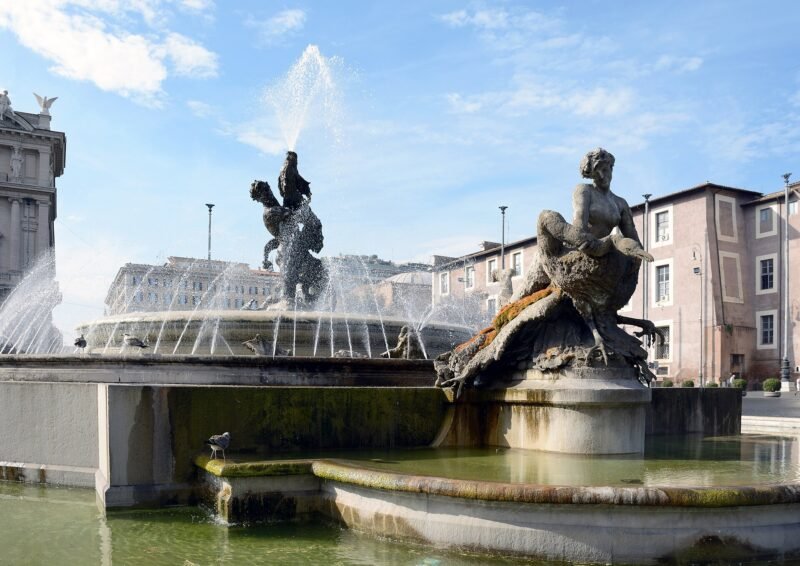
- Fontana delle Naiadi200 m

Upcoming events nearby
- Swan Lake at Teatro dell’Opera di Roma, December 17 to 31, 2026100 m
- Andrea Chénier at the Teatro dell’Opera di Roma, January 17-26, 2027100 m
- Il barbiere di Siviglia with Cecilia Bartoli at Teatro dell’Opera di Roma, May 27, 2027100 m
- The Rake’s Progress at Teatro dell’Opera di Roma, November 27 to December 5, 2026100 m

You might also like
- Don Quixote at Teatro dell’Opera di Roma, June 4 to June 11, 2027
- Pierluca Mariti in Abbi pazienza at Teatro Ambra Jovinelli, March 9, May 17 and October 5 to 10, 2027
- Michela Giraud in Fisicamente mi piacciono tutti! at Teatro Brancaccio, March 7, 8 and 9, 2027
- Mahler’s Third Symphony by John Neumeier at Teatro dell’Opera di Roma, February 4 to 10, 2027
- Molière, l’arte della beffa with Alessio Boni at Teatro Ambra Jovinelli, March 31 to April 11, 2027
- Motus by Blanc, McGregor and Ekman at Teatro dell’Opera di Roma, March 31 to April 4, 2027