Parco di Villa Chigi
In short. The Parco di Villa Chigi is open: it is a public garden of Roma Capitale in the Trieste district, Municipio II, with free entry every day from 7:00 to sunset according to the Capitoline Superintendency.
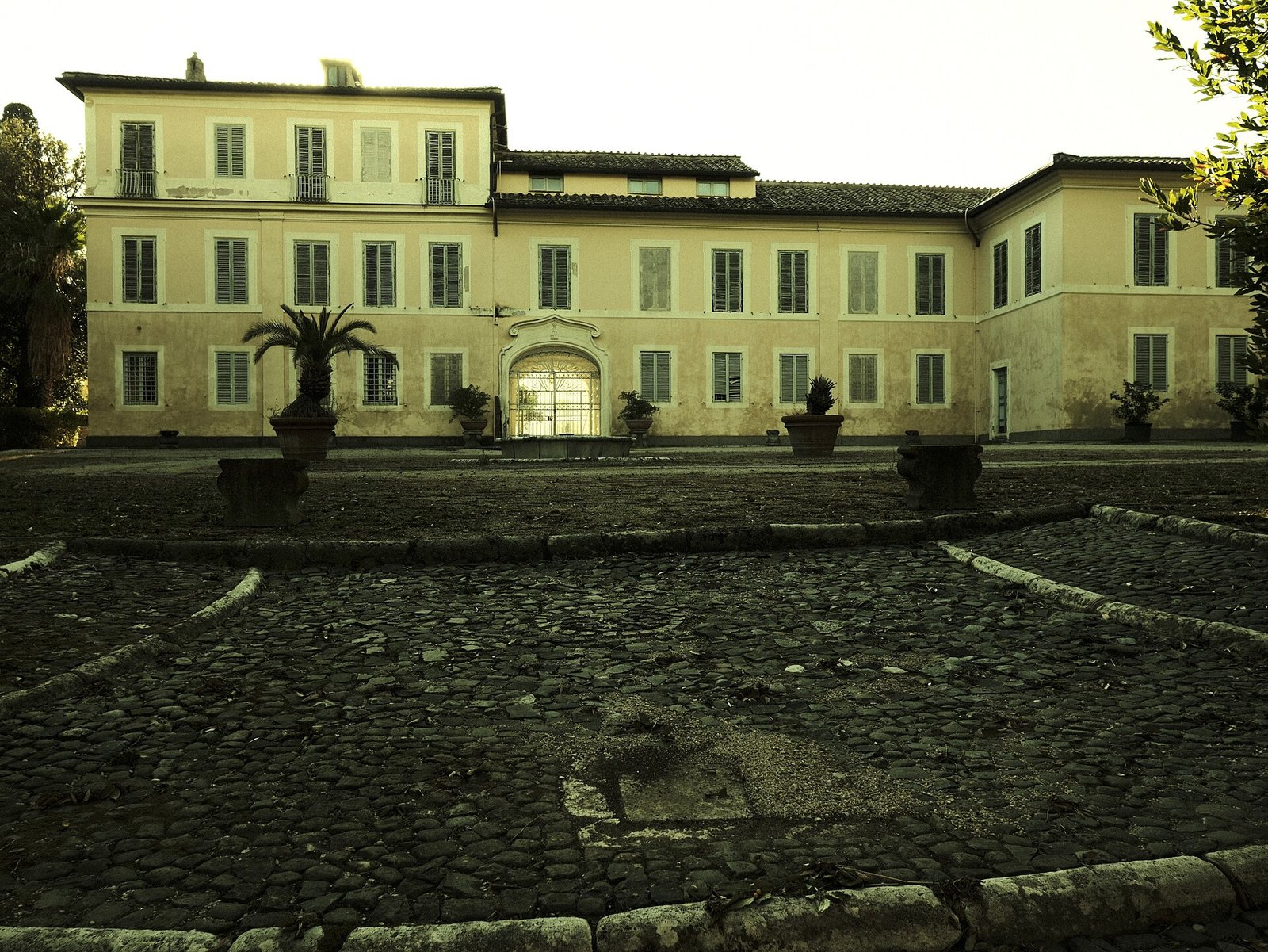
The Parco di Villa Chigi is open: it is a public garden of Roma Capitale in the Trieste district, Municipio II, with free entry every day from 7:00 to sunset according to the Capitoline Superintendency. You enter from Via di Villa Chigi 24, from Via Valnerina and from Via Niccolò Piccinni, and the city also indicates an entrance from Via Antrodoco. There are no tickets and no reservations. The 18th-century casino, on the other hand, can't be visited: it is private and separated from the park by a fence.
It covers about five hectares, 50,000 square meters according to the city, carved out of the villa that Cardinal Flavio Chigi had fitted out starting in 1763 on a rise that the sources call Monte delle Gioie. The public park corresponds to the lower part of the property, expropriated by the city starting in the late 1970s and restored in 2003 following the 18th-century design. The villa building and the Italian garden attached to it remain with the owners.
Data checked on September 29, 2026 on the Capitoline Superintendency's page dedicated to the villa, on the Municipio II entry on the Roma Capitale website, on the city's tourism portal and on the press articles cited later in the text. The operator doesn't publish a dedicated phone number for the park, recommended transport lines or a different closing time for each month. For general information on municipal green spaces the reference channel remains the Roma Capitale contact center, 060608.
In brief: address, hours, ticket
- Address: Via di Villa Chigi 24, with other entrances from Via Valnerina, Via Niccolò Piccinni and Via Antrodoco, Trieste district, Municipio II.
- Operator: Roma Capitale, with the recent works followed by the Environment Department according to the press, information at 060608.
- How you get in: free entry to the public park, casino and Italian garden private and not open to visitors.
- Price: free.
- Hours: from 7:00 to sunset according to the Capitoline Superintendency, from dawn to sunset according to the city's tourism portal.
- Services: equipped area for children and area for dogs indicated by the city, ping pong tables and tables for chess and checkers planned in the recent works.
- Accessibility: the operator doesn't publish specific information on barrier-free routes and entrances.
Where it is and what you really see
The park is in the northeast quadrant of the city, in the Trieste district and near Piazza Vescovio according to the Capitoline Superintendency, not far from Viale Somalia according to the local press. The city's tourism portal places it instead in Salario: the sources don't agree on the name of the district. Around it are 20th-century apartment buildings and residential streets. It is not a tourist area, and the park is better understood if you look at it through the eyes of someone who lives there.
What do you see on entering? A rectangular garden, with a flat central area surrounded by a ring path, as the local press described it in 2018. The fountains, the playground, the dog area and a series of shaded avenues. The dominant trees are holm oaks, together with Judas trees, hackberries, laurels and elms. Anyone looking for the grand noble villa with statues and monumental fountains is disappointed: the scenic part is beyond the fence.
The casino can be seen from the park, up high, behind the gate. It is an 18th-century country residence, a holiday casino as the Superintendency defines it, born from the transformation of a rustic farmhouse. From the park you can make out the bulk of the building and the green of the Italian garden, but not the interiors. The frescoed rooms, the chapel and the furnishings described by the historical sources stay outside the public visit, and no official channel announces extraordinary openings.
The layout you walk through today comes from the city's restoration of 2003, which according to the Superintendency took up the park's original plan. The main avenue, originally planted with holm oaks and bordered by tall walls of laurel and myrtle, is the spine that holds the garden together. Halfway along, the 18th-century sources described a circular clearing with a fountain and a garden room, that is, a room of hedges with seats and statues.
The life of the park, however, is that of the neighborhood. It is used above all by dog owners, joggers, parents with strollers, families with children and the young people of the area. The services indicated by the city, playground and dog area, already say who it is meant for. Anyone arriving from outside finds a quiet place for a break, not a monument to visit. In our view this is exactly its value, and anyone who presents it as a historic villa to see promises more than the park can give.
A curiosity about the Parco di Villa Chigi
The villa has a family twin in the center of Rome. A conference organized at Palazzo Venezia on March 23, 2023, according to the Ministry of Culture website, dealt together with the furnishings of the 1760s commissioned by the Chigi for the palace in Piazza Colonna and for the villa on Via Salaria. City and countryside were furnished in the same years, by the same family, with the same taste.
The difference is in the fate of the furniture. In the city palace, according to the same source, the Golden Hall set up for the wedding of Don Sigismondo Chigi and Flaminia Odescalchi has remained almost intact, with the gilded bronze decorations by Luigi Valadier around the mirrors. The furnishings of the villa on Via Salaria, on the other hand, were dispersed, and the scholar Alvar González-Palacios has traced them in some private collections. Nothing of them remains to be seen in the park.
A second curious detail concerns the name of the place. The Superintendency writes that the cardinal bought the land on Monte delle Gioie between 1763 and 1765. The operator doesn't explain the origin of the place name, and anyone looking for a legend behind that name finds no foothold in the official sources. The fact remains: a rise at the gates of the city, along Via Salaria, chosen to build a holiday residence a short distance from Rome.
A third curiosity, more recent. In 2018 an online daily of north Rome called Villa Chigi the little Central Park of Rome and pointed out, in the dog area, the bronze statue of a poodle. The operator doesn't publish a list of the park's furnishings, so it is not confirmed that the statue is still in its place after the recent works. It is a tiny detail, but it tells the soul of the place well, more tied to the residents than to noble history.
A fourth curiosity hides in the words. The sources describe the main avenue bordered by walls of laurel and mortella. Mortella is the old popular name of myrtle, the evergreen plant with a resinous scent used in Roman gardens since antiquity. The term promenade, used by the Superintendency for the eastern side, recalls instead the French 18th-century taste for the stroll as a social ritual. In today's park the two coexist: ancient plants, modern use.
Something nobody tells you about the Parco di Villa Chigi
The most beautiful historic part of the villa is not public. The Italian garden, with its flower beds, holm oak groves and the sculptural furnishings that the Superintendency describes on the western side, belongs to the owners together with the building. The municipal park corresponds to the area below, sold by the Chigi after World War II and expropriated by the city. Anyone who arrives hoping to see the cardinal's garden sees mostly its boundary, and it's best to know that beforehand.
A second thing rarely said: the villa building, according to the Superintendency, has been entrusted by the owners on loan to the Mondo X community for the recovery of people with addictions. It is a reception facility, not a museum closed pending restoration. For this reason the fence must be respected without argument, photos inside the property should not be taken and there is no point in ringing private gates asking to enter. Respect for the place also passes through here.
Third thing, and here is our contrary position: Villa Chigi is often put in lists of historic villas to visit in Rome next to Villa Borghese or Villa Doria Pamphilj. The comparison doesn't hold. It is a good neighborhood park, small, with a fine avenue of holm oaks and an interesting history, but it doesn't justify a special trip from the center for anyone short on time. It makes sense inside a day in the north quadrant, together with other places.
Fourth thing: it should not be confused with the villa of Agostino Chigi in Trastevere, today known as Villa Farnesina, or with the Palazzo Chigi in Ariccia. The family left its name on many buildings between Rome and the Castelli, in different eras. The villa on Via Salaria is the latest and the least known. Anyone looking for Renaissance frescoes must go to Via della Lungara, not to the Trieste district.
Fifth thing, a practical one: the official sources don't list the same entrances. The Capitoline Superintendency indicates three, Via di Villa Chigi 24, Via Valnerina and Via Niccolò Piccinni. The Municipio II entry on the Roma Capitale website adds Via Antrodoco. Anyone arranging to meet someone in the park would do well to give the exact street and not only the name of the villa, because the gates open onto different sides of the district and are not close to each other.
Who commissioned it and how was the villa born?
The Capitoline Superintendency attributes the villa to Cardinal Flavio Chigi, who commissioned it in the second half of the 18th century. In the family the name Flavio recurs over several generations, and the patron of the Salaria villa is the cardinal active in that period, not the better-known churchman of the 17th century. Between 1763 and 1765 he bought the land on Monte delle Gioie and started the renovation of a rustic farmhouse, turning it into an elegant residence for stays outside the city.
The works, according to the same source, were directed first by Tommaso Bianchi and then by Pietro Camporese the Elder. Between 1765 and 1769 Filippo Cataldi and Gioacchino Paver decorated the interior rooms, and the Superintendency cites Francesco Nubale and Giacomo Rubini for the frescoes. The chapel, dedicated to the Virgin, was the work of Antonio Bicchierai. The furniture and wood carvings were made between 1763 and 1771 by Nicola Carletti and Giovanni Ermans.
The garden was completed by 1776. The Superintendency describes two parts. To the west an Italian garden with flower beds, holm oak groves and sculptures. To the east a promenade, that is, a long walking avenue planted with holm oaks and bordered by walls of laurel and mortella, with a circular clearing halfway, a central fountain and a garden room with seats and statues. It was a garden for walking and conversing, more than for amazing.
Then the villa lost its role. The Superintendency writes that it remained essentially unused for almost all of the 19th century. After World War II the Chigi sold the farmland and the park below, and according to the city's tourism portal the furnishings were dispersed. Around it the district's apartment buildings grew. In the late 1970s the city started the expropriation of the park, which in 2003 was restored and returned to the city with the 18th-century design taken up again.
What does holiday casino mean? In the vocabulary of Roman villas it indicates a residence not meant for permanent living, but for short stays, parties, conversation, hunting or simply the cool of the hot months. It stood outside the walls, close enough to be reached by carriage in a short time. Villa Chigi belongs to this family of buildings: not a palace of representation, but a place to be away from the city without really leaving it.
My advice for visiting the Parco di Villa Chigi
Enter from Via di Villa Chigi, the entrance that the Superintendency indicates with number 24, and look right away for the main avenue. It is the element that best preserves the sense of the 18th-century garden, with the holm oaks and the hedges. Walk it slowly as far as the circular clearing, then do the loop around the central area. In half an hour you've seen the essentials. For anyone who only wants to read the park, nothing more is needed, and the rest of the time is best spent in the surroundings.
Look at the casino from below, without looking for gaps. The fence separates two worlds: the public park and a private property that hosts a reception community. The best angles are found from the park's avenues, without approaching the private gates. Anyone who wants to understand what the complete villa was like can imagine the Italian garden on the western side and the promenade on the eastern one, following the Superintendency's description as a mental map.
Choose the time according to what you're looking for. Anyone who wants silence comes early in the morning on weekdays, when the park is frequented mostly by people exercising and walking their dogs. Anyone coming with children finds more company in the afternoon and on weekends. In summer the holm oaks give dense shade, and it is the moment when the park pays off most. On the short days of winter sunset comes early and the gates close accordingly.
Bring water in summer and respect the fenced areas for the regrowth of plants. The recent works and the complementary works announced for 2025 have touched avenues, slopes and hedges, and some zones may be marked off with fences. Don't cross them. Don't hold organized picnics with setups and take your trash away. It is a small and heavily used park, and every lapse weighs more than in a large villa.
Do you pay anything and do you need to book?
No. The Parco di Villa Chigi is a municipal public garden with free entry, with no ticket office, no turns and no reservation. You enter during the gates' opening hours, from 7:00 to sunset according to the Capitoline Superintendency. The operator doesn't sell visits to the park and there are no official visits to the casino, which is private. There is no paid product dedicated to Villa Chigi worth mentioning, and anyone offering a paid entrance to the park should be ignored.
The light sports activities planned by the works, such as the ping pong tables and those for chess and checkers indicated by the press in the redevelopment project, are free to use like the rest of the park. The operator doesn't publish particular rules for booking them. Anyone organizing an initiative with setups, an event or filming must instead ask Roma Capitale and Municipio II, starting from 060608, well in advance and without taking authorization for granted.
For the casino and the Italian garden the answer is different. There are no published openings, nor periodic visit days indicated by the park's operator. The building, according to the Superintendency, is entrusted on loan to a recovery community and remains outside tourist use. Anyone studying 18th-century Roman architecture can look for news of any extraordinary openings in the Superintendency's official channels, but at the moment no announcements appear.
Another well-known fact, yet rarely cited
That Villa Chigi is an 18th-century villa is written by all the sources. Few remember that in the same century, on the same road, another cardinal had his residence built. Villa Albani Torlonia, on Via Salaria, was born in the mid-18th century for Cardinal Alessandro Albani. The two villas tell of the same fashion: going out of the walls, a little way, and building a place of rest and representation along the consular road.
The differences are instructive. Villa Albani is tied to the collections of ancient sculptures and has kept its character as a museum villa, visitable only on request. Villa Chigi was a more intimate residence, with a transformed farmhouse and a garden for strolling. The first has remained in private hands. The second was divided: casino and formal garden to the owners, park below to the city. Two different fates for two almost contemporary villas.
A second fact known to historians and little cited concerns the luxury of the interiors. The Ministry of Culture website links the furnishings of the villa on Via Salaria to the work of the same years for the city palace, and speaks of a reworking of Bernini's naturalistic motifs. A country casino, then, furnished with the same level of care as the palace of representation. Today's public park is the modest remainder of an ambitious project.
Finally there is a fact about the landscape you walk through. Today's public park is not a garden that survived intact, but the result of the city's restoration of 2003, which according to the Superintendency took up the 18th-century design. It is therefore a modern reading of an ancient project, made after decades of neglect, sales and expropriation. Anyone judging the park by what is left of the 18th century must take this double history into account, and also the later building sites.
The right photo to take at the Parco di Villa Chigi
The photo that tells the place is the main avenue under the holm oaks, taken head-on, with the light filtering through the crowns. It works best in the morning or late afternoon, when the light is low and the shadows draw the floor of the avenue. At summer noon the shade is too dense and the contrast with the sunny zones burns the image. A portrait-orientation photo conveys the depth of the path better than a wide one.
The second useful image is the casino seen from the park, beyond the fence, with the green of the garden in front. You need a slightly long lens to bring the building closer without approaching the gates. Don't photograph the people who are inside the property: it is a reception community, and the privacy of those who live there must be respected. A photo of the architecture, taken from the public park, is enough to tell the villa.
Third choice, for those who love details: the fountains and the rose garden planned by the recent works, when in bloom. The rose garden, according to the press, was designed with a recycled-water irrigation system. Photograph it in spring, late in the afternoon. Avoid filming children who aren't yours in the playground, and more generally keep out of the frame the people who use the park as their home garden.
The seasons change the look of the photos a great deal. In spring the Judas trees, which the local press lists among the park's species, cover themselves with pink flowers before the leaves and give color to a garden dominated by the dark green of the holm oaks. In autumn the low afternoon light enters sideways between the trunks. In summer, instead, it's best to photograph in the first hours of the morning, before the park fills up and the sun becomes overhead.
How do you get there from central Rome?
The park is in the northeast quadrant, outside the walls, between Via Salaria and the Trieste district. The reference point given by the Superintendency is Piazza Vescovio. The operator doesn't publish recommended bus lines, and stops change with detours and building sites. To choose the route it's best to use ATAC's trip planner or ask 060608, giving as destination Via di Villa Chigi 24 or Via Niccolò Piccinni.
Anyone arriving on foot from other places in the district has several options. From the Coppedè district you go northeast through the residential streets of Trieste. From Villa Ada, along Via Salaria, you cross the district toward the east. They are urban walks with no particular attractions along the way, but they let you understand how the 20th-century city has surrounded what was a country villa.
By car the area is residential and parking is the neighborhood kind, with the city's rules for stopping. The operator doesn't indicate parking dedicated to the park. Anyone coming by bicycle finds streets with normal urban traffic and slight climbs toward the casino. For anyone short on time starting from the historic center, the bus or a taxi remains the simplest choice, and it's best to combine the park with other places in the quadrant so you don't make the trip for half an hour of walking.
Some important events that happened here in history
Between 1763 and 1765, according to the Capitoline Superintendency, Cardinal Flavio Chigi buys the land on Monte delle Gioie and starts the transformation of a rustic farmhouse. Between 1765 and 1769 the rooms are decorated, between 1763 and 1771 furniture and carvings are made, by 1776 the garden is complete. In a little over 10 years the countryside along Via Salaria becomes a holiday residence of one of the most powerful families of papal Rome.
A long silence follows. For almost all of the 19th century the villa remains essentially unused, the Superintendency writes. The city, meanwhile, grows outside the walls with the new districts. After World War II the Chigi sell the farmland and the park below, and the furnishings are dispersed according to the city's tourism portal. The surrounding landscape changes completely, with the apartment buildings of the Trieste district in place of the fields.
In the late 1970s the City of Rome starts the expropriation of the park. The restoration comes in 2003, when the city administration carries out the works that take up the 18th-century design. From that moment the park is public. The villa building, which remained with the owners, is today entrusted on loan to the Mondo X community. The division between public and private part, marked by a fence, is the one you still see today.
The last phase is recent. According to the press, the redevelopment project funded by Roma Capitale, about €400,000, awaited for years, is divided into three phases so as not to close the park, with completion estimated for mid-2024. In November 2024 the press reports a project of complementary works worth €190,000, planned for 2025. The open sources don't indicate an official completion date.
Alongside the building sites there is the history of scholarship. On March 23, 2023, in the Sala del Refettorio of Palazzo Venezia, a conference promoted in the Ministry of Culture's calendar brought attention back to the Chigi's 18th-century furnishings, including those of the villa on Via Salaria. It is not an event that happened in the park, but it is a sign that the villa, invisible from inside for anyone strolling, continues to interest those who study the decorative arts of 18th-century Rome.
Who has passed through the Parco di Villa Chigi
The first name is that of the patron, Cardinal Flavio Chigi, a member of the family that in the 18th century also owned the palace in Piazza Colonna, according to the Ministry of Culture website. With him passed through here the architects Tommaso Bianchi and Pietro Camporese the Elder, the decorators Filippo Cataldi and Gioacchino Paver, the painters Francesco Nubale and Giacomo Rubini and the author of the chapel, Antonio Bicchierai, according to the Capitoline Superintendency.
Then the woodworking craftsmen, Nicola Carletti and Giovanni Ermans, who between 1763 and 1771 made furniture and carvings for the villa. Their works are not here today. According to the Ministry of Culture website, the furnishings of the villa on Via Salaria ended up in private collections, and the scholar Alvar González-Palacios traced them and presented them in a conference at Palazzo Venezia in March 2023. It is a story that is reconstructed away from the park.
In the 20th century came the owners who sold the farmland, the city offices that expropriated the park and the designers of the 2003 restoration. With the loan arrangement, the building welcomes the people followed by the Mondo X community in their recovery paths. They are discreet presences, and their privacy must be respected. The operator doesn't publish the date of the loan, and it is not a piece of data that a park visitor needs.
Today the park belongs to the residents of Trieste and Salario. Families, dog owners, elderly people on the benches, kids from the local schools, those who run in the morning. The local press has recounted several times the decay and the delays in the works, often with the voice of those who live around it. In 2024, according to the press, the chair of the Capitoline Environment Commission, Giammarco Palmieri, and the chair of the Municipio II Environment Commission, Andrea Rollin, also took it up.
What changed with the works of recent years?
The most recent building site was recounted by the local press as awaited for years and postponed several times. According to the online daily that followed its start, the project was worth about €400,000 and was funded by Roma Capitale through the Environment Department, with the collaboration of Municipio II. The site was divided into three phases so as not to close the park for months, and completion was estimated for mid-2024.
The interventions listed by the press are concrete. New paving for the little square at the entrance on Via Piccinni. The replacement of some trees. A rose garden with recycled-water irrigation. The renovation of the avenue parallel to Via Piccinni. Ping pong tables, chess and checkers in place of a new play area. The entrance and paving of the dog area. Work on the fountain and against soil washout with naturalistic engineering techniques.
The first building site did not close the matter. In November 2024, according to Radio Colonna, a project of complementary works worth €190,000 was presented for Municipio II, after a first intervention indicated at €440,000. The sources therefore don't agree on the figure for the first site: about €400,000 for one outlet, €440,000 for the other. The complementary works include water collection, securing the slope and completing the fence.
The same project adds plant integrations, draining paving at the entrance of the dog area and a tuff seating wall in the same area, with completion planned in 2025. The operator doesn't publish an update on the closing of these works, so it is not possible to say with certainty if they are finished. Before going, if you're looking for a specific area of the park, it's best to check the notices of Roma Capitale and Municipio II.
How does Villa Chigi fit among the villas of the northeast quadrant?
Villa Chigi is one of the pieces of a system of green spaces and villas that follows the consular roads northeast of the center. Along Via Salaria are the large Villa Ada and the private Villa Albani Torlonia. Along Via Nomentana is Villa Torlonia, with the Casino Nobile open as a museum. Farther west, above Flaminio, the hill of Villa Glori. Each has a different history and scale, and the comparison helps put Villa Chigi in the right place.
Compared to these, Villa Chigi is the smallest and the most domestic. Villa Ada offers woods and a little lake, Villa Torlonia a museum and a strong 20th-century history, Villa Glori a memorial park. Villa Chigi offers an avenue of holm oaks, a playground, a dog area and an 18th-century history that can only be read in part. For those who live in the neighborhood it is the garden under their windows, for those who come from outside it is a stop that rounds out the day.
Anyone who wants to do a themed route on the noble villas of the 18th and 19th centuries can put together Villa Chigi, the gate of Villa Albani Torlonia on Via Salaria and the Villa Torlonia complex on Via Nomentana, with its obelisks. On the site you also find Villa Massimo, home of the German Academy, for those who want to widen the theme to villas turned into cultural institutions. Villa Chigi, on this route, represents the most common case: the divided villa, with the noble part left private and the park ceded to the city.
The quadrant also has a long underground history. On Via Salaria open the Catacombs of Priscilla, on Via Nomentana the complex of Sant'Agnese fuori le Mura with the Mausoleum of Santa Costanza, and under Villa Torlonia the Jewish catacombs. For a wider picture on the site there is the page on the catacombs of Rome. Many of these places have their own hours and reservations, to be checked on the operators' websites before leaving.
When is it closed and what not to expect?
The park is closed at night, from sunset to 7:00 in the morning according to the Capitoline Superintendency. The operator doesn't publish a precise closing time for each month, so on the short days of winter it's best to leave with a good margin before dark. As with other municipal parks, there can be extraordinary closures for weather alerts, strong wind, pruning or building sites. In those cases the notices come out on the channels of Roma Capitale and Municipio II.
What not to expect? Don't expect to enter the casino, to see frescoes or furnishings, to visit the chapel or the Italian garden. Don't expect an information point, a public restroom indicated by the operator, a bar or a published custody service. The operator doesn't indicate any of these services. And don't expect a big park: five hectares are crossed in a few minutes, and the full loop takes less than an hour even at a leisurely pace.
Don't expect an always tidy park either. Over the years the local press has recounted vandalism, damaged bins, missing furnishings and delays in maintenance, and the recent building sites came after years of waiting. The state of the park changes with the seasons and with the interventions. Anyone who wants to report a problem can do so through the channels of Roma Capitale, starting from 060608, indicating the entrance and the precise spot.
One last warning concerns the building sites. The complementary works announced for 2025 concern slopes, fences, water collection and the dog area, according to the press. During interventions of this kind some zones can stay fenced off even for weeks, while the rest of the park remains open. The operator doesn't publish a works calendar that can be consulted in advance. If the purpose of the visit is a specific area, such as the dog area or the rose garden, it's best to find out beforehand through the city's channels.
Villa Chigi with children and dogs: what is really there?
The city lists among the services an equipped area for children and a play area for dogs. They are the two poles of the park's daily life. Alongside these services, the recent works chose, according to the press, to add ping pong tables, chess and checkers instead of a new play area. It is a choice designed for teenagers and adults more than for small children, and should be kept in mind by anyone coming with the little ones.
The dog area was the object of two interventions, according to the press: the renovation of the entrance and paving in the first site, draining paving and a tuff seating wall in the complementary works announced for 2025. Outside the fenced area the general rules of municipal green spaces apply: leash and picking up waste. Near the children's play equipment and in the zones of freshly reseeded lawns, dogs should be kept on a short leash, out of respect for everyone.
For families the park works well as a one-hour stop, less as a destination for a whole day. There are shade, flat spaces and fountains, according to the local press's description. The operator doesn't publish information on routes for strollers or wheelchairs, and some zones have slopes and dirt surfaces. For other ideas with children, on the site you find the page Rome with children, with parks and museums suited to the little ones.
Eating in the area
The Trieste district is residential, and this changes the rules compared to the historic center. Here the places live off the neighborhood clientele, and the classic traps of the monument zone are less frequent. They don't disappear entirely. The signs to recognize remain the same: the menu with photos of the dishes, the tout at the door, the kitchen open nonstop from morning to evening without a break, menu items with no price written.
Other signs apply everywhere in Rome. The lady making fresh pasta in the window to attract passersby, the menu that differs inside and outside the place, prices adapted to the customer in front of the busiest sites. Romans avoid these places not out of snobbery, but because they know the kitchen works for those who pass once and won't come back. In the Trieste district the rule is simple: the places that hold up are those frequented by residents at lunch on weekdays.
Hours matter too. In the district many places follow the rhythms of those who work and live there: lunch between 13:00 and 15:00, dinner from 20:00 on, weekly closing days and summer holidays. A kitchen serving hot dishes at 16:00 is not necessarily a trap, but it is a sign to weigh. In August a share of the neighborhood places close, and anyone arriving in that month must expect less choice than usual.
For a stop after the park it's best to look in the surrounding streets, where the neighborhood has its commercial life, or to move toward the other destinations in the quadrant. Anyone who wants checked addresses between Rome and Lazio can consult the list of addresses on Google Maps, a collection curated by the editorial team, useful also for days in the surroundings of the city.
What to combine in a day
The most natural combination is with Coppedè, the district of villini and palaces of the early 20th century that is in the same quadrant. You go from an 18th-century villa to a fantastic architecture of the following century without taking any transport. Anyone with more time can add Villa Torlonia on Via Nomentana, with its museums and park, and end the day at the Ponte Nomentano over the Aniene.
A second combination follows Via Salaria. Villa Chigi in the morning, then Villa Ada for a long walk in the greenery and the Catacombs of Priscilla, with hours and visit arrangements to be checked on the operator's website. The gate of Villa Albani Torlonia can be seen along the road, even though the villa opens only on request.
On Via Nomentana, besides Villa Torlonia, are the early Christian sites of the quadrant. The Basilica of Sant'Agnese fuori le Mura and the Mausoleum of Santa Costanza form a complex that deserves more time than Villa Chigi. Anyone with only one morning should give them priority and use the park as a shady stop before or after the visit, when summer heat makes walking in the city tiring.
Anyone who prefers the Risorgimento theme can link the area to Porta Pia, the site of the breach of 1870, at the start of Via Nomentana. From there you head toward Porta Pinciana and Villa Borghese, to compare a neighborhood park with the city's great historic villa. The comparison helps you understand what Villa Chigi was and what it could not become.
Anyone interested in the history of the Chigi family can build a small themed itinerary. You start from the villa on Via Salaria, go down to the center toward the palace in Piazza Colonna, and cross the Tiber to the Villa Farnesina on Via della Lungara. Anyone with one more day can go as far as the Palazzo Chigi in Ariccia, in the Castelli Romani. They are places of different eras, but together they tell the weight of one family in the city's history.
For those looking for more greenery in the quadrant, to the north beyond the Aniene open the Parco delle Valli and the Aniene Valley Nature Reserve, larger and wilder. Anyone who wants to spend little finds other ideas on the pages free Rome and free museums in Rome. And anyone who wants to see the family's city palace can stop by Piazza Colonna, with the Column of Marcus Aurelius.
Frequently asked questions
Is the Parco di Villa Chigi open today and until what time?
The park is open every day from 7:00 to sunset according to the Capitoline Superintendency, while the city's tourism portal speaks of opening from dawn to sunset. The operator doesn't publish a precise closing time for each month. There can be extraordinary closures for bad weather, pruning or works, announced on the channels of Roma Capitale and Municipio II. When in doubt, before leaving, it's best to ask 060608, the city's contact center.
Can you visit the casino of Villa Chigi?
No. The villa building and the Italian garden are private property, separated from the public park by a fence. According to the Capitoline Superintendency the building has been entrusted by the owners on loan to the Mondo X community for the recovery of people with addictions. No public openings or published visit days appear. The casino is looked at from the park, respecting the fence and the privacy of those who live there.
Where do you enter the park?
The Capitoline Superintendency indicates three entrances: Via di Villa Chigi 24, Via Valnerina and Via Niccolò Piccinni. The Municipio II entry on the Roma Capitale website adds an access from Via Antrodoco. The entrance on Via di Villa Chigi is the most convenient for reaching the main avenue right away. The one on Via Piccinni, with the little square repaved in the recent works according to the press, opens onto the avenue parallel to the street, renovated in the same site.
Is there a dog area in the park?
Yes. The Municipio II entry lists a play area for dogs among the park's services. According to the press, the redevelopment site renovated its entrance and paving, and the complementary works announced in November 2024 include draining paving at the entrance and a tuff seating wall. Outside the fenced area the municipal rules on leash and picking up waste apply, especially near the children's play equipment.
Is Villa Chigi suitable for children?
Yes, for a stop of an hour or a little more. The city indicates an equipped area for children, and the recent works added ping pong tables, chess and checkers designed for teenagers and adults, according to the press. There are shade, flat spaces in the center and fountains. The operator doesn't publish information on public restrooms or refreshment points inside. Anyone coming for a whole afternoon does well to get organized with water and a snack.
Are Villa Chigi and Villa Farnesina the same villa?
No. They bear the name of the same family, but they are two different villas, in different eras and areas. Villa Chigi on Via Salaria is the 18th-century residence of Cardinal Flavio Chigi, with the public park in the Trieste district. Villa Farnesina is in Trastevere, on Via della Lungara, and is the Renaissance villa of the banker Agostino Chigi, today linked to the Accademia Nazionale dei Lincei. Anyone looking for Renaissance frescoes must go there.
Is the park wheelchair accessible?
The operator doesn't publish a map of accessible routes or indications on step-free entrances. The city's tourism portal refers to the Roma Accessibile section for dedicated services. The central area of the park is flat, while toward the casino the ground rises and some surfaces are dirt. Before the visit it's best to ask for updated information at 060608, specifying your needs and the entrance you plan to arrive from.
Are the redevelopment works finished?
The first site, worth about €400,000 according to one outlet and €440,000 according to another, was estimated to close in mid-2024. In November 2024 a project of complementary works worth €190,000, planned for 2025, was presented, according to Radio Colonna. The operator doesn't publish an update on the conclusion of these works. During the works the park remained open, divided into phases, but some areas can be fenced off.
Who manages the park and to whom do you report problems?
The park belongs to Roma Capitale. The service entry is in the Municipio II section of the institutional website, the historical page is on the Capitoline Superintendency's website, and according to the press the recent works were funded through the Environment Department. For faults, dangerous trees, gates closed outside hours or trash, the reference channel is the city's contact center, 060608, indicating the entrance and the precise spot in the park.
Who wrote this and on which sources
The text comes from the editorial team of Tour Leader Pro, the Rome-based outfit that designs itineraries, tours and cultural events in Rome and Lazio. The fares, hours and access arrangements given here come from the official sources cited in the text, as of the date given at the start: for the Parco di Villa Chigi the reference is the page of the Capitoline Superintendency and the Municipio II entry of Roma Capitale. Tell us what you find has changed.
Organizing a visit to Villa Chigi means working on the context more than on the ticket: choosing the entrance, knowing that the casino can't be visited, calculating the light and linking the park to Coppedè, Via Salaria or Via Nomentana to give the day some sense. For anyone planning outings of this kind, a useful resource for people who organize group travel is Tour Leader Pro, with tools designed to coordinate tours and itineraries.
Villa Chigi is also an invitation to look at Rome outside the walls, where the cardinals' villas have become neighborhood parks and the fields have given way to apartment buildings. Putting together the city of the north, the catacombs of the consular roads, the Castelli and the Aniene valley takes a few days and a bit of planning, and a useful resource for building a multi-day itinerary is Italy Planner.