Published on · updated on
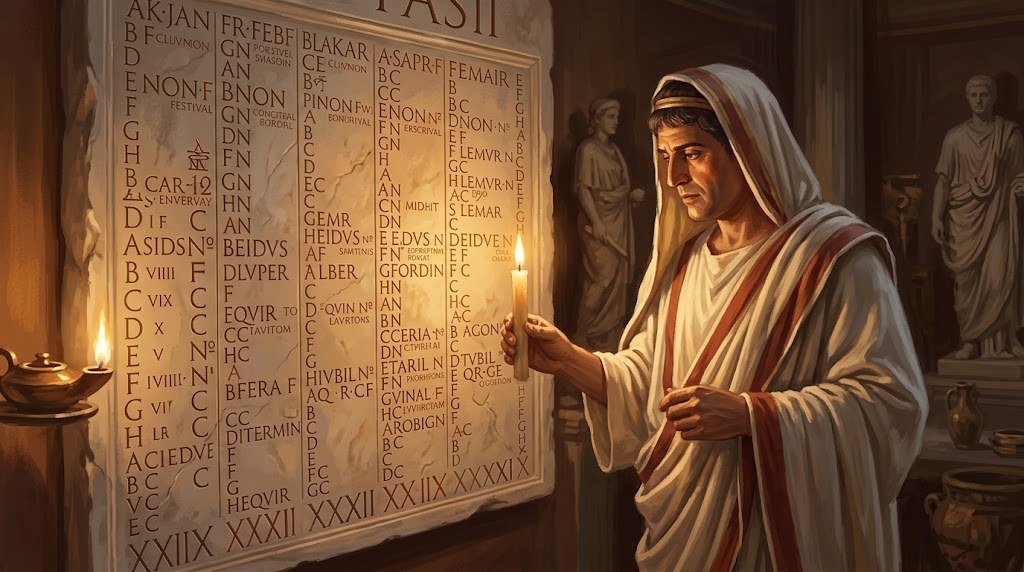
The Roman calendar was a religious calendar: every day had a ritual quality, and festivals marked the Roman year according to the mos maiorum, the “custom of the ancestors.” This guide collects the main festivals of ancient Rome, month by month, with dates, deities and links to in-depth articles.
- Mos maiorum: the body of inherited customs, religious and civic, treated as the norm
- Days: fasti (lawful for business), nefasti (forbidden) and comitiales (for assemblies)
- Dates: Kalends, Nones and Ides, the three reference points of every month
- Sources: Ovid, Fasti. Varro. Macrobius. Festus. Epigraphic calendars
What is the mos maiorum
Mos maiorum means “custom of the ancestors.” For the Romans it was not a written code but a binding tradition: the right way of doing things, from sacrifices to public life. Festivals were its most visible form, because they repeated the same rites every year, on the same days, with the same words.
How the calendar worked
Every month had three fixed dates: the Kalends (the first day), the Nones (the 5th or the 7th) and the Ides (the 13th or the 15th). The other days were counted backward from these points. Days were fasti, when it was lawful to administer justice, nefasti, when it was forbidden, and comitiales, when assemblies could meet.
Public festivals were divided into stativae, on a fixed date, conceptivae, set each year by magistrates or priests, and imperativae, ordered in particular circumstances. The Ambarvalia, the Paganalia and the Feriae Latinae are examples of movable festivals.
How many festivals were there?
The number depends on how you count. The oldest epigraphic calendars, such as the Fasti Antiates Maiores of the Republican period, and the calendar of Filocalus of 354 AD record dozens of festivals with their own names. With the public games of the imperial age the number of festival days grew a great deal, but estimates vary depending on the criteria: for this reason no single verified figure can be given.

The calendar month by month
January
- January, movable date: Paganalia, the village festival after sowing
- January 11: Juturnalia, the nymph Juturna and the spring in the Forum
February
- February 15: Lupercalia
- February 23: Terminalia, the god of boundaries
- February 24: Regifugium, the flight of the king
March
- March 1: Matronalia
- March 15: Anna Perenna, the festival of the Ides of March
April
- April 1: Veneralia, Venus Verticordia and Fortuna Virilis
- April 15: Fordicidia, the pregnant cows for Tellus
- April 21: Parilia, the traditional anniversary of Rome
May
- Late May, movable date: Ambarvalia, the purification of the fields
- May: Lemuria, the rite of the dead (with Halloween in Rome)
July
- July 6: Ludi Apollinares, the games of Apollo
- July 7: Nonae Caprotinae, the festival of the maidservants
August
- August 13: Vertumnalia, the god of the seasons
- August 24: Mundus patet, the gate to the Underworld
- August 27: Volturnalia, the god Volturnus

October
- October 1: Tigillum Sororium, the beam of Horatius
- October 11: Meditrinalia, the toast to new wine
- October 13: Fontinalia, the fountains of Rome
- October 15: Equus October, the horse of Mars
- October 19: Armilustrium, the festival of arms
November
- November 4-17: Ludi Plebei, the banquet of Jupiter
- November 2: All Saints and the dead in Rome
December
- December 5: Faunalia, the country festival of Faunus
- December 11: Septimontium, the festival of the seven hills
- December 17: Saturnalia
- December 19: Opalia, the festival of Ops
- December 21: Angeronalia, the goddess of silence
Festivals with variable dates
Other festivals in the calendar
The Roman calendar includes many other occasions. Among the best known: Quirinalia (February 17), Equirria (February 27 and March 14), Megalesia (April 4-10), Cerealia (April 19), Robigalia (April 25), Floralia (April 28-May 3), Vestalia (June 9), Neptunalia (July 23), Furrinalia (July 25), Vinalia Rustica (August 19), Consualia (August 21), Volcanalia (August 23), Opiconsivia (August 25). We are preparing the in-depth articles.
Places in Rome where you can find these festivals
- Roman Forum: Comitium, Regia, Temple of Vesta
- Capitoline Hill: Temple of Jupiter, Terminus, Ops
- Palatine Hill: the Rome of the origins
- Circus Maximus: games and races
- Tiber Island: Faunus and the Tiber
Frequently asked questions
What is the mos maiorum?
The custom of the ancestors: the body of religious and civic traditions that the Romans treated as the norm.
How were days counted in the Roman calendar?
From three fixed points in each month, Kalends, Nones and Ides, counting backward.
What is the main source on Roman festivals?
Ovid’s Fasti, a poem on the Roman calendar, supplemented by Varro, Macrobius, Festus and the calendars on stone.
Sources
- Ovid, Fasti
- Varro, De lingua latina V-VI
- Macrobius, Saturnalia I
- Festus, De verborum significatu
- Epigraphic calendars: Fasti Antiates Maiores, calendar of Filocalus (354 AD)
The illustrations are generated with artificial intelligence for evocative purposes.