Published on · updated on
Some links on this page are affiliate links: if you buy through them, Estate Romana receives a small commission, at no extra cost to you. As an Amazon Associate, Estate Romana earns from qualifying purchases.
The Armilustrium was the Roman festival of October 19 in which weapons were purified with a public rite, on the Aventine, before being put away for the winter. The name says it all: arma and lustrare, to purify by going around. It was one of the moments that marked, in the religious calendar, the close of the time dedicated to Mars, opened in March with the rites of the Salii. In 2026, October 19 falls on a Monday: a good excuse to climb the Aventine at the end of the day, when the light is low and the hill empties.
We know little about the festival, and that little comes from ancient authors who mention it in passing. Varro, Festus, Livy and Plutarch are enough, though, to reconstruct the place, the gesture and the meaning of the Armilustrium, and to separate what is documented from what was added later. Here you’ll find the sources, the route to do today between Santa Sabina and the Orange Garden, and a few ideas for those who want to take home a piece of military Rome.
Facts checked on October 3, 2026 against Varro (De lingua Latina VI, 22), Festus (p. 19), Livy (XXVII, 37), Plutarch (Life of Romulus 23), Platner and Ashby’s Topographical Dictionary of Ancient Rome and the entry “Armilustrio” in the Enciclopedia Italiana Treccani. The hours of the places mentioned should always be rechecked on the operators’ websites before going out.
Armilustrium at a glance
- What: the Armilustrium was the Roman religious festival dedicated to the purification of weapons, celebrated by armed men with sacrifices and the sound of trumpets, according to the grammarian Festus.
- When: the Armilustrium was celebrated every year on October 19, and in 2026 October 19 falls on a Monday.
- Where: the festival was held in an open space on the northwest part of the Aventine, probably just south of the present-day Basilica of Santa Sabina.
- Getting there: the Aventine is reached on foot from the Circo Massimo stop on metro line B, climbing toward Santa Sabina and the Orange Garden.
- Today: nothing of the Armilustrium area remains visible, and on October 19 in Rome no official reenactment of the festival is held.
- Good to know: Plutarch writes that Romulus buried the Sabine king Titus Tatius near the Armilustrium, on the Aventine.
What was the Armilustrium and why did it fall on October 19?
The clearest definition is Festus’s, who summarizes an older work by Verrius Flaccus: “Armilustrium festum erat apud Romanos, quo res divinas armati faciebant ac dum sacrificarent tubis canebant.” A festival, then, in which armed rites were performed and, during the sacrifice, trumpets were sounded. Varro, in the sixth book of De lingua Latina, adds a philologist’s doubt: the day is called Armilustrium because sacrifices are made in arms in that place, “unless it is the place that takes its name from the festival.”
Why October, exactly? The oldest Roman calendar reasoned in agricultural and military seasons. In March, the month of Mars, the rites tied to war began: the Treccani entry signed by Giulio Giannelli recalls that the sacred arms of the god, the shields called ancilia and the spears, came out of the sanctuary on March 1 and returned to it with the Armilustrium itself. October 19 thus closed an arc of seven months. Before winter, those who had fought ritually freed themselves from contact with blood and death.
The link with the Salii, the dancing priests of Mars, is taken as certain by the Enciclopedia Italiana and presented as probable by other reference works. The ancient sources do not agree on all the details, and it’s worth saying so: there is no complete description of the ceremony. We have phrases, glosses, hints. The rest is scholars’ reconstruction, often well argued, but reconstruction all the same.
The other festivals in the cycle help in understanding the Armilustrium. On October 15 the Equus October was celebrated, the sacrifice of a horse to Mars on the Campus Martius. In March came the Equirria and the Quinquatrus, and on March 23 and May 23 the Tubilustrium, the purification of the sacred trumpets that Varro places in the Atrium Sutorium. October, in short, answered March: the door of war was opened and closed with symmetrical gestures.
Where was the Armilustrium on the Aventine?
Samuel Ball Platner and Thomas Ashby’s Topographical Dictionary of Ancient Rome, available on
LacusCurtius, describes the Armilustrium as an open space on the northwest part of the Aventine, “probably just south of the present church of Santa Sabina.” A road ran through it, the vicus Armilustri, which according to the same authors could coincide with today’s Via di Santa Sabina. The name also appears in the late-antique catalogs of the regions of Rome, in the 13th region.
The sources do not entirely agree on the position. The Treccani entry places the ceremony on the Aventine “near the Circus Maximus,” perhaps at one of the stations where the Salii stopped during their processions. The two hypotheses don’t exclude each other: from the edge of the hill toward the Tiber to the Circus the distance is short, and a procession could touch several points. What’s missing is an archaeological remain that would let us pin down the exact spot on the map.

One detail makes the place more alive. Plutarch, in the Life of Romulus, tells that Titus Tatius, the Sabine king who had shared power with Romulus, was killed at Lavinium and that Romulus brought the body back to Rome, burying it with honor “near the so-called Armilustrium, on the Aventine.” It’s legend, of course, but it says that for the Romans of the imperial age that field had a very ancient memory, tied to the very origins of the city.
Livy, finally, records the Armilustrium among the prodigies of 207 BC, the year of the battle of the Metaurus: stones were seen to rain “in Armilustro,” and a nine-day rite had to be repeated. In the same chapter he tells of the song composed by Livius Andronicus for 27 maidens and of the lightning that struck the temple of Juno Regina, also on the Aventine. The hill, in those years of war against Hannibal, was a nerve center of Roman religious life.
Which legend about the Armilustrium should be debunked?
The first is that of the rigid calendar. You often read that with the Armilustrium “the war ended” and that from that day the Romans laid down their arms until March. In our view it’s an oversimplification that does history a disservice. The festival closed a ritual cycle, not operations: already in the Republican age armies wintered in enemy territory and sieges lasted well beyond October. The rite purified the community. Foreign policy followed its own needs.
The second is an error of dates that circulates on many popular sites: a second Tubilustrium “four days later,” on October 23. Ancient sources do not confirm it. Varro and Ovid place the purification of the trumpets in March and May, and the descriptions of a grand review of the army at the Circus Maximus, adorned with flowers, find no support in the texts we know. Before sharing an evocative image about the Armilustrium, it’s worth asking which ancient author it comes from.
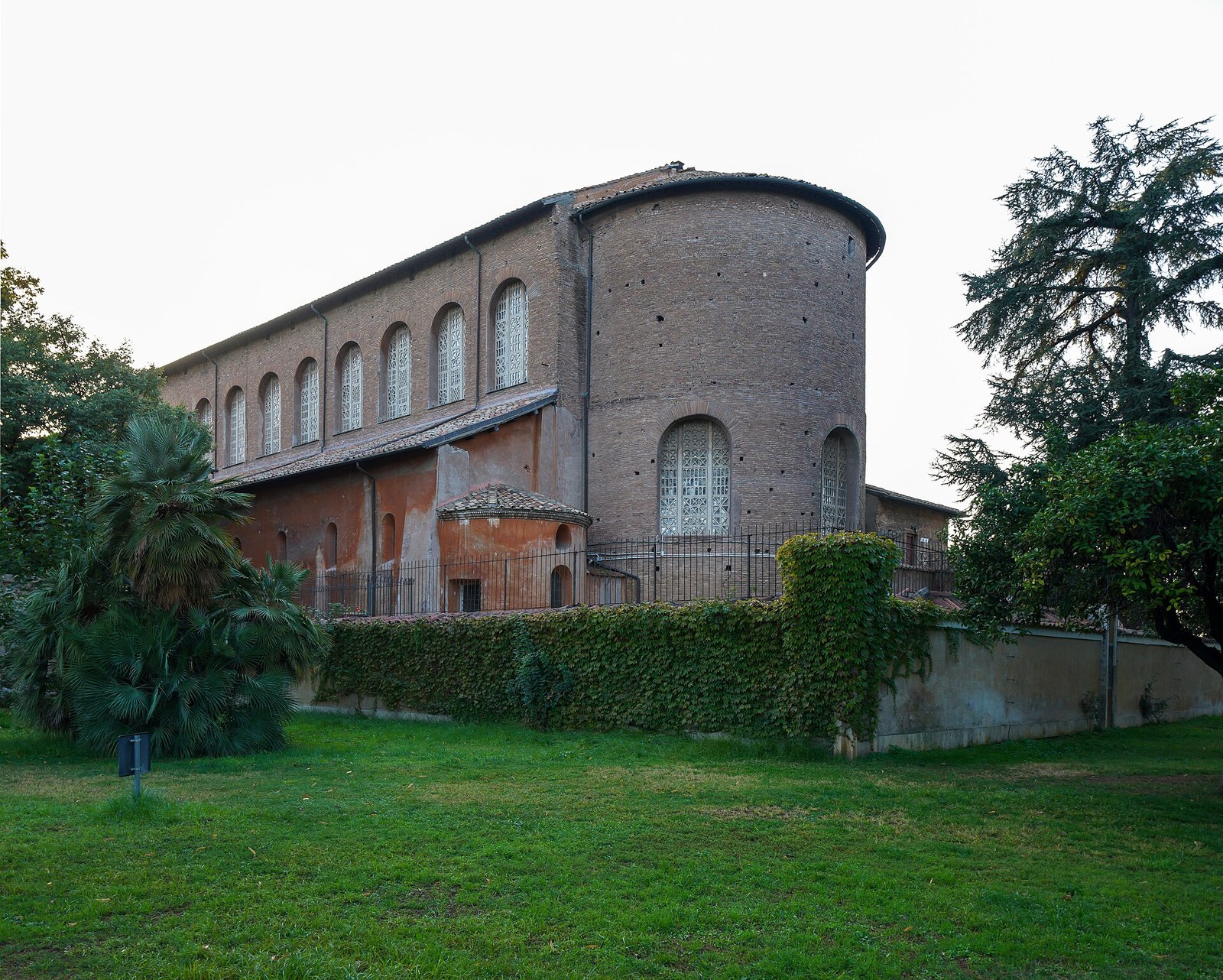
The third concerns the place. Anyone who climbs the Aventine expecting ruins of the Armilustrium will be disappointed: there’s no archaeological area, no sign. The advice is to go knowing that you’re walking through a landscape of memory, not an excavation. Santa Sabina, built in the 5th century, is already reason enough for the walk.
How to experience the Armilustrium in Rome today?
In Rome on October 19 there is no official reenactment of the Armilustrium, so be wary of anyone who promises one. The most sensible way to celebrate it is a walk on the Aventine with the sources in your pocket. Start from the Circo Massimo stop on metro line B, skirt the Circus and climb Clivo di Rocca Savella, the steepest ramp but also the most beautiful, which comes out next to the Orange Garden.
The Orange Garden, Parco Savello, is free and overlooks the Tiber and St. Peter’s. Our listing gives the winter hours, from October to February, from 7:00 AM to 6:00 PM: in mid-October sunset falls before closing, so it’s best to arrive in the late afternoon. From here, a few steps lead to Santa Sabina, with its 5th-century wooden door, and to the area where Platner and Ashby place the Armilustrium.

Continuing along Via di Santa Sabina you reach Sant’Alessio and Piazza dei Cavalieri di Malta, with the famous keyhole that frames the dome of St. Peter’s. For a full picture of the hill, from the churches to the Rose Garden, the listing Aventine: what to see
gives routes and times. Count two or three hours for the main loop without rushing.
For families with children the Armilustrium is a perfect narrative pretext: tell about shields that go out in March and come back in October, then have the kids look for the highest point from which you can see the Circus Maximus. Couples can end the day at sunset on the terrace of the Orange Garden. Friends in a group can split the roles: one reads Plutarch, one Varro, one Livy, each at the point on the hill the text refers to.
If it rains, move everything indoors. Santa Sabina remains a good shelter during opening times, but hours depend on the liturgical calendar and should be checked with the basilica. Alternatively, Estate Romana’s museums section lists the collections where you can see original Roman weapons and equipment. For the week’s events, including those on ancient themes, check the full events calendar.
If you prefer an on-site explanation you can book one of the guided visits to the Aventine and ancient Rome offered by third-party operators on GetYourGuide, or combine the walk with an admission to the Colosseum or the Palatine bought on Tiqets. The hill is close to both, and a day dedicated to the Armilustrium can begin in the morning among the military monuments of the Forum and end at sunset among the orange trees.
When to order and how to organize for October 19?
The article comes out about a dozen days before the Armilustrium, and it’s the right moment to get moving. Books and items are ordered now: for delivery times, the estimated date the shop shows at the time of the order is what counts, and it’s best to choose only offers with delivery expected before October 19. If you’re traveling, you can have the package sent to the hotel: tell the front desk and put the guest’s name on the address.
Experiences should be booked early, especially if October 19 falls, as this year, at the start of an October week still crowded with tourists. For the Colosseum and the sites of the Archaeological Park the best slots sell out in advance. For the Aventine you need to book nothing: the hill is open, the gardens are free. You only need to choose the hour, and the advice is late afternoon.
The time budget is simple. One hour to climb from the Circus Maximus and see the Orange Garden, another for Santa Sabina and Piazza dei Cavalieri di Malta, a third if you want to go down toward San Saba or stay for dinner in Testaccio. Put water in your bag, a battery for the phone and shoes with a good sole: the Aventine’s climbs are short but steep, and the sampietrini slip after rain.
Gifts and purchases for the Armilustrium: what to buy?
There is no traditional “Armilustrium gift,” and it would be forced to invent one. There are, however, useful items for the walk, reading to understand the festival and a few reproductions for military history enthusiasts. For each group we point to several alternatives, because availability changes often.
To read
- Books on the Roman army: to understand who the soldiers were who laid down their arms in October.
- Ovid’s Fasti: the poem on the Roman calendar, useful for the March and May festivals tied to Mars.
- Essays on Roman religion: to place the Armilustrium among rites, priests and calendars.
- Printed guides to Rome: handy on the Aventine, where phone coverage sometimes drops among the convent walls.
For military history enthusiasts
- Roman gladius reproductions: collector’s items, to choose with a blunt blade if there are children at home.
- Legionary helmets: from decorative versions to reenactment ones.
- Replica Roman shields: the piece closest to the idea of the ancilia, the sacred shields of Mars.
- Toy soldiers and legionary sets: to tell the festival to the little ones with something in their hands.
For walking on the Aventine
- Comfortable city shoes: indispensable on Clivo di Rocca Savella and on the sampietrini.
- Anti-theft backpacks: useful in crowded spots, like the line at the keyhole.
- Insulated bottles: cool water or hot tea, depending on how October turns out.
- 10,000 mAh power bank: sunset photos, maps and ancient texts on the phone drain the battery.
- Folding hats: the October sun in Rome can still be strong, and the hat fits in a pocket.
To eat and drink
- Venchi chocolate: a box to bring to whoever hosts you on the evening of October 19.
- Wines on Vino.it: a red from Lazio to toast the end of Mars’s season.
- Cesanese del Piglio: the most characteristic red of Lazio, an alternative if the first shop has no availability.
- Sabina DOP extra virgin olive oil: from the land of Titus Tatius, the Sabine king buried near the Armilustrium.
Experiences and tickets
- Aventine tour on GetYourGuide: guided walks by third-party operators between Santa Sabina and the gardens.
- Experiences in Rome on GetYourGuide: from ancient Rome to workshops for families.
- Colosseum tickets on Tiqets: to pair the Aventine with the places of military Rome.
- Rome attractions on Tiqets: museums and archaeological sites, if the day has to move indoors.
Frequently asked questions
What does Armilustrium mean?
Armilustrium means “purification of arms,” from arma and lustrare. Varro explains that the day takes its name from the fact that sacrifices are made in arms at the Armilustrium, but admits that the place may be what gives the festival its name. The word therefore indicated both the October 19 occasion and the space on the Aventine where it was celebrated.
When was the Armilustrium celebrated?
The Armilustrium was celebrated on October 19 of every year. The date is given by the Roman calendars that have come down to us and confirmed by modern reference works, from Platner and Ashby to Treccani. It fell four days after the sacrifice of the October horse to Mars and closed the cycle of military festivals opened in March with the rites of the Salii.
Where was the Armilustrium in Rome?
The Armilustrium was on the Aventine, in an open space in the northwest part of the hill, probably just south of the Basilica of Santa Sabina. Treccani places it instead toward the Circus Maximus. The sources do not agree on a precise point, and nothing is visible today: you can only walk in the area indicated.
Who took part in the Armilustrium?
Men in arms took part in the Armilustrium, performing sacrifices while trumpets were sounded, according to Festus. According to the Enciclopedia Italiana the Salii also took part, the dancing priests of Mars, who brought the sacred shields back to the sanctuary. Details on the presence of the people, magistrates or army units are not described by the ancient sources.
Is there a reenactment of the Armilustrium in Rome?
No, in Rome no official reenactment of the Armilustrium is held on October 19. Historical reenactment groups sometimes organize Roman-themed events, but not tied in a stable way to this date. The simplest way to celebrate the festival is a walk on the Aventine with the ancient sources at hand.
Did the Armilustrium really mark the end of war?
Only in a ritual sense. The Armilustrium closed the period sacred to Mars and purified those who had fought, but military campaigns did not stop by law. Already in the Republican age armies wintered far from Rome and sieges continued in winter. Seeing it as a seasonal armistice is a modern reading that is too simple.
How much time does it take to visit the Aventine?
Two or three hours for the main loop of the Aventine, from the Circus Maximus to the Orange Garden, Santa Sabina and Piazza dei Cavalieri di Malta. The Garden is free and in winter closes according to the hours given in Estate Romana’s listing. For the churches, hours change with the liturgical calendar and should be checked beforehand.
Who wrote this and from what sources
The text comes from the editorial team of Tour Leader Pro, the Rome-based organization that designs itineraries, visits and cultural events across Rome and Lazio. The information on the Armilustrium comes from Varro, Festus, Livy and Plutarch, from Platner and Ashby’s topographical dictionary and from the Enciclopedia Italiana Treccani, consulted on the date given at the top. Tell us what you find changed.
Celebrating the Armilustrium with a group of friends means little more than choosing an hour, splitting the readings and booking the day’s paid sites on time. If the group grows and you need transport, admissions and on-site explanations, a useful resource for anyone who organizes group trips is Tour Leader Pro. If you want to widen the trip to Lazio, from the Sabina of Titus Tatius to the Castelli, you need to count on regional trains, overnight stays and longer days: a useful resource for putting together a multi-day itinerary is Italy Planner.