Published on · updated on
The Regifugium, on February 24, is one of the most enigmatic observances of the Roman calendar. Its name means “flight of the king,” and for the ancients it recalled the expulsion of Rome’s last king. Modern scholars are less sure.
- Date: February 24
- Protagonist of the rite: the rex sacrorum, the “king of sacrifices”
- Place: the Comitium, in the Roman Forum
- Tradition: expulsion of Tarquin the Proud, 509 BC according to the traditional chronology
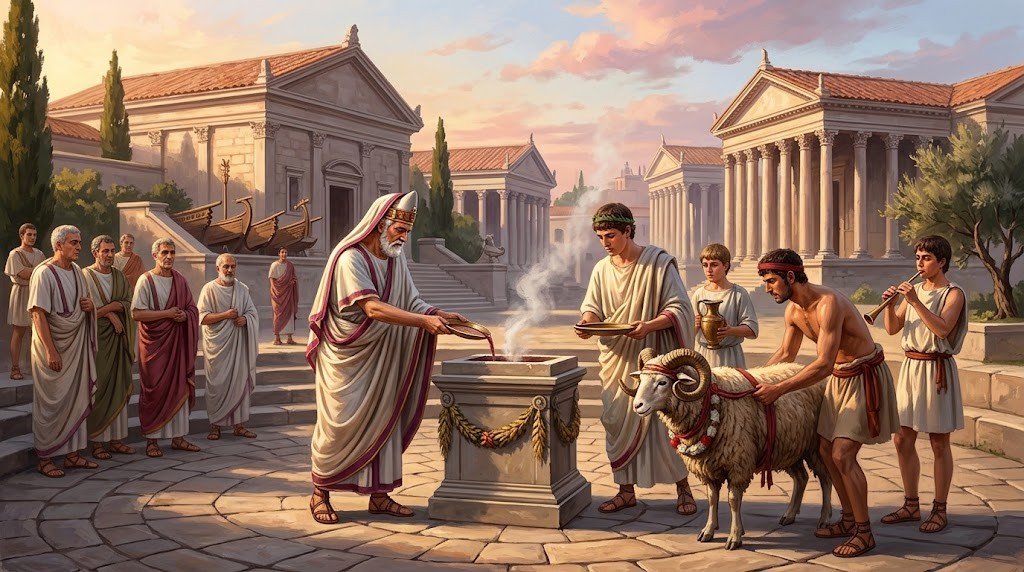
The rite in the Comitium
According to the ancient sources, the rex sacrorum, the priest who inherited the religious duties of the kings, performed a sacrifice in the Comitium and then ran off, almost as if fleeing. Plutarch mentions it in the Roman Questions as a gesture the Romans linked to the end of the monarchy.
The legend of Tarquin
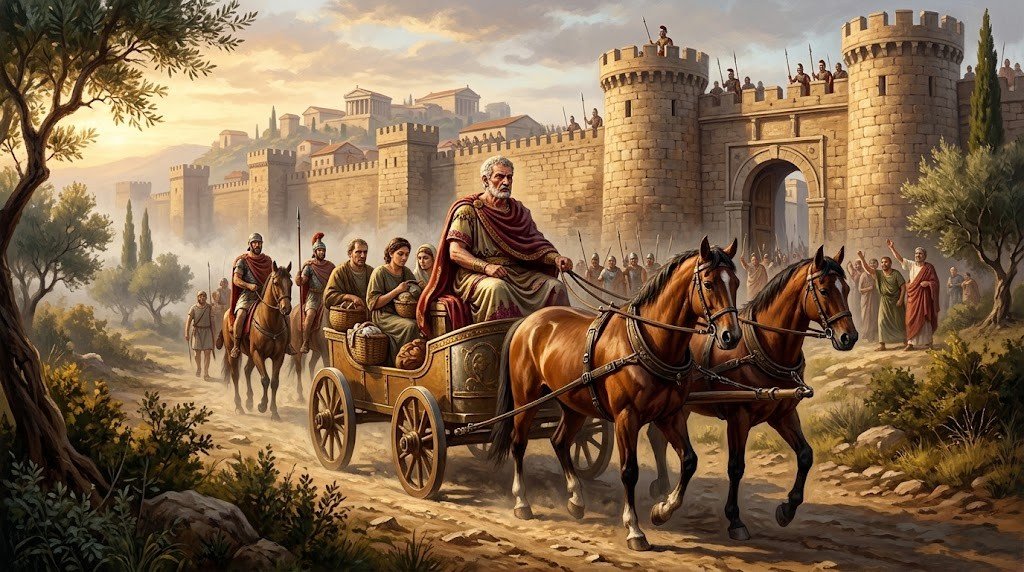
Ovid, in the Fasti, ties the date to the expulsion of Tarquin the Proud after the outrage against Lucretia, the story that opens the Republic in the traditional chronology. It should be read as a foundation myth: modern historians debate how much of it is historical and how much is later reconstruction.
What scholars think
A more cautious modern reading sees the Regifugium as a rite of purification and of the turn of the year, close to the Lupercalia and the Terminalia: the sacred king symbolically drives away disorder before the new cycle. There is no consensus, and anyone who presents it as established fact is oversimplifying.
The Roman Forum today
The Comitium was the oldest political space in the Forum. To see its remains, start from our page on the Roman Forum.
Frequently asked questions
What does Regifugium mean?
“Flight of the king” in Latin: the name points to a ritual run by the rex sacrorum after the sacrifice in the Comitium.
Does the Regifugium really commemorate the expulsion of Tarquin?
That is the ancients’ interpretation. Many modern scholars consider it a later explanation of an older rite.
Was it a popular festival?
There is no sign of it. It was mainly a priestly act tied to the Comitium.
This festival is part of the calendar of ancient Roman festivals and the mos maiorum, where you will find all the other observances.
Sources
- Ovid, Fasti II 685 and following
- Plutarch, Roman Questions 63
- Festus, De verborum significatu
The illustrations are generated with artificial intelligence for evocative purposes.