Published on · updated on
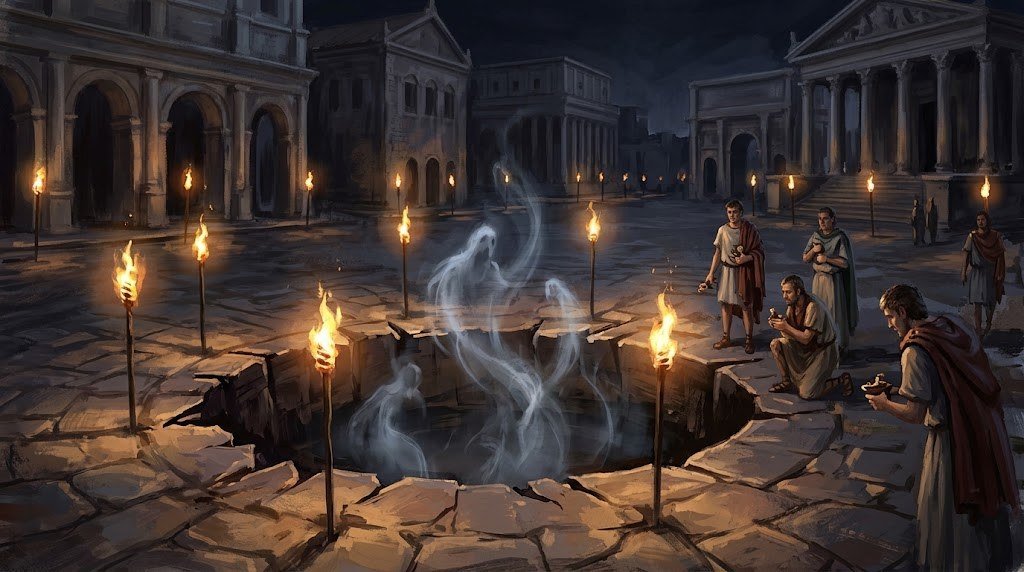
Three times a year, on August 24, October 5 and November 8, the Romans considered the mundus open, a sacred pit seen as the gate between the world of the living and that of the dead. These were religiously inauspicious days, when many public activities were suspended.
- Dates: August 24, October 5, November 8
- Place: the mundus, a ritual pit, with a disputed location
- Bans: battles, military levies, departures, weddings
- Sources: Macrobius, Saturnalia I 16 (from Varro), Festus, Plutarch, Romulus 11
What the mundus was
Plutarch says that Romulus, founding the city, dug a pit and threw into it the first fruits and a clod of earth brought from the settlers’ places of origin. According to Festus, the mundus was consecrated to Ceres and the gods of the Underworld, and when it was “open” it was like a door to the dead.
The bans
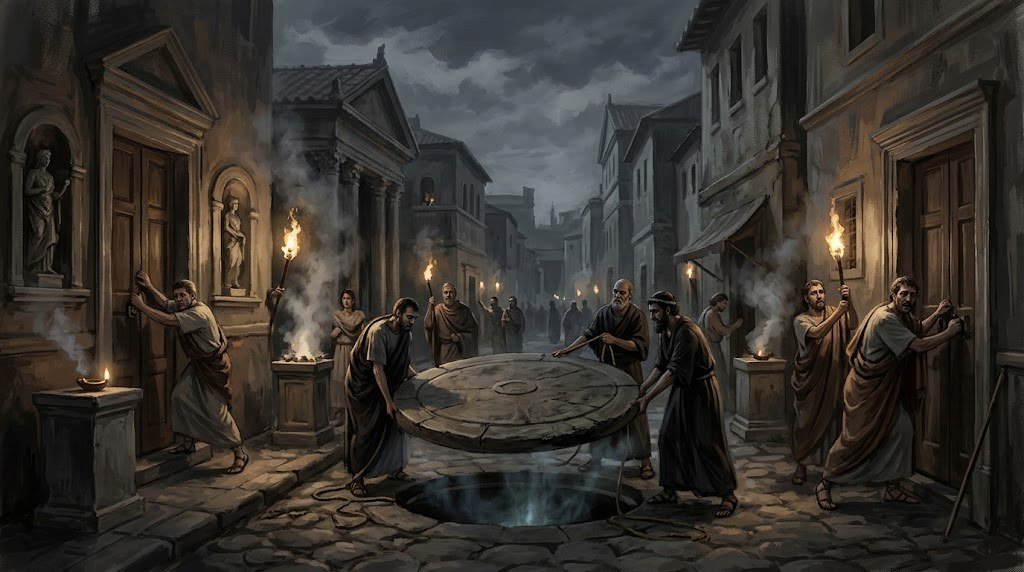
Macrobius, citing Varro, explains that on mundus patet days it was religiously forbidden to fight, enlist soldiers, set sail and marry in order to have children. The reason is the presence of the gods of the Underworld, which makes the days inauspicious.
Where it stood
Ancient writers describe it as a pit on the Palatine or in the Comitium. The exact location is uncertain, and scholars propose different sites. For the places of the Forum, see Roman Forum.
The days of the dead
The mundus patet belongs to the cycle of the dead in the Roman calendar. To compare it with the rites for the departed, read Halloween in Rome and the Lemuria and All Saints and November 2.
Frequently asked questions
When was the mundus open?
On August 24, October 5 and November 8.
What was forbidden?
According to Varro, battles, military levies, departures, and weddings meant to produce children.
Where was the mundus?
The position is uncertain: the sources point to the Palatine or the Comitium.
This festival is part of the calendar of ancient Roman festivals and the mos maiorum, where you will find all the other observances.
Sources
- Macrobius, Saturnalia I 16 (citing Varro)
- Festus, De verborum significatu, entry “Mundus”
- Plutarch, Life of Romulus 11
The illustrations are generated with artificial intelligence for evocative purposes.