Published on · updated on
Some links on this page are affiliate links: if you buy through them, Estate Romana receives a small commission, at no extra cost to you. As an Amazon Associate, Estate Romana earns from qualifying purchases.
Halloween in Rome has no ancient roots, but the city knew the fear of the dead very well: for three nights in May, during the Lemuria, the head of the household got up at midnight, threw black fava beans behind him and told the spirits to leave. Today the October 31 holiday has arrived from outside, and yet Rome offers ossuaries, catacombs and underground passages that no amusement-park haunted house can match. Here you’ll find the real story, the places to see and what’s worth ordering ahead of time.
In 2026, October 31 falls on a Saturday, All Saints’ Day on a Sunday and All Souls’ Day on Monday, November 2. For anyone who wants to experience Halloween in Rome, it’s a favorable alignment: a long weekend for those who have Monday off, but also more people at the most sought-after places. The advice is to book limited-capacity entries now and order costumes by mid-October.
Data checked on October 3, 2026 against the fifth book of Ovid’s Fasti, the official websites of the Capuchin Museum and Crypt and of the Catacombs of San Callisto, and the Ministry of Culture’s website for the Little Museum of the Souls in Purgatory. Where a time or a detail doesn’t match between sources, we say so.
Halloween in Rome at a glance
- What: Halloween in Rome is a recently imported holiday, while ancient Rome honored and drove away the dead with the Lemuria, household rites described by Ovid in the fifth book of the Fasti.
- When: in 2026 Halloween falls on Saturday, October 31, All Saints’ Day on Sunday, November 1 and All Souls’ Day on Monday, November 2, while the ancient Lemuria fell on May 9, 11 and 13.
- Where: the best-suited places are the Capuchin Crypt at Via Vittorio Veneto 27, the Catacombs of San Callisto at Via Appia Antica 110 and the Little Museum of the Souls in Purgatory on Lungotevere Prati 12.
- Getting there: the Capuchin Crypt is a few minutes’ walk from the Barberini stop on metro line A, while the Appia Antica can be reached by bus or with an organized transfer.
- Today: the night of October 31 in Rome is spent among private parties, evening visits at archaeological sites when they’re on the calendar and family events in the theme parks just outside the city.
- Good to know: the Catacombs of San Callisto are closed on Wednesday and require online booking, and on November 2 the Capuchin Crypt closes at 13:30.
What were the Lemuria and what do they have to do with Halloween in Rome?
The Lemuria were three days dedicated to the lemures, the shades of the dead who could come back to disturb the living. They were celebrated on the odd-numbered days of May, the 9th, the 11th and the 13th, and had nothing public or festive about them: the rite took place at home, at night, carried out by the father of the family. Ovid tells it in the fifth book of the Fasti, the poem that follows the Roman religious calendar month by month, and his is the most complete description we have.
At midnight, when the house is quiet, the man gets up barefoot, makes a sign with his fingers by joining the thumb to the other fingers, and washes his hands in spring water. Then he turns and throws black fava beans behind him, repeating nine times the formula “haec ego mitto, his redimo meque meosque fabis”: these I throw, with these beans I redeem myself and mine. The shade, it was believed, gathers the beans and follows him without being seen. He must not turn around.
When the throwing is done, he touches the water again and strikes bronzes of Temesa, that is bronze vessels or sheets whose sound put the spirits to flight. He repeats nine times “Manes exite paterni,” leave, shades of the ancestors. Only then may he look back: the rite is complete. Ovid also adds an etymology: the festival was supposedly first called Remuria, from the ghost of Remus who appeared after his death, and the “r” supposedly softened into “l” over time.
There’s a detail that explains how deeply felt this period was. Also in the Fasti, Ovid recalls the popular saying that May is a bad month to marry: “mense malas Maio nubere vulgus ait.” On the days of the Lemuria the temples stayed closed. In our judgment this is the true emotional ancestor of Halloween in Rome: a domestic unease, not a costume parade.
Why black fava beans? From the Lemuria to the fava beans of the dead
The fava bean was the legume of the dead par excellence. Pliny the Elder, in the 18th book of the Naturalis historia, mentions that it was used in rites in honor of the dead, the sacrifices called parentatio, and reports the belief that the souls of the dead dwelled in fava beans. It’s no surprise that the head of the household at the Lemuria paid his own ransom precisely with black fava beans, the color of night and of the gods of the underworld.
The memory of that link survives in Roman cooking. For November 2 the bakeries make fave dei morti, small almond sweets shaped like a fava bean, pale or colored. There is no documented direct line between the Lemuria and pastry, and anyone who sells it to you as certain is oversimplifying. Still, it’s a coincidence of symbols worth telling children while eating a bag of cookies bought at a neighborhood bakery.
For date lovers there’s another autumn curiosity. The mundus, a ritual pit tied to the gods of the underworld, according to the grammarian Festus was opened three times a year: August 24, October 5 and November 8. Macrobius, citing Varro, writes that when the mundus is open “it is as if the door of the sad and infernal gods were open.” Two of those three openings fall right in the Halloween season.
Does Halloween really come from the Romans?
No, and here a legend that goes around every year needs to be dismantled. You often read that Halloween is the modern version of the Lemuria or of some Roman festival of the dead. The dates don’t add up: the Lemuria were in May. The festival we know comes from the eve of All Saints’ Day in the Anglo-Saxon and Irish world, is enriched with Celtic traditions and comes back to Europe from the United States in the 20th century. Rome gave Halloween the Christian name of the eve, not the rite.
The most solid Roman connection, if anything, concerns All Saints’ Day. On May 13, 609, Pope Boniface IV dedicated the Pantheon to Saint Mary and all the martyrs: the same day as the last night of the Lemuria. Many scholars point it out as a suggestive coincidence, no source proves it as a deliberate choice. The shift of the feast of all saints to November 1 is attributed by the historiographical tradition to Popes Gregory III and Gregory IV, between the eighth and ninth centuries.
The common mistake, in short, is looking for an ancient Halloween in Rome. It’s better to look for something else: the way the city has lived with the dead for 2,000 years, from burials outside the walls to the Christian catacombs, all the way to the Baroque ossuaries. That’s where Halloween in Rome becomes interesting even for people who have never carved a pumpkin.
Where to go for Halloween in Rome: the truly scary places
The first address is the Capuchin Crypt, beneath the church of Santa Maria della Concezione at Via Vittorio Veneto 27. The friars’ bones are arranged in decorations, chandeliers and arches, in a sequence of small rooms that you visit in silence. The exact number of friars varies depending on the source. The official website lists opening every day, from 9:30 to 13:30 and from 14:30 to 18:30.

The Catacombs of San Callisto, at Via Appia Antica 110, were in the third century the official cemetery of the Church of Rome: the custodians’ website speaks of about half a million Christians buried and 16 pontiffs. The visit is guided by the site’s staff, lasts about 40 minutes and starts every half hour. You book online. On Wednesday it’s closed. For an overview of all the open catacombs there’s our overview of the catacombs of Rome and the page on the catacombs.
The strangest place is also the smallest. In the sacristy of the church of Sacro Cuore del Suffragio, on Lungotevere Prati 12, the Little Museum of the Souls in Purgatory holds books, fabrics and objects bearing what tradition identifies as fire imprints left by souls of the dead. The Ministry of Culture lists it among the places of culture. The hours published by the different sources don’t agree: it’s best to phone the parish before going.
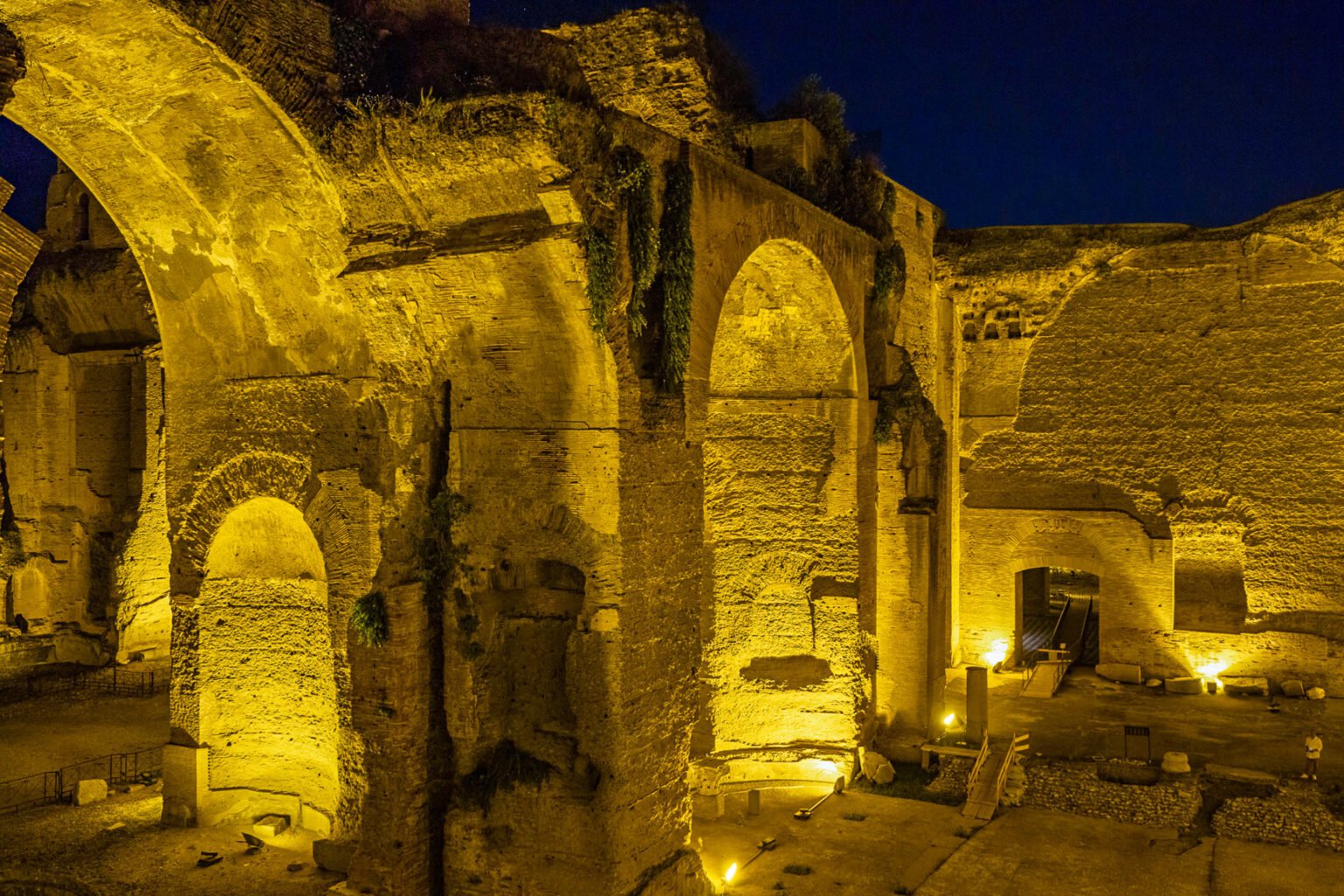
Then there are the ancient underground spaces. The Baths of Caracalla hold service galleries and the Mithraeum, open under terms and schedules that change from season to season: check the operator’s website to see if there are evening openings at the end of October. The same goes for Castel Sant'Angelo, born as Hadrian’s mausoleum and then a papal prison, and for evening walks in the
Roman Forum. Other night ideas are collected in Rome at night.
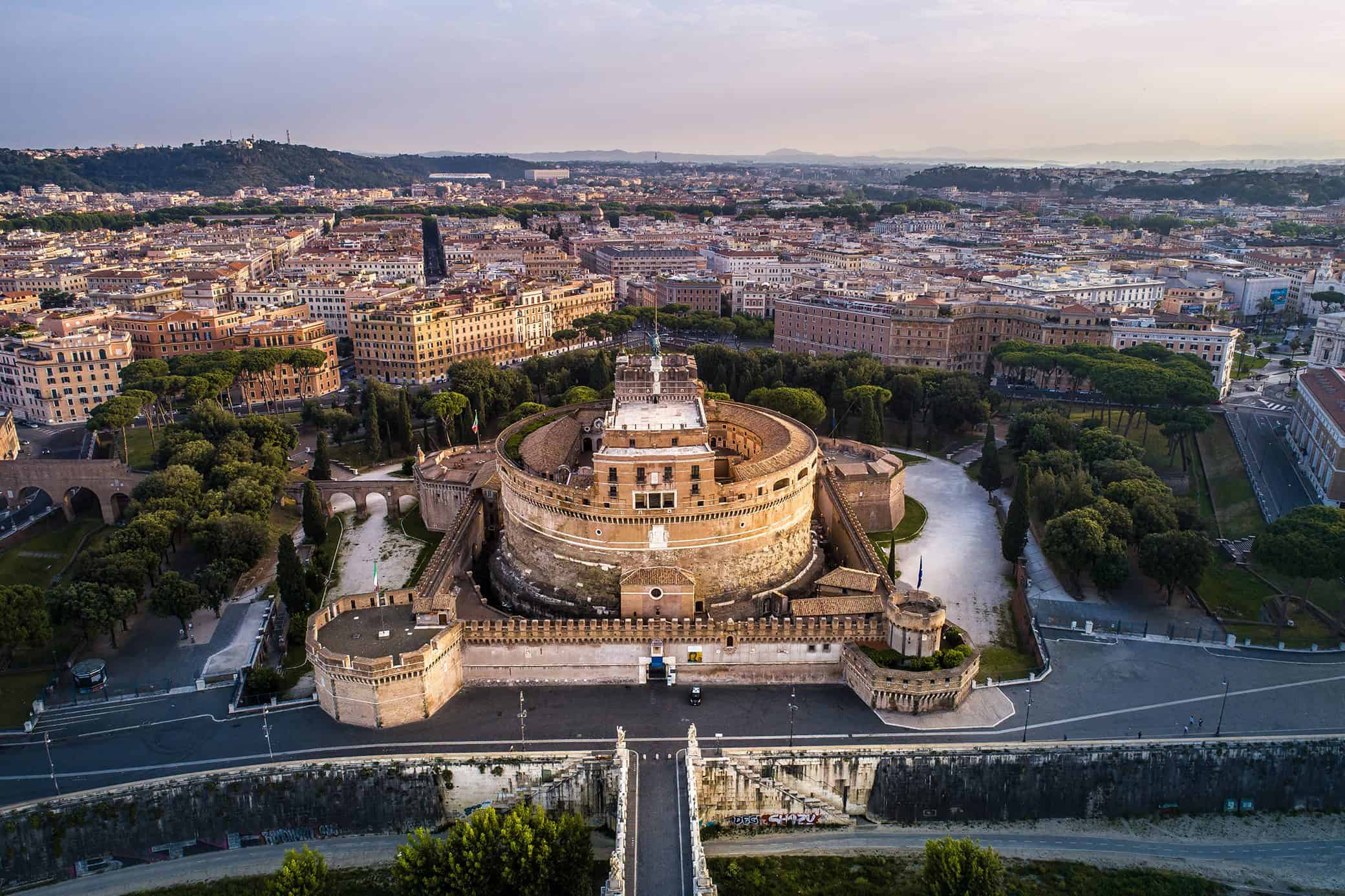
A Roman legend that’s true, in the sense that it has really been told for centuries, concerns Beatrice Cenci, executed in 1599 in the square of Ponte Sant’Angelo: it’s said that her ghost comes back on the bridge with her head in her hands. It’s folklore, not history. But crossing the bridge on Halloween evening, with the castle lit up ahead, remains one of the cheapest and most evocative experiences in the city.
How Halloween in Rome is lived today: families, couples and groups
With small children the Capuchin Crypt can be too intense: you be the judge, knowing your kids. The catacombs work better, because the visit tells a story and doesn’t show displayed remains. For the afternoon of October 31 many theme parks in the province organize themed programs: Zoomarine, in Torvaianica, has offered family Halloween weekends in past years, but for 2026 the dates are awaited, to be confirmed by the organizer. The updated calendar is in all events.
For a couple the best formula is simple: Capuchin Crypt in the late afternoon, dinner in the Prati or Borgo area, a walk on Ponte Sant’Angelo and along the Tiber. If you want a table on Halloween Saturday night, book ahead on TheFork, or pick a place from the Estate Romana restaurant map.
If you’re organizing for a group of friends, an extended family or a company, you have one more problem: the catacomb and crypt time slots have limited places and a large group has to be split. For tailor-made itineraries with tour leaders and, inside the sites, licensed tour guides selected among the industry’s professionals, you can contact Tour Leader Pro, among the best tour operators and boutique agencies in Rome. The advice is to write at least three weeks ahead.
If it rains, almost all of Halloween night in Rome can be saved: the crypt, catacombs and Purgatory museum are indoors. Give up only the walk along the Tiber and move dinner closer. As for the time to set aside, count one hour for the Capuchin Crypt with the museum, half a day for the Appia Antica with the catacombs and the trip, half an hour for the Purgatory museum.
When to order costumes and decorations for Halloween?
The right moment is now, about three weeks before the holiday. In the last week of October, costumes in the most common sizes disappear and delivery times get longer. We can’t promise you exact days: the delivery date estimated at the time of the order is what counts, and it should be read before paying. If there’s less than a week left, choose only items with guaranteed delivery before October 31.
If you’re traveling, you can have the package shipped to your hotel: tell the front desk, put your name and the dates of your stay on the label and check that the property accepts packages for guests. Alternatively there are pickup points and lockers, handy if you change lodging. For makeup and candles the margin is wider, but don’t wait until Friday.
A contrarian observation: the ancient Roman costume, with tunic and laurel, is the best seller for Halloween in Rome and also the least scary. If you want to stay on theme with the Lemuria, a black hooded cloak and a bag of dried fava beans in your pocket work better, to throw behind you at midnight, without turning around. It’s more faithful to Ovid.
What to buy for Halloween in Rome
We chose categories with several alternatives, because in the days before the holiday individual items sell out. Compare sizes and delivery dates before ordering.
To wear
- Adult ancient Roman costume (alternative · more): tunic, toga or legionary armor, the choice most on theme with the city.
- Adult Halloween costumes (alternative · more): the alternative if the sizes of the Roman costume are sold out.
- Black hooded cloak (alternative · more): the lemur disguise, worn over any outfit.
- Black Venetian mask (alternative · more): elegant for a party at home, light to carry in a bag.
- Halloween makeup kit (more): for those who don’t want a full costume but a credible face.
For the home and the table
- LED pumpkin lantern (alternative · more): no flame, so also suitable for homes with children.
- Vintage LED lantern (alternative · more): warm light for the balcony or the table, useful after the party too.
- Black candles: the color of the Lemuria, to light at the table on the evening of October 31.
- Halloween decorations for the home: cobwebs, garlands and silhouettes to set up quickly.
To read
- Books of Roman legends: ghosts, mysteries and stories to tell while walking.
- Ovid’s Fasti: the fifth book contains the Lemuria rite, best in an edition with facing text.
- Mysterious Rome: itineraries among unusual places and dark stories of the city.
- A paper guide to Rome: to find your way around Prati, Via Veneto and the Appia without draining the battery.
For going out in the evening
- City anti-theft backpack (alternative · more): on Halloween evening the nightlife areas are crowded.
- 10,000 mAh power bank (alternative · more): maps, night photos and digital tickets drain the phone.
- Insulated bottle (alternative · more): for a hot herbal tea on late-October evenings.
- Pocket LED flashlight: useful on the poorly lit stretches of the Appia and the lungotevere.
Experiences and tickets
- Rome tours on GetYourGuide: catacombs with transfer, underground sites and evening walks, with often free cancellation.
- Experiences in Rome on Viator: the alternative to compare times and available languages.
- Catacomb tickets on Tiqets: entries and combined tickets for the Appia Antica.
- Rome attractions on Tiqets: for Castel Sant’Angelo and the other sites to pair with it.
- Restaurants on TheFork: to book dinner on October 31 without wandering around for nothing.
Frequently asked questions
Is Halloween in Rome a traditional holiday?
No, Halloween in Rome is an imported holiday, spread mainly since the 1990s. The Roman tradition for the dead is tied to All Saints’ Day and November 2, with visits to the Verano and the fave dei morti. The ancient Lemuria did exist, but they fell in May and have no proven link to Halloween.
On which days were the Lemuria celebrated?
The Lemuria were celebrated on May 9, 11 and 13, on the odd-numbered days, as Roman custom wanted for festivals. They were nighttime, household rites, led by the father of the family, who drove away the shades of the dead by throwing black fava beans behind him. The main source is the fifth book of Ovid’s Fasti.
Is the Capuchin Crypt open on October 31?
The official website lists opening every day, in the morning from 9:30 to 13:30 and in the afternoon from 14:30 to 18:30, with last entry one hour before closing. On November 2 it closes at 13:30. No exceptions are reported for October 31, but it’s best to check the website a few days ahead.
Are the Catacombs of San Callisto suitable for children?
Yes, in most cases, because the visit lasts about 40 minutes and tells the story without displaying human remains. The corridors are narrow and the route is underground: those who suffer from claustrophobia should think about it. Remember that they’re closed on Wednesday and that online booking is required.
What are the fave dei morti?
The fave dei morti are small almond paste sweets that in Rome are made for All Souls’ Day on November 2. The shape recalls the fava bean, a legume that in antiquity was associated with funeral rites, as Pliny the Elder notes. You find them in bakeries and pastry shops between the end of October and the beginning of November.
Where to take a scary walk on Halloween night in Rome?
The simplest and free route goes from Ponte Sant’Angelo, tied to the legend of Beatrice Cenci, along the Tiber to Lungotevere Prati, where the church of Sacro Cuore del Suffragio is. In about an hour you see Castel Sant’Angelo lit up and pass in front of the church of the Purgatory museum.
By when should you order a Halloween costume?
It’s best to order it by mid-October, because in the last week the most requested sizes sell out. There’s no delivery time valid for everyone: the estimated date shown at the time of the order is what counts. If you’re staying at a hotel, first check that the property accepts packages for guests.
Who wrote this and from what sources
The text comes from the editorial team of Tour Leader Pro, the Rome-based organization that designs itineraries, visits and cultural events across Rome and Lazio. The main sources are Ovid’s Fasti, Pliny the Elder, Festus and Macrobius for antiquity, and the official websites of the Capuchin Museum and Crypt, the Catacombs of San Callisto and the Ministry of Culture for the places, consulted on the date given at the top. Tell us what you find changed.
Organizing a Halloween evening in Rome, for yourself or for a group of friends, means fitting together limited-capacity time slots, transfers between the center and the Appia Antica and a dinner booked on one of the busiest evenings of the year: a useful resource for anyone who organizes group trips is Tour Leader Pro. If you want to extend your stay across Rome, the Castelli and the Tuscia, taking advantage of the All Saints’ long weekend, you’ll find that a useful resource for putting together a multi-day itinerary is Italy Planner.