Published on · updated on
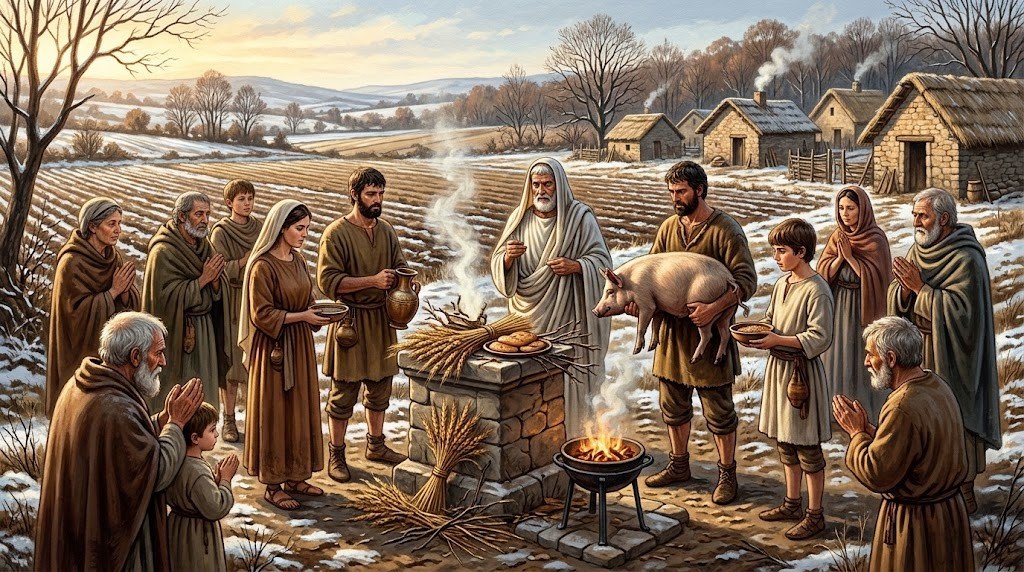
The Paganalia were the festival of the pagi, the rural villages, and took place in January after the sowing. It was a movable, countryside observance in which the village community prayed to Earth and Ceres for the grain just planted.
- Date: January, movable (“conceptive” festival)
- Who celebrated it: the inhabitants of the pagi
- Deities: Tellus and Ceres
- Main source: Ovid, Fasti I 657-704
What Is a Pagus
The pagus was a rural district with a shared sanctuary. Its inhabitants, the pagani, gathered for collective sacrifices. The word “pagan,” used later in a religious sense, also comes from this term.
The January Rite
Ovid places the Paganalia among the feriae sementivae, the sowing festivals, and describes them as a prayer to Tellus and Ceres so that the sown grain would grow well. The gesture reflects the need to accompany the work of the fields with ritual.
A Festival with Social Value
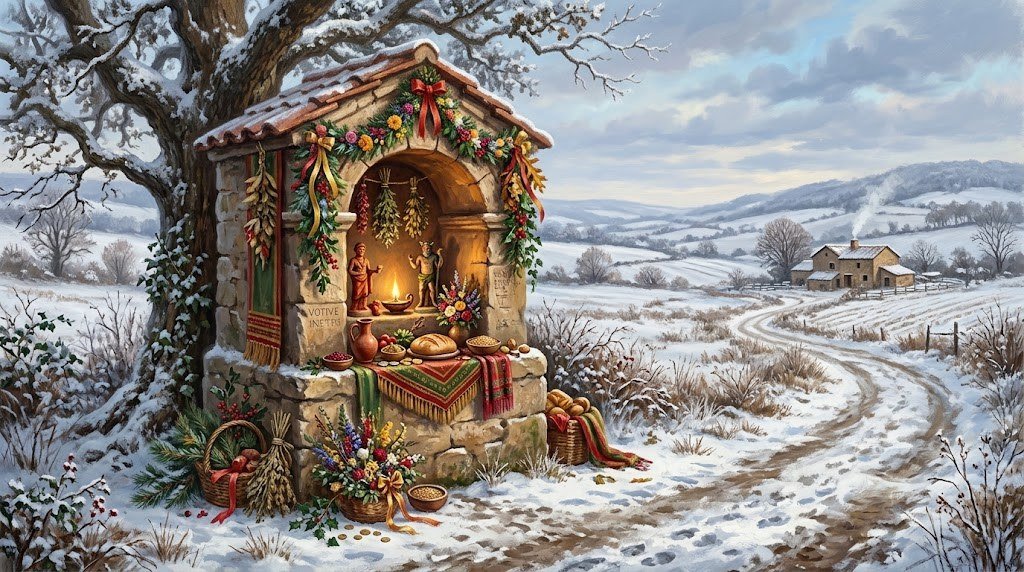
Scholars stress that the pagi were also units of contribution and social cohesion: the festival held families and farmers together. Information on the actual rite is limited, though, and on the details the sources stop after a few lines.
The Agricultural Calendar
The Paganalia open the January cycle: shortly after come the Compitalia, the festival of the crossroads, and in February the Terminalia. Also read Terminalia.
Frequently Asked Questions
What were the Paganalia?
A movable January festival celebrated by rural villages after the sowing.
Who were they dedicated to?
To Tellus and Ceres, deities of the earth and the grain.
What is the link with the word “pagan”?
“Pagan” comes from pagus, the rural village: the pagani were the people of the countryside.
This festival is part of the calendar of ancient Roman festivals and the mos maiorum, where you can find all the other observances.
Sources
- Ovid, Fasti I 657-704
- Varro, De lingua latina VI 24
- Dionysius of Halicarnassus, Roman Antiquities IV 15
The illustrations are AI-generated for evocative purposes.