Published on · updated on
On August 27 the Roman calendar marked the Volturnalia, the festival of the god Volturnus. It is an instructive case: an observance that is certain in the calendar, yet one the ancients themselves knew little about.
- Date: August 27
- Deity: Volturnus, god of a river
- Sources: Varro, De lingua latina VI 21. Festus
- State of knowledge: rite not described, identity of the god debated
What the Sources Say
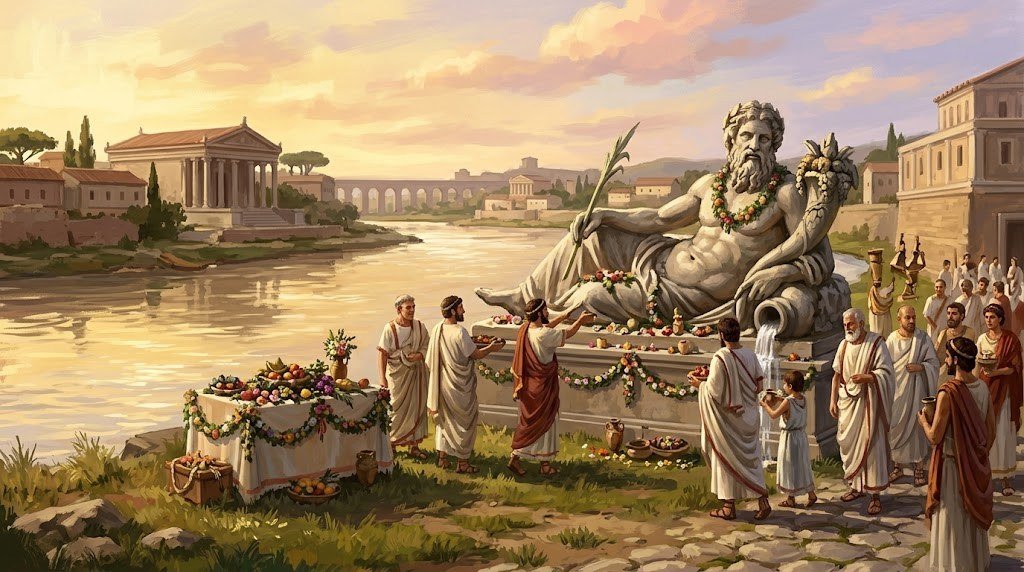
Varro lists the Volturnalia among the festivals of the calendar and connects them to Volturnus, the name of a god. Festus confirms the observance but does not describe the rite. We do know there was a dedicated priest, the flamen Volturnalis, who made a sacrifice to Volturnus on that day. We don’t know precisely how the rest unfolded.
The God of the Tiber?
One line of scholarship has proposed that Volturnus was a river god, perhaps an old name for the Tiber. The theory is plausible, but it stays a theory: the ancient texts don’t let us say more.
Why We Cover It
An honest article about a poorly documented festival helps separate what we know from what gets repeated out of habit. The Roman calendar has dozens of festivals of which we know only the name and the date.
The Tiber
For the Tiber and its cults, see the Tiber Island page.
Frequently Asked Questions
Who was Volturnus?
A Roman god tied to a river, probably the Tiber according to some scholars.
How were the Volturnalia celebrated?
We don’t know: the sources record the festival but not the rite.
When is it?
August 27.
This festival is part of the calendar of ancient Roman festivals and the mos maiorum, where you can find all the other observances.
Sources
- Varro, De lingua latina VI 21
- Festus, De verborum significatu
The illustrations are AI-generated for evocative purposes.