Published on · updated on
On August 13, Romans remembered Vertumnus, the god who changes shape along with the seasons. In the Forum, on the Vicus Tuscus, a statue of him was a familiar presence to merchants and passersby, and Propertius dedicated one of his most curious elegies to it.
- Date: August 13 (Ides of August), according to Roman calendars. The name “Vertumnalia” is the conventional form used by scholars
- Deity: Vertumnus, god of seasons and fruit
- Origin: probably Etruscan, according to the ancients
- Literary source: Propertius, Elegies IV 2
A God Who Changes Shape
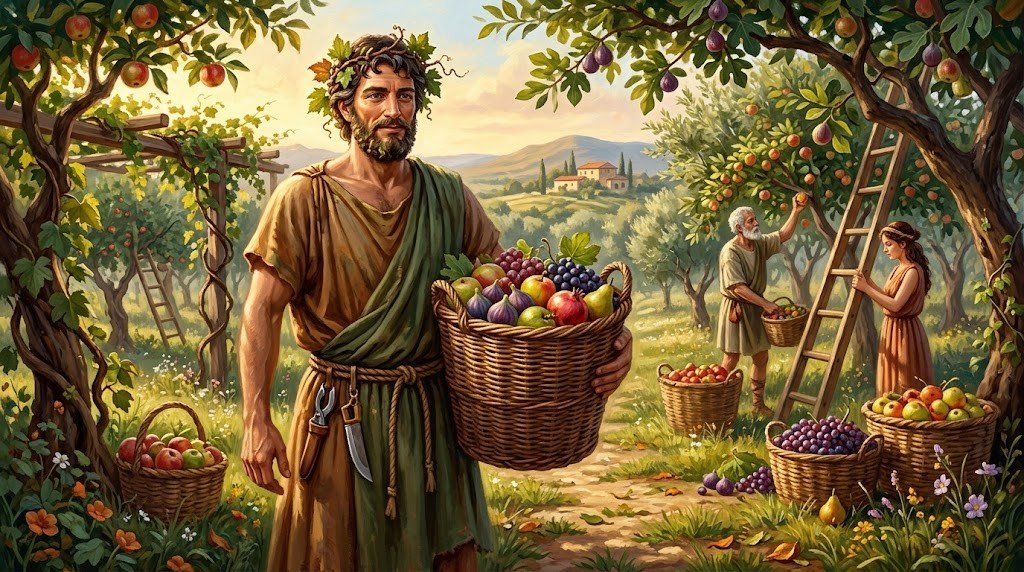
The name recalls vertere, “to turn, to change.” Vertumnus was the god who presided over the changes of the year and the ripening of fruit. Ovid gives him a long story in the Metamorphoses, in which he transforms himself to win the nymph Pomona.
The Statue on the Vicus Tuscus
Propertius imagines the statue of Vertumnus, in the Etruscan quarter of Rome, introducing itself: he was an Etruscan god from Volsinii, it says, but by now a Roman one. This is a clue that the cult was tied to the Etruscans of the Vicus Tuscus, a few steps from the Forum. The cult would have reached Rome around 300 BC, and a temple of Vertumnus on the Aventine is attested by 264 BC, a year linked to the fall of Volsinii.
How It Was Celebrated
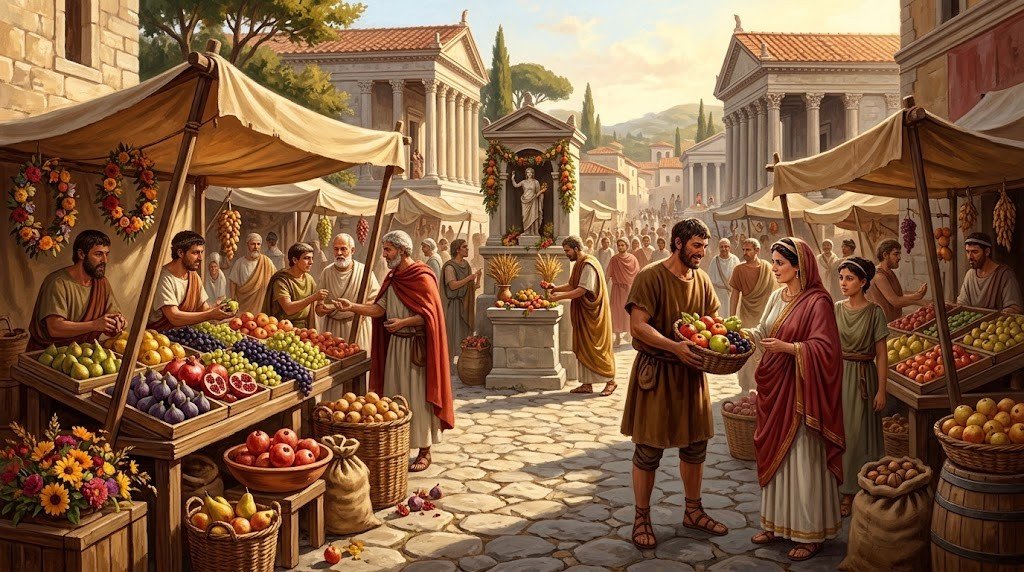
The sources on the rite are scarce. We know that first fruits and flowers were offered, but we have no detailed descriptions. Treat anyone who presents the festival with precise details with caution.
The Forum
The Vicus Tuscus was a commercial street that connected the Forum to the Velabrum. For context, see our page on the Roman Forum.
Frequently Asked Questions
Who was Vertumnus?
A Roman god, probably of Etruscan origin, protector of the seasons, fruit and change.
When were the Vertumnalia celebrated?
On August 13, according to ancient calendars.
What do we know about the rite?
Little: the sources speak of offerings of fruit and flowers.
This festival is part of the calendar of ancient Roman festivals and the mos maiorum, where you can find all the other observances.
Sources
- Propertius, Elegies IV 2
- Ovid, Metamorphoses XIV 622-697
- Varro, De lingua latina V 46
The illustrations are generated with artificial intelligence for evocative purposes.