Alcazar
In short. Alcazar is at Via Cardinale Merry del Val 14, in the heart of Trastevere, a few steps from Piazza San Cosimato and the basilica of Santa Maria in Trastevere.
Alcazar is at Via Cardinale Merry del Val 14, in the heart of Trastevere, a few steps from Piazza San Cosimato and the basilica of Santa Maria in Trastevere. The name today means two things at once: a building that for 28 years was one of the best-loved movie theaters in Rome, and the venue that was born from that same building after the cinema closed, with live music, a restaurant on the upper floor and a weekend market. Understanding Alcazar therefore means retracing two stories that intertwine at the same address: that of a theater that shaped the way of going to the movies in Rome between the 1980s and the 2010s, and that of a music venue that inherited its space trying to keep its soul alive.
Trastevere, from the point of view of the visitor who arrives in the evening for a concert or dinner, looks like a maze of cobbled alleys dotted with ivy descending from balconies, wrought-iron signs and windows with half-closed shutters. It is a neighborhood that arose across the Tiber from the ancient center, from which its very name derives, and that over the centuries has kept a working-class character even as restaurants, galleries and venues frequented above all by visitors multiplied around it. In this context the Alcazar building is a particular case: not an ancient monument or a Baroque church, but a piece of more recent urban history, tied to the way Romans lived their free time in the second half of the 20th century, when neighborhood cinemas were meeting places as much as bars and squares.
Where Alcazar is and how to get there
Via Cardinale Merry del Val is a narrow side street that links Viale di Trastevere to Piazza San Cosimato area, one of the beating hearts of the rione together with Piazza Santa Maria in Trastevere and Piazza Trilussa. Those arriving on foot from the historic center generally cross Ponte Sisto or Ponte Garibaldi, follow the Tiber and go into the network of alleys that characterizes Trastevere, a neighborhood where the streets are narrow, the cobbles are almost everywhere and the venue signs follow one another without a break. By tram, the most convenient stop is that of line 8 on Viale di Trastevere, which connects the neighborhood to Largo Argentina and the center. Getting off at Trastevere/Mastai or Viale Trastevere/Induno puts you a few minutes' walk from the address. By bus several lines pass along Viale di Trastevere and the Lungotevere, while Trastevere railway station, on the line that also serves Fiumicino airport, is further south and requires a longer walk or a short bus ride. Arriving by car is not advisable: much of Trastevere is a limited traffic zone in the evening hours and free parking is almost nonexistent. It's better to leave the car in one of the paid lots on the Lungotevere or on Viale di Trastevere and continue on foot. By bicycle or shared scooter the area is easily reached from the center, keeping in mind that the last stretch, among the alleys, has to be covered at walking pace because of pedestrians and outdoor tables.
If you are coming from outside Rome, maybe from a hotel in the Termini area or near the Forums, you can count on the trip to Trastevere generally taking between 20 and 30 minutes by public transport, counting the change between metro and tram or bus. A convenient alternative is to get off at the Piramide metro stop, on line B, and from there continue on foot across Ponte Sublicio, a route that lets you enter the neighborhood from the southern side, closer to Via Cardinale Merry del Val than the classic entrance from Piazza Santa Maria. For those already staying in Trastevere, the Alcazar address is almost always reachable on foot in a few minutes from any point of the neighborhood, which overall doesn't exceed a kilometer in extent from one end to the other.
What Alcazar is today: from cinema to live music space
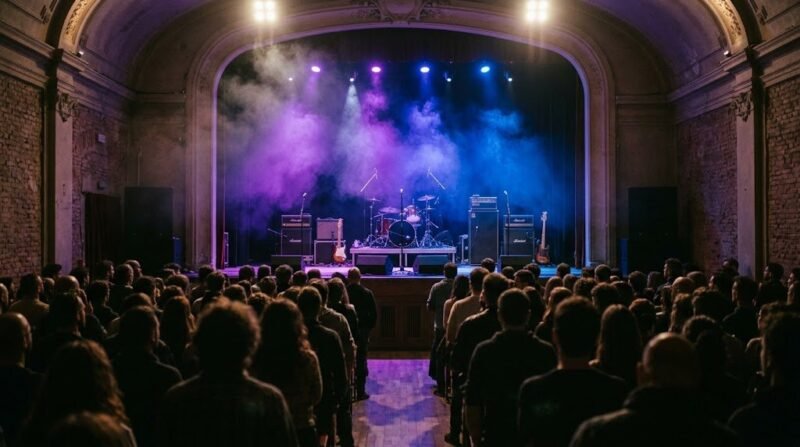
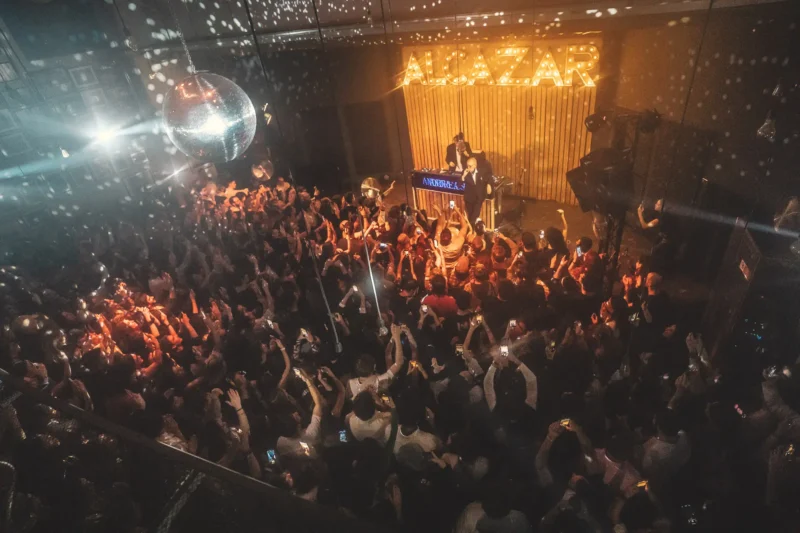
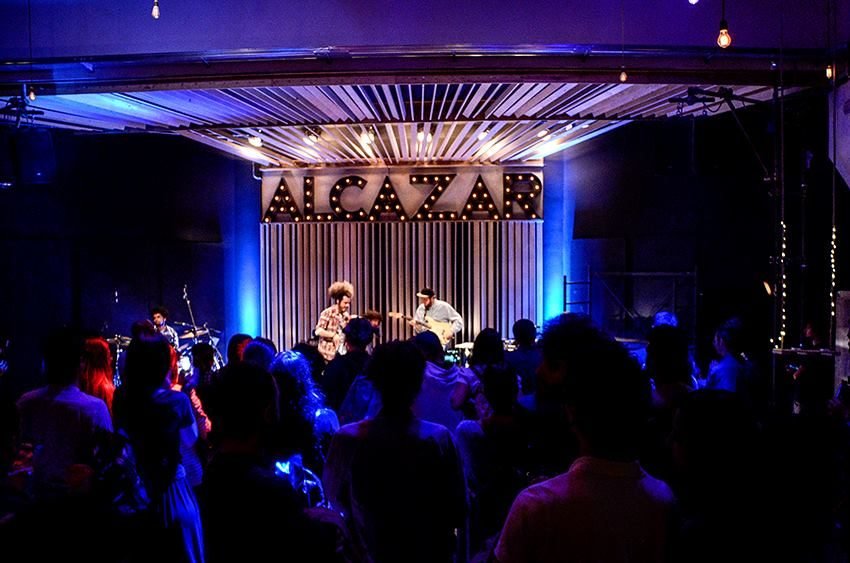
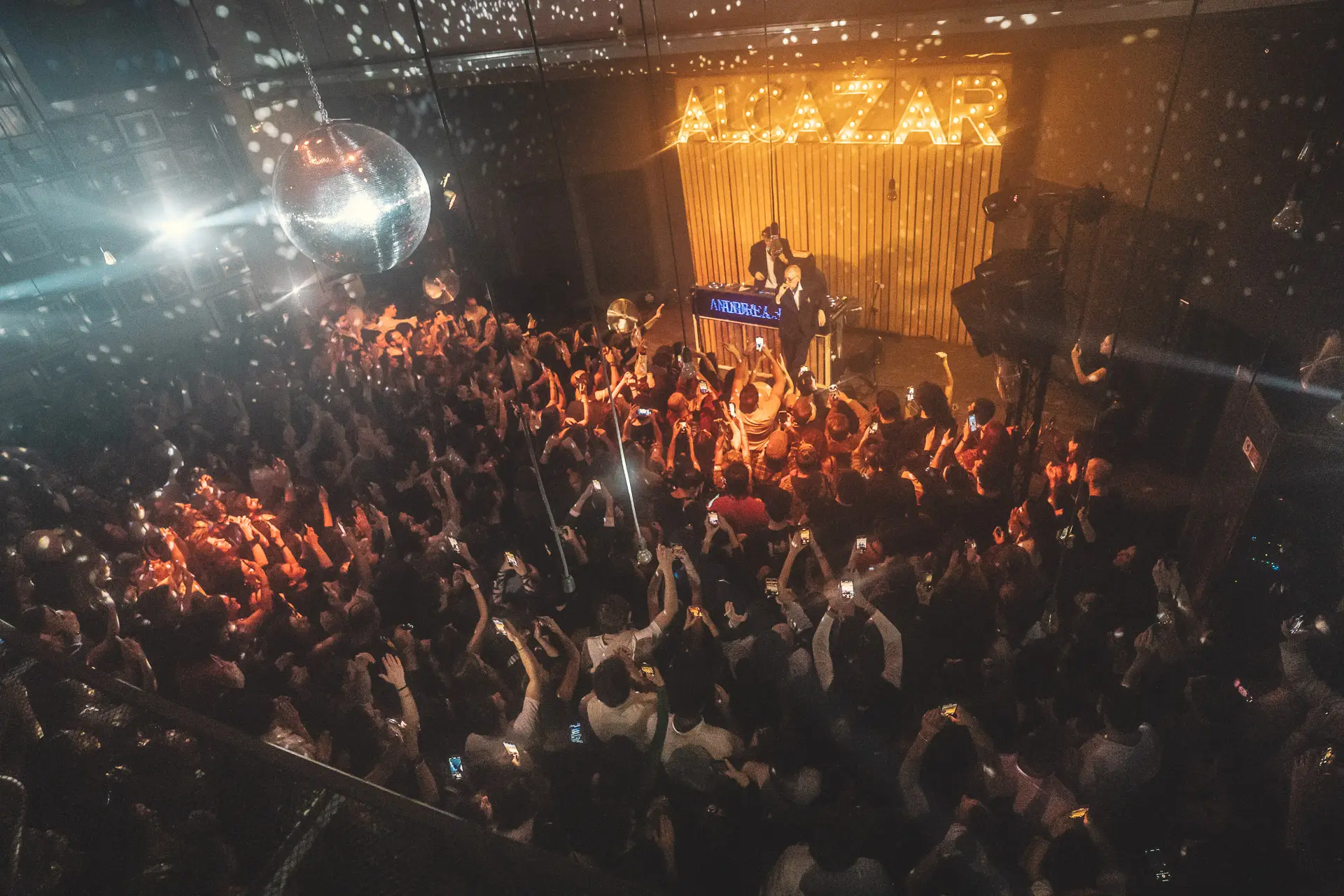
After closing as a movie theater, the building on Via Cardinale Merry del Val reopened under the name Alcazar Live, a venue that combines concerts, DJ sets, stand-up comedy and a weekend market. The stage, carved out of the space where films were once screened, hosts bands and projects that are often international, with a program that favors soul, funk, r'n'b, jazz and contemporary electronic sounds. Over time artists of the international black music scene have played on the stage together with many names of Italian independent music. On the upper floor, with a view of the stage below, is Balcony, a restaurant that offers Roman cooking with a few contemporary accents, accompanied by a cocktail and wine list, designed for those who want to dine before going down to the concert or stay upstairs and enjoy the show from above. On weekends, by day, the same spaces change skin and host a market devoted to vintage, crafts and small independent brands, with DJ sets and record stalls that draw a different audience from the evening one. The formula, in short, tries to hold together several audiences and several moments of the day, from Saturday brunch to Sunday evening concert, inside a building that for the neighborhood remains first of all tied to the memory of the cinema.
The venue's capacity, by the very nature of the building inherited from a single-screen movie theater, remains small compared with the big Roman clubs carved out of former industrial sheds or larger multipurpose structures. This translates into a more up-close experience during concerts, with the audience often a few meters from the stage, a trait that many regulars cite as one of the reasons the venue keeps attracting both those who love live music and those who prefer a less dispersive setting than the big summer arenas that dot Rome in the warm months.
The history of the Alcazar cinema: the opening and the 1980s
The Alcazar cinema opened in 1988 in Trastevere, at a time when the neighborhood had already become one of the reference points of Roman nightlife but did not yet have a reference movie theater comparable to those of the center. The film chosen for the inauguration was Dead Poets Society, with Robin Williams, which came out in Italian theaters in just those years: a choice that would later become almost a symbol, so much so that it was offered again as the opening film also when the venue reopened many years later. The Alcazar was right from the start an out-of-the-ordinary theater for the time: red velvet seats matching the curtain, screenings in the original language for part of the program, electronic ticketing when most Roman theaters still sold paper tickets, and above all no intermission between the two halves of the screening, a choice that broke with a very rooted habit in the Italian theaters of the time. Running the cinema for its entire first life was Georgette Ranucci, who made it a reference point for auteur cinema and Roman cinephilia, with a program attentive to quality more than to the guaranteed receipts of big commercial titles.
The years between the end of the 1980s and the early 2000s were for Rome a period in which the neighborhood cinema still had a central role in the city's social life: before the widespread diffusion of multiplexes in the suburbs and shopping centers, going to the movies often meant going to a theater near home, run by a family or a small operator, with an audience of subscribers and regulars who met night after night. In this context the Alcazar stood out for a program that paired big titles with films by directors less known to the general public, helping to spread in Trastevere an audience of cinephiles who elsewhere in Rome found a reference in theaters such as the art-house cinemas of the historic center and some neighboring districts. The theater on Via Cardinale Merry del Val thus became, over time, a meeting point for those looking for a program different from that of the big first-run cinemas concentrated mostly along the city's major arteries.
The audience and the program of the Alcazar cinema
The theater on Via Cardinale Merry del Val bet on a program that alternated the most awaited releases of international cinema with less advertised titles able to catch a loyal audience, the kind that in Trastevere had gotten used to trusting the theater's choices more than the sheer publicity blitz of the big distributors. The original-language screenings, reserved for part of the program, also made it possible to reach the community of foreign residents and university students who over the years have always had a significant weight in the life of Trastevere, a neighborhood historically linked also to the presence of American university campuses and language schools for foreigners. The combination of a regular Roman audience and a share of international audience helped make the Alcazar a theater with a recognizable identity, different both from the big first-run cinemas of the center and from the peripheral theaters oriented toward a more commercial program.
The format of the theater, with a single screen, inevitably imposed sharper programming choices than a multiplex, where several titles can coexist at the same time on different screens. This meant that the theater had to bet every week on a limited number of films, a mechanism that on one hand made the management's choices weigh heavily, on the other made the theater more vulnerable in periods when the title on the program did not find favor with the public. It is one of the structural reasons, together with the high fixed costs of the historic center, that made the economic sustainability of a theater like the Alcazar progressively harder over the course of the 2000s.
A curiosity about Alcazar
A curiosity linking the building's two lives concerns the very film chosen to open the theater: Dead Poets Society, screened in 1988 for the cinema's debut, was chosen again as the first film when the Alcazar reopened its doors after the closure interlude, almost a way of declaring a symbolic continuity between the old cinema and the new project. Another curiosity concerns the restoration work carried out for the reopening: removing the coverings and decorations added in the 1980s brought back to light original marbles and stuccoes from the early 1900s, a sign that the building had a history before that of a movie theater, going back to a time when interior architecture cared for details with materials that are hard to find today in the same neighborhood.
A less-told detail concerns the name of the theater itself: Alcazar is a word of Arabic origin that entered the Spanish and Portuguese vocabulary to indicate a fortress or a fortified palace, and in several European cities it was used as a name for period cinemas and theaters, a way of evoking an idea of grandeur and spectacle that accompanied the birth of the first movie theaters of the 20th century. The name chosen for the Trastevere theater therefore fits into a broader tradition of evocative names used for European entertainment venues of the last century, with no documented direct link to a building or a specific story of that name elsewhere.
Another curious fact concerns the very length of the cinema activity: 28 years of uninterrupted programming is a remarkable milestone for an independent single-screen theater in the historic center of a large city, a period that went through profound changes in the way films are produced, distributed and watched, from the shift from film to digital to the arrival of the first streaming services. Few Roman theaters of the same type managed to keep a continuous program for such a long span of time, an element that partly explains why the 2016 closure had a greater resonance than other less publicized closures that took place in the same years.
The closure of January 2016 and the rebirth as a venue
The Alcazar cinema closed on January 31, 2016, after 28 years of uninterrupted programming, with the last screening devoted to the film L'ultima scommessa. The reasons for the closure were explained by Georgette Ranucci herself in very concrete terms: an independent single-screen theater, in a historic-center neighborhood, bore costs comparable to those of a multiplex, with a rent of 50,000 euros a year to which were added staff, utilities, taxes and the film distribution rights. In a period marked by a wave of movie theater closures in Rome, more than 40 within about eight years according to the news reports of the time, the Alcazar was one of the most discussed cases, also because it came after the neighborhood had already lost other historic theaters, leaving Trastevere with barely two independent cinemas still active. The closure drew reactions in the world of art-house cinema and independent distribution, with statements by trade associations denouncing the lack of institutional support for the single-screen theaters of the historic center. The building stayed closed for about a year, until the entrepreneur Luca Carinci, then 33 years old, took over the space after selling a venue of his own in the neighborhood and launched a recovery project without public funding, bringing back to light the original stuccoes and marbles covered by the 1980s coverings. The new Alcazar reopened between the end of 2016 and the beginning of 2017 as a hybrid space, designed from the outset to host both screenings and concerts, before gradually evolving toward the present formula, centered above all on live music.
The period between 2008 and the mid-2010s was marked, across Italy and not only in Rome, by a profound transformation in the way cinema is consumed: the spread of cable and satellite television, then of streaming platforms, together with the economic crisis that hit cultural consumption, progressively reduced the receipts of independent theaters in favor of the big multiplex chains, able to spread fixed costs over a larger number of screens and viewers. The single-screen theaters of the Roman historic center, with rents calculated on the real estate values of tourist areas like Trastevere, found themselves bearing very high fixed costs against ever more uncertain receipts, a combination that led to the closure, besides the Alcazar, of many other historic theaters of the capital in the same span of years. The Alcazar story was told by the city press as emblematic of this phase, precisely because of the theater's fame and the bond it had built with the neighborhood in almost three decades of activity.
The building: from movie theater to the 2016 restoration
The building that today houses Alcazar Live keeps in its plan the imprint of the original movie theater: an elongated space, with the high ceiling needed to guarantee good projection and adequate acoustics even in the rows farthest from the screen, features that today have proved just as functional for hosting a stage and a standing audience during concerts. The restoration work begun with the reopening of 2016 and 2017 focused above all on recovering the original finishes: by removing the false ceilings, the wood paneling and the coverings added in the 1980s to adapt the space to the aesthetic standards of the time, the technicians in charge of the restoration brought back to light stuccoes, decorations and marble surfaces dating to the first decades of the 20th century, evidence of a use prior to that of a movie theater proper.
This type of intervention, which favors recovering historic finishes over a renovation that wipes out the building's memory, is not unique to Rome: many former Italian cinemas, when they are not demolished or turned into supermarkets and warehouses, follow a similar path, becoming theaters, concert halls or multipurpose spaces that keep their origin visible. In the case of the Alcazar, the choice to preserve the decorative elements brought to light by the restoration allowed the venue to present itself to the public not as an anonymous space adapted to live music, but as an environment that still bears the marks of its history, legible as much in the architectural details as in the sign that still today recalls the old cinema.
Something nobody tells you about Alcazar
What is rarely told is how much the closure of the Alcazar was not an isolated case, but the symptom of a structural crisis that in the years between 2008 and 2016 emptied Rome of dozens of neighborhood movie theaters, many of them later turned into supermarkets, gyms or parking lots, with the building keeping no trace of its original function. In this sense the fate of the Alcazar is, paradoxically, one of the luckiest: the building has not been distorted but converted while keeping a cultural and entertainment function, with the stage in place of the screen and the hall that continues to fill with people in the evening, even if to listen to music and not to watch a film. Another little-known aspect concerns the position of the building within the urban fabric of Trastevere: Via Cardinale Merry del Val is not one of the streets most crowded with venues in the area, and those who don't know the neighborhood may find themselves looking for it among alleys very similar to one another with no immediate landmark, while those who live in Trastevere consider it a secondary side street compared with the main flows of Piazza Trilussa or Piazza Santa Maria.
There is then an aspect that concerns more closely those who frequent the venue today: many occasional visitors arrive at Alcazar Live without knowing it's a former cinema, drawn only by the name of an artist on the bill or by an event shared on social media, and discover the history of the hall only once inside, perhaps noticing the elongated shape of the main room or the traces of the old function in the layout of the spaces. For those who instead went to the theater when it was still a cinema, going back today for a concert often brings with it a component of nostalgia, the feeling of finding a familiar place turned into something different but not entirely foreign, with the same plan and the same walls framing a completely new experience.
The advice I give you for visiting Alcazar
If the goal is a concert or a DJ set night, it's best to arrive with some time to spare before the doors open, because the space is not huge and the best spots for seeing the stage run out quickly when the venue fills up. If you instead want to try the complete experience, you can book a table at Balcony, the restaurant on the upper floor, so you can dine with a view of the stage and then go down when the performance begins, avoiding the line at the entrance reserved for the concert alone. For those who love the weekend market, the advice is to arrive in the morning, when the stalls are still well stocked and before the summer afternoon heat makes the indoor rooms more crowded and less comfortable for browsing at leisure. Before leaving the house it's always worth checking the hours and the evening's program on the venue's official channels, because Alcazar's formula changes often between concerts, stand-up comedy and themed nights, and hours and tickets valid in a given period may no longer be so in another. Finally, if you are moving around Trastevere for the first time, you'll do well to note the street name on a map downloaded in advance: in the network of alleys of the neighborhood the data connection is not always reliable and the street name signs, in some stretches, are few or not very visible in the evening.
Another practical suggestion concerns getting home at the end of the evening: Trastevere at night is very lively, but public transport thins out its runs after midnight, so those not staying a few steps away will do well to find out in advance about the night buses that pass along Viale di Trastevere or the Lungotevere, or to consider a taxi or a private ride service for the return, especially on weekends when the neighborhood stays full of people until late at night and finding a free vehicle may take longer than expected.
A last piece of advice concerns clothing and the conditions of the hall: since it is a space carved out of a former cinema, with high ceilings and hard surfaces among marbles and original floors, the acoustics during concerts can be rather powerful, so those sensitive to high volumes will do well to consider using earplugs, a precaution by now common in many venues hosting loud live music. In the summer months, moreover, the absence of real outdoor spaces means that the whole evening takes place indoors, an element to consider for those who prefer the venues with a garden or terrace typical of other areas of Rome in the warm season.
Balcony, the restaurant and the weekend formula
The Balcony restaurant occupies, as the name suggests, the upper part of the building, once probably reserved for offices or storage of the movie theater and today turned into a room with a view of the stage below. The food offering moves in the groove of Roman cooking, with some contemporary touches in the presentation of the dishes and in the cocktail list, designed to go with either a traditional dinner or an aperitivo before the concert. On weekends, between 10:00 and 20:00, the same rooms instead host the Saturday and Sunday market, with stalls of vintage, handcrafted objects, vinyl records and small independent brands, accompanied by DJ sets and entertainment moments designed for an audience more family-oriented than that of the music nights. This double life, daytime and evening, is probably the feature that most distinguishes Alcazar from many other Trastevere venues focused only on the evening offering, and reflects the attempt to turn a space born for a single purpose, film projection, into a container able to host several activities on the same day.
The choice to focus on a cuisine of Roman imprint, albeit with some contemporary liberties, reflects a trend widespread among Trastevere venues that in recent years have tried to stand out not so much by chasing international cuisines as by revisiting the dishes of the Capitoline tradition, from carbonara to cacio e pepe, with selected ingredients and more careful presentations than the historic trattorias of the neighborhood. This positioning allows Alcazar to catch both the tourist audience, often interested in a typically Roman food experience, and the local one, more attentive to the quality of the raw materials and less tied to the search for an exotic or unusual dish.
Another well-known fact, yet rarely cited
Those who have frequented Trastevere for a long time know that in the 1980s and 1990s the neighborhood hosted several movie theaters that have since disappeared or been transformed, and that the Alcazar was considered, together with a few others, one of the reference theaters for art-house cinema in the capital, able to program films that the big chains ignored. What is cited less often is that the very technical innovation introduced by the Alcazar, such as electronic ticketing and the absence of an intermission, anticipated practices that would become standard in Italian theaters only many years later, when multiplexes began to spread nationwide. In a certain sense, the Trastevere theater was a laboratory of modernization of the movie-going experience in a context, that of family-run neighborhood theaters, that often stayed anchored to more traditional habits. It is a detail that helps explain why the 2016 closure was perceived by many in the trade not as the end of a simple peripheral theater, but as the loss of a place that had contributed, in its own way, to changing the habits of those who went to the movies in Rome.
One last little-cited element concerns the relationship between the Alcazar and the other historic theaters of Trastevere: in the same neighborhood other reference cinemas for Roman cinephilia operated over time, and the cultural fabric of the rione, among independent bookstores, cultural associations and small theaters, has always had a close link with the world of auteur cinema. The closure of the Alcazar, together with that of other theaters in the same years, redrew this cultural map, leaving Trastevere with a much smaller number of independent cinemas than the neighborhood had up to the 1990s.
It should be added that the link between Trastevere and the world of cinema is not exhausted in the screening rooms: for decades the neighborhood has been a natural set for Italian and international productions, thanks to its closeness to the Cinecittà studios and the colorful atmosphere of its alleys, often chosen as a backdrop for scenes set in a working-class and authentic Rome. In this sense the Alcazar, though a place of screening and not of production, fit into an urban context where cinema, in all its forms, has always had a cultural weight above average compared with other neighborhoods of the city, a factor that helps explain why the loss of the theater was perceived as a significant event well beyond the circle of regular visitors.
Even today, in its form as a music venue, Alcazar continues in a certain sense this cultural vocation of the neighborhood: though no longer a screening room, it remains a space where the artistic programming, whether live music or stand-up comedy, is curated with an attention that goes beyond the simple running of a nightclub, in ideal continuity with the approach that had characterized the cinema management of the hall for almost 30 years.
The right photo to take at Alcazar
The most recognizable image remains the venue's historic sign, still legible above the entrance on Via Cardinale Merry del Val, which explicitly recalls the identity of the old cinema and which many photograph precisely for the contrast between the historic lettering and the current function of the space. Inside, during a concert, the most effective shot is taken from the floor of the Balcony restaurant, looking down at the lit stage: the framing renders well the architectural particularity of the former movie theater, with the high ceiling and the spaces that once held the rows of seats now occupied by the standing audience in front of the stage. Those who visit the venue by day, during the weekend market, can instead look for glimpses of the decorative details brought to light by the restoration work, the marbles and stuccoes of the early 1900s that emerge among the vendors' stalls, a detail that tells the building's historical layering better than any caption.
The exterior also deserves a shot: the facade on Via Cardinale Merry del Val, with its proportions typical of an early 20th-century entertainment building, deliberately contrasts with the smaller-scale architecture of the surrounding houses, typically Trastevere, made of colored plaster, small windows and little iron balconies. Photographing the entrance in the evening, with the lights on and people in line before opening, renders well the sense of a place that, though it has changed function, continues to be a draw and a gathering point for the neighborhood, just as it was when the same people lined up for a movie ticket.
Some important events that happened here in history
1988 marks the opening of the cinema with the screening of Dead Poets Society, the founding event of the theater. January 31, 2016 is the date of the definitive closure of the Alcazar cinema, with the last screening of L'ultima scommessa, a moment that the local news described as the end of an era for Trastevere and for independent Roman cinema. During 2016 the association of movie theater operators Fice expressed solidarity over the closure, bringing the Alcazar case to the center of the debate on the crisis of the single-screen theaters of the historic center. Between the end of 2016 and the first months of 2017 the building reopened under the management of Luca Carinci, with restoration work that brought to light the original decorations of the early 1900s and with a program that, at least initially, paired film screenings with live music. In the following years the program has gradually concentrated on concerts and music events, until consolidating the present identity of Alcazar Live as one of the reference points of the Trastevere live scene for soul, funk, r'n'b, jazz and electronic music.
Who has passed through Alcazar
In its life as a cinema, the Alcazar screened Italian and international auteur films for almost three decades, becoming a reference for directors, independent distributors and critics who followed the program of the Roman art-house theaters. In its more recent life as a music venue, international artists of the soul, funk and r'n'b scene have taken the stage at Alcazar Live, including names like PJ Morton and Masego, together with many performers of Italian independent music who chose the space carved out of the former movie theater for concerts in a more intimate format than the big clubs of the capital. The program has also hosted stand-up comedy formats with emerging and established Italian comedians, helping make Alcazar a reference point not only for music but more broadly for live entertainment in Trastevere.
It should be said that, as with many venues with a dense and constantly updated program, the complete list of artists who have passed through Alcazar over the years is long and partly scattered among posters, social media and online ticketing archives, and there is no official, definitive list that can be consulted in one place. For this reason, those looking for confirmation of the presence of a specific artist on a precise date will do well to check directly on the venue's channels or on the ticketing platforms that handled the sale, rather than relying only on word of mouth or secondary sources.
Alcazar in Rome's live music scene
Rome has never had a live scene comparable in size to that of cities like London or Berlin, but in the last two decades it has seen a circuit of mid-sized venues grow, able to host concerts by emerging international artists together with established names, in a more intimate format than the big arenas and summer venues. In this circuit, spread across different neighborhoods of the city, from Testaccio to Ostiense to the historic center, Alcazar occupies a particular position precisely because of its location inside Trastevere, a neighborhood more tied to the tourist and gastronomic image of Rome than to that of live music. The presence of a venue with a structured music program in a context like this has helped widen the cultural offering of the rione, traditionally concentrated on restaurants, generalist nightlife and tourism, adding a piece that speaks more directly to the audience passionate about live music.
The musical genre favored by Alcazar Live's program, among soul, funk, r'n'b, contemporary jazz and electronic, fits into a strand that in Rome finds other historic reference points, from the jazz clubs of the center to the summer series devoted to black music organized in different spaces of the city. This positioning has allowed the venue to build a specific audience, made of fans of genres less represented in big mainstream events, able to follow the program regardless of the immediate fame of the individual artists on the bill, a distinctive trait compared with many venues that base their offering almost exclusively on big names.
When to go to Alcazar
The music program of Alcazar Live is active mostly on midweek evenings and on the weekend, with nights ranging from proper concerts to DJ sets and stand-up comedy events. The vintage and crafts market, instead, animates the spaces during the day on Saturday and Sunday. Those looking for a more intimate atmosphere may prefer midweek evenings, generally less crowded than the weekend, while those who want to experience the energy of a full venue will find Saturday night the most representative moment of the place's current offering. Prices, hours and the events calendar change season by season and from one year to the next, so any information on costs or hours read without a precise date next to it should be considered indicative and should always be checked on the venue's official channels before organizing the evening.
The seasonal factor tied to the city itself should also be considered: Trastevere in summer sees a much higher influx of visitors than in the winter months, helped also by the climate that favors evenings outdoors at the tables of the neighborhood's bars and restaurants. A concert at Alcazar in the hottest months therefore fits into a broader Trastevere evening, which often begins with an aperitivo in one of the squares of the rione and ends, after the live set, with a walk among the still-lively alleys. In the colder months, on the contrary, the neighborhood becomes more intimate and the evening tends to concentrate more around the venue itself, with fewer intermediate stops between one moment of the evening and another.
The choice of day of the week also affects the experience: the Thursday and Friday evenings, often devoted to DJ sets or events with a younger audience, tend to have a different atmosphere from the proper concerts, generally scheduled on the weekend or for specific tours of international artists. Those who have a clear preference for a type of evening, whether an acoustic concert, a more dance-oriented session or a stand-up comedy event, will do well to check carefully the calendar published by the venue before choosing the date of the visit, since different formats may also involve a different setup of the hall and a different relationship between the space reserved for the standing audience and for the tables.
For those organizing a visit to Rome centered on live music, it can be useful to combine an evening at Alcazar with a visit to other historic venues of the city's jazz and live circuit, so as to build a small thematic itinerary that crosses different neighborhoods, from the historic center to Trastevere to the more peripheral areas where in recent years new spaces devoted to independent music have been born. Such an itinerary lets you better appreciate the differences between the different venue formats, from a small club like Alcazar to the larger halls designed to host large audiences, offering a broader look at the capital's music scene beyond the single concert.
How much does an evening at Alcazar cost
Ticket prices for Alcazar Live's concerts and events vary a lot depending on the artist, the type of evening and the time of year, and for this reason any figure given without a precise date next to it should be considered purely indicative. In general, venues with a similar music program in Trastevere apply differentiated rates between advance sale and door entry, with an additional cost for those who buy the ticket directly on site on the night of the event. For events with international artists of greater draw the price naturally tends to rise compared with DJ-set nights or nights with emerging artists. Dinner at Balcony also has a cost that depends on the menu chosen and the type of evening, and in many cases the venue offers packages that combine dinner with a view of the stage and entrance to the evening's concert. To get up-to-date information on prices and booking methods, the most reliable solution remains always to consult directly the venue's official channels or the ticketing platforms that handle the sale for each specific event.
Where to eat and drink around Alcazar
Trastevere is probably the Roman neighborhood with the highest concentration of restaurants, trattorias, pizzerias and bars per square meter, and the immediate surroundings of Via Cardinale Merry del Val are no exception. In Piazza San Cosimato area, a stone's throw from Alcazar, there are several family-run trattorias offering the most traditional Roman cooking, together with newer venues aimed at a younger audience, with offerings ranging from pizza by the slice to aperitivos with well-made cocktails. Moving toward Piazza Santa Maria in Trastevere and Piazza Trilussa the density of venues increases further, with an offering that ranges from historic wine bars to seafood restaurants, to the many bars that stay open until late at night. For those looking for a quieter moment before reaching Alcazar, the innermost alleys of the rione, far from the main squares, often offer less crowded alternatives of comparable quality, frequented above all by the neighborhood's residents.
What's around Alcazar: Trastevere among alleys and squares
The neighborhood surrounding Alcazar is one of the densest in history and nightlife in Rome. A few minutes' walk away is the basilica of Santa Maria in Trastevere, one of the oldest churches in the city, facing the square of the same name that remains the hub of the rione's social life, with its fountain, always-crowded steps and outdoor venues. Not far away you can reach the basilica of Santa Cecilia in Trastevere, keeper of one of the quietest cloisters of the neighborhood, a calm counterpoint to the hum of the nearby streets. Climbing toward the west you reach the Janiculum Hill, the hill that dominates Trastevere and offers one of the widest views over Rome, ideal for those who want to get away for a moment from the neighborhood's crowd before or after an evening of music. Going down toward the Tiber you meet Tiber Island, reachable on foot in a few minutes across the bridges that connect the two banks of the river, while further south is Porta Portese, historic gate of the walls and home of the famous Sunday secondhand market, another classic stop for those visiting Trastevere in the morning. Those who love art history can stop at the Museo di Roma in Trastevere or at Villa Farnesina, with its Renaissance frescoes, both reachable on foot in about 10 minutes from the Alcazar address. For those looking for other live music evenings in the same area, the neighborhood and nearby areas host historic clubs like Ellington Club, Gregory's Jazz Club and Alexanderplatz Jazz Club, three addresses that together with Alcazar make up part of the Roman jazz and live scene.
Trastevere also offers a dense network of historic trattorias and new signs opened in recent years, concentrated above all around Piazza Trilussa, Via della Scala and Via del Moro, where you can stop for a classic Roman dinner before or after the evening at Alcazar. Those who prefer a quieter moment can instead reach the Lungotevere and walk it toward Ponte Sisto, enjoying a glimpse of the river and of the dome of St. Peter's in the distance, a different way of experiencing the neighborhood compared with the teeming of the inner alleys. For those staying several days in Rome, Trastevere also works well as a base for exploring the historic center on foot, considering that Piazza Navona and the Pantheon are reached in about 20 minutes' walk across Ponte Sisto and the alleys of the center.
Trastevere by day and by night: two faces of the same neighborhood
Those who visit Trastevere in the morning find a neighborhood very different from the evening one: shops raise their shutters, the neighborhood markets open their stalls, elderly residents gather in the historic bars for coffee, and the streets, free of the nighttime comings and goings, let you better appreciate the architectural details of the houses, the votive shrines at the corners of the alleys and the small churches that dot the rione. It is the best moment for an unhurried walk, perhaps combined with a visit to the basilica of Santa Maria in Trastevere or a stop at the Porta Portese market, if the day happens to be Sunday. As evening falls the neighborhood changes pace completely: the restaurant tables take up much of the pedestrian space, music spills out of the venues, the alleys fill with people moving from one bar to another, and Alcazar, with its historic sign and the flow of people going in and out on concert nights, becomes part of this nighttime landscape of lights, voices and music overlapping from one street to the next.
This double nature, day and night, is probably what makes Trastevere a neighborhood able to attract very different audiences on the same day: families and cultural tourists in the morning, younger visitors and nightlife in the evening. Alcazar, with its formula that combines the daytime weekend market with the evening concerts, reflects in miniature this very double identity of the neighborhood that hosts it, offering a reference point able to adapt to the different rhythms of the day rather than staying tied to a single opening time.
Quick questions about Alcazar
Was Alcazar a cinema? Yes, the Alcazar cinema operated on Via Cardinale Merry del Val from 1988 to January 31, 2016, when it closed after 28 years of activity because of the unsustainable running costs of a single-screen theater in the historic center. What has Alcazar become today? The same building today houses Alcazar Live, a venue with concerts, DJ sets, stand-up comedy, the Balcony restaurant on the upper floor and a weekend market devoted to vintage and crafts. Who reopened the space after the cinema closed? The entrepreneur Luca Carinci took over the building and oversaw its restoration, bringing back to light marbles and stuccoes of the early 1900s covered by the interventions of the 1980s. What kind of music do you hear at Alcazar Live? The program favors soul, funk, r'n'b, jazz and electronic sounds, with Italian and international bands alternating on the stage carved out of the space of the former movie theater. Do you need to book to go to Alcazar? For the most anticipated concerts it's best to buy the ticket in advance on the official channels, while for a dinner at Balcony it's advisable to book the table a few days ahead, especially on the weekend. Since when has the Alcazar cinema existed? The theater opened in 1988 and stayed active until January 31, 2016, for a total of 28 years of continuous film programming in the same Trastevere building. What is the Alcazar weekend market? It is a fixture on Saturday and Sunday devoted to vintage, crafts and small independent brands, animated by DJ sets and open during the daytime hours in the same rooms that host concerts in the evening. Is Alcazar suitable for those visiting Rome for the first time? Yes, as long as you keep in mind that it is an evening venue and not a tourist attraction in the strict sense: it is suited to those who want to add to their Roman stay an evening of live music in a context different from the big venues of the center, in a neighborhood that remains among the most visited in the city. Does Alcazar still look like a cinema inside? In part yes: the elongated plan of the main hall, the high ceiling and some decorative elements brought to light by the 2016 and 2017 restoration still make the cinematic origin of the space recognizable, even though the furnishings, lighting and arrangement of the audience have been completely rethought for the present function as a concert hall. How far is Alcazar from the main attractions of Trastevere? The distance is minimal: Piazza Santa Maria in Trastevere, Piazza San Cosimato and Piazza Trilussa are all reached on foot in less than 10 minutes from Via Cardinale Merry del Val address, as are the Lungotevere and the bridges that connect the neighborhood to the rest of the historic center.
Frequently asked questions about Alcazar
Where is Alcazar?
Alcazar is on Via Cardinale Merry del Val, in Trastevere, a narrow side street that links Viale di Trastevere to Piazza San Cosimato area, one of the hearts of the rione together with Piazza Santa Maria in Trastevere and Piazza Trilussa.
Was Alcazar really a cinema?
Yes, the Alcazar cinema operated on Via Cardinale Merry del Val from 1988 to January 31, 2016, when it closed after 28 years of activity because of the unsustainable running costs of a single-screen theater in the historic center. The film chosen for the inauguration, in 1988, was Dead Poets Society.
What has Alcazar become today?
The same building today houses Alcazar Live, a venue with concerts, DJ sets, stand-up comedy and a weekend market, as well as the Balcony restaurant on the upper floor. The stage was carved out of the space where films were once screened.
When is it best to go to Alcazar?
The music program of Alcazar Live is active mostly on midweek evenings and on the weekend, with nights ranging from proper concerts to DJ sets and stand-up comedy events, while the vintage and crafts market animates the spaces during the day on Saturday and Sunday.
How much does an evening at Alcazar cost?
Ticket prices for Alcazar Live's concerts and events vary a lot depending on the artist, the type of evening and the time of year, so any figure given without a precise date next to it should be considered purely indicative, with differentiated rates between advance sale and door entry.
How can you have dinner during a concert at Alcazar?
Those who want the complete experience can book a table at the Balcony restaurant, on the upper floor of the building, which occupies what was probably once the part reserved for offices or storage of the movie theater and today offers a view of the stage below during concerts.
Is it worth arriving early for a concert at Alcazar?
Yes, for a concert or a DJ set night it's best to arrive with some time to spare before the doors open, because the space is not huge and the best spots for seeing the stage run out quickly when the venue fills up.
To best organize a stay in Trastevere, with personalized itineraries among historic venues, museums and neighborhoods of the capital, you can rely on a licensed professional tour guide, while to plan a complete Rome itinerary on your own, with up-to-date maps and practical tips, it's useful to consult the resources of Italy Planner.
Contact Information
Nearby
 Mercato di San Cosimato100 m
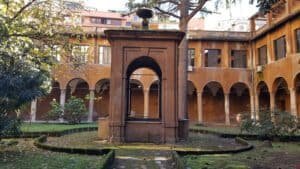
- Cloisters of San Cosimato in Rome100 m
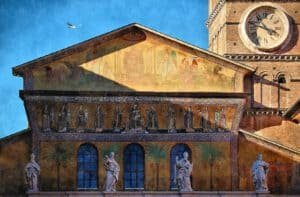
- Basilica of Santa Maria in Trastevere200 m
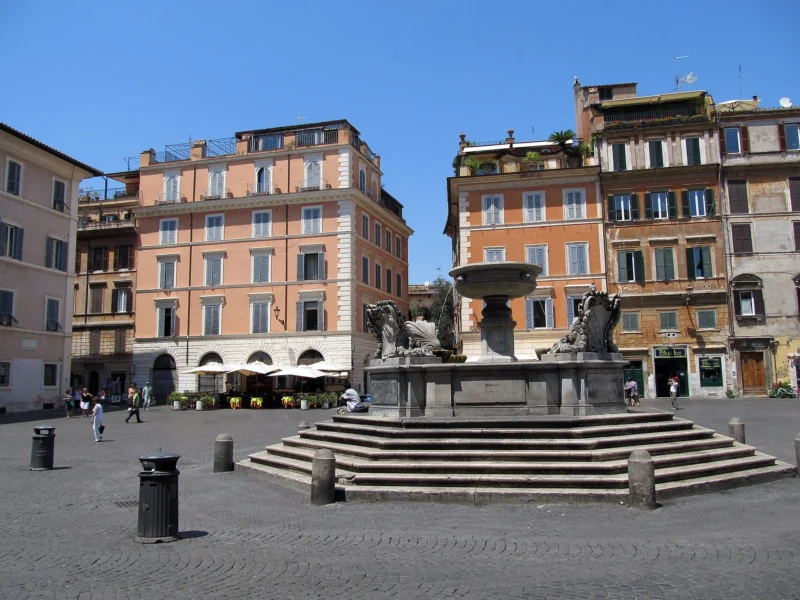
- Piazza di Santa Maria in Trastevere300 m
- Scalea del Tamburino300 m
- Church of San Pietro in Montorio300 m

Upcoming events nearby
- Mara Sattei Live 2026 in Rome at Alcazar, November 13, 2026100 m
- Dominio Pubblico, Across The Arts at Argot Studio and Centro Giovani Zalib, September 21 to November 26, 2026100 m
- Fasma, Regno Spietato Club Tour at Alcazar Live, December 3, 2026200 m
- Apollo Brown and Skyzoo at Alcazar Live, December 11, 2026200 m