Zoobar
In short. Zoobar is one of the historic names of Roman clubbing in the rock, dark, wave, EBM and psy area, and today you find it in Montesacro, at Via Generale Roberto Bencivenga 1, a short walk from Piazza Sempione, in the northern part of the…
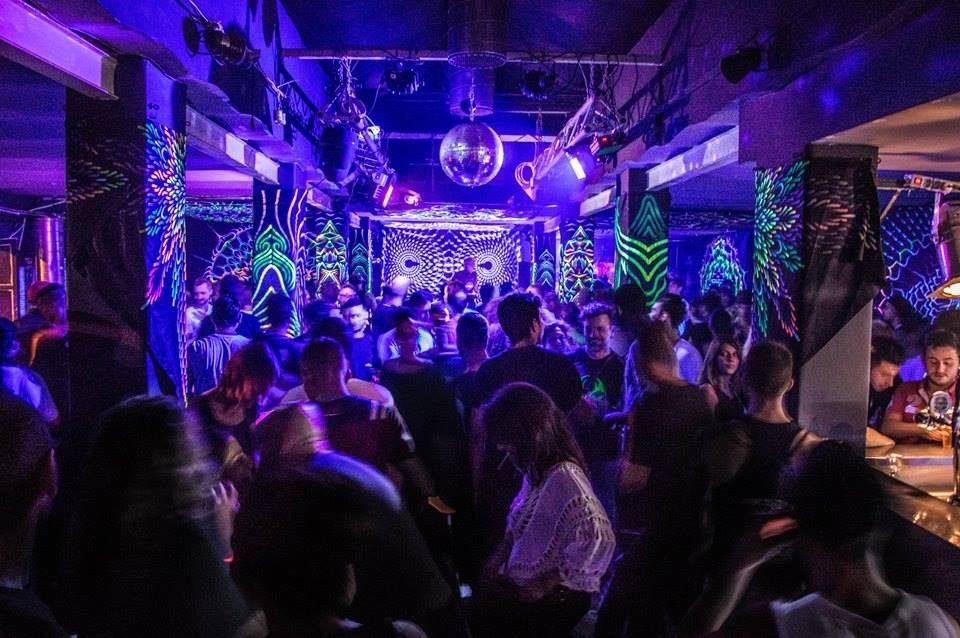
Zoobar is one of the historic names of Roman clubbing in the rock, dark, wave, EBM and psy area, and today you find it in Montesacro, at Via Generale Roberto Bencivenga 1, a short walk from Piazza Sempione, in the northern part of the city, with postal code 00141. Before arriving here the name had years of activity in Testaccio, that is, in the district that for at least three decades has been the recognized heart of Roman nightlife, and that move says a lot about both the history of the club and the nighttime geography of the capital.
Via Generale Roberto Bencivenga, 1
Rome
Let me make clear right away what the formula you read everywhere when people talk about this place means in practice. Rock, dark, wave, EBM and psy are not five labels lined up for color: they are five musical families with different roots, audiences, outfits and dance rituals, which in Italy have lived together in the same circuit of clubs and nights precisely because none of them, on its own, ever had the numbers to fill a big disco. The coexistence has produced a recognizable environment: dark rooms, high volume, sparing light, a crowd ranging from people in their 20s to people in their 50s and beyond, and a night that changes face depending on who is at the console. Whoever arrives expecting a commercial club is thrown off. Whoever arrives knowing what they are looking for, usually, comes back.
Where Zoobar is and how to really get there
The address is Via Generale Roberto Bencivenga 1, and it is worth fixing it firmly in your head because the street starts right at the edge of Piazza Sempione, the living room of Montesacro, and whoever doesn't know the area tends to look for it along Via Nomentana, which instead runs farther south. Piazza Sempione is the square with the clock tower, the central fountain and the church of the Santi Angeli Custodi: it is the simplest reference point to give anyone, even a taxi driver who doesn't frequent the neighborhood. From there you take the street and walk very little.
By subway the reference line is B1, the branch that splits off at Bologna and heads north. The most convenient stop for getting to Piazza Sempione is Conca d'Oro: from the exit you go down toward the neighborhood on a walk of a good 10 minutes, all on sidewalk and gently downhill. Alternatively there is Sant'Agnese Annibaliano, a bit farther but served by a very dense surface hub, and there is Jonio, the terminus, which is only convenient for those arriving from the north or those who park around there. Those who prefer the bus can use the lines that run along Via Nomentana and Via delle Valli: the right stop is always the one at Piazza Sempione, and from there the rest is done on foot in under five minutes.
By car the area is served by Viale Jonio, Via Nomentana and Via delle Valli, but street parking on peak nights is an exercise in patience: Montesacro is a dense residential neighborhood, residents' cars take up everything and the risk of circling for 20 minutes is real. It is best to consider the car as the last option, not the first, and not only because of parking: more on that later, with the question of the ride home.
One detail that makes a difference for those who don't know Montesacro: the neighborhood is crossed by the Aniene and the river, at night, splits the area in two more sharply than the map suggests. The bridges are few and the pedestrian paths along the banks, after sunset, are poorly lit. If you arrive on foot from the other bank, stay on the main streets and don't cut along the river: it isn't a matter of alarmism, it's that the riverside at night is simply dark and deserted, and has no advantage over the normal route.
What the rock, dark, wave, EBM and psy scenes really are
This is the part worth explaining properly, because the five words are constantly used carelessly, and whoever confuses them then shows up at the wrong night and leaves disappointed. Each has a precise history, a documented moment of birth and a way of dancing that sets it apart from the others. I'll try to line them up without caricature and without nostalgia.
Rock, the broad base that holds the rest together
In the jargon of Italian clubs rock is the broadest and most elastic category: it includes classic rock and hard rock, punk, garage, stoner, 1990s alternative, melodic metal and a lot of things that sit under the umbrella of guitar sound. In a club like this the rock night is the one that acts as glue: it is the best attended by the mixed crowd, it is the one where even people who don't identify with any specific subculture dance, and it is the one that lets the club stay afloat economically even when the other, more niche nights draw fewer people. It is not a second-tier night: it is the backbone.
It must be said that club rock is a different thing from concert rock. At the console the criterion is not philological, it is functional: you pick what gets a dance floor moving, you place tracks 30 years apart next to each other, you alternate the songs everyone sings with the songs that only part of the room recognizes. A good rock DJ works exactly like a good house DJ, except that his tools have guitars.
Dark, an Italian word for something called gothic elsewhere
A historical clarification is needed here, because the misunderstanding is an old one. In Italy dark is the term that since the early 1980s has indicated the audience and the music that in the English-speaking world are called goth or gothic rock. The root is British post-punk of 1979 and 1980: bands like Joy Division, Bauhaus, Siouxsie and the Banshees, The Cure in their gloomiest phase, and then The Sisters of Mercy and Fields of the Nephilim in the following years. The sound is made of dry, reverberated drums, melodic basses up front, guitars treated with chorus and delay more than with distortion, and low male voices or theatrical female voices.
Italian dark has had its own local history, with its own bands and with a circuit of clubs and fanzines that worked in the 1980s in Milan, Bologna, Florence and Rome. The aesthetic, black, with heavy makeup and references to gothic literature and symbolism, is the one the general public recognizes at a glance and that, unfortunately, has also produced the caricature. The reality of a dark night is much less theatrical than people imagine: people dancing in a composed way, often alone, a lot of attention to the detail of clothing, very little aggression. It is among the calmest club environments around.
Wave, the widest and most misunderstood family
Wave comes from new wave, the label with which at the end of the 1970s the record industry packaged everything that came after punk and was no longer punk: synthesizers, short song forms, dry production, an attention to graphic design that punk didn't have. Inside wave, in club language, you can tell apart at least three branches. Cold wave, mostly French and Belgian from the early 1980s, icy and minimal. Dark wave, which is the bridge between goth and electronics. And synth pop of the British school, that of Depeche Mode and their contemporaries, which brought the drum machine into the pop song.
In Roman nights wave and dark often mix in the same set, and this is the reason why the two terms get swapped. The working distinction, the one that matters on the dance floor, is simple: if the track rests on a reverberated guitar it is dark, if it rests on a synthesizer and a drum machine it is wave. The audience is largely the same, the clothing too, but the way of dancing changes: to wave you dance in a looser and more continuous way, to dark in a more jerky and more vertical way.
EBM, Electronic Body Music and its Belgian origin
EBM is the acronym of Electronic Body Music, and here the story is particularly precise. The term was adopted around the mid-1980s by the Belgian band Front 242 to describe their own sound, but the matrix comes from earlier: the Germans DAF, that is Deutsch Amerikanische Freundschaft, had already built between 1980 and 1982 the basic formula, relentless analog bass sequences, dry electronic drums, a declaimed voice in German. Front 242, Nitzer Ebb, and then a great many Belgian, German and Scandinavian projects codified the genre: medium-high tempo, repetitive structure, processed and often shouted voice, almost total absence of melodic harmony.
Let me clear up a point that generates misunderstandings: the imagery of EBM, made of uniforms, marches and shouted slogans, was born as an estranging quotation of military and industrial language, not as an endorsement. It is the same mechanism as the English industrial noise of the 1970s. Whoever walks into an EBM night without knowing can misread the aesthetic. Whoever frequents it knows that the code is that and that people dance to it like to anything else. EBM dancing, in particular, has its own recognizable form, frontal and sharp, which the crowd performs almost in sync: it is one of the few contemporary club dances that can be called choreographic without anyone ever having choreographed them.
Psy, from Goa trance to today's dance floors
Psy is the abbreviation of psytrance, or psychedelic trance, and its history is geographically the most curious of the five. It was born in the 1980s and 1990s in Goa, India, within the community of Western travelers who spent their winters there, and consolidated thanks to DJs and producers largely Israeli, British and German. The technical formula is precise: tempo around 140 beats per minute and beyond, continuous four-on-the-floor kick, a bass line in sixteenth notes that is the real signature of the genre, and above it a carpet of filtered and modulated synthetic sounds that change slowly over whole minutes.
Psytrance has a very dedicated audience, which in Italy concentrates mostly on open-air summer festivals but which in winter needs clubs willing to host it. It is music built for long sets and for dance floors that don't empty: those who dance to it tend to stay on the floor for hours, they don't move between the bar and the room as in rock nights. The aesthetic is the opposite of dark: fluorescent colors, painted drapes, ultraviolet light, visual references to fractals and Indian iconography. Finding rock, dark, wave, EBM and psy under the same sign means that the club, in different weeks, completely changes skin.
A curiosity about Zoobar
The curiosity I like best concerns the name and what the name carries with it. Zoobar is a short name, easy to remember, with that double o that sounds immediately informal in Italian, and above all it is a name that works as a brand regardless of the walls. And this is exactly what happened: the club changed address, changed neighborhood, crossed the Tiber and the city from south to north, and the name stayed the same. In Italian clubbing this is less obvious than it seems.
Most niche clubs, when they change location, also change their sign, because the name was tied to the space, the doorway, the neon sign, and moving it feels like a betrayal. Here instead the opposite happened: the name traveled and the crowd followed it. It means that for those who frequent that musical area in Rome, that name did not indicate an address but a type of night and a type of people. It is the difference between a club and a community that uses a club.
I'll add a side curiosity that Romans almost never connect: the club left the district that hosts the Monte dei Cocci, that is an artificial hill made of fragments of amphorae, to land in a neighborhood named after a real mountain, the Monte Sacro of the secession of the plebs. Nobody did it on purpose and I see no symbolism in it, but it is one of those Roman geographical coincidences that make a person smile if they know both areas. From a fake mountain to a mountain with 2,500 years of political history behind it, always staying in the same city.
Montesacro, the Garden City and why the neighborhood is not a dormitory
To understand what it means to go clubbing in Montesacro you have to know where you've ended up, because the neighborhood resembles neither the borgate nor the residential districts built after the war. Montesacro was born as one of the most ambitious urban planning experiences of early 20th-century Rome, and its original core is called Città Giardino Aniene.
The operation started in the early 1920s on the initiative of the Istituto per le Case Popolari, and the declared model is the garden city theorized in England by Ebenezer Howard at the end of the 19th century: a city of limited size, surrounded by greenery, with low houses, private gardens, neighborhood services and a hierarchy of streets that discourages through traffic. A group of designers worked on defining the layout, among them Gustavo Giovannoni, a central figure in the Roman architectural culture of those years and theorist of the so-called diradamento edilizio, building thinning. The result is still visible today walking among Via Nomentana Nuova, Via dei Prati Fiscali and the streets that climb behind Piazza Sempione: villini, apartment buildings of three or four floors, tree-lined courtyards, a curvilinear street pattern that follows the contour lines instead of imposing the grid.
The geometric and social center is Piazza Sempione, with the clock tower and the church of the Santi Angeli Custodi, and it is still the square where the neighborhood gathers: bars, benches, people talking, and a constant flow of people at all hours. This is the point that matters to those who go dancing: leaving a club at three in the morning and finding yourself in a real square, with inhabited houses around, is a very different condition from that of someone who leaves a warehouse on the outskirts and finds themselves in a parking lot. The Garden City, as it is designed, produces human presence even at unlikely hours.
It must be said that the neighborhood has changed a lot compared to the original plan. Postwar speculation filled a large part of the planned green spaces, through traffic arrived anyway, and the name Montesacro today indicates an area much larger than the historic core, which includes Talenti, Tufello, Val Melaina, Vigne Nuove and Conca d'Oro. But the heart of the Garden City is still legible, and whoever arrives an hour before the night to take a walk there doesn't waste time: it is one of the places where you best understand what Rome tried to do, in urban planning terms, before growth got out of its hands.
The Ponte Nomentano, the Aniene and the Monte Sacro of the secession
A few minutes' walk from Piazza Sempione, going down toward the river, you find one of the most surprising monuments in all of northern Rome, and the great majority of those who frequent the area at night have never seen it: the Ponte Nomentano. It is the point where the ancient Via Nomentana crossed the Aniene, and the bridge, of Roman origin and rebuilt several times, preserves a medieval fortified structure with a tower and a passage arch that makes it immediately recognizable. During the 15th century it was the object of works promoted by the papacy, and its function was twofold: to carry the road and to control who entered Rome from the northeast.
Today the bridge is pedestrian, set in a green area, and seeing it by day costs a detour of 10 minutes. I strongly recommend doing it before the night and not after: at night the river area is dark and there is no reason to cross it, while in afternoon light it is one of the few places in Rome where you can still see a fortified bridge in its context, with water below and no traffic above.
The Aniene, the river the bridge spans, is the second watercourse of Rome and comes from Subiaco and the Simbruini mountains before flowing into the Tiber at Ponte Salario. Along its urban course there now runs a system of protected areas that downstream includes the Aniene Valley Nature Reserve, and in summer the area hosts open-air events like the Aniene Festival at Parco Nomentano, which are the daytime and family version of the same geography that at night fills up with people going dancing.
The name of the neighborhood comes from the rise that overlooks the left bank of the Aniene, the Mons Sacer of the ancients, and here we enter one of the founding pages of Roman history. According to tradition, in 494 BC the Roman plebs, crushed by debts and military service, abandoned the city en masse and withdrew to this mountain beyond the Aniene, refusing to return. The secession was a form of general strike avant la lettre, and it paralyzed a city that without the plebs could neither fight nor work.
The best-known account is that of Livy, who stages the ambassador Menenius Agrippa and the famous fable of the limbs and the stomach: the limbs of the body, tired of working to feed the stomach that seemed to do nothing, refuse to serve it and end up wasting away all together. The moral, evidently conservative, was that patricians and plebeians formed one body. The historical outcome, however, was concrete and anything but conservative: the secession gave birth to the tribunate of the plebs, the magistracy with veto power that for centuries would represent the plebeian counterweight to the power of the senate.
In honesty I point out that the location is not unanimous in the ancient sources: Livy places the secession on the Monte Sacro, while other authors put it on the Aventine, and modern historians have long debated how much of that account is memory and how much is later construction. What remains indisputable is that the name of the neighborhood derives from that tradition, and that in 1902 a plaque commemorating the secession was placed in the area. Dancing to rebel music on a mountain that in Roman memory is the mountain of the first documented social revolt is a coincidence worth keeping in mind.
Something nobody tells you about Zoobar
The thing nobody says, and that explains half of what happens in these environments, is that a niche club does not live on its music: it lives on its ability to make coexist audiences that elsewhere wouldn't speak to each other. In a typical week of a club that programs rock, dark, wave, EBM and psy, people with opposite aesthetic codes come through the same door, often eyeing each other with mutual suspicion. The psy crowd and the dark crowd, for instance, have two almost opposite ideas of what a good night is: the first looks for color, open air, continuity and length, the second looks for darkness, enclosed space, recognizable tracks and pauses. Making them coexist in the same space on different days requires a directing job that nobody sees and nobody talks about.
The second invisible aspect is economic. Clubs of this kind work on thin margins and very variable attendance: a genre night can bring 200 people or 60, depending on who is at the console and what is happening elsewhere in the city that evening. Regulars tend to think the club is there by natural right, and are surprised when it closes. The truth is that these spaces exist as long as someone accepts a business risk that, on the numbers, almost never pays. The move from Testaccio to Montesacro, in this sense, is not a biographical detail: it is the answer to a problem of costs and sustainability that in Testaccio, after the real estate boom and the transformation of the district, had become hard to sustain.
Third point, the least told: in Rome musical subcultures have historically suffered from the lack of stable spaces. For decades the dark scene, the wave scene and the industrial scene lived on itinerant nights, on clubs that lasted two seasons, on social centers that hosted a series and then changed direction. Having a sign that survives a change of location means having a fixed point in a landscape that has never had one. Those who come from outside Rome struggle to understand how much it weighs, for a scene, simply to know where to meet on Saturday.
I'll add a practical note that nobody ever writes and that is useful: in clubs of this musical area the first hour is almost always empty. Not because the night isn't working, but because the reference crowd arrives late out of settled habit, often after a concert or after a round at another place. Whoever shows up at opening and finds four people tends to conclude the place is dead and leaves. It is the most common mistake I see made, and it costs the night.
My advice for visiting Zoobar
Advice number one, above all others: check the program before leaving the house. In a club that changes genre from night to night, going without knowing which night it is means leaving it to chance, and chance in this field is a terrible advisor. The difference between a psy night and a dark night is not a nuance: it is the difference between finding yourself in an environment where you recognize yourself and finding yourself in an environment where you are the only one out of place. The channels where clubs of this kind publish the calendar are the social pages and the website, and they are worth more than any general description, this one included.
Advice number two: dress for the night, not for the club. I'm not talking about costumes and I'm not talking about imposed dress codes. I'm talking about the fact that in these environments clothing is a form of communication and whoever ignores it isolates themselves without meaning to. Black on a dark or wave night is not an obligation, but it is the language the room speaks. On a psy night the opposite holds, and color is the norm. On a rock night, which is the most permissive, almost anything goes. You don't need to spend: you need to understand where you are going.
Advice number three: arrive in the neighborhood earlier, not just at the club. Montesacro in the evening has a life of its own that is worth catching. Piazza Sempione and the streets around it have a density of places to eat that central Rome, at the same price, no longer offers: pizza by the slice, neighborhood trattorie, bakeries. Eating well beforehand is the smartest thing you can do for a long night, and it's worth double if you plan to drink something: on a full stomach your body handles everything much better, and the night lasts longer.
Advice number four, and for me the one that matters most: decide how you're getting home before you leave, not at four in the morning. Montesacro at night is served by the night surface service, with lines that go through the main hubs and with frequencies that in the middle hours of the night are long: finding out beforehand which line serves your route and when it passes saves you from ending up at a dark stop doing calculations. If you go in a group, agree on who drives and make sure that person doesn't drink: it is the most trivial rule in the world and also the one that saves the most nights. If you are alone and have been drinking, a taxi or the night service remain the only sensible choice. There is no version of this story in which getting behind the wheel after a few glasses is a good idea, and on this I give no discounts to anyone.
Advice number five, minor but useful: bring cash. Many clubs of this size have membership cards, entrance fees and drinks that are still handled in cash, and finding a working ATM at two in the morning in a residential neighborhood is not a given. €20 or €30 in your pocket solves 90 percent of the logistical problems of a night.
Advice number six: if you are going for the first time and you don't know anyone, choose a rock night. It is the most open, the most mixed, the one in which it is easiest to join a conversation and the one in which nobody looks at you because you're dressed differently. The more genre-specific nights are wonderful, but they work better when you're already inside the code.
Another well-known fact, yet rarely mentioned
The well-known fact is that Testaccio was the center of Roman nightlife. What is rarely mentioned is why, and the why also explains how come part of that nightlife ended up in Montesacro.
Testaccio became the district of nighttime entertainment for a very material reason: the emptying of the municipal slaughterhouse, closed at the end of the 1970s, and the presence of an entire front of caves dug into the Monte dei Cocci, that is, into the artificial hill formed by the fragments of the oil amphorae dumped there in imperial times. Those caves, born as warehouses and cellars, were already soundproofed by nature and faced a street, Via di Monte Testaccio, where almost nobody lived. For a night club it is the perfect condition: low-cost space, free acoustic insulation, no apartment building to wake up. Between the 1980s and the early 2000s a number of clubs concentrated there that made that half kilometer of street the densest place of nighttime music in Italy.
Then what always happens happened. The district was upgraded, rents went up, residents arrived in the renovated houses, and with the residents came complaints about noise, hour limits, inspections. The Nuovo Mercato Testaccio changed the district's center of gravity, daytime life grew stronger and nighttime life lost ground. The same neighborhood that had hosted Roman nightlife began not to want it anymore, or at least to want a more contained version of it. Today Testaccio remains a lively district, with its distributed museum and with a summer program that continues, but hardcore clubbing has largely moved elsewhere.
Elsewhere means two directions. One part ended up in the industrial outskirts, in the warehouses of the east and south, where space is cheap and neighbors don't exist. Another part, the one that interests us here, went back up toward the residential neighborhoods of northern Rome, where medium-sized spaces still exist, where a club can have a garden and two rooms without paying historic-center rents, and where the historic audience, now in their 40s or 50s, actually lives. This is the point almost nobody connects: the scene moved also because its audience moved. Whoever danced in Testaccio in 1998 at 20, in 2026 is almost 50, has a house in northern Rome and has no desire to cross the city to go back to sleep.
I'll add the piece that makes it even more interesting: Montesacro historically had no clubbing tradition. It had social clubs, neighborhood dance halls, association headquarters, and a decent but domestic cultural life. The arrival of signs coming from the city's nightlife circuit grafted something new onto that fabric, and the graft is not painless: a club in a residential neighborhood inevitably produces friction over noise, parking and hours. How well or badly those frictions are managed decides, in the medium term, if the club stays or the round of venues starts again.
The Batteria Nomentana and the entrenched camp of Rome
There is another piece of history a short distance away that almost nobody going dancing here has ever noticed: the Batteria Nomentana. It is part of the defensive system built around Rome after 1870, the so-called campo trincerato, a ring of forts and batteries built between the 1870s and 1880s to protect the new capital of the Kingdom of Italy from an external attack.
The logic was that of the time: keep the enemy away from the city with a belt of earth-and-masonry works placed a few kilometers from the walls, each with its own artillery and its own range of fire, connected by a military road. The forts were the major pieces, the batteries the minor ones, designed to host artillery without the full structure of a fort. The Batteria Nomentana guarded the sector between Via Nomentana and the Aniene, that is exactly the zone where Montesacro stands today.
The detail I find most eloquent is that this whole system was born already old. The evolution of artillery in the years immediately after made masonry fortifications obsolete, and the works of the campo trincerato never fired a shot in defense of Rome. They served as depots, as barracks, as firing ranges, in some cases as military prisons, and today many of them are green areas, association headquarters or spaces awaiting a purpose. The Batteria Nomentana belongs to this category of converted military heritage that Rome has in quantity and knows very little.
Why I tell it here: because the layering of Montesacro is exactly this. A mountain with a legend of plebeian revolt from the fifth century BC, a medieval fortified bridge on a Roman consular road, a 19th-century artillery battery, a garden neighborhood from the 1920s, postwar expansion housing, and on top of all this, today, a circuit of night clubs. Whoever thinks interesting Rome ends at the Aurelian walls misses this density, which in our judgment is more instructive than many itineraries in the center.
The right photo to take at Zoobar
First what doesn't work, because it is the most frequent mistake. The photo inside a club, taken with a phone, with the flash on, is almost always ugly and almost always useless: the flash flattens faces, erases the light of the room that is the only thing that made that environment recognizable, and produces an image that could have been taken in any dark room in the world. Besides, in a subculture venue, a flash in the face is a small discourtesy: there are people who come precisely because in there nobody photographs them.
The photo that really works, in a place like this, is the one you take on the threshold. The entrance of a neighborhood club, with the sign lit, the sidewalk, a few people smoking outside and the windows of the houses above, tells in a single image all the tension we talked about earlier: the night inside a neighborhood that sleeps. Shoot it from the opposite side of the street, keeping in the frame both the sign and at least one lit balcony on the upper floor. If you manage to catch a parked car in the foreground too, you have the exact photograph of what Roman clubbing outside the center is in 2026.
Second option, and for me the best of all: don't take it at night. Come back to the area by day and photograph Piazza Sempione with the clock tower, or go down to the Ponte Nomentano and photograph the fortified bridge with the Aniene below. It is the contrast that counts: publishing the photo of the medieval bridge next to that of the night sign explains Montesacro better than a thousand words. The best light for the bridge is late afternoon, when the raking sun hits the tower from the side and the masonry shows its rebuilding.
Third option, for those with a minimum of equipment who want to do the serious thing: a portrait outside the club at the end of the night, with ambient light, long exposures and a cooperating subject. The audience of these scenes takes great care of their appearance and is generally willing to be portrayed if you ask, instead of stealing the shot. Asking changes everything: it turns a surveillance photo into a portrait. And if someone says no, there is only one correct answer, that is, fine, thanks anyway.
Last recommendation, which holds legally and not just for politeness: inside many clubs photography is regulated or forbidden, and on the more niche nights the ban is deeply felt. If there is a sign, or if someone from the staff tells you, the phone stays in your pocket. It is not a limit on your expressive freedom: it is the pact that makes that place a space where people feel free to dress and behave as they like.
Some important events that took place here in history
The place where people dance today has behind it a sequence of events that, taken in a row, tell 2,500 years of Roman history in a little over a square kilometer. I put them in chronological order, because the effect is clearer.
494 BC and the first secession of the plebs
It is the founding event of the place name. The Roman plebs, oppressed by debts and by debt slavery, left the city en masse and camped on the mountain beyond the Aniene that from that moment was called Mons Sacer. It was a secession, that is a collective withdrawal: no violence, no battle, simply the refusal to be there. The city stopped. The negotiation that followed, with the embassy of Menenius Agrippa and the fable of the body and the limbs, led to the recognition of the tribunes of the plebs, inviolable magistrates with the power of intercession against the acts of the patrician magistrates. It may be documented history or tradition reworked by the annalists, but it remains one of the moments in which the Roman constitution changes shape, and it remains the reason why the neighborhood has that name.
The imperial age and Via Nomentana
Via Nomentana, which connected Rome to Nomentum, that is present-day Mentana, crossed the Aniene right here. The Roman bridge that allowed the crossing is the direct ancestor of the present Ponte Nomentano. For centuries this was one of the entry points to Rome from the northeast, with everything that implies: traffic of goods, military control, and in late times the presence of burials and cemetery areas along the road, of which the Catacombs of Priscilla, closer to the city, are the best-known example.
The Middle Ages and the fortification of the bridge
With the collapse of the ancient defensive system the bridges over the Aniene became strategic points and were fortified. The Ponte Nomentano took the form it still keeps, with the tower and the passage arch, and became a garrison that controlled access to the city. In the 15th century the papacy intervened with restoration and strengthening works, consistent with the policy of securing the access routes to Rome. The area remained for centuries fortified countryside: farmsteads, towers, very few inhabitants.
1849 and the defense of the Roman Republic
During the siege of the Roman Republic the bridges over the Aniene played a role in the military operations around the city, because controlling the river crossings meant controlling access from the north. It is a less known chapter than the defense of the Janiculum, but it belongs to the same story, and it gives back to this part of the Roman countryside a strategic value that today is completely invisible.
The 1880s and the entrenched camp
Rome as capital builds its fortified belt and the Batteria Nomentana takes its place in the sector between the consular road and the river. It is the last moment in which this area has a military function. A few years later the works are already obsolete, and what came after is a history of conversions.
The 1920s and the Città Giardino Aniene
The Istituto per le Case Popolari starts construction of the garden neighborhood following the English model of the garden city, with the design contribution of Gustavo Giovannoni and other architects. Piazza Sempione is born, the curved streets are born, the villini and apartment buildings with gardens are born. It is the event that creates the neighborhood as we know it, and that still today determines its urban form and, by reflection, its nighttime livability.
The postwar period and expansion
Montesacro is absorbed into the urban growth of the second half of the 20th century. Talenti, Tufello, Val Melaina, Vigne Nuove are born and grow. The garden core becomes the historic center of a vast area. The population multiplies, and with it the catchment area that today makes nighttime programming in the area sustainable.
The 2000s and the reshuffling of the Roman night
The transformation of Testaccio, the rise in rents, the crackdown on hours and the upgrading of the district push part of the nightlife circuit to look for spaces elsewhere. Northern Rome, with its dense residential neighborhoods and its medium-sized spaces, becomes one of the destinations. The transfer of a historic clubbing name in the rock, dark, wave, EBM and psy area from Testaccio to Montesacro belongs exactly to this phase, and is probably the most recent event on the list, as well as the only one that directly concerns the club.
The 2010s and 2020s and the arrival of the subway
The opening of the B1 branch of the subway, with the stations of Sant'Agnese Annibaliano, Libia, Conca d'Oro and then Jonio, changes the scale of travel times between northern Rome and the center. For a night club it is a structural fact: it means that part of the audience can arrive without a car and, in the hours when the service runs, go home the same way. It doesn't solve the problem of getting home in the middle hours of the night, but it reduces the neighborhood's isolation in a way that those who frequented this area 20 years ago wouldn't have imagined.
Who has passed through Zoobar
A clarification right away: there are no names of DJs, bands or guests here that can't be documented with certainty. In clubs of this kind the programs change every week, public archives are fragmentary, and putting a list of artists in writing would be an elegant way of making things up. Better to tell who has passed through in another sense, which is also more interesting.
Through a club of this musical area, in Rome, passes first of all the generation that lived the Italian dark scene of the 1980s. They are people who today are between 50 and 60, who bought the first records of Bauhaus and The Sisters of Mercy when they came out, who were part of the audience of the Roman clubs of the time, and who keep going out. It is a generation that no longer has citizenship in mainstream clubbing, and that keeps it in these spaces.
Then passes the middle generation, the one that discovered wave and EBM in the 1990s and 2000s, often starting from metal or industrial, and that built its musical education on specialized record shops, on fanzines and then on the first online forums. It is the group that today keeps most nights going as a paying audience and, in many cases, as organizers: they are the resident DJs, the promoters, the ones who print the flyers.
And then, and it is the most interesting thing, the people in their 20s pass through. Contrary to what is said, musical subcultures of this type did not die with their decade: they reproduced. Goth and dark wave have had regular waves of rediscovery, EBM came back into circulation through harder techno and through the scene that in recent years has put that sound back on the floor, and psytrance has never stopped recruiting. In a room of this kind, on a good night, you see people with 30 years of difference dancing to the same track, and this is something that in commercial clubbing practically never happens.
The neighborhood audience also passes through, inevitably. A club that moves to a residential area intercepts people who would never have gone to Testaccio, simply because now the club is under their house. This is one of the least discussed consequences of moves: the scene widens toward the territory and gets contaminated, with everything that implies in terms of richness and friction.
One last category, minority but constant: travelers. Rome has a niche music tourism that appears in no statistic, made of people who arrive from other Italian cities or from abroad for a festival, a concert, a gathering, and who then look for a place to end the night. Anyone coming from Germany, Belgium or Scandinavia with an EBM culture behind them, if they find a Roman club that programs that music, goes there. The circuit is international and word of mouth, and it works much better than tourism boards imagine.
What kind of night to expect, in concrete terms
I'll try to set down the typical rhythm of a night in a club of this kind, because it is what people who don't frequent the scene always ask and don't find written anywhere.
The opening is in the evening but the room fills late. The first part, between opening and well past midnight, is the talking phase: bar, outside, people greeting each other, people smoking outside, people looking at the flyers. Whoever wants conversation has to come now, because afterward the volume makes everything impossible. It is also the moment when the DJ builds the ground with less obvious tracks, and for an attentive listener it is often the most interesting part of the night.
The central phase is the one with the full dance floor, and it generally lasts two or three hours. Here the set gets to the recognizable tracks, the room sings, and the club shows its real capacity. It is the moment when you understand if that night is the right one for you: if the dance floor calls you, you stay, if you notice you're at the bar watching, you probably picked the wrong genre and it's nobody's fault.
The final phase is the tail, when the room thins out and the most stubborn remain. On genre nights it is often the best moment, because the DJ allows himself things he wouldn't have risked with a full room. On psy nights the tail can be very long, because of the very nature of the music. In any case it is the moment when it's wise to already be clear on how you're getting home, because it is exactly the hour when decisions get made badly.
On drinking I add a note that is not moralism, it is experience: on a long night the problem is not how much you drink overall, it is how much you drink in the first hour. Whoever starts strong at 11 is no longer dancing at two. Whoever alternates with water lasts all night and the next day is a person. Water, in every club, is asked for at the bar and obtained without problems. If you don't drink alcohol, in these environments nobody looks at you sideways: the niche audience is much less insistent on the subject than the mainstream clubs' audience is, and the social pressure to drink that you find elsewhere simply doesn't exist here.
What to see in the area before or after
Whoever comes to Montesacro from far away might as well arrive a few hours early, because there is more around than you'd imagine. Here is what I recommend, in order of distance.
The Ponte Nomentano, which is a few minutes' walk away, is the first thing to see and it is the one nobody sees. Piazza Sempione with the clock tower and the church of the Santi Angeli Custodi deserves a seated stop, because it is the best way to understand the idea of a garden neighborhood. The streets behind the square, with the villini of the 1920s, can be walked in half an hour and show public housing that today looks luxurious, which says a lot about how the idea of public housing has changed in 100 years.
Going down toward the river you enter the system of parks that accompanies the Aniene, and continuing downstream you reach the area of the Aniene Valley Nature Reserve, which in summer hosts open-air events. Toward the west, along Via Nomentana, you go down toward the city and meet the complex of Sant'Agnese fuori le mura with the mausoleum of Santa Costanza, which is one of the most beautiful early Christian places in Rome and one of the least crowded. A little farther on, still on that axis, you reach Coppedè, the neighborhood of eclectic villini that is the exact stylistic opposite of the Garden City: one plays on decorative excess, the other on sobriety, and seeing them on the same day is a small course in the history of early 20th-century Roman architecture.
If you have a car or time, the northern area also offers the Catacombs of Priscilla and, farther out, the parks that accompany the course of the river toward the interior. None of these things has anything to do with the music you listen to in the evening, and that is exactly why they work: a day like this gives the night a context, and context is what distinguishes a night in a club from any night at all.
Frequently asked questions
Where exactly is Zoobar?
At Via Generale Roberto Bencivenga 1, in Rome, postal code 00141, in the Montesacro neighborhood, a very short distance from Piazza Sempione.
What kind of music do they play?
The reference area is that of rock, dark, wave, EBM and psy clubbing. The nights change genre depending on the calendar, so the genre of the individual night should always be checked beforehand.
How do you get there by public transport?
The reference subway is line B1, with Conca d'Oro as the most convenient stop and Sant'Agnese Annibaliano as an alternative. On the surface the area is served by the lines that run along Via Nomentana and Via delle Valli, with a stop at Piazza Sempione.
Is it a good idea to go by car?
Not really. Montesacro is a dense residential neighborhood and evening parking is hard. Besides, if you plan to drink, the car is the worst solution: better public transport, a taxi or a designated driver who stays sober.
Why was the club in Testaccio and now it is in Montesacro?
Because Testaccio, after the upgrading of the district, became much more expensive and much more regulated in terms of hours and noise. Part of the Roman nightlife circuit moved toward neighborhoods where medium-sized spaces cost less, and northern Rome is one of these destinations.
What is the difference between dark and wave?
Very briefly: dark, which in the English-speaking world is called goth, comes from post-punk and rests on reverberated guitars and melodic basses. Wave comes from new wave and rests on synthesizers and drum machines. The two audiences largely coincide and the two genres coexist in the same set.
What does EBM mean?
Electronic Body Music. The term spread in the mid-1980s starting from the Belgian band Front 242, on a base laid at the beginning of the decade by the German band DAF. Repetitive electronic sound, sequenced bass, dry drums, declaimed or shouted voice.
What is psytrance?
Psychedelic trance, born between Goa and Europe in the 1990s, with tempos around 140 beats per minute and beyond, bass in sixteenth notes and long evolutions of synthetic sounds. It has an audience and an aesthetic completely different from those of dark.
Is it a good place for people who don't know these scenes?
Yes, as long as you choose the right night. The rock night is the most accessible for those who arrive without a specific background. The more genre-specific nights are wonderful but presuppose a minimum familiarity with the code.
Can you take photos inside?
It depends on the club and the night. In many spaces of this kind photography is limited and on the more niche nights the ban is deeply felt by the crowd. If there is a sign or if the staff tells you, the phone stays in your pocket.
What time is best to arrive?
Late. The audience of these scenes arrives well after opening, and whoever shows up at starting time almost always finds the room empty and risks leaving before the night really begins.
Do you need to book or get a membership?
Many clubs in this range work with a membership card or an entrance fee, and in several cases it is done at the door with cash. Better to check the club's official channels before going out and have a few banknotes in your pocket.
Is there anything to see in the area by day?
The Ponte Nomentano, Piazza Sempione and the streets of the Città Giardino Aniene. A little farther, along Via Nomentana, the complex of Sant'Agnese fuori le mura with the mausoleum of Santa Costanza and the Coppedè neighborhood.
How do you get home in the dead of night?
With the night surface service, checking line and frequency beforehand, or by taxi. The thing to do is decide how you're getting home before leaving the house, not at four in the morning when you're tired and not thinking clearly.
To finish, the one really important thing. A club like this is not worth it for its architecture, which is that of a neighborhood club, nor for any exclusivity, which it doesn't have. It is worth it because it keeps alive, in a city that has lost many of its niche nighttime spaces, a musical geography that would otherwise exist only in people's homes. Rock, dark, wave, EBM and psy are five different ways of being in a dark room with other people, and each of them needs a real room. That this room today is in Montesacro, beneath a mountain on which 2,500 years ago the Roman plebs refused to return to the city, is a detail I recommend you keep in mind while you wait for the night bus in Piazza Sempione. Go on the right night, eat beforehand, drink water, and above all know already how you're getting home: the music does the rest.
Article written by the editorial team of TourLeaderPro, contact them for Private/Corporate/V.I.P. Tours and Experiences.
Planning a trip to Rome? The English guides for visiting the city are on ItalyPlanner.com.
Contact Information
Via Generale Roberto Bencivenga, 1
Roma Roma Città, Roma Città